Preparation is the key to success in any interview. In this post, we’ll explore crucial Eagle PCB Design Software interview questions and equip you with strategies to craft impactful answers. Whether you’re a beginner or a pro, these tips will elevate your preparation.
Questions Asked in Eagle PCB Design Software Interview
Q 1. Explain the difference between a schematic and a PCB layout in Eagle.
In Eagle, the schematic and PCB layout serve distinct yet interconnected purposes. Think of the schematic as the blueprint of your circuit’s functionality, a graphical representation of how components connect electrically. It details the components, their connections, and net names. The PCB layout, on the other hand, is the physical design – it’s where you arrange those components on a board, route the traces, and define the board’s physical dimensions. It’s the translation of the schematic’s abstract representation into a tangible design ready for manufacturing.
For example, your schematic might show a simple voltage divider with two resistors and an input/output. The PCB layout would then show exactly where those resistors are placed on the board, the trace paths connecting them, and the pads for soldering.
Essentially, the schematic defines what your circuit does, and the PCB layout defines how it’s implemented physically.
Q 2. Describe your experience using Eagle’s auto-router.
Eagle’s auto-router is a valuable tool, but I’ve learned it’s best used strategically, not as a complete solution. It’s great for quickly routing simple boards or less critical traces, but for high-speed signals or densely packed designs, manual routing offers superior control and results.
My approach involves using the auto-router for initial placement of traces, then carefully reviewing and refining its work. I pay close attention to trace lengths, impedance matching, and potential signal integrity issues that the auto-router might overlook. For instance, in a recent high-speed design, I used the auto-router for initial routing of the slower signals and then manually routed the critical high-speed signals ensuring appropriate track widths, spacing and minimizing via usage.
I also leverage the auto-router’s options—like setting track widths, minimum clearances, and routing styles—to tailor its behavior to my design’s needs. It’s a powerful assistant, but I always maintain a critical eye and manually refine as required for optimum performance and manufacturability.
Q 3. How do you manage design rule checks (DRCs) in Eagle?
Design Rule Checks (DRCs) are fundamental to preventing manufacturing errors. In Eagle, I religiously utilize DRC throughout the design process, not just at the end. I set up DRC rules early on, based on the board’s specifications (e.g., minimum trace widths, clearances, pad sizes, etc.). This allows for early detection of issues and reduces rework later.
My workflow includes running the DRC after every significant design change. This iterative approach helps catch problems immediately. I’ve learned that addressing minor inconsistencies early prevents these from compounding and causing major headaches later in the design process. For example, a small clearance violation might seem insignificant, but it can cascade into more complex problems later.
Eagle’s DRC reporting clearly highlights violations; this feedback lets me directly address them. I’ve built a process of always checking the report thoroughly after each DRC run and addressing any issues before moving to the next phase of design.
Q 4. What are your preferred methods for managing complex libraries in Eagle?
Managing complex libraries in Eagle efficiently is crucial for reusability and maintainability. I avoid having a single massive library. Instead, I break down libraries into logical, smaller units based on component types (e.g., connectors, microcontrollers, passive components). This makes searching and managing much easier.
I use descriptive naming conventions for both library files and individual components within those libraries. This ensures consistency and reduces confusion when searching for specific parts. For example, I might name my connector library ‘Connectors_Circular’ to clearly categorize its contents.
Regularly backing up libraries and employing version control are essential for managing library evolution. Accidental changes or deletions can be disastrous. Having different versions of libraries allows to quickly revert to previous versions if necessary.
Q 5. Explain your process for creating and managing footprints in Eagle.
Creating and managing footprints in Eagle is a meticulous process that directly impacts the manufacturability of the PCB. I use a combination of manual creation and leveraging existing, verified footprints from online repositories when possible. It’s important to verify the authenticity and accuracy of these downloaded footprints before incorporating into a design.
For new footprints, I meticulously measure component dimensions from datasheets to create accurate representations. I pay close attention to details like pad sizes, drill sizes, silkscreen markings, and the correct placement of mechanical features. Any errors here can lead to manufacturing errors.
I always document footprints thoroughly, including the component’s datasheet reference, date of creation, and any significant design considerations. This detailed documentation significantly reduces confusion and rework.
Q 6. How do you handle high-speed signal routing in Eagle?
High-speed signal routing requires a different approach than slower signals. Trace length matching, controlled impedance, and minimizing crosstalk are key considerations. In Eagle, I carefully plan the routing of high-speed signals to minimize trace length differences between critical paths. This often involves using differential pair routing techniques.
I use Eagle’s tools to control impedance. I carefully select trace widths and spacing to achieve the required impedance based on signal speed and impedance requirements as mentioned in the component datasheet.
I always use differential pairs, and utilize controlled impedance features, including routing layers and specific layer stackup definition to maintain signal integrity. Minimizing vias on high-speed signals is also crucial to reduce signal reflections. I document all high-speed routing decisions for future reference and maintainability.
Q 7. Describe your experience with different Eagle layers and their applications.
Eagle’s layered structure is powerful, allowing for organization and separation of different aspects of the PCB design. I use layers strategically based on their purpose. Top and bottom layers are for signal traces, while inner layers are for power planes (important for signal integrity and noise reduction). I use separate layers for silkscreen, solder mask, and mechanical features to keep the design organized and easily understandable.
For instance, I utilize the ‘tPlace’ and ‘bPlace’ layers for component placement, keeping these layers separate from routing layers to maintain clarity. The ‘tNames’ and ‘bNames’ layers help to clearly label components on the PCB. The use of different layers is essential for manufacturing since different layers represent different elements on the final product, each layer with specific design rules.
Understanding the purpose and proper use of each layer is essential for efficient design and smooth manufacturing. I always maintain clear naming conventions and adhere to common industry layer standards for easy collaboration and design maintainability.
Q 8. How do you ensure design manufacturability in Eagle?
Ensuring design manufacturability in Eagle is crucial for a successful PCB. It’s like building a house – you wouldn’t start construction without blueprints that account for available materials and building codes. In Eagle, this involves several key steps:
- Following Design Rules: Eagle’s design rule checker (DRC) is your best friend. Define rules based on your manufacturer’s specifications for trace width, spacing, clearance, and pad sizes. A thorough DRC check before exporting your design flags potential issues early, preventing costly mistakes. For example, specifying a minimum trace width of 10 mils ensures signal integrity and manufacturability.
- Choosing Appropriate Materials: Selecting the right PCB material (FR4, Rogers, etc.) impacts the board’s performance and cost. Consider factors like dielectric constant and thermal conductivity based on your design requirements. The choice of material needs to be compatible with your chosen manufacturing process.
- Considering Manufacturing Processes: Understand the limitations of the chosen manufacturing process (SMT, through-hole, etc.). Avoid designs with overly complex geometries or extremely tight tolerances, as these can be difficult and expensive to manufacture.
- Generating Manufacturing Files: Export Gerber files (RS-274X) and other necessary files (drill files, etc.) with precision. Double-check the files for errors before sending them to your manufacturer. Inconsistencies in the generated files can lead to manufacturing problems.
Imagine trying to solder components onto a PCB with traces spaced too close together—it would be nearly impossible! By meticulously following these steps, you minimize surprises and delays in the manufacturing process.
Q 9. What are your strategies for optimizing PCB size and cost in Eagle?
Optimizing PCB size and cost involves a multi-pronged approach. Think of it like packing a suitcase – you want to fit everything you need while minimizing the overall size and weight. In Eagle:
- Efficient Component Placement: Strategic placement of components minimizes the overall board area and trace lengths. Using Eagle’s component placement tools (more on this in the next question), we can arrange components to reduce routing congestion and optimize signal integrity.
- Smart Routing: Eagle’s autorouter can help with initial routing, but manual adjustments are often necessary to minimize trace length and improve signal integrity. Careful manual routing can significantly reduce the board area and improve manufacturability. Using differential pair routing features are important for high-speed designs.
- Component Selection: Choosing smaller, surface-mount components whenever possible reduces overall board size. However, this needs to be balanced with the design’s specific requirements.
- Standard Board Sizes: Choosing a standard PCB size minimizes the cost of manufacturing. Custom sizes often lead to higher fabrication costs.
- Layer Optimization: Using the minimum number of layers necessary simplifies manufacturing and reduces cost, while maintaining signal integrity.
For instance, I once reduced a PCB’s size by 20% by strategically repositioning components and carefully optimizing the routing, directly translating to significant cost savings for the client.
Q 10. Describe your experience with Eagle’s component placement tools.
Eagle’s component placement tools are essential for creating a well-organized and manufacturable PCB. They’re like a sophisticated set of architectural tools allowing me to precisely position each component.
- Manual Placement: I frequently use manual placement to precisely position critical components based on signal integrity and thermal considerations. I can fine-tune the position of each part down to the micron to optimize performance.
- Grid-Based Placement: The grid system in Eagle helps maintain a neat and organized layout, which is especially helpful when working with a large number of components. This ensures consistent spacing and facilitates easier routing.
- Component Libraries: A well-organized component library is paramount. I spend time creating and maintaining accurate libraries, ensuring all components are placed consistently with appropriate dimensions and pad sizes. Consistent libraries are crucial for large-scale projects.
- Automated Placement (if available): While Eagle’s built-in autorouting doesn’t have a dedicated ‘auto-placement’ feature in the same way other EDA software do, the combination of grid-based positioning and the ability to easily move and align components allows for efficient placement, almost mimicking an automated system.
I often use a combination of manual and grid-based placement, depending on the complexity of the design. For high-speed designs, manual placement is crucial for optimizing signal integrity.
Q 11. How do you use Eagle’s netlist import/export features?
Eagle’s netlist import and export features are vital for seamless integration with other design tools. They act as the bridge between the schematic capture and PCB layout stages.
- Netlist Import: I use netlist import to transfer the connectivity information from a schematic captured in Eagle (or another compatible program) into the PCB layout. This ensures that all connections defined in the schematic are accurately represented on the PCB. Common netlist formats include XML and other textual formats depending on your source schematic tool.
- Netlist Export: Conversely, netlist export allows me to generate a netlist file from the PCB layout. This is helpful for verifying the design’s connectivity after layout changes or for integration with other simulation tools.
- Format Compatibility: It’s crucial to be familiar with different netlist formats and the specific requirements of the associated software. Converting netlists between different formats may require using third-party tools.
- Error Checking: After importing a netlist, I always perform a thorough design rule check (DRC) and cross-reference it with the original schematic to ensure there are no connectivity errors.
In a recent project, importing a netlist saved me countless hours by eliminating the need for manually connecting components on the PCB layout.
Q 12. Explain your approach to troubleshooting layout issues in Eagle.
Troubleshooting layout issues in Eagle is a common part of the PCB design process. It’s like detective work, systematically finding clues to solve the problem. My approach involves:
- Using the DRC: The first and most crucial step. I run the DRC to identify any violations of design rules. This immediately highlights potential problems, like shorts, opens, or clearance violations.
- Visual Inspection: Carefully examining the layout for any obvious errors is necessary. This helps identify issues not caught by the DRC. Often, visual inspection allows for the identification of issues that the DRC might overlook.
- Netlist Verification: Comparing the layout’s connectivity against the original schematic helps ensure that all connections are correct. Inconsistencies highlight wiring errors or incorrect component placement.
- Signal Integrity Analysis (if needed): For high-speed designs, simulation tools can be used to analyze signal integrity issues like reflections and crosstalk. Eagle itself offers basic simulation capabilities, or other software can be used.
- Layer-by-Layer Review: Systematic review of each layer of the PCB, especially in multi-layer designs, helps isolate issues specific to certain layers. This is vital for resolving layer-to-layer connectivity problems.
Once I’ve identified the problem, I use Eagle’s editing tools to make the necessary corrections. I always verify these corrections through another DRC run and visual inspection before proceeding.
Q 13. Describe your experience using Eagle’s simulation tools (if any).
Eagle’s built-in simulation capabilities are somewhat limited compared to dedicated simulation software packages like LTSpice or Altium Designer. However, Eagle does offer some basic simulation tools. My experience includes:
- Analog Simulation (limited): Eagle’s capabilities for analog simulation are basic, mostly used for simple circuit checks. It’s generally not suitable for complex analog designs. For more advanced needs, separate simulation software is preferred.
- No Built-in Digital Simulation: Eagle doesn’t offer built-in digital simulation tools.
- Integration with External Simulators: Eagle’s netlist export capability allows integration with other, more advanced simulation tools. This is a common workflow; the netlist is exported and then processed in a separate simulator before the results are analyzed and used to refine the PCB design.
While I appreciate Eagle’s simplicity for schematic capture and PCB layout, for comprehensive simulation, I usually rely on dedicated software. It’s crucial to select the right tool for the task at hand to ensure accuracy and thorough design verification.
Q 14. How do you manage version control for your Eagle projects?
Version control for Eagle projects is crucial to manage revisions and prevent conflicts. While Eagle doesn’t have built-in version control, I rely on external tools. My strategy is as follows:
- Git (or similar): I use Git, a distributed version control system, to manage my Eagle projects. I track changes to all project files (schematics, board files, libraries, etc.) allowing me to revert to previous versions, and collaborate effectively.
- Regular Commits: I make regular commits with descriptive messages, documenting the changes made in each version. This allows for easy tracking of modifications throughout the design process.
- Branching: For complex projects, I use branches to work on different features or bug fixes simultaneously without affecting the main development line. This isolates changes and facilitates easier merging once they are ready.
- Cloud-Based Repositories: I often use cloud-based repositories like GitHub or GitLab to store my projects, ensuring backups and facilitating collaboration with other engineers. This also makes it easier to manage and share design updates across multiple computers.
Using a robust version control system ensures that I can always revert to previous versions if necessary, trace the evolution of my design, and collaborate effectively with team members on complex projects.
Q 15. What are some common design mistakes you’ve encountered and how did you fix them?
One common mistake is neglecting proper clearance and creepage distances, especially in high-voltage applications. This can lead to shorts or arcing. I address this by meticulously checking clearances using Eagle’s DRC (Design Rule Check) and manually verifying critical areas. Another frequent error is inadequate grounding. Poor grounding can introduce noise and instability. To solve this, I implement a robust grounding scheme from the outset, often using multiple ground planes and carefully routing ground connections to critical components. Finally, poor component placement can impact signal integrity and thermal management. For instance, placing high-power components near sensitive analog circuits can cause noise and overheating. I mitigate this by strategically placing components, considering both thermal and signal integrity considerations, often using Eagle’s component placement tools and simulations (where applicable) to optimize the layout.
Career Expert Tips:
- Ace those interviews! Prepare effectively by reviewing the Top 50 Most Common Interview Questions on ResumeGemini.
- Navigate your job search with confidence! Explore a wide range of Career Tips on ResumeGemini. Learn about common challenges and recommendations to overcome them.
- Craft the perfect resume! Master the Art of Resume Writing with ResumeGemini’s guide. Showcase your unique qualifications and achievements effectively.
- Don’t miss out on holiday savings! Build your dream resume with ResumeGemini’s ATS optimized templates.
Q 16. How familiar are you with different PCB manufacturing processes?
I’m very familiar with various PCB manufacturing processes. My experience includes working with subtractive etching (the most common method), additive processes like electroless plating and inkjet printing, and advanced techniques such as HDI (high-density interconnect) and flexible PCB fabrication. I understand the trade-offs between cost, layer count, and achievable feature sizes associated with each process. For example, when designing for a high-volume, cost-sensitive application, I’ll prioritize subtractive etching with a simpler layer stack-up. Conversely, for a high-performance application requiring miniaturization, I’ll consider HDI or flexible circuits, carefully accounting for the increased fabrication cost and complexity during the design phase. Understanding the manufacturing process is crucial for producing manufacturable designs. I always consult with the manufacturer early in the design process to ensure the design is feasible and cost-effective.
Q 17. Explain your understanding of signal integrity and its impact on PCB design.
Signal integrity refers to the accurate and reliable transmission of signals throughout a PCB. Issues like signal reflections, crosstalk, and impedance mismatches can severely degrade signal quality, leading to malfunctioning circuitry. In Eagle, I address signal integrity by carefully controlling trace impedance, using controlled impedance routing features, and employing appropriate termination techniques (like series termination or parallel termination). For high-speed signals, I frequently use differential pairs, paying close attention to their length matching and spacing to minimize crosstalk. Furthermore, proper grounding and decoupling are critical. I often employ multiple ground planes and strategically placed decoupling capacitors near sensitive components to mitigate noise and maintain signal integrity. Ignoring signal integrity can lead to slow data rates, data corruption, and ultimately, system failure. It’s a crucial aspect I consider throughout the entire design process.
Q 18. How do you handle thermal considerations in your PCB designs?
Thermal considerations are vital, especially for high-power applications. Overheating can cause component failure and affect the reliability of the entire system. In Eagle, I manage thermal considerations through several techniques. First, I select components with appropriate thermal ratings. Second, I use thermal vias effectively to transfer heat from components to a heat sink or ground plane. Third, I strategically place high-power components to promote efficient heat dissipation, ensuring sufficient spacing between components and adequate airflow. I also use Eagle’s simulation capabilities (if available in my version) or external thermal analysis tools to predict temperature distribution and verify that components operate within their safe operating temperatures. In designs with significant power dissipation, I’ll often include thermal pads and copper pours to further improve heat sinking and ensure a reliable and long-lasting system.
Q 19. How do you incorporate EMI/EMC design principles into your Eagle workflows?
EMI/EMC (Electromagnetic Interference/Electromagnetic Compatibility) design is crucial to ensure that the PCB doesn’t emit excessive electromagnetic radiation and is not susceptible to interference from external sources. In Eagle, I incorporate EMI/EMC principles by following several guidelines. These include using proper grounding techniques, minimizing loop areas (especially for high-frequency circuits), and employing shielding for sensitive components. I ensure appropriate trace routing to minimize radiated emissions. I might also use specific component selection criteria, like choosing components with lower EMI/EMC characteristics. For more complex applications, I use simulation software coupled with Eagle to analyze and mitigate potential EMI/EMC problems. Systematic use of these strategies minimizes the risk of regulatory compliance issues and enhances the reliability of the final product in its intended operating environment.
Q 20. Describe your experience using Eagle’s scripting capabilities (if any).
I have significant experience with Eagle’s scripting capabilities, primarily using the ULP (User Language Program) language. I’ve written scripts to automate repetitive tasks, such as generating bill of materials (BOMs), creating custom reports, and automating component placement based on specific criteria. For example, I’ve written a ULP that automatically generates footprints for surface mount resistors, taking component values and tolerance as input parameters. // Example ULP snippet (Illustrative only):
string partName = getPartName();
int value = getValue(); // Get resistor value from component name
... (Code to generate footprint based on value) ... This significantly increases design efficiency and reduces the chance of human error. This ability is invaluable for managing complex projects and ensuring consistency in my designs.
Q 21. What are the advantages and disadvantages of using Eagle compared to other PCB design software?
Eagle offers several advantages, including its user-friendly interface, which makes it relatively easy to learn and use, especially for smaller to medium-sized projects. Its cost-effectiveness, especially for the free version, is also appealing. However, Eagle’s capabilities can be limiting compared to more advanced software like Altium or Cadence Allegro, particularly for large, complex designs with high-speed signals or intricate routing requirements. Eagle’s scripting capabilities, while powerful, are not as extensive as those offered by other tools. The lack of advanced features like comprehensive simulation and signal integrity analysis, especially for high-speed designs, represents a key disadvantage. Therefore, the choice depends heavily on the project’s size and complexity and the user’s specific needs and budget. For simple projects, Eagle is an excellent choice; however, for highly complex projects requiring advanced features, alternative software may be better suited.
Q 22. How do you ensure your Eagle designs adhere to industry standards?
Adhering to industry standards in Eagle PCB design is paramount for ensuring manufacturability, reliability, and compliance. This involves several key steps. First, I meticulously define design rules (DRC) within Eagle, specifying clearances, trace widths, and other critical parameters based on the target manufacturing process (e.g., IPC-2221 standards for trace widths based on current carrying capacity and layer). Second, I utilize readily available IPC standards and datasheets from component manufacturers to guide my design. For example, ensuring correct pad sizes and footprints for surface-mount devices (SMDs) is vital. Finally, I conduct thorough design rule checks (DRC) within Eagle to identify and correct any violations before moving to manufacturing. Think of it like building a house – you wouldn’t start without blueprints and building codes; similarly, adhering to these standards prevents costly errors later.
For instance, if I’m designing a high-speed board, I’ll carefully manage trace lengths to avoid signal reflections, using controlled impedance tracing techniques specified in the relevant standards. This might involve specific trace widths and dielectric thicknesses, all enforced via the DRC engine in Eagle.
Q 23. Describe your experience with Gerber file generation and review in Eagle.
Gerber file generation is a critical step in the PCB design process, enabling communication with manufacturers. In Eagle, I export Gerber files using the ‘CAM processor’. I configure the processor to generate the necessary files (e.g., top layer copper, bottom layer copper, solder mask, silkscreen) according to the manufacturer’s requirements. The key is meticulous configuration to ensure all layers are accurately represented and easily interpreted by the fabrication house.
Reviewing Gerber files is equally important. I usually employ a Gerber viewer to visually inspect the generated files for any anomalies or errors. This involves verifying the accuracy of traces, pads, and other features. A common mistake is overlooking a missing layer or a mismatch in layer registration. Sometimes even a small discrepancy in a drill file can lead to significant problems during manufacturing. A thorough review can save a lot of time and cost downstream.
Q 24. How do you collaborate with other engineers using Eagle?
Collaboration in Eagle can be achieved through several methods. One common approach is utilizing version control systems like Git, where the Eagle project files are managed and changes are tracked. This allows multiple engineers to work on different aspects of the design simultaneously, merging their changes effectively. Another method is sharing the project files directly through a shared network drive, but this method requires careful management to avoid conflicts. Finally, clear communication is key. Regular meetings, design reviews, and well-defined roles ensure that everyone is on the same page and that potential issues are identified early.
For example, one engineer might be responsible for the schematic, another for the PCB layout, and a third for the component selection. Using a version control system prevents accidental overwrites and provides a clear history of changes. Communication and defined roles prevent duplication of effort and guarantee consistency.
Q 25. Explain your approach to creating a robust and reliable PCB design.
Creating a robust and reliable PCB design starts with a well-defined schematic. I ensure proper component selection, paying attention to specifications, tolerances, and derating factors. I utilize simulations to verify the functionality and performance of the design, addressing any potential issues early on. The layout phase involves careful consideration of signal integrity, power distribution, and thermal management. Using appropriate trace widths and clearances is crucial to prevent signal interference and overheating. Furthermore, I employ techniques like proper grounding and decoupling capacitors to reduce noise and ensure stable operation. Regular design rule checks (DRCs) and simulations, like signal integrity analysis, are vital for identifying potential problems before manufacturing.
For example, in a high-frequency design, carefully controlled impedance routing is crucial to minimize signal reflections and maintain signal integrity. Poorly controlled impedance can lead to signal degradation and malfunction. Similarly, proper thermal management prevents overheating and component failure.
Q 26. How do you stay updated with the latest features and improvements in Eagle?
Staying updated with Eagle’s latest features and improvements involves several strategies. I regularly check the official Autodesk Eagle website for release notes, updates, and tutorials. I also participate in online forums and communities dedicated to Eagle, where users share their experiences and tips. Attending webinars and workshops organized by Autodesk or third-party training providers keeps me abreast of the latest advancements in PCB design methodologies and best practices. Moreover, I actively engage with industry publications and blogs focusing on EDA software and PCB design to stay informed about trends and new developments.
This continuous learning is important because new features often enhance efficiency and introduce improved functionalities, such as better design rule checking or improved simulation tools. Keeping up to date also ensures I am aware of any potential compatibility issues or best practices.
Q 27. Describe a challenging PCB design project and how you successfully overcame its difficulties.
One particularly challenging project involved designing a high-speed, high-density board for a medical imaging device. The tight space constraints and stringent signal integrity requirements presented significant obstacles. The primary challenge was managing the high-speed differential pairs while minimizing crosstalk and maintaining signal integrity. The solution involved employing advanced routing techniques, such as controlled impedance tracing and careful placement of components to minimize trace lengths. Extensive simulation using signal integrity analysis tools was crucial in validating the design’s performance. We also implemented robust power delivery networks to ensure stable power distribution, avoiding voltage drops that can affect high-speed signal transmission.
Overcoming these difficulties required meticulous planning, a deep understanding of high-speed design principles, and diligent use of simulation tools. Successful completion of this project involved teamwork, continuous review, and iterative refinement – much like sculpting a piece of art until it meets perfection.
Q 28. What are your preferred methods for validating the integrity of your Eagle designs?
Validating the integrity of my Eagle designs relies on a multi-faceted approach. First and foremost, I use Eagle’s built-in design rule checking (DRC) to identify any violations of pre-defined rules. Then, I conduct thorough visual inspections of the layout, checking for clearance issues, trace routing problems, and component placement errors. Furthermore, simulation tools are essential for verifying the electrical performance of the design. This might include signal integrity analysis, power integrity analysis, and thermal analysis, depending on the complexity of the design. Finally, before sending the design to manufacturing, I generate Gerber files and use a Gerber viewer to confirm that the files accurately reflect the design intent. This final review is a crucial step to catch any last-minute errors and prevent manufacturing delays or defects.
Imagine testing a bridge before opening it to traffic – thorough checks are needed to ensure safety. My approach to validating PCB designs ensures reliability and functionality, preventing costly mistakes down the line.
Key Topics to Learn for Eagle PCB Design Software Interview
- Schematic Capture: Understand the process of creating and managing schematic diagrams, including component placement, netlisting, and hierarchical design. Practical application: Designing a simple circuit schematic and explaining your design choices.
- PCB Layout: Master the techniques of placing and routing components on a PCB, considering factors like signal integrity, thermal management, and manufacturing constraints. Practical application: Optimizing a PCB layout for minimal EMI and efficient heat dissipation.
- Component Libraries: Learn how to create, manage, and utilize component libraries effectively. Practical application: Adding a new component to an existing library and explaining the process.
- Routing Strategies: Explore different routing techniques (e.g., auto-routing, manual routing) and their strengths and weaknesses. Practical application: Comparing different routing strategies for a specific design and justifying your choice.
- Design Rules Checking (DRC): Understand the importance of DRC and how to use it to identify and fix design errors before manufacturing. Practical application: Explaining a DRC error and how you would resolve it.
- Manufacturing Considerations: Familiarize yourself with PCB manufacturing processes and how design choices impact manufacturability. Practical application: Designing a PCB that is cost-effective and easily manufacturable.
- Advanced Features: Explore Eagle’s advanced features such as signal integrity analysis, thermal analysis, and 3D visualization. Practical application: Briefly describe the use cases and benefits of one of these advanced features.
Next Steps
Mastering Eagle PCB Design Software significantly enhances your career prospects in electronics engineering and related fields. Proficiency in this software demonstrates valuable skills to potential employers, opening doors to exciting opportunities. To maximize your chances of landing your dream job, create an ATS-friendly resume that highlights your skills and experience effectively. ResumeGemini is a trusted resource to help you build a professional and impactful resume. They offer examples of resumes tailored specifically to Eagle PCB Design Software expertise, making your job search easier and more efficient.
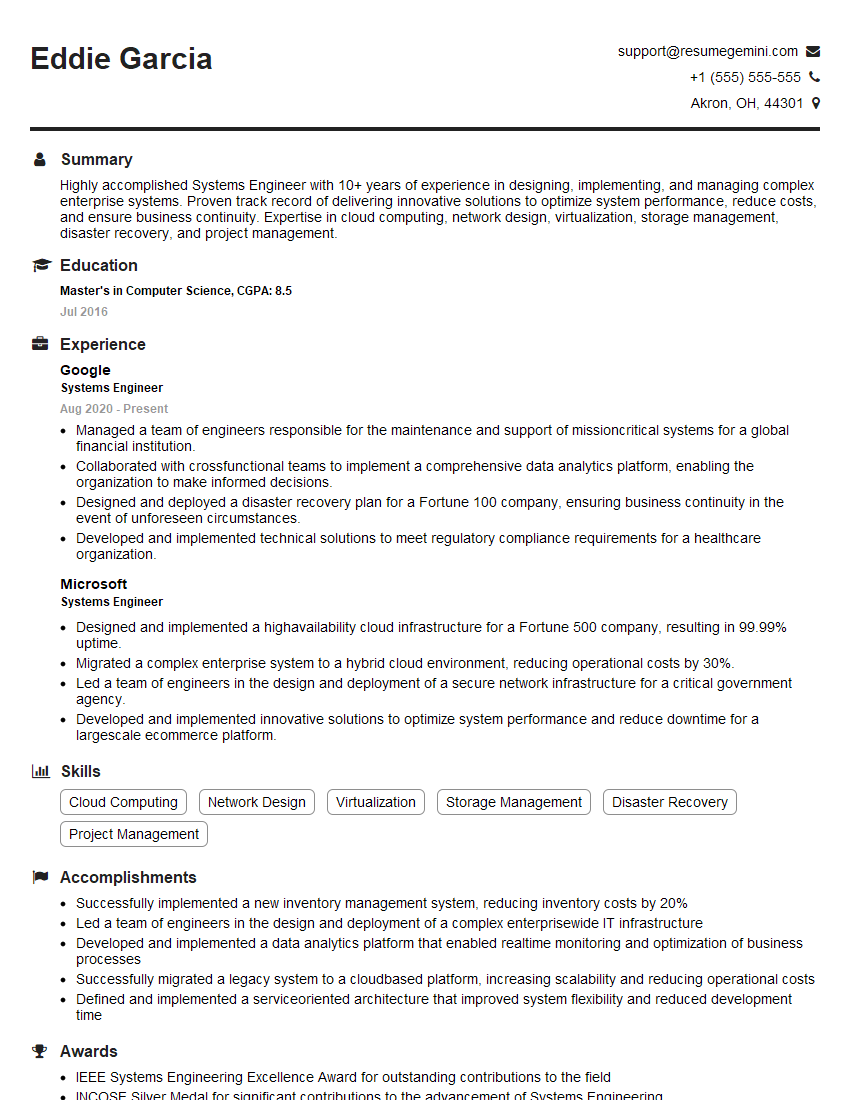
Systems Engineer Resume Sample
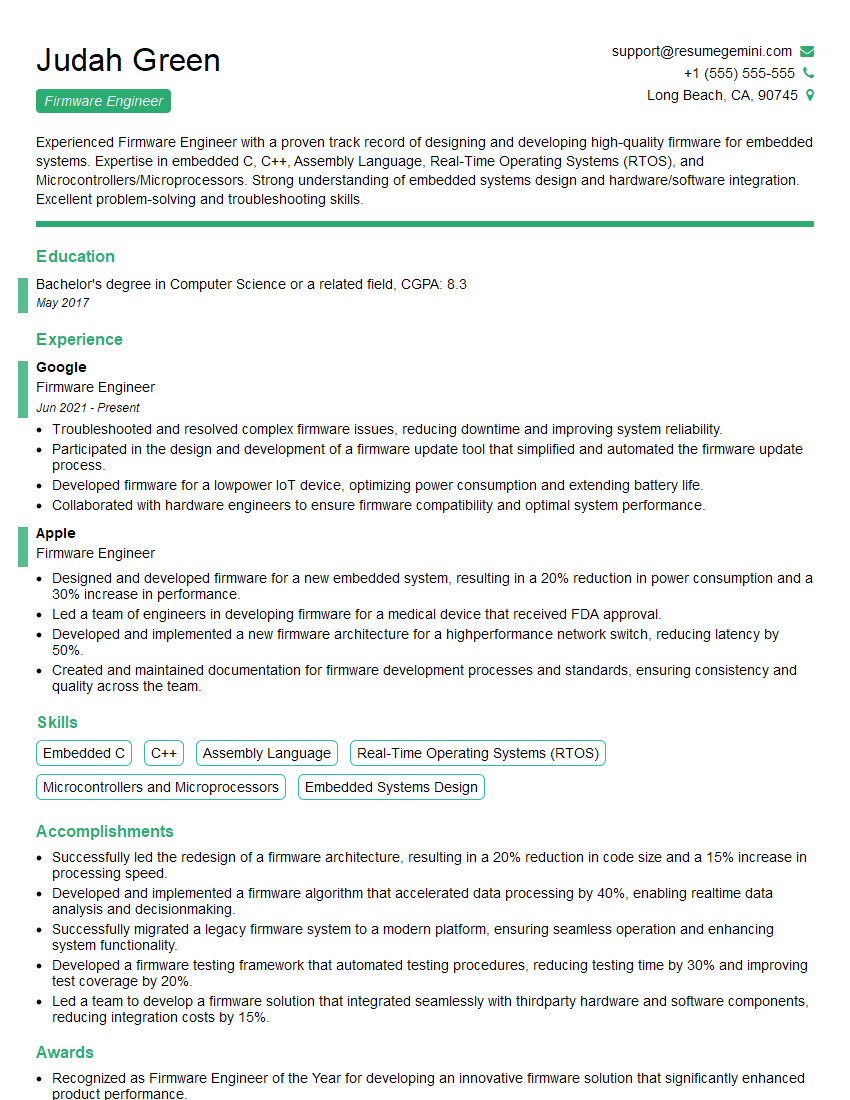
Firmware Engineer Resume Sample
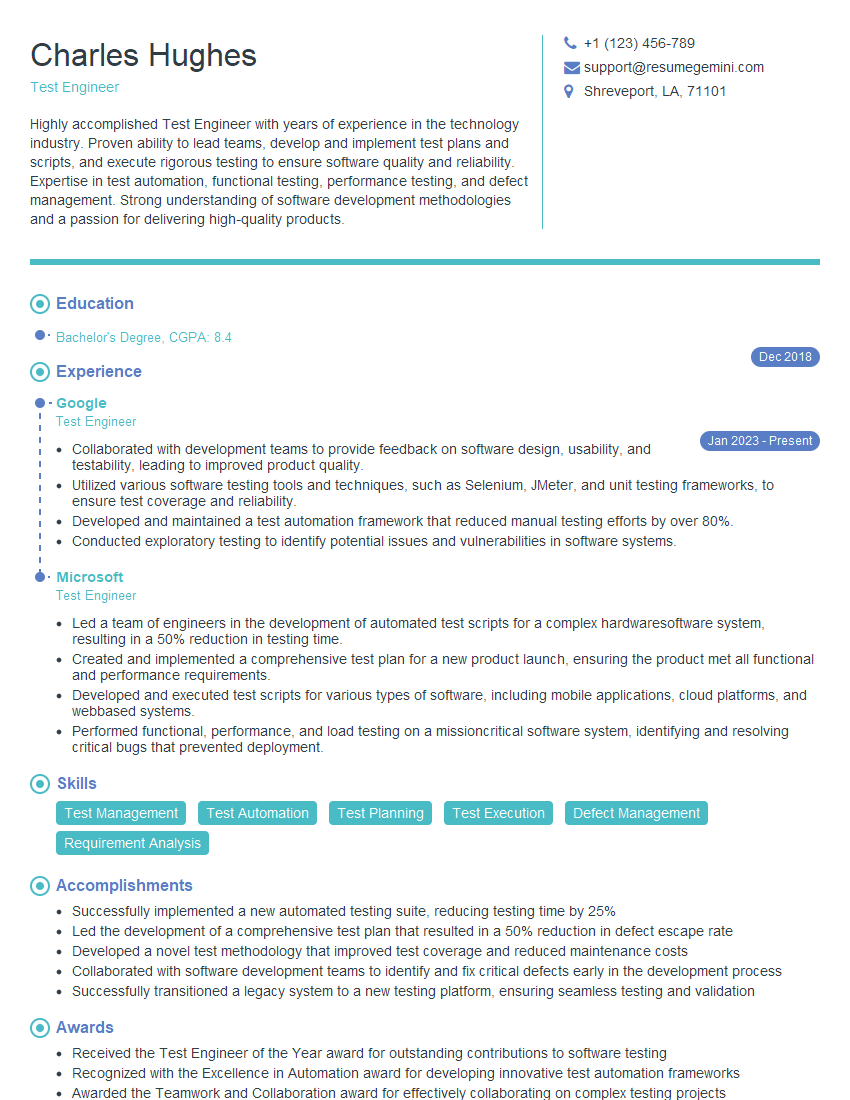
Test Engineer Resume Sample
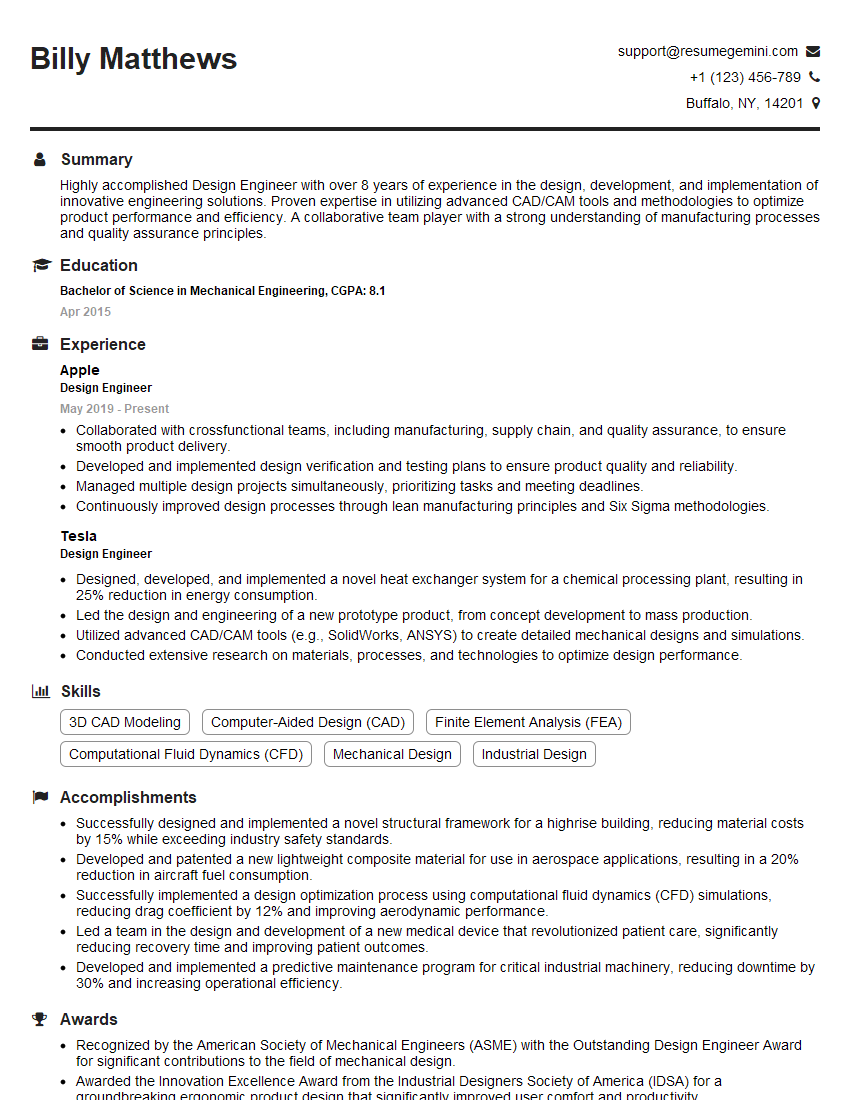
Design Engineer Resume Sample
Electronics Engineer Resume Sample

Hardware Engineer Resume Sample
Electrical Engineer Resume Sample
Circuit Design Engineer Resume Sample
Product Engineer Resume Sample
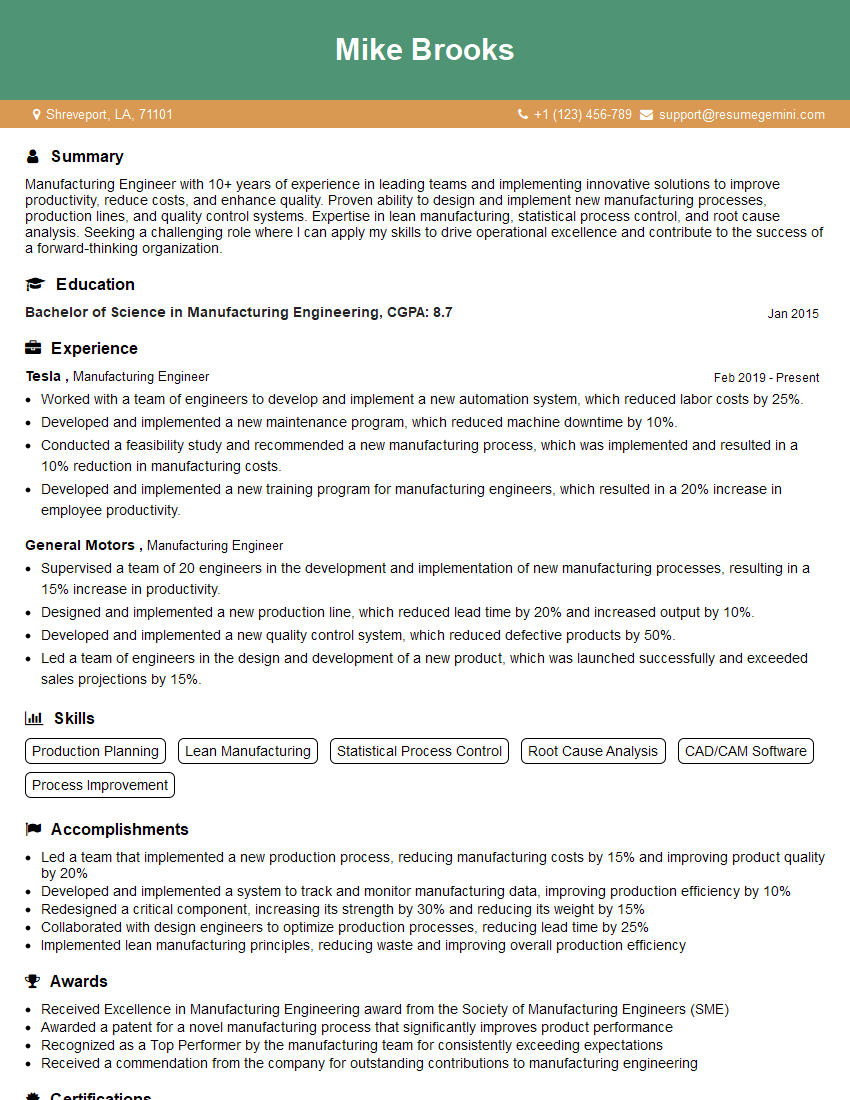
Manufacturing Engineer Resume Sample
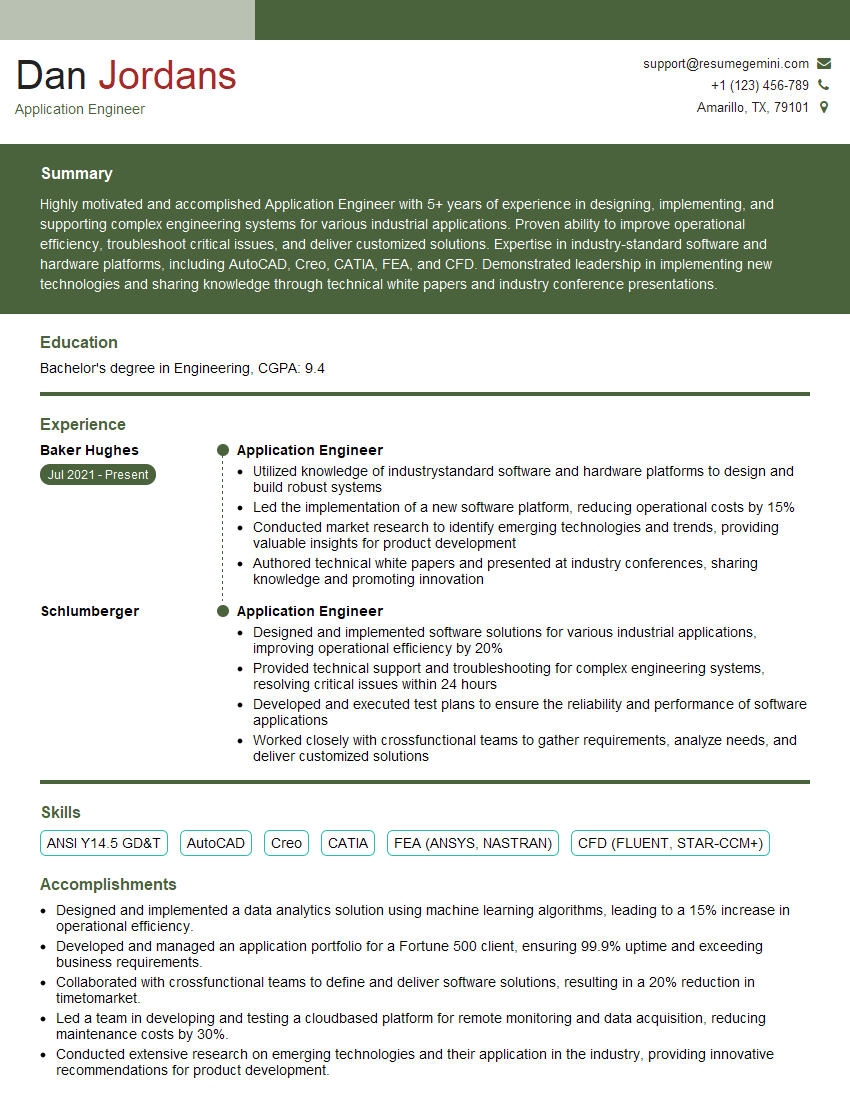
Application Engineer Resume Sample
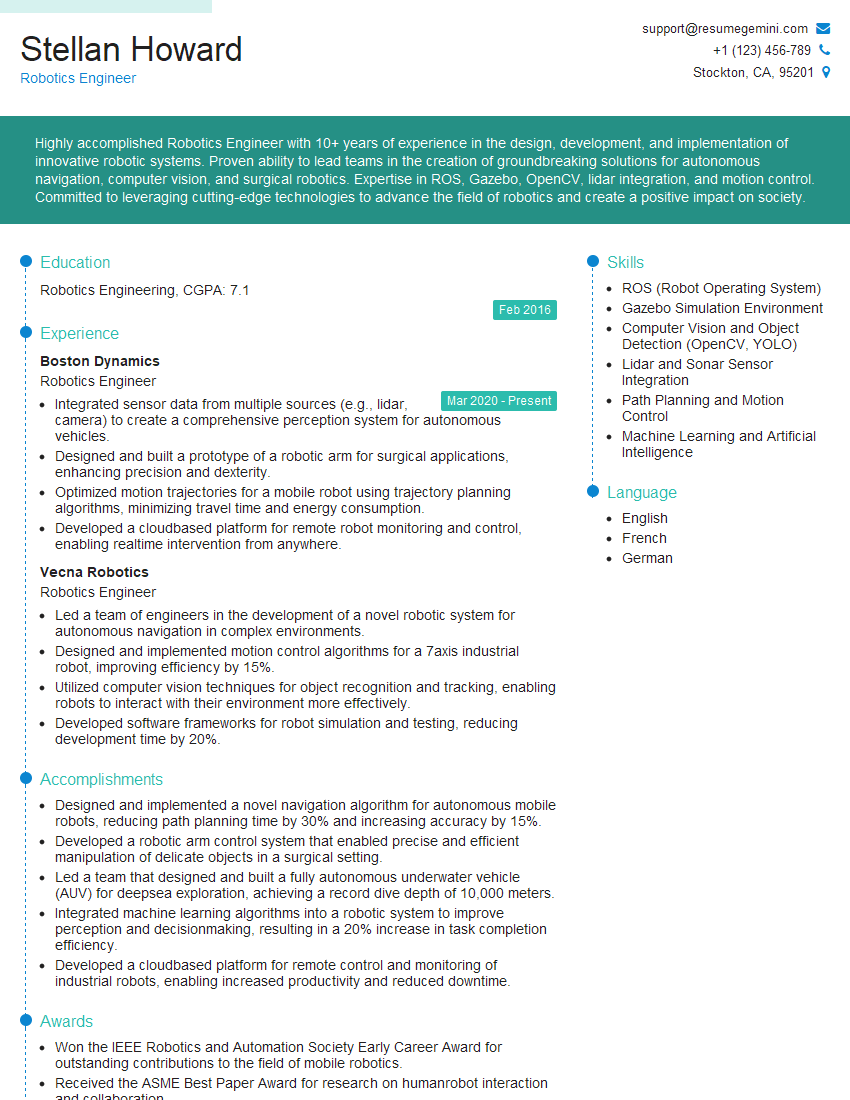
Robotics Engineer Resume Sample
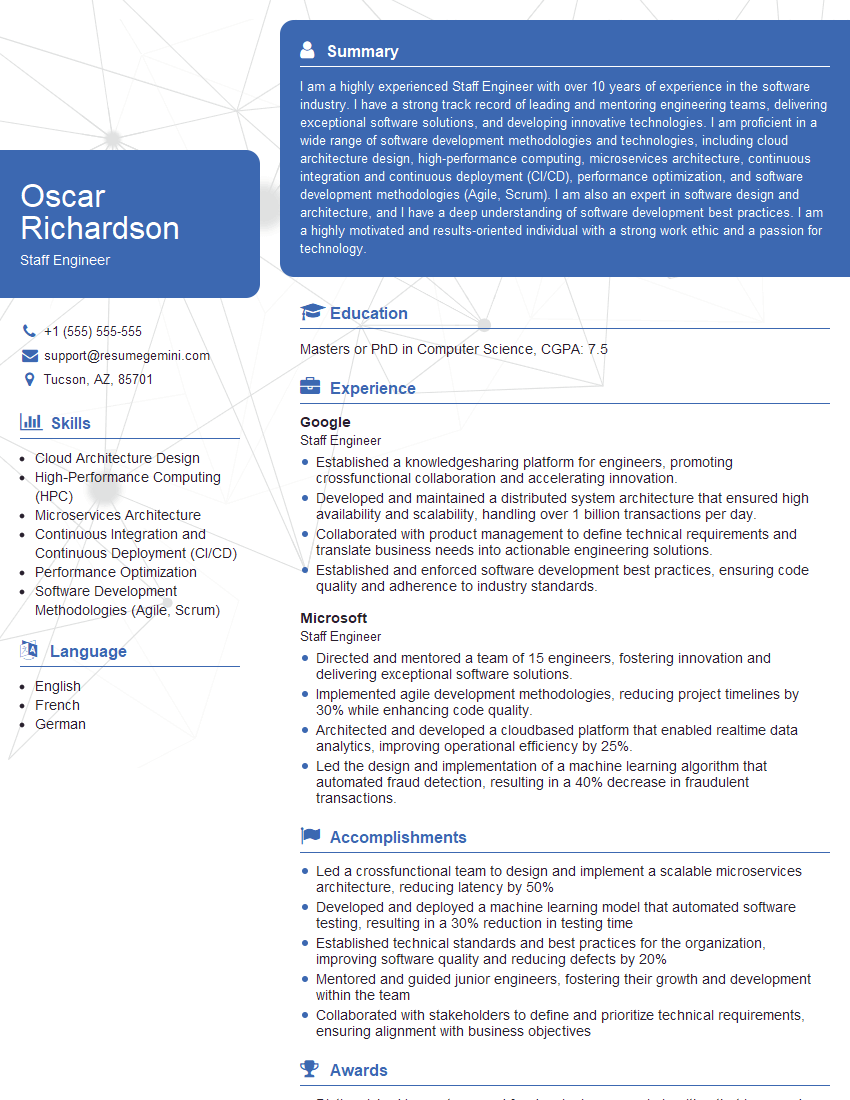
Staff Engineer Resume Sample
Explore more articles
Users Rating of Our Blogs
Share Your Experience
We value your feedback! Please rate our content and share your thoughts (optional).
What Readers Say About Our Blog
Very informative content, great job.
good