Feeling uncertain about what to expect in your upcoming interview? We’ve got you covered! This blog highlights the most important Education and Outreach Programs interview questions and provides actionable advice to help you stand out as the ideal candidate. Let’s pave the way for your success.
Questions Asked in Education and Outreach Programs Interview
Q 1. Describe your experience developing and implementing educational programs.
Developing and implementing educational programs is a multifaceted process requiring careful planning, execution, and evaluation. My experience spans various program types, from hands-on workshops for K-12 students to online courses for adult learners. I typically begin with a thorough needs assessment to identify target audiences, learning objectives, and available resources. This informs the curriculum design, which includes selecting appropriate teaching methodologies, developing engaging content, and creating a supportive learning environment.
For example, I once developed a program teaching coding basics to underserved youth. This involved securing funding, recruiting instructors, finding suitable venues, creating age-appropriate lesson plans and activities, and procuring necessary equipment (laptops, software). The program was structured with a mix of lectures, hands-on exercises, and group projects to cater to different learning styles. Successful implementation involved ongoing monitoring, adjustments based on student feedback, and meticulous record-keeping.
Another project involved creating an online professional development course for teachers. This necessitated a different approach, focusing on asynchronous learning modules, interactive exercises, peer-to-peer interaction forums, and robust assessment methods. Effective communication was crucial to ensure teachers could navigate the online platform efficiently and effectively.
Q 2. How do you measure the success of an education outreach program?
Measuring the success of an education outreach program goes beyond simply counting participants. It requires a multi-pronged approach using both quantitative and qualitative data. Quantitative measures might include pre- and post-tests to assess knowledge gains, attendance rates, course completion rates, and survey feedback on program satisfaction. Qualitative data, equally important, can come from focus groups, individual interviews, and observations during program activities, providing valuable insight into participants’ experiences and learning outcomes.
For instance, in the coding program mentioned earlier, we tracked student progress using a combination of quizzes, project evaluations, and teacher observations. Post-program surveys gauged student confidence in their coding abilities and their interest in pursuing further learning in the field. These data points, when combined, provided a comprehensive picture of the program’s impact. Analyzing these results allowed us to identify areas of strength and weakness, inform future program improvements, and showcase the program’s effectiveness to funders.
Q 3. What strategies do you employ to engage diverse audiences in educational programs?
Engaging diverse audiences requires a nuanced understanding of cultural differences, learning preferences, and accessibility needs. My strategies center around creating inclusive learning environments where everyone feels respected, valued, and empowered to participate. This includes:
- Culturally responsive teaching: Incorporating diverse perspectives and examples into curriculum materials.
- Multilingual support: Providing materials and instruction in multiple languages when necessary.
- Accessibility considerations: Designing programs and materials that accommodate individuals with disabilities (e.g., using captioning, providing alternative formats, adapting activities).
- Differentiated instruction: Offering a variety of learning activities and assessment methods to cater to different learning styles.
- Community partnerships: Collaborating with community organizations to reach underserved populations and build trust.
For example, when working with immigrant communities, I ensure materials are translated and culturally relevant. We also consider logistical factors like transportation, childcare, and scheduling to maximize participation.
Q 4. Explain your approach to creating engaging and effective educational materials.
Creating engaging and effective educational materials demands a balance between sound pedagogy and compelling presentation. I employ a user-centered design approach, prioritizing clarity, simplicity, and accessibility. This involves:
- Identifying the target audience: Understanding their prior knowledge, learning styles, and interests.
- Defining clear learning objectives: What should participants know, understand, or be able to do after completing the program?
- Using varied formats: Combining text, visuals, interactive elements, and multimedia to cater to different learning preferences.
- Employing storytelling techniques: Making content relatable and memorable by weaving narratives and real-world examples.
- Incorporating active learning strategies: Engaging participants through hands-on activities, discussions, and collaborative projects.
- Regularly evaluating and revising materials: Gathering feedback from participants and instructors to improve effectiveness.
For instance, instead of simply lecturing on a scientific concept, I might use an engaging video, a hands-on experiment, and a case study to illustrate its real-world application.
Q 5. How do you adapt educational programs to meet the needs of different learning styles?
Adapting to different learning styles is crucial for maximizing program effectiveness. I employ differentiated instruction strategies to provide diverse learning experiences, including:
- Visual learners: Using diagrams, charts, videos, and other visual aids.
- Auditory learners: Incorporating lectures, discussions, and audio recordings.
- Kinesthetic learners: Providing hands-on activities, simulations, and role-playing exercises.
- Reading/writing learners: Using worksheets, handouts, and written assignments.
In practice, this might involve offering multiple ways to access information – written notes, audio summaries, visual presentations – and providing varied assessment methods to reflect different learning strengths. Flexibility and adaptability are key; sometimes this means offering choices in activities or allowing learners to demonstrate their understanding in different ways.
Q 6. Describe your experience managing budgets and resources for educational programs.
Managing budgets and resources effectively is paramount for successful program implementation. My approach involves meticulous planning, transparent budgeting, and proactive resource allocation. I begin by creating a detailed budget that includes all anticipated costs (personnel, materials, venue, marketing, etc.). I then secure funding through grants, sponsorships, or other avenues. Throughout the program lifecycle, I meticulously track expenses, ensuring funds are utilized efficiently and effectively. I also explore cost-saving strategies without compromising program quality, such as securing in-kind donations or leveraging technology for cost-effective communication and dissemination of materials.
For example, in a recent project, I secured a grant, created a detailed budget outlining all expenses, and established a system for tracking spending. This ensured transparency and accountability. I also negotiated discounts with vendors and explored opportunities to leverage free or low-cost resources. This careful approach allowed me to stay within budget while successfully delivering a high-quality program.
Q 7. How do you build and maintain relationships with community partners?
Building and maintaining strong relationships with community partners is essential for expanding program reach and impact. My strategy involves proactive engagement, mutual respect, and clear communication. This includes:
- Identifying potential partners: Seeking out organizations that align with program goals and target audiences.
- Building rapport: Establishing trust and mutual understanding through open communication and collaboration.
- Clearly defining roles and responsibilities: Ensuring everyone understands their contribution to the program.
- Regular communication: Maintaining ongoing contact with partners to share updates, solicit feedback, and address any challenges.
- Mutual benefit: Structuring partnerships so that both parties benefit from the collaboration.
For example, I have successfully partnered with local libraries, schools, and community centers to expand the reach of our programs. By actively engaging with these organizations, building mutual trust, and clearly defining roles, we have created strong, enduring partnerships that benefit both our organizations and the communities we serve.
Q 8. What is your experience with grant writing and fundraising for educational initiatives?
Grant writing and fundraising are crucial for securing the resources needed to run effective educational initiatives. My experience spans over ten years, encompassing the entire grant lifecycle – from identifying potential funding opportunities to submitting compelling proposals and managing awarded grants. I’m proficient in researching and understanding the specific requirements of various funding agencies, crafting persuasive narratives that highlight the project’s impact and aligning budgets meticulously with proposed activities.
For instance, I successfully secured a $500,000 grant from the National Science Foundation to develop a STEM outreach program for underprivileged youth. This involved extensive research into NSF guidelines, developing a robust budget justification, and creating a detailed project timeline. The proposal also incorporated strong evaluation metrics to demonstrate accountability to the funders. Furthermore, I have experience with corporate sponsorships and individual donations, diversifying funding streams to ensure program sustainability.
- Successfully secured over $2 million in grants and donations for various educational projects.
- Expertise in writing proposals for diverse funding agencies (e.g., NSF, NIH, private foundations).
- Proven ability to manage grant budgets and reporting requirements.
Q 9. How do you handle challenges or setbacks in implementing an outreach program?
Implementing outreach programs inevitably involves encountering challenges. My approach focuses on proactive planning, robust risk assessment, and adaptive strategies. When setbacks occur – such as unexpected budget cuts, low participant turnout, or logistical hurdles – I employ a systematic problem-solving framework. This involves identifying the root cause of the problem, brainstorming solutions collaboratively with the team, implementing the chosen solution, and monitoring its effectiveness. Regular communication and transparency with stakeholders are crucial during such times.
For example, during a rural community science fair, we experienced unexpectedly low participation. After analyzing the data (low social media engagement, unclear communication about the event), we adjusted our outreach strategy. We partnered with local community leaders to disseminate information, created more visually appealing materials, and offered incentives for participation. This revised approach led to a significant increase in attendance in subsequent events.
Q 10. Describe your experience using technology to enhance educational programs.
Technology plays a vital role in enhancing educational programs, making them more engaging, accessible, and impactful. My experience encompasses leveraging various technologies, including learning management systems (LMS), interactive simulations, virtual reality (VR), and online collaboration tools. For instance, we integrated an LMS (Moodle) into a teacher training program, providing teachers with access to course materials, assessments, and online forums for peer-to-peer learning. This greatly increased the program’s reach and flexibility, enabling participation from teachers across different geographical locations.
I’ve also incorporated interactive simulations and virtual field trips into science education programs. These virtual experiences offer immersive learning opportunities that were previously impossible due to cost or logistical limitations. Furthermore, I am skilled in utilizing data analytics tools to track student progress and tailor the learning experience to individual needs.
- Experienced in using LMS platforms (e.g., Moodle, Canvas) to deliver online educational content.
- Proficient in integrating interactive simulations, VR, and other technologies to enhance learning experiences.
- Skilled in utilizing data analytics to track student progress and improve program effectiveness.
Q 11. How do you assess the learning outcomes of your education programs?
Assessing learning outcomes is critical to evaluating the effectiveness of our education programs. We employ a mixed-methods approach, combining quantitative and qualitative data collection techniques. Quantitative data, such as pre- and post-tests, quizzes, and surveys, provide measurable evidence of learning gains. Qualitative data, collected through observations, focus groups, and interviews, provide richer insights into the learning process and student experiences.
For example, in a teacher training program, we administered pre- and post-tests to assess teachers’ understanding of specific pedagogical concepts. We also conducted focus groups to gather feedback on the program’s effectiveness and identify areas for improvement. By triangulating data from these various sources, we gain a comprehensive understanding of the program’s impact on teachers’ knowledge and practices.
Q 12. What are some key metrics you use to evaluate the effectiveness of your outreach efforts?
Evaluating the effectiveness of outreach efforts requires a set of key performance indicators (KPIs). These metrics provide a quantitative measure of our success and guide future program development. Some key metrics I use include:
- Participation rates: Number of individuals participating in programs.
- Program completion rates: Percentage of participants completing the program.
- Knowledge gain: Measured by pre- and post-tests or surveys.
- Satisfaction scores: Feedback from participants through surveys or feedback forms.
- Social media engagement: Reach and engagement on relevant social media platforms.
- Program impact: Changes in behavior or attitudes as a result of the program (measured through surveys or follow-up studies).
Tracking these metrics allows us to identify what works well and where improvements are needed, ensuring we are maximizing the impact of our outreach efforts.
Q 13. How do you ensure the accessibility and inclusivity of educational programs?
Ensuring accessibility and inclusivity is paramount in designing and implementing educational programs. This involves considering the diverse needs of all learners, including individuals with disabilities, those from different cultural backgrounds, and those with varying levels of prior knowledge. We achieve this through several strategies:
- Universal design: Creating programs that are inherently accessible to all learners, eliminating the need for specialized adaptations.
- Assistive technologies: Providing assistive technologies (e.g., screen readers, closed captions) for individuals with disabilities.
- Culturally responsive pedagogy: Designing programs that are relevant and engaging for learners from different cultural backgrounds.
- Differentiated instruction: Adapting teaching methods and materials to meet the individual needs of learners.
- Providing diverse learning materials: Offering materials in multiple formats (e.g., text, audio, video) and languages.
For example, in a science program, we provide materials in multiple languages and use visuals and hands-on activities to cater to diverse learning styles. We also ensure that all venues are physically accessible and that assistive technologies are available as needed.
Q 14. Describe your experience in evaluating the impact of educational programs.
Evaluating the impact of educational programs involves assessing the long-term effects of the program on participants and the broader community. This goes beyond immediate learning outcomes and considers changes in knowledge, skills, attitudes, and behavior. We typically use both quantitative and qualitative methods to assess long-term impact.
For example, to evaluate the long-term impact of a STEM outreach program, we might conduct follow-up surveys with participants several years after the program’s completion to assess their career choices, educational attainment, and continued interest in STEM fields. We might also track the number of participants who go on to pursue STEM-related degrees or careers. Qualitative data, such as interviews with program alumni, provide richer insights into the lasting effects of the program on their lives.
Q 15. Explain your understanding of adult learning theories.
Adult learning theories recognize that adult learners differ significantly from children. They are self-directed, bring a wealth of experience to the learning process, and are most motivated when learning is relevant to their lives and goals. Key theories include:
- Andragogy (Knowles): This theory emphasizes the learner’s self-concept, prior experience, readiness to learn, orientation to learning, and motivation. Adults need to see the relevance of the material, participate actively in the learning process, and have control over what and how they learn. For example, in a workplace training program, we might start by exploring participants’ existing knowledge and then build upon it, rather than starting with basic concepts they already know.
- Transformative Learning (Mezirow): This theory focuses on how learning can lead to fundamental shifts in perspective and understanding. It emphasizes critical reflection and dialogue as essential components of the learning process. I often use this approach in designing workshops where participants can critically examine their existing beliefs and practices, leading to shifts in their professional approaches.
- Experiential Learning (Kolb): This theory highlights the importance of learning through experience. The learning cycle involves concrete experience, reflective observation, abstract conceptualization, and active experimentation. For example, a project-based learning approach where adults work on real-world problems, reflect on their experience, and then apply new knowledge directly applies this theory.
Understanding these theories allows me to design learning experiences that are engaging, relevant, and effective for adult learners.
Career Expert Tips:
- Ace those interviews! Prepare effectively by reviewing the Top 50 Most Common Interview Questions on ResumeGemini.
- Navigate your job search with confidence! Explore a wide range of Career Tips on ResumeGemini. Learn about common challenges and recommendations to overcome them.
- Craft the perfect resume! Master the Art of Resume Writing with ResumeGemini’s guide. Showcase your unique qualifications and achievements effectively.
- Don’t miss out on holiday savings! Build your dream resume with ResumeGemini’s ATS optimized templates.
Q 16. How do you incorporate feedback from stakeholders into your program design?
Incorporating stakeholder feedback is crucial for creating impactful programs. I utilize a multi-stage approach:
- Needs Assessment: I begin by conducting thorough needs assessments involving surveys, interviews, focus groups with target audiences, community leaders, and potential funders to understand their needs and expectations. This might include analyzing existing data on community needs or conducting site visits.
- Program Design Input: I actively incorporate feedback during the program design phase. This could involve presenting draft curricula, materials, or program outlines to stakeholders for review and comment. For example, I might host a workshop to solicit input on the content and delivery format of a proposed program.
- Pilot Testing and Iteration: Before full implementation, I pilot test the program with a smaller group of stakeholders, gathering feedback on program elements like effectiveness, clarity and accessibility. This feedback is then used to revise and improve the program before wider rollout.
- Ongoing Evaluation and Feedback Loops: Post-program evaluations, such as satisfaction surveys, and ongoing communication channels enable continuous improvement. This ensures that programs remain relevant and responsive to the evolving needs of the community.
This iterative approach ensures that the program is tailored to the needs and expectations of those it serves.
Q 17. How do you manage conflicting priorities within an education outreach program?
Managing conflicting priorities requires a structured approach. I use a prioritization framework that combines:
- Clearly Defined Goals and Objectives: A detailed program plan with clearly defined goals and objectives serves as a guide. This ensures everyone understands the program’s overall aims, which helps to resolve conflicts that arise from different interpretations of the plan.
- Stakeholder Alignment: Regular communication and collaboration with all stakeholders (participants, funders, community partners, staff) helps to identify and resolve potential conflicts early. This often involves facilitating discussions and finding mutually acceptable solutions. Using collaborative tools and regular meetings greatly helps with this.
- Prioritization Matrix: For competing priorities, I utilize a matrix that considers factors like urgency, importance, resource availability, and alignment with program goals. This systematic approach enables objective decision-making. I might use a simple impact/effort matrix to visualize and prioritize tasks.
- Flexibility and Adaptation: It’s important to be flexible and adapt the program as needed in response to changing priorities or unforeseen circumstances. This could involve adjusting timelines, resource allocation, or even program elements to maintain balance and prevent burnout.
This multi-pronged approach ensures that the program remains focused and effective while addressing various stakeholders’ concerns.
Q 18. What experience do you have with curriculum development and implementation?
I have extensive experience in curriculum development and implementation. My approach includes:
- Needs Analysis: Identifying the learning needs and prior knowledge of the target audience through surveys, interviews, and existing data.
- Learning Objectives: Developing clear, measurable, achievable, relevant, and time-bound (SMART) learning objectives for each module.
- Content Development: Creating engaging and accessible learning materials, including handouts, presentations, videos, and interactive activities, which might incorporate diverse learning styles and accessibility considerations.
- Pilot Testing and Revision: Testing the curriculum with a pilot group and making necessary revisions based on feedback.
- Implementation and Evaluation: Implementing the curriculum and evaluating its effectiveness through assessments, feedback, and data analysis. I’ve used a variety of methods, such as pre- and post-tests, quizzes, and observation, to assess learning outcomes.
For instance, in a recent project, I developed a curriculum on sustainable agriculture for local farmers, incorporating hands-on workshops, field visits, and online modules tailored to their busy schedules and diverse learning preferences.
Q 19. Describe your experience in training and mentoring program staff.
Training and mentoring program staff is crucial for program success. My approach emphasizes:
- Onboarding and Orientation: Providing comprehensive training on program goals, procedures, and best practices. This often includes role-specific training and introductions to relevant resources and tools.
- Ongoing Professional Development: Offering regular opportunities for staff to enhance their skills and knowledge through workshops, conferences, and online resources. I aim to create a culture of continuous learning for my teams.
- Mentorship and Coaching: Providing individualized mentorship and coaching to support staff growth and development. This often involves regular check-ins, feedback sessions, and performance evaluations.
- Team Building and Collaboration: Fostering a collaborative and supportive team environment through team-building activities and opportunities for peer learning.
- Performance Management: Implementing a clear performance management system with regular feedback and performance evaluations. I work to ensure that feedback is constructive and actionable.
In one project, I mentored a new team member on grant writing. Through regular one-on-one meetings and feedback on their drafts, they successfully secured a significant grant for the program.
Q 20. How do you leverage social media and digital marketing to promote educational programs?
Leveraging social media and digital marketing is vital for outreach. My strategies include:
- Targeted Advertising: Utilizing platforms like Facebook and Instagram to target specific demographics interested in the program’s subject matter. This ensures that our marketing efforts reach the right audience.
- Content Marketing: Creating engaging content like blog posts, videos, infographics, and podcasts to educate and attract potential participants. I focus on sharing informative and engaging content relevant to the program.
- Social Media Engagement: Actively engaging with followers on social media through Q&A sessions, contests, and community building activities. This helps to build relationships and increase awareness of the program.
- Email Marketing: Using email marketing to nurture leads and promote program updates and events. This direct method of communication helps to keep our audience informed.
- Search Engine Optimization (SEO): Optimizing program website content for relevant keywords to improve search engine ranking and visibility. This organic method helps potential participants discover the program online.
For example, we used targeted Facebook ads to reach a specific age group interested in a financial literacy program, resulting in a significant increase in program enrollment.
Q 21. How do you stay current with trends and best practices in education and outreach?
Staying current is critical in the ever-evolving field of education and outreach. My strategies include:
- Professional Development: Regularly attending conferences, workshops, and webinars related to adult education, outreach, and relevant subject matter.
- Professional Networks: Actively participating in professional organizations and networks to connect with peers and learn about best practices.
- Scholarly Journals and Publications: Reading research articles and publications in educational journals to stay abreast of new findings and trends.
- Online Resources: Utilizing reputable online resources, such as government websites and educational organizations’ websites, for up-to-date information and guidelines.
- Continuous Evaluation and Reflection: Regularly evaluating program effectiveness and reflecting on strategies to enhance future programs. This includes keeping up with evaluation methodologies and data analysis techniques.
For example, by attending a recent conference on adult learning, I learned about a new technology that enhances engagement and I incorporated it into a new program immediately.
Q 22. What is your experience with data analysis and reporting in educational contexts?
Data analysis and reporting are crucial for understanding the effectiveness of educational programs. My experience involves using various quantitative and qualitative methods to assess program impact. This includes collecting data through pre- and post-tests, surveys, observations, and focus groups. I then use statistical software like SPSS or R to analyze this data, identifying trends, correlations, and significant findings. For example, in a recent science outreach program, I analyzed pre- and post-test scores to demonstrate a statistically significant increase in student knowledge of basic scientific concepts. My reports are designed to be clear, concise, and visually engaging, using charts and graphs to effectively communicate key findings to stakeholders, including funders, educators, and program administrators. I also incorporate qualitative data, such as feedback from participants and instructors, to provide a holistic view of the program’s success.
Q 23. Explain your understanding of program evaluation methodologies.
Program evaluation methodologies are systematic approaches to assessing the effectiveness and impact of educational programs. My understanding encompasses a range of methods, from quantitative approaches like randomized controlled trials (RCTs) to qualitative methods such as case studies and ethnographic research. I’m familiar with various evaluation models, including the logic model, which helps to map out program activities, outputs, outcomes, and impacts. I also utilize outcome mapping, focusing on the long-term changes a program aims to achieve. The choice of methodology depends on the specific program goals, available resources, and the type of data required. For instance, if we want to measure the impact of a new teaching method on student achievement, a quasi-experimental design might be appropriate. However, if we’re interested in understanding the lived experiences of participants in a mentoring program, a qualitative approach like interviews might be more suitable. A strong evaluation plan always includes clearly defined indicators, data collection strategies, and robust data analysis techniques to ensure valid and reliable results.
Q 24. Describe your experience in designing and delivering educational workshops or training sessions.
I have extensive experience in designing and delivering engaging educational workshops and training sessions. My approach is participant-centered, focusing on active learning strategies to maximize engagement and knowledge retention. I typically begin by identifying the learning objectives and tailoring the content to the specific needs and background of the participants. This often involves incorporating interactive elements such as group discussions, role-playing, and hands-on activities. For example, in a workshop on effective communication for teachers, I incorporated role-playing exercises to help them practice different communication techniques. I also use a variety of visual aids, including presentations, videos, and interactive simulations. Post-workshop evaluations help me assess the effectiveness of the sessions and make improvements for future delivery. I also adapt my style to fit different learning styles and ensure inclusivity for all participants.
Q 25. How do you manage risk and mitigate potential challenges in educational programs?
Risk management is a critical aspect of successful educational program implementation. My approach involves a proactive risk assessment process, identifying potential challenges before they arise. This includes considering factors such as funding limitations, logistical issues, participant recruitment, and potential safety concerns. For each identified risk, I develop mitigation strategies. For example, if funding is a concern, I develop multiple funding applications and explore potential partnerships. To address logistical challenges, I meticulously plan the program schedule and secure necessary resources in advance. If there’s a risk of low participant recruitment, I implement a comprehensive marketing and outreach strategy. Regular monitoring and evaluation throughout the program allow for early detection of emerging risks and prompt corrective action. Documenting the risk assessment and mitigation strategies is essential for accountability and continuous improvement.
Q 26. What is your approach to developing and maintaining partnerships with schools or organizations?
Building and maintaining strong partnerships with schools and organizations is vital for the success of any educational outreach program. My approach involves proactively identifying potential partners whose mission and goals align with ours. I then engage in open communication and collaboration, understanding their needs and exploring areas of mutual benefit. This often involves attending relevant conferences and networking events to build relationships. I believe in transparency and mutual respect, ensuring that all partners feel valued and contribute meaningfully to the program’s goals. Formal agreements outlining roles, responsibilities, and expectations help to solidify the partnership and prevent misunderstandings. Regular communication and feedback mechanisms help to maintain strong relationships and adapt to evolving needs. For instance, in a recent partnership with a local school district, we co-developed a curriculum that integrated our program’s themes into their existing teaching plans, fostering a collaborative and mutually beneficial relationship.
Q 27. Describe your experience with project management software and tools.
I’m proficient in several project management software and tools, including Asana, Trello, and Microsoft Project. These tools are invaluable for planning, organizing, and tracking the progress of educational programs. I use them to create project timelines, assign tasks to team members, manage resources, and monitor budgets. For example, in Asana, I create different projects for each program component, setting deadlines and assigning responsibilities. This ensures that all tasks are completed on time and within budget. The software also allows for efficient communication and collaboration among team members, facilitating seamless project execution. Regular updates and progress reports generated using these tools provide valuable insights into the project’s health, allowing for proactive intervention if necessary.
Q 28. How do you ensure the sustainability of education and outreach programs?
Ensuring the sustainability of education and outreach programs requires a multi-faceted approach. It’s crucial to build strong relationships with stakeholders, ensuring their ongoing commitment and support. This includes securing diverse funding sources, such as grants, corporate sponsorships, and individual donations. Developing a strong evaluation framework to demonstrate program impact is crucial for attracting future funding. Furthermore, integrating the program into the existing infrastructure of partner organizations fosters long-term integration and reduces reliance on external resources. Building capacity within the community, training local personnel, and developing locally relevant materials ensures sustainability even after the initial program phase. Finally, documenting best practices, lessons learned, and program materials allows for replication and adaptation in other contexts, contributing to the broader impact and long-term sustainability of the program.
Key Topics to Learn for Education and Outreach Programs Interview
- Understanding Diverse Learning Styles: Explore various learning theories (e.g., Kolb’s learning styles, Gardner’s multiple intelligences) and their practical application in designing inclusive and effective programs.
- Curriculum Development and Program Design: Learn how to create engaging and impactful curricula, aligning program goals with learning objectives and assessing program effectiveness through data analysis.
- Community Engagement and Stakeholder Management: Understand the importance of building strong relationships with community partners, schools, and other stakeholders to maximize program reach and impact. Develop strategies for effective communication and collaboration.
- Budget Management and Resource Allocation: Explore strategies for effectively managing program budgets, securing funding, and allocating resources to maximize impact within constraints.
- Assessment and Evaluation Methods: Familiarize yourself with various assessment methods (e.g., pre/post-tests, surveys, focus groups) used to evaluate program success and inform future improvements. Learn to interpret data and draw meaningful conclusions.
- Program Marketing and Outreach Strategies: Develop strategies for effectively promoting programs and reaching target audiences through various channels (e.g., social media, community events, partnerships).
- Addressing Challenges and Problem-Solving: Practice analyzing potential program challenges (e.g., low participation, funding shortages, logistical issues) and developing creative solutions.
Next Steps
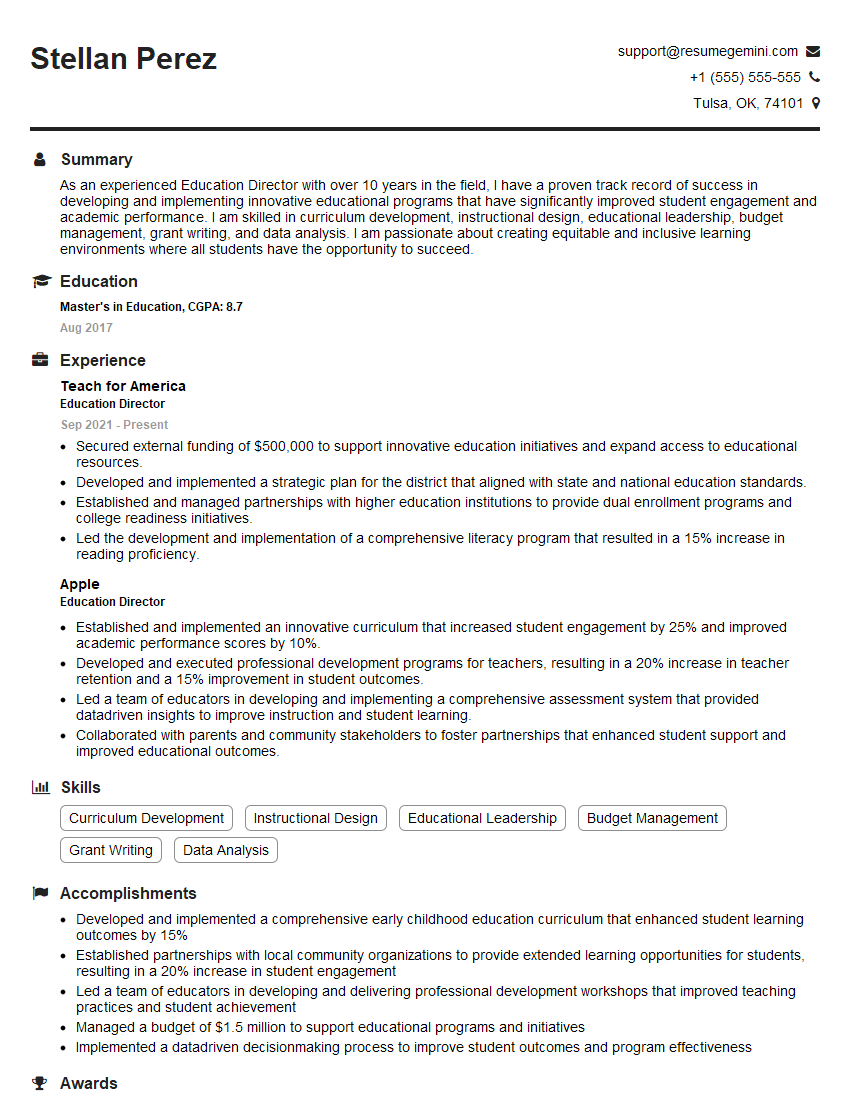
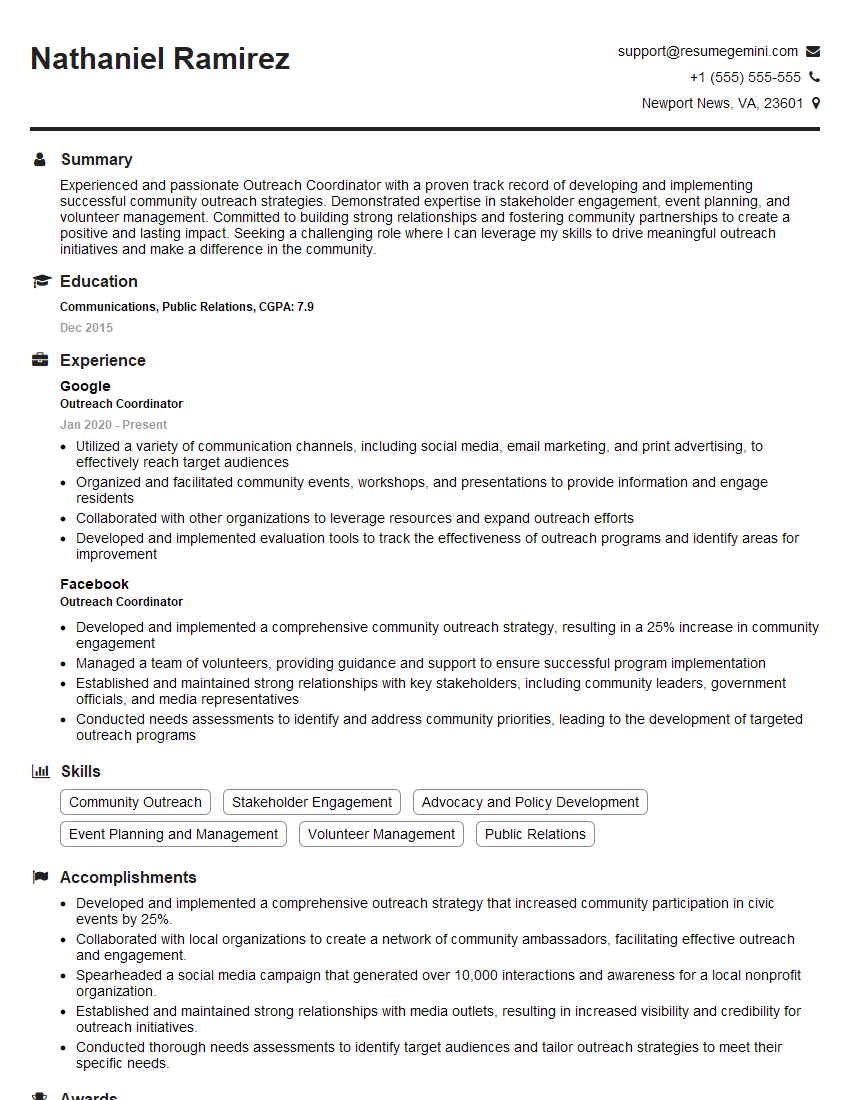
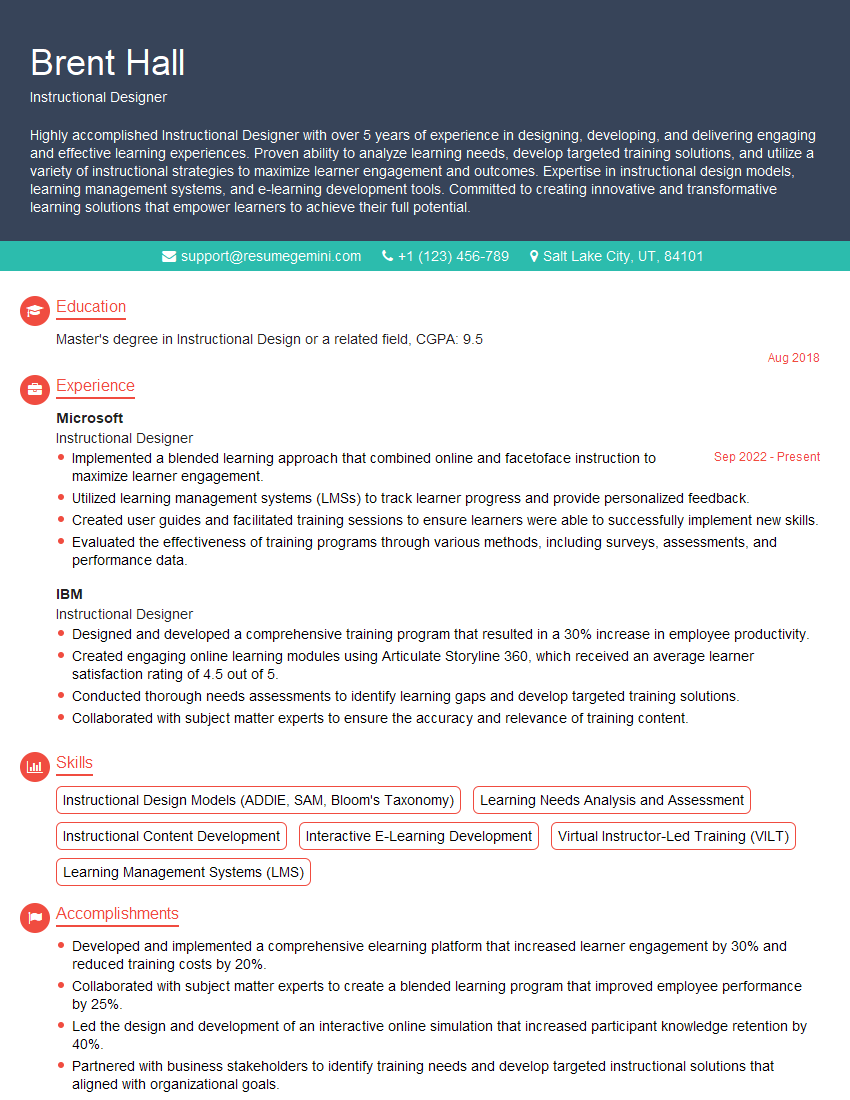
Mastering Education and Outreach Programs opens doors to fulfilling and impactful careers, allowing you to make a real difference in communities and individuals’ lives. To significantly enhance your job prospects, crafting an ATS-friendly resume is crucial. ResumeGemini can help you build a compelling and effective resume that highlights your skills and experience in a way that Applicant Tracking Systems recognize. We provide examples of resumes tailored specifically to Education and Outreach Programs to guide you in showcasing your qualifications effectively. Invest time in building a strong resume – it’s your first impression on potential employers.


Explore more articles
Users Rating of Our Blogs
Share Your Experience
We value your feedback! Please rate our content and share your thoughts (optional).
What Readers Say About Our Blog
Very informative content, great job.
good