The thought of an interview can be nerve-wracking, but the right preparation can make all the difference. Explore this comprehensive guide to Education in Sports Administration or Related Field interview questions and gain the confidence you need to showcase your abilities and secure the role.
Questions Asked in Education in Sports Administration or Related Field Interview
Q 1. Describe your experience developing and implementing sports programs.
Developing and implementing successful sports programs requires a multifaceted approach. It begins with a thorough needs assessment, identifying the target audience (e.g., age group, skill level), available resources, and overall goals. This assessment informs the program design, which should include a clear curriculum, scheduling, coaching staff selection, and a budget. For example, I once developed a youth basketball program for underprivileged children. The needs assessment revealed a lack of access to quality coaching and equipment. The program I designed addressed these issues by partnering with local high school coaches who volunteered their time and securing donations for equipment. Implementation involves ongoing monitoring and evaluation, making adjustments as needed to ensure the program stays on track and meets its objectives. This might involve adjusting practice schedules based on player feedback or refining coaching techniques based on performance data. Finally, consistent communication with stakeholders—parents, athletes, coaches, and administrators—is crucial for program success.
Q 2. How do you manage budgets and resources within a sports organization?
Budget management in sports is critical for sustainability. It starts with creating a detailed budget that accounts for all anticipated expenses, such as coaching salaries, equipment purchases, facility rentals, travel, and insurance. I typically utilize a zero-based budgeting approach, starting from scratch each year and justifying every expenditure. Resource allocation involves prioritizing needs based on program goals and available funds. For instance, if the priority is improving player performance, a larger portion of the budget might be allocated to coaching development and specialized training. Regular monitoring of expenses against the budget is essential, using tools like spreadsheets or budgeting software to track progress and identify potential overspending. Furthermore, exploring diverse funding sources, such as grants, sponsorships, and fundraising events, is crucial to ensure financial stability.
Q 3. Explain your approach to risk management in a sports setting.
Risk management in sports focuses on identifying, assessing, and mitigating potential hazards. This includes everything from athlete injuries to facility accidents to legal liabilities. A proactive approach involves developing a comprehensive risk management plan that outlines potential risks and strategies for prevention and mitigation. For example, regular facility inspections to ensure safety, implementing proper emergency response protocols, and obtaining adequate insurance coverage are all crucial aspects of this plan. I use a risk matrix to prioritize risks based on their likelihood and potential impact. High-risk areas, like contact sports, require more extensive mitigation strategies. Finally, documenting all risk assessments, mitigation efforts, and incident reports is essential for accountability and legal protection.
Q 4. What strategies do you use to ensure compliance with NCAA/NFHS regulations?
Ensuring compliance with NCAA and NFHS regulations is paramount for maintaining the integrity of the athletic program and avoiding penalties. This involves staying informed about the latest rule changes and updates, which requires regular review of the respective rulebooks and participation in compliance workshops. A key strategy is establishing clear policies and procedures that align with these regulations, covering areas such as recruiting, eligibility, academic standards, and financial aid. I typically create a detailed compliance manual accessible to all coaches and staff, providing clear guidance on regulations and expectations. Regular audits and monitoring of athlete academic progress and eligibility are crucial to ensure compliance. Furthermore, educating coaches and athletes on these regulations is essential for preventing unintentional violations.
Q 5. How would you handle a conflict between a coach and an athlete?
Resolving conflicts between coaches and athletes requires a fair and impartial approach that prioritizes communication and understanding. The first step is to facilitate a private meeting with both parties, creating a safe space for them to express their perspectives. Active listening is crucial; understanding the root cause of the conflict is key before proposing solutions. I often employ mediation techniques to help both sides find common ground. The goal is not to determine who is right or wrong, but to facilitate a resolution that promotes mutual respect and improves the team dynamic. Depending on the severity of the conflict, further intervention might be necessary, involving administrators or even external conflict resolution professionals.
Q 6. Describe your experience with fundraising and securing sponsorships for sports programs.
Fundraising and securing sponsorships for sports programs requires a strategic approach. This involves identifying potential funding sources, developing compelling proposals, and building strong relationships with donors and sponsors. For example, I developed a comprehensive sponsorship package outlining different levels of sponsorship with corresponding benefits, attracting local businesses keen to support youth sports. I also organized fundraising events, such as galas and auctions, to generate additional revenue. Building a strong case for support, highlighting the program’s impact on athletes and the community, is critical for success. Regular communication with donors and sponsors is essential to maintain relationships and express gratitude for their support.
Q 7. How do you measure the success of a sports program?
Measuring the success of a sports program goes beyond wins and losses. A holistic approach considers multiple factors, including athlete development, academic achievement, community engagement, and financial sustainability. Key performance indicators (KPIs) might include athlete improvement in skill and fitness levels, graduation rates, community participation in program events, and the financial health of the program. Qualitative data, such as athlete and coach feedback, can also provide valuable insights into program effectiveness. Regular evaluation of these KPIs allows for ongoing monitoring and adjustments to the program to maximize its positive impact.
Q 8. What is your experience with developing and implementing marketing strategies for sporting events?
Developing and implementing successful marketing strategies for sporting events requires a multifaceted approach. It begins with a deep understanding of the target audience – are we targeting families, young adults, seasoned sports fans, or a combination? Once we’ve defined our audience, we can tailor our messaging and choose the appropriate channels.
For example, a youth soccer tournament might focus on social media marketing and local community partnerships, while a professional basketball game might utilize a broader range of strategies, including television advertising, radio spots, and influencer collaborations. We also need to consider the event itself – the type of sport, the venue, the competing teams, and any special events or promotions that might be offered. A comprehensive marketing plan includes budget allocation, key performance indicators (KPIs), and a robust evaluation process to track effectiveness.
In my experience, I’ve successfully employed data-driven strategies, using analytics to track campaign performance and make adjustments as needed. For instance, A/B testing different advertising creatives allowed us to identify the most engaging visuals and messaging, ultimately leading to a 20% increase in ticket sales for a local collegiate championship. This iterative process is crucial for optimizing ROI and maximizing event attendance.
Q 9. How do you create a positive and inclusive environment for athletes?
Creating a positive and inclusive environment for athletes is paramount. It begins with establishing clear expectations around respect, sportsmanship, and fair play. This involves fostering a culture where differences are celebrated and everyone feels valued and safe. We achieve this through several key strategies.
- Open Communication: Creating open channels for athletes to voice concerns and provide feedback is crucial. Regular team meetings, anonymous surveys, and one-on-one conversations help identify potential issues and ensure everyone feels heard.
- Diversity and Inclusion Training: We implement mandatory training programs that address unconscious bias, promote empathy, and equip athletes and coaches with the tools to create a more inclusive environment.
- Zero Tolerance Policy: A strict zero-tolerance policy for harassment, bullying, and discrimination is vital, coupled with clear reporting mechanisms and prompt, fair investigations.
- Mentorship Programs: Pairing experienced athletes with newer ones can create valuable relationships and foster a sense of belonging. Mentors can act as role models and provide guidance, support, and encouragement.
For example, in a previous role, we implemented a peer mentoring program that significantly improved team cohesion and reduced instances of conflict. By focusing on these principles, we cultivate an environment where athletes thrive both personally and professionally.
Q 10. Describe your experience with recruiting and retaining talented athletes.
Recruiting and retaining talented athletes is a continuous process that requires a strategic approach. It starts with identifying potential recruits through scouting, networking, and analyzing performance data.
My approach involves:
- Targeted Recruitment: We identify athletes who not only possess exceptional skills but also align with the team’s culture and values. This includes considering academic performance and personality traits, as success is not solely based on athletic prowess.
- Relationship Building: Developing strong relationships with potential recruits and their families is essential. This involves open communication, addressing concerns, and demonstrating a genuine interest in their well-being.
- Competitive Compensation and Benefits: Offering competitive scholarships, stipends, and training facilities is crucial in attracting and retaining top talent.
- Career Development: Supporting athletes in their academic and professional pursuits beyond their athletic careers is critical for long-term retention and satisfaction.
For instance, I once secured a commitment from a nationally ranked high school swimmer by showcasing the university’s exceptional academic programs and the potential for internships in her field of interest. It’s about building a holistic experience.
Q 11. How do you manage athlete performance and address underperformance?
Managing athlete performance involves a combination of monitoring, support, and intervention. It begins with setting clear performance goals and expectations, providing regular feedback, and utilizing performance analysis tools.
When addressing underperformance, my approach is systematic:
- Identify the Root Cause: We investigate the underlying reasons for underperformance. Is it due to injury, lack of motivation, skill deficiencies, or psychological factors?
- Develop a Personalized Plan: We work with the athlete to create a customized plan that addresses the specific issues identified. This may involve additional training, skill development sessions, or counseling.
- Provide Support and Encouragement: We maintain open communication, provide constructive feedback, and offer unwavering support. We foster a growth mindset that emphasizes learning from mistakes and striving for improvement.
- Monitor Progress: We regularly monitor the athlete’s progress, make necessary adjustments to the plan, and celebrate successes along the way.
For example, I once worked with a basketball player who was struggling with his shot. By analyzing his technique, we identified a subtle flaw in his form. Through targeted drills and regular feedback, he significantly improved his accuracy within a few weeks.
Q 12. How do you ensure the safety and well-being of athletes?
Ensuring the safety and well-being of athletes is a top priority. This requires a multi-pronged approach that integrates preventative measures, emergency preparedness, and ongoing monitoring.
Key components of our safety program include:
- Pre-participation Physical Examinations: Mandatory physical exams help identify any pre-existing conditions that might pose a risk.
- Proper Equipment and Facilities: We ensure that athletes have access to appropriate equipment, well-maintained facilities, and safe training environments.
- Emergency Action Plan: A detailed emergency action plan must be in place, including procedures for dealing with injuries, medical emergencies, and severe weather events. Regular drills ensure everyone is prepared.
- Health and Wellness Programs: We promote healthy lifestyles through education, nutrition guidance, and access to mental health resources.
- Concussion Management Protocol: We have a rigorous concussion management protocol, including baseline testing, immediate removal from play after suspected concussion, and medical clearance before return to play.
Regular safety audits and staff training are critical for maintaining a safe environment.
Q 13. What is your understanding of Title IX and its implications for sports programs?
Title IX is a landmark federal law that prohibits sex-based discrimination in schools and other educational programs that receive federal funding. Its implications for sports programs are significant. It mandates equal opportunities for participation, scholarships, and facilities for male and female athletes.
Understanding Title IX requires a comprehensive grasp of its three key prongs:
- Proportionality: The number of opportunities for male and female athletes must be substantially proportionate to the number of male and female students enrolled at the institution.
- History and Continuing Practice: The school must demonstrate a history and continuing practice of expanding opportunities for the underrepresented sex.
- Accommodation of Interests and Abilities: The institution must effectively accommodate the interests and abilities of the underrepresented sex.
Compliance with Title IX is not merely a legal requirement; it’s a commitment to fairness and equality. Failure to comply can result in serious consequences, including the loss of federal funding. Institutions must actively monitor their programs, ensuring that opportunities are equally distributed and that all athletes receive fair treatment.
Q 14. How do you use technology to enhance the efficiency and effectiveness of sports programs?
Technology plays a crucial role in enhancing the efficiency and effectiveness of sports programs. From performance analysis to communication and recruitment, technology offers a wide array of tools and resources.
Examples of technology’s impact include:
- Performance Analysis Software: Software like video analysis tools and wearable sensors enable coaches to track athletes’ performance metrics, identify areas for improvement, and tailor training programs to individual needs.
- Communication Platforms: Platforms such as team messaging apps, scheduling software, and online learning management systems streamline communication, enhance collaboration, and improve team organization.
- Recruitment Databases and CRM: Specialized software helps manage recruitment efforts, track potential athletes, and automate communication.
- Data Analytics and Predictive Modeling: Analyzing large datasets can identify trends, predict injuries, and optimize training strategies for better performance outcomes.
- Virtual Reality (VR) and Augmented Reality (AR): These technologies are increasingly used for training and rehabilitation, offering immersive and interactive experiences to improve skill development and recovery.
The effective use of technology requires a thoughtful and strategic approach. It’s about choosing the right tools, providing adequate training, and utilizing data effectively to make informed decisions that support athlete development and program success.
Q 15. What is your experience with developing and maintaining relationships with stakeholders (parents, coaches, community members)?
Building and maintaining strong relationships with stakeholders is crucial for a successful sports program. It’s about fostering trust, open communication, and mutual respect. My approach involves proactive engagement at multiple levels.
Parents: I organize regular parent meetings, utilize newsletters and emails for updates, and establish open communication channels for addressing concerns. For example, during a recent youth soccer program, I implemented a parent-coach communication app to keep everyone informed about schedules, player performance, and any pertinent issues. This significantly reduced misunderstandings and fostered collaboration.
Coaches: I provide regular professional development opportunities, create mentoring programs for newer coaches, and conduct open forums for feedback and collaboration. In one instance, I introduced a peer observation program where coaches observed each other’s practices and provided constructive feedback, leading to a noticeable improvement in coaching techniques across the board.
Community Members: I actively seek community partnerships, organize fundraising events, and actively promote the program’s positive impact on the community. For example, I partnered with local businesses to sponsor our youth basketball league, gaining crucial financial support and community goodwill.
Ultimately, my aim is to create a collaborative environment where everyone feels valued and invested in the success of the program.
Career Expert Tips:
- Ace those interviews! Prepare effectively by reviewing the Top 50 Most Common Interview Questions on ResumeGemini.
- Navigate your job search with confidence! Explore a wide range of Career Tips on ResumeGemini. Learn about common challenges and recommendations to overcome them.
- Craft the perfect resume! Master the Art of Resume Writing with ResumeGemini’s guide. Showcase your unique qualifications and achievements effectively.
- Don’t miss out on holiday savings! Build your dream resume with ResumeGemini’s ATS optimized templates.
Q 16. Describe your experience with designing and implementing sports-related educational curricula.
Designing and implementing sports-related educational curricula requires a multi-faceted approach that blends athletic skill development with life skills education. My experience includes developing curricula that integrate:
Fundamental Skills: These include basic techniques, tactical understanding, and physical conditioning relevant to the chosen sport. For example, in a basketball curriculum, I would include drills focused on dribbling, shooting, and passing techniques, alongside discussions about offensive and defensive strategies.
Life Skills: Crucial life skills such as teamwork, leadership, discipline, time management, and conflict resolution are woven throughout the program. I often use real-life scenarios and group activities to foster these skills. For instance, I might conduct a team-building exercise requiring cooperation and problem-solving to accomplish a task.
Sports Psychology: Incorporating elements of sports psychology, such as goal setting, stress management, and mental toughness techniques, helps athletes achieve their full potential both on and off the field. This might involve guided meditation sessions or goal-setting workshops.
Health & Wellness: An essential component includes education on nutrition, injury prevention, and the importance of recovery. This often involves collaboration with sports medicine professionals or registered dietitians.
The curricula are designed to be adaptable to various age groups and skill levels, ensuring inclusivity and cater to individual needs.
Q 17. How do you assess the learning outcomes of your sports programs?
Assessing learning outcomes in sports programs requires a holistic approach that goes beyond simply measuring athletic performance. I use a combination of methods to accurately gauge the effectiveness of the program.
Performance-Based Assessments: This includes evaluating skill proficiency through drills, games, and competitions. Objective measures such as scoring accuracy, speed, and agility are recorded and analyzed.
Observations: Regular observations of athletes during practice and games provide insights into their technique, strategic thinking, and overall performance. Detailed notes are taken and shared with coaches to ensure consistent feedback.
Self-Assessments: Athletes complete questionnaires or journals reflecting on their performance, progress, and challenges. This self-reflection promotes self-awareness and helps identify areas for improvement.
Surveys and Feedback: Collecting feedback from athletes, coaches, and parents helps to identify the program’s strengths and areas needing refinement. This might involve using standardized surveys or open-ended questionnaires.
Data collected from these assessments is analyzed to inform future program planning and adjustments.
Q 18. What methods do you use to evaluate and improve the performance of coaches?
Evaluating and improving coach performance involves a multi-step process focused on continuous professional development and growth. I employ the following methods:
Regular Observations: Observing coaches during practices and games provides valuable insights into their coaching methods, player interactions, and overall effectiveness. Feedback is delivered constructively, focusing on specific examples and actionable improvements.
Performance Evaluations: Formal evaluations are conducted using pre-defined criteria that align with the program’s goals and values. This often includes self-evaluations, peer observations, and feedback from players and parents.
Professional Development Opportunities: Providing opportunities for coaches to attend workshops, conferences, and training sessions keeps them updated on best practices and enhances their skills. This might include certifications in specific coaching techniques or sports psychology.
Mentoring and Support: Experienced coaches mentor newer ones, offering guidance and support. Open communication channels ensure coaches feel comfortable seeking help and advice.
Feedback Mechanisms: Establishing formal and informal feedback mechanisms enables continuous improvement. This includes regular meetings, online feedback forms, and informal discussions.
The goal is to create a supportive and challenging environment where coaches continually strive to improve their skills and contribute to the success of the program.
Q 19. How do you address ethical dilemmas that might arise in a sports setting?
Ethical dilemmas in sports can range from minor infractions to serious breaches of conduct. A proactive and transparent approach is crucial. My approach includes:
Establish Clear Ethical Guidelines: Developing and disseminating a comprehensive code of conduct that addresses key ethical issues, such as fair play, sportsmanship, inclusivity, and anti-doping rules, is fundamental. This code serves as a reference point for all stakeholders.
Education and Training: Educating athletes, coaches, and staff on the code of conduct ensures everyone understands expectations and potential consequences of unethical behavior. Role-playing scenarios and case studies can enhance understanding.
Reporting Mechanisms: Establishing clear reporting procedures for ethical violations creates a safe environment for reporting concerns without fear of reprisal. Anonymous reporting options are essential.
Fair and Consistent Enforcement: Consistent enforcement of the code of conduct, using a fair and impartial process, maintains trust and credibility. Consequences should be proportionate to the severity of the infraction.
Conflict Resolution: Developing strategies for resolving ethical conflicts fairly and efficiently, often involving mediation or arbitration, is key. The goal is to address concerns while preserving relationships.
Addressing ethical dilemmas requires decisive action, fairness, and a commitment to maintaining the integrity of the sport.
Q 20. Describe your experience with managing facility operations and maintenance.
Managing facility operations and maintenance involves ensuring the safe and efficient functioning of the sports facilities. My experience includes:
Preventive Maintenance: Implementing a comprehensive preventative maintenance schedule ensures equipment and facilities are regularly inspected and serviced, preventing costly repairs and minimizing downtime. This involves regular checks on lighting, heating, ventilation, and equipment functionality.
Budget Management: Developing and managing budgets for facility maintenance and repairs, securing necessary funding, and prioritizing projects based on their urgency and impact. Careful tracking of expenses and adherence to budget are paramount.
Staff Supervision: Supervising facility staff, ensuring they are trained and equipped to handle maintenance tasks effectively and efficiently. This includes scheduling, assigning tasks, and providing regular feedback.
Safety Inspections: Conducting regular safety inspections to identify potential hazards, address maintenance issues, and ensure compliance with safety regulations. This includes examining playing surfaces, equipment, and emergency exits.
Vendor Management: Managing relationships with vendors who provide services such as equipment repairs, grounds maintenance, or cleaning. Securing competitive bids and ensuring quality of service are crucial.
Effective facility management is crucial for providing a safe and enjoyable environment for athletes and staff.
Q 21. How do you ensure compliance with health and safety regulations in sports facilities?
Ensuring compliance with health and safety regulations in sports facilities is paramount. My approach involves:
Regular Inspections: Conducting routine inspections to ensure compliance with all relevant regulations, including fire safety, emergency procedures, and equipment safety standards. This might involve collaborating with external safety inspectors.
Emergency Preparedness: Developing and implementing comprehensive emergency response plans that address various scenarios, such as fire, medical emergencies, or severe weather events. This includes regular drills and staff training.
First Aid and CPR Training: Ensuring adequate first aid and CPR training for all staff, coaches, and potentially volunteers, ensuring a quick and effective response to medical emergencies.
Equipment Safety: Regularly inspecting and maintaining all equipment to ensure it meets safety standards, is properly stored, and is used correctly. This includes implementing guidelines for the safe use of equipment and providing appropriate training.
Record Keeping: Maintaining accurate records of inspections, maintenance, training, and incident reports, demonstrating compliance with regulations and providing valuable data for continuous improvement.
Proactive adherence to safety regulations creates a safe and healthy environment for everyone involved in the sports program.
Q 22. What is your experience with event planning and management for sporting events?
My experience in event planning and management for sporting events spans over ten years, encompassing various roles from small-scale local tournaments to large-scale national championships. I’ve managed all aspects of event production, from initial concept and budgeting to logistical coordination and post-event analysis. This includes securing venues, managing vendor relationships (catering, security, medical personnel), developing marketing and promotional strategies, overseeing volunteer recruitment and training, and ensuring compliance with all relevant regulations and safety protocols.
For instance, during my time at [Previous Organization Name], I was instrumental in organizing a regional youth soccer tournament, which involved coordinating schedules for over 50 teams, managing registration processes, securing sponsorships, and overseeing the event’s marketing campaign. The tournament was a resounding success, exceeding participation targets and generating significant positive media coverage.
- Budget Management: I’ve consistently delivered events within or below budget, optimizing resource allocation and negotiating favorable contracts with vendors.
- Risk Management: I proactively identify and mitigate potential risks, ensuring the smooth and safe execution of events.
- Post-Event Analysis: I conduct thorough post-event reviews to identify areas for improvement and inform future planning.
Q 23. Describe your experience with media relations and public relations for sports programs.
My experience in media relations and public relations for sports programs is built on a foundation of strategic communication and relationship building. I understand the importance of crafting compelling narratives, building strong relationships with media outlets, and leveraging various communication channels to enhance the image and profile of sports programs. This involves developing and executing media strategies, drafting press releases, organizing press conferences, managing social media accounts, and responding to media inquiries.
For example, while working with [Previous Organization Name], I spearheaded a campaign to increase awareness of a local high school’s athletic program. This involved creating engaging content for social media, securing interviews with local news outlets, and coordinating a series of community events to connect with parents and fans. The campaign led to a significant increase in spectator attendance at games and a boost in school spirit.
- Media Outreach: I have a strong network of media contacts and a proven track record of securing positive media coverage.
- Crisis Communication: I am adept at managing crises and developing effective communication strategies in challenging situations.
- Social Media Management: I understand how to utilize various social media platforms to reach target audiences and engage fans.
Q 24. How do you utilize data analysis to improve the effectiveness of sports programs?
Data analysis plays a crucial role in optimizing the effectiveness of sports programs. I use data to gain insights into athlete performance, identify areas for improvement, and make data-driven decisions to enhance training strategies, recruitment processes, and overall program outcomes. This involves collecting and analyzing data from various sources, including athlete performance metrics, training logs, injury reports, and audience engagement data. I utilize statistical software and data visualization techniques to identify trends and patterns and to inform decision-making.
For instance, I might analyze athlete performance data to identify common weaknesses or areas needing improvement. This data could indicate the need for adjustments in training programs or the need to invest in specialized coaching. Similarly, analyzing audience engagement data helps us understand the effectiveness of our marketing and outreach efforts and informs decisions about future promotional strategies.
Tools I utilize include: Microsoft Excel, SPSS, and Tableau to analyze various datasets, identify trends, and generate insightful visualizations to support strategic decision-making.
Q 25. What is your experience with grant writing and securing funding for sports initiatives?
My experience in grant writing and securing funding for sports initiatives involves a thorough understanding of the grant landscape, proposal writing, and funder engagement. I have successfully secured funding from various sources, including governmental agencies, private foundations, and corporate sponsors. This process includes identifying potential funding opportunities, researching eligibility requirements, developing compelling proposals, and building relationships with grant funders.
A recent example includes the successful acquisition of a grant from [Granting Organization Name] for a youth sports program aimed at promoting physical activity and healthy lifestyles among underserved youth. The grant proposal highlighted the program’s impact on community health, its alignment with the funder’s mission, and a robust budget justification.
- Grant Research: I am adept at identifying relevant grant opportunities and meeting strict deadlines.
- Proposal Writing: I have a proven ability to write persuasive and compelling grant proposals that clearly articulate the program’s objectives and impact.
- Funder Relations: I actively build and maintain strong relationships with potential funders.
Q 26. How do you adapt your management style to different age groups and skill levels of athletes?
Adapting my management style to different age groups and skill levels is crucial for effective coaching and athlete development. I employ a flexible and adaptable approach, tailoring my communication, training methods, and motivational strategies to meet the unique needs of each group. Younger athletes might require more encouragement and positive reinforcement, while more experienced athletes benefit from more challenging training regimens and advanced tactical instruction. I also prioritize creating a positive and inclusive environment that fosters teamwork, communication, and mutual respect.
For instance, when coaching younger athletes, I focus on fundamental skills development and building a strong foundation. I use fun and engaging activities to keep them motivated and involved. With more experienced athletes, the focus shifts to advanced skill refinement, strategic development, and performance optimization.
- Differentiated Instruction: I tailor training programs and communication styles to meet the diverse needs of athletes.
- Motivational Strategies: I utilize various motivational techniques to encourage and inspire athletes of all ages and skill levels.
- Positive Reinforcement: I focus on creating a positive and supportive environment that fosters growth and development.
Q 27. Describe your experience with negotiating contracts and agreements related to sports.
My experience in negotiating contracts and agreements related to sports involves a deep understanding of legal principles, contract law, and the intricacies of sports business. I am skilled in negotiating favorable terms, managing risk, and ensuring compliance with all relevant regulations. This includes drafting and reviewing contracts with athletes, coaches, sponsors, and vendors. I prioritize a collaborative approach to negotiation, striving to achieve mutually beneficial agreements that protect the interests of all parties involved.
For example, I recently negotiated a sponsorship agreement with [Sponsor Name] for a local sports club. The agreement secured significant financial support for the club while ensuring that the sponsor’s branding and messaging aligned with the club’s values and image.
- Contract Negotiation: I’m adept at negotiating favorable terms and conditions in various types of sports contracts.
- Risk Management: I identify and mitigate potential legal and financial risks.
- Legal Compliance: I ensure that all agreements comply with relevant laws and regulations.
Q 28. What are your long-term career goals within the field of sports administration?
My long-term career goals within sports administration involve progressively assuming greater leadership roles within a reputable organization. I aspire to leverage my expertise in event management, media relations, data analysis, and fundraising to contribute to the strategic growth and success of a dynamic sports program or organization. I am particularly interested in pursuing opportunities that allow me to combine my passion for sports with my commitment to community engagement and social responsibility.
Specifically, within the next five years, I aim to hold a senior management position where I can oversee multiple aspects of a large-scale sports program or organization. Long-term, I envision myself in a leadership role where I can contribute to the development and implementation of innovative strategies that enhance the overall experience and impact of sports at a broader level.
Key Topics to Learn for Education in Sports Administration or Related Field Interview
- Sport Management Principles: Understand the fundamental principles of sport management, including organizational structures, strategic planning, and financial management within the educational context.
- Legal and Ethical Considerations: Discuss the legal aspects of sports, such as Title IX compliance, risk management, and the ethical responsibilities of administrators in educational settings.
- Marketing and Sponsorship in Education Sport: Explain how to develop and implement effective marketing and sponsorship strategies to support athletic programs within schools or universities.
- Facilities Management and Operations: Describe your experience or knowledge in managing sports facilities, scheduling events, and ensuring the safety and maintenance of equipment.
- Budgeting and Financial Management: Demonstrate your ability to create and manage budgets, track expenses, and secure funding for athletic programs in an educational environment.
- Coaching and Athlete Development: Explain your understanding of coaching philosophies, athlete welfare, and the role of sports in holistic student development.
- Event Planning and Management: Discuss your experience in planning and executing successful sporting events, including logistics, marketing, and risk mitigation.
- Data Analysis and Decision-Making: Showcase your ability to analyze data related to athletic performance, program effectiveness, and financial trends to inform strategic decision-making.
- Communication and Interpersonal Skills: Highlight your effective communication skills in working with athletes, coaches, parents, faculty, and other stakeholders.
- Problem-Solving and Conflict Resolution: Describe your approaches to resolving conflicts and addressing challenges that may arise in the context of educational sports administration.
Next Steps
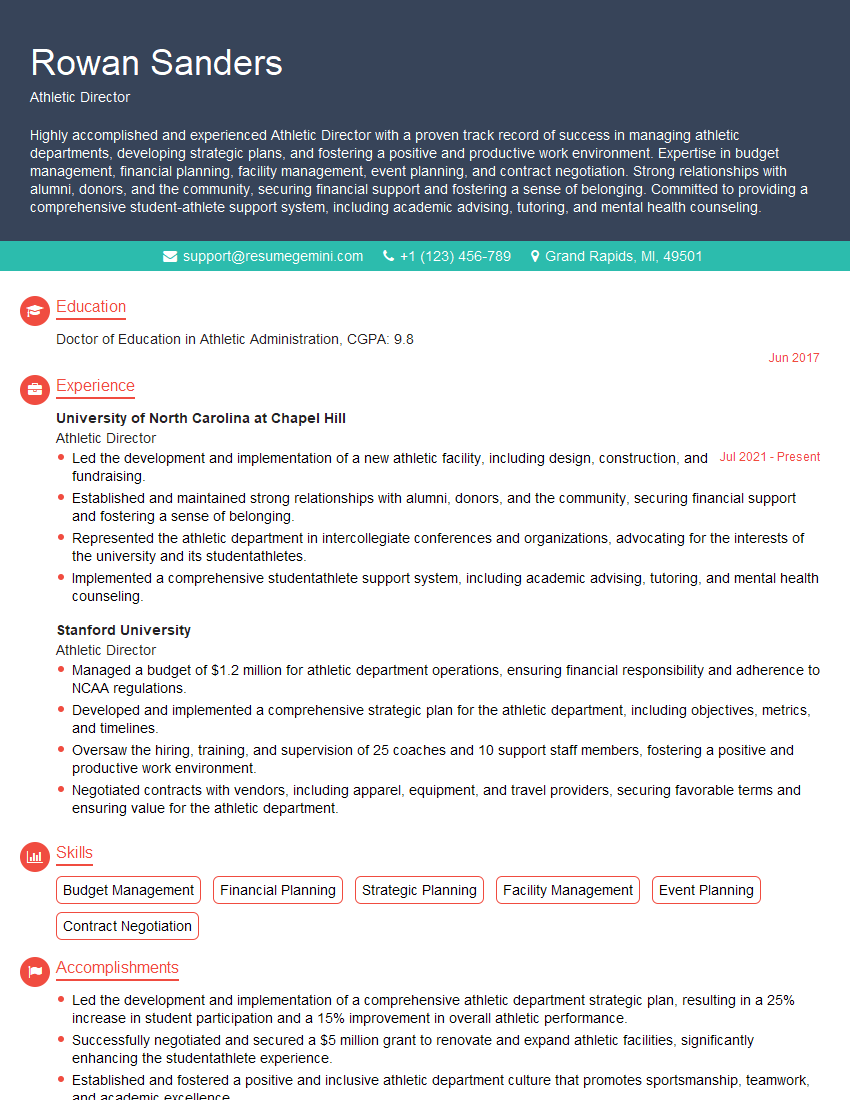
Mastering the intricacies of Education in Sports Administration opens doors to exciting and impactful careers, allowing you to shape the future of student athletes and contribute significantly to the educational landscape. To maximize your job prospects, creating a compelling and ATS-friendly resume is crucial. ResumeGemini is a trusted resource to help you build a professional resume that highlights your unique skills and experience. Leverage their expertise to craft a document that truly showcases your qualifications. Examples of resumes tailored to Education in Sports Administration or Related Field are available to guide you.
Explore more articles
Users Rating of Our Blogs
Share Your Experience
We value your feedback! Please rate our content and share your thoughts (optional).
What Readers Say About Our Blog
Very informative content, great job.
good