Are you ready to stand out in your next interview? Understanding and preparing for Effective Striking Techniques interview questions is a game-changer. In this blog, we’ve compiled key questions and expert advice to help you showcase your skills with confidence and precision. Let’s get started on your journey to acing the interview.
Questions Asked in Effective Striking Techniques Interview
Q 1. Explain the difference between power and speed in striking.
Power and speed are distinct but interconnected elements in striking. Power is the force generated by a strike, essentially how hard the blow lands. Speed, conversely, is how quickly the strike is delivered. Think of a heavyweight boxer versus a lightweight boxer. The heavyweight might generate significantly more power due to their larger mass and strength, but the lightweight might possess greater speed, allowing for quicker combinations and evasion.
A powerful but slow strike can be easily blocked or evaded. Conversely, a fast but weak strike might not cause significant damage. The most effective strikes ideally combine both power and speed. This is achieved through proper technique, conditioning, and training. Imagine a perfectly executed karate chop – fast and powerful enough to break a board, illustrating the ideal synergy between the two.
Q 2. Describe the biomechanics of a proper jab.
The biomechanics of a proper jab involve a coordinated movement of the entire body. It starts with a slight shift of weight onto the lead leg, followed by a rapid extension of the lead arm, propelled by the rotation of the torso. The punch itself is a straight-line projection from the shoulder, utilizing the power generated from the legs and core. The fist should remain relatively relaxed until impact, maximizing speed and minimizing injury risk. The impact should be delivered with the knuckles, ideally aligned with the forearm for optimum force transfer. The follow-through involves a complete extension of the arm, before retracting the jab quickly to defend against a counter-attack.
Think of it like a spring; the coiled body acts as the spring, storing potential energy which is released explosively through the jab. Maintaining a tight but not tense posture is crucial for generating power and speed. This means engaging your core muscles, ensuring the power transfers efficiently from the ground up.
Q 3. What are the key elements of a successful hook?
A successful hook relies on several key elements. Firstly, it involves a pivoting motion of the body, rotating the hips and shoulders to generate power. The punch itself is a short, tight arc, aimed at the side of the opponent’s head or body. Proper fist alignment and a snapping action of the wrist are essential for maximizing impact. Similar to the jab, the power comes from the legs and core, but the rotational movement adds significant power. The hook should be compact and controlled, not a wild swing. The elbow should stay tucked close to the body to protect the rib cage until the moment of impact.
A common mistake is throwing a hook with only the arm. Imagine throwing a hook only using your arm to swing a baseball bat – it wouldn’t have nearly the same power as swinging with your whole body. This is why proper body mechanics and generating power from the ground up is vital to a successful hook.
Q 4. How do you teach proper footwork for striking?
Teaching proper footwork for striking involves emphasizing balance, agility, and efficient movement. We start by teaching the basic stance, ensuring the feet are shoulder-width apart with a slight bend in the knees. From there, we focus on the importance of transferring weight smoothly between the feet. This is crucial for generating power and maintaining balance when throwing strikes. We practice drills like shadow boxing, footwork drills with various steps (shuffles, pivots, lateral movements), and cone work to improve agility and coordination.
Footwork is less about intricate steps and more about being grounded, mobile, and always maintaining a balanced fighting stance. Imagine a boxer constantly moving around their opponent, evading strikes while remaining ready to counter. This mobility and balance are the keys to successful footwork in striking. We use a step-by-step approach, starting with basics and gradually introducing more complex movements as the student progresses.
Q 5. Explain the importance of maintaining balance during striking.
Maintaining balance during striking is paramount. Loss of balance can lead to an open opportunity for your opponent to counter, causing injury or defeat. A balanced stance provides a stable base from which to generate power and allows for quick and efficient movement. A strong core and properly aligned legs are key to maintaining balance, acting as anchors for all strikes. We emphasize maintaining a low center of gravity, distributing weight evenly, and ensuring your stance is not too wide or narrow. Practice involves working on various drills to improve core strength and balance specifically in a striking context.
Think of a tree; if the trunk (your core) is strong and its roots (your legs) are firmly planted, it can weather any storm. Similarly, a strong core and stable base enable efficient movement and power generation during striking.
Q 6. What are the different types of guards used in striking?
Different guards are employed depending on the striking style and the fighter’s preference. The most common guard is the high guard, where the hands are held high near the face for maximum protection. A low guard positions the hands lower, offering better visibility but reduced facial protection. A peek-a-boo guard, popularized by Mike Tyson, keeps the hands near the face but offset, providing good protection while allowing quick offensive opportunities. A Philly shell uses a high guard with one hand covering the face and the other hand covering the body. The choice of guard depends on individual strengths, weaknesses, and the opponent’s style.
Selecting the appropriate guard is a crucial strategic decision in a fight. Each guard offers different advantages and disadvantages, making it important to understand your opponent’s tendencies and adjust your guard accordingly to maximize defense and maintain offensive capabilities.
Q 7. Describe effective counter-striking techniques.
Effective counter-striking relies on timing, precision, and anticipation. It involves reacting to your opponent’s attack and delivering a counter-strike while they are off-balance or committed to their attack. Common counter-striking techniques include: slipping a punch and landing a counter-hook, parrying a jab and following with a cross, or checking a kick and using a knee strike. The key to effective counter-striking is reading your opponent’s attacks – predicting their movements and timing your counters effectively.
Successful counter-striking often involves recognizing patterns in your opponent’s attacks. This involves observation, anticipation, and precise timing. It is not about brute force but more about intelligent movement and a keen sense of timing. Mastering counter-striking is a significant component in becoming a well-rounded striker.
Q 8. How do you teach effective range management in striking?
Effective range management in striking is crucial for maximizing offensive opportunities while minimizing risk. It’s about understanding and controlling the distance between you and your opponent to dictate the engagement.
We teach this through practical drills focusing on the different striking ranges:
- Long Range: This involves using long-range strikes like kicks or long punches, maintaining a safe distance, and utilizing feints to create openings. We practice footwork drills emphasizing lateral movement and distance control to stay out of the opponent’s power range.
- Mid-Range: This requires a balance between offense and defense. We focus on utilizing combinations of punches and short kicks, incorporating footwork to manage distance effectively and create angles for attacks. Shadow boxing and partner drills using focus mitts are key here.
- Close Range: In close range, clinch work, elbows, knees, and short punches become important. We emphasize the use of short, powerful strikes, maintaining good posture to avoid being controlled, and utilizing effective clinch-breaking techniques.
Understanding your own reach and the opponent’s reach is paramount. We use measuring tapes and sparring to help students visualize and internalize these ranges.
Q 9. Explain the concept of ‘power generation’ in striking.
Power generation in striking isn’t just about brute force; it’s about efficiently transferring energy from your body’s core to your target. It’s a coordinated effort involving multiple muscle groups working in sync.
We break down power generation into key components:
- Stance and Posture: A stable and balanced stance is foundational. Proper weight distribution allows for efficient power transfer. We focus on building a strong core and maintaining good posture.
- Hip Rotation: The hips are the engine room. Rotating your hips powerfully into the strike adds significant force. We use drills that focus on hip snap and rotation, emphasizing the connection between hip movement and striking technique.
- Weight Transfer: Shifting your weight appropriately from your back foot to your front foot during a strike ensures maximum force delivery. We use drills that focus on the sequence of weight transfer, ensuring proper timing and coordination.
- Follow Through: Completing the motion ensures the full transfer of energy. Stopping the motion short diminishes the power significantly. We emphasize the importance of continuing the motion past the target.
Think of it like a whip; the energy builds gradually and releases powerfully at the end. We often use analogies like this to make the concept easier to understand.
Q 10. What are some common striking errors and how do you correct them?
Common striking errors are often due to a lack of fundamental understanding. Here are some examples and how we correct them:
- Telegraphing Punches: Giving away your attack intentions before the strike lands. We work on disguising punches with feints and subtle movements, focusing on developing proper timing and deception.
- Leaning In Too Far: This leaves you vulnerable to counters. We emphasize maintaining a balanced stance and striking from a distance, then retreating efficiently.
- Leaving Your Chin Exposed: A major vulnerability. We drill head movement and defensive techniques to protect the chin, reinforcing a good guard.
- Poor Footwork: Lack of mobility limits your range and makes you predictable. We emphasize footwork drills, including circling, stepping, and pivoting, emphasizing the interplay between striking and movement.
- Lack of Relaxation: Tension inhibits power and speed. We emphasize proper breathing techniques and relaxation exercises to ensure that students are not tense during their strikes.
Corrections involve breaking down the movement into smaller components, providing feedback through video analysis and real-time coaching during drills, and consistent practice and repetition.
Q 11. Describe the principles of effective head movement in striking.
Effective head movement is essential for defense and creating offensive openings. It’s not just about dodging; it’s about precise and controlled movements that create angles and opportunities.
The principles include:
- Slipping: Moving your head to the side to evade an incoming strike. We practice slipping drills against both jabs and power punches, emphasizing the timing and precision required.
- Rolling: Moving your head in a circular motion to evade a strike. We teach this technique for punches that require a wider range of evasion.
- Parrying: Using your hands to deflect or block an incoming strike. This needs to be combined with head movement so as to avoid leaving your head undefended. We practice parrying drills in conjunction with head movement.
- Weaving: Moving your head up and down to evade strikes, often combined with footwork to create more space. We practice weaving drills to improve coordination and timing.
Good head movement requires timing, anticipation, and a good understanding of an opponent’s rhythm. We work on this using reaction drills, sparring, and controlled training with partners.
Q 12. How do you teach defensive techniques to mitigate striking attacks?
Defensive techniques are crucial in striking. They’re not just about blocking; they’re about creating space, redirecting attacks, and controlling the engagement.
We teach a layered approach:
- Blocking: Using your hands, forearms, and shoulders to deflect incoming strikes. We teach different blocking techniques for different strikes, emphasizing proper technique to avoid injury.
- Parrying: Deflecting an incoming strike using your hands or forearms. We integrate this with head movement to further improve defense.
- Checking: Using your legs to intercept low kicks. We drill leg checks emphasizing proper technique and footwork to avoid injury.
- Clinching and Takedowns: Control your opponent’s distance and prevent them from striking effectively. This is crucial in situations where you are losing on the distance game. We train specific clinch work focusing on breaking free and creating strikes from close range.
- Footwork and Evasion: Maintaining distance and creating angles to evade attacks. We teach footwork, along with slipping, rolling, weaving and circling techniques.
Defensive techniques must be practiced in conjunction with offensive movements. We integrate defensive drills into sparring sessions to create a realistic training environment.
Q 13. What are the considerations for training different body types in striking?
Different body types present unique challenges and advantages in striking. We adapt our training to address these:
- Taller Individuals: Often have a reach advantage but can be less agile. We focus on maximizing their reach with long-range strikes and utilizing their height defensively. We also incorporate agility and footwork drills to improve overall mobility.
- Shorter Individuals: Might lack reach but can be more agile and powerful. We concentrate on close-range striking techniques, utilizing elbows, knees, and close-range punches. We also emphasize strong defensive skills to compensate for their shorter reach.
- Heavier Individuals: Usually possess more power but may be slower. We emphasize power generation techniques to maximize their strength while working on improving their speed and agility through specific conditioning drills.
- Lighter Individuals: Often faster and more agile. We focus on speed, precision, and footwork to create openings and deliver strikes effectively. We also emphasize defensive strategies to avoid absorbing too many heavy blows.
Understanding individual body mechanics is key. We assess each student’s strengths and weaknesses to develop a personalized training plan.
Q 14. How do you adapt training for different age groups in striking?
Adapting striking training for different age groups is crucial for safety and effectiveness. We adjust intensity and techniques based on developmental stages:
- Children (under 12): Focus on fundamental techniques, proper form, and building a strong base. We incorporate games and fun activities to maintain engagement and emphasize safety. Sparring is carefully controlled and regulated.
- Teenagers (13-17): Gradually increase the intensity and complexity of training. We introduce more advanced techniques, sparring becomes more realistic, and conditioning is increased. Emphasis remains on safety and proper technique.
- Adults (18+): Training can be tailored to individual goals and fitness levels. We offer a wide range of training programs including beginner and advanced. Sparring can be more intense and strategic. Emphasis remains on refining technique and developing overall fitness.
- Older Adults (50+): Focus on maintaining fitness, improving balance and coordination, and avoiding injury. We modify techniques as needed, reduce high-impact drills and emphasize strength and conditioning that suits their specific needs.
Understanding the physical limitations and developmental needs of each age group is essential to ensuring safe and effective training. We regularly monitor students’ progress and adapt the training accordingly.
Q 15. Explain the importance of proper conditioning for striking.
Proper conditioning is the bedrock of effective striking. It’s not just about brute strength; it’s about building the resilience and power necessary to deliver impactful strikes repeatedly without injury. Think of it like this: a finely tuned engine needs regular maintenance to perform optimally. Similarly, your body needs specific conditioning to withstand the rigors of striking.
- Cardiovascular Conditioning: Essential for maintaining stamina during bouts of intense activity. Imagine delivering a flurry of punches – you need the cardiovascular endurance to sustain that output.
- Strength Training: Focus on functional strength, building power in the muscles used for striking (legs, core, shoulders, arms). Think explosive movements, not just heavy lifting.
- Flexibility and Mobility: A flexible body allows for a wider range of motion, leading to more powerful and precise strikes. Tight muscles restrict power and increase the risk of injury.
- Impact Conditioning: This is crucial and often overlooked. Gradually increasing the force your body can absorb helps prevent injuries like bone fractures and concussions. Techniques include hitting heavy bags, focusing on proper technique and gradually increasing the intensity.
For instance, a boxer might incorporate roadwork, shadow boxing, and heavy bag training to build their cardiovascular endurance and impact resistance. A Muay Thai practitioner might add plyometrics and weight training to increase their explosive power and leg strength.
Career Expert Tips:
- Ace those interviews! Prepare effectively by reviewing the Top 50 Most Common Interview Questions on ResumeGemini.
- Navigate your job search with confidence! Explore a wide range of Career Tips on ResumeGemini. Learn about common challenges and recommendations to overcome them.
- Craft the perfect resume! Master the Art of Resume Writing with ResumeGemini’s guide. Showcase your unique qualifications and achievements effectively.
- Don’t miss out on holiday savings! Build your dream resume with ResumeGemini’s ATS optimized templates.
Q 16. What are the safety precautions for teaching striking techniques?
Safety is paramount when teaching striking techniques. A single mistake can lead to serious injury. The following precautions are non-negotiable:
- Proper Warm-up and Cool-down: This prepares the body for exertion and helps prevent injuries. Dynamic stretching, light cardio, and joint mobility exercises are key.
- Emphasis on Proper Technique: Insist on correct form from day one. Improper technique is a major source of injury. Slow, deliberate practice is far more effective than fast, sloppy movements.
- Appropriate Protective Gear: Headgear, gloves, mouthguards, shin guards – these are not optional. They mitigate the impact of strikes and reduce the risk of injury.
- Controlled Sparring: Sparring should be introduced gradually and only after students have a solid foundation in technique and safety. It should always be controlled, focused on skill development, and never ego-driven.
- Supervision and Communication: Constant supervision is crucial, especially during sparring. Establish clear communication protocols, allowing students to signal pain or discomfort.
- Emergency Preparedness: Know how to handle injuries, have a first-aid kit readily available, and have a plan for dealing with more serious medical emergencies.
For example, before any sparring session, I conduct a thorough review of safety protocols and ensure everyone is wearing the correct protective gear. I also emphasize the importance of controlled movements and communication during sparring drills.
Q 17. How do you assess a student’s striking ability?
Assessing a student’s striking ability requires a multi-faceted approach. It goes beyond just power; accuracy, technique, speed, and timing all play a crucial role.
- Technical Proficiency: How well do they execute fundamental techniques? Are their movements fluid and efficient? Do they maintain proper balance and posture?
- Accuracy: Can they consistently hit their target? This is crucial for efficiency and effectiveness. We can use drills that incorporate targets of varying sizes and distances.
- Power: This is measured not just by how hard they can hit but also by the speed and efficiency of their strikes. We assess this through heavy bag work and controlled sparring.
- Speed and Timing: Speed is important, but uncontrolled speed is dangerous. Effective timing involves anticipation and reacting to an opponent’s movements. This is observed in shadow boxing and drills against a partner.
- Footwork and Movement: How well do they move around and create angles? This significantly impacts their striking ability. This can be observed in simple footwork drills and shadow boxing.
I use a combination of observation, drills, and controlled sparring to evaluate these aspects. For instance, I might have a student perform a series of punches at a focus mitt, observing their accuracy, power, and speed. Then, I would incorporate controlled sparring to assess their timing and defensive skills.
Q 18. What are some effective drills for improving striking accuracy?
Improving striking accuracy requires focused drills that emphasize precision over power. Here are some effective ones:
- Target Practice: Using targets of varying sizes (e.g., focus mitts, pads, heavy bags) at different ranges to improve accuracy and consistency. Start with larger targets closer, then gradually decrease the size and increase the distance.
- Point Sparring: Sparring where the goal is to touch the target rather than deliver a powerful blow. This emphasizes accuracy and timing without the risk associated with full-power strikes.
- Shadow Boxing with Focus: Imagine targets on your opponent and concentrate on hitting those precise points repeatedly. This improves accuracy and visualization.
- Blindfolded Drills (Advanced): This is a challenging drill focusing on body awareness and precise muscle memory. It’s only for advanced students under strict supervision and should always start slowly and gradually increase difficulty.
- Reaction Drills: Using tools like reaction balls or having a partner throw pads unpredictably. This improves hand-eye coordination and reaction time.
For example, I might have a student practice jabbing a focus mitt, focusing on hitting the center with each strike. Then, we progress to combinations, aiming for specific targets like the temple or the liver.
Q 19. What are some effective drills for improving striking power?
Improving striking power isn’t just about lifting weights; it’s about generating force through proper technique and body mechanics. Here’s how to improve it:
- Strength Training: Focus on compound exercises that work multiple muscle groups simultaneously, such as squats, deadlifts, and presses. These exercises build overall strength that translates into striking power.
- Plyometrics: Explosive exercises like jump squats, box jumps, and medicine ball throws train your muscles to generate power quickly. These enhance the speed and explosiveness of your strikes.
- Heavy Bag Work: Hitting a heavy bag helps develop power and impact conditioning. Focus on proper technique and gradually increase the intensity.
- Power Drills: Specific drills focusing on transferring power from the legs and core to the arms or legs for strikes. These drills typically involve rotational movements and explosive hip actions.
- Partner Drills: Controlled resistance drills with a partner can help develop power and improve technique under resistance.
For example, a student might incorporate plyometric exercises like jump squats to increase leg power for kicks. Combined with heavy bag work focusing on powerful punches, this builds both explosive power and endurance.
Q 20. How do you incorporate sparring into a striking training program?
Sparring is crucial for applying striking techniques under pressure, but it must be introduced responsibly. It shouldn’t be introduced until a student has mastered the fundamentals and understands safety protocols.
- Gradual Introduction: Start with light, controlled sparring focusing on technique and timing, slowly escalating the intensity.
- Clear Rules and Guidelines: Establish clear rules, including prohibited techniques, to maintain safety.
- Specific Goals: Each sparring session should have a clear focus, such as practicing specific combinations or defensive maneuvers.
- Regular Feedback: Provide continuous feedback during and after sparring sessions to help students improve their technique and strategy.
- Varying Partners: Sparring with different partners exposes students to various fighting styles and helps them adapt their strategies.
- Reflection and Adjustment: Encourage students to review their sparring sessions, identifying areas for improvement.
For example, early sparring sessions might focus solely on footwork and jabbing. As students progress, we might introduce combinations and more complex movements, always maintaining a controlled and safe environment.
Q 21. What are the ethical considerations of teaching striking techniques?
Ethical considerations are paramount when teaching striking techniques. These techniques, if misused, can cause serious harm. My ethical responsibilities include:
- Responsible Instruction: Emphasize that striking techniques are tools that can be used for self-defense or sport, but never for aggression or violence.
- Safety First: Prioritize safety in all training sessions, ensuring proper technique, protective gear, and controlled sparring.
- Character Development: Encourage discipline, respect, and self-control, understanding that these are as important as physical skills.
- Appropriate Use: Clearly communicate that these skills should only be used in self-defense situations or sanctioned competitions.
- Avoiding Exploitation: Never promote the use of these skills for harmful purposes, and take steps to prevent students from using these skills for bullying or violence.
- Transparency and Consent: Always be transparent about the risks involved in training and ensure that students understand and consent to the level of intensity of training.
For example, I always begin my classes with a discussion on the responsible use of striking techniques, emphasizing self-control and respect for others. I clearly define acceptable and unacceptable behavior, reinforcing that violence is never justified.
Q 22. How do you modify striking techniques for individuals with physical limitations?
Adapting striking techniques for individuals with physical limitations requires a holistic approach, focusing on safety and achievable goals. We must assess the specific limitations – be it reduced range of motion, strength deficits, or balance issues – before modifying the technique. For example, someone with limited mobility in their shoulders might benefit from focusing on strikes that primarily utilize the hips and legs, like powerful low kicks or modified punches that emphasize hip rotation rather than shoulder extension. Those with reduced strength might be taught to prioritize technique and precision over raw power, aiming for vital points rather than brute force. We could modify stances to improve stability, and we can focus on drills that improve balance and coordination to reduce the risk of injury.
For someone with arthritis, we might focus on techniques that minimize impact stress on joints, potentially incorporating specialized padding or adapting the striking surface to reduce impact force. Each adaptation is personalized to the individual’s needs and capabilities, always prioritizing safety and progress.
Q 23. Explain the principles of effective striking combinations.
Effective striking combinations are built on several core principles: Setup, Speed, Power, and Flow. The setup involves using feints (false attacks) or strategic movements to distract the opponent and create an opening. This opening is then exploited with a rapid speed of attack, often involving a combination of punches or kicks. The power comes from proper body mechanics; transferring weight, rotating the hips, and engaging the core muscles. Finally, flow refers to the seamless transition between strikes. Each strike should naturally lead into the next, creating a fluid sequence that overwhelms the opponent’s defense.
For instance, a classic boxing combination might be a jab (fast, straight punch), followed by a cross (powerful straight punch), and then a hook (curved punch to the side). The jab sets up the cross, and the cross then creates an opportunity for the hook. The key is to practice these combinations repeatedly until they become almost instinctive.
Q 24. Describe the importance of target selection in striking.
Target selection is paramount in striking. Targeting vulnerable areas maximizes the effectiveness of each strike, increasing the likelihood of incapacitating an opponent while minimizing risk to the striker. High-value targets include the head (temple, jaw, nose), groin, solar plexus, liver, and kidneys. The head, for instance, is a crucial target because of its sensitivity and proximity to the brain. A well-placed strike to the temple or jaw can cause a knockout. The groin is another highly vulnerable area, capable of causing significant pain and temporary incapacitation.
However, choosing targets should also consider the context. In a self-defense situation, the goal is to create an opportunity for escape, not necessarily to inflict maximum damage. Therefore, striking at easily accessible, high-impact targets becomes the priority. For instance, a swift strike to the nose or eyes can create the needed distraction to escape. In a sporting context, targeting becomes more nuanced, with rules and regulations determining the acceptable areas.
Q 25. How do you assess the risk of injury in striking techniques?
Assessing the risk of injury in striking involves a multifaceted evaluation. We consider factors such as the technique’s inherent risks, the individual’s physical condition (strength, flexibility, pre-existing injuries), their training level, and the protective equipment used. Some techniques, like spinning kicks or powerful head strikes, carry a higher intrinsic risk due to their complexity and potential for uncontrolled movement or impact.
We conduct a thorough physical assessment to identify any potential weaknesses or pre-existing injuries that might increase the risk of further damage. Proper warm-up and cool-down routines are also vital in reducing risk. Additionally, observation of the trainee’s form and technique during practice allows for immediate feedback and corrections, mitigating potential dangers. Using appropriate safety gear, such as headgear, gloves, and mouthguards, further minimizes the risk of injuries.
Q 26. What are some common injuries associated with striking and how can they be prevented?
Common striking-related injuries include: concussions (brain injury from head trauma), fractures (broken bones in hands, feet, or face), sprains and strains (ligament or muscle damage), bruises and contusions (damaged blood vessels under the skin), and lacerations (cuts).
Prevention strategies focus on proper technique, sufficient conditioning, and protective gear. Mastering proper form minimizes unnecessary stress on joints and reduces the chances of injury. Adequate strength and conditioning exercises improve the body’s ability to withstand impact forces. Wearing appropriate protective gear significantly reduces the risk of serious injury. Finally, paying attention to warning signs and seeking medical attention when necessary is crucial.
Q 27. Describe your experience with different striking styles.
My experience encompasses a range of striking styles, including boxing, Muay Thai, Taekwondo, and Karate. Each style offers unique advantages and emphasizes different aspects of striking. Boxing, for example, focuses on precision punching techniques and footwork. Muay Thai incorporates powerful strikes with elbows and knees, adding devastating close-range options. Taekwondo emphasizes fast, powerful kicks, often utilizing aerial techniques. Karate focuses on linear strikes with an emphasis on blocking and counter-striking.
This diverse experience allows me to tailor my instruction to individual preferences and goals, drawing upon the strengths of each style to create a comprehensive and effective curriculum. For example, I might incorporate the footwork drills from boxing into a Muay Thai class to improve the student’s ability to maintain distance and deliver strikes effectively.
Q 28. How do you stay current with the latest advancements in striking techniques?
Staying current in the ever-evolving field of striking techniques requires continuous learning and adaptation. I regularly attend seminars and workshops led by renowned instructors and practitioners from various disciplines. I participate in professional development courses, focusing on biomechanics, sports science, and injury prevention. I also actively follow relevant research publications and journals in sports medicine and martial arts. This ongoing professional development ensures that my teaching remains at the forefront of modern techniques and safety practices.
Additionally, I regularly review instructional videos and analyze professional fights, scrutinizing successful techniques and strategies to identify trends and further enhance my teaching. Active participation in the martial arts community through workshops, conferences, and competitions helps keep my knowledge current and allows for continued learning from experienced peers and mentors.
Key Topics to Learn for Effective Striking Techniques Interview
- Fundamental Striking Mechanics: Understanding weight transfer, proper footwork, and the generation of power through the body.
- Punching Techniques: Mastering various punches (jab, cross, hook, uppercut), their applications, and defensive counters.
- Kicking Techniques: Exploring different kicks (front kick, side kick, roundhouse kick), their power generation, and targeting.
- Defensive Strategies: Developing effective blocking, parrying, and evasion techniques to minimize damage and create opportunities.
- Footwork and Positioning: Understanding the importance of maintaining optimal distance, angles, and mobility for effective striking.
- Target Selection and Accuracy: Learning to identify vulnerable areas on an opponent and consistently strike with precision.
- Power Generation and Transfer: Analyzing the biomechanics of effective striking to maximize force and impact.
- Practical Application Scenarios: Considering how to adapt techniques based on opponent’s style, size, and defensive capabilities.
- Training Methodology and Conditioning: Understanding the importance of physical conditioning, sparring, and continuous learning in improving striking proficiency.
- Safety and Risk Mitigation: Prioritizing safety during training and competition through proper techniques and protective measures.
Next Steps
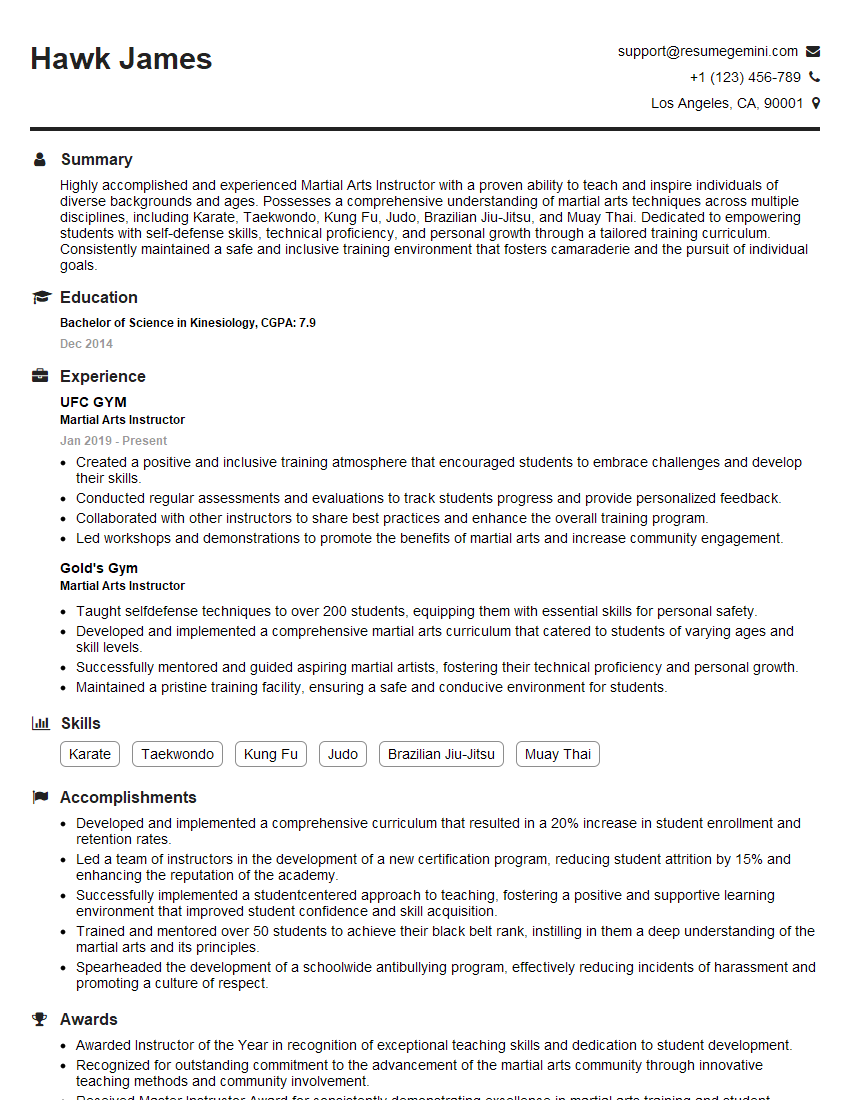
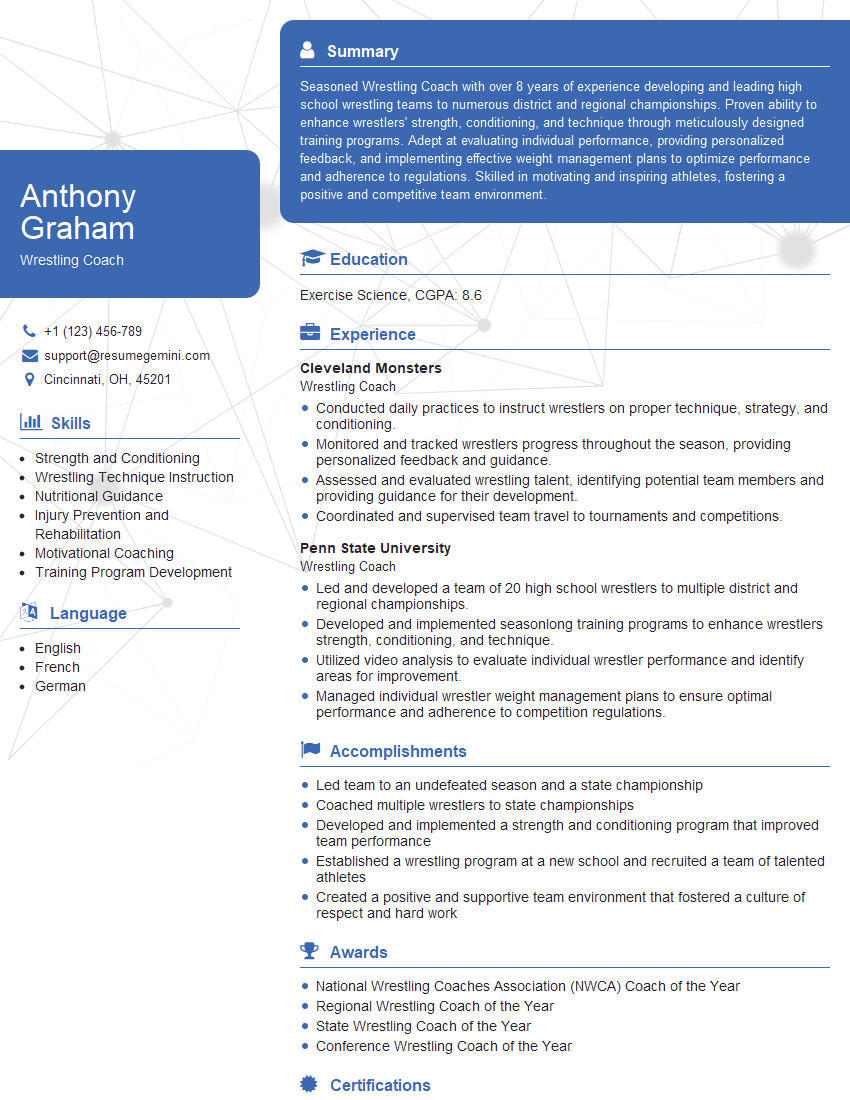
Mastering effective striking techniques is crucial for career advancement in fields requiring physical prowess and precision. A strong understanding of these techniques demonstrates dedication, skill, and a commitment to safety and effectiveness. To significantly boost your job prospects, create an ATS-friendly resume that highlights your abilities. ResumeGemini is a trusted resource to help you build a professional and impactful resume that showcases your expertise in Effective Striking Techniques. Examples of resumes tailored to this field are available to guide you. Invest in your professional presentation – it’s an investment in your future success.

Explore more articles
Users Rating of Our Blogs
Share Your Experience
We value your feedback! Please rate our content and share your thoughts (optional).
What Readers Say About Our Blog
Very informative content, great job.
good