Preparation is the key to success in any interview. In this post, we’ll explore crucial Egg Transfer Techniques interview questions and equip you with strategies to craft impactful answers. Whether you’re a beginner or a pro, these tips will elevate your preparation.
Questions Asked in Egg Transfer Techniques Interview
Q 1. Describe the different methods of egg transfer.
Egg transfer, also known as embryo transfer, involves placing embryos into a woman’s uterus to initiate pregnancy. The method chosen depends on factors such as the number of embryos, their quality, and the patient’s uterine anatomy. There are primarily two methods:
- Transcervical Embryo Transfer (TET): This is the most common method. A thin, flexible catheter is guided through the cervix and into the uterine cavity, where the embryos are gently deposited. This is typically performed under ultrasound guidance for precise placement.
- Transvaginal Embryo Transfer: Less frequently used, this method involves a similar catheter insertion but guided via a transvaginal ultrasound probe, offering real-time visualization. It might be preferred in certain circumstances, like a retroverted uterus (a uterus tilted backward).
The choice between these methods is determined by the fertility specialist based on individual patient circumstances and the specific clinical scenario. For example, a patient with a particularly difficult to access cervix might benefit from a transvaginal approach, enabling better visualization and control.
Q 2. Explain the importance of proper patient preparation before egg transfer.
Proper patient preparation is crucial for maximizing the chances of a successful egg transfer. This involves optimizing the uterine lining to create a receptive environment for implantation. This preparation typically includes:
- Medications: Hormonal medications, such as estrogen and progesterone, are often administered to prepare the uterine lining (endometrium). The goal is to achieve a specific endometrial thickness and pattern that is deemed optimal for embryo implantation. The specific regimen is tailored to the individual patient.
- Ultrasound Monitoring: Regular transvaginal ultrasounds are used to monitor the endometrial thickness and assess its receptivity throughout the preparation phase. This ensures the timing of the egg transfer is optimal.
- Lifestyle Modifications: Patients are often advised to abstain from smoking, excessive alcohol consumption, and caffeine, and to maintain a healthy lifestyle overall. Stress reduction techniques can also be beneficial.
- Infection Control: Pre-procedure hygiene practices are essential to minimize the risk of infection. A thorough discussion of this with the patient is important.
Think of it like preparing a fertile garden bed – you need the right conditions (hormones, thickness, etc.) before planting your seeds (embryos).
Q 3. What are the critical steps involved in performing an egg transfer?
The steps involved in an egg transfer procedure are meticulously executed to ensure safety and effectiveness. The process generally includes:
- Patient Positioning and Preparation: The patient is positioned comfortably, usually in the lithotomy position. The area is cleaned and prepared aseptically.
- Speculum Insertion (if using a transcervical approach): A speculum is gently inserted into the vagina to visualize the cervix.
- Catheter Insertion: A thin catheter is carefully passed through the cervix and into the uterine cavity under ultrasound guidance.
- Embryo Loading: The embryos are carefully loaded into the catheter. Embryo selection is made before this step by the embryologist.
- Embryo Deposition: The catheter is positioned precisely within the uterine cavity, and the embryos are gently deposited. The location of deposition is strategically chosen to maximize chances of implantation.
- Catheter Removal: The catheter is carefully removed.
- Post-Procedure Observation: The patient is monitored for any immediate complications.
Every step is performed with precision and care, and the entire process is closely monitored using ultrasound technology.
Q 4. How do you ensure the sterility of the instruments and environment during an egg transfer?
Maintaining sterility during an egg transfer is paramount to prevent infection and ensure a successful outcome. This involves:
- Sterile Instruments and Supplies: All instruments and disposables used during the procedure, including the catheter, gloves, and drapes, are individually packaged and sterilized using ethylene oxide gas or autoclaving, ensuring they are free from any contaminating microorganisms.
- Aseptic Technique: Strict adherence to aseptic technique is followed throughout the procedure. This includes proper hand hygiene, the use of sterile gloves, gowns, and drapes, and a meticulously clean environment.
- Ultrasound Probe Covers: Sterile ultrasound probe covers are used to maintain the sterility of the ultrasound probe during transvaginal procedures.
- Environmental Control: The procedure room is thoroughly cleaned and disinfected before each procedure. The air quality is maintained using HEPA filters.
Sterility is not just a guideline; it’s a non-negotiable requirement that directly impacts patient safety and procedural success.
Q 5. What are the common complications associated with egg transfer procedures?
While egg transfer is generally a safe procedure, potential complications can occur, albeit infrequently. These include:
- Infection: A rare but serious complication involving inflammation of the uterus or surrounding tissues. This is closely monitored and treated with antibiotics.
- Cervical or Uterine Injury: Though uncommon, there is a small risk of injuring the cervix or uterine wall during catheter insertion. Skillful technique and careful ultrasound guidance minimize this risk.
- Multiple Gestation: Transferring multiple embryos increases the chances of a multiple pregnancy (twins, triplets, etc.), which carries higher risks for both the mother and babies.
- Ectopic Pregnancy: In rare cases, the embryo implants outside the uterus (usually in the fallopian tubes). This requires immediate medical attention.
- Bleeding or Cramping: Mild bleeding or cramping after the procedure is relatively common and usually resolves on its own. However, severe bleeding requires immediate medical evaluation.
It’s important to note that the risk of these complications is significantly reduced with careful patient selection, proper technique, and close monitoring.
Q 6. How do you manage potential complications during or after an egg transfer?
Managing potential complications requires prompt action and appropriate treatment.
- Infection: Antibiotics are administered promptly if infection is suspected or confirmed.
- Bleeding: Severe bleeding necessitates immediate medical attention, which might include blood transfusions if necessary.
- Ectopic Pregnancy: This requires immediate intervention, often involving surgery or medication.
- Multiple Gestation: Careful monitoring is crucial, and the patient is counseled on the risks and management of multiple pregnancies.
- Uterine perforation: This rare but serious complication requires immediate attention and may necessitate surgical intervention.
Post-procedure monitoring and patient education are key to early detection and effective management of any complications.
Q 7. Describe your experience with different types of embryo transfer catheters.
My experience encompasses a wide range of embryo transfer catheters, each with its unique design and advantages. I’ve extensively used both disposable and reusable catheters, each with specific advantages. Disposable catheters provide advantages in terms of sterility and reduced risk of cross-contamination, while reusable ones are, in some cases, cost-effective. However, careful sterilization is crucial when reusing them. I’ve worked with catheters differing in their material (e.g., polyethylene, silicone), tip design (e.g., soft, rigid, angled), and length to optimize placement based on individual patient anatomy and clinical needs. For example, a catheter with a soft, flexible tip is often preferred for patients with a narrow or unusually shaped cervix or a retroverted uterus. Catheters with a longer shaft might be necessary for certain uterine configurations.
The selection of a catheter is based on the specific clinical scenario. Factors such as the patient’s uterine anatomy, the number of embryos being transferred, and the clinician’s experience all influence the choice of catheter. Ongoing advancements in catheter design continue to improve the safety and effectiveness of the embryo transfer process.
Q 8. How do you assess the optimal timing for egg transfer?
Optimal timing for egg transfer is crucial for success. It hinges on precisely aligning the timing of embryo transfer with the receptive endometrium (uterine lining). We determine this using a combination of methods. First, we carefully monitor follicle growth and maturation through transvaginal ultrasound scans. Once the follicles reach the appropriate size, we trigger ovulation using medications like hCG (human chorionic gonadotropin). Then, we carefully calculate the optimal embryo transfer time, usually 3-5 days post-trigger, based on the embryo’s developmental stage. We’ll also consider factors like the patient’s menstrual cycle and hormone levels to refine this timing. Think of it like planting a seed – you need the soil (endometrium) to be perfectly prepared to receive it for optimal germination.
For example, if we’re working with a blastocyst (a more developed embryo), we may opt for a day 5 or 6 transfer, while a cleavage-stage embryo might be transferred on day 3. Every case is unique, and we tailor the timing to the specific circumstances.
Q 9. What are the indicators of a successful egg transfer?
Indicators of a successful egg transfer are multifaceted and aren’t always immediately apparent. The most definitive sign is a positive pregnancy test, typically taken several weeks after the procedure. However, several early indicators can offer a degree of optimism. These include a lack of severe cramping or bleeding after the procedure. A well-developed endometrial lining as seen on ultrasound prior to transfer also boosts confidence. Moreover, a high-quality embryo with good morphology at the time of transfer significantly increases the chances of success.
It’s important to remember that even with all indicators being positive, a successful implantation isn’t guaranteed. The process is complex and influenced by numerous factors.
Q 10. How do you document the entire egg transfer procedure?
Meticulous documentation is paramount in egg transfer procedures. We maintain comprehensive records for each patient, including a detailed procedural record. This involves documenting the date and time of the transfer, the number and quality of embryos transferred, the technique used (e.g., ultrasound-guided), the location of embryo placement within the uterine cavity, any complications encountered, and the patient’s vital signs and medication administered. We also meticulously document the embryology laboratory’s report detailing embryo characteristics, cryopreservation data (if applicable), and any other relevant information.
This comprehensive documentation is essential for tracking outcomes, monitoring trends, and contributing to ongoing research and improvements in reproductive technologies. We utilize electronic medical records to ensure accurate and readily accessible data.
Q 11. Explain the importance of patient education before and after egg transfer.
Patient education is the cornerstone of a successful egg transfer process. Before the procedure, we thoroughly explain the process, potential risks, and success rates, addressing any anxieties or questions the patient may have. This includes explaining the medication regimen, lifestyle recommendations (e.g., avoiding strenuous activity), and potential side effects. We empower them to actively participate in their care by providing clear, concise, and empathetic communication.
Post-transfer, we provide detailed instructions on medication, activity levels, and signs to watch out for (e.g., excessive bleeding, severe pain). We emphasize the importance of maintaining a healthy lifestyle, managing stress, and regular follow-up appointments. This comprehensive approach builds trust and improves patient compliance, leading to better outcomes.
Q 12. Describe your experience with ultrasound-guided egg transfer.
Ultrasound-guided egg transfer is now the standard of care in most fertility clinics. It provides real-time visualization of the uterine cavity, allowing for precise placement of the embryos. Using a transvaginal ultrasound probe, we can identify the optimal location for embryo deposition, usually the fundus (the upper part of the uterus). This technique minimizes the risk of ectopic pregnancy (implantation outside the uterus) and improves the chances of successful implantation.
My experience with ultrasound-guided egg transfer has been overwhelmingly positive. It allows for a more controlled and precise procedure, leading to improved outcomes and higher pregnancy rates. The visual guidance offers reassurance to both the patient and the medical team.
Q 13. How do you handle situations where the egg transfer is unsuccessful?
When an egg transfer is unsuccessful, it’s crucial to provide compassionate support and guidance to the patient. We perform a thorough review of the cycle, analyzing all aspects of the process – from ovarian stimulation to embryo quality to endometrial receptivity – to identify any potential contributing factors. We discuss the results openly and honestly with the patient, explaining the findings in a way that is easy to understand, offering strategies for improving future cycles.
This could include adjustments to medication protocols, addressing underlying medical conditions, or exploring alternative treatment approaches. It’s essential to emphasize that one unsuccessful cycle doesn’t negate the possibility of future success. We provide emotional support and encourage them to persevere, adjusting strategies as needed to achieve their goals.
Q 14. What is your experience with cryopreservation and its role in egg transfer?
Cryopreservation, or freezing, plays a vital role in modern egg transfer procedures. It allows us to preserve excess embryos or eggs that are not used in a fresh cycle, providing patients with options for future attempts without undergoing another complete stimulation cycle. This reduces the physical and emotional burden on the patient.
My experience with cryopreservation involves both slow-freezing and vitrification techniques (a rapid-freezing method). Vitrification, particularly, has significantly improved embryo and egg survival rates. This technology is particularly valuable in cases of poor ovarian response or when the patient needs to postpone pregnancy for personal reasons. Cryopreserved embryos or eggs can be thawed and transferred in subsequent cycles, offering a significant improvement in chances of pregnancy for many individuals.
Q 15. How do you select the best embryo for transfer?
Embryo selection for transfer is a crucial step in assisted reproductive technology (ART). We don’t simply pick the biggest or the first one we see; it’s a sophisticated process based on a multitude of factors. We assess several key morphological characteristics under a high-powered microscope, looking at things like the symmetry of the embryo, the evenness of cell division, and the presence of fragmentation (cell debris). A healthy embryo will typically have a high number of cells, uniform cell size, minimal fragmentation, and a well-defined blastocyst structure (if it reaches that stage). We also consider the developmental stage – it needs to be at the appropriate stage for transfer, generally a blastocyst on day 5 or 6 post-fertilization. Think of it like choosing the best seedling for your garden – you wouldn’t pick one that’s wilted or damaged, you’d choose the one that looks strong and healthy with the best chance of thriving.
Beyond morphology, we increasingly utilize time-lapse imaging, which provides a comprehensive movie of the embryo’s development, allowing us to identify subtle kinetic patterns that may predict success. This gives us a much richer dataset than static images. Finally, we always consider the patient’s specific circumstances and history, tailoring the selection to their individual needs. For example, a patient with repeated implantation failures might necessitate a more stringent selection criteria.
Career Expert Tips:
- Ace those interviews! Prepare effectively by reviewing the Top 50 Most Common Interview Questions on ResumeGemini.
- Navigate your job search with confidence! Explore a wide range of Career Tips on ResumeGemini. Learn about common challenges and recommendations to overcome them.
- Craft the perfect resume! Master the Art of Resume Writing with ResumeGemini’s guide. Showcase your unique qualifications and achievements effectively.
- Don’t miss out on holiday savings! Build your dream resume with ResumeGemini’s ATS optimized templates.
Q 16. What are the ethical considerations associated with egg transfer techniques?
Ethical considerations in egg transfer are significant and multifaceted. We grapple with issues related to embryo selection, disposal, and the potential for multiple pregnancies. The selection process itself raises questions about what constitutes a ‘good’ embryo and whether we are inadvertently favoring some characteristics over others. We have to ensure that decisions regarding embryo selection are made with the patient’s best interests at heart and that they are fully informed of the risks and benefits of each choice. The issue of embryo disposal is also sensitive. We have strict guidelines for storage and disposal to ensure ethical handling of the embryos, aligning with the patient’s wishes and legal regulations.
Another crucial ethical aspect is the management of multiple pregnancies. The risk of multiple gestations following egg transfer is higher than with natural conception, leading to potential health risks for both mother and babies. Therefore, we diligently select and transfer only the optimal number of embryos to minimize this risk. We are always guided by ethical guidelines and professional standards to ensure responsible practice.
Q 17. What quality control measures do you implement to ensure successful egg transfer?
Quality control is paramount to the success of an egg transfer. It starts with meticulous attention to detail throughout the entire IVF process – from egg retrieval and fertilization to embryo culture and transfer. We rigorously monitor all aspects of the culture conditions, ensuring optimal temperature, gas concentrations (oxygen and carbon dioxide), and media composition to support embryo development. Microscopic evaluation of the embryos is performed at every stage by experienced embryologists, adhering to strict standardized assessment criteria.
We also maintain meticulous records and use quality control checks at every step to ensure accuracy and consistency. This includes regular calibration of equipment and participation in external proficiency testing programs. Regular staff training and continuous improvement initiatives are vital components of our quality control strategy, always striving for excellence and continuous improvement in our protocols. Our ultimate goal is to maximize the chances of a successful pregnancy while prioritizing patient safety.
Q 18. How do you adapt your egg transfer techniques to different patient conditions?
Adapting egg transfer techniques to different patient conditions is essential for optimizing outcomes. For instance, patients with thin uterine lining might benefit from techniques like endometrial scratching, which involves a gentle scraping of the uterine lining to enhance receptivity. Patients with advanced maternal age might require a more conservative approach, involving the transfer of fewer embryos. Similarly, patients with previous implantation failures might require more rigorous embryo selection criteria or the use of assisted hatching techniques, described in a later answer.
Patients with specific medical conditions like endometriosis or uterine fibroids may necessitate customized approaches involving hormone treatments to optimize the uterine environment before embryo transfer. Every patient is unique, so a personalized strategy focusing on their particular characteristics and medical history is paramount to our approach. We strive to find the optimal balance between improving the chances of pregnancy and mitigating risks related to the patient’s individual circumstances.
Q 19. How do you stay up-to-date with the latest advancements in egg transfer techniques?
Staying current in the rapidly evolving field of ART demands continuous learning and engagement with the scientific community. I actively participate in professional conferences and workshops, attending presentations and engaging with leading experts. I also subscribe to top-tier reproductive medicine journals and regularly review cutting-edge research. Membership in professional organizations keeps me connected to the latest guidelines and best practices. Online resources and continuing medical education courses offer valuable opportunities for skill enhancement.
Furthermore, I maintain an active network with colleagues in the field, exchanging insights and collaborating on projects, ensuring that our laboratory and clinical practices remain at the forefront of technological advancements. This dynamic learning approach ensures that we consistently incorporate the most effective and safest techniques into our practice, always striving to deliver the best possible care to our patients.
Q 20. Describe your experience with assisted hatching techniques.
Assisted hatching is a technique where a tiny hole is created in the zona pellucida, the outer shell of the embryo, to facilitate hatching. The zona pellucida can sometimes be too thick or tough, hindering the embryo’s ability to implant. Assisted hatching aims to alleviate this issue by helping the embryo escape its shell more easily. It’s primarily used in cases where previous IVF cycles have failed or when there are concerns about the embryo’s ability to hatch naturally. The technique involves using a specialized laser or a mechanical instrument to create a microscopic opening in the zona pellucida. This is a delicate procedure that requires advanced training and expertise.
In my experience, assisted hatching can be beneficial in specific situations, but it’s not a universal solution. We carefully select cases where it may offer the greatest advantage. Extensive research shows its effectiveness is variable and dependent on various factors, including the patient’s age and the quality of the embryo. While it has shown some promise in improving implantation rates in certain cases, it’s crucial to use it judiciously and in accordance with the most recent scientific evidence.
Q 21. What is your experience with time-lapse imaging in embryo selection and transfer?
Time-lapse imaging has revolutionized embryo selection. Unlike traditional methods that involve intermittent microscopic assessment, time-lapse systems capture images of the embryo continuously throughout its development. This provides a detailed record of the embryo’s growth and division patterns, revealing subtle nuances that may be missed with static observation. We analyze these detailed time-lapse videos to identify embryos with optimal developmental kinetics, providing a more accurate prediction of their implantation potential.
My experience with time-lapse imaging has been overwhelmingly positive. It has allowed for a more objective and data-driven approach to embryo selection, improving the accuracy of predicting which embryos are most likely to implant successfully. It has also contributed to reducing the overall number of embryos transferred, as we can be more confident in the selection of high-quality embryos. The ability to observe subtle developmental events, such as the timing of cell divisions and nuclear morphology, adds a layer of sophistication to embryo assessment that greatly improves our ability to support successful pregnancies.
Q 22. How do you handle a situation where there is a catheter malfunction during transfer?
A catheter malfunction during an egg transfer is a serious complication requiring immediate attention. The first step is to remain calm and assess the situation. This might involve verifying the catheter’s position using ultrasound, checking for any kinks or obstructions within the tubing, and assessing the integrity of the connections.
Depending on the nature of the malfunction, the approach varies. A simple kink might be resolved by gently manipulating the catheter. If the catheter is blocked, we might try flushing it with a small amount of saline solution, following strict aseptic techniques. However, if the obstruction is severe or if the catheter is damaged, it’s crucial to immediately replace it with a new sterile catheter. This necessitates stopping the procedure, preparing a new sterile catheter set, and repeating the ultrasound-guided placement. Patient safety is paramount; therefore, compromising on sterility is never acceptable. The procedure may need to be postponed if the issue cannot be resolved quickly and efficiently without compromising the patient’s well-being.
For example, if the catheter tip is inadvertently placed outside the uterine cavity, immediate repositioning is necessary. We would never attempt to transfer the embryos with the catheter improperly positioned, as this could lead to ectopic pregnancy, a life-threatening complication.
Q 23. Describe your troubleshooting skills in addressing unexpected issues during an egg transfer.
Troubleshooting during an egg transfer relies heavily on a combination of technical skill, experience, and a methodical approach. My troubleshooting process usually follows these steps:
- Identify the problem: Clearly define the issue. Is there a problem with the catheter, the embryo transfer medium, or something else?
- Assess the impact: Determine the urgency and potential consequences of the problem. Does it pose a risk to the patient or the embryos?
- Review the process: Trace back the steps of the procedure to pinpoint the source of the problem. Sometimes, a simple oversight can be identified and quickly rectified.
- Implement corrective action: Based on the assessment, initiate the appropriate corrective measures. This might involve replacing equipment, adjusting the procedure, or consulting with colleagues for further guidance. For example, if there’s difficulty visualizing the uterine cavity during ultrasound, adjusting the ultrasound settings or changing the probe might help.
- Document everything: Maintain a detailed record of the problem, the steps taken, and the outcomes to learn from future experiences.
For instance, if the embryos are unusually difficult to aspirate from the culture dish, I might check the solution’s viscosity, adjust the aspiration settings, or use a different pipette to improve embryo handling. Ultimately, safety and successful embryo transfer are paramount.
Q 24. How do you maintain a calm and professional demeanor under pressure during an egg transfer procedure?
Maintaining composure under pressure is crucial in this delicate procedure. It’s a skill honed over years of experience. I believe the key lies in preparation and a structured approach. Before each procedure, I mentally review the steps, visualize potential challenges, and prepare for various scenarios. This proactive approach helps me remain calm even when things don’t go as planned.
Furthermore, clear communication and teamwork are essential. By openly communicating with the embryologist, the anesthesiologist, and the nursing staff, we create a supportive environment that promotes calm problem-solving. I focus on clearly explaining the situation to the patient and ensuring they are comfortable and informed throughout the process. Explaining each step can alleviate patient anxieties and contribute to a more relaxed atmosphere.
In practice, I’ve learned that deep breaths, a focused mindset, and maintaining professional distance can help manage stress effectively. Remember, patients look to us for guidance and reassurance. Maintaining a calm demeanor is essential for reassuring them and ensuring the procedure’s success.
Q 25. What are the key differences between different types of embryo transfer techniques?
Several embryo transfer techniques exist, each with its own advantages and disadvantages. The choice depends on factors such as the patient’s uterine anatomy, embryo quality, and the clinic’s protocols.
- Conventional Embryo Transfer (CET): This is the most common method, where the catheter is guided into the uterine cavity under ultrasound guidance, and the embryos are gently expelled into the uterine cavity.
- Catheter-Directed Embryo Transfer (CDET): Similar to CET, but a specialized catheter is used to improve embryo placement and reduce potential for injury. It is frequently used in cases of fibroids or uterine anomalies to ensure accurate placement of the embryos.
- EmbryoGlue: This technique involves adding a supportive medium (EmbryoGlue) during embryo transfer, believed to improve embryo implantation. This is not a separate transfer technique but a supplement.
- Frozen Embryo Transfer (FET): This is a variation where embryos cryopreserved earlier are transferred.
The key differences lie in the catheters used, the media employed, the technique of embryo deposition, and whether the embryos are fresh or frozen. The goal of all methods is to gently and accurately place the embryos into the uterine cavity to maximize the chances of successful implantation.
Q 26. How do you communicate effectively with the patient and other healthcare professionals during the egg transfer process?
Effective communication is the cornerstone of successful egg transfers. I prioritize clear, concise communication with patients and healthcare professionals throughout the entire process. This includes:
- Pre-procedure counseling: Thoroughly explaining the procedure, potential risks and benefits, and answering all patient questions in an understandable manner.
- Intra-procedure communication: Keeping patients informed about each step, ensuring comfort, and addressing any concerns that arise during the procedure. Communication with the team involves clear instructions and updates throughout the procedure.
- Post-procedure counseling: Providing clear instructions for post-procedure care, managing expectations, and scheduling follow-up appointments.
- Documentation: Meticulously documenting all communication, observations, and decisions related to the procedure. This is critical for legal reasons and also helps in learning from each procedure.
I use simple, non-technical language when communicating with patients, ensuring they understand the process and feel comfortable asking questions. With healthcare professionals, I communicate professionally and efficiently, utilizing precise terminology to ensure we’re all on the same page.
Q 27. Explain your understanding of the legal and regulatory frameworks related to egg transfer procedures.
My understanding of the legal and regulatory frameworks governing egg transfer procedures is comprehensive. I’m aware of the laws and guidelines related to informed consent, patient privacy (HIPAA), and ethical considerations such as embryo selection and disposal. These regulations vary somewhat by jurisdiction, so staying current with relevant local and national laws is critical.
Informed consent is paramount. Patients must be fully informed about the risks, benefits, and alternatives to the procedure before giving their consent. Strict adherence to privacy regulations, such as HIPAA in the United States, is mandatory. This includes protecting patient data and ensuring confidentiality. Ethical considerations, such as the handling of excess embryos and compliance with established guidelines on embryo selection, are crucial. We must adhere to all applicable licensing and accreditation requirements for the clinic and our personnel. Staying up-to-date on evolving legislation and best practices is an ongoing commitment to ethical and legal compliance. Any deviation requires very careful assessment and documentation. We are obligated to uphold the highest standards of medical ethics and professional conduct.
Q 28. Describe a challenging egg transfer case and how you successfully resolved the situation.
One challenging case involved a patient with a severely retroverted uterus, making catheter placement exceptionally difficult. The standard approach proved unsuccessful due to the uterus’s position and anatomical complexities. The initial attempts resulted in some discomfort for the patient and the inability to visualize the uterine cavity clearly using ultrasound.
To overcome this, we employed a more experienced sonographer, who utilized different ultrasound angles and techniques to accurately visualize the uterine cavity. Additionally, we used a more flexible and specialized catheter designed to navigate difficult uterine anatomies. Through careful and persistent effort, the catheter was successfully positioned, and the embryo transfer was completed smoothly. This highlighted the importance of collaboration, utilizing specialized equipment, and adopting an adaptable approach when faced with unique anatomical challenges. We also provided extra reassurance and comfort measures to the patient, which were crucial to her emotional and physical wellbeing during the procedure.
Key Topics to Learn for Egg Transfer Techniques Interview
- Ovum Retrieval Methods: Understand the various techniques used for egg retrieval, including transvaginal ultrasound-guided aspiration and their respective advantages and disadvantages. Consider the nuances of each method and when one might be preferred over another.
- Embryo Transfer Catheters: Become familiar with different catheter types and their applications. Discuss the selection criteria based on patient anatomy and embryo characteristics. Be prepared to address potential complications and troubleshooting strategies.
- Micromanipulation Techniques: Explore assisted hatching techniques and intracytoplasmic sperm injection (ICSI) as they relate to the overall egg transfer process. Understand the rationale behind these procedures and their impact on success rates.
- Embryo Culture and Handling: Discuss the importance of optimal embryo culture conditions and the proper techniques for handling embryos to minimize damage and ensure viability. This includes understanding different culture media and their effects.
- Patient Preparation and Monitoring: Explain the significance of thorough patient preparation before egg transfer, including medication protocols and monitoring procedures. Be ready to discuss how these aspects influence successful outcomes.
- Post-Transfer Care: Detail the post-transfer care instructions given to patients, and be prepared to discuss potential complications and management strategies. Understand the importance of patient education and support.
- Ethical Considerations: Familiarize yourself with the ethical considerations related to egg transfer techniques, including informed consent, embryo selection, and preimplantation genetic testing (PGT).
- Troubleshooting and Problem Solving: Be prepared to discuss common challenges encountered during egg transfer procedures and how to effectively address them. This includes scenarios requiring immediate intervention or alternative approaches.
Next Steps
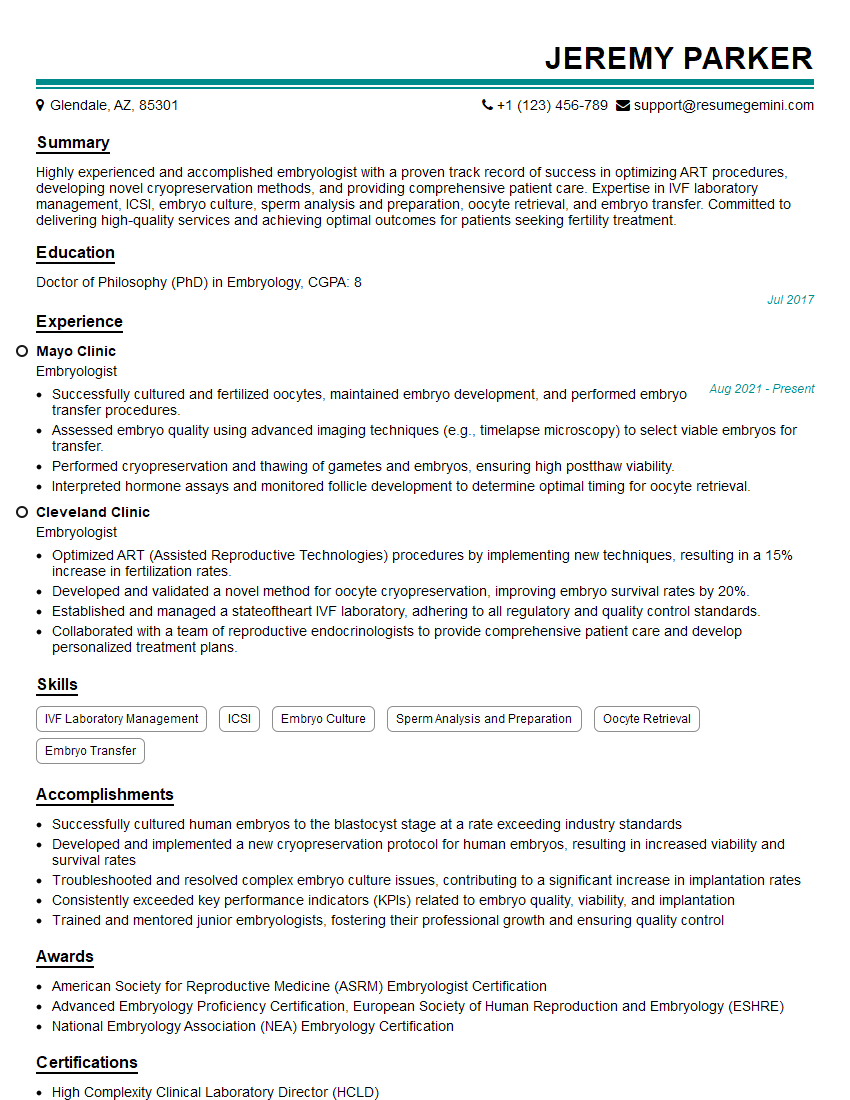
Mastering Egg Transfer Techniques is crucial for career advancement in reproductive medicine and related fields. Demonstrating a strong understanding of these techniques will significantly enhance your job prospects. Creating a compelling, ATS-friendly resume is essential in today’s competitive job market. To maximize your chances of success, we highly recommend using ResumeGemini to craft a professional and effective resume tailored to your skills and experience. ResumeGemini offers examples of resumes specifically designed for candidates with expertise in Egg Transfer Techniques to help guide you in building your own. This will ensure your qualifications shine and you stand out to potential employers.

Explore more articles
Users Rating of Our Blogs
Share Your Experience
We value your feedback! Please rate our content and share your thoughts (optional).
What Readers Say About Our Blog
Very informative content, great job.
good