Interviews are more than just a Q&A session—they’re a chance to prove your worth. This blog dives into essential Electric Sealing Machine Operation interview questions and expert tips to help you align your answers with what hiring managers are looking for. Start preparing to shine!
Questions Asked in Electric Sealing Machine Operation Interview
Q 1. What are the different types of electric sealing machines?
Electric sealing machines come in various types, categorized primarily by their sealing method and application. Here are some key examples:
- Impulse Sealers: These are commonly used for sealing plastic bags, pouches, and films. They use a brief burst of heat to create a seal. Think of it like a quick, hot kiss sealing the packaging. They’re ideal for smaller-scale operations and individual bag sealing.
- Continuous Sealers: These machines create a continuous seal along a long length of material, perfect for high-volume production lines in factories. Imagine a conveyor belt continuously feeding bags to be sealed—this is where continuous sealers excel. They often have adjustable speed and temperature controls.
- Foot Sealers: These are simple, handheld devices that use a foot pedal to activate the sealing process. They are portable and great for quick sealing tasks, like sealing individual items for shipping or storage.
- Band Sealers: These machines apply a heat-sealed band around the product, providing a tamper-evident seal. You often see this on boxes or larger packages.
- Wrap-Around Sealers: These are used to wrap and seal products, often used in the food industry for packaging items in shrink wrap.
The choice of sealer depends entirely on the application, production volume, and the type of packaging material being used.
Q 2. Explain the sealing process in detail.
The sealing process involves several key steps, and the specifics vary depending on the type of sealer. However, the general principles remain consistent:
- Material Preparation: The packaging material (e.g., plastic film, foil) is positioned correctly in the sealer. This might involve aligning it with the sealing jaws or feeding it into a conveyor belt.
- Heat Application: Heat is applied to the sealing area using heating elements. In impulse sealers, this is a short burst of high heat; in continuous sealers, it’s a consistent stream of heat. The temperature is crucial and needs to be adjusted based on the material.
- Pressure Application: Pressure is applied to the heated area, forcing the material together and creating a strong bond. This pressure is often combined with the heat to create a durable seal.
- Cooling and Release: After the heat and pressure are applied, the sealed area is allowed to cool. The sealer then releases the sealed material.
- Inspection: Finally, the quality of the seal is visually inspected to ensure it’s complete and leak-proof. This often involves checking for gaps, weak points, or incomplete seals.
The entire process usually happens quickly, within a few seconds for most machines. The parameters like temperature, time and pressure need to be carefully calibrated for different packaging materials.
Q 3. Describe your experience with various sealing materials (e.g., plastic film, foil).
My experience encompasses a wide range of sealing materials. I’ve worked extensively with various types of plastic films, including polyethylene (PE), polypropylene (PP), and polyvinyl chloride (PVC). The key differences lie in their melting points and thicknesses, which directly affect the sealing temperature and pressure required. For example, thicker films require higher temperatures and longer sealing times.
Foils, such as aluminum foil and laminates, also present unique challenges. They require careful temperature control to avoid burning or creating weak seals. I’ve successfully sealed a range of materials including heat-sealable laminates commonly used for food packaging, where proper sealing integrity is paramount. Understanding the specific properties of each material is essential to achieve optimal seals.
I’ve found that maintaining meticulous records of material types, seal settings, and results is essential to optimize the process and consistently deliver high-quality seals. I have also worked with various coatings which affect sealing parameters and need to be considered during settings.
Q 4. How do you troubleshoot common sealing machine malfunctions?
Troubleshooting electric sealing machines often requires a systematic approach. Here’s a typical process I follow:
- Identify the Problem: First, accurately determine the nature of the malfunction. Is it a weak seal, no seal at all, or something else entirely?
- Check the Obvious: Begin with the simple things: Is the machine plugged in? Are there any visible obstructions blocking the sealing process? Is the power switch on? Is there sufficient material in the machine?
- Inspect the Heating Element: Examine the heating element for any signs of damage or wear. This often involves visually inspecting for burns, cracks, or loose connections.
- Check Temperature and Pressure Settings: Verify that the temperature and pressure settings are correct for the material being used. Incorrect settings are a very common cause of sealing problems.
- Clean the Sealing Jaws: Debris or residue on the sealing jaws can prevent proper sealing. Clean them thoroughly using a suitable cleaner.
- Inspect the Timer and Controls: Check the timer and other controls to ensure they’re functioning correctly. This might involve testing the functionality of each component individually.
- Consult the Manual: Always refer to the machine’s operating manual for specific troubleshooting steps and diagrams.
If the problem persists after these steps, it might require professional repair. Documenting each step during troubleshooting helps to ensure efficient problem-solving and future prevention.
Q 5. What safety procedures do you follow when operating an electric sealing machine?
Safety is paramount when operating electric sealing machines. Here’s a summary of the safety procedures I always follow:
- Proper Training: Before operating any machine, I ensure I have received adequate training on its safe operation and maintenance.
- Personal Protective Equipment (PPE): I always wear appropriate PPE, including heat-resistant gloves, safety glasses, and closed-toe shoes.
- Machine Inspection: Before each use, I inspect the machine for any damage or loose parts. This includes visually checking the cables and the surrounding area.
- Clear Workspace: I maintain a clean and organized workspace, free from obstructions that could cause accidents.
- Proper Handling of Materials: I handle the packaging materials carefully to avoid cuts or injuries.
- Emergency Stop Procedures: I’m familiar with the location of the emergency stop button and how to use it in case of an emergency.
- Lockout/Tagout Procedures: If maintenance is required, I follow lockout/tagout procedures to prevent accidental startup.
Following these procedures helps prevent accidents and ensures a safe working environment.
Q 6. How do you ensure the quality and consistency of seals?
Ensuring the quality and consistency of seals is crucial. I use a multi-pronged approach:
- Calibration and Maintenance: Regular calibration of the machine’s temperature and pressure settings is essential to maintain consistency. This often involves using calibration tools and following the manufacturer’s instructions. Regular maintenance, including cleaning, also plays a crucial role.
- Material Selection: The choice of packaging material significantly impacts seal quality. Using appropriate materials for the sealing machine and application is crucial. The right material ensures the right sealing parameters can be achieved.
- Process Monitoring: I regularly monitor the sealing process to identify any inconsistencies. This could involve visually inspecting seals, performing leak tests, or using specialized testing equipment.
- Record Keeping: Detailed records of material used, sealing parameters (temperature, time, pressure), and inspection results are maintained to track performance and identify trends.
- Statistical Process Control (SPC): In high-volume applications, I may use SPC techniques to monitor and control the sealing process. This often involves tracking key parameters over time and using statistical methods to detect and correct variations.
Combining these approaches helps to maintain high standards of quality and consistency in sealing.
Q 7. What is your experience with different sealing techniques (e.g., impulse sealing, continuous sealing)?
My experience includes both impulse and continuous sealing techniques. Impulse sealing, as mentioned earlier, is ideal for smaller batches and individual items. It’s simple, efficient, and cost-effective for smaller-scale applications. I’ve used this extensively for packaging various products from small electronic parts to food items in individual pouches.
Continuous sealing, on the other hand, is suited for large-scale production. The high-speed nature of these sealers is perfect for high-volume operations in manufacturing environments. I have experience optimizing these machines, adjusting speed and temperature to match production demands and ensure consistent sealing quality. Furthermore, the ability to tailor the seal length and width adds flexibility. The selection between these techniques depends entirely on the production volume and the nature of the product being packaged.
Q 8. How do you perform preventative maintenance on an electric sealing machine?
Preventative maintenance on an electric sealing machine is crucial for ensuring consistent performance and preventing costly downtime. It’s like regularly servicing your car – you catch small problems before they become major headaches. My approach involves a structured routine encompassing several key areas:
Visual Inspection: I begin with a thorough visual check of all components, looking for signs of wear and tear, loose connections, or any damage to the sealing head, belts, or electrical wiring. Think of it like a quick once-over before a long drive.
Cleaning: Regular cleaning is essential. I remove any debris or product residue from the sealing area and the surrounding components. This prevents contamination and ensures smooth operation. I use appropriate cleaning agents depending on the material being sealed.
Lubrication: Moving parts, like the sealing head mechanism and belts, need regular lubrication to reduce friction and wear. I use manufacturer-recommended lubricants to prevent damage and prolong the lifespan of the machine. This is akin to oiling the hinges of a door to keep them working smoothly.
Testing: I run test seals with different parameters to ensure the machine is functioning correctly and the seal quality is consistent. This involves checking for proper seal strength, even heat distribution, and the absence of leaks or defects. It’s like a test drive to ensure everything is working as expected.
Documentation: I maintain detailed records of all maintenance activities, including dates, tasks performed, and any issues identified. This log helps track the machine’s health and assists in predicting potential future problems. It’s like keeping a service history for your car.
Q 9. Explain your experience with different types of sealing heads.
My experience encompasses a variety of sealing heads, each suited to different applications and materials. I’ve worked extensively with:
Jaw Sealers: These are common and versatile, ideal for sealing pouches and bags. I’m familiar with adjusting the jaw width and pressure to accommodate various package sizes.
Impulse Sealers: These are known for their speed and efficiency, perfect for high-volume production. My experience includes handling both hand-held and foot-operated models and troubleshooting common issues like inconsistent seals.
Continuous Band Sealers: Used for continuous sealing of film rolls, these require precise temperature and speed control. I have expertise in maintaining consistent seal quality at high speeds and managing the film feed mechanism.
Rotary Sealers: These are high-speed machines that are designed for very high production rates. I understand their complexities and the need for meticulous maintenance to avoid jams and downtime.
The selection of the appropriate sealing head depends entirely on the production needs and the type of packaging material. For example, thicker materials would require a sealer with higher pressure capabilities. My experience enables me to assess the requirements and recommend the optimal solution.
Q 10. How do you adjust sealing parameters (e.g., temperature, time, pressure)?
Adjusting sealing parameters is crucial for achieving optimal seal quality. It’s a delicate balance, similar to baking a cake – you need the right ingredients in the right proportions. The process generally involves:
Temperature: This is controlled using a thermostat or a digital display. Too low, and the seal will be weak; too high, and you risk burning the packaging material. I adjust the temperature based on the material’s properties and the desired seal strength.
Time: The sealing time dictates how long the heat is applied. A shorter time might result in a weak seal, while a longer time can lead to material damage. I fine-tune the timing based on the material thickness and desired seal integrity.
Pressure: This is the force applied to the sealing jaws. Insufficient pressure leads to weak seals, while excessive pressure can damage the packaging or the machine. I adjust pressure according to the material’s characteristics and the desired seal strength.
I typically use test seals to fine-tune these parameters. I’ll start with manufacturer recommendations as a baseline and then make incremental adjustments, visually inspecting the seals and performing peel tests to assess their quality.
Q 11. Describe your experience with PLC programming related to sealing machines.
My experience with PLC programming related to sealing machines is extensive. I’ve worked with various PLC platforms (e.g., Allen-Bradley, Siemens) to program and troubleshoot machine control systems. This involves:
Program Development: Creating and modifying PLC programs to control sealing parameters, monitor machine status, and handle alarms. I use ladder logic and structured text programming to create efficient and reliable control sequences.
Troubleshooting: Diagnosing and resolving PLC related issues such as malfunctioning sensors, faulty I/O modules, or logic errors in the program. I use diagnostic tools and my understanding of PLC architecture to quickly identify and fix problems. For example, using
XICandOTEinstructions in ladder logic to control outputs based on sensor inputs.
A recent example involved optimizing a PLC program to reduce cycle time on a high-speed rotary sealer, which resulted in a significant increase in production efficiency.
Q 12. How do you identify and resolve sealing defects?
Identifying and resolving sealing defects is a critical aspect of my role. It’s like being a detective, piecing together clues to find the source of the problem. My approach is systematic:
Visual Inspection: I carefully examine the seals for visible defects such as incomplete seals, weak seals, pinholes, or burns. This often gives me the first indication of the underlying issue.
Peel Test: This involves carefully peeling apart the seal to assess its strength and integrity. A clean break indicates a good seal, while a ragged or weak separation points to a problem.
Parameter Review: I check the sealing parameters (temperature, time, pressure) to ensure they are correctly set for the specific packaging material. Incorrect settings are a frequent cause of seal failures.
Machine Component Check: I inspect the sealing head, belts, and other mechanical components for wear, damage, or misalignment. Worn parts can cause inconsistent seals.
Material Analysis: Sometimes the problem lies with the packaging material itself. Issues like contamination, incorrect film type, or improper storage can affect seal quality. I’ll check the material’s specifications and storage conditions.
By systematically investigating these areas, I can pinpoint the source of the defect and take corrective action. For example, a weak seal might indicate the need to increase the sealing temperature or pressure, while a burnt seal might necessitate a reduction in temperature or sealing time.
Q 13. What are the common causes of sealing failures?
Sealing failures can stem from various sources, often interconnected. Think of it as a chain reaction – one weak link can break the whole chain. Common causes include:
Incorrect Sealing Parameters: Inappropriate temperature, time, or pressure settings are the most common culprits. This leads to weak, incomplete, or burnt seals.
Worn or Damaged Sealing Head: A worn sealing head, due to prolonged use or improper maintenance, can result in inconsistent seals or seal failures. This is like a worn-out tire – it won’t grip the road as effectively.
Packaging Material Issues: Contamination, improper storage, incorrect material type, or excessive moisture on the packaging can significantly impact seal integrity.
Mechanical Malfunctions: Problems with the machine’s mechanical components, such as misaligned belts or faulty sensors, can disrupt the sealing process and lead to inconsistent or failed seals.
Electrical Faults: Problems with the electrical system, such as faulty wiring or malfunctioning components, can impact the machine’s ability to heat correctly or apply consistent pressure.
Understanding these common causes allows for proactive maintenance and quick troubleshooting when failures occur.
Q 14. Describe your experience with cleaning and sanitizing sealing equipment.
Cleaning and sanitizing sealing equipment is paramount, especially in industries handling food, pharmaceuticals, or medical products. It’s like regularly washing your hands – it prevents contamination and ensures product safety. My cleaning and sanitizing procedures follow these steps:
Power Down and Disconnect: Always ensure the machine is powered down and disconnected from the power source before commencing any cleaning or sanitizing.
Debris Removal: Remove any loose debris or product residue from the sealing area using a brush, compressed air, or vacuum cleaner. This prevents contamination and makes the cleaning process more effective.
Cleaning: Clean the sealing surfaces and surrounding areas using appropriate cleaning agents and tools. The choice of cleaning agent depends on the material being sealed and the type of contamination. For example, a mild detergent might suffice for some applications, while a stronger chemical may be necessary for others.
Sanitization (where applicable): If required, apply an approved sanitizing solution to eliminate microorganisms. This step is crucial in industries with strict hygiene requirements.
Drying: Ensure all surfaces are thoroughly dried before restarting the machine. Moisture can lead to corrosion or other problems.
Documentation: I maintain a detailed log of all cleaning and sanitizing activities, including the cleaning agents used, dates, and times. This is crucial for traceability and compliance with industry regulations.
I always follow the manufacturer’s recommendations for cleaning and sanitizing procedures, as these are tailored to the specific machine and its components. Failing to follow these guidelines can lead to damage or shorten the lifespan of the equipment.
Q 15. How do you maintain accurate records of machine operation and maintenance?
Maintaining accurate records of machine operation and maintenance is crucial for ensuring smooth production and preventing costly downtime. I use a combination of digital and physical methods. Digitally, I utilize a computerized maintenance management system (CMMS) to log all operational data, including production runs, seal counts, machine run time, and any detected errors. This data allows for trend analysis and predictive maintenance. Physically, I maintain a detailed logbook, including daily inspection checklists, completed maintenance tasks, spare part inventory, and calibration records. This provides a readily available record even during system outages. For example, if a specific seal type consistently fails, the CMMS data can reveal trends, leading to proactive adjustments of sealing parameters or material selection. The logbook acts as a backup, offering immediate access to vital information.
Career Expert Tips:
- Ace those interviews! Prepare effectively by reviewing the Top 50 Most Common Interview Questions on ResumeGemini.
- Navigate your job search with confidence! Explore a wide range of Career Tips on ResumeGemini. Learn about common challenges and recommendations to overcome them.
- Craft the perfect resume! Master the Art of Resume Writing with ResumeGemini’s guide. Showcase your unique qualifications and achievements effectively.
- Don’t miss out on holiday savings! Build your dream resume with ResumeGemini’s ATS optimized templates.
Q 16. What is your experience with different types of packaging materials?
My experience encompasses a wide range of packaging materials commonly used in electric sealing machines. This includes various films like polyethylene (PE), polypropylene (PP), polyvinyl chloride (PVC), and laminates combining these materials. I’m also proficient with foils such as aluminum foil and specialized films like those with oxygen barriers or high-temperature resistance. Each material presents unique challenges regarding sealing temperature, pressure, and dwell time. For example, thinner films require less heat and pressure to avoid perforation, while thicker laminates need more to ensure a robust seal. I understand how the material’s properties impact the sealing process and can adjust machine settings accordingly to achieve optimal results.
Q 17. How familiar are you with different types of sealing jaws?
Different sealing jaws are crucial for accommodating the diverse range of packaging materials and shapes. I’m familiar with various types including flat jaws, which are versatile and suitable for many applications; serrated jaws, which create a more secure seal on difficult-to-seal materials; embossed jaws, providing enhanced aesthetic appeal to the final seal; and specialized jaws designed for specific applications like zipper bags or unusual package shapes. The selection of the correct jaw is paramount in achieving a high-quality, consistent seal. For instance, using serrated jaws on a flexible film prevents slippage and ensures a tight seal, while embossed jaws improve brand presentation.
Q 18. What is your experience with troubleshooting electrical issues on sealing machines?
Troubleshooting electrical issues is a key aspect of my expertise. I approach such problems systematically, starting with visual inspections to identify obvious issues like loose connections, damaged wires, or blown fuses. I use multimeters to check voltage, current, and resistance in circuits. I’m also experienced in interpreting error codes displayed on the machine’s control panel. For example, if the machine fails to heat up, I’d check the heating element, thermostat, and associated wiring. If a motor fails, I’d inspect the motor windings and power supply. My experience with both AC and DC circuits is essential in resolving such problems efficiently. I always prioritize safety, ensuring the power is completely disconnected before attempting any repair.
Q 19. How do you handle emergency situations related to machine malfunctions?
Handling emergency situations involves a calm and methodical approach. First, I ensure the safety of myself and others in the vicinity by immediately switching off the machine and securing the area. Then, I assess the nature of the malfunction to determine the extent of the damage and potential hazards. Based on the assessment, I either initiate immediate repairs (if safe and within my skillset) or contact the appropriate maintenance team. For example, if there’s a significant electrical fault sparking or emitting smoke, I’d prioritize evacuation and contact emergency services. Thorough documentation of the incident is crucial for future analysis and preventive measures.
Q 20. How do you ensure the efficiency and productivity of the sealing process?
Ensuring efficiency and productivity involves several strategies. Regular preventative maintenance is key, reducing downtime and ensuring optimal machine performance. This includes lubricating moving parts, cleaning sealing jaws, and regularly inspecting components for wear and tear. Optimizing machine settings based on the material being sealed is also essential. This includes adjusting temperature, pressure, and dwell time to ensure high-quality seals while minimizing energy consumption. For example, utilizing a CMMS system to track seal failures helps identify areas for improvement, such as adjusting settings or replacing worn parts. Proper training of operators and adherence to established operating procedures also contribute significantly to productivity and safety.
Q 21. What is your experience with machine calibration and adjustments?
Machine calibration and adjustments are integral to maintaining consistent seal quality. I’m proficient in using various calibration tools and techniques, ensuring accurate temperature and pressure readings. These calibrations are done according to manufacturer’s specifications, and the process is meticulously documented. Adjustments are made to compensate for wear and tear, variations in material properties, or environmental factors. For example, a change in ambient temperature can affect the sealing temperature, requiring adjustments to maintain the desired seal integrity. I utilize test samples throughout the calibration process to verify that the seals meet the required quality standards. This ensures consistent, reliable sealing performance over time.
Q 22. How do you comply with safety regulations when operating sealing machines?
Safety is paramount when operating electric sealing machines. My approach is multi-faceted and begins with a thorough understanding of the machine’s specific safety features and the relevant regulations, such as OSHA guidelines for machinery operation.
- Pre-operational checks: Before starting any machine, I always inspect the area for any hazards (spills, obstructions) and ensure all safety guards are in place and functioning correctly. I also visually check the power cord for any damage.
- Personal Protective Equipment (PPE): I consistently wear appropriate PPE, including safety glasses, gloves (heat-resistant if necessary), and hearing protection, depending on the machine and task.
- Lockout/Tagout procedures: When performing maintenance or repairs, I strictly adhere to lockout/tagout procedures to prevent accidental start-ups. This involves disconnecting the power source and securely locking the switch to prevent unauthorized access.
- Emergency stop awareness: I’m familiar with the location and operation of all emergency stop buttons and know how to safely react to any unexpected event.
- Regular training and updates: I stay up-to-date on safety regulations and participate in regular training sessions to refresh my knowledge and learn about any new safety features or protocols.
For example, during a recent shift, I noticed a loose wire near the sealing head. Instead of risking a shock, I immediately shut down the machine, reported the issue, and followed the company’s lockout/tagout procedure before any repairs were attempted.
Q 23. Describe your experience with working in a fast-paced manufacturing environment.
I thrive in fast-paced manufacturing environments. My previous role involved working on a high-speed production line where we sealed hundreds of packages per hour. This required quick thinking, efficient workflow, and a keen eye for detail to maintain quality and meet production targets.
I’m adept at prioritizing tasks, adapting to changing demands, and collaborating effectively with team members. For instance, during peak production times, we often had to adjust our processes to handle increased order volume. This involved proactively communicating with team members, optimizing machine settings, and troubleshooting minor issues swiftly to prevent delays.
My ability to remain calm under pressure and effectively manage multiple tasks simultaneously has been a key asset in these settings. I’m highly organized and use time management techniques, like prioritizing critical tasks and setting realistic deadlines, to ensure all production goals are met.
Q 24. What are your skills in using relevant measuring tools (e.g., thermometers, pressure gauges)?
Accurate measurements are crucial for optimal sealing machine performance and product quality. I’m proficient in using various measuring tools, including:
- Thermometers: I regularly use both contact and non-contact thermometers to monitor the temperature of the sealing head, ensuring it’s within the specified range for different materials. Inaccurate temperature can lead to poor seals or damage to the packaging.
- Pressure gauges: I use pressure gauges to monitor the air pressure within the pneumatic system. Consistent pressure is vital for efficient sealing; inconsistent pressure can result in uneven seals or machine malfunction.
- Micrometers and calipers: To measure the thickness and dimensions of the packaging materials, ensuring they meet specifications and won’t hinder the sealing process.
- Digital scales: For weighing materials to ensure the correct amount is used for consistent sealing.
I understand the importance of calibration and regularly check the accuracy of these instruments to guarantee reliable measurements and prevent errors. For example, I once identified a faulty seal due to an inaccurate temperature reading from a malfunctioning thermometer, highlighting the importance of regular calibration and instrument maintenance.
Q 25. How do you handle discrepancies in the sealing process?
Discrepancies in the sealing process, such as inconsistent seals or malfunctioning equipment, require systematic troubleshooting. My approach involves:
- Identify the problem: Carefully assess the nature of the discrepancy. Is it inconsistent sealing, frequent machine stops, or a specific type of material causing issues?
- Gather data: Collect relevant data, such as production logs, quality control reports, and machine error messages. This provides clues to the root cause.
- Check the obvious: Begin with the most likely causes: insufficient heat, incorrect pressure, damaged sealing elements, or improper material handling.
- Systematic investigation: If the obvious causes are ruled out, I move to a more systematic approach. This might involve checking the air supply, inspecting wiring, or testing individual components.
- Documentation and reporting: I meticulously document all steps taken during troubleshooting, including the issue, the solution, and any preventative measures implemented to avoid future problems. I also report significant issues to my supervisor.
For example, I recently encountered a situation where seals were consistently weak. By systematically checking the temperature, pressure, and sealing elements, I identified a worn-out sealing strip as the culprit. Replacing it resolved the issue immediately.
Q 26. What is your experience with the different types of control panels found on sealing machines?
My experience encompasses a range of control panels found on sealing machines, from simple analog systems to advanced programmable logic controllers (PLCs).
- Analog control panels: These typically use dials and gauges to adjust settings like temperature and pressure. I’m comfortable using these systems and understand the limitations of their accuracy compared to digital systems.
- Digital control panels: These offer greater precision and more advanced features, including digital displays, programmable settings, and error codes. I am proficient in reading and interpreting these displays and programming simple parameters.
- PLC-based systems: More complex machines utilize PLCs for advanced process control. While I haven’t directly programmed PLCs, I understand how they function and can troubleshoot basic issues by interpreting error codes and communicating with maintenance personnel.
Regardless of the control panel type, I prioritize understanding its functions and limitations, ensuring safe and efficient machine operation. I’m always keen to expand my knowledge and learn new control systems to enhance my operational efficiency.
Q 27. How do you interpret and follow detailed instructions and work orders?
Following detailed instructions and work orders accurately is critical in maintaining consistent product quality and adhering to production schedules. My approach includes:
- Thorough review: Before starting any task, I carefully review all instructions and work orders to ensure a clear understanding of the requirements.
- Clarification: If any aspects of the instructions are unclear or ambiguous, I promptly seek clarification from my supervisor or lead technician. Preventing misunderstandings early saves time and prevents errors.
- Step-by-step execution: I approach each step of the process methodically, ensuring each task is completed accurately before moving to the next.
- Quality checks: Throughout the process, I perform regular quality checks to ensure the output conforms to the specified requirements. If any discrepancies are detected, I address them immediately.
- Documentation: I accurately document all work completed, including any deviations from the original instructions and the reasons for those deviations.
I view work orders as blueprints for success, ensuring detailed adherence improves overall productivity and reduces errors. For example, if a work order specifies a specific sealing temperature for a particular material, I rigorously adhere to that temperature to ensure the seals meet quality standards.
Q 28. Describe your experience with troubleshooting pneumatic systems on sealing machines.
Pneumatic systems are essential for many sealing machines, and troubleshooting them requires a practical understanding of their components and functions. My experience includes:
- Identifying air leaks: I’m adept at detecting air leaks using visual inspection, listening for hissing sounds, and using soapy water to pinpoint leaks in hoses and fittings.
- Checking air pressure: I use pressure gauges to verify the air pressure is within the specified range. Insufficient or excessive pressure can cause malfunctions.
- Inspecting air filters and regulators: Clogged filters and malfunctioning regulators can restrict air flow. I regularly inspect and clean or replace these components as needed.
- Testing solenoids and valves: Malfunctioning solenoids and valves can prevent proper air flow to the sealing mechanism. I have experience in testing and replacing these components when necessary.
- Understanding schematics: I can interpret pneumatic system schematics to understand the air flow path and troubleshoot more complex problems.
In one instance, a machine was experiencing intermittent sealing failures. By systematically checking the pneumatic system, I identified a faulty air regulator that wasn’t maintaining consistent pressure. Replacing the regulator immediately resolved the issue. A strong understanding of pneumatic systems is essential for efficient maintenance and quick resolution of machine downtime.
Key Topics to Learn for Electric Sealing Machine Operation Interview
- Machine Setup and Calibration: Understanding the different settings, adjustments, and calibrations needed for various sealing materials and product types. This includes pre-operational checks and safety procedures.
- Operational Procedures: Mastering the step-by-step process of operating the machine, from loading materials to final sealing, including troubleshooting common minor issues.
- Material Handling and Selection: Knowing the properties of different sealing materials (films, foils, etc.) and how to select the appropriate settings for optimal sealing. This includes proper storage and handling techniques.
- Troubleshooting and Maintenance: Familiarizing yourself with common malfunctions, their causes, and basic troubleshooting steps. Understanding preventative maintenance procedures to ensure efficient operation.
- Safety Regulations and Procedures: Demonstrating knowledge of all relevant safety protocols, including lockout/tagout procedures, personal protective equipment (PPE) requirements, and emergency response plans.
- Quality Control and Inspection: Understanding quality control measures to ensure consistent and high-quality seals. This includes identifying defects and taking corrective actions.
- Production Efficiency and Optimization: Knowing how to maximize production output while maintaining high quality standards. This might include understanding cycle times and identifying areas for improvement.
- Cleaning and Sanitation Procedures: Understanding and following proper cleaning and sanitation protocols to maintain hygiene and prevent contamination.
Next Steps
Mastering Electric Sealing Machine Operation opens doors to diverse and rewarding career opportunities within manufacturing and packaging industries. Your expertise in this area is highly valuable and in-demand. To enhance your job prospects, creating a strong, ATS-friendly resume is crucial. ResumeGemini can help you build a professional and impactful resume that highlights your skills and experience effectively. ResumeGemini provides examples of resumes tailored to Electric Sealing Machine Operation to guide you in creating a winning application. Take this opportunity to create a resume that showcases your capabilities and secures your next career step.
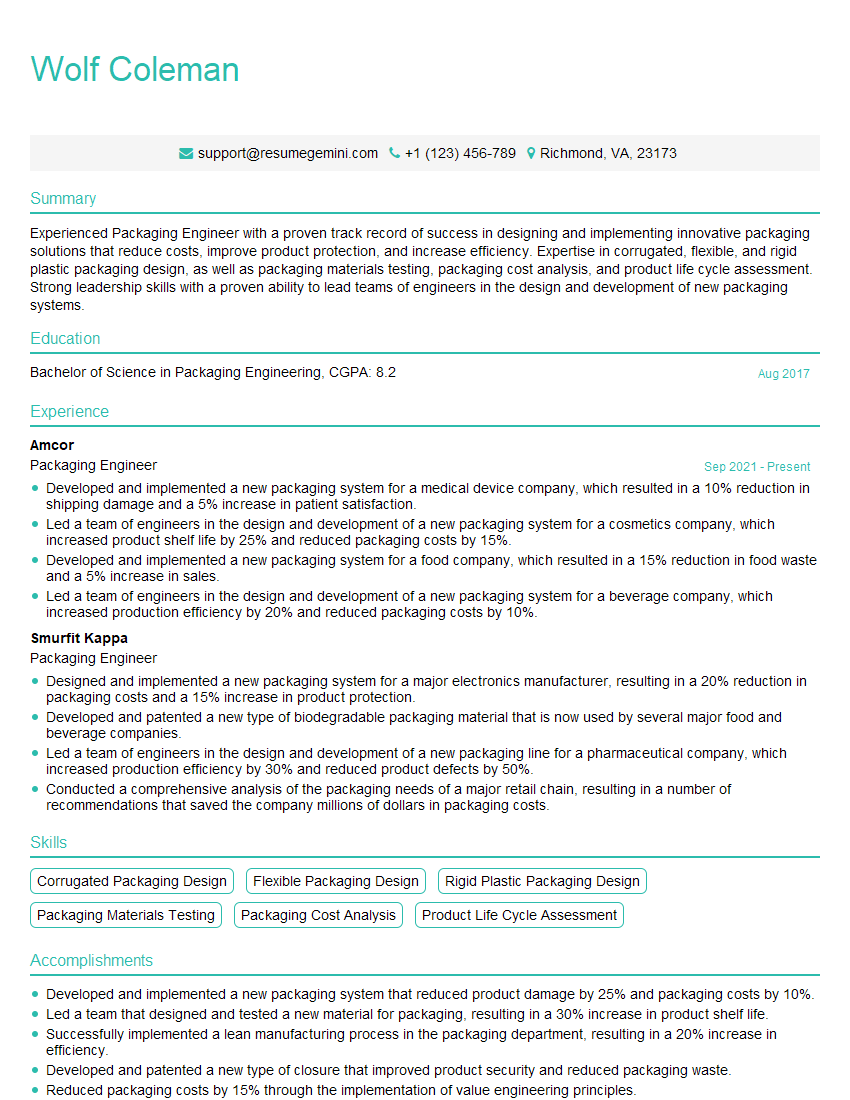
Packaging Engineer Resume Sample

Automation Technician Resume Sample
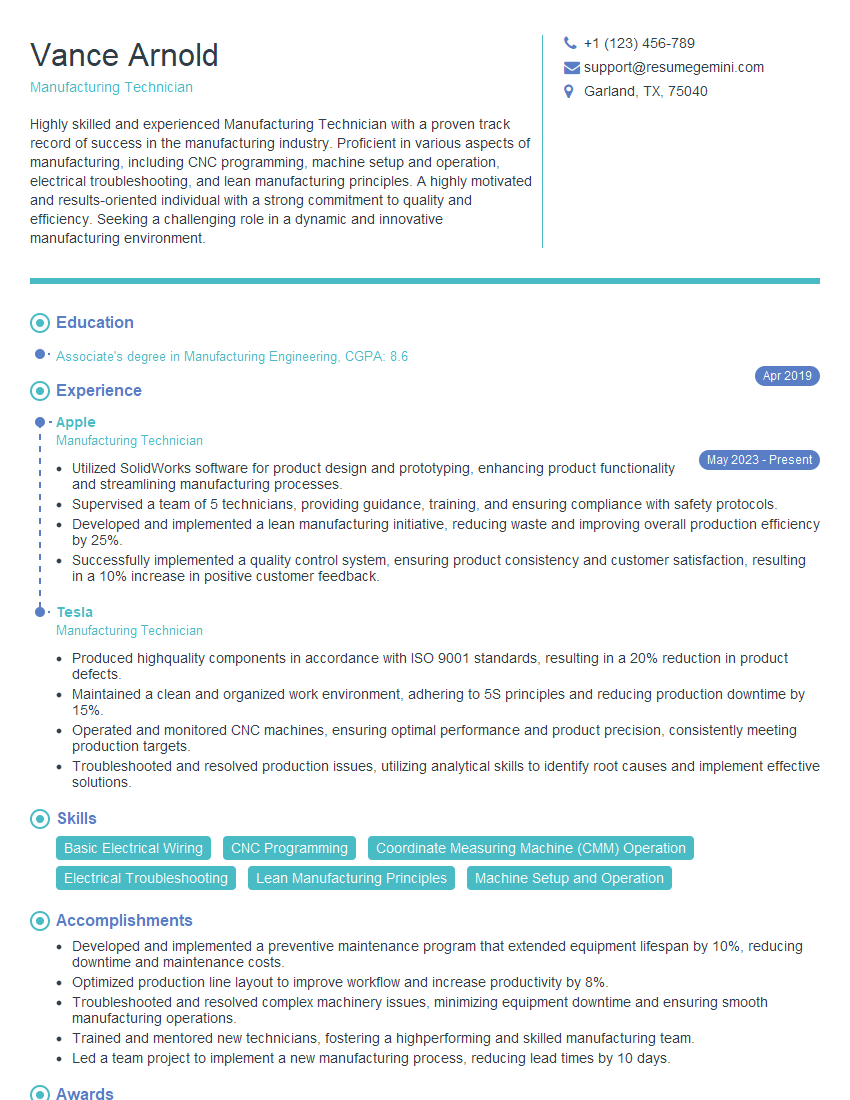
Manufacturing Technician Resume Sample
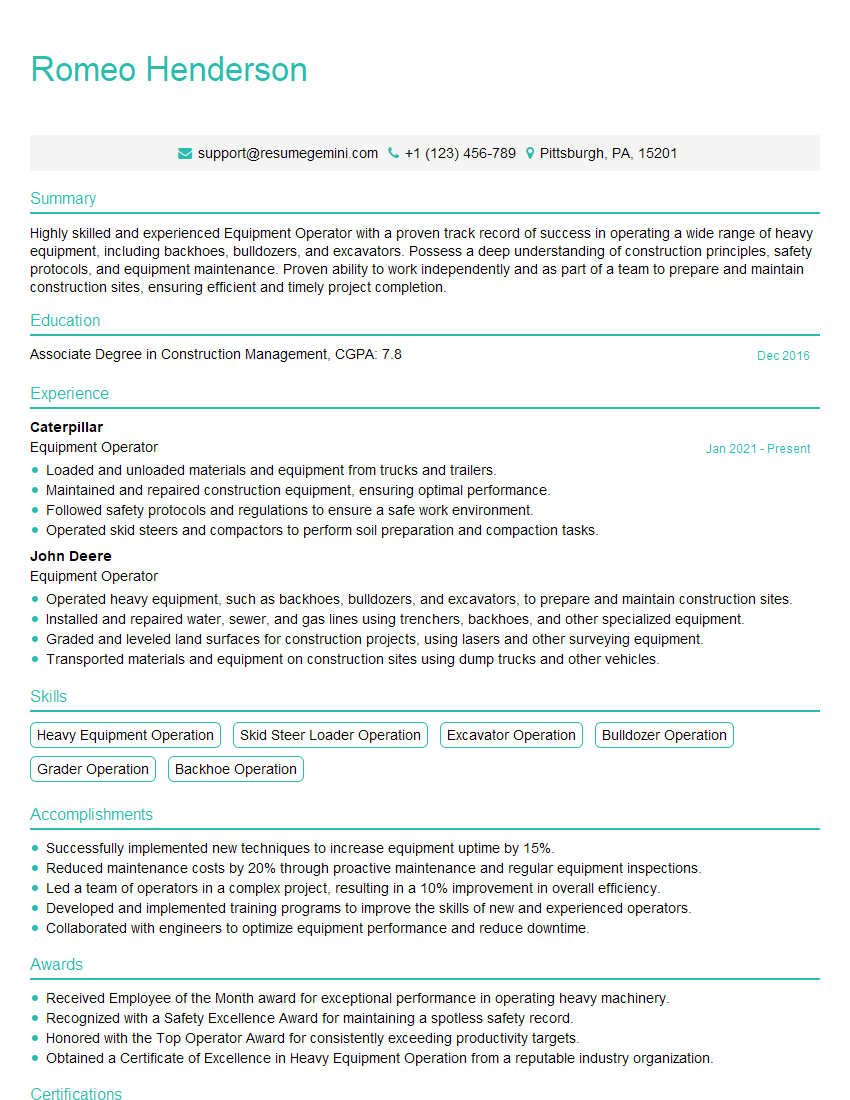
Equipment Operator Resume Sample
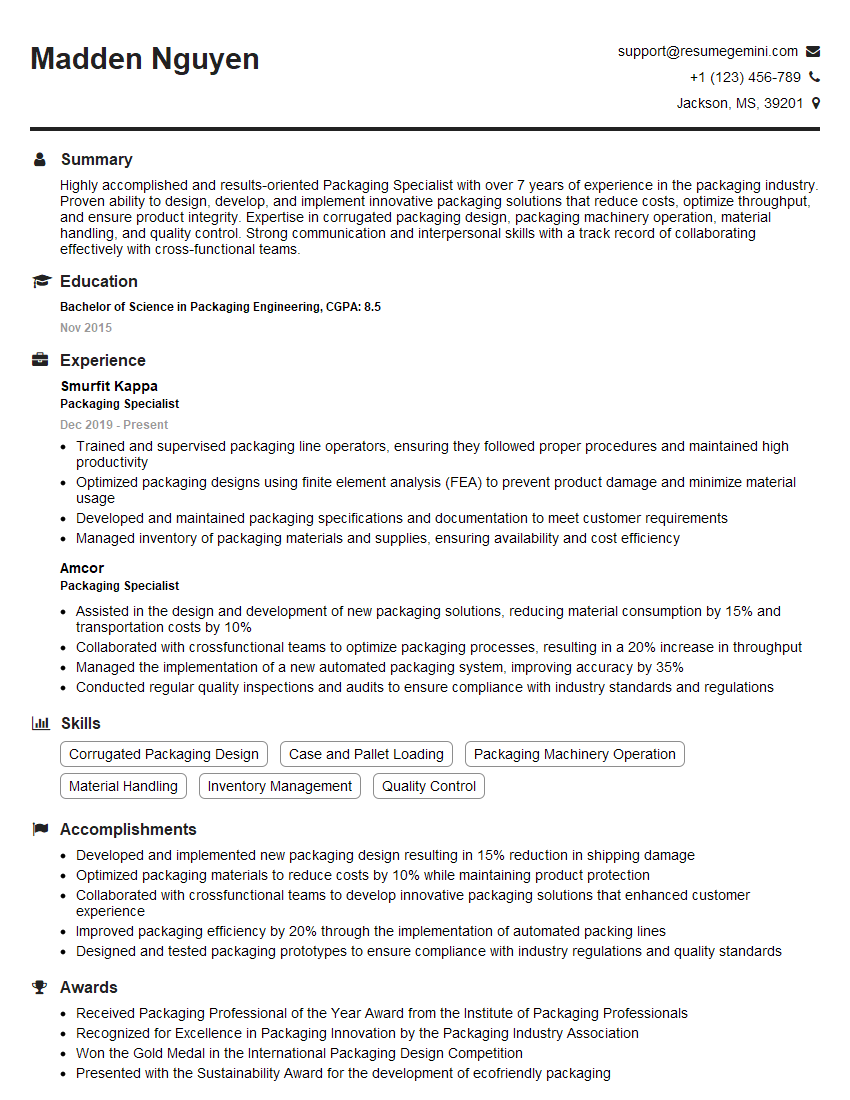
Packaging Specialist Resume Sample

Control Systems Technician Resume Sample
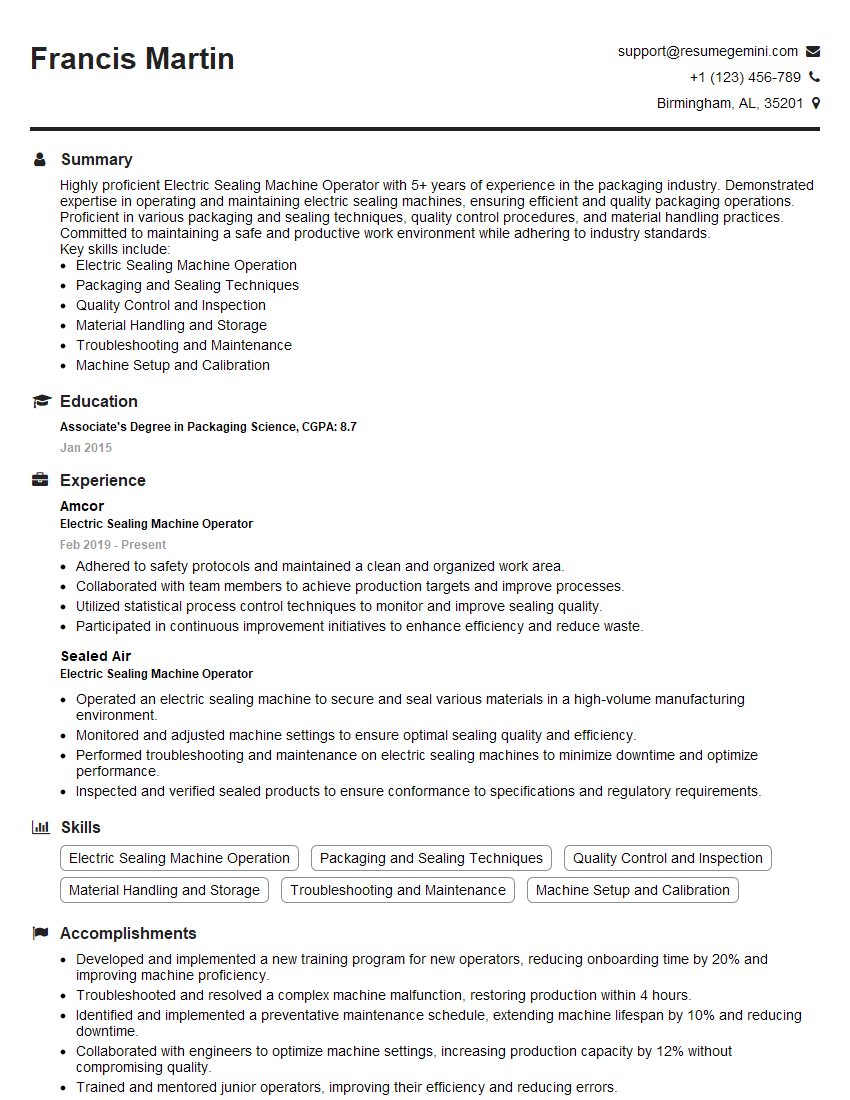
Electric Sealing Machine Operator Resume Sample
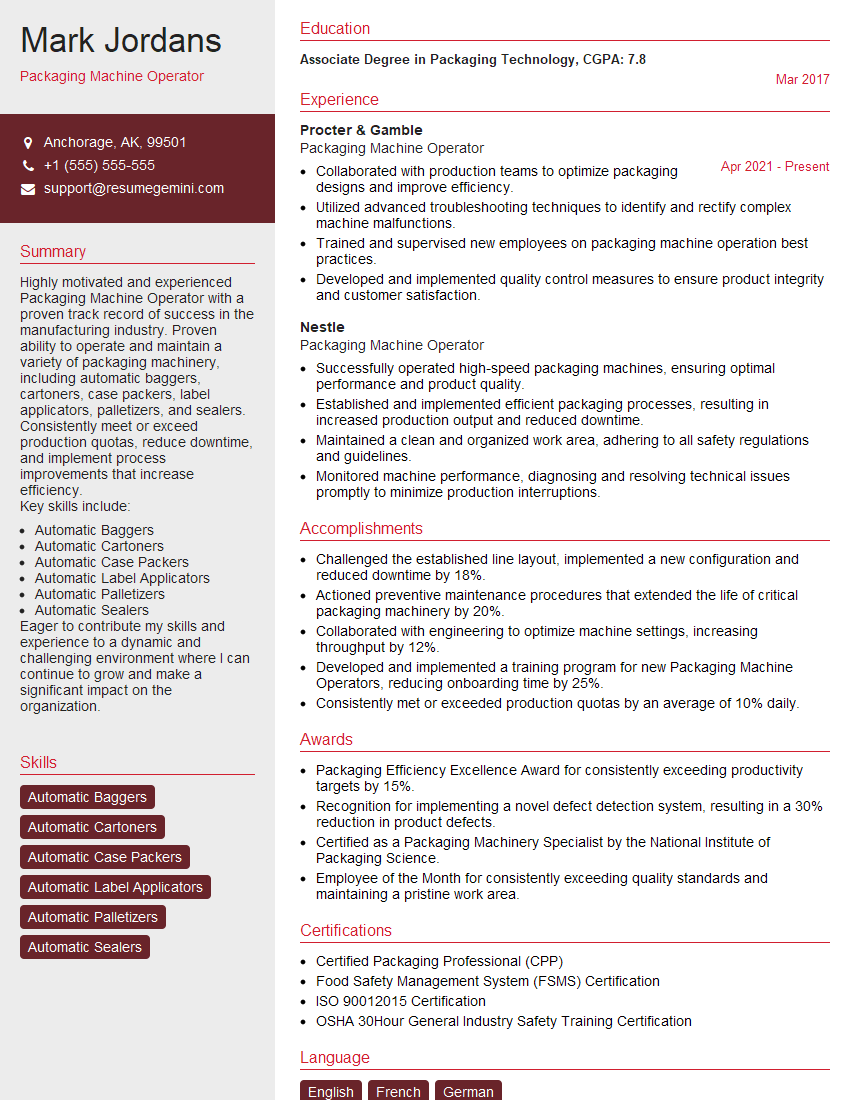
Packaging Machine Operator Resume Sample
Explore more articles
Users Rating of Our Blogs
Share Your Experience
We value your feedback! Please rate our content and share your thoughts (optional).
What Readers Say About Our Blog
Very informative content, great job.
good