Feeling uncertain about what to expect in your upcoming interview? We’ve got you covered! This blog highlights the most important Electrical Engineering Drawing and Design interview questions and provides actionable advice to help you stand out as the ideal candidate. Let’s pave the way for your success.
Questions Asked in Electrical Engineering Drawing and Design Interview
Q 1. Explain the difference between a single-line diagram and a three-line diagram.
Single-line and three-line diagrams are both simplified representations of electrical systems, but they differ in their level of detail. Think of them as different zoom levels on a map. A single-line diagram shows the overall system layout, focusing on the main components and their connections. It uses a single line to represent each phase of a three-phase system or a single conductor in a single-phase system, simplifying complex arrangements. This is ideal for high-level planning and system overview. In contrast, a three-line diagram provides a more detailed representation, showing all three phases of a three-phase system individually. It’s used for design and analysis purposes where the individual phase relationships and impedances are crucial. For example, a single-line diagram might show a power transformer connecting a substation to a distribution network, while a three-line diagram would show the individual windings of that transformer and its connections to each phase of the busbars.
In short: Single-line diagrams prioritize simplicity and overview, while three-line diagrams prioritize detail and accurate phase representation.
Q 2. What are the standard symbols used in electrical drawings according to IEEE or IEC standards?
Standard symbols for electrical drawings are defined by organizations like the Institute of Electrical and Electronics Engineers (IEEE) and the International Electrotechnical Commission (IEC). While there are variations, the core symbols remain consistent. These symbols represent various components like switches, circuit breakers, transformers, motors, and more. For instance, a circle with a cross inside typically represents a fuse, a rectangle with a curved bottom often denotes a motor, and a simple line with a curved arrowhead represents a control circuit. Adherence to these standards ensures clarity and easy understanding across projects and teams. Imagine trying to interpret drawings with inconsistent symbols – it would be incredibly confusing and error-prone. Standards ensure drawings are universally understood.
Example: IEC 60617 and IEEE Std 315 define many common symbols. While specific symbols might have slight variations, the overarching goal is consistent representation for unambiguous interpretation.
Q 3. Describe your experience with AutoCAD Electrical or similar CAD software.
I have extensive experience using AutoCAD Electrical for over [Number] years. I’m proficient in creating various electrical drawings, including schematics, panel layouts, wiring diagrams, and more. My experience extends from designing simple control circuits to complex industrial power distribution systems. I’ve used AutoCAD Electrical’s features to generate reports, manage component databases, and automatically generate wiring lists, significantly reducing the time and effort required for project documentation. In one project, I used AutoCAD Electrical to design the electrical system for a large manufacturing facility. The software’s integrated tools allowed for easy collaboration with the mechanical and process engineering teams, ensuring a coordinated design process. I have also utilized its capabilities for creating and managing bill of materials (BOMs), automatically extracting information directly from the electrical drawings.
Beyond AutoCAD Electrical, I’m also familiar with [Mention other CAD software if applicable, e.g., EPLAN, SolidWorks Electrical]. This broad exposure gives me a flexible approach to project requirements and allows me to adapt quickly to different software environments.
Q 4. How do you ensure accuracy and consistency in your electrical drawings?
Accuracy and consistency are paramount in electrical drawings. To ensure this, I employ several strategies: Firstly, I meticulously follow the relevant standards (IEEE/IEC) for symbols and drawing conventions. Secondly, I establish a clear project style guide that outlines drawing conventions specific to that project. This includes sheet numbering, line weights, text styles, and annotation standards. Thirdly, I employ rigorous quality checks throughout the design process. This involves peer reviews, cross-checking against specifications and calculations, and detailed verification of component selection and placement. Regularly using tools like automated component tagging and wire numbering within AutoCAD Electrical ensures consistency and reduces the likelihood of errors. A vital step is using version control systems. It tracks changes and allows for easy rollback if necessary. Finally, a well-structured filing system for drawings and related documents is maintained.
These steps reduce errors and facilitate efficient project management, ultimately leading to a higher quality and more easily understood final product. In one case, these rigorous checks helped prevent a critical wiring error that would have caused significant downtime and financial losses.
Q 5. What are the different types of electrical drawings used in a typical project?
A typical electrical project utilizes several types of drawings: Schematic diagrams show the logic and connections between electrical components without necessarily reflecting the physical layout. Wiring diagrams detail the physical layout and routing of wires and cables. Panel layouts illustrate the arrangement of components within electrical panels, including the wiring and termination points. Single-line diagrams provide a simplified overview of the entire power system. Three-line diagrams offer more detailed representations of three-phase systems. Power system studies (such as one-line diagrams, impedance diagrams) are crucial to assess the system’s performance and ensure stability. Finally, installation drawings show the physical placement of equipment and pathways for cables.
The purpose of each drawing type varies, and they are typically created in a sequence to ensure a complete and coordinated electrical design.
Q 6. Explain the process of creating a wiring diagram from a schematic diagram.
Creating a wiring diagram from a schematic diagram involves translating the logical connections of the schematic into a physical layout. This process requires careful consideration of physical constraints, such as available space, cable routing, and equipment placement. It often begins with the schematic as a starting point. Then, based on the physical constraints and standards, the components are arranged on the wiring diagram. Next, the wires are traced from the schematic and their physical paths are planned on the wiring diagram. Wire numbering, terminal markings, and other details are added to ensure clear and unambiguous representation. A thorough check is done to ensure that all the components and connections from the schematic are correctly reflected in the wiring diagram and that the physical layout is feasible and adheres to safety and industry standards. This step requires attention to detail and a clear understanding of electrical and physical constraints.
Think of it like translating a recipe (schematic) into the step-by-step process of cooking a dish (wiring diagram). Both describe the same outcome, but the latter details the physical actions.
Q 7. How do you handle revisions and updates to electrical drawings?
Revisions and updates are managed using a formal revision control system. This usually involves assigning revision numbers (e.g., A, B, C) or using a date-based versioning scheme. Changes are documented clearly within the drawing itself or in accompanying revision logs, detailing the nature of the modifications, the date, and the author. The use of revision clouds highlights changes graphically. AutoCAD Electrical and similar software facilitates this process with built-in revision control features. Digital version control is employed so changes can be tracked and reverted if necessary. Collaboration tools ensure that multiple engineers working on the same drawing are aware of each other’s updates. This systematic approach ensures that all stakeholders have access to the most up-to-date versions of the electrical drawings. This prevents conflicts and ensures that the project is built based on the latest design.
Clear revision control is vital for minimizing errors during construction and ensuring that the final installation accurately reflects the latest design.
Q 8. Describe your experience with creating and managing Bill of Materials (BOMs).
Creating and managing a Bill of Materials (BOM) is crucial for any electrical engineering project. A BOM is a comprehensive list of all the components needed for a project, including quantities, descriptions, and part numbers. My experience involves using various software packages like AutoCAD Electrical and EPLAN to generate and maintain BOMs. I start by carefully reviewing the electrical drawings and specifications to identify each component. This includes everything from wires and conduits to switches, outlets, circuit breakers, and transformers. Then, I input this data into the software, ensuring accuracy and consistency. I also employ a robust system of version control, using revision numbers to track changes and prevent errors. For example, on a recent hospital project, the BOM spanned over 500 items; managing revisions and ensuring accuracy was paramount. Through rigorous checking and cross-referencing with drawings, I successfully delivered a precise and complete BOM, avoiding costly errors during procurement.
Beyond simple component listing, I also incorporate features like cost estimation and supplier information within the BOM. This facilitates efficient procurement and budgetary management. I’m comfortable with various BOM structures and formats, adapting to client-specific requirements. Effective BOM management is a core skill that ensures project success from initial design to final installation.
Q 9. How familiar are you with National Electrical Code (NEC) or other relevant building codes?
I’m highly familiar with the National Electrical Code (NEC), specifically the 2020 edition, and other relevant building codes such as the International Building Code (IBC). Understanding these codes is not just about compliance; it’s about ensuring safety and efficiency. My work consistently incorporates NEC requirements related to wiring methods, grounding, overcurrent protection, and other critical safety aspects. I regularly consult the NEC during the design process, ensuring that all my drawings meet the strictest standards. For instance, when designing a commercial kitchen, I meticulously followed Article 517 (Article for Commercial Cooking Appliances) to ensure the system’s safety and compliance with local regulations. Furthermore, I stay updated with code changes through continuing education courses and industry publications to ensure my knowledge remains current.
My understanding extends beyond NEC to other relevant codes depending on the project’s location and specific requirements. This broad knowledge allows me to tackle projects of varying complexities and geographical locations with confidence.
Q 10. Explain your experience with electrical calculations (e.g., voltage drop, short circuit calculations).
Electrical calculations are essential to ensure a safe and efficient electrical system. My experience encompasses a range of calculations, including voltage drop calculations, short-circuit current calculations, and load calculations. For voltage drop, I use formulas to determine the appropriate wire size to minimize voltage loss over long distances, ensuring sufficient power at the load. For example, in a large industrial facility, I had to calculate the voltage drop for long feeder runs to ensure sufficient voltage reached the remote equipment. This required detailed load calculations and careful consideration of cable resistivity. I employed software like SKM PowerTools to perform these calculations efficiently and accurately, generating reports for review and approval.
Short-circuit current calculations are crucial for sizing protective devices like circuit breakers and fuses. I use industry-standard software to perform these calculations, considering factors like fault current contributions from various sources within the system. This ensures the system’s protective devices operate correctly during fault conditions. These calculations are not only vital for safety but also ensure the optimal selection of protective equipment, balancing cost and performance.
Q 11. How do you ensure your drawings comply with industry standards and safety regulations?
Ensuring compliance with industry standards and safety regulations is paramount in electrical design. I adhere to a strict process that starts with a thorough understanding of the applicable codes and standards (NEC, IEEE, ANSI, etc.). I use industry-standard software to create drawings that automatically enforce certain code compliance features. For instance, AutoCAD Electrical incorporates many NEC checks during the drawing process. Beyond software, I implement a rigorous review process involving peer reviews and internal quality checks to catch any potential inconsistencies or violations. This meticulous approach helps prevent errors and ensures that my designs are safe, efficient, and compliant. I regularly document these reviews for traceability and accountability.
I also maintain a close relationship with regulatory authorities and am proactive in staying informed about updated codes and standards. This continuous learning and commitment to best practices ensure my designs always reflect the highest standards of quality and safety.
Q 12. Describe your experience with different types of cable and conduit sizing.
Cable and conduit sizing is critical for safety and efficient power delivery. My experience involves selecting appropriate cables based on ampacity (current-carrying capacity), voltage rating, and installation conditions (ambient temperature, grouping factors, etc.). I use industry-standard tables and software to determine the correct cable size. Conduit sizing is equally important. It must be large enough to accommodate the cables comfortably, allowing for future expansion and facilitating easy installation and maintenance. I also ensure adequate space for bending radius considerations.
For example, in a recent project involving a large data center, I had to carefully size high-capacity power cables and their corresponding conduits to meet the significant power demands of the servers. This included considering factors like voltage drop and heat dissipation, necessitating larger than typical conduit sizes to prevent overheating and ensure efficient operation.
Q 13. Explain your understanding of grounding and bonding in electrical systems.
Grounding and bonding are fundamental safety measures in electrical systems. Grounding provides a low-impedance path to the earth for fault currents, preventing dangerous voltage buildup. Bonding connects metallic parts of the electrical system to ensure they are at the same electrical potential, minimizing shock hazards. I understand the different grounding methods (e.g., electrode grounding, grounding grid systems) and ensure proper implementation based on the NEC and project-specific requirements. My understanding includes different types of grounding electrodes and their suitability based on soil resistivity.
For example, in a hospital setting, reliable grounding and bonding are paramount. I meticulously designed a grounding grid system conforming to stringent requirements and performed resistance tests to verify the effectiveness of the system, ensuring the utmost patient and staff safety.
Q 14. How do you interpret and implement design specifications in your drawings?
Interpreting and implementing design specifications is a crucial part of my work. I begin by thoroughly reviewing the project specifications, which usually include details such as load requirements, voltage levels, equipment lists, and other relevant information. I create detailed diagrams and schematics, using the specifications as a guide, and incorporate client-specific requirements and any unique constraints of the project. This includes incorporating any special considerations mentioned by the client or that may be specified by local regulations.
For example, in a recent renovation project for an older building, the specifications included detailed information about the existing electrical system which had to be taken into consideration when designing the upgraded system. My meticulous attention to detail allowed me to design a system that effectively integrated the existing infrastructure while satisfying the new requirements. My drawings reflect these specifications accurately, ensuring that the final design precisely meets the client’s needs.
Q 15. What software are you proficient in for electrical design and drafting?
My proficiency in electrical design and drafting software is extensive. I’m highly skilled in AutoCAD, a cornerstone for creating detailed electrical schematics, panel layouts, and site plans. I’m also proficient in Revit, particularly beneficial for large-scale projects where Building Information Modeling (BIM) is crucial for coordination and collaboration. Furthermore, I have experience with specialized software like EPLAN Electric P8, which streamlines the design and documentation of complex electrical systems, offering features like automated component placement and wire numbering. Finally, I’m familiar with industry-standard software for calculations and simulations, such as ETAP, ensuring designs meet performance and safety requirements.
Career Expert Tips:
- Ace those interviews! Prepare effectively by reviewing the Top 50 Most Common Interview Questions on ResumeGemini.
- Navigate your job search with confidence! Explore a wide range of Career Tips on ResumeGemini. Learn about common challenges and recommendations to overcome them.
- Craft the perfect resume! Master the Art of Resume Writing with ResumeGemini’s guide. Showcase your unique qualifications and achievements effectively.
- Don’t miss out on holiday savings! Build your dream resume with ResumeGemini’s ATS optimized templates.
Q 16. Describe your experience with creating and reviewing electrical design specifications.
Creating electrical design specifications involves a meticulous process. I begin by thoroughly understanding the project requirements, including functional needs, safety regulations, and budget constraints. This often involves reviewing architectural plans, mechanical drawings, and client briefs. Then, I develop a detailed set of specifications outlining all aspects of the electrical system, including voltage levels, wire sizing, protective devices, equipment selection, and testing procedures. For example, for a hospital, I would specify the requirements for emergency power systems, medical gas outlets, and critical equipment protection, adhering strictly to NFPA 99. Reviewing specifications is equally critical. This involves checking for completeness, accuracy, and compliance with codes and standards, ensuring the design is robust, efficient, and safe. I often use checklists and templates to maintain consistency and improve efficiency during this review process.
Q 17. How do you coordinate with other engineering disciplines during the design process?
Coordination with other engineering disciplines is essential for successful project delivery. I actively participate in regular design coordination meetings with architects, structural engineers, mechanical engineers, and other relevant parties. We utilize BIM software like Revit to ensure seamless integration of different systems. For instance, I’ll collaborate with the structural engineer to verify the capacity of structural members to support the weight of electrical equipment. Similarly, close coordination with mechanical engineers is necessary to avoid conflicts between electrical conduits and HVAC systems. I also use cloud-based collaborative platforms to share documents, track revisions, and facilitate communication, improving overall efficiency and reducing potential conflicts.
Q 18. Describe a challenging electrical design problem you faced and how you solved it.
One challenging project involved designing the electrical system for a large data center with stringent uptime requirements. The challenge was balancing the need for redundancy and resilience with budget limitations. To solve this, I employed a phased approach, prioritizing critical systems first and then implementing redundant systems incrementally. We utilized a combination of UPS systems, generators, and automated transfer switches. I also performed detailed load calculations and simulations using ETAP software to optimize the system design, minimizing costs while ensuring the necessary power quality and reliability. This phased approach allowed us to meet the client’s requirements while managing the project’s financial constraints effectively. Regular communication and collaboration with the client were crucial throughout the process.
Q 19. What are your preferred methods for communicating technical information in drawings?
Clear and concise communication is paramount in electrical drawings. My preferred methods include:
- Clear labeling and annotation: Every component, wire, and conduit is clearly labeled with its designation and function.
- Consistent use of standard symbols: I adhere to industry-standard symbols (IEEE, IEC) for consistency and ease of understanding.
- Detailed legends: A comprehensive legend explains all symbols and abbreviations used in the drawings.
- Revision control: Using a revision control system, like that integrated in AutoCAD or Revit, ensures that all stakeholders are working with the latest version.
- Color-coding: Strategic use of color-coding enhances clarity and quickly identifies different voltage levels or circuit functions.
Q 20. Explain your understanding of electrical symbols and their significance.
Electrical symbols are the shorthand language of electrical drawings. They represent various components, devices, and wiring methods in a standardized format. Understanding these symbols is crucial for interpreting and creating accurate electrical drawings. For example, a circle with a cross inside represents a ground connection, while a rectangle with a wavy line inside might represent a resistor. Different standards exist (e.g., IEEE, IEC), but understanding the fundamental symbols for components like breakers, switches, motors, transformers, and various types of wiring is key. Each symbol conveys specific information concisely, allowing for complex systems to be represented clearly and efficiently. The significance lies in their ability to provide a universally understood visual representation of the electrical system’s design, ensuring consistency and preventing misinterpretations.
Q 21. How do you incorporate client feedback into the design process?
Incorporating client feedback is vital. I actively solicit feedback throughout the design process, starting with initial design concepts and continuing through various review stages. I use formal meetings, email, and collaborative design platforms to gather feedback. When feedback is received, I carefully analyze it to understand the client’s concerns and needs. If the feedback necessitates design changes, I update the drawings and specifications accordingly, ensuring all parties are informed of the revisions. This iterative process of feedback, analysis, and revision ensures that the final design meets the client’s expectations and project objectives. Documenting all feedback and revisions is also critical for maintaining a clear record of the design’s evolution.
Q 22. How do you manage changes in project scope and timelines?
Managing changes in project scope and timelines requires a proactive and collaborative approach. Think of it like navigating a ship – you need a clear map (original plan), constant monitoring (progress tracking), and the ability to adjust the sails (re-planning) when unexpected storms (changes) hit.
My strategy involves:
- Formal Change Management Process: Implementing a documented process for evaluating, approving, and documenting any scope or timeline alterations. This includes impact assessments, cost revisions, and schedule updates.
- Regular Communication: Maintaining open and transparent communication with all stakeholders – clients, contractors, and team members – to ensure everyone is informed about changes and their implications.
- Contingency Planning: Building buffer time into the schedule and anticipating potential risks. This allows for flexibility in case of unforeseen delays or scope creep.
- Agile Methodology: Employing an iterative approach, where work is broken down into smaller, manageable chunks. This allows for greater flexibility and adaptation to changing requirements.
For example, on a recent data center project, a late-stage client request for additional server racks required a thorough impact assessment. We evaluated the schedule, resource availability, and budget, then presented a revised plan with adjusted timelines and costs for approval. The transparent communication and formal process ensured a smooth transition and prevented project delays.
Q 23. Describe your experience with working on large-scale electrical projects.
I’ve been fortunate to work on several large-scale electrical projects, including a 500,000 sq ft hospital complex and a major airport terminal expansion. These projects involved intricate coordination with multiple disciplines, including HVAC, plumbing, and structural engineering. The scale demanded meticulous planning, detailed coordination, and robust project management.
My role typically involved:
- Developing comprehensive electrical drawings: Creating detailed schematics, power distribution plans, lighting layouts, and grounding systems using industry-standard software like AutoCAD and Revit.
- Coordinating with other disciplines: Ensuring seamless integration of the electrical systems with other building systems through regular meetings and collaborative design reviews.
- Managing large teams: Supervising and mentoring junior engineers and technicians, delegating tasks effectively, and providing guidance on technical issues.
- Budget and schedule management: Tracking project costs and progress, identifying potential problems early, and implementing corrective actions.
In the hospital project, for instance, I led the design of the critical power systems, ensuring redundancy and fail-safe mechanisms to maintain uninterrupted power supply to critical medical equipment. The success of this project highlighted the importance of meticulous design and rigorous quality control.
Q 24. What is your approach to ensuring the quality and accuracy of your work?
Quality and accuracy are paramount in electrical design. A single error can have severe consequences, from minor malfunctions to major safety hazards. My approach to quality assurance is multifaceted and includes:
- Strict adherence to codes and standards: Following the NEC (National Electrical Code) and other relevant industry standards diligently.
- Rigorous design reviews: Conducting multiple peer reviews and internal checks at various stages of the design process to identify and correct errors early.
- Software-based checks: Utilizing software tools for electrical design simulations and checks, ensuring compliance with standards and identifying potential conflicts.
- Detailed documentation: Maintaining comprehensive documentation, including calculations, specifications, and drawings, to facilitate future maintenance and troubleshooting.
- Quality control checklists: Employing checklists at each stage to ensure all necessary steps are followed and all requirements are met.
For example, before submitting any drawings for approval, I always perform a thorough self-check using a standardized checklist, comparing the drawings against specifications and ensuring all calculations are accurate and consistent.
Q 25. How do you stay up-to-date with the latest advancements in electrical design technologies?
Staying updated in this rapidly evolving field requires continuous learning and professional development. My strategy involves:
- Professional development courses and seminars: Participating in continuing education programs offered by professional organizations like IEEE (Institute of Electrical and Electronics Engineers).
- Industry publications and journals: Reading relevant technical journals and publications to stay abreast of new technologies and best practices.
- Conferences and trade shows: Attending industry conferences and trade shows to network with peers and learn about the latest advancements.
- Online resources and webinars: Utilizing online learning platforms and webinars to access expert knowledge and tutorials on new software and technologies.
- Mentorship and networking: Engaging with experienced professionals in the field for guidance and sharing of knowledge.
Recently, I completed a course on the application of AI in electrical design, which opened up new possibilities for optimizing designs and improving efficiency.
Q 26. Describe your experience with using BIM (Building Information Modeling) in electrical design.
BIM (Building Information Modeling) has revolutionized electrical design, enabling greater collaboration and efficiency. My experience with BIM includes utilizing software like Revit to create 3D models of electrical systems, which greatly enhances coordination and clash detection with other disciplines.
The advantages I’ve experienced include:
- Improved coordination: BIM allows for early detection of clashes between electrical systems and other building systems, reducing costly rework during construction.
- Enhanced visualization: 3D modeling provides a clearer understanding of the electrical system layout and its interaction with the building environment.
- Better collaboration: BIM facilitates seamless collaboration with other design disciplines, leading to improved coordination and communication.
- Simplified quantity take-offs: Automated quantity take-offs significantly reduce the time and effort required for material estimation.
In a recent project using Revit, the 3D model helped us identify a potential clash between the electrical conduit and HVAC ductwork, allowing us to resolve the issue early in the design phase, preventing costly delays during construction.
Q 27. How do you ensure the safety of your electrical design?
Safety is paramount in electrical design. A negligent design can lead to severe consequences, including electric shock, fires, and even fatalities. My approach to ensuring safety integrates safety considerations throughout the entire design process:
- Adherence to safety codes and standards: Strictly following the NEC and other relevant safety standards to ensure compliance with all applicable regulations.
- Arc flash hazard analysis: Performing arc flash hazard analysis to assess potential risks associated with electrical arcs and implementing appropriate safety measures.
- Grounding and bonding: Designing effective grounding and bonding systems to minimize the risk of electric shock and equipment damage.
- Overcurrent protection: Specifying appropriate overcurrent protection devices (circuit breakers, fuses) to prevent equipment damage and fire hazards.
- Safe work practices: Integrating safety considerations into drawings and specifications, such as clear labeling, proper wire routing, and adequate clearances.
For example, in a recent industrial plant design, we conducted a thorough arc flash hazard analysis to identify potential hazards and implemented appropriate safety measures, including the use of arc flash protective equipment and safety signage.
Q 28. What is your experience with troubleshooting electrical drawings or systems?
Troubleshooting electrical drawings or systems requires a systematic and methodical approach, akin to detective work. I approach troubleshooting by:
- Careful review of documentation: Beginning with a thorough review of the relevant drawings, specifications, and operational data.
- On-site inspection: If possible, conducting a physical inspection of the electrical system to identify any visible anomalies.
- Testing and measurements: Employing appropriate testing equipment (multimeters, clamp meters) to measure voltage, current, and resistance to pinpoint the problem area.
- Logical deduction and elimination: Using a systematic process of elimination to isolate the faulty component or circuit.
- Simulation and analysis: In complex systems, using electrical simulation software to analyze the system’s behavior and identify potential causes.
In one instance, a malfunctioning motor in a manufacturing plant was initially attributed to a faulty motor. However, through systematic testing and review of the electrical drawings, I discovered a wiring error that was causing an overload on the motor circuit. Correcting the wiring error resolved the issue, highlighting the importance of thorough investigation and the use of available data.
Key Topics to Learn for Electrical Engineering Drawing and Design Interview
- Schematic Diagrams: Understand the creation and interpretation of single-line, multi-line, and wiring diagrams. Practice identifying components and tracing signal flow.
- Blueprint Reading: Develop proficiency in reading and interpreting electrical blueprints, including understanding symbols, scales, and annotations. Focus on identifying power distribution systems, control circuits, and grounding techniques.
- Electrical Symbols and Standards: Familiarize yourself with industry standards (e.g., IEEE, IEC) and common electrical symbols used in drawings. Practice drawing common components accurately.
- CAD Software Proficiency: Demonstrate your skills in using industry-standard CAD software (e.g., AutoCAD Electrical, EPLAN) for creating and modifying electrical drawings. Highlight your experience with various tools and features.
- Electrical Power Systems: Understand the principles of power distribution, including transformers, circuit breakers, and protective devices. Be able to represent these elements in drawings and explain their function.
- Control Systems: Demonstrate knowledge of control system design and representation in drawings, including ladder logic diagrams and programmable logic controller (PLC) programming concepts.
- Safety and Regulations: Be prepared to discuss relevant safety regulations and standards related to electrical design and drawing practices. Understand the importance of clear and accurate documentation for safety.
- Problem-Solving and Design: Practice applying your knowledge to solve design problems, such as optimizing layouts for efficiency and minimizing interference. Be ready to discuss your design process and decision-making.
Next Steps
Mastering Electrical Engineering Drawing and Design is crucial for career advancement in this field. It demonstrates a strong foundation in technical skills and your ability to communicate complex information clearly and effectively. To stand out in the competitive job market, crafting a strong, ATS-friendly resume is essential. ResumeGemini can help you create a professional resume that showcases your skills and experience effectively. ResumeGemini offers examples of resumes tailored to Electrical Engineering Drawing and Design, ensuring your resume is optimally prepared for applicant tracking systems and recruiters.

Automation Engineer Resume Sample
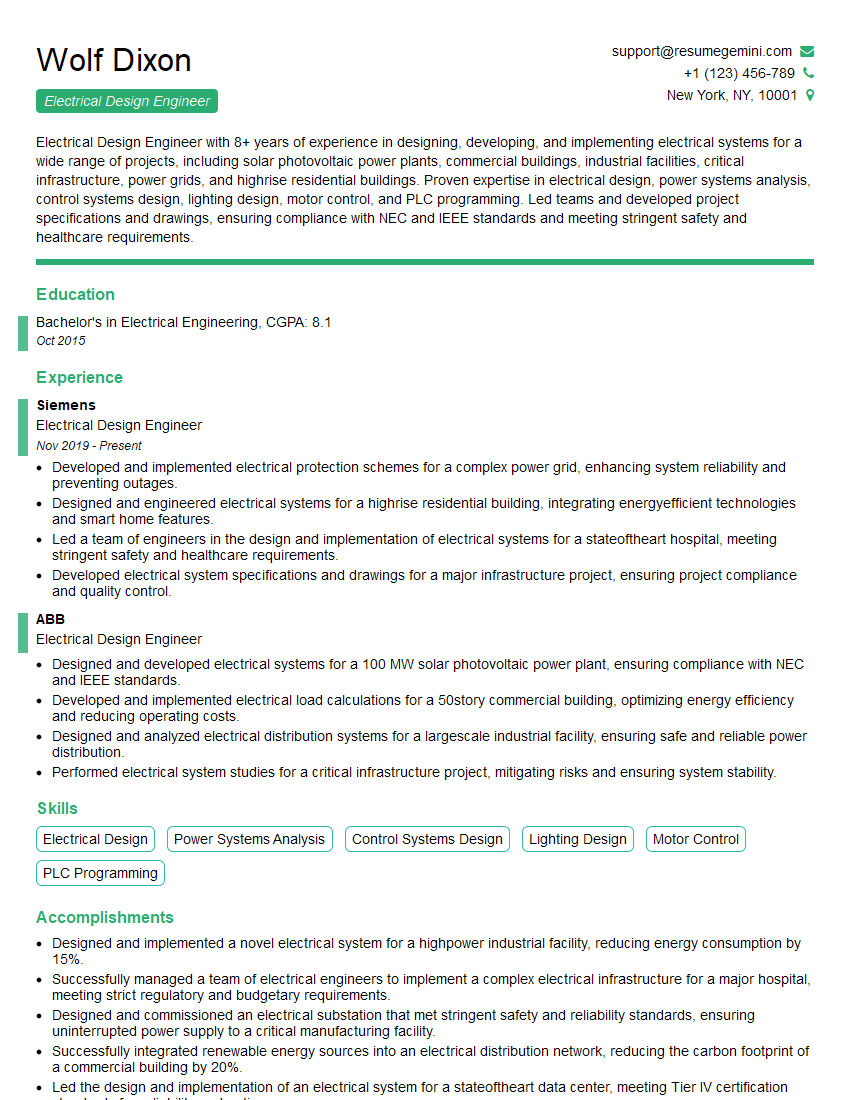
Electrical Design Engineer Resume Sample
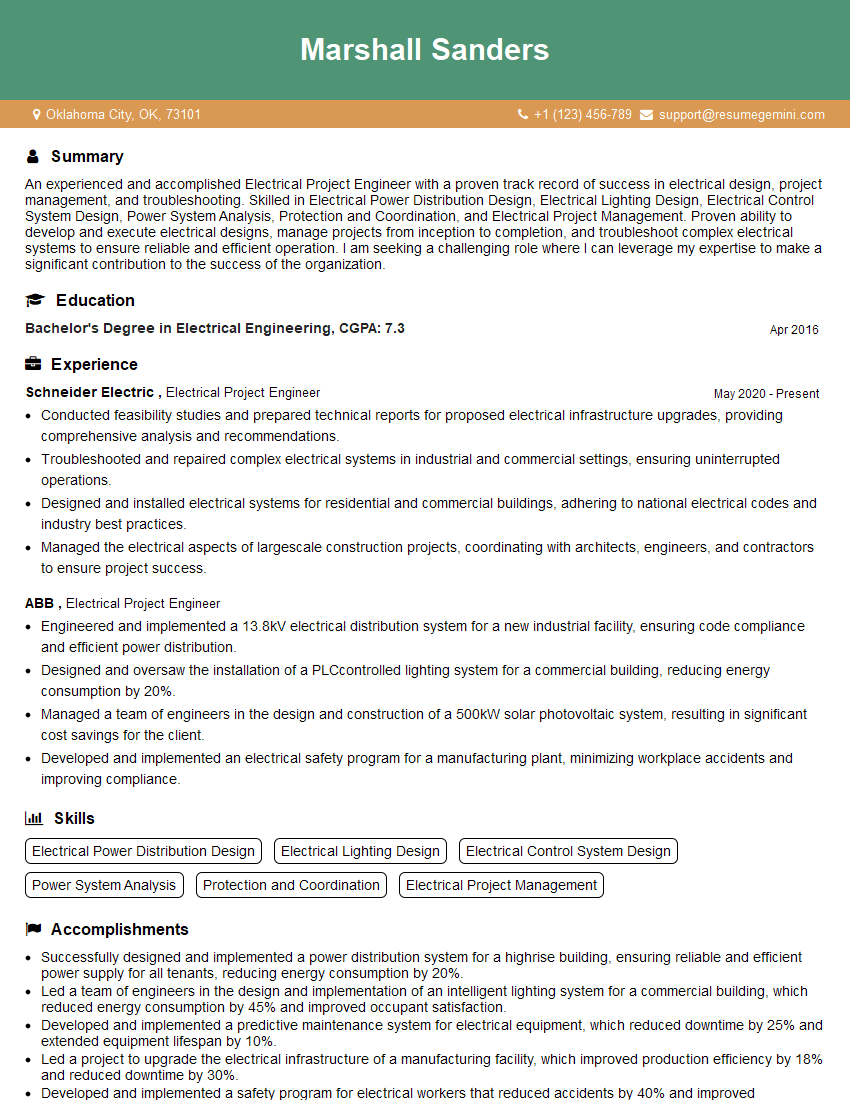
Electrical Project Engineer Resume Sample
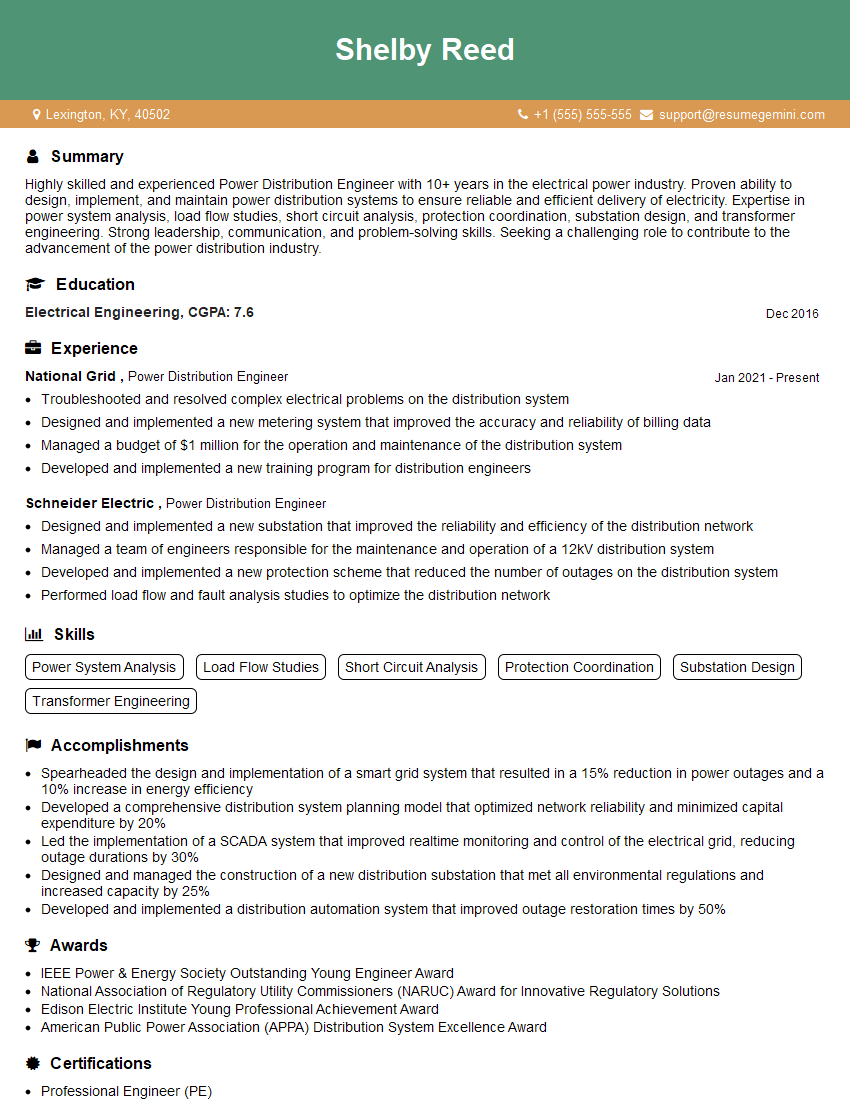
Power Distribution Engineer Resume Sample
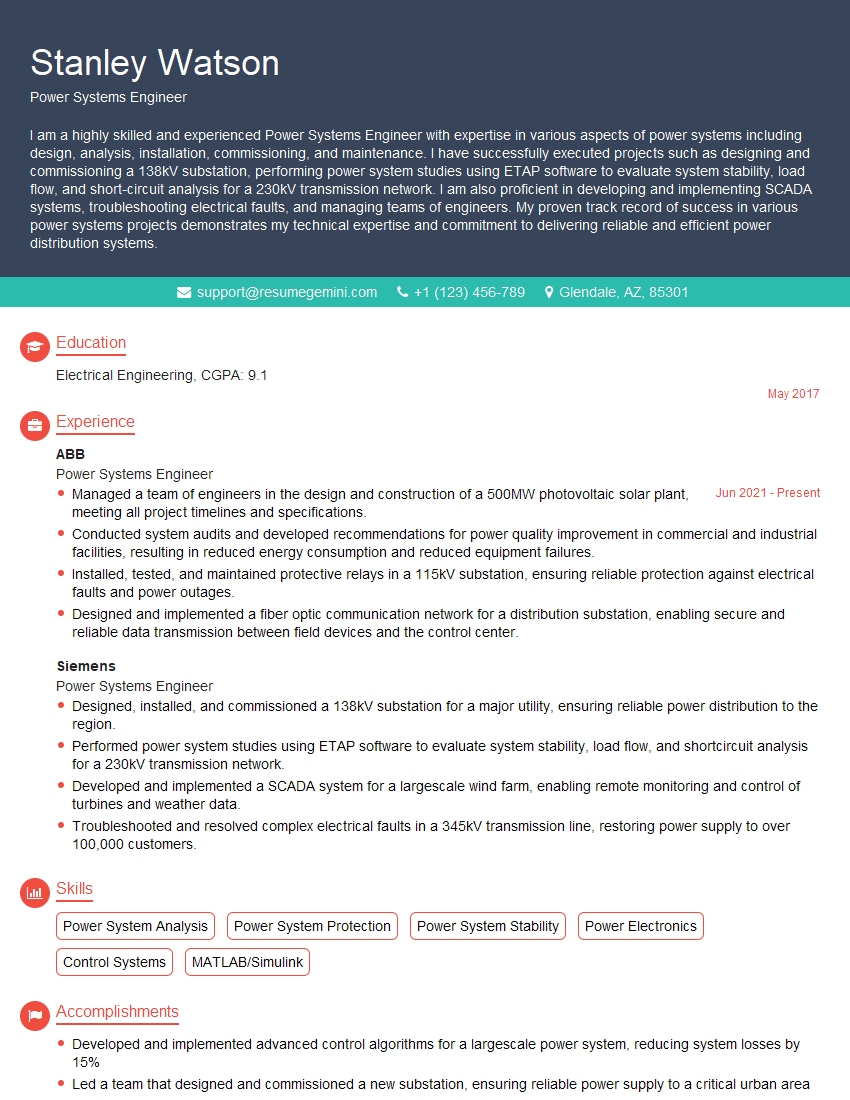
Power Systems Engineer Resume Sample
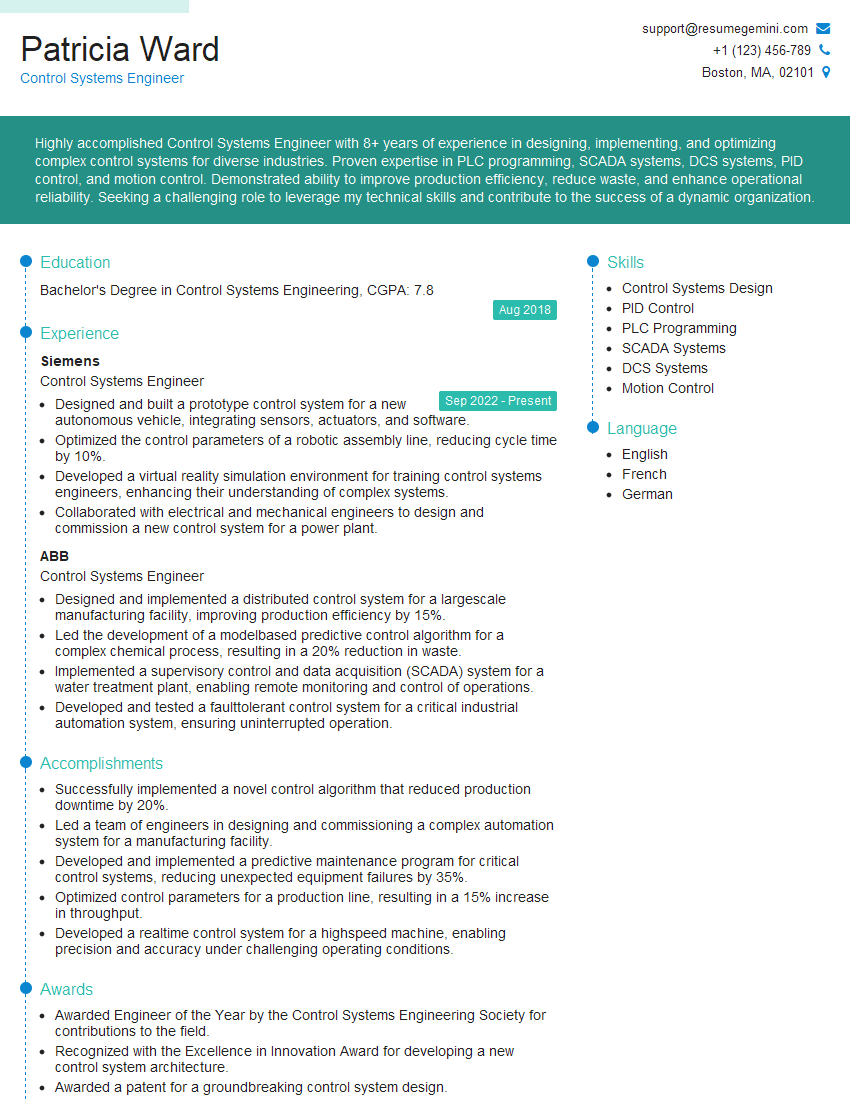
Control Systems Engineer Resume Sample
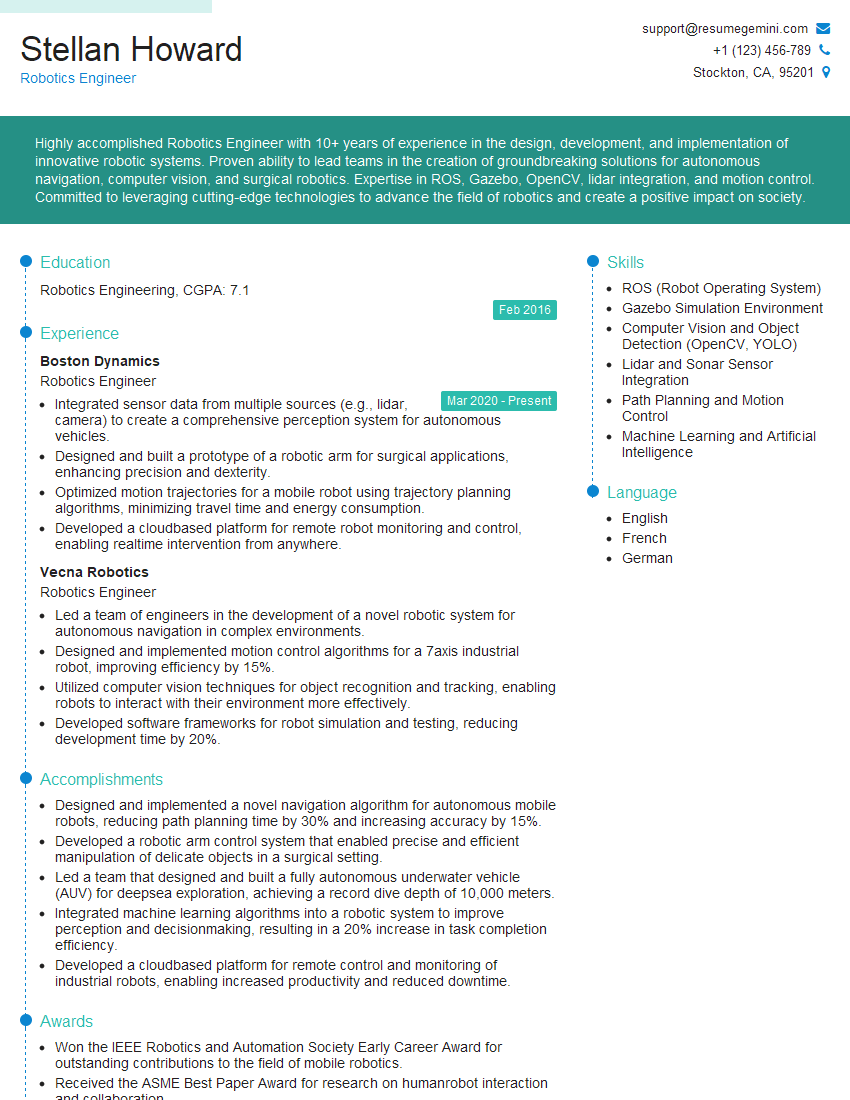
Robotics Engineer Resume Sample
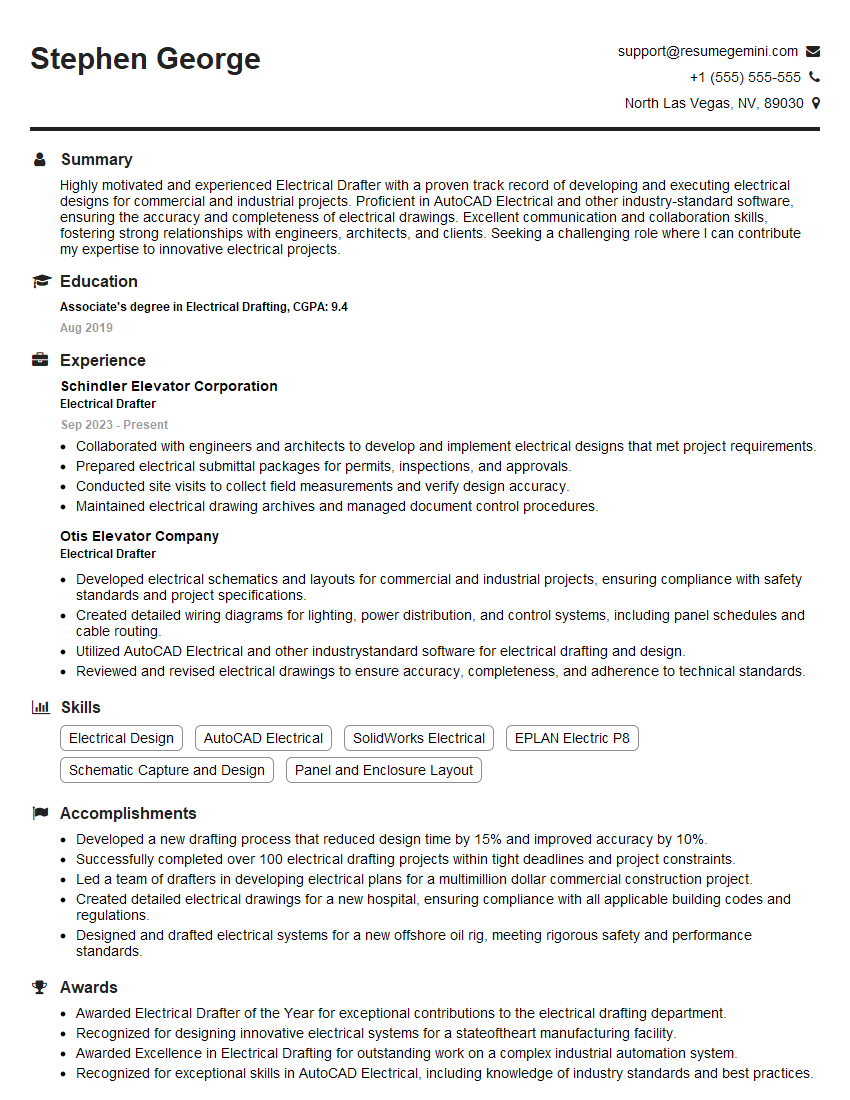
Electrical Drafter Resume Sample
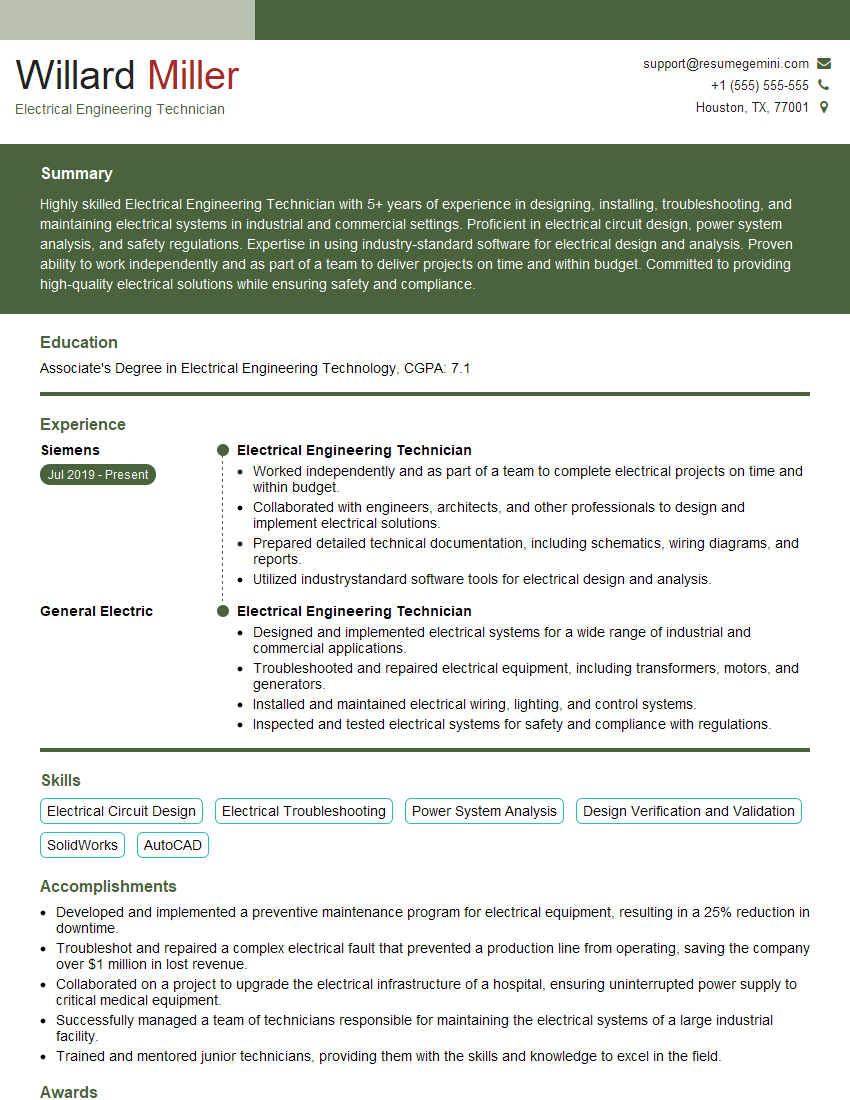
Electrical Engineering Technician Resume Sample
Explore more articles
Users Rating of Our Blogs
Share Your Experience
We value your feedback! Please rate our content and share your thoughts (optional).
What Readers Say About Our Blog
Very informative content, great job.
good