Interviews are more than just a Q&A session—they’re a chance to prove your worth. This blog dives into essential Electrical Leadership and Management interview questions and expert tips to help you align your answers with what hiring managers are looking for. Start preparing to shine!
Questions Asked in Electrical Leadership and Management Interview
Q 1. Describe your experience managing electrical engineering projects.
Throughout my career, I’ve managed numerous electrical engineering projects, ranging from small-scale renovations to large-scale industrial installations. My experience encompasses all phases, from initial concept and design through to construction, commissioning, and handover. For example, I led a team that successfully designed and implemented the electrical infrastructure for a new data center, navigating complex regulatory requirements and delivering the project under budget and ahead of schedule. Another significant project involved upgrading the electrical systems in a historic building, requiring careful coordination with preservationists and adherence to strict heritage guidelines. In both cases, successful project management involved meticulous planning, proactive risk assessment, and effective communication with stakeholders at every stage.
- Detailed Planning: Utilizing project management methodologies like Agile or Waterfall, depending on project complexity.
- Resource Allocation: Efficiently assigning engineers, technicians, and other resources based on skill sets and project needs.
- Budget Management: Tracking expenses diligently and adjusting allocations as needed.
- Timeline Adherence: Setting realistic deadlines and proactively addressing potential delays.
Q 2. How do you prioritize competing project demands?
Prioritizing competing project demands requires a structured approach. I use a combination of methods, including the MoSCoW method (Must have, Should have, Could have, Won’t have), urgency/importance matrix, and risk assessment. The MoSCoW method helps categorize project requirements by their criticality, allowing me to focus on essential tasks first. The urgency/importance matrix visualizes tasks based on their urgency and importance, guiding prioritization decisions. Risk assessment identifies potential problems and helps allocate resources to mitigate high-impact risks. For instance, if a project has a tight deadline and significant safety implications, it naturally takes precedence over less critical projects, even if others have higher perceived value. This systematic approach ensures that the most important and time-sensitive projects receive the necessary attention and resources.
Q 3. Explain your approach to risk management in electrical projects.
My approach to risk management in electrical projects is proactive and systematic. It involves identifying potential hazards early in the design phase using Failure Mode and Effects Analysis (FMEA) and Hazard and Operability studies (HAZOP). Then I develop mitigation strategies and contingency plans. This includes considering risks related to safety, cost, schedule, and regulatory compliance. For example, in a recent project involving high-voltage equipment, we implemented rigorous safety protocols, including lockout/tagout procedures and regular equipment inspections. We also established a clear escalation path for reporting and addressing safety concerns. Documenting all risks and mitigation strategies is crucial, ensuring transparency and accountability throughout the project lifecycle.
Q 4. What are the key performance indicators (KPIs) you use to track electrical project success?
Key Performance Indicators (KPIs) are crucial for tracking electrical project success. The KPIs I utilize vary based on project specifics, but generally include:
- On-time delivery: Measured as the percentage of project milestones completed on schedule.
- On-budget performance: Tracking actual costs against the budget.
- Safety record: Number of incidents, lost-time injuries, and near misses.
- Quality of work: Measured through inspections, testing, and client feedback.
- Client satisfaction: Gathered through surveys and regular communication.
- Efficiency metrics: Such as labor hours per unit of work.
Regular monitoring of these KPIs allows for proactive intervention and ensures project goals are met.
Q 5. How do you handle budget overruns in electrical projects?
Budget overruns are a serious concern. My approach involves immediate investigation to pinpoint the cause. This might include reviewing the original budget, assessing changes in scope, analyzing unforeseen challenges, and evaluating the effectiveness of cost control measures. Once the cause is identified, I implement corrective actions. This could range from negotiating with vendors for better pricing, re-allocating resources, or adjusting the project scope to bring it back within budget. Open communication with stakeholders is key, ensuring transparency and buy-in for any necessary adjustments. In the past, I successfully addressed a budget overrun by renegotiating contracts with subcontractors and optimizing the project schedule, avoiding compromising quality.
Q 6. Describe your experience with electrical safety regulations and compliance.
I have extensive experience with electrical safety regulations and compliance, including NEC (National Electrical Code), OSHA (Occupational Safety and Health Administration) standards, and relevant international codes. My experience includes ensuring all project designs and installations meet these regulations, preparing and submitting necessary documentation, and conducting regular safety inspections. I’m familiar with the legal ramifications of non-compliance and prioritize maintaining a safe working environment. For example, I successfully guided a project through rigorous inspections by ensuring all installations met local electrical codes and implemented safety measures that exceeded industry standards.
Q 7. How do you motivate and mentor your electrical engineering team?
Motivating and mentoring my team is a high priority. I believe in fostering a collaborative and supportive environment where everyone feels valued and respected. My approach involves:
- Clear Communication: Setting clear expectations, providing regular feedback, and maintaining open communication channels.
- Delegation and Empowerment: Assigning tasks based on individual strengths and empowering team members to take ownership.
- Professional Development: Providing opportunities for training, skill development, and career advancement.
- Recognition and Reward: Acknowledging accomplishments and celebrating successes.
- Mentorship: Providing guidance, support, and career advice to junior team members.
By fostering a positive and supportive environment, I aim to cultivate a high-performing and engaged team. I see my role not just as a manager but as a mentor and leader, helping my team members reach their full potential.
Q 8. How do you resolve conflicts within your team?
Resolving conflicts within a team requires a proactive and empathetic approach. My strategy focuses on understanding the root cause of the disagreement, not just the symptoms. I begin by fostering open communication, encouraging all team members to express their perspectives without interruption. I then facilitate a structured discussion, ensuring everyone feels heard and respected. This might involve using techniques like active listening and paraphrasing to ensure clear understanding. If the conflict involves technical disagreements, I will often leverage data and objective analysis to guide the team toward a consensus. For instance, if two engineers have differing opinions on the best approach to a design, I would encourage them to present their rationale, perhaps with simulations or calculations to support their claims. Finally, I focus on finding a solution that balances the needs and concerns of all parties involved, aiming for a win-win outcome rather than a compromise that leaves some feeling dissatisfied. The goal is not just to resolve the immediate conflict, but to strengthen team cohesion and improve communication going forward.
Q 9. How do you ensure effective communication within your electrical engineering team?
Effective communication in an electrical engineering team is crucial for success. I utilize a multi-faceted approach, combining various communication tools and strategies. First, I ensure regular team meetings, using a mix of formal presentations and informal brainstorming sessions to suit the context. This allows for efficient updates on progress, identification of roadblocks, and proactive problem-solving. Beyond face-to-face interactions, I leverage project management software like Jira or Asana to track tasks, deadlines, and progress, facilitating transparent and easily accessible communication for all team members, regardless of location. I also place a high emphasis on clear and concise documentation. This includes meticulous design specifications, detailed test procedures, and well-maintained project logs. Furthermore, I promote a culture of open communication where team members are encouraged to ask questions, voice concerns, and provide feedback freely. Finally, I ensure clear channels of escalation for any issues that require immediate attention or higher-level decision making. For instance, if a critical design issue arises, it will be immediately escalated through the appropriate channels to ensure timely resolution.
Q 10. Explain your experience with different project management methodologies (Agile, Waterfall, etc.).
My experience spans both Agile and Waterfall project management methodologies. Waterfall, with its sequential phases, is well-suited for projects with well-defined requirements and minimal anticipated changes. I’ve used this successfully on projects with fixed specifications and strict regulatory compliance needs, such as the design of a safety-critical electrical system for a factory. The structured nature of Waterfall ensured meticulous documentation and thorough review at each stage. Conversely, Agile methodologies, such as Scrum, are ideal for projects with evolving requirements or where flexibility and rapid iteration are critical. I’ve successfully applied Agile in projects involving the development of prototype electrical devices or where client feedback was crucial during the design process. The iterative nature of Agile allows for quick adaptation to changes and ensures that the final product aligns closely with client needs. For example, during a project developing a smart home energy management system, the Agile approach allowed us to incorporate user feedback after each sprint, leading to a more user-friendly and effective end product. My ability to adapt between these methodologies allows me to select the most appropriate approach based on the specific needs of each project.
Q 11. Describe your experience with electrical design reviews and approvals.
Electrical design reviews and approvals are critical for ensuring safety, functionality, and compliance. My experience includes conducting thorough reviews, adhering to established standards and regulations such as NEC and IEC. These reviews cover all aspects of the design, from schematic diagrams and component selection to safety analyses and risk assessments. I use checklists to ensure comprehensive coverage and employ peer reviews to benefit from diverse perspectives and catch potential oversights. The review process may also involve simulations and calculations to verify performance and ensure compliance with relevant standards. Following the review, detailed documentation is prepared summarizing findings, addressing concerns, and outlining necessary revisions. Formal approval processes are then followed, typically involving sign-off from senior engineers and relevant stakeholders. For instance, in a recent project involving a high-voltage power distribution system, a rigorous design review uncovered a potential ground fault issue that was addressed before construction began, preventing significant safety hazards and cost overruns.
Q 12. How do you manage the procurement of electrical components and equipment?
Procuring electrical components and equipment requires careful planning and execution. I begin by defining clear specifications, ensuring that all technical requirements are met and considering factors such as cost, availability, and lead times. I then identify potential suppliers, considering factors like reputation, reliability, and pricing. Request for Proposal (RFP) processes are often used to obtain competitive bids. Thorough evaluation of these bids, including technical specifications and pricing, is crucial. Furthermore, rigorous quality control procedures are implemented to verify that the received components meet specifications. This includes inspecting shipments upon arrival and conducting necessary testing to ensure that the materials are fit for purpose. Effective communication and collaboration with suppliers are essential throughout the procurement process, ensuring timely delivery and addressing any unforeseen issues proactively. For example, when procuring specialized high-frequency transformers, we had to work closely with the supplier to ensure compliance with our very tight specifications. This required close monitoring of their manufacturing process and regular communication to resolve any discrepancies promptly.
Q 13. How do you handle unexpected technical challenges during a project?
Handling unexpected technical challenges requires a systematic and decisive approach. My initial response involves assessing the nature and severity of the challenge. This often involves gathering data from various sources and consulting with the team to understand the root cause. Then, I formulate potential solutions, carefully considering the trade-offs involved. This might entail leveraging alternative technologies, redesigning components, or adjusting project timelines. Depending on the nature of the problem, a root cause analysis (RCA) might be employed to prevent similar issues from occurring in the future. Effective communication with all stakeholders is paramount, keeping everyone informed of the issue, potential solutions, and anticipated impact. For example, during a recent project, an unexpected power surge damaged some equipment. By quickly assessing the situation, implementing temporary mitigation strategies, and initiating a full RCA, we were able to minimize downtime and prevent further damage, ensuring the project was completed successfully.
Q 14. Explain your experience with electrical system testing and commissioning.
My experience in electrical system testing and commissioning is extensive. I’ve overseen testing at various stages, from individual component verification to full system integration and functional testing. This involves developing detailed test plans that cover all aspects of the system, including functionality, safety, and performance. Testing methodologies vary according to the complexity of the system, but generally encompass unit testing, integration testing, and system testing. Testing typically follows predefined procedures, documenting all findings and deviations from expected results. Commissioning involves the verification and validation of the entire system, ensuring it meets all design requirements and is ready for operation. I use dedicated testing equipment and employ automated testing where feasible to improve efficiency and accuracy. Documentation of the entire testing and commissioning process is crucial, including test results, deviations, and any corrective actions implemented. These records are essential for ensuring the ongoing reliability and safety of the system. For instance, during the commissioning of a new substation, a comprehensive testing process ensured that all protection relays and control systems were functioning correctly and that the overall system was operating within specified safety limits.
Q 15. How do you ensure the quality of electrical work performed by your team?
Ensuring quality in electrical work involves a multi-faceted approach that begins with meticulous planning and extends to rigorous testing and ongoing monitoring. It’s not just about meeting code; it’s about exceeding expectations in safety, efficiency, and longevity.
Strict adherence to codes and standards: We always follow the National Electrical Code (NEC) and any relevant local regulations. This forms the bedrock of our quality control. For example, we meticulously document every step of the wiring process, ensuring proper grounding, insulation, and circuit protection.
Comprehensive training and certifications: My team undergoes regular training to stay updated on the latest techniques and safety protocols. We ensure everyone possesses the necessary certifications (e.g., OSHA 10, specific electrical licenses) relevant to their roles. This proactive approach minimizes errors and promotes best practices.
Rigorous inspection and testing: Every stage of a project undergoes thorough inspection, including pre-installation checks, in-progress inspections, and final testing using appropriate instruments (multimeters, insulation testers, etc.). This allows us to identify and rectify problems early, avoiding costly rework and potential hazards.
Regular quality audits: We conduct internal audits to assess our processes and identify areas for improvement. This data-driven approach helps us continuously refine our quality management system. For instance, a recent audit highlighted the need for enhanced documentation, which we addressed by implementing a new digital system.
Client feedback and continuous improvement: We actively solicit feedback from clients to gauge their satisfaction and identify areas where we can enhance our services. This feedback loop is crucial for continuous improvement.
Career Expert Tips:
- Ace those interviews! Prepare effectively by reviewing the Top 50 Most Common Interview Questions on ResumeGemini.
- Navigate your job search with confidence! Explore a wide range of Career Tips on ResumeGemini. Learn about common challenges and recommendations to overcome them.
- Craft the perfect resume! Master the Art of Resume Writing with ResumeGemini’s guide. Showcase your unique qualifications and achievements effectively.
- Don’t miss out on holiday savings! Build your dream resume with ResumeGemini’s ATS optimized templates.
Q 16. What software and tools are you proficient in for electrical project management?
Proficiency in project management software is essential for efficient and effective electrical project delivery. I’m adept at using several industry-standard tools, each suited for specific tasks.
Project Management Software: I have extensive experience with Microsoft Project and Primavera P6 for scheduling, resource allocation, and budget tracking. For example, in a recent large-scale commercial project, I used Primavera P6 to effectively manage over 20 subcontractors and a complex timeline, ensuring the project stayed on schedule and within budget.
CAD Software: I’m proficient in AutoCAD and Revit for electrical design, schematic creation, and documentation. Revit’s BIM (Building Information Modeling) capabilities allow for better coordination between different disciplines during construction.
Collaboration Tools: I effectively utilize collaborative platforms like Microsoft Teams and Slack to maintain seamless communication within the team and with clients. This fosters transparency and ensures everyone is on the same page.
Q 17. Describe your experience with electrical system maintenance and troubleshooting.
My experience in electrical system maintenance and troubleshooting spans various settings, from industrial facilities to commercial buildings. It’s about a systematic approach to diagnosis and remediation.
Preventive Maintenance: I’ve developed and implemented preventive maintenance programs that include regular inspections, testing, and cleaning of electrical equipment. This proactive approach significantly reduces the likelihood of failures and extends the lifespan of equipment. For example, I developed a schedule for testing emergency generators in a hospital setting, ensuring their readiness in case of a power outage.
Troubleshooting: When troubleshooting, I employ a structured methodology starting with visual inspections, followed by the use of diagnostic tools (multimeters, thermal cameras, etc.), and finally circuit analysis to identify the root cause of the problem. For instance, in a recent case of intermittent power loss, I used a thermal camera to pinpoint a faulty connection within a junction box that was causing overheating.
Repair and Restoration: Once the issue is identified, I oversee the repair and restoration process, ensuring the system is returned to its optimal operating condition. Safety is paramount; all repairs are performed in accordance with safety regulations.
Q 18. How do you ensure the reliability of electrical systems?
Reliability in electrical systems is paramount, and we achieve it through a combination of robust design, high-quality components, and diligent maintenance.
Redundancy and backup systems: Designing for redundancy is crucial. We incorporate backup generators and uninterruptible power supplies (UPS) where critical systems require continuous operation. For example, in a data center, redundant power feeds and generators ensure minimal downtime in case of a power failure.
Overcurrent Protection: Proper sizing and installation of circuit breakers, fuses, and other protective devices are critical to prevent damage from overloads and short circuits. We ensure that all protection devices are appropriately rated and regularly tested.
Regular inspections and testing: As mentioned previously, regular inspections and testing are key. We meticulously document these activities to track the health of the system and identify potential issues early.
Environmental considerations: We factor in environmental factors such as temperature, humidity, and corrosion when selecting and installing equipment. Choosing appropriately rated equipment for the specific environment is essential for system longevity.
Q 19. How do you stay current with the latest advancements in electrical engineering technology?
Staying current in electrical engineering requires ongoing learning and engagement with the industry’s advancements.
Professional development courses and conferences: I regularly attend conferences and workshops to learn about the latest technologies and best practices. This allows me to stay abreast of new regulations and industry trends.
Industry publications and journals: I subscribe to leading industry publications (IEEE journals, trade magazines) and actively read research papers to understand emerging technologies and their potential applications.
Online learning platforms: I utilize online learning platforms like Coursera and edX to access specialized courses in areas such as renewable energy systems or advanced control strategies.
Networking with peers: Engaging with other professionals through industry associations and networking events helps to exchange knowledge and insights.
Q 20. Explain your experience with renewable energy technologies (solar, wind, etc.).
My experience with renewable energy technologies, particularly solar and wind, includes both design and project management aspects. It’s a rapidly evolving field requiring specialized knowledge.
Solar PV Systems: I’ve worked on several projects involving the design, installation, and commissioning of solar photovoltaic (PV) systems for residential and commercial applications. This included sizing arrays, selecting inverters, and ensuring grid compliance.
Wind Energy: While my direct experience with large-scale wind farms is limited, I have a good understanding of their design, operation, and integration into the power grid. I’ve worked on smaller-scale wind turbine projects as part of hybrid renewable energy systems.
Energy storage: I am familiar with various energy storage technologies, such as battery systems, used in conjunction with renewable energy sources to ensure reliable power supply. Understanding battery management systems and their integration is becoming increasingly important.
Q 21. Describe your experience managing electrical projects in different geographical locations.
Managing electrical projects in diverse geographical locations requires adaptability and an understanding of varying codes, regulations, and cultural nuances. It’s about overcoming logistical and regulatory hurdles to deliver successful projects.
International projects: I’ve overseen electrical projects in several countries, requiring familiarity with different international electrical codes and standards (e.g., IEC). Adapting to local regulations and working with international teams necessitates effective communication and project management skills.
Logistical challenges: Managing projects in remote locations often presents logistical challenges, such as transportation of materials and equipment. Careful planning and coordination with local contractors are key to mitigating risks.
Cultural sensitivity: Working with diverse teams requires cultural sensitivity and understanding. Building strong relationships based on trust and mutual respect is vital for project success.
Q 22. How do you deal with stakeholders who have conflicting requirements?
Resolving conflicting stakeholder requirements is a critical leadership skill in electrical projects. It requires a structured approach prioritizing communication, collaboration, and negotiation. I begin by actively listening to each stakeholder to fully understand their needs and concerns. Then, I facilitate a collaborative meeting where we openly discuss the conflicting requirements, identifying the root causes of the conflict. This often involves uncovering hidden assumptions or misunderstandings.
Next, I use a prioritization matrix, weighing the importance of each requirement against its feasibility and impact. This might involve scoring each requirement based on factors like cost, schedule, safety, and regulatory compliance. The matrix helps visualize trade-offs and facilitate informed decision-making. Finally, I present a compromise solution that balances the needs of all stakeholders, emphasizing transparency and rationale. If complete satisfaction isn’t possible, I ensure all parties understand the reasoning behind the final decision.
For example, in a recent substation upgrade project, the client wanted maximum capacity, while the environmental agency prioritized minimizing land disturbance. Using the prioritization matrix, we found a solution using a smaller footprint design with high-efficiency transformers, meeting both needs to a satisfactory level.
Q 23. How do you ensure compliance with industry standards and codes?
Ensuring compliance with industry standards and codes is paramount for safety, legal compliance, and project success. My approach is proactive and multi-faceted. Firstly, I establish a robust quality management system (QMS) from the outset, integrating compliance checks at every stage of the project lifecycle. This involves clearly defining roles and responsibilities for compliance and allocating adequate resources for audits and inspections.
Secondly, I leverage industry best practices and regulatory guidelines such as IEEE, IEC, and NEC standards, ensuring our design, procurement, construction, and commissioning activities adhere to these codes. We use approved materials and equipment, and conduct regular inspections and testing throughout the project. I also encourage continuous learning and professional development within the team, keeping everyone up-to-date on the latest codes and regulations.
Finally, documentation is crucial. We maintain meticulous records of all compliance activities, including inspection reports, test results, and approvals. This allows us to demonstrate compliance and resolve any potential issues efficiently. Any deviations from standards are carefully documented, justified, and approved by the relevant authorities.
Q 24. Explain your understanding of power system analysis and simulation.
Power system analysis and simulation are crucial for designing, operating, and optimizing electrical power systems. My understanding encompasses steady-state and dynamic analyses, using software tools like ETAP, PSS/E, or PowerWorld Simulator. Steady-state analysis helps determine voltage levels, power flows, and losses under normal operating conditions, using techniques like load flow studies.
Dynamic analysis, on the other hand, simulates the system’s response to disturbances, such as faults or load changes. This involves using tools to model various components, including generators, transformers, transmission lines, and loads. The simulations help us analyze system stability, transient behavior, and protection system performance. I also leverage simulation to assess the impact of renewable energy integration, optimize system operation, and predict future load growth. This allows us to design robust and efficient systems that can handle various scenarios.
For instance, I used simulation to assess the impact of integrating a large solar farm onto an existing distribution network. The simulation helped us identify potential voltage issues and develop mitigation strategies, such as reactive power compensation, ensuring seamless integration of the renewable source.
Q 25. Describe your experience with power system protection and control systems.
Power system protection and control systems are critical for ensuring the safe and reliable operation of electrical power systems. My experience encompasses designing, implementing, and commissioning protection relays, circuit breakers, and other protective devices. I have worked extensively with various protection schemes, including overcurrent, distance, differential, and pilot protection. I’m proficient in using relay testing equipment to verify the proper functioning of these devices.
Furthermore, I have experience with advanced control systems such as Supervisory Control and Data Acquisition (SCADA) systems and energy management systems (EMS). These systems enable remote monitoring and control of power systems, enhancing operational efficiency and improving grid stability. I understand the importance of cybersecurity in these systems and have implemented measures to protect against cyber threats. I have hands-on experience with various communication protocols used in these systems, including IEC 61850.
In one project, we designed a protection system for a new transmission line that included advanced fault location and sectionalizing capabilities. This minimized service interruptions during fault events and sped up restoration times.
Q 26. How do you handle the transition from project planning to project execution?
The transition from project planning to execution requires careful coordination and communication. I use a phased approach, ensuring a smooth handover between planning and execution phases. This includes a detailed handover meeting where the project team reviews the plans, clarifies any ambiguities, and addresses outstanding issues. A well-defined project execution plan, incorporating detailed schedules, resource allocation, and risk mitigation strategies, is crucial.
Regular progress meetings, clear communication channels, and rigorous change management processes ensure that the project stays on track. I emphasize proactive risk management, identifying and mitigating potential issues early on. I also implement robust quality control procedures to ensure the work meets the specified requirements. By establishing clear roles and responsibilities and fostering a collaborative environment, I ensure the successful execution of the project.
For example, in a recent project, we established a weekly progress meeting with all stakeholders, allowing for timely identification and resolution of any arising issues. This helped prevent potential delays and cost overruns.
Q 27. What is your experience with different types of electrical contracts?
My experience encompasses various electrical contracts, including lump sum, unit price, and cost-plus contracts. A lump sum contract involves a fixed price for the entire project, offering clarity and predictability. However, it requires meticulous planning to account for all potential costs. A unit price contract involves pricing individual work items, offering flexibility but requiring careful measurement and tracking.
Cost-plus contracts, on the other hand, reimburse the contractor for all costs incurred plus a fixed fee or percentage markup. These contracts offer more flexibility for handling unforeseen circumstances but require robust cost tracking and control mechanisms. I’m familiar with the advantages and disadvantages of each contract type and choose the most suitable option based on project scope, complexity, and risk profile. I understand contract law and ensure all contractual obligations are met.
In a recent project, a cost-plus contract was deemed most appropriate due to the highly innovative nature of the technology involved, allowing flexibility in addressing unforeseen design challenges.
Q 28. How do you manage and mitigate potential environmental impacts related to electrical projects?
Managing and mitigating environmental impacts related to electrical projects is a key responsibility. My approach integrates environmental considerations throughout the project lifecycle, starting with the initial planning phase. This involves conducting environmental impact assessments (EIAs) to identify potential impacts, such as habitat disruption, waste generation, and greenhouse gas emissions.
I incorporate sustainable practices throughout the project. This may involve using environmentally friendly materials, optimizing energy efficiency, reducing waste generation, and implementing measures to minimize noise and light pollution. We comply with all relevant environmental regulations and permits. We also engage with local communities and stakeholders to address their concerns and ensure the project aligns with environmental sustainability goals.
For example, in a wind farm project, we implemented measures to minimize bird and bat mortality, such as using bird-deterrent systems and choosing turbine locations carefully. We also developed a plan for decommissioning the wind farm at the end of its life, ensuring responsible disposal of components.
Key Topics to Learn for Electrical Leadership and Management Interview
- Project Management in Electrical Engineering: Understanding project lifecycles, resource allocation, risk management, and successful project delivery within budgetary and timeline constraints. Practical application includes explaining your experience leading and managing complex electrical projects.
- Team Leadership and Communication: Effective communication strategies for diverse teams, conflict resolution, delegation, and fostering a collaborative work environment. Practical application involves describing scenarios where you successfully motivated and mentored team members.
- Electrical Safety and Compliance: Deep understanding of relevant safety regulations (e.g., NEC), risk assessment procedures, and implementation of safety protocols. Practical application includes outlining your experience ensuring a safe working environment for your team.
- Budgeting and Resource Allocation: Developing and managing budgets for electrical projects, optimizing resource utilization, and making informed financial decisions. Practical application involves showcasing your experience in cost estimation, procurement, and cost control.
- Technical Proficiency and Problem-Solving: Demonstrating a strong grasp of electrical engineering fundamentals and your ability to troubleshoot complex technical issues. Practical application includes describing instances where you solved challenging technical problems using innovative solutions.
- Strategic Planning and Decision-Making: Developing and executing long-term strategies for electrical systems, analyzing data to inform decisions, and adapting to changing market demands. Practical application includes explaining your approach to strategic planning and decision-making in previous roles.
- Innovation and Technological Advancement: Staying current with advancements in electrical engineering, identifying opportunities for technological improvement, and leading the adoption of new technologies. Practical application involves describing your experience with implementing new technologies and improving processes.
Next Steps
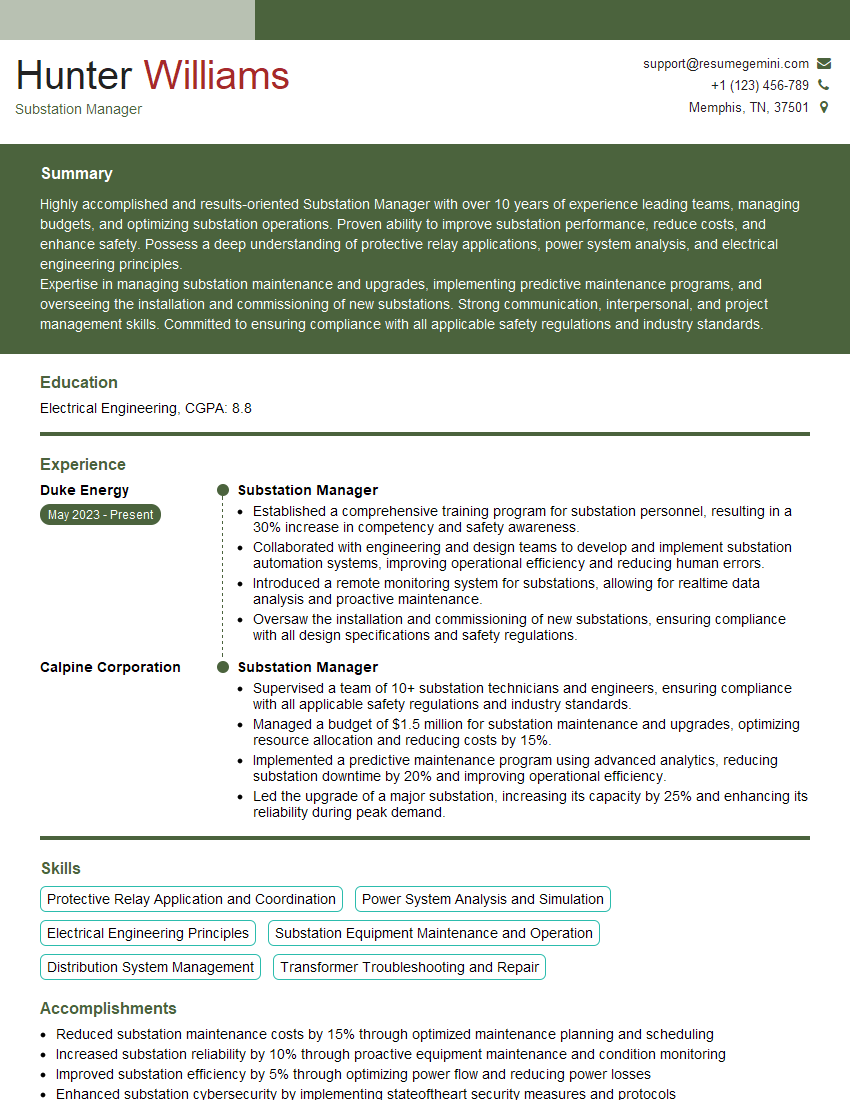
Mastering Electrical Leadership and Management is crucial for accelerating your career trajectory. It opens doors to higher-level roles with increased responsibility and significantly higher earning potential. To maximize your job prospects, crafting an ATS-friendly resume is paramount. This ensures your application gets noticed by recruiters and hiring managers. We highly recommend using ResumeGemini to build a professional and impactful resume that showcases your skills and experience effectively. ResumeGemini provides you with the tools and resources to create a compelling document, and we offer examples of resumes tailored to Electrical Leadership and Management positions to guide you.
Explore more articles
Users Rating of Our Blogs
Share Your Experience
We value your feedback! Please rate our content and share your thoughts (optional).
What Readers Say About Our Blog
Very informative content, great job.
good