Are you ready to stand out in your next interview? Understanding and preparing for Project Management (Agile/Scrum) interview questions is a game-changer. In this blog, we’ve compiled key questions and expert advice to help you showcase your skills with confidence and precision. Let’s get started on your journey to acing the interview.
Questions Asked in Project Management (Agile/Scrum) Interview
Q 1. Explain the Agile Manifesto and its principles.
The Agile Manifesto is a foundational document for Agile software development, outlining values and principles that guide Agile projects. It prioritizes individuals and interactions over processes and tools; working software over comprehensive documentation; customer collaboration over contract negotiation; and responding to change over following a plan.
The four values are supported by twelve principles. These principles emphasize iterative development, continuous feedback, self-organizing teams, and adapting to change. Think of it as a guiding philosophy, not a rigid set of rules.
- Individuals and interactions over processes and tools: Agile emphasizes team collaboration and communication.
- Working software over comprehensive documentation: Prioritizes delivering functional software incrementally, rather than getting bogged down in excessive documentation.
- Customer collaboration over contract negotiation: Continuous feedback from the customer is crucial for project success.
- Responding to change over following a plan: Agile embraces change and adapts to evolving requirements.
For example, imagine building a house. A traditional approach (waterfall) would involve detailed blueprints completed before construction begins. Agile, however, might start with a basic framework, getting feedback from the homeowner at each stage (foundation, framing, etc.) before proceeding, allowing adjustments along the way.
Q 2. What are the key differences between Scrum and Kanban?
Scrum and Kanban are both Agile methodologies, but they differ significantly in their approach. Scrum is a framework with defined roles, events, and artifacts, operating in short, iterative cycles called sprints. Kanban, on the other hand, is a more flexible method focusing on visualizing workflow and limiting work in progress (WIP).
- Structure: Scrum is highly structured, with specific roles and ceremonies, while Kanban is more flexible and adaptable.
- Iterations: Scrum uses time-boxed iterations (sprints), while Kanban is continuous.
- Workflow: Scrum emphasizes a defined workflow within sprints, whereas Kanban focuses on visualizing and optimizing the entire workflow.
- Team Size: Scrum typically works best with smaller, cross-functional teams (5-9 members), while Kanban can be scaled to larger teams.
Imagine a restaurant kitchen. Scrum would be like preparing a set menu for a fixed time (sprint) with a team focused on specific tasks. Kanban would be like a more dynamic system where dishes are prepared as orders come in, focusing on balancing workload and optimizing flow.
Q 3. Describe the Scrum framework: its roles, events, and artifacts.
The Scrum framework consists of three key roles, five events, and three artifacts. These components work together to manage and deliver projects iteratively.
Roles:
- Product Owner: Responsible for defining and prioritizing the product backlog (list of features).
- Scrum Master: Facilitates the Scrum process, removes impediments, and coaches the team.
- Development Team: A self-organizing, cross-functional team that performs the work.
Events:
- Sprint Planning: The team plans the work for the upcoming sprint.
- Daily Scrum: A short daily meeting to synchronize efforts.
- Sprint Review: A demonstration of the completed work at the end of the sprint.
- Sprint Retrospective: A meeting to reflect on the sprint and identify improvements.
- Product Backlog Refinement: Continuous process to clarify and refine items in the product backlog.
Artifacts:
- Product Backlog: Ordered list of features for the product.
- Sprint Backlog: List of tasks the team commits to completing during the sprint.
- Increment: The working software that results from the sprint.
For example, a software development team might use Scrum to build a mobile app, with the Product Owner defining the features, the Scrum Master removing roadblocks, and the Development Team building the app in sprints.
Q 4. How do you handle conflicting priorities in an Agile project?
Conflicting priorities are common in Agile projects. Handling them requires a collaborative approach focused on transparency, prioritization, and negotiation.
- Transparency: Make all priorities visible to the entire team and stakeholders using tools like a prioritized product backlog.
- Prioritization: Employ techniques like MoSCoW (Must have, Should have, Could have, Won’t have) or value-based prioritization to rank items based on business value, risk, and dependencies.
- Negotiation: Facilitate discussions among stakeholders to identify trade-offs and reach consensus. This might involve adjusting timelines, scope, or resources.
- Decision Making: Establish a clear process for making decisions, involving relevant stakeholders, and documenting the rationale.
- Re-evaluation: Regularly review priorities to ensure they remain aligned with project goals and changing circumstances.
For example, if a team is building an e-commerce site and faces conflicting priorities between improving search functionality and adding a new payment gateway, a collaborative discussion might involve weighing the business value of each feature and potentially delaying one to ensure the other is delivered on time.
Q 5. What is sprint planning and how do you facilitate it?
Sprint Planning is a crucial Scrum event where the team plans the work for the upcoming sprint. It involves two parts: Sprint Goal and Sprint Backlog creation.
- Define the Sprint Goal: The Product Owner presents the highest-priority items from the product backlog and the team collaborates to create a concise, ambitious, and measurable goal for the sprint. Example: “Develop and test the user login functionality for the mobile app.”
- Create the Sprint Backlog: The team selects items from the product backlog that contribute to the sprint goal and breaks them down into smaller, actionable tasks. They estimate the effort required for each task and commit to completing them within the sprint. This step often involves collaborative techniques like story mapping or task breakdown.
- Capacity Planning: The team assesses its capacity, considering factors like holidays, training, or other commitments, to ensure realistic commitments.
- Risk Assessment: Potential risks and impediments to completing the sprint backlog are identified and mitigation strategies are planned.
As a Scrum Master, I facilitate this process by ensuring the team understands the product backlog items, guiding them in estimating effort, helping them break down tasks, and removing any roadblocks that might hinder the planning process. I also ensure that the sprint goal is clear, concise and shared by everyone.
Q 6. How do you manage stakeholder expectations in an Agile environment?
Managing stakeholder expectations in an Agile environment requires frequent communication and transparency. It’s essential to keep stakeholders informed throughout the entire project lifecycle.
- Regular Communication: Utilize various channels (e.g., daily stand-ups, sprint reviews, demos, and email updates) to share progress, address concerns, and solicit feedback.
- Transparency: Make project information readily available through tools like Kanban boards or project management software. This enables stakeholders to track progress and understand the status of different tasks.
- Early and Frequent Feedback: Gather stakeholder input at multiple points throughout the project lifecycle, during sprint reviews and retrospectives.
- Realistic Expectations: Set realistic expectations about timelines, deliverables, and potential challenges. Explain the iterative nature of Agile development and emphasize the importance of adapting to change.
- Collaboration: Involve stakeholders in decision-making processes, so that they have a direct voice in shaping the project.
For instance, I might send weekly email updates to stakeholders summarizing sprint progress, sharing sprint review videos, and inviting them to participate in sprint retrospectives. This helps maintain transparency and ensures everyone is aligned on project status and any emerging challenges.
Q 7. What is velocity in Scrum, and how do you track it?
In Scrum, velocity is a measure of how much work a team can consistently complete in a sprint. It’s typically expressed in story points or hours. Tracking velocity helps the team predict future sprint capacity and make more accurate estimations.
Tracking Velocity:
- Story Points: Assign story points (a relative measure of effort) to each backlog item during sprint planning. This helps prioritize tasks and compare the relative effort of different features.
- Actual Work Completed: At the end of each sprint, calculate the total story points or hours of work completed.
- Velocity Calculation: The velocity is the average number of story points or hours completed per sprint over a period of several sprints (usually 3-5). This provides a more stable measure of the team’s capacity.
- Charting Velocity: Plot the team’s velocity over time to visualize trends, identify fluctuations, and predict future sprint capacity.
A team consistently delivering 20 story points per sprint has a velocity of 20. This information is valuable for sprint planning, forecasting release dates, and identifying potential bottlenecks. It’s important to note that velocity is not a fixed number and can fluctuate due to various factors. Therefore, it is used as an indicator of a team’s productivity rather than a rigid target.
Q 8. How do you identify and mitigate project risks in Agile?
Risk management in Agile is an ongoing, iterative process, not a one-time event. We don’t try to predict every possible risk upfront; instead, we continuously identify and mitigate them throughout the project lifecycle. This is done through proactive measures and consistent monitoring.
- Risk Identification: We utilize techniques like brainstorming sessions, risk checklists tailored to the project type, and regular Sprint Reviews and Retrospectives to identify potential issues. For instance, during a sprint planning session, the team might identify a dependency on a third-party API that could introduce delays.
- Risk Assessment: Each identified risk is assessed based on its likelihood and potential impact. A simple matrix can be used to categorize risks as high, medium, or low priority. This prioritization guides our mitigation efforts.
- Risk Mitigation: Mitigation strategies vary depending on the risk. For example, to mitigate the API dependency risk, we could establish clear communication with the third-party provider, build a contingency plan using mock data, or explore alternative solutions. We document the mitigation plan for each risk.
- Monitoring and Review: Risks are revisited regularly, typically during sprint reviews and retrospectives. This allows for early detection of emerging issues and the adjustment of mitigation strategies as needed. If the risk becomes a reality, we adjust our plans and implement contingency measures.
This iterative approach ensures that we remain flexible and responsive to changing circumstances. The focus is always on collaboration, transparency, and adapting to the inevitable changes that occur in any project.
Q 9. Explain the concept of a Product Backlog and its importance.
The Product Backlog is an ordered list of everything that is known to be needed in a product. It’s the single source of truth for all features, bug fixes, and enhancements. Think of it as a wish list, prioritized and constantly refined.
- Importance: The Product Backlog is crucial for several reasons:
- Prioritization: It allows the Product Owner to prioritize items based on value, risk, and dependency. This ensures the team focuses on the most important aspects first.
- Transparency: It provides transparency to the entire team and stakeholders about the product vision, roadmap, and progress.
- Adaptability: The Product Backlog is dynamic; items can be added, removed, or re-prioritized as new information becomes available or business needs change. This adaptability is essential in Agile methodologies.
- Planning: It forms the basis for Sprint planning, allowing the team to select the most valuable items to work on during each sprint.
Imagine building a house. The Product Backlog would be the blueprint, specifying every detail from the foundation to the finishing touches. As the construction progresses, the blueprint might be updated to accommodate changes or improvements.
Q 10. Describe your experience with different Agile methodologies.
I have extensive experience with several Agile methodologies, including Scrum, Kanban, and Extreme Programming (XP). My experience spans various project types and team sizes.
- Scrum: I’ve led and participated in numerous Scrum projects, leveraging its iterative sprints, daily stand-ups, sprint reviews, and retrospectives to deliver incremental value. I’m proficient in managing the Scrum framework, facilitating meetings, and guiding teams in adhering to best practices.
- Kanban: I’ve successfully implemented Kanban systems in several projects, using visual boards to manage workflow, limit work in progress (WIP), and identify bottlenecks. This is particularly useful for projects with fluctuating priorities or continuous delivery needs.
- Extreme Programming (XP): I’ve incorporated XP practices like Test-Driven Development (TDD), pair programming, and continuous integration into my projects. These practices ensure high-quality code and improve collaboration within the team.
My approach to choosing the right methodology is always context-dependent. I consider factors such as project complexity, team size, stakeholder involvement, and the need for flexibility when selecting the best fit for a particular project.
Q 11. How do you handle impediments during a sprint?
Handling impediments effectively is vital for a successful sprint. My approach involves a multi-step process that emphasizes collaboration and timely resolution.
- Identification: Impediments are identified during daily stand-ups, through individual team member communication, and by monitoring the project’s progress. These could include technical issues, resource constraints, or dependency blocks.
- Documentation: Each impediment is clearly documented, including its nature, impact, and the individuals involved. This ensures everyone is aware and can contribute to the solution.
- Escalation: If the impediment cannot be resolved by the team, it’s escalated to the appropriate stakeholders (e.g., Product Owner, Scrum Master, management). This ensures that issues receive the necessary attention and resources.
- Resolution: The team collaborates to find the best solution. This might involve brainstorming, researching, or seeking external help. The solution is then implemented and monitored to ensure the problem doesn’t recur.
- Retrospective: Impediments and their resolutions are reviewed during the sprint retrospective to identify recurring issues, improve processes, and prevent future impediments.
For example, if a team encounters a technical problem they can’t solve, they’ll document it, escalate to a senior developer, find a solution together, and then discuss the issue and its resolution during the retrospective to potentially improve documentation or processes.
Q 12. How do you measure the success of an Agile project?
Measuring the success of an Agile project goes beyond simply delivering features on time and within budget. It’s a holistic assessment encompassing various aspects.
- Product Value Delivery: The primary measure is the value delivered to the customer. This is assessed through user feedback, market analysis, and key performance indicators (KPIs) relevant to the product’s goals. For instance, if the goal was to increase customer engagement, we’d measure metrics like website traffic and user activity.
- Team Velocity and Efficiency: Tracking team velocity (the amount of work completed in each sprint) provides insights into the team’s performance and efficiency. This helps to identify areas for improvement and forecast future sprints.
- Stakeholder Satisfaction: Regular feedback from stakeholders is crucial. This can be gathered through surveys, meetings, and informal communication. Happy stakeholders indicate a successful project.
- Process Improvement: Continuous improvement is a core Agile principle. Measuring the effectiveness of processes and identifying areas for optimization is key to long-term success. This is usually done through sprint retrospectives.
- Quality of Deliverables: The quality of the product increments is crucial. This is measured through code reviews, testing, and user acceptance testing (UAT).
By considering these multiple dimensions, we gain a complete picture of the project’s success, going beyond simple metrics to understand the overall impact and value created.
Q 13. Explain the difference between a sprint review and a sprint retrospective.
While both Sprint Reviews and Sprint Retrospectives are crucial Scrum events, they serve distinct purposes.
- Sprint Review: This is a formal presentation to stakeholders demonstrating the working product increment created during the sprint. The focus is on showcasing the value delivered and gathering feedback. It’s outward-facing, focusing on the product and its progress.
- Sprint Retrospective: This is an internal team meeting focused on self-improvement. The team reflects on the past sprint, identifying what worked well, what could be improved, and how to implement those improvements in future sprints. It’s inward-facing, focusing on process and team dynamics.
Think of it like this: the Sprint Review is showing your work to the client (demonstrating the house’s progress), while the Sprint Retrospective is a team meeting to discuss how you can improve your building process (e.g., better tools, improved communication).
Q 14. What is your experience with Agile estimation techniques (e.g., story points)?
I have significant experience using story points for Agile estimation. Story points are a relative measure of effort, complexity, and uncertainty, not a measure of time.
- How it Works: The team collaboratively estimates each user story using a relative scale (e.g., Fibonacci sequence: 1, 2, 3, 5, 8, 13…). A story with a higher point value signifies greater complexity or uncertainty than one with a lower value. This encourages discussion and shared understanding within the team.
- Benefits: Story points reduce the impact of inaccurate time estimations. They facilitate better communication and promote a shared understanding of the relative effort required for each task. They also improve forecasting accuracy over time as the team’s velocity stabilizes.
- Techniques: I’ve utilized various techniques like planning poker, where each team member secretly estimates the story points, revealing their estimates simultaneously to foster discussion and consensus.
- Velocity Calculation: By tracking the number of story points completed in each sprint, we calculate the team’s velocity. This provides a more reliable basis for forecasting future sprints compared to using pure time estimates.
Story points are a valuable tool for managing complexity and promoting realistic planning in Agile projects. They help teams shift their focus from simply estimating time to understanding the overall effort involved in a user story, leading to more accurate and reliable sprint planning.
Q 15. How do you facilitate effective team collaboration in Agile?
Effective team collaboration is the cornerstone of successful Agile projects. It’s not just about being in the same room; it’s about fostering a culture of open communication, shared understanding, and mutual respect. I facilitate this through several key strategies:
- Daily Stand-ups: Short, focused meetings where each team member briefly shares their progress, roadblocks, and plans for the day. This ensures everyone’s on the same page and allows for quick identification and resolution of issues.
- Regular Retrospectives: These dedicated sessions focus on continuous improvement. The team reflects on past sprints, identifies areas for improvement in processes and collaboration, and creates action plans to address them. I guide these sessions to ensure constructive discussion and actionable outcomes.
- Collaborative Tools: Utilizing platforms like Jira or Slack for task management, communication, and knowledge sharing. This creates a central hub for all project-related information, making it easily accessible to everyone.
- Pair Programming/Mob Programming: Depending on the context, I encourage these techniques to foster knowledge sharing, improve code quality, and strengthen team bonds. Pair programming, where two developers work together on the same code, and mob programming, where a larger group collaborates on a single task, can significantly improve team cohesion and efficiency.
- Cross-functional Collaboration: I actively encourage interaction between different team members with varying skillsets. This promotes a more holistic understanding of the project and reduces siloed thinking. For example, I might arrange informal knowledge-sharing sessions between developers and designers to foster better communication and alignment.
For instance, in a recent project, using a combination of daily stand-ups and a dedicated Slack channel, we were able to quickly address a critical bug that emerged during testing, preventing significant delays in the project timeline.
Career Expert Tips:
- Ace those interviews! Prepare effectively by reviewing the Top 50 Most Common Interview Questions on ResumeGemini.
- Navigate your job search with confidence! Explore a wide range of Career Tips on ResumeGemini. Learn about common challenges and recommendations to overcome them.
- Craft the perfect resume! Master the Art of Resume Writing with ResumeGemini’s guide. Showcase your unique qualifications and achievements effectively.
- Don’t miss out on holiday savings! Build your dream resume with ResumeGemini’s ATS optimized templates.
Q 16. Describe a time you had to make a difficult decision in an Agile project.
In a past project developing a mobile application, we faced a critical decision nearing the end of a sprint. We had a core feature almost complete, but it was slightly off-spec from the initial client request. The change required significant rework and could jeopardize the sprint deadline.
The difficult decision was whether to push the feature to the next sprint (causing a delay) or compromise on the initial spec to meet the deadline. My approach involved:
- Gathering Data: I organized a meeting with the team and stakeholders to analyze the impact of both options: delayed release versus a compromised feature. We carefully weighed the risks and benefits of each scenario.
- Transparency and Communication: I ensured everyone was informed about the situation and involved in the decision-making process. Open communication mitigated potential conflict and fostered a sense of shared ownership.
- Risk Assessment: We developed a clear risk assessment matrix to help us visually understand the potential impact of each option. This helped to objectify the decision-making process.
- Decision Making: Based on the data gathered and risk assessment, we collaboratively decided to make a slight compromise on the specification to meet the deadline. We prioritized delivering a functional, though slightly less-refined, product in a timely manner.
The decision, though difficult, proved effective. The client was understanding given the clear communication and well-reasoned explanation. The faster release allowed for quicker user feedback, leading to further improvements in the next sprint.
Q 17. How do you handle disagreements within the Scrum team?
Disagreements are inevitable in any team, but in Agile, they are opportunities for growth and improvement. My approach focuses on constructive conflict resolution:
- Create a Safe Space: I foster an environment where team members feel comfortable expressing their opinions without fear of judgment. This is crucial for open discussion and finding common ground.
- Active Listening: I encourage active listening, where each person fully understands the other’s perspective before attempting to offer solutions. This helps avoid misunderstandings and ensures everyone feels heard.
- Focus on the Problem, Not the Person: The emphasis should always be on the issue at hand, not on personal attacks or blame. I guide the discussion to remain objective and solution-oriented.
- Facilitation and Mediation: If the disagreement escalates, I act as a facilitator, guiding the discussion towards a resolution. I might employ techniques like brainstorming or root cause analysis to find a common understanding and path forward.
- Decision-Making Process: Depending on the situation, we might use a voting system, consensus-building, or a delegated decision-making approach. Transparency and clear criteria are key to ensuring a fair and accepted outcome.
For example, in one instance, a disagreement arose about the technical approach to a specific feature. By facilitating an open discussion and encouraging each member to explain their reasoning, we identified the strengths and weaknesses of each proposed approach. Ultimately, we combined the best elements of both approaches, leading to a superior solution.
Q 18. Explain your experience with Agile tools (e.g., Jira, Trello).
I have extensive experience with various Agile tools, including Jira and Trello. My proficiency extends beyond simply using these tools; I understand how to configure and leverage their features to optimize workflow and enhance team collaboration.
- Jira: I’m adept at using Jira for project tracking, sprint planning, bug tracking, and reporting. I can customize workflows, create custom fields, and generate insightful reports to track progress and identify potential bottlenecks. I’ve used Jira extensively for managing complex projects, assigning tasks, and tracking the overall project status. I’m familiar with its integration capabilities with other tools, enhancing the overall project management ecosystem.
- Trello: I utilize Trello for its visual appeal and flexibility. It’s ideal for simpler projects or those requiring visual representation of workflow. I’ve used Trello for managing smaller teams and projects, particularly where Kanban-style boards are beneficial. Its intuitive drag-and-drop interface makes it easy for team members to understand and update task statuses.
My understanding of these tools allows me to select the most appropriate platform for the project’s needs and effectively train team members on their use. I prioritize selecting tools that foster transparency and streamlined communication.
Q 19. How do you ensure transparency and communication within an Agile team?
Transparency and communication are vital in Agile. They foster trust, reduce misunderstandings, and improve overall team performance. My approach to ensuring these elements centers around:
- Daily Stand-ups: As mentioned earlier, these provide a daily update on progress, roadblocks, and plans.
- Regular Sprint Reviews: Demonstrations of completed work to stakeholders, allowing for feedback and ensuring alignment.
- Sprint Retrospectives: Dedicated sessions for continuous improvement, fostering open communication about successes and challenges.
- Visual Management: Using Kanban boards (physical or digital) to visually represent workflow, task status, and progress. This provides a transparent overview of the project for the entire team.
- Open Communication Channels: Utilizing tools like Slack or Microsoft Teams for quick updates, questions, and informal communication. I encourage team members to reach out to each other directly, fostering a culture of open dialogue.
- Documentation: Maintaining clear and concise documentation, such as user stories, acceptance criteria, and technical specifications. This ensures everyone is working from the same information.
For example, in a recent project, using a combination of Jira’s reporting features, daily stand-ups, and a dedicated Slack channel, we were able to quickly address concerns raised by the client and ensure they remained fully informed throughout the development process.
Q 20. What is your approach to continuous improvement in Agile?
Continuous improvement is a core tenet of Agile. It’s not a one-time event; it’s an ongoing process of refinement and adaptation. My approach focuses on the following:
- Regular Retrospectives: These are the primary vehicle for identifying areas for improvement. I facilitate structured retrospectives that focus on identifying what went well, what could be improved, and creating action plans to address the latter.
- Data-Driven Decisions: Tracking key metrics, such as sprint velocity, defect rates, and cycle time, helps identify areas needing improvement. This data-driven approach ensures that changes are not arbitrary but based on actual performance indicators.
- Experimentation and Iteration: Embracing an experimental mindset, we try new techniques and processes, continuously refining our approach based on the outcomes. This includes trying different project management tools or experimenting with different sprint lengths.
- Learning from Mistakes: Rather than viewing mistakes as failures, we see them as learning opportunities. We conduct root cause analysis to understand why issues occurred and put preventive measures in place to avoid repeating those mistakes.
- Kaizen Culture: Fostering a culture of continuous improvement, where every team member is encouraged to identify and suggest ways to enhance processes and efficiency. This involves making small, incremental changes over time, rather than large, disruptive ones.
For example, in a recent project, after observing a consistent bottleneck in our testing phase, we implemented automated testing tools. This dramatically reduced testing time and improved the overall project velocity.
Q 21. How do you handle scope creep in an Agile project?
Scope creep – the uncontrolled expansion of project requirements – is a significant threat to Agile projects. My approach to handling it involves:
- Clearly Defined Scope: From the outset, ensuring that project requirements are clearly defined, documented, and understood by all stakeholders. User stories with clear acceptance criteria are crucial in this phase.
- Prioritization: Employing techniques like MoSCoW (Must have, Should have, Could have, Won’t have) to prioritize features and manage expectations. This focuses the team on the most essential requirements first.
- Change Management Process: Establishing a formal process for managing changes to requirements. This typically involves evaluating the impact of proposed changes on the timeline, budget, and overall scope before accepting them. This could include formal change requests with reviews and approvals.
- Regular Communication: Keeping stakeholders informed about any changes, their impact, and potential implications. Transparency is crucial in managing expectations.
- Timeboxing: Allocating specific time frames for certain tasks or features to prevent uncontrolled expansion. This allows the team to effectively manage their workload and stick to the planned scope.
- Saying No: Sometimes, it’s essential to politely but firmly decline additional requests that are outside the project’s scope or capacity. It’s important to explain the reasons behind this decision to the stakeholder.
For instance, if a stakeholder requests a new feature mid-sprint, we’d evaluate its impact and discuss it during the daily stand-up. We’d then decide whether to incorporate it (re-prioritizing existing tasks), push it to a future sprint, or decline it if it significantly affects the project’s timelines and resources.
Q 22. Explain your understanding of Agile scaling frameworks (e.g., SAFe, LeSS).
Agile scaling frameworks address the challenges of applying Agile methodologies to larger projects and organizations. They provide structures and processes to coordinate multiple teams working on interconnected aspects of a larger product or system. Popular frameworks include SAFe (Scaled Agile Framework) and LeSS (Large-Scale Scrum).
SAFe is a comprehensive framework with various levels (Essential, Portfolio, Large Solution, Full SAFe) defining roles, events, and artifacts for alignment and collaboration across teams and programs. It often involves a layered structure with Program Increment (PI) planning cycles involving multiple Scrum teams working towards a common goal. Imagine building a large aircraft; SAFe would help coordinate the teams building the wings, fuselage, and engines, ensuring everything fits together smoothly.
LeSS (Large-Scale Scrum), conversely, advocates for simpler scaling by focusing on fewer layers and maximizing the application of Scrum principles. It emphasizes removing bottlenecks and improving communication between teams, often relying on a single product backlog and close collaboration between teams. Think of a modular furniture company; LeSS might structure teams around specific furniture lines (chairs, tables), ensuring they work together efficiently within a single overall product strategy.
Choosing the right framework depends heavily on the organization’s size, complexity, and culture. SAFe works well in larger enterprises requiring significant coordination, while LeSS is better suited for organizations preferring a less structured, more organically scaled approach.
Q 23. How do you define and measure Agile success metrics?
Defining and measuring Agile success isn’t solely about velocity or story points. It’s about balancing speed with quality and delivering value to the customer. Key metrics fall into a few categories:
- Velocity: Tracks the amount of work a team completes in a sprint (iterative cycle). While useful, it shouldn’t be the sole focus as it can be manipulated. It’s most effective when used to project future workload and for team self-assessment of improvements.
- Cycle Time: Measures the time it takes for a task or story to move from development to completion. Reducing cycle time directly correlates to faster delivery and improved efficiency.
- Lead Time: The total time from the request for a feature to its delivery to the customer. Optimizing this metric reflects overall system efficiency.
- Customer Satisfaction: Directly measures the value delivered. This could be via surveys, feedback sessions, or measuring adoption rates. This is ultimately the most important metric.
- Defect Rate/Bug Count: Indicates the quality of the work. Low defect rates show better testing practices and higher quality deliverables.
- Team Morale and Engagement: High performing Agile teams require a positive work environment. Regularly assessing this through surveys or team meetings is crucial.
The best approach is to track a combination of these metrics. Analyzing them over time reveals trends, identifying areas for improvement in processes and workflows.
Q 24. Describe your experience with different Agile ceremonies.
I have extensive experience with the core Agile ceremonies. They’re not just meetings; they’re structured interactions designed to foster collaboration, transparency, and continuous improvement:
- Sprint Planning: The team collaboratively selects items from the product backlog for the upcoming sprint, defining tasks and creating a sprint goal. It’s critical for setting expectations and aligning on the work.
- Daily Scrum (Stand-up): A short, daily meeting to synchronize team progress, identify impediments, and coordinate work. It’s key for quick problem-solving and transparency.
- Sprint Review: A demonstration of the completed work at the end of the sprint to stakeholders and customers. It allows for feedback and validation of the product increment.
- Sprint Retrospective: A meeting for the team to reflect on the past sprint, identify what went well, what could be improved, and to create action items for future sprints. This is crucial for continuous improvement.
- Backlog Refinement: A session dedicated to clarifying and estimating items in the product backlog. This ensures everyone understands the requirements and ensures sprint planning is efficient.
My experience includes adapting and tailoring these ceremonies to suit the specific needs of the team and project, sometimes combining ceremonies or adjusting their frequency based on project complexity and team dynamics.
Q 25. How do you build and maintain a high-performing Agile team?
Building and maintaining a high-performing Agile team is an ongoing process. It requires focus on several key areas:
- Clear Roles and Responsibilities: Each team member must understand their role and how it contributes to the overall sprint goal. This minimizes confusion and maximizes individual contribution.
- Effective Communication: Open and honest communication is paramount. Regular communication channels, whether that be daily stand-ups, team meetings, or instant messaging, improve transparency and address issues proactively.
- Shared Vision and Goals: The team needs a unified understanding of the project goals and how their work contributes to achieving them. This creates a sense of purpose and shared responsibility.
- Empowerment and Autonomy: Team members need the authority to make decisions and take ownership of their work. This fosters engagement and boosts creativity.
- Continuous Learning and Development: Providing opportunities for learning, training, and skill development motivates individuals and enhances the team’s expertise and adaptability.
- Conflict Resolution: Addressing conflicts constructively and promptly is crucial to maintaining a positive and productive team environment.
- Regular Feedback and Recognition: Providing constructive feedback and acknowledging achievements boosts morale and fosters a positive working relationship.
Essentially, it’s about creating a supportive, collaborative, and efficient environment where individuals feel valued, respected, and empowered to contribute to the team’s success. It’s like assembling a sports team—it requires selecting the right players, fostering teamwork, and providing the necessary coaching and support.
Q 26. How do you adapt your Agile approach to different project contexts?
Adaptability is essential in Agile. Different projects have different contexts requiring adjustments to the approach. Here’s how I adapt:
- Understanding Project Complexity: Simple projects require simpler Agile processes, while complex ones might require more elaborate frameworks or the combination of different methodologies.
- Stakeholder Management: The level of stakeholder involvement and their expectations needs to be carefully considered. Regular communication and transparency are key.
- Team Size and Composition: Team size impacts the choice of ceremonies and communication strategies. Larger teams may need more structured communication and collaboration tools. Team expertise influences the task breakdown and skill assignment.
- Technology and Tools: The availability and suitability of software development tools and technologies influences project execution, testing strategies, and deployment processes.
- Regulatory Compliance: Projects with strict regulatory requirements may need adjustments in processes to meet those demands.
For example, a small project might only need basic Scrum while a large software development project needing strict regulatory compliance might need to integrate SAFe with more detailed documentation and sign-offs. Ultimately, I tailor the methodology to maximize efficiency and value delivery while meeting the specific project constraints.
Q 27. What are your strengths and weaknesses as an Agile project manager?
My strengths as an Agile project manager include my strong communication skills, proven ability to facilitate collaboration, and experience in adapting Agile practices to diverse contexts. I excel at fostering a positive team environment, driving continuous improvement, and delivering projects on time and within budget. I’m also adept at conflict resolution and stakeholder management.
One area for improvement is my delegation skills. While I can delegate tasks effectively, I sometimes find it challenging to fully relinquish control, particularly on critical aspects of projects. I am actively working on improving this by setting clear expectations, empowering team members, and trusting their expertise. I also participate in regular self-assessment activities to ensure that this weakness does not impact my performance. This ongoing reflection helps me ensure my approach is always improving.
Key Topics to Learn for Project Management (Agile/Scrum) Interview
- Agile Principles and Values: Understand the Agile Manifesto and its core principles. Be prepared to discuss how these principles guide your approach to project management.
- Scrum Framework: Master the Scrum events (Sprint Planning, Daily Scrum, Sprint Review, Sprint Retrospective), roles (Product Owner, Scrum Master, Development Team), and artifacts (Product Backlog, Sprint Backlog, Increment).
- Sprint Planning and Execution: Discuss your experience in effectively planning sprints, managing tasks, and collaborating with cross-functional teams to deliver value incrementally.
- Risk Management and Mitigation: Explain your approach to identifying, assessing, and mitigating risks within an Agile environment. Provide examples from your experience.
- Stakeholder Management: Describe your strategies for effectively communicating with and managing expectations of various stakeholders throughout the project lifecycle.
- Agile Estimation Techniques: Discuss your familiarity with estimation methods like Planning Poker or story points and how you use them to forecast project timelines and resource allocation.
- Agile Metrics and Reporting: Explain how you track progress, measure velocity, and report on key performance indicators (KPIs) to stakeholders.
- Continuous Improvement: Showcase your understanding of the iterative nature of Agile and your experience with retrospectives to identify areas for improvement in processes and team collaboration.
- Common Agile Methodologies (Beyond Scrum): Familiarize yourself with other Agile frameworks like Kanban, Lean, or XP and their potential applications.
- Problem-Solving and Decision-Making in Agile Environments: Be ready to discuss how you approach challenges, make decisions under pressure, and adapt to changing priorities in dynamic project environments.
Next Steps
Mastering Agile/Scrum Project Management is crucial for career advancement in today’s fast-paced tech landscape. It demonstrates your adaptability, collaborative skills, and ability to deliver value efficiently. To significantly boost your job prospects, crafting a strong, ATS-friendly resume is essential. ResumeGemini can be a valuable resource in this process. They offer expert guidance and examples of resumes tailored to Project Management (Agile/Scrum) roles, helping you present your skills and experience effectively to recruiters. Invest the time in building a resume that truly showcases your capabilities – it’s an investment in your future.
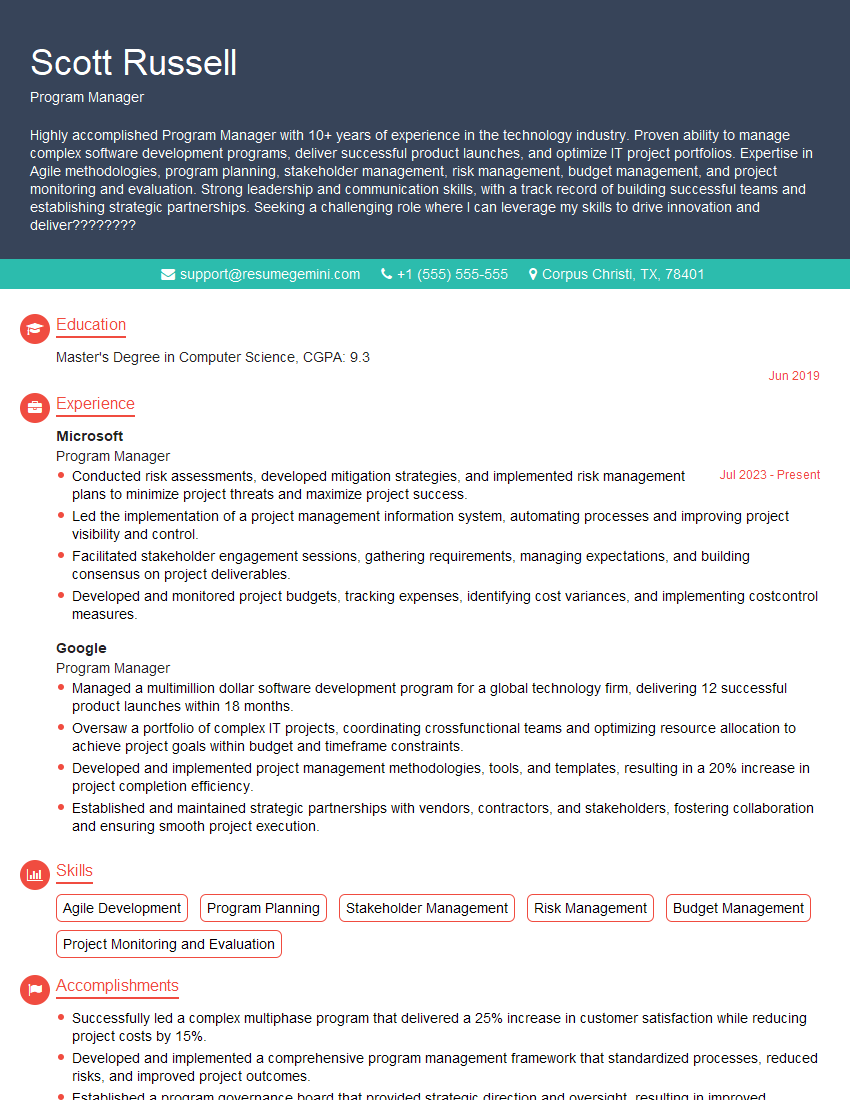
Program Manager Resume Sample
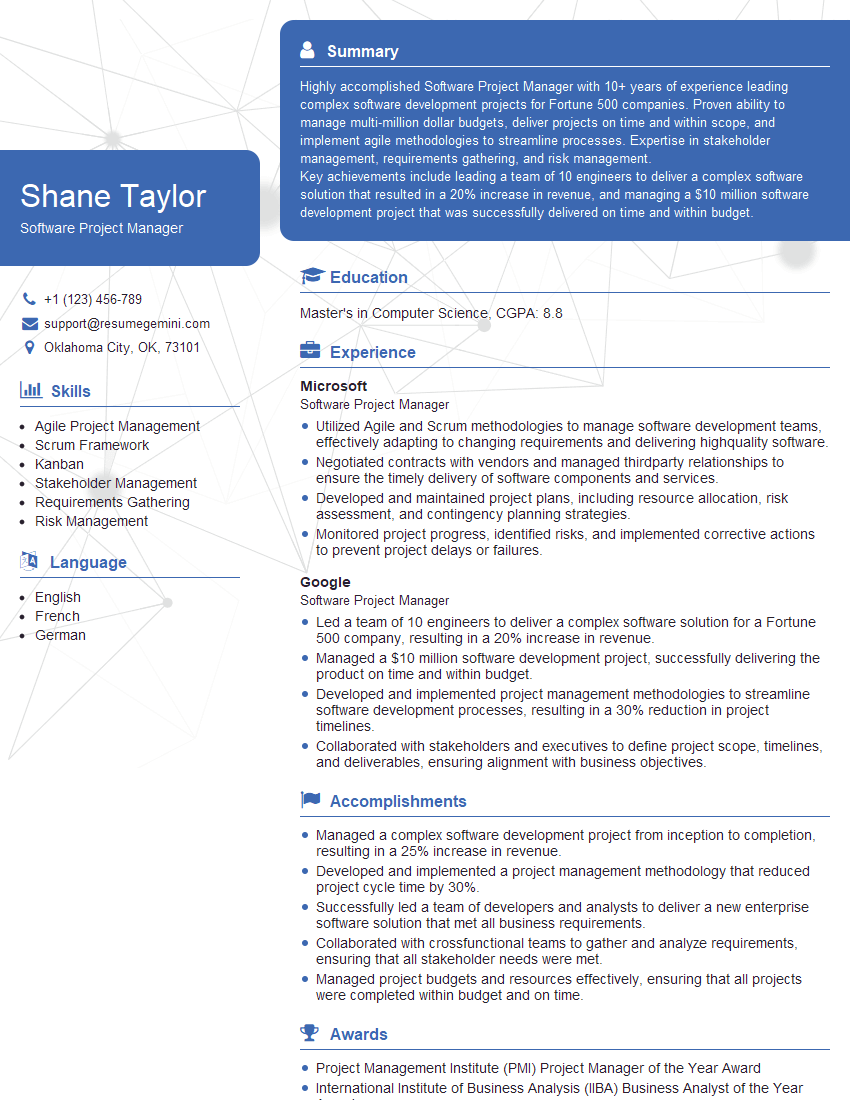
Software Project Manager Resume Sample
Portfolio Manager Resume Sample
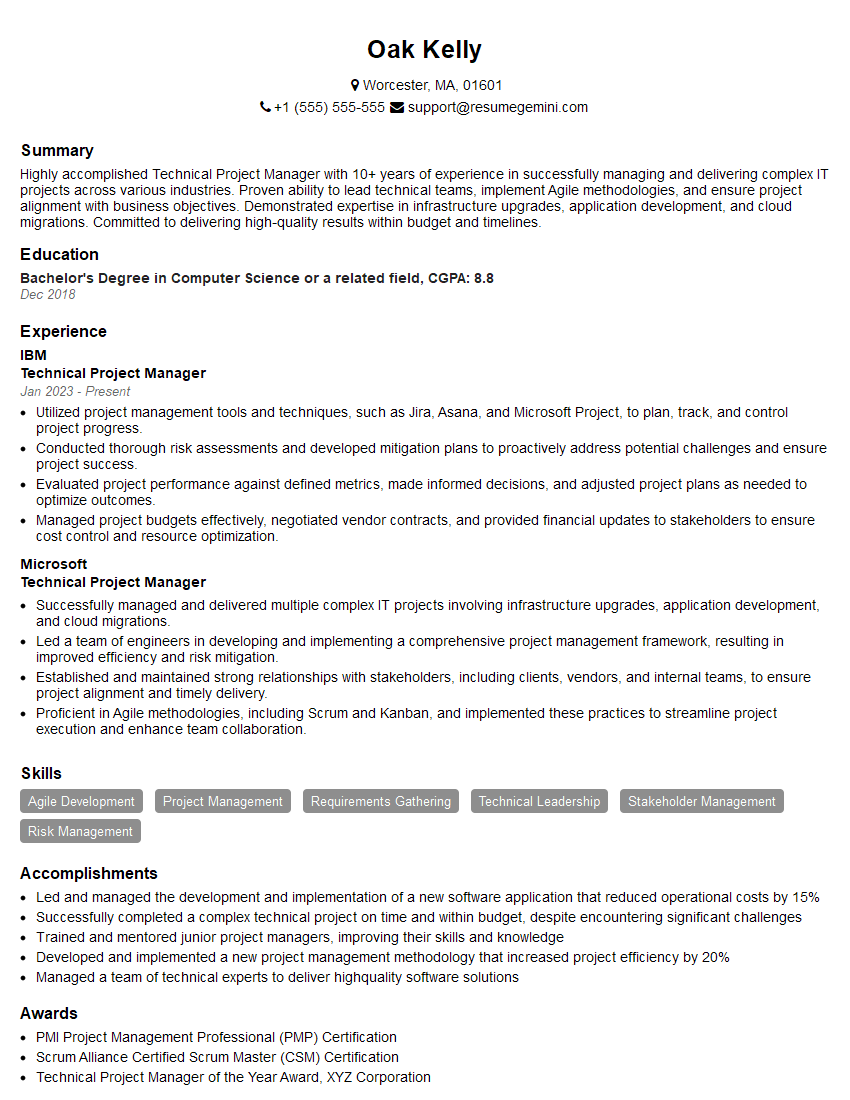
Technical Project Manager Resume Sample
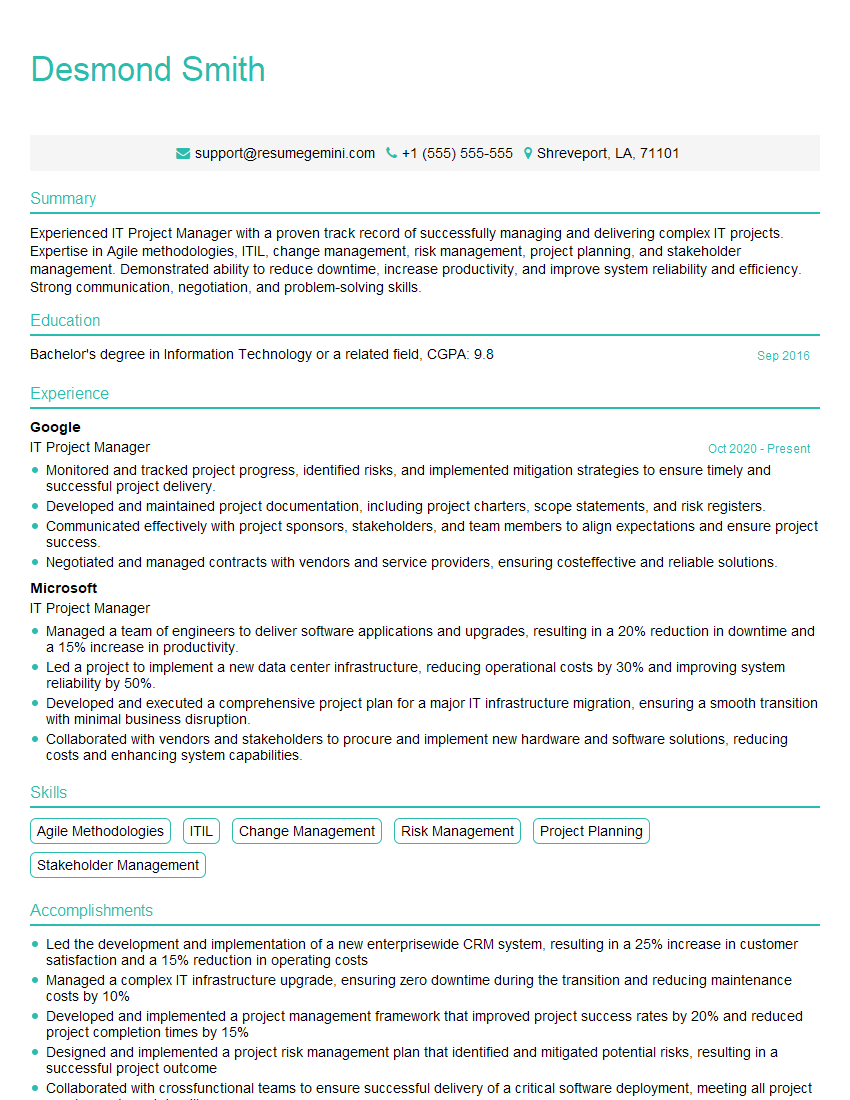
IT Project Manager Resume Sample
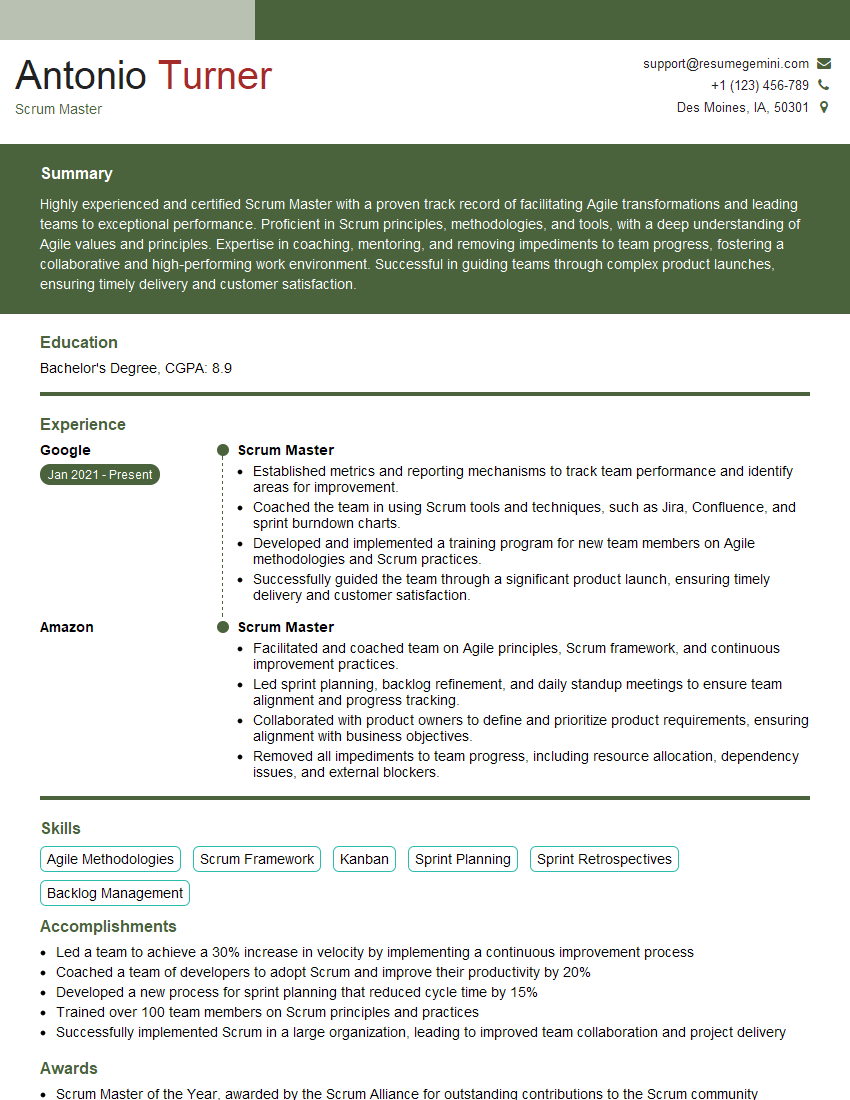
Scrum Master Resume Sample
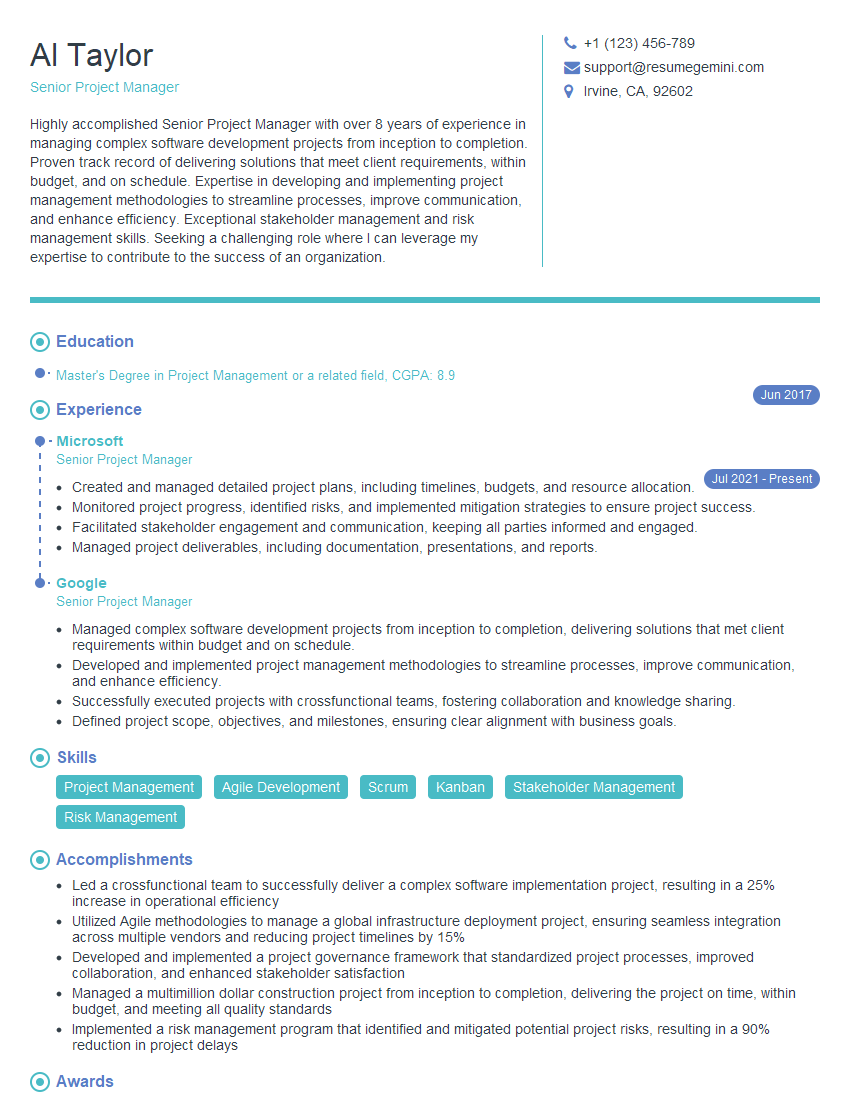
Senior Project Manager Resume Sample
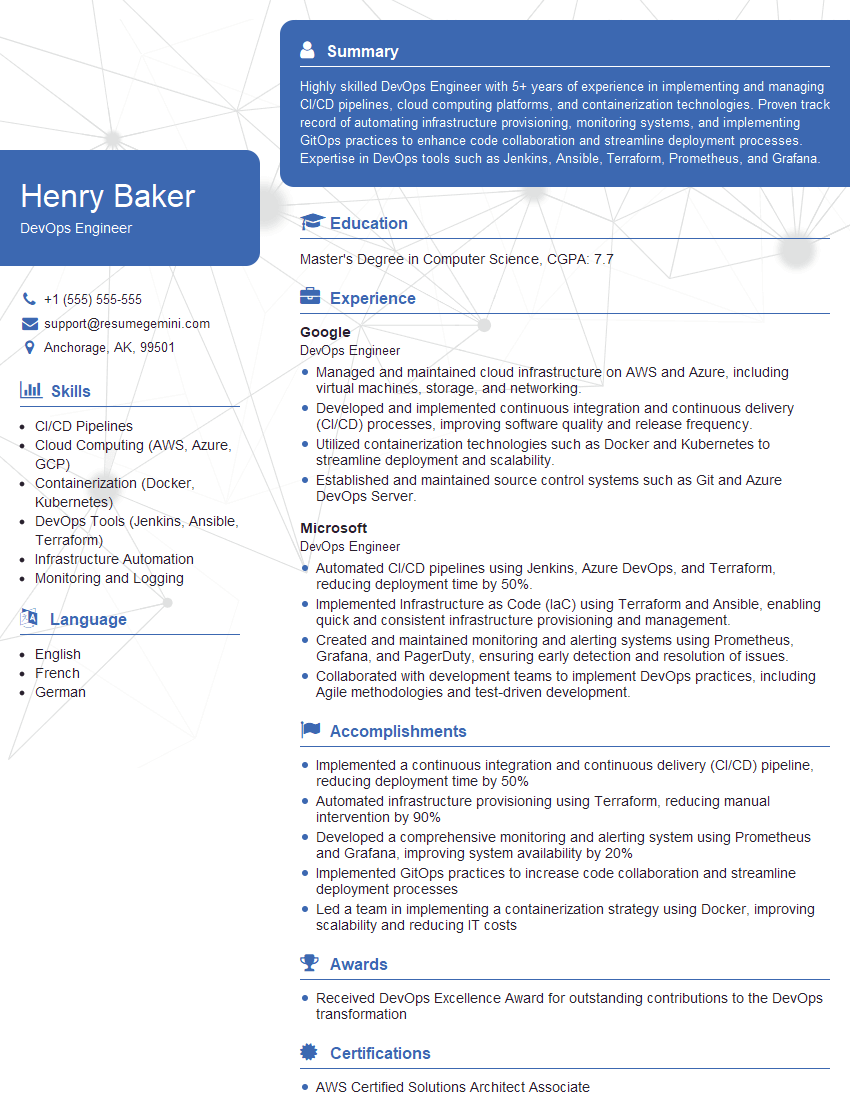
DevOps Engineer Resume Sample
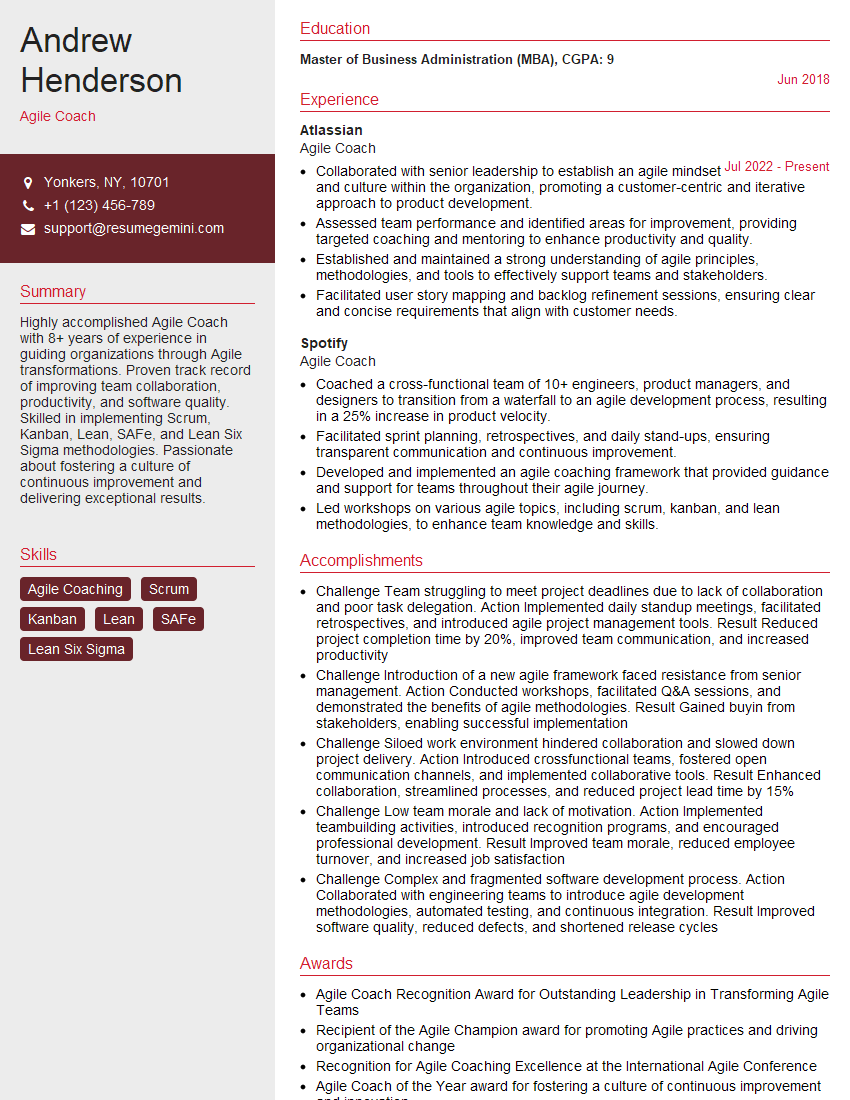
Agile Coach Resume Sample
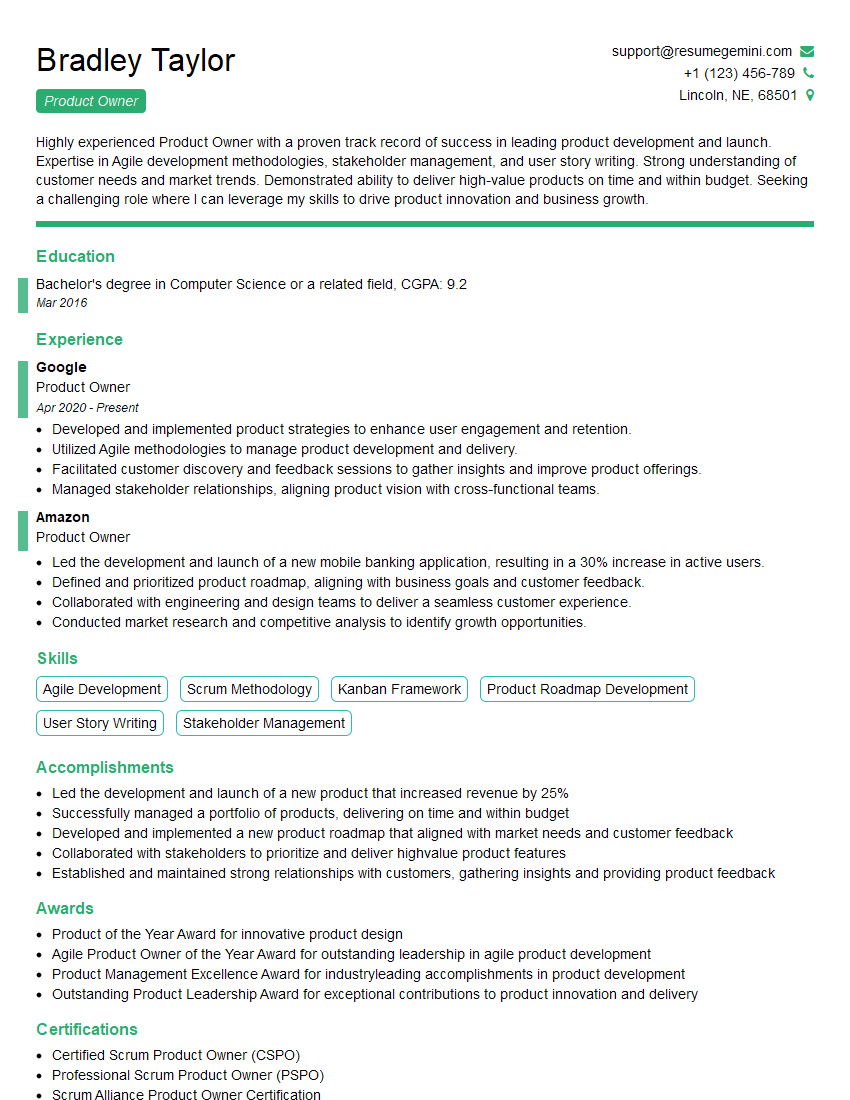
Product Owner Resume Sample
Explore more articles
Users Rating of Our Blogs
Share Your Experience
We value your feedback! Please rate our content and share your thoughts (optional).
What Readers Say About Our Blog
Very informative content, great job.
good