Interviews are opportunities to demonstrate your expertise, and this guide is here to help you shine. Explore the essential Electromagnetic Spectrum interview questions that employers frequently ask, paired with strategies for crafting responses that set you apart from the competition.
Questions Asked in Electromagnetic Spectrum Interview
Q 1. Explain the electromagnetic spectrum and its various regions.
The electromagnetic (EM) spectrum is the range of all types of electromagnetic radiation. Think of it as a rainbow, but instead of just visible colors, it encompasses a vast array of radiation, differing only in their wavelength and frequency. These waves, all traveling at the speed of light, range from extremely low-frequency radio waves to incredibly high-frequency gamma rays.
- Radio Waves: Longest wavelengths, lowest frequencies. Used in broadcasting, communication, and radar.
- Microwaves: Shorter wavelengths than radio waves, used in cooking, communication (satellite links), and radar.
- Infrared (IR): Detected as heat. Used in thermal imaging, remote controls, and fiber optics.
- Visible Light: The only part of the spectrum we can see, encompassing the colors of the rainbow (red, orange, yellow, green, blue, indigo, violet).
- Ultraviolet (UV): Shorter wavelengths than visible light, causes sunburns and is used in sterilization.
- X-rays: Even shorter wavelengths, used in medical imaging and material analysis.
- Gamma rays: Shortest wavelengths, highest frequencies, highest energy. Emitted by radioactive materials and used in cancer treatment.
Q 2. Describe the relationship between frequency, wavelength, and energy in the EM spectrum.
Frequency, wavelength, and energy are intrinsically linked in the EM spectrum. They are related by the following equations:
c = λf where:
cis the speed of light (approximately 3 x 10⁸ m/s)λ(lambda) is the wavelength (in meters)fis the frequency (in Hertz or cycles per second)
Energy (E) is directly proportional to frequency:
E = hf where:
Eis the energy (in Joules)his Planck’s constant (approximately 6.626 x 10⁻³⁴ Js)
Therefore, higher frequency waves have shorter wavelengths and higher energy, and vice versa. Radio waves have low frequency, long wavelengths, and low energy, while gamma rays have high frequency, short wavelengths, and high energy.
Q 3. What are the key characteristics of different EM wave regions (e.g., radio waves, microwaves, infrared, visible light, ultraviolet, X-rays, gamma rays)?
Each region of the EM spectrum has unique characteristics that determine its applications:
- Radio waves: Easily diffracted (bend around obstacles), making them suitable for long-distance communication even over the horizon.
- Microwaves: Can penetrate some materials, making them ideal for radar and cooking.
- Infrared: Associated with heat; objects emit IR radiation based on their temperature. Used for thermal imaging and night vision.
- Visible light: Detected by our eyes; the wavelengths correspond to the colors we perceive.
- Ultraviolet: Can cause damage to biological molecules (DNA); used in sterilization due to this property.
- X-rays: High penetrating power, allowing them to pass through soft tissues but be absorbed by denser materials like bones; used in medical imaging.
- Gamma rays: Highest energy and penetrating power; can damage cells but also are used in cancer treatment by targeting cancerous cells.
Q 4. How does the propagation of electromagnetic waves differ in various media (e.g., free space, air, water)?
The propagation of electromagnetic waves changes significantly depending on the medium. In free space (vacuum), EM waves travel at the speed of light without significant attenuation (loss of energy). However, in other media, several factors influence their propagation:
- Speed: The speed of light is slower in denser media. For example, light travels slower in water than in air.
- Attenuation: EM waves lose energy as they travel through a medium due to absorption and scattering. This attenuation depends on the frequency of the wave and the properties of the medium. For example, water absorbs microwaves much more strongly than radio waves.
- Refraction: When EM waves pass from one medium to another, their direction changes (they bend) due to the change in speed. This is the principle behind lenses and prisms.
- Reflection: EM waves can be reflected (bounce off) surfaces. This is how mirrors work, and it’s also important in radar systems.
For example, radio waves can travel long distances in air with minimal attenuation, making them ideal for broadcasting. However, the same radio waves will be severely attenuated when passing through seawater.
Q 5. Explain the concept of polarization of electromagnetic waves.
Polarization refers to the orientation of the electric field vector in an electromagnetic wave. Imagine the wave as a vibrating string; the polarization describes the direction in which the string vibrates. There are several types of polarization:
- Linear Polarization: The electric field vector vibrates in a single plane.
- Circular Polarization: The electric field vector rotates in a circle as the wave propagates.
- Elliptical Polarization: The electric field vector traces an ellipse as the wave propagates.
Polarization is crucial in many applications, such as in sunglasses (reducing glare by absorbing horizontally polarized light), radar systems (identifying targets), and optical fibers (maintaining signal integrity).
Q 6. Describe different types of antennas and their radiation patterns.
Antennas are devices used to transmit and receive electromagnetic waves. Different antenna types are designed to optimize performance for specific applications. Key characteristics include:
- Dipole Antenna: Simple, half-wave length antenna; relatively omnidirectional radiation pattern (radiates equally in most directions).
- Yagi-Uda Antenna: Highly directional antenna, consisting of a driven element and parasitic elements. Commonly used for TV reception.
- Parabolic Antenna (Dish Antenna): Highly directional antenna focusing EM waves to a single point or from a single point; used for satellite communication and radar.
- Horn Antenna: Used in microwave and millimeter-wave applications; offers good directionality.
The radiation pattern describes how the antenna radiates power in different directions. Omnidirectional antennas radiate equally in all directions, while directional antennas concentrate power in a specific direction. The choice of antenna depends heavily on the application’s requirements for range, directionality, and bandwidth.
Q 7. Explain the principles of radar systems.
Radar (Radio Detection and Ranging) systems use electromagnetic waves to detect and locate objects. They work by transmitting a pulse of EM radiation and then receiving the echo reflected from the target. By measuring the time it takes for the echo to return, the distance to the target can be determined. The radar also analyzes the frequency shift (Doppler effect) of the reflected wave to determine the target’s velocity.
Key components of a radar system include:
- Transmitter: Generates the EM pulse.
- Antenna: Transmits and receives the EM waves.
- Receiver: Detects the reflected signal.
- Signal Processor: Processes the received signal to extract information about the target’s range, velocity, and other characteristics.
- Display: Presents the information to the operator.
Radar systems are used in various applications, including weather forecasting, air traffic control, navigation, and military surveillance.
Q 8. How do you design and analyze microwave circuits?
Designing and analyzing microwave circuits involves a multi-step process leveraging electromagnetic theory, circuit analysis, and specialized software. We begin with defining the circuit’s specifications, such as frequency range, power handling, gain, and impedance matching. Then, we choose appropriate components like transmission lines, resonators, waveguides, and active devices (transistors). The design process often involves sophisticated simulation software like ADS (Advanced Design System) or CST Microwave Studio. These tools allow us to model the circuit’s behavior and optimize its performance before physical prototyping.
Analysis includes both linear and non-linear simulations. Linear simulations assess the circuit’s response to small signals, focusing on parameters like S-parameters (scattering parameters) which describe how power is reflected and transmitted at various ports. Non-linear simulations are crucial for understanding power amplifier behavior and other high-power applications. After simulation, we validate the design through prototyping and measurements using network analyzers and other specialized equipment. For example, designing a microwave amplifier involves carefully selecting transistors based on their gain and noise figure at the desired frequency, then designing matching networks using transmission lines and stubs to optimize power transfer. This entire process is iterative, refining the design based on simulation and measurement results.
Q 9. What are the challenges in designing high-frequency circuits?
Designing high-frequency circuits presents unique challenges stemming from the shorter wavelengths involved. These challenges include:
- Parasitic effects: At high frequencies, even small unintended capacitances and inductances (parasitics) in the circuit’s layout and components significantly impact performance. These parasitics can cause signal attenuation, unwanted resonances, and instability.
- Signal integrity: Maintaining signal integrity becomes increasingly difficult. Signal reflections, crosstalk between traces, and electromagnetic radiation need careful management. Techniques like impedance matching and proper grounding are critical.
- Component limitations: Available components at high frequencies have limitations in bandwidth, power handling, and noise performance. Careful selection and characterization of components are essential. For example, finding transistors with high gain and low noise figure at mm-wave frequencies is challenging.
- Manufacturing tolerances: Tight manufacturing tolerances are essential at high frequencies because even small variations in component values or layout can dramatically affect performance. This necessitates careful design and rigorous testing.
Addressing these challenges requires advanced design techniques such as careful layout planning (e.g., using microstrip or coplanar waveguide transmission lines), meticulous impedance matching, and the use of specialized simulation software to model and minimize parasitic effects. For instance, implementing shielding and proper grounding techniques can significantly reduce electromagnetic interference.
Q 10. Explain the principles of optical fiber communication.
Optical fiber communication leverages the principle of total internal reflection to transmit data as light pulses through optical fibers. A light signal, typically from a laser or LED, is launched into a fiber optic cable. The core of the fiber, made of a material with a higher refractive index, is surrounded by a cladding with a lower refractive index. When light travels from a higher to lower refractive index medium at an angle greater than the critical angle, it undergoes total internal reflection, remaining within the core and propagating along the fiber. This allows for efficient long-distance transmission with minimal signal loss.
The information to be transmitted is encoded into the light signal through various modulation techniques (discussed in the next question). At the receiving end, a photodetector converts the light signal back into an electrical signal, which is then decoded to retrieve the original information. Optical fiber communication offers several advantages over traditional copper wire systems, including higher bandwidth, lower signal attenuation, immunity to electromagnetic interference, and greater security.
Q 11. Discuss various modulation techniques used in wireless communication.
Various modulation techniques are employed in wireless communication to encode information onto a carrier signal. The choice of modulation scheme depends on factors such as bandwidth efficiency, power efficiency, and robustness to noise and interference.
- Amplitude Shift Keying (ASK): Information is encoded by varying the amplitude of the carrier signal. Simple but susceptible to noise.
- Frequency Shift Keying (FSK): Information is encoded by changing the frequency of the carrier signal. More robust to noise than ASK.
- Phase Shift Keying (PSK): Information is encoded by shifting the phase of the carrier signal. Various forms exist, such as Binary PSK (BPSK) and Quadrature PSK (QPSK), offering increasing data rates.
- Quadrature Amplitude Modulation (QAM): Combines amplitude and phase modulation, achieving high data rates but more susceptible to noise than PSK.
- Orthogonal Frequency-Division Multiplexing (OFDM): Divides the signal into multiple orthogonal subcarriers, offering high spectral efficiency and robustness against multipath fading. Widely used in Wi-Fi and 4G/5G cellular systems.
For example, Wi-Fi uses OFDM to transmit data efficiently, while many older wireless systems used simpler techniques like FSK.
Q 12. Describe different types of optical detectors and their applications.
Several types of optical detectors convert light signals into electrical signals. The choice depends on the application’s wavelength range and sensitivity requirements.
- Photodiodes: These are semiconductor devices that generate a current proportional to the incident light intensity. They are commonly used in optical fiber communication systems and various optical sensing applications. PIN photodiodes are simple and fast, while avalanche photodiodes (APDs) offer higher sensitivity but more noise.
- Phototransistors: Similar to photodiodes, but with internal amplification, resulting in higher sensitivity but slower response times. Often used in low-light-level applications.
- Photomultiplier Tubes (PMTs): These highly sensitive devices use a cascade of electron multiplication to amplify the signal, making them ideal for detecting very faint light signals. Commonly used in scientific instruments and medical imaging.
For instance, PIN photodiodes are preferred in high-speed optical communication due to their speed, while APDs are used in applications requiring high sensitivity, such as long-haul fiber optic links.
Q 13. Explain the concept of electromagnetic interference (EMI) and electromagnetic compatibility (EMC).
Electromagnetic Interference (EMI) refers to unwanted electromagnetic energy that interferes with the proper functioning of electronic equipment. It can originate from various sources, such as motors, power supplies, and radio transmitters. Electromagnetic Compatibility (EMC) is the ability of an electronic device or system to function correctly in its intended electromagnetic environment without causing unacceptable electromagnetic interference to other devices or systems. Essentially, EMI is the problem, and EMC is the solution.
An example of EMI is a radio receiving interference from a nearby motor. EMC involves designing and testing devices to meet regulatory standards and ensure they won’t cause interference to other devices or be susceptible to it. Achieving EMC often involves a combination of hardware design techniques (e.g., shielding, filtering, grounding) and software strategies to manage signal timing and emissions.
Q 14. How do you measure and mitigate EMI?
EMI is measured using specialized equipment like spectrum analyzers and EMI receivers. These instruments measure the electromagnetic radiation emitted by a device across a range of frequencies. Measurements are compared against regulatory standards, such as FCC or CE standards, to assess compliance.
Mitigating EMI involves a combination of approaches:
- Shielding: Enclosing the device or circuit within a conductive enclosure to prevent electromagnetic radiation from escaping or entering.
- Filtering: Using filters to attenuate specific frequency bands of EMI. Low-pass, high-pass, band-pass, and band-stop filters can be employed depending on the frequency content of the interference.
- Grounding: Establishing a low-impedance path to ground to reduce unwanted currents and voltage fluctuations.
- Cable management: Employing proper cable routing and shielding to minimize signal coupling and crosstalk.
- Layout optimization: Careful placement of components and traces on a printed circuit board to minimize electromagnetic radiation.
For example, a common technique to mitigate EMI in power supplies involves the use of EMI filters that effectively attenuate high-frequency noise before it radiates from the unit. The effectiveness of mitigation strategies is verified through repeated measurements and iterative design refinements.
Q 15. Explain the principles of remote sensing using the electromagnetic spectrum.
Remote sensing utilizes the electromagnetic spectrum to gather information about objects or areas from a distance without physical contact. Essentially, it works by emitting electromagnetic radiation (like light) towards a target and analyzing the reflected or emitted radiation that returns. Different materials interact with different wavelengths of electromagnetic radiation in unique ways. By analyzing the spectral signature – the pattern of reflected or emitted energy across different wavelengths – we can identify and characterize the target.
For example, healthy vegetation reflects strongly in the near-infrared region, while diseased vegetation reflects differently. Similarly, different types of rocks and minerals have unique spectral signatures in the visible and infrared regions. This allows us to remotely map vegetation health, identify mineral deposits, or monitor environmental changes, all without physically visiting the location.
The process typically involves: 1) Energy Source: The sun (passive) or a sensor (active). 2) Interaction with Target: Reflection, absorption, emission of electromagnetic radiation by the target. 3) Sensor: Detects the returned radiation. 4) Data Transmission: Transmits the collected data for processing and analysis. 5) Data Processing and Analysis: Converts the raw data into meaningful information through various techniques like image classification and spectral analysis.
Career Expert Tips:
- Ace those interviews! Prepare effectively by reviewing the Top 50 Most Common Interview Questions on ResumeGemini.
- Navigate your job search with confidence! Explore a wide range of Career Tips on ResumeGemini. Learn about common challenges and recommendations to overcome them.
- Craft the perfect resume! Master the Art of Resume Writing with ResumeGemini’s guide. Showcase your unique qualifications and achievements effectively.
- Don’t miss out on holiday savings! Build your dream resume with ResumeGemini’s ATS optimized templates.
Q 16. Discuss different types of spectral analysis techniques.
Spectral analysis techniques explore the interaction of electromagnetic radiation with matter by examining its spectral signature. Several techniques exist:
- Spectrophotometry: Measures the amount of light absorbed or transmitted by a sample at different wavelengths. This is widely used in chemistry and biology to identify and quantify substances.
- Spectroscopy: A broader term encompassing various techniques analyzing the interaction between light and matter (e.g., absorption, emission, scattering). Specific types include UV-Vis spectroscopy, Infrared spectroscopy (IR), Raman spectroscopy, and Nuclear Magnetic Resonance (NMR) spectroscopy.
- Hyperspectral Imaging: Captures images at hundreds or thousands of narrow, contiguous spectral bands, providing very detailed spectral information for each pixel in the image. This is highly useful in remote sensing, medical imaging, and material science.
- Spectral Unmixing: Used to separate the spectral signatures of different materials within a mixed pixel in hyperspectral images. For instance, identifying the proportions of different vegetation types within a single pixel in a satellite image.
The choice of technique depends on the nature of the sample and the information needed. For instance, identifying a specific chemical compound might require spectrophotometry or IR spectroscopy, while mapping vegetation types in a large area might benefit from hyperspectral imaging.
Q 17. What are the applications of terahertz technology?
Terahertz (THz) technology, operating in the electromagnetic spectrum between microwaves and infrared light, has several promising applications. Its ability to penetrate certain materials, like clothing and packaging, but not metals, makes it ideal for:
- Security Screening: Detecting concealed weapons or explosives, offering a non-invasive alternative to X-ray scanners.
- Medical Imaging: Non-ionizing nature makes it suitable for medical imaging, particularly in detecting early-stage cancers. THz imaging can distinguish between healthy and cancerous tissue based on their different water content and dielectric properties.
- Pharmaceuticals: Analyzing the composition and purity of pharmaceuticals without damaging the sample.
- Non-destructive Testing: Inspecting materials for defects, such as cracks or delaminations, without causing damage.
- Communication: Offering higher data rates compared to microwave technologies. However, this area is still under significant research and development.
However, generating and detecting THz radiation remains a challenge due to the limited availability of efficient THz sources and detectors, limiting widespread adoption. Ongoing research focuses on improving THz source efficiency and detector sensitivity.
Q 18. How is the electromagnetic spectrum used in medical imaging?
Medical imaging leverages various parts of the electromagnetic spectrum for different applications. The most common examples include:
- X-rays: High-energy photons penetrate soft tissue but are absorbed by denser materials like bone, enabling the visualization of bone fractures and other skeletal issues. Computed Tomography (CT) scans use X-rays to create detailed cross-sectional images of the body.
- Gamma rays: Used in nuclear medicine, such as Single-Photon Emission Computed Tomography (SPECT) and Positron Emission Tomography (PET) scans. Radioactive tracers emitting gamma rays are injected into the body, allowing for visualization of metabolic activity and the detection of tumors.
- Ultrasound: Uses high-frequency sound waves (not electromagnetic radiation, but part of the broader wave spectrum) to create images of internal organs and tissues. This technique is safe and non-invasive and widely used for prenatal imaging and diagnosing various medical conditions.
- Magnetic Resonance Imaging (MRI): Uses strong magnetic fields and radio waves to create detailed images of the body’s internal structures. This technique is excellent for visualizing soft tissues and is widely used for neurological and musculoskeletal imaging.
Each technique has its strengths and limitations, leading to the use of multiple modalities for a complete diagnosis.
Q 19. Explain the concept of diffraction and its effects on EM wave propagation.
Diffraction is the bending of waves as they pass through an opening or around an obstacle. The amount of bending depends on the wavelength of the wave and the size of the obstacle or opening. When the wavelength is comparable to the size of the obstacle, the bending is significant. For electromagnetic waves, this means that shorter wavelengths (like visible light) are less diffracted than longer wavelengths (like radio waves).
Effects on EM Wave Propagation:
- Spread of Waves: Diffraction causes electromagnetic waves to spread out after passing through an aperture (opening), resulting in a less focused beam.
- Interference Patterns: When waves diffract from multiple openings, they can interfere constructively (adding up) or destructively (canceling out), creating characteristic interference patterns. This phenomenon is used in diffraction gratings to separate light into its component wavelengths.
- Resolution Limits: Diffraction limits the resolution of optical instruments like telescopes and microscopes. The smaller the aperture, the greater the diffraction, leading to a less sharp image.
Example: Radio waves can easily diffract around buildings, allowing for better signal reception even in areas with limited line of sight. Visible light, however, experiences much less diffraction, making it harder to see around corners.
Q 20. Explain the concept of refraction and its effects on EM wave propagation.
Refraction is the bending of waves as they pass from one medium to another, such as from air to water. This bending occurs because the speed of the wave changes as it enters a different medium. The amount of bending depends on the angle at which the wave strikes the boundary between the two media and the refractive indices of the two media.
Effects on EM Wave Propagation:
- Change in Direction: Refraction changes the direction of propagation of electromagnetic waves. This is why objects appear bent when viewed through water.
- Change in Speed: The speed of an electromagnetic wave changes when it moves from one medium to another. The speed is slower in denser media.
- Total Internal Reflection: When light passes from a denser to a rarer medium at an angle greater than the critical angle, it undergoes total internal reflection, meaning all the light is reflected back into the denser medium. This is the principle behind optical fibers.
Example: A prism separates white light into its constituent colors through refraction. Each color has a slightly different wavelength and thus bends at a slightly different angle as it passes through the prism.
Q 21. Describe the different types of losses encountered in transmission lines.
Transmission lines, used to transmit electromagnetic signals, experience various types of losses that reduce the signal strength and quality:
- Ohmic Losses (Copper Losses): These losses occur due to the resistance of the conductor material. The current flowing through the conductor generates heat, dissipating energy. This loss is proportional to the square of the current and increases with frequency.
- Dielectric Losses: These losses occur in the insulating material surrounding the conductors. The dielectric material absorbs some of the electromagnetic energy, converting it into heat. This loss is dependent on the dielectric material’s properties and frequency.
- Radiation Losses: These occur when the transmission line radiates electromagnetic energy into the surrounding environment. This is particularly significant at higher frequencies and when the line is not properly shielded.
- Skin Effect: At higher frequencies, the current tends to flow primarily on the surface of the conductor (skin effect). This reduces the effective cross-sectional area of the conductor and increases the resistance, leading to increased ohmic losses.
- Proximity Effect: When multiple conductors are close together, the magnetic fields generated by the currents in each conductor interact, resulting in increased current density and ohmic losses.
Minimizing these losses is crucial for efficient transmission. Techniques like using low-resistance conductors, high-quality dielectric materials, proper shielding, and appropriate line design can significantly reduce losses.
Q 22. How do you calculate the impedance of a transmission line?
Calculating the impedance of a transmission line involves understanding its characteristic impedance (Z0), which represents the ratio of voltage to current in a wave propagating along the line. This impedance is determined by the physical properties of the line – primarily its geometry and the dielectric material surrounding the conductors.
For a lossless transmission line, the characteristic impedance is given by:
Z0 = √(L/C)where:
Lis the inductance per unit lengthCis the capacitance per unit length
The actual impedance (Z) of the line at a given point depends on the frequency and the load impedance (ZL) connected to the end of the line. This is often calculated using the following formula:
Z = Z0 * [(ZL + jZ0tan(βl))/(Z0 + jZLtan(βl))]where:
jis the imaginary unitβis the phase constant (β = 2πf/v, where f is frequency and v is the wave velocity)lis the length of the transmission line
In practice, we often use a Smith chart (discussed in the next question) to visualize and simplify these calculations, especially when dealing with complex impedance matching problems.
For example, a coaxial cable with a specific diameter and dielectric material will have a characteristic impedance that is relatively constant over a certain frequency range. Mismatch between the characteristic impedance and the load impedance will cause reflections, leading to signal loss and distortion.
Q 23. Explain Smith charts and their applications in microwave engineering.
The Smith chart is a graphical tool used in radio frequency (RF) engineering and microwave engineering to visualize the impedance of a transmission line. It’s based on the transformation between impedance and reflection coefficient, providing a visual way to solve problems related to impedance matching, transmission line analysis, and network synthesis.
The chart is a polar plot where the reflection coefficient (Γ) is represented by its magnitude and angle. Points on the chart correspond to specific normalized impedances (Z/Z0), where Z is the impedance and Z0 is the characteristic impedance of the transmission line.
Applications of Smith charts in microwave engineering include:
- Impedance Matching: Finding the appropriate matching network to minimize reflections and maximize power transfer between a source and a load.
- Transmission Line Analysis: Determining the impedance at any point along a transmission line of known length and load impedance.
- Stub Tuning: Designing short-circuited or open-circuited transmission line stubs to match the impedance of an antenna or other component.
- Network Analysis: Analyzing and designing complex microwave circuits involving multiple components such as filters, amplifiers, and couplers.
For instance, imagine you have an antenna with a complex impedance that is not matched to your transmission line. Using the Smith Chart, you can graphically determine the values of components (inductors and capacitors) required in a matching network to transform the antenna impedance to match the transmission line’s characteristic impedance resulting in efficient power transmission.
Q 24. Discuss the principles of waveguide propagation.
Waveguide propagation refers to the transmission of electromagnetic waves within a hollow metallic conductor, typically rectangular or circular in cross-section. Unlike transmission lines, waveguides support only specific electromagnetic modes, which are determined by the waveguide dimensions and the operating frequency.
The principles governing waveguide propagation include:
- Cut-off Frequency: Each mode has a cut-off frequency below which propagation is impossible. The wave is attenuated rather than propagated.
- Mode Analysis: Electromagnetic waves in a waveguide exist in different modes characterized by transverse electric (TE) and transverse magnetic (TM) field patterns. TE modes have no longitudinal electric field, while TM modes have no longitudinal magnetic field.
- Wavelength and Phase Velocity: The wavelength (λg) and phase velocity (vp) of a propagating wave within the waveguide are different from the free-space values (λ0, c) and are related to the frequency and waveguide dimensions. The guide wavelength is always longer than the free space wavelength.
- Wave Impedance: Waveguides have characteristic impedances that vary with frequency and mode.
Waveguides are crucial in microwave and millimeter-wave systems because they offer advantages over transmission lines at higher frequencies, such as lower losses and higher power handling capabilities. For example, rectangular waveguides are commonly used in radar systems and satellite communication, carrying high-power microwave signals with minimal attenuation.
Q 25. Explain the concept of resonant cavities.
A resonant cavity is a hollow metallic enclosure that resonates at specific frequencies, trapping electromagnetic energy. It acts like a highly selective filter, only allowing waves of specific frequencies to exist within the cavity while effectively rejecting others.
The concept is based on the principle of standing waves: electromagnetic waves bounce back and forth between the cavity walls, creating standing wave patterns. These patterns, or modes, are characterized by integer values corresponding to the number of half-wavelengths along each dimension of the cavity.
Key features of resonant cavities include:
- Resonant Frequencies: The frequencies at which standing waves are established are called resonant frequencies. These frequencies depend on the cavity’s dimensions and the permittivity and permeability of the material inside.
- Quality Factor (Q): The Q-factor quantifies the energy storage capability of the cavity, representing the sharpness of the resonance. A high Q-factor indicates a narrow bandwidth.
- Applications: Resonant cavities are used in various applications including filters, oscillators, and particle accelerators. They are crucial components in microwave ovens and some types of lasers.
Imagine a guitar string vibrating at its natural frequency – a resonant cavity works similarly, but with electromagnetic waves instead of mechanical vibrations. The size and shape of the cavity determine which frequencies resonate strongly.
Q 26. Describe different types of optical filters and their applications.
Optical filters select specific wavelengths (or colors) of light while rejecting others. They are essential components in various optical systems, from cameras and spectrometers to fiber-optic communication networks.
Different types of optical filters include:
- Absorption Filters: These filters absorb unwanted wavelengths, typically using dyes or colored glass. They are simple and inexpensive but have relatively poor spectral selectivity.
- Interference Filters: These filters utilize interference effects to selectively transmit or reflect specific wavelengths. They are constructed by layering thin films of materials with different refractive indices, creating interference patterns that determine the filter’s spectral characteristics. Examples include Fabry-Perot and thin-film interference filters. These offer much better spectral selectivity.
- Dichroic Filters: These filters are designed to reflect or transmit specific wavelengths based on the angle of incidence. They are often used in specialized lighting applications, such as separating different colors in projection systems.
- Polarization Filters: These filters transmit light of a specific polarization while blocking other polarizations. They are commonly used in photography and optical measurement techniques.
Applications are diverse: Absorption filters may be used in sunglasses to reduce glare. Interference filters are crucial in scientific instruments like spectrometers where precise wavelength selection is needed. Dichroic filters are frequently used in camera systems and projectors. Polarization filters find use in LCD screens and many scientific instruments.
Q 27. How do you design an antenna for a specific application?
Antenna design for a specific application is a complex process involving several factors. It begins with defining the key parameters of the application, such as operating frequency, desired radiation pattern, gain, bandwidth, polarization, and size constraints.
The design process typically involves:
- Specifying Requirements: Clearly define the application’s needs, including frequency range, desired radiation pattern (e.g., omnidirectional, directional), gain, bandwidth, polarization (e.g., linear, circular), efficiency, and any size or environmental constraints.
- Choosing an Antenna Type: Select an antenna type that best meets the requirements. Common types include dipoles, monopoles, patch antennas, horns, and arrays. The choice depends heavily on the specified requirements.
- Design and Optimization: Use antenna design software or analytical techniques to optimize the antenna’s geometry and other parameters to meet the specified requirements. This often involves iterative simulations and adjustments.
- Prototyping and Testing: Build a prototype and test its performance using specialized measurement equipment to validate the design. Measurements include radiation patterns, gain, impedance matching, and efficiency.
For example, designing an antenna for a satellite communication system would involve considerations such as high gain for long-distance communication, narrow beamwidth for precise targeting, and durability for harsh space environments. In contrast, a cellular base station antenna might require an omnidirectional pattern to cover a wide area.
Q 28. Explain the concept of scattering of electromagnetic waves.
Scattering of electromagnetic waves occurs when a wave encounters an obstacle or inhomogeneity in the medium through which it’s propagating. The wave’s direction and intensity are altered as it interacts with the obstacle.
The scattering process depends on several factors:
- Wavelength: The size of the obstacle relative to the wavelength significantly affects the scattering pattern. Small obstacles compared to the wavelength (Rayleigh scattering) cause isotropic scattering. Larger obstacles (Mie scattering) lead to more directional scattering.
- Material Properties: The refractive index and conductivity of both the obstacle and the surrounding medium affect the scattering intensity and polarization.
- Shape and Orientation: The geometry of the scattering object significantly impacts the scattering pattern. A sphere produces a different pattern compared to a cylinder or a more complex shape.
Scattering is a fundamental phenomenon observed across the electromagnetic spectrum, impacting various applications:
- Radar: Scattering from targets is used to detect and track objects. The radar signal is scattered by the object and a fraction of it returns to the radar receiver.
- Remote Sensing: Satellite imagery uses scattering from the Earth’s surface to obtain information about land cover, vegetation, and other features.
- Optical Communication: Scattering in optical fibers limits the transmission distance, requiring signal amplification or regeneration.
- Medical Imaging: Scattering of electromagnetic waves, such as in ultrasound or x-ray imaging, is used for diagnostic purposes.
For example, the blue color of the sky is due to Rayleigh scattering of sunlight by air molecules, which preferentially scatters shorter wavelengths (blue light) more strongly than longer wavelengths (red light).
Key Topics to Learn for Electromagnetic Spectrum Interview
- Electromagnetic Wave Properties: Understand wavelength, frequency, speed, amplitude, and their interrelationships. Explore how these properties determine the behavior and applications of different parts of the spectrum.
- Spectrum Regions: Master the characteristics of key regions – radio waves, microwaves, infrared, visible light, ultraviolet, X-rays, and gamma rays. Know their respective wavelengths, frequencies, and typical applications.
- Practical Applications: Explore real-world applications in various fields. Examples include communication systems (radio, TV, mobile), medical imaging (X-rays, MRI), remote sensing, spectroscopy, and thermal imaging.
- Electromagnetic Radiation Interactions with Matter: Understand how electromagnetic radiation interacts with different materials (absorption, reflection, transmission). This includes concepts like blackbody radiation and the photoelectric effect.
- Polarization and Interference: Grasp the principles of polarization and its applications in technology. Understand constructive and destructive interference and their impact on wave propagation.
- Doppler Effect: Learn about the Doppler effect and its applications in areas like radar and astronomy. Be prepared to discuss how the observed frequency changes with relative motion between the source and observer.
- Problem-Solving Approaches: Practice solving problems related to wave propagation, energy calculations, and applications of the electromagnetic spectrum. Develop your ability to apply theoretical knowledge to practical scenarios.
- Advanced Topics (depending on the role): Consider exploring more advanced concepts like antenna theory, optical fibers, laser technology, or specific imaging techniques relevant to the position you’re applying for.
Next Steps
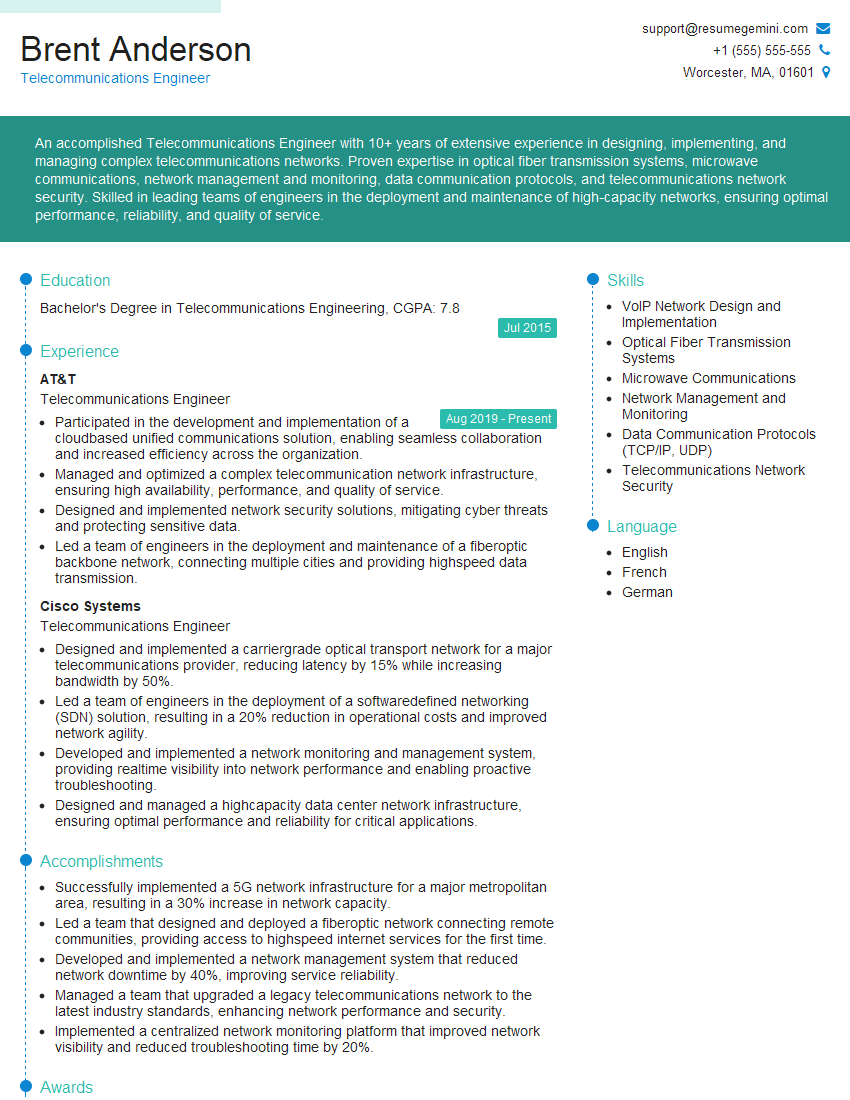
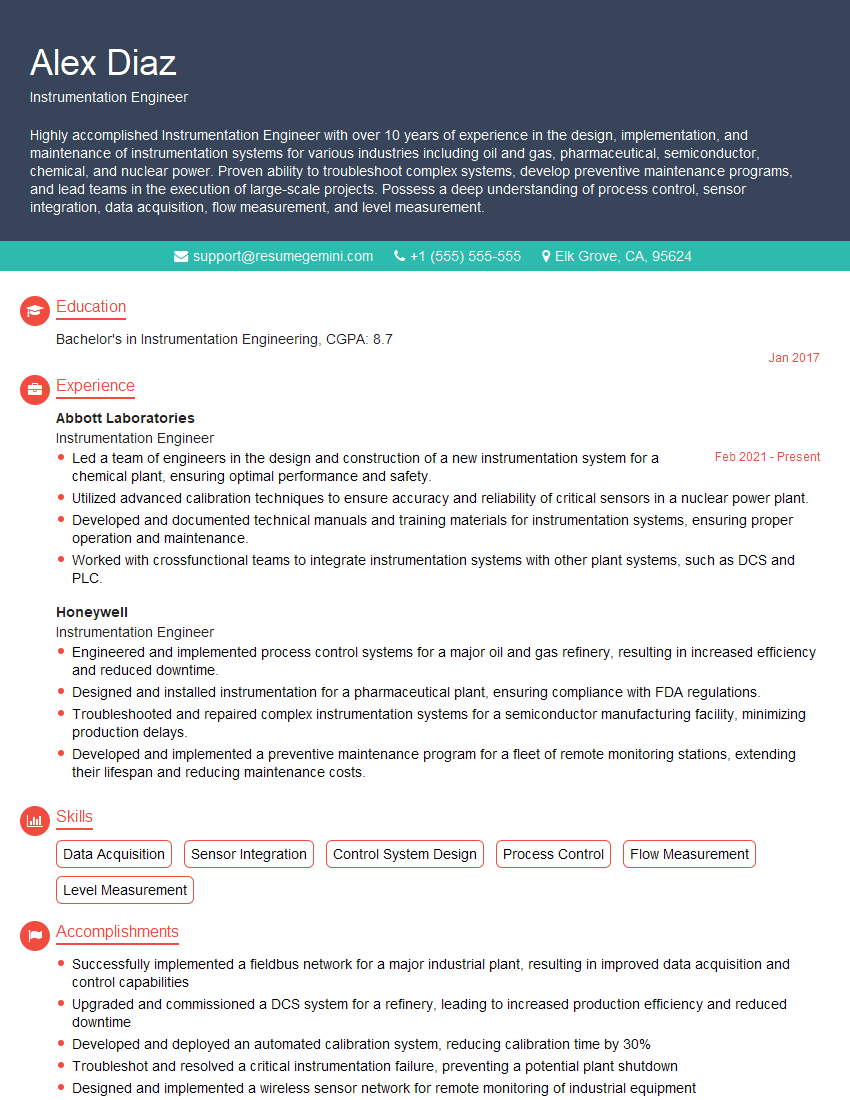
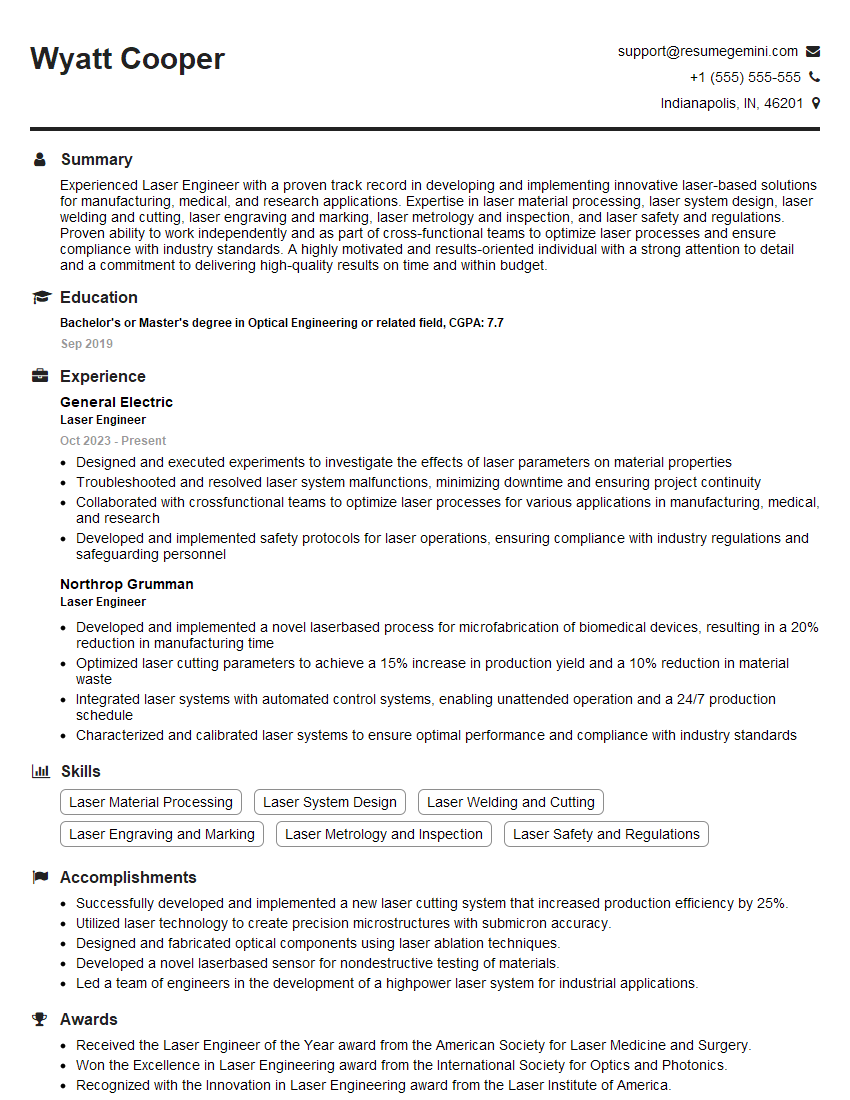
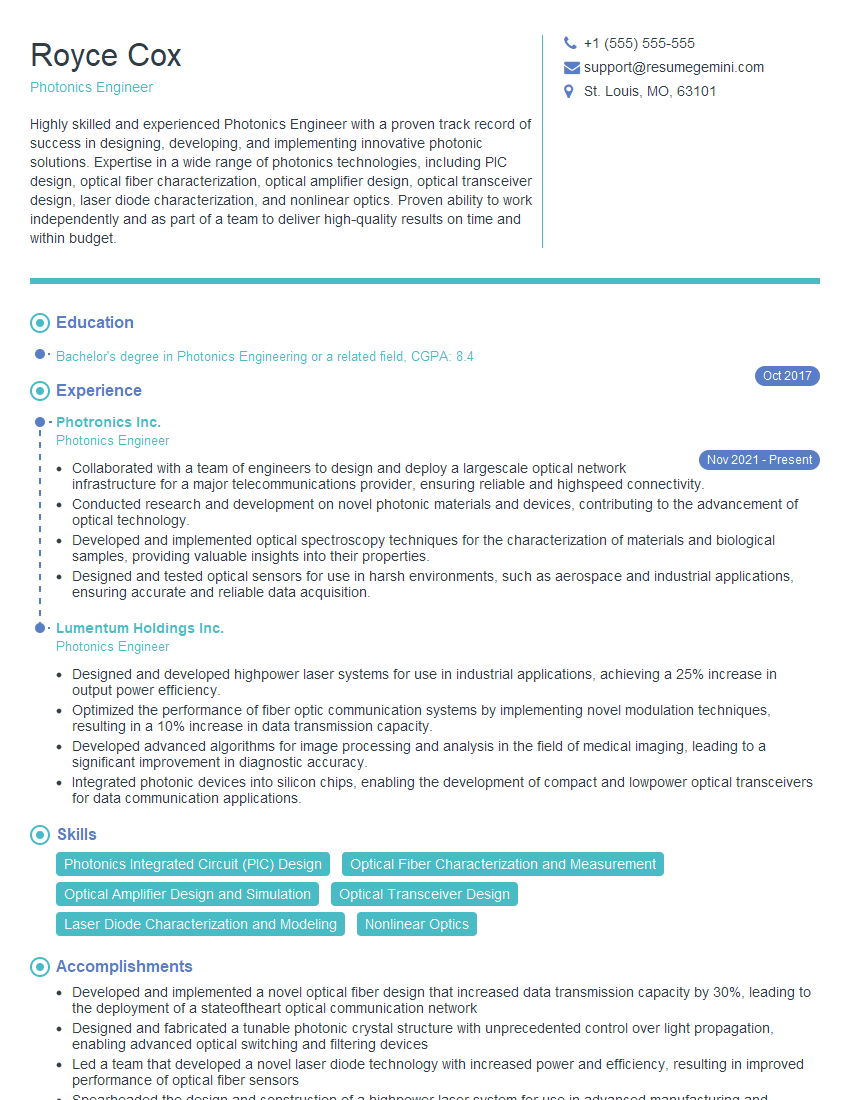
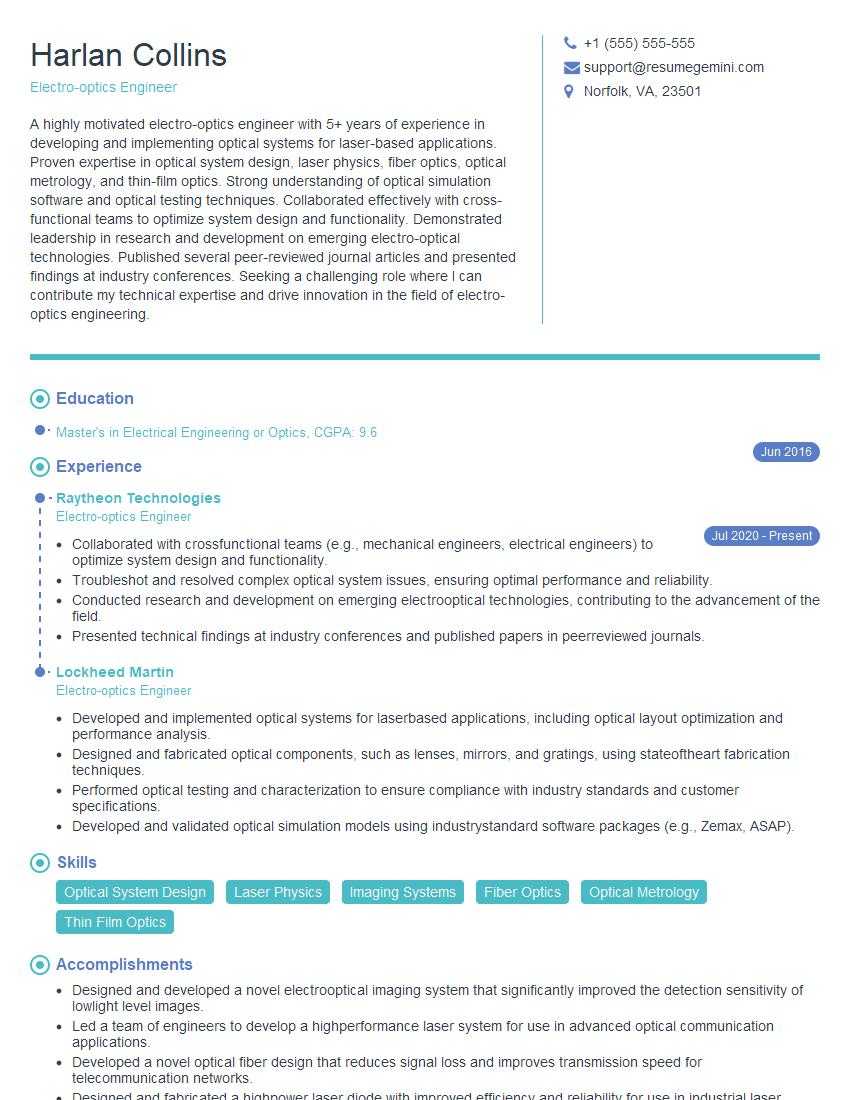
Mastering the electromagnetic spectrum is crucial for success in numerous high-demand fields, opening doors to exciting careers in research, engineering, and technology. A strong understanding of these concepts will significantly enhance your interview performance and showcase your technical expertise. To maximize your job prospects, create an ATS-friendly resume that effectively highlights your skills and experience. ResumeGemini is a trusted resource to help you build a professional and impactful resume. We provide examples of resumes tailored specifically to the Electromagnetic Spectrum field to guide you in creating your own compelling application.


Explore more articles
Users Rating of Our Blogs
Share Your Experience
We value your feedback! Please rate our content and share your thoughts (optional).
What Readers Say About Our Blog
Very informative content, great job.
good