The thought of an interview can be nerve-wracking, but the right preparation can make all the difference. Explore this comprehensive guide to Quality Assurance Inspection interview questions and gain the confidence you need to showcase your abilities and secure the role.
Questions Asked in Quality Assurance Inspection Interview
Q 1. Describe your experience with various inspection methods (visual, dimensional, functional).
My experience encompasses a wide range of inspection methods, each crucial for ensuring product quality. Visual inspection is the foundational method, involving a thorough examination using the naked eye or magnification tools to detect surface defects, like scratches, cracks, or discoloration. For instance, in inspecting a circuit board, I’d carefully check for any missing components, solder bridges, or damaged traces. Dimensional inspection verifies that the product’s physical dimensions conform to specifications. This often involves using tools like calipers, micrometers, or coordinate measuring machines (CMMs) to measure length, width, height, and other critical parameters. Imagine inspecting a precision-machined part; dimensional inspection guarantees it meets the tight tolerances required for proper functioning. Finally, functional inspection evaluates the product’s operational capabilities. This might involve testing a device’s electrical characteristics, mechanical performance, or software functionality, often utilizing specialized test equipment. For example, testing the power output of a power supply or checking the responsiveness of a software application falls under this category.
Q 2. Explain your understanding of different quality standards (e.g., ISO 9001, AS9100).
I possess a strong understanding of various quality standards, most notably ISO 9001 and AS9100. ISO 9001 is a globally recognized standard for quality management systems, focusing on consistently meeting customer requirements and enhancing customer satisfaction. It provides a framework for organizations to improve their processes and ensure consistent product quality. AS9100, on the other hand, is specifically tailored for the aerospace industry, building upon ISO 9001 with additional requirements addressing the unique demands of aviation, space, and defense sectors. These include stricter control over processes, traceability requirements, and rigorous documentation standards, ensuring the highest levels of reliability and safety in critical applications. In practice, understanding these standards helps ensure that inspections are aligned with best practices, and that the quality management system is robust and effective.
Q 3. How do you handle discrepancies found during inspection?
Discrepancies are handled methodically and efficiently. Upon discovering a non-conformance, the first step involves thorough documentation, including precise details of the defect, its location, and any associated measurements. Photographs and other visual aids are essential. Next, I carefully analyze the nature and severity of the discrepancy. Is it a minor flaw easily rectified, or a major defect requiring significant action? Depending on this assessment, the process varies. For minor issues, a corrective action might be implemented on the spot. For major discrepancies, a formal non-conformance report is generated, escalating the issue to the appropriate team. This report details the problem, its potential impact, the proposed corrective actions, and preventive measures to avoid recurrence. This ensures that the root cause is identified and addressed, preventing similar issues from arising in the future. The entire process is meticulously documented, maintaining a clear audit trail.
Q 4. What are your preferred tools and techniques for documenting inspection findings?
My preferred tools and techniques for documenting inspection findings center around clarity, accuracy, and traceability. I primarily utilize digital tools such as spreadsheets (e.g., Excel) and specialized inspection software. These tools allow for efficient data entry, analysis, and report generation. I employ structured reporting templates to maintain consistency. These templates typically include fields for item identification, inspection date, inspector’s name, details of the defect, measurements, photographs, and corrective actions taken. For visual defects, high-quality digital photographs or videos are critical for accurate documentation. In situations where software is unavailable, I meticulously document findings in detailed handwritten reports, ensuring legibility and clarity, which are then transcribed into a digital format. Ultimately, the goal is to create a comprehensive and readily accessible record of inspection findings.
Q 5. How do you prioritize inspection tasks when faced with multiple deadlines?
Prioritizing inspection tasks with multiple deadlines necessitates a structured approach. I typically employ a risk-based prioritization method, focusing first on tasks associated with the highest-risk items or those with the most critical deadlines. This involves assessing the potential impact of a failure on safety, functionality, or production schedules. For instance, inspecting parts critical to a safety-sensitive system would take precedence over inspecting less critical components. I use tools such as project management software or simple to-do lists with clearly defined priorities and timelines. This allows for effective time management and resource allocation, ensuring all deadlines are met while maintaining a high standard of quality.
Q 6. Describe your experience with using statistical process control (SPC) charts.
Statistical Process Control (SPC) charts are invaluable tools for monitoring process stability and identifying potential problems before they impact product quality. I’m proficient in using various SPC charts, including control charts (X-bar and R charts, p-charts, c-charts), which graphically represent process data over time, highlighting trends and deviations from established control limits. These charts allow for early detection of shifts in process parameters, signaling the need for corrective actions. For example, if an X-bar chart for a critical dimension shows a trend towards exceeding the upper control limit, this indicates potential process drift requiring immediate investigation and adjustment. My experience includes using SPC software to analyze data, generate charts, and interpret the results, enabling proactive process improvement and consistent product quality.
Q 7. Explain your understanding of root cause analysis techniques.
Root cause analysis is crucial for preventing recurring defects. I’m well-versed in various techniques, including the 5 Whys, fishbone diagrams (Ishikawa diagrams), and fault tree analysis. The 5 Whys involves repeatedly asking “Why?” to drill down to the root cause of a problem. For example, if a product fails, the 5 Whys might uncover a deeper issue related to improper training, leading to an incorrect assembly process. Fishbone diagrams help visualize potential causes categorized by factors like materials, methods, manpower, and equipment. Fault tree analysis uses a tree-like structure to illustrate how different events can lead to a specific failure, aiding in identifying points of intervention to prevent recurrence. Using a combination of these techniques allows for a thorough understanding of the root causes of defects, enabling effective corrective and preventive actions.
Q 8. How do you ensure the accuracy and reliability of your inspection results?
Ensuring the accuracy and reliability of inspection results is paramount in Quality Assurance. It’s achieved through a multi-faceted approach focusing on meticulous methodology, calibrated equipment, and documented processes.
- Standard Operating Procedures (SOPs): We strictly adhere to pre-defined SOPs for each inspection type. These procedures outline every step, from sample selection to data recording, minimizing human error and ensuring consistency.
- Calibration Verification: All measuring instruments are regularly calibrated against traceable standards. This ensures they’re providing accurate readings, crucial for reliable results. Calibration certificates are meticulously maintained as proof.
- Statistical Process Control (SPC): SPC techniques, such as control charts, help monitor the inspection process itself. By tracking variations, we can identify potential issues early on, preventing inaccurate results. For example, if a measurement consistently falls outside the control limits, it flags a need for investigation—perhaps the instrument needs recalibration, or the process itself is unstable.
- Cross-checking and Audits: We employ double-checking mechanisms and internal audits to verify the accuracy of results. This independent review helps identify and correct any inconsistencies.
- Traceability: Every step of the inspection is documented, creating a complete audit trail. This traceability allows us to track the origin of materials and identify the source of any discrepancy.
For instance, in a recent inspection of machined parts, following our SOPs, using calibrated calipers, and employing SPC charts on key dimensions helped us swiftly identify a slight drift in a machine’s settings, preventing the production of faulty parts.
Q 9. Describe a time you had to deal with a difficult or challenging inspection.
One challenging inspection involved a batch of specialized medical components with incredibly tight tolerances. The initial inspection revealed a higher-than-acceptable defect rate, potentially causing a significant production delay and financial impact.
The challenge stemmed from the complexity of the components and the ambiguity in the initial defect descriptions. Some defects were visually subtle, requiring advanced equipment and interpretation.
My approach involved:
- Thorough Review of Specifications: I meticulously re-examined the specifications to ensure clear understanding of acceptable limits and criteria.
- Root Cause Analysis: I worked with the manufacturing team using techniques like the 5 Whys to determine the root cause of the defects. This uncovered a slight misalignment in the manufacturing machine.
- Advanced Measurement Techniques: We implemented additional metrology techniques like 3D scanning to get more precise measurements. This yielded quantifiable data, providing evidence for corrective actions.
- Collaboration and Communication: Open communication between the manufacturing, engineering, and quality assurance teams was essential. Regular updates kept everyone informed and ensured collaborative problem-solving.
By combining careful analysis, improved measurement techniques, and proactive communication, we successfully identified the root cause and implemented corrective actions. This avoided significant financial loss and potential patient safety risks.
Q 10. How familiar are you with calibration procedures and equipment?
I am very familiar with calibration procedures and equipment. Calibration is fundamental to ensuring the accuracy of our measurements and the reliability of our inspection results. This involves understanding the principles of metrology, selecting appropriate standards, and following established calibration protocols.
My experience includes:
- Understanding Calibration Standards: I’m proficient in using NIST-traceable standards (or equivalent international standards) to verify the accuracy of measuring devices.
- Calibration Equipment: I’m experienced with using a variety of calibration equipment, including digital micrometers, dial indicators, electronic calipers, and laser interferometers (for higher precision applications).
- Calibration Procedures: I’m well-versed in following established calibration procedures, documenting the process, and maintaining accurate calibration records. This includes understanding uncertainty analysis and documenting the traceability chain.
- Calibration Software: I’ve worked with calibration management software to track calibration schedules, certificates, and instrument performance data.
I ensure that all calibration records are maintained meticulously, compliant with relevant standards, and readily accessible for audits.
Q 11. Explain your experience with different types of measuring instruments (calipers, micrometers, etc.).
I have extensive experience with various measuring instruments, including calipers, micrometers, height gauges, and optical comparators. My proficiency extends to understanding their limitations, appropriate applications, and proper usage techniques.
- Calipers: I routinely use both vernier and digital calipers for measuring dimensions like length, width, and depth, understanding their precision and limitations.
- Micrometers: I’m adept at using micrometers for highly precise measurements, understanding the importance of proper zeroing and minimizing measurement errors.
- Height Gauges: I utilize height gauges for precise height measurements, employing proper techniques to minimize error from surface irregularities.
- Optical Comparators: I have experience with optical comparators for more complex dimensional analysis, inspecting parts for conformity to specified blueprints or CAD models.
Understanding the specific capabilities and limitations of each instrument is crucial. For example, while a vernier caliper might suffice for some measurements, a micrometer is necessary for finer tolerances. I always choose the appropriate instrument based on the required precision and the nature of the part being inspected.
Q 12. How do you ensure the traceability of inspected materials?
Ensuring traceability of inspected materials is crucial for accountability and quality control. Traceability ensures that the origin and history of a material can be followed throughout the entire supply chain, from raw material to finished product.
Methods for ensuring traceability include:
- Unique Identification Numbers: Each batch or lot of materials is assigned a unique identification number that’s tracked throughout the process. This number appears on all associated documentation, including inspection reports.
- Material Certificates of Compliance (COCs): We request and maintain COCs from suppliers. These certificates verify the materials meet specified standards and provide crucial information about their composition and properties.
- Detailed Documentation: Complete documentation accompanies the materials throughout the inspection process. This includes records of inspections, tests performed, and any non-conformances identified.
- Barcoding and RFID Systems: Advanced tracking systems using barcodes or RFID tags provide real-time traceability, allowing for easy monitoring of material movement and status.
In practice, we maintain a robust database that links identification numbers to inspection records and supplier information. This database allows us to easily trace the history of any material and pinpoint the source of any problems if they arise.
Q 13. How do you communicate inspection results effectively to different stakeholders?
Effective communication of inspection results is critical. Different stakeholders have varying needs and levels of technical understanding. Tailoring the communication method to each audience is essential.
My approach involves:
- Formal Inspection Reports: For internal stakeholders and management, detailed reports are generated. These reports include comprehensive data, statistical analysis, and clear summaries of findings, often incorporating visual aids like charts and graphs.
- Concise Summaries: For operational teams, shorter summaries highlighting key findings and corrective actions are provided. The language is kept straightforward and avoids technical jargon.
- Visual Aids: Using charts, graphs, and images makes complex data easier to understand for all stakeholders.
- Verbal Presentations: In some cases, verbal presentations are used to discuss the results and answer questions. This method allows for interactive discussion and clarifies any uncertainties.
- Regular Meetings: Holding regular meetings with key stakeholders ensures they are kept informed of the inspection status and progress.
For example, when reporting on a critical component’s inspection, a detailed report is provided to management, while a concise summary with recommended actions is given to the production line supervisors. Using clear visuals in both reports ensures everyone is informed and understands the significance of the findings.
Q 14. Describe your experience with implementing corrective and preventive actions (CAPA).
I have extensive experience implementing Corrective and Preventive Actions (CAPA). CAPA is a systematic process designed to prevent defects and improve quality. It involves identifying the root cause of non-conformances, implementing corrective actions to address the immediate problem, and implementing preventive actions to prevent recurrence.
My approach follows a structured process:
- Identify and Document Non-conformances: Thoroughly document all non-conformances, including detailed descriptions, locations, and quantities.
- Root Cause Analysis: Employ root cause analysis techniques such as 5 Whys, fishbone diagrams, or fault tree analysis to determine the underlying causes of the non-conformances.
- Develop Corrective Actions: Implement immediate corrective actions to address the identified non-conformances and prevent further defects.
- Develop Preventive Actions: Implement preventive actions to address the root cause and prevent similar issues from occurring in the future. This may involve process improvements, equipment modifications, or staff training.
- Verification and Validation: Verify that the corrective and preventive actions are effective and validate their long-term impact on quality.
- Documentation and Reporting: Maintain meticulous records of all CAPA activities, including initial findings, root cause analysis, actions taken, and verification results.
In a situation involving repeated failures in a specific assembly process, a thorough CAPA investigation using the 5 Whys revealed a lack of proper training for assembly technicians. Corrective actions included immediate retraining, and preventive actions involved implementing a more robust training program with standardized checklists and regular competency assessments. This approach prevented future occurrences of the defect.
Q 15. How do you maintain your knowledge and skills in the field of quality assurance?
Maintaining proficiency in Quality Assurance requires a multifaceted approach. It’s not a static field; new technologies, standards, and best practices constantly emerge. My strategy involves a blend of formal and informal learning.
- Formal Training: I actively seek out professional development opportunities like webinars, online courses (e.g., Coursera, edX) focusing on advanced inspection techniques, statistical process control (SPC), and emerging technologies in QA. I also pursue certifications relevant to my specialization to demonstrate commitment to ongoing improvement.
- Industry Publications and Conferences: I regularly read industry journals, attend conferences, and participate in workshops to stay updated on the latest advancements and best practices. Networking with peers at these events provides invaluable insights and perspectives.
- Hands-on Experience: I actively seek out challenging projects and diverse assignments to expand my skillset and apply new knowledge in real-world scenarios. This practical application is crucial for solidifying understanding and developing expertise.
- Mentorship and Collaboration: I actively seek mentorship from experienced QA professionals and actively collaborate with colleagues, exchanging knowledge and sharing experiences. Learning from others’ successes and failures is invaluable.
For example, recently I completed a course on advanced ultrasonic testing, and I’m currently applying that knowledge to a project involving the inspection of pressure vessels. The combination of formal study and practical implementation significantly strengthens my skills.
Career Expert Tips:
- Ace those interviews! Prepare effectively by reviewing the Top 50 Most Common Interview Questions on ResumeGemini.
- Navigate your job search with confidence! Explore a wide range of Career Tips on ResumeGemini. Learn about common challenges and recommendations to overcome them.
- Craft the perfect resume! Master the Art of Resume Writing with ResumeGemini’s guide. Showcase your unique qualifications and achievements effectively.
- Don’t miss out on holiday savings! Build your dream resume with ResumeGemini’s ATS optimized templates.
Q 16. Describe your experience with working with different inspection software or systems.
My experience encompasses a variety of inspection software and systems, ranging from simple data logging tools to sophisticated Computer Aided Design (CAD) integrated inspection packages. I’m proficient in using software for various inspection types.
- Data Acquisition and Analysis Software: I’ve extensively used software like LabVIEW and specialized data acquisition systems for recording and analyzing data from various instruments, such as ultrasonic flaw detectors, coordinate measuring machines (CMMs), and optical comparators.
- CAD Integration: I have experience using software that integrates inspection data with CAD models, allowing for precise dimensional verification and defect localization. This is particularly crucial in aerospace and automotive industries where precision is paramount.
- Defect Reporting and Management Systems: I’m proficient in using software designed for managing inspection reports, tracking defects, and implementing corrective actions. This ensures efficient and systematic documentation and tracking of quality issues.
- Cloud-Based Inspection Platforms: I’ve worked with cloud-based solutions that allow for real-time data sharing, remote collaboration, and improved data management. This is especially beneficial for projects with geographically dispersed teams.
For instance, in a recent project involving the inspection of turbine blades, we used a specialized software package to integrate CMM data with the CAD model, allowing for rapid identification and quantification of dimensional deviations.
Q 17. How do you handle situations where inspection results are inconclusive?
Inconclusive inspection results require a systematic and rigorous approach. The first step involves careful review of the initial data and inspection methodology. If the results are genuinely inconclusive, further investigation is required.
- Re-inspection: The initial inspection should be repeated by a different inspector, using the same methods and equipment. This helps to identify potential biases or errors in the original inspection.
- Advanced Techniques: If re-inspection yields inconclusive results, employing more sophisticated inspection methods might be necessary. For example, if visual inspection is inconclusive, a non-destructive technique like X-ray inspection or ultrasonic testing could be used.
- Expert Consultation: Seeking the opinion of a more experienced inspector or specialist is crucial for resolving ambiguous findings. A second opinion often brings a fresh perspective and can pinpoint the cause of the inconclusive result.
- Documentation and Reporting: Detailed documentation of all steps undertaken, including the reasons for the inconclusive result and the subsequent actions taken, is essential. This ensures transparency and accountability.
- Root Cause Analysis: It’s important to identify and address the underlying causes of the inconclusive results. This could involve improving inspection procedures, updating equipment, or providing additional training to inspectors.
For example, during a weld inspection, if a radiographic image was unclear, we might use ultrasonic testing to verify the soundness of the weld. If discrepancies persist, we might consult a welding engineer for expert opinion.
Q 18. What is your experience with non-destructive testing (NDT) methods?
Non-destructive testing (NDT) methods are integral to many quality assurance processes. My experience includes several NDT techniques.
- Ultrasonic Testing (UT): I’m proficient in using ultrasonic testing to detect internal flaws in materials. I’ve used this for inspecting welds, castings, and other components for cracks, voids, and inclusions.
- Radiographic Testing (RT): I have experience with radiographic testing, using X-rays or gamma rays to create images of internal structures. This technique is excellent for detecting planar defects like cracks and lack of fusion in welds.
- Liquid Penetrant Testing (LPT): I’ve utilized liquid penetrant testing to detect surface-breaking defects in non-porous materials. This is a straightforward technique for identifying cracks, porosity, and other surface imperfections.
- Magnetic Particle Testing (MPT): I’m familiar with magnetic particle testing, used for detecting surface and near-surface defects in ferromagnetic materials. This is a valuable tool for inspecting components subjected to stress or fatigue.
For example, in a recent project involving the inspection of a pipeline, we used a combination of UT and RT to ensure the integrity of the welds before commissioning.
Q 19. Explain your understanding of sampling techniques for quality inspection.
Sampling techniques are crucial in quality inspection, especially when 100% inspection isn’t feasible due to time, cost, or destructive testing requirements. The choice of sampling method depends on the specific application and the desired level of confidence.
- Random Sampling: Each item in the population has an equal chance of being selected. This is useful when the population is homogenous and there’s no prior knowledge of defect distribution.
- Stratified Sampling: The population is divided into subgroups (strata) based on relevant characteristics, and samples are randomly selected from each stratum. This is useful when the population is heterogeneous, ensuring representation from all subgroups.
- Systematic Sampling: Items are selected at fixed intervals from the population. This is simple and easy to implement, but it can be problematic if there’s a periodic pattern in the defects.
- Cluster Sampling: The population is divided into clusters, and some clusters are randomly selected for complete inspection. This is cost-effective but requires careful consideration to avoid bias.
The sample size is determined by factors like the desired confidence level, acceptable error margin, and the estimated defect rate. Statistical methods are used to determine the appropriate sample size to ensure reliable conclusions can be drawn about the overall quality of the population.
For instance, when inspecting a batch of manufactured parts, we might use stratified sampling if we suspect that different machines produced parts with varying defect rates. We’d sample from each machine’s output separately to get a better understanding of the overall defect rate.
Q 20. How do you ensure the safety and security of inspection equipment and materials?
Safety and security of inspection equipment and materials are paramount. A multi-layered approach is necessary.
- Proper Storage and Handling: Equipment and materials are stored in designated areas, protected from environmental damage, theft, and unauthorized access. Proper handling procedures are strictly followed to prevent damage and injury.
- Regular Calibration and Maintenance: Inspection equipment undergoes regular calibration and maintenance to ensure accuracy and reliability. Calibration records are meticulously maintained. This is crucial for the validity of the inspection results.
- Safety Training: All personnel involved in inspection activities receive thorough safety training on the proper use, handling, and maintenance of equipment, as well as hazard awareness and risk mitigation procedures. Regular refresher training is implemented.
- Lockout/Tagout Procedures: Lockout/Tagout procedures are strictly followed when servicing or maintaining equipment to prevent accidental activation and injury.
- Security Measures: Access to sensitive equipment and materials is restricted to authorized personnel only. Security measures might include access controls, surveillance systems, and secure storage facilities.
For example, before using any portable testing device, we always check its calibration certificate and ensure it’s within the acceptable tolerances. We also follow strict safety protocols when handling radioactive sources used in radiographic testing.
Q 21. Describe your experience with auditing quality management systems.
Auditing quality management systems (QMS) is a critical part of ensuring ongoing compliance and continuous improvement. My experience includes auditing various QMS, including ISO 9001.
- Understanding QMS Standards: I possess a thorough understanding of relevant QMS standards, including ISO 9001, and their requirements. This knowledge forms the basis for conducting effective audits.
- Audit Planning and Execution: I’m adept at planning and executing audits, including defining the audit scope, selecting appropriate audit methods, and developing an audit checklist. I’m proficient in conducting both internal and external audits.
- Document Review: I’m skilled in reviewing quality management documentation, including policies, procedures, work instructions, and records, to ensure compliance with the QMS and relevant standards.
- On-site Observation: I’m experienced in conducting on-site observations to verify the implementation of QMS processes and procedures. This includes observing work practices, interviewing personnel, and reviewing physical evidence.
- Non-conformity Identification and Reporting: I’m skilled in identifying non-conformities during the audit and reporting them clearly and concisely. I facilitate the development of corrective and preventive actions to address the identified issues.
During a recent audit of a manufacturing facility, I identified a non-conformity in their calibration procedure for critical measurement equipment, leading to corrective actions that improved the accuracy of their quality control processes.
Q 22. What are the key performance indicators (KPIs) you use to track inspection effectiveness?
Tracking inspection effectiveness relies on several key performance indicators (KPIs). These metrics provide a quantifiable measure of how well our inspection process identifies and addresses quality issues. Key KPIs I utilize include:
- Defect Rate: This is the percentage of inspected units that contain at least one defect. A lower defect rate indicates better quality and a more effective inspection process. For example, a defect rate of 2% suggests that 2 out of every 100 inspected items are flawed. We continuously track this to identify trends and areas for improvement.
- Inspection Accuracy: This measures the percentage of defects correctly identified during the inspection. A high accuracy rate is crucial, as missing defects can have significant downstream consequences. We regularly audit our inspection process to ensure accuracy.
- Inspection Cycle Time: This measures the time it takes to complete an inspection. Optimizing cycle time without compromising accuracy is important for efficiency and cost-effectiveness. We use process mapping and time studies to identify bottlenecks and streamline the inspection process.
- Cost of Quality (COQ): This encompassing metric includes the costs associated with preventing, detecting, and correcting defects. It helps us understand the overall financial impact of our quality processes and allows us to make data-driven decisions for improvement. A reduction in COQ is a prime indicator of an effective QA program.
- Customer Returns/Complaints related to quality: This provides a direct measure of the impact of our inspection on customer satisfaction. Lower rates of returns and complaints directly correlate to a more effective inspection process.
By monitoring these KPIs, we gain valuable insights into the effectiveness of our inspection program, allowing us to identify areas needing attention and make data-driven adjustments for continuous improvement.
Q 23. Explain your understanding of the different types of quality defects.
Quality defects can be categorized in various ways, but I find it helpful to group them based on their severity and impact. I generally classify them as follows:
- Critical Defects: These are defects that render the product unusable or pose a safety hazard. For example, a cracked weld on a pressure vessel is a critical defect. These require immediate attention and corrective action.
- Major Defects: These defects significantly impact the functionality or usability of the product, but don’t necessarily render it unusable or unsafe. A major defect might be a malfunctioning component that requires replacement, but doesn’t pose a safety risk.
- Minor Defects: These are defects that have a minor impact on functionality or aesthetics. A minor defect might be a small scratch on a painted surface. While not critical, they can still affect the overall quality and customer satisfaction.
- Cosmetic Defects: These are purely aesthetic issues that don’t affect functionality. For example, a slightly uneven paint finish. Their importance depends on the product and customer expectations.
Understanding these classifications is crucial for prioritizing corrective actions and allocating resources effectively. It helps us focus on addressing the most serious defects first, while also ensuring consistent product quality.
Q 24. How do you collaborate with other departments to improve quality processes?
Collaboration is essential for improving quality processes. I actively engage with various departments including:
- Design Engineering: Early involvement with design teams allows us to identify potential quality issues proactively, preventing defects from arising in the first place. This includes reviewing design specifications and offering feedback based on past experience and industry best practices.
- Manufacturing: Close collaboration with manufacturing ensures that the inspection process aligns with the production capabilities and constraints. We work together to identify and eliminate sources of defects during production. Regular communication regarding defect trends is crucial.
- Procurement: Ensuring quality starts with the raw materials. We collaborate with procurement to establish quality standards for suppliers and monitor their performance. This often involves inspections at the supplier’s facilities and implementing robust quality control measures throughout the supply chain.
- Sales and Customer Service: Understanding customer expectations and addressing customer feedback helps us prioritize inspection criteria and identify areas needing immediate improvement. This ensures that our inspection process aligns with customer needs and contributes to high customer satisfaction.
By fostering open communication and actively participating in cross-functional teams, we create a culture of quality throughout the organization, enabling continuous improvement and defect reduction.
Q 25. How do you handle conflict resolution in a team environment related to inspection findings?
Conflict resolution related to inspection findings requires a structured and professional approach. My strategy involves:
- Open Communication: Creating a safe space for discussing disagreements. I encourage all parties involved to clearly express their perspectives and supporting evidence.
- Data-Driven Analysis: Using objective data from the inspection process and other relevant sources (e.g., test results, customer feedback) to resolve discrepancies. This ensures that decisions are based on facts, not opinions.
- Collaborative Problem Solving: Facilitating a discussion where all parties work together to identify the root cause of the disagreement and explore possible solutions. This might include reviewing the inspection procedures or analyzing the defect itself.
- Mediation (if necessary): If the conflict remains unresolved, I might involve a neutral third party to mediate the discussion and help find common ground. This ensures an impartial view and guides the team toward a resolution.
- Documentation: Thorough documentation of the conflict, the resolution process, and the final agreement is crucial for future reference and prevents similar conflicts from arising.
My goal is always to resolve conflicts constructively, focusing on finding solutions that benefit the entire team and enhance product quality. A collaborative approach is key to prevent conflicts from hindering the inspection process and impacting team morale.
Q 26. Describe your experience with using quality control charts (e.g., Pareto, control charts).
I have extensive experience using various quality control charts, including Pareto charts and control charts (like Shewhart charts and CUSUM charts). These tools are essential for monitoring process performance and identifying areas for improvement.
- Pareto Charts: These charts help prioritize quality issues by identifying the vital few defects that contribute to the majority of problems. By visualizing the frequency of different defects, we can focus our improvement efforts on the most impactful areas. For instance, a Pareto chart might reveal that 80% of our defects are caused by a specific machine or process step, enabling focused corrective action.
- Control Charts: These charts track process variation over time and help identify whether the process is stable or exhibiting out-of-control behavior. By plotting data points against control limits, we can detect shifts in the process mean or increases in variability, allowing for timely intervention to prevent defects. For example, a Shewhart chart showing a point exceeding the upper control limit would signal a potential problem that needs investigation.
My experience using these tools has significantly improved my ability to identify trends, analyze data, and make data-driven decisions to optimize quality processes and reduce defects. I regularly use these tools during process capability analysis, root cause analysis, and monitoring of key quality metrics.
Q 27. What are your salary expectations for this role?
My salary expectations for this role are in the range of [Insert Salary Range] annually. This is based on my extensive experience in quality assurance, my proven track record of success in improving quality processes, and the market rate for similar roles with comparable responsibilities in this region. However, I am open to discussing this further based on a comprehensive understanding of the responsibilities, benefits, and overall compensation package.
Key Topics to Learn for Quality Assurance Inspection Interview
- Understanding Quality Standards: Grasping different quality standards (ISO 9001, etc.) and their practical implications in inspection processes. This includes understanding how these standards translate into specific inspection procedures and documentation.
- Inspection Methods and Techniques: Familiarize yourself with various inspection methods, including visual inspection, dimensional inspection, functional testing, and destructive testing. Be prepared to discuss the strengths and limitations of each method and when they are most appropriately applied.
- Data Analysis and Reporting: Mastering the ability to collect, analyze, and present inspection data effectively. This involves understanding statistical process control (SPC), creating clear and concise reports, and effectively communicating findings to stakeholders.
- Root Cause Analysis (RCA): Develop your skills in identifying the root causes of defects and non-conformances. Understand different RCA methodologies (e.g., 5 Whys, Fishbone diagrams) and how to apply them to real-world inspection scenarios.
- Corrective and Preventive Actions (CAPA): Learn how to develop and implement effective CAPA plans to prevent recurrence of defects. Understand the importance of documentation and verification in the CAPA process.
- Quality Control Documentation: Become proficient in creating and maintaining accurate and comprehensive inspection documentation, including inspection plans, checklists, reports, and non-conformance reports. Understand the importance of traceability and audit trails.
- Industry-Specific Knowledge: Research the specific industry you are applying to and familiarize yourself with any relevant quality standards, regulations, or best practices. Demonstrating this knowledge showcases your commitment and preparedness.
- Problem-Solving and Decision-Making: Practice your ability to approach complex inspection challenges with a systematic and analytical approach. Be prepared to discuss your problem-solving strategies and decision-making processes in a clear and concise manner.
Next Steps
Mastering Quality Assurance Inspection opens doors to rewarding careers with excellent growth potential. A strong understanding of quality principles and methodologies is highly sought after across numerous industries. To maximize your job prospects, creating an ATS-friendly resume is crucial. ResumeGemini is a trusted resource that can help you build a professional and effective resume, significantly improving your chances of landing your dream QA Inspection role. Examples of resumes tailored to Quality Assurance Inspection are available to guide you. Invest time in crafting a compelling resume – it’s your first impression with potential employers.

Quality Assurance Manager Resume Sample
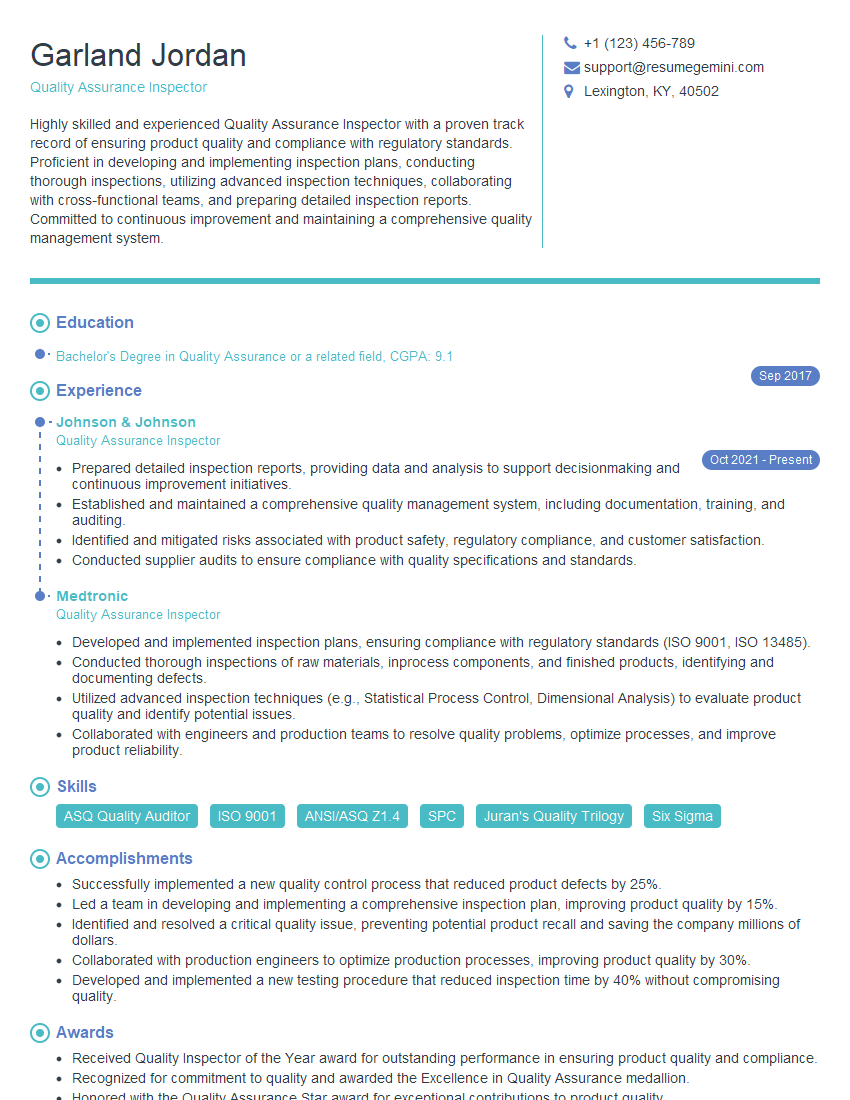
Quality Assurance Inspector Resume Sample
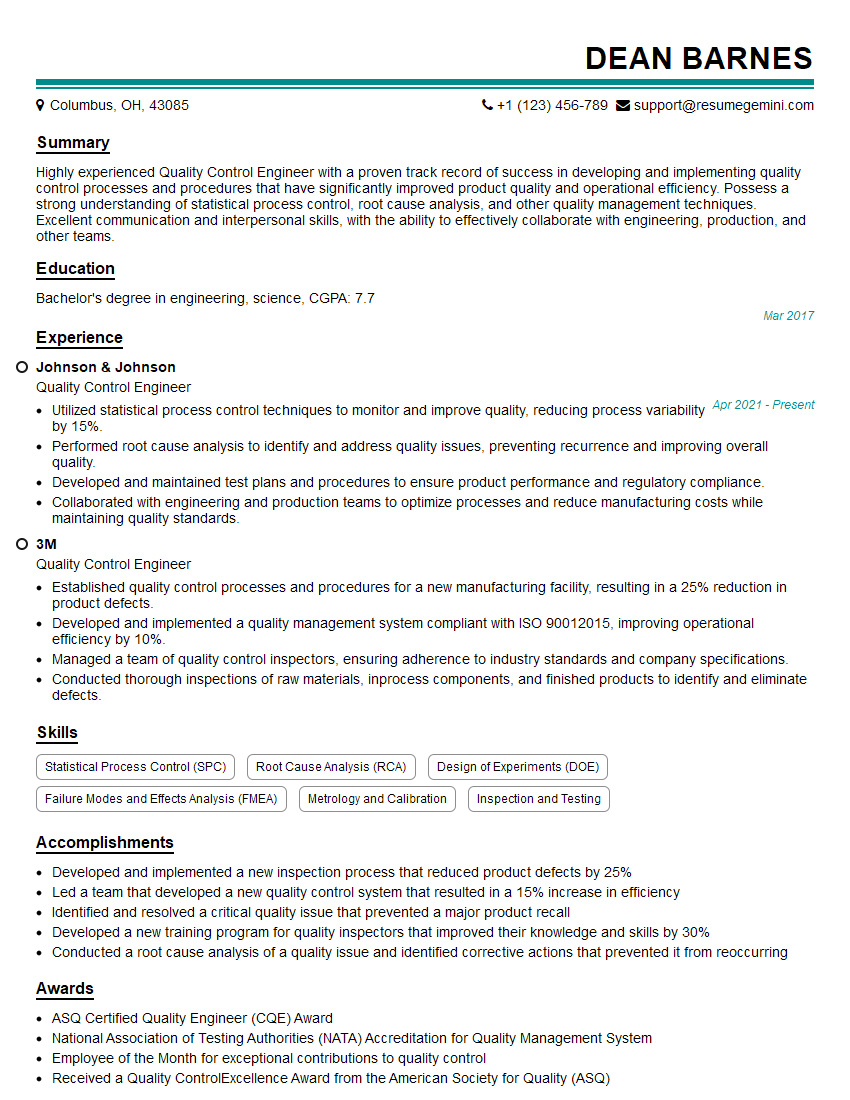
Quality Control Engineer Resume Sample
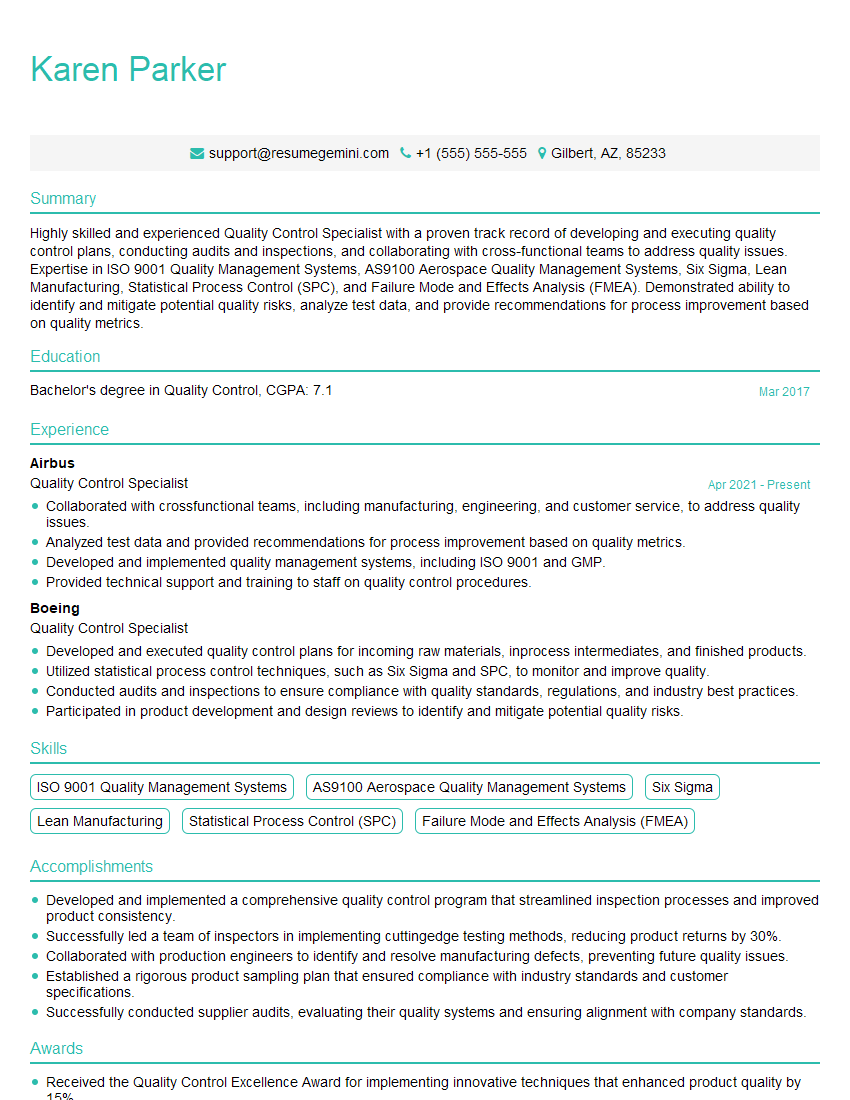
Quality Control Specialist Resume Sample

Quality Assurance Engineer Resume Sample
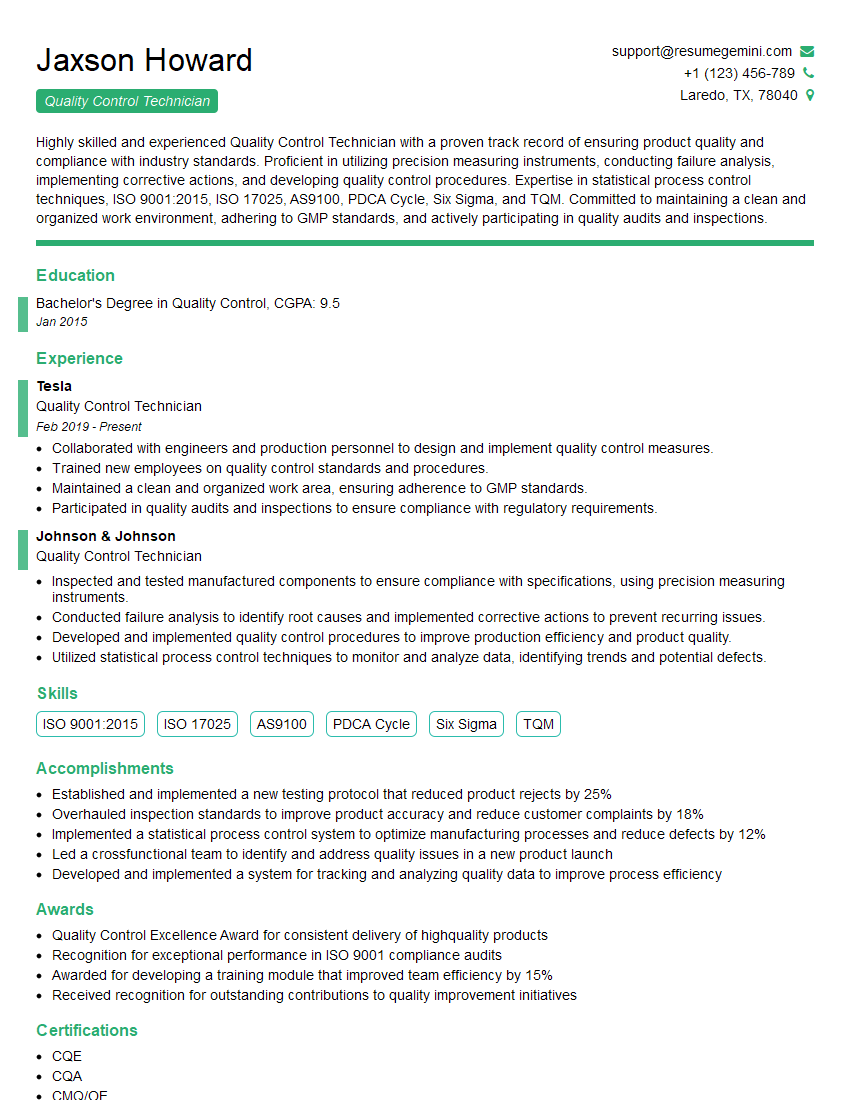
Quality Control Technician Resume Sample
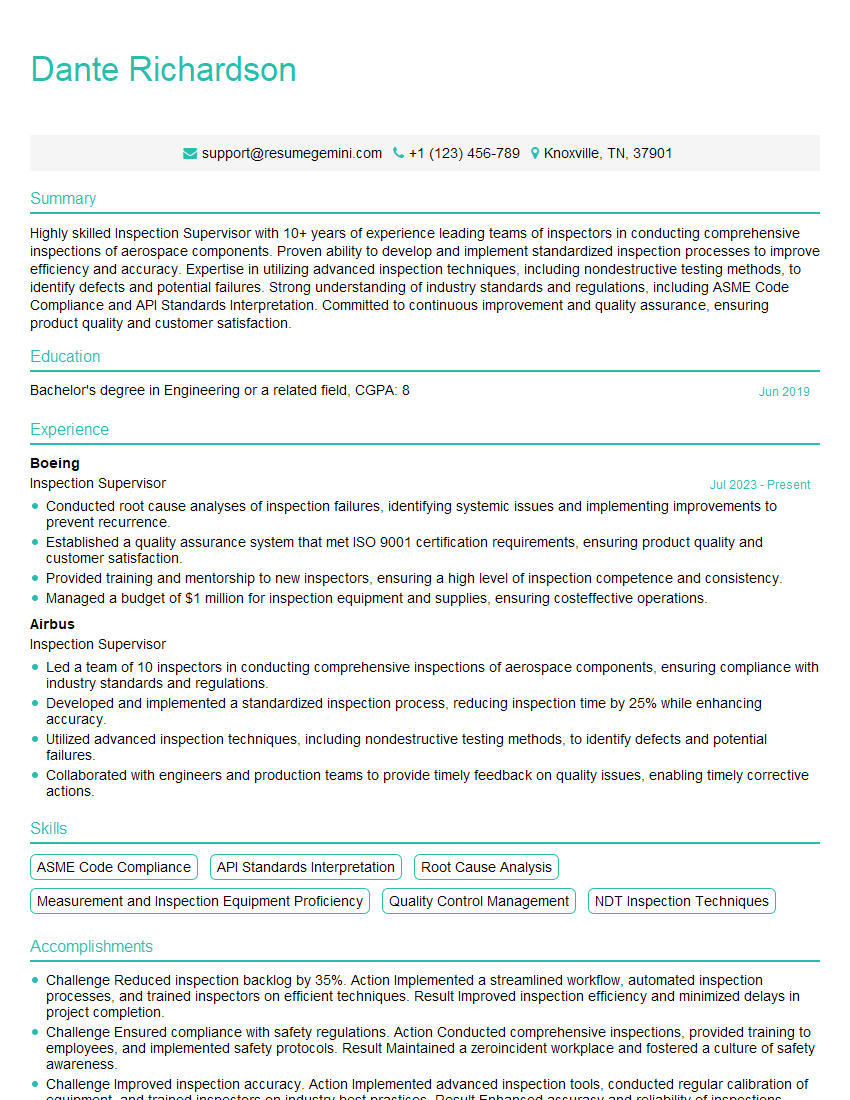
Inspection Supervisor Resume Sample
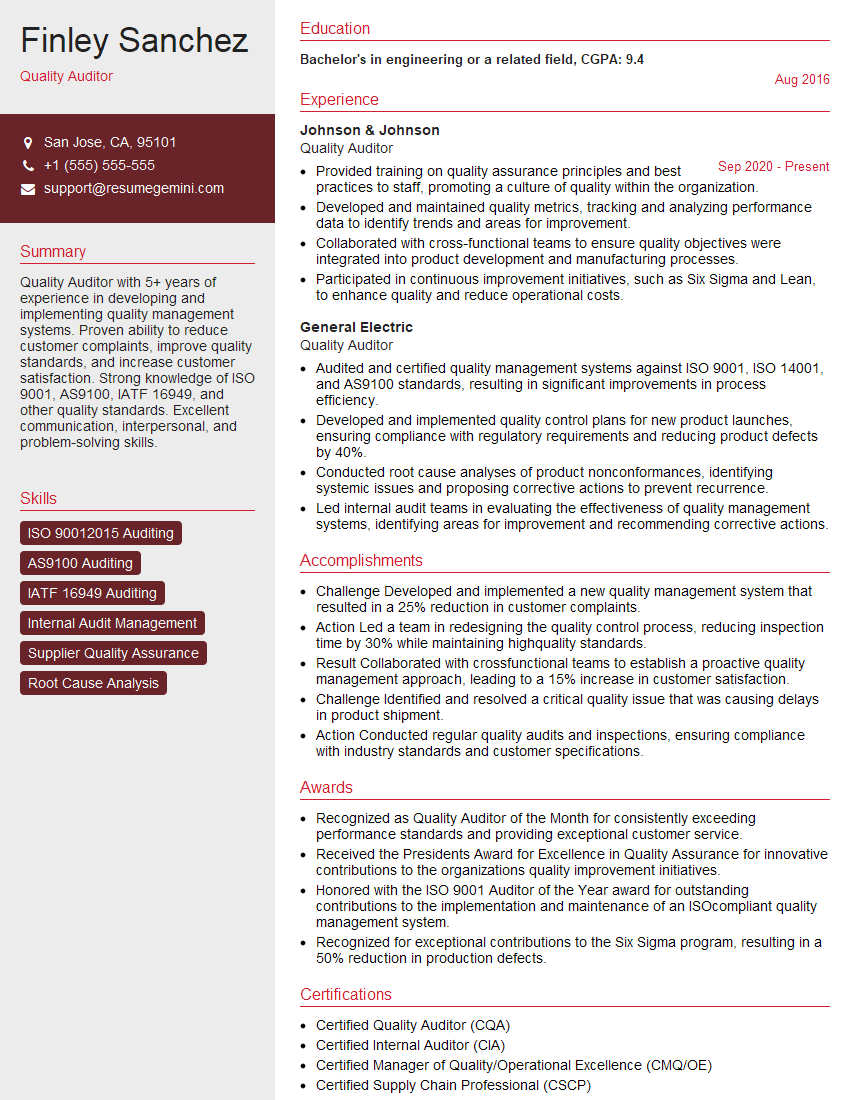
Quality Auditor Resume Sample
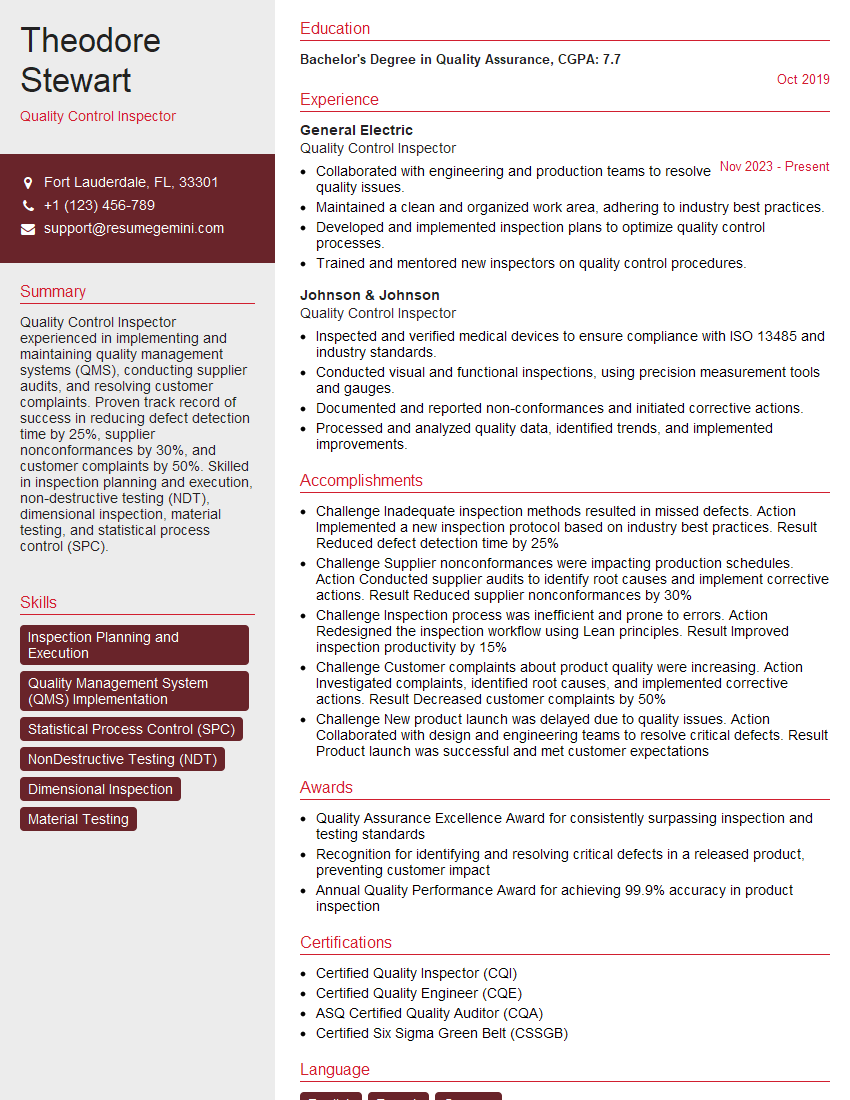
Quality Control Inspector Resume Sample
Explore more articles
Users Rating of Our Blogs
Share Your Experience
We value your feedback! Please rate our content and share your thoughts (optional).
What Readers Say About Our Blog
Very informative content, great job.
good