Interviews are more than just a Q&A session—they’re a chance to prove your worth. This blog dives into essential Electronic Lock Repair interview questions and expert tips to help you align your answers with what hiring managers are looking for. Start preparing to shine!
Questions Asked in Electronic Lock Repair Interview
Q 1. Explain the different types of electronic locks.
Electronic locks offer a wide array of security solutions, each with unique functionalities and mechanisms. They broadly fall into several categories:
- Keypad Locks: These locks use a numeric keypad for access, requiring users to enter a specific code. They are relatively simple to install and use, making them popular for residential and commercial applications. Think of the standard numerical keypad you see on many front doors.
- Card Reader Locks: These locks utilize proximity cards or fobs to grant access. The card or fob contains a unique identifier that the lock recognizes and verifies. They’re often seen in office buildings, hotels, and access-controlled facilities, offering a more secure and trackable method than keypads.
- Biometric Locks: These locks use biometric data, such as fingerprints or facial recognition, to authenticate users. They provide a high level of security as they are difficult to duplicate. Biometric locks are increasingly popular where high security is a priority.
- Smart Locks: These locks are digitally controlled, often integrating with smartphones or other smart home devices. They offer remote access, keyless entry, and various features like automated locking and unlocking. Think of being able to unlock your door remotely via an app.
- Combination Locks: While not purely electronic, some combination locks incorporate electronic components, such as digital displays or electronic keypad controls. These blend the simplicity of mechanical combination locks with the added security of electronic components.
The choice of lock depends heavily on security requirements, budget, and ease of use preferences.
Q 2. Describe the troubleshooting process for a malfunctioning electronic lock.
Troubleshooting a malfunctioning electronic lock is a systematic process. I typically start with the simplest checks and progressively move towards more complex diagnostics. My process usually follows these steps:
- Check the Power Source: Ensure the lock is receiving adequate power. This might involve checking batteries (for battery-powered locks) or verifying AC power connection (for wired locks).
- Test the Keypad/Reader: If it’s a keypad lock, try entering the correct code multiple times. For card readers, try multiple valid cards. A non-responsive keypad or reader may indicate a faulty component.
- Inspect the Wiring (if applicable): For wired locks, inspect the wiring for any damage, loose connections, or shorts. A damaged wire can interrupt the signal, leading to malfunctions.
- Check the Mechanical Components: Examine the locking mechanism itself. Are there any obstructions? Is the bolt mechanism moving freely? Sometimes, a simple obstruction can cause seemingly electronic issues.
- Test the Lock’s Internal Electronics: This may involve using a multimeter to check voltage and current at various points in the circuit. This step requires expertise and the right tools.
- Examine the Access Control System (if applicable): If the lock is part of a larger access control system, check the system’s logs for any error messages. The issue might be within the system rather than the lock itself.
- Consult the Manufacturer’s Documentation: The manufacturer’s documentation provides details on the lock’s specifications, troubleshooting procedures, and potential error codes. This is an essential resource.
If the problem persists after these steps, it is best to contact a qualified locksmith or the manufacturer for further assistance.
Q 3. How do you diagnose problems with electronic keypads?
Diagnosing keypad problems requires careful observation and testing. I usually follow this approach:
- Check for Physical Damage: Inspect the keypad for any visible damage, such as cracked buttons, loose connections, or water damage. Even minor damage can significantly affect functionality.
- Test Button Functionality: Systematically test each button on the keypad to check responsiveness. A button that doesn’t register input may be faulty.
- Inspect the Wiring: If possible, check for loose or damaged wiring connecting the keypad to the main control unit. Faulty wiring can lead to erratic behavior.
- Verify the Code Entry System: Try entering different valid codes and check the lock’s response. If codes aren’t recognized, the problem might be in the code entry logic or memory within the lock.
- Check the Internal Circuitry: This requires opening the keypad, which often voids warranties, and inspecting the internal components for any damaged or faulty parts. Use caution when dealing with electronics.
- Test Communication with the Lock Controller (if applicable): If the keypad is connected to a larger access control system, test the communication between the keypad and the controller using diagnostic tools.
Remember always to follow safety precautions and disconnect the power before performing any internal checks.
Q 4. What are the common causes of electronic lock failures?
Electronic lock failures have several common causes:
- Power Supply Issues: Low or depleted batteries (in battery-powered locks) or power outages (in wired locks) are frequently the culprit.
- Faulty Keypads or Readers: Damaged buttons, loose connections, or internal circuitry problems in keypads or card readers can prevent access.
- Mechanical Problems: Obstructions in the locking mechanism or a jammed bolt can prevent the lock from operating correctly, even though the electronic components might function properly.
- Software or Firmware Glitches: Software bugs or outdated firmware can lead to unexpected behavior or complete lock failure. This is particularly relevant for smart locks.
- Environmental Factors: Exposure to extreme temperatures, moisture, or dust can damage electronic components and lead to malfunctions.
- Tampering or Vandalism: Forced entry attempts or deliberate damage can severely affect the lock’s functionality.
- Component Failure: Over time, individual components such as the motor, solenoid, or microcontrollers can fail, requiring replacement.
Regular maintenance and periodic checks can help prevent many of these failures.
Q 5. How do you handle a situation where a user is locked out?
Handling a lockout situation requires a calm and systematic approach. My strategy includes:
- Verify the User’s Credentials: First, confirm that the user is actually authorized to access the premises and that their code or card is still valid.
- Check for Obvious Issues: Examine the lock for any visible problems, such as obstructions in the locking mechanism, a dead battery, or other easily identifiable issues.
- Attempt Alternative Access Methods: Does the building have a secondary access point, such as a side door or service entrance? If the lock is part of an access control system, can access be granted remotely?
- If Necessary, Call a Locksmith: If the problem cannot be resolved, contacting a qualified locksmith is the best course of action. They have the necessary tools and expertise to open the lock safely and efficiently without causing damage.
- Document the Incident: Log the lockout, including the time, location, and resolution. This documentation is helpful for tracking incidents and identifying potential security risks.
It’s important to prioritize security and to never attempt to force the lock open as this can cause more damage and potentially compromise security.
Q 6. Explain your experience with different access control systems (e.g., keypad, card reader, biometric).
My experience encompasses a broad range of access control systems. I’ve worked extensively with:
- Keypad Systems: From simple residential keypads to complex multi-code systems used in commercial settings, I’m comfortable diagnosing and repairing various keypad-based locks. I’ve handled issues ranging from simple keypad malfunctions to more complex problems with code entry systems.
- Card Reader Systems: I’m proficient in working with various card technologies, including proximity cards, smart cards, and magnetic stripe cards. Troubleshooting communication issues between the card reader and the access control system is a common task I handle.
- Biometric Systems: My experience with biometric systems includes troubleshooting fingerprint scanners, facial recognition systems, and other biometric authentication methods. I am aware of the security considerations and stringent maintenance requirements these systems demand.
My experience includes both standalone systems and systems integrated into larger access control networks, which involves understanding network protocols and troubleshooting network connectivity issues.
Q 7. Describe your experience with repairing different types of electronic lock mechanisms (e.g., electromagnetic, deadbolt).
My experience extends to a variety of electronic lock mechanisms:
- Electromagnetic Locks: I’m familiar with the workings of electromagnetic locks, including troubleshooting power supply issues, solenoid problems, and issues with the locking mechanism’s release mechanism. These are frequently used in high-security areas.
- Deadbolt Locks: I’ve worked on various electronic deadbolt locks, including those with keypad, card reader, or biometric access. Common repairs include fixing motor problems, replacing internal components, and troubleshooting the locking mechanism itself.
- Mortise Locks: These are more complex and often integrated into larger systems. Repairs involve a thorough understanding of the internal workings and electrical connections.
- Electric Strikes: I am proficient in troubleshooting problems with electric strikes, including issues with the power supply, the bolt mechanism, and the interface with the door frame.
My experience includes both replacing faulty components and performing preventative maintenance to extend the lifespan of the locks. I always prioritize safety and adherence to industry best practices during repairs.
Q 8. How familiar are you with different communication protocols used in electronic locks (e.g., Wiegand, OSDP)?
Electronic locks utilize various communication protocols to interact with access control systems. Understanding these protocols is crucial for effective repair and maintenance. Two of the most common are Wiegand and OSDP.
Wiegand: This older protocol transmits data as a series of pulses representing the card or credential’s unique identifier. It’s relatively simple, but has security vulnerabilities as the data is transmitted in plain text. Think of it like sending a postcard – anyone can read the message. I’ve worked extensively with Wiegand, troubleshooting issues like faulty wiring causing data corruption or incorrect configuration leading to access denial.
OSDP (Open Supervised Device Protocol): This more modern protocol offers enhanced security features, including encryption and data integrity checks. It’s like sending a secured email – the message is encrypted, ensuring only the intended recipient can understand it. My experience with OSDP includes configuring readers and controllers, resolving communication errors through network diagnostics, and implementing secure key management practices. I’ve found that OSDP systems require a deeper understanding of networking concepts compared to Wiegand.
Other protocols I’m familiar with include HID’s iCLASS and various proprietary protocols used by specific manufacturers. My expertise allows me to diagnose and repair issues irrespective of the specific communication protocol being used.
Q 9. What safety precautions do you take when repairing electronic locks?
Safety is paramount when repairing electronic locks. My approach always prioritizes personal safety and the protection of the equipment. Before starting any repair, I always:
- Power down the system: This prevents electrical shock and avoids accidental damage during the repair process.
- Use appropriate personal protective equipment (PPE): This includes safety glasses to protect against flying debris, insulated gloves to prevent electrical shock, and non-marring tools to avoid scratching surfaces.
- Assess the situation: I carefully examine the lock and surrounding environment to identify any potential hazards, such as exposed wiring or sharp objects.
- Follow lockout/tagout procedures: For locks in high-traffic areas, I ensure proper lockout/tagout procedures are followed to prevent accidental activation during repairs. This is crucial to prevent injuries to myself and others.
- Document all steps: I meticulously document every step of the repair process, including photographs and notes, to ensure accurate record-keeping and facilitate future troubleshooting.
For example, recently I had to repair a lock on a high-security server room. I rigorously followed lockout/tagout procedures, ensuring the power to the entire system was shut off and tagged before commencing the repair. This preventative measure guaranteed a safe and efficient repair process.
Q 10. How do you maintain electronic lock systems to prevent future failures?
Preventive maintenance is key to extending the lifespan and reliability of electronic locks. A proactive approach minimizes downtime and unexpected failures. My maintenance strategy includes:
- Regular inspections: Visual inspections to check for signs of wear, damage, or tampering. This could be anything from loose screws to signs of forced entry.
- Testing functionality: Regularly testing the lock’s functionality using various credentials and checking for consistent operation. A simple test of opening and closing the lock can identify early warning signs.
- Cleaning and lubrication: Keeping the lock clean and lubricated to ensure smooth operation and prevent seizing. Excessive dust and dirt can hinder the lock’s mechanisms.
- Software updates: Regularly updating firmware on electronic components to fix bugs and implement security patches. Outdated firmware often contains vulnerabilities.
- Environmental monitoring: Checking for environmental factors that could affect the lock’s performance, such as extreme temperatures or humidity.
Think of it like regular car maintenance – small, consistent efforts prevent major problems down the road. A neglected lock is more prone to failure, potentially leading to costly repairs or security breaches.
Q 11. Describe your experience with programming electronic locks.
Programming electronic locks requires precision and a thorough understanding of the lock’s specific programming language and procedures. My experience encompasses a broad range of programming tasks:
- Adding/deleting users: This involves inputting user codes, card numbers, or biometric data into the lock’s memory. This is often a straightforward process, but requires precision to avoid errors.
- Setting access schedules: Configuring the lock to grant access only during specific times or days. This is particularly important in businesses or residences to control entry.
- Setting audit trails: Enabling logging capabilities to record all access attempts. This critical feature allows for tracking and investigation of security incidents.
- Network configuration (for networked locks): Setting up the lock’s network settings for communication with access control systems. This is crucial for networked lock systems.
I’ve encountered various scenarios, such as reprogramming locks after a staff change or configuring access schedules based on client requirements. I am proficient in using both lock-specific programming software and universal programming tools, ensuring I can handle any programming challenge efficiently and accurately.
Q 12. How do you handle emergency lock situations?
Emergency lock situations demand a quick and effective response. My experience includes handling various scenarios:
- Locked-out situations: Employing safe and effective techniques to open locks without causing damage. This often requires specialized tools and expertise.
- Malfunctioning locks: Rapidly diagnosing the problem and implementing necessary repairs to restore functionality. This includes troubleshooting mechanical and electronic issues.
- Security breaches: Assessing the situation and working to secure the area while initiating appropriate security protocols. This could involve notifying authorities or changing access codes.
I always prioritize minimizing damage and maintaining security. For example, I once had to open a jammed lock at a data center in the middle of the night. I used non-destructive techniques to open the lock, ensuring there was minimal impact on the data center’s operations. This rapid resolution prevented significant downtime and potential data loss.
Q 13. What software or tools are you proficient in using for electronic lock repair?
My proficiency extends to various software and tools crucial for electronic lock repair and maintenance:
- Lock-specific programming software: I’m familiar with the proprietary software used by various manufacturers such as ASSA ABLOY, Schlage, and Kaba. This software allows for detailed configuration and management of the locks.
- Universal programmers: I utilize universal programming tools that can interface with different types of electronic locks, making me adaptable to a wide array of brands and models.
- Multimeters: These are essential for checking voltage levels and detecting electrical faults within the lock’s circuitry.
- Diagnostic software: Certain locks have diagnostic capabilities. Software used to access these diagnostics is crucial for pinpointing specific issues.
- Specialized tools: I utilize a range of lock-picking sets, tension wrenches, and other specialized tools for non-destructive lock opening.
These tools, combined with my understanding of electrical circuits, mechanical mechanisms and software programming allows for a comprehensive repair process.
Q 14. Explain your experience working with different brands of electronic locks.
My experience spans a diverse range of electronic lock brands, including:
- ASSA ABLOY: I’ve worked extensively on their electromechanical and fully electronic locks, troubleshooting issues and performing maintenance.
- Schlage: I’m experienced with their various electronic lock models, addressing both hardware and software-related problems.
- Kaba: My knowledge covers their electronic locks, encompassing their diverse functionalities and programming protocols.
- Allegion: I’ve worked on their range of electronic locks, resolving issues with access control systems and reader interfaces.
This exposure to multiple brands and models has provided me with a comprehensive understanding of the intricacies of electronic lock technology. It allows me to quickly identify and resolve issues regardless of the manufacturer. For example, I recently resolved a complex issue with an ASSA ABLOY lock that was experiencing intermittent connectivity problems by carefully analyzing the network configuration and making adjustments to its IP settings. My exposure to various lock brands allowed me to readily identify the issue and provide an efficient solution.
Q 15. Describe your experience with installing electronic locks.
My experience with installing electronic locks spans over 10 years, encompassing a wide variety of models from various manufacturers. This includes everything from simple keypad locks to complex biometric and network-connected systems. I’ve worked on residential, commercial, and industrial installations, adapting my approach to the specific needs of each environment. For example, in a high-security office building, the installation process requires meticulous attention to detail, ensuring proper wiring, robust security measures, and seamless integration with the existing access control system. In contrast, a residential installation might prioritize ease of use and simple setup. I’m proficient in various installation techniques, including surface mounting, mortise installation, and retrofitting existing door preps. I always prioritize careful measurement, precise drilling, and thorough testing to ensure a smooth and secure installation.
I have expertise in handling various lock types, including:
- Keypad Locks
- Card Readers
- Biometric Locks (fingerprint, facial recognition)
- Bluetooth and Wi-Fi enabled locks
Career Expert Tips:
- Ace those interviews! Prepare effectively by reviewing the Top 50 Most Common Interview Questions on ResumeGemini.
- Navigate your job search with confidence! Explore a wide range of Career Tips on ResumeGemini. Learn about common challenges and recommendations to overcome them.
- Craft the perfect resume! Master the Art of Resume Writing with ResumeGemini’s guide. Showcase your unique qualifications and achievements effectively.
- Don’t miss out on holiday savings! Build your dream resume with ResumeGemini’s ATS optimized templates.
Q 16. How do you ensure the security of electronic locks during and after installation or repair?
Security is paramount throughout the entire process. During installation, I take precautions to prevent unauthorized access to the lock mechanism and its associated wiring. This includes securing tools and materials, carefully managing access to the installation area, and immediately disabling any temporary access codes or keys after the installation is complete. Post-installation, I ensure the lock is properly secured, the programming is accurate, and access privileges are appropriately restricted. Regular software updates and firmware upgrades are crucial to patching security vulnerabilities. I also advise clients on best practices for managing user credentials and regularly auditing access logs. For instance, I might recommend using strong, unique passcodes, regularly changing access codes, and utilizing multi-factor authentication where available.
Q 17. What is your experience with network-connected electronic locks?
I have extensive experience with network-connected electronic locks. These locks offer advanced features such as remote access control, real-time monitoring, and automated reporting. I’m familiar with various communication protocols used in these systems, including TCP/IP, Wi-Fi, and Zigbee. I’ve worked with different network access control systems and understand the importance of network security in this context. One example involves installing a network of smart locks in a large apartment building. The system allowed for remote lock management, access control for tenants and maintenance staff, and the generation of detailed access logs for security purposes. I also have experience in troubleshooting network connectivity issues, which often involve checking network configurations, firewall settings, and network infrastructure. Understanding the nuances of IP addressing, subnetting, and port forwarding is essential for effective troubleshooting.
Q 18. How do you identify and address compatibility issues between different electronic locks and access control systems?
Compatibility issues can arise when different electronic locks and access control systems aren’t designed to work together. To address this, I first thoroughly review the specifications of both the locks and the access control system. This includes checking communication protocols, data formats, and power requirements. For instance, a lock using Wiegand protocol might not be compatible with an access control system using OSDP (Open Supervised Device Protocol). If compatibility problems are identified, potential solutions include using appropriate communication interfaces (e.g., converters or gateways), modifying the access control system’s configuration, or replacing the incompatible lock with a compatible model. Sometimes, custom programming or integration with third-party software might be necessary. I always prioritize thorough testing after implementing any solution to ensure seamless integration and reliable functionality.
Q 19. Describe your experience with troubleshooting power supply issues in electronic locks.
Troubleshooting power supply issues is a common task. I systematically investigate potential problems, starting with the most straightforward possibilities. This might include checking the power source (batteries, AC adapter), examining wiring connections for breaks or shorts, and testing the voltage at the lock using a multimeter. For battery-powered locks, I might check battery voltage, test battery connections and consider if the low-battery warning signal has been appropriately configured. If the problem persists, I move on to more complex checks, such as inspecting the lock’s internal circuitry or checking for power consumption anomalies, which would indicate a potential internal fault. I always prioritize safety when working with electrical systems.
Q 20. How do you handle situations involving damaged or compromised electronic lock components?
Handling damaged or compromised components requires careful assessment. I first determine the extent of the damage and identify the affected components. If it’s a minor issue like a broken key switch, I might be able to replace the individual component. However, more extensive damage might require replacing the entire lock cylinder or even the entire lock mechanism. When dealing with compromised components suspected to be tampered with, I would prioritize security measures, possibly involving law enforcement if necessary, and focus on replacing the compromised elements with certified, secure replacements. Documentation of the incident is crucial for insurance purposes and future security improvements.
Q 21. What is your understanding of the different security certifications for electronic locks?
Understanding security certifications is vital. These certifications, such as UL (Underwriters Laboratories), ANSI/BHMA (American National Standards Institute/Builders Hardware Manufacturers Association), and others, indicate the lock’s compliance with specific security standards and testing procedures. These certifications assure a certain level of security, durability, and performance. For instance, a UL-listed lock has undergone rigorous testing to verify its resistance to tampering and its overall security performance. Knowing which certifications are relevant to a particular application and choosing locks that meet those standards are crucial for ensuring the required level of security. This is particularly critical in high-security settings like data centers or government buildings.
Q 22. How familiar are you with the relevant safety regulations concerning electronic lock repair?
Safety is paramount in electronic lock repair. My familiarity with relevant regulations is extensive, covering both national and local codes where applicable. This includes understanding lockout/tagout procedures to prevent accidental energization during repairs, proper handling of potentially hazardous materials like batteries (especially lithium-ion), and adhering to electrical safety standards to avoid shocks or fires. I’m also well-versed in workplace safety protocols, such as using appropriate personal protective equipment (PPE) like insulated tools and safety glasses. Regular training and certifications keep my knowledge current and ensure I’m always working within the legal and ethical boundaries of the profession. For example, I regularly review OSHA guidelines and manufacturer’s safety data sheets (SDS) for all components I work with.
Q 23. Describe a time you had to troubleshoot a complex electronic lock issue. What was the problem and how did you resolve it?
I once encountered a complex issue with a networked access control system in a large office building. The problem: several doors were intermittently failing to unlock using their assigned credentials, causing significant disruption. Initial troubleshooting pointed towards network connectivity problems, but after checking cables and network switches, the issue persisted. My systematic approach involved:
- Detailed System Log Review: I meticulously examined the access control system’s logs, identifying a recurring error code related to time synchronization.
- Time Server Verification: I discovered the system’s time server was experiencing intermittent outages, causing the system to reject legitimate access attempts due to timestamp discrepancies.
- Redundancy Implementation: I recommended and implemented a redundant time server to ensure continuous synchronization, eliminating the single point of failure.
This resolved the intermittent unlocking failures. This experience highlighted the importance of thorough log analysis and the need for robust system design with built-in redundancy.
Q 24. How do you stay up-to-date with the latest technology and trends in electronic lock repair?
Staying current in this rapidly evolving field requires a multi-pronged approach. I actively participate in professional organizations like the Associated Locksmiths of America (ALOA), attending conferences and workshops to learn about new technologies and best practices. I also subscribe to industry publications and online forums, keeping abreast of the latest developments in electronic locking mechanisms, access control systems, and cybersecurity threats. Furthermore, I regularly engage in manufacturer-provided training courses on specific lock models and access control software. This ensures I’m familiar with the newest features, troubleshooting techniques, and potential vulnerabilities associated with the latest equipment.
Q 25. What are some common security vulnerabilities associated with electronic locks, and how can they be mitigated?
Electronic locks, while offering convenience, can have security vulnerabilities. Common weaknesses include:
- Weak Passcodes/Credentials: Easily guessed or cracked passwords or default codes pose a significant risk.
- Software Vulnerabilities: Outdated firmware or software bugs can be exploited by hackers to gain unauthorized access.
- Physical Tampering: Locks can be physically compromised through force or sophisticated techniques.
- Relay Attacks: These attacks capture and replay legitimate access signals to bypass authentication.
Mitigation strategies involve using strong, unique passwords, regularly updating firmware, employing robust physical security measures (e.g., reinforced door frames), implementing multi-factor authentication, and regularly performing security audits to identify and address vulnerabilities. Consideration should also be given to using locks with encryption and tamper-evident seals.
Q 26. Explain the difference between electromechanical and fully electronic locks.
The key difference lies in how they operate: Electromechanical locks combine mechanical components (like a latch bolt) with electronic control. They use electronic signals to control the mechanical locking mechanism. Think of a deadbolt that unlocks with a keypad; the keypad is the electronic part, and the bolt is the mechanical part. Fully electronic locks, on the other hand, rely entirely on electronic components. They lack mechanical moving parts, often employing electromagnetic systems or motors to control access. An example is a keycard reader controlling a magnetic lock.
Electromechanical locks offer a blend of familiarity (due to their mechanical components) and electronic convenience, while fully electronic locks provide enhanced security and potentially more compact designs, but may require more complex troubleshooting in case of failure.
Q 27. How would you explain the functionality of a proximity reader to a non-technical client?
Imagine a magical key that doesn’t need to be touched or inserted. That’s essentially what a proximity reader is. It uses radio waves to detect your special key, which is usually a card, fob, or even a smartphone. When your authorized key comes near the reader, it sends a signal. The reader recognizes this signal and verifies if it’s allowed to unlock the door. If it is, it opens the door for you. It’s like a silent, contactless handshake between your key and the lock.
Key Topics to Learn for Electronic Lock Repair Interview
- Understanding Electronic Lock Mechanisms: Explore the internal workings of various electronic lock types (keypad, card reader, biometric, etc.), including their power sources, circuitry, and communication protocols.
- Troubleshooting Common Issues: Learn to diagnose problems like keypad malfunctions, power failures, access card reader errors, and biometric sensor inaccuracies. Practice identifying the root cause and selecting appropriate solutions.
- Hardware and Software Interaction: Understand how the electronic components (sensors, actuators, microcontrollers) interact with the lock’s software and programming. This includes familiarity with basic programming concepts relevant to lock systems.
- Safety Procedures and Regulations: Familiarize yourself with relevant safety regulations and best practices for handling electrical components and working at heights (if applicable).
- Repair and Maintenance Techniques: Master the techniques for replacing faulty parts, calibrating sensors, and performing routine maintenance on various electronic lock systems. Practice demonstrating your proficiency.
- Code Reading and Interpretation: Develop skills in reading and interpreting electronic lock schematics and programming code to understand system functionality and identify potential points of failure.
- Customer Service and Communication: Practice explaining technical concepts clearly and concisely to non-technical individuals. Demonstrate strong problem-solving skills in a client-facing context.
Next Steps
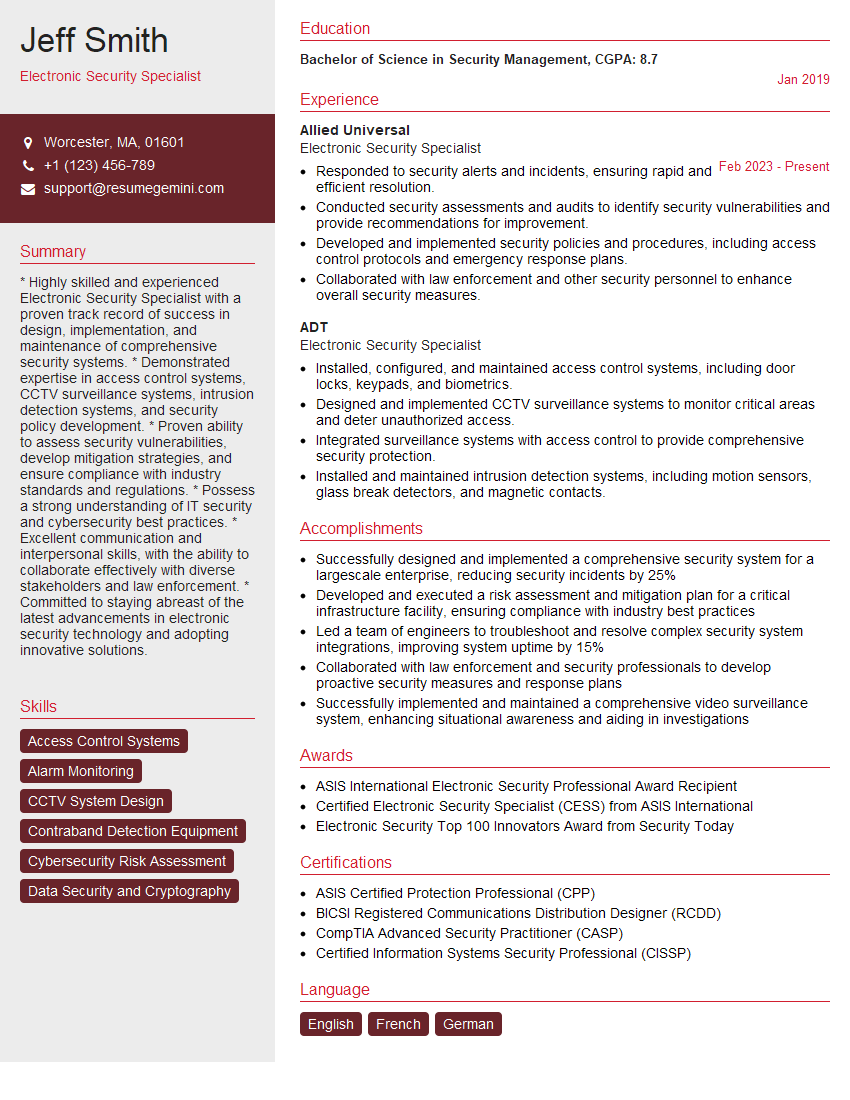
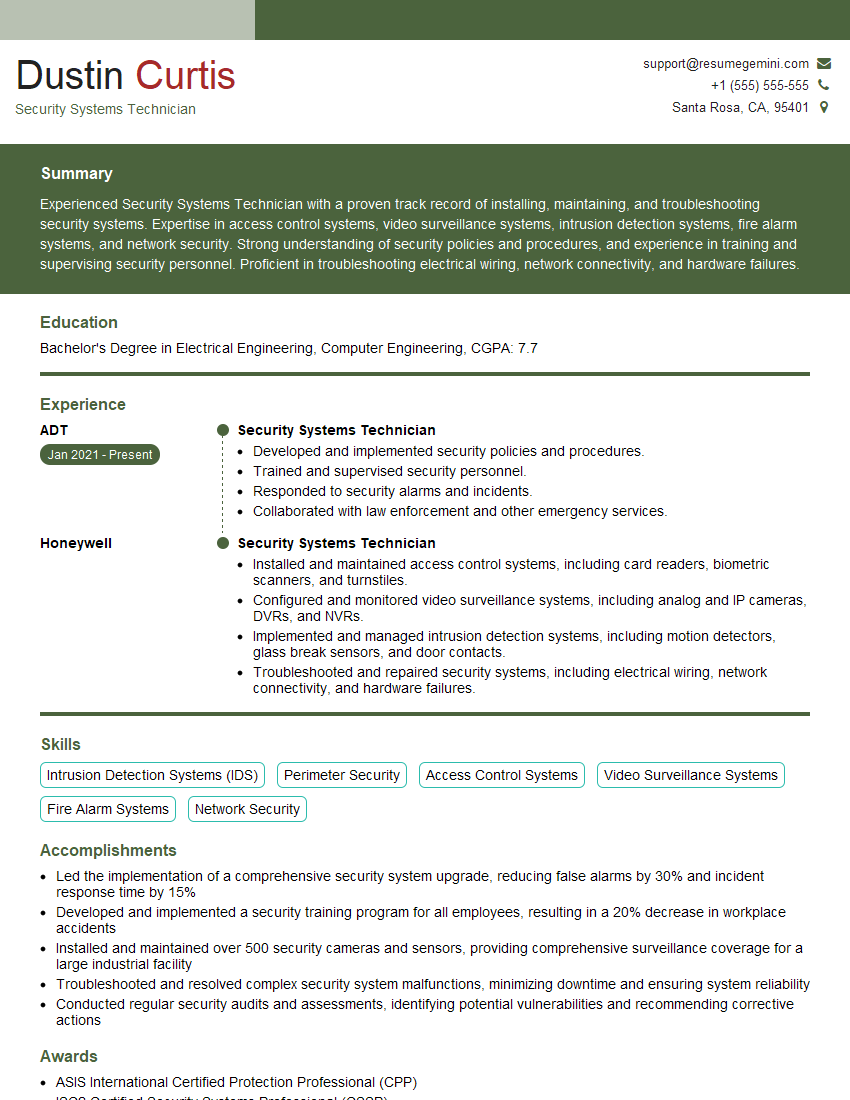
Mastering electronic lock repair opens doors to a rewarding career with excellent growth potential. The demand for skilled technicians is consistently high, offering opportunities for advancement and specialization. To maximize your job prospects, create an ATS-friendly resume that highlights your skills and experience effectively. ResumeGemini is a trusted resource that can help you build a professional and impactful resume, ensuring your application stands out. Examples of resumes tailored to Electronic Lock Repair are available to guide you. Take the next step towards your dream career today!
Explore more articles
Users Rating of Our Blogs
Share Your Experience
We value your feedback! Please rate our content and share your thoughts (optional).
What Readers Say About Our Blog
Very informative content, great job.
good