The right preparation can turn an interview into an opportunity to showcase your expertise. This guide to Elevator Code Compliance interview questions is your ultimate resource, providing key insights and tips to help you ace your responses and stand out as a top candidate.
Questions Asked in Elevator Code Compliance Interview
Q 1. Explain the significance of ASME A17.1 safety code for elevators.
The ASME A17.1 Safety Code is the gold standard for elevator safety in North America. It’s a comprehensive document outlining design, construction, installation, operation, testing, inspection, maintenance, and repair requirements for elevators, escalators, and moving walks. Think of it as the ‘bible’ for elevator safety. Its significance lies in ensuring the safety of millions of people who use elevators daily. Non-compliance can lead to serious injuries or fatalities and hefty fines. The code is regularly updated to incorporate technological advancements and address newly identified safety concerns. For example, recent updates have focused on improving accessibility for people with disabilities and incorporating modern safety features like improved emergency communication systems.
Q 2. Describe your experience with elevator inspection procedures.
My elevator inspection experience spans over [Number] years, encompassing a wide range of elevator types and building complexities. A typical inspection begins with a thorough review of the elevator’s maintenance logs and operational history to identify any potential issues. I then conduct a visual inspection, checking for wear and tear, corrosion, and any signs of damage. This involves examining the hoistway, machinery room, car, and doors. A critical part of the process is verifying the functionality of safety devices, such as the emergency brakes, safety gears, and limit switches. I also test the emergency communication systems and ensure they’re in perfect working order. Finally, I perform operational tests, observing the elevator’s performance under various conditions to ensure smooth and safe operation. Throughout this process, I meticulously document all findings, including photographs and detailed descriptions, which are crucial for preparing the final inspection report.
Q 3. How do you identify and report elevator code violations?
Identifying code violations requires a keen eye for detail and a thorough understanding of the ASME A17.1 code. During inspections, I look for discrepancies between the elevator’s actual condition and the code’s requirements. For instance, a missing or damaged safety device, improperly maintained equipment, or inadequate emergency lighting are clear violations. I also check for compliance with accessibility standards, such as the presence of appropriate signage and controls for people with disabilities. Any violation I find is documented in detail, including its location, severity, and potential safety implications. My reports include clear recommendations for corrective actions, including timelines and the specific code sections that have been violated. I follow a strict reporting chain, ensuring that the building owner or management company is promptly notified, and follow up to verify that the necessary corrective actions have been completed.
Q 4. What are the common causes of elevator malfunctions related to code compliance?
Many elevator malfunctions stem from a lack of proper maintenance and adherence to code requirements. For example, neglecting regular lubrication of moving parts can lead to excessive wear and tear, resulting in mechanical failures. Similarly, neglecting to inspect and replace worn cables or sheaves can lead to catastrophic failures. Improperly adjusted safety devices can also compromise the elevator’s safety. Additionally, issues with the electrical systems, such as faulty wiring or control components, can result in malfunctions. Lastly, environmental factors like excessive moisture or corrosion can contribute to equipment deterioration and malfunctions. A common example is corrosion of the hoisting ropes which leads to reduced strength and increased risk of breakage.
Q 5. Explain your process for verifying elevator maintenance logs against code requirements.
Verifying maintenance logs against code requirements is a crucial step in ensuring elevator safety. I cross-reference the logged maintenance activities with the recommended maintenance schedules outlined in the ASME A17.1 code. This involves checking for frequency, thoroughness, and proper documentation of completed tasks. For example, I’d ensure that safety devices were inspected and tested as per the required intervals, and that any repairs or replacements were documented completely. Any discrepancies are flagged, investigated, and reported. This process not only ensures compliance but also helps to identify potential maintenance deficiencies before they lead to malfunctions. I use a checklist specifically tailored to the elevator’s model and the applicable code sections for a more efficient and accurate verification.
Q 6. How do you handle discrepancies between elevator documentation and actual conditions?
Discrepancies between elevator documentation and actual conditions are addressed through careful investigation. If the documentation shows a safety device installed, but the inspection reveals it’s missing or malfunctioning, I’ll thoroughly document the discrepancy, including photos and detailed descriptions. I’ll then investigate the cause of the discrepancy – was there a miscommunication? Was the repair not properly documented? I’ll request further clarification from the building management or maintenance personnel. If the discrepancy poses an immediate safety risk, I’ll recommend the elevator be taken out of service until the issue is rectified. The goal is to reconcile the documentation with the actual state of the elevator, ensuring that the records accurately reflect the reality on the ground and that any safety concerns are addressed promptly.
Q 7. Describe your familiarity with elevator emergency systems and their compliance requirements.
My understanding of elevator emergency systems and their compliance requirements is comprehensive. This includes familiarity with emergency power systems, emergency lighting, emergency communication systems (phones and two-way radios), and emergency escape procedures. ASME A17.1 mandates stringent requirements for these systems, ensuring they function reliably in case of power failures or other emergencies. During inspections, I test the emergency power systems to ensure they can provide sufficient power to the elevator in a power outage. I also verify that the emergency lighting is functioning correctly, providing adequate illumination in the event of a power failure. The emergency communication systems are tested rigorously to make sure occupants can contact emergency services easily. A common example of non-compliance is a malfunctioning emergency phone, which is a serious safety concern that requires immediate attention. My inspections include a thorough check of emergency escape procedures, including the availability and functionality of escape hatches and emergency exits.
Q 8. How do you ensure compliance with local and national elevator codes?
Ensuring elevator code compliance involves a multi-faceted approach that begins with a thorough understanding of both local and national regulations. This understanding is paramount because codes can vary significantly from jurisdiction to jurisdiction, even within the same country. For example, the requirements for fire safety systems in elevators might differ between state and local building codes.
My process involves:
- Identifying Applicable Codes: First, I identify all relevant codes, ordinances, and standards applicable to the specific elevator and its location. This includes researching local, state/province, and national codes (like ASME A17.1 in the US or similar standards in other countries).
- Regular Inspections and Maintenance: I conduct regular inspections and maintenance following manufacturer’s recommendations and code requirements. This ensures that all safety features are in working order and that any potential issues are identified and rectified promptly.
- Documentation and Record Keeping: Meticulous record keeping is essential. I maintain detailed logs of all inspections, maintenance, repairs, and modifications, ensuring all documentation complies with the code’s requirements for certification and traceability. This helps in demonstrating compliance to authorities during audits.
- Staying Updated: Codes are constantly updated to reflect advancements in technology and safety standards. Staying current on these changes is crucial through professional development courses, participation in industry associations, and continuous monitoring of code updates.
Failing to comply with elevator codes can lead to significant fines, operational shutdowns, and even legal liabilities in case of accidents. A proactive approach to compliance is not just about avoiding penalties; it’s about ensuring passenger safety and building a reputation for responsible operation.
Q 9. What is your experience with elevator modernization projects and their impact on code compliance?
Elevator modernization projects present unique challenges and opportunities regarding code compliance. While updating equipment enhances safety and efficiency, it must be done in accordance with current codes.
My experience includes numerous modernization projects where I’ve:
- Assessed Existing Systems: I begin by thoroughly assessing the existing elevator system to identify any code deficiencies or areas needing improvement. This includes checking for compliance with both the original codes under which the elevator was installed and the current codes.
- Designed and Implemented Upgrades: I work with engineers and contractors to design and implement upgrades that address code deficiencies. This might involve replacing obsolete components, installing new safety systems, or modifying the control system to meet accessibility requirements. For instance, I’ve worked on numerous projects integrating ADA-compliant features into older elevators.
- Ensured Seamless Transition: It’s crucial to plan the modernization to minimize disruptions to building occupants. This involves careful scheduling and coordination with building management.
- Secured Necessary Permits: Throughout the process, I ensure compliance by obtaining all necessary permits and approvals from the relevant authorities.
A well-executed modernization project not only brings an elevator into compliance but can also improve its performance, reliability, and energy efficiency. Conversely, a poorly planned project could lead to further non-compliance issues and additional costs.
Q 10. Explain the process of obtaining an elevator permit.
The process of obtaining an elevator permit varies depending on location, but generally involves these steps:
- Submit Application: An application is submitted to the local authority responsible for building inspections, usually the building department or a designated agency. This typically includes detailed plans and specifications of the elevator system, including manufacturer’s details and safety certifications.
- Plan Review: The authority reviews the submitted plans to ensure they comply with all relevant codes. This review may involve several iterations of plan revisions to address any deficiencies identified.
- Inspections: Once the plans are approved, inspections are conducted at various stages of the elevator’s installation and construction. These inspections may include initial inspections, intermediate inspections during installation, and a final inspection upon completion.
- Permit Issuance: After successful completion of all inspections and verification of compliance, the authority issues the elevator permit, authorizing operation.
- Certificate of Occupancy: In many jurisdictions, a Certificate of Occupancy is tied to obtaining the elevator permit, as a functional elevator is often a requirement for building occupancy.
Throughout this process, it’s essential to maintain clear communication with the authority, address any concerns promptly, and keep comprehensive records. Delays can arise from incomplete applications or failure to address code violations during inspections, thus effective planning and communication are key.
Q 11. How do you interpret and apply elevator code requirements related to accessibility?
Elevator code requirements related to accessibility primarily focus on ensuring that people with disabilities can safely and independently use elevators. The Americans with Disabilities Act (ADA) in the US, and similar accessibility standards in other countries, provide detailed guidelines.
My interpretation and application involve:
- Button Placement and Size: Ensuring buttons are placed at accessible heights and are appropriately sized for easy use by people with limited dexterity or visual impairments. Braille and tactile lettering are mandatory.
- Auditory Signals: Confirming the presence of clear and audible signals indicating floor arrival and direction. These must be adequately loud and distinct to provide reliable information.
- Cabin Size and Space: Verifying sufficient space within the elevator cabin to accommodate wheelchairs and other mobility devices, complying with minimum dimensions specified in the codes.
- Emergency Communication Systems: Ensuring the elevator includes a reliable two-way communication system for emergency use, allowing passengers to contact assistance if needed.
- Alarms and Signage: Appropriate visual and auditory alarms, and clear signage conforming to accessibility standards, are crucial aspects of the design and implementation.
Ignoring these requirements can lead to legal repercussions and create significant barriers for individuals with disabilities, highlighting the crucial need for strict adherence to accessibility regulations.
Q 12. Describe your experience with elevator testing and inspection reports.
Elevator testing and inspection reports are critical for demonstrating compliance and ensuring ongoing safety. These reports document the results of thorough evaluations of the elevator system’s components and functionality.
My experience encompasses:
- Reviewing Reports: I’ve extensively reviewed reports from various testing agencies and inspectors, analyzing findings to identify any code violations or potential safety hazards. This includes carefully examining test results for compliance with all relevant codes and standards.
- Performing Tests: I have also directly participated in conducting various tests, from routine inspections to more in-depth performance testing, ensuring all test procedures are followed meticulously according to established protocols.
- Addressing Deficiencies: When deficiencies are identified in reports, I develop and implement corrective action plans to address these issues promptly and efficiently. This involves collaborating with maintenance personnel and engineers to implement effective solutions.
- Maintaining Records: I diligently maintain records of all test reports and associated documentation. These records are essential for auditing purposes, as well as demonstrating continuous compliance to relevant authorities.
Comprehensive testing and detailed reporting provide a crucial safety net, ensuring that any potential problems are identified and rectified before they can pose a risk to passengers or building occupants.
Q 13. What are the key differences between various elevator types and their associated code requirements?
Different elevator types – hydraulic, traction, machine-room-less (MRL), and others – have distinct operational mechanisms and thus require varying code considerations.
Key differences and code implications include:
- Hydraulic Elevators: These use hydraulic fluid to lift the cab. Code requirements emphasize safety measures for the hydraulic system, including fluid containment, pressure relief valves, and emergency lowering procedures. These systems require more frequent inspections, as they’re prone to hydraulic fluid leaks.
- Traction Elevators: These use steel cables and counterweights, requiring adherence to regulations concerning cable integrity, safety brakes, governor systems, and overspeed safety devices. They are generally viewed as safer due to the multiple safety features built into this design.
- Machine-Room-Less (MRL) Elevators: These elevators are designed without a separate machine room, integrating the mechanical components into the hoistway. Code compliance for MRL elevators focuses on space limitations, noise reduction, and ensuring safe access for maintenance. These are becoming increasingly popular due to space savings.
- Other Types (Vacuum, Elevators for Specific Purposes): There are numerous other elevator types, such as vacuum elevators (less common) and specialized elevators for hospitals, construction, etc., each with specific code requirements based on their usage and design.
Understanding these distinctions and their associated code requirements is fundamental in ensuring that each elevator is safely and reliably operated.
Q 14. Explain your understanding of elevator risk assessment and mitigation strategies.
Elevator risk assessment is a systematic process of identifying potential hazards associated with elevator operation and determining their likelihood and severity. This forms the basis for developing effective mitigation strategies.
My approach includes:
- Hazard Identification: Identifying potential hazards throughout the elevator’s lifecycle, including mechanical failures, electrical faults, entrapment, fire, and accessibility issues.
- Risk Evaluation: Assessing the likelihood and severity of each identified hazard, considering factors such as frequency of operation, age of equipment, and environmental conditions. Using established risk matrices helps rank the relative importance of each hazard.
- Mitigation Strategies: Developing and implementing strategies to reduce or eliminate identified risks. This could involve regular maintenance, installation of safety devices, emergency procedures, training for personnel, or improvements to system design to reduce risk of equipment failure.
- Monitoring and Review: Continuously monitoring the effectiveness of mitigation strategies and reviewing the risk assessment periodically to adapt to changing conditions or technological advancements. The risk assessment shouldn’t be a one-time event.
A well-structured risk assessment is not just a regulatory requirement; it’s a proactive approach to ensuring the safety of passengers and building occupants. By systematically identifying and managing risks, we can significantly reduce the likelihood of accidents and incidents.
Q 15. How do you stay current with changes and updates to elevator codes and regulations?
Staying current with elevator code updates is crucial for ensuring safety and avoiding legal issues. I employ a multi-pronged approach. This includes:
- Active membership in professional organizations: I’m a member of [Name of relevant professional organization], which provides regular updates, webinars, and access to the latest code revisions. For example, they often host seminars on newly implemented ASME A17.1 safety standards.
- Regular review of official code publications: I subscribe to and regularly review official publications from organizations like ASME (American Society of Mechanical Engineers) and relevant local authorities. This ensures I’m directly accessing the source material and not relying on secondhand interpretations.
- Monitoring regulatory agency websites: I regularly check the websites of relevant regulatory bodies at both the state and local level. They often post updates, announcements about code changes, and clarifications on specific issues. This is particularly helpful for understanding local interpretations of national codes.
- Continuing education courses: I actively participate in continuing education courses and workshops specifically focused on elevator code compliance. These courses offer practical application of the codes and insights from industry experts, making the learning more relevant.
- Networking with industry professionals: Attending industry conferences and networking events helps me stay abreast of evolving best practices and interpretations of the codes from other experts in the field. It’s invaluable to have a network to ask questions and discuss complex cases.
Career Expert Tips:
- Ace those interviews! Prepare effectively by reviewing the Top 50 Most Common Interview Questions on ResumeGemini.
- Navigate your job search with confidence! Explore a wide range of Career Tips on ResumeGemini. Learn about common challenges and recommendations to overcome them.
- Craft the perfect resume! Master the Art of Resume Writing with ResumeGemini’s guide. Showcase your unique qualifications and achievements effectively.
- Don’t miss out on holiday savings! Build your dream resume with ResumeGemini’s ATS optimized templates.
Q 16. Describe your experience resolving elevator code violations.
I’ve resolved numerous code violations throughout my career. A common scenario involves outdated safety systems. For example, I once encountered a building with elevators lacking modern emergency communication systems. This violated several sections of the ASME A17.1 code related to passenger safety during emergencies.
My approach is systematic:
- Thorough inspection: I first conducted a comprehensive inspection, documenting all violations with detailed photographs and reports. This involved testing emergency communication systems, checking safety features, and meticulously reviewing maintenance records.
- Prioritization based on risk: I prioritized the most critical violations that posed the greatest risk to safety, focusing on the emergency communication system first. This involved providing a clear timeline and outlining the risks associated with delays in addressing these problems.
- Developing a remediation plan: Based on the inspection findings, I created a detailed remediation plan outlining the necessary repairs and upgrades, including specific timelines and budgetary estimates. This plan was presented in clear, non-technical language to building management.
- Collaboration with stakeholders: I collaborated closely with building management, contractors, and elevator technicians to implement the remediation plan effectively. Regular updates were crucial to ensure transparency and to allow for any necessary adjustments to the plan.
- Follow-up inspection: Once the repairs were completed, I conducted a follow-up inspection to verify compliance. A detailed report was issued to confirm the building now meets all relevant codes and standards.
Q 17. What are the penalties for non-compliance with elevator safety codes?
Penalties for elevator code non-compliance vary depending on the jurisdiction and the severity of the violation. They can range from:
- Fines: Significant financial penalties can be imposed for each violation identified. The amount of the fine often depends on the nature of the violation and the length of time the violation has gone uncorrected.
- Suspension of operation: In cases of serious safety hazards, elevators might be ordered shut down until the violations are rectified. This can severely disrupt building operations and lead to significant financial losses.
- Legal action: In extreme cases involving negligence resulting in injury or death, building owners and management could face legal action, including lawsuits and criminal charges.
- Insurance implications: Non-compliance can also impact building insurance premiums. Insurers may increase premiums or refuse coverage if they find significant safety violations, particularly related to failure to comply with the applicable codes.
- Reputation damage: Non-compliance can severely damage the reputation of the building owner, impacting tenant occupancy and potentially investment value.
It’s vital to remember that proactive compliance is significantly cheaper and less disruptive than reacting to violations.
Q 18. How do you communicate code compliance issues to building management and occupants?
Communicating code compliance issues effectively requires clear, concise, and professional communication. My strategy involves:
- Formal written reports: I prepare comprehensive written reports detailing the identified violations, their severity, and the recommended corrective actions. These reports use plain language, avoiding overly technical jargon.
- Visual aids: Photos and diagrams are invaluable for illustrating the issues. A picture of a damaged cable or a faulty safety mechanism speaks volumes.
- Scheduled meetings: I schedule meetings with building management to discuss the findings and the proposed remediation plan. This provides an opportunity for questions and collaborative discussion.
- Regular updates: During the remediation process, I provide regular updates to the building management on the progress, ensuring transparency and addressing any concerns.
- Occupant notifications (where relevant): In cases where the violations pose a direct threat to occupants, I will inform the building management of the need to provide appropriate notification to residents. This may involve announcements or postings.
The goal is to maintain open and collaborative communication to ensure that issues are addressed promptly and effectively.
Q 19. Describe your experience with elevator safety training programs.
I have extensive experience developing and delivering elevator safety training programs. My approach focuses on practical application and hands-on learning. This includes:
- Tailored programs: I develop programs customized to the specific needs of the building and the occupants. A high-rise office building will require a different approach from a residential building.
- Interactive sessions: I incorporate interactive elements, such as quizzes, case studies, and discussions, to reinforce learning. This makes the training more engaging and memorable.
- Hands-on demonstrations: Where appropriate, I include hands-on demonstrations of safety procedures and equipment. This allows participants to directly experience the systems and processes.
- Emergency response drills: I conduct regular emergency response drills to ensure that occupants understand proper procedures in the event of an emergency.
- Documentation and assessment: I provide participants with comprehensive documentation and conduct assessments to ensure they understand the material and can apply it practically.
Recent examples include training programs for building managers on the new emergency communication system and training for building occupants on safe elevator usage.
Q 20. How do you prioritize elevator code compliance issues based on risk levels?
Prioritizing elevator code compliance issues is crucial for ensuring safety without causing unnecessary disruptions. I use a risk-based approach, categorizing violations based on their potential impact:
- Critical: These violations pose immediate and serious threats to life safety, such as malfunctioning emergency brakes or significant structural damage. These are addressed immediately.
- High: These violations pose a significant risk of injury or property damage, such as worn cables or malfunctioning door sensors. These are prioritized highly.
- Medium: These violations are less severe but still require attention, such as minor electrical issues or outdated signage. These are addressed based on resource availability.
- Low: These violations are minor and pose minimal risk, such as minor cosmetic issues. These are addressed as part of routine maintenance.
This system allows me to focus resources on the most pressing issues first, while still ensuring that all violations are eventually addressed.
Q 21. What software or tools do you use to manage elevator code compliance?
Effective management of elevator code compliance requires the use of appropriate software and tools. I utilize a combination of:
- CMMS (Computerized Maintenance Management System): This software helps track maintenance schedules, repair history, and inspection records, ensuring all preventive maintenance is carried out according to the manufacturer’s specifications and to meet code requirements. Examples include [Name of CMMS software] and [Name of another CMMS software].
- Inspection and reporting software: Specialized software allows me to generate detailed inspection reports, including photos and videos. This ensures comprehensive documentation and makes it easier to communicate findings. Examples include [Name of inspection software] and [Name of another inspection software].
- Database management systems: To efficiently manage data from multiple sources, such as inspection reports, maintenance logs and code updates, I utilize database management systems, allowing me to create efficient tracking and reporting systems. This helps with trend analysis and identifying patterns for proactive maintenance.
The choice of software depends on the specific needs of the project and the available resources. But the goal is to streamline the process, minimize errors and ensure that all information is readily accessible.
Q 22. Describe a situation where you had to overcome a challenge related to elevator code compliance.
During a renovation project in a historic building, we discovered that the existing elevator’s modernization plans conflicted with newly discovered historical preservation requirements. The original plans called for replacing the entire hoistway structure, which was deemed necessary by the elevator manufacturer for compliance with current ASME A17.1 safety codes. However, this would have destroyed historically significant architectural elements. To overcome this, I worked closely with architects, engineers, and the building’s historical preservation board. We meticulously reviewed the code requirements, exploring alternative solutions that ensured safety without compromising the building’s heritage. This involved proposing a partial modernization focusing on replacing critical safety components, such as the control system and door mechanisms, while retaining the existing hoistway structure. Extensive documentation, engineering calculations, and meetings were essential to get approval for our revised plan, ensuring both safety and preservation. The result was a compliant system that maintained the historical integrity of the building.
Q 23. Explain your familiarity with elevator capacity and load testing procedures.
Elevator capacity and load testing are paramount for safety and compliance. The capacity, expressed in pounds or kilograms, represents the maximum weight the elevator can safely carry, including passengers and any cargo. This information is clearly displayed within the elevator cab. Load testing involves systematically increasing the weight within the elevator car to verify its ability to handle its rated capacity. This process involves using calibrated weights or other precision methods to accurately determine the elevator’s load-bearing capabilities and to verify the functionality of safety devices such as the overspeed governor and safety gear. Any discrepancies require immediate attention and corrective action, ensuring the elevator operates safely within its designed parameters. For example, we may use calibrated weight bags to achieve the rated load capacity, carefully monitoring the elevator’s performance at each incremental weight addition. Following these tests, we generate comprehensive reports that document the findings, supporting our compliance efforts.
Q 24. How do you ensure the proper installation and maintenance of elevator safety devices?
Ensuring proper installation and maintenance of elevator safety devices is non-negotiable. This involves meticulous adherence to manufacturer’s specifications and relevant codes, such as ASME A17.1. Safety devices, including emergency brakes, buffers, overspeed governors, and safety gears, are vital for preventing accidents. During installation, rigorous testing is required at each stage. For instance, the proper functioning of the emergency brakes is meticulously verified through multiple tests, including manual actuation and automatic activation under simulated emergency scenarios. Regular maintenance programs are crucial. This includes visual inspections, functional tests, lubrication, and component replacements as needed. We maintain detailed records documenting all inspections, tests, and maintenance activities. These records demonstrate our commitment to compliance and contribute to a safer environment for building occupants.
Q 25. Describe your understanding of elevator preventative maintenance and its role in compliance.
Preventative maintenance is the cornerstone of elevator code compliance. It’s a proactive approach that aims to identify and address potential issues before they become major problems or safety hazards. This involves regularly scheduled inspections and servicing activities, including lubrication of moving parts, checking electrical connections, and testing safety mechanisms. A well-defined preventative maintenance program significantly reduces the risk of breakdowns, prolongs the lifespan of equipment, and most importantly, enhances safety. For instance, regularly inspecting and cleaning the elevator’s door sensors and safety edges can prevent malfunctions caused by obstructions. By adhering to a meticulous preventative maintenance schedule, we ensure that all aspects of the elevator’s operation remain within compliance standards. A detailed logbook, often integrated into a computer maintenance management system (CMMS), records all activities, facilitating compliance audits.
Q 26. What are the key considerations for elevator code compliance in high-rise buildings?
High-rise buildings present unique challenges for elevator code compliance due to increased traffic, complexity, and safety risks associated with greater heights. Key considerations include:
- Increased Capacity and Speed: High-rise buildings often require elevators with higher capacities and speeds to manage increased traffic, necessitating more robust designs and more stringent testing procedures.
- Fire Safety: Compliance includes specialized fire service elevators and emergency communication systems within the elevator cars, ensuring safe evacuation in emergency situations.
- Accessibility: Meeting accessibility standards for people with disabilities is critical, encompassing compliant call buttons, cab dimensions, and audible and visual signals.
- Redundancy and Backup Systems: High-rise buildings typically incorporate redundant elevator systems to maintain operational capacity in case of malfunctions, providing reliable transportation, especially during peak hours or emergencies.
- Advanced Technology: Integration of advanced technologies, such as destination dispatch systems and sophisticated monitoring systems, is essential for efficient traffic management and early detection of potential problems.
Q 27. How do you handle emergency situations involving elevator malfunctions?
Handling elevator malfunctions requires a systematic approach prioritizing safety. Upon receiving a report of an elevator malfunction, our first step involves confirming the situation and assessing the level of risk. If passengers are trapped, contacting emergency services is paramount, providing details of the location and number of occupants. We then coordinate with the building’s management to implement an evacuation plan and notify building occupants as necessary. Once the situation is stabilized, we proceed to diagnose the problem. This may involve inspecting the elevator’s control system, mechanical components, and safety devices to isolate the cause of the malfunction. Following repair and comprehensive testing to ensure the elevator’s safety, a detailed report is generated documenting the incident, the corrective actions taken, and preventative measures to avoid recurrence. Throughout the entire process, maintaining clear communication with building occupants and relevant authorities is crucial.
Q 28. Explain your understanding of the legal responsibilities related to elevator code compliance.
Legal responsibilities related to elevator code compliance are significant and far-reaching. Building owners and managers are legally obligated to ensure that all elevators within their buildings comply with all applicable local, state, and national codes, such as ASME A17.1 and relevant accessibility standards (ADA). This involves regular inspections, maintenance, and testing to ensure safety. Failure to meet these requirements can lead to significant legal liabilities, including fines, lawsuits from injured individuals, and potential criminal charges in cases involving negligence or willful disregard for safety regulations. Maintaining detailed records of inspections, maintenance, and repairs serves as crucial evidence to demonstrate compliance and to mitigate legal risks. In essence, adherence to elevator code compliance is not just a matter of technical proficiency but a fundamental legal and ethical responsibility.
Key Topics to Learn for Elevator Code Compliance Interview
- Safety Regulations and Standards: Understanding the key codes (e.g., ASME A17.1, local building codes) and their practical implications for elevator safety and maintenance.
- Inspection and Testing Procedures: Familiarize yourself with the various inspection methods, testing protocols, and documentation requirements for ensuring compliance.
- Risk Assessment and Mitigation: Learn to identify potential hazards associated with elevator operation and maintenance, and develop effective strategies for risk mitigation.
- Emergency Procedures and Response: Understand emergency protocols, rescue techniques, and the importance of quick, effective responses to elevator malfunctions or incidents.
- Elevator System Components and Functionality: Gain a solid understanding of the mechanical, electrical, and control systems within an elevator, including their interdependencies and potential points of failure.
- Record Keeping and Documentation: Master the importance of meticulous record keeping, including inspection reports, maintenance logs, and compliance certifications.
- Code Interpretation and Application: Develop skills in interpreting complex codes and applying them to real-world scenarios, including problem-solving and decision-making.
- Accessibility and ADA Compliance: Understand the specific requirements for elevator accessibility under the Americans with Disabilities Act (ADA) and other relevant legislation.
- Modernization and Upgrades: Familiarize yourself with the process of upgrading existing elevator systems to meet current code requirements and improve safety and efficiency.
- Troubleshooting and Repair Strategies: Develop problem-solving skills related to common elevator malfunctions and learn effective repair strategies while adhering to safety regulations.
Next Steps
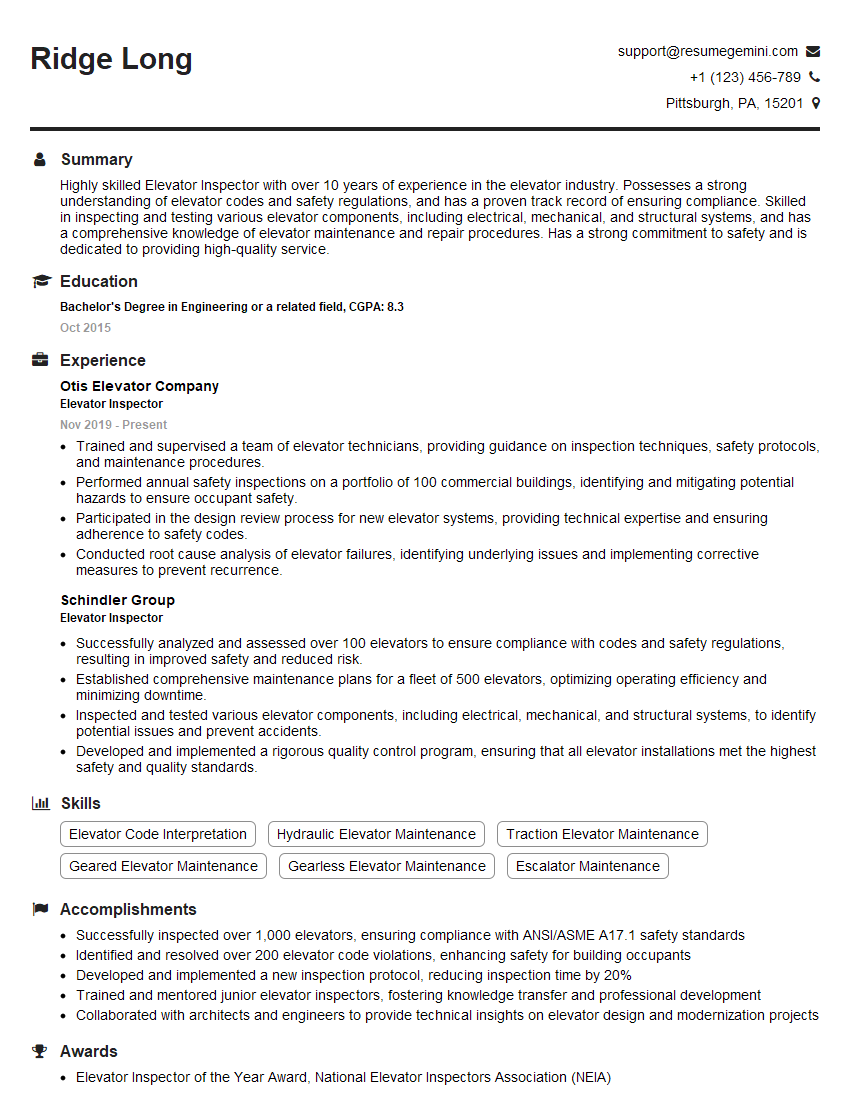
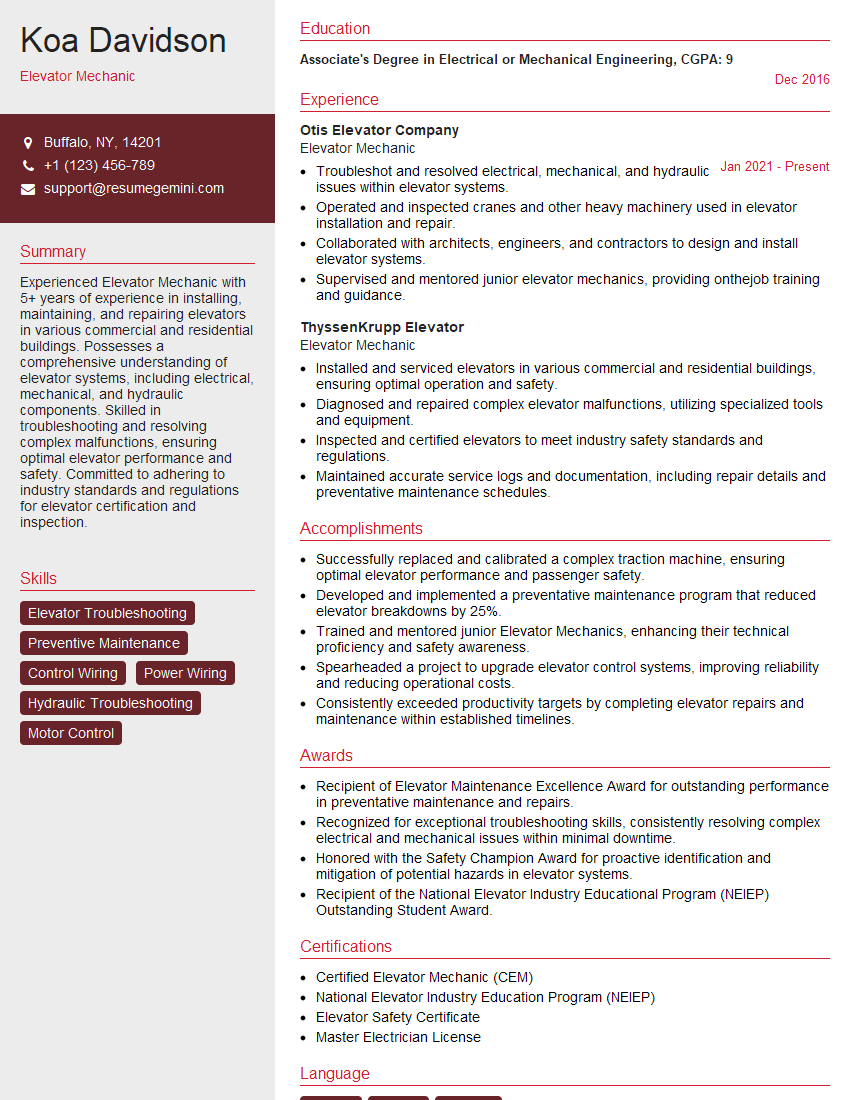
Mastering Elevator Code Compliance is crucial for a successful and rewarding career in this vital field. It demonstrates your commitment to safety and your ability to ensure the smooth and reliable operation of essential building systems. To significantly boost your job prospects, focus on creating an ATS-friendly resume that highlights your skills and experience effectively. ResumeGemini is a trusted resource that can help you build a professional and impactful resume tailored to the specific requirements of Elevator Code Compliance roles. Examples of resumes tailored to this field are available to guide you.
Explore more articles
Users Rating of Our Blogs
Share Your Experience
We value your feedback! Please rate our content and share your thoughts (optional).
What Readers Say About Our Blog
Very informative content, great job.
good