Every successful interview starts with knowing what to expect. In this blog, we’ll take you through the top Elevator Technical Reports interview questions, breaking them down with expert tips to help you deliver impactful answers. Step into your next interview fully prepared and ready to succeed.
Questions Asked in Elevator Technical Reports Interview
Q 1. Explain the importance of accurate record-keeping in elevator technical reports.
Accurate record-keeping in elevator technical reports is paramount for several reasons. Think of it as the elevator’s medical history – it’s crucial for safety, maintenance, and legal compliance. Without detailed records, identifying recurring problems, predicting potential failures, and ensuring compliance with safety regulations becomes incredibly difficult.
- Safety: Comprehensive reports track repairs, inspections, and component replacements, allowing for proactive maintenance and preventing catastrophic failures. Imagine a situation where a previous repair was poorly documented; a subsequent inspection might miss a crucial detail, leading to a potential accident.
- Maintenance Planning: Accurate records help predict when components are likely to need replacement or service, allowing for scheduled maintenance rather than emergency repairs. This significantly reduces downtime and costs.
- Legal Compliance: Many jurisdictions mandate specific record-keeping practices for elevators. Thorough documentation protects building owners and maintenance providers from liability in case of accidents or malfunctions.
- Troubleshooting: When a malfunction occurs, detailed historical data significantly speeds up troubleshooting and repair. A technician can quickly review past reports to identify patterns and potential causes.
Q 2. Describe your experience with different types of elevator technical reports (e.g., inspection, maintenance, repair).
Throughout my career, I’ve worked extensively with various elevator technical reports. Each type serves a distinct purpose:
- Inspection Reports: These document the overall condition of the elevator system during routine or special inspections. They detail compliance with safety codes, identify potential issues, and recommend necessary maintenance or repairs. I’ve used these reports extensively to assess the health of systems ranging from older hydraulic elevators to modern traction systems.
- Maintenance Reports: These chronicle all scheduled and unscheduled maintenance activities. They include details about the work performed, parts replaced, and the technician’s observations. I regularly use these to track the effectiveness of our preventive maintenance program and identify areas for improvement.
- Repair Reports: These focus on specific malfunctions and the steps taken to rectify them. They include a detailed description of the problem, diagnostic findings, parts used, and the time spent on the repair. I find these crucial for tracking repair costs and identifying recurring issues that might require more comprehensive solutions, such as component upgrades.
I’m proficient in creating and interpreting all three report types, ensuring consistency and accuracy across all documentation.
Q 3. How do you ensure the accuracy and completeness of information in an elevator technical report?
Ensuring accuracy and completeness in elevator technical reports is crucial. My approach involves a multi-step process:
- Detailed Observation: During inspections and repairs, I meticulously document all findings, using photos and diagrams where necessary. I never rely on memory; every detail is recorded on the spot.
- Standard Formats: I utilize standardized report templates to ensure consistency and prevent omissions of critical information. These templates ensure all necessary fields are completed and important details are not overlooked.
- Verification and Cross-Checking: Before finalizing a report, I review it thoroughly for accuracy and completeness. I might cross-reference data with other records or consult with colleagues to ensure all information is correct and consistent.
- Digital Documentation: I use digital tools to store and manage reports securely, allowing for easy access and retrieval. This also allows for generating reports from digital checklists ensuring the capture of all critical information.
- Clear and Concise Language: Reports are written in clear, concise language, avoiding technical jargon whenever possible to ensure easy comprehension by a wide range of stakeholders.
Q 4. What software or tools do you use to generate and manage elevator technical reports?
To generate and manage elevator technical reports, I utilize a combination of software and tools. This includes:
- CMMS Software: Computerized Maintenance Management Systems (CMMS) like Fiix, UpKeep, or IBM Maximo are invaluable for scheduling maintenance, tracking repairs, and generating reports. These systems provide a centralized repository for all elevator-related data.
- Mobile Apps: Many CMMS platforms offer mobile apps that allow technicians to update reports and access information in the field. This streamlines the reporting process and ensures data is captured accurately and promptly.
- Spreadsheet Software: For simple reports or data analysis, spreadsheet software like Microsoft Excel or Google Sheets is helpful. I often use this to generate custom reports or charts based on the data in the CMMS.
- Document Management Systems: I employ secure document management systems to store and organize reports, ensuring easy access and version control.
Q 5. Explain the process of identifying and documenting elevator malfunctions in a report.
Identifying and documenting elevator malfunctions requires a systematic approach:
- Initial Assessment: I begin by assessing the nature of the malfunction, such as whether the elevator is completely stalled, making unusual noises, or experiencing erratic movement. I talk to users to understand the sequence of events.
- Diagnostic Testing: I use specialized diagnostic tools to identify the root cause of the malfunction. This may involve checking electrical connections, hydraulic systems, control panels, and other components.
- Detailed Documentation: I meticulously document all observations, test results, and diagnostic findings. I include descriptions, photographs, and any error codes recorded by the elevator’s control system.
- Safety Precautions: Throughout the process, I prioritize safety. If the elevator is unsafe, I secure it and take steps to prevent further damage or injury.
- Repair Steps: If I perform repairs, I document every step, including parts replaced, tools used, and any adjustments made. I also note the time spent on each task.
For example, if an elevator is repeatedly experiencing slow travel, I might document the speed measurements at various points in its travel, check the motor’s performance and brake system, and note any wear and tear on the cables or sheaves.
Q 6. How do you prioritize repairs based on information in elevator technical reports?
Prioritizing repairs involves assessing the severity and urgency of each issue, drawing on information from technical reports. I usually follow this framework:
- Safety Critical Issues: Malfunctions that pose a direct safety risk, such as door malfunctions, emergency brake failures, or erratic movements, are addressed immediately. These are clearly identified in the reports.
- Operational Issues: Issues affecting elevator operation, like slow speeds or infrequent stop discrepancies, are prioritized based on their impact on building occupants and the frequency of occurrence. Reports tracking these issues help in establishing the urgency.
- Preventive Maintenance: Tasks scheduled as part of routine maintenance are incorporated into a planned schedule to prevent future breakdowns. The frequency is determined by the manufacturer’s recommendations and historical data from the technical reports.
- Cost-Benefit Analysis: For less urgent repairs, a cost-benefit analysis is performed to assess the potential cost of delay versus the cost of the repair itself. Historical data in the reports on repair costs and downtime aids this.
I might use a scoring system to prioritize repairs, considering factors like safety risk, frequency of occurrence, and the potential cost of failure. The data from the technical reports is central to this process.
Q 7. Describe your experience with interpreting elevator code requirements in technical reports.
Interpreting elevator code requirements is a crucial aspect of my role. I’m familiar with various national and local codes (e.g., ASME A17.1 in the US, EN 81 in Europe), and I ensure that all reports clearly reflect compliance or highlight any discrepancies. This involves:
- Code Familiarity: I have an in-depth understanding of relevant codes and standards, including safety regulations, performance requirements, and testing procedures.
- Report Review: I meticulously review all reports to ensure compliance with all applicable codes. Any deviations are clearly noted, along with recommendations for corrective actions.
- Inspection & Testing: I conduct regular inspections and tests to verify compliance with code requirements. I document all testing procedures and results in the technical reports.
- Documentation: All reports include clear references to the specific code sections and regulations that are relevant to the observed conditions. Any non-compliance is documented along with recommended solutions.
For instance, if during an inspection I find that the elevator’s emergency lighting doesn’t meet the required illumination levels as specified by the relevant code, I will document this non-compliance in the report, along with a recommendation for replacement or repair.
Q 8. How do you ensure compliance with safety regulations when creating elevator technical reports?
Ensuring compliance with safety regulations in elevator technical reports is paramount. It’s not just about ticking boxes; it’s about safeguarding lives. We achieve this through a multi-faceted approach.
- Reference to Codes and Standards: Every report explicitly mentions the relevant safety codes and standards followed, such as ASME A17.1 (in the US) or EN 81 (in Europe). This establishes a clear baseline for compliance.
- Detailed Inspections: Our inspections are rigorous, covering all aspects of the elevator system – from the hoistway and machinery to the car and control systems. We meticulously document each component’s condition, flagging any deviations from safety standards.
- Clear Deficiency Reporting: Any safety violations or potential hazards are clearly identified and described in the report. We prioritize critical issues and provide specific recommendations for remediation, often including deadlines for necessary repairs.
- Traceable Documentation: The entire inspection and reporting process is meticulously documented, creating an auditable trail. This ensures accountability and allows for easy tracking of corrective actions.
- Regular Training and Updates: Staying current with the latest safety regulations and best practices is crucial. We undergo continuous professional development to ensure our reports reflect the most up-to-date requirements.
For example, if a safety device like an emergency stop button is found to be malfunctioning, the report will clearly detail the issue, its potential consequences, and the necessary corrective actions, referencing the specific code section violated.
Q 9. Explain the process of documenting parts used and work completed in an elevator repair report.
Documenting parts and work in an elevator repair report requires precision and thoroughness. Think of it as creating a detailed, legally sound record of the intervention. This is crucial for tracking expenses, warranties, and future maintenance.
- Part Identification: Each replaced or repaired part is meticulously identified using its manufacturer’s part number, serial number (if applicable), and a description of its function within the elevator system. We might use a table format for clarity.
- Work Performed: The report details the steps taken during the repair, including diagnostic procedures, troubleshooting steps, and the specific actions performed to remedy the issue. This is often documented using a chronological, step-by-step approach.
- Visual Documentation: Photographs or videos of the faulty components before and after repair are often included. This provides visual evidence of the work completed and the condition of the components.
- Labor Costs: Labor hours spent on the repair are recorded, along with the associated labor rate. This allows for accurate costing of the service.
- Signatures and Approvals: The report is signed by the technician who performed the work and often reviewed and signed by a supervisor, ensuring accountability and verification.
Imagine a scenario where a governor rope was replaced. The report would specify the manufacturer, part number, and date of installation of the new rope, along with photos showing the worn-out rope and the newly installed one. The technician’s notes would describe the process of removing the old rope and installing the new one, adhering to safety procedures.
Q 10. How do you handle discrepancies between reported issues and actual findings during an inspection?
Discrepancies between reported issues and actual findings are addressed with careful investigation and transparent documentation. This is about maintaining credibility and identifying potential underlying problems.
- Re-Inspection: A thorough re-inspection is conducted to confirm the initial report and identify any contributing factors to the discrepancy. Sometimes, the initial report might be based on insufficient data.
- Root Cause Analysis: We delve into the reason for the mismatch. This might involve reviewing previous maintenance records, interviewing building staff, or consulting with equipment manufacturers.
- Updated Report: The report is updated to reflect the actual findings. Any changes to the initial assessment are clearly documented, highlighting the reasons for the revision.
- Communication: Clients are informed about the discrepancy and the revised findings. Transparency is key in maintaining trust and ensuring that any necessary repairs are addressed.
- Corrective Actions: Depending on the discrepancy’s nature, additional corrective actions might be needed, particularly if underlying issues were discovered during the re-inspection.
For instance, a client might report a persistent ‘stuck’ button, but the inspection reveals a problem with the door interlocks. The revised report would detail this, explaining why the initial report was inaccurate and detailing the correct solution.
Q 11. Describe a situation where a technical report helped prevent a significant elevator problem.
In one instance, a routine inspection report revealed subtle wear on the brake system of an older hydraulic elevator. While not an immediate failure, the report clearly documented the wear and provided projections based on the wear rate. This allowed building management to budget for a proactive replacement, averting a potentially catastrophic brake failure and subsequent injury or property damage. The report’s predictive capability saved time and money, highlighting the value of thorough documentation and analysis.
Q 12. How familiar are you with various elevator control systems and their documentation in reports?
I am highly familiar with various elevator control systems, ranging from older, electro-mechanical systems to modern microprocessor-based systems. Accurate documentation is vital in each case. My experience includes working with systems from major manufacturers like Otis, Schindler, and Kone.
- System Schematics: Reports include relevant schematics and diagrams to illustrate the control system’s architecture and the interaction between various components. This is especially crucial for complex systems.
- Component Identification: Specific components, such as controllers, relays, and sensors, are accurately identified and described within the context of their role in the system’s functionality.
- Software Versions: For microprocessor-based systems, the software versions running on the controller are documented to facilitate troubleshooting and upgrades.
- Diagnostic Codes: Any diagnostic codes recorded during the inspection or repair are included in the report along with their meanings to aid in understanding the nature of any problems.
- Testing Procedures: The report details the testing procedures used to evaluate the functionality of the control system and the results obtained. This ensures transparency and verifiability.
For example, a report on a modern elevator might detail the specific microprocessor model, the version of the control software, and the results of various functional tests performed on the system.
Q 13. What are the key elements of a comprehensive elevator inspection report?
A comprehensive elevator inspection report is much more than a simple checklist. It’s a holistic assessment of the elevator’s safety and operational status. Key elements include:
- Elevator Identification: Clear identification of the elevator, including manufacturer, model number, serial number, and installation date.
- Inspection Date and Time: Precise record of when the inspection was conducted.
- Inspector’s Credentials: Identification of the inspector and their qualifications.
- Visual Inspection: Detailed description of the elevator’s physical condition, including the hoistway, machinery room, car, and doors.
- Functional Tests: Documentation of tests performed to verify the elevator’s operational safety and efficiency.
- Safety Device Testing: Specific testing of emergency stops, limit switches, and other safety devices.
- Findings and Recommendations: Clear statement of any issues discovered, along with specific, actionable recommendations for repair or maintenance.
- Photographs and Diagrams: Visual support illustrating the findings.
- Compliance Statements: Explicit statements on compliance with relevant safety standards and regulations.
- Signatures and Approvals: Signatures from the inspector and, where relevant, building management.
Q 14. How do you utilize technical reports to track elevator maintenance performance?
Technical reports are invaluable for tracking elevator maintenance performance. By analyzing data across multiple reports, we gain insights into trends, predict potential issues, and optimize maintenance schedules.
- Trend Analysis: Tracking recurring issues in reports allows us to identify potential weaknesses in the system or maintenance practices.
- Predictive Maintenance: By analyzing wear patterns and failure rates from past reports, we can predict future maintenance needs and plan accordingly.
- Performance Indicators: We can define key performance indicators (KPIs), such as downtime, repair costs, and safety incidents, to quantitatively assess elevator maintenance effectiveness.
- Benchmarking: Reports allow for benchmarking against similar elevators or industry standards, revealing areas for improvement.
- Cost Optimization: By identifying recurring issues and implementing proactive measures, we can minimize costly emergency repairs and improve the overall cost-effectiveness of the maintenance program.
For example, if reports consistently show problems with a specific component, it may indicate a design flaw or the need for more frequent preventative maintenance on that component. Analyzing this data helps optimize maintenance strategies and avoid costly downtime.
Q 15. Explain the role of digital imaging and other multimedia in elevator technical reporting.
Digital imaging and multimedia significantly enhance elevator technical reports by providing a visual record of the elevator’s condition and the work performed. Think of it as moving from a solely text-based report to a comprehensive multimedia presentation.
High-resolution photos: These capture details like wear and tear on components, the condition of wiring, and the overall cleanliness of the elevator car and machinery room. For instance, a picture showing frayed wiring is far more impactful than simply noting ‘frayed wiring’ in a report.
Videos: Videos allow for the documentation of dynamic processes, such as the operation of doors, the smoothness of elevator movement, and even the sounds emitted during operation. This is particularly useful for identifying subtle mechanical issues that might be missed in a static image.
3D models and schematics: For complex repairs or installations, 3D models can provide a clear visualization of the elevator system’s layout, making the report easier to understand for all stakeholders. Imagine a 3D model highlighting the exact location of a malfunctioning part.
Thermal imaging: This technology allows for the detection of overheating components, which can be a critical indicator of potential failure. A thermal image clearly shows the temperature variations, making it easier to identify the problem area.
By incorporating these multimedia elements, reports become more accessible, easier to understand, and ultimately, more effective in communicating the elevator’s condition and the work that has been done.
Career Expert Tips:
- Ace those interviews! Prepare effectively by reviewing the Top 50 Most Common Interview Questions on ResumeGemini.
- Navigate your job search with confidence! Explore a wide range of Career Tips on ResumeGemini. Learn about common challenges and recommendations to overcome them.
- Craft the perfect resume! Master the Art of Resume Writing with ResumeGemini’s guide. Showcase your unique qualifications and achievements effectively.
- Don’t miss out on holiday savings! Build your dream resume with ResumeGemini’s ATS optimized templates.
Q 16. Describe your experience with generating reports compliant with specific industry standards.
Throughout my career, I’ve consistently adhered to industry standards like ASME A17.1/CSA B44 for elevator safety and maintenance. This involves meticulous documentation, following specific report templates, and ensuring all safety checks and inspections are clearly recorded. For example, I’ve generated reports for both new elevator installations and existing elevator maintenance, meticulously documenting each step of the process. My reports have been utilized by regulatory bodies and insurance companies, and have consistently passed audits. I’m proficient in using various software platforms to ensure the reports meet all formatting and regulatory requirements.
One project involved generating reports for a high-rise building’s elevator system following a significant modernization project. The reports included detailed information on all new components, compliance certifications, and comprehensive testing results. The adherence to ASME A17.1 standards during this project ensured a smooth and successful handover to the building’s management.
Q 17. How do you handle emergency situations and document them in elevator technical reports?
Emergency situations require immediate action and detailed documentation. My priority is always the safety of people involved, followed by securing the elevator and preventing further issues. The documentation process is crucial for understanding the root cause and preventing future incidents.
Immediate Actions: First, I secure the scene, ensuring the safety of passengers and technicians. If needed, I coordinate emergency services.
Detailed Documentation: The report includes details on the time of the incident, the nature of the emergency (e.g., entrapment, malfunction), actions taken to resolve the situation, any injuries sustained, and witness statements.
Photographs and Videos: Visual documentation of the elevator’s condition, any visible damage, and the rescue process is crucial.
Root Cause Analysis: Once the emergency is resolved, a thorough investigation determines the root cause of the malfunction and includes recommendations to prevent future incidents. This analysis is included in the final report.
For example, during a recent entrapment, I documented the time the emergency call was received, the time the passengers were rescued, the malfunction’s cause (a faulty safety switch), and the repair steps taken. The report was crucial in improving maintenance procedures and preventing similar incidents.
Q 18. How do you ensure the timely submission of elevator technical reports to relevant stakeholders?
Timely submission is critical for effective maintenance and safety. I use a project management approach to ensure timely delivery. This involves:
Clear Deadlines: Establishing clear deadlines with stakeholders at the outset of the project.
Regular Progress Updates: Providing regular updates to stakeholders about the progress of the report, highlighting any potential delays and proactively addressing them.
Prioritization: Prioritizing urgent reports over less critical ones.
Efficient Workflow: Employing efficient workflow strategies and using reporting software to streamline the process.
Electronic Submission: Utilizing electronic submission methods for faster and more efficient delivery.
My experience shows that proactive communication and a well-defined process are key to consistently meeting submission deadlines.
Q 19. Describe your experience with using computerized maintenance management systems (CMMS).
I have extensive experience using CMMS (Computerized Maintenance Management Systems) such as Fiix, UpKeep, and MPulse. These systems are invaluable for managing elevator maintenance schedules, tracking repairs, and generating reports.
Work Order Management: I utilize CMMS to create and assign work orders, track their progress, and ensure completion within the designated timeframe.
Preventative Maintenance Scheduling: CMMS enables me to schedule and manage preventative maintenance activities, ensuring the elevator system remains in optimal working condition.
Parts Inventory Management: The system helps me manage elevator parts inventory, ensuring that necessary parts are available when needed.
Reporting and Analytics: CMMS provides comprehensive reporting and analytics capabilities, allowing for detailed analysis of maintenance costs, repair frequency, and overall system performance.
For example, in a previous role, we implemented a CMMS system that reduced downtime by 15% by improving preventative maintenance scheduling and tracking.
Q 20. How do you maintain the confidentiality of information contained in elevator technical reports?
Confidentiality is paramount in elevator technical reports, as they often contain sensitive information about building security, maintenance procedures, and potentially even proprietary information related to the elevator system. I maintain confidentiality through the following measures:
Password Protection and Access Control: Reports are stored securely using password protection and access control measures, limiting access only to authorized personnel.
Secure Data Storage: Reports are stored on secure servers with appropriate encryption to prevent unauthorized access.
Data Encryption: Data encryption is employed during transmission and storage to safeguard sensitive information.
Non-Disclosure Agreements (NDAs): Where appropriate, I utilize NDAs to ensure all parties involved uphold confidentiality agreements.
Compliance with Data Privacy Regulations: I ensure that all practices are compliant with relevant data privacy regulations (e.g., GDPR, CCPA).
These measures ensure that sensitive information remains protected and is only accessible to those who need it.
Q 21. How do you manage and organize a large volume of elevator technical reports?
Managing a large volume of elevator technical reports requires a systematic approach. I utilize a combination of electronic filing systems and robust search capabilities to effectively manage and organize the reports.
Electronic Filing System: I employ a well-organized electronic filing system, using a consistent naming convention and folder structure (e.g., by building, elevator number, report type, and date).
Metadata Tagging: Each report is tagged with relevant metadata such as building location, elevator type, report date, and key findings, allowing for efficient searching and retrieval.
Database Management Systems (DBMS): For very large volumes of reports, I utilize database management systems to efficiently store, retrieve, and analyze information. This allows for advanced search capabilities and facilitates data analysis.
Cloud Storage: Secure cloud storage solutions provide scalability and efficient backup and recovery mechanisms.
This multi-faceted approach ensures that reports remain easily accessible, searchable, and well-organized, even when dealing with hundreds or thousands of reports.
Q 22. Describe your experience with creating and managing electronic archives of elevator technical reports.
Managing electronic archives of elevator technical reports requires a robust system ensuring easy access, searchability, and data integrity. My experience involves implementing and maintaining such systems using a combination of database software (e.g., SQL Server, MySQL) and document management systems (DMS). These systems are crucial for efficient retrieval of information during inspections, repairs, or modernization projects.
For example, I’ve used a SQL database to store metadata about each report – including building location, elevator manufacturer, report date, and key findings – allowing for quick filtering and retrieval. The actual reports themselves are often stored in a DMS for easier version control and accessibility. This ensures that all relevant documentation is readily available, enabling informed decision-making and enhancing the safety and efficiency of elevator maintenance. Furthermore, implementing a robust system with features like access control ensures data security and regulatory compliance.
- Database structure for efficient search and retrieval.
- Version control to track changes and updates to reports.
- Access control measures to maintain data security.
Q 23. How do you stay up-to-date with the latest technologies and regulations related to elevator technical reports?
Staying current in this field requires a multi-pronged approach. I actively participate in industry associations such as ASME (American Society of Mechanical Engineers) and attend their conferences and workshops. These events provide invaluable insights into emerging technologies and regulatory updates. Additionally, I subscribe to industry-specific journals and online resources that publish articles and research on elevator technology and safety regulations. I also closely monitor government websites for any changes in codes and standards, particularly those related to safety and accessibility.
Furthermore, I engage with colleagues through professional networking platforms and discussions to share knowledge and best practices. This continuous learning allows me to integrate the latest advancements into my reporting and ensure compliance with evolving regulations. Think of it like following a doctor’s continuing medical education – constant updates are vital to best practice.
Q 24. How do you communicate complex technical information effectively in your reports?
Communicating complex technical information clearly requires a structured and reader-focused approach. I avoid jargon whenever possible, explaining technical terms in simple, non-technical language. I utilize visual aids like diagrams, charts, and photos extensively to illustrate complex concepts or findings. For example, instead of simply stating “governor malfunction,” I’d include a photo of the faulty component and explain its function in layman’s terms, alongside recommendations for repair or replacement.
I structure my reports logically, presenting information in a clear and concise manner. Sections with specific headings and subheadings ensure easy navigation. Executive summaries provide a quick overview of the key findings and recommendations. This ensures that the report’s essential information is easily digestible, regardless of the reader’s technical expertise. This is especially important when dealing with clients who are not elevator engineers.
Q 25. Explain your experience with different reporting formats (e.g., PDF, database).
My experience encompasses a range of reporting formats. PDF remains a staple due to its wide compatibility and ease of distribution. However, I’ve increasingly utilized database systems to manage large volumes of data, particularly when tracking maintenance records or analyzing trends over time. For example, a SQL database allows me to create custom queries to identify recurring issues across multiple elevators or buildings, providing valuable insights for preventive maintenance strategies.
Furthermore, I’m comfortable using specialized software for generating customized reports from inspection data. These systems often allow for the automatic generation of reports in various formats (PDF, CSV, XML) to cater to diverse user needs and ensure seamless data integration with other systems.
Q 26. How do you identify and address potential safety hazards highlighted in elevator technical reports?
Identifying safety hazards is a critical aspect of reviewing elevator technical reports. I meticulously examine the reports for any discrepancies, anomalies, or findings that indicate potential safety issues. This includes looking for things like worn components, malfunctioning safety devices, or inadequate maintenance records. My analysis considers the severity and likelihood of each hazard, prioritizing those posing the greatest risk.
Once a potential hazard is identified, I thoroughly document it, providing detailed descriptions, supporting evidence (e.g., photos, measurements), and proposed corrective actions. The reports often include a risk assessment matrix to quantitatively evaluate the risk level. Finally, I communicate these findings clearly and concisely to relevant stakeholders (building management, maintenance teams, etc.) to prompt immediate action for remediation. This proactive approach prevents accidents and ensures the safety of elevator users.
Q 27. Describe a situation where you had to troubleshoot a problem based on information in an elevator technical report.
In one instance, a report indicated unusually high wear on the hoist ropes of an elevator. While the elevator was still functioning, the report highlighted that the wear exceeded the manufacturer’s recommended limits. Based on this information, I initiated a more thorough inspection. Further examination revealed microscopic metal fatigue in the ropes, suggesting that a sudden failure was imminent.
This finding prompted an immediate recommendation for rope replacement. The prompt action prevented a potential catastrophic failure and ensured the ongoing safety of the building’s occupants. This case illustrates the crucial role of detailed technical reports and the importance of carefully analyzing even seemingly minor anomalies.
Q 28. How do you contribute to the continuous improvement of elevator maintenance and safety through technical reporting?
My contribution to continuous improvement in elevator maintenance and safety is multifaceted. Through detailed and accurate reporting, I provide data-driven insights that can inform maintenance strategies. For example, by tracking recurring issues or failures, I can identify trends that point to potential design flaws or weaknesses in maintenance procedures. This data is invaluable in developing preventive maintenance programs that proactively address potential problems before they become safety hazards.
My reports also serve as a valuable source of information for training elevator technicians. By documenting complex issues and their solutions, I contribute to the collective knowledge base, enhancing the skills and expertise of the maintenance workforce. This continuous improvement cycle, fueled by detailed and insightful technical reporting, is essential for ensuring optimal elevator safety and performance.
Key Topics to Learn for Elevator Technical Reports Interview
- Elevator Systems Overview: Understanding the mechanical, electrical, and control systems within elevators. This includes familiarity with different elevator types (hydraulic, traction, machine-room-less) and their components.
- Report Interpretation: Analyzing technical data presented in reports, including diagrams, schematics, and performance metrics. This involves identifying potential issues and understanding the significance of various readings.
- Safety Regulations and Codes: Knowledge of relevant safety standards and regulations concerning elevator maintenance and operation. Understanding how these regulations impact report generation and interpretation is crucial.
- Troubleshooting and Diagnostics: Applying your knowledge to identify potential problems based on the information within a technical report. This includes understanding common malfunctions and their causes.
- Preventive Maintenance: Connecting the information in reports to a proactive maintenance schedule. Understanding how reports help predict and prevent potential failures.
- Data Analysis and Reporting: Understanding how to effectively present technical findings and recommendations in a clear and concise manner, mirroring the style of professional elevator technical reports.
- Modernization and Upgrades: Familiarity with the processes and considerations involved in elevator modernization projects, and how technical reports support these endeavors.
Next Steps
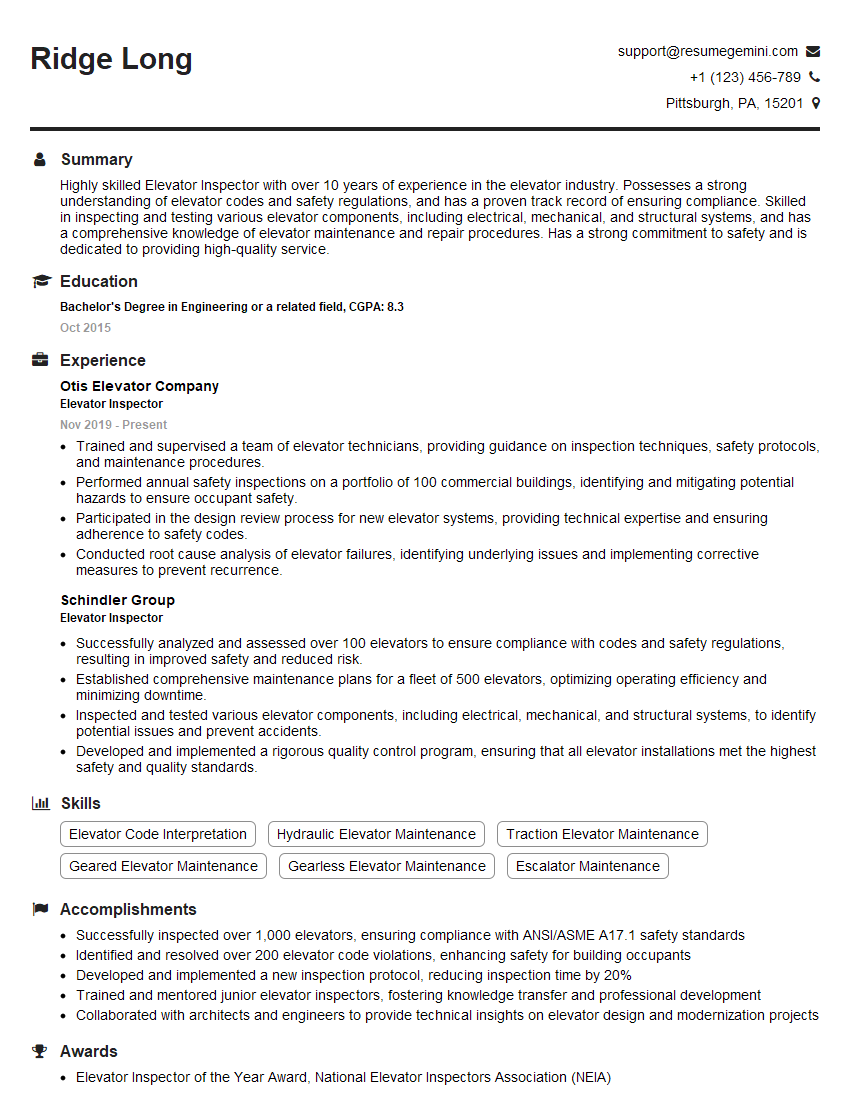
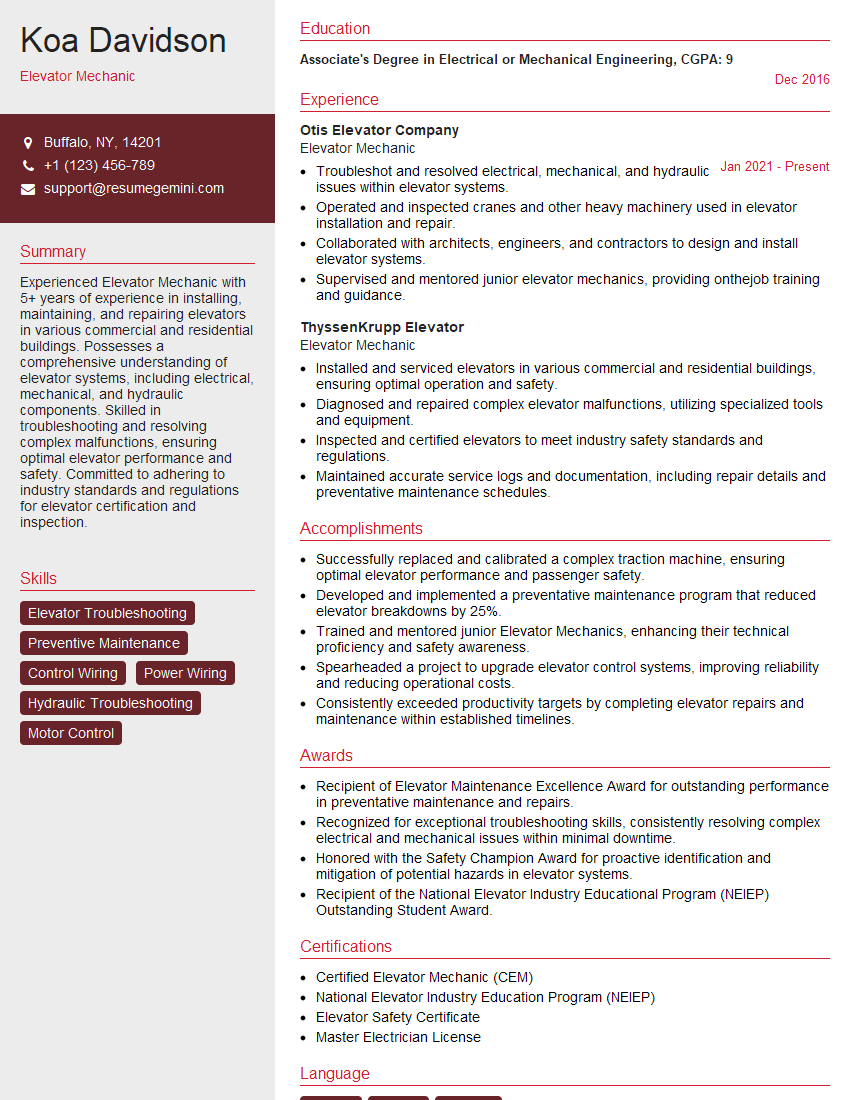
Mastering the interpretation and creation of Elevator Technical Reports is vital for career advancement in the elevator industry, opening doors to more senior roles and increased earning potential. A strong resume is crucial for showcasing your skills and experience to potential employers. To maximize your chances, create an ATS-friendly resume that highlights your relevant qualifications. ResumeGemini is a trusted resource to help you build a professional and impactful resume. Examples of resumes tailored specifically to Elevator Technical Reports roles are available to guide you.

Explore more articles
Users Rating of Our Blogs
Share Your Experience
We value your feedback! Please rate our content and share your thoughts (optional).
What Readers Say About Our Blog
Very informative content, great job.
good