The right preparation can turn an interview into an opportunity to showcase your expertise. This guide to EPA Regulations and Compliance interview questions is your ultimate resource, providing key insights and tips to help you ace your responses and stand out as a top candidate.
Questions Asked in EPA Regulations and Compliance Interview
Q 1. Explain the Clean Air Act and its major provisions.
The Clean Air Act (CAA) is a comprehensive federal law designed to protect public health and the environment by controlling air pollution. It sets National Ambient Air Quality Standards (NAAQS) for six common pollutants: ozone, particulate matter, carbon monoxide, sulfur dioxide, nitrogen dioxide, and lead. These standards define the acceptable levels of these pollutants in the ambient air.
- National Ambient Air Quality Standards (NAAQS): These standards set limits on the amount of pollutants that can be in the air. Exceeding these limits can trigger various federal actions.
- State Implementation Plans (SIPs): Each state develops a SIP outlining how they will achieve and maintain the NAAQS. This includes strategies for emission control from stationary and mobile sources.
- New Source Performance Standards (NSPS): These standards set emission limits for new or modified stationary sources of pollution, preventing the addition of significant new pollution sources.
- National Emission Standards for Hazardous Air Pollutants (NESHAPs): These standards regulate emissions of hazardous air pollutants, which are known or suspected to cause cancer or other serious health effects. These standards are technology-based, meaning they often specify the type of pollution control equipment that must be used.
- Mobile Source Emission Standards: The CAA also regulates emissions from motor vehicles, including cars, trucks, and buses, through standards for fuel efficiency and emission controls.
For example, a power plant exceeding its permitted emission limits under a SIP would face significant penalties under the CAA. Similarly, a car manufacturer failing to meet mobile source emission standards would be subject to enforcement actions.
Q 2. Describe the Clean Water Act and its impact on industrial discharges.
The Clean Water Act (CWA) aims to restore and maintain the chemical, physical, and biological integrity of the nation’s waters. It does this primarily through regulating pollutant discharges into waters. For industrial discharges, the CWA establishes the National Pollutant Discharge Elimination System (NPDES) permit program.
- NPDES Permits: Industries that discharge pollutants into navigable waters must obtain an NPDES permit. These permits specify the types and quantities of pollutants that can be discharged, as well as monitoring and reporting requirements. The permits are technology-based, often requiring specific pollution control equipment or treatment processes.
- Water Quality Standards: States establish water quality standards that define acceptable levels of various pollutants in their waters. NPDES permits must ensure discharges do not violate these standards. This ensures that the water is suitable for things like swimming and fishing.
- Effluent Guidelines: The EPA develops effluent guidelines that specify technology-based limits for various industrial categories. These provide baseline requirements for NPDES permits. For example, a paper mill will have different effluent guidelines than a chemical plant.
Imagine a factory discharging untreated wastewater into a river. Without an NPDES permit complying with water quality standards and effluent guidelines, they would face significant penalties, including fines and potential facility closure.
Q 3. What are the key requirements of the Resource Conservation and Recovery Act (RCRA)?
The Resource Conservation and Recovery Act (RCRA) regulates the generation, transportation, treatment, storage, and disposal of hazardous waste. Its key requirements focus on waste minimization and cradle-to-grave management.
- Hazardous Waste Identification: RCRA establishes criteria for identifying hazardous waste. This includes characteristics such as ignitability, corrosivity, reactivity, and toxicity.
- Generator Standards: Businesses that generate hazardous waste must comply with specific requirements, including proper labeling, storage, and recordkeeping. They also have responsibility for selecting permitted treatment, storage, and disposal facilities (TSDFs).
- Treatment, Storage, and Disposal Facilities (TSDFs): Facilities that treat, store, or dispose of hazardous waste must obtain permits and comply with stringent operational standards to prevent environmental contamination. This includes rigorous monitoring and maintenance programs.
- Land Disposal Restrictions: RCRA restricts the land disposal of certain hazardous wastes unless they have been treated to reduce their toxicity.
- Manifest System: A tracking system (manifest) documents the movement of hazardous waste from its point of generation to its final disposal, ensuring accountability.
For example, a company improperly disposing of hazardous waste without proper permits and following the manifest system would face significant fines and potential criminal prosecution under RCRA.
Q 4. How does the Comprehensive Environmental Response, Compensation, and Liability Act (CERCLA) address hazardous waste sites?
The Comprehensive Environmental Response, Compensation, and Liability Act (CERCLA), also known as Superfund, addresses abandoned or uncontrolled hazardous waste sites. Its primary aim is to clean up these sites and hold responsible parties accountable.
- National Priorities List (NPL): The EPA maintains the NPL, a list of the nation’s most contaminated hazardous waste sites prioritized for cleanup.
- Remedial Investigations/Feasibility Studies (RI/FS): Before cleanup begins, extensive investigations are conducted to determine the nature and extent of the contamination and to evaluate potential cleanup options.
- Remediation: Cleanup actions are implemented to remove or contain hazardous substances. This can involve excavation, treatment, containment, or other methods.
- Liability: CERCLA imposes strict liability on potentially responsible parties (PRPs), including past and present owners, operators, and generators of hazardous waste. This means parties can be held responsible for cleanup costs even if they did not directly cause the contamination.
Imagine an abandoned factory site with soil and groundwater contamination. CERCLA would be used to identify PRPs, conduct the RI/FS, and oversee the remediation, holding those responsible financially accountable for the cleanup.
Q 5. Explain the process for obtaining an EPA permit.
The process for obtaining an EPA permit varies depending on the type of permit and the specific activity. However, the general process typically involves the following steps:
- Determine Permitting Requirements: Identify which permits are needed based on the activity (e.g., NPDES permit for industrial discharge, air permit for emissions). This often requires a careful review of the EPA regulations and relevant guidance documents.
- Prepare Permit Application: Gather all the necessary information and complete the permit application forms. This often requires detailed data on the operation, emissions, or discharges, as well as plans for pollution control.
- Submit Application: Submit the complete application to the appropriate EPA regional office or state agency.
- Review and Processing: The agency reviews the application, potentially requests additional information, and conducts site inspections. This process can take several months or even years, depending on the complexity of the application and the workload of the reviewing authority.
- Permit Issuance or Denial: If the application is approved, the permit is issued, outlining the conditions of operation, emission limits, and monitoring requirements. If denied, reasons for denial and options for appeal are usually provided.
- Compliance Monitoring and Reporting: Once the permit is issued, the permittee must comply with all conditions and submit regular reports on their operations and compliance status.
The entire process can be quite complex and time-consuming, often requiring specialized expertise in environmental regulations and permitting. It’s crucial to work with experienced environmental professionals to navigate this process successfully.
Q 6. Describe your experience with environmental auditing and reporting.
Throughout my career, I have been extensively involved in environmental auditing and reporting, assisting numerous companies in achieving and maintaining compliance. My experience encompasses various aspects, including:
- Compliance Audits: Conducting thorough audits to evaluate compliance with federal and state environmental regulations, including the CAA, CWA, RCRA, and CERCLA. This involves reviewing operational procedures, permits, monitoring data, and waste management practices.
- Environmental Reporting: Preparing various environmental reports, such as annual environmental reports, emission inventories, and compliance reports required by regulatory agencies.
- Internal Audits: Developing and conducting internal environmental audits for companies to identify potential non-compliance issues and implement corrective actions before they lead to regulatory enforcement.
- Regulatory Reporting: I have experience in preparing and submitting reports to various regulatory agencies, including the EPA, ensuring accuracy and timeliness of all submissions. I understand the importance of clear, concise, and accurate documentation for regulatory compliance.
For example, I recently helped a manufacturing facility identify and address deficiencies in their hazardous waste management program during an audit, preventing potential fines and environmental damage. This involved working with the facility to implement improved waste segregation, handling, storage, and tracking procedures.
Q 7. How do you ensure compliance with EPA regulations in a manufacturing setting?
Ensuring EPA compliance in a manufacturing setting is a multifaceted endeavor requiring a proactive and comprehensive approach. Here are key strategies I employ:
- Develop a robust Environmental Management System (EMS): Implementing an EMS provides a structured framework for managing environmental aspects and impacts, improving efficiency and reducing risks. This includes defining clear responsibilities, implementing procedures for pollution prevention, and conducting regular monitoring.
- Proactive Monitoring and Reporting: Regularly monitor emissions, discharges, and waste generation to ensure compliance with permit limits and regulatory requirements. Accurate and timely reporting to the relevant agencies is critical.
- Employee Training: Provide comprehensive training to employees on environmental regulations, procedures, and best practices. Ensuring everyone understands their roles and responsibilities is crucial for maintaining compliance.
- Regular Audits and Inspections: Conduct internal audits to identify potential compliance gaps. Scheduling regular inspections of facilities and equipment is another critical step.
- Incident Reporting and Response: Establish a system for promptly reporting and responding to environmental incidents or spills. Quick and effective responses are crucial for minimizing environmental damage and potential penalties.
- Maintain Accurate Records: Maintain meticulous records of all environmental activities, including permits, monitoring data, training records, and corrective actions. Accurate records are essential for demonstrating compliance to regulatory agencies.
For instance, I once worked with a manufacturing facility that was facing potential non-compliance issues. By implementing an EMS, strengthening employee training, and enhancing its monitoring program, we managed to not only avoid penalties but also improve the overall environmental performance of the facility.
Q 8. What are the penalties for non-compliance with EPA regulations?
Penalties for non-compliance with EPA regulations are serious and can vary widely depending on the severity and nature of the violation, the regulatory program involved, and the violator’s history. They can include:
- Civil Penalties: These are monetary fines, often substantial, levied by the EPA or state environmental agencies. The amount can range from thousands to millions of dollars, depending on factors like the extent of the violation, the potential environmental harm, and the company’s size and financial resources. For example, a small business might face a penalty in the tens of thousands, while a large corporation could face penalties exceeding millions.
- Criminal Penalties: For egregious violations, particularly those involving willful negligence or fraud, criminal charges can be filed. These can result in hefty fines, imprisonment for company executives, and a severe impact on the company’s reputation and future business prospects. Think of situations involving deliberate dumping of hazardous waste or falsification of environmental monitoring data.
- Administrative Orders: These orders mandate specific actions to correct the violation, such as implementing improved pollution control technologies, conducting environmental remediation, or submitting detailed compliance plans. Failure to comply with an administrative order can lead to additional penalties.
- Citizen Suits: Under certain circumstances, private citizens can file lawsuits against violators, potentially leading to significant financial penalties and injunctions to stop polluting activities. This is particularly relevant for community members directly impacted by pollution.
- Loss of Permits and Licenses: A serious violation can result in the revocation or suspension of essential environmental permits, effectively halting operations until compliance is achieved. This can severely disrupt business operations and cause significant economic losses.
The EPA utilizes a graduated penalty system, meaning penalties increase with the severity and recurrence of violations. A company with a clean compliance record will generally face lesser penalties than one with a history of violations.
Q 9. Explain your understanding of environmental impact assessments (EIAs).
An Environmental Impact Assessment (EIA) is a process used to identify, predict, evaluate, and mitigate the biophysical, social, and other relevant effects of development proposals prior to major decisions being taken and commitments made. It’s essentially a systematic evaluation of a project’s potential environmental consequences. Think of it as a pre-construction environmental check-up.
A comprehensive EIA typically involves:
- Scoping: Identifying the key environmental issues that need to be addressed.
- Baseline studies: Establishing the current environmental conditions.
- Impact prediction: Assessing the potential effects of the project on various environmental components (air, water, soil, biodiversity, human health).
- Mitigation measures: Developing strategies to reduce or avoid negative impacts.
- Impact assessment: Evaluating the significance of the predicted impacts, considering their magnitude, duration, and reversibility.
- Public participation: Involving stakeholders (local communities, NGOs, government agencies) in the assessment process.
- Monitoring and evaluation: Tracking the impacts of the project during and after construction to ensure the mitigation measures are effective.
EIAs are crucial for ensuring environmentally sound decision-making and promoting sustainable development. They help identify potential problems early on, allowing for adjustments to minimize negative environmental impacts. For instance, an EIA for a new highway might reveal potential habitat fragmentation for endangered species, leading to adjustments in the highway route to avoid these areas.
Q 10. Describe your experience with environmental monitoring and sampling.
My experience with environmental monitoring and sampling spans over [Number] years, encompassing various projects and regulatory frameworks. I’ve been involved in designing and implementing monitoring plans, collecting samples, analyzing data, and preparing comprehensive reports. My expertise includes:
- Water quality monitoring: Collecting samples from surface water and groundwater sources, analyzing parameters like pH, dissolved oxygen, nutrients, and pollutants. I’m familiar with various sampling techniques and quality assurance/quality control (QA/QC) procedures to ensure data reliability.
- Air quality monitoring: Using instruments to measure air pollutants, including particulate matter, ozone, and volatile organic compounds. I’ve experience with both stationary and mobile monitoring techniques.
- Soil sampling and analysis: Collecting soil samples to assess contamination levels of heavy metals, pesticides, and other pollutants. This involves adhering to strict sampling protocols and chain-of-custody procedures to maintain the integrity of the samples.
- Biological monitoring: Assessing the health of ecosystems through the analysis of biotic indicators such as fish, invertebrates, and plants. This involves identifying species, assessing their abundance and distribution, and interpreting the results in relation to environmental conditions.
I’m proficient in using various analytical instruments and software for data analysis and interpretation. I’ve consistently ensured compliance with EPA guidelines and methodologies throughout my work, producing reliable and defensible results.
For example, in one project involving a potential groundwater contamination site, I developed a detailed sampling plan, collected samples at specific depths and locations, and analyzed the data to determine the extent of contamination and inform remediation efforts. The results were crucial in guiding the cleanup and ensuring the protection of the local aquifer.
Q 11. How do you interpret and apply EPA regulations to specific scenarios?
Interpreting and applying EPA regulations involves a systematic approach that combines legal knowledge, scientific understanding, and practical experience. It’s not simply reading the regulations; it’s about understanding the intent and context. My approach involves the following steps:
- Identifying the relevant regulations: Determining which EPA regulations apply to a specific scenario requires understanding the industry, activity, and location. This involves reviewing the Code of Federal Regulations (CFR) and other relevant EPA guidance documents. For instance, a manufacturing facility discharging wastewater would be subject to the Clean Water Act and its associated NPDES permitting program.
- Analyzing the regulations: Understanding the requirements, definitions, and exemptions contained within the regulations is crucial. This often involves interpreting complex legal language and technical specifications.
- Gathering site-specific data: Relevant data, such as emission rates, waste generation, and facility characteristics, are collected to assess compliance.
- Conducting compliance assessments: Comparing the collected data with the regulatory requirements to determine if the facility or activity is in compliance. This might involve calculations, modeling, or expert judgment.
- Developing compliance strategies: If non-compliance is identified, strategies are developed to bring the facility or activity into compliance, such as implementing pollution control measures or modifying operations.
For instance, if a power plant is exceeding its permitted emissions of sulfur dioxide, I would analyze the relevant regulations under the Clean Air Act, determine the reasons for non-compliance (e.g., malfunctioning equipment, increased fuel consumption), and propose solutions such as installing scrubbers or optimizing combustion processes to bring emissions back within the permitted limits.
Q 12. What are the different types of environmental permits?
There are numerous types of environmental permits, each tailored to a specific environmental program and regulated activity. Some of the most common include:
- National Pollutant Discharge Elimination System (NPDES) permits: These permits authorize the discharge of pollutants to waters of the United States. (Detailed explanation follows in the next question)
- Air permits: These permits regulate air emissions from stationary sources such as factories and power plants. They often set limits on specific pollutants like particulate matter, sulfur dioxide, and nitrogen oxides.
- Hazardous waste permits: These permits govern the generation, storage, treatment, transportation, and disposal of hazardous waste. They dictate stringent requirements to ensure the protection of human health and the environment.
- Underground injection control (UIC) permits: These permits authorize the injection of fluids underground, often related to oil and gas extraction or wastewater disposal.
- Solid waste permits: These permits regulate the disposal and management of municipal solid waste and other types of non-hazardous solid waste.
- Clean Water Act Section 404 permits: These permits regulate the discharge of dredged or fill material into waters of the United States, protecting wetlands and other aquatic habitats.
- State-specific permits: Many states have their own environmental permits that supplement or complement federal permits.
The specific requirements of each permit vary depending on the nature of the regulated activity and the potential environmental impacts. Obtaining and maintaining these permits is crucial for legal operation.
Q 13. Explain the National Pollutant Discharge Elimination System (NPDES) permit program.
The National Pollutant Discharge Elimination System (NPDES) permit program is a cornerstone of the Clean Water Act, regulating the discharge of pollutants from point sources into the nation’s waters. A point source is any discernible, confined, and discrete conveyance, such as a pipe, ditch, channel, or conduit, from which pollutants are or may be discharged. Think of it as a permit to legally discharge waste into a water body.
Key aspects of the NPDES permit program include:
- Permitting requirements: Facilities that discharge pollutants must obtain an NPDES permit, which specifies the allowable limits for various pollutants. The limits are based on water quality standards and technological feasibility.
- Monitoring and reporting: Permit holders must regularly monitor their discharges and submit reports to the EPA or authorized state agencies. This ensures compliance with permit conditions.
- Enforcement: The EPA and state agencies enforce compliance with permit conditions. Non-compliance can result in penalties, as previously discussed.
- Permit modification: Permits can be modified to reflect changes in operations or technology, ensuring continued compliance with evolving environmental standards.
The NPDES permit program protects water quality by establishing limits on pollutants discharged into streams, rivers, lakes, and oceans. It also plays a crucial role in protecting aquatic life and ensuring the availability of clean water for human uses. Failure to obtain or comply with an NPDES permit can lead to significant fines and even criminal prosecution.
Q 14. How do you manage environmental risks and liabilities?
Managing environmental risks and liabilities is crucial for any organization operating within the confines of EPA regulations. My approach is proactive and multi-faceted:
- Risk assessment: This involves systematically identifying potential environmental risks associated with operations, evaluating their likelihood and potential severity, and prioritizing them based on their significance. This can involve quantitative and qualitative methods.
- Compliance programs: Developing and implementing comprehensive compliance programs ensures adherence to all applicable environmental regulations. This includes developing standard operating procedures, implementing environmental management systems, and providing adequate training to staff.
- Environmental monitoring and auditing: Regular monitoring and internal environmental audits help identify potential problems early and ensure compliance. Audits should be done independently to get a more objective evaluation.
- Emergency response planning: Developing and regularly testing emergency response plans for potential environmental incidents is essential. This minimizes the impact of accidents and prevents violations.
- Insurance and financial reserves: Securing appropriate environmental insurance and establishing financial reserves to cover potential liabilities is a responsible approach to risk management.
- Due diligence: In the case of mergers, acquisitions, or property transactions, conducting thorough environmental due diligence is critical to identify and address pre-existing liabilities. This might involve environmental site assessments.
- Communication and transparency: Open and honest communication with regulators and stakeholders builds trust and fosters collaboration.
Proactive environmental risk management not only prevents violations and associated penalties but also enhances the company’s reputation, strengthens relationships with stakeholders, and contributes to a more sustainable future. Imagine the negative impact on a company’s reputation if a major environmental incident occurs due to poor risk management; this can be far more costly than proactive measures.
Q 15. Describe your familiarity with environmental management systems (EMS) such as ISO 14001.
Environmental Management Systems (EMS), such as ISO 14001, are frameworks that help organizations systematically manage their environmental impacts. Think of it as a comprehensive roadmap for environmental responsibility. ISO 14001 specifically provides a globally recognized standard for establishing, implementing, maintaining, and improving an EMS. My familiarity encompasses the entire lifecycle, from the initial gap analysis to identify areas needing improvement to the implementation of the system, internal audits, management reviews, and continuous improvement efforts. I’ve worked with organizations across various sectors – manufacturing, energy, and healthcare – to successfully implement and certify their EMSs according to ISO 14001. This includes developing environmental policies, identifying environmental aspects and impacts, setting objectives and targets, implementing and monitoring control measures, and ensuring ongoing compliance with applicable environmental regulations. For instance, in my previous role at Acme Manufacturing, I spearheaded the implementation of ISO 14001, resulting in a 20% reduction in waste generation within the first year.
My understanding extends beyond simply meeting the requirements of the standard. I appreciate the importance of integrating the EMS with other management systems like quality management (ISO 9001) and occupational health and safety (ISO 45001) for a holistic approach to organizational sustainability.
Career Expert Tips:
- Ace those interviews! Prepare effectively by reviewing the Top 50 Most Common Interview Questions on ResumeGemini.
- Navigate your job search with confidence! Explore a wide range of Career Tips on ResumeGemini. Learn about common challenges and recommendations to overcome them.
- Craft the perfect resume! Master the Art of Resume Writing with ResumeGemini’s guide. Showcase your unique qualifications and achievements effectively.
- Don’t miss out on holiday savings! Build your dream resume with ResumeGemini’s ATS optimized templates.
Q 16. What is your experience with environmental remediation technologies?
My experience with environmental remediation technologies spans a range of approaches, from in-situ soil treatment to ex-situ methods. In-situ techniques, performed on-site, often involve bioremediation (using microorganisms to break down contaminants) or phytoremediation (using plants to extract contaminants). Ex-situ methods, where the contaminated material is removed for treatment, include thermal desorption (heating to vaporize contaminants) and soil washing. I’ve been involved in projects utilizing various technologies, including:
- Bioremediation: Successfully implemented a bioremediation project at a former gas station site contaminated with petroleum hydrocarbons. We monitored microbial activity and adjusted conditions to optimize the degradation process, resulting in significant reductions in contaminant levels.
- Soil Vapor Extraction (SVE): Led a team in using SVE to remove volatile organic compounds from a contaminated site. This involved careful design of the extraction system, monitoring of soil vapor concentrations, and proper treatment of the extracted vapor.
- Phytoremediation: Assisted in a pilot study using plants to extract heavy metals from contaminated soil. We carefully selected plant species based on their metal uptake capabilities and monitored growth and metal accumulation.
My expertise extends beyond technology selection to include risk assessment, site characterization, regulatory compliance, and project management. I understand the complexities of selecting the most appropriate and cost-effective technology for a given site and contamination scenario, always prioritizing human health and environmental protection.
Q 17. How do you handle environmental emergencies or spills?
Handling environmental emergencies and spills requires a rapid and coordinated response. My approach is based on a well-defined emergency response plan that incorporates preventative measures, preparedness, response, and recovery phases. The plan is specific to the potential hazards associated with our operations. In the event of an emergency, my actions follow a structured process:
- Immediate Actions: Contain the spill, prevent further spread, and ensure the safety of personnel and the surrounding environment.
- Notification: Immediately notify relevant authorities (e.g., National Response Center, state environmental agencies) as per the requirements of the applicable regulations and the company’s emergency response plan.
- Assessment: Assess the extent of the damage, identify the type and quantity of released substance, and determine the potential environmental impacts.
- Remediation: Implement appropriate cleanup measures in accordance with regulatory guidelines and best practices. This might involve deploying absorbent materials, using specialized equipment, or engaging specialized remediation contractors.
- Documentation: Maintain thorough records of all actions taken, including assessments, remediation efforts, and regulatory communications.
- Post-Incident Review: Conduct a thorough review to identify areas for improvement in the emergency response plan and operational procedures to prevent future incidents.
For instance, during a recent chemical spill at a client’s facility, I successfully led the team in implementing our emergency response plan, minimizing environmental damage, and ensuring compliance with all relevant EPA regulations. This involved coordinating with local emergency services, conducting a thorough site assessment, and effectively managing the cleanup operations.
Q 18. How do you stay updated on changes in EPA regulations?
Staying updated on changes in EPA regulations is crucial for maintaining compliance. My strategy is multifaceted:
- Subscription to EPA resources: I regularly monitor the EPA’s website for updates to regulations, guidance documents, and enforcement actions. This includes subscribing to relevant email lists and RSS feeds.
- Professional development: I participate in webinars, conferences, and training programs offered by professional organizations like the Environmental Law Institute (ELI) and attend EPA-sponsored workshops to stay abreast of the latest developments.
- Networking with peers and experts: I actively engage with other environmental professionals through professional organizations and online forums, exchanging information and insights on emerging regulatory issues.
- Environmental law subscriptions: I access environmental law journals, online databases (like Westlaw or LexisNexis), and specialized legal newsletters to track significant legal developments impacting EPA regulations.
- Utilizing specialized compliance software: Our company utilizes software platforms that provide real-time updates and alerts on relevant regulatory changes.
This multi-pronged approach ensures I’m well-informed about changes in regulations, enabling proactive compliance measures and avoiding potential penalties.
Q 19. Describe your experience working with environmental consulting firms.
I have extensive experience collaborating with various environmental consulting firms. These collaborations have ranged from joint projects on large-scale remediation efforts to smaller, specialized tasks like air quality permitting. I value these partnerships for their specialized expertise and resources. For example, on a recent brownfield redevelopment project, I collaborated with an environmental consulting firm specializing in Phase I and II Environmental Site Assessments (ESAs) to assess the property and develop a remediation plan, ensuring the project met all regulatory requirements. This collaborative approach allows for efficient project management and leverages the unique strengths of each organization. Successful collaboration requires clear communication, well-defined roles and responsibilities, and a shared commitment to project goals and regulatory compliance.
I understand the importance of selecting firms with a strong reputation, technical expertise, and proven track record of successful project completion. Thorough due diligence is critical before engaging any consultant, including evaluating their insurance coverage, licensing, and professional qualifications.
Q 20. How do you prioritize environmental compliance tasks?
Prioritizing environmental compliance tasks requires a systematic approach. My methodology is based on a risk-based approach, considering several factors:
- Regulatory deadlines: Tasks with imminent deadlines are given higher priority to avoid penalties and ensure timely compliance.
- Potential environmental impact: Activities with high potential environmental consequences (e.g., handling hazardous materials) are prioritized to minimize risks.
- Resource availability: The availability of personnel, equipment, and funding plays a role in scheduling tasks.
- Severity of non-compliance: Tasks addressing potential violations with significant penalties or environmental damage are prioritized.
I typically use project management tools and techniques (like Gantt charts or Kanban boards) to visualize and track progress. Regular meetings with stakeholders help ensure everyone is aligned on priorities and potential roadblocks are identified and addressed promptly. For example, in a situation where we had several environmental compliance tasks looming, I used a risk matrix to evaluate the likelihood and severity of potential violations, prioritizing those with the highest risk score. This ensured our resources were focused on the most critical compliance issues.
Q 21. Explain your understanding of environmental justice issues.
Environmental justice is a critical aspect of environmental protection. It recognizes that the burden of environmental hazards and pollution is often disproportionately borne by marginalized and vulnerable communities. Understanding environmental justice means recognizing that access to clean air, water, and a healthy environment is a fundamental right, regardless of race, ethnicity, income, or location. It involves analyzing the distributional impacts of environmental regulations and policies, ensuring they do not exacerbate existing inequalities. For example, the siting of hazardous waste facilities near low-income communities raises serious environmental justice concerns. These communities often lack the resources to effectively advocate for their interests and are at higher risk of exposure to environmental hazards.
My approach to addressing environmental justice issues includes actively considering the potential impacts of our projects on vulnerable communities and implementing strategies to minimize or mitigate adverse effects. This includes conducting thorough environmental impact assessments that specifically address the distribution of impacts, engaging with community stakeholders through public forums and consultations, and incorporating environmental justice considerations into decision-making processes. It also entails advocating for policies and initiatives that promote environmental equity and address historical injustices.
Q 22. Describe your experience with environmental data analysis and reporting.
My experience with environmental data analysis and reporting spans over ten years, encompassing various aspects of EPA regulatory compliance. I’m proficient in collecting, cleaning, analyzing, and interpreting diverse environmental data sets, including water quality parameters, air emissions data, and waste characterization data. This involves utilizing statistical software like R and SAS to identify trends, anomalies, and potential compliance issues. I’ve developed and implemented numerous automated reporting systems to ensure timely and accurate submission of required data to regulatory agencies. For example, I streamlined a client’s reporting process for their NPDES permit, reducing their reporting time by 40% and minimizing the risk of non-compliance. This involved creating custom scripts to automate data extraction from their monitoring database and generating reports that met all EPA requirements. My reporting also extends to preparing comprehensive environmental compliance summaries for internal management and external stakeholders, using clear and concise visualizations such as charts and graphs to communicate complex information effectively.
Q 23. How do you communicate complex environmental issues to non-technical audiences?
Communicating complex environmental issues to non-technical audiences requires simplifying technical jargon and using relatable analogies. I often use visual aids like infographics and diagrams to explain complex concepts such as pollutant dispersion modeling or the impact of a specific chemical on the environment. I tailor my communication style to the audience – for example, when explaining environmental risks to a community group, I’ll use less technical language and focus on the impact on their health and environment. Think of explaining the concept of a confined aquifer: instead of using technical terms, I might use the analogy of a water bottle underground, illustrating how contaminants can affect the water supply. I always ensure that the key message is clear, concise, and actionable. For instance, if presenting to a board of directors, I focus on the financial implications of non-compliance or the potential ROI of implementing sustainable practices.
Q 24. What are some best practices for ensuring environmental compliance?
Best practices for ensuring environmental compliance are multifaceted and involve a proactive and preventative approach. This begins with a thorough understanding of applicable regulations and permits. Key aspects include:
- Comprehensive Environmental Management System (EMS): Implementing a structured EMS, like ISO 14001, provides a framework for identifying, managing, and mitigating environmental risks.
- Regular Monitoring and Auditing: Consistent monitoring of environmental parameters and regular internal and external audits ensure compliance and identify potential issues early on. This includes sampling, analyzing, and documenting results.
- Employee Training and Awareness: Educating employees about environmental regulations and their responsibilities is crucial. This could involve regular training sessions and workshops.
- Record Keeping and Documentation: Meticulous record-keeping of all environmental activities, including permits, monitoring data, and corrective actions, is essential for demonstrating compliance during inspections.
- Proactive Risk Assessment and Mitigation: Identifying potential environmental risks and implementing preventative measures is paramount. This could include implementing spill prevention controls or upgrading pollution control equipment.
Q 25. How do you handle disagreements with regulatory agencies?
Disagreements with regulatory agencies are handled professionally and collaboratively. The first step is to thoroughly review the agency’s concerns and understand their rationale. I gather all relevant data, documentation, and expert opinions to support our position. Open and respectful communication is essential – I engage in constructive dialogue to clarify any misunderstandings. If a resolution cannot be reached through discussion, I explore alternative dispute resolution methods such as mediation. It’s crucial to maintain a respectful and professional demeanor throughout the process, ensuring compliance with all agency procedures. Documenting every step of the communication and resolution process is paramount, building a strong record for future reference.
Q 26. Describe a time you had to solve a complex environmental compliance challenge.
In a previous role, we faced a complex challenge involving exceeding permitted limits for a specific pollutant in our wastewater discharge. Initial investigations revealed a malfunction in our wastewater treatment plant’s secondary clarifier. To address this, I implemented a multi-pronged approach. First, we immediately notified the regulatory agency and initiated corrective actions. Next, we conducted a thorough investigation to pinpoint the root cause of the malfunction and developed a detailed corrective action plan (CAP). This included repairing the clarifier, upgrading our monitoring systems, and implementing improved preventative maintenance procedures. Finally, we worked closely with the agency to demonstrate our commitment to compliance through regular monitoring reports and detailed documentation of our corrective actions. We also implemented a robust training program for our plant operators to prevent future occurrences. Through this structured response, we successfully resolved the issue and regained compliance without significant penalties.
Q 27. What software or tools are you proficient in for environmental compliance?
My proficiency in environmental compliance software and tools includes ArcGIS for geographical information system (GIS) mapping and spatial analysis, R and SAS for statistical analysis and data visualization, and various environmental monitoring and reporting software packages such as EnviroInformatics and EHS software. I also have experience with databases such as SQL Server and Oracle for managing environmental data. Proficiency in these tools allows for efficient data analysis, streamlined reporting, and effective communication of complex environmental information. For example, using GIS, I can create maps illustrating pollutant plumes or visualizing environmental impact assessments. The use of statistical software allows for rigorous data analysis and identification of trends and outliers, ensuring the accuracy of our environmental reports.
Key Topics to Learn for EPA Regulations and Compliance Interview
- Clean Air Act (CAA): Understanding the NAAQS, permitting processes (Title V), and enforcement mechanisms. Consider practical applications like analyzing emission inventories and compliance strategies.
- Clean Water Act (CWA): Familiarize yourself with discharge permits (NPDES), water quality standards, and the role of the EPA in regulating pollutants in surface and groundwater. Think about case studies involving wastewater treatment and stormwater management.
- Resource Conservation and Recovery Act (RCRA): Master the concepts of hazardous waste generation, transportation, treatment, storage, and disposal (TSD). Explore practical applications like conducting waste audits and developing compliance plans.
- Comprehensive Environmental Response, Compensation, and Liability Act (CERCLA): Understand Superfund sites, liability, and the remediation process. Consider the complexities of site assessments and risk management.
- Environmental Impact Assessments (EIAs): Learn the process of conducting EIAs, including identifying potential environmental impacts and developing mitigation strategies. Practice applying this knowledge to hypothetical scenarios.
- Environmental Auditing and Compliance Monitoring: Explore different auditing methodologies and the importance of accurate data collection and reporting. Develop problem-solving skills related to identifying and addressing compliance gaps.
- Environmental Regulations specific to your target industry: Research and understand any niche regulations that pertain to your desired role or industry, showing initiative and specialized knowledge.
Next Steps
Mastering EPA Regulations and Compliance opens doors to rewarding careers with significant impact. A strong understanding of these regulations demonstrates your commitment to environmental protection and positions you as a valuable asset to any organization. To maximize your job prospects, focus on crafting an ATS-friendly resume that highlights your relevant skills and experience. ResumeGemini is a trusted resource that can help you build a professional and impactful resume. Examples of resumes tailored to EPA Regulations and Compliance are available to guide you, helping you present your qualifications effectively and land your dream job.
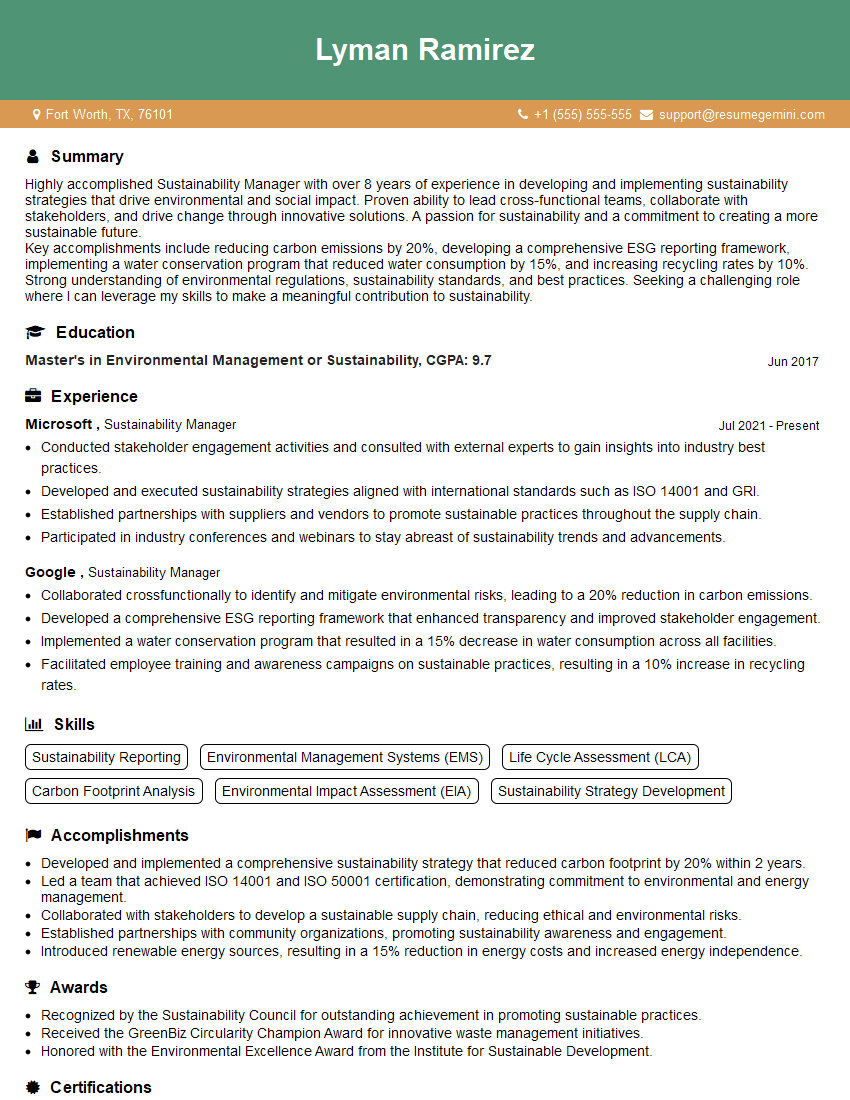
Sustainability Manager Resume Sample
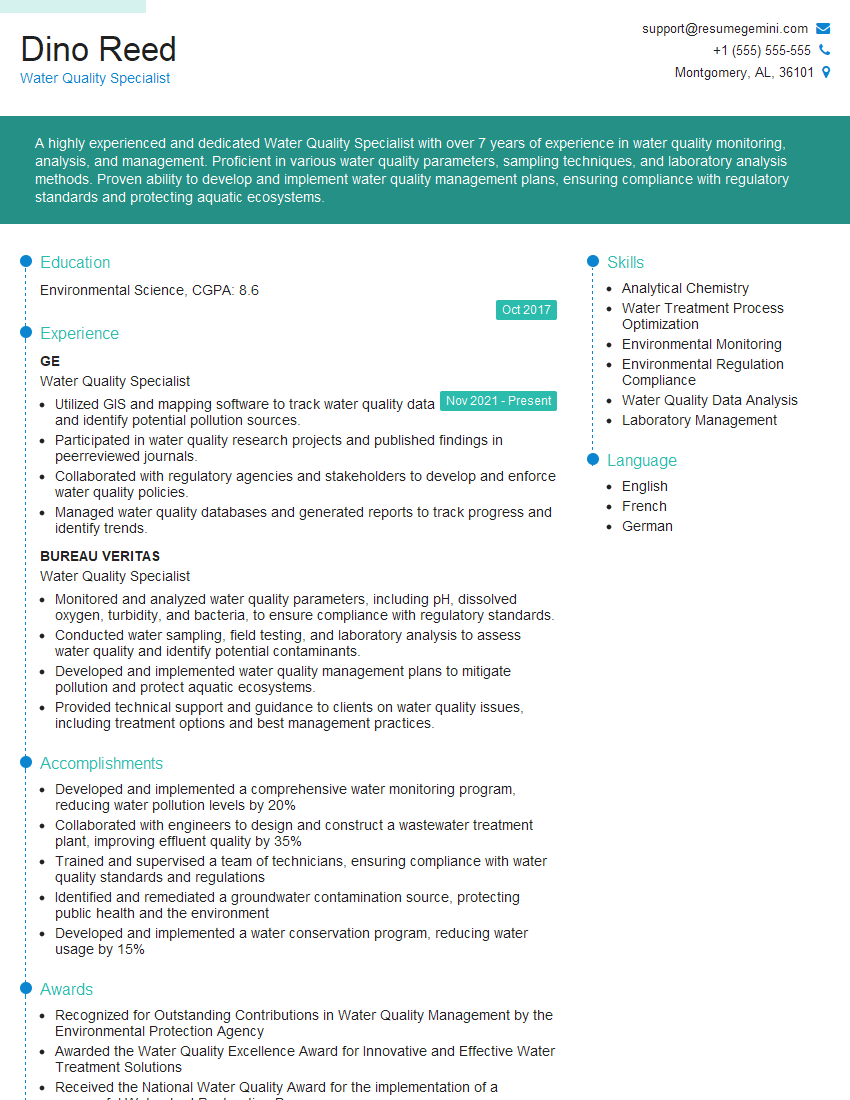
Water Quality Specialist Resume Sample
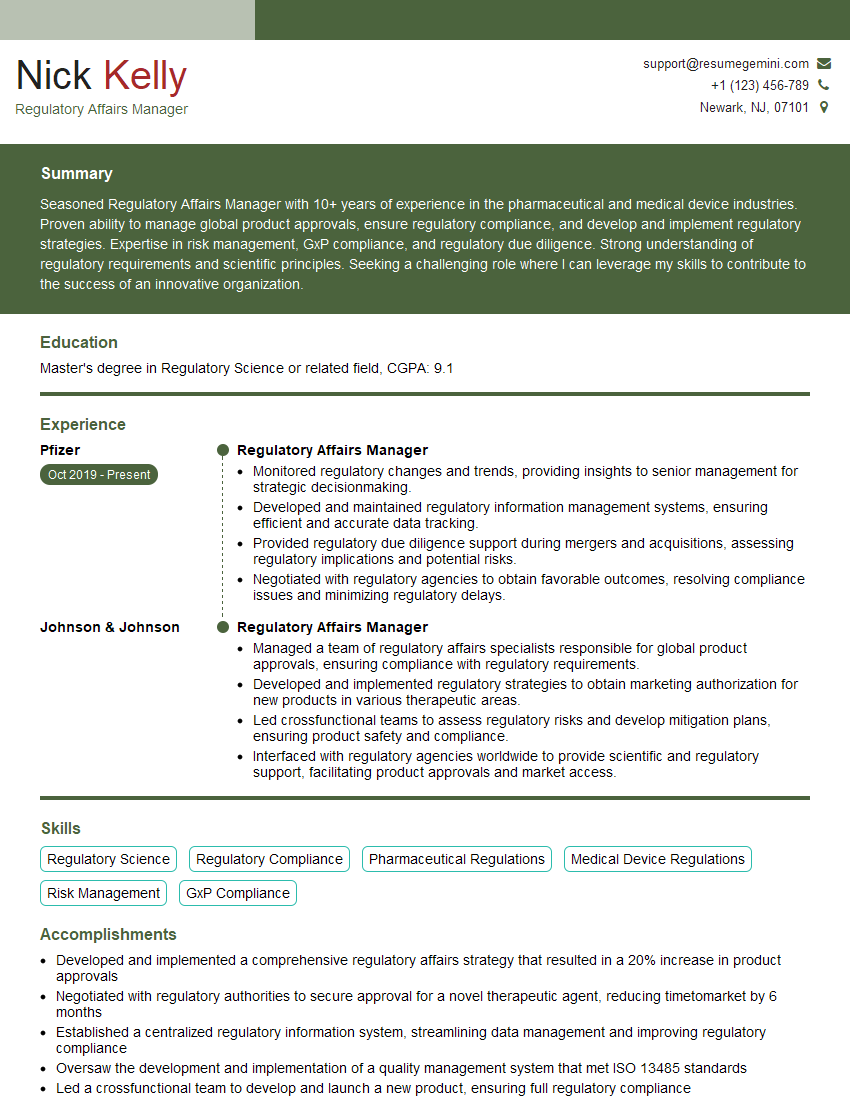
Regulatory Affairs Manager Resume Sample
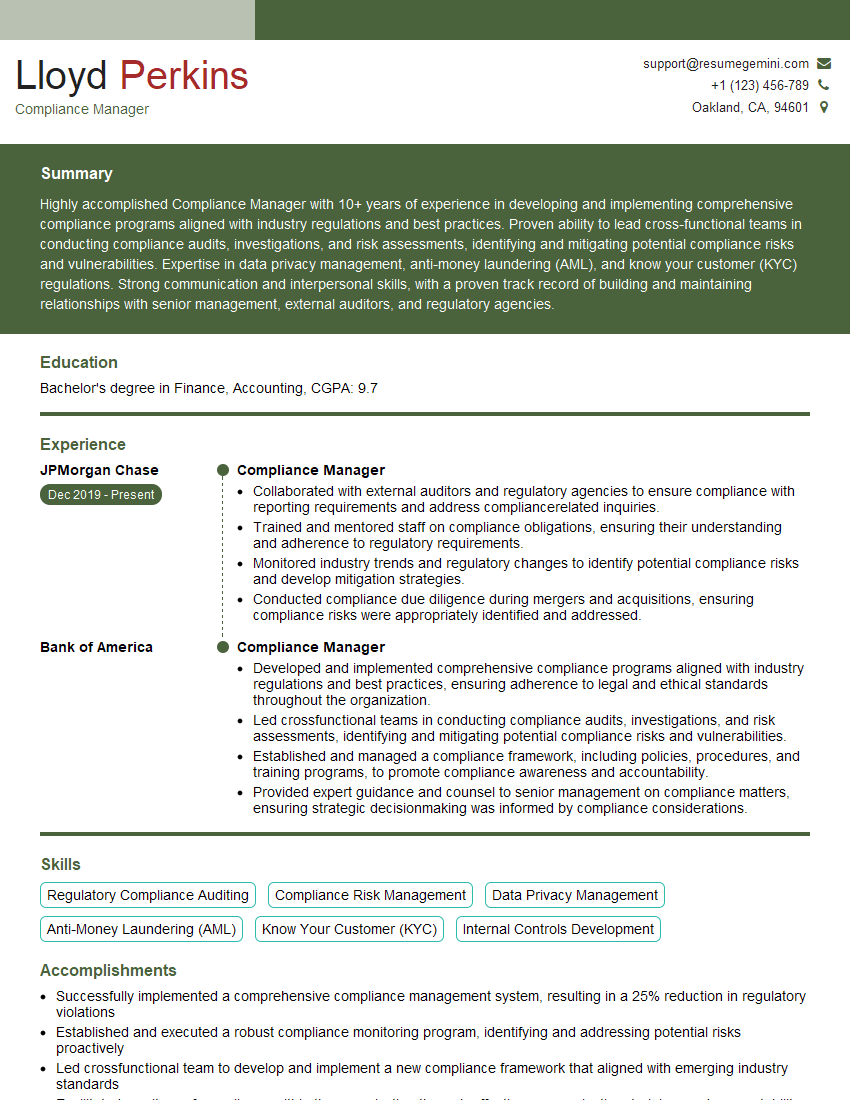
Compliance Manager Resume Sample
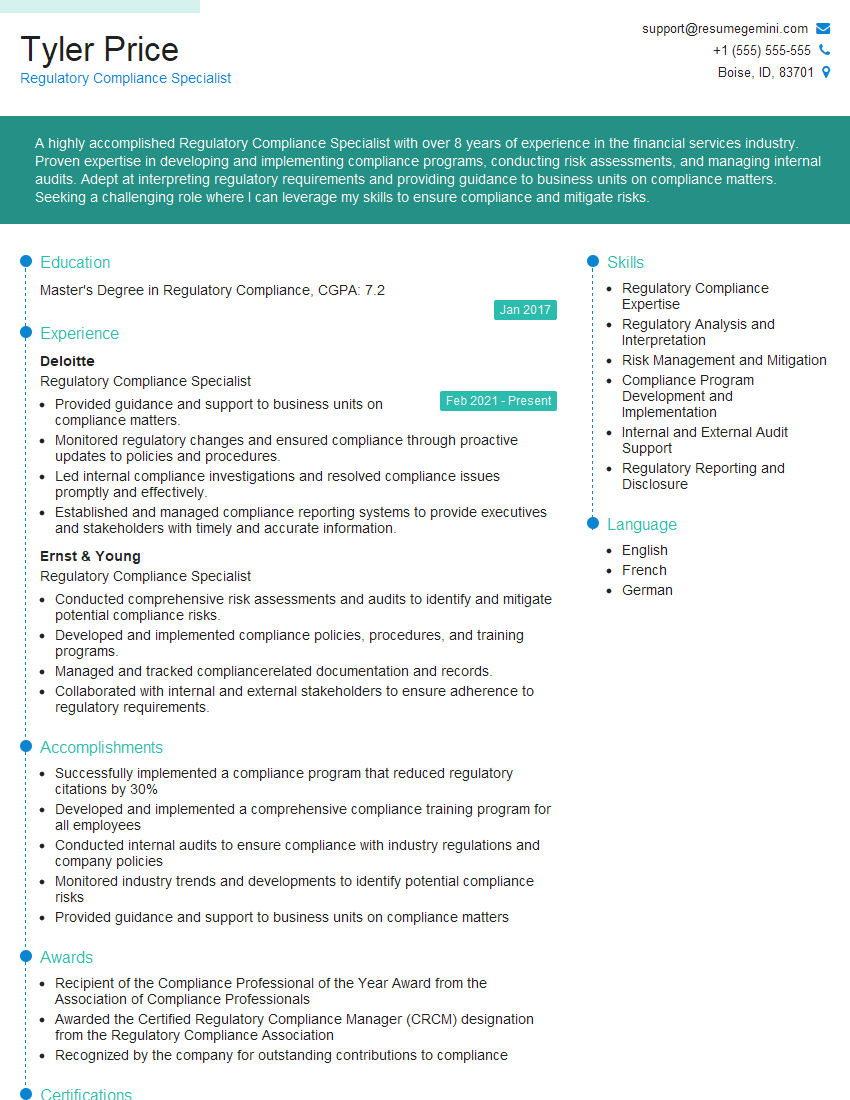
Regulatory Compliance Specialist Resume Sample
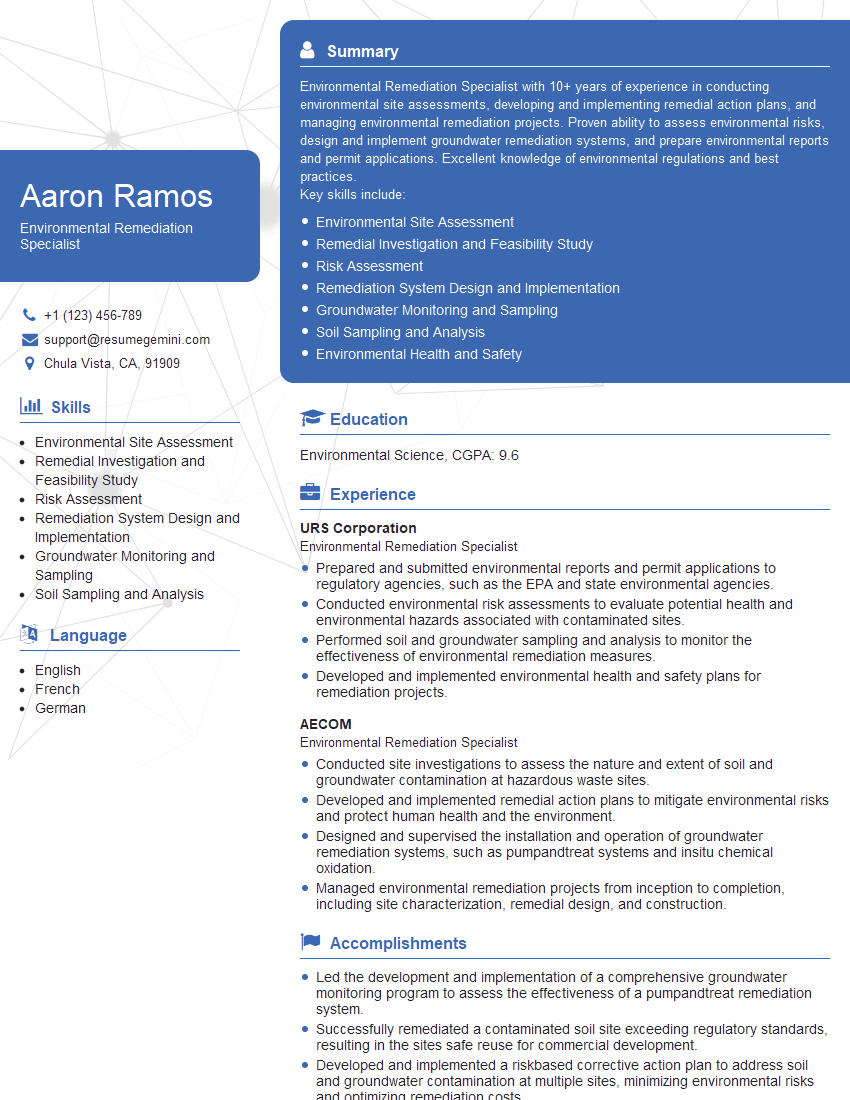
Environmental Remediation Specialist Resume Sample
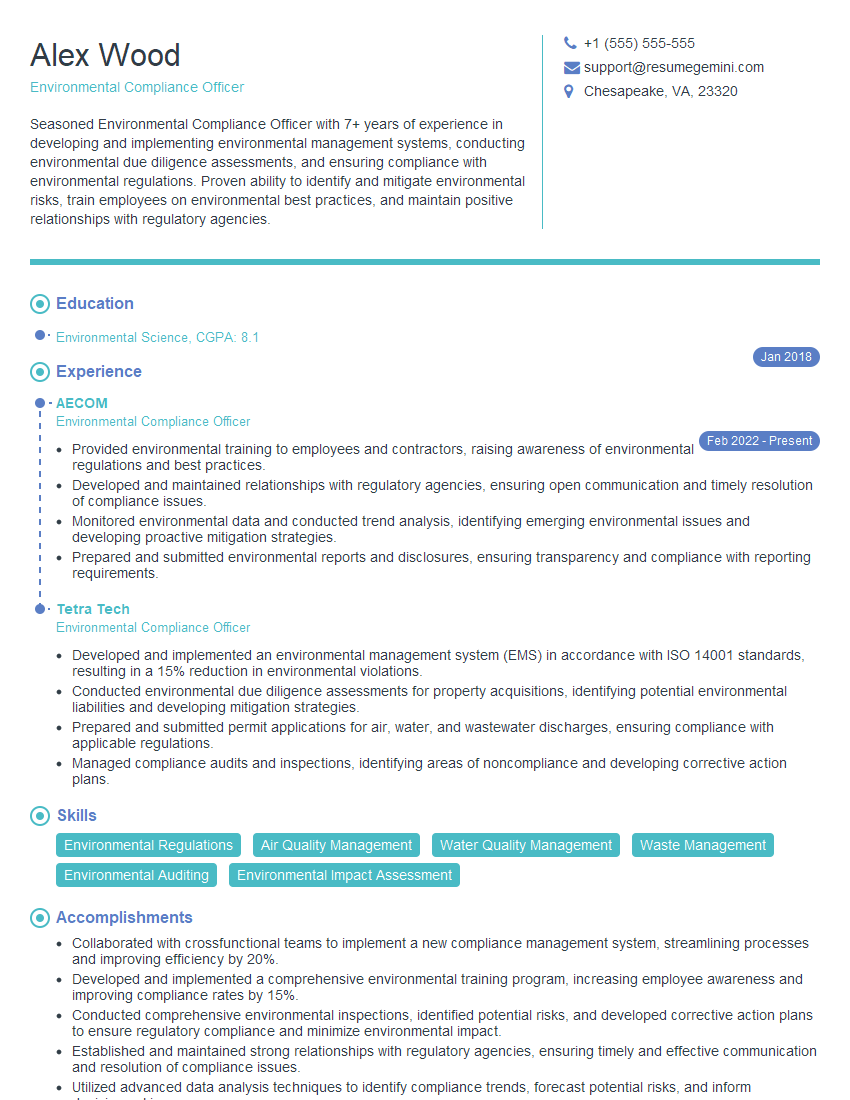
Environmental Compliance Officer Resume Sample
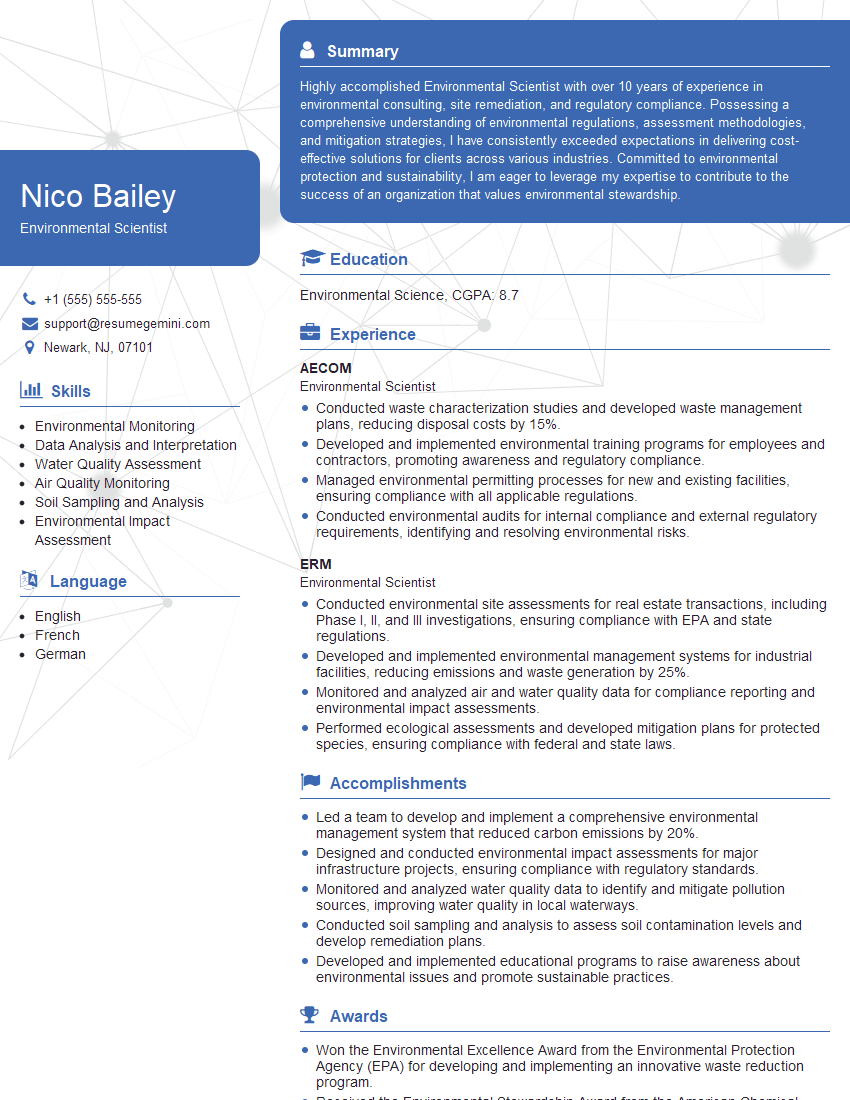
Environmental Scientist Resume Sample
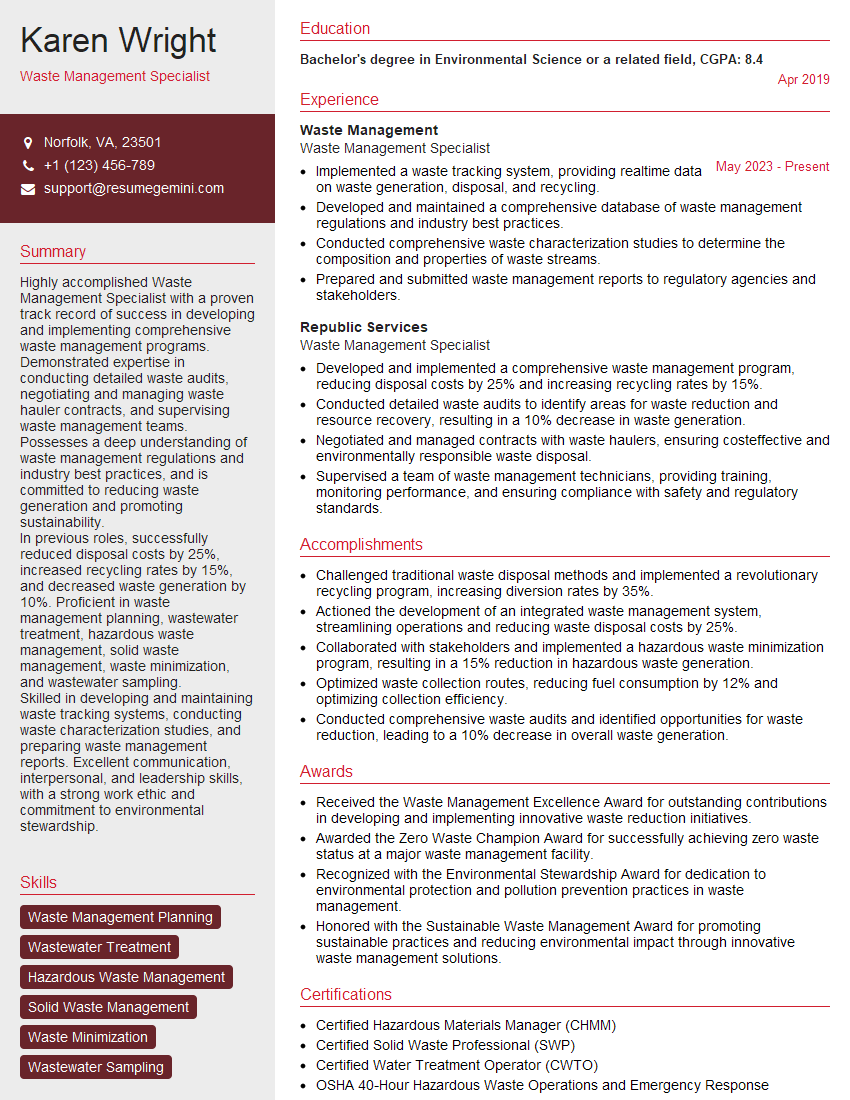
Waste Management Specialist Resume Sample

Sustainability Consultant Resume Sample
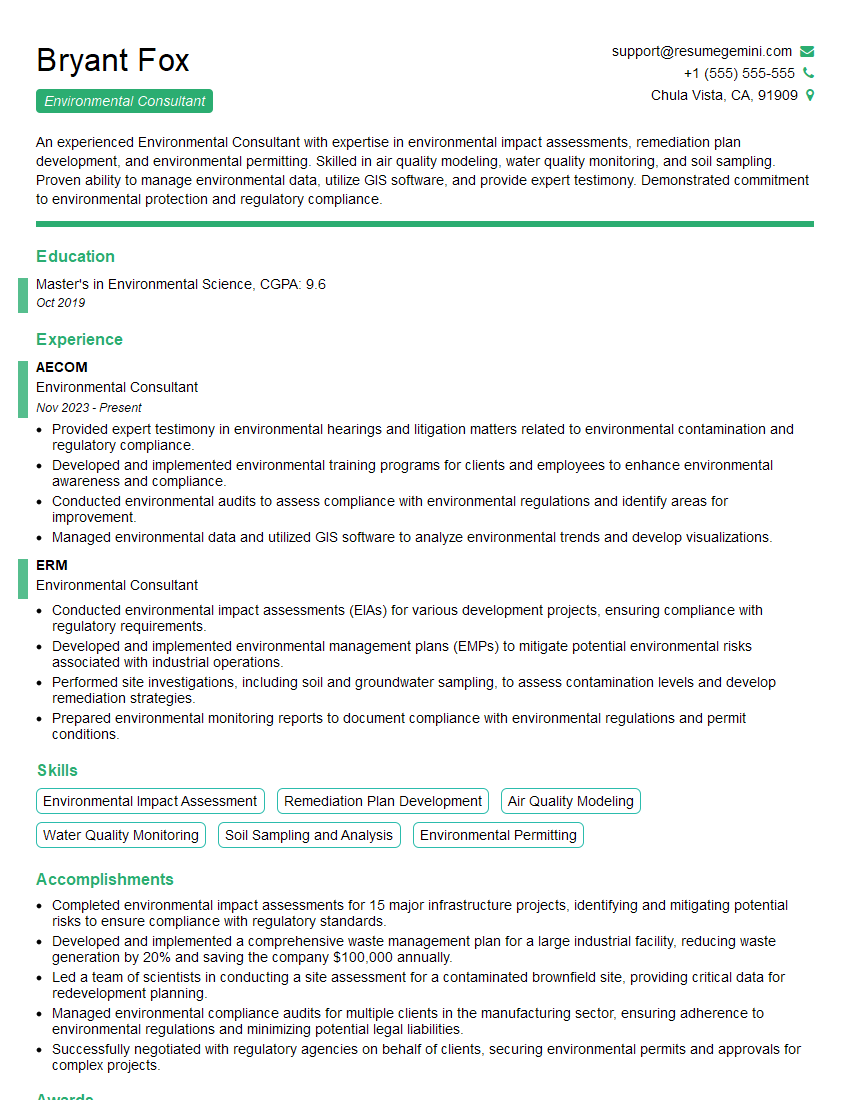
Environmental Consultant Resume Sample
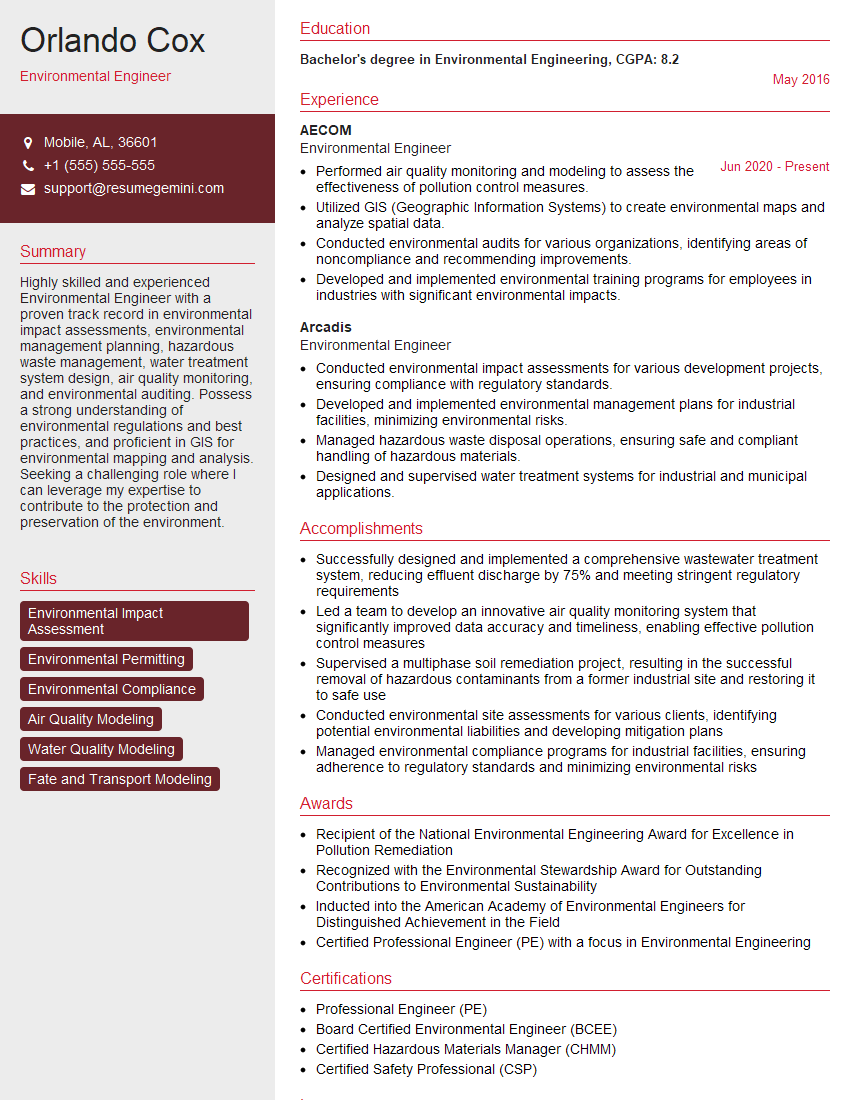
Environmental Engineer Resume Sample
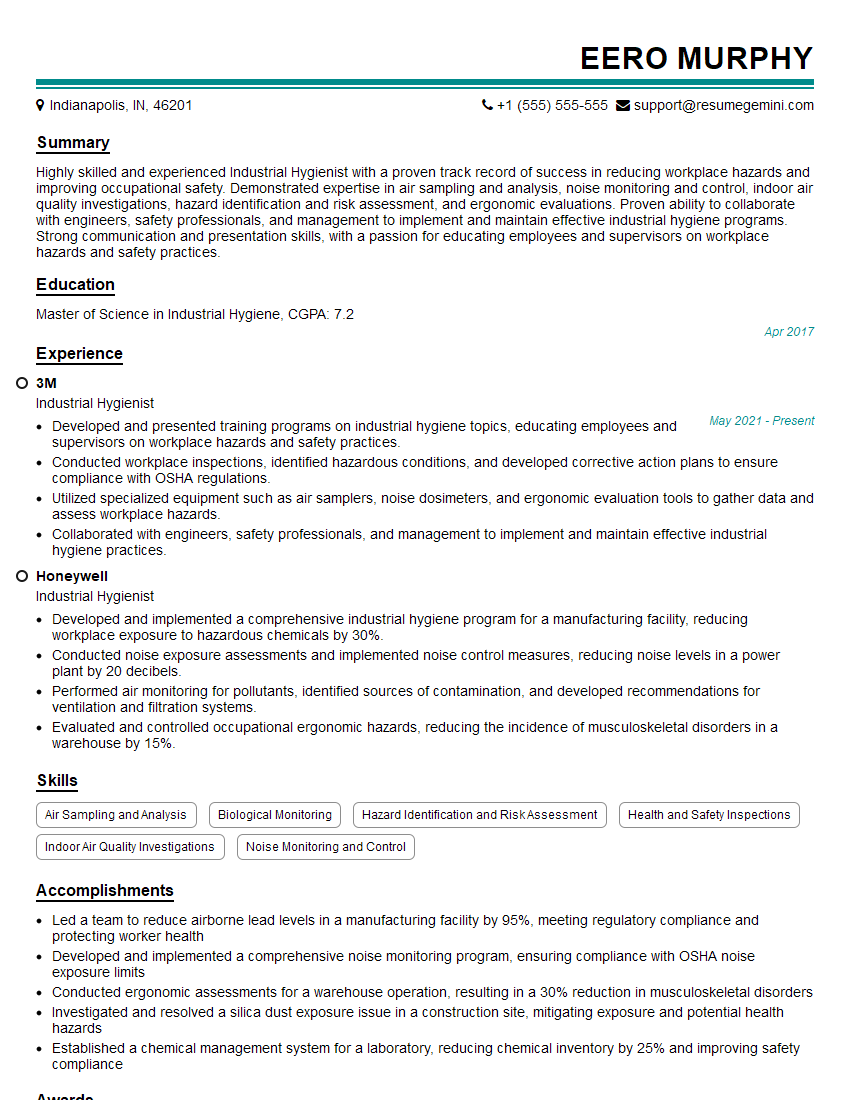
Industrial Hygienist Resume Sample
- Sustainability Manager
- Water Quality Specialist
- Regulatory Affairs Manager
- Compliance Manager
- Regulatory Compliance Specialist
- Environmental Remediation Specialist
- Environmental Compliance Officer
- Environmental Scientist
- Waste Management Specialist
- Sustainability Consultant
- Environmental Consultant
- Environmental Engineer
- Industrial Hygienist
Explore more articles
Users Rating of Our Blogs
Share Your Experience
We value your feedback! Please rate our content and share your thoughts (optional).
What Readers Say About Our Blog
Very informative content, great job.
good