The thought of an interview can be nerve-wracking, but the right preparation can make all the difference. Explore this comprehensive guide to Embryo Transfer Techniques interview questions and gain the confidence you need to showcase your abilities and secure the role.
Questions Asked in Embryo Transfer Techniques Interview
Q 1. Describe the different methods of embryo transfer.
Embryo transfer is the crucial final step in assisted reproductive technology (ART), where embryos are carefully placed into the uterus to initiate pregnancy. There are two main methods:
- Transcervical Embryo Transfer (TET): This is the most common method. A thin, flexible catheter is passed through the cervix and into the uterine cavity, where the embryo(s) are gently deposited. Think of it like carefully placing a tiny seed into fertile soil. The procedure is typically performed using ultrasound guidance to ensure precise placement.
- Transfundal Embryo Transfer: Less frequently used, this method involves accessing the uterine cavity through a small incision in the abdomen. It’s generally reserved for cases where transcervical transfer is difficult, such as in women with severe uterine abnormalities or previous cervical surgeries. This method is more invasive and requires a surgical procedure.
The choice of method depends on several factors, including the patient’s individual anatomy, medical history, and the embryologist’s recommendation.
Q 2. What are the critical factors influencing embryo transfer success rates?
Success in embryo transfer hinges on a multitude of interconnected factors. These can be broadly categorized as:
- Embryo Quality: This is arguably the most crucial factor. High-quality embryos with good morphology and developmental potential have a significantly higher chance of implantation. We assess this through factors like embryo grading and morphology.
- Endometrial Receptivity: The uterine lining must be adequately prepared and receptive to the implanting embryo. This is influenced by factors like hormonal balance, thickness of the uterine lining, and the absence of any uterine pathology.
- Technique of Embryo Transfer: The skill and experience of the embryologist performing the transfer are vital. Gentle handling of the embryo and accurate placement in the uterus are paramount. Even slight variations in the technique can significantly impact implantation rates.
- Patient-Specific Factors: Age, overall health, presence of any underlying medical conditions (like endometriosis or uterine fibroids), and previous pregnancy history all play a role. A woman’s age, in particular, is a significant factor as egg and embryo quality generally declines with age.
- Laboratory Conditions: The quality of the embryology laboratory, including culture media and equipment, directly impacts embryo development and viability. Optimal conditions throughout all stages before the transfer are critical.
Optimizing all these factors is essential to maximize the chances of a successful pregnancy.
Q 3. Explain the process of embryo selection for transfer.
Embryo selection is a meticulous process aimed at identifying the embryos with the highest potential for successful implantation. It’s not simply about picking the ‘biggest’ embryo; rather, it’s a holistic assessment considering several criteria:
- Morphology: This involves evaluating the physical appearance of the embryo under a microscope. We look at features like the number of cells, the symmetry of the cells, the presence of fragmentation, and the overall cell quality. A well-structured embryo with minimal fragmentation tends to have a better prognosis.
- Developmental Stage: Embryos are assessed based on their stage of development at the time of transfer. We aim for embryos at the appropriate stage for their age. An embryo that is too advanced or behind might indicate a developmental problem.
- Time-Lapse Imaging: Advanced laboratories use time-lapse imaging systems to monitor embryo development continuously. This provides more comprehensive information about the embryo’s developmental kinetics, helping identify embryos with robust developmental patterns and highlighting any potential developmental abnormalities that may not be apparent during conventional static morphology assessment.
- Genetic Testing (PGT): In some cases, preimplantation genetic testing (PGT) can be employed to screen embryos for chromosomal abnormalities or specific genetic diseases, significantly improving selection accuracy and reducing the risk of transferring abnormal embryos.
The final selection is a collaborative decision between the embryologist and the reproductive endocrinologist, taking into account all available information and the patient’s individual circumstances.
Q 4. How do you assess the quality of embryos before transfer?
Embryo assessment is a multi-faceted process that combines visual evaluation with, in some cases, advanced technologies. The primary methods include:
- Visual Assessment: Embryologists meticulously examine embryos under a high-powered microscope, assessing the number of cells, the uniformity of cell size and shape, the amount of fragmentation (cellular debris), and the presence of any other abnormalities.
- Grading Systems: Standardized grading systems are used to assign scores to embryos based on their morphological characteristics. These systems vary slightly between clinics, but generally, higher scores indicate better quality. For example, a system might score embryos based on cell number, fragmentation, and degree of cell division symmetry.
- Time-Lapse Imaging: This provides a continuous record of embryo development from fertilization onwards. Analyzing these time-lapse images can provide valuable insights into the embryo’s developmental kinetics, helping predict its implantation potential better than conventional morphology assessments.
- Preimplantation Genetic Testing (PGT): PGT analyzes the genetic makeup of the embryo to detect chromosomal abnormalities or genetic mutations. This is particularly useful for couples at increased risk of passing on genetic diseases.
The combination of these techniques allows for a comprehensive assessment of embryo quality, improving the chances of selecting the embryo(s) most likely to lead to a successful pregnancy.
Q 5. What are the common complications associated with embryo transfer?
While generally a safe procedure, embryo transfer can be associated with some minor complications, including:
- Mild cramping or bleeding: Some women experience mild cramping or spotting following the procedure. This is usually self-limiting and resolves within a few days.
- Infection: Though rare, infection is a potential risk, although rigorous aseptic techniques are followed during the procedure. Any signs of infection (fever, increased vaginal discharge, pain) should be reported immediately.
- Ovarian Hyperstimulation Syndrome (OHSS): This complication is primarily associated with ovarian stimulation medication used prior to egg retrieval and is rarely directly related to the transfer itself. Severe cases require medical management.
- Multiple gestation: Transferring multiple embryos increases the chance of multiple pregnancies (twins, triplets, etc.). This carries increased risks for both mother and babies.
- Psychological distress: The emotional toll of the procedure should not be underestimated. Patients may experience anxiety and stress, and support should be offered.
The vast majority of patients experience no significant complications. However, awareness of these potential risks and appropriate monitoring are crucial.
Q 6. How do you manage patient anxiety during the embryo transfer procedure?
Managing patient anxiety is an integral part of providing compassionate and effective care. I approach this through several strategies:
- Open Communication: I thoroughly explain the procedure, answering all questions honestly and patiently. I explain what to expect before, during, and after the transfer.
- Empathy and Support: I acknowledge the emotional weight of the procedure and provide reassurance. Creating a calm, supportive atmosphere is vital.
- Pre-Procedure Relaxation Techniques: I encourage relaxation techniques like deep breathing or meditation to help the patient stay calm before the procedure.
- Distraction Techniques: During the transfer, I might engage in light conversation or play calming music to help distract from any discomfort or anxiety.
- Post-Procedure Support: I provide clear instructions for post-procedure care and ensure the patient knows how to reach me with any questions or concerns. Follow-up appointments are scheduled to discuss results and provide emotional support.
Many of my patients describe the transfer as much less stressful than anticipated due to this holistic approach to care. Creating a trusting patient-physician relationship is fundamental to managing anxiety effectively.
Q 7. Describe your experience with different catheter types used in embryo transfer.
My experience encompasses a variety of catheter types used in embryo transfer, each with its own advantages and disadvantages. The selection of a specific catheter is often guided by the patient’s anatomy and the embryologist’s preference:
- Wallace Catheter: A commonly used catheter with a soft, flexible tip. It’s known for its ease of use and gentle handling of embryos. It provides good control and often my preferred choice for most patients.
- Cook Catheter: Another popular choice known for its durability and flexibility. This catheter is often used when there is a slight curve or angle to the uterine cavity.
- Frydman Catheter: This catheter has a specialized tip, which is usually helpful for cases where access to the uterine cavity is difficult. It’s often used in patients with a challenging uterine anatomy.
The choice of catheter is not a standardized, one-size-fits-all decision. We carefully consider factors like the patient’s uterine anatomy, ease of access to the uterus, and the embryologist’s personal preference when selecting the optimal catheter for each individual case.
Q 8. What is the optimal depth for embryo transfer?
The optimal depth for embryo transfer is crucial for successful implantation. There isn’t a universally agreed-upon single number, as it depends on factors such as uterine anatomy (the position of the fundus, the presence of fibroids or polyps), the patient’s individual characteristics (body mass index, uterine size), and the technique employed. However, a general guideline is to aim for the superior uterine fundus, approximately 1-2 cm into the endometrial cavity. Visualizing the embryo’s deposition using ultrasound guidance is key to achieving this optimal placement. Transferring the embryo too superficially increases the risk of it exiting the uterus, while transferring it too deeply might lead to ectopic implantation or damage to the uterine wall. We strive for that sweet spot, which usually involves a combination of visualizing the embryo passing through the cervix and then depositing it in the desired location within the uterine cavity. Precise catheter placement is paramount in achieving the goal.
Q 9. How do you monitor the patient after embryo transfer?
Post-embryo transfer monitoring is vital for assessing the patient’s response and the chances of a successful pregnancy. The process typically begins with a pregnancy test via blood sampling for beta-hCG (beta human chorionic gonadotropin) about 10-14 days after the transfer. If the beta-hCG level is positive, we follow up with an ultrasound examination to confirm an intrauterine gestation and assess fetal development. We monitor for any signs of complications, such as ectopic pregnancy, ovarian hyperstimulation syndrome (OHSS), or bleeding. Depending on the patient’s individual needs and medical history, we might also monitor hormone levels such as progesterone and estrogen and evaluate the patient’s overall well-being. Regular communication and emotional support for the patient are an integral part of this phase.
Q 10. What are the ethical considerations surrounding embryo transfer?
Ethical considerations surrounding embryo transfer are multifaceted and of paramount importance. Central to these considerations is the respectful treatment of the embryo, which many consider to be a potential human life. Informed consent is fundamental; patients must understand the procedure’s risks and benefits, the chances of success, and the potential for multiple pregnancies. Transparency is key, including discussions about elective single embryo transfer (eSET) to minimize the risk of multiples and selective reduction, which can be a highly emotionally charged decision. Additionally, we must adhere to stringent guidelines regarding embryo disposal, storage, and research involving embryos. Open and honest conversations about the ethical implications, tailored to each patient’s individual beliefs and values, are essential.
Q 11. Explain the role of ultrasound guidance in embryo transfer.
Ultrasound guidance is indispensable during embryo transfer. It allows for real-time visualization of the uterine cavity, enabling precise catheter placement and embryo deposition. This technique minimizes the risk of extra-uterine placement (ectopic pregnancy), perforation of the uterine wall, and other complications. The ultrasound images provide information about the endometrial lining’s thickness and quality, the location of the cervix, and the presence of any uterine anomalies (fibroids, polyps, septa). This real-time feedback helps the embryologist and clinician to select the optimal location for embryo placement within the uterine cavity, maximizing the chances of successful implantation. For example, we can use ultrasound to carefully navigate around a fibroid to place the embryo in an undisturbed area of the uterine lining.
Q 12. Describe the process of cryopreservation and its impact on embryo transfer.
Cryopreservation, or freezing, of embryos is a crucial part of modern assisted reproductive technology (ART). It allows for the storage of high-quality embryos for later transfer, reducing the number of cycles required for patients. The process typically involves a controlled-rate freezing technique (slow freezing) or vitrification (rapid freezing), which protect embryos from ice crystal formation. After thawing, the embryos are assessed for viability before transfer. Cryopreservation has significantly increased the success rates of ART, as it allows for flexibility in treatment planning, enables elective single embryo transfer (eSET) to reduce the risk of multiple pregnancies, and allows women to preserve their fertility for later use. For example, a patient undergoing cancer treatment might freeze her embryos to preserve her reproductive potential. The impact of cryopreservation on embryo transfer is profoundly positive, improving access to fertility treatment and increasing overall success.
Q 13. How do you handle unexpected challenges during an embryo transfer procedure?
Handling unexpected challenges during embryo transfer requires a calm, proactive approach, informed by expertise and experience. Potential challenges include difficulty accessing the uterine cavity, uterine anomalies, or unexpected bleeding. In such scenarios, we proceed methodically. For instance, if the catheter encounters resistance, we adjust its position under ultrasound guidance to avoid injury to the uterine wall. If unexpected bleeding occurs, we assess its severity and determine whether the transfer should be postponed. Communication with the patient is crucial throughout these unforeseen circumstances, ensuring that they are well-informed and feel supported. In complex cases, consultation with experienced colleagues might be necessary to develop the safest and most effective course of action. Our primary focus is patient safety and the protection of the embryo.
Q 14. What is your experience with different embryo culture media?
My experience encompasses a wide range of embryo culture media, from commercially available sequential media to more specialized formulations. The choice of media significantly impacts embryo development and morphology. Sequential media systems mimic the natural changes in the uterine environment during embryo development, providing optimal conditions for each stage. I’ve used several commercially available systems with success, observing consistent improvements in embryo quality and blastocyst formation rates. In recent years, significant research has focused on optimizing media composition, with ongoing advancements in formulations designed to minimize oxidative stress and support embryo growth. The choice of media depends on the specific needs of each patient and the clinic’s protocols. Regular evaluation of outcomes and rigorous adherence to quality control procedures are essential in ensuring that the chosen media consistently deliver optimal results.
Q 15. What are the key indicators of successful embryo implantation?
Successful embryo implantation hinges on a complex interplay of factors, but key indicators we look for include:
- High-quality embryo morphology: This refers to the embryo’s physical appearance at different stages of development, assessed using grading systems. A well-developed blastocyst with high-quality inner cell mass and trophectoderm is a positive sign.
- Positive pregnancy test: This is the ultimate confirmation of implantation. We typically perform serum beta-hCG testing to detect the pregnancy hormone.
- Ultrasound confirmation: A transvaginal ultrasound performed several weeks after embryo transfer can visualize a gestational sac and fetal pole, providing further confirmation of a viable pregnancy.
- Endometrial receptivity: The uterine lining needs to be properly prepared and receptive to the implanting embryo. We assess this through endometrial thickness and echotexture on ultrasound, as well as blood tests assessing hormonal markers.
- Absence of complications: The absence of complications, such as ectopic pregnancy (implantation outside the uterus) or miscarriage, also indicate successful implantation.
For example, a patient with a high-quality blastocyst transferred on day 5 and subsequent positive beta-hCG and ultrasound confirmation of an intrauterine pregnancy is a strong indicator of successful implantation. Conversely, a failing pregnancy might present with declining beta-hCG or an empty gestational sac on ultrasound.
Career Expert Tips:
- Ace those interviews! Prepare effectively by reviewing the Top 50 Most Common Interview Questions on ResumeGemini.
- Navigate your job search with confidence! Explore a wide range of Career Tips on ResumeGemini. Learn about common challenges and recommendations to overcome them.
- Craft the perfect resume! Master the Art of Resume Writing with ResumeGemini’s guide. Showcase your unique qualifications and achievements effectively.
- Don’t miss out on holiday savings! Build your dream resume with ResumeGemini’s ATS optimized templates.
Q 16. How do you interpret different embryo morphology grading systems?
Embryo morphology grading systems vary slightly between clinics, but they generally assess key features like the number of cells, degree of fragmentation, and symmetry. For example, the Gardner grading system is widely used and rates embryos based on their developmental stage, cell number, and fragmentation. A score of 4AA would indicate a high-quality blastocyst with minimal fragmentation, whereas a score of 2CC might represent a poor-quality embryo with significant fragmentation.
Interpreting these grades requires experience. We consider the overall picture – combining the morphology score with other factors, like the embryo’s development timeline captured by time-lapse imaging (discussed later), and the patient’s individual characteristics. For instance, a slightly lower-grade embryo from a patient with excellent uterine receptivity might have a higher chance of implantation compared to a higher-grade embryo from a patient with poor receptivity. It’s not a simple numerical game but a holistic assessment.
Q 17. Describe your experience with time-lapse imaging in embryo selection.
Time-lapse imaging has revolutionized embryo selection. This technology allows continuous monitoring of embryo development in the incubator, providing detailed information about the timing and kinetics of crucial developmental events, such as pronuclear formation and cleavage. We can then select embryos based on their individual developmental trajectory rather than a single snapshot at one time point. This improves embryo selection, increases implantation rates, and potentially reduces the need for multiple embryo transfers.
For example, we can identify embryos with abnormal cleavage patterns or those that exhibit signs of developmental arrest. Conversely, we can identify embryos showing consistent, healthy development and optimal timing of key events, allowing us to prioritize those with the best prognosis for implantation. It’s like having a detailed ‘growth chart’ for each embryo, giving us a much clearer picture of its developmental potential than traditional methods could offer.
Q 18. What are the potential risks of multiple embryo transfer?
Multiple embryo transfer (MET) increases the chances of achieving a pregnancy, but it significantly raises the risk of multiple gestations (twins, triplets, etc.). Multiple pregnancies carry substantial risks for both mother and babies, including:
- Preterm birth: Babies born prematurely face increased health risks.
- Low birth weight: This increases the risk of various health problems in newborns.
- Gestational diabetes and pre-eclampsia: These conditions can significantly impact the mother’s health.
- Cesarean section: Multiple pregnancies often require C-sections.
- Increased risk of fetal and neonatal mortality: Sadly, there’s an elevated risk of loss for both mother and babies.
Therefore, in many cases, we strive towards single embryo transfer whenever possible to minimize these risks.
Q 19. How do you counsel patients about the risks and benefits of embryo transfer?
Counseling patients about embryo transfer involves a thorough discussion of the risks and benefits, tailored to their individual circumstances. This is a crucial part of our role, as it empowers them to make informed decisions. We discuss:
- Chances of success: We provide realistic expectations based on factors like age, embryo quality, and uterine receptivity.
- Risks of multiple gestations: We thoroughly explain the potential complications associated with carrying multiple fetuses.
- Alternative options: We discuss other reproductive options such as using donor eggs or surrogacy.
- Emotional aspects: We acknowledge the emotional challenges involved in fertility treatment and provide support.
- Financial implications: The costs of multiple cycles versus potential costs of high-risk multiple pregnancies are discussed.
We encourage questions and provide time for reflection, ensuring patients feel confident in their choices. The goal is shared decision-making, prioritizing their well-being and the health of potential offspring.
Q 20. What are the legal and regulatory requirements for embryo transfer?
Legal and regulatory requirements for embryo transfer vary across jurisdictions but generally focus on patient safety, informed consent, and ethical considerations. Key aspects typically include:
- Licensing and accreditation: Clinics must meet specific standards of care and obtain necessary licenses to operate.
- Informed consent: Patients must provide written informed consent for all procedures, including a clear understanding of the risks and benefits.
- Embryo storage regulations: Strict rules govern the storage, handling, and disposal of embryos.
- Data privacy and confidentiality: Patient information must be protected according to relevant data privacy laws.
- Specific limitations on number of embryos transferred: Regulations often place restrictions on the number of embryos transferred to minimize the risk of multiple gestations.
Staying up-to-date with these regulations is crucial for ethical and legal compliance. Non-compliance can result in severe penalties, including suspension of licenses and legal action.
Q 21. What is your experience with single-embryo transfer (SET)?
Single embryo transfer (SET) is becoming increasingly prevalent due to its reduced risk of multiple gestations. My experience shows that with improved embryo selection techniques, such as time-lapse imaging and comprehensive genetic testing, SET can achieve high success rates comparable to MET, while significantly reducing the risks associated with multiple births.
We carefully select the best embryo for transfer, considering morphology, developmental kinetics, and genetic health. While there’s always a chance of unsuccessful implantation, the benefits of minimizing multiple gestation risks often outweigh this concern. The approach to SET requires precise and meticulous work, and patient education and counseling are paramount. Patients need to understand that there might be a need for further cycles if the first SET is unsuccessful. Successful SET results in a healthier pregnancy and reduces complications, contributing towards better patient outcomes.
Q 22. How do you maintain sterility during the embryo transfer procedure?
Maintaining sterility during embryo transfer is paramount to prevent infection and ensure the procedure’s success. It’s a multi-layered approach beginning with meticulous preparation of the operating room. This includes thorough cleaning and disinfection of all surfaces, using a combination of disinfectants proven effective against a broad spectrum of microorganisms. The air quality is carefully controlled, often employing HEPA filtration systems to minimize airborne contaminants.
The embryologist and medical team adhere to strict aseptic techniques. This involves wearing sterile gowns, gloves, masks, and eye protection. All instruments used are sterilized, often through autoclaving, a high-pressure steam sterilization process. The catheter used to transfer the embryo is single-use and individually packaged, ensuring no prior contamination. Furthermore, we employ a laminar flow hood, creating a sterile environment for handling the embryo before transfer. We continuously monitor the procedure for any breaches in sterility, ensuring the integrity of the process from beginning to end. Think of it like performing a surgery – even the smallest detail can have a significant impact on the outcome.
Q 23. What is your experience with assisted hatching techniques?
Assisted hatching is a technique where a small opening is created in the zona pellucida, the outer shell of the embryo, to aid in implantation. My experience spans several years and includes working with both laser-assisted hatching and mechanical hatching techniques. Laser hatching offers precision and speed, allowing for a very controlled opening. Mechanical hatching, on the other hand, involves using a specialized instrument to create the opening. The choice of technique depends on factors such as the embryo’s quality and the patient’s history. For instance, patients with a history of recurrent implantation failure might benefit from assisted hatching as it can improve the chances of successful implantation by facilitating the embryo’s emergence from the zona pellucida. However, it’s crucial to understand that assisted hatching isn’t universally beneficial and its application should be carefully considered on a case-by-case basis. Overuse can potentially harm the embryo.
Q 24. Describe your understanding of preimplantation genetic testing (PGT) and its role in embryo selection.
Preimplantation Genetic Testing (PGT) is a powerful tool used to screen embryos for genetic abnormalities before implantation. It involves taking a small biopsy from the embryo, typically at the blastocyst stage (day 5 or 6 of development), and analyzing its DNA. There are different types of PGT, including PGT-A (aneuploidy screening), which checks for chromosome abnormalities; PGT-M (monogenic disease testing), which screens for specific inherited diseases; and PGT-SR (structural rearrangement testing), which assesses for chromosomal translocations or inversions.
PGT’s role in embryo selection is crucial for improving IVF success rates and reducing the risk of genetic disorders. By identifying healthy embryos, it increases the likelihood of a successful pregnancy and minimizes the chance of miscarriage or the birth of a child with a genetic condition. We carefully consider the patient’s medical history and family history to determine the most appropriate type of PGT. The results of PGT provide invaluable information to guide embryo selection, helping us choose the embryo with the highest potential for implantation and healthy development.
Q 25. How do you document and record all aspects of the embryo transfer process?
Detailed documentation is fundamental to the embryo transfer process. We maintain comprehensive electronic records, securely stored and accessible only to authorized personnel. This documentation includes the patient’s identity, medical history, and cycle details; a thorough description of the embryos transferred, including their morphology (shape and appearance) and grading; the type and number of embryos transferred; the details of the procedure itself, such as the catheter used and the depth of placement; and finally, post-procedure observations. Every step, from embryo selection to catheter insertion, is meticulously recorded and timestamped, ensuring complete traceability and accountability. This detailed record-keeping is crucial for quality assurance, research purposes, and in the event of any legal inquiries. We utilize a sophisticated electronic health record system with built-in safeguards to maintain data integrity and patient confidentiality.
Q 26. How do you troubleshoot common problems encountered during embryo transfer?
Troubleshooting during embryo transfer often involves addressing difficulties with catheter placement or uterine accessibility. For instance, if the catheter cannot easily navigate the cervix, we may use different types of catheters or adjust the patient’s positioning. We might also employ ultrasound guidance for precise catheter placement. In cases where the uterine cavity presents challenges, a skilled embryologist can meticulously navigate through any anatomical variations. Other problems may include difficulties in visualizing the embryo during transfer or accidental damage to the embryo. Addressing these requires a calm, methodical approach, combining expertise, precision, and the use of advanced imaging technologies. Regular training, coupled with meticulous attention to detail, is critical for successfully navigating these challenges and ensuring the best possible outcome for the patient.
Q 27. Explain your understanding of the role of the embryology lab in overall IVF success.
The embryology lab plays a central role in IVF success, acting as the cornerstone of the entire process. The quality of the embryology lab directly influences the number and quality of embryos available for transfer. This includes the expertise in oocyte retrieval, fertilization techniques (conventional or ICSI), embryo culture conditions, and embryo assessment. Highly skilled embryologists ensure optimal embryo development through careful monitoring and manipulation, selecting the best candidates for transfer. Think of it as a ‘nursery’ for the embryos, providing the ideal environment for their growth. Advances in culture media, time-lapse imaging, and other technologies have significantly improved embryo development and selection capabilities, directly enhancing IVF success rates. A well-equipped and expertly staffed embryology lab significantly contributes to higher pregnancy and live birth rates.
Q 28. Describe your experience with different types of embryo biopsy techniques.
My experience encompasses both trophectoderm biopsy and polar body biopsy techniques. Trophectoderm biopsy is commonly performed on blastocysts (day 5 or 6 embryos), where a small number of cells from the outer layer of the embryo are removed for genetic testing. This method is less likely to affect embryo development compared to polar body biopsy. Polar body biopsy, on the other hand, involves removing the polar bodies, which are byproducts of the egg’s maturation, and analyzing them for genetic information. While less invasive to the embryo itself, its ability to screen for all chromosomal abnormalities is limited, making trophectoderm biopsy the preferred method for PGT-A in many clinics. The choice of biopsy technique depends on several factors, including the stage of embryo development and the specific genetic test being conducted. The procedure is always performed under strict conditions to minimize the risk of damage to the embryo.
Key Topics to Learn for Embryo Transfer Techniques Interview
- Embryo Selection Criteria: Understand the morphological and genetic assessment methods used to select the most viable embryos for transfer. Consider the ethical implications and limitations of different selection techniques.
- Transfer Catheter Techniques: Master the various catheter types and insertion techniques. Be prepared to discuss the advantages and disadvantages of each method, including soft and hard catheters, and their application in different patient scenarios.
- Embryo Transfer Procedures: Detail the entire process, from patient preparation and monitoring to post-transfer care. Be able to discuss potential complications and how to manage them effectively.
- Cryopreservation and Vitrification Techniques: Explain the principles of cryopreservation and its impact on embryo viability. Discuss the differences between slow-freezing and vitrification methods and their applications.
- Assisted Hatching Techniques: Understand the rationale behind assisted hatching and the different methods employed. Be prepared to discuss the indications for and potential risks associated with this procedure.
- Quality Assurance and Documentation: Explain the importance of meticulous record-keeping and adherence to quality control protocols in embryo transfer procedures. Be ready to discuss regulatory compliance and best practices.
- Troubleshooting and Problem-Solving: Be prepared to discuss common challenges encountered during embryo transfer procedures and strategies for addressing them effectively. Consider scenarios involving catheter placement difficulties, embryo loss, or patient complications.
Next Steps
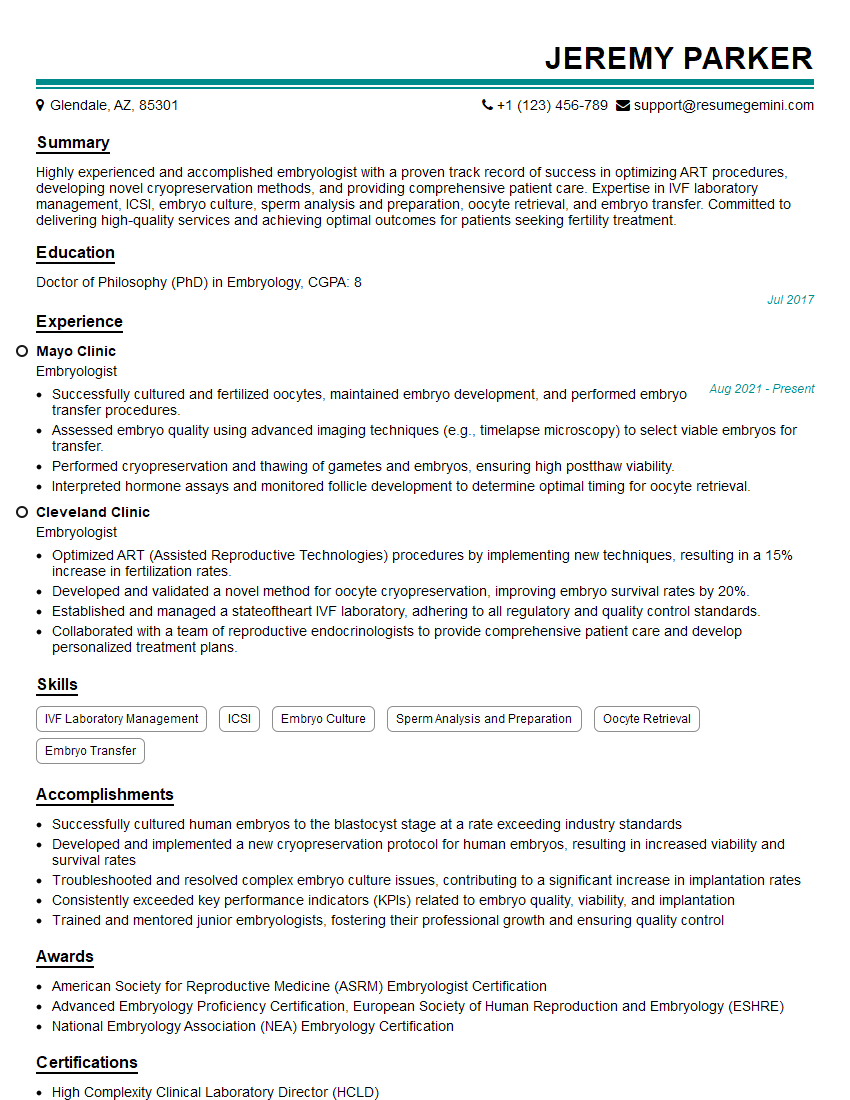
Mastering Embryo Transfer Techniques opens doors to exciting career advancements in reproductive medicine. A strong understanding of these techniques is highly sought after, leading to increased job opportunities and professional recognition. To maximize your chances, creating an ATS-friendly resume is crucial. ResumeGemini can help you build a compelling resume that showcases your skills and experience effectively. ResumeGemini provides examples of resumes tailored to Embryo Transfer Techniques to guide you in crafting a professional and impactful document. Take the next step towards your dream career today!
Explore more articles
Users Rating of Our Blogs
Share Your Experience
We value your feedback! Please rate our content and share your thoughts (optional).
What Readers Say About Our Blog
Very informative content, great job.
good