The right preparation can turn an interview into an opportunity to showcase your expertise. This guide to Basecoat and clearcoat application interview questions is your ultimate resource, providing key insights and tips to help you ace your responses and stand out as a top candidate.
Questions Asked in Basecoat and clearcoat application Interview
Q 1. Explain the difference between basecoat and clearcoat.
Basecoat and clearcoat are two distinct components in a modern automotive or industrial paint system, each serving a crucial role in achieving a durable and aesthetically pleasing finish. Think of it like a cake: the basecoat is the delicious flavored cake itself, providing the color and design, while the clearcoat is the glossy icing, adding protection and shine.
The basecoat is the colored layer that provides the vehicle’s color. It’s typically a water-based or solvent-based paint containing pigments and binders. It is relatively thin and requires a clearcoat for protection against UV rays and environmental damage.
The clearcoat is a transparent layer applied over the basecoat. It’s a protective layer made primarily of acrylic polymers that enhances gloss, durability, and chemical resistance. It shields the basecoat from scratches, chipping, and fading. The clearcoat is what gives the paint job its final shine and depth.
Q 2. Describe the proper mixing ratio for a basecoat.
The proper mixing ratio for a basecoat is crucial for achieving the correct color and application properties. This ratio is always specified by the paint manufacturer on the product label and should be followed precisely. Deviation can result in color mismatch or poor application. Typically, this involves mixing the basecoat concentrate with a reducer (thinner) and sometimes an activator to adjust viscosity and drying time.
For example, a common ratio might be 2:1 basecoat concentrate to reducer. This means two parts basecoat concentrate are mixed with one part reducer. Always use a calibrated measuring cup or scale to ensure accuracy. Never guess! Improper mixing can lead to an uneven finish, poor adhesion, or even complete failure of the paint job.
Example: 2 parts Basecoat + 1 part Reducer = Correct MixtureQ 3. What are the common types of clearcoats?
Several types of clearcoats exist, each with its advantages and disadvantages. The choice depends on the desired finish, application method, and environmental conditions.
- Acrylic Urethane Clearcoats: These are the most common type, offering excellent durability, gloss retention, and chemical resistance. They are relatively easy to apply and offer a good balance of performance and cost.
- Acrylic Lacquer Clearcoats: These dry quickly, but they are less durable and susceptible to scratching and chipping compared to urethane clearcoats. They are often used in less demanding applications or for quick repairs.
- Urethane Clearcoats (without acrylic): These are extremely durable and resistant to harsh chemicals and UV exposure. However, they require more precise application techniques and typically have longer drying times.
Some clearcoats are designed for specific application methods, like spraying or dipping, impacting drying times and final results.
Q 4. How do you achieve a consistent spray pattern?
Achieving a consistent spray pattern is paramount for a smooth, even finish. This requires attention to several factors:
- Proper Gun Adjustment: The spray gun’s air pressure, fluid flow, and fan pattern must be adjusted correctly. Experimentation and practice are crucial to find the optimal settings for your gun and paint.
- Consistent Distance and Speed: Maintain a consistent distance from the surface during spraying and move the gun at a steady pace. Overlapping each pass by about 50% ensures uniform coverage and prevents dry spots.
- Gun Technique: The spray gun should be held perpendicular to the surface to achieve even application. Avoid using long, sweeping motions and focus on short, controlled passes.
- Proper Air Supply: A clean, consistent supply of compressed air is necessary to prevent uneven spraying. Regularly check your air filters and maintain proper air pressure.
Think of it like watering a garden – a consistent stream of water, moving smoothly and evenly across the plants, achieves the best results, whereas an uneven spray results in dry or overwatered patches.
Q 5. What is the importance of proper surface preparation before applying basecoat?
Proper surface preparation is arguably the most critical step in the entire painting process. A poorly prepared surface will lead to poor adhesion, chipping, and an unsatisfactory final finish, regardless of how well the basecoat and clearcoat are applied.
The process typically involves:
- Cleaning: Removing all dirt, grease, wax, and other contaminants using appropriate solvents and cleaners.
- Sanding: Smoothing out imperfections and creating a uniform surface texture using different grades of sandpaper. This ensures better adhesion of the paint.
- Priming (if necessary): Applying a primer to create a uniform surface and improve adhesion, especially on bare metal or previously painted surfaces with imperfections.
- Degreasing: A final cleaning to remove any residual sanding dust or contaminants.
Think of it like building a house – you wouldn’t start building without a solid foundation. The same principle applies to painting; the basecoat and clearcoat only perform as well as the preparation allows.
Q 6. Describe the process of color matching.
Color matching involves finding the precise paint formulation that matches the desired color. This is often challenging and requires a skilled eye and specialized tools.
The process may involve:
- Spectrophotometer Readings: Using a device that measures the color of the original surface and provides a digital color code. This helps the technician find a close match within the existing paint system.
- Mixing from a Formula: Once a code is identified, the paint is mixed following specific ratios. Sometimes, multiple shades of basecoats are combined.
- Manual Color Adjustment: Often, minor adjustments are made by the technician to achieve a precise match. This involves adding small amounts of other pigments or tints to obtain the desired hue.
- Test Spray and Refinement: This involves applying a small sample of the mixed paint to a test panel to evaluate the accuracy of the match. This may require repeated adjustments until the match is perfect.
Color matching is an art as much as a science. The goal is to get the best possible match within the limitations of the available colors and equipment.
Q 7. How do you identify and address common basecoat application issues (e.g., runs, sags, orange peel)?
Addressing common basecoat application issues requires understanding their causes and implementing corrective actions.
- Runs and Sags: These occur due to excessive paint application, incorrect viscosity, or too slow drying time. Thinner coats, proper viscosity, and adequate ventilation can prevent this.
- Orange Peel: This textural imperfection is caused by improper atomization, insufficient drying time, or high air pressure. Correcting the spray gun settings and ensuring proper drying conditions usually resolve this.
- Dust Nibs: These are tiny imperfections caused by airborne dust particles landing on the wet paint. Maintaining a clean work environment, minimizing air movement, and using a tack rag before application are important preventative measures.
- Fisheyes: These are small craters in the paint film caused by contaminants on the surface. Proper cleaning and degreasing are essential to avoid fisheyes.
Troubleshooting often involves identifying the root cause. For instance, runs and sags might indicate the paint was too thin, while orange peel may mean too much air pressure. Sometimes, re-spraying might be necessary after addressing the underlying problem.
Q 8. What are the environmental factors affecting the drying time of basecoat and clearcoat?
Several environmental factors significantly impact the drying time of basecoat and clearcoat. Think of it like baking a cake – the oven temperature (temperature) and humidity level (humidity) directly affect how quickly it bakes. Similarly, temperature, humidity, and air circulation all play crucial roles.
- Temperature: Higher temperatures generally accelerate drying. A warmer spray booth will lead to faster evaporation of solvents, resulting in quicker drying times for both basecoat and clearcoat. Conversely, lower temperatures slow down the process.
- Humidity: High humidity hinders drying. The moisture in the air competes with the solvents in the paint for evaporation, slowing down the process and potentially leading to a poor finish, like a foggy or hazy look. Low humidity speeds up the process.
- Air Circulation: Adequate airflow within the spray booth is essential. Proper ventilation helps remove volatile organic compounds (VOCs) and excess moisture, improving drying times and ensuring a smoother finish. Imagine trying to dry a wet towel in a still room versus a breezy one – the latter will dry much faster.
For example, on a cold, humid day, you might experience significantly longer drying times compared to a warm, dry day. Understanding these factors is crucial for planning workflow and ensuring a quality finish.
Q 9. Explain the importance of proper ventilation in a spray booth.
Proper ventilation in a spray booth is paramount for both safety and quality. It’s not just about drying the paint; it’s about removing hazardous materials from the air you breathe and from the drying finish.
- Worker Safety: Basecoats and clearcoats contain volatile organic compounds (VOCs), which are harmful if inhaled. Effective ventilation removes these VOCs, protecting the health of the technicians. Think of it as a crucial safety net.
- Finish Quality: As mentioned before, air circulation helps the paint dry evenly and properly. Poor ventilation can lead to dust particles settling on the wet paint, resulting in an uneven, bumpy surface, and can also trap moisture, leading to issues like blushing.
- Fire Prevention: Overspray and paint fumes can be flammable. Proper ventilation helps prevent the buildup of these flammable materials, reducing the risk of fire hazards in the spray booth.
In essence, proper ventilation isn’t optional; it’s a critical safety and quality control measure that ensures a safe and productive work environment.
Q 10. How do you handle a damaged or defective clearcoat application?
Handling damaged or defective clearcoat requires a methodical approach. The severity of the damage determines the best course of action.
- Minor Imperfections (e.g., light orange peel, minor runs): These can often be addressed by wet sanding and buffing. This involves carefully sanding the affected area with progressively finer grit sandpaper, followed by polishing to restore the shine. Think of it like smoothing out a small bump on a freshly painted wall.
- Significant Damage (e.g., large runs, fisheyes, deep scratches): For more severe damage, re-spraying the affected area might be necessary. This involves carefully preparing the surface, masking the undamaged areas, and then applying a new layer of clearcoat. This might require blending into the adjacent areas for a seamless finish.
- Complete Failure (e.g., peeling, severe cracking): In cases of complete clearcoat failure, the entire clearcoat might need to be removed, and the process needs to start again. This often requires the use of paint stripper and careful surface preparation before re-application.
Before any repair, it’s critical to identify the root cause of the problem. For example, were there issues with temperature, humidity, or application technique? Addressing the root cause is key to preventing future defects.
Q 11. Describe the proper cleaning and maintenance of your spray equipment.
Cleaning and maintaining spray equipment is critical for both longevity and consistent performance. Regular cleaning prevents clogs, ensures proper atomization, and maintains the quality of the finish.
- After Each Use: Immediately after each painting session, flush the spray gun with the appropriate thinner. This removes any residual paint, preventing it from hardening inside the gun. Think of it like rinsing out a paintbrush after using it.
- Regular Disassembly and Cleaning: Periodically disassemble the spray gun and thoroughly clean all parts. This includes cleaning the fluid tip, air cap, and needle. Using a suitable brush and solvent is essential for removing hardened paint and debris.
- Air Compressor Maintenance: The air compressor should also be regularly maintained, including checking and changing the filter, and lubricating moving parts. This ensures a clean, dry air supply for the spray gun.
- Storage: Proper storage of the spray equipment is vital. Store the spray gun in a clean, dry place to prevent rust and damage.
Neglecting cleaning leads to a multitude of problems including inconsistent spray patterns, clogged nozzles, and poor paint quality. It’s an investment of time that pays off significantly.
Q 12. What safety precautions should be taken during basecoat and clearcoat application?
Safety is paramount during basecoat and clearcoat application. It’s not just about following procedures; it’s about creating a culture of safety.
- Respiratory Protection: Always wear a properly fitted respirator to prevent inhalation of VOCs. This is non-negotiable for protecting your lungs.
- Eye Protection: Safety glasses or goggles should be worn at all times to protect your eyes from overspray and potential splashes.
- Skin Protection: Wear appropriate gloves and coveralls to protect your skin from contact with paint and solvents. Solvents can cause skin irritation and damage.
- Ventilation: As discussed earlier, ensuring adequate ventilation in the spray booth is crucial to remove hazardous fumes and prevent fire hazards.
- Fire Safety: Keep fire extinguishers readily available and know how to use them. Flammable materials must be handled with extreme care.
Safety should be considered the most important aspect of the job. No shortcuts should ever be taken.
Q 13. What are the different types of spray guns used for basecoat and clearcoat?
Several types of spray guns are used for basecoat and clearcoat application, each with its own advantages and disadvantages. The choice depends on factors such as the type of paint, desired finish, and application technique.
- HVLP (High Volume Low Pressure): These guns atomize paint using a large volume of air at low pressure, resulting in less overspray and improved transfer efficiency. They’re known for creating a smoother finish. Think of it as a gentle, even mist.
- Conventional Spray Guns: These guns use higher air pressure to atomize the paint. They can be more efficient for larger areas, but might produce more overspray and require more skill to achieve a smooth finish.
- Gravity Feed Spray Guns: The paint is fed by gravity from a cup on top of the gun. These are often preferred for fine detail work and require less air pressure.
- Pressure Feed Spray Guns: The paint is fed under pressure from a separate container. This is more suitable for larger jobs and allows for a more consistent flow of paint.
Selecting the right spray gun ensures efficiency, reduces waste, and improves the quality of the final finish.
Q 14. How do you determine the appropriate air pressure for spraying?
Determining the appropriate air pressure for spraying is crucial for achieving a quality finish. The correct pressure depends on several factors, including the type of spray gun, the type of paint, and the desired finish. It’s a balancing act.
Each spray gun will have a manufacturer’s recommended air pressure range printed on the gun itself or available in its instruction manual. This should always be the starting point. You’ll then need to fine-tune this based on your specific setup and paint.
- Test Sprays: Start with the lower end of the recommended range. Then, conduct test sprays on a scrap piece of material to evaluate the spray pattern and atomization. Too low of a pressure will result in a heavy, uneven coat, while too high will create a blotchy finish with significant overspray.
- Observe the Spray Pattern: Look for a smooth, even spray pattern without heavy droplets or excessive overspray. Adjust the air pressure accordingly.
- Paint Viscosity: The thickness of the paint (its viscosity) also influences the ideal air pressure. Thicker paints might require slightly higher pressure, while thinner paints require less.
Experimentation and observation are key to finding the sweet spot for your specific conditions. Consistency is crucial once you find the right pressure.
Q 15. Explain the process of applying a basecoat over a primer.
Applying basecoat over a properly prepared primer is crucial for a durable and aesthetically pleasing finish. Think of the primer as the foundation of your house – it provides adhesion and evens out the surface. The basecoat is like the paint that sets the color. The process involves several key steps:
- Surface Preparation: Ensure the primer is completely dry and free from dust, debris, or any imperfections. Lightly sanding the primer with fine grit sandpaper (e.g., 320-400 grit) can improve adhesion. Always wipe down the surface with a tack cloth to remove any sanding residue.
- Mixing the Basecoat: Follow the manufacturer’s instructions meticulously regarding the mix ratio of basecoat and reducer (thinner). This is critical for proper viscosity and sprayability. Too much reducer will result in runs and sags; too little will lead to a rough finish.
- Application: Use a spray gun with the correct air pressure and fluid nozzle size. Apply thin, even coats, allowing each coat to flash off before applying the next. Overlapping slightly with each pass ensures complete coverage. Multiple thin coats are preferred over one heavy coat to prevent runs and orange peel.
- Flash Time: Allow sufficient flash time between coats (usually 5-10 minutes depending on temperature and humidity) to allow the solvent to evaporate. This prevents lifting or solvent entrapment in subsequent coats.
- Final Inspection: Once dry, inspect the surface for any defects. Minor imperfections can be lightly sanded and re-coated before clearing.
Remember, consistent application technique and proper preparation are key to achieving a flawless basecoat finish.
Career Expert Tips:
- Ace those interviews! Prepare effectively by reviewing the Top 50 Most Common Interview Questions on ResumeGemini.
- Navigate your job search with confidence! Explore a wide range of Career Tips on ResumeGemini. Learn about common challenges and recommendations to overcome them.
- Craft the perfect resume! Master the Art of Resume Writing with ResumeGemini’s guide. Showcase your unique qualifications and achievements effectively.
- Don’t miss out on holiday savings! Build your dream resume with ResumeGemini’s ATS optimized templates.
Q 16. What is the purpose of a reducer in basecoat and clearcoat application?
Reducers, also known as thinners or solvents, are essential in basecoat and clearcoat application. They adjust the viscosity (thickness) of the paint, making it easier to spray and control the application process. Think of it like adding water to pancake batter – you need the right consistency for even spreading. Reducers also affect the drying time and flow of the paint.
Q 17. What are the different types of reducers and their uses?
Reducers are categorized by their evaporation rate and chemical composition. Common types include:
- Fast reducers: These evaporate quickly, leading to faster drying times but potentially requiring more coats. Ideal for warm, humid conditions.
- Medium reducers: Offer a balance between drying time and application properties. Most frequently used in average conditions.
- Slow reducers: Evaporate slowly, providing better flow and leveling but resulting in longer drying times. Beneficial in colder environments or when working with high-solids coatings.
The choice of reducer depends on several factors: temperature, humidity, type of paint, and desired finish. Always consult the manufacturer’s recommendations for the best reducer for your specific product and environmental conditions. Using the wrong reducer can severely affect the final finish, potentially causing problems like orange peel or fisheyes.
Q 18. Explain the importance of proper flash time between basecoat and clearcoat application.
Proper flash time between basecoat and clearcoat is paramount for adhesion and preventing problems like lifting or blushing (a hazy appearance caused by trapped solvent). Imagine trying to glue two wet pieces of wood together – they won’t stick well. The basecoat needs sufficient time to dry and release enough solvent to allow the clearcoat to adhere properly. Insufficient flash time can lead to the clearcoat dissolving or lifting the basecoat. The required flash time will depend on factors like temperature, humidity, and the type of paint and reducers used. Always refer to the manufacturer’s instructions for recommended flash times.
Q 19. How do you achieve a high gloss finish with clearcoat?
Achieving a high-gloss finish with clearcoat involves several crucial steps:
- Proper Surface Preparation: A smooth, flawless basecoat is essential. Lightly sanding the basecoat with very fine grit sandpaper and then thoroughly cleaning the surface ensures a perfect foundation.
- Correct Clearcoat Application: Apply multiple thin, even coats, ensuring proper overlap between passes. Avoid applying too much clearcoat in one go to prevent runs or sags. Maintain a consistent distance from the surface and a constant spray pattern.
- Proper Reduction: Using the recommended reducer is crucial for controlling the flow and leveling of the clearcoat.
- Environmental Control: Control the temperature and humidity during application. Excessive humidity can lead to blushing, while extreme temperature variations can affect drying.
- Final Buffing and Polishing (optional): For a truly flawless high-gloss finish, the cured clearcoat can be buffed and polished using appropriate compounds to remove minor imperfections and enhance gloss.
In essence, achieving a high-gloss finish is the culmination of careful planning, meticulous application, and attention to detail throughout the entire process.
Q 20. How do you troubleshoot problems with clearcoat adhesion?
Poor clearcoat adhesion is a common problem that often stems from issues with surface preparation or application techniques. Troubleshooting involves systematic investigation. Here’s a step-by-step approach:
- Inspect the Basecoat: Check for inadequate flash time, contamination (dust, oil), or improper curing of the basecoat. A poorly cured basecoat will provide a poor foundation.
- Assess Application Technique: Verify that the clearcoat was applied correctly—thin, even coats, with sufficient flash time between coats and the proper reduction ratio. Runs or sags are often indicative of poor spray technique.
- Environmental Factors: Assess environmental conditions. Excessive humidity or temperature fluctuations can affect adhesion. Blushing often points towards high humidity.
- Product Compatibility: Ensure the basecoat and clearcoat are compatible. Using incompatible products can lead to adhesion failure.
- Substrate Issues: If the problem persists, consider issues with the underlying substrate (e.g., improper primer adhesion, insufficient surface preparation).
Addressing these potential issues systematically should pinpoint the cause of the adhesion problem. If the problem persists, contacting the paint manufacturer for technical assistance is advised.
Q 21. What are the common causes of fisheyes in clearcoat application?
Fisheyes, small crater-like imperfections in the clearcoat, are often caused by contaminants on the surface. These contaminants prevent the clearcoat from properly wetting the surface, resulting in the formation of these imperfections. Common causes include:
- Silicone Contamination: Silicone-based products (polishes, waxes, release agents) are notorious for causing fisheyes. Even trace amounts can significantly impact adhesion and create a flawed finish. Thorough cleaning is vital.
- Oil or Grease: Fingerprints, oil from the air compressor, or other greasy substances can act as barriers, preventing proper adhesion.
- Dust or Debris: Any fine particles settling on the surface before clearcoat application can disrupt the smooth flow of paint.
- Improper Cleaning: Failure to thoroughly clean and decontaminate the surface before painting can leave behind residue that causes fisheyes.
- Incompatible Products: Using incompatible primers, sealers, or clearcoats can also lead to fisheyes.
Preventive measures include scrupulous cleaning, using appropriate degreasers, and ensuring a clean, dust-free environment during the painting process. Careful attention to these factors can significantly reduce the risk of fisheyes.
Q 22. How do you repair scratches or imperfections in a clearcoat finish?
Repairing clearcoat scratches depends heavily on the scratch’s depth. Minor scratches, often just in the clearcoat, can be handled with rubbing compound and polishing compounds. Deeper scratches, penetrating the basecoat, require more intensive repair.
- Minor Scratches: Start with a fine rubbing compound, applying it in small sections with a soft cloth or foam pad. Work the compound using gentle, circular motions. Then, follow up with a polishing compound to restore the shine. This process is like gently sanding away the imperfection.
- Deeper Scratches: These often need wet sanding with progressively finer grit sandpaper (e.g., 2000-grit, then 3000-grit), followed by buffing. This requires careful technique to avoid sanding through the clearcoat. If the scratch goes through the basecoat, you’ll need to repaint the damaged area before wet sanding and buffing.
Remember to always test in an inconspicuous area first to ensure compatibility with the existing paint and to avoid unintended damage.
Q 23. Describe the process of wet sanding and buffing a clearcoat finish.
Wet sanding and buffing are crucial for achieving a flawless clearcoat finish. Wet sanding uses progressively finer grits of sandpaper with water as a lubricant to level out imperfections and remove blemishes. Buffing then removes the sanding marks and restores the gloss.
- Wet Sanding: Start with a coarser grit (e.g., 2000-grit) sandpaper, using plenty of water to keep the surface lubricated and prevent burning through the clearcoat. Sand in smooth, overlapping strokes, maintaining even pressure. Progress to progressively finer grits (e.g., 3000-grit, then 5000-grit if needed) to eliminate coarser sanding marks.
- Buffing: After wet sanding, use a rotary buffer or dual-action polisher with a polishing compound. Work in small sections, applying light pressure and keeping the buffer moving constantly to avoid burning the clearcoat. Follow up with a finishing compound to achieve a high gloss.
Improper technique can lead to holograms (swirl marks) or burn through, so practice on scrap panels before working on a valuable piece. Think of it like carefully shaping and polishing a gemstone.
Q 24. What is the difference between single-stage and two-stage paint systems?
The main difference lies in the number of coats required and the inclusion of a separate color coat.
- Single-stage paint: This combines color and clearcoat in a single application. It’s simpler and faster, but generally less durable and doesn’t offer as deep a gloss as a two-stage system. Imagine it like a single layer of tinted glaze.
- Two-stage paint: This involves applying a basecoat (color) separately from a clearcoat. The clearcoat provides additional protection, UV resistance, and a high-gloss finish. It’s more labor-intensive but provides superior durability and a deeper, more vibrant appearance. Think of it like applying a rich colored layer and then sealing it with a protective, shiny coating.
The choice depends on the desired finish, budget, and the application. Single-stage is often used on less expensive vehicles or for quick repairs, while two-stage is preferred for high-end finishes and show cars.
Q 25. How do you prepare a surface for repainting after minor damage?
Preparing a surface for repainting after minor damage involves careful cleaning, sanding, and priming. The goal is to create a smooth, clean surface for optimal paint adhesion.
- Cleaning: Thoroughly clean the area with a degreaser to remove dirt, grease, and other contaminants. This is like preparing a canvas for a painting.
- Sanding: Gently sand the damaged area using progressively finer grits of sandpaper (e.g., 180-grit, then 320-grit) to feather the edges of the damaged area into the surrounding paint. This creates a smooth transition and prevents noticeable differences in the final finish.
- Priming: Apply a high-quality automotive primer to the repaired area. This will help ensure proper adhesion of the new paint and provide a uniform base coat for the final color. Let the primer dry according to the manufacturer’s instructions.
Careful surface preparation is key to a professional-looking repair. Rushing this step will almost certainly result in a poor finish.
Q 26. Explain the importance of using proper personal protective equipment (PPE).
Using proper PPE is paramount in automotive painting to protect your health and safety from harmful chemicals and airborne particles.
- Respirator: A high-quality respirator is essential to protect your lungs from paint fumes and dust. Isocyanates, found in many paints and primers, are very harmful if inhaled.
- Gloves: Chemical-resistant gloves protect your hands from solvents and other irritants.
- Safety Glasses/Goggles: Protect your eyes from paint splashes and dust.
- Protective Clothing: A long-sleeved shirt, pants, and a coverall will protect your skin from paint and solvents.
Think of PPE as your protective armor against the potential hazards of this type of work. It’s crucial for both your short-term and long-term health.
Q 27. How would you handle a customer complaint about a paint job?
Handling customer complaints professionally is crucial for maintaining customer satisfaction and your reputation. It starts with active listening and empathy.
- Listen Carefully: Let the customer fully explain their complaint without interruption. Take notes and clarify any points you don’t understand.
- Empathize: Show understanding and acknowledge their concerns. A phrase like, “I understand your frustration,” can go a long way.
- Investigate: Examine the paint job carefully to identify the source of the problem. Be objective and honest in your assessment.
- Propose a Solution: Based on your findings, offer a reasonable solution – this might involve redoing the work, partial refund, or a combination of both.
- Follow Up: After implementing the solution, follow up with the customer to ensure they are satisfied.
Remember, a positive resolution can turn a negative experience into a positive one and strengthen customer loyalty. Treating every customer with respect and understanding should always be your top priority.
Key Topics to Learn for Basecoat and Clearcoat Application Interviews
- Surface Preparation: Understanding the importance of proper surface cleaning, sanding, and priming for optimal adhesion and finish quality. This includes identifying different surface types and selecting appropriate preparation methods.
- Basecoat Application Techniques: Mastering various application methods (spray gun, brush, roller), controlling spray patterns, achieving even coverage, and avoiding runs and sags. Practical experience with different viscosity levels is crucial.
- Basecoat Color Matching and Mixing: Understanding color theory and accurately mixing basecoat colors to achieve precise matches. This includes familiarity with color charts and tint systems.
- Clearcoat Application and Flash-Off Times: Understanding the importance of proper flash-off times between basecoat and clearcoat applications, and the impact on final finish quality. Different clearcoat types and their properties should be understood.
- Troubleshooting Common Issues: Identifying and resolving common problems such as orange peel, dust nibs, runs, sags, and fisheyes. Knowing preventative measures is equally important.
- Safety Procedures and Regulations: Demonstrating knowledge of relevant safety protocols, including proper ventilation, personal protective equipment (PPE), and waste disposal methods for solvents and materials.
- Different Types of Paints and Finishes: Understanding the properties and applications of various basecoat and clearcoat types (e.g., acrylic lacquer, urethane, waterborne). Knowing their strengths and weaknesses is key.
- Equipment Maintenance and Care: Understanding proper maintenance and cleaning procedures for spray guns, air compressors, and other related equipment to ensure optimal performance and longevity.
Next Steps
Mastering basecoat and clearcoat application techniques is vital for career advancement in the automotive, industrial, or furniture finishing sectors. A strong understanding of these processes showcases your technical skills and attention to detail, making you a highly desirable candidate. To maximize your job prospects, it’s crucial to create an ATS-friendly resume that highlights your expertise effectively. ResumeGemini is a trusted resource to help you build a professional and impactful resume. Examples of resumes tailored to Basecoat and Clearcoat application are available to guide you through this process.

Paint Technician Resume Sample
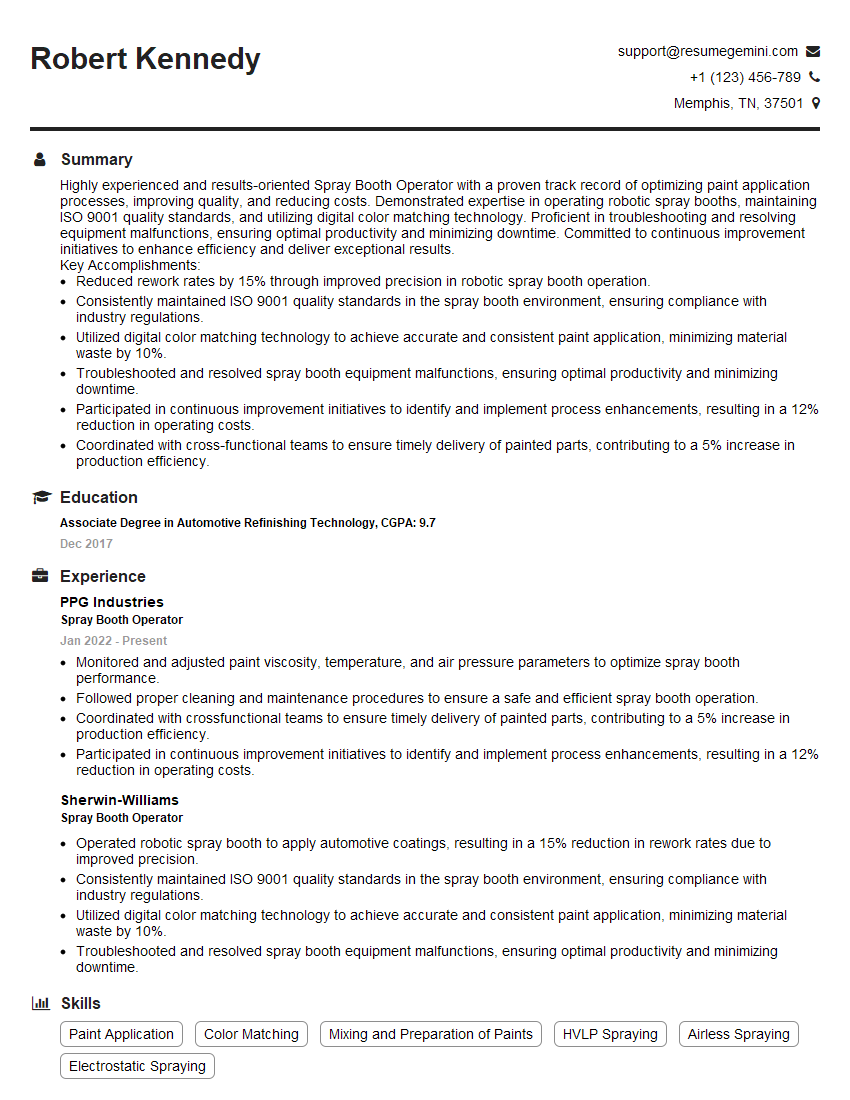
Spray Booth Operator Resume Sample
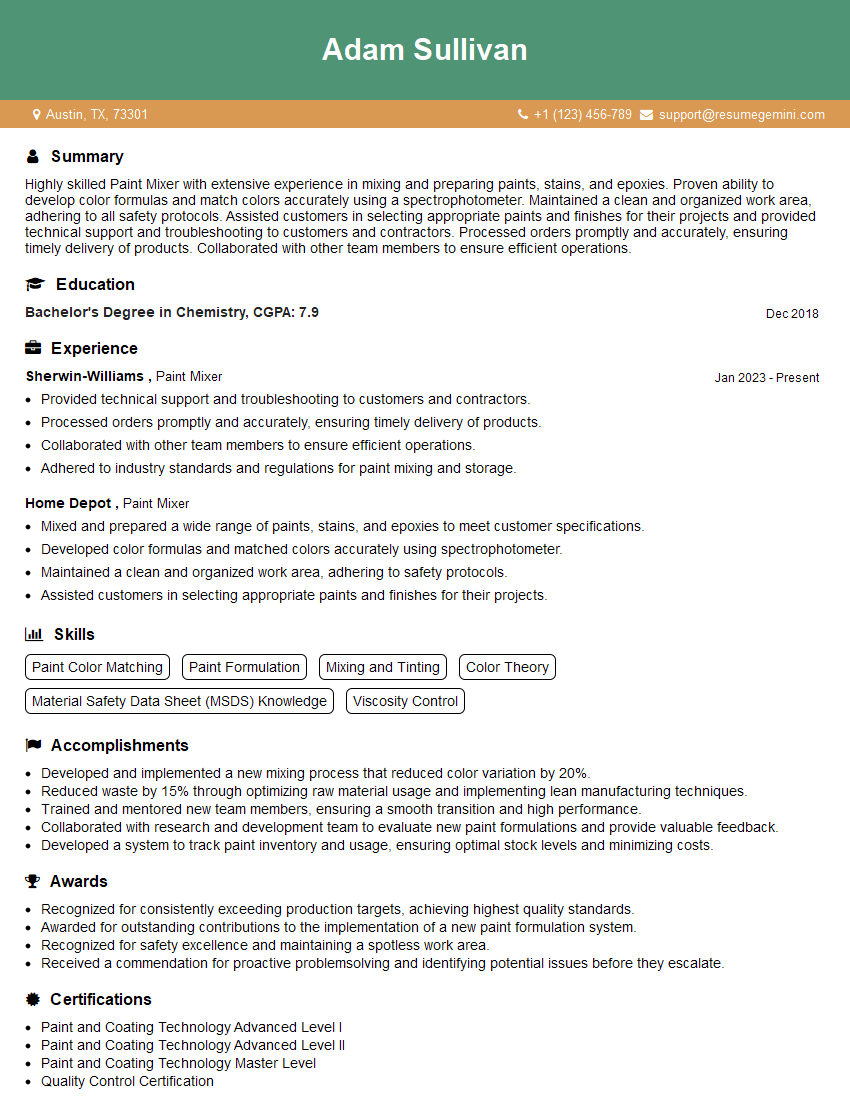
Paint Mixer Resume Sample

Industrial Painter Resume Sample
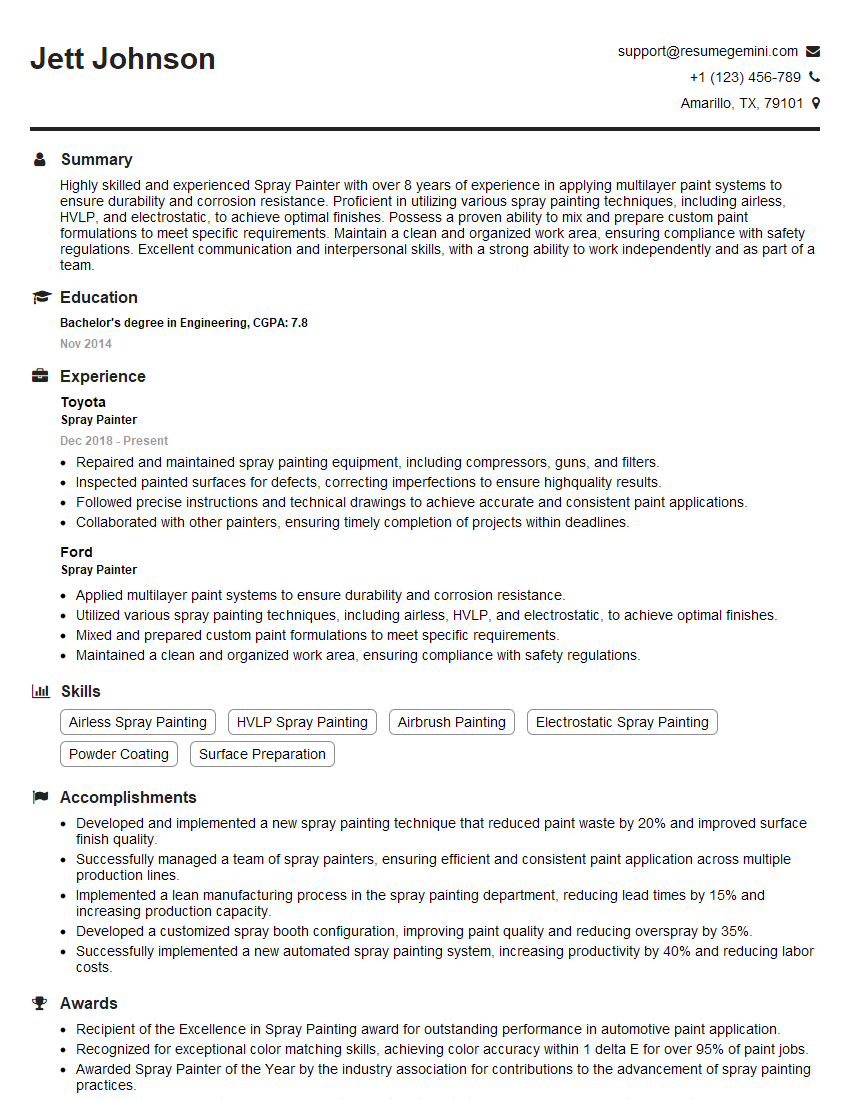
Spray Painter Resume Sample
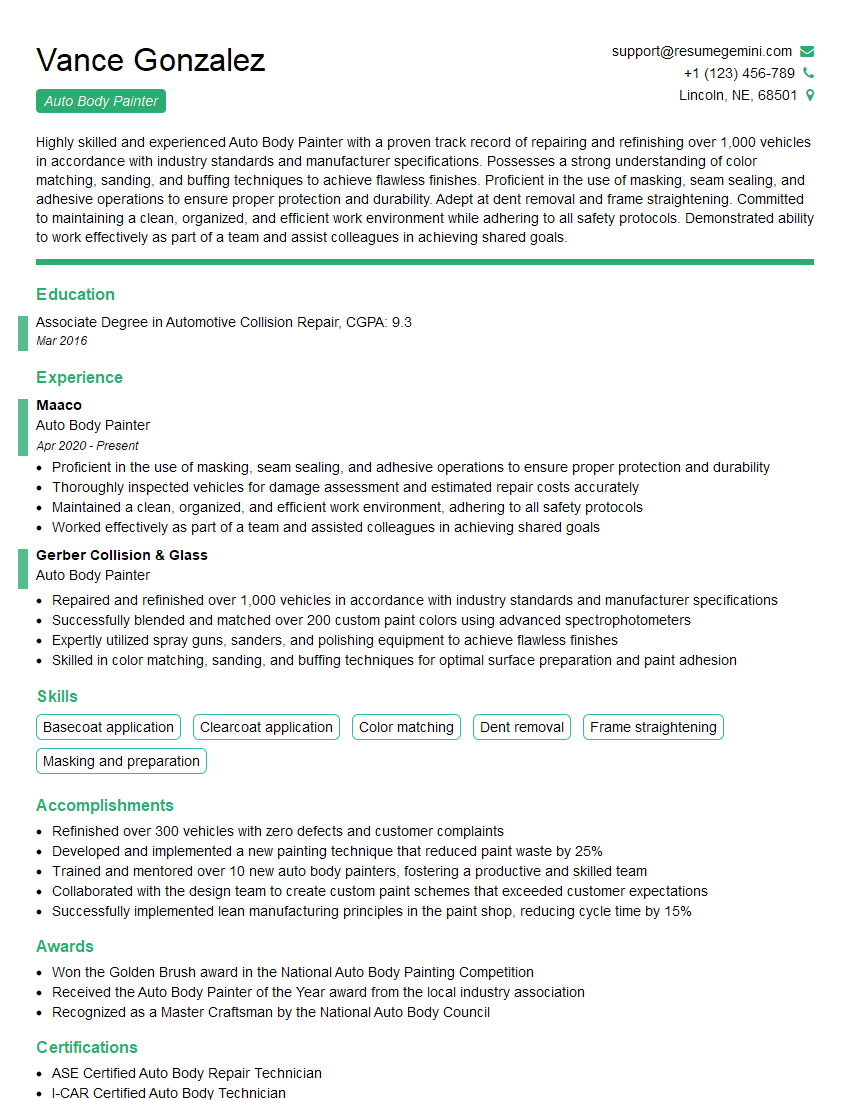
Auto Body Painter Resume Sample
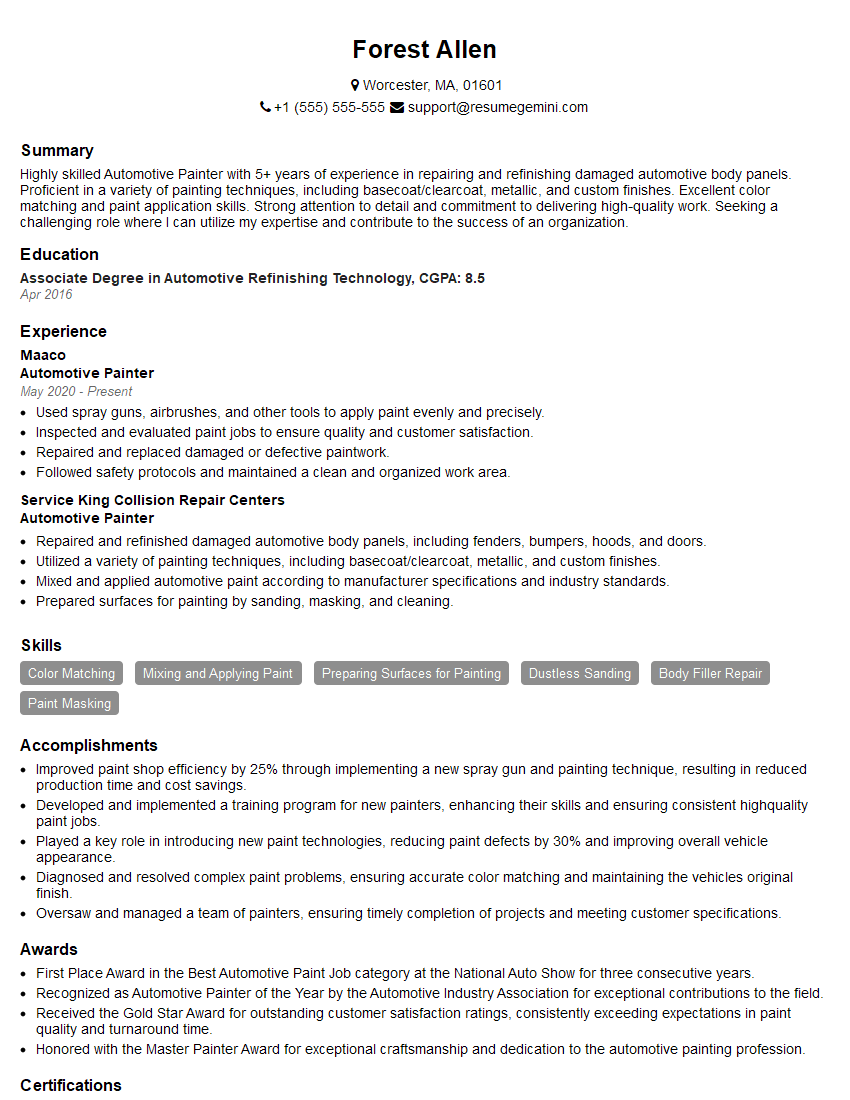
Automotive Painter Resume Sample
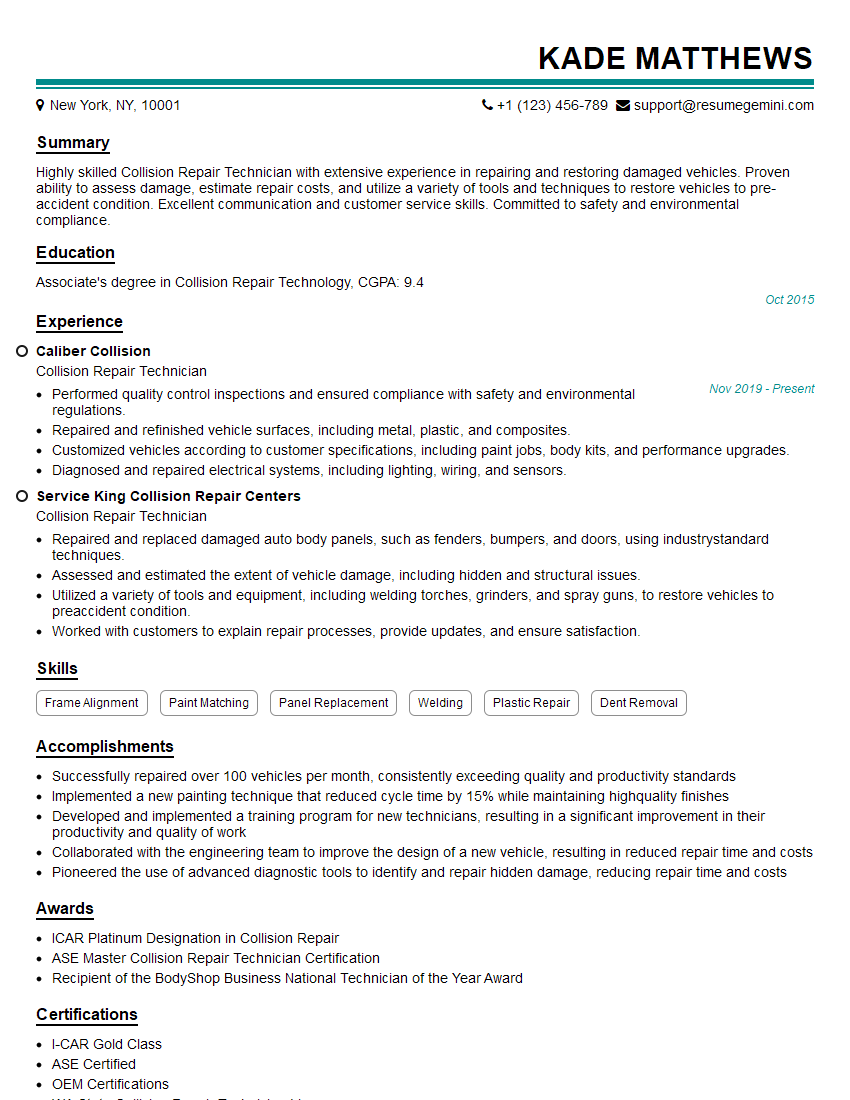
Collision Repair Technician Resume Sample

Aircraft Painter Resume Sample
Explore more articles
Users Rating of Our Blogs
Share Your Experience
We value your feedback! Please rate our content and share your thoughts (optional).
What Readers Say About Our Blog
Very informative content, great job.
good