Feeling uncertain about what to expect in your upcoming interview? We’ve got you covered! This blog highlights the most important Embryology and Chick Development interview questions and provides actionable advice to help you stand out as the ideal candidate. Let’s pave the way for your success.
Questions Asked in Embryology and Chick Development Interview
Q 1. Describe the stages of chick embryo development.
Chick embryo development is a fascinating journey from a single cell to a fully formed chick. It’s divided into several key stages, each characterized by significant developmental milestones. We can broadly categorize these stages based on developmental events rather than strict timeframes, as incubation temperature and other factors influence the precise timing.
- Cleavage: This initial phase involves rapid cell divisions of the zygote, forming a blastoderm – a flat disc of cells on the yolk.
- Gastrulation: This is a crucial process where the three primary germ layers (ectoderm, mesoderm, and endoderm) are established, forming the basis for all tissues and organs. (Further detail in answer 2)
- Neurulation: Formation of the neural tube, the precursor to the brain and spinal cord. (Further detail in answer 4)
- Organogenesis: The process of organ formation from the germ layers. This includes the development of the heart, circulatory system, somites (precursors to muscles and vertebrae), and other organ systems (details in answers 5, 6, and 7).
- Histogenesis: The differentiation of cells into specific tissues and the subsequent maturation and organization of these tissues into functional organs.
- Growth and Hatching: The embryo continues to grow, its organs mature, and eventually, it hatches from the egg.
Imagine this like building a house: cleavage is laying the foundation, gastrulation builds the basic structure, neurulation adds the electrical wiring and plumbing, organogenesis is adding the rooms, histogenesis is decorating and furnishing, and growth and hatching is moving in!
Q 2. Explain the process of gastrulation in chick embryos.
Gastrulation is the process where the single-layered blastoderm transforms into a three-layered embryo. It’s a complex series of cell movements crucial for establishing the body plan. In chick embryos, this begins with the formation of the primitive streak, a thickening in the posterior region of the blastoderm. Cells migrate towards the primitive streak, invaginating (folding inward) and moving between the existing layers. This process creates the three primary germ layers:
- Ectoderm: The outermost layer, which will give rise to the epidermis, nervous system, and neural crest cells.
- Mesoderm: The middle layer, forming the muscles, skeleton, circulatory system, and connective tissues.
- Endoderm: The innermost layer, developing into the lining of the digestive tract, lungs, and other internal organs.
Think of it as a sheet of paper being folded to form a three-layered structure. The precise choreography of cell movement during gastrulation is essential for proper development, and disruptions can lead to severe birth defects.
Q 3. What is the role of the primitive streak in chick development?
The primitive streak is a crucial structure in chick development. It acts as the organizer of gastrulation, providing the directionality for cell migration and the establishment of the body axes. The primitive streak appears as a thickening along the midline of the epiblast (the upper layer of the blastoderm). It’s composed of cells that proliferate and migrate, initiating the ingression of cells that will form the mesoderm and endoderm. The primitive node, at the cranial end of the primitive streak, is particularly important, acting as a signaling center that influences cell fate decisions.
Without the primitive streak, gastrulation wouldn’t occur correctly. The embryo would lack the proper organization of germ layers, resulting in catastrophic developmental failures.
Q 4. Describe the formation of the neural tube in chick embryos.
Neural tube formation, or neurulation, is the process by which the neural plate, a thickened region of ectoderm, folds and fuses to form the neural tube. This tube is the precursor to the central nervous system – the brain and spinal cord. The process begins with the formation of the neural folds along the lateral edges of the neural plate. These folds elevate and eventually fuse dorsally, creating a closed tube. Failure of the neural tube to close completely can lead to serious birth defects like spina bifida or anencephaly.
Imagine a flat sheet of paper (the neural plate) being rolled into a cylinder (the neural tube). This seemingly simple process is regulated by intricate molecular signals and cell-cell interactions.
Q 5. Explain the development of the somites in chick embryos.
Somites are paired blocks of mesoderm that form along the sides of the neural tube. They are segmented structures that give rise to the vertebrae, ribs, skeletal muscles of the back and limbs, and dermis of the skin. Somite formation is a highly regulated process involving a molecular clock and signaling pathways that control the periodic segmentation of the paraxial mesoderm (the mesoderm located adjacent to the neural tube). Each somite differentiates into three regions: the sclerotome (which forms cartilage and bone), the myotome (which forms skeletal muscles), and the dermatome (which forms dermis).
Think of somites as building blocks of the body, each one contributing to a specific segment of the axial skeleton and associated muscles.
Q 6. How does the circulatory system develop in chick embryos?
The chick circulatory system develops early, providing essential oxygen and nutrients to the growing embryo. It starts with the formation of blood islands in the mesoderm, which differentiate into blood cells and blood vessels. These islands fuse to form a continuous network of blood vessels. The heart, initially a simple tube, begins to beat around day 3 of incubation. As development progresses, the heart becomes more complex, undergoing looping and septation to form the four-chambered structure.
The main vessels, including the dorsal aorta and cardinal veins, develop and connect to the yolk sac, the allantois (involved in gas exchange), and the chorioallantoic membrane (another respiratory surface). This intricate network ensures efficient transport of nutrients and oxygen to the embryo and removal of waste products.
Q 7. Describe the development of the heart in chick embryos.
The chick heart develops from mesodermal cells located in the cardiogenic region. Initially, it appears as two endocardial tubes that fuse to form a single primitive heart tube. This tube then begins to beat spontaneously, initiating circulation. The heart undergoes a series of complex morphological changes, including looping, septation, and valve formation. Looping involves a bending of the heart tube, creating a loop-shaped structure. Septation involves the formation of septa (partitions) that divide the heart into its four chambers: two atria and two ventricles. Valve formation ensures unidirectional blood flow.
The development of the chick heart is a remarkable example of coordinated morphogenesis, involving precise cell signaling and differentiation events.
Q 8. Explain the process of limb bud formation in chick embryos.
Limb bud formation in chick embryos is a fascinating process of coordinated cell signaling and growth. It begins around Hamburger-Hamilton stage 17-18, approximately 2 days of incubation. The limb buds emerge as small outgrowths from the lateral plate mesoderm, the middle germ layer, on the embryo’s flanks. These outgrowths are initially composed of mesenchymal cells (connective tissue cells) surrounded by ectoderm (the outer germ layer). A crucial signaling center, the apical ectodermal ridge (AER), forms at the distal tip of the limb bud. This ridge secretes factors like fibroblast growth factors (FGFs), which are essential for limb bud outgrowth and patterning.
The process can be thought of like building a tower: The AER is like the crane at the top, constantly directing the growth below. Mesenchymal cells proliferate rapidly underneath the AER, building the skeletal elements of the limb. This growth is regulated by precise gradients of signaling molecules. Meanwhile, the underlying mesoderm generates the skeletal and muscle tissues of the developing limb. The progress zone, a region beneath the AER, also plays a significant role, providing a pool of rapidly proliferating cells that determine the length of the limb.
Different regions of the limb bud receive different signals, leading to the development of distinct structures. For instance, the anterior-posterior (front-to-back) axis of the limb is established by the zone of polarizing activity (ZPA), a signaling center that releases Sonic hedgehog (Shh) protein. Gradients of Shh concentration dictate the formation of digits along the anterior-posterior axis. Errors in the expression or function of these signaling pathways can lead to limb malformations.
Q 9. What are the major germ layers and their derivatives?
The three primary germ layers—ectoderm, mesoderm, and endoderm—are established during gastrulation, a crucial stage of embryonic development. Each layer gives rise to distinct tissues and organs in the developing embryo. Imagine them as the foundational layers of a complex building.
- Ectoderm (outer layer): This layer forms the nervous system (brain, spinal cord, nerves), the epidermis (outer layer of skin), hair, nails, and the sensory organs (eyes, ears).
- Mesoderm (middle layer): This layer gives rise to the musculoskeletal system (bones, muscles, cartilage), the circulatory system (heart, blood vessels), the excretory system (kidneys, ureters), and parts of the reproductive system.
- Endoderm (inner layer): This layer forms the lining of the digestive tract (stomach, intestines), the respiratory system (lungs, trachea), the liver, pancreas, and the thyroid gland.
It’s crucial to understand that these germ layers don’t work in isolation; they interact extensively to form complex structures and systems. For example, development of the heart involves interactions between mesodermal cells that form the cardiac muscle and neural crest cells (derived from the ectoderm) that form parts of the outflow tract.
Q 10. Describe the techniques used to culture chick embryos.
Culturing chick embryos offers a powerful system to study development, providing a relatively accessible and cost-effective model compared to mammalian systems. Several techniques are used depending on the research question. These can range from simple in ovo cultures (within the egg) to more complex ex ovo cultures (outside the egg).
- In ovo culture: This method involves carefully opening the eggshell, making a small window, and manipulating the embryo within the egg. It allows for relatively undisturbed development and is ideal for observing normal development or for applying localized treatments directly to the embryo.
- Ex ovo culture: This technique involves removing the embryo from the eggshell and culturing it on a nutrient-rich agar-based medium or in specialized culture dishes. This allows for greater experimental manipulation and access to the embryo but requires maintaining sterile conditions and careful control of temperature and humidity. Specialized culture systems can mimic the natural conditions more accurately, including turning the eggs periodically to mimic the rotation of eggs in hens.
Regardless of the technique, maintaining sterile conditions is paramount to prevent microbial contamination, which can significantly affect embryonic development. Temperature control is also critical, as embryos are highly sensitive to temperature fluctuations.
Q 11. Explain the use of chick embryos in teratology studies.
Chick embryos have been extensively used in teratology, the study of birth defects. Their rapid development, relatively large size, and external accessibility make them an ideal model to assess the effects of teratogens—agents that cause birth defects. Researchers can expose chick embryos to various chemicals, drugs, or radiation in ovo or ex ovo and then observe the effects on development.
For example, a teratology study might involve exposing chick embryos to a specific drug at different developmental stages to assess the impact on limb development, neural tube closure, or heart formation. By comparing treated embryos to control embryos, researchers can identify critical windows of vulnerability and determine the specific mechanisms by which the teratogen causes developmental abnormalities. Such studies are crucial for understanding how environmental factors or medications affect human development and for informing preventative measures.
The ease of observing effects such as craniofacial defects or skeletal malformations makes chick embryos a compelling model. The results however, must be interpreted cautiously, taking into account that avian and mammalian development have some key differences.
Q 12. How are chick embryos used in developmental biology research?
Chick embryos are invaluable tools in developmental biology research for several reasons: Their accessibility, rapid development, and ease of manipulation make them ideal for a wide range of studies. The transparent shell and relatively large size of the embryo allow for direct observation of developmental processes. This allows researchers to readily visualize organogenesis, cell migration, and tissue patterning using techniques like live imaging.
Specific applications include:
- Gene expression studies: Researchers can introduce genes, inhibit genes, or visualize gene expression using various techniques (e.g., in ovo electroporation) to understand the role of specific genes in development. This can elucidate signaling pathways and provide insights into how genes regulate cell differentiation and morphogenesis.
- Cell lineage tracing: Researchers can trace the fate of individual cells during development by using genetic labeling techniques to visualize the contributions of specific cell populations to various tissues and organs.
- Morphogenesis studies: By manipulating the embryo or using pharmacological agents, researchers can investigate the processes involved in tissue shaping and pattern formation, such as limb bud development or neural tube closure.
The ease of experimental manipulation and observation make chick embryos a valuable system to investigate fundamental developmental mechanisms.
Q 13. What are the ethical considerations involved in using chick embryos in research?
Ethical considerations are paramount when using chick embryos in research. While chick embryos are not considered sentient in the same way as mammals, researchers still adhere to ethical guidelines that minimize suffering and promote humane treatment. These guidelines generally focus on:
- Minimizing the number of embryos used: Researchers design experiments to use the minimum number of embryos necessary to obtain statistically significant results, employing proper experimental design and statistical analysis.
- Using appropriate anesthesia or analgesia: While debatable with avian embryos, some protocols may include methods to reduce potential discomfort during procedures.
- Ensuring humane endpoints: If an experiment involves causing harm or death to the embryo, procedures must be conducted as quickly and efficiently as possible, minimizing any potential distress.
- Adhering to institutional animal care and use committee (IACUC) guidelines: Researchers must obtain approval from their institution’s IACUC before conducting any research involving chick embryos.
Open discussion and adherence to ethical guidelines are essential to ensure responsible and justifiable use of these model organisms in scientific research.
Q 14. Describe the differences between chick and mammalian development.
While both chick and mammalian development share fundamental principles, significant differences exist. Understanding these differences is crucial when extrapolating findings from chick studies to mammals, including humans.
- Extraembryonic membranes: Chick embryos develop within a series of extraembryonic membranes (chorion, amnion, allantois, yolk sac) that are not present in mammals. These membranes play critical roles in gas exchange, waste disposal, and nutrient uptake in birds.
- Germ layer formation: While the basic germ layers are similar, the timing and mechanisms of gastrulation (the process of germ layer formation) differ considerably.
- Placentation: Mammals have a placenta, a specialized organ for nutrient and gas exchange between the mother and the embryo. Chick embryos lack a placenta and rely on the extraembryonic membranes for these functions.
- Developmental rate: Chick embryos develop rapidly, with major organ systems forming within a few days. Mammalian development is generally slower, spanning several weeks or months.
- Organogenesis: Although the basic organ systems are similar, the details of their formation and arrangement can differ significantly, especially concerning organ placement and structural elements.
Despite these differences, chick embryos offer valuable insights into fundamental developmental processes that are conserved across vertebrates. However, the limitations must be considered when interpreting the results and extrapolating to other species.
Q 15. Explain the role of Hox genes in chick development.
Hox genes are a family of transcription factors crucial for establishing the anterior-posterior (head-to-tail) body plan in animals, including chicks. They act like a molecular blueprint, dictating the identity of different segments along the body axis. Think of them as tiny architects assigning roles to each section of the building (the chick embryo). Different Hox genes are expressed in different regions, and their precise expression patterns are critical for the correct development of structures like the vertebrae, limbs, and organs.
For example, mutations in specific Hox genes can lead to dramatic changes in body plan. A mutation affecting a Hox gene responsible for limb development could result in missing or malformed limbs. The temporal and spatial collinearity of Hox genes means that their order on the chromosome reflects the order of their expression along the anterior-posterior axis, adding a layer of precision to this developmental process. Researchers often use in situ hybridization techniques to visualize the expression patterns of these genes in chick embryos at different developmental stages, aiding in understanding their roles.
Career Expert Tips:
- Ace those interviews! Prepare effectively by reviewing the Top 50 Most Common Interview Questions on ResumeGemini.
- Navigate your job search with confidence! Explore a wide range of Career Tips on ResumeGemini. Learn about common challenges and recommendations to overcome them.
- Craft the perfect resume! Master the Art of Resume Writing with ResumeGemini’s guide. Showcase your unique qualifications and achievements effectively.
- Don’t miss out on holiday savings! Build your dream resume with ResumeGemini’s ATS optimized templates.
Q 16. Describe the role of cell signaling in chick development.
Cell signaling is the process by which cells communicate with each other, influencing their fate, behavior, and organization during development. In chick development, it’s absolutely vital for coordinating the actions of different cells and tissues. Imagine it as a complex network of conversations between cells, where each cell receives and sends signals, guiding the whole process. These signals are often molecules that bind to receptors on the cell surface, triggering intracellular cascades that lead to changes in gene expression and cell behavior.
Several key signaling pathways are involved, including the Fibroblast Growth Factor (FGF), Wnt, Sonic Hedgehog (Shh), and Bone Morphogenetic Protein (BMP) pathways. For example, the Shh pathway plays a critical role in establishing the left-right asymmetry of the body, while the FGF pathway is crucial for limb bud development and outgrowth. Disruptions in these pathways, often due to genetic mutations or environmental factors, can result in developmental abnormalities. The study of cell signaling is often aided by techniques like immunohistochemistry to visualize the location and activity of specific signaling molecules within the embryo.
Q 17. What are some common abnormalities observed in chick embryos?
Several abnormalities can occur during chick embryo development, some of which can be observed visually. These can be caused by genetic mutations, environmental factors like temperature changes or infections, or nutritional deficiencies. Common abnormalities include:
- Craniofacial abnormalities: These can range from mild deformities of the beak to severe malformations of the skull and face.
- Limb deformities: Missing or malformed limbs, caused by disruptions in the FGF and Shh signaling pathways, are frequently observed.
- Heart defects: Problems with the development of the heart, ranging from septal defects to abnormal looping, can result in embryonic death or severe physiological issues.
- Neural tube defects: Failure of the neural tube to close properly can result in conditions like anencephaly (absence of major parts of the brain) or spina bifida (incomplete closure of the spinal column).
- Skeletal abnormalities: Various skeletal deformities, including vertebral malformations and shortened or curved bones, can be observed.
Careful examination of the embryo at various developmental stages is crucial for identifying these abnormalities, and understanding the underlying causes often requires sophisticated molecular and genetic analyses.
Q 18. How can you identify different stages of chick embryo development?
Chick embryo development is staged based on the Hamburger-Hamilton (HH) staging system, a widely accepted standard in developmental biology. This system assigns numerical stages to embryos based on the morphological features observed during development, such as somite number, neural tube closure, and limb bud appearance. Each stage corresponds to a specific period of development and is characterized by key developmental events.
Researchers use the HH stages to precisely describe the developmental age of an embryo, facilitating comparisons between experiments and studies. For example, HH stage 10 represents the early neural tube closure, while HH stage 17 marks the appearance of limb buds. By examining the characteristics of a chick embryo, such as the number of somites (embryonic segments), one can accurately determine its HH stage and predict subsequent developmental events. Microscopic examination combined with detailed anatomical knowledge is essential for accurate staging.
Q 19. What are the advantages and disadvantages of using chick embryos as a model organism?
Chick embryos offer several advantages as a model organism in developmental biology:
- Accessibility and ease of manipulation: Chick embryos are relatively easy to obtain, manipulate, and observe in ovo (in the egg), allowing for experimental manipulations such as gene knockdowns or injections of substances.
- Large size and ex ovo culture: Their large size makes them easily accessible for observation and manipulation, and they can be cultured ex ovo (outside the egg) under controlled conditions.
- Availability of genetic tools: While not as advanced as in some other models, techniques for gene manipulation in chick embryos are steadily improving.
- Relevance to vertebrate development: Their development shares significant similarities with the development of other vertebrates, including humans, making them a valuable model for understanding fundamental developmental processes.
However, there are also disadvantages:
- Ethical considerations: Use of chick embryos raises some ethical concerns, particularly when large numbers are needed.
- Genetic limitations: The development of genetic tools for chick embryos lags behind that of other model organisms like mice.
- Longer developmental time compared to some other models: Their development spans several days, requiring longer experimental durations.
Ultimately, the choice of whether to use chick embryos as a model organism depends on the specific research question and the ethical considerations involved.
Q 20. Explain the concept of apoptosis in chick development.
Apoptosis, or programmed cell death, is a crucial process for shaping tissues and organs during development. It’s a highly regulated process that eliminates unnecessary or unwanted cells. Think of it as a sculptor carefully removing excess material to refine the final form. In chick development, apoptosis plays a vital role in various processes, such as:
- Digit formation: Apoptosis is responsible for sculpting the digits in the developing limbs; interdigital cells undergo apoptosis, separating the fingers and toes.
- Neural tube closure: Apoptosis is involved in the appropriate closure of the neural tube, a critical step in central nervous system development.
- Removal of Müllerian ducts in males: In male chicks, apoptosis is critical for eliminating the Müllerian ducts, ensuring appropriate development of the male reproductive system.
Disruptions in apoptotic pathways can lead to serious developmental defects, such as syndactyly (webbed digits) or other malformations. Researchers employ techniques like TUNEL assays to visualize apoptotic cells within the embryo, helping them understand the spatiotemporal regulation of this critical process.
Q 21. Describe the role of the extraembryonic membranes in chick development.
Chick embryos develop four extraembryonic membranes that play crucial roles in supporting embryonic development: the yolk sac, amnion, allantois, and chorion. These membranes are not part of the embryo itself but are essential for its survival and development. They are like a support system, providing nutrients, protection, and waste disposal.
- Yolk sac: This membrane surrounds the yolk, a rich source of nutrients for the developing embryo. The yolk sac absorbs the yolk and transports nutrients to the embryo through blood vessels.
- Amnion: This membrane forms a fluid-filled sac (amniotic cavity) that surrounds and protects the embryo. The amniotic fluid cushions the embryo and prevents desiccation.
- Allantois: This membrane functions as a respiratory organ and a repository for waste products. It collects metabolic wastes and exchanges gases with the surrounding environment through the eggshell’s pores.
- Chorion: This membrane surrounds the entire embryo and other extraembryonic membranes. It plays a role in gas exchange and calcium absorption from the eggshell.
These extraembryonic membranes work in concert to create an environment that allows the chick embryo to develop effectively within the confines of the eggshell. Studying these membranes provides insights into nutrient uptake, gas exchange, and waste management in a developing vertebrate.
Q 22. How does the chick embryo obtain nutrients?
The chick embryo obtains nutrients primarily through the yolk sac. This remarkable structure is initially a part of the embryo itself, but as development progresses, it becomes a vital extra-embryonic membrane. The yolk sac contains a large supply of yolk, which is rich in lipids and proteins. The embryo absorbs these nutrients through blood vessels that extend into the yolk sac. Think of it like a built-in, nutritious lunchbox! As the embryo grows, specialized blood vessels in the yolk sac actively transport these essential nutrients across the membrane, and eventually into the circulatory system of the developing chick. This process is crucial for growth and development of the embryo until hatching.
Later in development, the allantois also plays a role in nutrient absorption and waste removal. This extraembryonic membrane is involved in gas exchange and waste disposal. The allantois’s blood vessels fuse with the chorion to form the chorioallantoic membrane, which facilitates gas exchange. This is crucial for oxygen intake, and aids in nutrient absorption. It’s important to note that the efficiency of nutrient uptake is influenced by several factors, including the quality of the egg, the incubation temperature, and the overall health of the embryo.
Q 23. Explain the process of neurulation in chick embryos.
Neurulation is the process of forming the neural tube, which is the precursor to the central nervous system (brain and spinal cord). In chick embryos, this fascinating process begins with the formation of the neural plate, a thickened region of ectoderm (outermost germ layer). This plate then invaginates (folds inward) to form the neural groove, with elevated ridges on either side called neural folds. As development continues, the neural folds fuse together, sealing the neural groove and forming the neural tube. This tube is initially open at both ends (neuropores), but these eventually close. Failure of neuropore closure can lead to severe birth defects such as anencephaly (absence of a brain) or spina bifida (incomplete closure of the spinal column). The cells at the edges of the neural plate, called the neural crest cells, migrate away from the neural tube and contribute to the formation of many structures, including peripheral nerves, pigment cells, and parts of the skull.
The process is precisely orchestrated by a complex interplay of signaling molecules, including the secreted protein sonic hedgehog (SHH). Disruptions to this process, which can be caused by genetic mutations or environmental factors, can have profound consequences on the developing embryo.
Q 24. Describe the development of the digestive system in chick embryos.
The chick digestive system develops from the endoderm (innermost germ layer) and involves several key steps. Initially, the gut forms as a tube-like structure, The foregut, midgut, and hindgut regions differentiate, each giving rise to specific organs. The foregut develops into the esophagus, stomach, and parts of the liver and pancreas. The midgut forms the small intestine, while the hindgut develops into the large intestine, cloaca, and part of the urinary system. The development of the liver, pancreas, and other accessory organs involves intricate signaling pathways and interactions between the endoderm and the surrounding mesoderm (middle germ layer).
One particularly interesting aspect is the formation of the cloaca, the common opening for the digestive and urinary tracts. This structure eventually divides into separate openings for excretion and defecation. The entire process is a marvel of coordinated cell growth, differentiation, and migration, tightly regulated by signaling molecules and transcription factors.
Q 25. Explain the formation of the beak and limb buds in chick embryos.
The beak and limb buds emerge from the cranial neural crest cells and the somatic mesoderm, respectively. The beak development is a complex process involving the fusion of several facial processes. The limb buds, which give rise to the wings and legs, appear as small outgrowths on the lateral body wall. These buds are composed of mesoderm covered by ectoderm. The mesoderm differentiates into cartilage, bone, and muscle, while the ectoderm forms the epidermis. The shape and size of the limb are determined by interactions between the mesoderm and the ectoderm, particularly the apical ectodermal ridge (AER), a specialized signaling center that maintains limb bud growth.
The AER secretes fibroblast growth factors (FGFs) that stimulate the underlying mesoderm to proliferate and differentiate. Distal-less homeobox (dlx) genes are crucial regulators for the anterior-posterior patterning and the growth of limb buds. Mutations in these genes can cause severe limb malformations. Think of the AER as the architect guiding the construction of the limb, ensuring the proper formation of the digits, bones, and muscles. Understanding these developmental processes is crucial for comprehending congenital limb deformities.
Q 26. What are the key differences between in ovo and in vitro chick embryo culture?
In ovo chick embryo culture refers to the development of the embryo within the intact egg. This is the natural environment for chick development, and it provides a stable and relatively simple system for studying embryogenesis. The egg shell protects the embryo from external contamination and provides a controlled environment that mimics natural conditions. However, it limits access to the embryo for direct manipulation and observation.
In vitro chick embryo culture involves developing the embryo outside of the egg, typically in a culture dish. This approach provides researchers with better access to the embryo, allowing for precise manipulation and experimentation. However, maintaining optimal environmental conditions such as temperature, humidity, and gas exchange can be challenging. In vitro culture might not completely replicate the natural in ovo environment.
Key differences lie in the level of control over the environment and ease of access to the embryo. In ovo offers a more natural environment, while in vitro provides greater experimental flexibility and control.
Q 27. Describe the techniques used for visualizing chick embryo development (e.g., microscopy).
Several techniques are employed to visualize chick embryo development. Light microscopy provides a general overview of the embryo’s structure, allowing visualization of major organs and tissues. Different staining techniques can highlight specific structures or cells. Fluorescence microscopy, using fluorescent dyes or proteins, enables the visualization of specific molecules or cellular processes within the embryo. This technique provides more detailed information about gene expression and protein localization within developing tissues. Scanning electron microscopy (SEM) offers high-resolution images of surface structures, revealing details of cell morphology and tissue organization. Transmission electron microscopy (TEM) provides an even higher resolution view of intracellular structures.
In addition to microscopy, techniques such as immunohistochemistry (using antibodies to detect specific proteins) and in situ hybridization (to visualize mRNA localization) offer valuable insights into gene expression and protein localization during development. The choice of technique depends on the specific research question and the level of detail required.
Q 28. Explain the impact of environmental factors on chick embryo development.
Environmental factors significantly influence chick embryo development. Temperature plays a crucial role; deviations from the optimal incubation temperature can lead to developmental abnormalities or embryonic death. Humidity is also important; insufficient humidity can lead to dehydration of the egg, while excessive humidity can promote the growth of harmful microorganisms. Oxygen levels need to be adequate to ensure proper respiration and energy production within the embryo. Light exposure can affect hatching time and chick behavior. The presence of certain chemicals or pollutants during incubation can also negatively impact development, causing malformations or mortality. Furthermore, mechanical factors like egg turning and incubation position can affect embryonic development. Improper positioning, for example, can lead to uneven yolk absorption and developmental abnormalities.
Understanding the impact of environmental factors on chick embryo development is crucial for optimizing incubation practices in poultry farming and for conducting reliable developmental biology research.
Key Topics to Learn for Embryology and Chick Development Interview
- Gametogenesis and Fertilization: Understand the processes of oogenesis and spermatogenesis, including meiosis and the significance of fertilization in initiating development.
- Cleavage and Gastrulation: Master the different types of cleavage and their significance. Thoroughly understand the process of gastrulation in chick embryos, including the formation of germ layers (ectoderm, mesoderm, endoderm) and the primitive streak.
- Neurulation and Organogenesis: Explain the formation of the neural tube and its role in the development of the nervous system. Describe the development of major organ systems, focusing on the chick model’s unique aspects.
- Extraembryonic Membranes: Detail the functions of the amnion, chorion, allantois, and yolk sac in chick development and their importance for nutrient exchange and waste removal.
- Developmental Timing and Genetic Control: Understand the key developmental stages and timelines in chick embryogenesis. Discuss the role of Hox genes and other signaling pathways in regulating development.
- Practical Applications: Consider how understanding chick development informs research in human development, regenerative medicine, and teratology (the study of birth defects).
- Experimental Techniques: Familiarize yourself with common techniques used in chick embryology research, such as in ovo manipulation, microsurgery, and gene expression analysis. Be prepared to discuss experimental design and interpretation of results.
- Problem-Solving Approach: Practice analyzing developmental abnormalities and formulating hypotheses to explain their causes. Consider how different experimental approaches could be used to investigate these abnormalities.
Next Steps
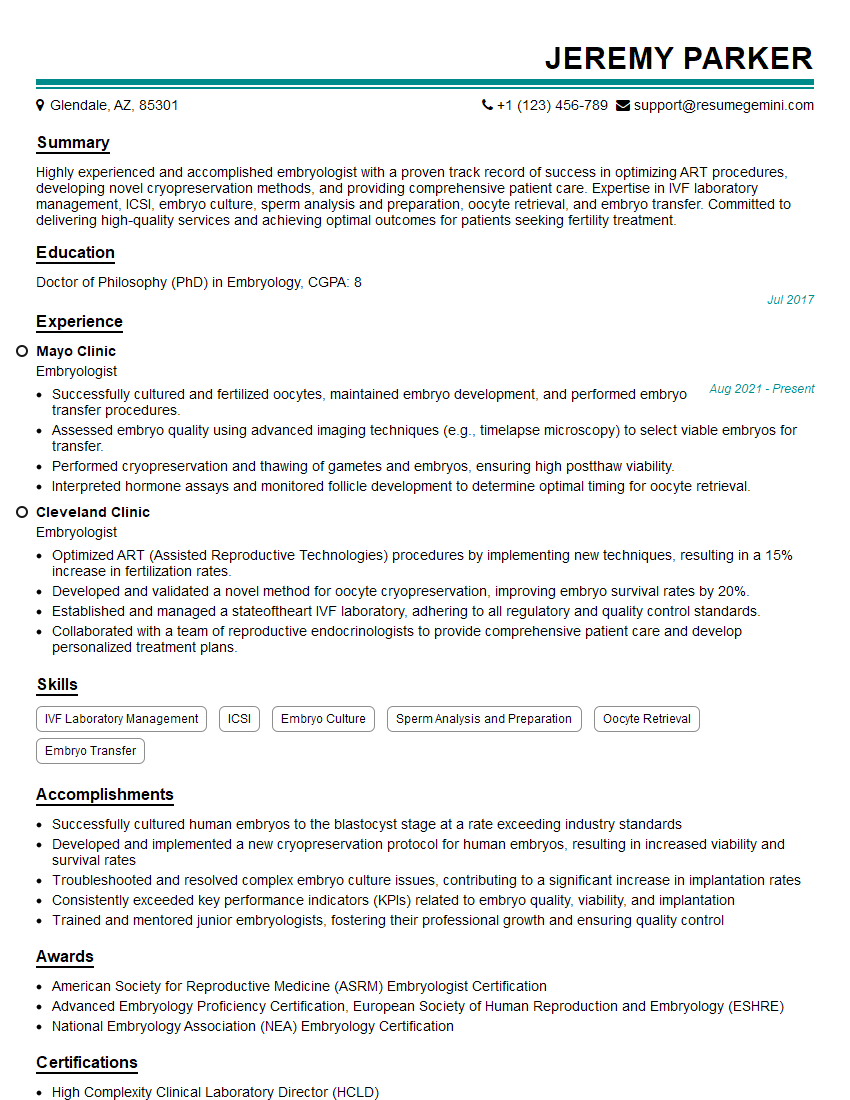
Mastering Embryology and Chick Development opens doors to exciting career paths in research, academia, and biotechnology. A strong understanding of these concepts is highly valued by employers. To maximize your job prospects, create a compelling and ATS-friendly resume that highlights your skills and experience. ResumeGemini is a trusted resource that can help you build a professional resume that showcases your qualifications effectively. They even provide examples of resumes tailored to Embryology and Chick Development to help guide you. Invest time in crafting a resume that accurately reflects your capabilities and significantly increases your chances of landing your dream job.
Explore more articles
Users Rating of Our Blogs
Share Your Experience
We value your feedback! Please rate our content and share your thoughts (optional).
What Readers Say About Our Blog
Very informative content, great job.
good