Cracking a skill-specific interview, like one for Emergency Telecommunications, requires understanding the nuances of the role. In this blog, we present the questions you’re most likely to encounter, along with insights into how to answer them effectively. Let’s ensure you’re ready to make a strong impression.
Questions Asked in Emergency Telecommunications Interview
Q 1. Explain the process of prioritizing emergency calls.
Prioritizing emergency calls is crucial in ensuring that the most critical situations receive immediate attention. It’s a complex process that often relies on a combination of factors, including the caller’s description of the situation and the dispatcher’s assessment of the urgency. This is typically done using a tiered system, often based on a standardized protocol like the ‘Priority Dispatch’ system.
The system uses algorithms and a structured questioning process to quickly assess the severity. For instance, a call reporting someone experiencing chest pain and difficulty breathing would be prioritized higher than a call about a minor car accident with no injuries. The dispatch system may automatically assign priorities based on keywords or caller responses. Factors considered include the nature of the emergency (e.g., cardiac arrest vs. a non-life-threatening injury), the number of victims, the potential for rapid deterioration, and the availability of resources.
Consider this example: A caller reports a house fire with people trapped inside. This immediately triggers a high-priority response because of the immediate threat to life. Conversely, a report of a broken streetlight would be assigned a lower priority, handled after more urgent calls are addressed.
- High Priority: Cardiac arrest, active shooter, serious injuries.
- Medium Priority: Severe allergic reaction, serious motor vehicle accident, significant fire.
- Low Priority: Non-urgent medical concerns, minor property damage.
Q 2. Describe your experience with Computer-Aided Dispatch (CAD) systems.
My experience with Computer-Aided Dispatch (CAD) systems spans over 10 years, working with various systems, including both proprietary and open-source solutions. CAD systems are the backbone of modern emergency dispatch centers, providing a critical link between emergency callers and the responding units. These systems provide essential functionalities such as call taking, resource allocation, unit tracking, and incident management.
I’m proficient in using CAD to manage multiple calls concurrently, track responding units in real-time, and update incident information dynamically. For example, I’ve utilized CAD to efficiently dispatch multiple ambulances to a mass casualty incident, coordinating their arrival and ensuring optimal resource deployment. Furthermore, I’ve used CAD’s mapping capabilities to quickly identify the nearest available units, including their estimated time of arrival (ETA), enabling effective communication with callers and field responders.
I’m also familiar with CAD system integrations with other emergency response tools like mobile data terminals (MDTs) in emergency vehicles. This integrated approach allows for seamless information flow and enhanced situational awareness for both dispatchers and first responders.
Q 3. How do you handle high-stress situations and multiple simultaneous calls?
Handling high-stress situations and multiple simultaneous calls requires a combination of training, experience, and effective organizational skills. It’s like conducting an orchestra – you need to manage multiple instruments (calls) simultaneously, ensuring each receives the necessary attention while maintaining overall harmony and efficiency.
My training emphasizes maintaining composure, prioritizing tasks effectively, and delegating when necessary. I employ techniques like deep breathing and mental focusing to manage stress, allowing me to stay calm and clear-headed even amidst chaos. I prioritize calls based on severity, using the CAD system to track responses and allocate resources optimally. If overwhelmed, I use established protocols for escalating calls to supervisors or requesting assistance from other dispatchers.
For example, during a major weather event, I might have several simultaneous calls – a car accident, a power line down, and a person trapped in a flooded basement. I would use a systematic approach: assess the urgency of each call, assign priorities, dispatch resources, and keep all parties informed.
Q 4. What are the legal and ethical considerations in emergency dispatch?
Legal and ethical considerations in emergency dispatch are paramount. Our actions directly impact public safety and individual well-being. We must adhere to strict guidelines regarding confidentiality, data privacy, and the responsible use of information obtained during calls.
Legally, we’re bound by laws related to patient privacy (HIPAA in the US), data protection, and the release of information to authorized personnel. We must accurately record all calls, maintain detailed logs, and follow established protocols for handling sensitive information. Ethically, we are obligated to act with impartiality, provide equal service regardless of background, and respect the dignity of all callers, even those exhibiting challenging behaviour.
One crucial ethical dilemma is balancing the need for rapid response with the accuracy of information. Sometimes, obtaining complete details may delay dispatch, potentially impacting the outcome. We must weigh the potential risks and make informed decisions within the legal and ethical frameworks.
Q 5. How do you effectively communicate with callers experiencing emotional distress?
Communicating with callers experiencing emotional distress requires empathy, patience, and active listening skills. It’s crucial to understand that their emotional state might impact their ability to articulate information clearly. I use a calm, reassuring tone and avoid judgmental language. My approach is based on empathy and validation.
I focus on active listening, reflecting their feelings, and using verbal cues to show I’m paying attention (e.g., “I understand this is a difficult situation,” or “I hear your frustration”). I might ask open-ended questions to gather information without interrupting their emotional expression. The goal is to build rapport, calm their anxieties, and gather the necessary information efficiently.
Imagine a caller experiencing a panic attack. Instead of immediately asking for details, I might start by saying, “I’m here to help, take a deep breath, and tell me what’s going on.” This approach prioritizes their emotional well-being while still achieving the objective of information gathering.
Q 6. Describe your experience with different types of emergency calls (e.g., medical, fire, police).
My experience encompasses a wide range of emergency calls, including medical, fire, and police incidents. Each type requires a different approach, based on specific protocols and the nature of the emergency.
- Medical calls: These range from minor injuries to life-threatening situations like cardiac arrests. I’m trained to assess the urgency, gather details about symptoms, and provide pre-arrival instructions, such as CPR instructions or guidance on controlling bleeding.
- Fire calls: These often involve assessing the severity of the fire, the potential for injuries, and the location of any trapped individuals. Dispatch protocols for fire calls prioritize rapid response, often involving multiple units.
- Police calls: These calls vary greatly, from domestic disturbances to active shooter situations. I follow specific procedures for each type, ensuring the safety of both the caller and responding officers. My focus is on gathering accurate details about the location, suspects involved, and any ongoing threats.
The ability to adapt quickly to different situations and utilize appropriate protocols for each call type is a critical skill in emergency dispatch.
Q 7. How do you gather critical information from callers quickly and accurately?
Gathering critical information quickly and accurately is crucial in emergency dispatch. It’s a skill honed through training and experience, often involving a structured questioning approach. I utilize a combination of techniques to efficiently obtain the necessary details from potentially distressed or disoriented callers.
The first step is establishing clear communication by identifying myself and the agency I represent. Then, I use a prioritized questioning method, starting with the most crucial information: location, nature of the emergency, and the number of victims. I use open-ended questions to encourage detailed responses and avoid leading questions that could bias the information. I employ active listening techniques to ensure I fully understand the situation and ask clarifying questions as needed. Confirmation and repetition are key to ensuring accuracy.
For example, instead of simply asking ‘What’s your address?’, I’d ask, ‘Can you please give me the exact address of your location, including street number, street name, and any apartment or building numbers?’ This ensures accuracy and minimizes ambiguity.
Q 8. What is your familiarity with GPS tracking and location verification?
GPS tracking and location verification are crucial in emergency telecommunications. They allow us to pinpoint the location of a caller in distress, significantly improving response times and the effectiveness of emergency services. My familiarity encompasses both the technical aspects of GPS technology and its practical applications in dispatching. This includes understanding different GPS technologies, potential inaccuracies due to signal obstructions or atmospheric conditions, and the use of triangulation methods to improve accuracy. I’m also proficient in using various location verification techniques, including address confirmation through databases and asking clarifying questions to callers.
For instance, imagine a panicked caller reporting a car accident. Accurate GPS coordinates, combined with a verified address, allow first responders to navigate directly to the scene, potentially saving precious minutes that can be the difference between life and death. I have extensive experience interpreting GPS data from various sources and integrating it with other information, like caller’s descriptions, to get the most accurate location possible.
Q 9. Explain the importance of maintaining accurate records and documentation.
Maintaining accurate records and documentation is paramount in emergency telecommunications for several reasons: legal compliance, efficient service delivery, and continuous improvement. Accurate records serve as irrefutable evidence in legal proceedings, protect the agency from liability, and provide a clear audit trail of all actions taken. They also aid in post-incident analysis, enabling us to identify areas for improvement in our processes and training. Further, well-maintained data can help track key metrics, such as response times and call resolution rates, enabling us to assess the overall effectiveness of our service.
For example, detailed call logs including timestamps, caller information, location data, and the actions taken are meticulously maintained. These records are crucial for tracking trends, identifying potential system flaws, and ensuring accountability. We use specialized software to ensure data integrity and efficient retrieval.
Q 10. How do you handle situations where information is incomplete or unclear?
Handling incomplete or unclear information is a routine challenge in emergency situations. My approach involves a systematic process: Firstly, I prioritize gathering as much relevant information as possible through careful questioning. I use open-ended questions, active listening, and clarifying prompts to fill in the gaps. Secondly, I leverage available resources like mapping systems and databases to cross-reference and verify the information received. Finally, I escalate the case to a supervisor or more experienced dispatcher if I’m unable to obtain sufficient information to effectively dispatch emergency services.
Imagine a caller who is disoriented and struggling to describe their location. Instead of panicking, I would remain calm, ask specific questions about nearby landmarks, businesses, or street signs, and utilize reverse phone lookup services if permitted to confirm their identity and location. Collaboration with colleagues is always an option to cross-check data.
Q 11. Describe your experience with radio communication protocols.
My experience with radio communication protocols encompasses a variety of systems used by first responders. I am proficient in using different radio frequencies, understanding trunking systems, and adhering to established communication procedures. This includes knowledge of clear communication techniques (using plain language, avoiding jargon, and confirming information received), emergency radio procedures, and understanding the limitations of radio communication (range, interference, etc.).
For example, I’m familiar with protocols such as APCO 25 and other digital radio systems. I can effectively communicate with police, fire, and ambulance personnel using standardized codes and phrases while maintaining professionalism and accuracy. This ensures clear and efficient coordination during emergency responses.
Q 12. How do you maintain confidentiality in emergency dispatch?
Maintaining confidentiality in emergency dispatch is crucial and is achieved through adherence to strict protocols. We only share information on a need-to-know basis. This includes using secure communication channels, adhering to data privacy regulations (like HIPAA in the US), and limiting access to sensitive information to authorized personnel. Any personal information obtained during a call is treated with the utmost discretion and only shared with relevant first responders involved in the emergency response.
For instance, details like a caller’s medical history or financial information are never shared unnecessarily. We are trained to recognize the sensitive nature of the information handled and understand the consequences of breaching confidentiality. Regular training updates ensure everyone understands their responsibility to protect sensitive data.
Q 13. How do you coordinate with first responders in the field?
Coordination with first responders in the field involves continuous communication and information sharing. This begins with accurate and complete dispatching instructions, including location, nature of the emergency, and any other relevant details. Throughout the response, I maintain contact with the first responders, providing updates, relaying information from the caller or witnesses, and coordinating resource allocation. Clear, concise communication, active listening, and efficient information sharing are vital components of this coordination.
A real-world example: During a multi-vehicle accident, I would initially dispatch the appropriate units, then constantly monitor their progress via radio, relaying information about road closures, the number of injured individuals, and the arrival of additional resources. I would also coordinate with hospital dispatchers to ensure the availability of appropriate medical support.
Q 14. What are your strategies for managing call volume during peak times?
Managing high call volume during peak times requires a multi-pronged approach. This involves prioritizing calls based on urgency, utilizing call-queuing systems to manage incoming calls efficiently, and potentially deploying additional personnel to handle the increased workload. Effective training of staff to handle stressful situations and utilize available technology are crucial. Clear communication protocols and prioritization guidelines help streamline the process ensuring that the most critical calls are addressed first.
For instance, during a major weather event, we might implement a tiered response system, prioritizing calls involving life-threatening emergencies. We also utilize automated systems to filter out non-emergency calls, diverting them to appropriate resources, freeing up dispatchers to focus on life-threatening situations. Continuous monitoring of call volume allows us to anticipate peaks and proactively adjust staffing levels.
Q 15. How do you stay updated on changes in emergency response procedures?
Staying current in emergency response is crucial. I utilize several methods to ensure I’m up-to-date on the latest procedures and best practices. This includes regular participation in professional development courses and webinars offered by organizations like the National Emergency Number Association (NENA) and the International Academies of Emergency Dispatch (IAED). I actively subscribe to industry publications and journals, keeping abreast of research, policy changes, and technological advancements. Furthermore, I maintain a network of colleagues and mentors in the field, engaging in regular discussions and knowledge sharing. Finally, I actively review and update my agency’s internal protocols and Standard Operating Procedures (SOPs) to reflect any changes in national or local guidelines.
For instance, recent updates on best practices for handling active shooter situations or the evolving use of GIS technology in emergency response greatly impact my daily work. Staying informed isn’t just a matter of compliance; it’s about ensuring the safety and efficiency of emergency response operations.
Career Expert Tips:
- Ace those interviews! Prepare effectively by reviewing the Top 50 Most Common Interview Questions on ResumeGemini.
- Navigate your job search with confidence! Explore a wide range of Career Tips on ResumeGemini. Learn about common challenges and recommendations to overcome them.
- Craft the perfect resume! Master the Art of Resume Writing with ResumeGemini’s guide. Showcase your unique qualifications and achievements effectively.
- Don’t miss out on holiday savings! Build your dream resume with ResumeGemini’s ATS optimized templates.
Q 16. Describe your experience with different types of dispatch software.
My experience encompasses a range of dispatch software, from legacy systems to cutting-edge cloud-based solutions. I’ve worked with systems like CAD (Computer-Aided Dispatch) software from various vendors, each with its unique features and functionalities. These systems manage incoming calls, track resources, and aid in dispatching appropriate responders to incidents. I’m familiar with features such as automated location identification (ALI), automatic number identification (ANI), and mapping capabilities. I’ve also used Computer-Aided Dispatch (CAD) systems integrated with Geographic Information Systems (GIS), which provide real-time visualization of incidents and responder locations. My proficiency extends to specialized software for handling specific emergency types, such as those dedicated to fire dispatch or emergency medical services (EMS).
For example, I’ve found that some systems excel in their call-handling efficiency, while others are better suited for resource management. Understanding the strengths and weaknesses of different software is critical to effectively utilizing these tools and ensuring seamless emergency response.
Q 17. How do you identify and handle hoax calls?
Identifying and handling hoax calls requires a combination of skills and techniques. It starts with carefully listening to the caller, paying attention not only to what they say but also to how they say it. Inconsistencies in the story, unusual tones of voice, or background noises can be indicators of a hoax. I utilize questioning techniques designed to elicit truthful information. For example, I might ask open-ended questions that require more detailed responses, rather than simple yes or no answers. I also verify information independently. If a caller reports a fire, I might confirm the information with other sources, such as neighboring businesses or fire alarms. Finally, appropriate action is taken depending on the nature of the suspected hoax. In some cases, this may involve escalating the call to law enforcement, while in others, it may involve simply documenting the call as a hoax and potentially educating the caller on the severity of making such calls.
One memorable situation involved a caller who reported a major car accident with multiple fatalities. Through careful questioning and cross-referencing information, it became clear that the call was a hoax. The caller was later identified and dealt with accordingly. This emphasizes the importance of thorough investigation even when details seem convincing at first glance.
Q 18. What is your understanding of the National Incident Management System (NIMS)?
The National Incident Management System (NIMS) is a standardized approach to incident management, providing a common framework for coordinating responses to all types of emergencies. It emphasizes a unified command structure, ensuring effective communication and resource allocation among various agencies and jurisdictions. Key components include the Incident Command System (ICS), which provides a clear organizational structure for managing incidents; resource management, which focuses on coordinating and deploying necessary resources; and communications and information management, which ensures clear and timely communication among all stakeholders. Understanding NIMS is essential for effective emergency response because it fosters interoperability and collaboration between different agencies, leading to a more efficient and coordinated response to emergencies of all magnitudes.
For example, during a large-scale disaster like a hurricane, NIMS ensures that different agencies, including fire departments, police, EMS, and FEMA, can work together seamlessly, sharing information and resources effectively. This standardized approach eliminates confusion and ensures a more effective response.
Q 19. How do you handle a situation where a caller is unable to provide their location?
When a caller cannot provide their location, the situation becomes more challenging but not insurmountable. My immediate priority is to obtain as much information as possible to help pinpoint their location. I would start by asking detailed questions about nearby landmarks, businesses, or street signs. I might also inquire about the type of environment they are in (e.g., rural, urban, near a body of water). If they have a cellphone, I would try to use cell tower triangulation or GPS technology to estimate their location. I would work closely with the appropriate responding agencies and leverage any available technology, including reverse phone lookup services (if permitted under applicable laws), to trace their call and try to establish a location. Finally, if all other attempts fail, I would utilize any available social media or other broadcasting methods to alert local police and surrounding agencies about the possibility of a distressed individual.
Remember, time is crucial in emergency situations. Even partial location information can be incredibly valuable to responders.
Q 20. Explain the importance of staying calm and professional under pressure.
Maintaining calm and professionalism under pressure is paramount in emergency telecommunications. It’s not just about managing my own stress; it’s about providing a reassuring presence for the caller, who is likely experiencing fear, panic, or distress. My calm demeanor helps them to articulate their situation clearly and accurately, providing critical information for responders. It also ensures clear and effective communication with the dispatch team, which is crucial for efficient resource allocation. Professionalism involves using clear, concise language, avoiding jargon, and showing empathy and understanding towards the caller. Regular training and simulations help me practice these skills, enabling me to handle even the most stressful situations with composure.
Imagine receiving a frantic call about a heart attack. The caller’s emotional state can escalate the situation. Remaining calm helps the caller provide vital details, like the address and the victim’s symptoms, which are crucial for a timely medical response.
Q 21. How do you utilize available resources (e.g., maps, databases) to assist responders?
Access to various resources is critical for assisting responders. I utilize digital maps to visualize the location of the incident and the deployment of resources, providing responders with real-time updates on traffic conditions and optimal routes. Access to databases such as police records, building information, and hazardous materials databases aids in making informed decisions and sharing pertinent information with the responding teams. I often use geographic information systems (GIS) to overlay incident locations with relevant contextual data, such as nearby hospitals, fire hydrants, or hazardous material sites. This information allows me to provide responders with a comprehensive picture of the situation, improving their response efficiency and safety.
For instance, knowing the presence of a hazardous material at the location of an incident allows me to alert responders, allowing them to take appropriate precautions. Such accurate and rapid information exchange dramatically increases the safety and effectiveness of emergency response.
Q 22. Describe a time you had to make a quick, critical decision under pressure.
During a severe thunderstorm, we received multiple simultaneous calls reporting a major traffic accident with entrapment and downed power lines. Our system was overloaded, and calls were queuing rapidly. I had to quickly prioritize which calls needed immediate attention. Instead of processing calls in the order received, I used a triage system, focusing first on the calls reporting entrapment (immediate life threat) and then prioritizing those involving downed power lines (risk of electrocution and potential wider impact). This ensured that the most critical resources were deployed swiftly and effectively to the most immediate threats. This prioritization, while stressful, prevented delays and potentially saved lives. The calm, decisive action enabled us to manage the multiple incidents efficiently, demonstrating strong leadership under extreme pressure.
Q 23. How do you ensure the accuracy of information relayed to first responders?
Accuracy is paramount in emergency telecommunications. We employ several methods to ensure this. First, our training rigorously emphasizes active listening and precise questioning techniques. We use standardized protocols and scripts to systematically gather crucial information like location, nature of the emergency, and the number of victims. We utilize mapping and GIS technology (Geographic Information Systems) to confirm the location, which is then verified with callers if there’s any ambiguity. Second, we implement a robust quality assurance system involving call recording, peer review, and supervisor oversight. This provides continuous monitoring and feedback to refine our processes and identify areas for improvement. Finally, we are always trained on updates to medical terminology and other critical information. In cases of uncertainty, we always consult with senior dispatchers or medical professionals to ensure accuracy before relaying information to first responders.
Q 24. What are your skills in multi-tasking and time management?
Multitasking and time management are essential in this role. Imagine handling three simultaneous calls – a heart attack, a car accident with injuries, and a gas leak – all while updating responders on progress. I’ve developed a systematic approach: I prioritize tasks based on urgency and severity using a mental checklist, I utilize call prioritization software, and I switch efficiently between tasks, maintaining composure and minimizing response times. I’m adept at quickly processing information from multiple sources simultaneously, accurately assessing priorities, and delegating as needed, all while maintaining a calm demeanor and clear communication with all parties involved. My organizational skills and ability to remain calm under pressure contribute to my efficiency in high-pressure situations.
Q 25. Describe your experience with working as part of a team in a high-pressure environment.
Emergency dispatch is inherently a team effort. During a large-scale incident like a major fire or a natural disaster, effective teamwork is paramount. I’ve experienced situations where collaborative communication, mutual support, and clear role definition were critical to successful outcomes. During a severe blizzard, our team successfully coordinated emergency response to numerous stranded motorists and homes without power. Effective teamwork, including clear and concise communication, efficient resource allocation and mutual support were crucial in preventing fatalities. My role involved dispatching resources effectively and efficiently, coordinating with fire, police and ambulance services to ensure quick and appropriate responses to the multitude of simultaneous emergency calls. We relied heavily on clear communication protocols and established procedures to maintain order and efficiency, working as a cohesive unit to handle the crisis effectively.
Q 26. What measures do you take to ensure your own well-being while working in emergency dispatch?
The emotional toll of this job can be significant, so maintaining well-being is crucial. We have access to peer support programs, psychological counseling, and employee assistance programs to help us process the stress. Personally, I practice mindfulness techniques, regular exercise, and maintain a healthy work-life balance. Taking regular breaks, engaging in stress-reducing activities, and actively participating in team-building exercises helps maintain my emotional resilience. We also have a strong sense of camaraderie within the team, providing a support system essential for coping with the demanding nature of our work. This includes a supportive management team that actively promotes employee well-being.
Q 27. How familiar are you with the APCO and NENA standards?
I am very familiar with APCO (Association of Public-Safety Communications Officials) and NENA (National Emergency Number Association) standards. My training included a comprehensive study of APCO’s best practices for emergency communications, including call-taking procedures, resource management, and quality assurance. I understand the importance of adherence to NENA’s i3 standards for Next Generation 911 (NG911), specifically regarding location accuracy, multimedia capabilities, and interoperability between systems. This knowledge is crucial for ensuring efficient and effective emergency response, and I actively apply these standards in my daily work.
Q 28. What are your salary expectations?
My salary expectations are in line with the market rate for experienced emergency telecommunicators with my qualifications and experience in this region. I am open to discussing a competitive compensation package that reflects my skills and contributions to your organization. I am more interested in a role where I can contribute meaningfully and grow my career in a supportive environment, alongside compensation that values my expertise. I’m confident I can bring significant value to your team.
Key Topics to Learn for Emergency Telecommunications Interview
- Emergency Call Handling & Prioritization: Understanding call prioritization algorithms, techniques for efficient information gathering, and effective communication under pressure.
- Dispatch Procedures & Protocols: Mastering the procedures for dispatching emergency services (police, fire, ambulance), including understanding location information systems and resource allocation.
- Communication Technologies & Systems: Familiarity with various communication technologies used in emergency telecommunications, such as Computer-Aided Dispatch (CAD) systems, radio systems, and mobile applications.
- Medical Terminology & First Aid Knowledge: Basic understanding of medical terminology and first aid procedures to effectively communicate with callers and provide preliminary guidance.
- Crisis Management & Stress Response: Strategies for managing stress and maintaining composure during high-pressure situations, including effective de-escalation techniques.
- Data Privacy & Confidentiality: Understanding and adhering to regulations surrounding patient confidentiality and data protection in emergency situations.
- Geographic Information Systems (GIS): Understanding how GIS technology assists in locating and dispatching resources effectively.
- Technological Troubleshooting & Problem Solving: Ability to quickly identify and resolve technical issues with communication systems to ensure uninterrupted service.
- Teamwork & Collaboration: Experience working effectively within a team environment, including communication and coordination with other emergency responders.
- Legal & Ethical Considerations: Understanding the legal and ethical responsibilities associated with emergency telecommunications, including liability and decision-making in critical situations.
Next Steps
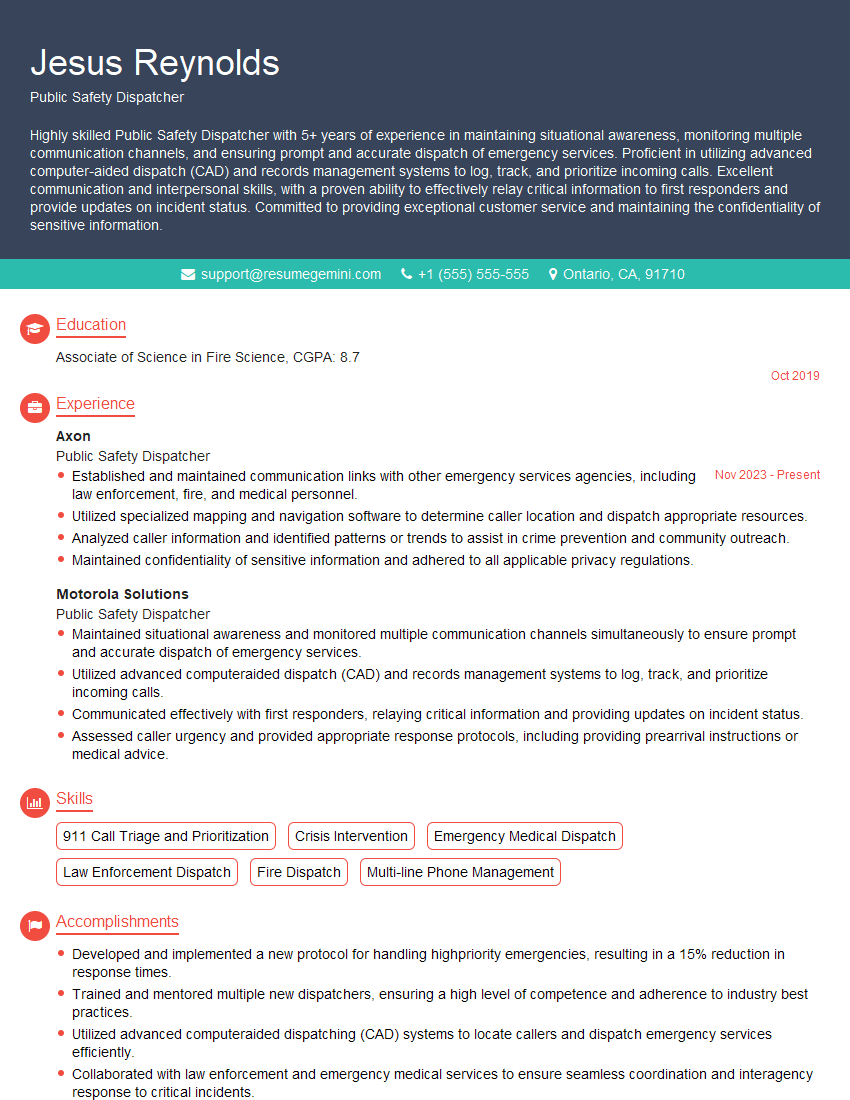
Mastering Emergency Telecommunications opens doors to a rewarding career offering both challenge and immense personal satisfaction. Your skills in critical thinking, communication, and rapid decision-making are highly valued. To maximize your job prospects, creating an ATS-friendly resume is crucial. A well-structured resume highlights your qualifications and allows applicant tracking systems to efficiently identify you as a strong candidate.
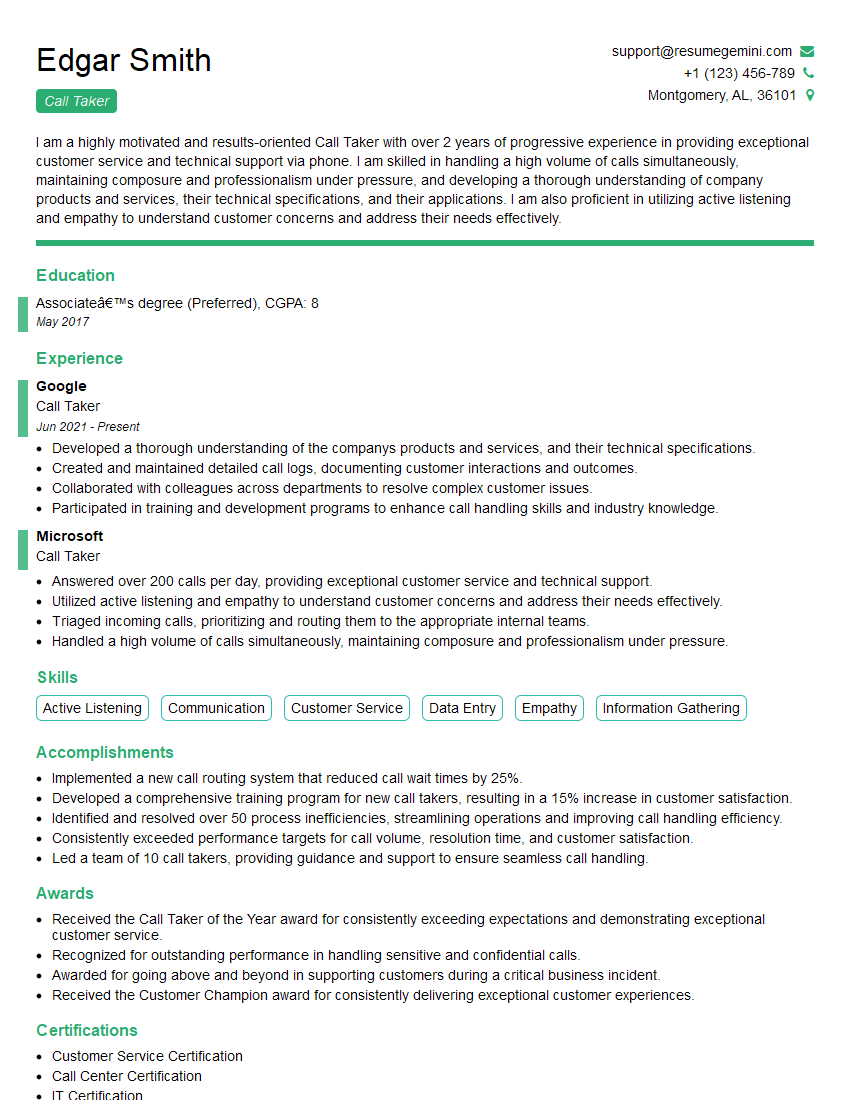
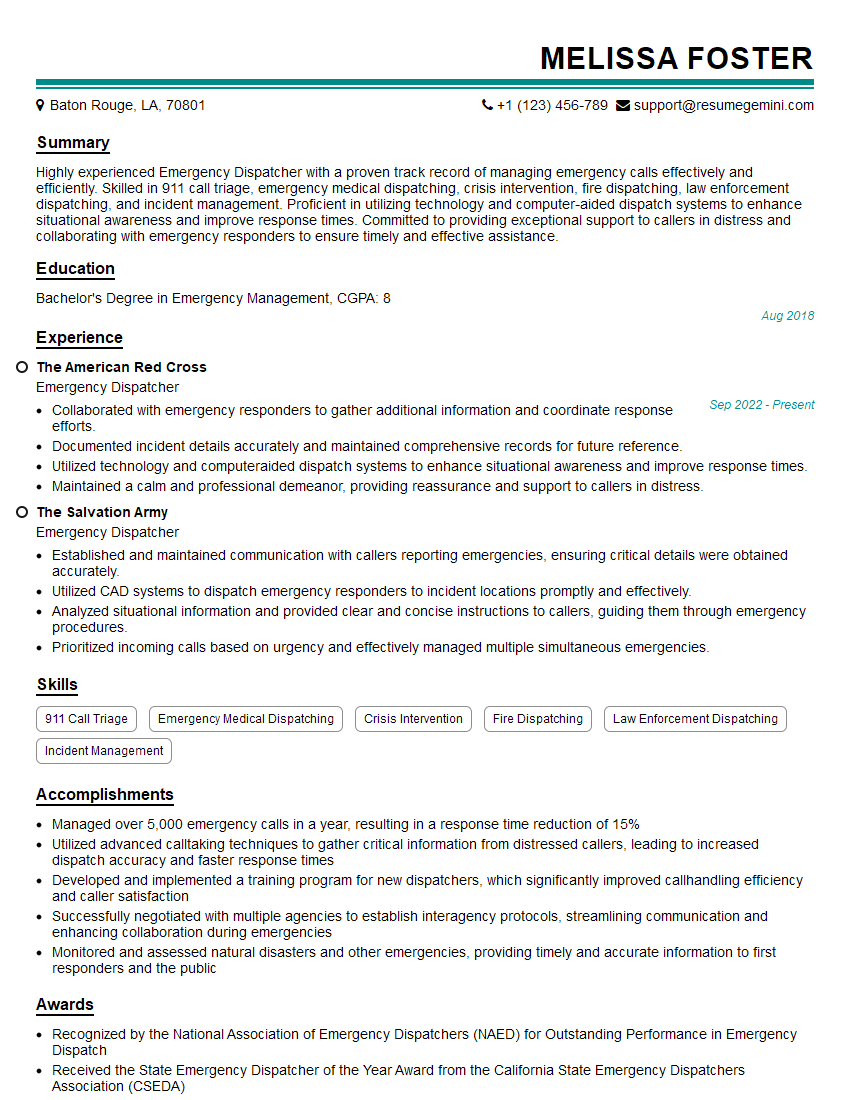
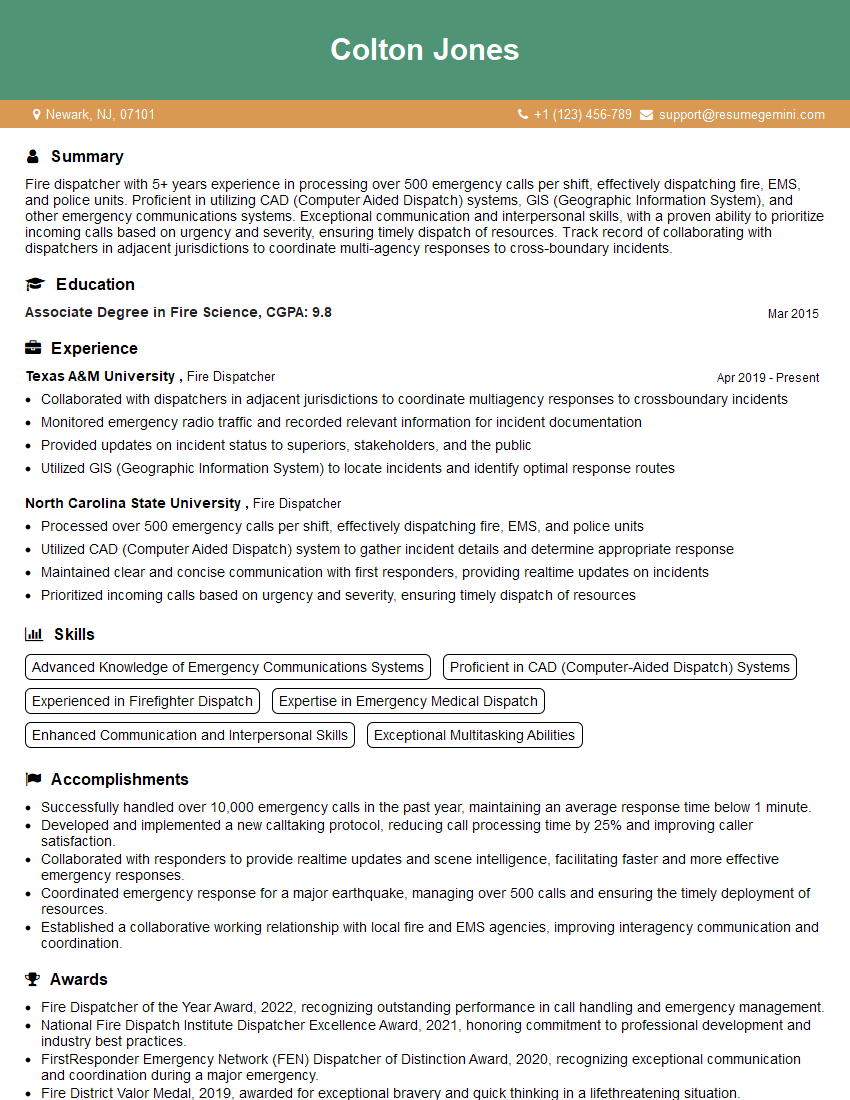
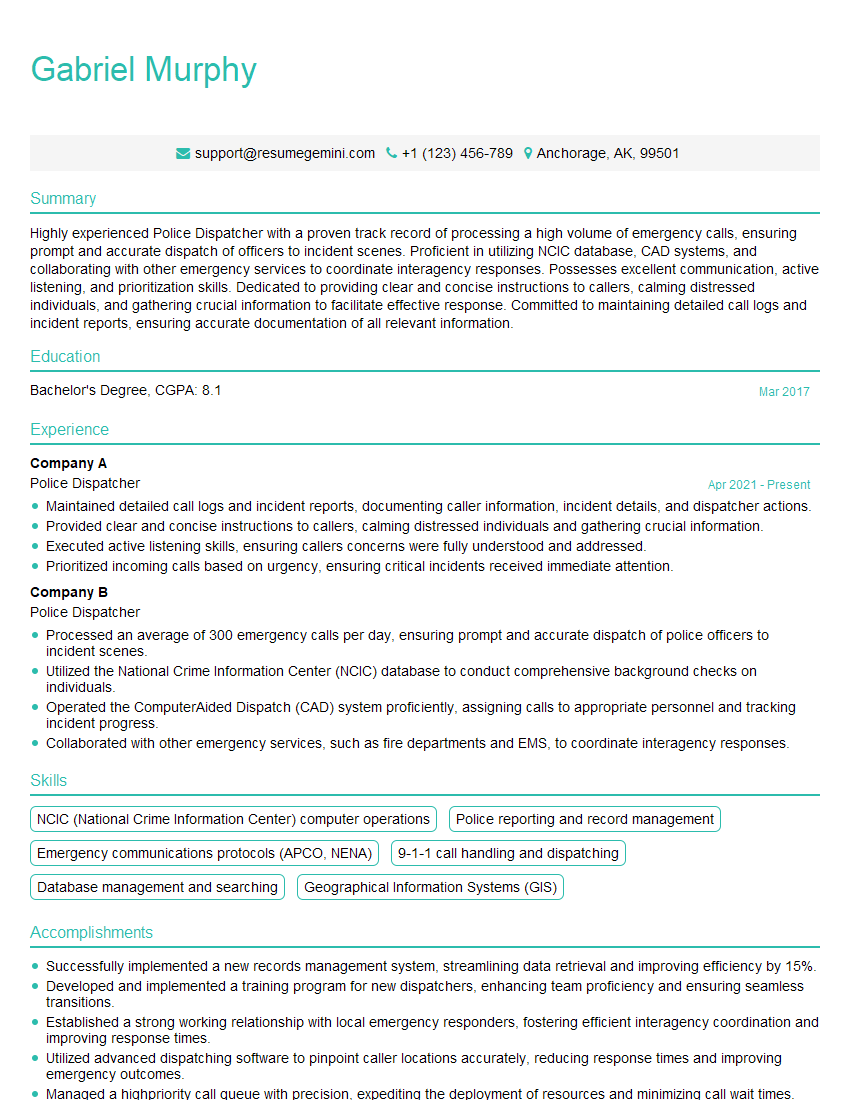
We recommend leveraging ResumeGemini to build a professional and impactful resume. ResumeGemini offers a streamlined process and provides examples of resumes tailored to the Emergency Telecommunications field, helping you present your skills and experience in the best possible light. This investment in your resume will significantly improve your chances of securing your dream role.
Explore more articles
Users Rating of Our Blogs
Share Your Experience
We value your feedback! Please rate our content and share your thoughts (optional).
What Readers Say About Our Blog
Very informative content, great job.
good