The right preparation can turn an interview into an opportunity to showcase your expertise. This guide to Earthwork Calculation and Estimation interview questions is your ultimate resource, providing key insights and tips to help you ace your responses and stand out as a top candidate.
Questions Asked in Earthwork Calculation and Estimation Interview
Q 1. Explain the difference between cut and fill in earthworks.
In earthworks, ‘cut’ and ‘fill’ describe the movement of earth to achieve a desired ground level. Think of it like sculpting a landscape. ‘Cut’ refers to the excavation of earth from areas that are higher than the design level, removing material to create space. Conversely, ‘fill’ involves adding earth to areas that are lower than the design level, building up the ground to match the desired profile. Imagine building a road through a hill – the hill needs to be ‘cut’ to create the roadway, and the excavated material might then be used to ‘fill’ low-lying areas nearby, minimizing the amount of material that needs to be hauled from outside the project site.
Q 2. How do you calculate earthwork volumes using the average end area method?
The average end area method is a simple yet widely used technique for calculating earthwork volumes. It estimates the volume by averaging the cross-sectional areas at the beginning and end of a section and multiplying by the length of that section. Imagine you’re calculating the volume of a tapered log. You’d measure the area of the two ends, average those areas, and then multiply by the length of the log to get the approximate volume. Similarly, in earthworks, we divide the project into a series of sections. For each section:
- Measure the cross-sectional area (A1) at the beginning of the section.
- Measure the cross-sectional area (A2) at the end of the section.
- Calculate the average area:
Average Area = (A1 + A2) / 2 - Multiply the average area by the length (L) of the section to get the volume of that section:
Volume = Average Area * L - Repeat steps 1-4 for all sections and sum the volumes to obtain the total earthwork volume.
For example, if A1 = 100 sq m, A2 = 150 sq m, and L = 5 m, the volume of that section would be: (100 + 150) / 2 * 5 = 625 cubic meters.
Q 3. Describe the trapezoidal method for earthwork calculation.
The trapezoidal method is another way to estimate earthwork volumes, particularly useful for sections with irregular cross-sections. Instead of just using two end areas, it divides the section into a number of smaller trapezoids. For each trapezoid, the area is calculated using the formula: Area = (b1 + b2) * h / 2, where b1 and b2 are the lengths of the parallel sides (usually the distances between the sideslopes at different elevations) and h is the height (the vertical distance between the parallel sides). The total volume is then calculated by summing the volumes of all the trapezoids. This method is more accurate than the average end area method for irregular shapes because it approximates the shape more closely. Think of it as approximating a curved surface with a series of small, flat trapezoidal steps.
Q 4. What are the limitations of the average end area method?
While the average end area method is simple and quick, it has limitations. It assumes a uniform change in cross-sectional area along the length of the section which isn’t always true in real-world scenarios. This means that if there are significant undulations or variations within a section, the calculated volume will be less accurate. The method also struggles with complex geometries that significantly deviate from a simple trapezoidal or rectangular shape. Furthermore, it only provides an approximation; the accuracy depends heavily on the frequency of cross-sections taken. More frequent measurements lead to greater accuracy, but also increase the time and cost of surveying.
Q 5. How do you account for shrinkage and swell factors in earthwork calculations?
Shrinkage and swell factors account for the volume changes that occur when soil is excavated and compacted. Soil that is excavated often has a higher volume than when it is compacted in a fill. The shrinkage factor represents the reduction in volume upon compaction. The swell factor represents the increase in volume after excavation. These factors are expressed as percentages. To account for them, you would adjust your calculated volumes. For example, if you have a calculated cut volume of 1000 cubic meters and the swell factor for that soil type is 15%, you’d multiply your cut volume by 1.15 to get the bank volume (1150 cubic meters). Conversely, if you are calculating the required fill volume and the shrinkage factor is 10%, you would divide the required in-situ volume by 1.10 to obtain the volume needed to be excavated.
Q 6. Explain the Prismoidal method for earthwork volume calculation and its advantages.
The Prismoidal method provides a more accurate volume calculation than the average end area method. It considers three cross-sectional areas: the areas at the beginning (A1), middle (Am), and end (A2) of a section. The formula for the prismoidal volume of a section is: Volume = L/6 * (A1 + 4Am + A2), where L is the length of the section. This method is particularly advantageous when the ground profile is fairly regular and the section’s shape is close to a prismoid (a solid with parallel, similar polygonal bases). It weighs the middle area more heavily, making it more suitable for curved surfaces compared to the average end area method. The advantage of the Prismoidal method is its increased accuracy because it takes into account the geometry of the section more comprehensively. It’s more computationally intensive, but readily achievable with software or spreadsheets.
Q 7. How do you handle irregular terrain in earthwork volume estimation?
Handling irregular terrain in earthwork volume estimation requires a more detailed approach. The average end area or trapezoidal methods become less accurate when dealing with significant undulations. To improve accuracy, we employ the following strategies:
- Increased Survey Density: Take more frequent cross-sections, especially in areas of high variation in ground level. This allows for a better representation of the terrain.
- 3D Modeling: Employ 3D modeling software using point cloud data obtained from advanced surveying techniques (like LiDAR or total stations). This allows for a highly accurate representation of the terrain and the generation of accurate volumes through digital techniques.
- Contour Mapping: Create contour maps to visualize the ground elevations and estimate areas between contours. Volumes can then be calculated using numerical integration techniques.
- Subdivision of Sections: Divide complex areas into smaller, more manageable sections to reduce the error associated with irregularly shaped sections, thereby applying simpler methods more effectively within each smaller area.
Q 8. What software or tools do you use for earthwork calculations?
For earthwork calculations, I utilize a suite of software and tools depending on the project’s complexity and requirements. This often includes:
- Civil 3D: A powerful Autodesk software for 3D modeling, design, and analysis, allowing precise earthwork calculations and volume estimations directly from the design model.
- InRoads: Another Bentley software offering similar capabilities to Civil 3D, especially useful for road design and earthmoving projects.
- Spreadsheets (Excel, Google Sheets): Essential for data management, calculations, and cost estimations. I use them to organize survey data, generate cut and fill summaries, and perform cost analyses.
- Earthwork Calculation Software: Specialized software packages designed specifically for earthwork calculations, providing functionalities like mass haul diagram generation and optimization.
- Total Stations and GPS Survey Equipment: These are crucial for collecting accurate field data which forms the basis of all my calculations. The data from these instruments is then imported into the software for processing.
My choice of software often depends on the project’s specific needs and the client’s preferences, but I’m proficient in using all the mentioned tools to ensure accurate and efficient earthwork computations.
Q 9. How do you incorporate mass haul diagrams in earthwork planning?
Mass haul diagrams (MHDs) are indispensable for efficient earthwork planning. They graphically represent the relationship between the volume of cut and fill material along a project’s length, showing the distances over which material needs to be moved. Think of it as a visual representation of the project’s “earthmoving budget.”
I incorporate MHDs by first generating them using specialized software or by manually creating them based on the data generated through the software. The diagram highlights:
- Cut and Fill Areas: Identifying locations where excavation (cut) and filling (fill) are required.
- Optimal Haul Distances: The MHD visually shows the most efficient ways to balance cuts and fills, minimizing the overall haul distance and cost.
- Free Haul and Overhaul: The diagram clearly delineates the free haul distance (distance included in the unit price) and any distances exceeding it, requiring separate overhaul charges.
- Balancing Cut and Fill: It helps determine if the project has a balanced amount of cut and fill or if there’s surplus or deficit requiring external disposal or importing of material.
Using the MHD, I can optimize the earthmoving plan, reduce transportation costs, and schedule the work efficiently. For example, I can identify areas where material from a nearby cut can directly fill a void, thus minimizing transportation and associated expenses.
Q 10. Explain the concept of free haul and overhaul in earthwork estimation.
Free haul and overhaul are crucial cost considerations in earthwork estimation. They refer to the distance material is hauled in relation to its cost.
- Free Haul: This is the distance within which the cost of hauling earth is typically included in the unit price of excavation or embankment. It’s a specified distance, often 1000 ft or 500 ft depending on contract specifications. Material hauled within this free haul distance is covered by the base unit price.
- Overhaul: This applies to distances exceeding the free haul distance. The contractor charges an extra amount per cubic yard (or cubic meter) per distance unit (e.g., per station, or per 100 ft) for material hauled beyond the free haul limit. This additional cost reflects the increased fuel consumption, labor, and time involved in long-distance hauling.
Example: If the free haul distance is 1000 ft and material needs to be hauled 1500 ft, the extra 500 ft will be charged as overhaul. This is often clearly shown on the mass haul diagram.
Q 11. How do you determine the optimum balancing of cut and fill?
Optimum balancing of cut and fill aims to minimize earthmoving costs and environmental impact. It involves strategically arranging cuts and fills to equalize the volumes, reducing the need for external borrowing or wasting of material.
I achieve this through a combination of methods:
- Detailed Earthwork Calculations: Accurate volume calculations based on survey data are paramount. Software tools greatly assist in this process.
- Mass Haul Diagram Analysis: The MHD visually helps identify optimal locations for cuts and fills, minimizing haul distances.
- Iterative Design Adjustments: Sometimes, minor design modifications can significantly improve cut-fill balance. This might involve altering the road alignment, adjusting embankment heights, or optimizing the location of structures.
- Trial and Error Simulations: Software allows for simulating different cut-fill arrangements to find the most economical and practical solution.
- Borrow and Waste Considerations: If complete balancing isn’t feasible, I meticulously assess the cost of borrowing material (importing from off-site locations) versus wasting excess material (disposal at designated sites).
The goal is to find the most cost-effective solution that also considers potential environmental factors and complies with regulations related to waste disposal and material sourcing.
Q 12. Describe your experience with earthwork quantity takeoff from drawings.
Earthwork quantity takeoff involves extracting the necessary earthmoving volumes from construction drawings and specifications. This is a crucial step in accurate estimation.
My experience includes:
- Interpreting Design Drawings: I can proficiently interpret various types of drawings including cross-sections, longitudinal sections, plan views, and 3D models to identify areas of cut and fill.
- Using Software Tools: I employ software such as Civil 3D and InRoads to automatically calculate volumes based on the design geometry. This significantly speeds up the process and minimizes errors.
- Manual Calculations (when necessary): For simpler projects or when verifying software calculations, I can perform manual calculations using cross-sectional area methods or other appropriate techniques.
- Data Management: I maintain organized spreadsheets to accurately record the calculated volumes, locations, and material types.
- Quality Control: I implement rigorous quality checks to ensure accuracy and consistency in my takeoff. This includes verifying calculated values against the design intent and checking for potential discrepancies.
For instance, in a recent road construction project, I utilized Civil 3D to perform the quantity takeoff from the provided design model, which provided highly accurate volumes of cut and fill along the road alignment. This data was then used for creating the mass haul diagram and the overall cost estimate.
Q 13. How do you estimate the cost of earthworks, including labor and equipment?
Estimating earthwork costs involves considering numerous factors.
My approach includes:
- Unit Rates: I establish unit rates for excavation, hauling, embankment, and other related activities based on local market rates, equipment costs, labor rates, and material prices. These rates are influenced by factors like soil conditions, accessibility, and project location.
- Quantities: Accurate earthwork quantities derived from the takeoff are multiplied by the unit rates to get the preliminary cost estimates.
- Equipment Costs: This includes the cost of renting or owning excavation equipment (excavators, loaders, bulldozers), hauling equipment (trucks, dumpers), and other machinery. I consider factors like operating hours, fuel costs, and maintenance.
- Labor Costs: Labor costs involve the wages and benefits of operators, laborers, and supervisors. I factor in the anticipated labor hours required for each task.
- Contingency: A contingency factor is added to account for unforeseen circumstances, potential delays, and price fluctuations.
- Profit Margin: Finally, a reasonable profit margin is included to ensure the contractor’s financial viability.
For example, I might break down the cost of excavation into a unit rate for loose excavation, another for hard rock excavation (if applicable), and additional rates for handling of potentially hazardous materials.
Q 14. What are common challenges encountered in earthwork projects?
Earthwork projects face various challenges:
- Unexpected Ground Conditions: Encountering unforeseen soil conditions (e.g., hard rock, unstable soil, groundwater) can significantly increase costs and timelines.
- Accurate Surveying and Data Acquisition: Inaccurate survey data can lead to erroneous volume calculations and scheduling issues.
- Environmental Concerns: Managing environmental impacts like erosion, sediment control, and habitat disruption is essential.
- Weather Conditions: Adverse weather can severely impact productivity and cause delays.
- Logistics and Transportation: Efficient management of material transport and site access is critical, especially for large projects.
- Cost Control: Managing escalating material and labor costs requires effective budgeting and monitoring.
- Regulatory Compliance: Adhering to environmental regulations and safety standards is crucial.
Addressing these challenges requires proactive planning, contingency planning, regular site monitoring, and effective communication amongst all project stakeholders.
Q 15. How do you manage and mitigate risks associated with earthwork projects?
Managing risks in earthwork projects is crucial for success. It involves a proactive approach encompassing careful planning, meticulous execution, and continuous monitoring. Think of it like building a house – you wouldn’t start without blueprints and inspections, right?
- Thorough Site Investigation: This is the cornerstone. We need detailed geotechnical reports identifying soil types, bearing capacity, groundwater levels, and potential hazards like unstable slopes or buried utilities. Ignoring this can lead to unexpected delays and cost overruns.
- Contingency Planning: Unexpected challenges are inevitable. We build contingency plans addressing potential issues like weather delays, equipment malfunctions, or unforeseen ground conditions. This involves allocating extra time and budget to absorb shocks.
- Risk Assessment and Mitigation: We systematically identify potential risks (e.g., slope instability, heavy rainfall, safety incidents) and implement mitigation strategies. This might involve using specialized excavation techniques, employing safety measures like retaining walls or shoring, and implementing rigorous safety protocols.
- Regular Monitoring and Reporting: Throughout the project, we monitor progress against the plan, track potential risks, and document any deviations. Regular reports help identify problems early, allowing for timely corrective actions.
- Experienced Team: A skilled and experienced team is essential. This includes engineers, supervisors, and skilled operators who understand the complexities of earthwork and can anticipate and manage risks effectively.
For instance, on a recent highway project, we anticipated potential flooding during the rainy season. Our contingency plan included installing temporary drainage systems and adjusting the schedule to avoid critical activities during periods of high rainfall. This prevented significant delays.
Career Expert Tips:
- Ace those interviews! Prepare effectively by reviewing the Top 50 Most Common Interview Questions on ResumeGemini.
- Navigate your job search with confidence! Explore a wide range of Career Tips on ResumeGemini. Learn about common challenges and recommendations to overcome them.
- Craft the perfect resume! Master the Art of Resume Writing with ResumeGemini’s guide. Showcase your unique qualifications and achievements effectively.
- Don’t miss out on holiday savings! Build your dream resume with ResumeGemini’s ATS optimized templates.
Q 16. How do you ensure accuracy in earthwork calculations and estimations?
Accuracy in earthwork calculations and estimations is paramount to avoid cost overruns and project delays. It’s achieved through a combination of meticulous data collection, precise calculations, and the use of appropriate technology.
- Detailed Surveying: Accurate topographic surveys form the foundation. We use modern surveying equipment like total stations and GPS to obtain precise elevations and dimensions of the site. This is the blueprint for our calculations.
- Precise Volumetric Calculations: We employ various methods for volume calculations, including the cross-section method, the average-end-area method, and the prismoidal method. The choice depends on the project’s complexity and the available data. The formula
Volume = Area × Lengthis a simplified version and more complex formulas are used for irregular shapes. - Software Utilization: Specialized software like AutoCAD Civil 3D or other earthwork calculation programs help automate the process, reducing human error and increasing efficiency. These programs also allow for 3D modeling and visualization of the earthwork, aiding in better planning and management.
- Quality Control Checks: Multiple checks and cross-verifications are performed to ensure accuracy. Independent reviews by experienced personnel help catch any potential errors.
- Regular Field Verification: Comparing calculated quantities against actual field measurements during the project is essential. This ensures that our estimations remain realistic and adjustments are made as needed.
Imagine trying to build a sandcastle without knowing the exact volume of sand needed – you’d either run out or have a mountain of excess sand. Accurate earthwork estimations provide the same precision, minimizing waste and ensuring efficient resource allocation.
Q 17. Explain the importance of soil investigation in earthwork planning.
Soil investigation is the bedrock of successful earthwork planning. It provides vital information about the ground’s properties, informing design choices and preventing costly surprises down the line. Think of it as a doctor’s examination before surgery—it’s crucial to understand the ‘patient’ (the soil) before proceeding.
- Understanding Soil Properties: Soil investigation reveals critical parameters like soil type (clay, sand, gravel), shear strength, compressibility, and permeability. This informs the design of foundations, slopes, and other earth structures.
- Identifying Potential Hazards: Investigations uncover potential problems like unstable soil layers, expansive clays, or groundwater issues that could affect the project’s stability and safety. Identifying these upfront is critical for mitigation.
- Optimizing Design and Construction: Knowing the soil properties allows us to optimize the design and construction methods. We might choose appropriate excavation techniques, select suitable fill materials, or incorporate ground improvement methods based on the site investigation’s findings.
- Cost Savings: A thorough investigation prevents unforeseen issues during construction that could lead to significant cost overruns and delays. The cost of a thorough investigation is small compared to the potential costs of fixing unexpected problems later.
For example, encountering unexpected bedrock during excavation without prior knowledge can halt progress and significantly increase costs. A thorough soil investigation helps avoid such scenarios.
Q 18. Describe different types of soil and their impact on earthwork calculations.
Different soil types significantly impact earthwork calculations. Their properties influence excavation methods, compaction requirements, and the stability of earth structures. Think of building with LEGOs – you wouldn’t use the same technique for small, lightweight bricks as you would for large, heavy ones.
- Cohesive Soils (Clay): These soils stick together and are difficult to excavate. They exhibit high compressibility and require careful handling to prevent settlement issues. Compaction is also crucial.
- Granular Soils (Sand and Gravel): These soils are relatively easy to excavate and compact. However, their permeability can affect drainage and stability, especially in slopes. They are also more prone to erosion.
- Organic Soils (Peat): These soils are highly compressible and unstable, requiring special treatment and often necessitating replacement with engineered fill.
- Rock: Excavation of rock requires specialized equipment and techniques, significantly impacting cost and time. The type of rock (e.g., hard, fractured) affects the difficulty and cost of excavation.
The impact on calculations is directly related to the soil’s density and shear strength. For instance, the volume of compacted clay will be less than the volume of loose clay due to compaction, requiring adjustments in our calculations. Similarly, excavating rock requires more time and effort than excavating sand, affecting project timelines and costs.
Q 19. How do you account for soil compaction in earthwork estimation?
Soil compaction is a crucial factor in earthwork estimation. It’s the process of increasing the density of soil by reducing its air voids. Think of packing a suitcase – the more tightly you pack it, the less space it occupies. Similarly, compacting soil reduces its volume.
- Compaction Factors: We use compaction factors to account for the volume reduction due to compaction. This factor represents the ratio of the volume of loose soil to the volume of compacted soil. It varies depending on soil type and the desired level of compaction.
- Compaction Specifications: Project specifications usually define the required level of compaction (expressed as a percentage of the maximum dry density or Proctor density). Achieving the specified compaction is crucial for stability and load-bearing capacity.
- In-situ Density Tests: We conduct in-situ density tests (like nuclear density gauges) to verify the achieved level of compaction. This ensures that the compacted soil meets the project requirements.
- Adjusting Estimates: The compaction factor is incorporated into our earthwork estimations to account for the reduction in volume after compaction. This ensures that the estimated quantities align with the actual quantities needed in the field.
For example, if the compaction factor for a particular soil is 0.9, this means that for every 1 cubic meter of loose soil, we only need 0.9 cubic meters of compacted soil. We use this factor to adjust our initial estimates accordingly.
Q 20. What are the safety considerations during earthwork operations?
Safety is paramount during earthwork operations. It demands a proactive approach, rigorous adherence to safety protocols, and continuous monitoring. Think of it as a safety net – it’s there to prevent falls, not to catch you after you’ve fallen.
- Site Safety Plan: A comprehensive safety plan is essential, outlining potential hazards, necessary precautions, and emergency procedures. This includes procedures for excavation, handling of heavy machinery, and working in confined spaces.
- Personal Protective Equipment (PPE): All workers must wear appropriate PPE, including hard hats, safety boots, high-visibility clothing, and safety glasses. The type of PPE depends on the task and the potential hazards.
- Safe Excavation Practices: Strict adherence to excavation safety regulations is crucial. This includes shoring, sloping, or benching unstable excavations, and using proper fall protection.
- Safe Machinery Operation: Operators of heavy machinery must be properly trained and certified. Regular maintenance of equipment is vital to prevent malfunctions and accidents.
- Emergency Preparedness: Procedures for handling emergencies like injuries, equipment failures, or hazardous material spills are essential. This often includes readily available first aid kits and communication systems.
Ignoring safety can lead to serious injuries or fatalities. Regular safety briefings, inspections, and training are essential to maintain a safe work environment. For example, regular checks on shoring systems in trenches are vital to prevent collapses.
Q 21. How do you handle discrepancies between estimated and actual earthwork quantities?
Discrepancies between estimated and actual earthwork quantities are common. Handling them effectively requires a systematic approach, involving investigation, analysis, and appropriate adjustments. Think of it as recalibrating a scale – you need to find out why it’s inaccurate and then correct it.
- Investigate the Cause: The first step is to understand why the discrepancy exists. This involves analyzing the initial estimations, comparing them to actual field measurements, and identifying any potential causes, like inaccuracies in the initial survey, unexpected ground conditions, or changes in design.
- Quantify the Discrepancy: Accurately quantify the difference between the estimated and actual quantities. This involves detailed measurements and calculations.
- Assess the Impact: Evaluate the impact of the discrepancy on the project schedule, budget, and overall feasibility.
- Develop a Corrective Action Plan: Based on the analysis, develop a plan to address the discrepancy. This might involve adjusting the project schedule, seeking additional funding, or modifying construction methods.
- Update Documentation: Update all relevant project documentation, including cost estimates, schedules, and reports, to reflect the actual quantities and any necessary adjustments.
For example, if we underestimated the volume of rock excavation, we would need to adjust the budget and schedule accordingly. This might involve negotiating with the client for additional funding or optimizing the excavation methods to minimize costs and delays.
Q 22. Describe your experience with different earthmoving equipment.
My experience with earthmoving equipment spans a wide range, encompassing excavators, bulldozers, loaders, scrapers, and graders. I’m proficient in operating and managing various sizes and models, from small compact machines ideal for tight urban spaces to large-scale equipment used in massive infrastructure projects. For example, I’ve extensively used Caterpillar 320 excavators for trenching and site preparation and Komatsu D65 bulldozers for large-scale earthmoving operations. My understanding extends beyond operation; I’m also familiar with their maintenance requirements, including preventative maintenance schedules and troubleshooting common mechanical issues. This practical experience allows me to accurately estimate production rates and identify potential problems on the ground.
Furthermore, I have experience with specialized equipment like articulated dump trucks (ADTs) for hauling and compactors for soil stabilization. Understanding the capabilities and limitations of each machine is crucial for efficient project planning and execution. I often choose equipment based on the soil type, project scope, and environmental constraints. For instance, in sensitive wetland areas, I’d opt for lighter equipment to minimize ground disturbance.
Q 23. How do you determine the productivity of earthmoving equipment?
Determining the productivity of earthmoving equipment isn’t a simple matter of looking at the machine’s specifications. It involves a multifaceted analysis that considers several key factors. The most important aspect is the cycle time – the time it takes to complete one cycle of operation, from loading to dumping or spreading. We measure this using stopwatch timing or more advanced methods incorporating GPS tracking data.
Beyond cycle time, factors like soil conditions (e.g., rock content, moisture content), haul distance, equipment efficiency (mechanical condition and operator skill), and weather conditions greatly influence productivity. For example, rocky soil will significantly reduce the output compared to soft, loose soil. Similarly, rainy weather can lead to delays and reduced efficiency.
We utilize productivity estimations from equipment manufacturers as a starting point, but always adjust them based on site-specific conditions. We also keep detailed logs of equipment performance to refine our estimates over time. This data is crucial for accurate cost estimation and scheduling. A simple formula often used is: Productivity = (Number of cycles per hour) x (Volume per cycle). However, this needs adjustment based on the factors mentioned above.
Q 24. How do you incorporate environmental considerations into earthwork projects?
Environmental considerations are paramount in all my earthwork projects. We adhere to strict environmental regulations and best practices to minimize the impact on the surrounding ecosystem. This begins with a thorough environmental impact assessment that identifies potential risks like soil erosion, water pollution, and habitat disruption.
Specific measures include implementing effective erosion and sediment control strategies, such as silt fences and vegetated buffer strips. We also carefully manage stormwater runoff to prevent contamination of nearby water bodies. The selection of earthmoving equipment is also influenced by environmental factors; we prioritize machines that minimize emissions and fuel consumption. Proper waste management, including the disposal of excavated material in designated areas, is also critical. For example, contaminated soil might need to be treated separately. In some cases, we use innovative techniques such as bioengineering for slope stabilization, utilizing plants to prevent erosion instead of purely structural methods.
Furthermore, we involve environmental specialists in our projects and closely monitor our progress against established environmental targets. Transparency and collaboration with regulatory bodies is a core aspect of our approach.
Q 25. Explain your experience with using GPS and surveying equipment for earthworks.
GPS and surveying equipment are indispensable tools in modern earthworks. I have extensive experience using both total stations and GPS receivers for precise site surveying, setting out, and volume calculations. Total stations allow for highly accurate measurements, crucial for establishing benchmarks and creating detailed topographic surveys. This information forms the base for our earthwork designs.
GPS technology, particularly RTK (Real-Time Kinematic) GPS, provides real-time positioning data, essential for guiding earthmoving equipment during excavation and grading. This improves accuracy and efficiency, minimizing the need for repeated checks and adjustments. For example, using GPS-guided excavators allows for precise cut and fill operations, resulting in reduced material waste and better adherence to design specifications. We also use specialized software to process the data collected from GPS and surveying equipment, generating 3D models and volume calculations that inform our project planning and cost estimations. This eliminates manual calculations and reduces potential errors.
Q 26. How do you develop a detailed earthwork construction schedule?
Developing a detailed earthwork construction schedule is a critical step. It involves breaking down the project into smaller, manageable tasks, sequencing them logically, and assigning resources (equipment, personnel) to each task. We use techniques like the Critical Path Method (CPM) to identify the longest sequence of tasks determining the overall project duration.
The schedule considers factors like site accessibility, weather conditions, equipment availability, and potential delays. We create a Gantt chart to visualize the schedule, highlighting dependencies between tasks. For instance, excavation might need to be completed before foundation work can begin. We also factor in buffer times to account for unforeseen issues. Regular monitoring and progress updates are crucial to keeping the project on track. We use project management software to track progress, identify potential delays, and adjust the schedule as needed. Effective communication among all stakeholders is paramount to successful schedule adherence.
Q 27. Explain your process for preparing an earthwork cost estimate.
Preparing an accurate earthwork cost estimate is a complex process that demands a thorough understanding of the project scope, site conditions, and market rates. We begin with a detailed quantity takeoff from the design plans, calculating the volumes of cut and fill. We then determine the unit costs for each operation, considering factors such as soil type, haul distance, equipment rental rates, labor costs, and material disposal fees. We often use specialized software for this purpose.
We break down the costs into various categories, such as excavation, hauling, compaction, and disposal. Contingency is factored in to account for unforeseen events and potential cost overruns. We also consider indirect costs, including project management, permits, and insurance. For example, we might include a contingency of 10-15% to cover potential risks associated with unexpected rock or unstable soil conditions. We also develop multiple scenarios to assess the potential impact of different equipment choices or alternative construction methods. Finally, the estimate is presented clearly, with detailed breakdowns and justification for the cost figures.
Q 28. Describe your experience with earthwork project management.
My earthwork project management experience is extensive. I’ve led numerous projects, from small-scale residential developments to large-scale infrastructure projects, consistently delivering projects on time and within budget. My approach emphasizes proactive planning, effective communication, and diligent monitoring of progress.
My responsibilities include coordinating the work of various subcontractors, managing equipment and materials, ensuring adherence to safety regulations, and resolving any unforeseen issues. I utilize project management methodologies, such as Agile or Lean construction, to optimize workflows and enhance efficiency. Regular progress meetings, thorough documentation, and proactive risk management are integral parts of my management style. For example, on a recent highway project, we successfully mitigated the risk of flooding by implementing a robust drainage system ahead of schedule. This demonstrated proactive risk management and minimized potential delays and cost overruns.
Key Topics to Learn for Earthwork Calculation and Estimation Interview
- Mass Haul Diagrams: Understanding the principles of mass haul diagrams, their construction, and interpretation for efficient earthmoving planning. Practical application includes optimizing excavation and fill operations to minimize costs and time.
- Volume Calculations: Mastering various methods for calculating earthwork volumes, including the average-end-area method, prismoidal formula, and cross-section methods. Practical application includes accurate estimation of cut and fill quantities for project bidding and resource allocation.
- Earthwork Balancing: Understanding techniques for balancing cut and fill quantities to minimize earthwork costs and environmental impact. Practical application involves optimizing the location and design of borrow areas and waste disposal sites.
- Cut and Fill Calculations: Proficiently calculating cut and fill volumes from topographic data, using both manual and software-based methods. Practical application encompasses preparing detailed earthwork plans for construction projects.
- Impact of Soil Properties: Understanding how soil properties (e.g., swell factor, shrinkage factor, compaction) affect earthwork calculations and estimations. Practical application includes accounting for soil variations in project planning and cost estimation.
- Software Applications: Familiarity with commonly used software for earthwork calculations and estimations (e.g., AutoCAD Civil 3D, Autodesk Revit). Practical application includes demonstrating proficiency in using these tools for efficient project execution.
- Error Analysis and Quality Control: Understanding potential sources of error in earthwork calculations and implementing quality control measures to ensure accuracy. Practical application includes developing procedures for minimizing errors and ensuring reliable cost estimations.
Next Steps
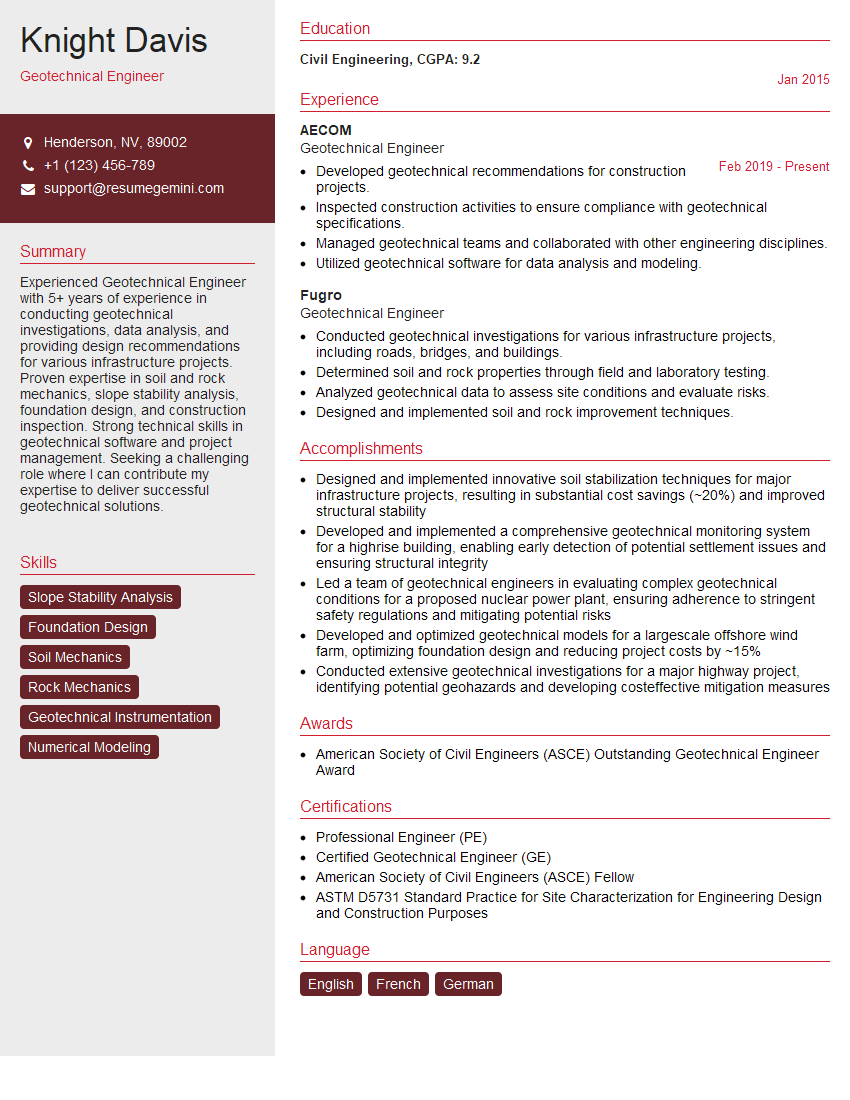
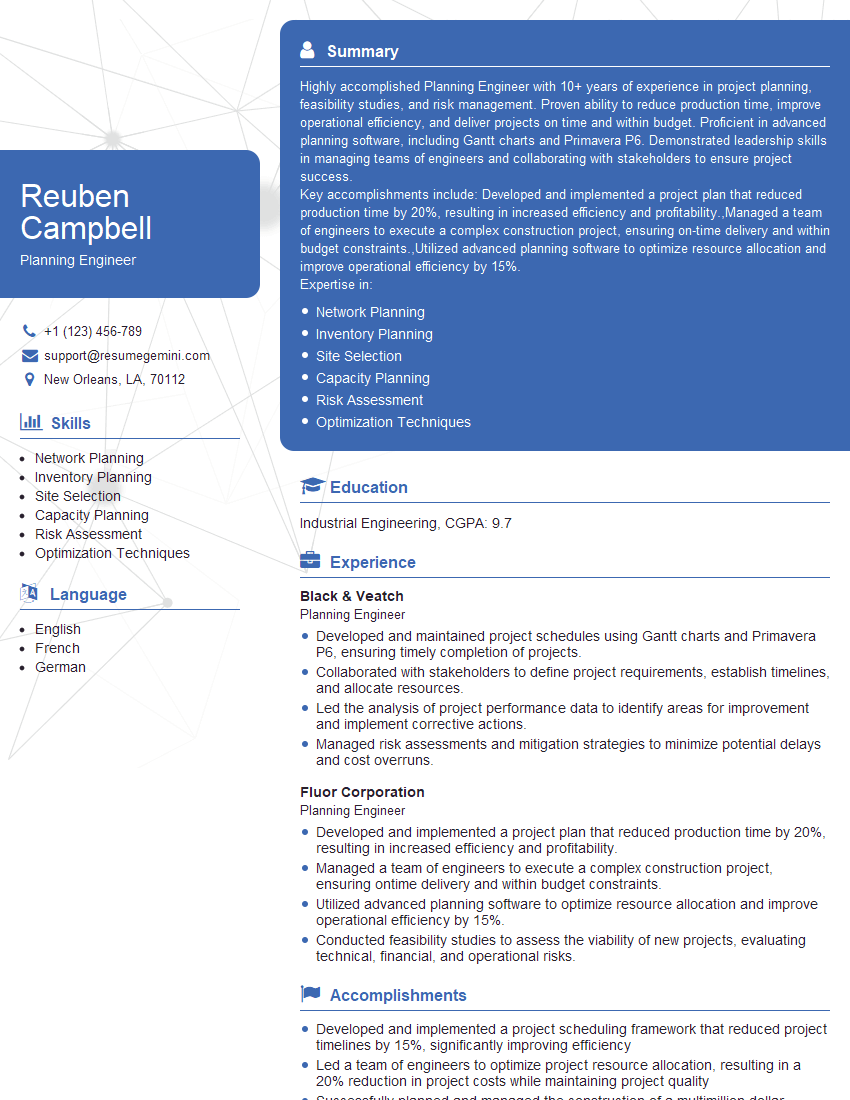
Mastering Earthwork Calculation and Estimation is crucial for career advancement in civil engineering and related fields. A strong grasp of these concepts demonstrates technical proficiency and opens doors to more challenging and rewarding opportunities. To maximize your job prospects, it’s essential to create an ATS-friendly resume that highlights your skills and experience effectively. We highly recommend using ResumeGemini to build a professional and impactful resume that catches the eye of recruiters. ResumeGemini provides examples of resumes tailored to Earthwork Calculation and Estimation, helping you present your qualifications in the best possible light.







Explore more articles
Users Rating of Our Blogs
Share Your Experience
We value your feedback! Please rate our content and share your thoughts (optional).
What Readers Say About Our Blog
Very informative content, great job.
good