Every successful interview starts with knowing what to expect. In this blog, we’ll take you through the top Energy Efficiency and Sustainable Lighting Practices interview questions, breaking them down with expert tips to help you deliver impactful answers. Step into your next interview fully prepared and ready to succeed.
Questions Asked in Energy Efficiency and Sustainable Lighting Practices Interview
Q 1. Explain the difference between energy efficiency and energy conservation.
While both energy efficiency and energy conservation aim to reduce energy consumption, they approach the problem differently. Energy efficiency focuses on doing more with less energy. It’s about using technology and design to optimize energy use, getting the same or better results while consuming less. Think of a more fuel-efficient car – it achieves the same transportation but with lower fuel consumption. Energy conservation, on the other hand, emphasizes reducing energy demand by changing habits and behaviors. This could involve turning off lights when leaving a room or lowering the thermostat. It’s about using less energy overall. Essentially, efficiency is about improving the system, while conservation is about reducing the load on the system. A successful strategy integrates both approaches for maximum impact.
Q 2. Describe your experience with lighting calculations and design software.
I have extensive experience with lighting calculations and design software, including DIALux evo, Relux, and AGi32. My proficiency extends to using these tools for various applications – from designing efficient lighting schemes for commercial buildings and retail spaces to analyzing the energy performance of different lighting technologies. For instance, in a recent project for a large office complex, I used DIALux evo to model the lighting layout, optimizing the placement and type of LED fixtures to achieve uniform illumination while minimizing energy consumption. The software allowed me to simulate various scenarios, comparing energy use and lighting levels, ultimately selecting the most cost-effective and sustainable solution. Beyond calculations, I’m adept at creating detailed design documents, specifications, and 3D renderings to clearly communicate my recommendations to clients and contractors.
Q 3. What are the key benefits of LED lighting compared to traditional lighting technologies?
LED lighting offers several key advantages over traditional technologies like incandescent, fluorescent, and metal halide lamps. These advantages translate to significant energy savings and improved sustainability. Firstly, LEDs are significantly more energy-efficient, consuming up to 75% less energy for the same light output. Secondly, they boast a much longer lifespan, reducing replacement costs and waste. Thirdly, LEDs produce less heat, leading to lower cooling demands in buildings. Fourthly, they offer better color rendering and are available in a wider range of color temperatures, allowing for greater design flexibility. Finally, LEDs contain no mercury, making them a more environmentally friendly option than fluorescent tubes. In a recent project, switching from metal halide to LED lighting in a warehouse resulted in a 60% reduction in electricity costs, while also extending the maintenance cycle.
Q 4. How do you conduct an energy audit for a commercial building?
Conducting an energy audit for a commercial building involves a systematic approach to identify energy waste and recommend cost-effective improvements. It typically begins with a walkthrough inspection, visually assessing equipment, lighting, and building envelope conditions. Next, I’d gather utility data to analyze energy consumption patterns and identify peak usage times. This data, coupled with on-site measurements, provides a baseline for energy performance. Then, I’d utilize specialized software and modeling techniques to simulate different scenarios and quantify the potential energy savings from proposed upgrades. This stage often includes detailed lighting analysis, HVAC system assessment, and evaluation of building envelope performance. Finally, I generate a comprehensive report including detailed findings, energy-saving recommendations, cost estimates, and projected return on investment (ROI) for each measure. The ultimate goal is to create a tailored action plan that guides the building owner in making informed decisions for enhancing energy efficiency.
Q 5. What are the common energy-saving measures for HVAC systems?
Energy-saving measures for HVAC systems are crucial for reducing energy consumption in buildings. These measures often involve a combination of upgrades and operational changes. Common strategies include:
- Installing high-efficiency equipment: Upgrading to newer, higher-efficiency HVAC units (e.g., variable refrigerant flow (VRF) systems) significantly reduces energy consumption.
- Implementing building automation systems (BAS): BAS optimizes HVAC operation based on occupancy, weather conditions, and other factors, reducing energy waste.
- Regular maintenance: Cleaning filters, checking refrigerant levels, and performing routine maintenance maximize system efficiency.
- Improving ductwork and insulation: Sealing leaks and adding insulation in ductwork minimizes energy loss during distribution.
- Zone control: Dividing the building into zones and independently controlling temperature in each area reduces energy used in unoccupied spaces.
- Optimizing airflow and ventilation: Ensuring proper airflow and balancing ventilation systems minimize energy waste and improve indoor air quality.
Q 6. Explain your understanding of daylight harvesting in building design.
Daylight harvesting is a sustainable design strategy that leverages natural daylight to reduce the reliance on electric lighting. It involves strategically designing buildings to maximize the use of natural light, minimizing the need for artificial illumination during daylight hours. This includes the careful placement of windows, the use of light shelves, and the incorporation of light tubes or skylights to distribute natural light deeper into the building. Sensors and automated lighting controls are often integrated to dim or switch off electric lights when sufficient daylight is available. For example, in a well-designed office building, daylight harvesting can significantly reduce lighting energy consumption, lowering operating costs and reducing the building’s carbon footprint. Effective daylight harvesting requires careful consideration of factors like window orientation, solar shading, and interior reflectivity.
Q 7. What are the different types of lighting controls and their applications?
Various lighting controls enhance energy efficiency and improve the occupant experience. These include:
- Occupancy sensors: These automatically switch lights on and off based on the presence or absence of people in a space.
- Timers and scheduling: Lights can be programmed to turn on and off at predetermined times, optimizing energy use during unoccupied periods.
- Dimming controls: These allow for adjusting light levels to match ambient conditions and task requirements, further reducing energy consumption.
- Daylight harvesting controls: These integrate with daylight sensors to automatically dim or switch off electric lights when sufficient daylight is available.
- Centralized lighting management systems: These systems offer comprehensive control over lighting throughout a building, allowing for real-time monitoring and optimization.
Q 8. How do you calculate the payback period for an energy efficiency project?
Calculating the payback period for an energy efficiency project involves determining how long it takes for the cumulative energy cost savings to equal the initial investment. It’s a crucial metric for justifying the project’s financial viability.
Here’s a step-by-step process:
- Determine the initial investment cost: This includes equipment costs, installation, permits, and any other upfront expenses.
- Calculate annual energy savings: This requires estimating the pre-project and post-project energy consumption. You’ll need data on energy prices and the project’s anticipated efficiency improvements (e.g., reduced lighting power consumption).
- Calculate the simple payback period: Divide the initial investment cost by the annual energy savings. The result is the number of years it will take to recoup the investment. For example, if the initial investment is $10,000 and the annual savings are $2,000, the simple payback period is 5 years (10,000/2,000 = 5).
- Consider other factors: While simple payback is straightforward, a more sophisticated analysis might incorporate factors like the discount rate (reflecting the time value of money), inflation, and potential maintenance costs.
Example: Let’s say we’re replacing inefficient incandescent lighting with LED fixtures. The initial investment is $5,000, and the annual energy savings are estimated at $1,250. The simple payback period is 4 years ($5,000/$1,250 = 4).
Q 9. What is your experience with energy modeling software (e.g., EnergyPlus, eQuest)?
I have extensive experience using energy modeling software, including EnergyPlus and eQuest. I’ve utilized these tools for various projects, from designing new high-performance buildings to analyzing retrofits in existing structures. My expertise encompasses building model creation, input data preparation, simulation execution, and result interpretation and reporting.
For instance, in a recent project involving a large office building, I used EnergyPlus to simulate the impact of different HVAC system upgrades and lighting retrofits. By running various scenarios, I could optimize the design to minimize energy consumption while meeting comfort requirements. The software’s detailed simulation capabilities allowed for a precise assessment of energy performance across diverse building conditions. I’m also proficient in using eQuest for simpler building energy analysis and faster turnaround times for preliminary assessments. This allows for a tiered approach – using eQuest for quick initial explorations and then moving to EnergyPlus for a more detailed examination when needed.
Q 10. Describe your familiarity with LEED certification and its requirements related to lighting and energy efficiency.
I’m very familiar with LEED certification and its requirements related to lighting and energy efficiency. I’ve worked on numerous LEED-certified projects, helping clients achieve various LEED rating levels.
My understanding encompasses several key areas:
- Energy modeling and simulation: Demonstrating energy savings through software like EnergyPlus.
- Lighting power density: Meeting stringent limits on lighting energy use per square foot.
- Daylighting strategies: Incorporating natural light to reduce reliance on electric lighting.
- Lighting controls: Implementing occupancy sensors, daylight harvesting, and other automated systems.
- High-efficacy lighting: Specifying energy-efficient lighting fixtures with high lumen output per watt.
- Commissioning and retro-commissioning: Ensuring lighting systems operate as designed and identify areas for optimization.
For example, in a recent school renovation project, I guided the design team in selecting LED fixtures with integrated occupancy sensors and daylight harvesting to meet LEED requirements and maximize energy savings. Meeting these requirements not only reduces environmental impact but also translates to long-term cost savings for building owners.
Q 11. What is your experience with commissioning and retro-commissioning of building systems?
Commissioning (Cx) and retro-commissioning (RCx) are integral parts of my practice. Cx verifies that building systems operate as designed, while RCx identifies and rectifies operational inefficiencies in existing buildings. My experience includes both new construction and existing buildings.
I lead Cx/RCx teams, develop commissioning plans, oversee functional testing, and prepare detailed reports documenting findings and recommendations. This includes developing detailed test procedures, reviewing building plans, and working directly with contractors and building operators. I have experience working with various building management systems (BMS), utilizing data analytics to identify operational inefficiencies. A recent RCx project in a commercial office building led to a 15% reduction in energy consumption through improved HVAC system operation and lighting control optimization. This was achieved by identifying and addressing issues like improper scheduling, faulty sensors and inadequate maintenance.
Q 12. How do you identify and assess potential energy waste in a building?
Identifying and assessing potential energy waste in a building requires a systematic approach. I typically employ a multi-pronged strategy:
- Building walkthrough and visual inspection: This involves a thorough assessment of the building’s physical condition, identifying potential energy losses (e.g., poorly sealed windows, inefficient insulation).
- Energy audits: Reviewing utility bills, performing energy modeling, and analyzing building energy consumption patterns to pinpoint areas of high energy use.
- Data analysis: Using data from building management systems (BMS) and energy meters to identify anomalies and inefficiencies.
- Occupant interviews: Gathering feedback from building occupants to understand their behavior and identify opportunities for improvement (e.g., inefficient heating/cooling habits).
- Infrared thermography: Employing infrared cameras to identify areas of heat loss or gain within the building envelope.
For example, in a recent energy audit, infrared thermography revealed significant heat loss through poorly insulated walls in a warehouse facility, highlighting the need for improved insulation to reduce heating costs.
Q 13. Explain different types of lighting fixtures and their suitability for various applications.
Various lighting fixtures cater to different applications based on their efficacy, light distribution, and aesthetics. Here are some common types:
- Incandescent: Simple and inexpensive, but very inefficient. Generally avoided in modern energy-efficient designs.
- Fluorescent: More efficient than incandescent, offering various shapes and wattages. However, they contain mercury and have a shorter lifespan than LEDs.
- High-Intensity Discharge (HID): Includes metal halide and high-pressure sodium. Suitable for high-bay applications like warehouses due to high lumen output. Less efficient than LEDs and slower to turn on.
- Light Emitting Diode (LED): Highly efficient, long-lasting, versatile, and available in various color temperatures and form factors. Ideal for most applications, offering significant energy savings.
Suitability for various applications:
- Offices: LED panels or troffers provide even illumination.
- Retail spaces: LED spotlights and linear fixtures highlight products effectively.
- Warehouses: High-bay LED fixtures provide adequate illumination for large spaces.
- Residential: LED bulbs, recessed lighting, and track lighting offer versatile options.
The selection of the most suitable fixture depends on factors like illuminance levels, color rendering index (CRI), energy efficiency, lifespan, and budget.
Q 14. What are the common challenges in implementing energy efficiency projects?
Implementing energy efficiency projects often faces several challenges:
- Upfront Costs: The initial investment can be significant, requiring detailed cost-benefit analysis and securing funding.
- Return on Investment (ROI) Uncertainty: Accurate prediction of energy savings requires careful modeling and data analysis. Uncertainties can hinder project approval.
- Technical Complexity: Implementing sophisticated energy-efficient systems requires specialized knowledge and expertise.
- Building Occupant Behavior: Energy savings are often impacted by building occupant behavior. Educating and engaging occupants is crucial for project success.
- Integration with Existing Systems: Integrating new energy-efficient systems with existing infrastructure can be challenging and require careful planning.
- Lack of Awareness and Education: Limited understanding of energy efficiency opportunities can hinder project adoption.
Successfully overcoming these challenges involves thorough planning, stakeholder engagement, clear communication, and a comprehensive approach encompassing technical expertise, financial analysis, and change management strategies. For example, offering incentives to occupants who reduce their energy consumption, like a small reward program, can significantly impact overall energy savings.
Q 15. How do you ensure the long-term sustainability of energy efficiency improvements?
Ensuring the long-term sustainability of energy efficiency improvements requires a holistic approach that goes beyond the initial implementation. It’s about creating a culture of energy consciousness and establishing robust maintenance and monitoring systems.
Comprehensive Planning: The initial design needs to consider the building’s lifecycle, including material durability, equipment lifespan, and potential future needs. For example, choosing high-efficiency HVAC systems with readily available replacement parts ensures continued performance over decades.
Robust Monitoring and Evaluation: Regular monitoring of energy consumption using smart meters and building automation systems (BAS) is crucial. This allows for early detection of inefficiencies and proactive maintenance, preventing small issues from escalating into major problems. For instance, a sudden spike in energy use might indicate a malfunctioning component, which can be addressed immediately.
Staff Training and Engagement: Training building occupants on energy-saving practices is vital. This includes simple actions like turning off lights when leaving a room or adjusting thermostats appropriately. Regular feedback and incentives can significantly improve behavioral changes.
Regular Maintenance: Scheduled maintenance for all energy-related equipment is paramount. This prevents premature failure and maximizes the lifespan of energy-efficient components. Think of it like regular car servicing – it prevents major breakdowns and extends the vehicle’s life.
Adaptive Strategies: As technologies evolve, there should be a plan for upgrading to newer, more efficient systems. This might involve replacing older lighting with LEDs or upgrading to a more sophisticated BAS. This requires foresight and budgeting.
Career Expert Tips:
- Ace those interviews! Prepare effectively by reviewing the Top 50 Most Common Interview Questions on ResumeGemini.
- Navigate your job search with confidence! Explore a wide range of Career Tips on ResumeGemini. Learn about common challenges and recommendations to overcome them.
- Craft the perfect resume! Master the Art of Resume Writing with ResumeGemini’s guide. Showcase your unique qualifications and achievements effectively.
- Don’t miss out on holiday savings! Build your dream resume with ResumeGemini’s ATS optimized templates.
Q 16. Describe your experience with building automation systems (BAS) and their role in energy management.
Building Automation Systems (BAS) are the nervous system of modern buildings, providing centralized control and monitoring of various building functions, including HVAC, lighting, and security. My experience with BAS spans various projects, from retrofits in older buildings to new construction. I’ve worked with systems from leading manufacturers such as Siemens, Johnson Controls, and Schneider Electric.
In energy management, BAS plays a critical role in:
Real-time Monitoring: BAS provides constant data on energy consumption, allowing for immediate identification of anomalies and optimization opportunities. For example, if a zone consistently consumes more energy than expected, the BAS can highlight this and help pinpoint the problem.
Automated Control: BAS can automatically adjust HVAC settings based on occupancy, weather conditions, and time of day, optimizing energy use without compromising comfort. This includes functionalities like daylight harvesting (reducing artificial lighting when sufficient natural light is available).
Demand Response: BAS can integrate with utility demand response programs, automatically reducing energy consumption during peak demand periods to lower costs and improve grid stability. This could involve temporarily reducing lighting levels or adjusting HVAC setpoints.
Data Analysis and Reporting: BAS generates comprehensive energy usage reports, which are invaluable for tracking progress, identifying areas for improvement, and justifying investments in energy efficiency upgrades.
Q 17. How do you incorporate renewable energy sources into building designs?
Incorporating renewable energy sources into building designs is crucial for achieving truly sustainable buildings. The specific approach depends on the location, climate, and building type, but several strategies exist:
Photovoltaic (PV) Systems: Rooftop solar panels are a common choice, converting sunlight directly into electricity. The size of the system is optimized to meet a portion or all of the building’s energy needs. I’ve worked on projects where building-integrated photovoltaics (BIPV) were seamlessly integrated into the building’s facade, serving both aesthetic and functional purposes.
Solar Thermal Systems: These systems use solar energy to heat water for domestic hot water or space heating. They are particularly effective in regions with abundant sunshine. I’ve incorporated these in projects using evacuated tube collectors for higher efficiency.
Wind Turbines: In locations with consistently high winds, small-scale wind turbines can be a viable option, although their effectiveness is often site-specific.
Geothermal Energy: Geothermal heat pumps utilize the relatively constant temperature of the earth to provide heating and cooling. These are particularly efficient and can significantly reduce reliance on fossil fuels. I’ve designed systems incorporating geothermal wells in several large projects.
Energy Storage: Integrating battery storage systems allows for better management of renewable energy sources, especially when generation fluctuates (like with solar). This ensures a reliable energy supply even when renewables are not producing at full capacity.
The key is to carefully assess the feasibility and cost-effectiveness of each option and to integrate them seamlessly into the overall building design.
Q 18. What are the key performance indicators (KPIs) used to measure energy efficiency success?
Key Performance Indicators (KPIs) are crucial for measuring the success of energy efficiency projects. They provide quantifiable evidence of the improvements achieved and allow for informed decision-making.
Energy Consumption (kWh): This is a fundamental KPI, tracking overall energy use over time. Reductions in kWh demonstrate the effectiveness of implemented measures.
Energy Intensity (kWh/m²): This normalizes energy use per unit of building area, facilitating comparisons between buildings of different sizes.
Energy Cost Savings ($): This directly quantifies the financial benefits of energy efficiency improvements, including reduced utility bills.
Carbon Footprint (kg CO2e): This measures the greenhouse gas emissions associated with energy use, reflecting the environmental impact reduction achieved.
Return on Investment (ROI): This assesses the financial profitability of energy efficiency projects by comparing the cost of improvements to the cumulative savings.
Occupancy Comfort Levels: While not directly an energy metric, occupant satisfaction is critical. Implementing energy-saving measures shouldn’t compromise comfort levels.
Tracking these KPIs regularly and comparing them to baseline data provides a clear picture of the project’s performance and allows for adjustments as needed.
Q 19. What is your experience with demand-side management (DSM) programs?
Demand-side management (DSM) programs focus on managing electricity demand to reduce peak loads and improve grid efficiency. My experience includes working with utilities to implement DSM strategies for various clients.
My involvement has included:
Energy Audits: Conducting thorough energy audits to identify opportunities for load reduction. This often involves analyzing energy consumption patterns and identifying inefficient equipment.
Load Shifting: Implementing strategies to shift energy consumption from peak to off-peak hours. This can involve using smart thermostats, automated lighting controls, and other technologies managed through a BAS.
Peak Demand Reduction: Designing and implementing measures to lower peak demand, often through strategies like load shedding (temporarily reducing non-essential loads). This can involve both automated systems and behavioral changes among occupants.
Incentive Program Participation: Working with clients to leverage utility incentives offered for participating in DSM programs. This often involves navigating the complex processes and requirements of these programs.
Success in DSM requires a collaborative effort between the utility company, building owners, and energy professionals. I have a strong track record in facilitating these partnerships to deliver significant energy savings and grid benefits.
Q 20. Explain the concept of life-cycle cost analysis for lighting systems.
Life-cycle cost analysis (LCCA) is a crucial tool for evaluating the long-term economic viability of lighting systems. It considers all costs associated with a lighting system over its entire lifespan, not just the initial purchase price.
The LCCA considers:
Initial Investment: This includes the cost of purchasing and installing the lighting fixtures, ballasts, and controls.
Energy Costs: This accounts for the electricity consumed by the lighting system over its lifespan. High-efficiency lighting systems, while potentially more expensive upfront, can significantly reduce energy costs over time.
Maintenance Costs: This includes the cost of replacing lamps, ballasts, and other components, as well as routine maintenance.
Replacement Costs: This factors in the cost of replacing the entire lighting system at the end of its useful life.
Disposal Costs: This considers the cost of disposing of the old lighting system at the end of its life, including any environmental regulations.
By comparing the LCCA of different lighting systems, building owners can make informed decisions that minimize overall costs and maximize long-term value. Often, systems with higher upfront costs but lower operational costs prove to be the most cost-effective in the long run, especially with high-efficiency LED systems.
Q 21. What are some strategies for reducing energy consumption in existing buildings?
Reducing energy consumption in existing buildings often involves a multifaceted approach, combining technological upgrades with behavioral modifications.
High-Efficiency Lighting Retrofits: Replacing outdated lighting systems with energy-efficient LEDs is often the most cost-effective starting point. LEDs use significantly less energy and last much longer than traditional incandescent or fluorescent lamps.
HVAC System Upgrades: Upgrading or optimizing HVAC systems, including improvements to insulation, sealing air leaks, and installing smart thermostats, can significantly reduce energy consumption for heating and cooling.
Building Envelope Improvements: Improving the building envelope by adding insulation, upgrading windows, and sealing air leaks can greatly reduce heating and cooling loads. This often yields long-term energy savings.
Smart Controls: Installing smart controls for lighting and HVAC systems can automatically adjust energy usage based on occupancy and time of day, significantly reducing waste.
Occupancy Sensors: These sensors automatically turn off lights and other equipment when a space is unoccupied, saving energy and costs. This is particularly effective in areas with intermittent use.
Energy Audits and Monitoring: Conducting regular energy audits to identify areas for improvement and installing energy monitoring systems provides valuable data for optimizing energy usage.
Behavioral Changes: Educating occupants about energy-saving practices can have a significant impact. Simple actions such as turning off lights when leaving a room or adjusting thermostats appropriately can add up to substantial savings.
A phased approach, starting with the most cost-effective measures and progressively implementing more extensive upgrades, is often the most practical strategy.
Q 22. How familiar are you with energy codes and standards (e.g., ASHRAE, IECC)?
I’m very familiar with energy codes and standards such as ASHRAE (American Society of Heating, Refrigerating and Air-Conditioning Engineers) and IECC (International Energy Conservation Code). My experience includes working directly with these codes in numerous projects, ensuring compliance and maximizing energy efficiency. ASHRAE standards, for instance, provide detailed guidelines on lighting power density (LPD) for various building types, helping determine the maximum allowable wattage per square foot. The IECC, on the other hand, sets minimum energy efficiency requirements for new buildings, significantly influencing lighting system design choices. Understanding these codes allows me to optimize lighting design within legal and best-practice parameters. I’m also familiar with other relevant standards such as those set by the Illuminating Engineering Society (IES).
Q 23. Describe your approach to selecting appropriate lighting for different spaces.
Selecting appropriate lighting is a multi-faceted process. My approach begins with a thorough understanding of the space’s function and occupants’ needs. For instance, a retail store requires bright, even illumination to showcase products, while a library needs softer, more localized lighting to facilitate comfortable reading. I consider factors such as:
- Illuminance Levels: Using IES recommended illuminance levels (measured in lux or foot-candles) to ensure adequate brightness for each task.
- Color Rendering Index (CRI): Choosing fixtures with a high CRI (ideally above 80) to ensure accurate color representation, especially critical in spaces like art galleries or healthcare facilities.
- Color Temperature: Selecting appropriate color temperature (measured in Kelvin) – warmer temperatures (2700K-3000K) for relaxing spaces like bedrooms, and cooler temperatures (4000K-6500K) for task-oriented areas like offices.
- Energy Efficiency: Prioritizing energy-efficient technologies like LEDs with high lumens per watt (lpw) to minimize energy consumption.
- Light Control: Implementing strategies such as dimming, occupancy sensors, and daylight harvesting to optimize energy use and user comfort.
For example, in designing lighting for a museum, I would prioritize high CRI fixtures to accurately display artwork, use dimming controls to adjust lighting levels according to events, and potentially incorporate daylight harvesting systems to reduce the reliance on electric lighting during daylight hours. This holistic approach ensures both functionality and energy efficiency.
Q 24. What software or tools do you use to analyze energy consumption data?
I utilize a variety of software and tools for analyzing energy consumption data. My experience includes using energy modeling software such as EnergyPlus, which allows for detailed simulations of building energy performance, including lighting systems. This software allows me to assess the impact of different lighting strategies on overall energy consumption. I also use data acquisition systems and energy monitoring software (e.g., Power BI, eDNA) to collect and analyze real-time energy usage data from buildings. This data provides valuable insights into energy consumption patterns, helping to identify areas for improvement and verify the effectiveness of implemented measures. Furthermore, I utilize spreadsheet software (e.g., Microsoft Excel) for data processing and visualization to create clear reports and presentations.
Q 25. Explain your understanding of smart lighting technologies and their benefits.
Smart lighting technologies offer significant benefits in terms of energy efficiency and control. These systems typically incorporate features such as:
- Occupancy Sensors: Automatically turning lights on and off based on occupancy, eliminating wasted energy when spaces are unoccupied.
- Dimming Controls: Adjusting lighting levels based on ambient light levels or time of day, reducing energy consumption while maintaining adequate illumination.
- Daylight Harvesting: Utilizing natural daylight to supplement or replace electric lighting, minimizing energy use during daylight hours.
- Networked Systems: Enabling remote monitoring and control of lighting systems, allowing for centralized management and optimization.
For example, a smart lighting system in an office building can automatically dim lights when daylight is sufficient, turn off lights in unoccupied rooms, and provide remote access to adjust lighting schedules, resulting in significant energy savings and reduced operational costs. Moreover, these systems can integrate with other building management systems (BMS) for holistic building control.
Q 26. How do you communicate technical information about energy efficiency to non-technical audiences?
Communicating technical information about energy efficiency to non-technical audiences requires clear and concise language, avoiding jargon. I use analogies and real-world examples to illustrate complex concepts. For instance, instead of discussing ‘lighting power density,’ I might explain it as ‘the amount of light you get for every square foot of space.’ I also use visuals such as charts, graphs, and infographics to present data in an accessible manner. Using storytelling and case studies to demonstrate the real-world impact of energy-efficient lighting further enhances understanding. For example, I might share a story of a building that achieved significant energy savings by implementing a simple daylight harvesting system, highlighting the positive environmental and financial benefits. Finally, interactive sessions and Q&A periods allow for clarification and engagement, ensuring everyone understands the information presented.
Q 27. What are your thoughts on the future trends in energy-efficient lighting?
The future of energy-efficient lighting is incredibly exciting, driven by advancements in technology and a growing focus on sustainability. I foresee several key trends:
- Increased adoption of LiFi (Light Fidelity): Offering a high-speed, secure, wireless communication technology using visible light, potentially replacing Wi-Fi in certain applications.
- Advancements in LED technology: Further improvements in efficiency, lifespan, and color rendering capabilities of LEDs will continue to drive down costs and increase adoption.
- Integration of AI and machine learning: Intelligent lighting systems capable of self-optimizing based on real-time data and occupant behavior.
- Growing use of human-centric lighting: Designing lighting systems that consider the impact of light on human health and well-being, using dynamic lighting to improve mood, alertness, and productivity.
- Greater emphasis on circular economy principles: Designing lighting systems for easy disassembly and component reuse, reducing waste and maximizing material recovery.
These trends promise a future where lighting is not just about illumination but also about enhancing our environments and promoting sustainability.
Q 28. Describe your experience with troubleshooting lighting system failures.
Troubleshooting lighting system failures involves a systematic approach. I begin by identifying the symptoms: Are all lights affected, or just some? Is it a complete failure, or a dimming issue? I then check the simplest things first: Are the lights switched on? Are there any tripped circuit breakers? If the problem persists, I’ll move on to more detailed diagnostics. This may involve checking wiring connections, inspecting ballast operation (for traditional fluorescent lights), testing voltage levels, and even using specialized testing equipment like multimeters to pinpoint the source of the problem. I document all steps taken throughout the troubleshooting process. For example, if I find a faulty ballast, I replace it with an equivalent model, ensuring compatibility and safety. If the issue is more complex, involving the control system or wiring, I consult schematics and may engage specialists for more in-depth analysis. A thorough understanding of electrical safety is crucial throughout this process.
Key Topics to Learn for Energy Efficiency and Sustainable Lighting Practices Interview
- Lighting Technologies: Understanding various lighting technologies (LED, CFL, incandescent), their energy efficiency ratings (lumens per watt), and their lifecycle costs.
- Energy Audits & Assessments: Conducting energy audits to identify areas for improvement in lighting systems, analyzing energy consumption data, and proposing cost-effective solutions.
- Lighting Controls & Automation: Familiarity with different lighting control systems (sensors, dimmers, timers) and their impact on energy savings and occupant comfort.
- Daylighting Strategies: Optimizing natural light utilization in building design and maximizing energy savings through effective daylight harvesting techniques.
- Sustainable Lighting Design Principles: Integrating sustainable practices into lighting design projects, considering factors like energy efficiency, material selection, and end-of-life disposal.
- Building Codes & Standards: Knowledge of relevant building codes, regulations, and industry standards related to energy efficiency and sustainable lighting.
- Life Cycle Assessment (LCA): Understanding the environmental impact of lighting products throughout their entire lifecycle, from manufacturing to disposal.
- Energy Modeling & Simulation: Using energy modeling software to simulate the performance of different lighting systems and predict energy savings.
- Economic Analysis & ROI: Evaluating the economic viability of different lighting projects, calculating return on investment (ROI), and justifying project proposals.
- Problem-Solving & Troubleshooting: Diagnosing and resolving issues related to lighting systems, including malfunctioning fixtures, poor lighting quality, and inefficient energy consumption.
Next Steps
Mastering Energy Efficiency and Sustainable Lighting Practices is crucial for a successful career in a rapidly growing green sector. It demonstrates your commitment to environmental responsibility and your ability to contribute to cost savings and operational efficiency for any organization. To significantly boost your job prospects, focus on creating a compelling and ATS-friendly resume that highlights your relevant skills and experience. ResumeGemini is a trusted resource to help you build a professional and impactful resume. They provide examples of resumes tailored to the Energy Efficiency and Sustainable Lighting Practices field, ensuring yours stands out from the competition.
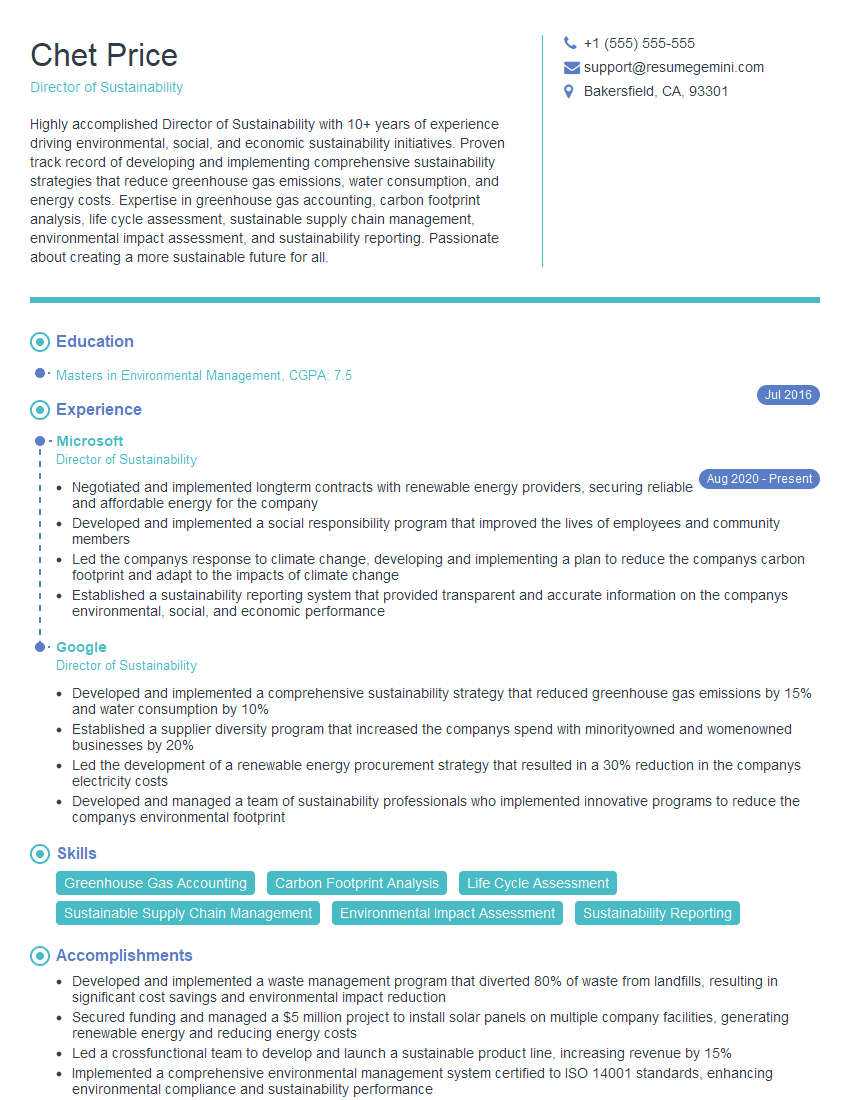
Director of Sustainability Resume Sample
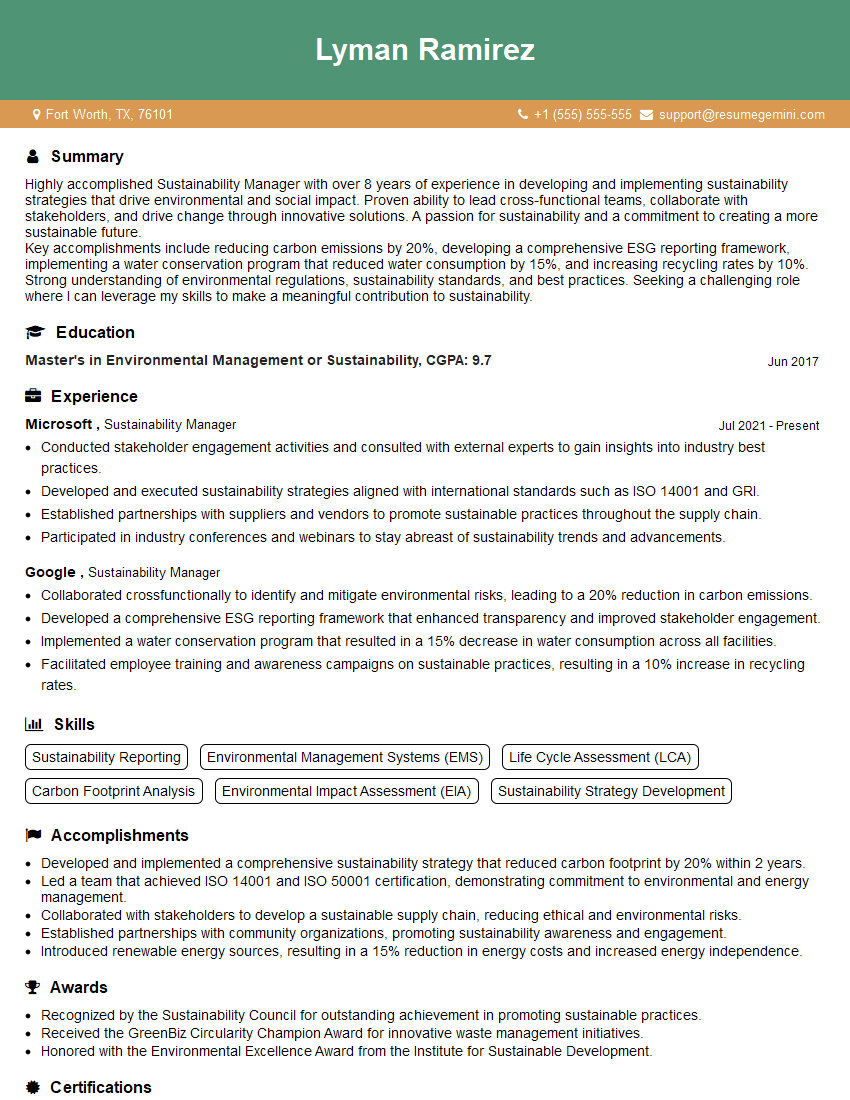
Sustainability Manager Resume Sample
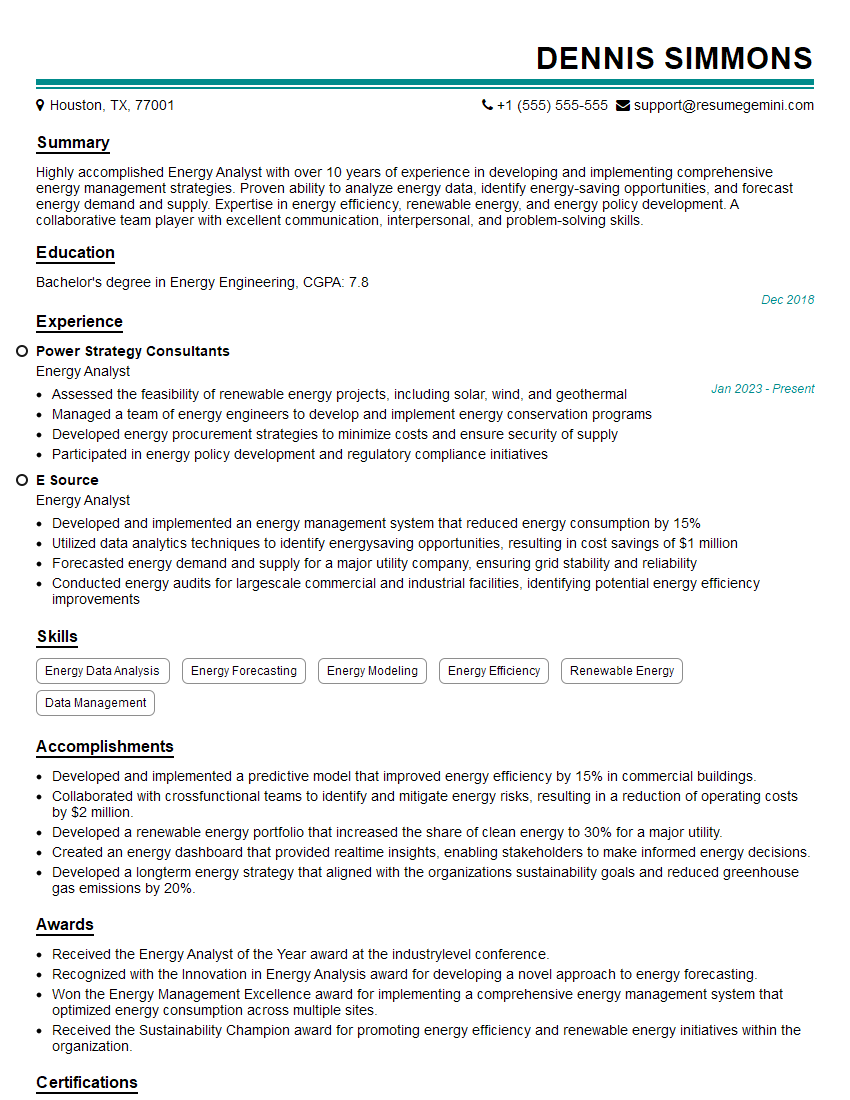
Energy Analyst Resume Sample
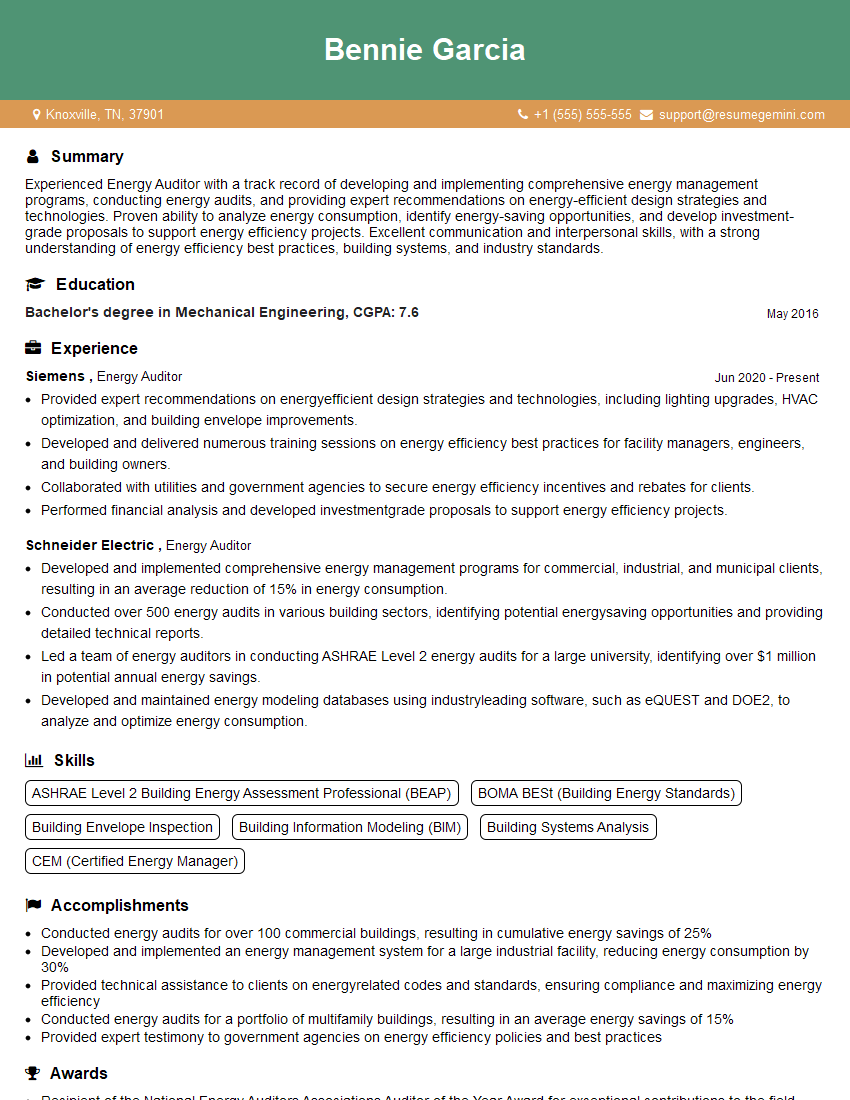
Energy Auditor Resume Sample
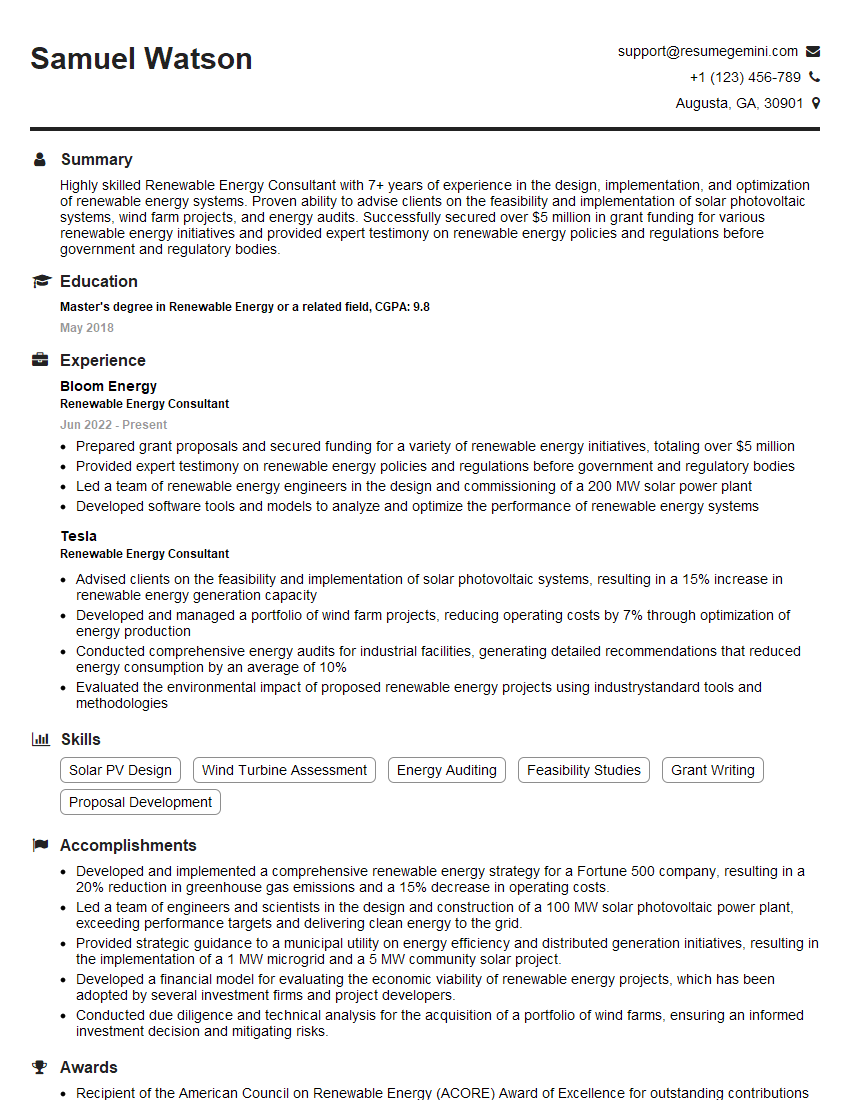
Renewable Energy Consultant Resume Sample

Sustainability Consultant Resume Sample
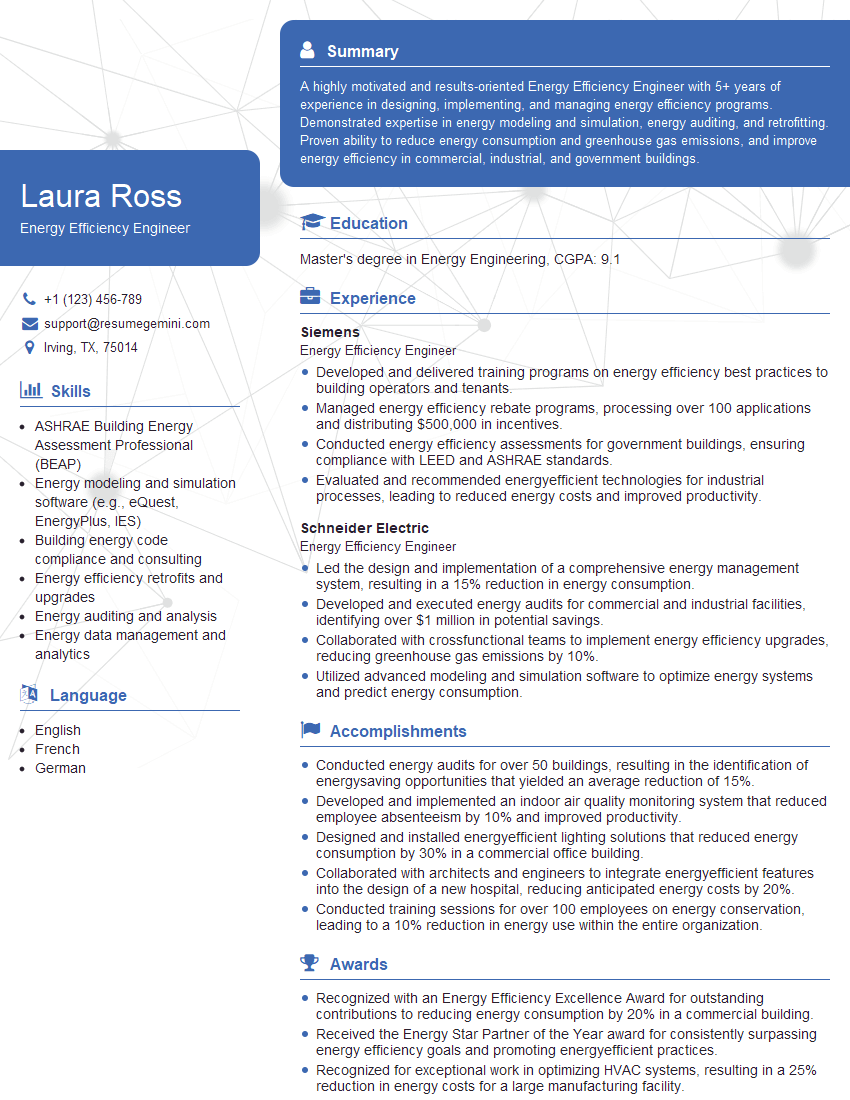
Energy Efficiency Engineer Resume Sample
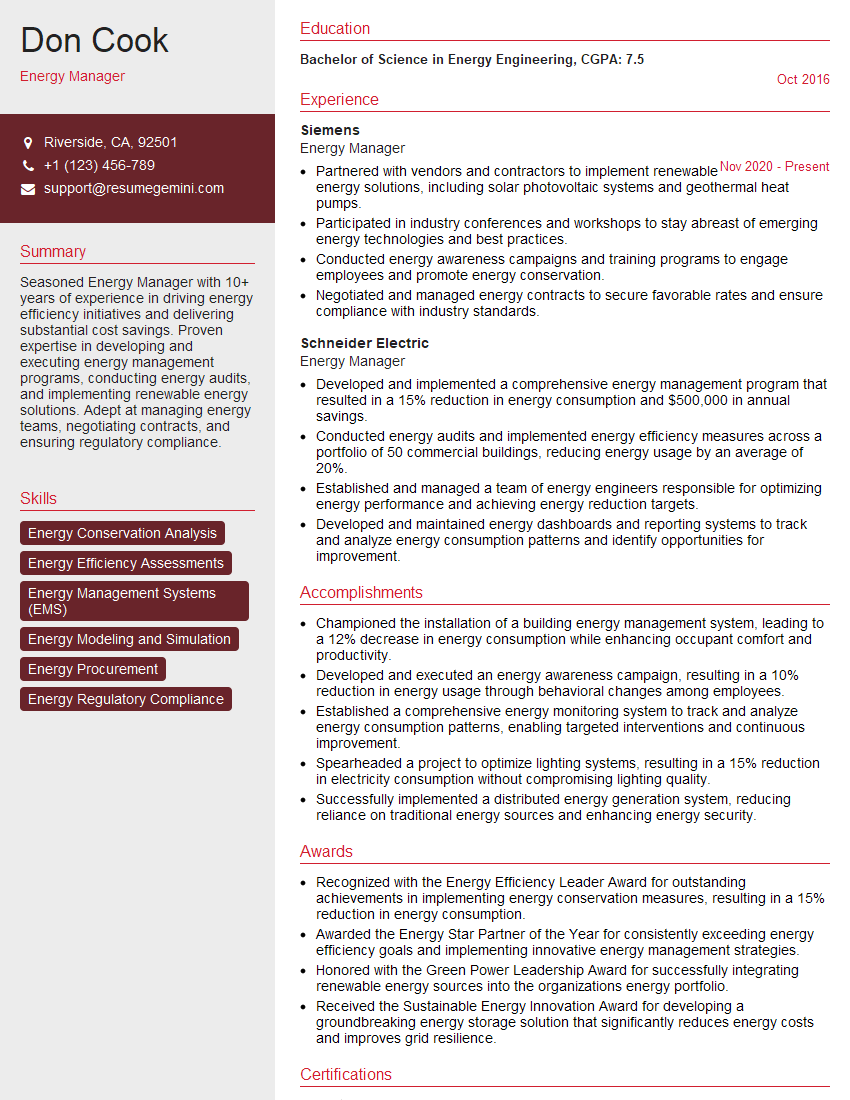
Energy Manager Resume Sample
Explore more articles
Users Rating of Our Blogs
Share Your Experience
We value your feedback! Please rate our content and share your thoughts (optional).
What Readers Say About Our Blog
Very informative content, great job.
good