Every successful interview starts with knowing what to expect. In this blog, we’ll take you through the top REACH Compliance interview questions, breaking them down with expert tips to help you deliver impactful answers. Step into your next interview fully prepared and ready to succeed.
Questions Asked in REACH Compliance Interview
Q 1. Explain the key principles of the REACH Regulation.
REACH, or the Registration, Evaluation, Authorisation and Restriction of Chemicals Regulation, is a landmark piece of EU legislation designed to improve the protection of human health and the environment from the risks that can be posed by chemicals. Its core principles revolve around the idea that manufacturers and importers are responsible for demonstrating the safe use of the chemicals they place on the EU market.
- Registration: Companies must register substances produced or imported in quantities above one tonne per year.
- Evaluation: ECHA evaluates the registered substances to ensure the safety assessments are thorough and accurate.
- Authorisation: Very high concern substances (SVHCs) may require authorisation before they can be placed on the market, ensuring their use is controlled and justified.
- Restriction: The EU can restrict or ban the manufacture, placing on the market, and use of specific substances deemed too hazardous.
Think of it like this: REACH is the EU’s way of saying, ‘We need to know what chemicals are out there, how they are used, and what risks they might pose. And the companies using them are responsible for proving their safe handling and use’.
Q 2. Describe the process of REACH registration.
The REACH registration process is multifaceted and demanding. It begins with substance identification, which needs to be precise down to its chemical identity and impurities. Next, companies must conduct a comprehensive risk assessment, including information on hazards, exposure scenarios, and risk characterization. This data is compiled into a registration dossier, which is submitted to ECHA via their online system, IUCLID. The dossier must include detailed information about the substance’s chemical identity, manufacturing process, uses, environmental fate, human health effects, and risk management measures.
The complexity of the process depends on the tonnage band: Higher tonnages require more extensive testing and data.
Imagine preparing a detailed case file for a chemical – that’s essentially what a REACH registration dossier is. It’s a substantial undertaking, requiring considerable resources and expertise.
Q 3. What are the different Annexes in REACH and their significance?
REACH features several annexes, which provide detailed technical specifications and requirements. These are crucial for the correct implementation of the regulation.
- Annex I: Specifies the information requirements for registration dossiers, depending on the tonnage band.
- Annex II: Outlines the testing methods for determining the physicochemical, toxicological and ecotoxicological properties of substances.
- Annex III: Lists the harmonized classification and labelling of substances.
- Annex IV: Details the waiver and reduction possibilities for testing data.
- Annex VII: Addresses the requirements for chemical safety reports (CSRs).
- Annex XIV: Lists substances subject to authorization. This is where SVHCs requiring authorization are specifically listed.
Each annex plays a distinct role in guiding manufacturers through their obligations under REACH, ensuring consistency and rigor in the evaluation and management of chemicals.
Q 4. Explain the concept of ‘substance of very high concern’ (SVHC).
A Substance of Very High Concern (SVHC) is a chemical substance identified as posing serious risks to human health or the environment. These risks might include carcinogenicity, mutagenicity, toxicity to reproduction, persistent, bioaccumulative, and toxic (PBT) properties, or endocrine disrupting properties. The classification as an SVHC triggers specific obligations under REACH, such as authorization requirements and the communication of information down the supply chain.
Think of SVHCs as the ‘most dangerous’ chemicals on the REACH list. They require extra scrutiny and controls due to the potential severe impact on health or the environment.
Q 5. How are SVHCs identified and managed under REACH?
SVHCs are identified through a process involving scientific evaluation and consideration of available data. ECHA plays a central role in this process. They continuously assess substances based on scientific criteria and relevant information. Once a substance is identified as an SVHC, it is added to the Candidate List, a publicly accessible list of SVHCs. Manufacturers and importers of articles containing SVHCs above a certain concentration (0.1% w/w) have communication duties – notifying their customers in the supply chain.
The management of SVHCs involves implementing appropriate risk management measures. This might include substitution with safer alternatives, safe use procedures, or even authorization requirements for specific applications.
Imagine a transparent, publicly available list of chemicals posing significant health or environmental concerns. That’s the Candidate List – a tool for transparency and responsible management of dangerous substances.
Q 6. What are the requirements for preparing a chemical safety report (CSR)?
A Chemical Safety Report (CSR) is a comprehensive document detailing the hazards and risks of a substance. It’s a cornerstone of REACH registration and is mandatory for substances registered at or above 10 tonnes per year. The CSR must provide a detailed risk characterisation of the substance in the intended uses, including information on exposure scenarios and risk management measures. The specific content requirements are laid out in Annex VII of the REACH Regulation. It needs to include data on physical-chemical properties, toxicity, ecotoxicity, fate and behaviour in the environment and risk assessment conclusions.
Essentially, the CSR is a detailed safety manual for the chemical, providing a thorough evaluation of its potential risks and how those risks can be managed safely.
Q 7. Explain the role of the European Chemicals Agency (ECHA).
The European Chemicals Agency (ECHA) is a key player in implementing and enforcing REACH. Their responsibilities include:
- Managing the REACH registration process: ECHA’s IUCLID system facilitates the submission and evaluation of registration dossiers.
- Evaluating substances: ECHA assesses substances for their potential hazards and risks.
- Maintaining the Candidate List: ECHA identifies and adds SVHCs to the Candidate List.
- Enforcing REACH: ECHA ensures compliance with REACH requirements and takes action against non-compliance.
- Communicating with stakeholders: ECHA provides information and guidance to manufacturers, importers, and other stakeholders.
Think of ECHA as the central authority overseeing the entire REACH process. They are the guardians of chemical safety within the EU.
Q 8. What are the implications of non-compliance with REACH?
Non-compliance with REACH can lead to serious consequences, impacting a company’s reputation, finances, and operations. The European Chemicals Agency (ECHA) enforces REACH, and penalties for non-compliance can be substantial.
- Fines: Significant financial penalties can be levied, varying depending on the severity and nature of the non-compliance.
- Import/Export Restrictions: Products containing non-compliant substances may be banned from entering or leaving the EU market.
- Product Recalls: Companies may be forced to recall products already on the market if they are found to be non-compliant.
- Criminal Prosecution: In severe cases, individuals responsible for non-compliance could face criminal charges.
- Reputational Damage: Non-compliance can severely damage a company’s reputation, leading to loss of customer trust and market share. This can be particularly damaging in sectors concerned with consumer safety, such as toys or cosmetics.
For example, a company failing to register a substance above the tonnage threshold would face significant fines and potential market exclusion. Imagine the impact on a small business – the fines could cripple them, and the reputational damage could be insurmountable.
Q 9. How does REACH impact supply chains?
REACH significantly impacts supply chains, requiring companies throughout the chain to understand their responsibilities. It’s no longer enough for just the manufacturer to be compliant; the entire chain needs to be involved.
- Increased Traceability: REACH necessitates improved traceability of chemicals throughout the supply chain. Companies need to know the composition of the substances they use and where they originate.
- Shared Responsibility: All actors – from producers and importers to downstream users – share responsibility for ensuring compliance. This often involves information sharing and collaboration.
- Documentation Requirements: Extensive documentation is required at each stage, including Safety Data Sheets (SDS) and information on the use and handling of substances.
- Supply Chain Disruptions: Non-compliance at any point in the chain can disrupt the entire process, leading to delays, production stoppages, and financial losses. A supplier failing to provide necessary information can halt the production of a finished good.
- Increased Costs: Compliance with REACH adds cost to the process, including testing, documentation, and potential fees. This needs to be factored into pricing strategies.
Consider a toy manufacturer sourcing plastic from a supplier in Asia. The manufacturer must ensure the plastic complies with REACH, meaning they need to verify their supplier’s compliance and obtain necessary documentation. Failure to do so could result in product recall and considerable financial penalties.
Q 10. Describe the process of authorization under REACH.
The REACH authorization process is for substances identified as posing an unacceptable risk to human health or the environment, even when used safely. It’s a rigorous procedure aimed at controlling the use of these substances.
- Identification of Substances: ECHA identifies substances requiring authorization based on their inherent properties and risks.
- Application for Authorization: Companies using the substance can apply for authorization, demonstrating that the risks are adequately controlled and there are no suitable alternatives.
- Assessment by ECHA: ECHA assesses the application, considering the risk assessment, the proposed risk management measures, and the availability of alternatives.
- Decision by Member States: The European Commission then makes a decision on whether to grant or refuse the authorization, taking into account the advice from ECHA and Member States.
- Granting of Authorization: If granted, the authorization specifies the conditions of use, including permitted quantities, uses, and risk mitigation measures.
- Review and Renewal: Authorizations are granted for a specific period and may be reviewed and renewed based on updated information and advancements in technology.
For example, a company using a particularly hazardous substance in the production of a specific product would need to submit a detailed authorization application demonstrating how they manage the risks. This application would need to include detailed risk assessment data, proposed control measures and evidence of the absence of suitable alternatives.
Q 11. What are the different restriction options under REACH?
REACH allows for different restriction options to control the manufacture, placing on the market, or use of substances of very high concern (SVHCs) that pose unacceptable risks. These restrictions can vary in scope and severity.
- Complete Ban: The substance is entirely prohibited from being manufactured, imported, or used within the EU.
- Use Restrictions: The substance can be used, but only under specific conditions. This could include limitations on concentration, application methods, or end uses.
- Restrictions on specific applications: The substance may be restricted in certain applications while permitted in others. This allows for a more nuanced approach, balancing risk and utility.
- Phase-out periods: Companies are given a specific timeframe to replace a substance with a safer alternative, gradually phasing out the restricted substance.
For instance, a specific type of phthalate might be completely banned in children’s toys due to its endocrine-disrupting properties. Another substance could be restricted to low concentrations in specific industrial applications, with a phase-out period to allow industry to adapt.
Q 12. Explain the role of safety data sheets (SDS) under REACH.
Safety Data Sheets (SDS) are crucial under REACH, providing comprehensive information about the hazards of a chemical and how to handle it safely. They are a cornerstone of chemical safety communication.
- Hazard Identification: SDSs clearly identify the physical, health, and environmental hazards associated with a substance.
- Precautionary Measures: They detail preventative measures to minimize exposure and risk, including personal protective equipment (PPE) recommendations.
- First Aid Measures: They provide guidance on first aid measures in case of accidental exposure.
- Accidental Release Measures: They outline procedures for handling spills and leaks.
- Handling and Storage: They provide instructions on the safe handling, storage, and transportation of the substance.
- Exposure Controls/Personal Protection: They detail personal protective measures, including the appropriate PPE.
Imagine a worker handling a chemical without access to an SDS. They wouldn’t know the potential health risks or appropriate safety procedures, increasing the risk of accidents and injuries. The SDS acts as a vital communication tool, providing crucial safety information to all those who handle or come into contact with the substance.
Q 13. How are confidential business information (CBI) handled under REACH?
Confidential Business Information (CBI) under REACH is handled with strict confidentiality to protect companies’ trade secrets and intellectual property. ECHA has rigorous procedures to ensure this protection.
- Strict Confidentiality Measures: ECHA and Member State authorities implement strict confidentiality procedures to protect CBI submitted during registration and authorization processes.
- Limited Access: Access to CBI is limited to those who need it for the regulatory process, ensuring its protection from unauthorized disclosure.
- Clear Identification of CBI: Companies must clearly identify which information they consider CBI when submitting data.
- Legal Protection: REACH provides legal protection for CBI, ensuring its confidentiality throughout the regulatory process.
A company might submit a detailed formula for a specific chemical as part of a registration. This formula would be considered CBI and protected from unauthorized disclosure, ensuring the company retains its competitive advantage.
Q 14. What are the different types of registrations under REACH?
REACH registration falls into several categories depending on the tonnage of the substance manufactured or imported into the EU.
- Registration of Substances above 1 tonne/year: This is the most common type of registration, requiring extensive data on the substance’s properties, hazards, and uses.
- Registration of Substances between 1 and 100 tonnes/year: These registrations require a reduced amount of data compared to those above 1 tonne/year, still adhering to many of the requirements.
- Joint Submissions: Companies can submit registration data jointly for the same substance, reducing the overall burden and cost for all involved.
- Substances under 1 tonne/year: Companies manufacturing or importing substances below 1 tonne/year per company per year have less stringent requirements but still need to provide data.
A large chemical manufacturer producing thousands of tonnes of a specific substance would need to fulfil a full registration with extensive data, while a smaller company using a substance in small quantities would have less burdensome registration requirements. The tonnage thresholds are designed to balance the need for comprehensive data with the burden on smaller companies.
Q 15. What is the role of a Lead Registrant?
The Lead Registrant is the single point of contact for the European Chemicals Agency (ECHA) for a specific substance. Think of them as the main representative for a group registering a substance. They are responsible for submitting the registration dossier to ECHA and ensuring its completeness and accuracy. This is crucial because the dossier contains all the safety and environmental data needed to ensure the substance is used safely. A company might choose to be the Lead Registrant if they produce or import the largest quantity of a specific substance. They carry significant responsibilities, including managing communication with ECHA and other registrants in the joint submission.
Career Expert Tips:
- Ace those interviews! Prepare effectively by reviewing the Top 50 Most Common Interview Questions on ResumeGemini.
- Navigate your job search with confidence! Explore a wide range of Career Tips on ResumeGemini. Learn about common challenges and recommendations to overcome them.
- Craft the perfect resume! Master the Art of Resume Writing with ResumeGemini’s guide. Showcase your unique qualifications and achievements effectively.
- Don’t miss out on holiday savings! Build your dream resume with ResumeGemini’s ATS optimized templates.
Q 16. How does REACH interact with other EU regulations (e.g., CLP)?
REACH interacts extensively with other EU regulations, primarily CLP (Classification, Labelling and Packaging). While REACH focuses on the registration, evaluation, authorization, and restriction of chemicals, CLP concentrates on the hazard classification and communication of that hazard to users through labelling and Safety Data Sheets (SDS). Imagine REACH as the overarching framework for chemical safety, while CLP provides the detailed instructions on how to communicate those safety concerns. They work together: data generated for REACH registration is often used to classify substances under CLP. A substance found to be hazardous under REACH will need to be labelled accordingly under CLP, ensuring consistent safety information throughout the supply chain. Other regulations, such as those concerning waste management, also intersect with REACH, ensuring a comprehensive approach to chemical lifecycle management.
Q 17. Explain the concept of joint submission under REACH.
Joint submission under REACH allows several companies to register the same substance together, rather than individually. This is particularly beneficial for substances with high volumes of production or import, reducing duplication of effort and costs. Imagine multiple companies making the same chemical – instead of each performing identical testing and compiling the same data, they combine resources to create one comprehensive registration dossier. The Lead Registrant coordinates the submission, but all participating companies share the responsibilities and costs. This collaborative approach is vital for efficient and effective chemical safety management, promoting sustainability and shared responsibility within the industry.
Q 18. What are the key differences between pre-registration and registration?
Pre-registration under REACH was a preliminary step, allowing companies to provide basic information about the substances they manufactured or imported before the full registration deadline. This provided ECHA with an overview of the substances in the market and allowed companies to prepare for full registration. Registration, on the other hand, is the complete submission of the detailed dossier containing comprehensive information on the substance’s properties, uses, risks, and safety measures. Think of pre-registration as a placeholder, providing initial information to ECHA, while registration is the comprehensive documentation required for a substance to legally be placed on the market. Pre-registration provided a crucial step for companies to organize and plan, avoiding last-minute rushes and ensuring they could meet the requirements of full registration within the deadlines.
Q 19. How is REACH enforced?
REACH enforcement is primarily carried out by Member States’ competent authorities, who are responsible for inspections and investigations. ECHA plays a supporting role, providing guidance and coordinating activities. Enforcement methods include inspections of companies’ facilities, review of documentation, and investigations of suspected non-compliance. Enforcement actions can range from warnings and requests for additional information to fines and legal action. The consistent monitoring and enforcement by Member States ensures REACH’s effectiveness and protects public and environmental health.
Q 20. What are the penalties for non-compliance with REACH?
Penalties for REACH non-compliance can be substantial and vary depending on the severity and nature of the infraction. These penalties can include significant fines, legal action, and even temporary or permanent market bans for the non-compliant substances. The level of the fine is often determined by factors such as the quantity of substance involved, the duration of non-compliance, and the potential environmental or health risks. The aim is to deter non-compliance and ensure responsible chemical management practices. Such significant penalties highlight the importance of thorough preparation and compliance with REACH requirements.
Q 21. Describe the process of updating a REACH registration.
Updating a REACH registration is necessary when new information becomes available about the substance, its uses, or its risks. This might be due to new research findings, changes in production processes, or discovery of new hazards. The update process involves submitting a variation to the initial registration dossier to ECHA. The level of detail required depends on the nature of the change; minor modifications might require a simple notification, while significant changes might involve a more substantial update. Regular review and updates are essential to maintain the accuracy and relevance of the registration information, ensuring ongoing chemical safety and compliance. Failure to update a registration can result in serious consequences, including non-compliance penalties.
Q 22. How do you determine which substances require REACH registration?
Determining which substances require REACH registration hinges on the substance’s tonnage and its inherent properties. REACH, the Registration, Evaluation, Authorisation and Restriction of Chemicals regulation, mandates registration for substances manufactured or imported into the European Union (EU) in quantities above one tonne per year per manufacturer or importer. This is a key threshold. However, it’s not just about quantity. The inherent hazardous properties of the substance are equally crucial. If a substance is classified as hazardous, even if produced in quantities below one tonne, specific requirements might still apply, particularly if it’s part of a larger category covered under REACH. Think of it like this: a small amount of a highly toxic substance poses a greater risk than a large amount of a relatively benign substance, so the regulation considers both factors.
The process involves checking the ECHA (European Chemicals Agency) database to see if the substance is already registered. If not, a detailed dossier containing extensive safety and hazard data must be compiled and submitted to ECHA for evaluation. For example, if a company manufactures a new type of polymer in quantities exceeding one tonne annually, they must register it under REACH. Similarly, an importer bringing in a significant quantity of a chemical not yet registered in the EU needs to do so.
Q 23. Explain the role of downstream users in REACH compliance.
Downstream users, those who receive and use registered substances after their initial manufacture or import, have a significant role in REACH compliance. While the manufacturer or importer is primarily responsible for registration, downstream users have obligations related to safe handling and use. Their main responsibility is to ensure the safe use of the substances they receive and to be informed of the hazards associated with them. They need to obtain a Safety Data Sheet (SDS) from their suppliers, which provides critical information on safe handling, storage, and disposal practices.
Imagine a paint manufacturer (downstream user) receiving a pigment (registered substance) from a supplier. Their REACH compliance obligations include appropriate labelling, proper waste management, and ensuring their employees have the necessary training and safety measures in place to handle the pigment safely. Failing to comply could lead to penalties and environmental harm. Therefore, downstream users must maintain good communication with suppliers to ensure they are fully aware of the substance’s hazards and how to manage them responsibly. This also includes being prepared to provide information if requested by authorities.
Q 24. What is the importance of robust data management in REACH compliance?
Robust data management is absolutely paramount in REACH compliance. The registration process involves generating and submitting a massive amount of data, including chemical identity, physicochemical properties, toxicological and ecotoxicological data, and exposure scenarios. Without a well-structured and organized system for managing this data, it becomes nearly impossible to meet registration deadlines and ensure the accuracy and completeness of the submission. Inaccurate or incomplete data can lead to delays, rejections, and significant penalties.
Think of it like building a complex house – you need detailed blueprints (data) and a meticulous construction process to ensure the final result is safe and functional. Similarly, a robust data management system should include data tracking, version control, data quality checks, and secure storage. This ensures data integrity, traceability, and accessibility throughout the process and beyond. It also simplifies audits and facilitates efficient communication with ECHA.
Q 25. How are REACH requirements communicated to suppliers?
Communication of REACH requirements to suppliers is typically done through a combination of methods. The most crucial is the inclusion of a detailed substance specification and clear requests for Safety Data Sheets (SDSs) compliant with REACH Annex II. This is usually part of a purchase order or supply agreement. Additionally, direct communication, possibly through regular meetings or emails, clarifies specific requirements and ensures the supplier understands the downstream user’s needs concerning safe handling and use. It is also common practice to include clauses in contracts that explicitly outline the REACH responsibilities of both parties.
For instance, a company sourcing a chemical will include clauses in its purchasing agreement specifying the required SDS format, data points that must be included, and the supplier’s responsibility to provide updated information if changes occur. This proactive approach reduces the risk of non-compliance and fosters a collaborative approach to ensuring both parties meet their legal obligations.
Q 26. What are some common challenges encountered during REACH compliance?
REACH compliance presents several challenges. One of the biggest is the sheer volume of data required for registration. Generating, testing, and compiling this data can be costly and time-consuming. Another significant hurdle is the complexity of the regulation itself. The interpretation of specific requirements can be ambiguous, leading to potential disagreements with ECHA. Furthermore, keeping up with ongoing updates and amendments to the regulation is critical, as it is a constantly evolving landscape.
Additionally, identifying all substances present in a complex mixture and determining their individual roles can prove difficult. Many companies face challenges in managing their supply chains effectively to ensure all suppliers understand and meet their REACH obligations. This often requires significant internal coordination and strong communication with all stakeholders across the supply chain.
Q 27. How would you approach resolving a REACH compliance issue?
Resolving a REACH compliance issue requires a systematic approach. First, the issue needs to be clearly defined and documented. Then, a thorough investigation is conducted to pinpoint the root cause. This often involves reviewing existing documentation, such as SDSs, registration dossiers, and internal procedures. Next, a potential solution is developed, considering various options and their implications. This might involve seeking clarification from ECHA, modifying internal processes, or working with the supplier to address shortcomings.
For example, if a company discovers that a supplier hasn’t provided an up-to-date SDS, the first step would be to contact the supplier and request the missing information. If the problem persists, the company might consider finding a new supplier, adjusting their usage of the substance, or escalating the issue to the relevant authorities. Through clear communication and a collaborative approach, solutions can be found efficiently and effectively. Maintaining meticulous records throughout this process is crucial for transparency and accountability.
Q 28. Describe your experience working with ECHA.
Throughout my career, I’ve had extensive interaction with ECHA, primarily through the submission of registration dossiers. This involves preparing comprehensive documentation, addressing any queries raised by ECHA, and participating in joint discussions to clarify interpretations and ensure the compliance of our substances. I’ve successfully managed the registration of several complex substances and have a deep understanding of ECHA’s processes and expectations. This experience has honed my ability to navigate the intricacies of REACH and proactively address potential compliance issues.
In one instance, I collaborated with ECHA on clarifying the interpretation of a specific regulation amendment for a complex mixture. My familiarity with ECHA’s processes and guidelines ensured a timely and successful resolution, avoiding any potential non-compliance issues. This experience highlights the importance of proactive engagement and clear communication in maintaining compliance with the ever-evolving REACH framework. My experience working with ECHA has instilled in me a deep appreciation for the importance of detailed record-keeping and meticulous preparation when dealing with the complexities of the REACH regulation.
Key Topics to Learn for REACH Compliance Interview
- REACH Regulation Overview: Understanding the core principles, objectives, and scope of the REACH regulation. This includes the roles of ECHA and its databases.
- Substance Registration: Familiarize yourself with the registration process, including pre-registration, data requirements (e.g., physicochemical properties, ecotoxicological data, toxicological data), and the IUCLID data submission process.
- Authorisation: Grasp the concept of Authorisation for substances of very high concern (SVHCs) and the procedures involved in obtaining authorisation.
- Restriction of Substances: Understand how restrictions on the manufacture, placing on the market, and use of certain substances are implemented and enforced.
- Downstream User Responsibilities: Learn about the obligations of companies that use substances in their products, including communication in the supply chain and compliance with relevant regulations.
- Data Sharing and Confidentiality: Understand the mechanisms for data sharing and the importance of protecting confidential business information (CBI) within the REACH framework.
- Compliance Auditing and Enforcement: Learn about the potential consequences of non-compliance and the methods used by regulatory bodies to ensure compliance.
- Practical Application: Be prepared to discuss real-world scenarios involving REACH compliance, such as identifying SVHCs in a supply chain or navigating the registration process for a new chemical.
- Problem-Solving: Consider how you would approach challenges related to REACH compliance, such as resolving discrepancies in data or managing communication within a complex supply chain.
- Emerging Trends: Stay updated on current developments and potential future changes to the REACH regulation.
Next Steps
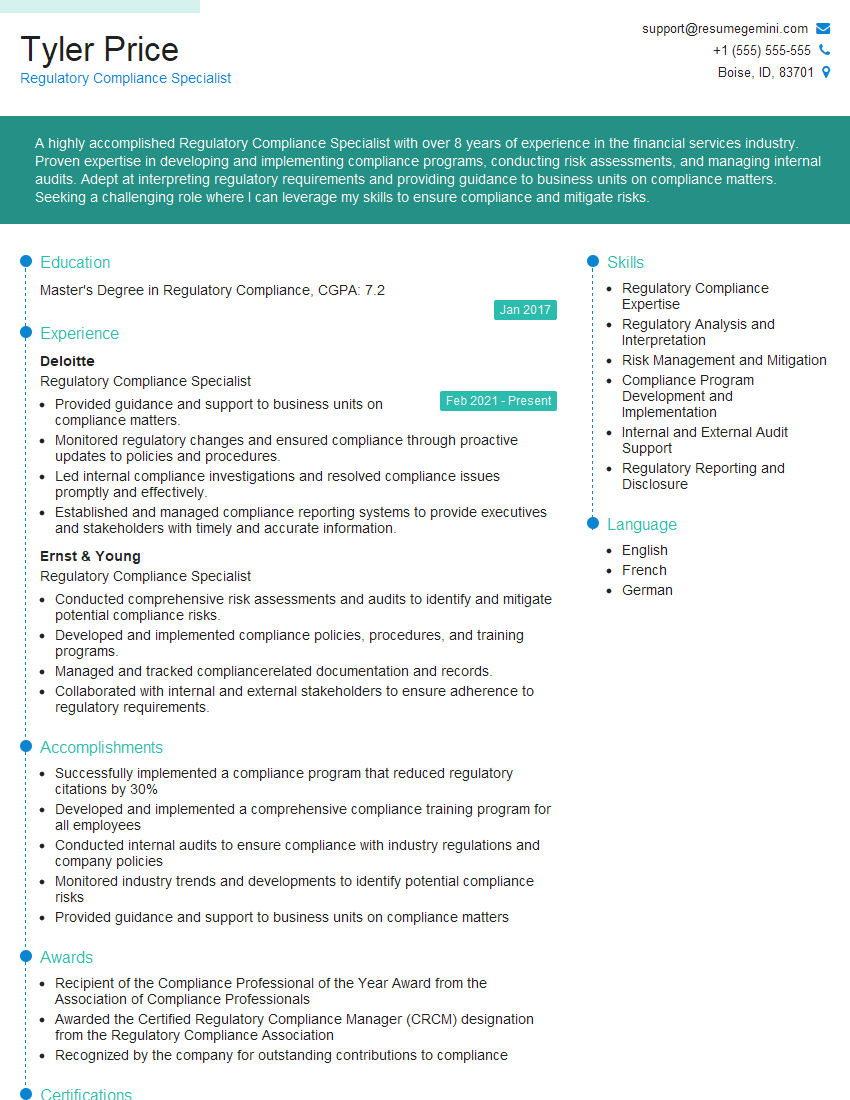
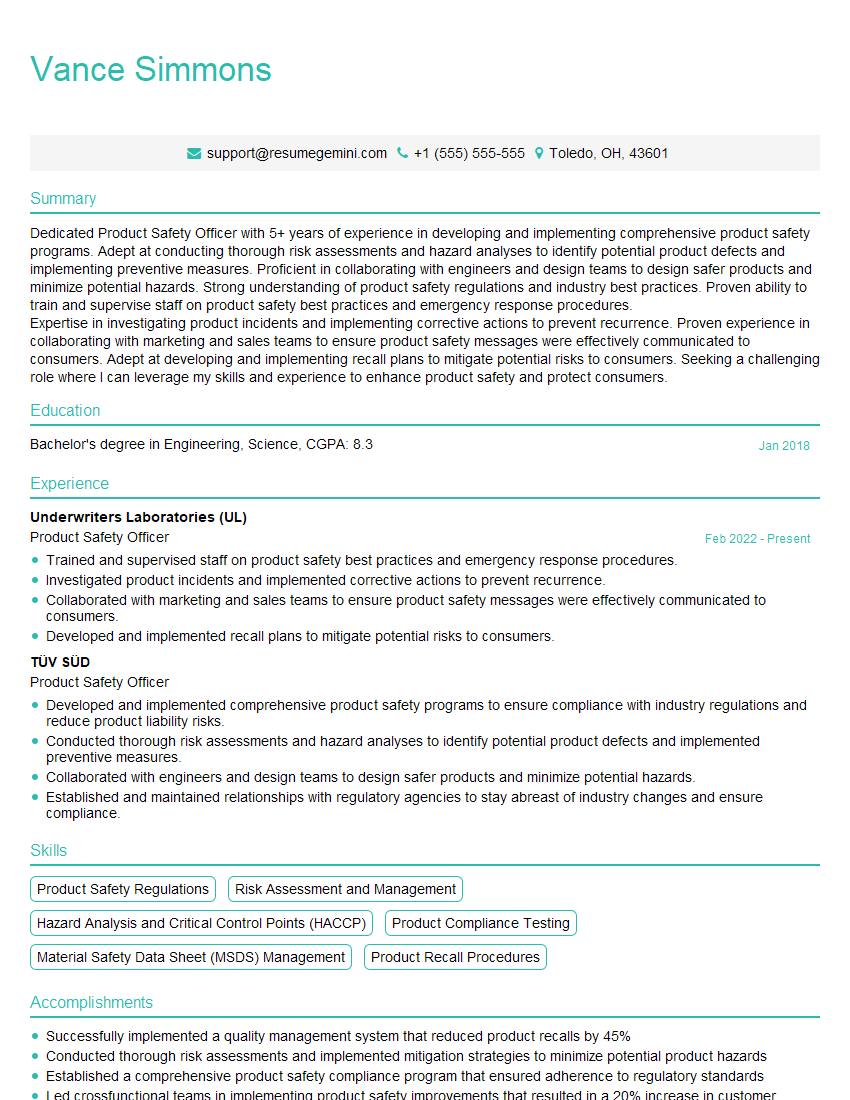
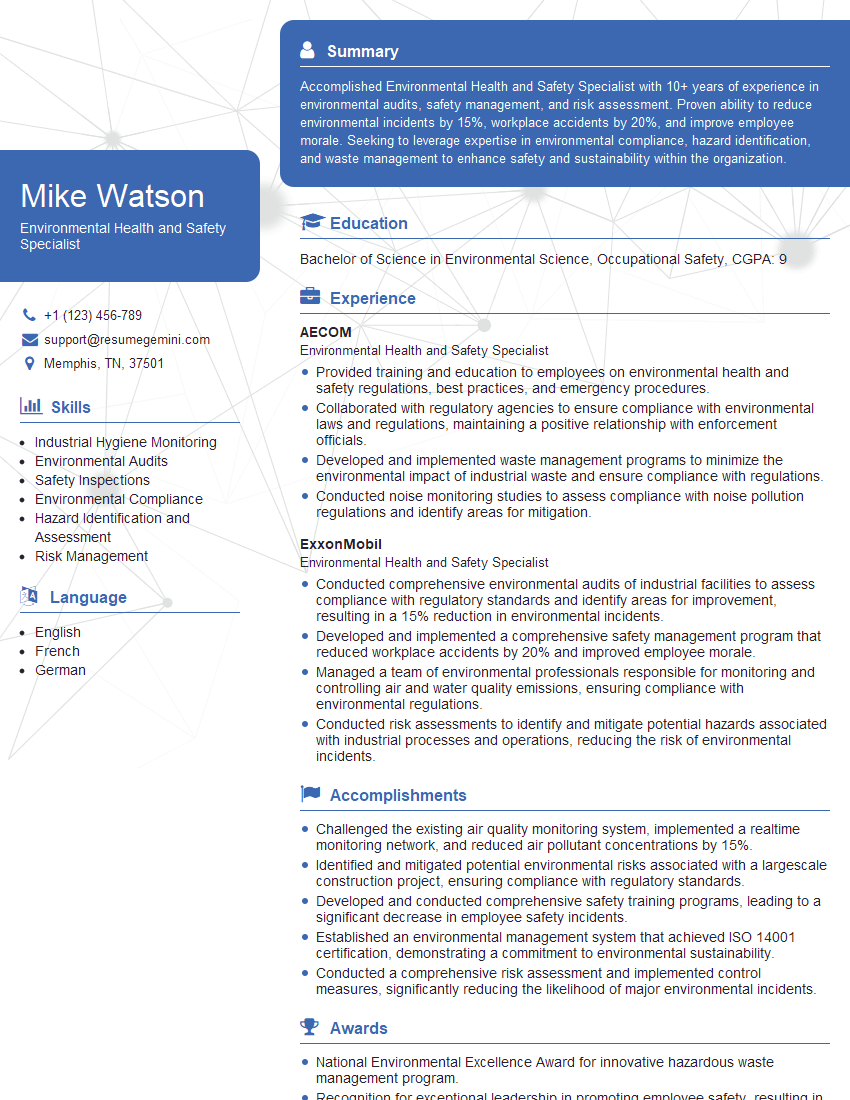
Mastering REACH Compliance demonstrates a strong commitment to environmental responsibility and regulatory adherence – highly valued skills in today’s market. This expertise can significantly enhance your career prospects in chemical manufacturing, supply chain management, and environmental consulting. To maximize your job search success, create a compelling and ATS-friendly resume that highlights your relevant skills and experience. ResumeGemini is a trusted resource to help you build a professional resume that stands out. Examples of resumes tailored to REACH Compliance are available to guide you.
Explore more articles
Users Rating of Our Blogs
Share Your Experience
We value your feedback! Please rate our content and share your thoughts (optional).
What Readers Say About Our Blog
Very informative content, great job.
good