Are you ready to stand out in your next interview? Understanding and preparing for Ensemble Composition and Improvisation interview questions is a game-changer. In this blog, we’ve compiled key questions and expert advice to help you showcase your skills with confidence and precision. Let’s get started on your journey to acing the interview.
Questions Asked in Ensemble Composition and Improvisation Interview
Q 1. Describe your approach to composing for an ensemble of [specific instrumentation].
Composing for a specific ensemble, let’s say a string quartet (two violins, viola, cello), begins with understanding the unique timbral possibilities of each instrument. I wouldn’t treat them as interchangeable; instead, I leverage their individual strengths. For instance, the soaring high register of the violins might be perfect for a lyrical melody, while the richer, deeper tones of the cello could anchor the harmonic foundation. The viola, with its mellow timbre, could provide a countermelody that bridges the two.
My approach is iterative. I start with a core idea – a melodic fragment, a harmonic progression, or a rhythmic motif – and then explore how it can be developed across the four instruments. I might begin by sketching out individual parts, ensuring each instrument has a role that suits its capabilities, before carefully weaving them together into a cohesive texture. I’d consider things like voice leading (how the melodies move between instruments), counterpoint (the interplay between independent melodic lines), and the overall balance of the ensemble. A successful arrangement considers the unique blend of these instruments to create something greater than the sum of its parts.
For example, I might compose a passage where the first violin carries a virtuosic melody, the second violin provides a delicate harmony, the viola offers a subtly contrasting countermelody, and the cello plays a steady, walking bass line. This layering of sounds creates depth and interest, utilizing the full expressive potential of the string quartet.
Q 2. Explain your process for creating a cohesive and compelling musical arrangement.
Creating a cohesive and compelling arrangement requires a keen sense of form, texture, and dynamics. It’s like building a house: you need a strong foundation (harmonic structure), interesting rooms (melodic and rhythmic variations), and a stunning facade (the overall musical impact).
My process involves several steps: First, I establish the overall form – is it a sonata form, a rondo, a theme and variations? This provides a structural blueprint. Then, I work on developing the melodic material, ensuring that themes are memorable and undergo interesting transformations throughout the piece. I pay close attention to the harmonic progression, selecting chords that support the melody and create a sense of forward momentum or emotional intensity, as needed.
Texture is crucial. I experiment with different combinations of instruments – unison passages, homophonic textures (where all instruments play the same chords), polyphonic textures (where multiple independent melodies are woven together). Dynamics are also key – I’ll carefully shape the volume to create contrasts, building tension and release, and highlighting important musical moments. Ultimately, the goal is to create a compelling narrative arc, guiding the listener through a journey of musical exploration.
Q 3. How do you balance individual expression with the overall ensemble sound?
Balancing individual expression with the overall ensemble sound is a delicate art. It’s about finding the sweet spot between allowing each musician to shine and creating a unified musical whole. I achieve this through careful orchestration and communication.
I often give musicians some freedom within their parts – allowing for subtle variations in phrasing or articulation – while simultaneously providing a strong structural framework that ensures cohesion. For example, I might write a section where the individual instrumentalists have brief soloistic moments, but these moments are carefully placed within the larger context of the piece, enhancing the overall impact.
Rehearsals are crucial. During rehearsals, I work with the musicians to ensure that their individual interpretations blend seamlessly. Open communication is essential; I encourage feedback and am willing to adjust the score based on the musicians’ insights and suggestions. The goal is a collaborative process where every musician feels heard and valued, resulting in a performance that is both individually expressive and collectively powerful.
Q 4. Discuss your experience with different improvisation techniques.
My experience encompasses a wide range of improvisation techniques, from structured forms like call and response and theme and variations to more free-flowing approaches like aleatoric music (where elements of chance are incorporated).
I’m proficient in techniques such as modal improvisation (building improvisations on a specific scale or mode), improvisation based on chord progressions, and improvising using rhythmic and melodic cells as building blocks. I’ve explored different approaches like solo improvisation, improvisation with a small ensemble, and improvising with a larger group, where interaction and call-and-response become crucial elements.
In free improvisation, I emphasize listening and responding to the other musicians. This involves actively listening to the musical ideas generated by others and building upon them, creating a spontaneous musical conversation. In more structured improvisation, I utilize frameworks and guidelines to ensure that the improvisation remains coherent and within the desired aesthetic.
Q 5. How do you handle creative differences within an ensemble?
Creative differences are inevitable in any collaborative artistic endeavor. My approach to handling them is based on open communication, mutual respect, and a willingness to compromise.
First, I create a safe space for open dialogue. I encourage everyone to share their ideas and perspectives, even if they differ significantly from my own. I actively listen to their concerns and explain my reasoning behind my creative decisions. When conflicts arise, I facilitate discussions, helping the ensemble members find common ground. This might involve exploring different alternatives or finding ways to incorporate elements from various perspectives into the final product.
Sometimes, compromise involves prioritizing the overall vision of the piece. If a particular suggestion doesn’t fit the overall aesthetic or structure, I might explain why, while still acknowledging its merit. Ultimately, the goal is a collaborative process where everyone feels valued and respected, leading to a work that reflects a collective vision.
Q 6. Describe your familiarity with music notation software.
I’m highly proficient in several music notation software packages, including Sibelius, Finale, and Dorico. I’m comfortable using them to create scores of varying complexity, from simple sketches to full orchestral scores. My expertise extends beyond basic notation input; I’m skilled in using the software’s features for advanced tasks such as creating custom instruments, manipulating MIDI data, and utilizing advanced playback and printing options.
I find these tools essential for organizing musical ideas, refining compositions, creating detailed parts for musicians, and producing professional-quality printed scores and parts. The ability to quickly and efficiently modify scores is invaluable during rehearsals and revision processes. My proficiency in these software programs is a crucial aspect of my workflow, allowing for seamless transitions from initial musical concepts to polished final products.
Q 7. Explain your process for selecting instrumentation for a specific composition.
Selecting instrumentation for a composition is a crucial decision that significantly impacts the overall sound and aesthetic. It’s not simply about choosing instruments randomly; it involves a thoughtful consideration of several factors.
First, I consider the musical style and the emotional palette of the composition. A piece requiring a delicate and ethereal sound might lend itself to a chamber ensemble featuring strings and woodwinds, while a piece that demands power and grandeur might necessitate a larger ensemble with brass and percussion. The timbral qualities of each instrument – their unique sonic characteristics – are paramount.
Next, I consider the specific musical ideas I want to express. A particular melody might sound better on a flute than a trumpet. Certain harmonies might be more effective with a piano than a harp. I also consider the technical capabilities of the instruments and the musicians who will be playing them. The piece should be challenging yet achievable for the performers. Finally, budget and availability of instruments also influence my choices. The process is a thoughtful balancing act between artistic vision, practical considerations, and the expressive capabilities of the chosen instrumentation.
Q 8. How do you adapt your composition or improvisation style to different musical genres?
Adapting my compositional and improvisational style across genres involves a deep understanding of each genre’s inherent characteristics. It’s not just about mimicking surface elements; it’s about grasping the underlying principles of rhythm, harmony, melody, and form that define a particular genre. For example, composing for a jazz ensemble demands a familiarity with blues scales, improvisation techniques like call-and-response, and a flexible harmonic language that allows for extended chords and alterations. In contrast, composing for a classical string quartet requires a different approach, focusing on counterpoint, formal structures like sonata form, and a nuanced understanding of the individual instrumental timbres. I approach this adaptation by immersing myself in the relevant repertoire, listening extensively to exemplary artists within that genre, and actively studying the theoretical underpinnings. This allows me to internalize the ‘grammar’ of each genre before translating my own creative voice within its parameters. I might even experiment with incorporating elements from one genre into another, creating a fusion style that draws inspiration from various sources.
Q 9. How do you incorporate listener feedback into your ensemble work?
Incorporating listener feedback is crucial for refining ensemble work and ensuring the performance resonates with the intended audience. I actively solicit feedback through various methods: post-performance discussions, informal surveys, and online platforms. I analyze this feedback critically, distinguishing between subjective opinions and constructive criticism. For example, if the feedback suggests that a particular section was too dense or lacked energy, I might analyze the musical structure to see if simplification or rhythmic adjustments are warranted. If the feedback points to a lack of clarity, I might revisit the arrangement to enhance the melodic or harmonic prominence. I find that a balanced approach is vital – not blindly following every suggestion, but selectively incorporating those insights that enhance the overall piece’s impact and artistic expression. Ultimately, the goal is not to please everyone, but to create a work that is artistically compelling and connects with the audience on a deeper level.
Q 10. Explain your understanding of musical form and structure.
Musical form and structure are the frameworks upon which musical ideas are organized. Understanding these frameworks is essential for crafting coherent and engaging compositions. Basic forms include binary form (two contrasting sections, A-B), ternary form (three sections, A-B-A), and sonata form (a more complex structure with exposition, development, and recapitulation). Beyond these basic forms, I utilize more complex structures, incorporating variations, through-composed sections, and thematic transformations. I see form as a means of guiding the listener’s experience, building tension and release, and providing a sense of unity and coherence. Think of it like a story: each section has a purpose, contributing to the narrative arc of the entire piece. My approach to form is flexible and often depends on the specific musical ideas and the intended emotional impact. For example, a piece evoking a sense of calm might employ a simple, repetitive form, while a dramatic piece might adopt a more complex and evolving structure.
Q 11. Describe your experience working with diverse musical styles and traditions.
My work has spanned various musical styles and traditions, from classical Western music to world music influences like Afro-Cuban rhythms and Indian ragas. This exposure has broadened my creative palette significantly. For instance, working with a group incorporating traditional Irish instruments required learning about their unique techniques and the nuances of Irish folk melodies. This enriched not only my composition process but also my understanding of musical expression across cultures. In another project, I collaborated with a group incorporating elements of Brazilian Samba. This involved studying the rhythmic complexities of Samba and understanding how to integrate these rhythms into a larger composition. These experiences have been invaluable in pushing my creative boundaries and developing a more inclusive and versatile compositional approach. I actively seek out opportunities to collaborate with artists from diverse backgrounds because I believe that these cross-cultural collaborations enrich the artistic process significantly.
Q 12. How do you approach composing for specific performance spaces and acoustics?
Composing for specific performance spaces requires careful consideration of the acoustics. A large concert hall will have different reverberation characteristics compared to a smaller, intimate venue. For larger spaces, I might incorporate fuller orchestration and longer musical phrases to fully utilize the space’s resonance. In smaller spaces, a more intimate sound might be appropriate, with perhaps a smaller ensemble and simpler textures to avoid muddiness. I usually visit the venue beforehand, if possible, to get a sense of its acoustic properties. Listening to recordings made in the space can also be helpful. Sometimes, I even conduct acoustic tests or simulations using specialized software. These considerations inform decisions on instrumentation, dynamics, and the overall structure of the composition. For example, I might choose instruments that project well in a large hall or adjust the dynamic range to suit the space’s size and acoustic properties. The process is iterative: I might revise the composition based on my observations and analysis of the space’s acoustics.
Q 13. How do you manage time constraints and deadlines in ensemble composition projects?
Managing time constraints and deadlines in ensemble composition projects requires meticulous planning and efficient workflow. I begin with a detailed project plan outlining each stage of the process: initial sketches, detailed composition, orchestration, rehearsal scheduling, and final revisions. I break down large tasks into smaller, manageable units, ensuring realistic deadlines for each stage. Regular self-checkpoints allow me to monitor progress and identify potential delays. Clear communication with the ensemble members is essential to keep everyone informed about the project’s timeline and expectations. This collaborative approach helps maintain momentum and keeps everyone on track. Flexibility is crucial; sometimes unforeseen issues arise, requiring adjustments to the timeline. In such situations, I prioritize clear communication with all stakeholders and work collaboratively to find solutions while maintaining the artistic integrity of the project.
Q 14. Explain your experience using technology in ensemble composition and improvisation.
Technology plays a significant role in my ensemble composition and improvisation work. I utilize Digital Audio Workstations (DAWs) like Logic Pro X or Ableton Live for notation, audio editing, sound design, and virtual instrument creation. These tools enable experimentation with different sounds and textures, allowing for rapid prototyping and iteration of musical ideas. For example, I might use a DAW to create a virtual orchestra, allowing me to experiment with various instrumentation combinations without the logistical constraints of a live orchestra. Furthermore, I utilize notation software for composing and sharing scores efficiently with ensemble members. The use of collaborative platforms for score sharing and feedback is also crucial for efficient teamwork. I also explore algorithmic composition techniques, where software can assist in generating musical ideas or variations based on specific parameters. While technology enhances the creative process, I always emphasize the human element, ensuring that the technology remains a tool to augment, not replace, artistic intuition and expression.
Q 15. Describe your approach to conducting and leading an ensemble.
My approach to conducting and leading an ensemble is built on a foundation of collaborative communication and a deep understanding of each musician’s individual strengths and expressive capabilities. I believe in fostering a supportive and respectful environment where everyone feels comfortable contributing creatively. Instead of a purely directive style, I favor a more conversational approach, facilitating dialogue about the music’s interpretation and technical aspects.
Before rehearsals, I meticulously study the score, identifying potential challenges and opportunities for expressive nuance. During rehearsals, I use clear and concise language, providing specific feedback tailored to individual players. I often demonstrate techniques or phrasing myself on the piano or through conducting gestures. I emphasize active listening, ensuring each musician hears and responds to others, leading to a cohesive ensemble sound. A key aspect of my leadership is building trust; a confident, connected ensemble is the result of a collaborative spirit.
For example, when working on a particularly challenging passage in a piece with intricate rhythmic interplay, I’d break down the section into smaller phrases, allowing the players to practice and internalize their parts before bringing them together. I’d provide individual guidance to address technical issues and then focus on the ensemble’s balance and phrasing. This iterative process combines individual mastery with unified ensemble performance.
Career Expert Tips:
- Ace those interviews! Prepare effectively by reviewing the Top 50 Most Common Interview Questions on ResumeGemini.
- Navigate your job search with confidence! Explore a wide range of Career Tips on ResumeGemini. Learn about common challenges and recommendations to overcome them.
- Craft the perfect resume! Master the Art of Resume Writing with ResumeGemini’s guide. Showcase your unique qualifications and achievements effectively.
- Don’t miss out on holiday savings! Build your dream resume with ResumeGemini’s ATS optimized templates.
Q 16. Discuss your understanding of musical harmony and counterpoint.
My understanding of musical harmony and counterpoint is fundamental to my compositional and conducting practices. Harmony provides the framework—the emotional landscape—of the music. I see it not merely as a set of rules, but as a language of expressive possibilities. The choice of chords, their voicing, and their progression significantly impact the overall mood and narrative arc of a piece.
Counterpoint, the art of combining independent melodic lines, is crucial for creating texture, depth, and interest. Understanding voice leading—the smooth and logical movement of melodic lines—is vital for writing effective counterpoint. I strive for both independence and interdependence of the voices; they must be distinct but work harmoniously together.
For example, in a composition, I might use a combination of homophonic (chordal) textures for powerful moments and polyphonic (counterpoint) textures for intimate or intricate sections. The contrast creates dynamic interest and reveals different facets of the musical idea. In conducting, understanding counterpoint enables me to precisely balance the voices and ensure that each line retains its individuality while contributing to the overall harmony.
Q 17. How do you create a dynamic and engaging musical experience for the audience?
Creating a dynamic and engaging musical experience involves more than just technical proficiency; it requires a deep understanding of storytelling and emotional connection. I strive to build a narrative arc throughout a performance, using varied dynamics, tempos, and textures to evoke different emotions and maintain audience engagement.
Careful programming plays a vital role. I strategically sequence pieces to create a journey for the listener, balancing contrasting moods and styles. Furthermore, clear articulation and phrasing are crucial. The ensemble’s articulation reflects not only the notes but the underlying emotions. By encouraging precise and nuanced playing, we can evoke the desired feelings in the audience. Visual engagement through appropriate stage presence and interaction with the musicians also contributes to the performance.
For instance, in a concert, I might start with a quiet, introspective piece, gradually building the intensity towards a climactic movement, then transitioning to a lighter piece before the finale. The careful use of contrast keeps the audience captivated. During the performance, I communicate with the ensemble through my conducting to ensure our expressiveness matches the intended emotion of each section.
Q 18. How do you ensure the balance of each instrumental voice within the ensemble?
Balancing instrumental voices is a delicate process that requires both technical expertise and keen listening skills. It’s a constant dance between individual character and harmonious blend. Before a performance, careful rehearsal focusing on balancing sections is crucial. This involves adjusting individual volume levels, adjusting the placement of instrumentalists, and often modifying the arrangement itself to achieve a homogeneous soundscape.
This process begins during the composition and arrangement phase. I carefully consider the inherent volume and timbre of each instrument, writing parts that complement each other without overwhelming any single voice. During rehearsals, I actively listen for imbalances, providing specific feedback to individual players. Technology can also aid in balancing; recording sessions allow for fine-tuning after the rehearsal process. Visual cues, such as observing the instrumentalists’ physical gestures, can also inform the adjustments.
For example, in a string quartet, I might encourage the cellist to slightly reduce their volume during passages where the violins are carrying the melody. This balance ensures that the melody stands out without losing the rich texture provided by the lower strings. Similarly, in a larger ensemble, strategic placement of instrumentalists can significantly influence the balance, ensuring that no section is overpowered.
Q 19. How do you facilitate creative collaboration within an ensemble setting?
Facilitating creative collaboration is essential for a vibrant and engaging ensemble. I create an open and encouraging atmosphere where everyone feels comfortable sharing ideas and contributing their unique perspectives. Regular brainstorming sessions and open rehearsals are vital. I actively encourage musicians to experiment with different interpretations, phrasing, and dynamics.
I find that structured improvisation exercises can be particularly effective in fostering creativity. By providing a basic framework, such as a chord progression or rhythmic pattern, I encourage musicians to spontaneously explore musical ideas, working collaboratively to create something new. These sessions not only unlock individual creativity but also strengthen the ensemble’s collective musical language.
For example, I might start a rehearsal by asking the ensemble to improvise on a specific chord progression, then guide them towards developing a cohesive theme together. This process fosters mutual respect and trust, leading to a deeper understanding of each other’s musical strengths and preferences.
Q 20. Describe your experience with music theory and analysis.
My experience with music theory and analysis is extensive, providing a robust framework for both composition and conducting. A strong theoretical background allows me to understand the underlying structure of music, helping me to compose effectively and to analyze existing works in depth. This includes a comprehensive understanding of harmony, counterpoint, form, and orchestration.
I utilize music theory not just as a set of rules, but as a tool for unlocking creative possibilities. By understanding the principles of harmony and counterpoint, I can manipulate them to create unique and expressive musical textures. I often employ analytical techniques to deconstruct existing compositions, gaining insights into the composer’s intent and creative processes. This allows me to approach my work with both creativity and structural understanding.
For example, my analysis of Beethoven’s symphonies has provided me with a deeper comprehension of thematic development and orchestral writing. I use that understanding to inform my own compositional process, helping me create rich and varied musical landscapes.
Q 21. Explain your approach to developing thematic material in your compositions.
Developing thematic material is at the heart of composition. I approach it as a process of exploration and refinement, starting with a core idea that gradually evolves and transforms throughout the piece. This initial idea might be a simple melodic fragment, a rhythmic motif, or a harmonic progression. It is often inspired by various sources, including personal experiences, emotional states, or even external stimuli.
Once I have a core idea, I systematically develop it through various techniques. This can involve motivic development, where the initial theme is transformed through variations in rhythm, melody, or harmony. I also utilize techniques such as sequence, where the theme is repeated at different pitch levels. The process frequently involves creating contrasting themes that work in juxtaposition to build tension and release. Orchestration and texture also play a vital role in shaping the thematic material, providing variety and depth.
For instance, a simple four-note motif could be developed into a complex and varied theme through variations in rhythm, melody, harmony, dynamics, and orchestration, creating a complex yet cohesive musical narrative. This iterative process is crucial for creating a coherent and engaging piece of music.
Q 22. How do you incorporate improvisation into your pre-composed ensemble works?
Incorporating improvisation into pre-composed ensemble works is about finding the sweet spot between structure and spontaneity. It’s not about abandoning the composition entirely, but rather creating spaces where musicians can inject their own creativity within a carefully designed framework.
One approach is to build in ‘cadential formulas’ – short, recurring melodic or rhythmic patterns – that can be used as springboards for improvisation. The musicians understand the underlying structure, but have the freedom to embellish or deviate within the established harmonic or rhythmic context. For example, in a section with repeated chord progressions, I might specify a harmonic framework (e.g., II-V-I) and let instrumentalists create their own melodic lines within that framework, potentially using a specific rhythmic motif. Think of it like a painter providing a canvas and basic colour palette, but allowing the artist to decide the composition.
Another effective technique involves creating ‘improvisational sections’ clearly marked in the score. These might be indicated with specific instructions like ‘free improvisation over drone,’ ‘solo based on the preceding theme,’ or ‘call-and-response improvisation.’ This allows for a blend of planned structure and emergent creativity. Clear communication with the musicians about the intention and boundaries of these sections is vital.
Q 23. Describe your process for revising and refining an ensemble composition.
Revising and refining an ensemble composition is an iterative process, much like sculpting. It involves cycles of writing, listening, critiquing, and rewriting. I begin with a concept or initial sketch, often including some improvisational elements that then inform the final composition. Then, I carefully analyze the overall structure: is the balance between sections effective? Is the flow natural? Does the pacing work?
Next, I typically conduct workshops or rehearsals with the ensemble to test the piece. The feedback from musicians is invaluable. They can identify potential problems with rhythm, phrasing, balance, or even sections that might feel repetitive or unclear. I listen closely to these concerns, analyzing issues of voice leading (how the different melodic lines interact), orchestration (instrument distribution), and overall coherence. The process requires patience and a willingness to change even well-loved sections if they don’t contribute to the overall effectiveness.
After these revisions, I’ll often produce a new recording or demonstration version, listening back critically to fine-tune the details. This feedback loop continues until I achieve a balance of satisfying aesthetics and structural integrity.
Q 24. How do you handle unexpected challenges during an ensemble performance or recording?
Unexpected challenges in live performance or recording are inevitable. My approach is based on preparedness, flexibility, and strong communication with the ensemble. Before a performance, we meticulously plan for potential problems – technical difficulties, missed cues, or even unexpected audience reactions. This often includes the creation of backup plans or contingency measures.
If a problem does occur, clear communication is key. Non-verbal cues can play a crucial role. For instance, a shared glance among musicians could signify a need for a strategic adjustment without disrupting the flow. If a musician misses a cue, the other performers must respond intuitively, potentially subtly improvising to bridge the gap until the flow is restored. This requires a level of trust and mutual understanding built through rigorous rehearsal and shared musical values.
In the studio, technical issues can usually be addressed more easily with a take re-do. However, even then, the performance must always maintain the essence of its musical intentions, even under pressure.
Q 25. Explain your familiarity with different compositional techniques (e.g., serialism, minimalism).
My compositional approach draws on a wide range of techniques, including serialism and minimalism, although I don’t adhere strictly to any single school of thought. Serialism, with its focus on strict ordering of pitch classes, is useful for creating highly structured and controlled soundscapes. However, I find it most effective when incorporated selectively, rather than applied rigidly throughout an entire piece. I might use serial techniques in one section, for example, to highlight a particular mood or texture, then transition to more freely composed passages.
Minimalism, with its emphasis on repetition, gradual transformation, and simple melodic and rhythmic materials, offers a different set of possibilities. The repetitive nature of minimalism can create hypnotic and powerful effects, and it provides excellent opportunities for subtle exploration and variation. I often integrate minimalist approaches to create meditative or contemplative sections that contrast with more energetic or complex parts of a work.
Beyond these, I also utilize other techniques such as aleatoric music (chance-based composition), microtonal music (music with intervals smaller than a semitone), and various forms of electronic music techniques. My aim is always to select the techniques most appropriate to express the specific ideas and emotions of the work.
Q 26. Discuss your experience working with live and recorded ensemble performances.
My experience encompasses both live and recorded ensemble performances, each demanding a different set of skills and considerations. Live performance is dynamic and unpredictable, requiring adaptability and strong communication between musicians. It’s about crafting a shared musical experience that’s responsive to the energy of the audience and the specific acoustic environment of the venue. I’ve worked in a wide variety of venues, from intimate chamber music settings to large concert halls, each requiring a different approach to balance, projection, and overall sound.
Recorded performances allow for more control and precision. In the studio, you can meticulously refine details, and multiple takes provide the opportunity to polish individual parts and create the desired overall sonic quality. While live performance prioritizes spontaneity and the shared experience, studio recording is about achieving perfection in sonic detail and clarity. Both, however, are crucial in the process of creating and showcasing ensemble works.
Q 27. How do you evaluate the effectiveness of an ensemble composition or improvisation?
Evaluating the effectiveness of an ensemble composition or improvisation involves a multifaceted approach. There’s no single metric; instead, I use a range of criteria. The most fundamental is whether the piece achieves its intended emotional and artistic goals. Does it evoke the desired feelings and ideas in the listener? This involves considering the structure, form, and use of musical elements.
I also assess the clarity and coherence of the composition. Are the musical ideas clearly presented and developed? Is the structure logical and engaging? For improvisations, I evaluate the creativity, inventiveness, and skill demonstrated by the musicians, as well as how well they interact with each other and the overall composition’s framework. Finally, I consider the overall impact on the audience; does it leave a lasting impression?
A good composition is one that achieves a balance between technical proficiency, artistic expression, and emotional impact. Formal feedback from listeners, critics, or musicians is also crucial in understanding how well the composition meets these criteria.
Q 28. Describe a time you had to problem-solve a musical challenge during an ensemble project.
During the creation of a piece for a string quartet, I encountered a significant challenge in the second movement. The movement was conceived as a lyrical, melancholic section, yet the initial orchestration failed to convey the intended mood. The individual lines sounded muddled, lacking the necessary clarity and emotional depth. The harmonies were rich, but the overall effect was dense and unclear.
To solve this, I employed a step-by-step process. First, I meticulously analyzed the individual melodic lines, seeking to identify points of potential conflict or overlap. I then simplified the harmony in certain sections, reducing the number of independent voices and giving each instrument more space. Second, I adjusted the dynamics and articulation of each instrument, allowing for a richer dynamic range and creating moments of contrast that added to the emotional expressiveness.
Finally, I re-worked the texture of the music, focusing on creating moments of transparency in the midst of the densest harmonic passages. These subtle changes – adjusting the placement of the melodies and allowing space for resonance – radically altered the overall sonic impact. Through revision and careful consideration of texture, dynamics, and harmony, the movement achieved its intended melancholic character.
Key Topics to Learn for Ensemble Composition and Improvisation Interview
Ace your interview by mastering these key areas of Ensemble Composition and Improvisation. Remember, showcasing your practical skills and theoretical understanding is key!
- Harmonic Language and Voice Leading in Ensemble Contexts: Explore techniques for creating interesting and functional harmonic progressions within an ensemble setting, considering voice leading principles to ensure smooth transitions and clear textures.
- Melodic and Rhythmic Interaction: Understand how to develop engaging melodic lines that complement and contrast with other instrumental parts. Practice techniques for creating rhythmic interplay and avoiding rhythmic clashes.
- Texture and Timbre: Learn to manipulate texture (monophonic, homophonic, polyphonic) and timbre to create diverse sonic landscapes. Experiment with different instrumental combinations and explore the unique timbral possibilities of each instrument.
- Form and Structure in Ensemble Composition: Master various compositional forms (e.g., sonata form, rondo, theme and variations) and how to adapt them for ensemble writing. Practice building coherent and engaging structures.
- Improvisational Techniques and Strategies: Develop your improvisational skills focusing on responding to musical cues, creating cohesive solos within ensemble contexts, and understanding call-and-response structures.
- Score Reading and Analysis for Ensemble: Practice sight-reading ensemble scores and analyzing existing compositions to understand the composer’s choices and techniques.
- Problem-Solving in Ensemble Composition: Develop strategies for addressing challenges such as balancing instrumental parts, resolving dissonances effectively, and creating a unified sonic outcome.
- Understanding Different Ensemble Styles and Genres: Familiarize yourself with various ensemble styles (e.g., chamber music, jazz ensembles, contemporary music ensembles) and adapt your compositional and improvisational approaches accordingly.
Next Steps
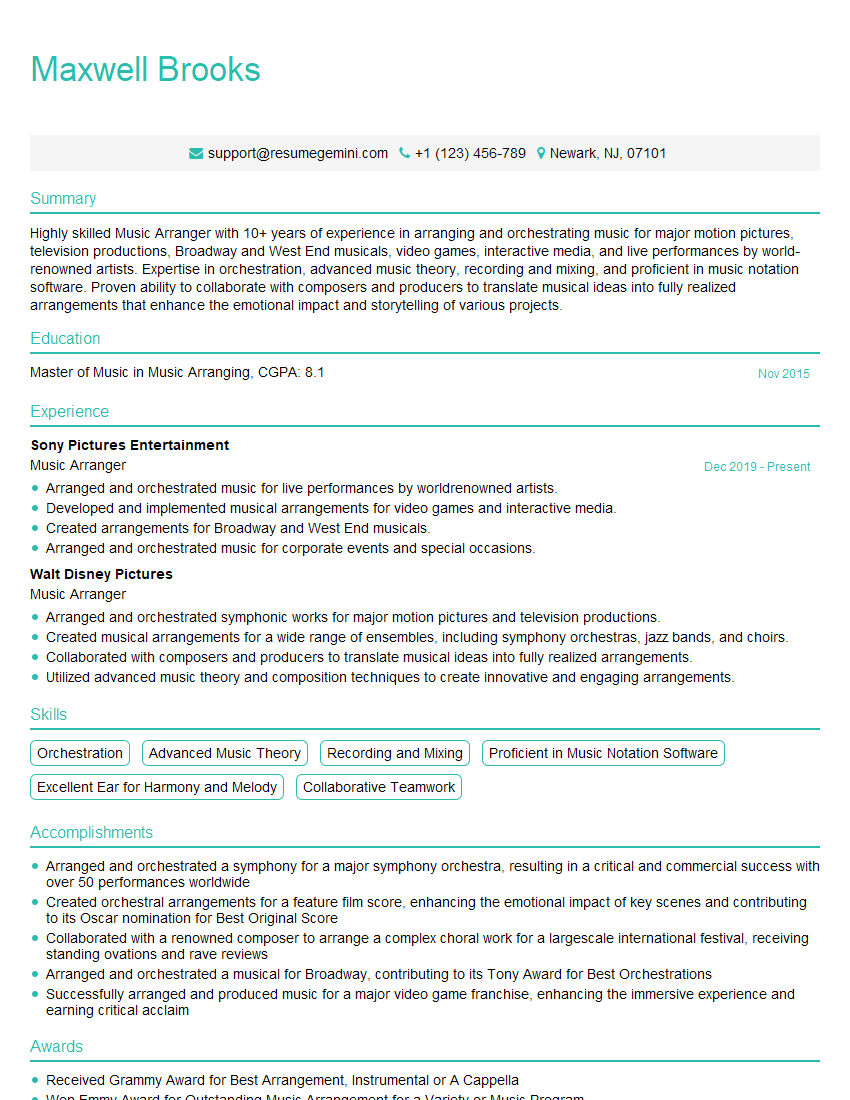
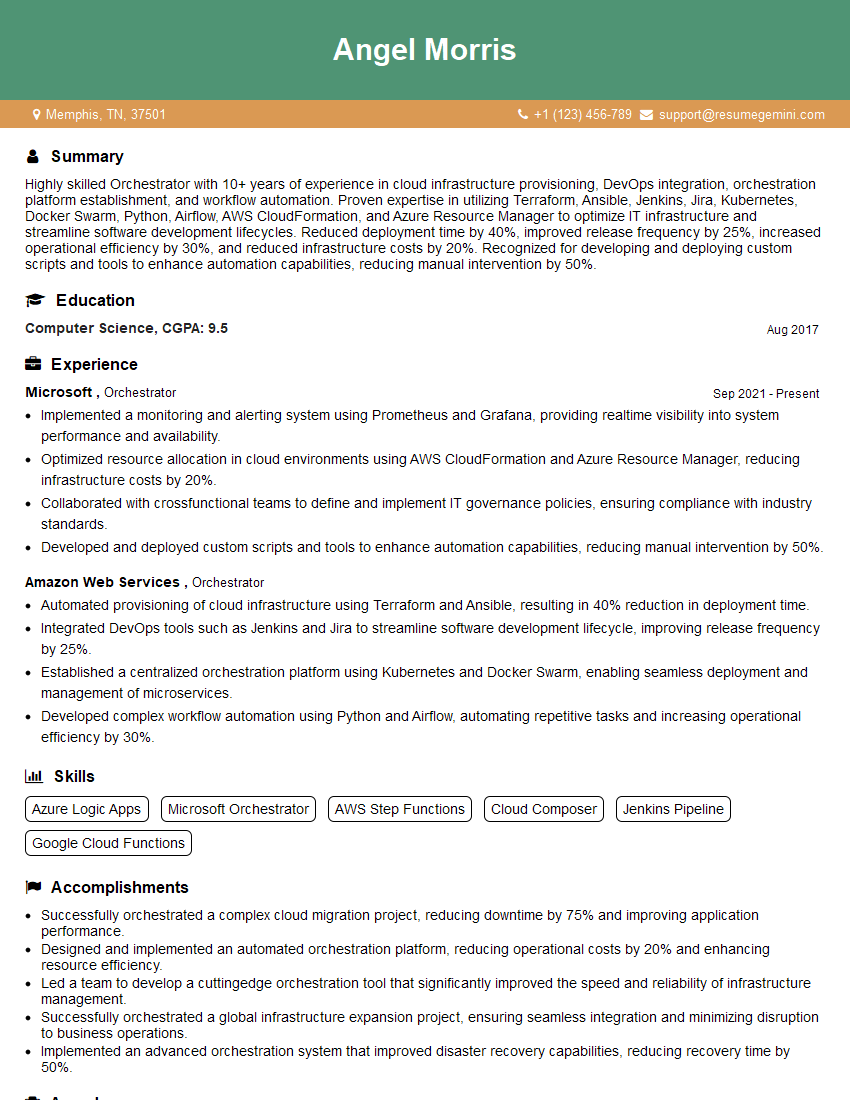
Mastering Ensemble Composition and Improvisation opens doors to exciting career opportunities in performance, teaching, and composition. A strong resume is crucial for showcasing your skills. To maximize your job prospects, create an ATS-friendly resume that highlights your achievements and experience effectively. ResumeGemini is a trusted resource that can help you build a professional resume tailored to the music industry. Examples of resumes specifically tailored for Ensemble Composition and Improvisation roles are available to guide you.
Explore more articles
Users Rating of Our Blogs
Share Your Experience
We value your feedback! Please rate our content and share your thoughts (optional).
What Readers Say About Our Blog
Very informative content, great job.
good