Cracking a skill-specific interview, like one for Environmental Management System (EMS), requires understanding the nuances of the role. In this blog, we present the questions you’re most likely to encounter, along with insights into how to answer them effectively. Let’s ensure you’re ready to make a strong impression.
Questions Asked in Environmental Management System (EMS) Interview
Q 1. Describe your experience implementing an Environmental Management System (EMS).
Implementing an Environmental Management System (EMS) is like building a robust framework for environmental responsibility within an organization. My experience involves leading and participating in EMS implementations across various industries, from manufacturing to hospitality. This includes conducting gap analyses against standards like ISO 14001, developing environmental policies and procedures, training staff, establishing monitoring and measurement programs, and conducting internal audits. For instance, in a manufacturing facility, I helped implement an EMS focusing on reducing wastewater discharge. This involved analyzing the current process, identifying pollution sources, implementing waste reduction techniques, and monitoring effluent quality. The project resulted in a significant decrease in water usage and pollutants discharged, demonstrating the tangible benefits of a well-implemented EMS.
Another key aspect of my work is ensuring ongoing compliance with environmental regulations and continuous improvement. A successful EMS isn’t a one-time project but an evolving system that adapts to changing environmental regulations and organizational needs. I always prioritize stakeholder engagement and communication to ensure buy-in and effective implementation at every stage.
Q 2. Explain the key elements of ISO 14001.
ISO 14001 is the internationally recognized standard for Environmental Management Systems. Think of it as a comprehensive blueprint for building and maintaining an effective EMS. Its key elements revolve around a Plan-Do-Check-Act (PDCA) cycle.
- Plan: This involves establishing an environmental policy, identifying environmental aspects and impacts, setting environmental objectives and targets, and developing programs to achieve them. For example, reducing carbon emissions by a certain percentage within a specific timeframe.
- Do: Implementing the planned programs and procedures. This includes providing resources, training staff, and ensuring effective communication.
- Check: Monitoring and measuring the effectiveness of the EMS, conducting internal audits, and managing nonconformities. This is where data analysis plays a vital role in assessing progress towards targets.
- Act: Reviewing the EMS’s performance and making improvements. This is the continuous improvement phase, ensuring the system remains effective and efficient over time. It might involve modifying procedures, implementing new technologies, or enhancing staff training based on audit findings.
Beyond the PDCA cycle, ISO 14001 emphasizes aspects like environmental leadership, commitment, and the integration of environmental considerations into all organizational aspects. It also stresses the importance of legal compliance and communication with stakeholders.
Q 3. How would you conduct an environmental audit?
Conducting an environmental audit involves a systematic, documented, periodic, and objective evaluation of an organization’s EMS and its effectiveness in meeting environmental objectives. It’s like a thorough health check for your EMS. The process typically involves:
- Planning: Defining the scope, objectives, and methodology of the audit.
- Document Review: Examining relevant documents like environmental policies, procedures, and records.
- On-site Inspection: Visiting the site to observe operations, interview staff, and verify compliance with regulations and procedures. This involves checking for potential environmental risks, observing waste management practices, and reviewing pollution control measures.
- Interviewing Personnel: Gathering information and perspectives from staff at various levels of the organization.
- Data Analysis: Examining environmental monitoring data, assessing compliance, and identifying areas for improvement.
- Reporting: Documenting audit findings, including nonconformities, observations, and recommendations for corrective actions.
After the audit, a report is generated detailing the findings and recommendations for improvement. This report forms the basis for corrective actions and continuous improvement within the EMS.
Q 4. What are the common environmental regulations you’re familiar with?
My familiarity with environmental regulations spans several areas, including:
- Clean Air Act (CAA): Regulates air emissions from various sources, including stationary and mobile sources.
- Clean Water Act (CWA): Controls the discharge of pollutants into waters of the United States.
- Resource Conservation and Recovery Act (RCRA): Manages hazardous and non-hazardous waste generation, transportation, treatment, storage, and disposal.
- Comprehensive Environmental Response, Compensation, and Liability Act (CERCLA) (Superfund): Addresses cleanup of hazardous waste sites.
- Endangered Species Act (ESA): Protects endangered and threatened species and their habitats.
The specific regulations relevant to an organization depend heavily on its industry, location, and operations. Keeping abreast of these regulations is crucial for maintaining compliance and mitigating environmental risks. I regularly utilize online resources and legal databases to stay updated on changes and emerging environmental legislation.
Q 5. Describe your experience with environmental impact assessments.
Environmental Impact Assessments (EIAs) are crucial for evaluating the potential environmental consequences of projects, like new construction or industrial developments. My experience includes conducting and reviewing EIAs, focusing on identifying potential impacts on air quality, water resources, biodiversity, and human health. For example, I worked on an EIA for a proposed wind farm, analyzing potential impacts on bird and bat populations and mitigating strategies to minimize those effects. This involved ecological surveys, habitat modeling, and consultation with regulatory agencies.
The EIA process typically includes a baseline study, impact prediction, mitigation measures, and public consultation. The goal is to ensure that projects are designed and implemented in a way that minimizes negative environmental impacts and maximizes environmental benefits. The insights gained from EIAs inform decision-making and contribute to more sustainable development.
Q 6. How do you identify and manage environmental risks?
Identifying and managing environmental risks is a continuous process involving a combination of proactive and reactive measures. It’s like conducting a risk assessment for your environmental performance. I typically use a structured approach that includes:
- Hazard Identification: Identifying potential environmental hazards associated with the organization’s activities, products, or services. This could range from air emissions and wastewater discharge to the use of hazardous materials and the potential for accidents.
- Risk Assessment: Evaluating the likelihood and severity of each hazard to determine the overall risk. This is often represented using a risk matrix.
- Risk Control: Implementing control measures to mitigate identified risks. These could include engineering controls, administrative controls, and personal protective equipment (PPE).
- Monitoring and Review: Regularly monitoring the effectiveness of control measures and reviewing the risk assessment process to adapt to changing conditions.
This iterative process ensures that environmental risks are proactively addressed and that the organization is prepared to respond to potential incidents. Regular communication and training are crucial to ensure that all employees understand their roles in environmental risk management.
Q 7. Explain the concept of continuous improvement within an EMS.
Continuous improvement within an EMS is not just an ideal; it’s a fundamental requirement. It’s about constantly striving to enhance environmental performance and the effectiveness of the EMS itself. It is an iterative process that uses the PDCA cycle as its backbone.
Think of it as a cycle of learning and refinement. The process typically involves:
- Regular Monitoring and Measurement: Tracking key environmental indicators to assess performance against established objectives and targets.
- Internal Audits: Conducting periodic audits to identify areas for improvement and ensure compliance with regulations and procedures.
- Management Review: Reviewing the EMS’s performance at regular intervals to assess its effectiveness and identify areas for improvement. This involves assessing progress towards environmental objectives, reviewing audit findings, and addressing any nonconformities.
- Corrective and Preventive Actions: Implementing corrective actions to address identified nonconformities and preventive actions to prevent similar issues from occurring in the future.
Continuous improvement is not merely about fixing problems; it’s about proactively seeking opportunities to enhance environmental performance, reduce waste, improve efficiency, and minimize environmental impacts. This ongoing pursuit of excellence is essential for maintaining a robust and effective EMS.
Q 8. How do you ensure compliance with environmental regulations?
Ensuring compliance with environmental regulations is paramount for any organization. It involves a multi-faceted approach that begins with a thorough understanding of all applicable laws, permits, and standards. This includes federal, state, and local regulations, as well as industry-specific guidelines. We must then integrate these requirements into every aspect of our operations.
My approach involves:
- Proactive Monitoring: Regularly reviewing and updating our understanding of evolving regulations. This often involves subscribing to regulatory updates, attending industry conferences, and consulting with environmental law experts.
- Documentation and Record Keeping: Meticulously maintaining records of all environmental activities, including permits, inspections, monitoring data, and corrective actions. This ensures transparency and provides evidence of compliance during audits.
- Internal Audits: Conducting regular internal audits to identify gaps in compliance and implement corrective actions. These audits are often based on checklists and involve cross-functional teams to ensure a comprehensive review.
- Management System Integration: Embedding environmental compliance into our Environmental Management System (EMS). This ensures that compliance isn’t an afterthought, but an integral part of our daily operations.
- Training and Communication: Providing regular training to employees on environmental regulations and their responsibilities. Clear communication ensures everyone understands their role in maintaining compliance.
For example, in a previous role, we implemented a robust system for tracking wastewater discharge permits, ensuring all limits were adhered to and any deviations were promptly reported. This prevented potential fines and environmental damage.
Q 9. What is your experience with environmental monitoring and reporting?
My experience in environmental monitoring and reporting spans over [Number] years, encompassing various industries including [mention industries]. I’m proficient in collecting, analyzing, and interpreting environmental data from diverse sources – air quality monitoring, water sampling, waste characterization, and emissions testing. I’m also experienced in using various monitoring equipment, such as gas chromatographs and spectrophotometers.
Reporting involves more than just data compilation; it’s about presenting the information clearly and concisely to stakeholders. This includes preparing regulatory reports, environmental impact assessments, and internal performance reports. I’m comfortable using various software for data analysis and report generation, including [mention software used e.g., Excel, specialized environmental software].
For instance, I led a project to optimize our air quality monitoring program, which reduced monitoring costs by 15% without compromising data quality. This involved implementing more efficient sampling techniques and leveraging automated data analysis tools.
Q 10. Describe a time you had to solve an environmental problem.
In a previous role, we discovered elevated levels of a specific pollutant in our groundwater monitoring wells. This was a significant concern as it posed a risk to both the environment and our company’s reputation. To solve this, I followed a structured approach:
- Problem Definition: We clearly defined the problem: elevated pollutant levels in groundwater, potential source identification, and regulatory compliance implications.
- Root Cause Analysis: We conducted a thorough investigation to identify the source of the pollution. This involved reviewing operational records, conducting site inspections, and analyzing soil and water samples. We discovered a leak in an underground storage tank.
- Corrective Actions: We immediately implemented corrective actions, including repairing the leak, removing the contaminated soil, and remediating the groundwater. This involved coordinating with specialized contractors and regulatory agencies.
- Monitoring and Verification: We implemented a rigorous monitoring plan to track the effectiveness of the remediation efforts. This included regular groundwater sampling and analysis, ensuring the pollutant levels returned to acceptable limits.
- Documentation and Reporting: We meticulously documented the entire process, including the problem identification, root cause analysis, corrective actions, and monitoring results. This was crucial for regulatory reporting and demonstrating our commitment to environmental stewardship.
This experience highlighted the importance of proactive monitoring, rapid response, and thorough documentation in addressing environmental challenges.
Q 11. How do you handle environmental emergencies?
Handling environmental emergencies requires a well-defined emergency response plan that is regularly tested and updated. The plan should clearly outline roles and responsibilities, communication protocols, and emergency procedures. It should also identify potential hazards, assess risks, and outline mitigation strategies.
My approach involves:
- Immediate Response: Activating the emergency response plan immediately upon detection of an incident, ensuring prompt containment and mitigation of the environmental impact.
- Notification and Communication: Immediately notifying relevant stakeholders, including regulatory agencies, emergency services, and potentially affected communities.
- Containment and Mitigation: Implementing immediate steps to contain the spread of the pollutant or hazard, minimizing its environmental impact.
- Investigation and Root Cause Analysis: Conducting a thorough investigation to determine the root cause of the emergency, preventing similar incidents in the future.
- Documentation and Reporting: Meticulously documenting all aspects of the incident, including the response actions, environmental impacts, and corrective measures. This information is essential for regulatory reporting and improving future emergency response.
For example, I’ve participated in emergency response drills simulating oil spills and chemical releases, ensuring our team is well-prepared to handle such situations effectively and efficiently.
Q 12. Explain the importance of environmental training within an organization.
Environmental training is crucial for an effective EMS. It ensures that employees understand their roles and responsibilities in protecting the environment, fostering a culture of environmental stewardship within the organization. Without adequate training, even the best EMS can fall short of its objectives.
A comprehensive training program should include:
- Regulatory Compliance Training: Educating employees on relevant environmental regulations and permits.
- EMS Awareness Training: Providing an understanding of the organization’s EMS, its objectives, and procedures.
- Specific Task Training: Training employees on the environmental aspects of their specific jobs.
- Emergency Response Training: Equipping employees with the skills and knowledge to respond to environmental emergencies.
- Hazardous Material Handling Training: Providing training on the safe handling, storage, and disposal of hazardous materials.
Regular refresher training and assessments are essential to ensure continued competency and to adapt to evolving regulations and best practices.
For example, I developed a comprehensive training program for a manufacturing facility, incorporating interactive modules, hands-on exercises, and regular quizzes to enhance employee understanding and engagement. This program resulted in a significant reduction in environmental incidents.
Q 13. How do you measure the effectiveness of an EMS?
Measuring the effectiveness of an EMS is a continuous process involving multiple metrics and assessments. The key is to establish clear goals and objectives for the EMS and then to track progress towards those objectives using appropriate indicators.
Methods to measure EMS effectiveness include:
- Internal Audits: Regular internal audits identify gaps and areas for improvement. Audits should be conducted by competent individuals and use a pre-defined checklist.
- Management Review: Regular management reviews assess the performance of the EMS, identify opportunities for improvement, and ensure the EMS remains relevant and effective.
- Environmental Performance Indicators (KPIs): Tracking key environmental performance indicators (KPIs) helps quantify the impact of the EMS. These can include waste generation, energy consumption, emissions, and water usage.
- Compliance Monitoring: Monitoring compliance with environmental regulations demonstrates the effectiveness of the EMS in preventing violations and ensuring legal compliance.
- Employee Feedback: Gathering employee feedback provides insights into the effectiveness of the EMS and highlights areas where improvements can be made.
By regularly monitoring these indicators and using a combination of qualitative and quantitative data, we can gain a clear picture of the EMS’s performance and identify areas for improvement.
Q 14. What are the key performance indicators (KPIs) for an EMS?
Key Performance Indicators (KPIs) for an EMS are specific, measurable, achievable, relevant, and time-bound (SMART) metrics that reflect the performance of the EMS. These metrics should align with the organization’s environmental objectives and priorities. The specific KPIs will vary depending on the organization’s industry, size, and environmental impacts, but some common examples include:
- Waste Reduction: Percentage reduction in waste generation (e.g., hazardous waste, recyclable materials).
- Energy Consumption: Energy consumption per unit of production, reduction in greenhouse gas emissions.
- Water Usage: Water consumption per unit of production, reduction in water discharge.
- Emissions: Levels of air pollutants, greenhouse gas emissions.
- Accident/Incident Rate: Number of environmental incidents per year, demonstrating the effectiveness of prevention measures.
- Compliance Rate: Percentage of environmental regulations consistently met.
- Recycling Rate: Percentage of waste materials recycled or reused.
- Resource Efficiency: Improvement in resource use efficiency.
The selection of appropriate KPIs is crucial, ensuring the chosen metrics truly reflect the EMS’s impact and drive continuous improvement. Regularly reviewing and adjusting the KPIs is also vital to maintain relevance and effectiveness.
Q 15. How do you integrate sustainability into an EMS?
Integrating sustainability into an Environmental Management System (EMS) isn’t just about ticking boxes; it’s about fundamentally embedding environmental considerations into the core business strategy. It’s about moving beyond compliance to a proactive approach of continuous improvement.
This integration happens on several levels:
- Setting ambitious environmental goals: Instead of simply meeting minimum legal requirements, a sustainable EMS sets targets that go beyond compliance, aiming for significant reductions in emissions, waste, and resource consumption. For example, a company might aim to reduce its carbon footprint by 50% within five years, exceeding regulatory demands.
- Life Cycle Assessment (LCA) integration: Incorporating LCA into product design and manufacturing processes allows organizations to identify and minimize environmental impacts across the entire product lifecycle, from raw material extraction to end-of-life disposal. This holistic approach ensures sustainability is built into the very fabric of the product.
- Circular Economy principles: Implementing strategies that promote reuse, recycling, and waste reduction, moving away from a linear ‘take-make-dispose’ model. This might involve designing products for disassembly and material recovery or exploring partnerships for waste recycling and reuse.
- Stakeholder engagement: Regularly engaging with stakeholders (employees, suppliers, customers, local communities) on environmental issues is crucial for building consensus and ensuring accountability. This builds transparency and trust, vital elements for a sustainable EMS.
- Sustainable procurement: Choosing suppliers committed to environmental responsibility throughout their supply chain. This approach extends the positive impact of the EMS beyond the organization’s direct operations.
Ultimately, a sustainable EMS fosters a culture of environmental responsibility where sustainability is seen not as an added cost, but as a driver of innovation, efficiency, and long-term competitiveness.
Career Expert Tips:
- Ace those interviews! Prepare effectively by reviewing the Top 50 Most Common Interview Questions on ResumeGemini.
- Navigate your job search with confidence! Explore a wide range of Career Tips on ResumeGemini. Learn about common challenges and recommendations to overcome them.
- Craft the perfect resume! Master the Art of Resume Writing with ResumeGemini’s guide. Showcase your unique qualifications and achievements effectively.
- Don’t miss out on holiday savings! Build your dream resume with ResumeGemini’s ATS optimized templates.
Q 16. Explain the differences between ISO 14001 and other environmental standards.
ISO 14001 is the most widely recognized international standard for Environmental Management Systems. While other standards exist, focusing on specific sectors or environmental aspects, ISO 14001 provides a robust framework applicable to virtually any organization, regardless of size or industry.
Here’s a comparison:
- ISO 14001: A broad, globally recognized standard focusing on establishing, implementing, maintaining, and continually improving an EMS. It’s adaptable to various contexts and provides a structured approach to environmental management. Certification demonstrates a commitment to environmental responsibility and can provide a competitive advantage.
- Other Environmental Standards (Examples): These might include sector-specific standards (e.g., environmental standards for the automotive industry), standards focused on specific environmental aspects (e.g., water management, emissions), or regional/national environmental regulations. These standards often build upon the principles of ISO 14001 or are complementary to it.
The key difference lies in scope and applicability. ISO 14001 offers a comprehensive, generic framework; other standards address particular needs or comply with specific legal or regulatory requirements within a defined area. Often, organizations will find it beneficial to implement ISO 14001 alongside other relevant standards.
Q 17. How do you communicate environmental performance to stakeholders?
Communicating environmental performance effectively is crucial for building trust and demonstrating accountability to stakeholders. This requires a multi-faceted approach:
- Regular Reporting: Develop clear and concise reports detailing environmental performance against set targets. These reports should use readily understandable metrics, such as greenhouse gas emissions reduction, waste diversion rates, or water consumption figures.
- Stakeholder Engagement Meetings: Organize regular meetings with key stakeholders to discuss environmental performance, challenges, and opportunities. These meetings offer a platform for dialogue and feedback.
- Environmental Performance Indicators (KPIs): Use a carefully chosen set of KPIs to track progress and provide a clear picture of environmental performance. These KPIs should align with the organization’s environmental goals and reflect its material environmental aspects.
- Public Website and Social Media: Use the company website and social media platforms to proactively share environmental performance information and sustainability initiatives. Transparency builds trust.
- Sustainability Reports: Publish annual or biannual sustainability reports that detail the organization’s environmental performance, commitments, and future goals. These reports often follow recognized frameworks such as the Global Reporting Initiative (GRI) standards.
- Third-Party Verification: Consider obtaining independent verification of environmental performance data to enhance credibility and assure stakeholders of accuracy.
Effective communication should be tailored to different stakeholder groups. A technical report might suit investors, while a simpler, more visual report would be appropriate for the general public.
Q 18. Describe your experience with environmental management software.
I have extensive experience using various environmental management software solutions, including both cloud-based and on-premise systems. My experience spans data entry, analysis, reporting, and system integration. I’m proficient in using software to manage waste tracking, emissions calculations, energy consumption monitoring, and compliance documentation. I’ve used software that assists in ISO 14001 compliance, including audit management features. In one instance, I implemented a new environmental management system that integrated with our existing ERP system, enabling seamless data flow and reporting. This significantly streamlined data collection and reporting, leading to greater efficiencies and more informed decision-making.
The software’s ability to provide insightful dashboards summarizing environmental performance has been especially beneficial. These dashboards allow for real-time monitoring and proactive intervention when needed. For example, one system I used provided alerts when energy consumption exceeded pre-defined thresholds, facilitating prompt investigations and corrective actions.
Q 19. What are the challenges in implementing an EMS?
Implementing an EMS presents several challenges:
- Resistance to Change: Getting buy-in from all levels of the organization, especially those unfamiliar with environmental management principles, can be difficult. This requires effective communication and demonstrating the benefits of the EMS.
- Resource Constraints: Implementing an EMS requires financial resources for training, software, and equipment. Time constraints also often play a significant role.
- Data Collection and Management: Accurate and reliable data is essential. Gathering and managing this data can be time-consuming and challenging, especially in large and complex organizations.
- Integration with Existing Systems: Integrating the EMS with existing business processes and systems can be complex. This requires careful planning and coordination to avoid conflicts and inefficiencies.
- Maintaining Ongoing Compliance: Keeping up with evolving environmental regulations and maintaining compliance can be a burden. This requires regular monitoring and updates.
- Measuring and Demonstrating ROI: Quantifying the return on investment (ROI) from an EMS can be difficult. This often requires creative approaches to data collection and analysis.
Successfully addressing these challenges often involves a phased approach, starting with a pilot project to demonstrate the benefits before broader implementation. Strong leadership, adequate training, and clear communication are vital for success.
Q 20. How do you ensure the ongoing effectiveness of an EMS?
Ensuring the ongoing effectiveness of an EMS requires a proactive and systematic approach focused on continuous improvement:
- Regular Management Review: Conducting periodic management reviews to assess the EMS’s performance, identify areas for improvement, and ensure continued alignment with organizational goals and environmental objectives.
- Internal Audits: Carrying out regular internal audits to verify the EMS’s conformance to the established requirements and identify any gaps or non-conformances. Corrective actions should be immediately implemented.
- Corrective and Preventive Actions (CAPA): Implementing a robust CAPA process to address identified non-conformances and prevent their recurrence. This involves root cause analysis and the implementation of effective corrective actions.
- Employee Training and Awareness: Providing ongoing training and awareness programs to ensure that all employees understand their roles and responsibilities within the EMS.
- Monitoring and Measurement: Continuously monitoring and measuring environmental performance against set targets and adjusting the EMS accordingly. This could involve regular data collection on energy, waste, and emissions.
- Updating and Improving the EMS: Regularly reviewing and updating the EMS to reflect changes in environmental regulations, best practices, and organizational objectives. The EMS must be a living document, adapting to the needs of the organization.
By embedding these practices into the organization’s culture, the EMS becomes not just a set of procedures, but a dynamic system driving continuous environmental performance improvement.
Q 21. How do you handle conflicting priorities related to environmental management?
Conflicting priorities in environmental management are common. For example, reducing emissions might conflict with production targets or cost optimization. Resolution requires a structured approach:
- Prioritization based on Materiality: Identify the organization’s most significant environmental impacts (material aspects) using tools like materiality assessments. This helps to focus resources on the areas where action will have the most impact.
- Trade-off Analysis: Evaluate the potential trade-offs between different environmental goals and other business objectives. This might involve a cost-benefit analysis to determine the optimal balance.
- Stakeholder Consultation: Engage with stakeholders to understand their perspectives and priorities. This can help to build consensus and find solutions that address multiple concerns.
- Innovation and Technology: Invest in technologies and processes that can help to achieve multiple objectives simultaneously. For example, energy-efficient equipment can reduce both energy consumption and costs.
- Scenario Planning: Develop different scenarios to explore potential impacts of different choices and assess their risks and opportunities.
- Long-term Perspective: Consider the long-term implications of decisions. While short-term gains might be tempting, long-term sustainability is crucial.
Effective communication and collaboration are crucial in navigating these conflicts. A clear understanding of the organization’s environmental goals and a commitment to finding sustainable solutions are paramount.
Q 22. What is your experience with lifecycle assessments (LCAs)?
Lifecycle Assessments (LCAs) are comprehensive analyses of the environmental impacts of a product or service throughout its entire lifespan, from raw material extraction to disposal. It’s like creating a detailed environmental ‘report card’ for a product. I have extensive experience conducting LCAs using various software tools like SimaPro and GaBi. My work has involved evaluating the impacts of everything from packaging materials to manufacturing processes. For example, in a recent project for a food manufacturer, we identified significant environmental hotspots in their supply chain, specifically the transportation of ingredients and the disposal of packaging waste. This allowed them to prioritize areas for improvement, such as switching to more sustainable packaging and optimizing their logistics. The LCA process involves four key stages: Goal and Scope Definition, Inventory Analysis, Impact Assessment, and Interpretation. Each stage requires meticulous data collection and analysis, and I’m proficient in all four.
- Goal and Scope Definition: Defining the product’s boundaries, functional unit, and impact categories.
- Inventory Analysis: Quantifying energy and material flows throughout the product’s lifecycle.
- Impact Assessment: Evaluating the environmental impacts using impact assessment methodologies (e.g., ReCiPe).
- Interpretation: Analyzing the results, identifying environmental hotspots, and recommending improvements.
Q 23. How do you promote environmental awareness within an organization?
Promoting environmental awareness requires a multifaceted approach. It’s not just about posting signs; it’s about fostering a culture of sustainability. My strategies involve internal communication campaigns, regular training programs, and incentive schemes. For example, I’ve implemented company-wide competitions focused on waste reduction, resulting in a measurable decrease in landfill waste. I’ve also successfully used gamification techniques and implemented educational workshops on topics like sustainable procurement and energy efficiency. A key aspect is leading by example: actively demonstrating environmentally responsible behaviors sets the tone for the entire organization. I also utilize interactive tools such as environmental dashboards to visualize progress toward sustainability targets, making environmental performance transparent and engaging for all employees.
Q 24. Describe your experience with environmental data analysis and reporting.
Environmental data analysis and reporting are crucial for monitoring progress towards sustainability goals and identifying areas for improvement. My expertise involves collecting, cleaning, analyzing, and visualizing environmental data from various sources, including monitoring equipment, databases, and spreadsheets. I’m proficient in using statistical software like R and Python for data analysis and visualization. I’ve developed customized dashboards to track key environmental indicators such as energy consumption, waste generation, and greenhouse gas emissions. For instance, I recently developed a reporting system that automatically generated monthly reports on key environmental metrics, making it easy to identify trends and deviations from targets. These reports are vital for internal decision-making, external stakeholder communication, and compliance with regulatory requirements.
Q 25. What are your strategies for reducing environmental footprint?
Strategies for reducing an environmental footprint are diverse and depend on the specific context. My approach is always holistic, encompassing waste reduction, energy efficiency, sustainable procurement, and carbon offsetting. For waste, I promote the ‘reduce, reuse, recycle’ hierarchy, advocating for waste minimization at the source. For energy, I encourage the use of renewable energy sources, energy-efficient equipment, and energy audits. Sustainable procurement involves selecting environmentally preferable products and services, considering their entire lifecycle. Carbon offsetting can compensate for unavoidable emissions through investments in projects that reduce greenhouse gas emissions elsewhere. For example, I once led a project that reduced a company’s energy consumption by 15% through a combination of energy-efficient lighting upgrades, process optimization, and employee engagement initiatives. The key is a data-driven approach, using monitoring and measurement to track progress and make adjustments as needed.
Q 26. How familiar are you with different environmental certifications (e.g., LEED)?
I’m familiar with a range of environmental certifications, including LEED (Leadership in Energy and Environmental Design), ISO 14001 (Environmental Management Systems), B Corp, and various industry-specific certifications. LEED, for instance, is a widely recognized green building rating system that provides a framework for designing, constructing, and operating high-performance green buildings. Understanding these certifications is crucial for guiding organizations towards best practices and demonstrating their commitment to environmental sustainability. My experience includes assisting organizations in achieving LEED certification, helping them navigate the requirements and implement necessary changes. This includes conducting assessments, developing strategies for meeting certification criteria, and managing the certification process itself.
Q 27. Explain your understanding of environmental legislation relevant to your industry.
My understanding of environmental legislation is comprehensive and keeps pace with evolving regulations. The specific legislation relevant to my industry would depend on the sector; however, I’m knowledgeable about general environmental regulations, such as those pertaining to air and water quality, waste management, and hazardous materials handling. I ensure that the organization complies with all applicable laws and regulations. This involves staying informed about changes in legislation, conducting regular compliance audits, and implementing appropriate control measures. For example, I recently guided a manufacturing company through the process of obtaining permits for waste disposal, ensuring they met all the legal requirements for the safe and compliant disposal of their waste streams. Maintaining compliance isn’t merely about avoiding penalties; it’s about responsible environmental stewardship.
Q 28. Describe a time you had to deal with a non-compliant situation.
In a previous role, we discovered a non-compliant situation involving an unauthorized discharge of wastewater from a manufacturing facility. My first step was to immediately halt the discharge to prevent further environmental damage. Then, I conducted a thorough investigation to determine the cause of the non-compliance, identifying a malfunction in the wastewater treatment system. This involved interviewing personnel, reviewing operational records, and collecting environmental samples. Next, I developed and implemented a corrective action plan, including repairs to the treatment system, staff retraining, and an improved monitoring system. We also collaborated with the relevant regulatory authorities to report the incident transparently and proactively and address any necessary penalties. Finally, we implemented preventative measures to prevent similar incidents from happening in the future. The situation highlighted the critical importance of robust monitoring and maintenance systems for preventing environmental non-compliance.
Key Topics to Learn for Environmental Management System (EMS) Interview
- ISO 14001 Standard: Understand the core principles, requirements, and benefits of implementing an ISO 14001 compliant EMS. Consider the Plan-Do-Check-Act (PDCA) cycle in detail.
- Environmental Impact Assessment (EIA): Learn how to conduct EIAs, identify potential environmental impacts of projects, and develop mitigation strategies. Practice applying different assessment methodologies.
- Environmental Auditing: Familiarize yourself with different audit types (internal, external), audit planning, conducting audits, reporting findings, and corrective actions. Understand the role of an environmental auditor.
- Pollution Prevention and Control: Explore strategies for minimizing waste generation, reducing emissions, and managing pollution across various media (air, water, soil). Be prepared to discuss practical examples.
- Life Cycle Assessment (LCA): Grasp the principles of LCA and its application in evaluating the environmental impacts of products and services throughout their entire life cycle.
- Environmental Legislation and Compliance: Demonstrate a strong understanding of relevant environmental regulations and laws, and how organizations ensure compliance. Be prepared to discuss specific legislation depending on your region.
- Stakeholder Engagement: Understand the importance of communication and collaboration with stakeholders (employees, community, regulators) throughout the EMS process.
- Continuous Improvement: Discuss strategies for ongoing improvement of the EMS, including data analysis, performance monitoring, and implementation of corrective and preventive actions.
- EMS Implementation and Management: Explain the practical steps involved in implementing and managing an effective EMS within an organization, including documentation and training.
- Sustainability Reporting: Understand the importance of transparently reporting environmental performance to stakeholders, and different reporting frameworks.
Next Steps
Mastering Environmental Management Systems is crucial for career advancement in a growing field focused on sustainability and environmental responsibility. A strong understanding of these concepts will significantly enhance your interview performance and open doors to exciting opportunities. To maximize your chances, creating an ATS-friendly resume is vital. ResumeGemini is a trusted resource that can help you build a professional and impactful resume that highlights your skills and experience effectively. Examples of resumes tailored to Environmental Management System (EMS) roles are available to guide you.
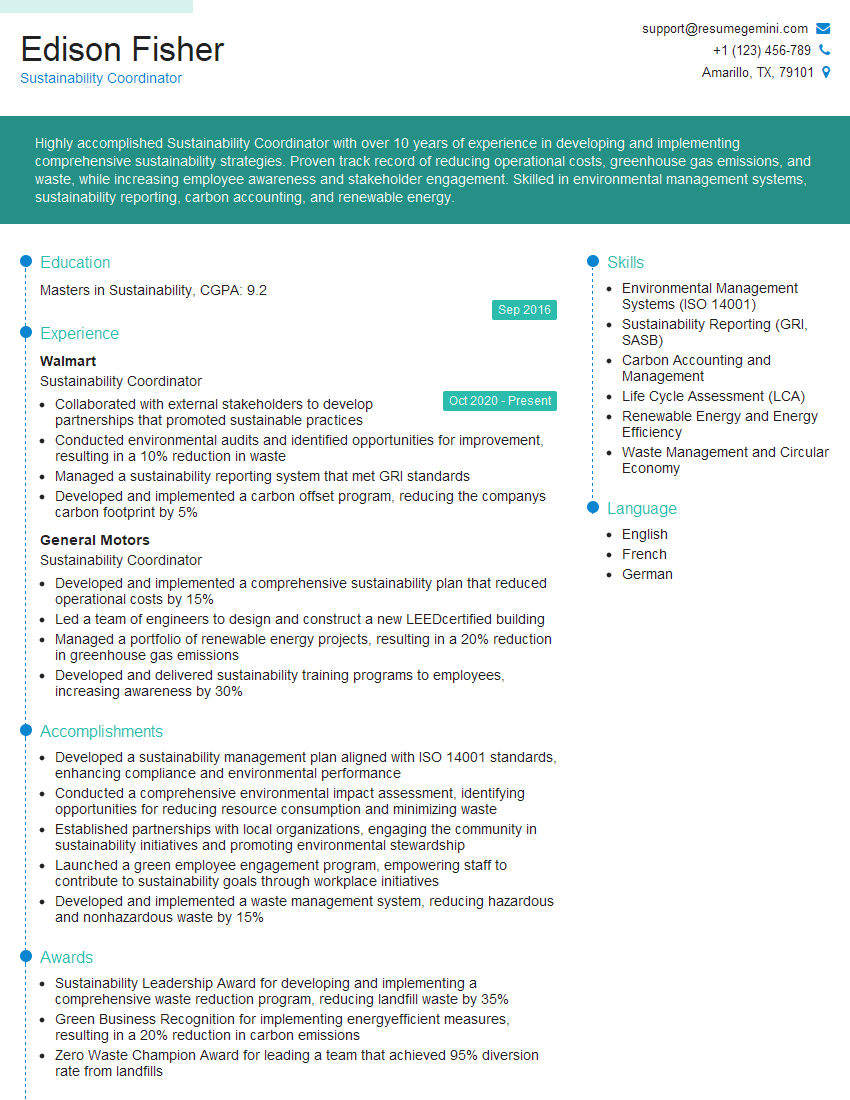
Sustainability Coordinator Resume Sample
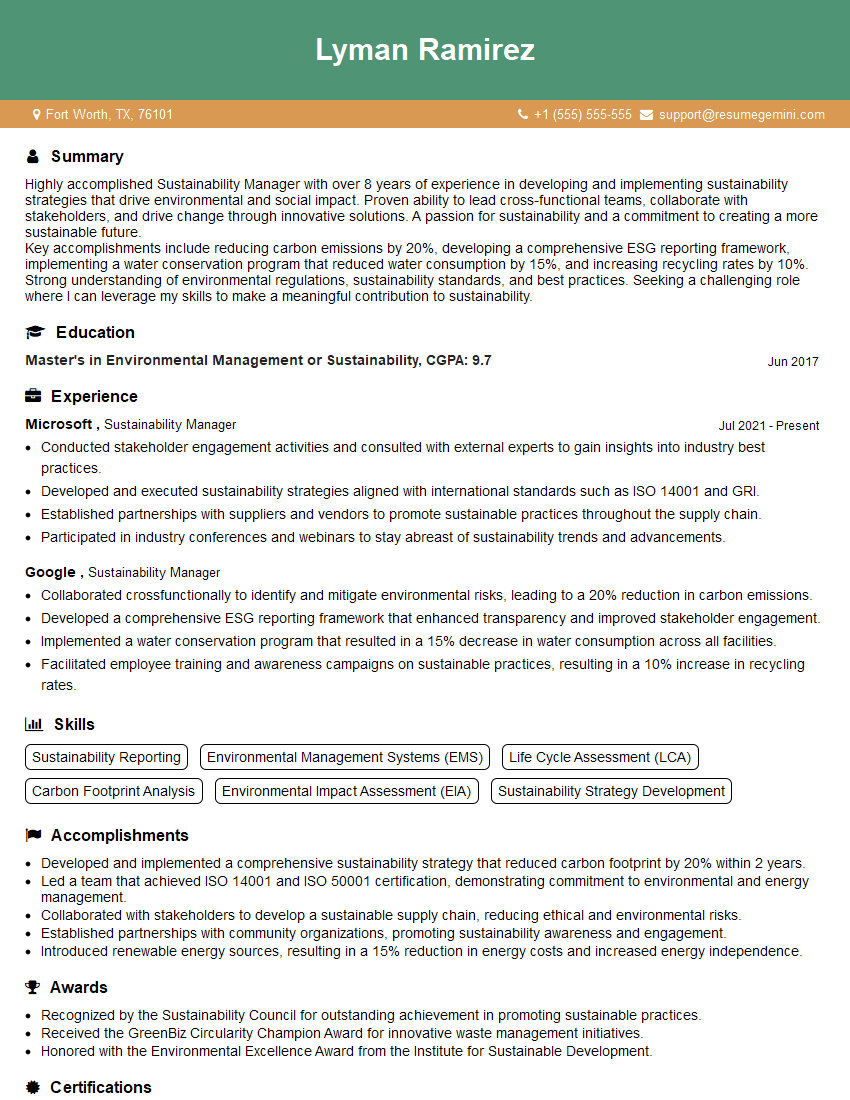
Sustainability Manager Resume Sample
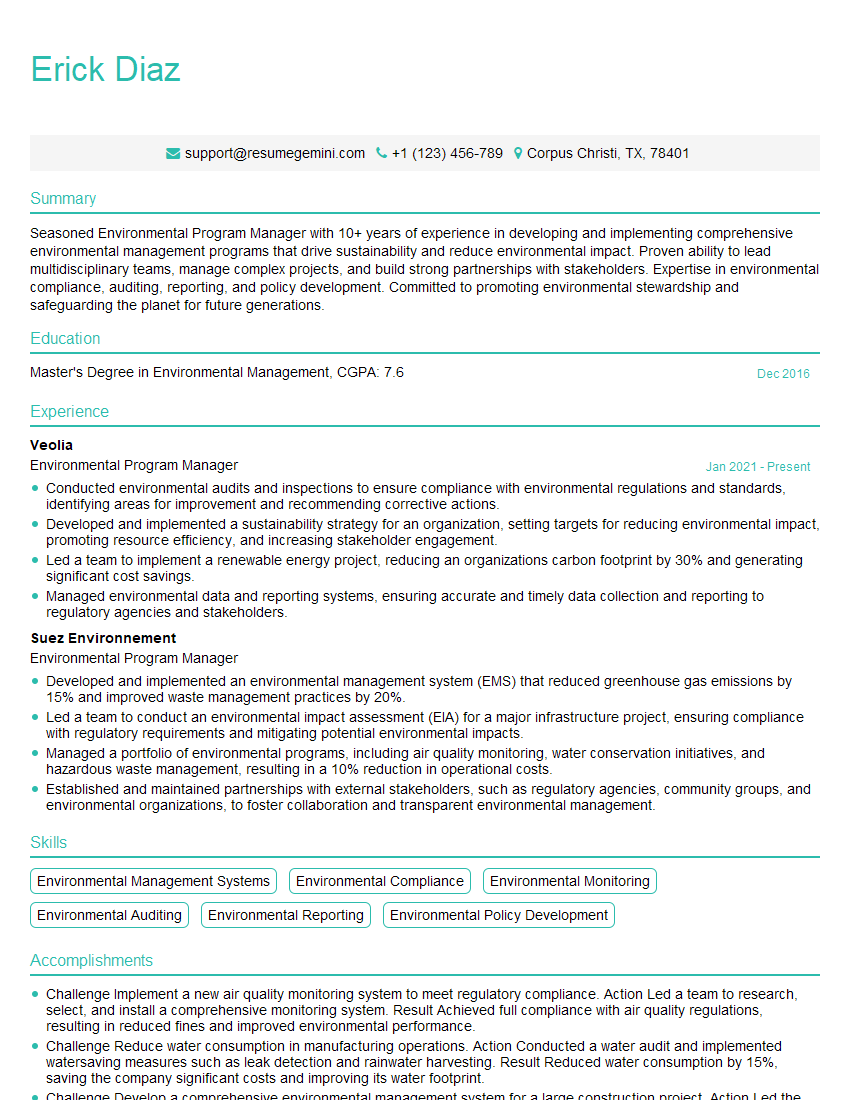
Environmental Program Manager Resume Sample
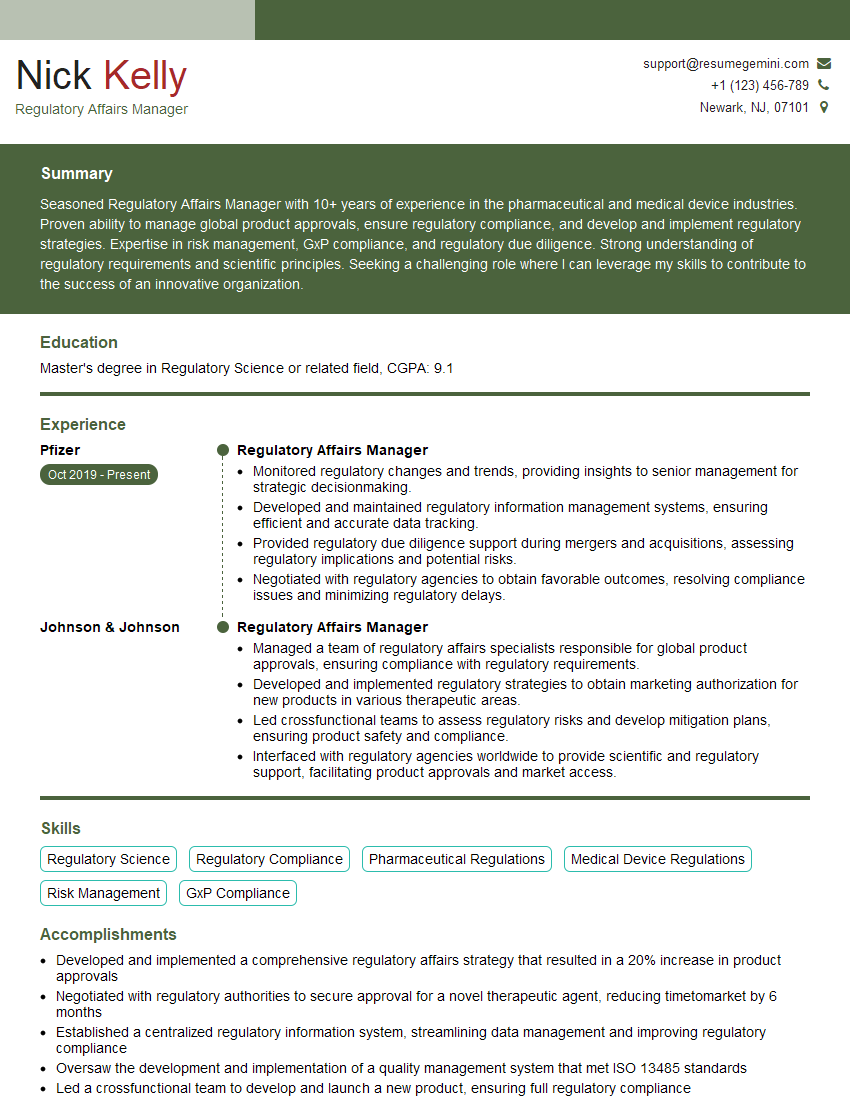
Regulatory Affairs Manager Resume Sample
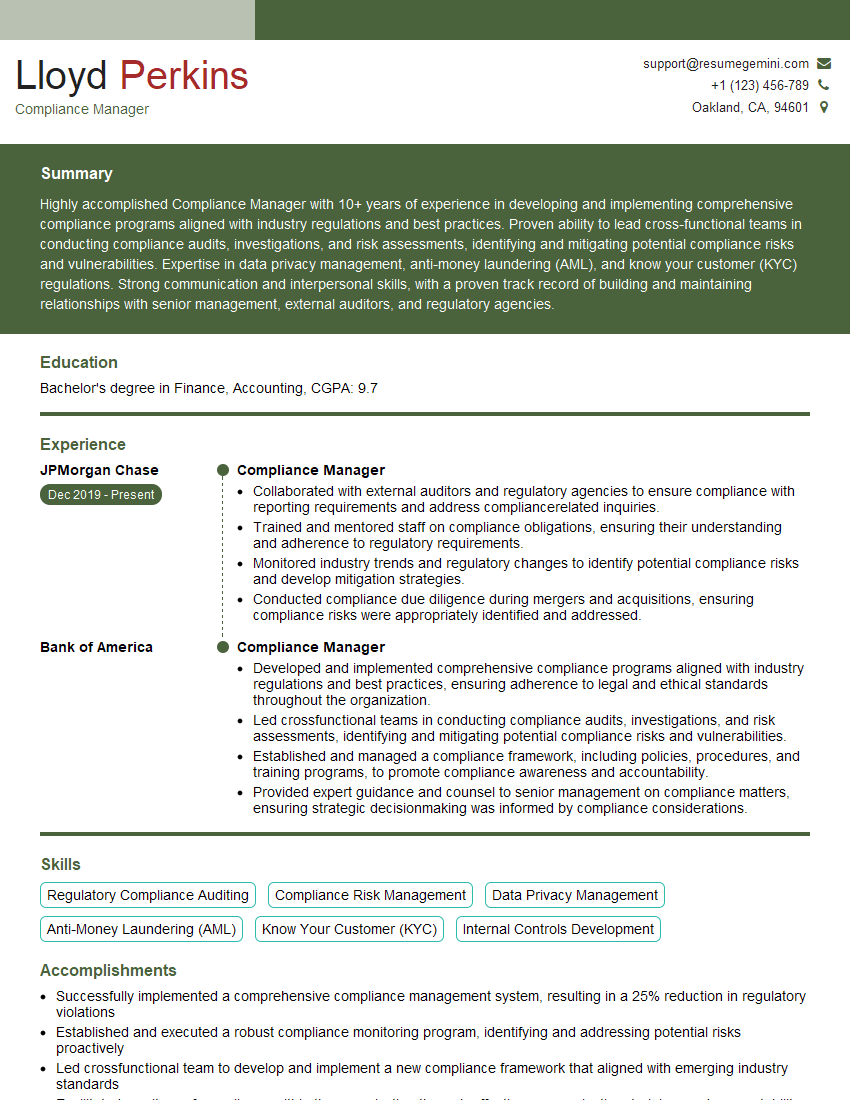
Compliance Manager Resume Sample
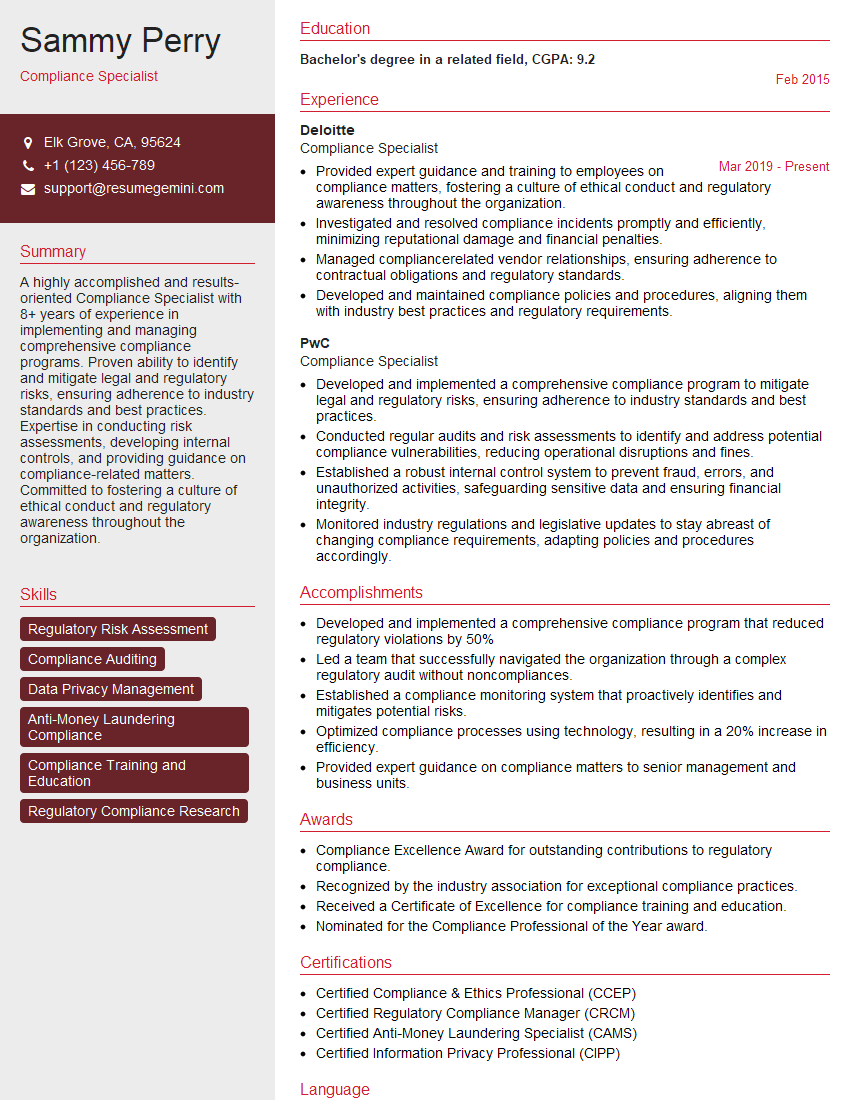
Compliance Specialist Resume Sample
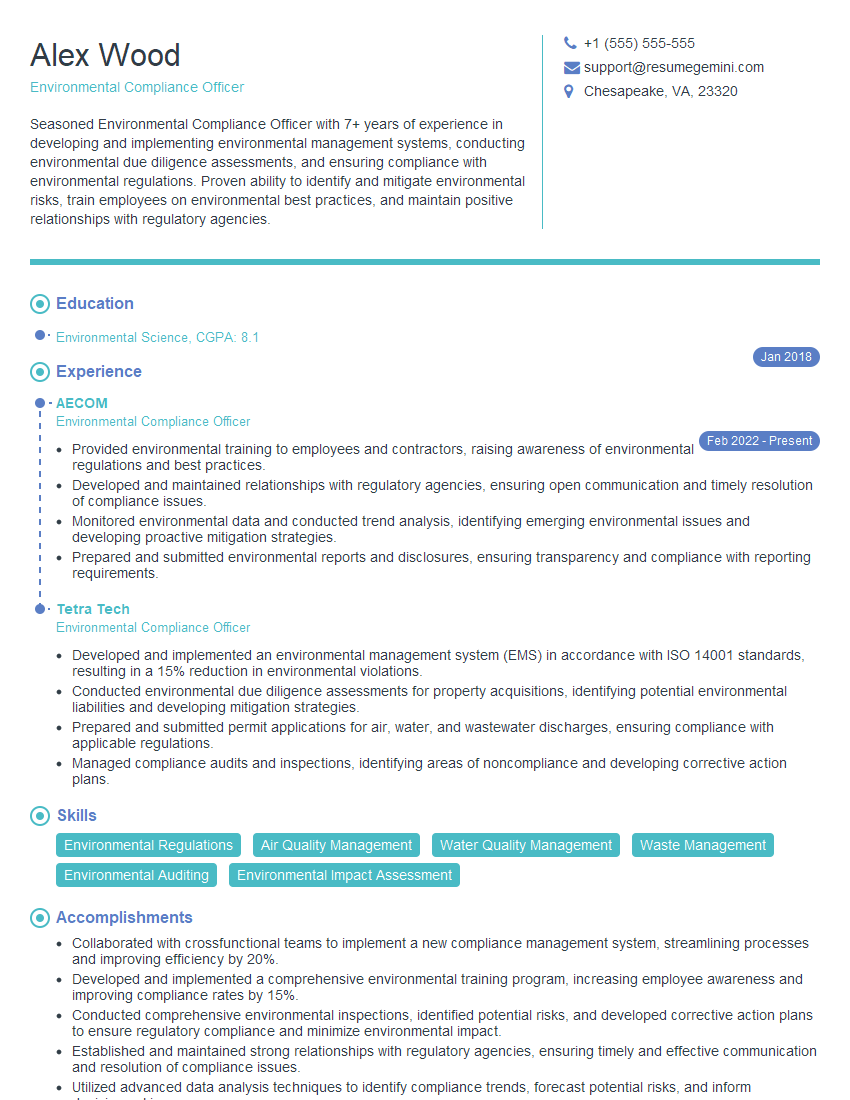
Environmental Compliance Officer Resume Sample
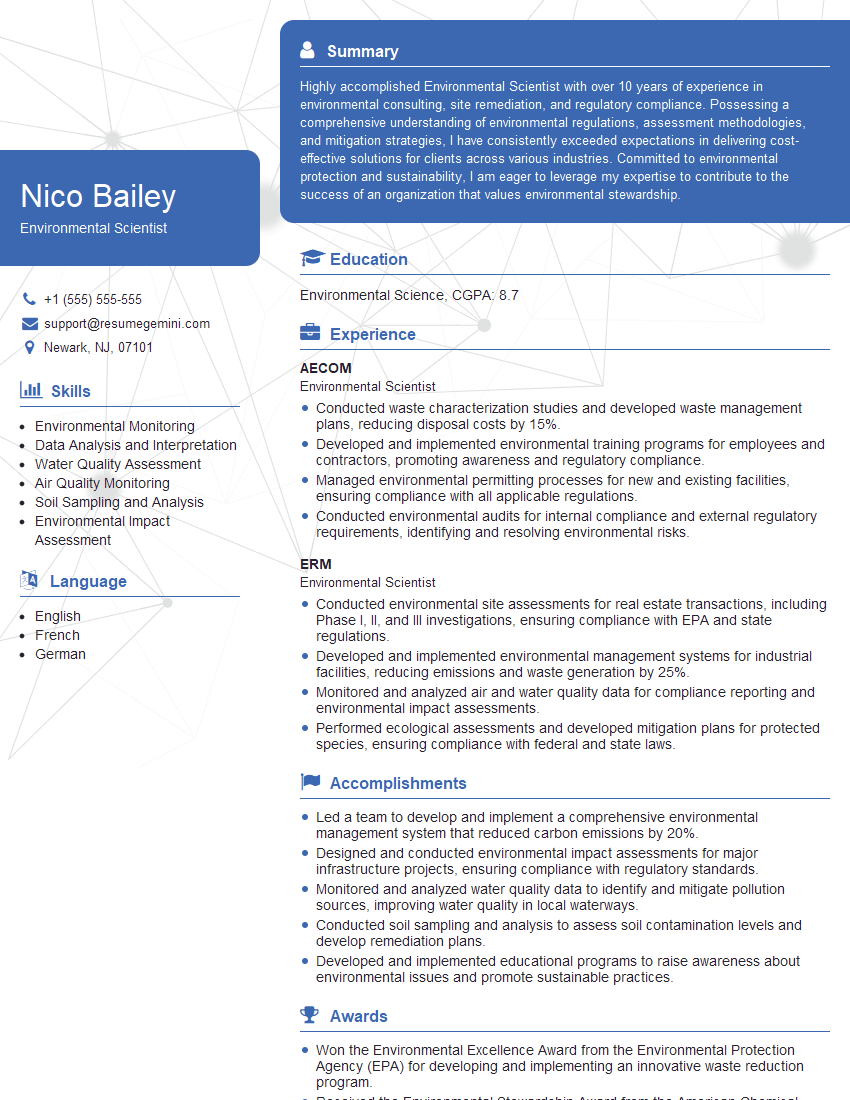
Environmental Scientist Resume Sample
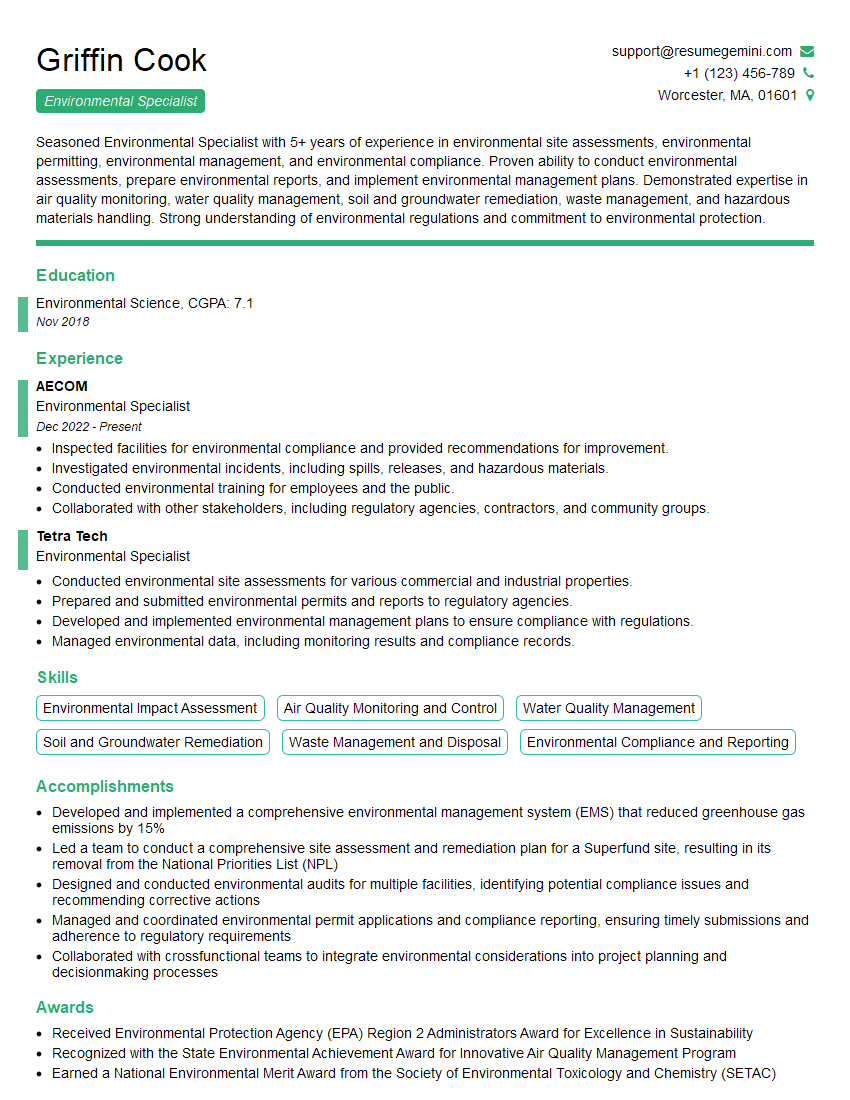
Environmental Specialist Resume Sample
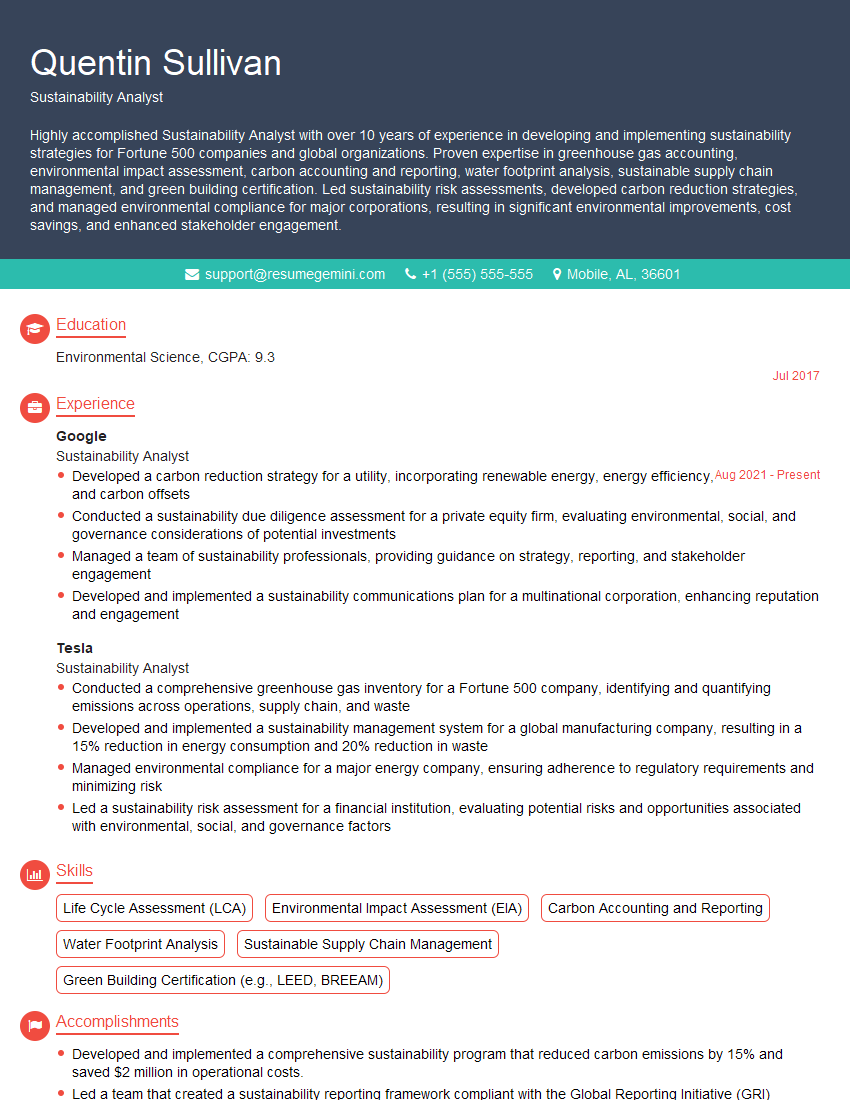
Sustainability Analyst Resume Sample

Sustainability Consultant Resume Sample
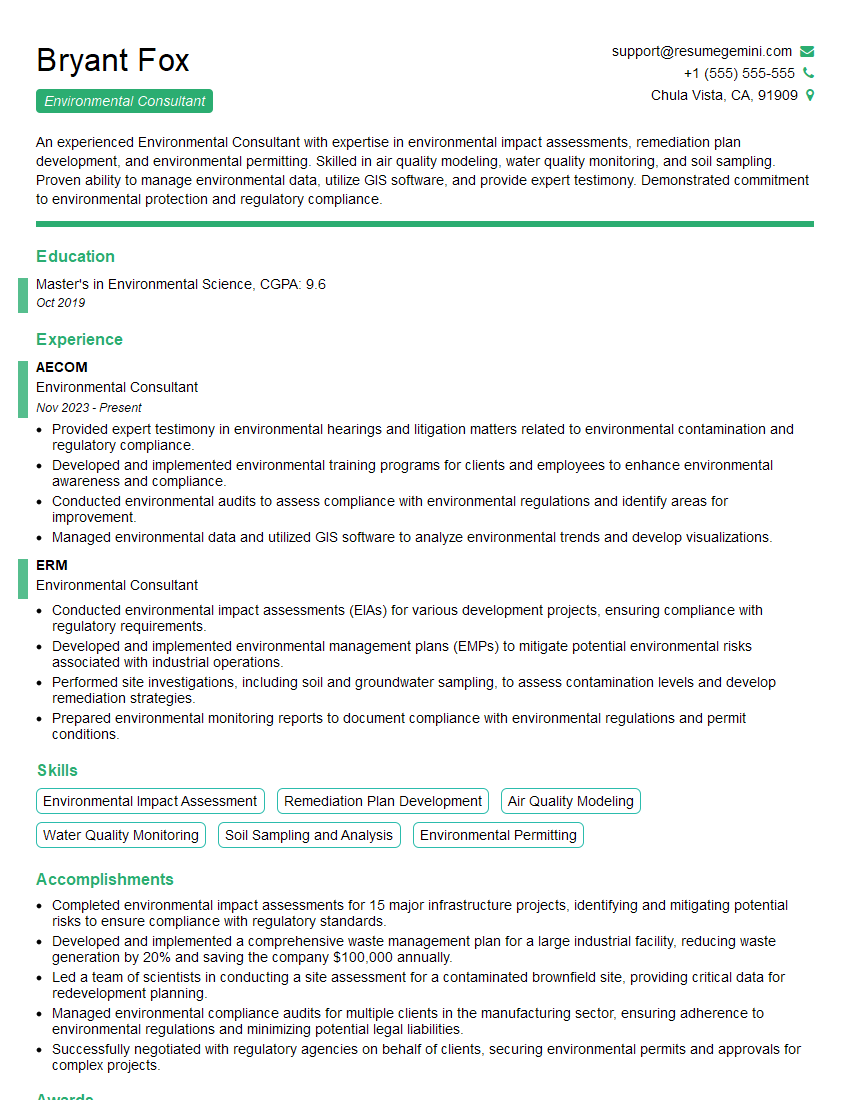
Environmental Consultant Resume Sample
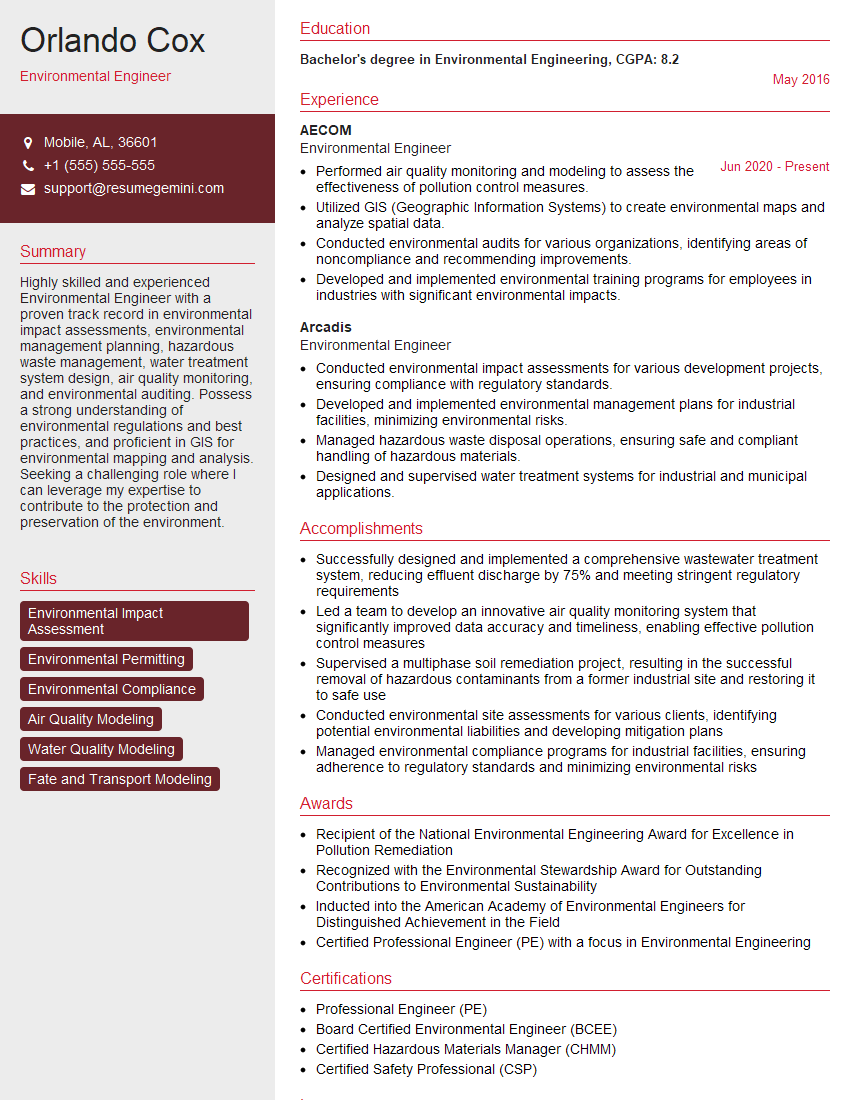
Environmental Engineer Resume Sample
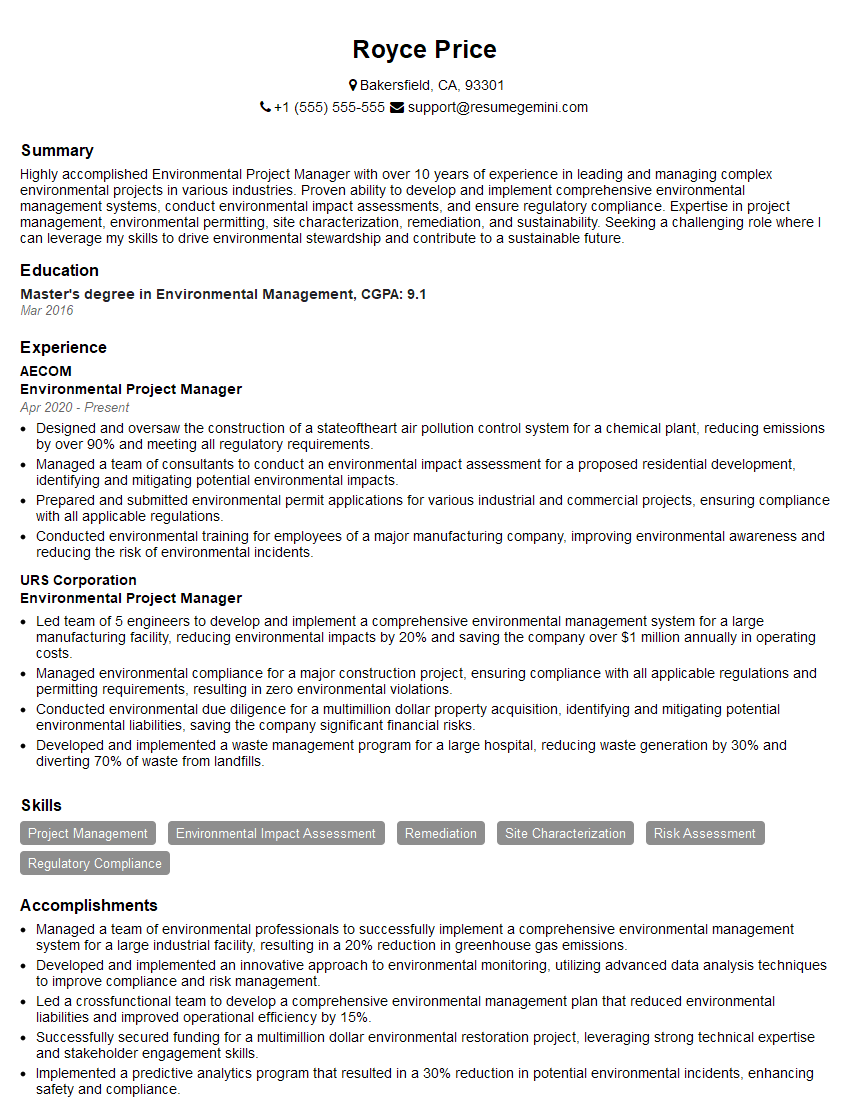
Environmental Project Manager Resume Sample
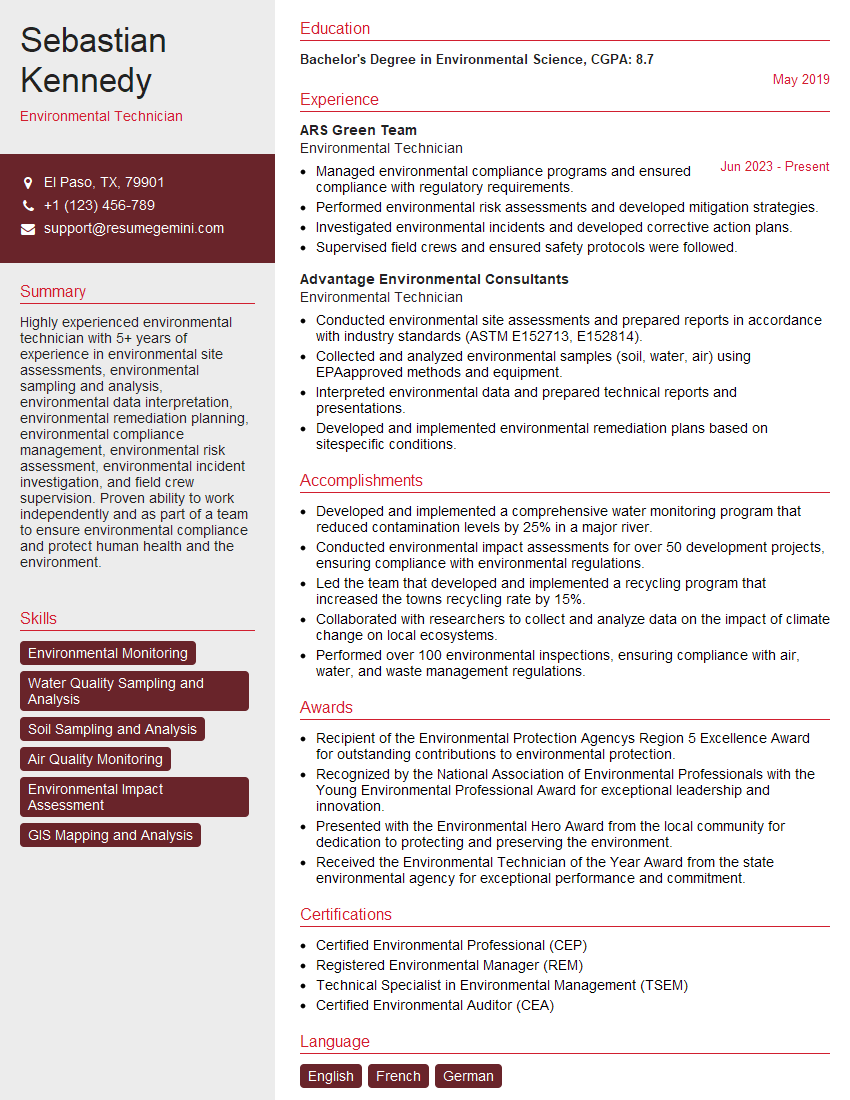
Environmental Technician Resume Sample
- Sustainability Coordinator
- Sustainability Manager
- Environmental Program Manager
- Regulatory Affairs Manager
- Compliance Manager
- Compliance Specialist
- Environmental Compliance Officer
- Environmental Scientist
- Environmental Specialist
- Sustainability Analyst
- Sustainability Consultant
- Environmental Consultant
- Environmental Engineer
- Environmental Project Manager
- Environmental Technician
Explore more articles
Users Rating of Our Blogs
Share Your Experience
We value your feedback! Please rate our content and share your thoughts (optional).
What Readers Say About Our Blog
Very informative content, great job.
good