Cracking a skill-specific interview, like one for CDL (Class A), requires understanding the nuances of the role. In this blog, we present the questions you’re most likely to encounter, along with insights into how to answer them effectively. Let’s ensure you’re ready to make a strong impression.
Questions Asked in CDL (Class A) Interview
Q 1. Describe your experience with pre-trip inspections.
Pre-trip inspections are crucial for safety and preventing costly breakdowns. They’re a systematic check of my vehicle before each trip to identify any potential problems. Think of it as a thorough health check for your truck.
- Walkaround Inspection: I start with a visual inspection, checking tires (tread depth, pressure, and damage), lights (headlights, taillights, brake lights, turn signals), wipers, mirrors, and the overall condition of the vehicle’s body.
- Under the Hood: Next, I check fluids – engine oil, coolant, brake fluid, power steering fluid, and windshield washer fluid. I also look for leaks, loose belts, and any signs of damage.
- Wheels and Brakes: I inspect the brakes for wear and tear, check the air pressure in the air brake system (if applicable), and look for leaks or damage to the brake lines.
- Cargo Securement: I assess the cargo securing system. This involves checking straps, chains, or other methods to ensure the load is properly secured and won’t shift during transit.
- Documentation: I always complete a thorough pre-trip inspection report, noting any issues found. This documentation protects me and the company.
For example, during one trip, my pre-trip inspection revealed a faulty brake light. Addressing this before departure prevented a potential accident and a costly repair later on the road.
Q 2. Explain the proper procedures for securing different types of cargo.
Securing cargo correctly is paramount to safety and prevents accidents. The method depends entirely on the type of cargo and the trailer. Think of it like building a strong, stable foundation for your load.
- Flatbed: Cargo on flatbeds requires careful planning and securement. I use chains, straps, and binders to ensure the load is properly distributed and won’t shift. I always ensure proper tension and crisscross patterns for optimal stability.
- Reefer (Refrigerated): Reefer trailers carry temperature-sensitive goods. After loading, I confirm the refrigeration unit is functioning correctly, and the temperature is properly set and monitored throughout the journey. The cargo itself needs to be properly stacked and secured to prevent damage or shifting.
- Tanker: Tankers are potentially hazardous. I ensure all valves are properly closed, and the tank is properly secured. Before loading, I check the proper loading procedures to ensure the tank is loaded appropriately and according to specifications. I always follow the specific loading guidelines provided by the shipper.
In each case, I follow the shipper’s loading instructions and make sure the load is balanced and does not exceed weight limits. Improper cargo securement can lead to accidents, fines, and serious injury.
Q 3. How do you maintain your hours of service (HOS) compliance?
Maintaining Hours of Service (HOS) compliance is essential for safety and legality. It’s all about tracking driving time, on-duty time, and off-duty time to avoid fatigue and prevent violations.
- Electronic Logging Devices (ELDs): I utilize an ELD to automatically record my driving time and other statuses. This helps keep accurate records that are easily reviewed by DOT officials.
- Record Keeping: Even with an ELD, I meticulously review my logs regularly to ensure accuracy. I understand the different duty statuses: driving, on-duty (not driving), sleeper berth, and off-duty.
- Rest Breaks: I prioritize adequate rest to prevent driver fatigue. I always ensure I take sufficient breaks to comply with regulations and stay alert while driving.
- Planning: I plan my trips carefully, taking into account the HOS regulations to ensure I can complete the trip without violating them.
For example, if I know I’m approaching my maximum driving time, I plan my route to include appropriate rest stops, allowing me to remain compliant and reach my destination safely.
Q 4. What are the different types of endorsements available for a CDL Class A license?
Several endorsements can be added to a Class A CDL, expanding the types of vehicles you can operate. These endorsements demonstrate specialized skills and knowledge.
- H (Hazardous Materials): Allows transportation of hazardous materials, requiring additional training and background checks.
- P (Passenger): Permits operation of passenger vehicles, such as buses.
- N (Tanker): Authorizes operation of vehicles transporting liquids or gases in bulk.
- X (Combination): Allows driving of any combination of vehicles, including those exceeding 26,001 pounds gross vehicle weight rating (GVWR).
- T (Doubles/Triples): Authorizes driving of double or triple trailers.
I currently hold a Class A CDL with the X endorsement, enabling me to operate a wider range of vehicles and trailers.
Q 5. Describe your experience with different types of trailers (e.g., flatbed, reefer, tanker).
My experience encompasses a variety of trailers, each requiring unique handling and securement techniques. Each trailer type presents its own challenges and requires specialized knowledge.
- Flatbed: Requires careful weight distribution, proper load securing with chains and straps, and understanding of tarp techniques to protect the cargo.
- Reefer: Understanding refrigeration unit operation, temperature monitoring, and securement of temperature-sensitive goods are key. Proper ventilation and load placement prevent damage.
- Tanker: This involves knowledge of the specific hazardous materials being transported, proper loading and unloading procedures, and adhering to strict safety regulations. Understanding the various valve systems and pressure gauges is crucial.
For instance, hauling oversized loads on a flatbed necessitates precise planning and execution to avoid accidents. Securement is paramount, as improperly secured cargo on a flatbed can be extremely dangerous.
Q 6. How do you handle challenging weather conditions while driving?
Driving in challenging weather conditions requires extra caution and adaptation. Safety is the top priority in such situations. Think of it like navigating a complex, ever-changing environment.
- Reduced Speed: I significantly reduce my speed to maintain control and increase reaction time.
- Increased Following Distance: I increase my following distance to allow more time to react to unexpected events.
- Careful Lane Changes: I perform lane changes smoothly and cautiously to avoid losing control.
- Use of Lights: I use my headlights, fog lights, and hazard lights appropriately for better visibility.
- Awareness of Surroundings: I am hyper-aware of my surroundings and other vehicles on the road.
- Weather Updates: I stay updated on weather conditions through weather reports and alerts to make informed decisions about my route.
In heavy rain or snow, I might choose to pull over to a safe location and wait for conditions to improve before continuing my journey. Safety is always paramount.
Q 7. What is your experience with electronic logging devices (ELDs)?
Electronic Logging Devices (ELDs) are now mandatory for most commercial drivers. They’re a digital record-keeping system that tracks driving hours, reducing paperwork and improving compliance. Think of it as a digital logbook that ensures accuracy and efficiency.
- Data Accuracy: ELDs automatically record driving time, engine hours, location, and other relevant data, minimizing errors.
- Compliance: They ensure compliance with Hours of Service regulations, reducing the risk of violations.
- Data Reporting: They generate reports that can be easily reviewed by drivers and regulatory authorities.
- Troubleshooting: Knowing how to troubleshoot minor ELD issues, such as connectivity problems or data discrepancies, is important.
I’m proficient in using ELDs and understand their capabilities. I can easily access and review my logs and resolve any minor issues that may arise. I see ELDs as a valuable tool for maintaining accurate records and staying compliant.
Q 8. Explain your knowledge of the Commercial Driver’s License (CDL) manual.
The CDL manual is my bible. It’s not just a book; it’s a comprehensive guide to safe and legal commercial driving. I’ve studied it thoroughly, understanding everything from basic vehicle inspections (pre-trip and post-trip) to complex regulations regarding hours of service (HOS), hazardous materials (Hazmat) transportation, and different vehicle classifications. I understand the importance of each section, especially the parts dealing with safe driving practices, vehicle maintenance, and regulations specific to the type of cargo I’m hauling.
- Pre-Trip Inspections: I know the importance of meticulously checking tires, lights, brakes, and other critical components before each trip, documenting any issues. For instance, I once found a faulty brake light during a pre-trip, preventing a potential hazard.
- Hours of Service (HOS): I’m completely familiar with the rules surrounding driving time, break periods, and record-keeping. I use electronic logging devices (ELDs) correctly and diligently track my hours to avoid violations. Understanding HOS is crucial for preventing fatigue-related accidents.
- Hazardous Materials (HazMat): My knowledge extends to the specific regulations for handling hazardous materials, including proper placarding, securing, and emergency procedures. I’ve completed the necessary training and endorsements to haul specific HazMat classifications safely.
Regularly reviewing the manual helps me stay updated on changes in regulations and best practices, ensuring I remain a safe and compliant driver.
Q 9. How do you manage your fatigue while on long hauls?
Fatigue is a serious threat in long-haul trucking. My approach to managing fatigue is multifaceted and prioritizes proactive measures. It’s not just about getting enough sleep; it’s about a holistic approach to well-being.
- Planning Rest Stops: I plan my trips carefully, factoring in regular rest breaks at designated rest areas or truck stops. I never push myself beyond my limits.
- Consistent Sleep Schedule: I maintain a consistent sleep schedule as much as possible, even on irregular routes. Aiming for 7-8 hours of quality sleep is paramount.
- Healthy Diet and Hydration: I avoid excessive caffeine and sugary drinks and focus on nutritious food and adequate hydration. Staying hydrated is often overlooked but greatly impacts alertness.
- Regular Exercise: When possible, I incorporate light exercise into my routine, even if it’s just a short walk during breaks. This improves circulation and reduces stiffness.
- Recognizing Fatigue Signs: I am highly attuned to the signs of fatigue—yawning, difficulty concentrating, eye strain. If I feel even slightly fatigued, I pull over immediately to rest, never compromising safety.
Think of it like this: my body is my most valuable asset. Protecting it through proactive fatigue management is essential for my safety and the safety of others.
Q 10. Describe your experience with navigating using GPS and maps.
I’m highly proficient in using both GPS and traditional maps. While GPS is my primary navigation tool, I understand its limitations and always have backup maps readily available.
- GPS Usage: I use GPS for route planning, avoiding congested areas and finding the most efficient routes. I regularly check the route against my physical maps to confirm accuracy and identify potential problems the GPS might miss, such as road closures.
- Map Reading Skills: I possess strong map-reading skills. This is critical in situations where GPS fails or there’s no cell service. I understand how to interpret map symbols, scales, and directions.
- Understanding Route Limitations: I’m aware of weight restrictions, height clearances, and other route limitations for my specific vehicle and cargo. I use both GPS and maps to verify these details before committing to a route.
- Contingency Planning: I always have backup routes in mind in case of unexpected road closures or traffic congestion. This ensures I can adapt and reach my destination safely and efficiently.
For example, during a recent trip, my GPS malfunctioned in a remote area. My map-reading skills allowed me to safely navigate to the nearest town and resolve the issue.
Q 11. What is your experience with load planning and weight distribution?
Load planning and weight distribution are critical for safe and efficient transportation. Improper weight distribution can lead to rollovers, sway, and other dangerous situations.
- Weight Calculation: I accurately calculate the total weight of the load and ensure it’s within legal limits. I use scales and weight tickets to verify weights.
- Proper Securing: I use appropriate tie-downs and methods to secure the cargo, ensuring it won’t shift during transit. The type of cargo and its weight dictate the appropriate securing technique.
- Weight Distribution: I distribute the weight evenly across the axles, maintaining the optimal balance for safe handling. Overloading one axle can negatively affect braking and handling.
- Center of Gravity: I’m acutely aware of the center of gravity of the load. Improper distribution can raise the center of gravity and make the vehicle prone to tipping.
I once had to rearrange a load of lumber because the initial distribution was causing excessive sway. By carefully repositioning the heavier pieces, I ensured a safer and more stable ride.
Q 12. How do you handle unexpected mechanical issues on the road?
Unexpected mechanical issues are a reality of long-haul trucking. My response is based on a structured approach focused on safety and efficiency.
- Immediate Assessment: If I experience a mechanical issue, I immediately pull over to a safe location, away from traffic. I assess the severity of the problem and determine the level of immediate risk.
- Safety Precautions: I activate hazard lights and set warning devices to alert other drivers. If necessary, I will contact emergency services.
- Communication: I immediately contact my dispatcher and provide details of the situation, location, and nature of the problem. I follow the company’s established procedures for reporting breakdowns.
- Troubleshooting: Depending on my skills and the nature of the issue, I might attempt basic troubleshooting. However, I prioritize safety over quick fixes and avoid attempting repairs beyond my expertise.
- Professional Assistance: I rely on roadside assistance or qualified mechanics to perform repairs when necessary. I do not attempt to fix major mechanical problems on my own.
For instance, if I experience a flat tire, I know the proper procedures for changing it safely, ensuring the vehicle is stable and secure during the process. However, for more complex problems like engine trouble, I’ll immediately call for roadside assistance.
Q 13. Describe your experience with communicating with dispatchers and clients.
Effective communication is crucial in this profession. I maintain clear, concise, and professional communication with dispatchers and clients.
- Clear Communication: I use clear and concise language when relaying information, whether it’s about my location, estimated time of arrival (ETA), or any unforeseen circumstances. I avoid jargon and ensure the receiver understands the message.
- Timely Updates: I provide timely updates to both dispatchers and clients, keeping them informed of my progress. This builds trust and ensures expectations are managed effectively.
- Problem Solving: I actively participate in problem-solving, offering solutions or alternatives when challenges arise. For example, if a delivery is delayed, I’ll proactively communicate the reason and propose alternative solutions.
- Professionalism: I maintain a professional demeanor in all communications, regardless of the situation. This demonstrates respect and ensures a positive working relationship.
- Active Listening: Effective communication is a two-way street. I actively listen to instructions and questions, clarifying any ambiguities before proceeding.
I remember a time when a severe snowstorm delayed my delivery. By proactively communicating with both the dispatcher and client, we worked together to find a solution, minimizing disruption.
Q 14. How do you prioritize safety while driving?
Safety is my top priority, a non-negotiable aspect of my job. My approach to safety is holistic and proactive, covering all aspects of my work.
- Pre-Trip Inspections: I perform thorough pre-trip inspections to identify and address any potential mechanical issues before they become hazards.
- Defensive Driving Techniques: I utilize defensive driving techniques, anticipating potential hazards and reacting appropriately to prevent accidents. This includes maintaining a safe following distance, scanning the road ahead, and adjusting speed to suit the conditions.
- Compliance with Regulations: I adhere strictly to all traffic laws and regulations, including speed limits, hours of service, and weight restrictions.
- Vehicle Maintenance: I report any mechanical issues promptly to ensure timely repairs, preventing potential breakdowns and safety hazards.
- Weather Awareness: I am constantly aware of weather conditions and adjust my driving accordingly. I avoid driving in severe weather unless absolutely necessary.
- Fatigue Management: I prioritize managing fatigue to avoid impaired driving and accidents.
Safety isn’t just about following rules; it’s about a mindset. It’s about anticipating potential problems, reacting responsibly, and always putting safety first—for myself, other drivers, and the public.
Q 15. Explain your understanding of various trucking regulations and laws.
My understanding of trucking regulations and laws is comprehensive, encompassing federal, state, and local rules. At the federal level, the Department of Transportation (DOT) sets crucial standards. This includes Hours of Service (HOS) regulations, which dictate driving and resting periods to combat driver fatigue – a major safety concern. I meticulously adhere to the 11-hour driving limit within a 14-hour workday, and maintain a 34-hour restart period when needed. Beyond HOS, I’m familiar with vehicle maintenance regulations (like keeping detailed logs of repairs and inspections), hazardous materials transportation rules (which vary greatly depending on the class and quantity of hazardous materials being transported), and weight restrictions. State regulations often add layers of complexity to these federal rules, including specific speed limits on certain highways, restrictions on routes and sizes of vehicles, and permit requirements. Local ordinances might introduce further limitations on things like delivery times in specific zones or parking regulations. I regularly consult resources like the Federal Motor Carrier Safety Administration (FMCSA) website and keep up-to-date with any changes through industry publications and professional development courses. I treat compliance with these regulations not just as a legal requirement, but as a critical part of ensuring safety on the road for myself and others.
Career Expert Tips:
- Ace those interviews! Prepare effectively by reviewing the Top 50 Most Common Interview Questions on ResumeGemini.
- Navigate your job search with confidence! Explore a wide range of Career Tips on ResumeGemini. Learn about common challenges and recommendations to overcome them.
- Craft the perfect resume! Master the Art of Resume Writing with ResumeGemini’s guide. Showcase your unique qualifications and achievements effectively.
- Don’t miss out on holiday savings! Build your dream resume with ResumeGemini’s ATS optimized templates.
Q 16. How do you handle stressful situations on the road?
Stressful situations on the road are inevitable. My approach is multifaceted. Firstly, proactive planning helps mitigate stress. This includes pre-trip inspections to catch potential mechanical issues, carefully reviewing routes for traffic patterns and potential delays, and ensuring I have adequate supplies like water and snacks. When unexpected situations arise, like a sudden traffic jam or a mechanical breakdown, I focus on staying calm and methodical. Deep breathing exercises and taking short breaks help manage immediate stress. I prioritize clear communication, contacting dispatch or roadside assistance as needed, and following established procedures. For example, during a severe winter storm once, I calmly pulled over to a safe location, contacted dispatch, and patiently waited out the worst of the weather rather than risking unsafe driving. By focusing on controlled, rational responses and leveraging my experience, I’ve successfully navigated numerous challenging circumstances.
Q 17. Describe your experience with managing delivery schedules and deadlines.
Managing delivery schedules and deadlines is a cornerstone of efficient trucking. I’m adept at using electronic logging devices (ELDs) to meticulously track my progress and communicate delays to dispatch proactively. I prioritize time management by optimizing routes, considering traffic conditions, and utilizing navigation systems effectively. For example, I’ve developed the habit of checking traffic reports before starting my route and adjusting accordingly. If a delay is unavoidable due to unexpected circumstances (e.g., accidents, road closures), I promptly inform dispatch to allow them to adjust delivery expectations for other drivers or notify the recipient. Effective communication is key here – keeping dispatch and clients updated avoids misunderstandings and maintains positive relationships. My record shows a consistent history of on-time deliveries, even under pressure. Successful delivery schedule management relies on proactive planning, effective communication, and the ability to adapt to changing circumstances.
Q 18. What is your experience with different types of braking systems?
My experience encompasses various braking systems, including standard air brakes (S-cam and wedge systems), anti-lock braking systems (ABS), and electronic braking systems (EBS). I understand the principles of air pressure operation, the importance of regular brake inspections, and the functions of various components like brake chambers, slack adjusters, and valves. ABS, for instance, prevents wheel lockup during hard braking, improving vehicle control and reducing stopping distances, especially on slippery surfaces. EBS offers even greater control and sophistication, allowing for features like automatic slack adjuster control and stability control. I am proficient in troubleshooting basic brake issues, but for complex repairs I always defer to qualified mechanics. Regular inspections and understanding the nuances of each system are critical for safe and efficient operation. In addition, I understand the importance of understanding the load rating of the vehicle and adjusting braking techniques accordingly. Heavier loads require more braking distance.
Q 19. Explain your knowledge of the rules and regulations concerning hazardous materials transport.
Hazardous materials transport demands strict adherence to regulations, outlined in the 49 CFR (Code of Federal Regulations), Part 171-180. I am familiar with the Hazard Communication Standard (HazCom), proper placarding and labeling requirements, the classifications of hazardous materials (by class and division), and the necessary documentation like shipping papers and emergency response plans. Understanding the different classes of hazardous materials is crucial; for example, Class 1 explosives require extremely cautious handling and special security measures compared to Class 9 miscellaneous hazardous materials. I’ve completed the necessary training to handle hazardous materials shipments, ensuring my proficiency in secure transportation, emergency procedures, and proper documentation. This includes knowing how to recognize and react to spill incidents and how to properly use emergency response equipment. Compliance with these regulations is not just about legal adherence; it’s about protecting public safety and the environment.
Q 20. How do you ensure compliance with DOT regulations?
Ensuring DOT compliance is a continuous process. It begins with pre-trip vehicle inspections – a thorough check of lights, brakes, tires, and other critical components. I maintain accurate and up-to-date logbooks (electronic or paper, as required), meticulously recording my driving hours and complying with HOS regulations. I understand the importance of regular vehicle maintenance and obtain necessary certifications. If any issues are found during inspections or during operation, I promptly report them to the appropriate authorities and ensure they are addressed before further operation. I regularly review the relevant FMCSA publications and attend training sessions to stay updated on any changes in regulations. Proactive compliance is essential to avoid penalties, maintain a good safety record, and ensure the safe operation of my vehicle. Maintaining my driver’s license and medical certification up to date is also a critical aspect of DOT compliance.
Q 21. What are your strategies for fuel efficiency?
Fuel efficiency is crucial for both economic and environmental reasons. My strategies focus on several key areas: Firstly, I practice smooth driving techniques – avoiding sudden acceleration and braking, maintaining a consistent speed (when safe and legal), and anticipating traffic flow to minimize unnecessary stops and starts. This reduces wear and tear on the engine and improves fuel economy. I utilize cruise control on open highways to maintain a constant speed. Secondly, I pay close attention to tire pressure; properly inflated tires reduce rolling resistance and improve fuel efficiency. I also perform regular maintenance on my vehicle, ensuring the engine is tuned correctly and there are no leaks. Furthermore, route planning plays a vital role; I try to avoid unnecessary idling and congestion, opting for routes with fewer stops and smoother traffic flow. Finally, I am mindful of the vehicle’s weight – heavier loads mean less fuel economy. By combining these methods, I aim to maximize fuel efficiency and minimize operational costs.
Q 22. Describe your experience with accident prevention and reporting.
Accident prevention is paramount in my driving career. It begins with a pre-trip inspection, meticulously checking tires, lights, fluids, and securing the load. I always maintain a safe following distance, anticipating the actions of other drivers, and adjusting my speed for weather conditions. Defensive driving techniques, such as scanning far ahead and constantly checking my mirrors, are second nature. I never drive fatigued and always prioritize rest stops. Regarding reporting, I meticulously document every incident, no matter how minor, in my logbook and company-mandated reporting system. For instance, a recent incident involved a minor fender bender due to another driver’s sudden stop. I immediately stopped, checked for injuries, contacted emergency services, and then thoroughly documented the event with photos, witness statements, and police reports, following company protocol to the letter.
This comprehensive approach minimizes risks and ensures transparency. This proactive approach extends beyond driving; it encompasses securing loads properly to prevent shifting and conducting regular vehicle maintenance to prevent mechanical failures.
Q 23. What is your experience with backing up large vehicles in tight spaces?
Backing up a large vehicle requires exceptional skill and awareness. It’s not just about maneuvering; it’s about risk assessment and planning. Before I even begin, I conduct a thorough check of my surroundings, looking for pedestrians, other vehicles, and potential obstacles. I use my mirrors extensively, constantly checking my blind spots, and if necessary, I utilize a spotter to guide me. I use slow, controlled movements, avoiding jerky turns that could lead to loss of control. I break the maneuver into smaller, more manageable steps, rather than attempting a single, large turn. For example, backing into a tight loading dock involves multiple checks, small adjustments, and utilizing the maximum turning radius of the vehicle, coupled with communication with a spotter.
My experience includes backing semi-trailers into narrow loading docks and maneuvering around tight corners in busy urban environments. The key is patience, precision, and a commitment to safety.
Q 24. Explain your understanding of different types of coupling and uncoupling procedures.
Coupling and uncoupling procedures are crucial for safe and efficient operation. Different types of trailers (e.g., flatbeds, tankers, refrigerated trailers) utilize different connection methods. I am proficient in handling various coupling systems, including fifth-wheel, pintle hook, and gooseneck hitches. Before coupling, I always ensure the trailer brakes are engaged, the landing gear is properly set, and the connection points are clean and free from debris. The coupling process itself is slow and deliberate, with careful alignment and positive engagement of the locking mechanisms. I always double-check the connections are secure and that the trailer lights are functioning correctly. Uncoupling is the reverse process, ensuring all connections are safely disengaged before moving either vehicle. This includes disconnecting air lines, electrical connections, and securing the trailer landing gear. I have experience with both manual and automated coupling systems and understand the importance of following manufacturer’s instructions precisely. Failing to do so can result in serious accidents.
Q 25. How do you use your knowledge of vehicle dynamics to enhance safety?
Understanding vehicle dynamics is critical for safe operation, especially with large commercial vehicles. This includes knowledge of factors such as braking distances (which are significantly longer for heavier vehicles), turning radius, center of gravity, and the effects of wind and load distribution. I always adjust my driving according to these factors; for example, I increase following distances in inclement weather or when carrying a heavy load. I anticipate braking needs well in advance to avoid sudden stops which can lead to jackknifing. Understanding the vehicle’s weight distribution helps me negotiate curves and inclines safely. The concept of ‘momentum’ is crucial, especially on hills; I use engine braking effectively to control speed during descents. I account for the effects of crosswinds, particularly when operating near tall buildings or on open highways. Essentially, it’s about making informed choices to prevent accidents, such as slowing down on turns and avoiding abrupt maneuvers.
Q 26. Describe your experience working independently and as part of a team.
I’m comfortable working both independently and as part of a team. When working independently, I’m self-motivated, reliable, and capable of managing my time effectively to meet deadlines. I’m equally adept at working collaboratively in a team environment, where open communication and clear task delegation are essential. For example, as part of a recent team project involving multi-vehicle delivery, I coordinated efficiently with other drivers and dispatchers, sharing information and ensuring on-time delivery.
I am comfortable providing and receiving constructive criticism and believe in contributing to a positive and supportive team dynamic.
Q 27. What is your experience with maintaining accurate logs and documentation?
Maintaining accurate logs and documentation is non-negotiable for CDL drivers. I meticulously record all driving activities, including hours of service (HOS), location, delivery details, and any incidents, according to FMCSA regulations. My logbooks are always complete and up-to-date, reflecting my commitment to compliance. I also maintain accurate delivery receipts, bills of lading, and any other relevant documentation, ensuring everything is organized and easily accessible for audits. I understand the implications of inaccurate record-keeping and the potential legal consequences. This includes understanding and adhering to the rules concerning electronic logging devices (ELDs).
Q 28. How do you resolve conflicts with other drivers or transportation personnel?
Conflict resolution is a vital skill in this profession. Most conflicts arise from scheduling issues, delivery delays, or traffic incidents. I address these using calm and professional communication. My approach begins with active listening to understand the other party’s perspective. I then clearly articulate my own viewpoint, ensuring mutual understanding. In situations with other drivers, I try to find a practical solution that respects everyone’s safety. If necessary, I escalate the issue to my supervisor for mediation. My goal is to resolve the conflict quickly, efficiently, and without escalating the situation. I believe in treating everyone with respect, even in stressful circumstances.
Key Topics to Learn for CDL (Class A) Interview
- Vehicle Inspection & Maintenance: Understanding pre-trip and post-trip inspection procedures, identifying potential mechanical issues, and knowing basic preventative maintenance practices.
- Safe Driving Practices: Application of defensive driving techniques, understanding and adhering to regulations regarding speed limits, hours of service, and cargo securement.
- Log Books & Regulations: Accurate record-keeping of driving hours, understanding FMCSA regulations, and complying with electronic logging device (ELD) requirements.
- Map Reading & Navigation: Efficient route planning, using GPS and map systems effectively, understanding various types of road conditions and their impact on driving.
- Handling Different Cargo Types: Securement techniques for various cargo, understanding weight distribution and balance, awareness of hazardous materials regulations.
- Communication & Professionalism: Effective communication with dispatchers, clients, and law enforcement; maintaining a professional demeanor on the road and at loading/unloading locations.
- Emergency Procedures: Responding to breakdowns, accidents, and other emergencies; understanding procedures for reporting incidents and ensuring safety.
- Air Brakes & Advanced Systems: Understanding the functionality of air brake systems, diagnosing common issues, and operating advanced driver-assistance systems (ADAS).
Next Steps
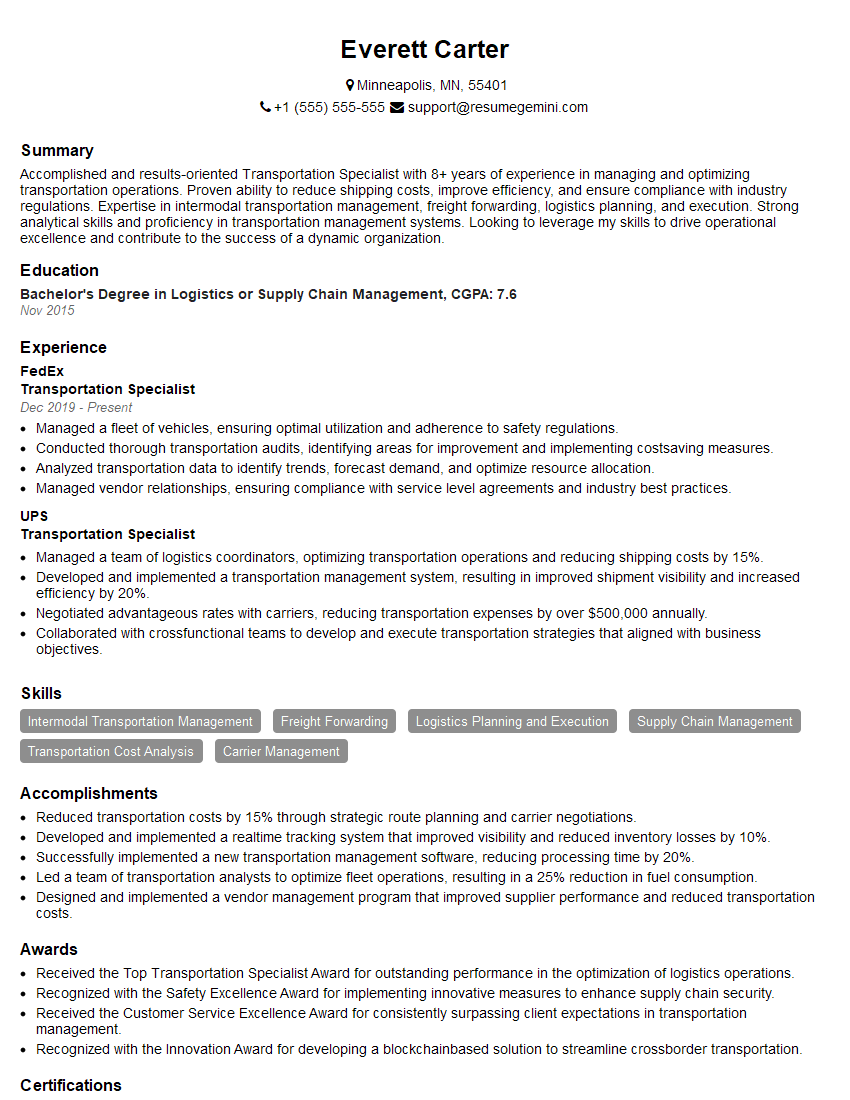
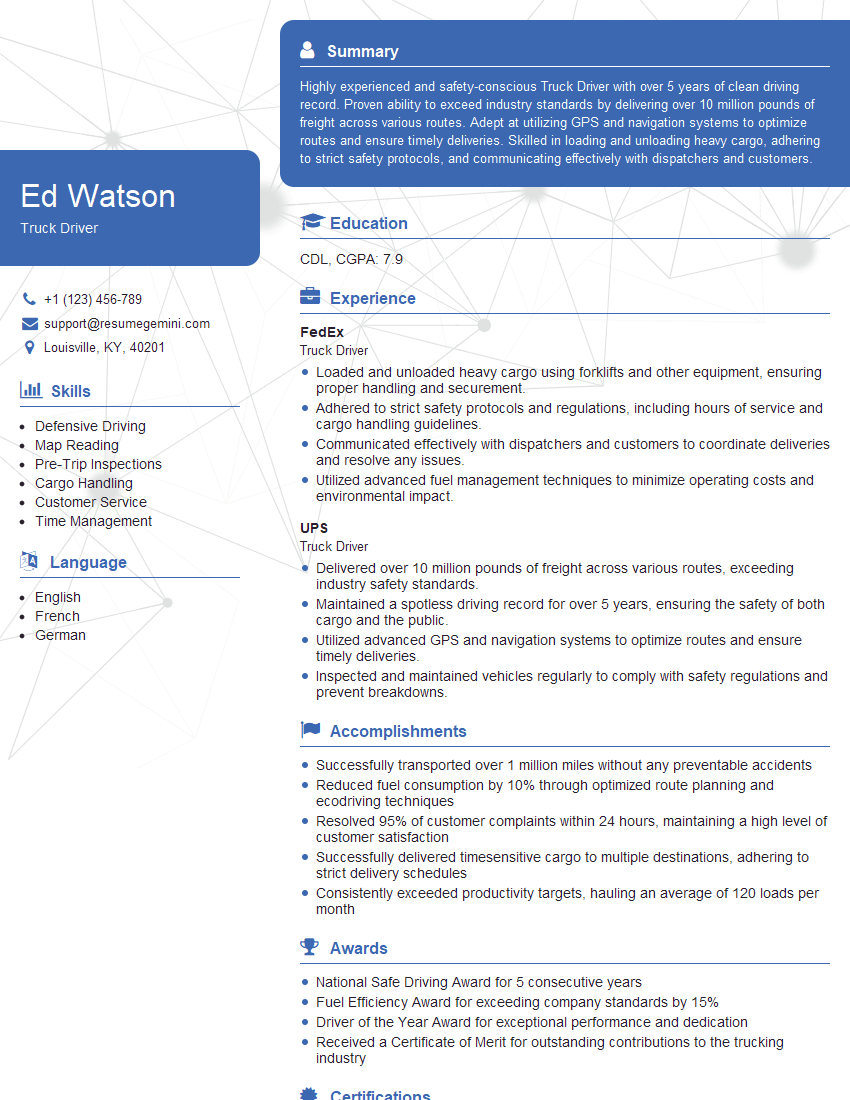
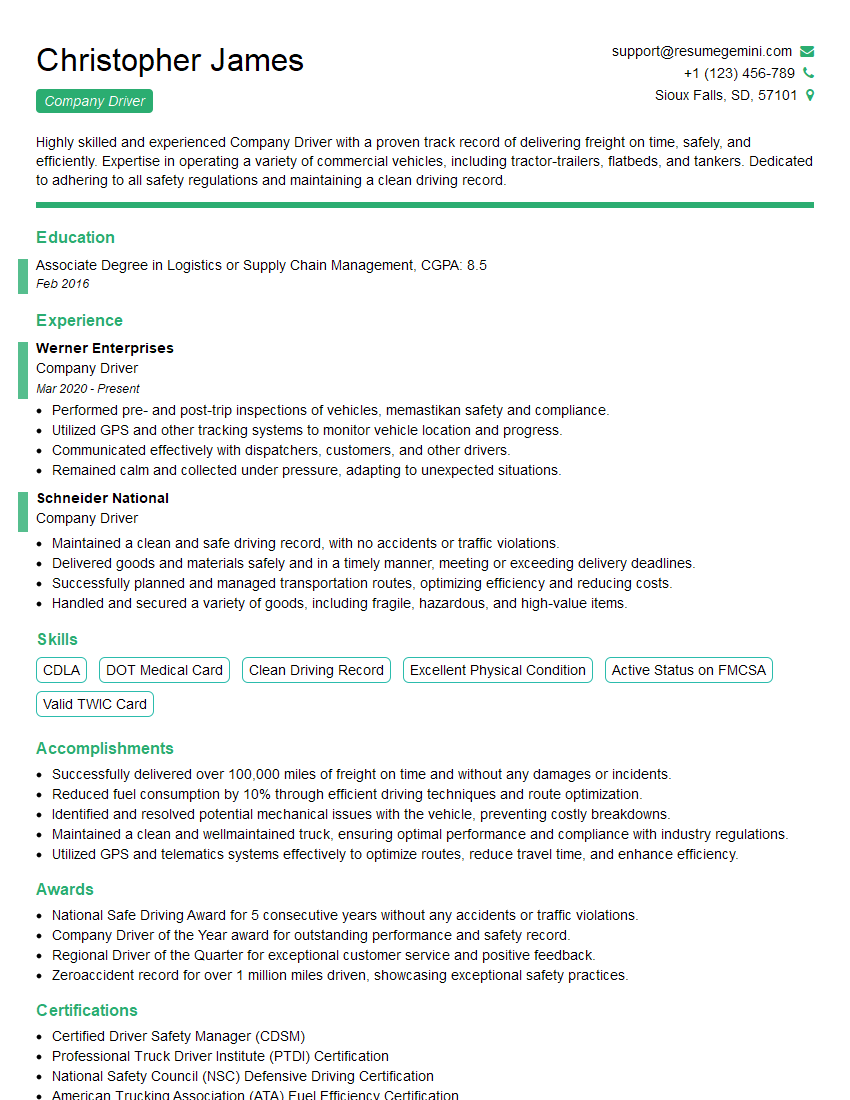
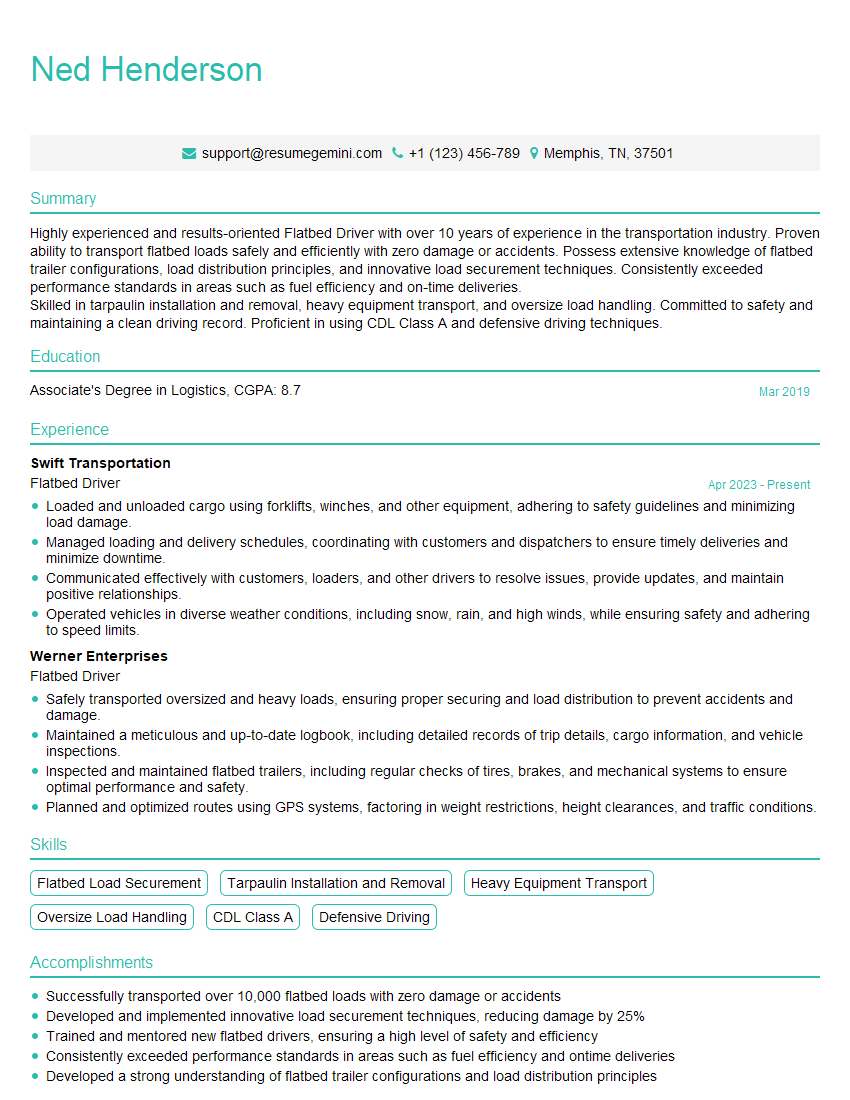
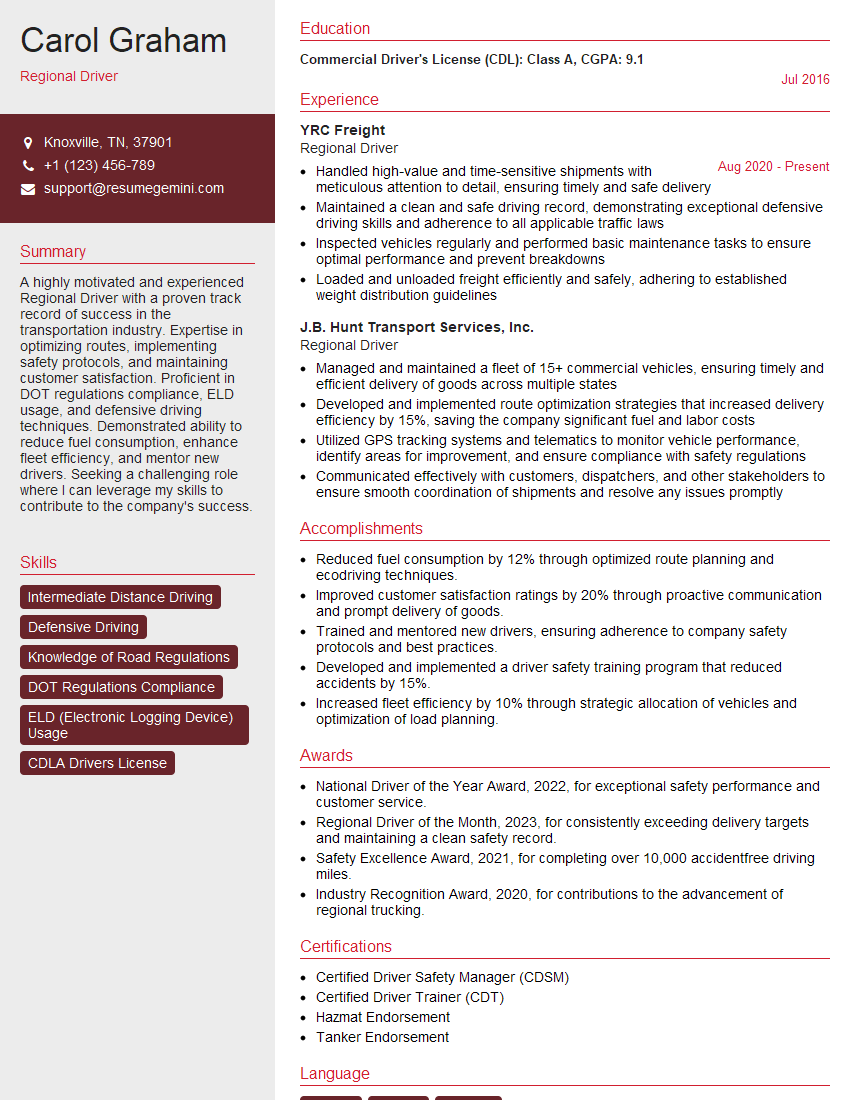
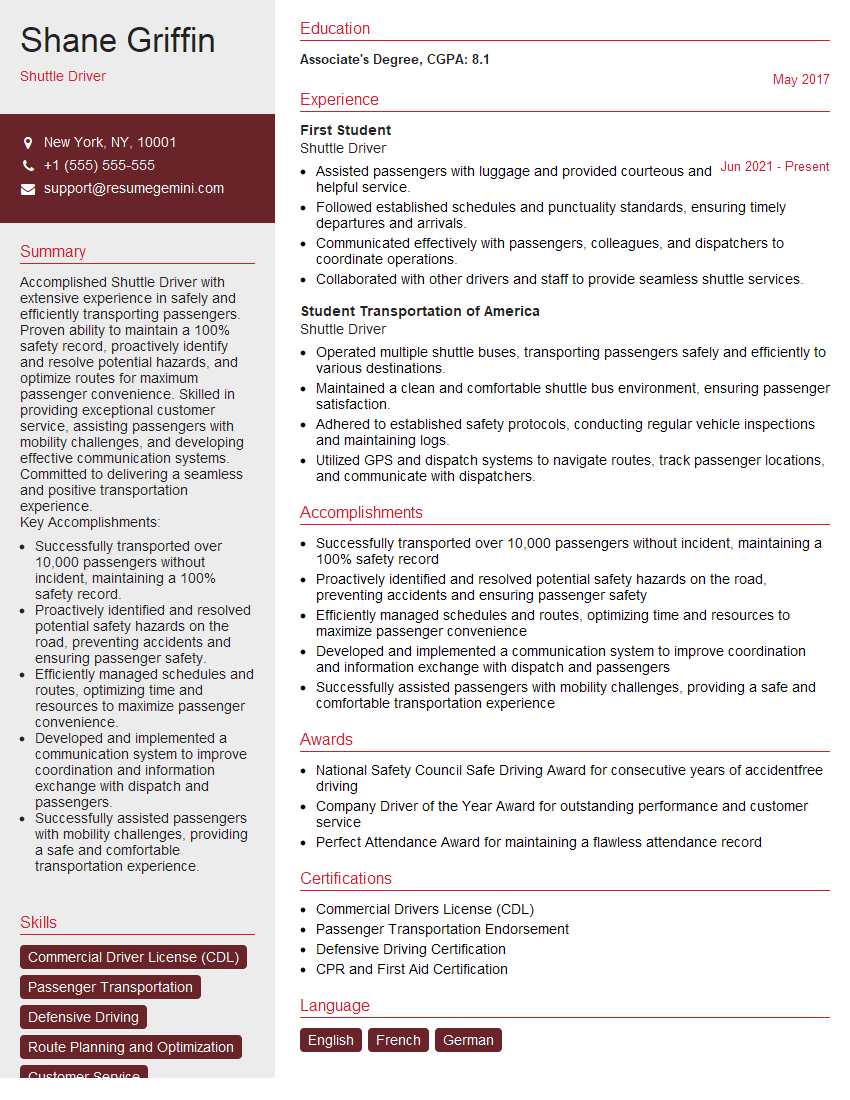
Mastering your CDL (Class A) and showcasing your skills effectively is crucial for a successful and rewarding career in the trucking industry. This opens doors to higher-paying jobs, increased responsibility, and greater job satisfaction. To maximize your job prospects, it’s essential to create an ATS-friendly resume that highlights your qualifications and experience clearly and concisely. ResumeGemini is a trusted resource that can help you build a professional, impactful resume designed to get noticed by recruiters. Examples of resumes tailored to CDL (Class A) drivers are available to guide you through the process.
Explore more articles
Users Rating of Our Blogs
Share Your Experience
We value your feedback! Please rate our content and share your thoughts (optional).
What Readers Say About Our Blog
Very informative content, great job.
good