Unlock your full potential by mastering the most common Environmental Permitting and Approvals interview questions. This blog offers a deep dive into the critical topics, ensuring you’re not only prepared to answer but to excel. With these insights, you’ll approach your interview with clarity and confidence.
Questions Asked in Environmental Permitting and Approvals Interview
Q 1. Explain the difference between a permit and an approval.
While the terms “permit” and “approval” are often used interchangeably, there’s a subtle but important distinction in environmental regulations. A permit is a legally binding document issued by a regulatory agency granting authorization to undertake a specific activity, often involving a regulated substance or process. It outlines specific conditions and limitations the activity must adhere to. Think of it as a detailed permission slip with strict rules. An approval, on the other hand, is a broader term that may encompass a permit but often signifies a less formal or less legally binding authorization. It might be a step in the permitting process, such as a preliminary review or an agency’s concurrence with a plan. An approval might lead to a permit, but it doesn’t inherently grant the right to proceed.
For example, a construction project might receive approval for its preliminary site plan, but a separate permit will be required to legally discharge stormwater from the site. The approval is a step towards obtaining the permit which is the actual authorization to proceed with a regulated activity.
Q 2. Describe your experience with the National Environmental Policy Act (NEPA).
My experience with the National Environmental Policy Act (NEPA) spans over 10 years, encompassing both the preparation and review of Environmental Impact Statements (EIS) and Environmental Assessments (EA). I’ve worked on projects ranging from large-scale infrastructure developments (like highway expansions) to smaller projects (like renewable energy installations). My role often involves identifying potential environmental impacts, developing mitigation measures, and ensuring compliance with NEPA’s procedural requirements. I’m particularly familiar with the scoping process, where we identify the key issues and concerns to be addressed in the EIS/EA, and the subsequent public comment period.
In one instance, I was involved in the EIS for a proposed pipeline project. We faced significant challenges in balancing the project’s economic benefits with the potential impacts on sensitive ecosystems. This involved extensive fieldwork, data analysis, stakeholder engagement, and a robust evaluation of alternative routes to minimize environmental harm. The process highlighted the importance of transparent communication and collaboration throughout the entire NEPA process.
Q 3. What are the key components of an environmental impact assessment?
A comprehensive Environmental Impact Assessment (EIA) is a systematic process to identify, predict, evaluate, and mitigate the biophysical, social, and other relevant effects of development proposals prior to major decisions being taken and commitments made. Key components include:
- Scoping: Defining the boundaries and key issues to be addressed.
- Baseline studies: Characterizing the existing environmental conditions.
- Impact prediction: Identifying potential positive and negative impacts of the project on various environmental components (air, water, soil, biodiversity, human health, socio-economics etc.). This often involves using modelling and forecasting techniques.
- Impact evaluation: Assessing the significance of predicted impacts using appropriate criteria. This often involves comparing predicted impacts to regulatory thresholds and best practices.
- Mitigation measures: Developing plans to avoid, minimize, or compensate for significant adverse impacts.
- Monitoring plan: Outlining a strategy to monitor the effectiveness of mitigation measures and assess post-project impacts.
- Reporting: Documenting the findings of the EIA in a clear and concise report.
It’s crucial to remember that an EIA is not simply a checklist but rather a dynamic process that requires flexibility and adaptation throughout. It should be iterative and responsive to new information or changing circumstances.
Q 4. How do you ensure compliance with environmental regulations?
Ensuring compliance with environmental regulations is a multifaceted process that requires a proactive and ongoing approach. It starts with a thorough understanding of the applicable regulations, which can vary based on location, industry, and project type. Key strategies include:
- Regular monitoring and reporting: Conducting regular inspections and audits to track environmental performance and ensure compliance with permit conditions. Detailed record-keeping is essential.
- Training and education: Ensuring that all staff involved in regulated activities receive appropriate training on environmental regulations and best practices.
- Development and implementation of Environmental Management Systems (EMS): Implementing a structured approach to environmental management, often based on ISO 14001 standards. This helps organizations identify and mitigate environmental risks, improve efficiency, and demonstrate compliance.
- Proactive communication with regulatory agencies: Maintaining open lines of communication with the regulatory agencies to discuss any potential issues or concerns proactively.
- Emergency response planning: Developing and implementing plans to respond effectively to any environmental incidents or emergencies.
For example, a company with a water discharge permit might conduct regular water quality monitoring, maintain detailed records of discharges, and participate in compliance audits with the regulating authority.
Q 5. Describe your experience with air quality permitting.
I have extensive experience in air quality permitting, having worked on projects across various industrial sectors, including manufacturing, power generation, and construction. This involved navigating complex regulations like the Clean Air Act, preparing permit applications, conducting air dispersion modeling to predict pollutant concentrations, developing mitigation plans to minimize emissions, and assisting clients in obtaining necessary approvals from state and federal agencies.
One project that stands out involved obtaining an air quality permit for a cement plant. We used sophisticated air dispersion modeling software to assess the impact of emissions on ambient air quality, carefully considering meteorological factors and background concentrations. The modeling results were crucial in demonstrating compliance with National Ambient Air Quality Standards (NAAQS) and obtaining the necessary permit. This project underscored the importance of accurate data and rigorous analysis in ensuring compliance.
Q 6. What is your experience with water discharge permits?
My experience with water discharge permits includes preparing and submitting permit applications (NPDES permits in the US), conducting water quality monitoring, and developing and implementing wastewater treatment plans. I’ve worked with diverse clients, ranging from small manufacturing facilities to large industrial complexes.
A memorable project involved assisting a food processing facility in obtaining their NPDES permit. This required careful assessment of their wastewater streams, selection of appropriate treatment technologies, development of a comprehensive monitoring plan, and regular interaction with the state environmental agency. It highlighted the importance of understanding both the technical aspects of wastewater treatment and the regulatory framework governing discharges.
Q 7. Explain your understanding of the Clean Water Act.
The Clean Water Act (CWA) is a cornerstone of US environmental law, establishing a national framework for protecting the nation’s waters. It aims to restore and maintain the chemical, physical, and biological integrity of the nation’s waters. Key aspects include:
- National Pollutant Discharge Elimination System (NPDES): This program regulates point source discharges of pollutants into surface waters. It requires facilities to obtain permits that limit the types and amounts of pollutants they can discharge.
- Water quality standards: The CWA sets water quality standards to protect designated uses of water bodies (e.g., drinking water, swimming, fishing).
- Nonpoint source pollution control: The CWA addresses nonpoint source pollution, such as runoff from agriculture and urban areas, through a variety of programs and strategies.
- Wetlands protection: The CWA also protects wetlands, which play a vital role in water quality and ecological health.
The CWA has significantly improved water quality in many areas of the United States, although challenges remain, particularly in addressing nonpoint source pollution and maintaining the ecological health of impaired water bodies. Understanding the CWA is paramount for anyone involved in activities that could impact water quality.
Q 8. Describe your experience with hazardous waste management permits.
Hazardous waste management permits are crucial for legally handling and disposing of materials posing substantial or potential hazards to human health or the environment. My experience encompasses the entire lifecycle, from initial permit application to compliance monitoring. This includes detailed knowledge of various permit types (e.g., generator, transporter, and treatment, storage, and disposal facility (TSDF) permits), understanding specific waste codes and characteristics, and navigating complex regulatory frameworks like RCRA (Resource Conservation and Recovery Act) in the US or equivalent legislation internationally.
For example, I’ve assisted numerous clients in obtaining TSDF permits, which involves detailed site assessments, preparation of comprehensive permit applications including waste characterization analyses, detailed site plans showing waste handling processes, and contingency plans for emergency spills. I also have experience in handling permit violations, developing corrective action plans, and negotiating with regulatory agencies to ensure compliance.
Another significant aspect of my work is staying abreast of evolving regulations and best practices in hazardous waste management. This ensures my clients remain compliant and minimize their environmental footprint.
Q 9. What is your experience with environmental remediation projects?
Environmental remediation projects focus on cleaning up contaminated sites, restoring them to a usable condition, and mitigating risks to human health and the environment. My experience spans a range of projects, from small-scale soil remediation to large-scale brownfield redevelopment. This involves understanding various remediation technologies (e.g., excavation, bioremediation, pump and treat), conducting site investigations (Phase I, II, and III environmental site assessments), developing remediation plans, and obtaining necessary permits and approvals.
I have been involved in projects involving soil and groundwater contamination by various chemicals, including petroleum hydrocarbons, heavy metals, and volatile organic compounds (VOCs). One particular project involved the remediation of a former industrial site contaminated with PCBs. This required a thorough site characterization, a detailed remediation plan approved by the relevant regulatory agency, and robust monitoring to ensure the effectiveness of the chosen remediation technology and the protection of surrounding ecosystems.
A key element of my work in remediation projects is risk assessment and management. This involves identifying potential risks associated with the contamination, determining the appropriate level of remediation, and communicating this information clearly and effectively to all stakeholders.
Q 10. How do you handle permit modifications or renewals?
Permit modifications and renewals are a routine part of environmental permitting. The process often requires a thorough understanding of the regulatory requirements and the specific conditions of the original permit. My approach is systematic and proactive. I start by assessing the need for a modification or renewal, identifying the specific changes required (e.g., changes in operations, expansion of the facility, changes in the type or volume of waste handled), and then preparing a comprehensive application that addresses all relevant regulatory requirements.
For example, a permit modification might be necessary if a facility wants to increase its production capacity. This would require a detailed assessment of the potential environmental impacts of the expansion, and the submission of updated information to the regulatory agency, such as air emissions calculations or wastewater discharge estimates. Similarly, a permit renewal would involve providing updated information on facility operations and compliance with existing permit conditions.
Throughout the process, clear communication with the regulatory agency is essential. This involves timely submission of applications, responding to any questions or requests for additional information, and proactively addressing any potential concerns.
Q 11. Explain your process for identifying and mitigating environmental risks.
Identifying and mitigating environmental risks is fundamental to my work. My process is based on a systematic approach that includes:
- Risk Assessment: This involves identifying potential environmental hazards associated with a project or facility. This might involve reviewing site history, conducting site inspections, and reviewing operational processes. Tools such as HAZOP (Hazard and Operability Study) analysis might be employed.
- Risk Evaluation: This involves evaluating the likelihood and severity of each identified risk. This often uses qualitative or quantitative approaches to prioritize risks based on their potential impact.
- Risk Control: This involves developing and implementing measures to eliminate or reduce the identified risks. Controls could be administrative (e.g., training programs), engineering (e.g., installing pollution control equipment), or procedural (e.g., standard operating procedures).
- Monitoring and Review: Regularly monitoring the effectiveness of implemented controls and periodically reviewing the entire risk assessment process to ensure its accuracy and relevance.
Imagine a manufacturing facility releasing air pollutants. My role would involve identifying the pollutants, assessing the risk to surrounding communities and ecosystems, recommending control technologies (scrubbers, filters), and monitoring emissions to ensure compliance with environmental regulations. This process ensures the facility’s operations are environmentally responsible and minimize potential harm.
Q 12. Describe your experience with environmental auditing.
Environmental auditing involves a systematic and independent examination of an organization’s environmental performance to identify areas of compliance, non-compliance, and opportunities for improvement. My experience encompasses various types of audits, including compliance audits (checking against specific regulations), management system audits (assessing the effectiveness of an EMS), and environmental due diligence audits (assessing environmental liabilities associated with a property transaction).
I typically follow a structured approach involving:
- Planning: Defining the scope, objectives, and methodology of the audit.
- Fieldwork: Conducting on-site inspections, reviewing documents, and interviewing personnel.
- Reporting: Preparing a comprehensive audit report outlining findings, conclusions, and recommendations.
- Follow-up: Tracking corrective actions implemented by the organization to address identified deficiencies.
For example, I’ve conducted audits of industrial facilities to verify compliance with air emission standards, wastewater discharge permits, and hazardous waste management regulations. The audit reports provided detailed findings, documented non-compliances, and proposed corrective actions to the audited facility’s management.
Q 13. What are the key elements of a successful environmental management system (EMS)?
A successful Environmental Management System (EMS) is a structured approach to managing environmental aspects of an organization. Key elements include:
- Environmental Policy: A formal statement outlining the organization’s commitment to environmental protection.
- Planning: Identifying environmental aspects and impacts, setting environmental objectives and targets, and developing programs to achieve them.
- Implementation and Operation: Establishing procedures, providing resources, and assigning responsibilities to implement the EMS.
- Monitoring and Measurement: Tracking environmental performance against objectives and targets, and using data to improve the EMS.
- Review and Improvement: Regularly reviewing the EMS’s effectiveness, identifying areas for improvement, and implementing corrective actions.
A well-designed EMS not only ensures regulatory compliance but also fosters a culture of environmental stewardship within an organization, leading to improved efficiency, cost savings, and enhanced reputation. Think of it as a continuous improvement cycle ensuring environmental considerations are integrated into all aspects of business operation.
Q 14. How do you stay updated on changes in environmental regulations?
Staying updated on changes in environmental regulations is critical. I employ a multi-faceted approach:
- Subscription to professional journals and newsletters: This provides up-to-date information on regulatory changes and best practices.
- Participation in professional organizations and conferences: Networking with colleagues and attending conferences allows me to learn about new developments and share experiences.
- Monitoring regulatory agency websites: Regularly checking websites of relevant regulatory agencies for updates, proposed rule changes, and enforcement actions.
- Utilizing online legal databases: Access to databases containing environmental regulations helps ensure I’m always using the most current version.
- Developing strong relationships with regulatory agencies: This ensures I am informed of impending changes and can better anticipate potential challenges.
Proactive monitoring ensures I can advise my clients promptly and efficiently on any necessary adjustments to their environmental management practices. The dynamic nature of environmental law requires constant vigilance and continuous learning.
Q 15. Describe your experience working with regulatory agencies.
Throughout my 10-year career, I’ve collaborated extensively with various regulatory agencies, including the EPA, state environmental departments, and local permitting authorities. This has involved navigating diverse permit applications, from air and water permits to solid waste management and hazardous waste permits. I’m adept at understanding their specific requirements, anticipating potential issues, and proactively addressing them to ensure smooth project approvals. For example, in one project involving a large-scale construction site, I worked closely with the local Department of Environmental Quality to develop a comprehensive stormwater management plan that met all their stringent criteria, preventing potential fines and project delays.
- EPA: Experience with navigating the complexities of the Clean Water Act and Clean Air Act permitting processes.
- State Agencies: Proficient in understanding and complying with diverse state-specific environmental regulations.
- Local Authorities: Skilled in interacting with local officials to secure necessary permits and approvals.
Career Expert Tips:
- Ace those interviews! Prepare effectively by reviewing the Top 50 Most Common Interview Questions on ResumeGemini.
- Navigate your job search with confidence! Explore a wide range of Career Tips on ResumeGemini. Learn about common challenges and recommendations to overcome them.
- Craft the perfect resume! Master the Art of Resume Writing with ResumeGemini’s guide. Showcase your unique qualifications and achievements effectively.
- Don’t miss out on holiday savings! Build your dream resume with ResumeGemini’s ATS optimized templates.
Q 16. What software or tools do you use for environmental permitting?
My toolkit includes a range of software and tools designed to streamline the environmental permitting process. These range from Geographic Information Systems (GIS) software for mapping and analyzing environmental data, to specialized databases containing regulatory information and permit tracking systems. For example, I extensively use ArcGIS to map sensitive habitats and assess potential impacts. I also rely on dedicated environmental permitting software like EnviroInformatics’ ePermits, which helps manage applications, track progress, and maintain compliance documentation. Finally, document management systems are crucial for organizing the vast amounts of data associated with these projects. Think of it like a well-organized toolbox – each tool serves a unique purpose to ensure efficiency and accuracy.
Q 17. How do you handle conflicts or disagreements with regulatory agencies?
Disagreements with regulatory agencies are inevitable in environmental permitting. My approach centers on professional, collaborative communication. I begin by thoroughly reviewing the agency’s concerns, understanding their reasoning, and presenting clear, data-driven evidence to support my position. This often involves engaging in constructive dialogue, clarifying any misunderstandings, and proposing alternative solutions that meet both regulatory requirements and project objectives. In situations requiring mediation, I’m prepared to work with independent third-party experts or utilize the agency’s internal dispute resolution mechanisms. The key is to maintain a respectful and collaborative approach, focusing on finding mutually acceptable solutions rather than escalating conflict.
For instance, in a disagreement over wetland delineation, we presented independent expert assessments and field data to demonstrate that the proposed project would not negatively impact the defined wetland area. This collaborative approach led to a compromise that addressed the agency’s concerns while ensuring the project could proceed.
Q 18. Describe a challenging environmental permitting project and how you overcame it.
One particularly challenging project involved obtaining permits for a wind farm in a region with significant ecological sensitivity. Balancing energy production goals with environmental protection proved demanding. The project faced hurdles, including concerns about bird and bat mortality, habitat fragmentation, and visual impacts. To overcome these, we conducted extensive environmental impact assessments, including bird and bat surveys, habitat modeling, and visual impact studies. We also collaborated with conservation organizations and incorporated mitigation measures such as bird-deterrent technologies and habitat restoration plans. The result was a comprehensive permitting strategy that addressed all concerns, ultimately securing the necessary approvals while adhering to strict environmental guidelines. This success emphasized the importance of early engagement with stakeholders and the value of a proactive, science-based approach to environmental permitting.
Q 19. How do you prioritize multiple permitting projects with competing deadlines?
Prioritizing multiple permitting projects with competing deadlines requires a strategic approach. I use a project management framework, incorporating elements of critical path analysis to identify tasks with the most significant impact on overall project timelines. This involves creating detailed project schedules, allocating resources efficiently, and proactively identifying and addressing potential bottlenecks. Regular progress monitoring and risk assessment are key, enabling me to proactively adjust strategies and ensure deadlines are met. Clear communication with clients and regulatory agencies is also critical, ensuring transparency and managing expectations.
Think of it as conducting an orchestra: each instrument (project) has its own part, but the conductor (project manager) ensures the harmonious completion of the symphony.
Q 20. What are your strategies for cost-effective compliance?
Cost-effective compliance begins with proactive planning. This involves thorough due diligence upfront, identifying potential environmental liabilities early on. Early identification of potential issues allows for the implementation of cost-effective mitigation strategies. By integrating compliance considerations into the initial project design, we can often avoid costly modifications later. Other key strategies include optimizing monitoring programs to be both effective and efficient, utilizing innovative technologies to reduce environmental impact, and leveraging available financial incentives or tax credits for compliance projects.
Q 21. Explain your experience with environmental due diligence.
Environmental due diligence is a crucial aspect of my work, aiming to identify potential environmental liabilities associated with a property or project. This involves reviewing historical records, conducting site inspections, analyzing environmental data, and assessing compliance with applicable regulations. The process helps identify potential risks such as contamination, hazardous waste, or endangered species habitat, allowing for informed decision-making and appropriate mitigation strategies. For example, during the acquisition of an industrial site, our due diligence uncovered past contamination, which led to the negotiation of a lower purchase price and the inclusion of remediation costs in the transaction.
Q 22. How familiar are you with environmental liability?
Environmental liability refers to the legal responsibility for environmental damage or pollution. This can stem from a wide range of activities, including industrial operations, waste disposal, and even accidental spills. It encompasses the costs associated with remediation, cleanup, and compensation for damages to the environment and potentially affected parties. Understanding environmental liability is crucial for businesses because failing to comply with environmental regulations can result in significant financial penalties, legal action, and reputational harm. For example, a company discharging pollutants into a river without the necessary permits could face hefty fines, orders for remediation, and even criminal charges, depending on the severity of the pollution and the extent of the damage.
Assessing environmental liability involves evaluating factors such as the nature and extent of the pollution, the responsible party, applicable regulations, and the potential environmental and economic impacts. Companies often purchase environmental insurance policies to mitigate the risks associated with potential liability.
Q 23. Describe your understanding of environmental justice principles.
Environmental justice principles ensure fair treatment and meaningful involvement of all people regardless of race, color, national origin, or income, with respect to the development, implementation, and enforcement of environmental laws, regulations, and policies. It recognizes that disadvantaged communities often bear a disproportionate burden of environmental hazards, such as pollution from industrial facilities or toxic waste sites. The core of environmental justice is preventing the placement of environmentally hazardous facilities in these communities and promoting equitable access to environmental benefits, like clean air and water.
In practice, this means incorporating environmental justice considerations into permitting processes, ensuring that potential impacts on vulnerable populations are carefully assessed and mitigated. Public participation is key; permitting agencies must actively engage affected communities in decision-making processes, providing opportunities for meaningful input and addressing their concerns. For instance, a proposed landfill near a low-income neighborhood might be subject to rigorous review and public hearings to ensure that its location doesn’t exacerbate existing environmental inequalities.
Q 24. What is your experience with environmental monitoring and reporting?
My experience with environmental monitoring and reporting is extensive. I’ve been involved in designing, implementing, and overseeing monitoring programs for various projects, ranging from industrial facilities to construction sites. This encompasses the selection of appropriate monitoring parameters, the development of sampling plans, the deployment of monitoring equipment, data analysis, and the preparation of comprehensive reports for regulatory agencies. For instance, I’ve worked on projects that required regular water quality monitoring to ensure compliance with discharge limits, as well as air emissions monitoring to track pollutant levels.
Data management and quality control are critical aspects of my work. I utilize various software programs for data collection, analysis, and reporting, and I’m proficient in ensuring the accuracy and integrity of the data throughout the entire process. I follow strict quality assurance/quality control (QA/QC) protocols to minimize error and ensure the reliability of the results. These reports are essential for demonstrating compliance with permits and regulations and identifying potential issues early on, allowing for timely corrective actions.
Q 25. How do you incorporate sustainability considerations into permitting processes?
Sustainability considerations are integral to modern permitting processes. We incorporate these by assessing the project’s potential environmental impacts throughout its lifecycle, from construction to operation and eventual decommissioning. This includes evaluating energy consumption, water usage, waste generation, greenhouse gas emissions, and potential impacts on biodiversity. We strive to promote resource efficiency and minimize environmental footprints through the permitting process. For example, a permit application for a new manufacturing facility might require a detailed assessment of its energy efficiency measures and a plan to minimize waste generation, utilizing life-cycle assessment principles.
Furthermore, we encourage applicants to explore alternative and sustainable solutions, such as renewable energy sources, water recycling systems, and green building materials. The permitting decision often depends on the project’s adherence to sustainability principles and its commitment to minimizing negative environmental impacts. Ultimately, we aim to balance economic development with environmental protection.
Q 26. Describe your understanding of climate change regulations and their impact on permitting.
Climate change regulations, like those focusing on greenhouse gas emissions, are increasingly influencing the permitting process. Regulations such as the Clean Air Act and others at the state level are becoming stricter. For example, permits for new power plants or industrial facilities are now subject to more stringent emissions limits. Applicants must demonstrate compliance with these regulations by submitting detailed greenhouse gas emission inventories and plans to mitigate their climate impact. This often involves incorporating carbon capture technologies, switching to low-carbon energy sources, and improving energy efficiency.
The permitting process also considers the potential vulnerability of the project to climate change impacts. For instance, a coastal development project needs to demonstrate resilience to sea-level rise and extreme weather events. This might require incorporating protective measures and demonstrating long-term sustainability under changing climatic conditions. Failure to address climate change considerations could lead to permit denials or conditions requiring significant modifications to the project.
Q 27. What is your experience with different permit types (e.g., air, water, waste)?
I have extensive experience with various permit types, including air permits (controlling emissions from stationary and mobile sources), water permits (governing water discharges and withdrawals), and waste permits (covering solid waste management, hazardous waste handling, and wastewater treatment). Each permit type has its specific requirements and regulations depending on the nature of the project and the potential environmental impacts. For example, an air permit might require detailed emissions monitoring and reporting, while a water discharge permit could involve rigorous water quality testing and effluent limitations. Waste permits might include detailed waste characterization and management plans.
My expertise extends to navigating the complexities of different permitting programs at the federal, state, and local levels. I understand how to successfully submit permit applications, respond to agency inquiries, and address concerns raised during the review process. I’m also familiar with the different permit compliance requirements and enforcement procedures, which are crucial for ensuring that regulated entities operate legally and sustainably.
Q 28. Explain how you ensure data accuracy and integrity in environmental permitting.
Data accuracy and integrity are paramount in environmental permitting. To ensure this, I employ a multi-faceted approach. Firstly, I utilize validated and calibrated monitoring equipment and follow standardized sampling and analytical procedures. Detailed chain-of-custody protocols are followed to maintain the integrity of samples throughout the entire process, from collection to analysis. Furthermore, I utilize quality assurance and quality control (QA/QC) measures at every step, including blind samples and duplicates, to identify and address any potential errors.
Secondly, all data are meticulously recorded in well-organized databases, and regular data validation checks are performed to detect and correct errors or inconsistencies. I use robust data management systems and software that incorporate various data validation techniques. Finally, all reports and submissions to regulatory agencies are thoroughly reviewed to verify data accuracy and consistency before submission, ensuring transparency and compliance with regulatory requirements. This rigorous approach minimizes the risk of errors and ensures that the data used for decision-making are reliable and trustworthy.
Key Topics to Learn for Your Environmental Permitting and Approvals Interview
Ace your interview by mastering these key areas. We’ve broken down the essentials to help you confidently navigate the process.
- Regulatory Frameworks: Understand the legal landscape – Clean Water Act, Clean Air Act, NEPA, etc. How these laws intersect and influence permitting decisions is crucial.
- Permit Types & Applications: Gain a practical understanding of various permit types (e.g., NPDES, air permits, wetland permits) and the application process for each. Practice completing sample applications.
- Environmental Impact Assessments (EIAs): Learn how to conduct thorough EIAs, identify potential environmental impacts, and propose mitigation strategies. Consider case studies to hone your skills.
- Compliance Monitoring & Reporting: Master the art of monitoring compliance with permit conditions and generating accurate, timely reports. This shows you understand the ongoing responsibilities.
- Stakeholder Engagement: Understand the importance of effective communication with agencies, communities, and other stakeholders throughout the permitting process. This is often a key differentiating factor.
- Problem-Solving & Critical Thinking: Practice identifying and solving complex permitting challenges, such as navigating conflicting regulations or resolving permit disputes. Use hypothetical scenarios to test your approach.
- Emerging Technologies & Sustainable Practices: Demonstrate your awareness of how new technologies and sustainable practices are impacting the environmental permitting field. This showcases forward thinking.
Next Steps: Launch Your Environmental Career
Mastering Environmental Permitting and Approvals opens doors to exciting and impactful career opportunities. To maximize your chances of landing your dream role, a strong resume is essential. An ATS-friendly resume ensures your application gets seen by hiring managers.
We strongly recommend using ResumeGemini to create a compelling and effective resume. ResumeGemini provides the tools and resources to build a professional document that highlights your skills and experience. You’ll find examples of resumes tailored specifically to Environmental Permitting and Approvals to guide you.
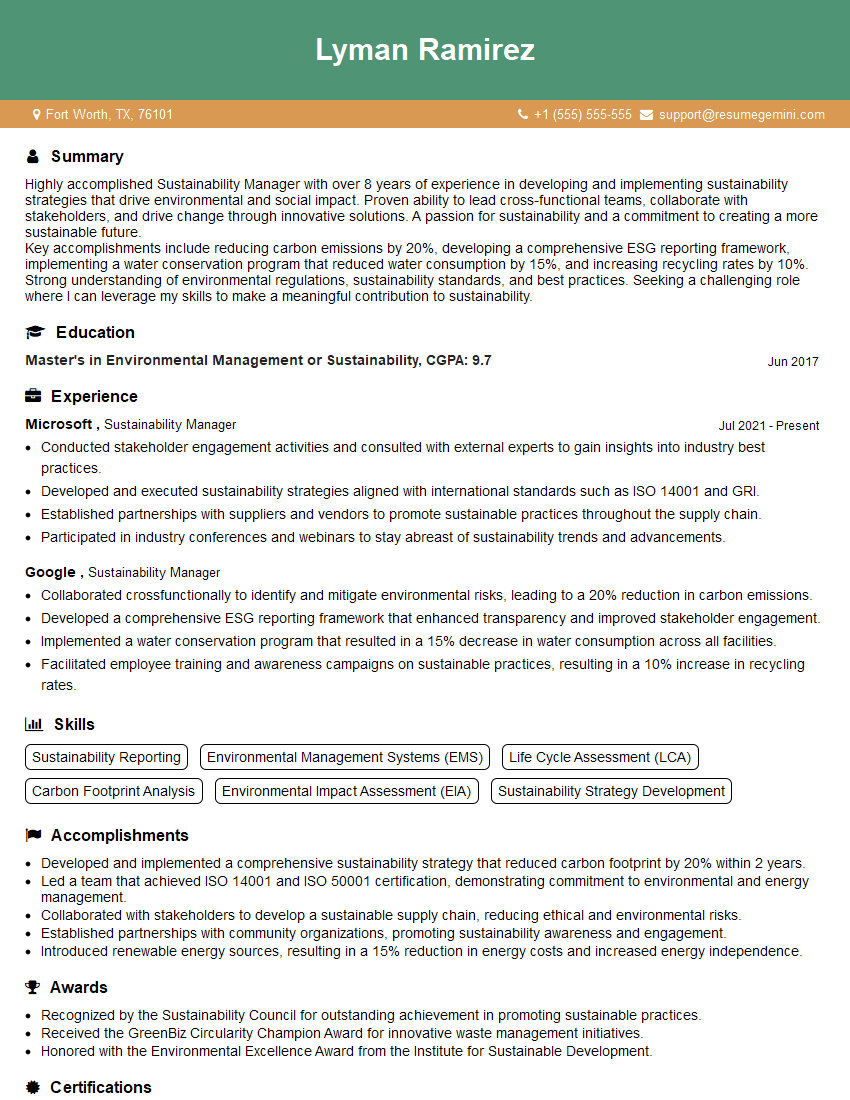
Sustainability Manager Resume Sample
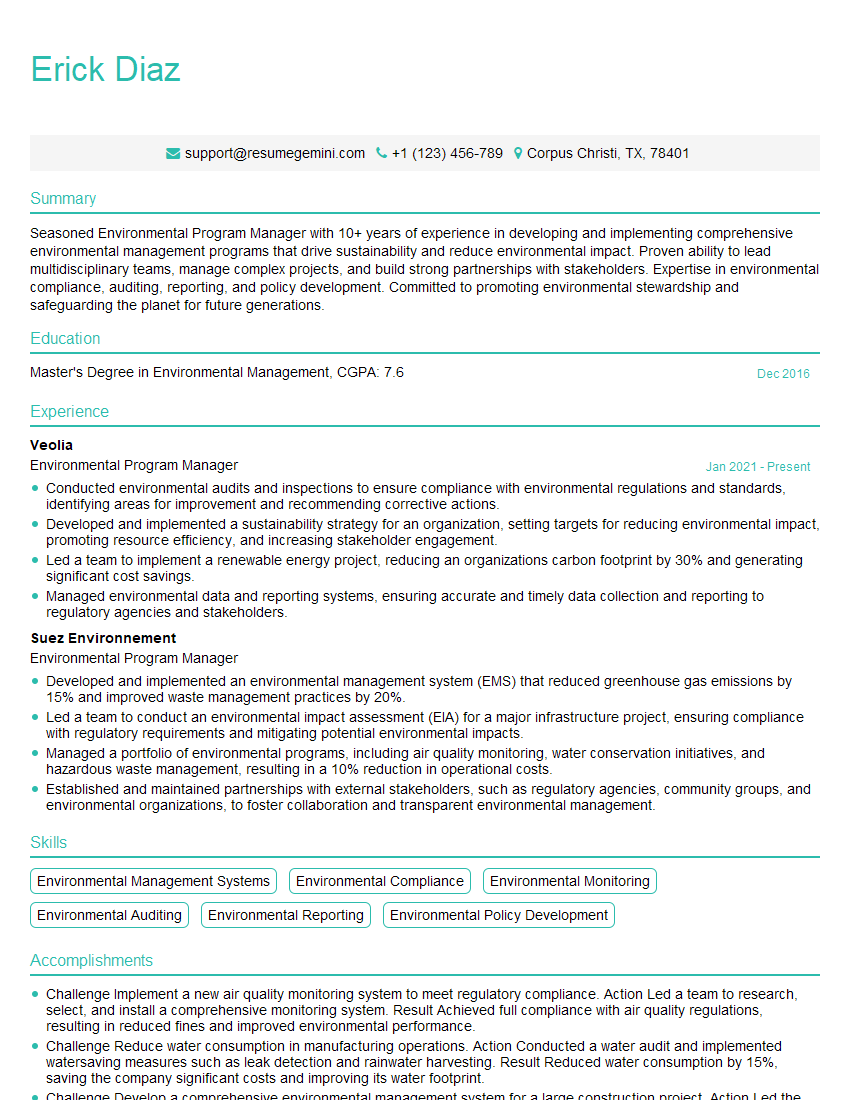
Environmental Program Manager Resume Sample
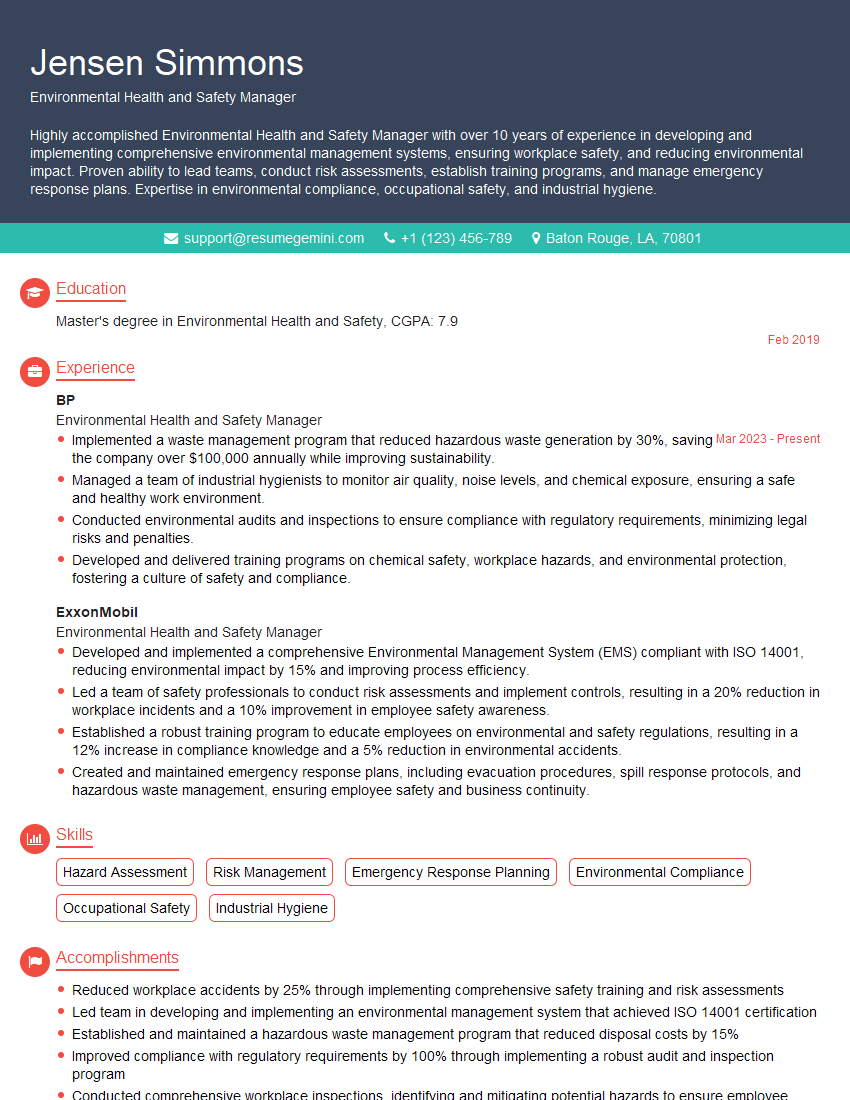
Environmental Health and Safety Manager Resume Sample
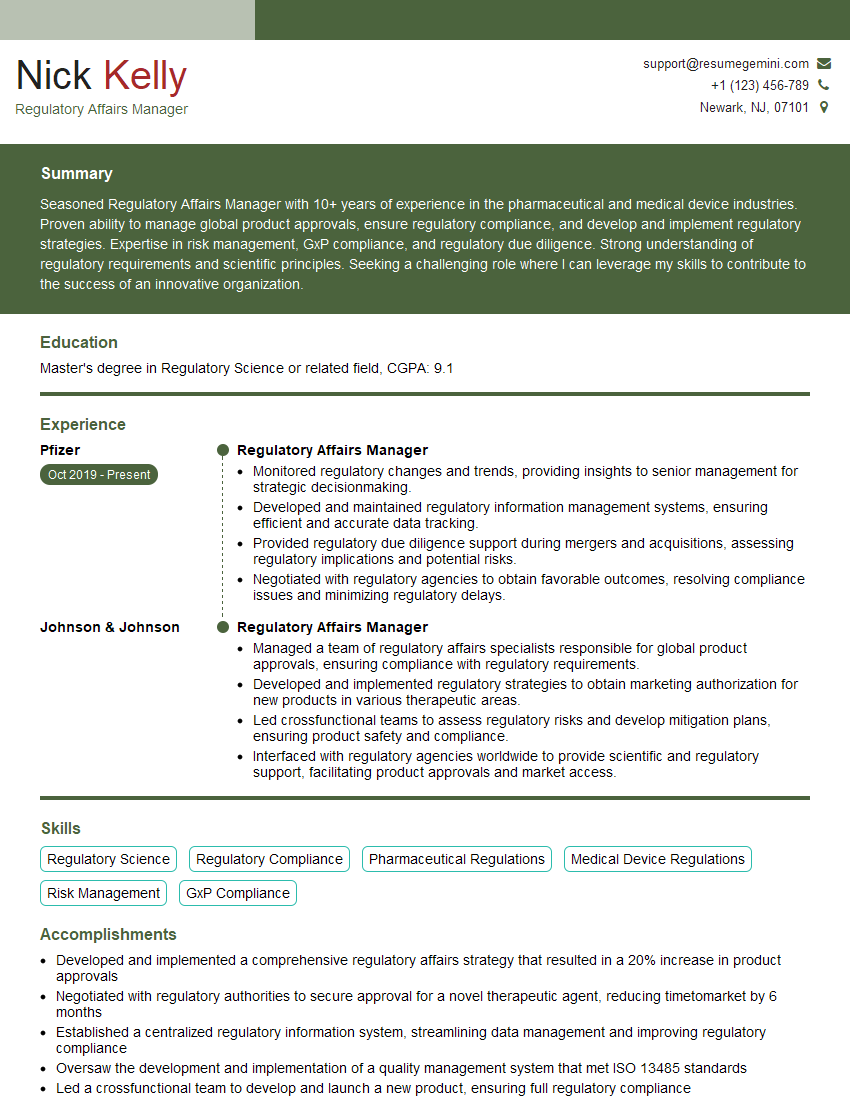
Regulatory Affairs Manager Resume Sample
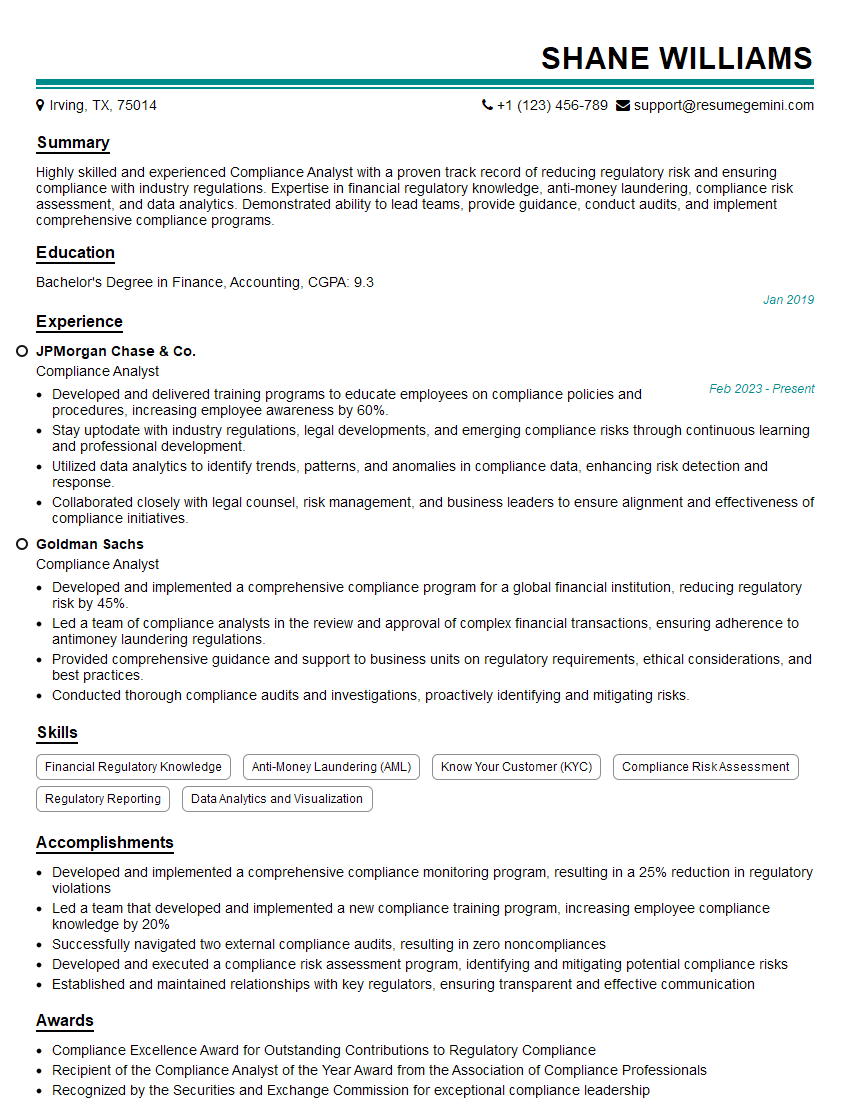
Compliance Analyst Resume Sample
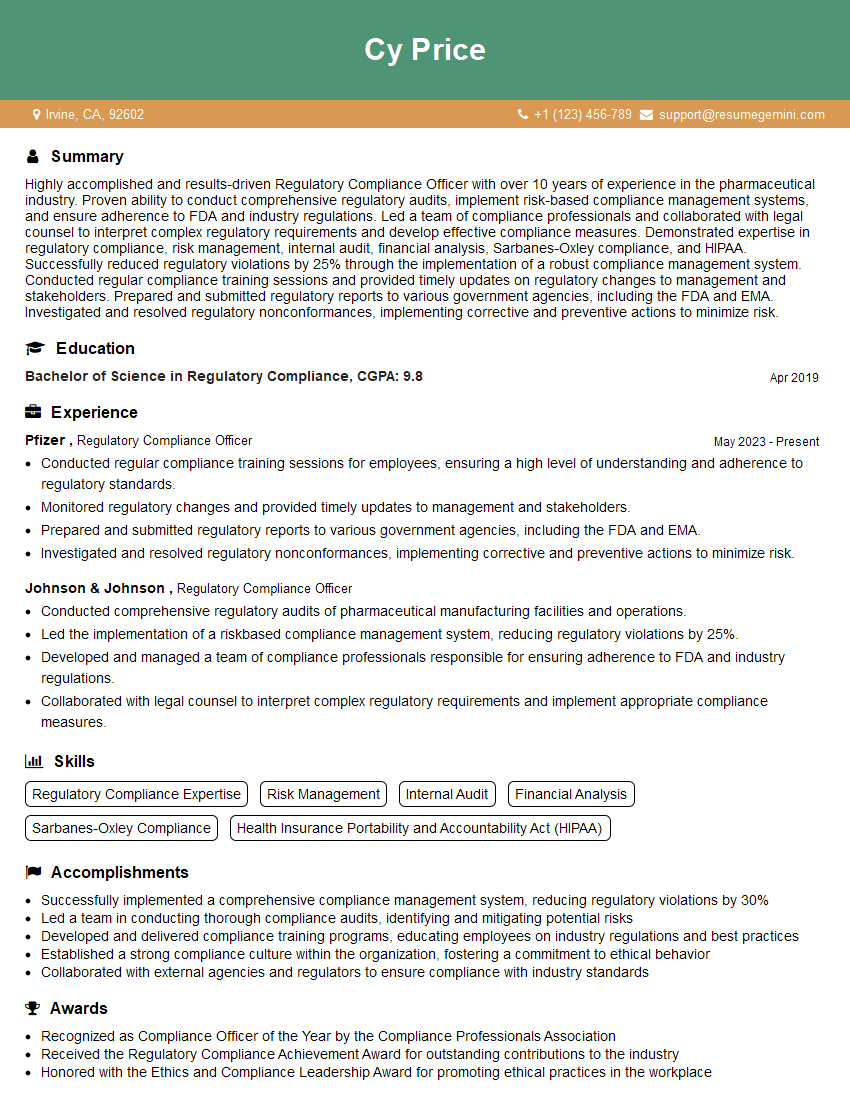
Regulatory Compliance Officer Resume Sample
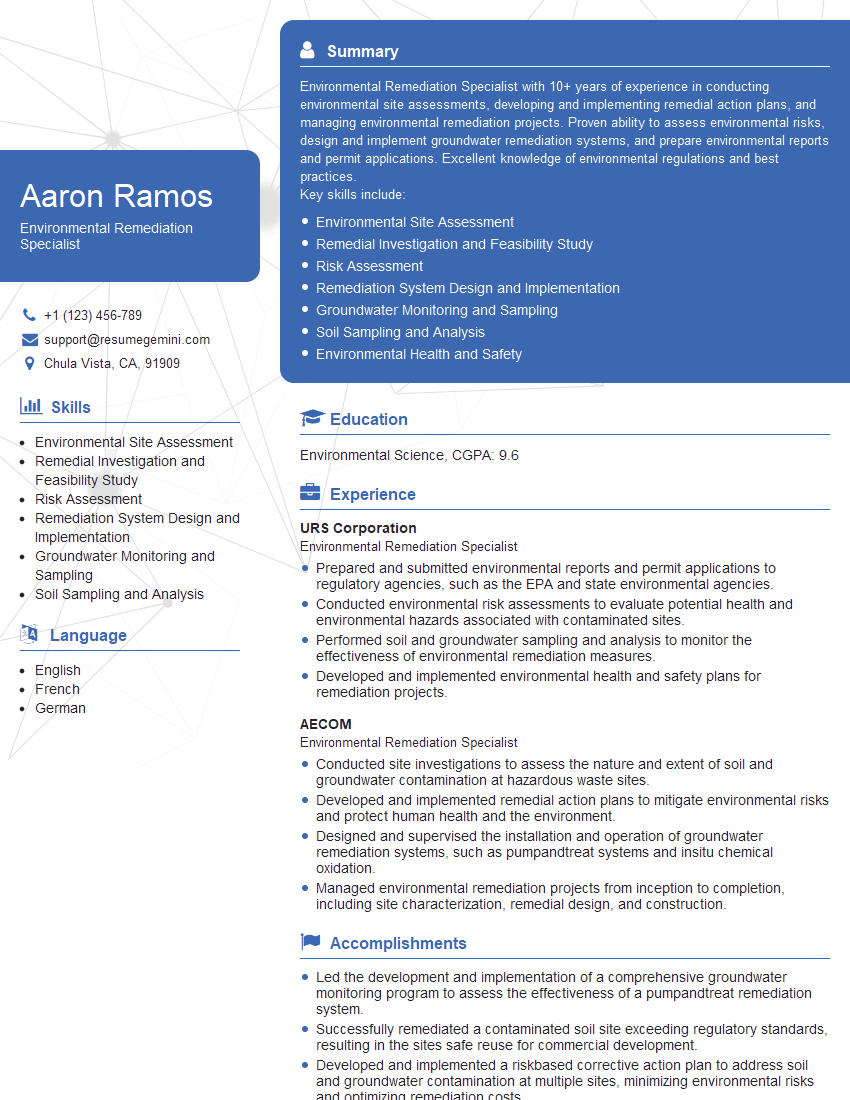
Environmental Remediation Specialist Resume Sample
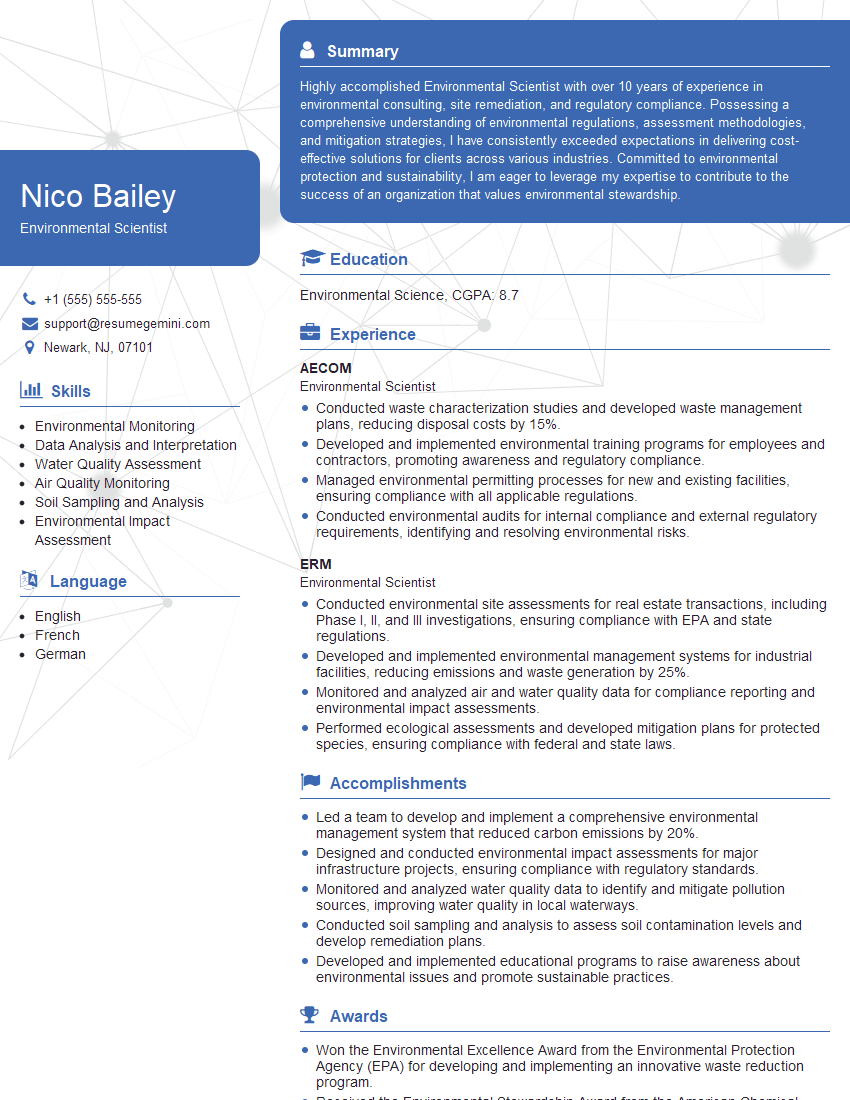
Environmental Scientist Resume Sample
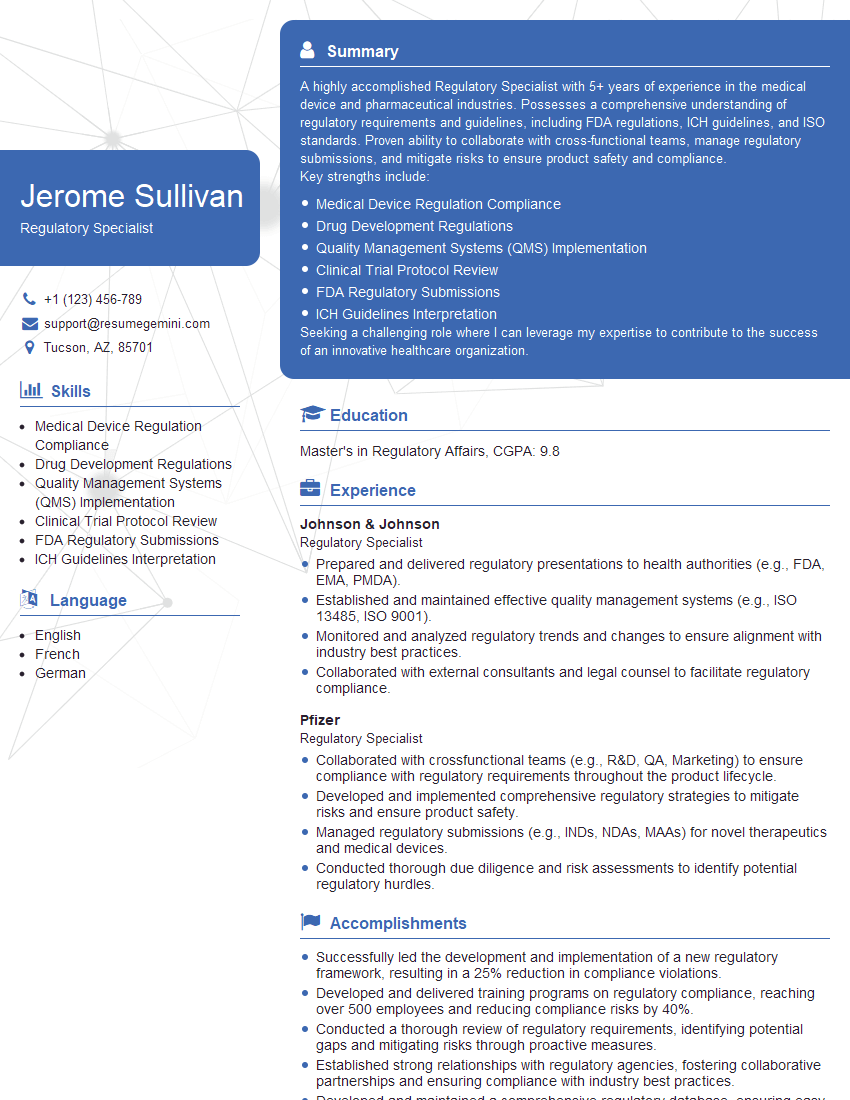
Regulatory Specialist Resume Sample
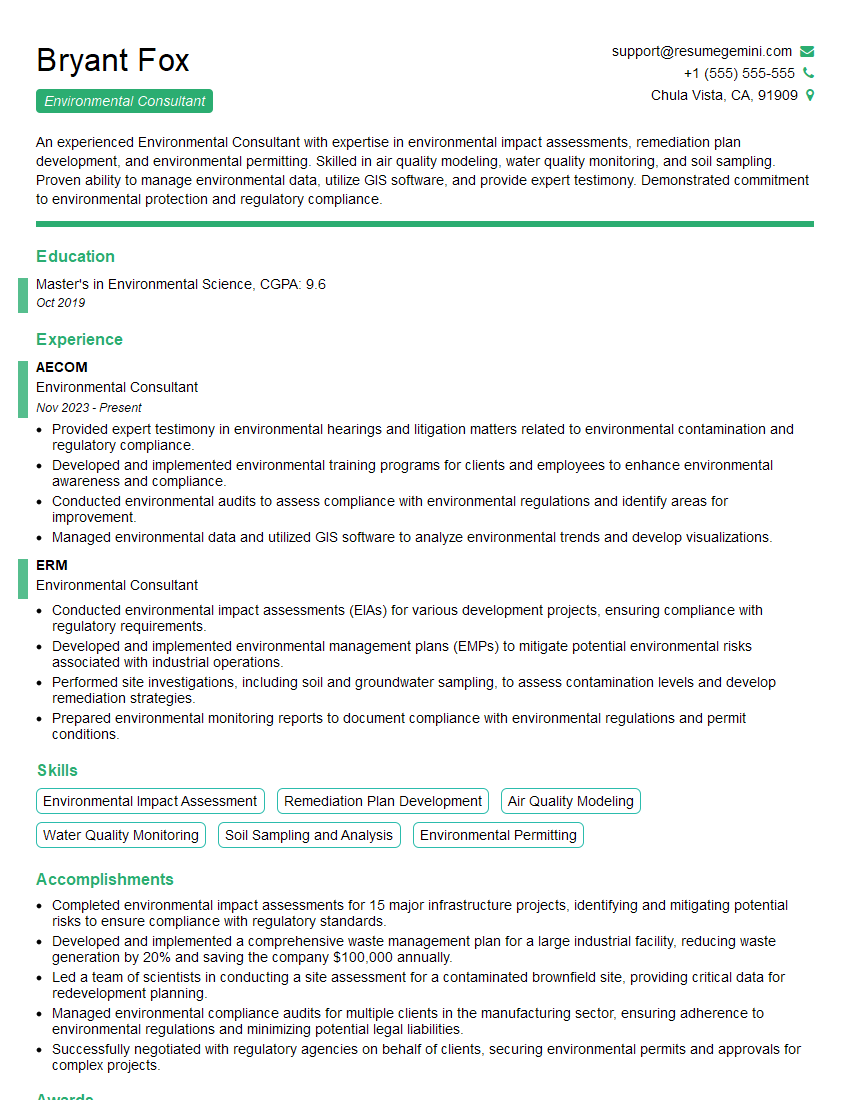
Environmental Consultant Resume Sample
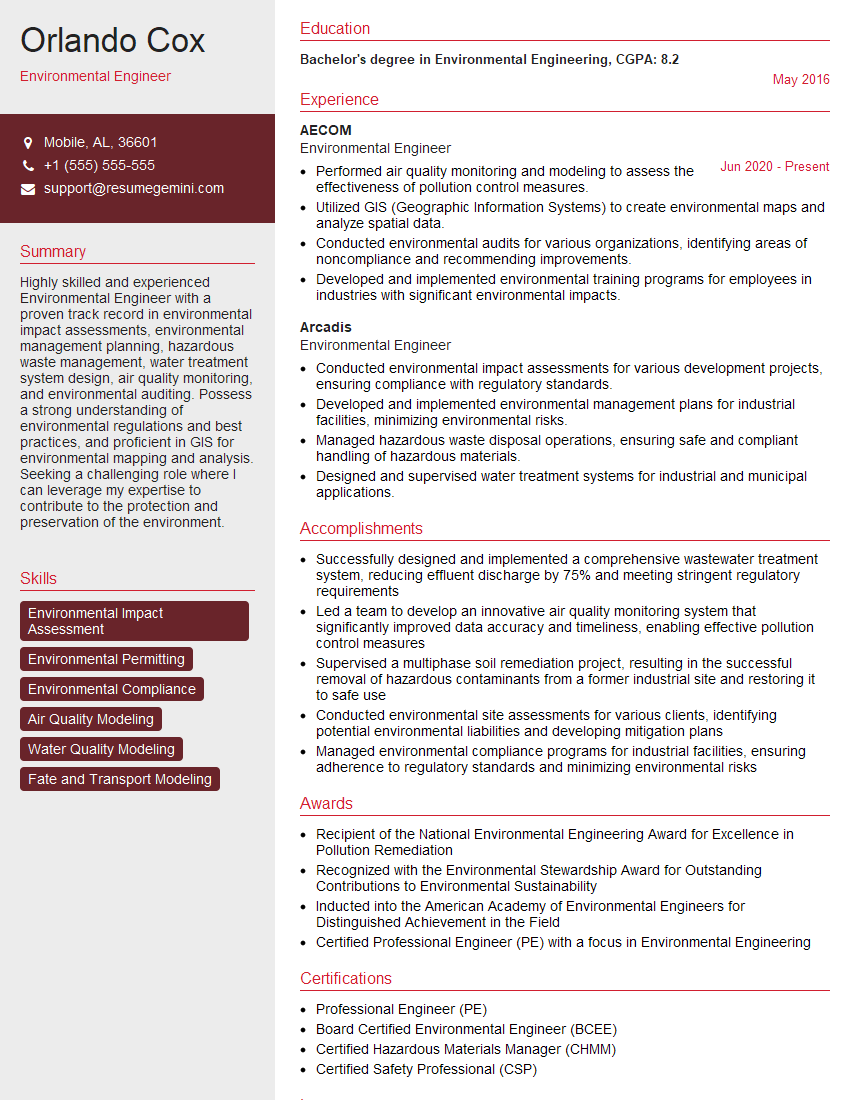
Environmental Engineer Resume Sample
Explore more articles
Users Rating of Our Blogs
Share Your Experience
We value your feedback! Please rate our content and share your thoughts (optional).
What Readers Say About Our Blog
Very informative content, great job.
good