Unlock your full potential by mastering the most common Environmental Protection Practices interview questions. This blog offers a deep dive into the critical topics, ensuring you’re not only prepared to answer but to excel. With these insights, you’ll approach your interview with clarity and confidence.
Questions Asked in Environmental Protection Practices Interview
Q 1. Explain the difference between point and non-point source pollution.
Point source pollution and non-point source pollution are two distinct categories of environmental contamination, differing primarily in their origin and ease of identification. Point source pollution refers to pollution that originates from a single, identifiable source. Think of it like a faucet leaking – you know exactly where the water (or pollutant) is coming from. Non-point source pollution, on the other hand, is diffuse and originates from multiple, unidentifiable sources spread over a large area. Imagine rainwater runoff carrying fertilizers and pesticides from numerous farms into a river – it’s difficult to pinpoint the exact source of each pollutant.
- Point Source Examples: Discharge pipes from factories, sewage treatment plants, smokestacks, leaking underground storage tanks.
- Non-Point Source Examples: Agricultural runoff, urban stormwater runoff, atmospheric deposition (acid rain), construction sites.
Understanding this distinction is crucial for effective pollution control. Point sources are relatively easy to regulate through permits and monitoring, while controlling non-point sources requires a more holistic approach, involving land management practices, public awareness campaigns, and community involvement.
Q 2. Describe your experience with environmental impact assessments (EIAs).
I have extensive experience conducting Environmental Impact Assessments (EIAs) for a wide range of projects, including infrastructure development (roads, pipelines), mining operations, and energy projects (wind farms, solar plants). My role typically involves leading multidisciplinary teams, scoping the assessment, identifying potential environmental impacts (both positive and negative), predicting the magnitude and significance of those impacts, and developing mitigation strategies to minimize adverse effects. This includes detailed data analysis, stakeholder consultation, and preparation of comprehensive EIA reports compliant with relevant regulations. For example, in one project involving a proposed highway expansion, my team identified potential impacts on wetland ecosystems, and we devised a mitigation plan involving wetland creation and restoration at another location to compensate for the loss of habitat.
A critical aspect of my EIA work involves using specialized software to model environmental impacts. For instance, we use air dispersion models to predict the concentration of pollutants in the atmosphere from a new factory and hydrological models to assess the potential impact of a dam on water flow downstream. Communicating complex technical information clearly and concisely to both technical and non-technical audiences is also a vital part of the process – ensuring the EIA’s findings are accessible and understood by decision-makers and stakeholders.
Q 3. What are the key components of a successful environmental management system (EMS)?
A successful Environmental Management System (EMS) is built on several key components, all working together to minimize environmental impact. Think of it as a comprehensive framework for continuous improvement in environmental performance. The key elements typically include:
- Environmental Policy: A formal statement of the organization’s commitment to environmental protection.
- Planning: Identifying environmental aspects and impacts, setting environmental objectives and targets, and developing programs to achieve them.
- Implementation and Operation: Putting the plan into action, including training employees, managing resources, and monitoring performance.
- Monitoring and Measurement: Tracking key environmental indicators to assess progress and identify areas for improvement. This often involves data collection, analysis, and reporting.
- Review: Regularly reviewing the EMS’s effectiveness and making adjustments as needed. This often takes the form of management reviews.
- Corrective and Preventive Actions: Addressing environmental incidents and implementing measures to prevent recurrence.
Implementing an EMS often involves using standards like ISO 14001 as a guide. A well-designed EMS not only improves environmental performance but also enhances an organization’s reputation, reduces operational costs, and improves compliance with regulations.
Q 4. How do you conduct a risk assessment for environmental hazards?
Conducting a risk assessment for environmental hazards involves a systematic process to identify, analyze, and evaluate potential risks. It’s essentially a structured way of asking, “What could go wrong, and how bad could it be?” A common approach is to use a framework like HAZOP (Hazard and Operability Study) or a simpler qualitative risk matrix. The process typically includes these steps:
- Hazard Identification: Identifying potential environmental hazards (e.g., chemical spills, air emissions, waste disposal). This often involves brainstorming sessions, literature reviews, and site inspections.
- Risk Analysis: Analyzing the likelihood and consequences of each identified hazard. This might involve using qualitative methods (e.g., assigning risk levels based on subjective judgment) or quantitative methods (e.g., using statistical models to estimate probabilities and impacts).
- Risk Evaluation: Evaluating the overall risk level based on the likelihood and consequences. A risk matrix can be a useful tool for visual representation.
- Risk Control: Developing and implementing control measures to reduce or eliminate the risks. This might include engineering controls (e.g., installing safety equipment), administrative controls (e.g., implementing safety procedures), and personal protective equipment (PPE).
- Monitoring and Review: Regularly monitoring the effectiveness of the control measures and updating the risk assessment as needed.
For instance, a risk assessment for a chemical plant might identify the risk of a chemical spill, analyze the probability of such a spill occurring and its potential environmental consequences (water contamination, soil contamination, harm to wildlife), and propose control measures like improved storage tanks, emergency response plans, and regular equipment inspections.
Q 5. What are the common methods for air pollution control?
Numerous methods are employed for air pollution control, broadly categorized into those that prevent pollution at the source and those that treat emissions after they are generated. Examples include:
- Source Control: This focuses on preventing pollution from being generated in the first place. Examples include using cleaner fuels (e.g., natural gas instead of coal), improving combustion efficiency, using less polluting raw materials, and implementing better process controls.
- Emission Control Technologies: These technologies are applied to treat emissions after they are generated. Common examples include:
- Particulate Matter Control: Cyclone separators, electrostatic precipitators, fabric filters (baghouses).
- Gas Scrubbers: Remove gaseous pollutants through absorption or chemical reaction.
- Catalytic Converters: Used in vehicles to convert harmful gases into less harmful substances.
- Incineration: Controlled burning of waste at high temperatures to reduce volume and destroy pollutants (though this needs careful management to avoid creating other pollution).
The choice of technology depends on the type and quantity of pollutants, the specific industrial process, and cost considerations. Often, a combination of source control and emission control technologies is used for optimal pollution reduction.
Q 6. Explain different water treatment processes and their applications.
Water treatment processes vary depending on the source and intended use of the water. Generally, treatment involves several stages:
- Preliminary Treatment: Removes large debris and grit through screening and sedimentation.
- Coagulation and Flocculation: Chemicals are added to clump together small particles, making them easier to remove.
- Sedimentation: Allows heavier particles to settle out of the water.
- Filtration: Removes remaining suspended solids using sand, gravel, or membrane filters.
- Disinfection: Kills harmful microorganisms using chlorine, UV radiation, or ozone.
Different applications require varying levels of treatment. For example, drinking water needs extensive treatment to meet stringent safety standards, while wastewater treatment aims to remove pollutants before discharge into the environment. Advanced treatment processes, such as reverse osmosis and activated carbon adsorption, may be used to remove specific pollutants or achieve higher levels of purification. Different types of wastewater treatment exist, from simple septic systems for individual homes to large municipal wastewater treatment plants that employ complex biological processes to break down organic matter.
Q 7. Describe your experience with soil remediation techniques.
My experience with soil remediation techniques encompasses a variety of approaches, selected based on the type and extent of contamination, the site characteristics, and regulatory requirements. Techniques range from simple excavation and disposal to more sophisticated in-situ methods. Examples include:
- Excavation and Disposal: Contaminated soil is removed and transported to a licensed landfill or treatment facility. This is effective for highly contaminated areas but can be expensive and disruptive.
- Bioremediation: Uses microorganisms to break down contaminants. This is a cost-effective and environmentally friendly method for certain contaminants, like petroleum hydrocarbons. It’s often combined with other techniques to enhance efficiency.
- Phytoremediation: Uses plants to remove or stabilize contaminants in the soil. This is a cost-effective, sustainable method but can be slow and only suitable for specific contaminants.
- Pump and Treat: Used for groundwater contamination. Contaminated groundwater is pumped out, treated, and then reinjected or disposed of properly.
- Soil Washing: Uses water or other solvents to remove contaminants from the soil. This is effective for certain inorganic contaminants.
The selection of the appropriate remediation technique is crucial and depends on a thorough site assessment, including contaminant characterization, hydrogeological conditions, and cost-benefit analysis. I have been involved in projects where a combination of techniques was implemented to achieve optimal remediation results, often involving rigorous monitoring to ensure effectiveness and compliance with regulatory standards.
Q 8. What are the regulations surrounding hazardous waste disposal?
Hazardous waste disposal is governed by a complex web of regulations designed to protect human health and the environment. These regulations vary by location (national, state/provincial, and local levels), but generally focus on several key aspects: identification, generation, storage, transportation, treatment, and disposal.
Identification involves determining if a waste stream is indeed hazardous, often based on characteristics like ignitability, corrosivity, reactivity, and toxicity (RCRA criteria in the US). Incorrect classification can lead to severe penalties. Generation is controlled through minimizing waste production through source reduction and waste minimization practices. Storage requires following specific protocols to prevent spills and leaks, often involving secondary containment and labeling. Transportation mandates adherence to strict safety guidelines and proper documentation, using approved containers and transportation vehicles. Treatment may involve methods like incineration, chemical neutralization, or biological treatment to render the waste less hazardous. Finally, disposal involves safe placement of the treated waste in approved landfills, injection wells, or other permitted facilities. Non-compliance results in significant fines, legal action, and potential environmental damage.
For example, a manufacturing facility producing solvents must meticulously track its waste, ensuring proper labeling, using approved containers during storage, and hiring licensed haulers for transportation to a permitted treatment and disposal facility. Failure to do so can result in hefty fines and potential environmental disasters.
Q 9. How do you ensure compliance with environmental regulations?
Ensuring compliance with environmental regulations requires a proactive and multi-faceted approach. It starts with a thorough understanding of all applicable laws and regulations for a given operation or project. This includes federal, state/provincial, and local rules. We utilize several key strategies:
- Regular audits and inspections: We conduct internal audits to identify potential non-compliance issues, and we collaborate fully with external regulatory agencies during their inspections. This allows us to address issues proactively and build a strong relationship with regulators.
- Robust record-keeping: Meticulous documentation is essential. We maintain detailed records of all waste generation, handling, transportation, and disposal activities, along with environmental monitoring data. This demonstrates due diligence and facilitates prompt responses to any inquiries.
- Employee training: A well-trained workforce is crucial. We provide comprehensive training to all personnel involved in handling waste or environmental processes. Training helps to build awareness about environmental regulations and ensures procedures are correctly followed.
- Environmental management system (EMS): Implementing an EMS, such as ISO 14001, provides a framework for managing environmental aspects and impacts. It ensures a systematic approach to compliance, continuous improvement, and risk reduction.
- Technological solutions: Utilizing environmental monitoring technologies, software for waste tracking and reporting, and GIS systems for spatial data management enhances efficiency and data accuracy.
Imagine a scenario where a chemical plant fails to properly monitor its wastewater discharge. A robust compliance program, including regular monitoring, would identify this issue before it becomes a significant environmental problem, preventing potential fines and reputational damage.
Q 10. Explain the principles of sustainable development.
Sustainable development is a concept that aims to meet the needs of the present without compromising the ability of future generations to meet their own needs. It’s built on three interconnected pillars:
- Environmental protection: Conserving natural resources, minimizing pollution, and protecting biodiversity are critical. Think of managing forests sustainably, ensuring clean water sources, and reducing greenhouse gas emissions.
- Economic viability: Sustainable development needs to be economically sound and create opportunities for growth and prosperity. Investing in renewable energy sources, developing eco-friendly technologies, and creating green jobs are examples.
- Social equity: It requires fair and equitable distribution of resources and opportunities, ensuring that all members of society benefit from sustainable practices. Access to clean water, education, healthcare, and economic opportunities are all crucial aspects.
These three pillars are interdependent. For example, protecting a forest (environmental) can generate income from eco-tourism (economic) while improving the lives of local communities (social). Ignoring any one pillar risks undermining the entire concept of sustainable development.
Q 11. Describe your experience with life cycle assessment (LCA).
Life Cycle Assessment (LCA) is a comprehensive methodology for evaluating the environmental impacts of a product or service throughout its entire life cycle, from raw material extraction to disposal or recycling. My experience involves conducting LCAs for a variety of products and projects.
I’ve used LCA software such as SimaPro and Gabi to model various stages of a product’s life cycle. This involves gathering data on energy consumption, material use, emissions (air, water, and waste), and resource depletion. The data is then organized into an inventory, impact assessment, and interpretation phase. This allows us to identify environmental ‘hotspots’ – stages where environmental impacts are most significant – and propose strategies for improvement.
For instance, in an LCA for a plastic bottle, we might find that the manufacturing process is a significant source of greenhouse gas emissions. This insight can then guide decisions towards using recycled materials, improving manufacturing efficiency, or exploring alternative packaging materials with lower environmental impacts.
Q 12. What are the key indicators of environmental sustainability?
Key indicators of environmental sustainability are metrics used to track progress towards environmental goals. They vary depending on the specific context, but some commonly used indicators include:
- Greenhouse gas emissions (GHG): Tracking CO2, methane, and other GHG emissions is crucial for assessing climate change impacts.
- Energy consumption: Measuring energy use per unit of production or service provides insight into energy efficiency.
- Water consumption and quality: Assessing water usage and the quality of wastewater discharge is critical for managing water resources.
- Waste generation and management: Monitoring waste generation rates and recycling/composting rates helps gauge waste reduction efforts.
- Biodiversity: Tracking species richness and habitat loss helps assess the impacts on ecosystems.
- Material use and resource depletion: Monitoring the consumption of raw materials and their impact on resource availability.
These indicators help organizations and governments monitor their progress, identify areas for improvement, and demonstrate accountability towards sustainability goals. For example, a reduction in GHG emissions demonstrates progress towards mitigating climate change, while an increase in recycling rates shows improvement in waste management.
Q 13. How do you manage environmental data and reporting?
Managing environmental data and reporting involves a structured approach to collect, store, analyze, and report environmental information. This includes:
- Data collection: Establishing protocols for collecting data from various sources like monitoring equipment, laboratory analyses, and field surveys. Using standardized data sheets and electronic data capture methods is crucial for accuracy and consistency.
- Data storage and management: Using a database system (e.g., relational database or specialized environmental data management software) to organize and store data efficiently. Data should be securely stored and backed up to prevent loss.
- Data analysis: Employing statistical methods and data visualization techniques to identify trends, patterns, and outliers. This allows for informed decision-making and improved environmental performance.
- Reporting: Generating reports that meet regulatory requirements and internal needs. Reports should clearly present key findings, using graphs, tables, and maps to facilitate understanding.
For example, a power plant might collect data on its air emissions using continuous emission monitoring systems. This data is then stored in a database, analyzed to identify trends, and reported annually to the relevant regulatory agencies. This ensures transparency and compliance while also providing valuable information for optimizing plant operations.
Q 14. Describe your experience with GIS software in environmental applications.
Geographic Information Systems (GIS) software plays a vital role in many environmental applications. My experience includes using GIS software (such as ArcGIS or QGIS) for various environmental tasks, including:
- Spatial analysis of environmental data: Mapping pollution sources, analyzing habitat suitability, modeling contaminant transport, and visualizing environmental monitoring data.
- Environmental impact assessment: Assessing the potential environmental impacts of projects by overlaying project plans with sensitive environmental features (e.g., wetlands, endangered species habitats).
- Site characterization and remediation: Mapping contaminated sites, visualizing remediation progress, and optimizing cleanup strategies.
- Natural resource management: Monitoring deforestation, tracking wildlife populations, and managing protected areas.
For instance, in a project involving a proposed pipeline route, GIS was used to map the pipeline path, overlay it with sensitive ecological features (e.g., wetlands, endangered species habitat), and identify potential conflicts and mitigation strategies. This allowed for a comprehensive assessment of the environmental impacts and informed decision-making.
Q 15. Explain your understanding of climate change mitigation and adaptation strategies.
Climate change mitigation and adaptation are two crucial strategies in addressing the impacts of climate change. Mitigation focuses on reducing greenhouse gas emissions to slow down the rate of climate change, while adaptation involves adjusting to the actual or expected effects of climate change. Think of it like this: mitigation is preventing the problem, while adaptation is managing the consequences.
Mitigation strategies include transitioning to renewable energy sources like solar and wind power, improving energy efficiency in buildings and transportation, promoting sustainable land use practices (like reforestation and afforestation), and implementing carbon capture and storage technologies. For example, a city might mitigate its emissions by investing heavily in public transport and cycling infrastructure, reducing reliance on private vehicles.
Adaptation strategies focus on building resilience to the unavoidable impacts of climate change. This might involve developing drought-resistant crops, constructing seawalls to protect against rising sea levels, implementing early warning systems for extreme weather events, or improving water management techniques. A coastal community might adapt to rising sea levels by relocating infrastructure or building raised homes.
Both mitigation and adaptation are essential; a comprehensive approach requires implementing both strategies concurrently. The specific strategies will vary depending on the context, considering factors like geographic location, economic resources, and social vulnerabilities.
Career Expert Tips:
- Ace those interviews! Prepare effectively by reviewing the Top 50 Most Common Interview Questions on ResumeGemini.
- Navigate your job search with confidence! Explore a wide range of Career Tips on ResumeGemini. Learn about common challenges and recommendations to overcome them.
- Craft the perfect resume! Master the Art of Resume Writing with ResumeGemini’s guide. Showcase your unique qualifications and achievements effectively.
- Don’t miss out on holiday savings! Build your dream resume with ResumeGemini’s ATS optimized templates.
Q 16. How do you handle environmental emergencies and spills?
Handling environmental emergencies and spills requires a rapid and coordinated response. My approach follows a structured framework:
- Immediate Actions: First priority is to contain the spill and prevent further spread. This might involve deploying booms to contain oil spills on water, or using absorbent materials to soak up chemical spills on land. Safety of personnel and the public is paramount.
- Assessment and Monitoring: The next step is to thoroughly assess the extent of the damage and monitor the spread of contaminants. This may involve air, water, and soil sampling to determine the types and quantities of pollutants involved.
- Remediation: Once the extent of the damage is understood, remediation strategies are implemented. This might include biological remediation (using microorganisms to break down pollutants), physical removal of contaminated materials, or chemical treatment. The choice of technique depends on the nature of the pollutant and the environment.
- Reporting and Documentation: Detailed records are kept throughout the entire process, including the initial response, assessment, remediation, and post-incident monitoring. This documentation is crucial for regulatory compliance and future planning.
- Long-term Monitoring: Post-remediation, long-term monitoring is essential to ensure the effectiveness of the cleanup efforts and detect any residual impacts.
I have extensive experience with various types of spills, including oil spills, chemical leaks, and hazardous waste incidents. One case I worked on involved a significant chemical spill in a river system. Our team successfully contained the spill, implemented a multi-stage remediation plan, and performed extensive post-cleanup monitoring to ensure the river’s ecosystem recovered.
Q 17. What is your experience with environmental auditing?
Environmental auditing involves a systematic and independent examination of an organization’s environmental performance against established standards, regulations, and best practices. It aims to identify areas of non-compliance, assess environmental risks, and recommend improvements.
My experience encompasses a wide range of environmental audits, including:
- Compliance Audits: Assessing adherence to environmental regulations and permits.
- Management System Audits: Evaluating the effectiveness of environmental management systems (EMS), such as ISO 14001.
- Due Diligence Audits: Assessing environmental liabilities associated with property transactions or mergers and acquisitions.
During an audit, I typically review relevant documentation, conduct site inspections, interview personnel, and analyze environmental data. I then prepare a comprehensive report outlining findings, recommendations for corrective actions, and an overall assessment of the organization’s environmental performance. I’ve worked with diverse organizations, from small businesses to large multinational corporations, helping them identify and address environmental risks and improve their sustainability performance.
Q 18. What are the challenges of implementing environmental protection measures in developing countries?
Implementing environmental protection measures in developing countries faces numerous challenges, often stemming from limited resources and competing priorities.
- Financial Constraints: Lack of funding restricts the ability to invest in advanced technologies and infrastructure for pollution control and waste management.
- Lack of Capacity: Shortage of trained personnel and expertise hampers effective implementation and enforcement of environmental regulations.
- Weak Institutional Frameworks: Inadequate environmental laws, regulations, and enforcement mechanisms often contribute to environmental degradation.
- Poverty and Economic Development: The need for economic growth can sometimes outweigh environmental concerns, leading to unsustainable practices.
- Lack of Awareness and Education: Limited public awareness about environmental issues and the importance of conservation can hinder the adoption of sustainable practices.
Addressing these challenges requires a multi-pronged approach, including international collaboration, capacity building initiatives, targeted financial assistance, and community engagement programs. Innovative and locally appropriate solutions are crucial to ensure the effectiveness and sustainability of environmental protection efforts in developing countries. For example, promoting simple, affordable technologies for waste treatment and providing training to local communities can be highly effective.
Q 19. Describe your understanding of environmental permits and licenses.
Environmental permits and licenses are legal authorizations required for activities that may have environmental impacts. They ensure that these activities are carried out in a manner that protects the environment and complies with relevant regulations. These permits vary depending on the specific activity and the jurisdiction.
Examples include:
- Air quality permits: Authorizing emissions from industrial facilities.
- Water discharge permits: Regulating the release of wastewater into water bodies.
- Waste management permits: Governing the handling, storage, and disposal of waste.
- Construction permits: Ensuring that construction projects comply with environmental regulations.
The application process typically involves submitting a detailed description of the proposed activity, an environmental impact assessment, and other relevant documentation. The permitting authority reviews the application and may require further information or modifications before issuing a permit. Non-compliance with permit conditions can lead to significant penalties. My experience includes guiding companies through the permitting process, ensuring their projects are environmentally sound and legally compliant.
Q 20. Explain the role of stakeholder engagement in environmental projects.
Stakeholder engagement is crucial for the success of environmental projects. It involves actively involving all parties who may be affected by or have an interest in the project, including local communities, indigenous groups, businesses, government agencies, and NGOs.
Effective stakeholder engagement fosters:
- Project Acceptance: Involving communities early on increases the likelihood of project acceptance and reduces conflicts.
- Improved Project Design: Input from stakeholders can lead to better project design that addresses local needs and concerns.
- Increased Collaboration: Collaboration with stakeholders improves project implementation and sustainability.
- Enhanced Public Support: Open communication and transparency build public trust and support for the project.
I employ a variety of techniques for stakeholder engagement, including public consultations, workshops, focus groups, and regular communication channels. Building trust and maintaining open dialogue are key throughout the process. In one project, involving a local community in the design and implementation of a waste management program ensured the project’s long-term success and community ownership.
Q 21. How do you use environmental monitoring data to inform decision-making?
Environmental monitoring data plays a critical role in informing decision-making. By systematically collecting and analyzing data on various environmental parameters, we gain valuable insights into the health of ecosystems and the effectiveness of environmental protection measures. This data can come from various sources, including air and water quality monitoring stations, remote sensing technologies, and biological surveys.
I use environmental monitoring data to:
- Assess environmental quality: Evaluating trends and identifying areas needing improvement.
- Track the effectiveness of mitigation and adaptation strategies: Determining whether implemented measures are achieving their intended goals.
- Identify emerging environmental problems: Detecting early warning signs of pollution or ecological damage.
- Support regulatory compliance: Ensuring adherence to environmental standards and regulations.
- Inform policy and decision-making: Providing evidence-based insights for the development and implementation of environmental policies.
Data analysis techniques, including statistical modeling and GIS mapping, are essential for interpreting environmental monitoring data and translating it into actionable information. For example, analyzing water quality data over time can reveal the impact of a pollution source and inform decisions about remediation strategies.
Q 22. What is your experience with environmental modeling and simulation?
Environmental modeling and simulation are crucial tools for predicting and managing environmental changes. My experience encompasses using various software packages like ArcGIS, MIKE SHE, and various R packages to build models that simulate everything from water flow and pollutant transport to habitat suitability and climate change impacts. For instance, I’ve used MIKE SHE to model the impact of a proposed dam on downstream water quality, predicting changes in dissolved oxygen and nutrient levels. This allowed stakeholders to assess the potential environmental consequences before construction began. Another example involves using R to analyze spatial data and create predictive models for invasive species spread, helping land managers develop proactive control strategies. I’m proficient in both deterministic and stochastic modeling techniques, ensuring the chosen method aligns with the data availability and research question. My experience extends to model validation and uncertainty analysis, crucial for ensuring the reliability and robustness of the results.
Q 23. Describe your approach to solving complex environmental problems.
My approach to solving complex environmental problems is systematic and collaborative. It starts with a thorough understanding of the problem through data collection, stakeholder engagement, and literature review. This helps define the scope, identify key parameters, and establish clear objectives. Next, I develop a tailored strategy, potentially involving a combination of modeling, field investigation, and regulatory compliance review. For example, tackling water pollution might necessitate water quality testing, identifying pollution sources through GIS analysis, and modeling pollutant transport to determine remediation strategies. This is followed by implementing the selected solution, rigorously monitoring its effectiveness, and making adaptive adjustments as needed. Communication is vital throughout this process, ensuring all stakeholders are informed and engaged. I often employ a cyclical approach, iteratively refining the solution based on feedback and new data. Think of it like solving a puzzle: you need all the pieces (data, expertise, collaboration) to create the complete picture (effective solution).
Q 24. What is your experience with environmental due diligence?
Environmental due diligence is a critical part of any property transaction or project development. My experience includes conducting Phase I, II, and III Environmental Site Assessments (ESAs) in accordance with ASTM standards. This involves reviewing historical records, conducting site inspections, collecting environmental samples (soil, water, air), and interpreting the data to identify potential environmental liabilities. For example, in a recent project involving the purchase of an industrial site, our due diligence identified past spills of hazardous materials. This discovery allowed the buyer to negotiate a reduced purchase price or implement appropriate remediation measures before the transaction was finalized, preventing costly surprises later. I’m experienced in identifying and assessing risks associated with various environmental contaminants, including hazardous waste, asbestos, and lead-based paint. This ensures compliance with environmental regulations and minimizes future liability.
Q 25. How do you ensure effective communication about environmental issues?
Effective communication about environmental issues is essential for successful environmental protection. My approach involves tailoring the communication style to the audience. Technical reports are written for regulatory bodies, while simpler, more visually engaging presentations are used for public forums. I utilize various communication channels, including written reports, presentations, maps, and infographics, to ensure that the information is easily understood and accessible. For example, when explaining the findings of a complex water quality model to a community, I use clear language, avoid jargon, and employ visual aids such as maps and graphs to show the impact of pollution sources. Active listening and incorporating feedback from stakeholders are crucial in ensuring the message is received and understood correctly. Transparency and honesty are paramount, building trust and fostering collaborative solutions.
Q 26. What are your strengths and weaknesses in environmental protection practices?
My strengths lie in my analytical skills, problem-solving abilities, and commitment to environmental protection. I’m adept at synthesizing large datasets, identifying trends, and developing effective solutions. My experience with diverse environmental modeling techniques allows me to tackle complex problems from multiple perspectives. However, a potential weakness could be my tendency to focus intensely on details, potentially slowing down the overall project timeline. I am actively working on improving my time management skills to address this. I also continuously seek opportunities to expand my knowledge base and stay up-to-date on the latest scientific and regulatory developments in environmental protection.
Q 27. How do you prioritize different environmental protection tasks?
Prioritizing environmental protection tasks requires a risk-based approach. I assess the potential impact of each task on human health and the environment, considering factors like the severity, likelihood, and urgency of the potential harm. Tasks with the greatest potential for immediate and significant negative consequences are prioritized. This might involve emergency response to a chemical spill taking precedence over long-term planning for habitat restoration. Factors such as regulatory deadlines and budget constraints are also incorporated into the prioritization process. I use tools like project management software and decision matrices to structure and track the progress of multiple tasks effectively. This ensures that resources are allocated efficiently and the most pressing environmental issues are addressed promptly.
Q 28. Describe a time you had to resolve a conflict related to environmental protection.
During a project involving the development of a new landfill, a conflict arose between the developer and local residents concerned about potential groundwater contamination. To resolve this, I facilitated a series of meetings involving all stakeholders – the developer, residents, regulatory agencies, and environmental consultants. I presented the results of our hydrogeological modeling, demonstrating the measures implemented to minimize the risk of contamination. I also actively listened to the residents’ concerns, addressing their anxieties and clarifying any misconceptions. Compromise was key; the developer agreed to implement enhanced monitoring measures beyond the regulatory requirements. This resulted in a mutually acceptable solution that addressed the environmental concerns of the community while allowing the project to proceed. The success hinged on open communication, transparency, and a commitment to finding a solution that served the interests of all parties involved.
Key Topics to Learn for Environmental Protection Practices Interview
- Environmental Impact Assessments (EIAs): Understanding the process, methodologies, and legal frameworks surrounding EIAs. Practical application: Analyzing an EIA report and identifying potential weaknesses or areas for improvement.
- Pollution Control and Remediation: Exploring various pollution sources (air, water, soil), treatment technologies, and remediation strategies. Practical application: Designing a remediation plan for a contaminated site, considering cost-effectiveness and environmental impact.
- Waste Management and Recycling: Different waste management hierarchies, recycling technologies, and the circular economy concept. Practical application: Evaluating the effectiveness of a local waste management program and suggesting improvements.
- Environmental Legislation and Regulations: Familiarity with key environmental laws and regulations (e.g., Clean Air Act, Clean Water Act). Practical application: Analyzing a hypothetical scenario to determine compliance with relevant regulations.
- Sustainable Development Principles: Understanding the three pillars of sustainability (economic, social, and environmental) and their integration into projects. Practical application: Evaluating a development project’s sustainability and proposing mitigation strategies.
- Climate Change Mitigation and Adaptation: Strategies for reducing greenhouse gas emissions and adapting to the impacts of climate change. Practical application: Developing a climate change adaptation plan for a specific region or industry.
- Environmental Monitoring and Data Analysis: Techniques for collecting, analyzing, and interpreting environmental data. Practical application: Interpreting environmental monitoring data to identify trends and potential problems.
- Environmental Risk Assessment and Management: Identifying, evaluating, and managing environmental risks. Practical application: Conducting a risk assessment for a proposed industrial facility.
Next Steps
Mastering Environmental Protection Practices is crucial for a successful and impactful career in this vital field. Demonstrating a strong understanding of these principles will significantly enhance your job prospects. To maximize your chances, creating a compelling and ATS-friendly resume is essential. ResumeGemini is a trusted resource that can help you craft a professional and effective resume tailored to your experience and the specific requirements of Environmental Protection Practices roles. Examples of resumes tailored to this field are available to help guide you. Invest time in building a strong resume—it’s your first impression on potential employers.
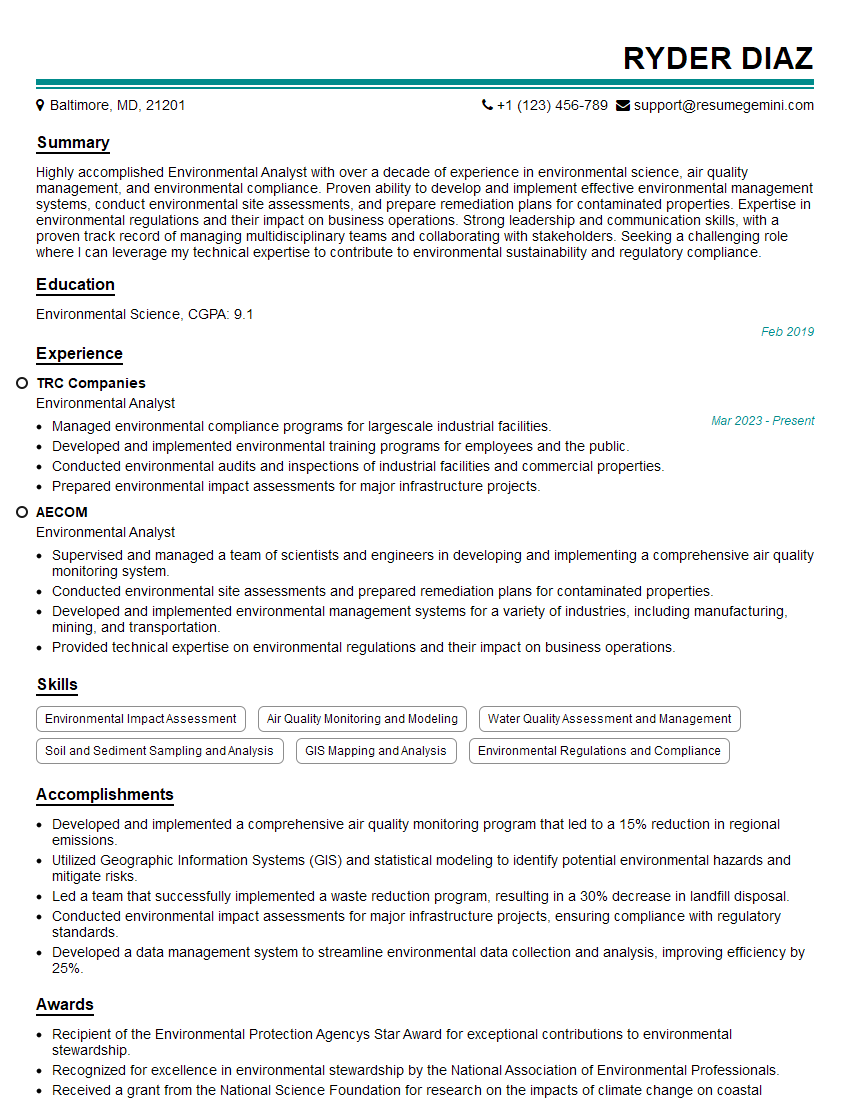
Environmental Analyst Resume Sample
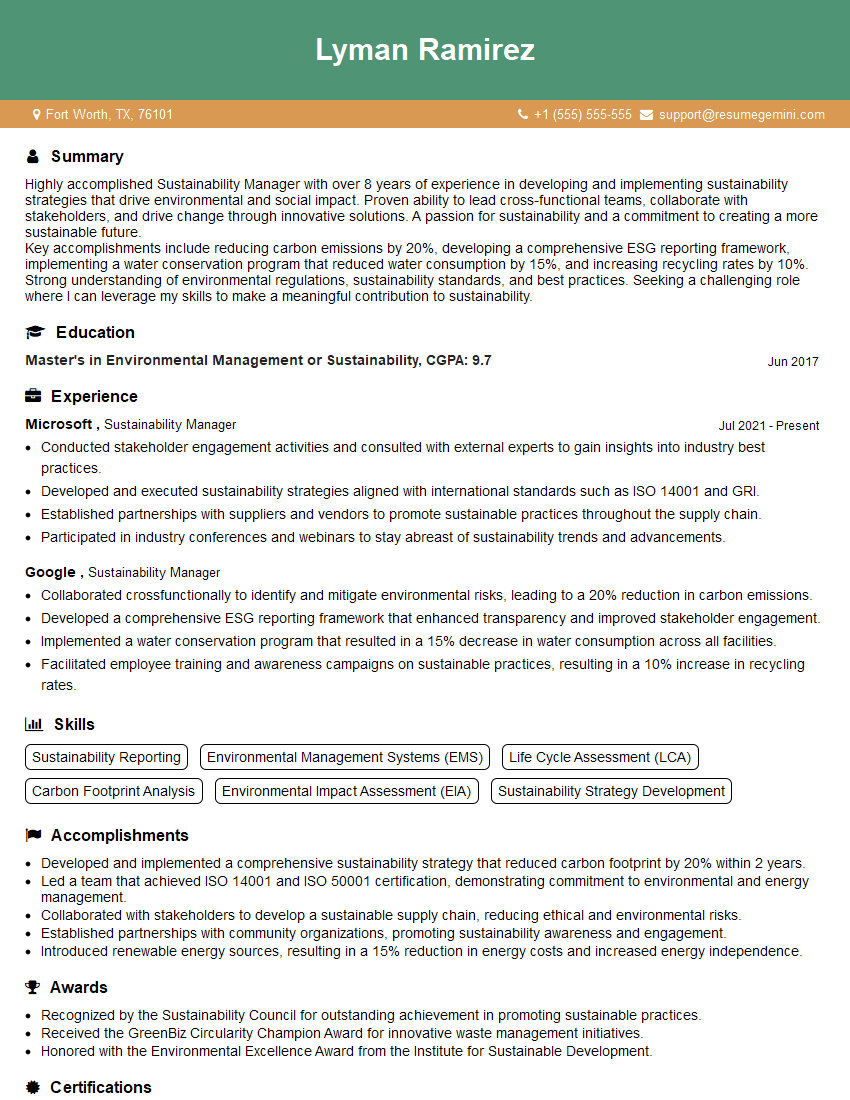
Sustainability Manager Resume Sample
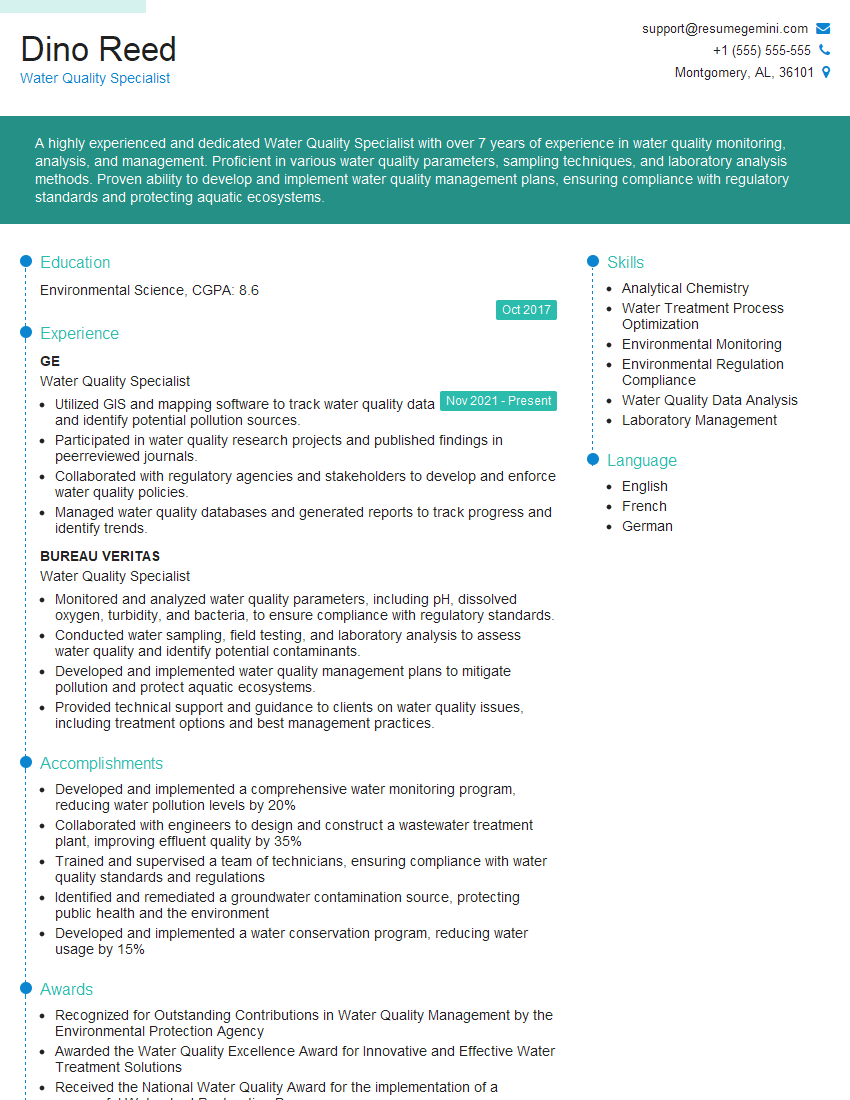
Water Quality Specialist Resume Sample
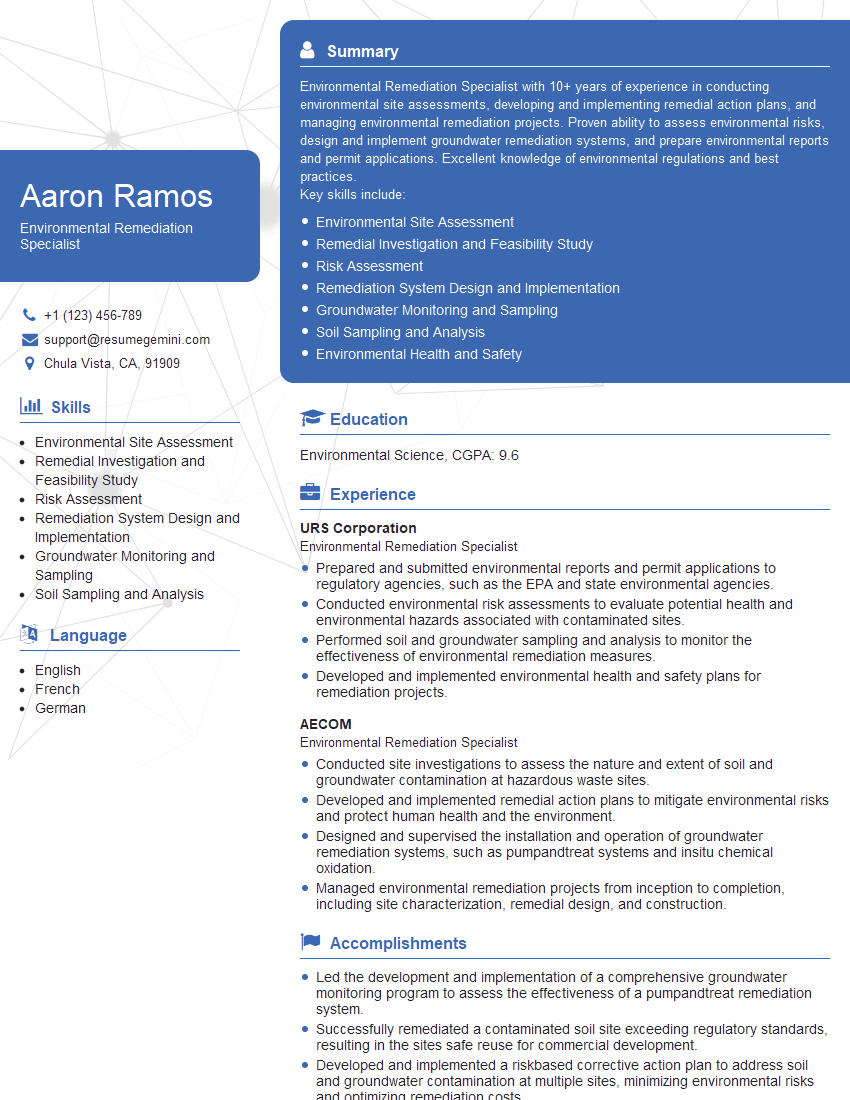
Environmental Remediation Specialist Resume Sample
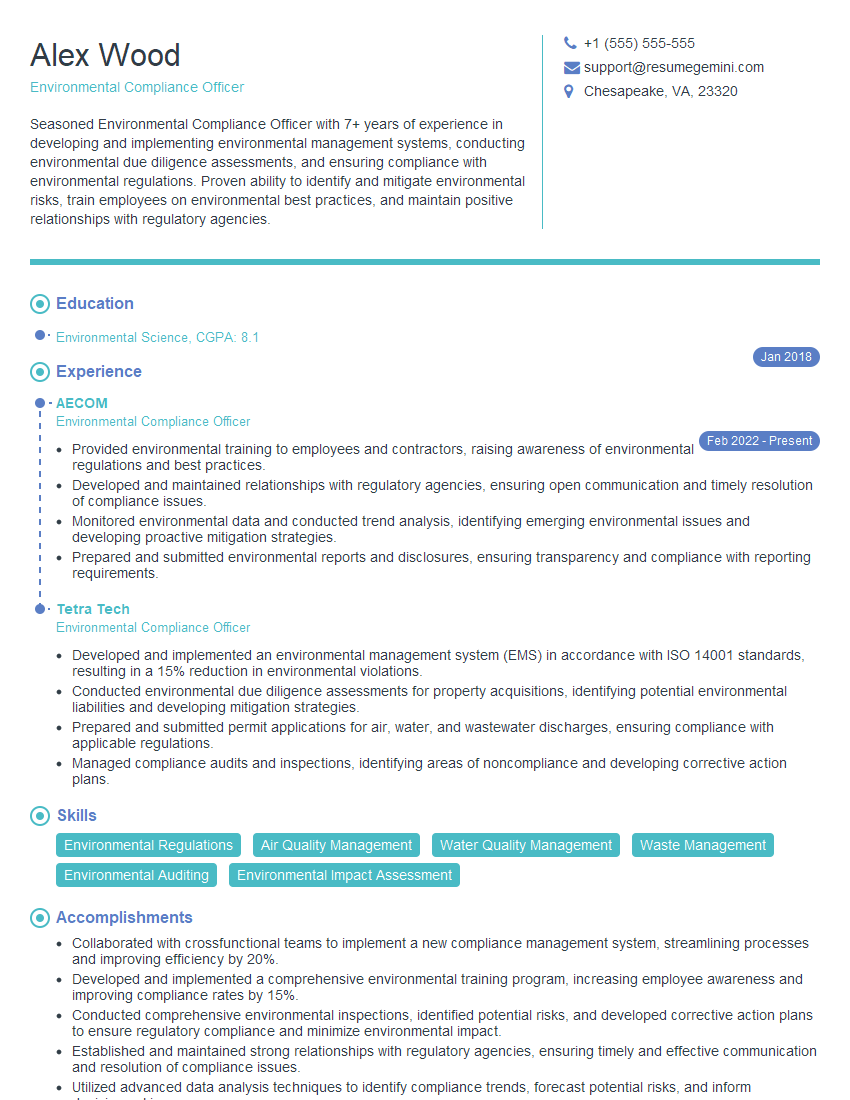
Environmental Compliance Officer Resume Sample
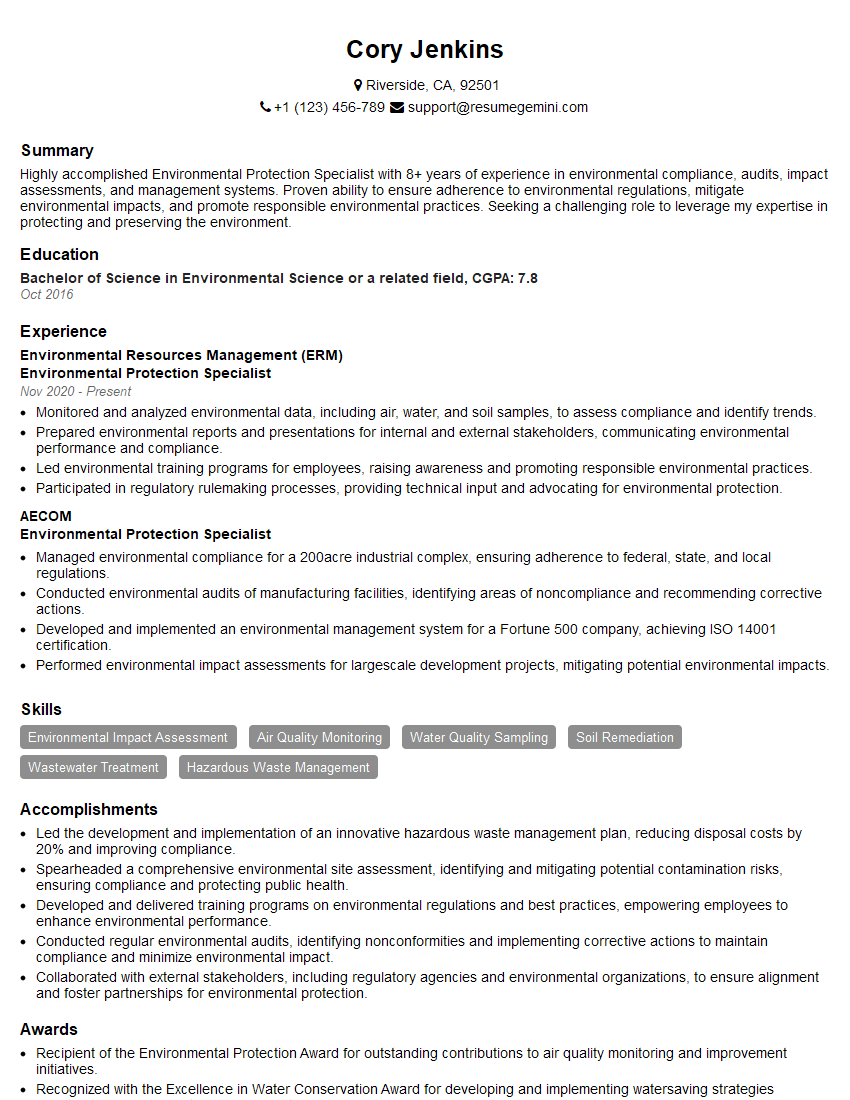
Environmental Protection Specialist Resume Sample
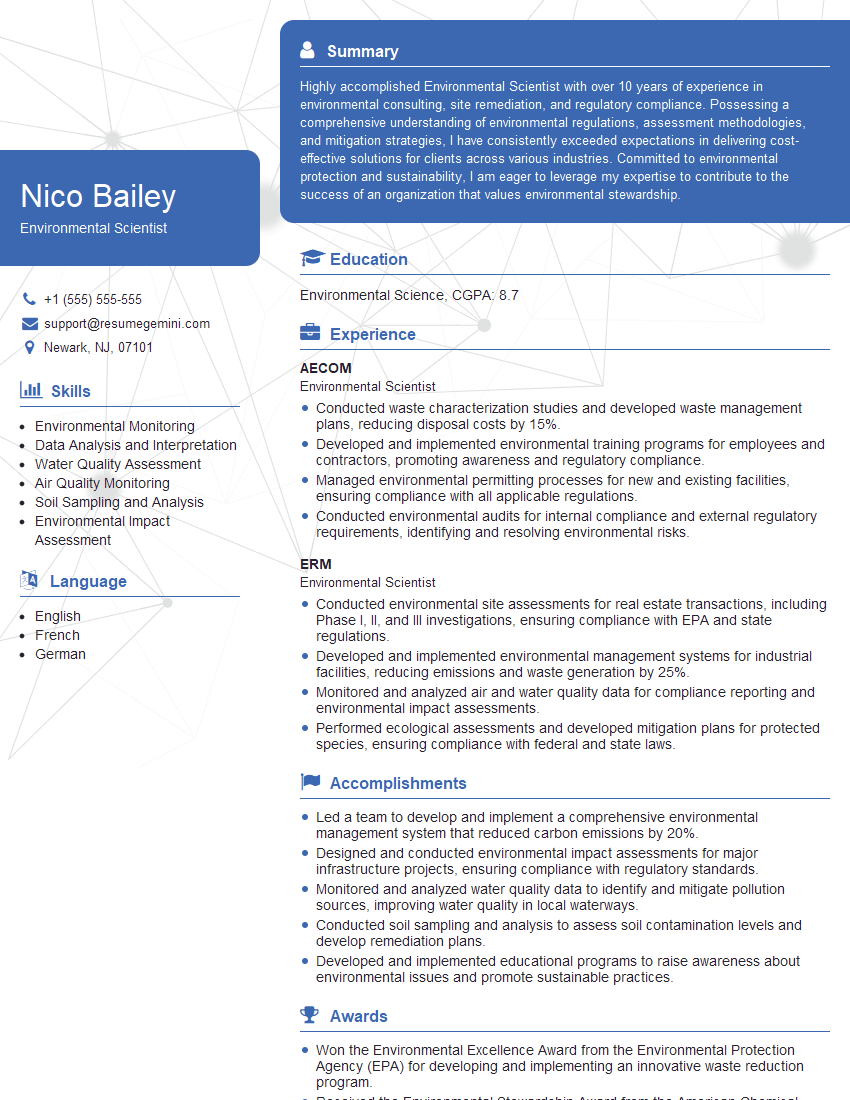
Environmental Scientist Resume Sample
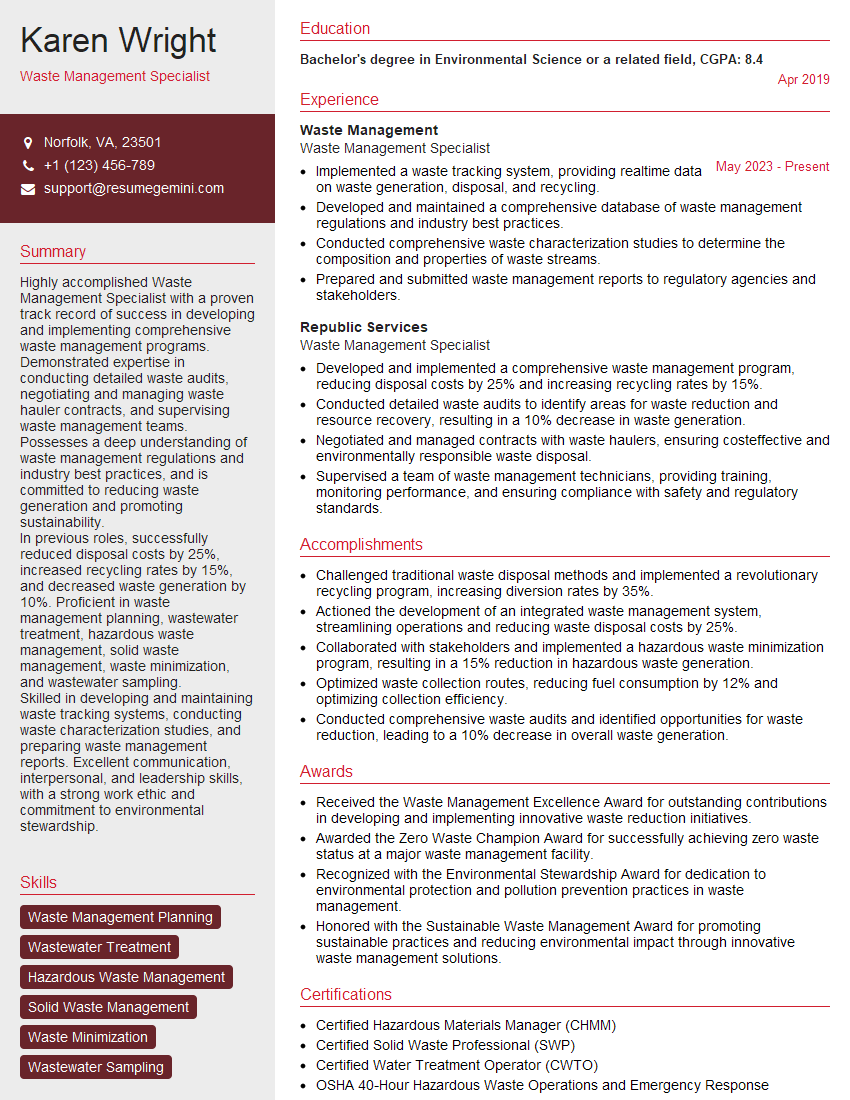
Waste Management Specialist Resume Sample

Sustainability Consultant Resume Sample
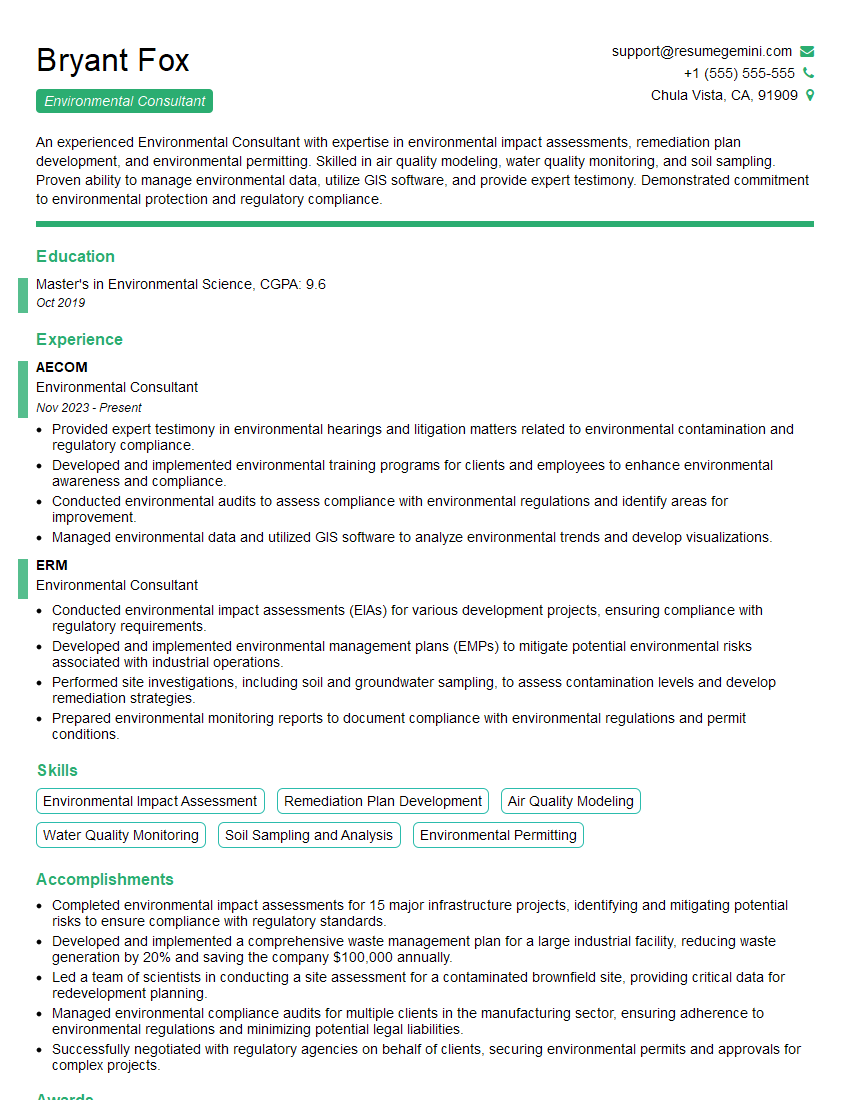
Environmental Consultant Resume Sample
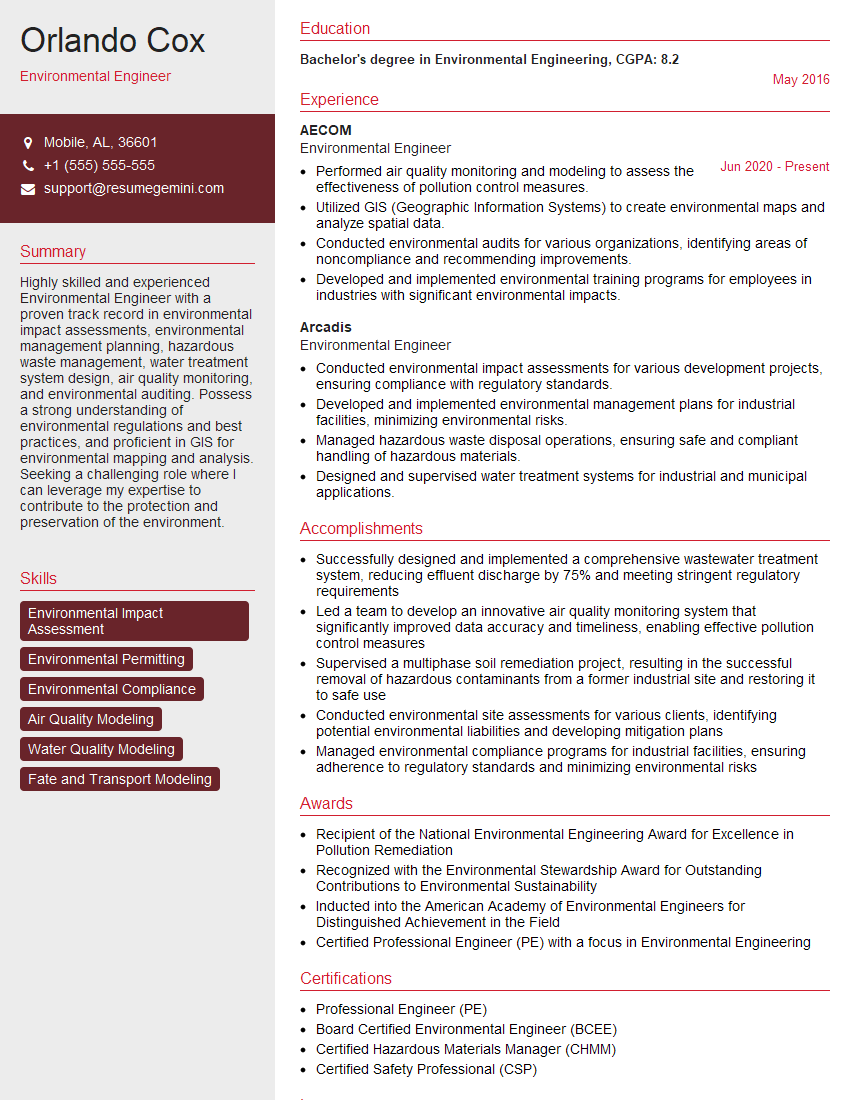
Environmental Engineer Resume Sample
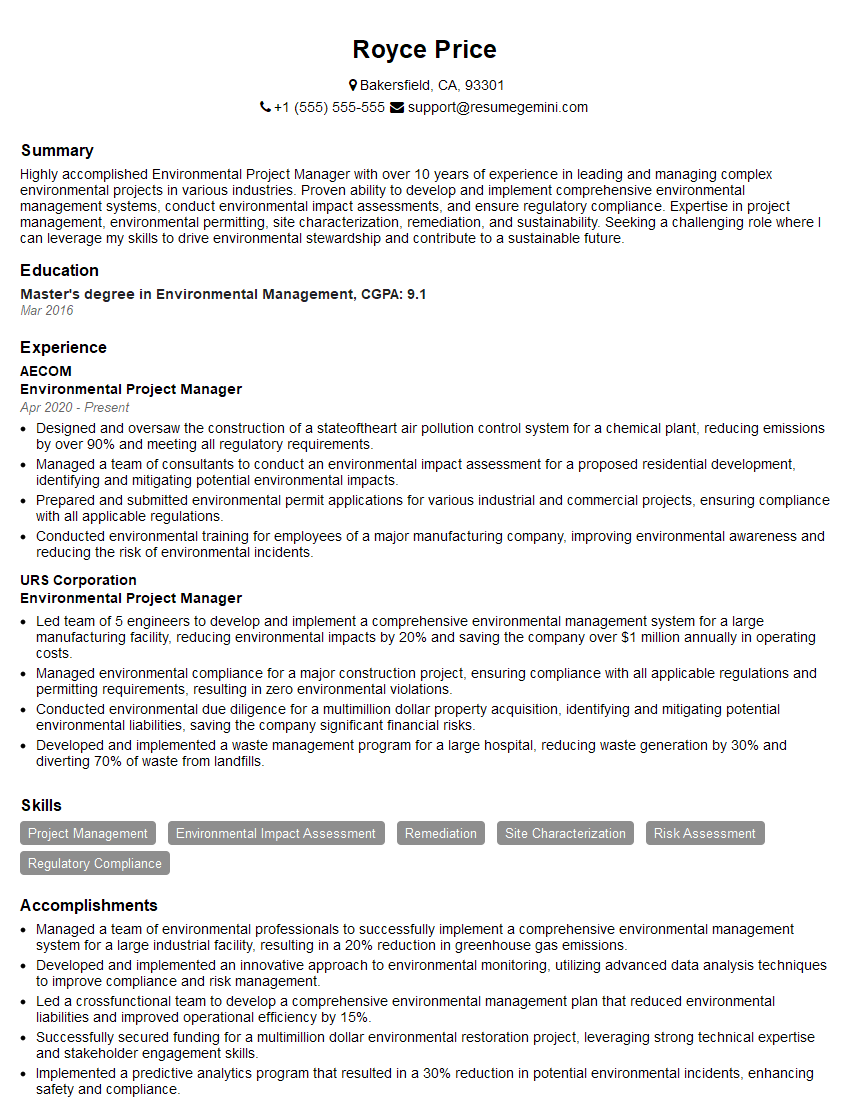
Environmental Project Manager Resume Sample
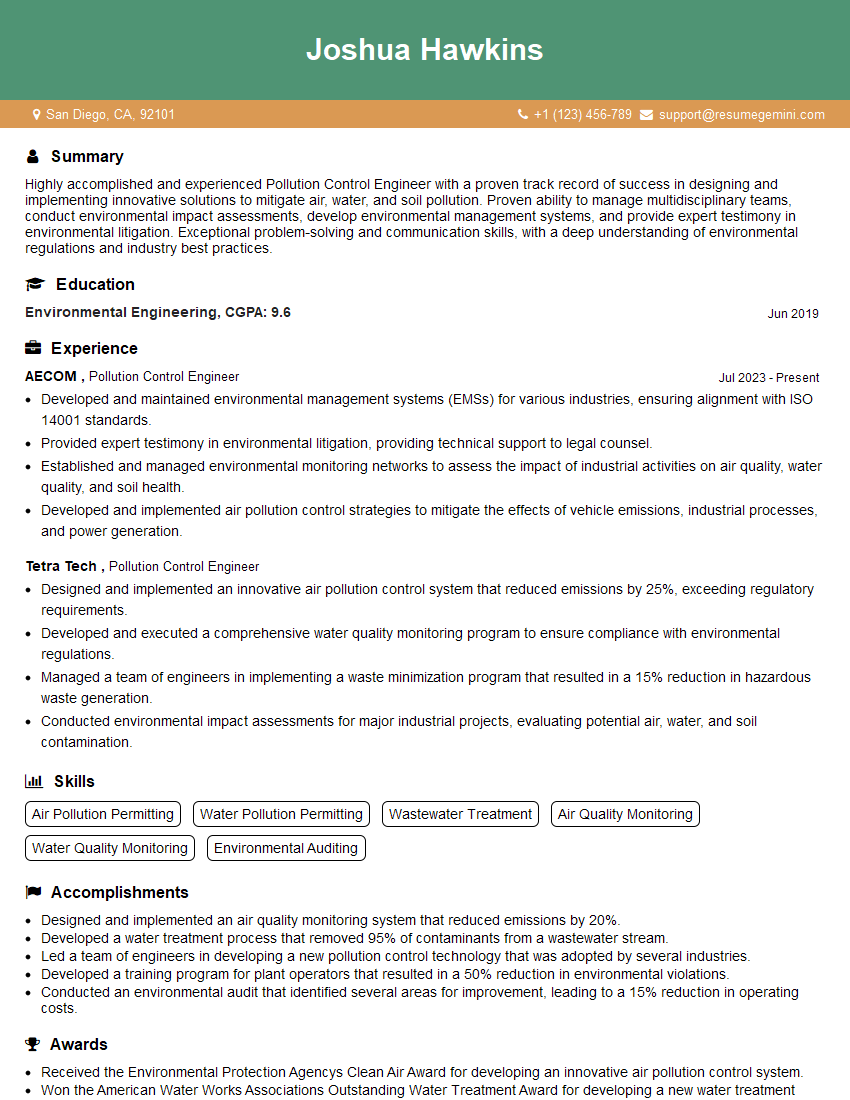
Pollution Control Engineer Resume Sample

Soil Scientist Resume Sample
- Environmental Analyst
- Sustainability Manager
- Water Quality Specialist
- Environmental Remediation Specialist
- Environmental Compliance Officer
- Environmental Protection Specialist
- Environmental Scientist
- Waste Management Specialist
- Sustainability Consultant
- Environmental Consultant
- Environmental Engineer
- Environmental Project Manager
- Pollution Control Engineer
- Soil Scientist
Explore more articles
Users Rating of Our Blogs
Share Your Experience
We value your feedback! Please rate our content and share your thoughts (optional).
What Readers Say About Our Blog
Very informative content, great job.
good