Are you ready to stand out in your next interview? Understanding and preparing for Environmental Regulatory Affairs interview questions is a game-changer. In this blog, we’ve compiled key questions and expert advice to help you showcase your skills with confidence and precision. Let’s get started on your journey to acing the interview.
Questions Asked in Environmental Regulatory Affairs Interview
Q 1. Explain the key differences between NEPA, Clean Air Act, and Clean Water Act.
NEPA, the Clean Air Act, and the Clean Water Act are all landmark environmental laws in the United States, but they address different aspects of environmental protection. Think of them as three pillars supporting a healthy environment.
- NEPA (National Environmental Policy Act): This is a procedural law, meaning it doesn’t set specific pollution limits. Instead, it requires federal agencies to assess the environmental impacts of their actions before they proceed. This is done through Environmental Impact Statements (EIS) or Environmental Assessments (EA), which evaluate potential effects on air, water, land, and other resources. It’s essentially a ‘check-and-balance’ system to ensure environmental considerations are factored into decision-making. For example, building a new highway would necessitate a NEPA review to evaluate its impact on wildlife habitats and air quality.
- Clean Air Act (CAA): This law sets specific standards for air quality and regulates pollutants like particulate matter, ozone, and sulfur dioxide. It focuses on controlling emissions from various sources, including power plants, vehicles, and industrial facilities. The EPA sets National Ambient Air Quality Standards (NAAQS) to protect public health and the environment, and states develop implementation plans to achieve these standards. For instance, the CAA might mandate stricter emission controls for a factory emitting excessive particulate matter.
- Clean Water Act (CWA): This act aims to restore and maintain the chemical, physical, and biological integrity of the nation’s waters. It regulates discharges of pollutants into waterways, regulates dredge and fill activities impacting wetlands, and sets water quality standards. The CWA relies heavily on the National Pollutant Discharge Elimination System (NPDES) permit program, requiring facilities discharging pollutants to obtain permits outlining allowed discharge limits. For example, a wastewater treatment plant needs a CWA permit detailing the allowable levels of various pollutants released into a river.
In short: NEPA is about environmental review and planning; the CAA focuses on air pollution control; and the CWA targets water pollution control. They often work together – a project needing a NEPA review might also require CAA and CWA permits.
Q 2. Describe your experience with environmental permitting processes.
My experience with environmental permitting encompasses a wide range of projects, from small-scale construction projects to large industrial facilities. I’ve been involved in every stage, from initial application preparation to navigating the review process with regulatory agencies. This includes:
- Permit Application Preparation: This involves gathering and analyzing data to accurately assess environmental impacts. I ensure applications are complete, accurate, and comply with all applicable regulations. For example, for a wastewater discharge permit application, this would involve detailed flow calculations, pollutant characterization, and description of proposed treatment methods.
- Agency Interaction and Negotiation: I have extensive experience communicating with regulatory agencies (like the EPA, state environmental agencies, and Army Corps of Engineers), responding to their requests for information, negotiating permit conditions, and attending meetings. A recent example includes successfully negotiating a less restrictive permit condition for a client by providing additional data demonstrating the effectiveness of their mitigation measures.
- Permit Compliance Monitoring: I have monitored permit compliance to ensure the project remains compliant throughout its operational lifetime, by developing and implementing internal monitoring plans. This ensures the smooth functioning of operations and avoids non-compliance issues.
I am proficient in navigating the complexities of various permitting programs, including NPDES, Air Permits, and various state-specific programs. My focus is always on ensuring timely permit issuance while minimizing environmental impact.
Q 3. How do you ensure compliance with environmental regulations?
Ensuring environmental compliance is a proactive, multi-faceted process. It’s not just about avoiding penalties; it’s about protecting the environment and demonstrating corporate social responsibility. My approach involves:
- Comprehensive Environmental Management System (EMS): Implementing a robust EMS, often based on ISO 14001, provides a structured framework for identifying, assessing, and managing environmental risks. This includes defining clear roles and responsibilities, establishing procedures, and conducting regular internal audits.
- Regular Training and Awareness Programs: Employees at all levels must understand their environmental responsibilities. We conduct regular training sessions to keep everyone up-to-date on regulations and best practices.
- Data Management and Record-Keeping: Meticulous record-keeping is crucial. This ensures accurate reporting and facilitates audits. This includes maintaining accurate logs of emissions, waste generation, and environmental monitoring data.
- Continuous Monitoring and Improvement: Compliance isn’t a one-time event; it’s an ongoing process. We continuously monitor compliance with permits and regulations and identify areas for improvement. This might involve analyzing monitoring data to identify trends and adjust operational practices to minimize environmental impact.
Ultimately, proactive compliance reduces risks, protects the environment, and strengthens the company’s reputation.
Q 4. What is your experience with environmental audits and inspections?
I have significant experience with both environmental audits and inspections. The two are related but distinct.
- Environmental Audits: These are systematic, documented reviews of an organization’s environmental performance against established criteria. I’ve conducted numerous audits, assessing compliance with permits, regulations, and internal policies. This often involves reviewing documents, interviewing personnel, and performing site inspections. The goal is to identify areas of non-compliance, strengths, and opportunities for improvement. For example, I recently conducted an audit of a manufacturing facility, identifying a gap in their stormwater management plan which led to corrective actions.
- Environmental Inspections: These are typically conducted by regulatory agencies to assess compliance with environmental laws. My experience with inspections involves preparing for them, ensuring the facility is ready, and collaborating with inspectors to address any issues. I’ve helped companies successfully navigate inspections by maintaining detailed records and demonstrating a commitment to compliance. One instance involved working with a client to correct minor deficiencies prior to an upcoming inspection, avoiding potential penalties.
My experience in both roles has provided a unique perspective on compliance, allowing me to anticipate agency concerns and proactively address potential issues.
Q 5. How familiar are you with environmental impact assessments (EIAs)?
I am very familiar with Environmental Impact Assessments (EIAs). EIAs are crucial tools for evaluating the potential environmental effects of proposed projects. They are more than just checklists; they’re systematic processes designed to identify, predict, evaluate, and mitigate environmental impacts. My experience includes:
- Scoping and Planning: Defining the scope of an EIA, identifying potential impacts, and developing a robust methodology. This involves collaborating with stakeholders and experts to ensure a comprehensive assessment.
- Impact Identification and Prediction: Using various methods, like modeling and expert judgment, to identify and predict the potential impacts of a project on air, water, land, biodiversity, and socio-economic factors. A recent project involved modeling the potential impact of a proposed landfill on groundwater quality.
- Impact Assessment and Mitigation: Evaluating the significance of identified impacts and developing feasible mitigation measures to minimize adverse effects. This often involves exploring alternative project designs or implementing environmental control technologies.
- Report Preparation and Review: Preparing comprehensive EIA reports that clearly communicate findings, conclusions, and recommendations to stakeholders and regulatory agencies. I’ve successfully guided numerous projects through the EIA process, resulting in informed decision-making and environmentally sound outcomes.
Understanding EIA best practices is essential to ensuring that projects are developed sustainably.
Q 6. Describe your experience with environmental monitoring and reporting.
Environmental monitoring and reporting are vital for ensuring continued compliance and demonstrating environmental stewardship. My experience spans various aspects of this process:
- Developing Monitoring Plans: Creating detailed monitoring plans that outline the parameters to be monitored, the frequency of monitoring, the methods used, and the reporting requirements. This is tailored to specific permit conditions and regulatory requirements.
- Data Collection and Analysis: Collecting and analyzing data from various sources, including ambient air and water quality monitoring, emissions testing, and waste characterization. I use statistical software and other analytical tools to interpret data and identify trends.
- Reporting and Documentation: Preparing comprehensive reports documenting monitoring results, comparing them to permit limits or regulatory standards, and identifying any deviations from compliance. Reports are typically submitted to regulatory agencies on a regular basis, ensuring transparency and accountability.
- Data Management: Implementing robust data management systems to ensure data integrity, accuracy, and accessibility. This involves using databases and software to efficiently store, manage, and analyze environmental monitoring data.
Accurate and timely reporting is crucial for maintaining compliance, demonstrating responsible environmental behavior, and informing management decisions.
Q 7. How would you handle a non-compliance situation?
Handling non-compliance is a serious matter requiring a prompt, decisive, and transparent approach. My strategy prioritizes prompt remediation and preventing recurrence.
- Immediate Investigation: Upon discovering or being notified of a non-compliance issue, I initiate a thorough investigation to determine the root cause, extent, and duration of the non-compliance. This might involve reviewing records, conducting site visits, and interviewing personnel.
- Corrective Actions: Once the root cause is identified, I develop and implement a comprehensive plan of corrective actions to address the non-compliance. This plan would include measures to bring the facility back into compliance and prevent future incidents.
- Reporting to Regulatory Agencies: I promptly report the non-compliance to the relevant regulatory agencies, providing them with a detailed description of the incident, the corrective actions taken, and the steps being taken to prevent recurrence. Transparency and open communication are vital during this stage.
- Internal Review and Improvement: Conduct a thorough internal review to identify system weaknesses and implement improvements to the environmental management system to prevent future non-compliance incidents. This could include updating procedures, providing additional training, or enhancing monitoring protocols.
- Documentation: Meticulously document the entire process, from the initial discovery to the completion of corrective actions and follow-up inspections, ensuring a complete audit trail.
The key is to be proactive, transparent, and committed to ensuring that corrective measures prevent future non-compliance events. Learning from mistakes and improving processes is crucial.
Q 8. What is your understanding of environmental liability and risk management?
Environmental liability and risk management are intrinsically linked. Liability refers to the legal responsibility for environmental damage or non-compliance with regulations. This can result in significant financial penalties, legal action, and reputational harm. Risk management, on the other hand, is the proactive process of identifying, assessing, and controlling environmental risks to minimize the likelihood and impact of liability. Think of it like this: liability is the consequence of a problem, while risk management is the preventative measure.
Effective risk management involves a multi-step process:
- Identifying potential hazards: This includes assessing potential pollution sources, identifying vulnerable ecosystems, and reviewing relevant legislation.
- Assessing the likelihood and severity of risks: This involves analyzing the probability of an incident occurring and the potential environmental and financial consequences.
- Developing and implementing control measures: This might include implementing pollution prevention technologies, developing emergency response plans, and ensuring staff training.
- Monitoring and reviewing effectiveness: Regular monitoring and audits are essential to ensure control measures are working and to identify areas for improvement.
For example, a manufacturing plant might assess the risk of chemical spills, implement safety protocols, and conduct regular inspections to prevent incidents and mitigate liability.
Q 9. Explain the process for obtaining an environmental permit.
Obtaining an environmental permit is a complex process that varies depending on the jurisdiction, the type of activity, and the potential environmental impact. Generally, it involves these steps:
- Application Preparation: This requires gathering comprehensive information, including detailed project descriptions, potential environmental impacts, proposed mitigation measures, and any relevant technical data. This often necessitates working with environmental consultants.
- Permit Application Submission: The completed application, often with hefty fees, is submitted to the relevant regulatory agency (e.g., EPA, state environmental agency).
- Agency Review: The agency reviews the application thoroughly, often requiring further information or clarification. This can take many months, even years for complex projects.
- Public Comment Period: Many jurisdictions mandate a public comment period, allowing stakeholders to voice concerns or objections. This period helps ensure transparency and engagement with the local community.
- Permit Issuance or Denial: After review and consideration of public comments, the agency either issues the permit with specific conditions or denies it, outlining reasons for the denial.
- Permit Compliance: Once issued, the permit must be adhered to strictly. Failure to comply can lead to penalties and even permit revocation.
For instance, a company constructing a new wastewater treatment plant would need to obtain a discharge permit before commencing operations. This involves demonstrating compliance with effluent standards and providing detailed plans for managing wastewater.
Q 10. How do you stay updated on changes in environmental regulations?
Staying current in the dynamic field of environmental regulations requires a multi-pronged approach:
- Subscription to Regulatory Updates: Subscribing to newsletters, alerts, and legal updates from relevant agencies (EPA, state agencies, international organizations) is crucial. Many agencies provide email alerts for regulatory changes within specific sectors.
- Professional Organizations: Membership in professional organizations like the Environmental Law Institute (ELI) or the Society of Environmental Toxicology and Chemistry (SETAC) provides access to resources, publications, and networking opportunities.
- Industry Conferences and Webinars: Attending conferences and webinars keeps you abreast of current trends, emerging technologies, and evolving regulatory interpretations. This often involves active participation in discussions and networking with experts.
- Legal Databases: Utilizing legal research databases like Westlaw or LexisNexis provides access to comprehensive legal information, including statutes, regulations, and case law.
- Monitoring Government Websites: Regularly checking the websites of relevant government agencies for updates and announcements is important. This can uncover crucial information before it’s widely disseminated.
For example, I regularly check the EPA website for updates to the Clean Water Act regulations which are critical to my work.
Q 11. Describe your experience with environmental management systems (EMS) like ISO 14001.
I have extensive experience with Environmental Management Systems (EMS), particularly ISO 14001. ISO 14001 is an internationally recognized standard that provides a framework for establishing, implementing, maintaining, and continually improving an EMS. It helps organizations manage their environmental responsibilities and improve their environmental performance.
My experience encompasses:
- Implementation: I’ve assisted numerous organizations in implementing ISO 14001, guiding them through the process of identifying environmental aspects, establishing environmental objectives and targets, developing procedures, and conducting internal audits.
- Auditing: I’ve conducted numerous internal and external ISO 14001 audits, assessing compliance with the standard and identifying areas for improvement. This involved thoroughly reviewing documentation and verifying the effectiveness of implemented controls.
- Training: I’ve delivered training to employees on ISO 14001 requirements and best practices. This is critical to ensure a company’s workforce understands their role in environmental responsibility.
In one project, I helped a manufacturing facility achieve ISO 14001 certification by streamlining their waste management processes, reducing energy consumption, and improving their reporting procedures. This not only improved their environmental performance but also enhanced their corporate image and created operational efficiencies.
Q 12. What are your strengths in problem-solving within environmental regulations?
My strengths in problem-solving within environmental regulations lie in my ability to:
- Analyze complex regulatory frameworks: I can dissect complex regulations to identify key requirements and potential compliance challenges. This involves understanding not only the literal text but also the regulatory intent and the potential interpretations.
- Develop creative solutions: I’m adept at crafting innovative and cost-effective solutions that balance regulatory compliance with business needs. Often this requires thinking outside the box and exploring multiple solutions.
- Collaborate effectively: I excel at collaborating with diverse teams, including engineers, scientists, legal counsel, and regulatory officials. Collaboration is key when navigating complex environmental issues.
- Negotiate effectively: I possess strong negotiation skills which are critical when dealing with regulatory agencies and stakeholders. This includes clearly articulating technical information to a non-technical audience.
- Risk assessment and mitigation: I am proficient in identifying, assessing, and mitigating environmental risks. This is key for preventative action.
For example, I once helped a client navigate a complex permitting process by identifying an overlooked provision in the regulation that allowed them to obtain the necessary permit with minimal modifications to their project.
Q 13. How familiar are you with environmental remediation techniques?
My familiarity with environmental remediation techniques is extensive. Remediation involves the cleanup of contaminated sites to make them safe for human health and the environment. Techniques vary greatly depending on the type and extent of contamination, and the surrounding environment.
I have experience with various methods, including:
- In-situ remediation: Techniques that treat contamination in place, such as bioremediation (using microorganisms to break down contaminants), soil vapor extraction (removing volatile contaminants from soil), and pump and treat (extracting groundwater and treating it).
- Ex-situ remediation: Techniques that involve removing contaminated material from the site for treatment, such as excavation and disposal, soil washing, and thermal desorption.
- Phytoremediation: Using plants to remove or stabilize contaminants in soil or water.
The selection of appropriate remediation techniques requires a thorough understanding of site-specific conditions, contaminant characteristics, and applicable regulations. For example, I worked on a project where we used bioremediation to successfully clean up a site contaminated with petroleum hydrocarbons. Choosing this technique was environmentally friendly and cost-effective compared to other approaches.
Q 14. Describe your experience with environmental data analysis and reporting.
Environmental data analysis and reporting are critical aspects of environmental regulatory compliance and management. I’m proficient in collecting, analyzing, and reporting environmental data from various sources.
My experience includes:
- Data Collection: Gathering environmental data from various sources, including monitoring equipment, laboratory analysis, field surveys, and historical records.
- Data Analysis: Using statistical software and techniques to analyze data, identifying trends, and assessing compliance with regulatory limits. This often involves using programs such as R or specialized environmental modeling software.
- Reporting: Preparing clear, concise, and accurate reports for regulatory agencies, stakeholders, and management. This includes creating tables, graphs, and maps to visualize data effectively.
- Compliance Reporting: Developing and submitting environmental compliance reports to regulatory agencies, ensuring timely and accurate reporting.
For example, I recently analyzed air quality monitoring data for a power plant to determine its compliance with emission standards. I used statistical methods to identify potential areas of non-compliance and prepared a report for the regulatory agency demonstrating compliance or outlining corrective actions required.
Q 15. How do you prioritize competing environmental compliance demands?
Prioritizing competing environmental compliance demands requires a strategic approach that balances risk, resources, and regulatory deadlines. It’s like managing a complex project with multiple critical path activities. I use a risk-based prioritization matrix that considers several factors.
- Severity of potential non-compliance: A violation with significant environmental damage or hefty fines takes precedence over a minor paperwork issue.
- Regulatory deadlines: Imminent deadlines drive prioritization. For example, submitting a permit renewal before its expiration is more crucial than long-term sustainability projects.
- Resource availability: I assess the personnel, budget, and time needed for each task. Sometimes, a less critical task might be delayed if resources are heavily committed to a higher-priority issue.
- Environmental impact: Actions with the greatest positive environmental impact, even if not legally mandated, often receive higher priority, particularly in a company committed to corporate social responsibility.
For example, if facing imminent permit expiration and a relatively low-risk, long-term sustainability project, the permit renewal would take priority. I use project management software and regular meetings to track progress and adapt the prioritization as needed. This ensures resources are allocated effectively and minimizes the risk of non-compliance.
Career Expert Tips:
- Ace those interviews! Prepare effectively by reviewing the Top 50 Most Common Interview Questions on ResumeGemini.
- Navigate your job search with confidence! Explore a wide range of Career Tips on ResumeGemini. Learn about common challenges and recommendations to overcome them.
- Craft the perfect resume! Master the Art of Resume Writing with ResumeGemini’s guide. Showcase your unique qualifications and achievements effectively.
- Don’t miss out on holiday savings! Build your dream resume with ResumeGemini’s ATS optimized templates.
Q 16. Explain your experience working with regulatory agencies like the EPA.
My experience with regulatory agencies like the EPA is extensive. I’ve worked directly with them on numerous projects, including permit applications, compliance audits, and enforcement actions. This involved developing and submitting comprehensive environmental reports, responding to information requests, and negotiating compliance agreements. I understand the EPA’s regulations thoroughly and know how to navigate the often-complex permitting processes.
For instance, I successfully secured a critical permit for a client facing stringent water discharge limits by working closely with the EPA regional office. We collaborated to develop a customized environmental monitoring plan that exceeded the agency’s minimum requirements, demonstrating our commitment to exceeding compliance expectations. This resulted in a quicker permit approval process compared to competitors.
I’ve also handled situations where non-compliance was identified. In one case, we promptly disclosed a minor spill incident to the EPA, implemented corrective actions, and worked proactively to demonstrate our commitment to environmental protection. Open communication and a timely response minimized the agency’s concerns and prevented further penalties.
Q 17. How do you communicate complex environmental information to non-technical audiences?
Communicating complex environmental information to non-technical audiences requires simplification and clear visualization. I avoid technical jargon and instead use analogies and visual aids to convey meaning effectively. Think of it like translating scientific language into everyday conversation. I tailor my communication to the audience’s level of understanding.
- Analogies and metaphors: For example, to explain greenhouse gas emissions, I might compare them to a blanket trapping heat around the earth.
- Visual aids: Charts, graphs, and infographics make data more accessible. A simple bar graph illustrating pollution levels is far more impactful than a lengthy data table.
- Storytelling: Narratives that highlight real-world consequences of environmental issues resonate better than abstract data.
- Interactive sessions: Question-and-answer sessions and workshops allow for clarification and feedback.
In practice, I’ve presented complex environmental data to company boards, community groups, and local officials. In each scenario, I adapted my message to the audience’s understanding, resulting in more effective communication and collaboration.
Q 18. Describe your experience in developing and implementing environmental policies.
Developing and implementing environmental policies requires a multi-faceted approach encompassing legal requirements, sustainability goals, and stakeholder engagement. My experience includes creating policies for waste management, air emissions, water conservation, and sustainable sourcing. I always start by conducting a thorough risk assessment to identify potential environmental liabilities and compliance gaps.
For example, I developed a comprehensive waste management policy for a manufacturing plant, resulting in a significant reduction of waste sent to landfills through improved recycling and waste reduction programs. This policy also included employee training programs, regular audits, and performance metrics to monitor its effectiveness.
Another example is the development of a sustainable sourcing policy, ensuring our company procured materials from responsible suppliers who adhered to strict environmental standards. This policy integrated elements of life cycle assessment and supplier due diligence, minimizing our supply chain’s environmental footprint. These policies required collaboration with cross-functional teams, including operations, procurement, and legal departments.
Q 19. How do you measure the effectiveness of environmental programs?
Measuring the effectiveness of environmental programs hinges on setting clear, measurable objectives and then tracking key performance indicators (KPIs). It’s not enough to simply implement a program; you need to demonstrate its impact. This involves establishing a baseline, monitoring progress, and adjusting the program as needed.
- KPIs: Examples include reductions in waste generation, improvements in air and water quality, energy consumption, and greenhouse gas emissions.
- Data collection: This might involve environmental monitoring, audits, and data analysis using specialized software.
- Benchmarking: Comparing your performance to industry best practices helps assess progress and identify areas for improvement.
- Reporting: Regular reports to management and stakeholders are essential to demonstrate accountability and transparency.
For example, when evaluating the effectiveness of a water conservation program, I would track water usage before and after implementation, compare it to industry benchmarks, and identify areas where further improvements can be made. Regular reporting on water usage reduction, cost savings, and overall environmental benefits ensures transparency and demonstrable impact.
Q 20. What is your experience with environmental due diligence?
Environmental due diligence is a critical process in assessing environmental risks and liabilities associated with a property or business transaction. It’s like a thorough environmental checkup before making a significant investment. My experience includes conducting Phase I, II, and III environmental site assessments, reviewing environmental permits and records, and identifying potential environmental remediation costs.
A typical Phase I assessment involves reviewing historical records, conducting site reconnaissance, and interviewing stakeholders to identify potential contamination. If contamination is suspected, Phase II involves sampling and laboratory analysis to confirm its presence and extent. Phase III involves developing and implementing remediation plans to address identified contamination. I’ve successfully navigated many due diligence projects, assisting clients in making informed decisions and mitigating potential environmental liabilities.
For example, I conducted a due diligence investigation for a client considering acquiring a manufacturing plant. My assessment uncovered historical contamination, which allowed the client to negotiate a purchase price reduction to cover future remediation costs. This avoided a significant financial risk and ensured responsible environmental management.
Q 21. How familiar are you with environmental sustainability initiatives?
I’m very familiar with environmental sustainability initiatives, encompassing a broad range of strategies to minimize environmental impact and promote long-term ecological balance. This includes reducing carbon footprint, promoting renewable energy, improving resource efficiency, and embracing circular economy principles. My understanding extends beyond compliance; I actively promote sustainability as a core business strategy.
For example, I’ve assisted clients in developing corporate sustainability reports aligning with the Global Reporting Initiative (GRI) standards. This involved collecting and analyzing environmental data, identifying opportunities for improvement, and communicating the company’s sustainability performance to stakeholders. This contributes not only to environmental stewardship but also to enhanced brand reputation and improved investor relations.
I’m also experienced in implementing strategies for reducing carbon emissions, such as investing in renewable energy sources, improving energy efficiency, and implementing carbon offsetting programs. The transition to a sustainable future requires a holistic approach encompassing all aspects of a business, from operations and supply chain to product design and marketing.
Q 22. Describe your experience with environmental compliance software or databases.
My experience with environmental compliance software and databases is extensive. I’ve worked with a variety of platforms, from large-scale enterprise resource planning (ERP) systems with integrated environmental modules to specialized software designed for tracking emissions, waste management, and regulatory reporting. For example, I’ve used Enviance for comprehensive environmental, health, and safety (EHS) management, and Sphera for managing chemical inventories and tracking compliance with various regulations like REACH (Registration, Evaluation, Authorisation and restriction of Chemicals) and RoHS (Restriction of Hazardous Substances). These systems are crucial for maintaining accurate records, streamlining reporting processes, and ensuring timely compliance with ever-changing environmental regulations. My proficiency extends beyond simply using these tools; I understand their underlying data structures and can troubleshoot issues, configure custom reports, and train others on their effective use. I’ve also worked with smaller, more niche databases focusing on specific environmental parameters like water quality monitoring data, which requires strong data analysis skills to identify trends and potential risks.
Q 23. How would you address stakeholder concerns related to environmental issues?
Addressing stakeholder concerns regarding environmental issues requires a proactive and transparent approach. My strategy involves a three-pronged approach: communication, collaboration, and compromise.
- Communication: I begin by actively listening to their concerns, clarifying their understanding of the issue, and providing clear, concise, and scientifically accurate information. This often involves translating complex environmental data into easily understandable language using visual aids and plain English. For example, if a community is concerned about air quality near a manufacturing plant, I would provide data on emissions levels, compare them to regulatory limits, and explain the mitigation measures in place.
- Collaboration: I work collaboratively with stakeholders to identify shared goals and find mutually acceptable solutions. This often involves engaging in open dialogue, incorporating their perspectives into decision-making processes, and creating a space for them to share their expertise and concerns. For instance, a collaborative approach might involve establishing a community advisory board to discuss ongoing environmental monitoring results and future project plans.
- Compromise: Environmental issues often involve balancing competing interests. I strive to find practical solutions that address stakeholder concerns while complying with all relevant regulations and promoting environmental stewardship. This might involve negotiating mitigation strategies, implementing environmental improvements, and fostering ongoing dialogue to build trust and resolve future conflicts.
Ultimately, a successful approach emphasizes building trust, fostering collaboration, and demonstrating a commitment to environmental responsibility.
Q 24. Describe your experience with environmental litigation or dispute resolution.
While I haven’t directly participated in environmental litigation, my experience encompasses working with legal teams to prepare for potential litigation and navigate complex regulatory disputes. This involves gathering and analyzing environmental data, preparing technical reports, and providing expert testimony on environmental compliance matters. For instance, I assisted a client in a dispute with a regulatory agency regarding a permit application by meticulously documenting compliance with all relevant regulations and presenting a strong case built on factual data. Understanding the legal frameworks, including the Clean Air Act, Clean Water Act, and other pertinent regulations, is vital in this context. This requires a deep understanding of not only environmental science but also the legal processes surrounding environmental disputes.
Q 25. How do you ensure data accuracy and integrity in environmental reporting?
Ensuring data accuracy and integrity in environmental reporting is paramount. My approach focuses on establishing robust data management systems and employing rigorous quality control measures. This includes:
- Data Validation: Implementing checks and balances throughout the data collection, processing, and reporting stages to identify and correct errors. This might involve using data validation rules in software, cross-checking data against multiple sources, and performing regular audits.
- Chain of Custody: Maintaining a detailed record of who collected, handled, and analyzed the data, ensuring traceability and accountability. This is especially critical in cases of environmental sampling and testing.
- Data Backup and Security: Implementing secure storage and backup procedures to protect data from loss or corruption. This often involves using cloud-based storage with appropriate security measures.
- Standard Operating Procedures (SOPs): Developing and implementing clear SOPs for data handling to maintain consistency and minimize errors. This ensures all personnel follow established protocols for data collection, analysis, and reporting.
By implementing these measures, I ensure that environmental reports are accurate, reliable, and defensible, minimizing the risk of non-compliance penalties and reputational damage.
Q 26. What is your understanding of corporate social responsibility (CSR) related to the environment?
Corporate Social Responsibility (CSR) related to the environment refers to a company’s commitment to minimizing its environmental footprint and contributing to environmental sustainability. It goes beyond simply complying with environmental regulations; it represents a proactive approach to environmental stewardship. This often includes initiatives such as reducing greenhouse gas emissions, improving resource efficiency, minimizing waste generation, promoting sustainable supply chains, and investing in renewable energy. For instance, a company might adopt a CSR strategy that includes setting ambitious emissions reduction targets, investing in carbon offsetting projects, and publicly reporting their environmental performance. This demonstrates a commitment to ethical and responsible environmental practices, enhancing the company’s reputation and attracting socially conscious investors and consumers.
Q 27. Explain your understanding of life cycle assessments (LCAs).
Life Cycle Assessments (LCAs) are comprehensive analyses of the environmental impacts associated with a product or service throughout its entire life cycle, from raw material extraction to disposal or recycling. This includes assessing impacts on various environmental categories, such as greenhouse gas emissions, water consumption, energy use, and waste generation. The LCA methodology involves four key stages:
- Goal and Scope Definition: Clearly defining the purpose of the LCA and setting the boundaries of the assessment.
- Inventory Analysis: Quantifying the inputs and outputs of energy and materials throughout the life cycle.
- Impact Assessment: Evaluating the environmental consequences of these inputs and outputs.
- Interpretation: Analyzing the results and drawing conclusions about the overall environmental performance of the product or service.
LCAs provide valuable insights into the environmental hotspots within a product’s life cycle, enabling companies to identify opportunities for improvement and develop more sustainable products and processes. For example, an LCA of a plastic bottle might reveal that the majority of its environmental impact is linked to the production of the plastic resin, prompting the company to explore more sustainable material alternatives.
Q 28. Describe your experience with climate change regulations and mitigation strategies.
Climate change regulations and mitigation strategies are rapidly evolving and are becoming increasingly crucial in environmental regulatory affairs. My experience includes working with various climate-related regulations, such as the Greenhouse Gas Reporting Program (GHGRP) in the US and the EU Emissions Trading System (ETS). I understand the complexities of carbon accounting, emissions reduction strategies, and compliance reporting. I’ve assisted clients in developing and implementing climate change mitigation strategies, which frequently involve reducing their carbon footprint through energy efficiency improvements, renewable energy investments, and sustainable supply chain management. This also involves helping organizations navigate the complexities of carbon offsetting and developing credible carbon neutrality strategies. I’m also familiar with the various frameworks and standards used for climate reporting, such as the Greenhouse Gas Protocol and the Task Force on Climate-related Financial Disclosures (TCFD).
Key Topics to Learn for Environmental Regulatory Affairs Interview
- Environmental Laws and Regulations: Understand the key federal, state, and local regulations relevant to your target industry (e.g., Clean Air Act, Clean Water Act, Endangered Species Act). Focus on the practical implications of these laws for businesses.
- Permitting and Compliance: Learn the process of obtaining and maintaining environmental permits. Be prepared to discuss strategies for ensuring compliance and managing potential violations.
- Environmental Impact Assessments (EIAs): Understand the principles of EIAs and how they are used to evaluate the environmental impacts of projects. Practice analyzing potential impacts and proposing mitigation measures.
- Environmental Auditing and Reporting: Familiarize yourself with various environmental auditing techniques and the preparation of environmental reports. Practice presenting complex data clearly and concisely.
- Environmental Management Systems (EMS): Gain a working knowledge of ISO 14001 or other EMS standards. Be able to discuss how these systems contribute to environmental performance and compliance.
- Risk Assessment and Management: Understand methodologies for identifying, assessing, and managing environmental risks. Be prepared to discuss risk mitigation strategies in different contexts.
- Stakeholder Engagement and Communication: Develop your skills in communicating complex environmental information to diverse audiences (e.g., regulatory agencies, community members, senior management). Practice presenting information effectively and persuasively.
- Emerging Environmental Issues: Stay updated on current trends and challenges in environmental regulations, such as climate change, sustainability initiatives, and circular economy principles. Demonstrate your ability to adapt to evolving regulatory landscapes.
Next Steps
Mastering Environmental Regulatory Affairs is crucial for a successful and rewarding career. This field offers exciting opportunities for impactful work and continuous professional development. To maximize your job prospects, creating a strong, ATS-friendly resume is paramount. ResumeGemini is a trusted resource that can help you build a professional and effective resume tailored to your experience and the specific requirements of Environmental Regulatory Affairs roles. Examples of resumes tailored to this field are available to guide you. Invest time in crafting a compelling resume—it’s your first impression and a critical step towards securing your dream job.
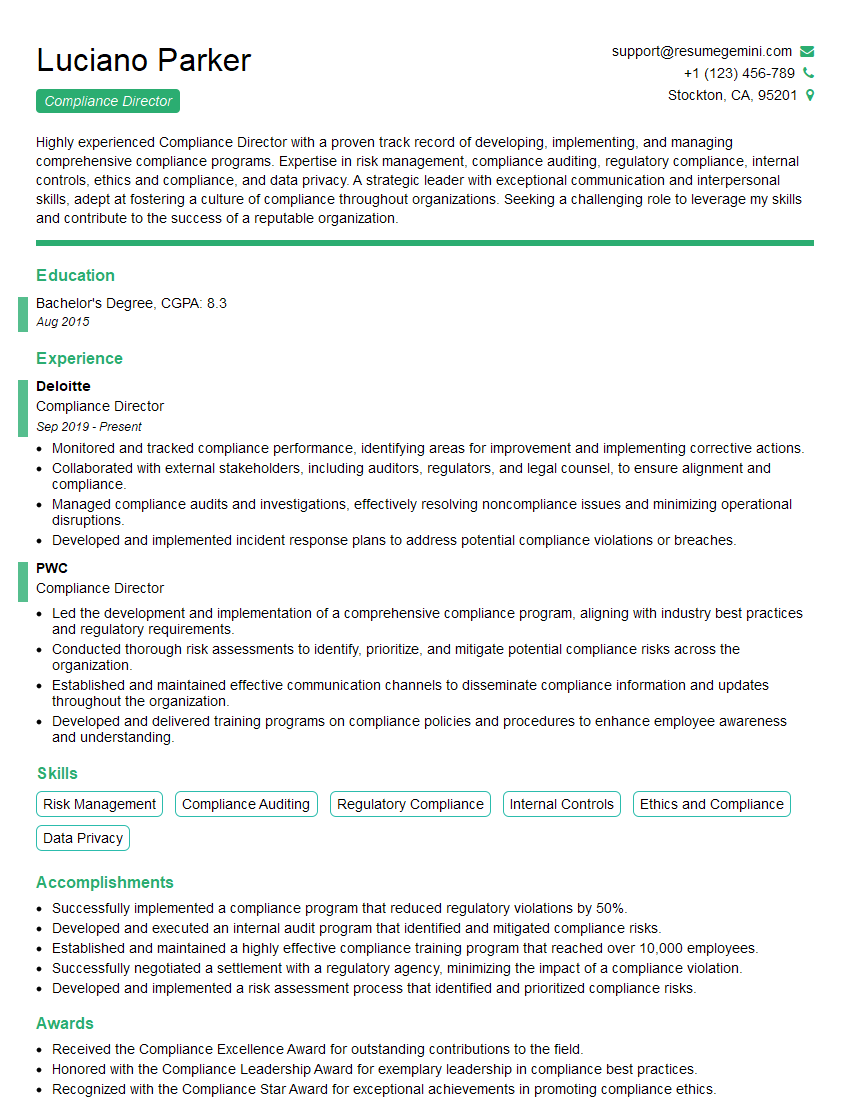
Compliance Director Resume Sample
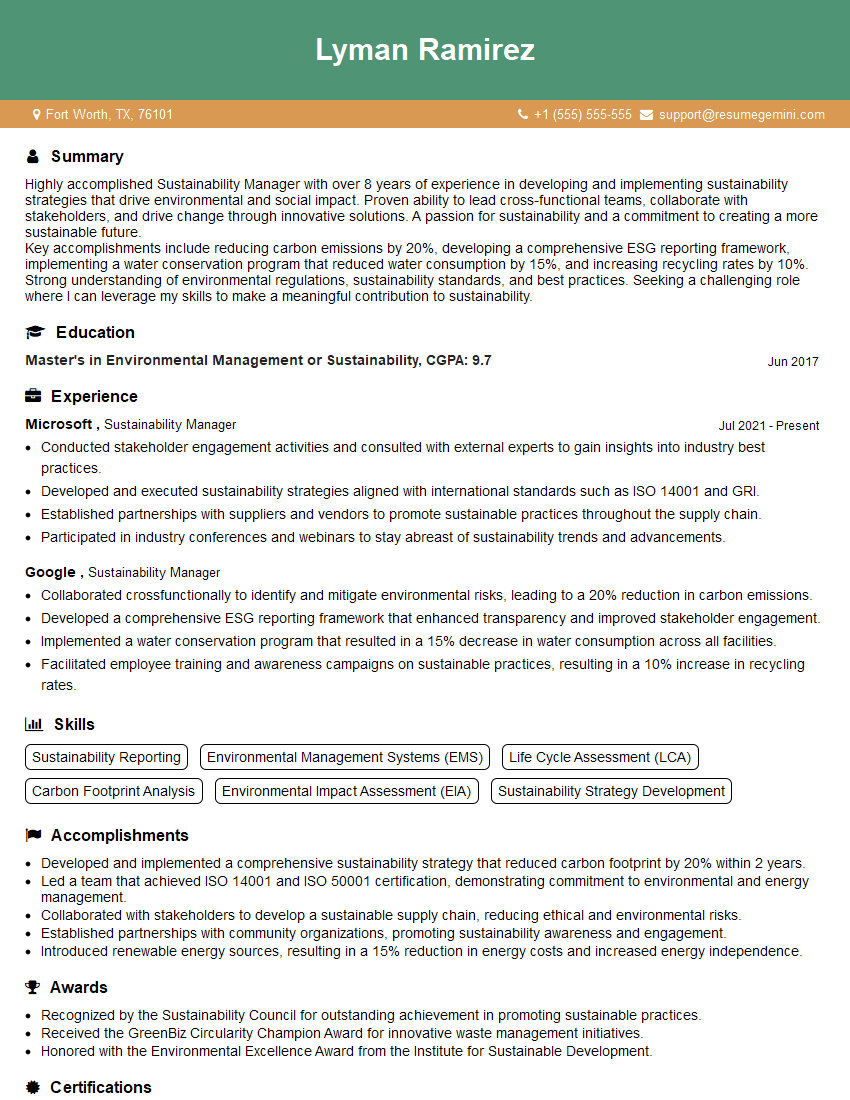
Sustainability Manager Resume Sample
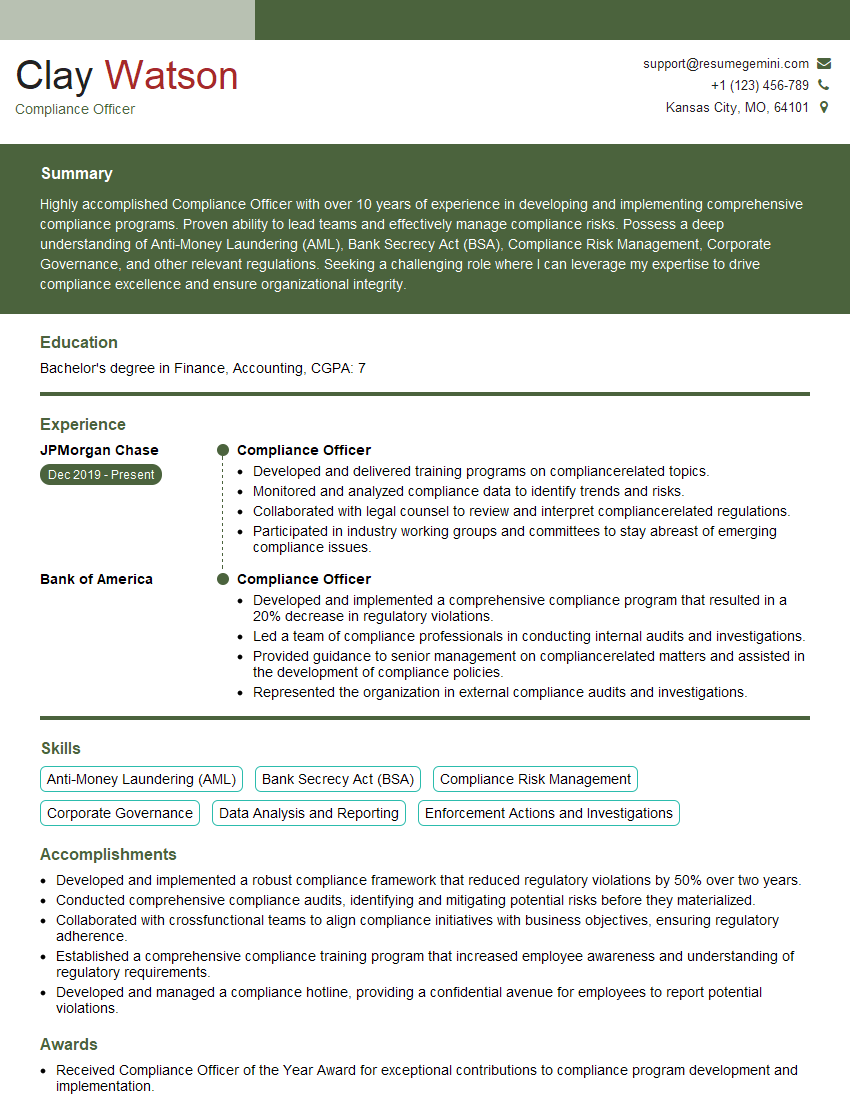
Compliance Officer Resume Sample
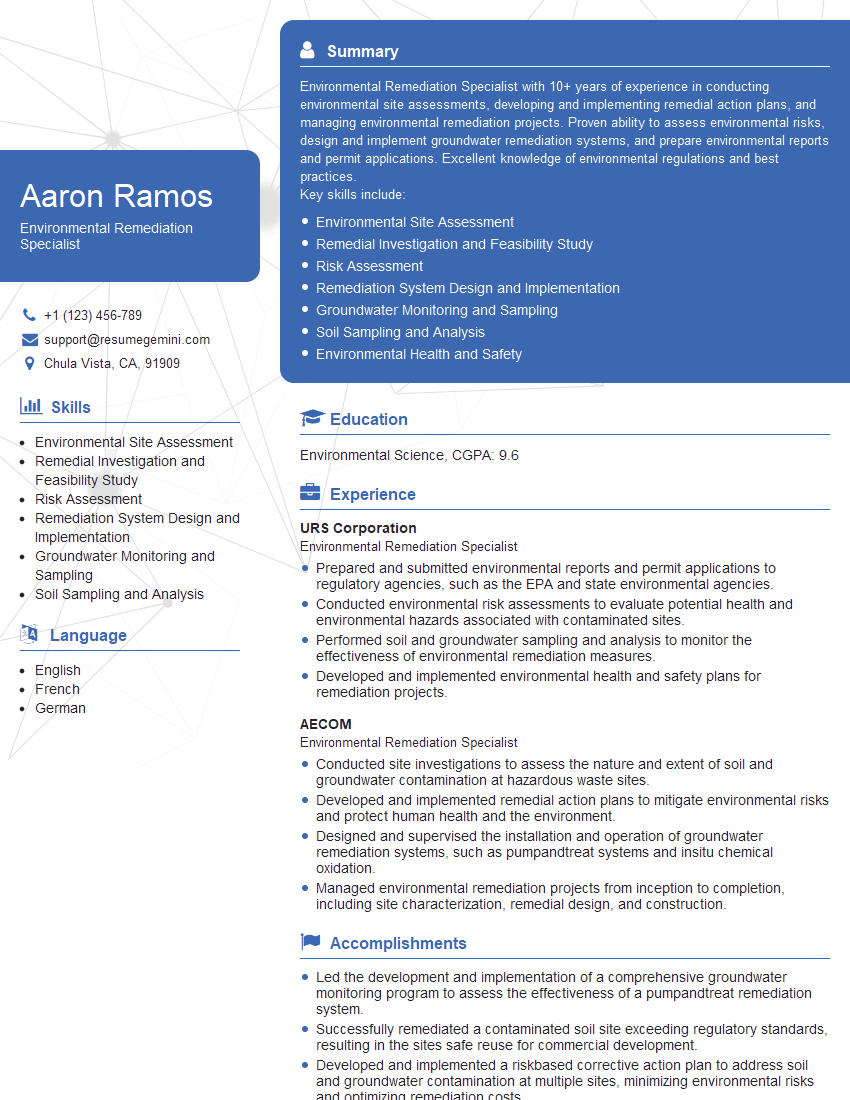
Environmental Remediation Specialist Resume Sample
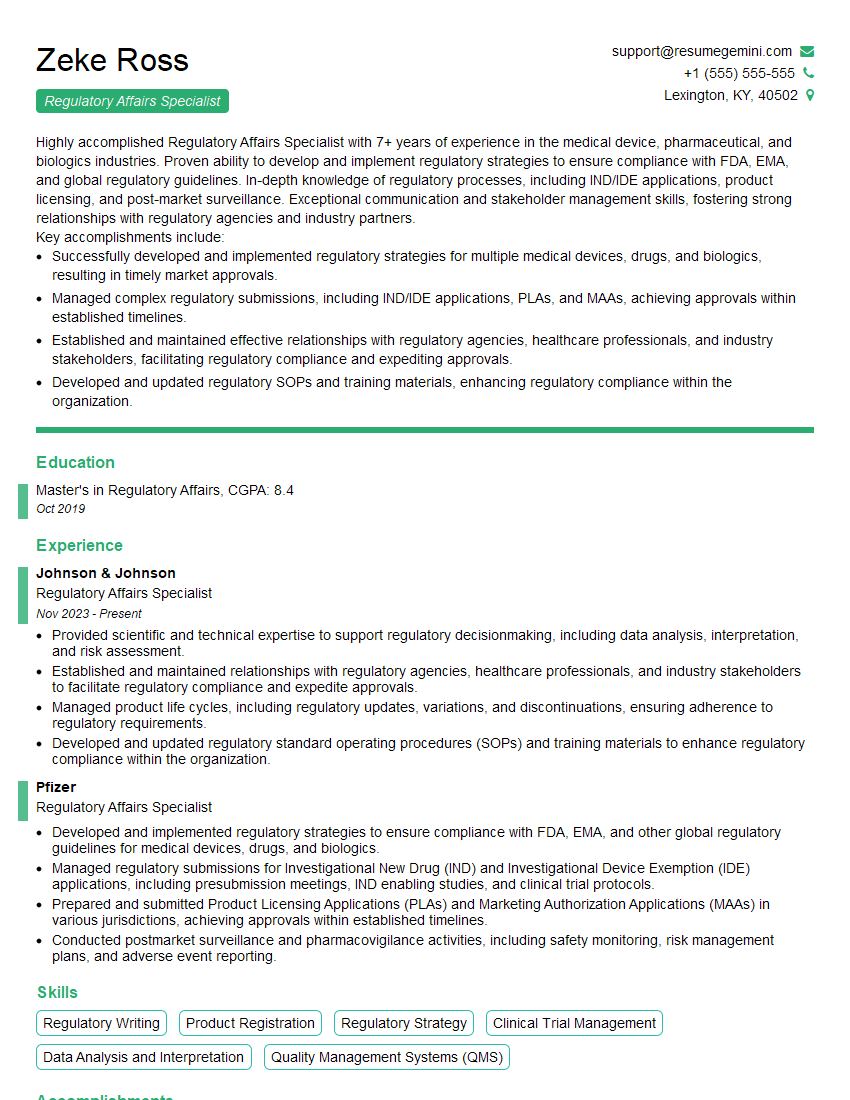
Regulatory Affairs Specialist Resume Sample

Sustainability Consultant Resume Sample
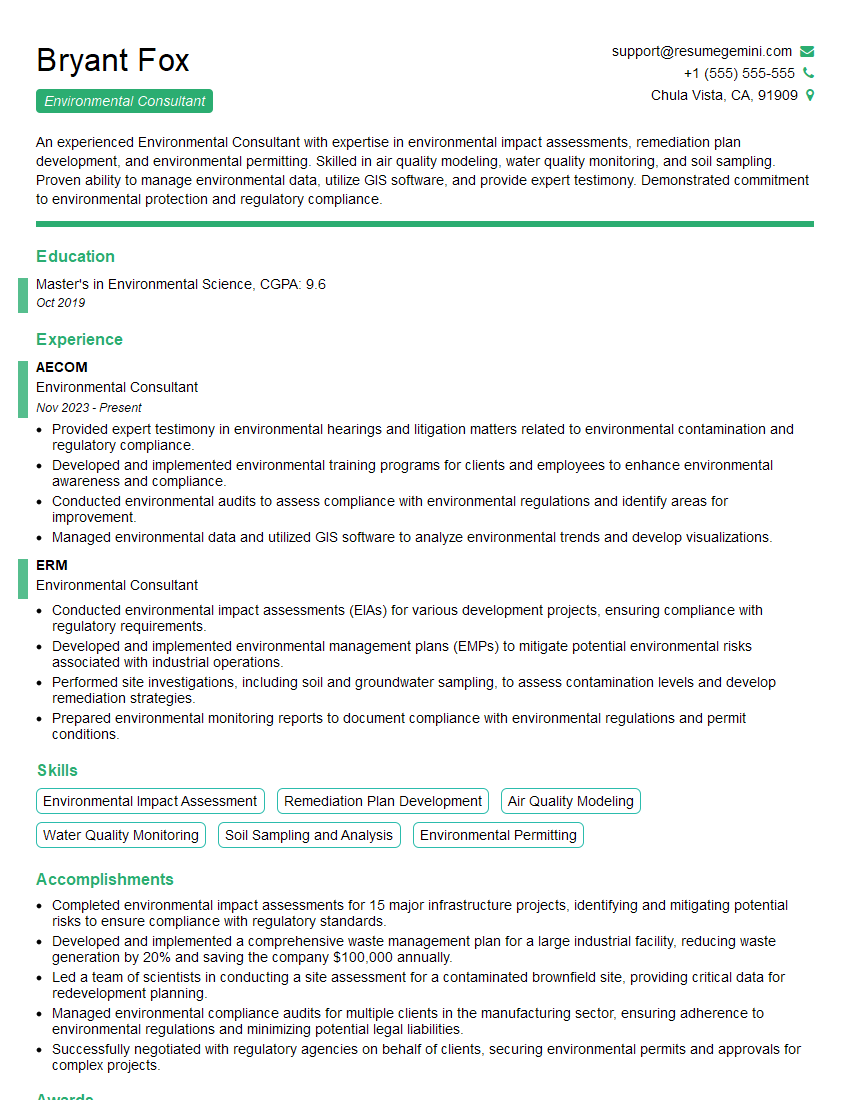
Environmental Consultant Resume Sample
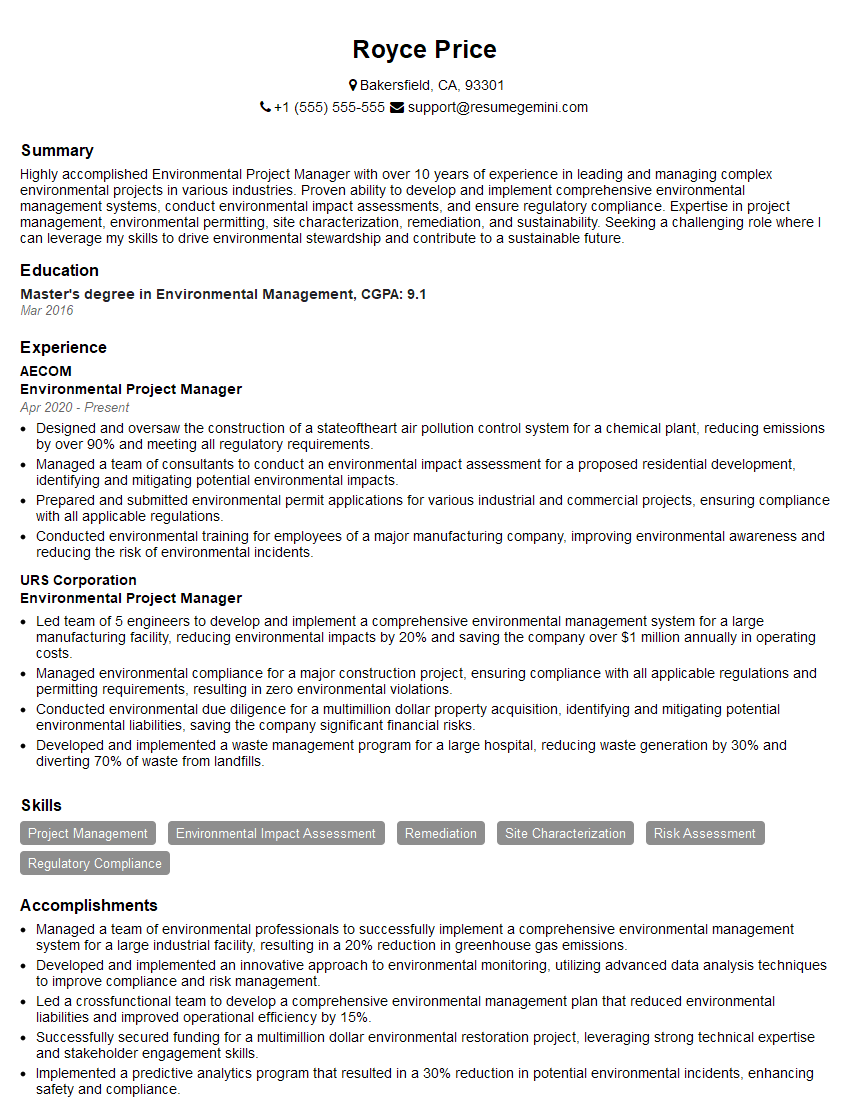
Environmental Project Manager Resume Sample
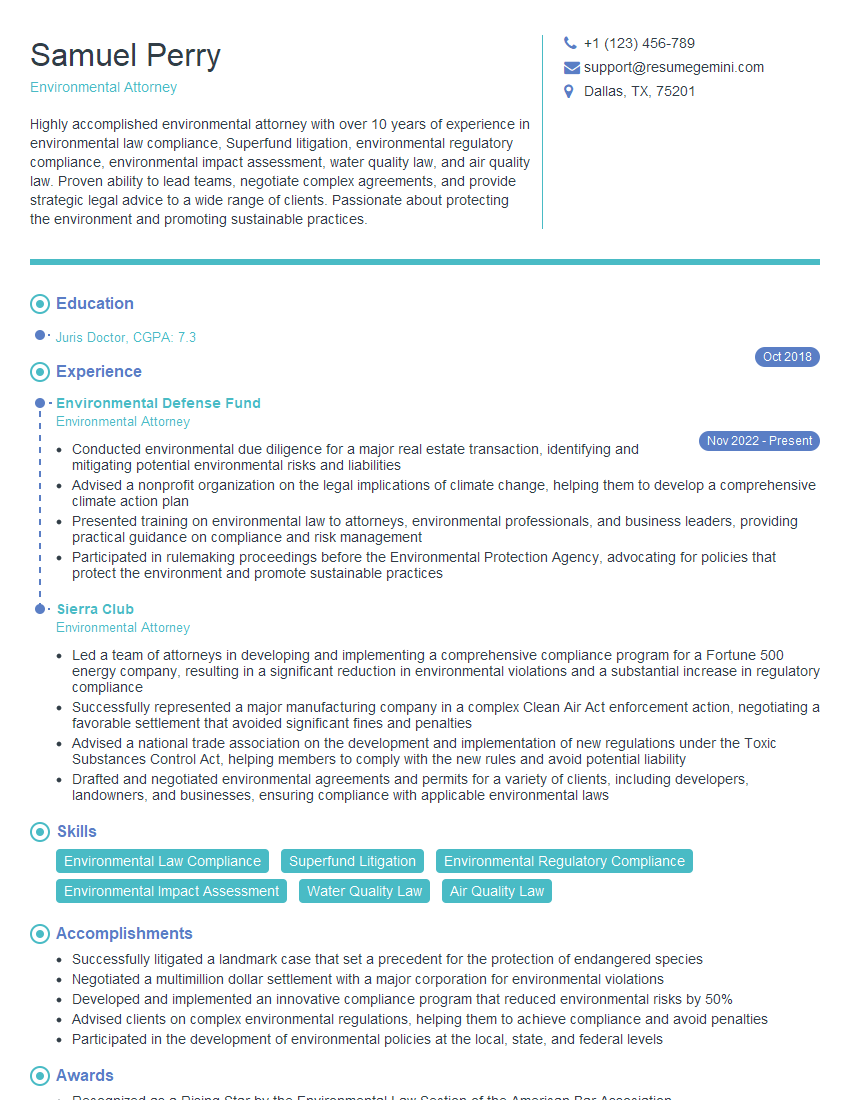
Environmental Attorney Resume Sample
Explore more articles
Users Rating of Our Blogs
Share Your Experience
We value your feedback! Please rate our content and share your thoughts (optional).
What Readers Say About Our Blog
Very informative content, great job.
good