Feeling uncertain about what to expect in your upcoming interview? We’ve got you covered! This blog highlights the most important Flower Care and Handling interview questions and provides actionable advice to help you stand out as the ideal candidate. Let’s pave the way for your success.
Questions Asked in Flower Care and Handling Interview
Q 1. Describe your experience with various flower types and their specific care requirements.
My experience encompasses a wide range of flower types, from delicate orchids to hardy roses. Understanding their specific needs is crucial for successful care. For instance, orchids require high humidity and well-draining potting mixes to prevent root rot, unlike roses, which prefer well-drained soil and ample sunlight. Sunflowers, on the other hand, thrive in full sun and require plenty of water, but their large heads need support to prevent drooping. Lilies are known for their strong fragrance and need good air circulation to avoid fungal issues. I’ve worked with hundreds of varieties, each demanding a unique approach based on their botanical characteristics and origin. This includes understanding their ideal temperature range, light exposure preferences, and water requirements. I meticulously document the specific needs of each variety I work with, ensuring consistent and optimal care.
- Orchids: High humidity, well-draining mix, indirect light.
- Roses: Well-drained soil, ample sunlight, regular pruning.
- Sunflowers: Full sun, regular watering, staking.
- Lilies: Good air circulation, avoid overcrowding.
Q 2. Explain the process of receiving and inspecting a flower delivery for quality.
Receiving and inspecting a flower delivery is a critical step to ensure quality. First, I check the delivery time against the scheduled arrival. Then, I carefully examine the packaging for any damage. Next, I unpack the flowers systematically, assessing each stem for freshness. This includes checking for wilting, discoloration, and pest infestation. I carefully inspect the foliage for signs of disease, such as powdery mildew or fungal spots. The stems should be firm, not limp or mushy. Buds should feel firm and show signs of soon opening. The water in the vase (if present) should be clear, not cloudy or slimy. Any discrepancies are immediately documented, and the supplier is contacted. Proper documentation is crucial for resolving any issues and maintaining quality control. I use a checklist to ensure a thorough inspection every time. For example, if roses have brown edges or wilting petals, I might flag them as a batch with potential cold damage.
Q 3. How do you identify and address common flower diseases and pests?
Identifying and addressing flower diseases and pests requires a keen eye and knowledge of common issues. For instance, aphids are easily spotted as small, soft-bodied insects often found clustered on buds or stems. Powdery mildew presents as a white, powdery coating on leaves. Botrytis, or gray mold, appears as gray or brown fuzzy spots. Identifying the specific problem is the first step. Treatment varies depending on the issue. Aphids can be controlled with insecticidal soap or neem oil. Powdery mildew might require a fungicide. Botrytis often requires removing affected parts and improving air circulation. Prevention is key: Maintaining good hygiene, providing proper ventilation, and avoiding overwatering can significantly reduce the risk of these issues. In case of a severe infestation or disease outbreak, it might be necessary to isolate affected plants to prevent the problem from spreading.
Q 4. What are the best practices for hydrating and rehydrating cut flowers?
Hydrating and rehydrating cut flowers is essential for longevity. Upon arrival, cut flowers need immediate attention. I start by recutting the stems at an angle under water to prevent air bubbles from blocking water uptake. Using sharp, clean tools minimizes damage. The water needs to be fresh and clean; I often add a floral preservative to the water to help provide nutrients and inhibit bacterial growth. This step is crucial. For rehydrating wilted flowers, I may use a solution of sugar and water, as it provides energy to the flowers. Sometimes, I might even place the flowers in a cool, dark place to help them recover. In extreme cases, a quick dip in lukewarm water can help revive drooping stems. It’s like giving them a refreshing drink and a moment to rest. The key is to be gentle and observant, adjusting the hydration process as needed. Think of it as providing flowers with emergency medical treatment: quick and targeted action is needed to restore their vigor.
Q 5. Detail your knowledge of different floral preservatives and their applications.
Floral preservatives play a vital role in extending the vase life of cut flowers. They typically contain a combination of sugars, biocides, and acidifiers. Sugars provide nourishment, biocides prevent bacterial growth, and acidifiers help maintain the proper pH level for water absorption. Different preservatives are formulated for different flower types and conditions. Some preservatives are specifically designed for roses, while others are more general-purpose. I always follow the manufacturer’s instructions carefully for optimal results. Adding the correct amount to the appropriate water volume is critical. Using too much or too little can affect the efficacy of the product. Properly using preservatives can extend the life of flowers significantly, often by several days. Remember, it’s a combination of cutting techniques and the right preservative that provides the best outcome.
Q 6. How do you store different types of flowers to maintain their freshness?
Storing different types of flowers requires a tailored approach to maintain freshness. Generally, flowers should be kept in a cool, dark place with good air circulation. Delicate flowers like orchids might need more humidity, which can be achieved by placing them near a humidifier or covering them with a plastic bag to create a microclimate. Hardy flowers like sunflowers can tolerate slightly less humidity. However, it’s crucial to avoid temperatures that are too cold or hot, which can accelerate wilting. Many flowers benefit from being stored upright in buckets with water, similar to how they’re stored in a cooler for transport. The crucial thing is to avoid extremes in temperature and humidity. I usually store flowers in a cool, dark area in buckets with fresh water, regularly checking their condition. This is a simple, but effective method for keeping flowers fresh before arranging them.
Q 7. Explain your methods for creating visually appealing and balanced floral arrangements.
Creating visually appealing and balanced floral arrangements is both an art and a science. I use the principles of design, including line, shape, color, texture, and form. I start by selecting a focal point, often the largest or most striking flower. Then, I build around this focal point, using a variety of textures and colors. I consider the shape of the container and the overall space where the arrangement will be displayed. Color theory plays a significant role: contrasting colors create drama, while analogous colors create a sense of harmony. Proper spacing and layering are essential for depth and visual interest. I often use filler greens and smaller flowers to add texture and balance the overall design. For example, to create a wedding bouquet, I might choose roses as my focal point, then use smaller flowers like lisianthus and greenery to fill in gaps and add volume, always focusing on a balanced and aesthetically pleasing arrangement that captures the client’s style and preferences.
Q 8. Describe your experience with different floral design techniques (e.g., hand-tied, foam, etc.).
My experience spans a wide range of floral design techniques, each with its own unique aesthetic and practical considerations. Hand-tied bouquets, for instance, emphasize natural, cascading forms, requiring skill in balancing stems and creating a cohesive, yet loose, arrangement. This technique is perfect for a romantic, whimsical feel. I’ve mastered the art of creating both classic round bouquets and more modern, asymmetrical designs using this method.
Working with floral foam offers a different approach, providing a stable base for intricate designs and allowing for greater control over placement and density. Foam allows for more structured arrangements, ideal for wedding centerpieces or large installations where precision and longevity are paramount. I’m adept at creating both traditional and contemporary designs using floral foam, varying techniques based on the desired outcome. For example, I might use oasis foam for a large wedding centerpiece and a smaller, specialized foam for a smaller table arrangement.
Beyond these, I’m also proficient in other techniques like spiral bouquets (for a more tightly bound, classic look), and the use of various containers and natural elements to enhance the overall composition. My experience encompasses a broad spectrum of design styles to accommodate diverse customer preferences and event themes.
Q 9. What are the key considerations for arranging flowers for different occasions (weddings, funerals, etc.)?
Arranging flowers for different occasions requires a nuanced understanding of symbolism, color palettes, and overall aesthetic. For weddings, the arrangements often reflect the couple’s personality and the overall theme of the event. Brighter, more vibrant colors might be chosen for a joyful, lively celebration, while softer pastels might suit a more romantic and elegant setting. The designs themselves range from classic round bouquets to modern cascades, and the scale can be grand, featuring elaborate centerpieces and archways.
Funerals, on the other hand, call for a more subdued and respectful approach. Colors are typically muted, often featuring whites, creams, and deep greens. The arrangements might incorporate elements like lilies (symbolizing purity), or other flowers traditionally associated with remembrance and peace. The overall aesthetic is more somber and reflective, focusing on creating a serene and comforting atmosphere.
Other occasions, like birthdays or corporate events, require tailored approaches based on the specific context. A birthday arrangement might be cheerful and colorful, while corporate arrangements need to reflect professionalism and the company’s branding. Understanding these nuances and tailoring the designs accordingly is crucial for effective floral design.
Q 10. How do you manage inventory and order flowers efficiently to avoid waste?
Efficient inventory management is vital to minimize waste and ensure profitability. I utilize a combination of methods to track inventory, beginning with accurate ordering based on projected demand. I closely monitor sales data and historical trends to anticipate future needs. This helps avoid overstocking and reduces the risk of wilted or unsold flowers.
Beyond that, I maintain a detailed inventory system, either through dedicated floral software (as discussed later) or a meticulously kept spreadsheet, documenting flower types, quantities, arrival dates, and condition. This allows for precise tracking of stock levels and helps identify slow-moving items, enabling proactive adjustments in ordering. Regular quality checks help identify flowers that might need to be used sooner to prevent waste. Any excess flowers are carefully considered for smaller arrangements, or sometimes donated to local charities or hospitals.
Furthermore, I prioritize building strong relationships with my suppliers to ensure reliable delivery and to discuss potential market changes. Open communication is key to optimizing inventory and reducing unnecessary losses.
Q 11. How do you handle customer complaints or concerns regarding flower quality or service?
Handling customer complaints is a critical aspect of providing excellent service. My approach is always to listen empathetically, acknowledging the customer’s concerns without interruption. I strive to understand the nature of the issue, whether it relates to flower quality (e.g., wilting, damage, incorrect color), delivery issues, or simply unmet expectations.
Once the issue is clear, I work towards finding a fair resolution. This might involve offering a replacement bouquet, a refund, a discount on future orders, or even simply a sincere apology. I document all complaints and resolutions meticulously, learning from each experience to improve service quality and prevent similar issues from recurring. I believe in transparent communication and actively seek to exceed customer expectations to turn a negative experience into a positive one.
Proactive communication about potential issues, like delivery delays, can also go a long way in preventing complaints. Keeping customers informed and managing their expectations are key to building trust and loyalty.
Q 12. Describe your experience with flower preservation techniques (e.g., pressing, drying).
Flower preservation techniques allow for the long-term enjoyment of floral arrangements or individual blooms. Pressing flowers is a classic method, ideal for creating keepsakes or incorporating blooms into art projects. This involves placing the flowers between absorbent paper, under pressure, for several weeks to several months, depending on the flower type and its thickness. The resulting flat, preserved flowers can then be used in scrapbooks, framed displays, or incorporated into resin artwork.
Air drying is another common technique, suitable for preserving certain flower types that maintain their shape well. This involves hanging the flowers upside down in a dry, well-ventilated area, away from direct sunlight. This process can take several weeks, and the final result will be a slightly more three-dimensional preservation, different from the flatness of pressing.
Beyond these traditional methods, there are also newer techniques involving silica gel or glycerin, offering faster drying times and potentially better color retention. My experience covers a range of these methods, chosen based on the type of flower and the desired outcome.
Q 13. What software or tools do you use to manage floral orders and inventory?
To streamline floral order management and inventory tracking, I utilize a combination of software and tools. I’m proficient in using dedicated floral management software like Floranext or BloomThat. These systems provide features for order processing, client management, inventory tracking, and financial reporting. They help to efficiently manage sales orders, track stock levels, and generate reports on sales and profitability.
Additionally, I leverage spreadsheet software like Microsoft Excel or Google Sheets for supplementary data tracking and analysis. These are particularly useful for creating custom reports and analyzing trends which aren’t readily available within the dedicated floral management software. For example, I might use spreadsheets to compare seasonal demand across various flower types.
These tools, combined with a well-organized physical inventory system, are crucial for maintaining efficiency and accuracy.
Q 14. How do you ensure the proper temperature and humidity levels for flower storage?
Maintaining the proper temperature and humidity levels is critical for extending the life of cut flowers. Ideal conditions vary somewhat depending on the type of flower, but generally, a cool environment with high humidity is beneficial. I typically aim for temperatures between 34°F and 38°F (1°C and 3°C) for storage. This slows down the metabolic processes in the flowers, delaying wilting.
Humidity should ideally be maintained at around 90% to 95%. This prevents the flowers from dehydrating too quickly. To achieve these optimal conditions, I utilize refrigerated storage units specifically designed for cut flowers. These units often have humidifiers to maintain the necessary humidity levels.
Regular monitoring of temperature and humidity levels is essential, and I regularly check the readings and make adjustments as necessary. Proper storage is fundamental to maintaining the quality and freshness of the flowers, ensuring that they are in optimal condition for arranging and presentation.
Q 15. Describe your knowledge of different floral wire gauges and their applications.
Floral wire gauges are crucial for supporting and shaping floral arrangements. They’re measured in numbers, with lower numbers indicating thicker wires and higher numbers indicating thinner wires. Think of it like choosing the right thread for sewing – a thicker thread for heavier fabric, a thinner thread for delicate work.
- 24-28 gauge: These are very thin, ideal for delicate flowers like baby’s breath or small buds. They’re easily bent and shaped, perfect for creating intricate designs.
- 22-26 gauge: A good all-around gauge, suitable for medium-sized flowers and creating simple curves and bends. Useful for securing individual stems or creating small spirals.
- 18-20 gauge: These are thicker and stronger, used for supporting heavier blooms like roses or lilies. They’re excellent for creating strong, lasting structures in large arrangements.
- 16-18 gauge: These are the thickest commonly used gauges, ideal for constructing large frameworks or armature for complex designs. They provide excellent support and durability.
For example, I would use 28-gauge wire to wire individual tiny blossoms for a delicate bridal bouquet, but use 18-gauge wire to create the main structure of a large, heavy centerpiece, providing support for numerous stems.
Career Expert Tips:
- Ace those interviews! Prepare effectively by reviewing the Top 50 Most Common Interview Questions on ResumeGemini.
- Navigate your job search with confidence! Explore a wide range of Career Tips on ResumeGemini. Learn about common challenges and recommendations to overcome them.
- Craft the perfect resume! Master the Art of Resume Writing with ResumeGemini’s guide. Showcase your unique qualifications and achievements effectively.
- Don’t miss out on holiday savings! Build your dream resume with ResumeGemini’s ATS optimized templates.
Q 16. What are the best practices for using floral foam in arrangements?
Floral foam, also known as oasis, is a vital tool for creating lush and long-lasting arrangements. Proper use ensures the flowers stay hydrated and the arrangement maintains its shape. Think of it as the foundation of your floral masterpiece – you need a solid base for a beautiful structure.
- Soak thoroughly: Before using, soak the foam completely in water with floral preservative solution. The foam should be submerged until no more air bubbles rise. This allows the foam to fully absorb water, providing hydration for the flowers.
- Secure the foam: Use a waterproof container or a vase liner to hold the foam securely in place. This prevents the foam from shifting or falling out of the container and keeps the arrangement stable.
- Cut appropriate holes: Use a sharp knife or floral shears to create holes slightly smaller than the flower stems. This minimizes damage and ensures a snug fit. The holes should be at different angles to enhance the flow of the design.
- Arrange strategically: Start with focal flowers and then add filler flowers and greenery, varying stem lengths and creating visual interest. Consider the color palette, texture, and form to create a balanced and aesthetically pleasing design.
- Maintain hydration: Throughout the life of the arrangement, replenish the water level in the container, especially in warm environments. This will keep the foam moist and the flowers hydrated, extending their lifespan.
For instance, I once had a client who wanted a very large, intricate wedding centerpiece. I used a large block of floral foam, carefully soaked and secured. The meticulous creation of holes and placement of flowers resulted in an arrangement that lasted well into the reception, thanks to proper foam hydration management.
Q 17. Explain the steps involved in creating a boutonniere or corsage.
Creating a boutonniere or corsage involves careful attention to detail and technique. It’s a delicate art that requires precision and an eye for aesthetics. Think of it as creating a miniature work of art that will adorn someone special.
- Gather materials: Select flowers, greenery, and ribbon that complement the occasion and the recipient’s attire. Smaller, sturdy flowers work best for boutonnieres.
- Prepare the flowers: Cut the stems of the flowers at an angle, ensuring they are fresh and hydrated. Remove any unwanted leaves from the stems that will be below the floral foam or tape.
- Assemble the boutonniere/corsage: Create a small base of floral foam or use floral tape to secure the flowers together. Start with the focal flower, then add the greenery and filler flowers, arranging them in a pleasing way.
- Attach to the base: Secure the arrangement to a boutonniere pin or corsage wristband. For a boutonniere, use a straight pin and attach it securely to the base. For a corsage, securely attach the arrangement using floral tape or wire.
- Finishing touches: Add ribbon to enhance the look and secure everything in place. Consider adding a small embellishment for a touch of elegance.
For example, when creating a boutonniere for a groom, I often use a single rose, a few sprigs of eucalyptus, and a touch of ribbon, carefully arranged and secured to create a sophisticated yet masculine look.
Q 18. How do you calculate the cost of materials for floral arrangements?
Calculating the cost of floral arrangements requires meticulous tracking of expenses. It involves more than just the flower cost; it includes all materials and labor. Think of it like building a house – you need to account for every nail, brick, and the labor involved.
The process involves:
- Flower cost: Determine the wholesale cost of each flower or greenery type used, factoring in quantity and potential waste.
- Supply cost: Calculate the cost of floral foam, wire, tape, ribbon, containers, and other supplies used in the arrangement.
- Labor cost: Calculate the time spent designing, creating, and packaging the arrangement, and factor in hourly rate or a per-arrangement fee.
- Markup: Add a percentage markup to cover overhead costs and profit margins. This percentage can vary depending on factors like the complexity of the design, event type, and client expectations.
- Delivery (if applicable): Add the cost of delivery or transportation to the final price.
For example, if the flowers cost $20, supplies cost $5, labor is $15, and you apply a 50% markup, the final price would be calculated as follows: ($20 + $5 + $15) * 1.50 = $60
Q 19. What are your strategies for dealing with wilting or damaged flowers?
Dealing with wilting or damaged flowers requires quick action and specific techniques. It’s about extending the life of the flowers and maintaining the overall quality of the arrangement. Think of it like first aid for your floral creations.
- Identify the cause: Determine the reason for wilting or damage, such as lack of water, excessive heat, or physical damage. This helps in selecting the right solution.
- Rehydrate: If the flowers are dehydrated, recut the stems at an angle and place them in cool water with floral preservative. This allows them to absorb more water effectively.
- Remove damaged parts: Carefully trim any wilted petals or leaves, ensuring a clean and aesthetically pleasing look.
- Use a hydrating solution: Apply a floral hydrating spray to revitalize the flowers. It can quickly bring back the vibrancy of the petals.
- Adjust arrangement: If necessary, rearrange the arrangement to highlight healthy flowers and minimize the visibility of damaged ones.
For instance, I once had a bridal bouquet where a few roses started to wilt before the ceremony. By recutting their stems, applying hydrating spray, and subtly rearranging them, I managed to maintain the overall appearance and beauty of the bouquet.
Q 20. Describe your experience with different types of floral containers and vases.
My experience encompasses a wide range of floral containers and vases, each adding a unique character and style to the arrangement. Choosing the right container is crucial in complementing the flowers and the overall design aesthetic.
- Traditional vases: These range from classic glass vases to ceramic, porcelain, and crystal options, each offering different textures and styles to enhance the arrangement.
- Modern containers: These include sleek metal vases, unique geometric designs, and contemporary materials like concrete or wood, reflecting modern design aesthetics.
- Unusual containers: I often incorporate teacups, vintage tins, or other unconventional containers to add a personal touch and create one-of-a-kind arrangements, showing my creative flair and attention to detail.
- Considerations: When choosing a container, I consider factors such as size, shape, color, material, and the overall design style of the arrangement.
For example, I designed a wedding centerpiece using rustic wooden crates as containers, reflecting the client’s desire for a rustic and charming feel, while other arrangements may call for sleek, modern glass vases to emphasize the sleek lines and sophistication.
Q 21. How do you maintain the cleanliness and hygiene of your work area?
Maintaining a clean and hygienic work area is paramount in floral design. It ensures the longevity of the flowers and prevents the spread of bacteria or disease. Think of it as maintaining a sterile environment for your delicate floral creations.
- Clean work surfaces: Wipe down work surfaces regularly with a disinfectant to remove debris and prevent bacterial growth. It keeps the environment clean and prevents contamination.
- Proper tool care: Clean and sanitize all tools, such as scissors, knives, and floral tape, after each use. This prolongs their lifespan and minimizes the risk of contamination.
- Waste disposal: Dispose of floral waste appropriately, separating organic matter from non-organic waste. This is important for environmental reasons, as well as ensuring a clean work area.
- Hand hygiene: Wash hands frequently with soap and water, especially before handling flowers. Hand hygiene is a crucial aspect of maintaining a clean and safe environment.
- Regular cleaning: Schedule regular deep cleaning of the work area, including vacuuming or sweeping the floor, to remove debris and dust.
For instance, I always make sure to clean my floral shears with alcohol after every arrangement to prevent the transfer of bacteria or fungal diseases. This practice ensures the continued health of the flowers I work with and contributes to a professional and hygienic workspace.
Q 22. How do you handle customer orders with specific color palettes or flower preferences?
Handling customer orders with specific color palettes or flower preferences requires meticulous attention to detail and a deep understanding of floral varieties. I begin by having a thorough consultation with the client, discussing their vision, event type, and any symbolic meaning they wish to convey through the flowers. I then create a mood board, often digitally, to visualize the palette and arrangement styles. This allows for collaborative refinement. For instance, if a client desires a ‘romantic blush’ palette, I’ll explore options like David Austin roses, peonies, and astilbe in varying shades of pink and cream, considering seasonal availability. If a specific flower is unavailable, I offer suitable alternatives, maintaining the color scheme and overall aesthetic while explaining the rationale for the substitution. I always prioritize transparency and client satisfaction, ensuring the final product aligns perfectly with their vision.
Q 23. Explain your experience with creating floral arrangements for specific themes or styles.
Creating floral arrangements for specific themes or styles is a rewarding creative challenge. My approach begins with thorough research; for example, a ‘rustic chic’ wedding might involve wildflowers, succulents, and natural elements like wood and burlap, while a ‘modern minimalist’ arrangement would feature clean lines, a limited color palette, and perhaps orchids or calla lilies. I’ve designed arrangements for everything from elegant corporate galas – using bold, architectural designs with exotic orchids and striking foliage – to whimsical children’s birthday parties, employing bright, playful colors and whimsical characters. Each project requires understanding the context and creating a visual narrative that resonates with the occasion. For a recent corporate event, we focused on a color palette inspired by their brand identity, using primarily deep blues, greens, and whites in a style that reflected the company’s contemporary, innovative ethos. The feedback was extremely positive and demonstrated the power of themed floral design.
Q 24. What are some common mistakes to avoid when handling and caring for flowers?
Several common mistakes can severely impact flower longevity and presentation. One crucial error is neglecting to properly hydrate the flowers immediately upon receiving them. Flowers should be re-cut at an angle under water to prevent air bubbles from blocking water uptake. Another common oversight is placing flowers directly in sunlight or near heat sources, which causes rapid dehydration and wilting. Overcrowding in vases also restricts airflow and accelerates decay. Finally, forgetting to change the water regularly and adding flower food are critical steps often missed. Ignoring these basic care instructions can significantly reduce the lifespan of even the most durable blooms. I always emphasize proper hydration, ideal temperature, and regular maintenance – using floral preservatives is also key.
Q 25. How do you adapt your flower care techniques depending on the season?
Seasonal changes dramatically affect flower availability and care requirements. In the summer, I’ll focus on techniques to combat heat stress, providing ample shade and frequently changing water, possibly adding ice to keep it cool. Winter demands different approaches; I may need to use humidity-boosting measures like placing the arrangements near a humidifier or covering them with a light plastic dome to protect them from cold drafts. My sourcing of flowers changes dramatically, favoring hardy blooms like amaryllis and poinsettias in winter, while embracing vibrant hydrangeas and sunflowers in summer. Understanding the unique needs of seasonal blooms is vital for creating lasting, beautiful arrangements.
Q 26. How do you stay updated on the latest trends in floral design and flower care?
Staying current in floral design and care involves a multifaceted approach. I regularly attend industry trade shows and workshops, which provide opportunities to network with other florists, learn about new techniques, and see cutting-edge designs. I also subscribe to professional journals and online resources, keeping abreast of new flower varieties and trends in floral design. Following leading floral designers on social media platforms like Instagram and Pinterest offers constant inspiration and exposure to novel approaches and styles. Continual learning is paramount in this dynamic industry.
Q 27. What are your salary expectations for this role?
My salary expectations are commensurate with my experience and expertise in the field, aligning with the industry standards for a senior floral designer with my proven track record. I am open to discussing a competitive salary package based on the specific details of this role and the company’s compensation structure.
Q 28. What are your long-term career goals in the floral industry?
My long-term career goals involve establishing myself as a leading authority in sustainable floral design and expanding my knowledge in floral preservation techniques. I envision potentially opening my own studio, specializing in unique, eco-conscious arrangements, and collaborating with other creative professionals on larger-scale projects. I am passionate about education and would also like to contribute to the industry by mentoring aspiring florists and teaching workshops on sustainable flower farming and arrangement techniques.
Key Topics to Learn for Flower Care and Handling Interview
- Flower Physiology and Post-Harvest Handling: Understanding the biological processes affecting flower longevity, including transpiration, respiration, and senescence. Practical application: knowing how to properly hydrate and store flowers to extend their vase life.
- Flower Selection and Quality Assessment: Identifying high-quality flowers based on visual characteristics, assessing maturity, and detecting potential defects. Practical application: developing the skills to select the best flowers for specific arrangements and events.
- Proper Handling Techniques: Safe and efficient methods for receiving, processing, and arranging flowers, including appropriate tools and techniques to prevent damage. Practical application: minimizing flower damage during transport, storage and arrangement processes.
- Storage and Preservation Techniques: Understanding the principles of appropriate temperature, humidity, and light control for various flower types. Practical application: implementing effective storage strategies to maintain freshness and quality.
- Design Principles and Techniques: Applying aesthetic principles to create visually appealing floral arrangements and displays. Practical application: creating arrangements that meet client needs and design briefs.
- Flower Care and Maintenance: Providing ongoing care to maintain the health and beauty of flowers, including cleaning, re-cutting stems, and addressing potential issues. Practical application: troubleshooting common flower problems and implementing preventative measures.
- Hygiene and Sanitation Practices: Maintaining a clean and hygienic work environment to prevent bacterial growth and prolong flower lifespan. Practical application: implementing safe and effective sanitation procedures for tools and workspaces.
- Troubleshooting Common Issues: Identifying and addressing common problems, such as wilting, drooping, and pest infestations. Practical application: developing effective strategies to resolve common flower care issues.
Next Steps
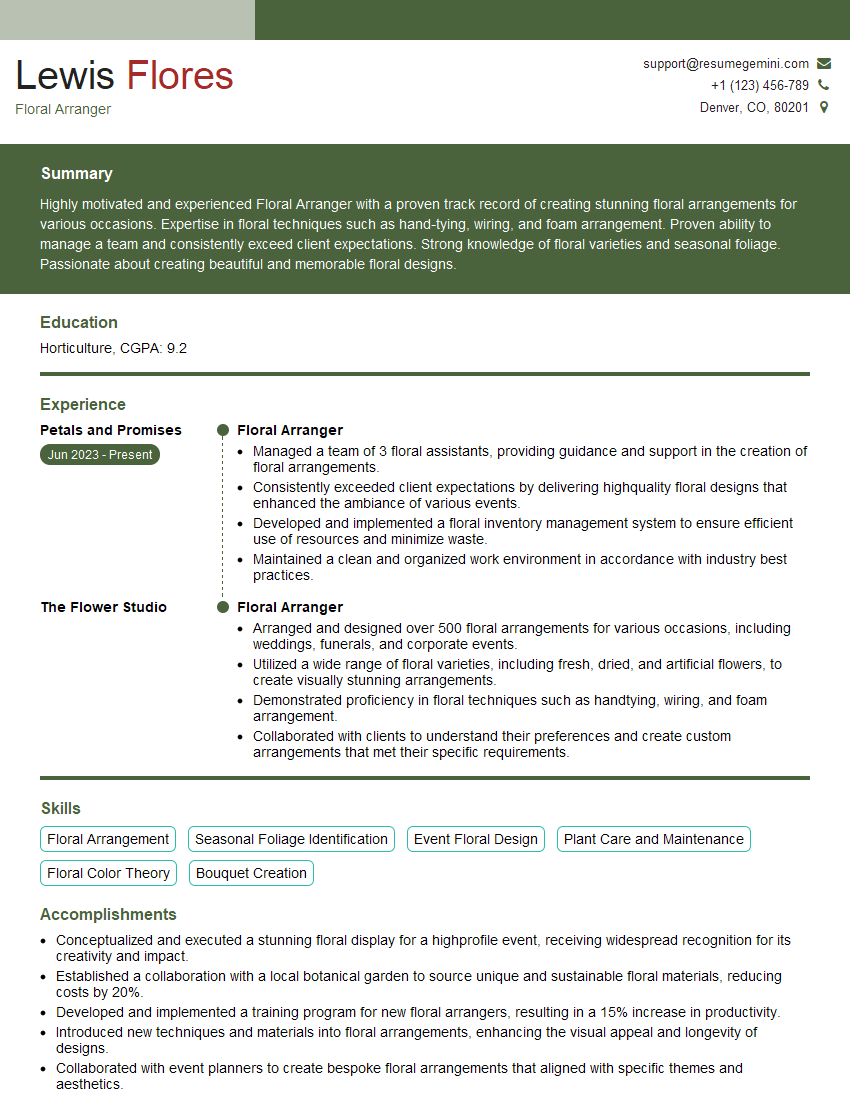
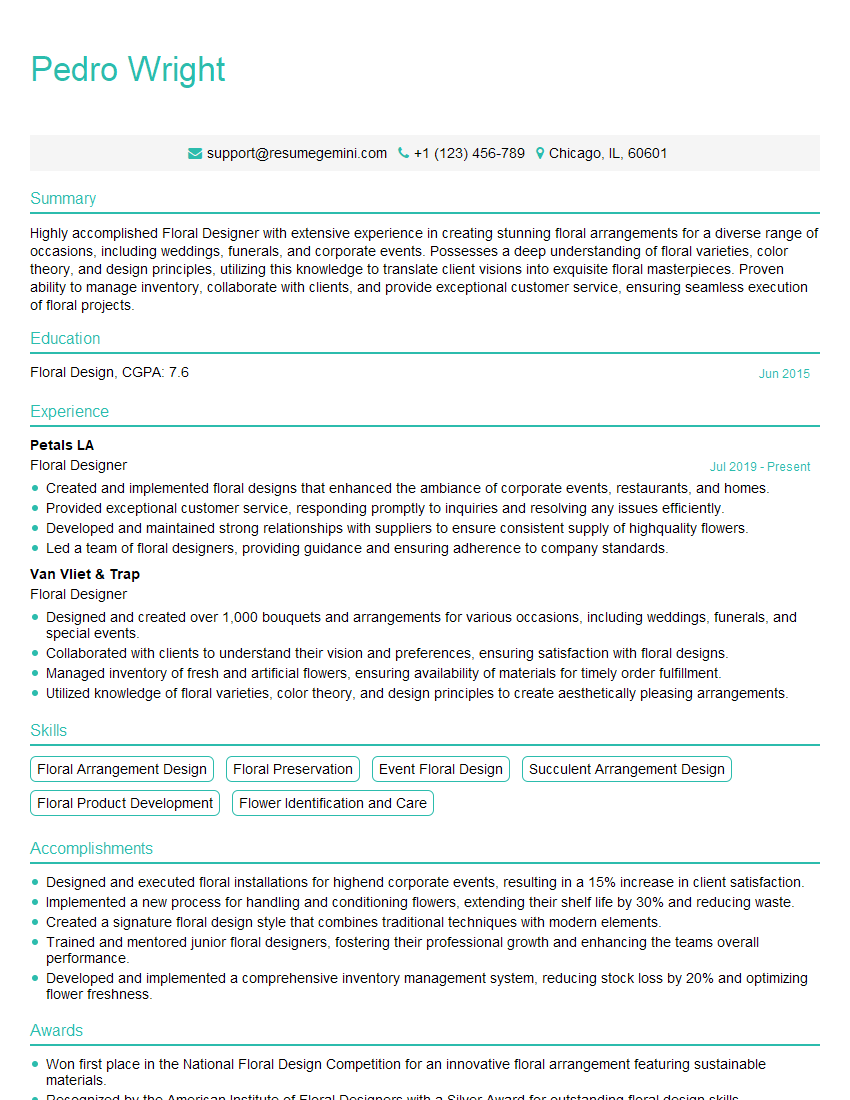
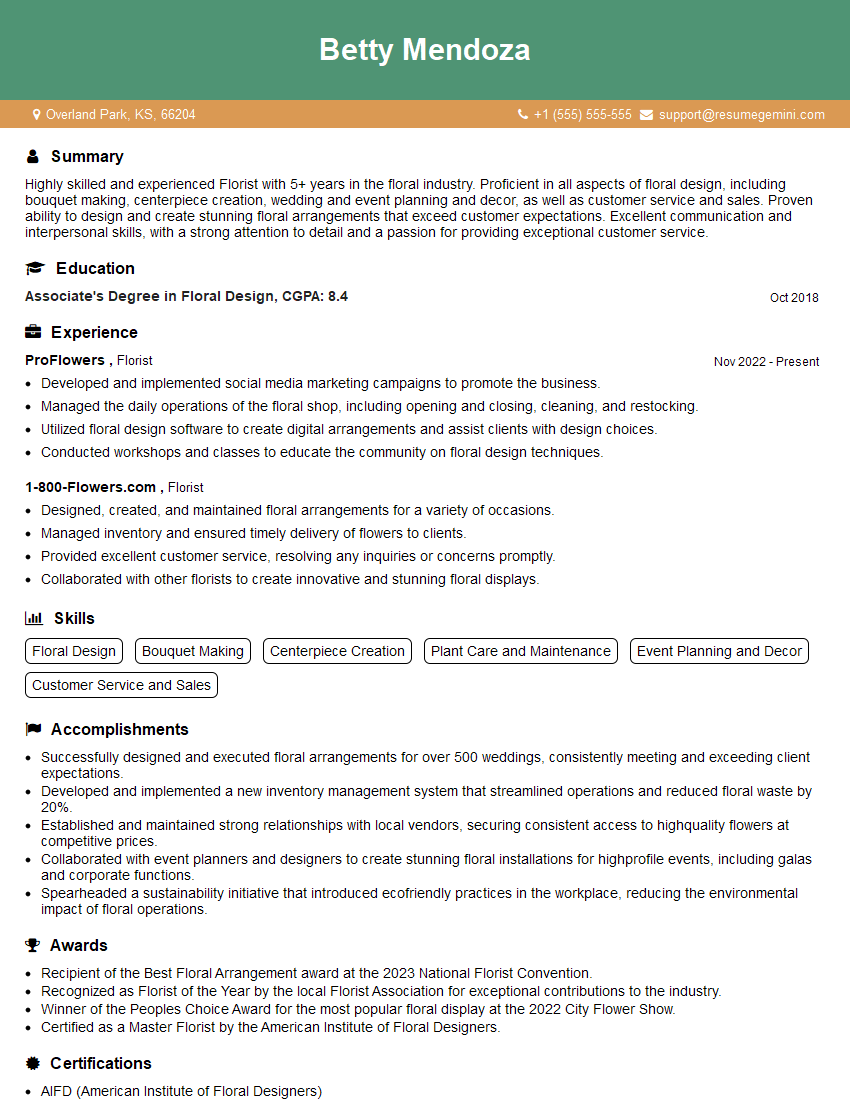
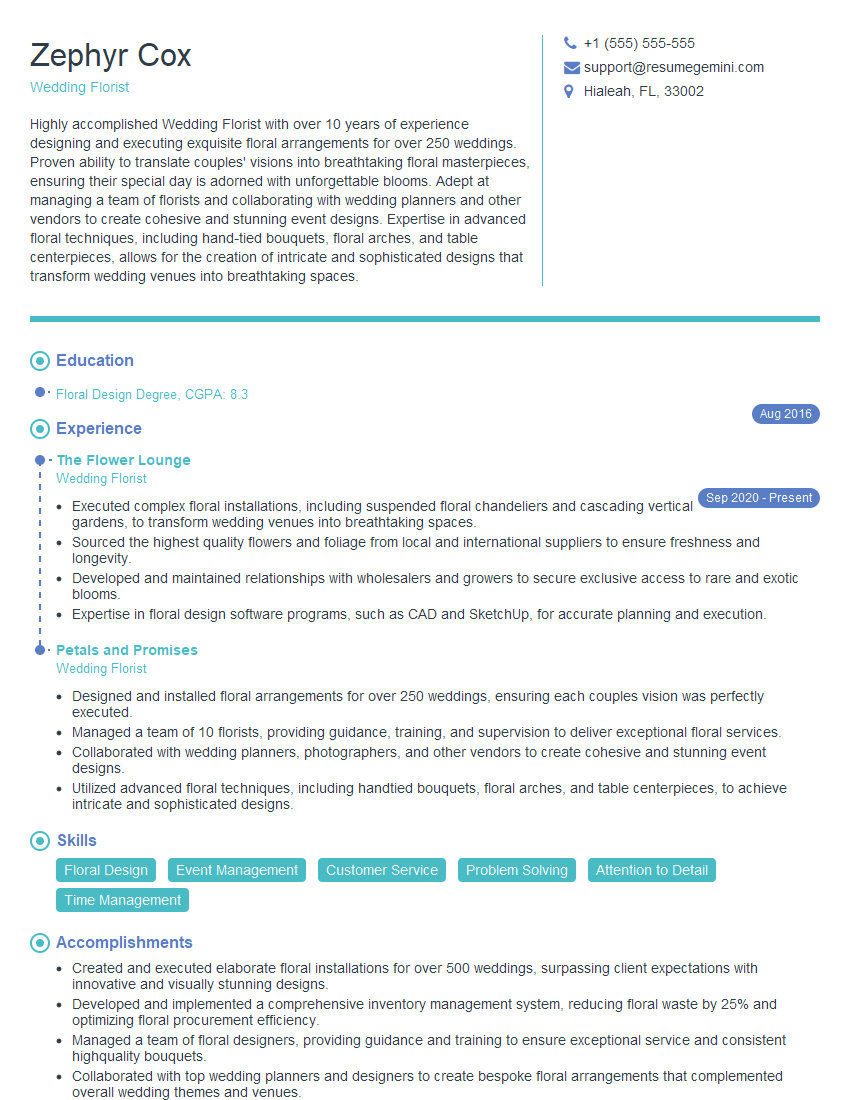
Mastering flower care and handling is crucial for career advancement in the floral industry, opening doors to diverse opportunities and increased earning potential. A strong resume is your key to unlocking these possibilities. Creating an ATS-friendly resume is essential for getting your application noticed. To build a truly compelling and effective resume, we encourage you to leverage the power of ResumeGemini. ResumeGemini provides the tools and resources to craft a professional document that highlights your skills and experience. Examples of resumes tailored to Flower Care and Handling are available to help you get started.
Explore more articles
Users Rating of Our Blogs
Share Your Experience
We value your feedback! Please rate our content and share your thoughts (optional).
What Readers Say About Our Blog
Very informative content, great job.
good