Every successful interview starts with knowing what to expect. In this blog, we’ll take you through the top Environmental Software Proficiency (eQUEST, IES VE) interview questions, breaking them down with expert tips to help you deliver impactful answers. Step into your next interview fully prepared and ready to succeed.
Questions Asked in Environmental Software Proficiency (eQUEST, IES VE) Interview
Q 1. Explain the difference between eQUEST and IES VE.
eQUEST and IES VE are both powerful software tools used for building energy simulation, but they differ significantly in their approach and capabilities. Think of it like this: eQUEST is a more focused, streamlined tool, ideal for quick energy analyses and compliance checks, while IES VE is a much more comprehensive and versatile platform offering advanced features for detailed design optimization and whole-building performance analysis.
- eQUEST: Primarily focuses on energy performance calculations according to ASHRAE standards. It’s relatively easy to learn and use, making it suitable for a wider range of users. It’s excellent for generating quick estimates and meeting code requirements. Its strength lies in its simplicity and speed.
- IES VE: Offers a broader range of functionalities beyond energy modeling. It includes features for daylighting simulation, thermal comfort analysis, CFD (Computational Fluid Dynamics) analysis, and even fire safety modeling. It’s more complex to master, requiring more specialized training, but its advanced capabilities are crucial for detailed design and optimization.
In essence, eQUEST is best for a quick check-up, while IES VE is more like a comprehensive annual health checkup with advanced diagnostic tools.
Q 2. Describe your experience using eQUEST for energy modeling in different building types.
I’ve extensively used eQUEST for energy modeling across various building types, including office buildings, residential complexes, schools, and healthcare facilities. For example, in a recent project involving a large office building, I used eQUEST to model various HVAC system configurations – comparing VRF (Variable Refrigerant Flow) systems to traditional chilled water systems – to determine the most energy-efficient option while considering factors like occupancy schedules and equipment performance data. In a residential project, I employed eQUEST to analyze the impact of different insulation levels and window types on the overall energy consumption, helping the design team make informed decisions to meet energy efficiency targets.
My approach always involves a thorough understanding of the building’s specifics – climate zone, construction materials, occupancy patterns, and equipment details – to ensure accuracy. I find eQUEST’s intuitive interface helpful in quickly assembling models and running simulations for different scenarios. For example, for a school project, using eQUEST to determine optimal daylighting strategies to reduce energy consumption from artificial lighting was a key part of the analysis.
Q 3. How do you validate the results obtained from eQUEST or IES VE?
Validating the results of energy simulations is crucial to ensure reliability. I employ a multi-faceted approach, incorporating both qualitative and quantitative methods.
- Comparison with Similar Projects: I benchmark the model’s results against similar buildings in the same climate zone. This provides a realistic context for assessing the performance. For example, if the predicted energy consumption is drastically different from similar buildings, it indicates a potential problem with the model inputs or assumptions.
- Sensitivity Analysis: I systematically vary key input parameters (e.g., window U-value, HVAC system efficiency) to evaluate their influence on the results. This helps identify the most significant factors affecting energy consumption and highlight areas requiring greater attention.
- Simplified Calculations: For some aspects, I perform hand calculations or use simplified methods to verify the model’s results. This cross-checking ensures that the software output is within a reasonable range.
- Calibration with Measured Data (if available): If energy consumption data is available from an existing building, I calibrate the model to match the actual performance. This ensures a higher degree of accuracy and confidence.
Validation is an iterative process. The discrepancies between the model and reality (or benchmarks) often lead to further refinement of the model inputs and assumptions.
Q 4. What are the key inputs required for accurate energy modeling in eQUEST?
Accurate energy modeling in eQUEST depends on a comprehensive set of inputs. Think of it as building a detailed recipe – missing ingredients will result in a less accurate result. Key inputs include:
- Building Geometry and Construction: Detailed information on the building’s dimensions, wall assemblies, roof construction, window types, and shading devices. This includes material properties like U-values, thermal mass, and solar absorptance.
- HVAC System Data: Complete specifications of the heating, ventilation, and air conditioning systems. This includes equipment efficiencies, operating schedules, and control strategies.
- Internal Loads: Estimates of lighting, equipment, and occupant loads. Detailed occupancy schedules are particularly important to reflect realistic energy use patterns.
- Lighting Systems Data: Specifics on lighting fixture types, wattage, and control systems. Daylighting strategies are also critical input parameters.
- Weather Data: Hourly weather data (temperature, solar radiation, wind speed) for the specific location of the building, obtained from sources like Typical Meteorological Year (TMY) data files.
The accuracy of these inputs directly impacts the reliability of the energy model. Inaccurate or incomplete data will inevitably lead to inaccurate results.
Q 5. How do you handle uncertainty and variability in input data for your energy models?
Uncertainty and variability in input data are inherent in energy modeling. To address this, I use several strategies:
- Probabilistic Analysis: Instead of using single-point estimates for uncertain parameters, I use probability distributions to represent the range of possible values. This allows me to assess the impact of uncertainty on the overall energy consumption and provide a range of possible outcomes rather than a single deterministic value.
- Sensitivity Analysis (as mentioned earlier): Identifying the most sensitive parameters allows me to focus my efforts on obtaining more accurate data for those parameters. If a parameter has minimal impact on the results, spending significant resources to precisely define its value may not be necessary.
- Monte Carlo Simulation: This technique involves running the model multiple times with randomly sampled values from the probability distributions of the uncertain parameters. This generates a distribution of energy consumption outcomes, providing a better understanding of the uncertainty associated with the results.
- Data Validation and Quality Control: Employing rigorous data quality control procedures helps minimize uncertainty. Checking data sources, performing plausibility checks, and comparing with similar projects are essential steps.
By acknowledging and addressing uncertainty, I can provide more robust and reliable results that better reflect the real-world complexities of building performance.
Q 6. Describe your experience with creating and managing project files in eQUEST or IES VE.
My experience with project file management in eQUEST involves meticulous organization to ensure efficient workflow and data integrity. I typically employ a structured folder system, separating project files based on building type, project phase, and simulation type. Each project folder includes a clear README file that documents the model assumptions, input data sources, and simulation results. This allows easy retrieval and review of the model even after a significant time has passed.
Version control is essential to track changes and revert to previous versions if needed. I often utilize version control systems (like Git) to manage larger and more complex projects, allowing for collaborative efforts among team members.
For IES VE, the project file management is similar; however, the complexity of the projects often requires more rigorous organization and documentation, especially when dealing with various simulation types, such as CFD or daylighting, integrated within the same project.
Q 7. Explain how you use weather data in your energy models.
Weather data is absolutely crucial for accurate energy modeling. It provides the driving forces for building energy consumption, including heating and cooling loads, daylighting contributions, and solar gains. I typically obtain weather data from reliable sources that provide hourly data for a given location, such as the Typical Meteorological Year (TMY) files from the National Renewable Energy Laboratory (NREL) or similar regional sources. The quality of weather data significantly impacts the accuracy of the simulation results. Using inappropriate or low-quality data can lead to significant errors in predicted energy consumption.
In eQUEST, weather data is directly imported into the model. The software uses this data to calculate hourly building loads, taking into account factors such as solar radiation, ambient temperature, and wind speed. The choice of the appropriate weather file is critical; using a weather file that doesn’t accurately represent the local climate can lead to significant errors in the simulation.
Q 8. How do you account for HVAC system characteristics in your simulations?
Accurately simulating a building’s energy performance hinges on meticulously defining its HVAC system. This involves more than just selecting a system type; it requires specifying its components and operational characteristics.
- Equipment Type and Specifications: For example, we define the type of chiller (e.g., centrifugal, absorption), its capacity, efficiency (COP or EER), and part-load performance characteristics. Similarly, for air handlers, we specify the fan power, airflow rates, and filter efficiency. This data is typically obtained from the manufacturer’s specifications.
- Control Strategies: The simulation must reflect how the HVAC system responds to changing conditions. This includes specifying control sequences (e.g., temperature setpoints, occupancy schedules, and operating modes) For instance, a variable air volume (VAV) system’s control logic needs to be accurately represented, including reheat considerations.
- Air Distribution System: The design of the ductwork and its associated pressure drops significantly impacts the fan energy consumption and system performance. Accurate modeling requires inputting duct sizes, materials, and fittings, which impacts the system’s pressure drop calculations.
- Plant Equipment: For larger buildings, we model the entire central plant, including pumps, cooling towers, and boilers, each with its own performance curves. This level of detail allows for accurate simulation of energy usage across all plant equipment.
In eQUEST and IES VE, these parameters are input via detailed equipment specifications and schedules. Failing to accurately model these aspects can lead to significant errors in predicted energy consumption and operational costs. For example, an incorrectly specified chiller efficiency can drastically alter the predicted energy usage of a whole building.
Q 9. Describe your experience with using different simulation engines within IES VE.
My experience with IES VE’s simulation engines is extensive. I’ve worked with both the EnergyPlus engine and the Radiance engine, leveraging their strengths for different aspects of building simulation.
- EnergyPlus: This is my primary engine for whole-building energy simulations, particularly for long-term performance analysis across various climate conditions. Its detailed algorithms offer accurate predictions of energy consumption, particularly for HVAC systems. I’ve used it extensively for various building types, from office buildings to data centers.
- Radiance: I utilize Radiance primarily for daylighting simulations and detailed analysis of solar heat gain. Its ability to accurately model complex geometry and solar radiation makes it ideal for optimizing building design for natural light and reducing lighting loads. I often integrate Radiance results back into EnergyPlus models to improve the overall simulation accuracy.
I understand the capabilities and limitations of each engine. For example, Radiance excels at high-resolution visual results but is computationally intensive, while EnergyPlus is designed for long-term performance analysis. Choosing the right engine depends on the specific design goals and the required level of detail.
Q 10. How do you interpret the results of an energy simulation?
Interpreting energy simulation results requires a holistic approach, not just focusing on a single metric. It’s about understanding the interplay between different building systems and their impact on energy performance.
- Energy Consumption Breakdown: The first step is analyzing the energy consumption breakdown by end-use (heating, cooling, lighting, etc.). This identifies the largest energy consumers, highlighting areas for potential improvement.
- HVAC System Performance: Examining the performance of the HVAC system is crucial. Metrics such as chiller COP, fan power, and system efficiency reveal opportunities for optimization. Analyzing the system’s load profiles throughout the year provides valuable insights into its operation.
- Envelope Performance: Evaluating the building envelope’s performance reveals areas where heat gain or loss is significant, helping prioritize improvements to insulation, glazing, and air sealing.
- Sensitivity Analysis: I often perform sensitivity analysis to understand the impact of design changes on energy consumption. This helps prioritize design alterations and assess their effectiveness.
- Comparison with Baseline: Comparing the simulation results against a baseline model (e.g., a standard design) quantifies the energy savings achieved through design modifications. This is vital for evaluating the effectiveness of various design strategies.
For instance, a simulation might reveal that excessive solar heat gain through south-facing windows is a major contributor to cooling load. This allows for informed design changes, such as adding shading devices or using high-performance glazing.
Q 11. What are some common errors encountered during energy modeling, and how do you address them?
Common errors in energy modeling can significantly impact results. Addressing them requires careful attention to detail and a methodical approach.
- Incorrect Input Data: Using inaccurate or incomplete data for building geometry, materials, or HVAC system characteristics is a major source of error. Careful data verification and using reliable sources are essential.
- Simplified Modeling Assumptions: Overly simplified assumptions about occupancy schedules, equipment operation, or climate data can lead to inaccurate predictions. A balance needs to be struck between model complexity and computational efficiency.
- Incorrect Boundary Conditions: Incorrectly defining boundary conditions, such as ground temperature or wind speed, can influence the accuracy of simulation results. Using accurate weather data is critical.
- Model Calibration and Validation: Without model calibration against real-world data, the model’s accuracy is questionable. Where possible, validating the model against measured data provides more confidence in the results.
My approach involves a thorough review of the input data, using quality assurance checks and comparison against similar projects. I always strive to utilize high-quality weather data and consider the limitations of modeling assumptions. When possible, I conduct model calibration to improve accuracy.
Q 12. How do you use energy modeling to inform design decisions?
Energy modeling isn’t just about generating numbers; it’s a powerful tool for making informed design decisions throughout the design process.
- Early Design Stage: In the conceptual design phase, energy modeling helps compare various design options, quickly identifying high-performing strategies. For example, comparing different building orientations or envelope designs.
- Detailed Design Stage: During detailed design, modeling helps fine-tune the design and optimize individual systems. For instance, optimizing HVAC system sizing and control strategies to minimize energy consumption without sacrificing comfort.
- Commissioning and Operations: Post-construction, energy modeling can assist in commissioning and verifying that the building is performing as expected. It also helps in identifying operational improvements to enhance efficiency.
For example, I once used energy modeling to compare a curtain wall design versus a double-skin façade. The modeling revealed the double-skin façade offered significant energy savings despite a higher initial cost, ultimately influencing the client’s decision. This process emphasizes the importance of integrating energy modeling early to avoid costly design changes down the line.
Q 13. Describe your experience with optimizing building designs for energy efficiency using eQUEST or IES VE.
I have extensive experience optimizing building designs for energy efficiency using both eQUEST and IES VE. My approach is iterative, involving a combination of design exploration and parametric studies.
- Parametric Studies: I systematically vary design parameters (e.g., insulation levels, window-to-wall ratios, HVAC system configurations) to assess their impact on energy performance. This helps identify the optimal combination of parameters that balances energy efficiency with other design considerations.
- Optimization Algorithms: For complex designs, I utilize built-in optimization algorithms in both IES VE and eQUEST to automatically find optimal solutions within specific constraints. This speeds up the design process and allows for exploring a wider range of design options.
- Design Trade-offs: I understand that energy efficiency is not always the sole design objective. Therefore, optimization must consider other factors, such as initial cost, construction time, and occupant comfort. This often requires balancing competing objectives.
In one project, we used IES VE to optimize the façade design of a high-rise office building. Through parametric studies, we identified an optimal window-to-wall ratio and glazing type that minimized energy consumption while maximizing daylighting. This resulted in significant energy savings and improved occupant comfort.
Q 14. How familiar are you with different building energy codes and standards?
I am very familiar with various building energy codes and standards, including ASHRAE 90.1, IECC, LEED, and local codes. Understanding these codes is essential for ensuring building designs meet regulatory requirements and demonstrate compliance.
- ASHRAE 90.1: I’m proficient in using ASHRAE 90.1 as a benchmark for energy efficiency. My simulations consistently incorporate the relevant requirements, allowing me to assess compliance and identify opportunities for exceeding minimum code requirements.
- IECC: I’m familiar with the International Energy Conservation Code (IECC) and its regional variations. I understand how different climate zones influence energy code requirements and adapt the simulation models accordingly.
- LEED: I have experience with LEED certification requirements, specifically those related to energy and atmosphere. I can use energy modeling to demonstrate compliance with LEED points related to energy efficiency and renewable energy.
- Local Codes: I understand the importance of local codes and regulations. My experience includes incorporating local requirements into simulations to meet specific jurisdictional needs.
My understanding of these codes goes beyond mere compliance; I actively use them to inform design decisions, pushing beyond minimum requirements to create truly sustainable and high-performing buildings.
Q 15. Explain your experience using post-processing tools to visualize and analyze simulation results.
Post-processing tools are crucial for extracting meaningful insights from energy simulation results. In my experience with eQUEST and IES VE, I utilize their built-in visualization capabilities along with external tools like Excel and specialized visualization software to analyze the data. This involves creating charts, graphs, and reports that effectively communicate key findings.
For example, after running a simulation in IES VE, I might use the built-in graphics to examine the temperature distribution within a building over a year. Then, I’ll export the data to Excel to perform further analysis, such as calculating the average energy consumption for different zones or identifying peak loads. This allows me to spot trends and anomalies that might not be immediately apparent in the raw simulation data. I also frequently use the results to create compelling presentations and reports for clients, stakeholders, and design teams.
Another example involves using specialized visualization software to create 3D representations of airflow or solar radiation patterns within a building. This helps illustrate design decisions’ impact on energy performance visually and intuitively.
Career Expert Tips:
- Ace those interviews! Prepare effectively by reviewing the Top 50 Most Common Interview Questions on ResumeGemini.
- Navigate your job search with confidence! Explore a wide range of Career Tips on ResumeGemini. Learn about common challenges and recommendations to overcome them.
- Craft the perfect resume! Master the Art of Resume Writing with ResumeGemini’s guide. Showcase your unique qualifications and achievements effectively.
- Don’t miss out on holiday savings! Build your dream resume with ResumeGemini’s ATS optimized templates.
Q 16. How do you communicate complex technical information about energy modeling to non-technical audiences?
Communicating complex technical information to non-technical audiences requires a clear, concise, and visual approach. I avoid jargon and use analogies to explain concepts. For instance, when discussing building energy performance, I might compare the building’s energy efficiency to the fuel efficiency of a car. Instead of focusing on technical metrics like kilowatt-hours, I’ll highlight the cost savings or environmental impact of improved energy efficiency in easily understood terms.
I also rely heavily on visual aids, such as charts and graphs, that clearly show the impact of design decisions. For example, a simple bar chart comparing the energy consumption of different building designs is much more effective than a detailed technical report. Finally, I tailor my communication style to the audience’s knowledge level, ensuring everyone understands the key findings and recommendations.
Q 17. Describe your experience with sensitivity analysis in energy modeling.
Sensitivity analysis is a crucial step in any energy modeling project. It helps identify the most influential design parameters on the overall energy performance. In eQUEST and IES VE, I perform sensitivity analysis by systematically varying input parameters (e.g., window-to-wall ratio, insulation thickness, HVAC system type) one at a time, while keeping other parameters constant. This allows me to assess the impact of each parameter on key performance indicators such as energy consumption, peak demand, and indoor comfort.
For instance, I might conduct a sensitivity analysis to determine the impact of different glazing types on a building’s heating and cooling loads. By comparing the simulation results for various glazing options, I can identify the optimal glazing type that minimizes energy consumption while satisfying other design requirements. The results of the sensitivity analysis help prioritize design optimizations and focus on the most impactful changes.
Software like eQUEST and IES VE often have built-in tools or allow for scripting to automate this process, significantly increasing efficiency.
Q 18. How do you ensure the quality and accuracy of your energy models?
Ensuring the quality and accuracy of energy models requires a rigorous approach. This starts with meticulous data collection and input validation. I carefully check all input data – building geometry, materials properties, HVAC system parameters, occupancy schedules, and weather data – to ensure accuracy and consistency. I also perform thorough quality checks on the model geometry in eQUEST and IES VE, verifying that it accurately represents the actual building design.
Once the model is built, I conduct several verification and validation steps. Verification involves checking that the model is correctly representing the design intent, while validation compares the model’s predictions against real-world data (if available) or established benchmarks. I might also employ independent verification and validation methods, running the simulation with different software platforms or comparing results to simplified hand calculations where feasible. This ensures a high degree of confidence in the accuracy and reliability of the results.
Regularly reviewing the model assumptions and ensuring consistency with the design intent is also critical in maintaining accuracy over the project’s lifespan.
Q 19. What are the limitations of using eQUEST or IES VE for energy modeling?
While eQUEST and IES VE are powerful tools, they have limitations. One significant limitation is the simplification of complex physical phenomena. For instance, the treatment of air infiltration and natural ventilation can be simplified, potentially affecting the accuracy of the results. The level of detail available for modeling certain systems or building components might not fully capture the real-world complexities.
Another limitation is the reliance on input data. The accuracy of the simulation results depends heavily on the quality and completeness of the input data. Incorrect or missing data can significantly impact the results. Furthermore, both programs require a significant level of expertise to operate effectively. Improper use can lead to incorrect conclusions.
Finally, computational resources are a factor; complex models can be computationally intensive, potentially requiring high-performance computers for efficient processing, especially for large-scale projects or detailed parametric studies.
Q 20. How do you incorporate daylighting analysis into your workflow?
Daylighting analysis is integrated into my workflow using the daylighting features within IES VE or by using compatible daylight simulation software. The process usually starts with importing the building geometry into the software. Then, I define the window properties, materials, and sky conditions. The software simulates the daylight distribution within the building, allowing me to assess the effectiveness of daylighting strategies in reducing the need for electric lighting.
I use these analyses to optimize window placement, size, and type to maximize daylight penetration and minimize glare. This often involves creating different design iterations and comparing their daylight performance. The results are used to inform design decisions, resulting in more energy-efficient and comfortable buildings. The daylighting analysis is typically coupled with the energy modeling results to assess the overall energy impact of daylighting strategies.
Q 21. Describe your experience with running parametric studies using eQUEST or IES VE.
Parametric studies are essential for optimizing building designs and improving their energy efficiency. In eQUEST and IES VE, I use their capabilities to automate the running of multiple simulations with varying input parameters. This allows me to explore a wide range of design options efficiently and identify the optimal design configuration.
For example, I might conduct a parametric study to optimize the orientation and shading of a building’s windows. I would vary the window orientation and shading parameters over a defined range, running multiple simulations automatically. The results are then analyzed to determine the configuration that minimizes energy consumption while maximizing daylighting. This process is far more efficient than running individual simulations manually for each parameter variation.
In IES VE, this can be achieved using the scripting capabilities, allowing for the creation of automated workflows that run multiple simulations and organize the data for analysis.
Q 22. How do you use energy modeling to compare different design options?
Energy modeling allows us to compare design options by virtually constructing each option within software like eQUEST or IES VE. We input design parameters such as building geometry, materials, HVAC systems, and window specifications. The software then simulates the building’s energy performance under various weather conditions, producing results such as annual energy consumption, peak demand, and greenhouse gas emissions. By comparing these results across different design scenarios – for instance, comparing a design with high-performance glazing to one with standard glazing – we can quantitatively assess the impact of each design choice on energy efficiency. This allows informed decisions based on data rather than assumptions.
For example, let’s say we’re comparing a building with a standard roof versus a green roof. We’d model both scenarios, inputting the specific thermal properties of each roofing material. The simulation would reveal the difference in energy consumption, potentially highlighting the green roof’s ability to reduce cooling loads and improve overall building performance. This data-driven approach helps prioritize energy-saving strategies.
Q 23. How familiar are you with using building information modeling (BIM) data in conjunction with eQUEST or IES VE?
I’m highly proficient in integrating BIM data with both eQUEST and IES VE. BIM data provides a highly detailed and accurate representation of the building’s geometry, materials, and construction. This allows for a more precise energy model, reducing reliance on manual input and minimizing errors. Importantly, the data exchange capabilities minimize the chances of discrepancies between the design intent and the energy model. In eQUEST, for instance, I often import geometry from Revit as an IDF (Input Data File) or utilize plugins that directly link the two software packages. Similarly, IES VE offers robust import options for various BIM formats. This integration significantly streamlines the modeling process and leads to more accurate results.
For example, on a recent project, using BIM data significantly reduced the time required to create the model’s geometry. The automatic extraction of materials and construction details also improved the accuracy of the thermal properties used in the simulation. It enabled us to quickly test different façade configurations and optimize the building envelope for energy performance with a high level of confidence.
Q 24. Explain your understanding of different energy efficiency measures and their impact on building performance.
Energy efficiency measures encompass a wide range of strategies aimed at minimizing energy consumption in buildings. These measures can be broadly classified into aspects relating to the building envelope, HVAC systems, lighting, and appliances.
- Building Envelope: This includes improvements like high-performance windows, increased insulation in walls and roofs, and air sealing to minimize air infiltration and heat transfer. Impact: Reduced heating and cooling loads.
- HVAC Systems: High-efficiency HVAC equipment (e.g., heat pumps, variable refrigerant flow systems), optimized control systems, and improved ductwork design. Impact: Lower energy consumption for heating and cooling.
- Lighting: Energy-efficient lighting fixtures (LEDs), daylight harvesting, and occupancy sensors. Impact: Significant reduction in electricity consumption for lighting.
- Appliances: Energy Star rated appliances, efficient plumbing fixtures. Impact: Reduced energy and water usage.
The impact of these measures is quantified through energy modeling. For instance, increasing insulation thickness in the walls will demonstrably reduce the heating load during winter, and this reduction is clearly visible in the energy model’s output. We can then evaluate the cost-effectiveness of each measure by comparing the initial investment with the long-term savings in energy costs.
Q 25. How would you approach modeling a complex building with multiple zones and systems?
Modeling complex buildings with multiple zones and systems requires a structured and organized approach. I typically begin by dividing the building into distinct zones, considering factors such as occupancy, thermal characteristics, and HVAC system zones. This zoning strategy allows for a more accurate representation of the thermal behavior of different parts of the building. Each zone is then modeled individually, specifying its unique properties. For the HVAC systems, I would define each system’s components (e.g., chillers, boilers, air handlers), their capacities, and control strategies. The interactions between different zones and systems are then linked within the model using appropriate connections. Detailed descriptions of air flows and heat transfer between zones are critical for accurate simulation.
Furthermore, verification and validation are crucial in this process. I employ iterative modeling techniques, continually refining the model based on sensitivity analyses and comparing the simulation results with real-world data wherever possible. For instance, if I’m working on a renovation project, comparing the pre-retrofit simulation to the post-retrofit simulation allows for confident evaluation of the impact of the upgrades.
Q 26. How do you stay up-to-date on advancements in energy modeling software and techniques?
Staying current in this rapidly evolving field is paramount. I actively participate in industry conferences and webinars offered by organizations like ASHRAE. I subscribe to relevant journals and online publications specializing in building energy simulation. I also engage in online communities and forums dedicated to energy modeling software and techniques where I can exchange knowledge with peers and experts. Furthermore, I continuously work on challenging projects which expose me to the latest modeling techniques and software updates, forcing me to constantly adapt and refine my methods.
Regularly reviewing updated software documentation and attending workshops on new software features also ensures I stay ahead of the curve. This is crucial as software updates frequently incorporate more refined algorithms and modelling capabilities.
Q 27. Describe a challenging energy modeling project you worked on and how you overcame the challenges.
One particularly challenging project involved modeling a high-rise office building with an integrated geothermal system. The complexity arose from accurately simulating the intricate heat exchange between the geothermal system and the building. The initial model struggled to match observed performance data. To address this, I employed detailed simulation of the ground heat exchanger, utilizing advanced modeling techniques and incorporating site-specific geological data. I also carefully calibrated the model using real-world operational data obtained from the building’s BMS (Building Management System). This iterative process, involving multiple simulations and adjustments, eventually resulted in a model that accurately predicted the building’s energy performance, allowing for effective optimization of the geothermal system’s operation.
This experience highlighted the importance of meticulous data acquisition and rigorous validation procedures in energy modeling, especially when dealing with complex systems. It also reinforced the value of a collaborative approach, as I worked closely with the building operators and geothermal system engineers to gather and interpret the necessary data.
Q 28. What are your salary expectations for this role?
My salary expectations for this role are in the range of [Insert Salary Range] annually, depending on the overall compensation package and the specific responsibilities of the position. I am open to discussing this further and believe my skills and experience justify this range.
Key Topics to Learn for Environmental Software Proficiency (eQUEST, IES VE) Interview
Ace your interview by mastering these key areas of eQUEST and IES VE. Understanding both the theory and practical application will significantly boost your confidence and showcase your skills.
- Building Modeling Fundamentals: Understanding geometry creation, space definition, and material property input in both eQUEST and IES VE. This forms the foundation for accurate simulations.
- Energy Simulation Techniques: Become proficient in running simulations, interpreting results, and identifying areas for improvement in building design. Practice analyzing energy consumption breakdowns.
- HVAC System Modeling: Master the intricacies of modeling various HVAC systems (e.g., VRF, chillers, boilers) within the software. Understand the impact of different system choices on energy performance.
- Lighting and Envelope Design Optimization: Explore how to model and analyze the impact of lighting systems and building envelope characteristics (e.g., insulation, glazing) on energy efficiency. Know how to optimize these elements for minimal energy use.
- Advanced Analysis & Reporting: Learn to generate comprehensive reports and interpret key performance indicators (KPIs) such as energy use intensity (EUI) and carbon emissions. Practice presenting your findings effectively.
- Software-Specific Features: Familiarize yourself with unique features and functionalities of both eQUEST and IES VE. Understanding their strengths and limitations will demonstrate a deeper level of expertise.
- Troubleshooting and Problem Solving: Develop your ability to diagnose and resolve issues that may arise during the modeling process. This includes dealing with convergence problems and interpreting warning messages.
Next Steps
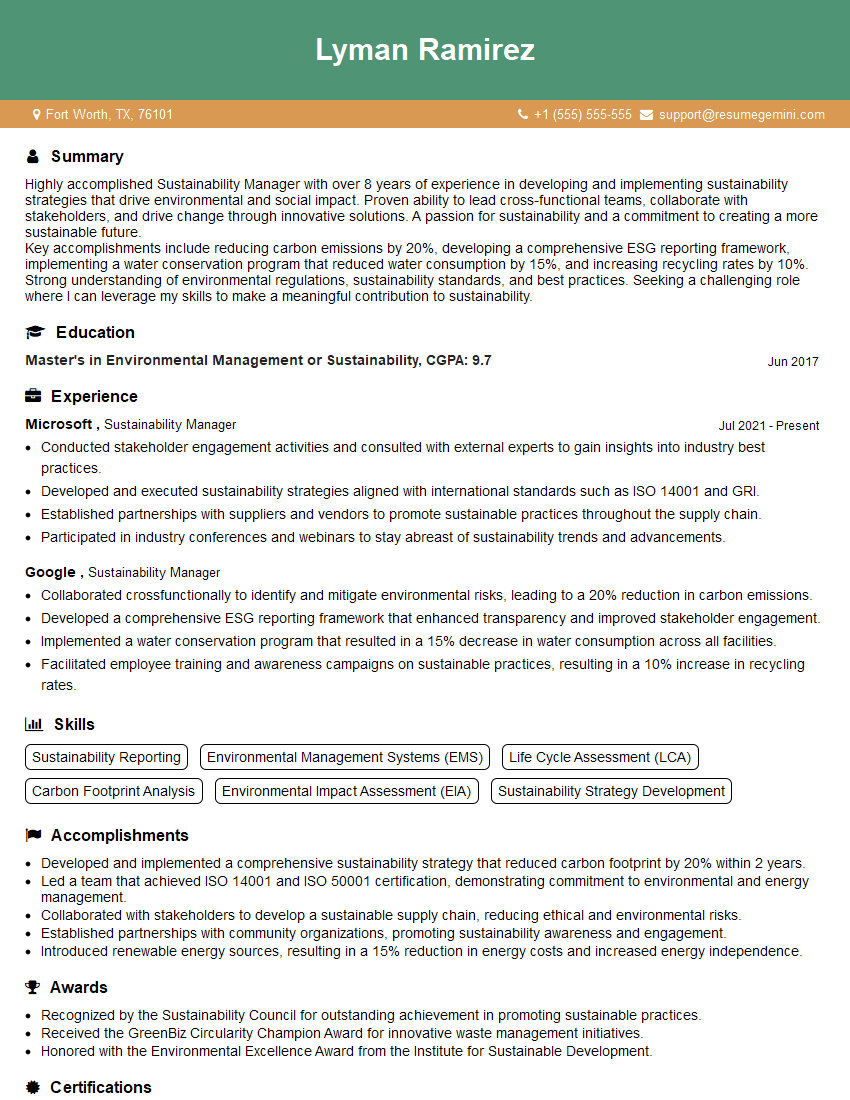
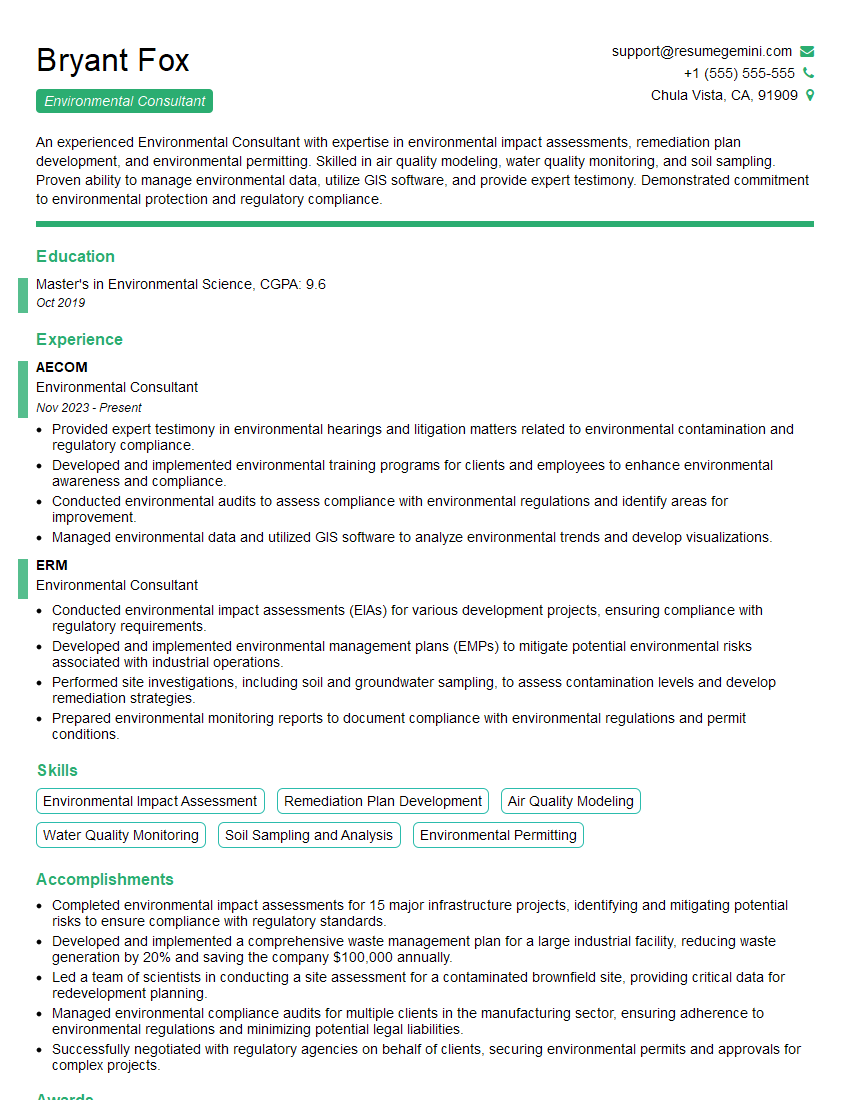
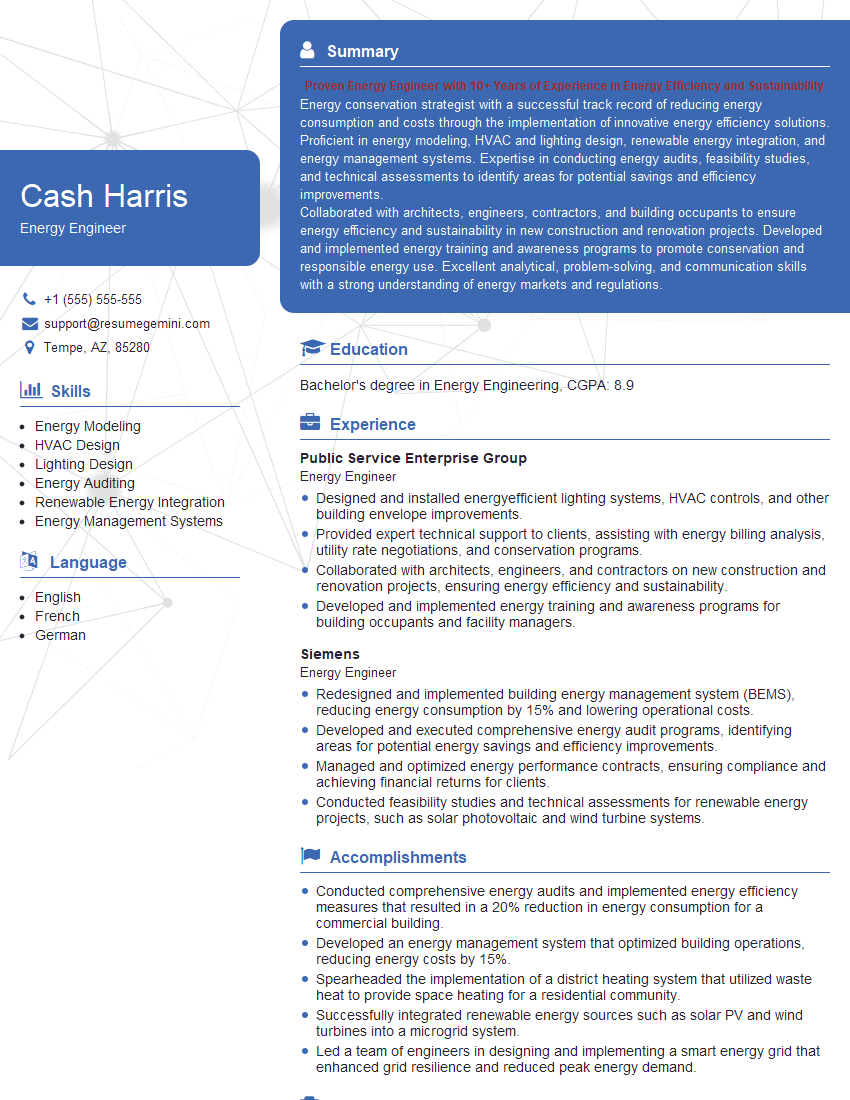
Mastering eQUEST and IES VE is crucial for advancing your career in sustainable building design and engineering. It opens doors to exciting opportunities and positions you as a highly sought-after professional. To maximize your job prospects, it’s vital to create a resume that effectively showcases your skills to Applicant Tracking Systems (ATS). ResumeGemini is a trusted resource to help you build a professional, ATS-friendly resume that highlights your proficiency in these critical software packages. Examples of resumes tailored to Environmental Software Proficiency (eQUEST, IES VE) are available to help guide your process.

Explore more articles
Users Rating of Our Blogs
Share Your Experience
We value your feedback! Please rate our content and share your thoughts (optional).
What Readers Say About Our Blog
Very informative content, great job.
good