Are you ready to stand out in your next interview? Understanding and preparing for Process Chemistry and Engineering interview questions is a game-changer. In this blog, we’ve compiled key questions and expert advice to help you showcase your skills with confidence and precision. Let’s get started on your journey to acing the interview.
Questions Asked in Process Chemistry and Engineering Interview
Q 1. Explain the concept of reaction kinetics and its importance in process design.
Reaction kinetics studies the rates of chemical reactions and the factors that influence them. It’s the cornerstone of process design because understanding reaction rates allows us to predict how quickly a reaction will proceed and optimize conditions for efficient production. Imagine baking a cake: reaction kinetics would tell us how long it needs to bake at a specific temperature to achieve the desired result. In a chemical plant, we use kinetics to determine the size and type of reactor needed, the optimal temperature and pressure, and the residence time of reactants to maximize yield and minimize waste. For example, if we know a reaction is first-order (rate depends linearly on the concentration of one reactant), we can model its behavior mathematically using rate laws and design a reactor that achieves the desired conversion.
A simple example is the decomposition of N2O5: The rate law is typically expressed as: rate = k[N2O5], where k is the rate constant and [N2O5] represents the concentration of N2O5. Understanding this allows us to precisely control the reaction.
Q 2. Describe different types of chemical reactors and their applications.
Chemical reactors are vessels where chemical reactions occur. Different reactor types are chosen based on the reaction’s characteristics and desired outcome. Think of them as different cooking pans – some are best for stir-fries, others for slow-cooking stews.
- Batch Reactors: Reactants are added at the beginning, and the reaction proceeds until completion. These are simple to operate but not ideal for large-scale continuous production. Example: Pharmaceutical drug synthesis.
- Continuous Stirred-Tank Reactors (CSTRs): Reactants continuously flow in, and products flow out, maintaining a constant mixture. They are excellent for liquid-phase reactions where good mixing is crucial. Example: Polymerization.
- Plug Flow Reactors (PFRs): Reactants flow through a tube with minimal back mixing, resembling a plug. They are efficient for gas-phase reactions or those where the concentration gradient is important. Example: Catalytic cracking in petroleum refining.
- Fluidized Bed Reactors: Solid catalysts are suspended in a gas stream, enhancing heat and mass transfer. They are used in many gas-solid reactions, offering high surface area for catalysis. Example: Catalytic cracking in petroleum refineries.
The choice of reactor heavily influences the overall process economics and efficiency. For instance, a CSTR might be preferred for its ease of operation and temperature control, while a PFR might be chosen for higher conversion rates in certain reactions.
Q 3. How do you determine the optimal operating conditions for a chemical process?
Determining optimal operating conditions involves a combination of experimentation, simulation, and economic analysis. It’s like finding the ‘sweet spot’ for baking the perfect cake – not too hot, not too cold, and just the right amount of time. We use techniques such as:
- Response Surface Methodology (RSM): A statistical approach to explore the effect of multiple variables (temperature, pressure, concentration) on the desired response (yield, selectivity).
- Process Simulation Software (Aspen Plus, COMSOL): These tools model the process and predict its behavior under various conditions, allowing virtual experimentation and optimization.
- Economic Analysis: Evaluating the cost of operating at different conditions, considering factors like raw material costs, energy consumption, and waste disposal.
The optimization process often involves iterative steps: We begin with initial guesses, perform experiments or simulations, analyze the results, adjust operating conditions, and repeat until the optimal conditions that maximize efficiency and minimize costs are found. For instance, in optimizing a polymerization reaction, we might systematically vary the temperature and initiator concentration to determine the settings that yield the desired molecular weight and conversion, while keeping energy costs in check.
Q 4. Explain the principles of mass and energy balances in chemical processes.
Mass and energy balances are fundamental principles in process engineering. They are based on the laws of conservation of mass and energy – what goes in must come out, either in the same form or transformed. Imagine a water tank: the amount of water leaving equals the amount entering plus or minus any changes in the tank’s level. Similarly, in a chemical process:
- Mass Balance: The mass of all components entering a process unit must equal the mass of all components leaving, accounting for any reactions or accumulation within the unit. This helps determine the flow rates of reactants and products.
- Energy Balance: The total energy entering a process unit (heat, work) must equal the total energy leaving, accounting for any energy changes due to reactions, phase transitions, or heat losses. This is crucial for designing heating/cooling systems and determining energy efficiency.
These balances are expressed mathematically as equations and are used to design and size process equipment. For instance, a mass balance on a reactor helps determine the required feed rate of reactants to achieve the desired production rate, while an energy balance helps determine the heating or cooling requirements to maintain the optimal reaction temperature.
Q 5. Discuss different separation techniques used in process chemistry.
Separation techniques are vital for isolating and purifying desired products from reaction mixtures. Think of separating sand from sugar – you wouldn’t just leave them mixed! Common methods include:
- Distillation: Separates components based on their boiling points. Used extensively in refining petroleum and separating organic solvents.
- Extraction: Separates components based on their solubility in different solvents. Used to isolate valuable products from complex mixtures.
- Crystallization: Purifies solids by forming crystals from a solution. Used to purify pharmaceuticals and other fine chemicals.
- Chromatography: Separates components based on their differential interaction with a stationary and mobile phase. Used in analytical and preparative applications.
- Filtration: Separates solids from liquids using a porous medium. Used in various industrial processes for solids-liquid separation.
The choice of separation technique depends on the properties of the components and the desired purity. For example, distillation is effective for separating volatile organic compounds, while crystallization is suited for separating thermally stable solids.
Q 6. What are the key considerations for process scale-up?
Process scale-up involves transitioning a chemical process from the laboratory or pilot plant scale to a larger industrial scale. This is a critical and challenging step, requiring careful consideration of several factors:
- Mixing and Heat Transfer: Scaling up often affects mixing efficiency and heat transfer rates. Larger reactors have greater challenges in achieving uniform mixing and temperature distribution.
- Reaction Kinetics: Reaction rates can change with scale due to altered heat and mass transfer. Careful modeling and experimentation are needed to ensure the reaction proceeds as expected.
- Equipment Design: Choosing appropriate equipment for the larger scale is essential, ensuring it can handle the increased throughput and potential hazards.
- Process Control: Implementing robust control systems is vital to manage the larger process and maintain consistent product quality.
Successful scale-up often involves using pilot plants – scaled-down versions of the industrial plant – to test and optimize the process before full-scale implementation. For example, in scaling up a fermentation process, we’d need to ensure adequate oxygen transfer to the microorganisms in a larger bioreactor and maintain sterile conditions to avoid contamination.
Q 7. How do you address process safety concerns during design and operation?
Process safety is paramount in chemical engineering. Designing and operating a chemical plant safely involves a multi-faceted approach:
- Hazard Identification and Risk Assessment: Identifying potential hazards (e.g., fire, explosion, toxic releases) and assessing their likelihood and consequences using techniques like HAZOP (Hazard and Operability Study) and Fault Tree Analysis.
- Inherent Safety Design: Incorporating safety features into the process design itself, minimizing hazards from the outset. This could involve using less hazardous materials, operating at lower temperatures and pressures, or using inherently safer equipment.
- Safety Systems and Equipment: Installing safety devices like pressure relief valves, emergency shutdown systems, and fire suppression systems to mitigate risks.
- Operating Procedures and Training: Developing clear operating procedures and providing comprehensive training to operators to ensure safe operation.
- Emergency Response Planning: Having a detailed emergency response plan in place to handle accidents and minimize their impact.
For example, in designing a process involving flammable materials, we’d incorporate features like inerting the process with nitrogen to prevent fires, install explosion vents to relieve pressure in case of an explosion, and implement robust fire detection and suppression systems. Furthermore, regular safety audits and training are crucial for maintaining a safe working environment.
Q 8. Explain the principles of process control and instrumentation.
Process control and instrumentation are the heart of efficient and safe chemical manufacturing. Process control involves using various techniques to maintain a process at its desired operating conditions, while instrumentation provides the means to measure and monitor these conditions. Think of it like driving a car: the steering wheel, gas pedal, and brakes are your control mechanisms, and the speedometer, fuel gauge, and temperature gauge are your instrumentation, providing feedback on your actions.
Principles:
- Measurement: Sensors (e.g., thermocouples, pressure transducers, flow meters) measure process variables (temperature, pressure, flow rate, level, composition).
- Transmission: Measured data is transmitted to a control system (e.g., Programmable Logic Controller (PLC), Distributed Control System (DCS)).
- Control Algorithm: The control system uses algorithms (e.g., Proportional-Integral-Derivative (PID) control) to compare measured values to setpoints (desired values) and make adjustments.
- Actuation: Actuators (e.g., valves, pumps, heaters) respond to control signals to manipulate the process and bring it back to the setpoint.
- Feedback: The system continuously monitors and adjusts the process based on feedback from the sensors, ensuring stability and consistency.
Example: In a chemical reactor, temperature is a critical variable. A thermocouple measures the temperature, a PLC compares it to the setpoint, and a valve controlling the coolant flow adjusts to maintain the desired temperature.
Q 9. Describe your experience with process simulation software (e.g., Aspen Plus, COMSOL).
I have extensive experience with Aspen Plus and COMSOL, utilizing them for process simulation and design across various projects. Aspen Plus is my go-to for steady-state and dynamic simulations of large-scale chemical processes, particularly for designing and optimizing distillation columns, reactors, and heat exchangers. I’ve used it to predict product yields, optimize energy consumption, and assess the impact of process changes before implementation, saving considerable time and resources. For example, I used Aspen Plus to model and optimize a reactive distillation column, resulting in a 15% increase in product yield and a 10% reduction in energy consumption.
COMSOL, on the other hand, is invaluable for detailed modeling of smaller-scale processes and phenomena, especially those involving fluid dynamics, heat transfer, and mass transport at a more microscopic level. I’ve employed COMSOL to simulate microfluidic devices and to model the behavior of catalysts within reactor beds, offering insights into performance bottlenecks and suggesting design improvements. For example, I leveraged COMSOL to optimize the design of a microreactor, resulting in a significant improvement in reaction rate and selectivity.
Q 10. How do you troubleshoot process deviations and ensure quality control?
Troubleshooting process deviations and ensuring quality control are paramount in process chemistry. My approach is systematic and data-driven.
Troubleshooting Steps:
- Identify the deviation: Pinpoint the specific parameter(s) that are out of specification (e.g., temperature, pressure, yield, purity).
- Gather data: Collect relevant process data (temperatures, pressures, flow rates, compositions) before, during, and after the deviation. Analyze historical data for trends.
- Root cause analysis: Use tools like Fishbone diagrams (Ishikawa diagrams) to identify potential causes. This could range from equipment malfunction to incorrect operating parameters or raw material quality issues.
- Implement corrective actions: Based on the root cause analysis, implement appropriate corrective actions (e.g., equipment repair, parameter adjustments, operator training, raw material specification changes).
- Verify effectiveness: Monitor the process after the corrective actions to ensure the deviation is resolved and the process is stable.
Quality Control: Quality control involves implementing procedures to prevent deviations and ensure consistent product quality. This includes regular calibration of instruments, routine process checks, and statistical process control (SPC).
Example: If a reactor’s yield consistently falls below the setpoint, I would systematically analyze the data to identify potential causes – perhaps a malfunctioning stirrer, a change in raw material quality, or a deviation in temperature control.
Q 11. What are the key aspects of process validation?
Process validation is the documented evidence that a process consistently produces a product meeting its predetermined specifications and quality attributes. It’s a critical aspect of GMP compliance and ensures product safety and efficacy.
Key Aspects:
- Design Qualification (DQ): Verifying the design of the process and equipment meets the intended purpose. This includes review of process flow diagrams, equipment specifications, and utility systems.
- Installation Qualification (IQ): Confirming that equipment is correctly installed and operational according to specifications. This involves testing and documenting the installation process.
- Operational Qualification (OQ): Demonstrating that equipment functions as intended over its operating range. This typically involves testing at various operating conditions.
- Performance Qualification (PQ): Verifying that the entire process consistently produces the desired product meeting predefined specifications under normal operating conditions. This usually involves multiple batches and statistical analysis.
Example: In the manufacturing of a pharmaceutical drug, process validation would involve demonstrating that the manufacturing process consistently produces the drug within acceptable purity and potency limits across multiple batches. The documentation would encompass DQ, IQ, OQ, and PQ results to provide irrefutable evidence.
Q 12. Describe your experience with statistical process control (SPC).
Statistical Process Control (SPC) is a powerful set of tools used to monitor and control process variability. It uses statistical methods to identify trends and patterns in process data, allowing for proactive identification of potential problems and preventing deviations from specifications. It’s like having a process’s ‘vital signs’ constantly monitored.
My Experience: I’ve extensively used control charts (e.g., X-bar and R charts, p-charts, c-charts) to monitor process parameters. These charts visually represent data variability over time, allowing me to quickly identify shifts in the mean or increases in variability, indicating potential problems. I’ve also utilized capability analysis to assess the ability of a process to meet specifications, helping to identify areas for improvement. For instance, I used SPC to identify a subtle drift in the temperature of a crystallization process, leading to an improvement in product yield and consistency.
Example: In monitoring the fill weight of a product, an X-bar and R chart would continuously plot the average fill weight and range of fill weights for each sample. Points outside control limits indicate potential problems requiring immediate investigation.
Q 13. Explain your understanding of Good Manufacturing Practices (GMP).
Good Manufacturing Practices (GMP) are a set of guidelines that ensure the quality and safety of manufactured products. They cover all aspects of manufacturing, from facility design and equipment maintenance to personnel training and documentation. Think of it as the ‘gold standard’ for manufacturing processes, ensuring consistent and safe products.
My Understanding: My understanding of GMP encompasses several key areas:
- Facility Design and Maintenance: Ensuring the facility is designed to prevent contamination and supports efficient production. This includes cleanrooms, appropriate utilities, and equipment maintenance schedules.
- Personnel Training and Qualification: Ensuring personnel are adequately trained to perform their duties and understand GMP principles. This includes training documentation and competency assessments.
- Raw Material Control: Implementing procedures to control and track raw material quality from procurement through production. This involves specification setting, testing, and documentation.
- Process Control and Monitoring: Implementing procedures for process monitoring and control to ensure consistent product quality. This includes maintaining detailed records and implementing deviation management procedures.
- Documentation and Record Keeping: Maintaining complete and accurate records of all aspects of manufacturing. This includes batch records, calibration records, and training records.
Example: In the pharmaceutical industry, GMP compliance is crucial for ensuring patient safety. Strict adherence to GMP guidelines is required for the manufacturing of drugs and medications. Failure to comply can result in product recalls, regulatory action, and reputational damage.
Q 14. How do you design experiments to optimize chemical processes?
Designing experiments to optimize chemical processes is a critical skill. My approach relies on statistically sound experimental designs to efficiently explore the process parameter space and identify optimal operating conditions.
Methods:
- Factorial Designs: These designs allow the investigation of multiple factors and their interactions simultaneously. This is highly efficient compared to changing one factor at a time.
- Response Surface Methodology (RSM): This iterative approach uses statistical models to fit experimental data and guide further experimentation towards an optimum. It’s particularly useful when the relationship between parameters and response is complex.
- DOE Software: Software like Design-Expert or JMP greatly simplifies the design and analysis of experiments, ensuring statistical rigor.
Steps:
- Define Objectives and Parameters: Clearly define the response variable(s) to be optimized (e.g., yield, purity, selectivity) and the process parameters to be investigated (e.g., temperature, pressure, concentration, residence time).
- Choose Experimental Design: Select an appropriate experimental design based on the number of factors and the complexity of the expected relationships.
- Conduct Experiments: Conduct the experiments meticulously and accurately, ensuring consistent data collection.
- Analyze Data: Use statistical software to analyze the results, identify significant factors, and build predictive models.
- Optimize Process: Use the models to identify optimal operating conditions, considering constraints and potential trade-offs.
Example: I used a factorial design to optimize the synthesis of a pharmaceutical intermediate, investigating the effects of temperature, reactant concentrations, and reaction time on yield and purity. The results allowed us to identify the optimal combination of parameters that maximized yield while maintaining high purity.
Q 15. Describe your experience with different types of process equipment (e.g., heat exchangers, pumps, reactors).
My experience encompasses a wide range of process equipment, crucial for efficient and safe chemical processing. I’ve worked extensively with heat exchangers, primarily shell and tube and plate types, understanding their design principles for maximizing heat transfer efficiency in various reactions. For instance, in a previous project synthesizing a pharmaceutical intermediate, we optimized a shell and tube exchanger to control the highly exothermic reaction, preventing runaway conditions. Regarding pumps, I’m proficient with centrifugal, positive displacement, and diaphragm pumps, selecting the appropriate type depending on fluid viscosity, pressure requirements, and the presence of solids. In one project, a diaphragm pump was crucial for handling corrosive reagents without damage to the pump itself. Reactor experience includes batch, semi-batch, and continuous stirred tank reactors (CSTRs), as well as plug flow reactors (PFRs). The selection depends on the reaction kinetics and desired scale. For example, a CSTR was ideal for a homogeneous, fast reaction, ensuring good mixing and temperature control, while a PFR proved more suitable for a slow, heterogeneous catalytic reaction to optimize conversion.
Career Expert Tips:
- Ace those interviews! Prepare effectively by reviewing the Top 50 Most Common Interview Questions on ResumeGemini.
- Navigate your job search with confidence! Explore a wide range of Career Tips on ResumeGemini. Learn about common challenges and recommendations to overcome them.
- Craft the perfect resume! Master the Art of Resume Writing with ResumeGemini’s guide. Showcase your unique qualifications and achievements effectively.
- Don’t miss out on holiday savings! Build your dream resume with ResumeGemini’s ATS optimized templates.
Q 16. Explain your understanding of different unit operations in chemical engineering.
Unit operations are the fundamental building blocks of any chemical process. My understanding encompasses a variety of these, including:
- Fluid mechanics: This includes pumping, mixing, and flow control, essential for achieving desired reaction conditions. For example, I’ve designed optimal piping networks to minimize pressure drop and ensure consistent fluid flow.
- Heat transfer: This focuses on heating and cooling processes, critical for temperature control in reactions, distillation, and crystallization. I’ve applied this to several projects, employing both direct and indirect heating/cooling methods.
- Mass transfer: This involves separation processes like distillation, extraction, and absorption, crucial for purification and product isolation. I once optimized a distillation column to increase product purity and reduce energy consumption.
- Reaction engineering: This is the core of chemical processing, covering reactor design, kinetics, and process optimization. Designing reactors to maximize yield and selectivity is central to my expertise.
- Solid-liquid separation: This includes filtration and centrifugation, important steps in downstream processing. I have practical experience selecting the optimal filter media based on particle size and feed properties.
A thorough grasp of these operations is essential for designing, optimizing, and troubleshooting chemical processes effectively. They are interconnected, and understanding their interactions is key to successful process development.
Q 17. How do you handle process optimization challenges using design of experiments (DOE)?
Design of Experiments (DOE) is a powerful tool for process optimization. My approach involves a structured methodology:
- Defining Objectives: Clearly identifying the critical process parameters and the desired outcomes (e.g., yield, purity, throughput). For example, in a previous project, our objective was to maximize yield while minimizing impurities.
- Selecting DOE Type: Choosing the appropriate experimental design based on the number of factors and the desired level of detail (e.g., full factorial, fractional factorial, response surface methodology). The selection depends on the resources and time constraints.
- Experiment Execution: Carefully conducting the experiments, maintaining consistent conditions, and accurately recording all data. Rigorous data collection is essential for reliable results.
- Data Analysis: Analyzing the results using statistical software (e.g., Minitab, JMP) to identify significant factors and their interactions. This often involves ANOVA (analysis of variance) and regression analysis.
- Model Development: Developing a mathematical model to predict process outcomes based on the identified factors. This model is crucial for guiding future process changes.
- Optimization: Using the model to optimize the process parameters for achieving the desired outcome. This might involve numerical optimization techniques.
DOE is not just about finding optimal settings; it’s about understanding the complex interplay between variables and building a robust process.
Q 18. Discuss your experience with process modeling and simulation techniques.
I have extensive experience with process modeling and simulation, employing tools like Aspen Plus and COMSOL. These tools are indispensable for predicting process behavior, optimizing designs, and identifying potential problems before they arise. For example, I utilized Aspen Plus to model a distillation column to determine the optimal reflux ratio and number of stages, saving significant time and cost during the design phase. Furthermore, I used COMSOL to model fluid flow and heat transfer in a microreactor, which helped to optimize the design for improved efficiency. My experience includes developing steady-state and dynamic models, incorporating reaction kinetics, thermodynamics, and mass and energy balances. Simulation helps in understanding the sensitivity of the process to various parameters, allowing for better process control and improved robustness.
Q 19. Explain your approach to risk assessment in chemical process design.
Risk assessment in chemical process design is critical for ensuring safety and preventing accidents. My approach follows a systematic methodology such as HAZOP (Hazard and Operability Study) or What-If analysis. This involves identifying potential hazards, analyzing their likelihood and consequences, and implementing mitigation strategies. For instance, in a project involving flammable materials, a HAZOP study identified a potential risk of ignition from static electricity. This led to the incorporation of grounding and bonding systems to mitigate this risk. I also utilize quantitative risk assessment techniques, employing software tools to estimate the probability and severity of potential incidents. This data guides the selection of appropriate safety systems and procedures to minimize the risk to acceptable levels.
Q 20. How do you ensure environmental compliance in chemical processes?
Environmental compliance is paramount in chemical processing. My approach involves understanding and adhering to all relevant regulations, including emission limits, waste disposal guidelines, and permit requirements. This starts with selecting environmentally friendly solvents and reagents. Process design includes measures to minimize waste generation, such as incorporating recycling and reuse strategies. For example, in a previous project, we designed a closed-loop system to recycle solvents, reducing waste and operational costs. Regular environmental monitoring and reporting are essential, and I’m adept at interpreting environmental data and ensuring compliance with reporting requirements. Working proactively to minimize environmental impact is not just about meeting regulations; it’s about being a responsible and sustainable industry partner.
Q 21. Describe your experience with process automation and control systems.
My experience in process automation and control systems includes designing and implementing control strategies for various chemical processes using Programmable Logic Controllers (PLCs) and Distributed Control Systems (DCS). I’m proficient in using PID controllers, advanced process control (APC) techniques, and model predictive control (MPC) to maintain desired process variables like temperature, pressure, and flow rate. For instance, I implemented an MPC system in a polymerization reactor to maintain optimal reaction conditions and improve product quality and consistency. This involved developing a dynamic model of the reactor, integrating it with the control system, and tuning the controller parameters to achieve desired performance. Furthermore, I have experience with safety instrumented systems (SIS) to ensure safe shutdown in case of emergencies. Automation enhances process efficiency, safety, and product quality.
Q 22. Explain the concept of process intensification.
Process intensification aims to achieve substantial improvements in process efficiency and productivity by reducing equipment size, energy consumption, and waste generation. It’s about doing more with less, and it’s achieved through innovative process designs and technologies. Think of it like baking a cake – instead of using a conventional oven, you might use a microwave to cook it faster and more efficiently.
- Miniaturization: Replacing large reactors with microreactors or smaller units. This enhances heat and mass transfer, leading to faster reactions and improved control.
- Reactive Distillation: Combining reaction and separation steps in a single unit, eliminating the need for separate reactors and distillation columns. This reduces capital and operating costs, along with the footprint of the process.
- Supercritical Fluids: Using supercritical fluids (like CO2) as solvents, offering unique properties for reaction and separation, often leading to cleaner and more efficient processes.
- Membrane Technology: Utilizing membranes for separations like filtration or dialysis, reducing energy consumption compared to traditional methods.
For example, in the pharmaceutical industry, process intensification is used to synthesize active pharmaceutical ingredients (APIs) more efficiently, producing higher yields with less waste and lower energy consumption. This results in cost savings and reduced environmental impact.
Q 23. How do you manage projects and timelines in a process engineering environment?
Managing projects and timelines in process engineering relies heavily on structured methodologies and effective communication. I typically use a combination of Agile and Waterfall approaches, adapting to the specific project needs.
- Project Scoping and Planning: We begin with a detailed definition of project objectives, deliverables, timelines, and resource allocation. This usually includes creating a Gantt chart to visualize tasks and dependencies.
- Risk Assessment and Mitigation: Identifying potential risks (e.g., equipment failures, regulatory hurdles) early and planning strategies to mitigate them is crucial. This often involves contingency planning and buffer time built into the schedule.
- Regular Monitoring and Reporting: Continuous progress tracking is vital. We employ regular meetings, status reports, and performance metrics to monitor progress against the plan, identifying and addressing deviations promptly.
- Communication and Collaboration: Open communication among the team, clients, and stakeholders is essential. We utilize tools like project management software (e.g., MS Project, Jira) to facilitate collaboration and information sharing.
In a recent project involving the scale-up of a chemical synthesis, we implemented a phased approach, starting with lab-scale experiments, then pilot plant trials, and finally full-scale production. This allowed us to identify and resolve potential issues at each stage, preventing costly delays in the final implementation.
Q 24. Describe your experience with different types of process analyzers.
My experience encompasses a wide range of process analyzers, chosen based on the specific application and required information. These include online, at-line, and off-line instruments.
- Online Analyzers: These provide real-time data during the process, enabling immediate feedback and control. Examples include gas chromatographs (GCs), mass spectrometers (MSs), and near-infrared (NIR) spectrometers, which are crucial for monitoring composition, temperature, and pressure in continuous processes.
- At-line Analyzers: These are used near the process unit and offer faster analysis than off-line methods, but not real-time data. Examples include titrators, pH meters, and conductivity meters.
- Off-line Analyzers: Samples are taken and analyzed in a separate laboratory. Techniques include high-performance liquid chromatography (HPLC), gas chromatography-mass spectrometry (GC-MS), and various wet chemistry methods. They offer high accuracy but can introduce delays.
In one project, we used an online GC to monitor the concentration of reactants and products in a continuous flow reactor, enabling us to optimize reaction conditions and maximize yield in real-time. The real-time data was critical to prevent the production of unwanted by-products.
Q 25. How do you handle unexpected process upsets or emergencies?
Handling unexpected process upsets or emergencies requires a structured approach based on safety and efficient problem-solving. My response involves a combination of immediate actions, investigation, and preventative measures.
- Safety First: The primary concern is the safety of personnel and the environment. This often involves shutting down the process or taking immediate actions to mitigate hazards (e.g., venting, emergency shutdown procedures).
- Rapid Assessment: Identify the root cause of the upset. This involves reviewing process data from analyzers, alarms, and operator logs to determine what went wrong.
- Corrective Actions: Implement immediate corrective actions to stabilize the process and prevent further issues. This might include adjusting operating parameters, restarting equipment, or isolating the affected section of the process.
- Root Cause Analysis: After stabilizing the process, a thorough investigation is needed to identify the root cause of the upset. This usually involves using techniques like the 5 Whys or Fault Tree Analysis.
- Preventative Measures: Implement changes to prevent similar occurrences in the future. This could involve upgrading equipment, modifying operating procedures, or enhancing process control strategies.
Once, during a reactor exotherm, we followed our emergency shutdown protocol, immediately cooling the reactor and safely venting the pressure. Following the incident, we implemented improved temperature control and alarm systems to prevent a similar event.
Q 26. Explain your understanding of different types of chemical reaction mechanisms.
Chemical reaction mechanisms describe the step-by-step process of how reactants transform into products. Understanding these mechanisms is crucial for optimizing reaction conditions and controlling selectivity (favoring desired products over by-products).
- Addition Reactions: Reactants combine to form a larger molecule (e.g., the addition of bromine to an alkene).
- Substitution Reactions: One atom or group replaces another in a molecule (e.g., halogenation of alkanes).
- Elimination Reactions: Atoms or groups are removed from a molecule to form a double or triple bond (e.g., dehydration of alcohols).
- Rearrangement Reactions: Atoms within a molecule shift to form a structural isomer (e.g., Claisen rearrangement).
- Redox Reactions: Reactions involving electron transfer between reactants (e.g., oxidation of alcohols to aldehydes).
For instance, in designing a catalyst for a specific reaction, understanding the reaction mechanism helps in choosing the appropriate active sites and support materials to enhance the rate of the desired steps while suppressing undesired pathways. Detailed kinetic studies help build a quantitative understanding of these mechanisms.
Q 27. Describe your experience with data analysis and interpretation in process chemistry.
Data analysis and interpretation are fundamental to process chemistry. I’m proficient in using various statistical tools and software to analyze experimental data, optimize processes, and troubleshoot issues.
- Data Acquisition and Cleaning: Gathering reliable data from various sources (e.g., process analyzers, lab experiments) is the first step. This often requires cleaning and preprocessing the data to handle outliers and inconsistencies.
- Statistical Analysis: Employing statistical methods (e.g., regression analysis, ANOVA) to identify correlations, trends, and significant effects of process parameters on product yield and quality.
- Process Modeling: Developing mathematical models of the process to simulate its behavior under different conditions, enabling optimization studies and predicting the impact of changes.
- Data Visualization: Creating clear and informative visualizations (e.g., graphs, charts) to communicate findings and insights to others.
In a recent project, we used multivariate analysis to optimize the reaction conditions for a complex multi-step synthesis. By analyzing the relationships between various parameters (temperature, pressure, reactant concentrations) and product yield, we were able to identify the optimal operating window, significantly improving process efficiency.
Key Topics to Learn for Process Chemistry and Engineering Interview
- Reaction Kinetics and Thermodynamics: Understanding reaction rates, equilibrium, and their impact on process design and optimization. Practical application: Designing a reactor for maximum yield and selectivity.
- Mass and Energy Balances: Applying fundamental principles to analyze and design chemical processes. Practical application: Calculating heat duties and sizing equipment for a distillation column.
- Process Simulation and Modeling: Utilizing software tools (Aspen Plus, ChemCAD) to predict process behavior and optimize designs. Practical application: Troubleshooting a process bottleneck using simulation.
- Reactor Design and Operation: Choosing appropriate reactor types (batch, continuous, CSTR, PFR) based on reaction kinetics and process requirements. Practical application: Optimizing the operating parameters of a continuous stirred-tank reactor.
- Separation Processes: Understanding and applying principles of distillation, extraction, crystallization, and membrane separation. Practical application: Designing a purification scheme for a multi-component mixture.
- Process Safety and Hazard Analysis: Identifying and mitigating potential hazards in chemical processes. Practical application: Conducting a HAZOP study to identify and assess process risks.
- Process Control and Instrumentation: Understanding feedback control loops, sensors, and actuators. Practical application: Designing a control system to maintain a desired temperature in a reactor.
- Process Economics and Optimization: Evaluating the economic feasibility of chemical processes and optimizing for cost-effectiveness. Practical application: Performing a cost analysis of different process alternatives.
- Environmental Considerations: Understanding and minimizing the environmental impact of chemical processes. Practical application: Designing a process to minimize waste generation and emissions.
Next Steps
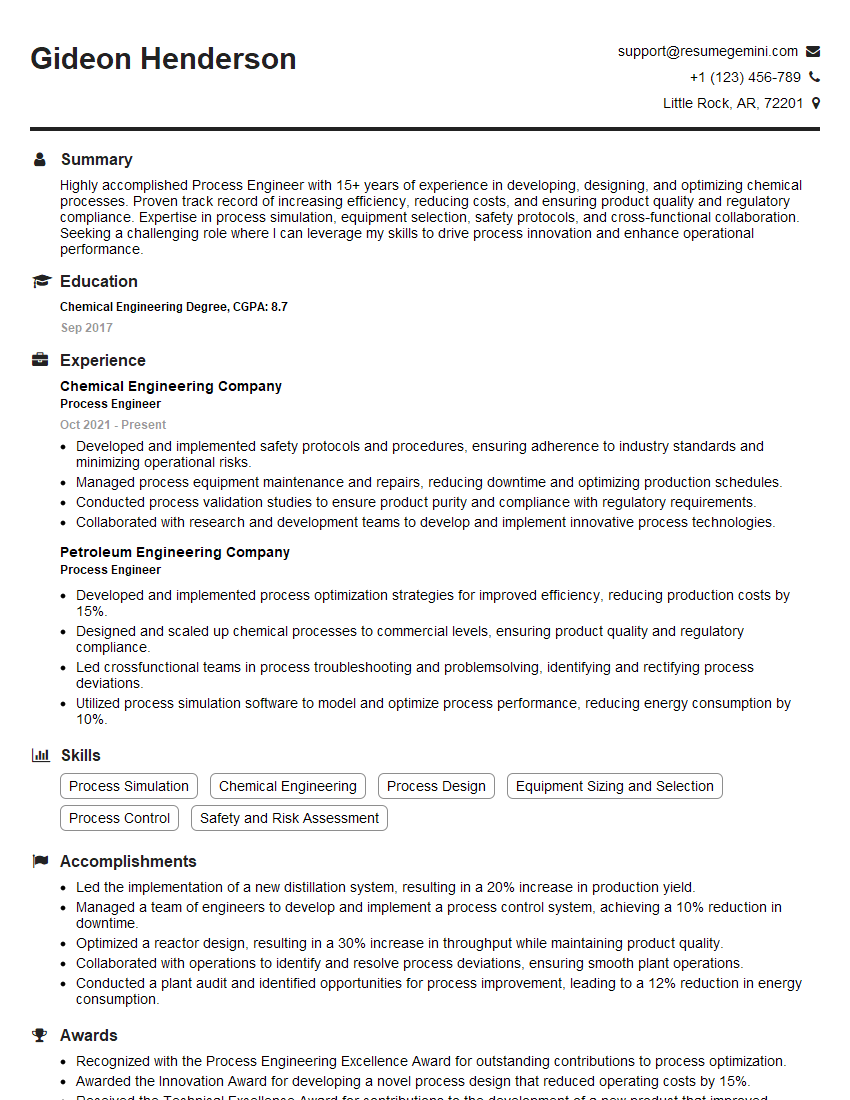
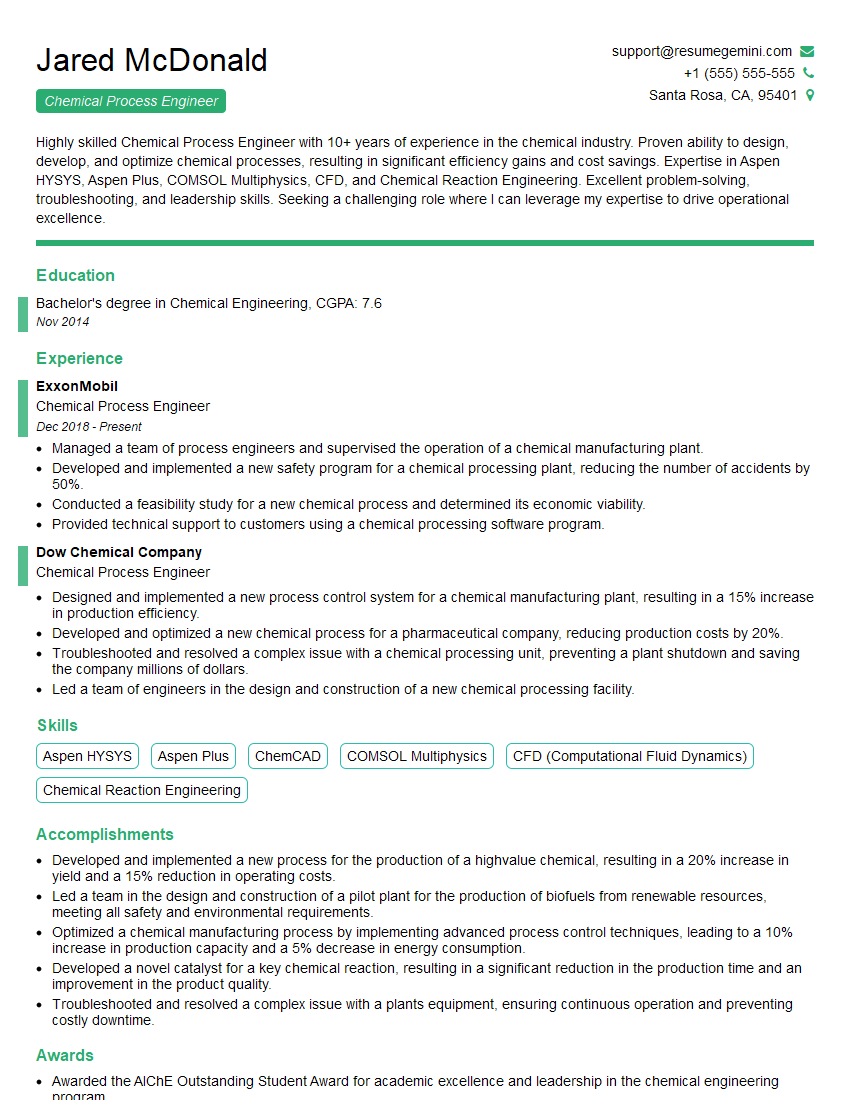
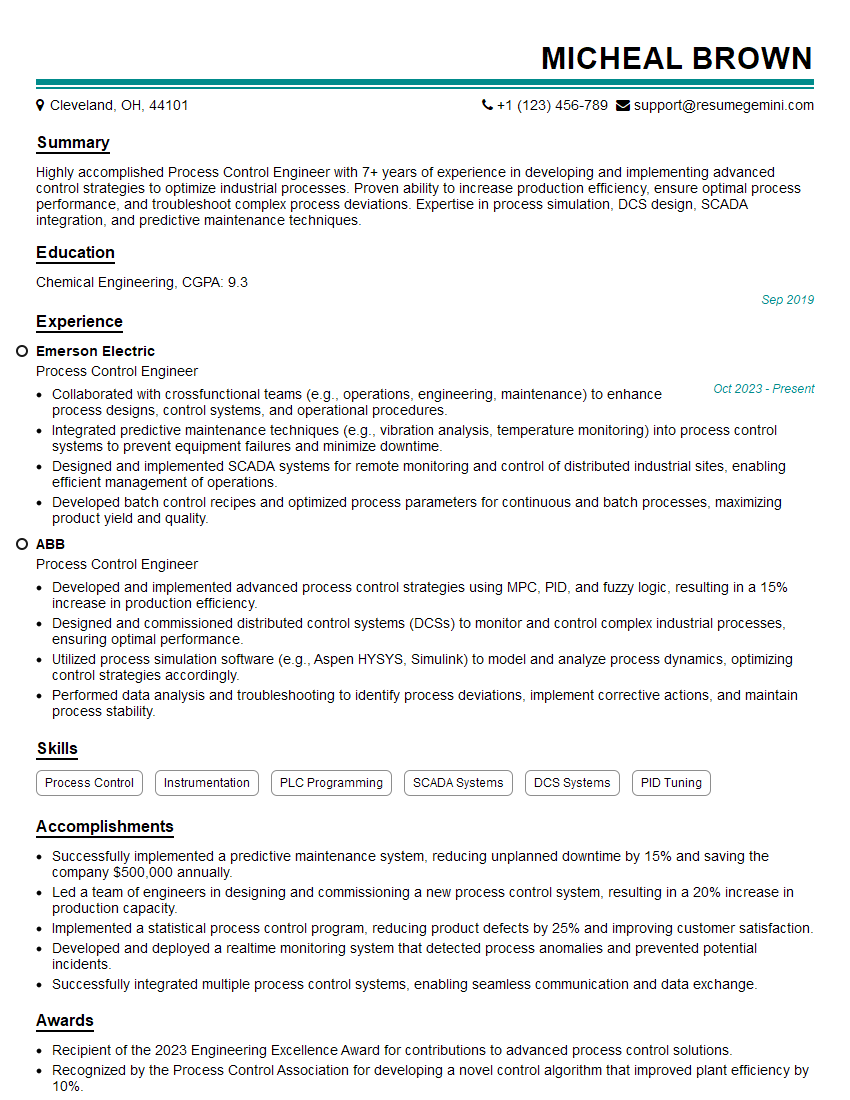
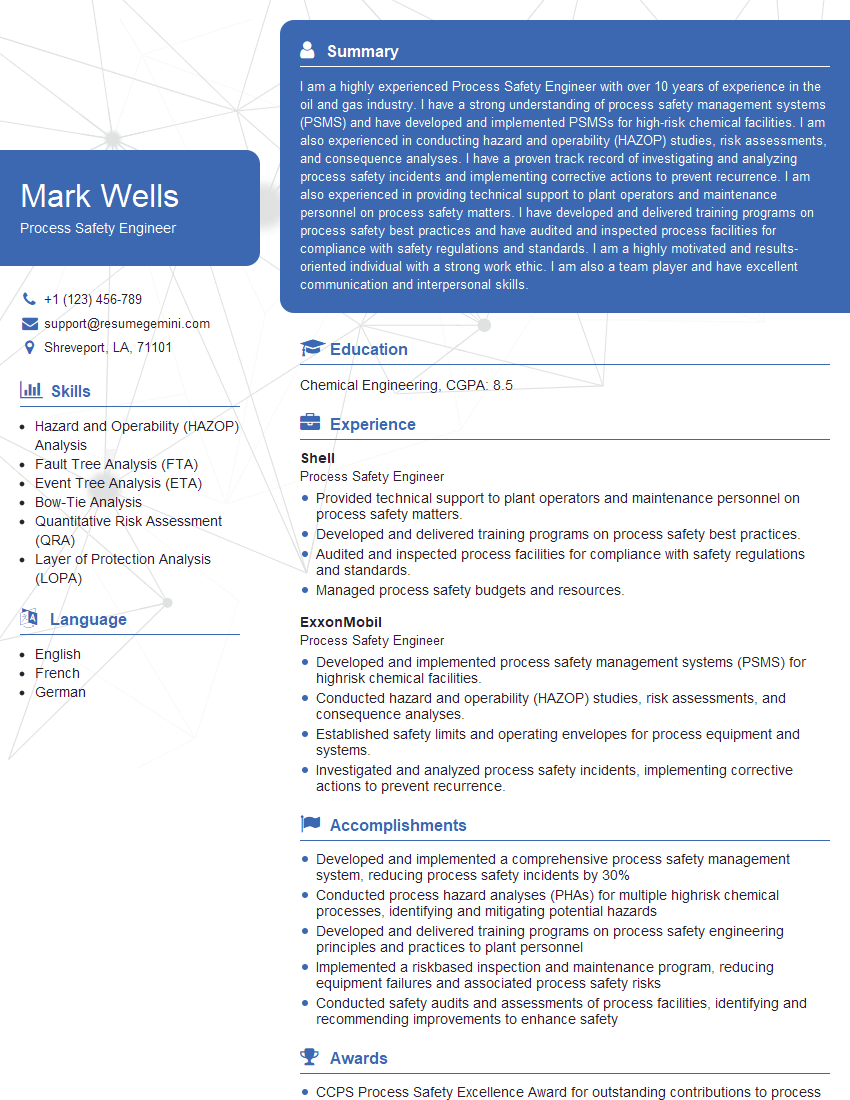
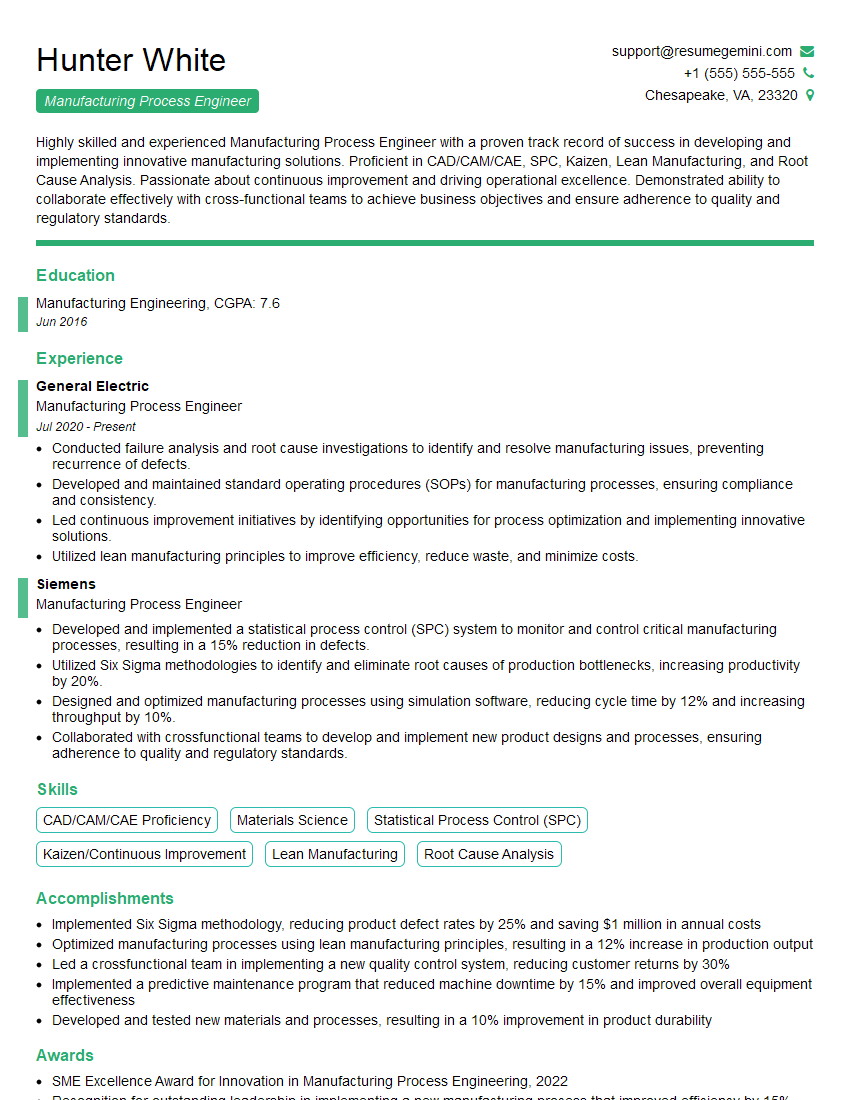
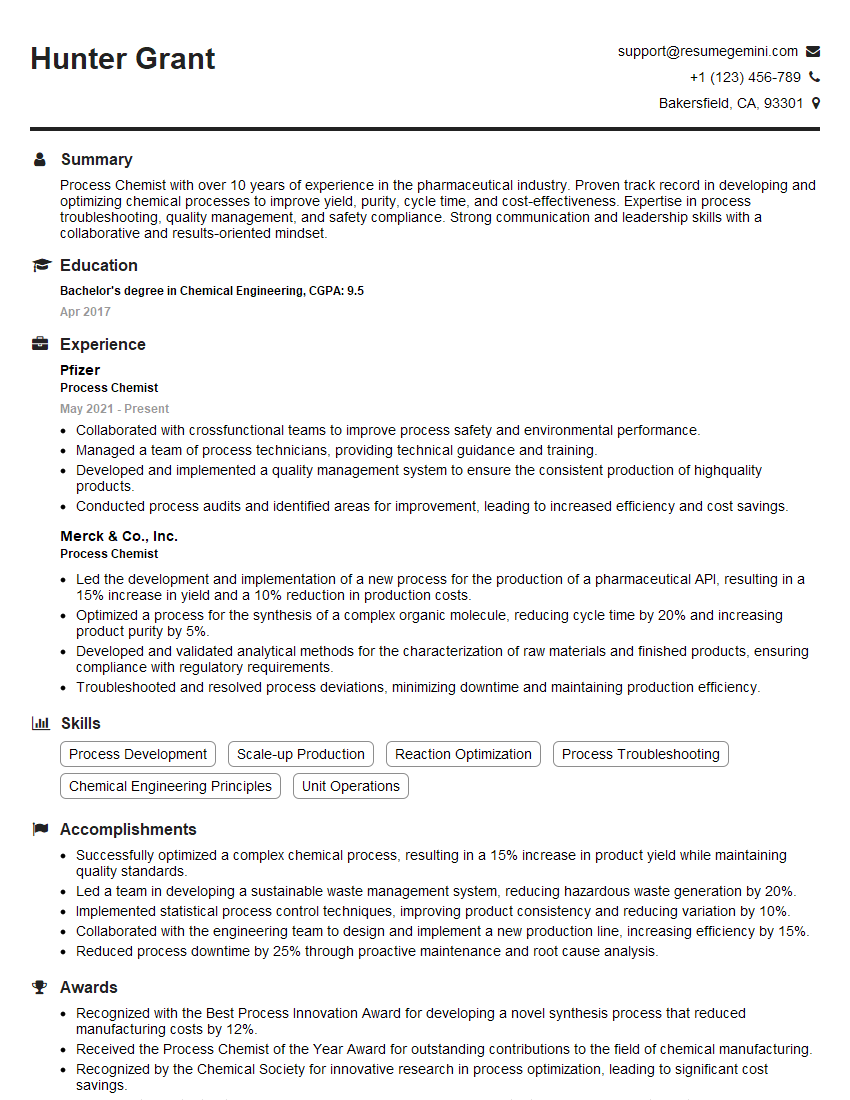
Mastering Process Chemistry and Engineering opens doors to exciting and impactful careers in various industries. A strong foundation in these principles is crucial for success in roles ranging from research and development to process optimization and plant management. To significantly enhance your job prospects, it’s essential to create an ATS-friendly resume that showcases your skills and experience effectively. We recommend using ResumeGemini, a trusted resource for building professional resumes. ResumeGemini provides examples of resumes tailored to Process Chemistry and Engineering, helping you craft a compelling document that highlights your qualifications and secures you that crucial interview.
Explore more articles
Users Rating of Our Blogs
Share Your Experience
We value your feedback! Please rate our content and share your thoughts (optional).
What Readers Say About Our Blog
Very informative content, great job.
good