Interviews are more than just a Q&A session—they’re a chance to prove your worth. This blog dives into essential Equipment Maintenance and Diagnostics interview questions and expert tips to help you align your answers with what hiring managers are looking for. Start preparing to shine!
Questions Asked in Equipment Maintenance and Diagnostics Interview
Q 1. Explain the difference between preventive and corrective maintenance.
Preventive maintenance and corrective maintenance are two fundamental approaches to equipment upkeep, differing significantly in their timing and objective. Preventive maintenance, as the name suggests, focuses on preventing equipment failures through scheduled inspections, lubrication, cleaning, and part replacements. It’s proactive, aiming to extend equipment lifespan and reduce downtime. Corrective maintenance, on the other hand, is reactive. It addresses equipment failures after they occur, involving repairs and troubleshooting to restore functionality. Think of it as fixing a problem after it has already surfaced.
Example: Regularly changing the oil in a vehicle is preventive maintenance; fixing a flat tire is corrective maintenance. In a manufacturing setting, regularly inspecting conveyor belts for wear and tear is preventive, while repairing a broken belt after it snaps is corrective.
The choice between preventive and corrective maintenance involves a cost-benefit analysis. While preventive maintenance adds upfront costs, it significantly reduces the likelihood of expensive emergency repairs and prolonged downtime, ultimately saving money in the long run. An effective maintenance strategy typically involves a combination of both approaches, striking a balance to optimize equipment reliability and cost-efficiency.
Q 2. Describe your experience with troubleshooting complex equipment malfunctions.
Throughout my career, I’ve encountered numerous complex equipment malfunctions, ranging from sophisticated robotics failures in automated manufacturing lines to intricate issues with high-voltage power distribution systems. One particularly challenging case involved a sudden shutdown of a critical compressor in a large-scale refrigeration plant. Initial diagnostics pointed to a variety of potential problems, including motor failure, control system glitches, and refrigerant leaks.
My approach involved a systematic troubleshooting process. First, I carefully reviewed the system’s historical data, looking for any unusual patterns or anomalies prior to the failure. Then, I conducted thorough visual inspections, checking for obvious signs of damage or leaks. I utilized advanced diagnostic tools, including vibration analysis and thermal imaging, to pinpoint the root cause. This revealed a subtle but significant imbalance in the compressor’s rotating components, ultimately leading to a catastrophic bearing failure. The repair involved a complete bearing replacement, rigorous balancing procedures, and comprehensive system testing before recommissioning. This successful resolution not only avoided significant production losses but also significantly enhanced my understanding of compressor dynamics and fault detection.
Q 3. What are your preferred methods for diagnosing equipment failures?
My preferred methods for diagnosing equipment failures are multifaceted and leverage a combination of techniques. I always begin with a thorough visual inspection, observing for any signs of damage, wear, or unusual conditions. Then, I incorporate data-driven diagnostics, using tools such as:
- Vibration analysis: Detecting imbalances, misalignment, or bearing defects through vibration signature analysis.
- Thermal imaging: Identifying overheating components which might indicate electrical faults, friction, or other issues.
- Oil analysis: Examining oil samples for contaminants, wear particles, or changes in viscosity to assess the condition of lubricated components.
- Data logging and trending: Analyzing historical performance data to identify patterns and predict potential failures.
In addition to these, I utilize manufacturers’ documentation, technical manuals, and troubleshooting guides. I also engage in collaborative problem-solving, consulting with colleagues or experts when necessary. The key is a systematic and methodical approach, eliminating possibilities one by one until the root cause is identified.
Q 4. How do you prioritize maintenance tasks in a high-pressure environment?
Prioritizing maintenance tasks in a high-pressure environment requires a structured approach that balances urgency and importance. I utilize a risk-based prioritization system, considering factors such as:
- Criticality of the equipment: How vital is the equipment to overall operations? A failure would cause significant downtime or safety hazards?
- Probability of failure: How likely is the equipment to fail in the near future? This is where predictive maintenance data plays a crucial role.
- Consequences of failure: What are the potential costs, safety risks, or environmental impacts associated with a failure?
I often employ a matrix to visually represent the relative risk of each task. Tasks are then scheduled accordingly, ensuring that high-risk, high-priority items receive immediate attention, while lower-risk tasks can be scheduled for later. Regular communication with operations teams and clear reporting are essential to maintain transparency and ensure that everyone understands the rationale behind the prioritization decisions. In truly urgent situations, I’ll temporarily deviate from the pre-planned schedule to address immediate threats, but always revise the plan after resolving the emergency.
Q 5. Explain your understanding of root cause analysis (RCA).
Root cause analysis (RCA) is a systematic process used to identify the underlying cause of a problem, rather than just addressing its symptoms. It’s crucial for preventing recurring failures and improving overall reliability. The ‘5 Whys’ technique is a simple yet effective RCA method: repeatedly asking “Why?” to drill down to the root of the issue. More formal methods include fault tree analysis (FTA) and fishbone diagrams (Ishikawa diagrams).
Example: If a machine keeps jamming, the initial response might be to clear the jam. However, RCA would delve deeper:
Why did the machine jam? (Answer: Material was misaligned.)
Why was the material misaligned? (Answer: The feeder system malfunctioned.)
Why did the feeder system malfunction? (Answer: A sensor failed.)
Why did the sensor fail? (Answer: It was not properly calibrated.)
Why wasn’t it calibrated? (Answer: Lack of scheduled maintenance.)
In this case, the root cause is inadequate preventive maintenance, not the immediate jamming issue. By addressing this root cause, future jams can be prevented.
Q 6. What experience do you have with CMMS (Computerized Maintenance Management Systems)?
I have extensive experience with CMMS (Computerized Maintenance Management Systems), having utilized several different platforms throughout my career. My proficiency encompasses all aspects of CMMS functionality, from work order management and preventive maintenance scheduling to inventory tracking and reporting. I’m adept at configuring and customizing CMMS software to meet specific organizational needs and integrating it with other enterprise systems.
For instance, I implemented a CMMS system in a previous role that drastically improved the efficiency of our maintenance operations. Prior to implementation, we relied on paper-based systems and spreadsheets, leading to inefficiencies, missed deadlines, and difficulties in tracking equipment history. By implementing the CMMS, we streamlined work order creation, improved inventory control, and generated comprehensive reports on equipment performance, significantly reducing downtime and optimizing maintenance costs. I’m also experienced in training personnel on using the system effectively and ensuring data integrity.
Q 7. Describe your experience with predictive maintenance techniques.
Predictive maintenance leverages data and advanced analytics to predict potential equipment failures before they occur. This proactive approach is far more efficient than reactive corrective maintenance and significantly reduces downtime. My experience involves the application of several predictive maintenance techniques, including:
- Vibration analysis: Analyzing vibration data to detect patterns indicative of bearing wear, imbalance, or misalignment.
- Oil analysis: Regularly testing oil samples to identify signs of wear debris, contamination, or degradation, indicating potential component failure.
- Thermal imaging: Identifying potential issues through temperature changes, like overheating motors or faulty connections.
- Run-to-failure analysis: Analyzing historical data to identify potential failure modes and patterns.
I’ve successfully implemented predictive maintenance programs in several settings, resulting in significant improvements in equipment reliability and reductions in maintenance costs. For example, in one project, implementing a predictive maintenance program on critical pumps based on vibration analysis reduced unplanned downtime by 40% within the first year. This not only saved money but also enhanced operational efficiency and improved worker safety.
Q 8. How do you ensure safety while performing maintenance procedures?
Safety is paramount in equipment maintenance. My approach is built on a layered safety system, starting with thorough risk assessments before any work begins. This involves identifying potential hazards like energized equipment, moving parts, or hazardous materials. We then implement control measures, such as lockout/tagout procedures (LOTO) to isolate power sources, using appropriate personal protective equipment (PPE) like safety glasses, gloves, and hearing protection, and ensuring proper ventilation in areas with fumes or dust.
Beyond individual precautions, I emphasize team communication and a culture of safety. Before starting any task, we conduct pre-job briefings where every team member understands their role, the potential risks, and the safety procedures. Regular safety training keeps everyone up to date on best practices and emergency response. Finally, we maintain meticulous records of safety inspections and any incidents, using this data to continuously improve our safety protocols.
For example, during a recent motor replacement, we followed a strict LOTO procedure, ensuring the power was completely isolated and locked out before anyone touched the motor. This simple step prevented a potential electrocution hazard.
Q 9. What is your experience with different types of diagnostic tools (e.g., multimeters, oscilloscopes)?
I’m proficient with a range of diagnostic tools, crucial for pinpointing equipment malfunctions. Multimeters are essential for checking voltage, current, and resistance, helping diagnose electrical faults in circuits. I regularly use them to troubleshoot wiring issues, faulty sensors, and component failures. For example, a multimeter helped me identify a short circuit in a control panel that was causing intermittent power loss to a critical system.
Oscilloscopes are invaluable for analyzing waveforms and identifying issues within electronic systems. They allow me to visualize signals, identify noise, and diagnose problems in circuits that might not be apparent with a multimeter alone. I’ve used oscilloscopes to troubleshoot faulty sensors, identify timing issues, and debug control systems. For instance, I once used an oscilloscope to pinpoint a faulty signal from a proximity sensor that was causing a robotic arm to malfunction.
Beyond multimeters and oscilloscopes, my experience includes using thermal imagers for detecting overheating components, vibration analyzers for diagnosing mechanical problems, and specialized diagnostic software for advanced troubleshooting in programmable logic controllers (PLCs) and other computerized systems.
Q 10. How do you handle unexpected equipment breakdowns?
Unexpected breakdowns require a calm and systematic approach. My first step is to ensure the safety of personnel and equipment. This often involves isolating the affected equipment and preventing further damage. Next, I perform a preliminary assessment of the situation, gathering information about the nature of the failure, when it occurred, and any preceding events. I then refer to the equipment’s documentation, including schematics and troubleshooting guides, to help pinpoint the likely cause.
Using my diagnostic skills and tools (as described earlier), I conduct a thorough inspection to confirm the problem’s root cause. Once the problem is identified, I develop a repair strategy, prioritizing safety and efficiency. In cases requiring specialized expertise or parts, I work with the appropriate team members or vendors. Throughout the process, I maintain clear communication with relevant stakeholders, keeping them updated on the situation and the progress of the repair.
For instance, during a sudden compressor failure at a critical time, I quickly diagnosed a broken pressure switch using a multimeter, and by replacing the switch, brought the system back online within an hour, minimizing downtime.
Q 11. Describe a time you had to work under tight deadlines to complete a maintenance task.
During a major plant upgrade, we faced a critical deadline for completing the overhaul of a large conveyor system. The project was already behind schedule due to unforeseen delays in parts delivery. To meet the deadline, we implemented a strategy of parallel processing, assigning different teams to different phases of the maintenance simultaneously. We also optimized our workflow, minimizing unnecessary steps and implementing lean principles to maximize efficiency.
Effective communication and collaboration were vital. Daily progress meetings ensured everyone was aligned and potential roadblocks were addressed proactively. We worked extended hours, and I personally took on additional responsibilities, ensuring that all critical tasks remained on track. By effectively managing resources, optimizing workflows, and fostering teamwork, we successfully completed the overhaul on time, avoiding significant production losses.
Q 12. How do you stay up-to-date with the latest maintenance technologies and best practices?
Staying current in the ever-evolving field of maintenance is crucial. I actively participate in professional development activities, attending conferences and workshops focused on the latest technologies and best practices. I also subscribe to industry publications and online resources, keeping abreast of advancements in areas such as predictive maintenance, IoT-enabled equipment monitoring, and advanced diagnostic techniques. In addition, I’m a member of professional organizations which provide networking opportunities and access to valuable information.
Furthermore, I actively seek opportunities to learn from colleagues and experts through knowledge sharing sessions and mentoring. Participating in these activities helps me refine my skills, expand my knowledge, and enhance my problem-solving capabilities. Continuous learning is essential for staying ahead of the curve in this rapidly changing field.
Q 13. Explain your experience with hydraulic and pneumatic systems maintenance.
I have extensive experience maintaining both hydraulic and pneumatic systems. My understanding extends to their design principles, operation, and common failure modes. For hydraulic systems, I’m proficient in troubleshooting leaks, diagnosing pump failures, and identifying issues with valves and actuators. I’m experienced with performing pressure tests, analyzing fluid samples, and replacing components like seals and filters. I understand the importance of maintaining proper fluid levels and cleanliness, which are crucial for the longevity and efficiency of hydraulic systems.
Similarly, in pneumatic systems, I’m adept at identifying leaks, diagnosing compressor issues, and troubleshooting problems with valves, cylinders, and other pneumatic components. I’m familiar with various types of pneumatic actuators and their applications. In both hydraulic and pneumatic systems, I emphasize preventative maintenance, such as regular inspections, lubrication, and filter changes, to avoid costly breakdowns.
For instance, I recently diagnosed a leak in a hydraulic press using a dye penetrant test, quickly locating and repairing a faulty seal, thus preventing significant production downtime and avoiding potential safety hazards.
Q 14. What is your experience with electrical safety procedures?
Electrical safety is a non-negotiable aspect of my work. I adhere to strict safety protocols, always following the relevant regulations and standards (e.g., OSHA, NEC). Before working on any electrical equipment, I perform a thorough lockout/tagout procedure to de-energize the circuits. I use appropriate PPE, including insulated tools and safety glasses, and ensure the work area is properly grounded. I’m familiar with various electrical testing equipment, including multimeters and insulation testers, and I use them to ensure circuits are safe to work on before commencing any maintenance or repair.
Beyond the practical steps, I emphasize a proactive approach to electrical safety. This involves regular inspection of electrical equipment for signs of damage or wear, and ensuring proper grounding and bonding. I also focus on ongoing training and awareness, reinforcing safe work practices among my team. We regularly review electrical safety procedures, and I encourage colleagues to report any safety concerns without hesitation. Neglecting electrical safety can have severe consequences, so a proactive and rigorous approach is essential.
Q 15. Describe your understanding of lubrication techniques and their importance.
Lubrication is crucial for equipment longevity and optimal performance. It involves applying lubricants – oils, greases, etc. – to reduce friction between moving parts, preventing wear, heat buildup, and premature failure. Effective lubrication techniques depend heavily on the type of equipment and the specific application.
- Type of Lubricant: Selecting the right lubricant is paramount. Factors like viscosity, temperature range, and chemical compatibility with the machine’s materials are critical. Using the wrong lubricant can lead to damage. For example, using a lubricant with too low a viscosity in a high-temperature environment can result in excessive wear.
- Application Method: Lubrication methods range from simple oiling to sophisticated automated systems. Manual greasing using a grease gun is common for bearings, while oil baths or circulating oil systems are used for gears and other complex mechanisms. The choice depends on the equipment’s design and maintenance requirements. Incorrect application can lead to insufficient lubrication or over-lubrication, both of which are detrimental.
- Frequency: A scheduled lubrication plan is essential. The frequency depends on factors such as operating conditions, the type of lubricant, and the equipment’s design. Over-lubrication can be as harmful as under-lubrication, leading to contamination and seal failure.
- Monitoring: Regular monitoring of lubrication levels and condition is critical. Checking for leaks, unusual noises, or excessive heat are indicators of potential problems.
In my previous role, I implemented a new lubrication program for a large production line. By carefully selecting the right lubricants and optimizing the application schedule, we reduced equipment downtime by 15% and extended the lifespan of critical components by 20%. This improved our overall efficiency and reduced maintenance costs significantly.
Career Expert Tips:
- Ace those interviews! Prepare effectively by reviewing the Top 50 Most Common Interview Questions on ResumeGemini.
- Navigate your job search with confidence! Explore a wide range of Career Tips on ResumeGemini. Learn about common challenges and recommendations to overcome them.
- Craft the perfect resume! Master the Art of Resume Writing with ResumeGemini’s guide. Showcase your unique qualifications and achievements effectively.
- Don’t miss out on holiday savings! Build your dream resume with ResumeGemini’s ATS optimized templates.
Q 16. How do you document maintenance activities and findings?
Accurate and comprehensive documentation is fundamental to effective maintenance management. I utilize a combination of methods to record maintenance activities and findings, ensuring traceability and transparency.
- Computerized Maintenance Management System (CMMS): I leverage CMMS software to log all maintenance tasks, including preventive maintenance schedules, corrective actions, and spare parts usage. This provides a centralized database easily accessible to the entire team. CMMS software often includes features for generating reports and tracking key metrics.
- Work Orders: For every maintenance activity, a detailed work order is created and completed. This document outlines the task, the required parts, the assigned personnel, the start and end times, and a description of the work performed and the findings.
- Inspection Checklists: I use pre-defined checklists for routine inspections to ensure consistency and thoroughness. These checklists guide the inspection process, ensuring no critical aspect is overlooked.
- Photographs and Videos: Visual documentation, especially for complex issues or significant damage, is invaluable. Photographs and videos provide a clear record of the problem and the repair process.
For instance, when troubleshooting a malfunctioning pump, I would document the error codes, the measured pressures, the visual inspection findings (e.g., leaks, wear), and the steps taken to rectify the issue. This information is crucial for future troubleshooting and preventative measures.
Q 17. How do you manage inventory of spare parts and equipment?
Efficient spare parts management is critical for minimizing downtime and ensuring operational continuity. My approach involves a multi-faceted strategy:
- Inventory Tracking System: Implementing a robust inventory tracking system, either manual or computerized, is essential. This system should track the quantity, location, and condition of each spare part. This allows for accurate forecasting of needs and timely ordering of new parts.
- ABC Analysis: Categorizing spare parts based on their criticality and consumption (A – high value/high usage, B – medium value/usage, C – low value/usage) helps prioritize inventory management efforts. High-value, critical parts require stricter control and more frequent monitoring.
- Just-in-Time (JIT) Inventory: For less critical parts, a JIT approach can minimize storage costs and reduce obsolescence. This involves ordering parts only when they are needed.
- Regular Stock Audits: Periodic physical audits ensure the accuracy of the inventory records and identify discrepancies or potential issues.
- Vendor Management: Building strong relationships with reliable vendors ensures timely delivery of spare parts and potential access to favorable pricing agreements.
In one instance, I implemented an ABC analysis for our spare parts inventory, leading to a 20% reduction in storage costs and a 10% improvement in inventory turnover. By focusing on the critical ‘A’ items, we significantly improved our ability to quickly address equipment failures.
Q 18. What is your experience with interpreting technical drawings and schematics?
Interpreting technical drawings and schematics is a fundamental skill for any equipment maintenance professional. I possess extensive experience in understanding and utilizing various types of technical documentation, including:
- Mechanical Drawings: I can interpret dimensions, tolerances, material specifications, and assembly instructions from mechanical drawings, allowing me to understand the physical construction of equipment and troubleshoot mechanical issues.
- Electrical Schematics: I am proficient in reading electrical schematics to trace circuits, identify components, understand wiring diagrams, and diagnose electrical faults. This is critical for troubleshooting electrical systems in machinery.
- Hydraulic and Pneumatic Schematics: I can interpret hydraulic and pneumatic schematics, including flow diagrams and component symbols, to understand the fluid power systems in machinery and identify leaks or other system malfunctions.
- Piping and Instrumentation Diagrams (P&IDs): I understand the symbols and conventions used in P&IDs to trace fluid flow, understand the interaction of different components, and isolate system problems.
For example, when faced with a complex hydraulic system leak, I used the hydraulic schematic to identify the specific components within the system and trace the flow of fluid, which ultimately helped pinpoint the leak source.
Q 19. Describe your experience working with a team to complete a complex maintenance project.
Working collaboratively on large-scale maintenance projects is a common occurrence in my experience. A recent example involved the complete overhaul of a large industrial mixing tank. The project required coordination across multiple disciplines, including mechanical, electrical, and instrumentation technicians.
- Project Planning: The initial phase involved detailed planning, including defining tasks, assigning responsibilities, estimating timelines, and allocating resources. We used Gantt charts to visualize the project schedule and track progress.
- Communication: Effective communication was essential. We held regular team meetings to discuss progress, address challenges, and make necessary adjustments. We utilized a shared online document for progress updates and issue tracking.
- Problem-Solving: Inevitably, challenges arose during the project. We used a structured problem-solving approach, employing root cause analysis techniques to identify the root of problems and develop effective solutions. This required active participation and open communication from all team members.
- Quality Control: Throughout the project, we emphasized quality control. Regular inspections and testing ensured adherence to specifications and minimized rework.
The successful completion of this project relied heavily on effective teamwork, open communication, and a systematic approach to problem-solving. The project was delivered on time and within budget, exceeding expectations in terms of equipment performance and longevity.
Q 20. How do you handle conflicts or disagreements with colleagues?
Disagreements are inevitable in any team environment. My approach to conflict resolution prioritizes professional and respectful communication:
- Active Listening: I begin by actively listening to understand the other person’s perspective and concerns. Often, simply hearing the other party out can de-escalate the situation.
- Empathy: I attempt to empathize with their viewpoint, even if I don’t agree. Recognizing that everyone has different motivations and approaches is crucial.
- Collaborative Problem-Solving: Instead of focusing on assigning blame, I focus on collaboratively finding a mutually acceptable solution. I propose options, seek input from others, and work together to reach a resolution.
- Professional Demeanor: I maintain a professional demeanor throughout the process, avoiding personal attacks or emotional outbursts. Respectful communication is key to resolving disagreements constructively.
- Escalation: If a resolution cannot be reached within the team, I escalate the issue to a supervisor or manager for mediation.
For example, I once had a disagreement with a colleague about the best approach to repairing a critical piece of equipment. By actively listening to his concerns and presenting the rationale for my approach, we found a compromise that incorporated elements of both our ideas. This resulted in a more efficient and effective repair solution.
Q 21. What is your experience with different types of motors and drives?
I have extensive experience with various types of motors and drives, including:
- AC Induction Motors: These are widely used in industrial applications and are relatively simple to maintain. I’m familiar with their starting characteristics, speed control methods (VFDs), and common failure modes such as bearing wear, winding faults, and capacitor issues.
- DC Motors: While less common than AC motors, I have experience with both brushed and brushless DC motors, understanding their speed control mechanisms, and the need for regular commutation maintenance in brushed motors. I’m also familiar with their unique characteristics, such as high starting torque.
- Stepper Motors: I have experience with stepper motors, particularly their use in precise positioning applications. I understand the need for careful tuning and maintenance to ensure accurate positioning and prevent stalling.
- Variable Frequency Drives (VFDs): I’m proficient in working with VFDs for controlling the speed and torque of AC motors. This includes understanding the programming and troubleshooting of VFDs, including diagnosing issues with overcurrent, overvoltage, and communication faults.
- Servo Drives: I’m familiar with servo drive systems that are used in applications requiring precise control and high accuracy, such as robotics and automated machinery.
In one project, I diagnosed a faulty VFD controlling a critical conveyor belt motor. By carefully analyzing the fault codes and using my knowledge of VFD operation, I was able to identify a damaged IGBT module, replace it, and restore the conveyor’s operation swiftly, minimizing production downtime.
Q 22. How do you ensure compliance with safety regulations and industry standards?
Ensuring compliance with safety regulations and industry standards is paramount in equipment maintenance. It’s not just about ticking boxes; it’s about fostering a safety-conscious culture. My approach involves a multi-faceted strategy:
- Regular Training and Updates: I ensure my team and I stay current on all relevant OSHA regulations, industry best practices (like those from ANSI or ASME), and company-specific safety protocols. This includes regular refresher courses and participation in safety meetings. For example, we recently completed a course on lockout/tagout procedures, significantly improving our safety during electrical work.
- Rigorous Documentation: Meticulous record-keeping is crucial. Every maintenance task, inspection, and safety measure is documented, including dates, personnel involved, and any identified issues. This detailed documentation allows us to track compliance, identify trends, and demonstrate our commitment to safety to auditors.
- Preventive Measures and Risk Assessments: We conduct thorough risk assessments before undertaking any maintenance activity, identifying potential hazards and implementing appropriate control measures. This includes using Personal Protective Equipment (PPE) like safety glasses, gloves, and hearing protection, depending on the task. For instance, when working on high-pressure systems, we always use specialized equipment and follow strict procedures.
- Regular Inspections and Audits: Scheduled inspections of equipment and work areas are conducted to proactively identify and rectify potential safety hazards before they lead to incidents. Internal audits help us maintain our standards and identify areas for improvement. External audits are used to validate our processes and ensure compliance with regulations.
- Incident Reporting and Investigation: Any safety incidents, no matter how minor, are reported immediately and thoroughly investigated to determine the root cause and prevent recurrence. We use a structured incident reporting system and implement corrective actions to address identified deficiencies.
By consistently adhering to this comprehensive approach, we ensure not only compliance but also a safer and more productive work environment.
Q 23. Describe your experience with welding and fabrication techniques.
My experience in welding and fabrication spans over [Number] years, encompassing various techniques and materials. I’m proficient in both gas metal arc welding (GMAW) and shielded metal arc welding (SMAW), as well as several other processes, including TIG welding. I’ve worked extensively with stainless steel, aluminum, and mild steel, and I’m familiar with different welding positions (flat, vertical, overhead).
Beyond welding, I have solid experience in fabrication, including cutting, shaping, and assembling metal components. I am comfortable using various tools and machinery such as plasma cutters, grinders, and press brakes. I’ve been involved in projects ranging from simple repairs to complex structural fabrications, always prioritizing precision and adhering to safety protocols.
For instance, I recently fabricated a custom support structure for a piece of heavy equipment using stainless steel, requiring precise measurements and skillful welding to ensure its structural integrity and longevity. The finished product exceeded expectations and demonstrated my ability to tackle complex tasks independently.
Q 24. How do you calculate equipment Mean Time Between Failures (MTBF)?
Mean Time Between Failures (MTBF) is a key metric in reliability engineering, representing the average time a device is expected to operate before failure. Calculating MTBF involves collecting data on equipment failures over a specific period.
The basic formula is: MTBF = Total operating time / Number of failures
For example, if a piece of equipment operated for 10,000 hours over a year and experienced 2 failures, the MTBF would be 5,000 hours (10,000 hours / 2 failures).
However, this is a simplified calculation. In practice, several factors can influence MTBF, including:
- Data Accuracy: Accurate and complete data on failures is crucial. Inaccurate reporting can skew the results.
- Operational Context: The operating environment (temperature, humidity, workload) impacts failure rates. MTBF should be calculated for specific operating conditions.
- Types of Failures: Distinguishing between different types of failures (e.g., random failures vs. wear-out failures) can provide valuable insights.
- Maintenance Practices: Effective preventive maintenance programs can significantly improve MTBF.
Sophisticated statistical methods may be employed for more accurate MTBF calculations, especially for complex systems with multiple components. Software packages are often used to analyze failure data and predict future reliability.
Q 25. Explain your experience with vibration analysis and its applications in predictive maintenance.
Vibration analysis is a crucial technique in predictive maintenance, allowing us to identify potential equipment failures before they occur. It works on the principle that mechanical problems often manifest as changes in vibration patterns. My experience encompasses various aspects of vibration analysis, including data acquisition, analysis, and interpretation.
We use handheld vibration analyzers to collect data from various equipment components (bearings, gears, motors). This data is then analyzed using specialized software to identify abnormal frequencies and amplitudes, indicating potential problems like bearing wear, imbalance, or misalignment.
Applications in Predictive Maintenance:
- Early Fault Detection: Vibration analysis can detect subtle changes indicative of developing problems long before they lead to catastrophic failures, allowing for proactive maintenance.
- Reduced Downtime: By scheduling maintenance based on predictive analysis, we minimize unplanned downtime and associated costs.
- Optimized Maintenance Scheduling: Instead of relying on fixed schedules, maintenance is performed only when necessary, maximizing equipment lifespan and minimizing resource waste.
- Improved Safety: Early detection of faults prevents potentially dangerous failures that could lead to accidents.
For example, I once used vibration analysis to detect an impending bearing failure in a large industrial pump. The analysis showed a significant increase in vibration amplitude at a specific frequency, indicating imminent failure. We were able to replace the bearing proactively, preventing costly downtime and potential damage to other components.
Q 26. How do you manage and prioritize multiple maintenance requests simultaneously?
Managing and prioritizing multiple maintenance requests simultaneously requires a structured approach. I typically use a combination of techniques to ensure efficient workflow:
- Work Order System: We utilize a computerized maintenance management system (CMMS) to track all maintenance requests. This system allows for clear assignment of tasks, tracking of progress, and efficient scheduling.
- Prioritization Matrix: Maintenance requests are prioritized based on several factors: urgency (criticality of equipment, potential impact of failure), impact (production downtime, safety risks), and cost (repair cost vs. replacement cost).
- Scheduling Optimization: The CMMS helps us schedule maintenance tasks to minimize downtime and optimize resource allocation. We consider factors like equipment availability, technician skills, and spare parts availability.
- Team Communication: Effective communication within the maintenance team is vital. Daily meetings and regular updates ensure everyone is aware of priorities and any changes in the schedule.
- Escalation Procedures: Clear procedures are in place to escalate critical requests to management for expedited attention.
A real-world example: Imagine receiving multiple requests – a critical motor failure on the production line, a minor leak in a non-critical system, and a scheduled preventive maintenance task. The CMMS would flag the motor failure as highest priority due to its immediate impact on production. The leak would be given medium priority, and the preventive maintenance might be scheduled for a less busy time to avoid disrupting workflow.
Q 27. Describe your experience with the use of thermal imaging cameras for diagnostics.
Thermal imaging cameras are invaluable diagnostic tools, allowing us to detect temperature variations that might indicate underlying problems. My experience includes using these cameras for various applications:
- Electrical System Diagnostics: Detecting overheating electrical connections, faulty circuit breakers, or overloaded components. Hot spots often reveal loose connections or impending failures.
- Mechanical System Diagnostics: Identifying friction, wear, or misalignment in mechanical components. For example, an overheated bearing will show a distinct temperature increase compared to its surroundings.
- Building Systems Inspections: Identifying insulation defects, air leaks, or problems in heating/cooling systems. This can lead to energy savings and improved building efficiency.
- Process Equipment Monitoring: Identifying hot spots or thermal gradients in process equipment that might indicate inefficiencies or potential safety hazards.
The process typically involves scanning the equipment with the thermal camera, analyzing the resulting thermal image, and correlating temperature differences with potential issues. Specialized software often assists in analyzing the data and creating detailed reports. For instance, I used a thermal camera to locate a faulty connection in a motor control panel. The image clearly showed a significant temperature difference in one of the connectors, leading to its repair and preventing a potential electrical fire.
Q 28. What is your experience with PLC programming and troubleshooting?
My experience with PLC programming and troubleshooting is extensive, encompassing various PLC brands (like Siemens, Allen-Bradley, etc.). I’m proficient in ladder logic programming and familiar with other programming languages used in PLC systems.
Programming: I’ve developed PLC programs for various industrial applications, including automated control systems, data acquisition systems, and process control systems. This includes designing the control logic, creating input/output configurations, and testing the programs to ensure they function correctly.
Troubleshooting: A significant part of my work involves diagnosing and resolving problems in existing PLC systems. This often involves using diagnostic tools to identify faults in the hardware or software, analyzing program logic, and making necessary modifications to restore functionality. I’m adept at using troubleshooting techniques like examining error codes, monitoring input/output signals, and tracing program execution.
For example, I recently resolved a production line stoppage caused by a faulty sensor in a PLC-controlled system. Using the PLC’s diagnostic tools, I identified the faulty sensor and replaced it, restoring production within a short time frame. I also regularly review and update PLC programs to improve efficiency and prevent potential issues.
// Example Ladder Logic (Illustrative):// ... (Input from sensor) --[ ]-- (Output to motor) ...
Key Topics to Learn for Equipment Maintenance and Diagnostics Interview
- Preventive Maintenance Strategies: Understanding scheduled maintenance procedures, lubrication techniques, and the importance of preventative measures in minimizing downtime and extending equipment lifespan. Practical application includes developing and implementing a preventative maintenance plan for a specific type of equipment.
- Troubleshooting and Diagnostics: Mastering fault diagnosis techniques, including the use of diagnostic tools and software. Practical application involves describing your approach to identifying the root cause of a malfunctioning system, and the steps you’d take to rectify the problem.
- Safety Procedures and Regulations: Demonstrating knowledge of relevant safety regulations, lockout/tagout procedures, and hazard identification. Practical application might involve detailing your experience with adhering to safety protocols in a high-risk environment.
- Data Analysis and Reporting: Understanding how to collect, analyze, and interpret maintenance data to identify trends, improve efficiency, and make informed decisions. Practical application includes describing your experience with generating reports on equipment performance and maintenance costs.
- Specific Equipment Knowledge: Demonstrating expertise in the maintenance and diagnostics of specific types of equipment relevant to the job description (e.g., hydraulic systems, electrical systems, HVAC systems). Focus on detailing your practical experience with these systems.
- Root Cause Analysis (RCA): Understanding different RCA methodologies (e.g., 5 Whys, Fishbone diagrams) and their application in identifying the underlying causes of equipment failures. Practical application would involve describing how you have used RCA to solve complex equipment problems.
Next Steps
Mastering Equipment Maintenance and Diagnostics is crucial for career advancement in this in-demand field. A strong foundation in these areas opens doors to higher-paying roles with increased responsibility and opportunities for professional growth. To maximize your chances of landing your dream job, crafting a compelling and ATS-friendly resume is essential. ResumeGemini is a trusted resource to help you build a professional resume that highlights your skills and experience effectively. ResumeGemini provides examples of resumes tailored to Equipment Maintenance and Diagnostics to give you a head start in showcasing your qualifications. Invest time in crafting a strong resume – it’s your first impression with potential employers.
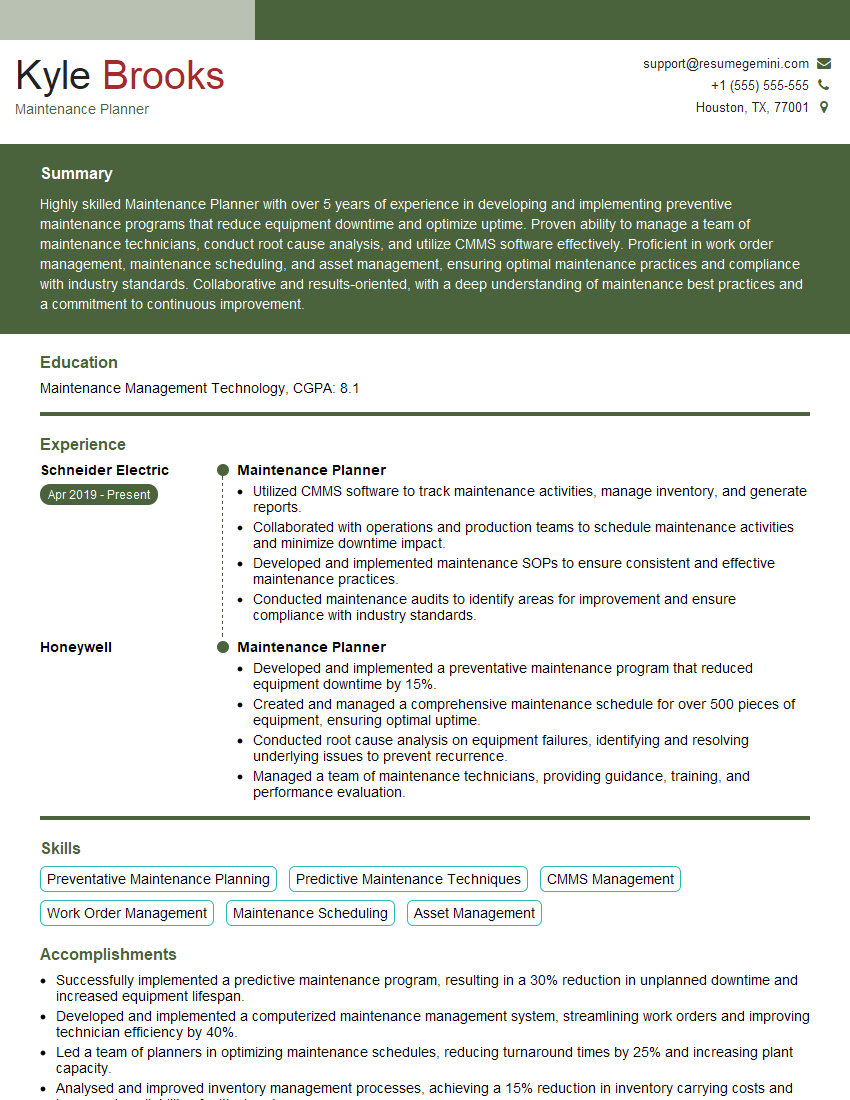
Maintenance Planner Resume Sample
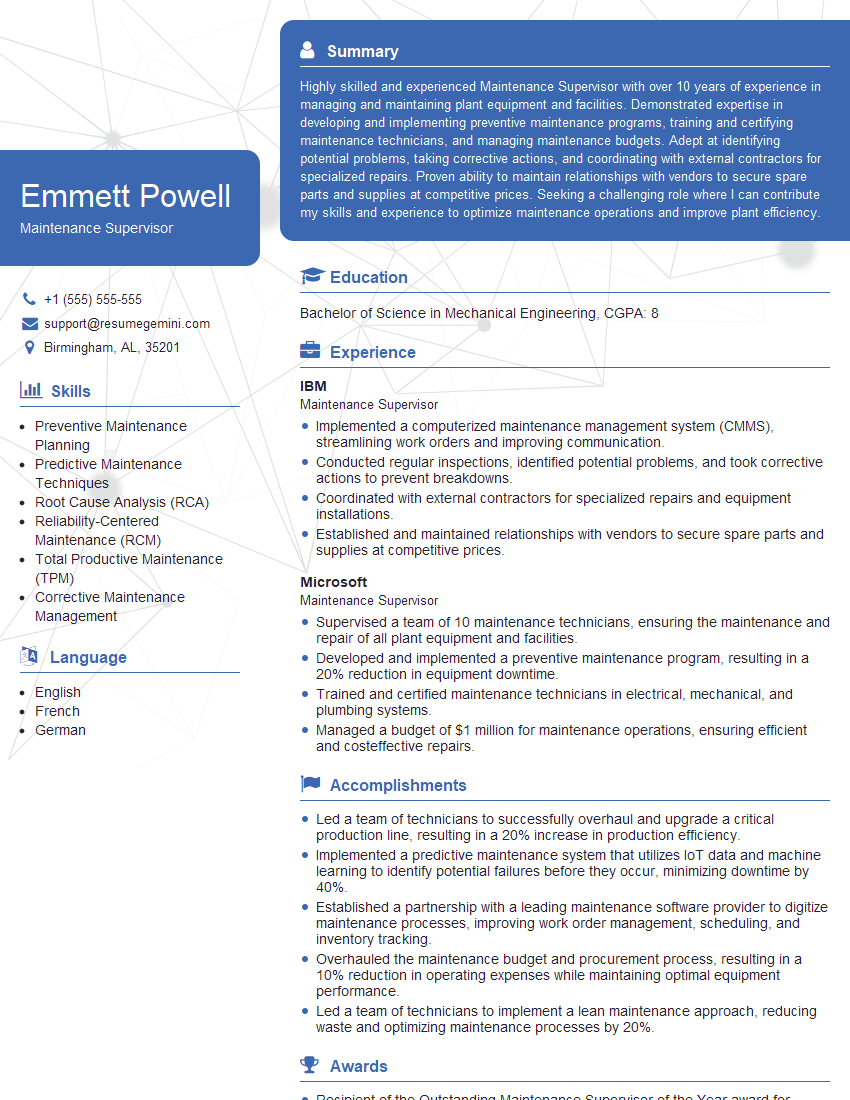
Maintenance Supervisor Resume Sample
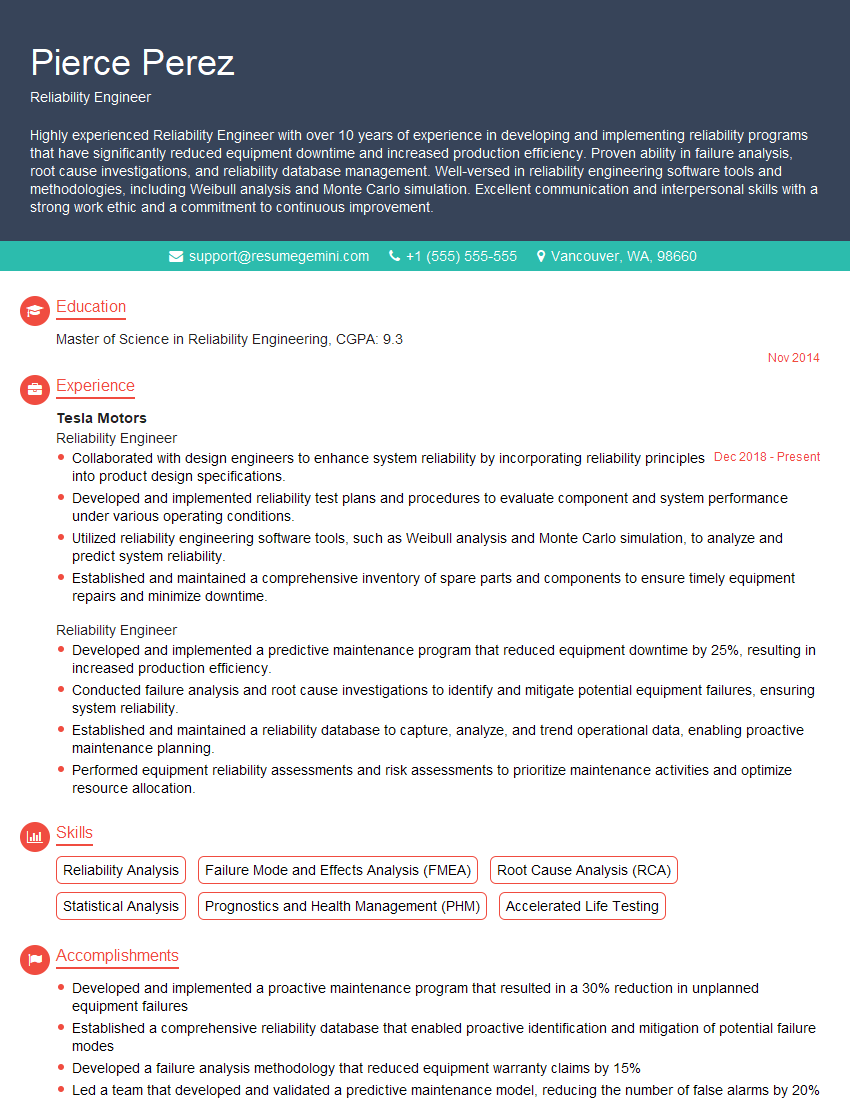
Reliability Engineer Resume Sample
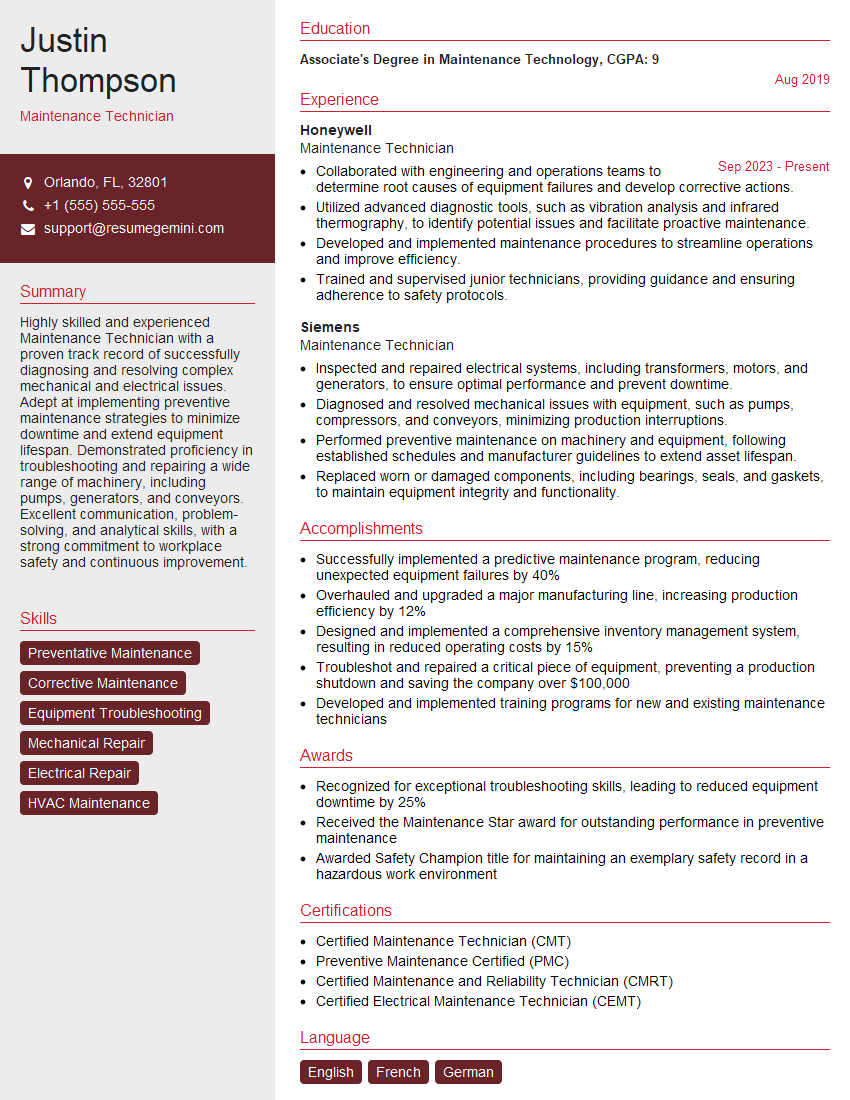
Maintenance Technician Resume Sample
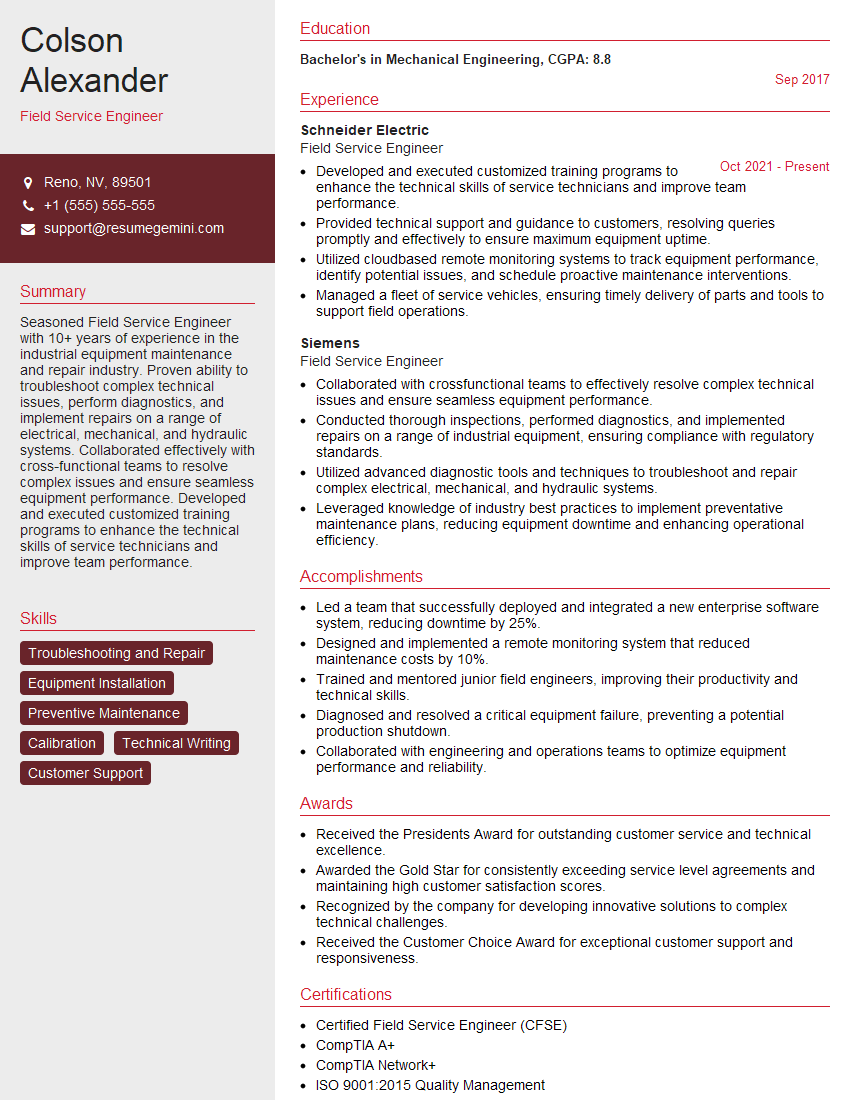
Field Service Engineer Resume Sample
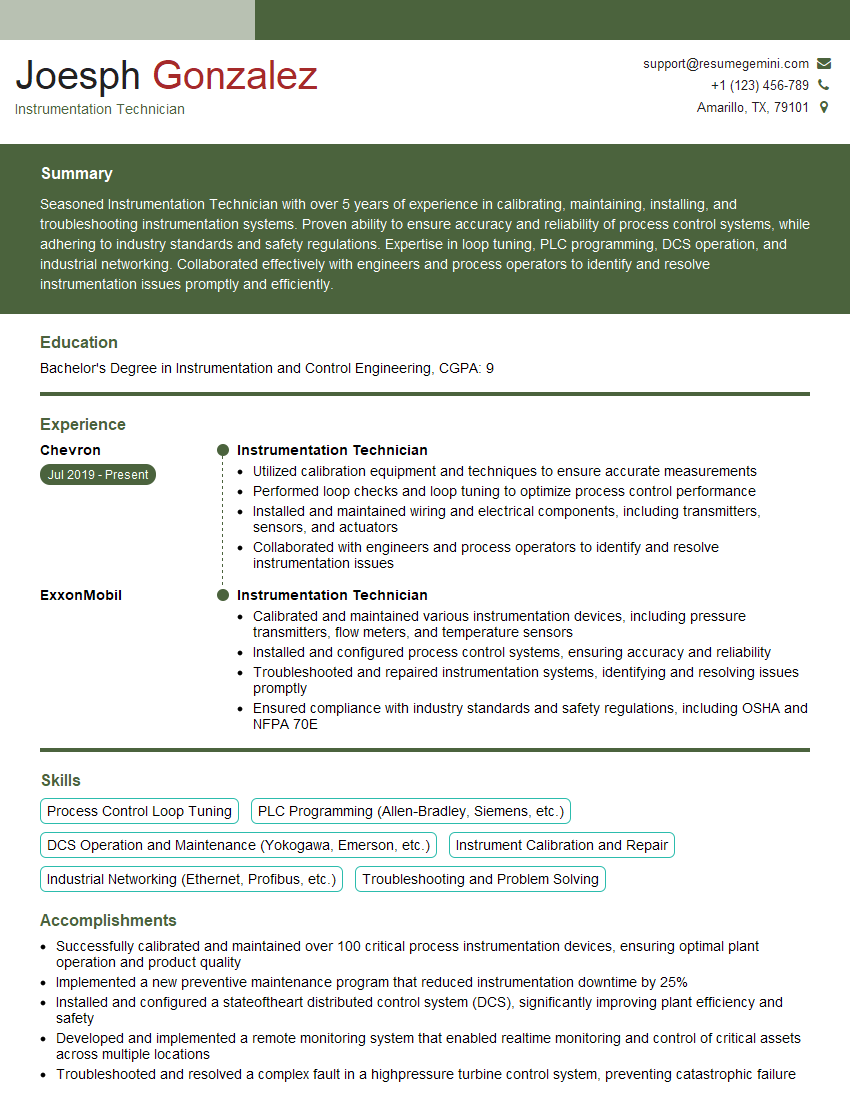
Instrumentation Technician Resume Sample

Automation Technician Resume Sample
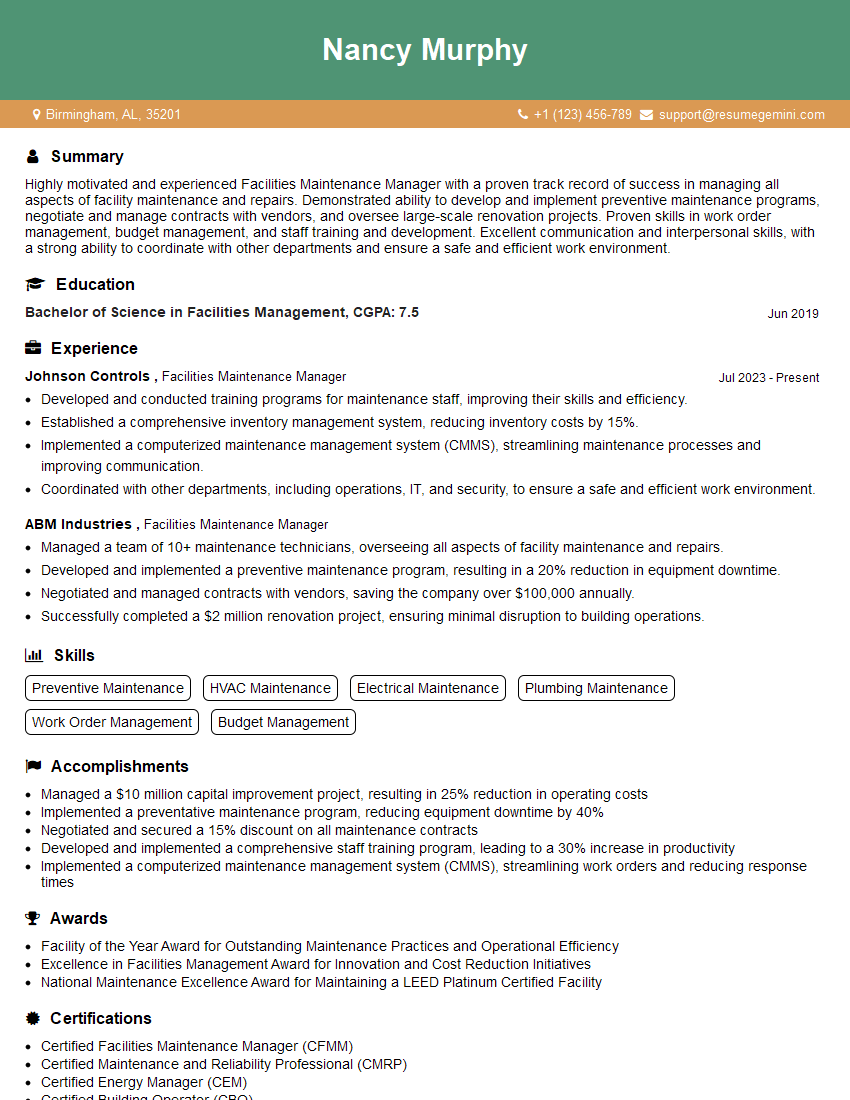
Facilities Maintenance Manager Resume Sample
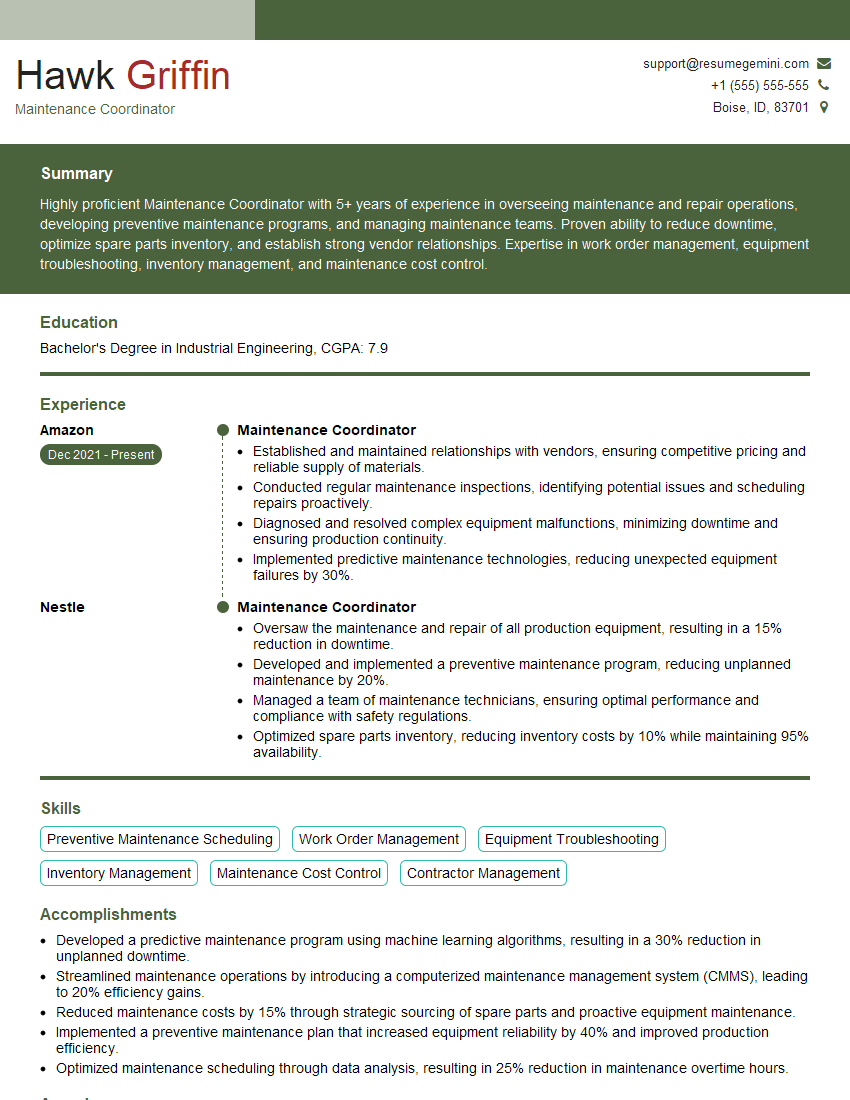
Maintenance Coordinator Resume Sample
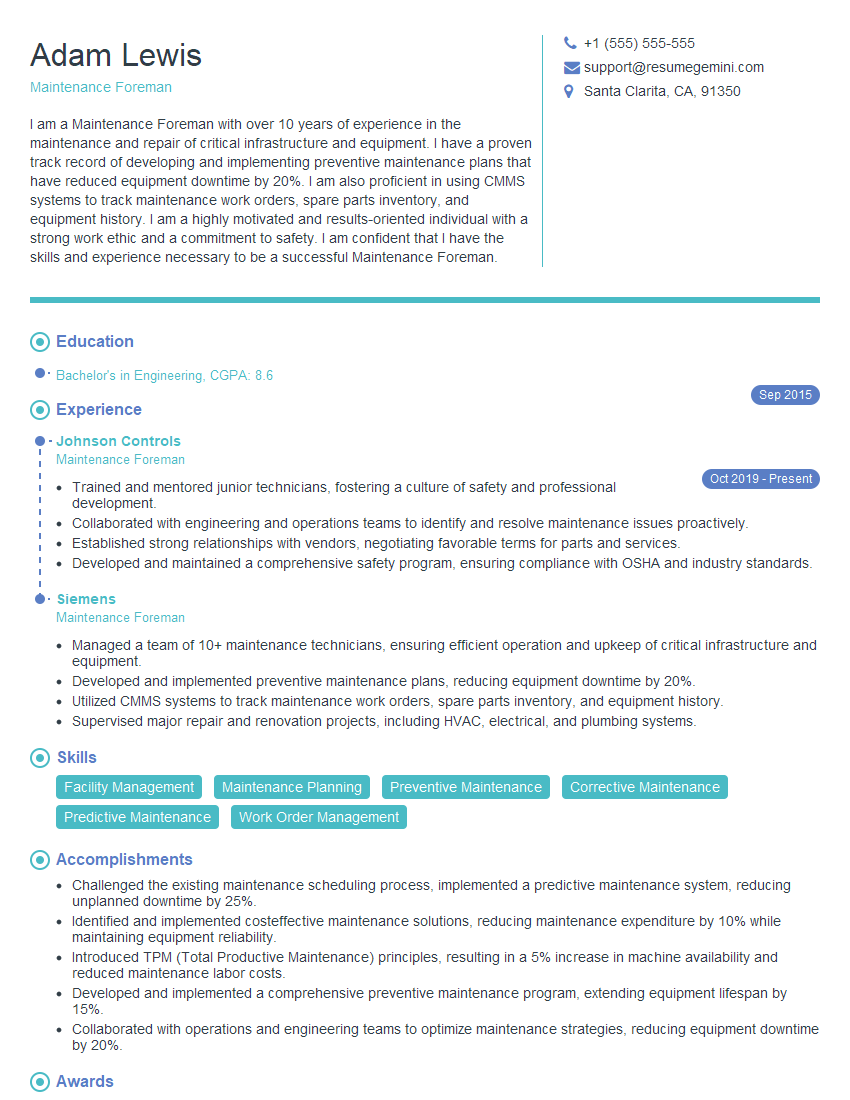
Maintenance Foreman Resume Sample
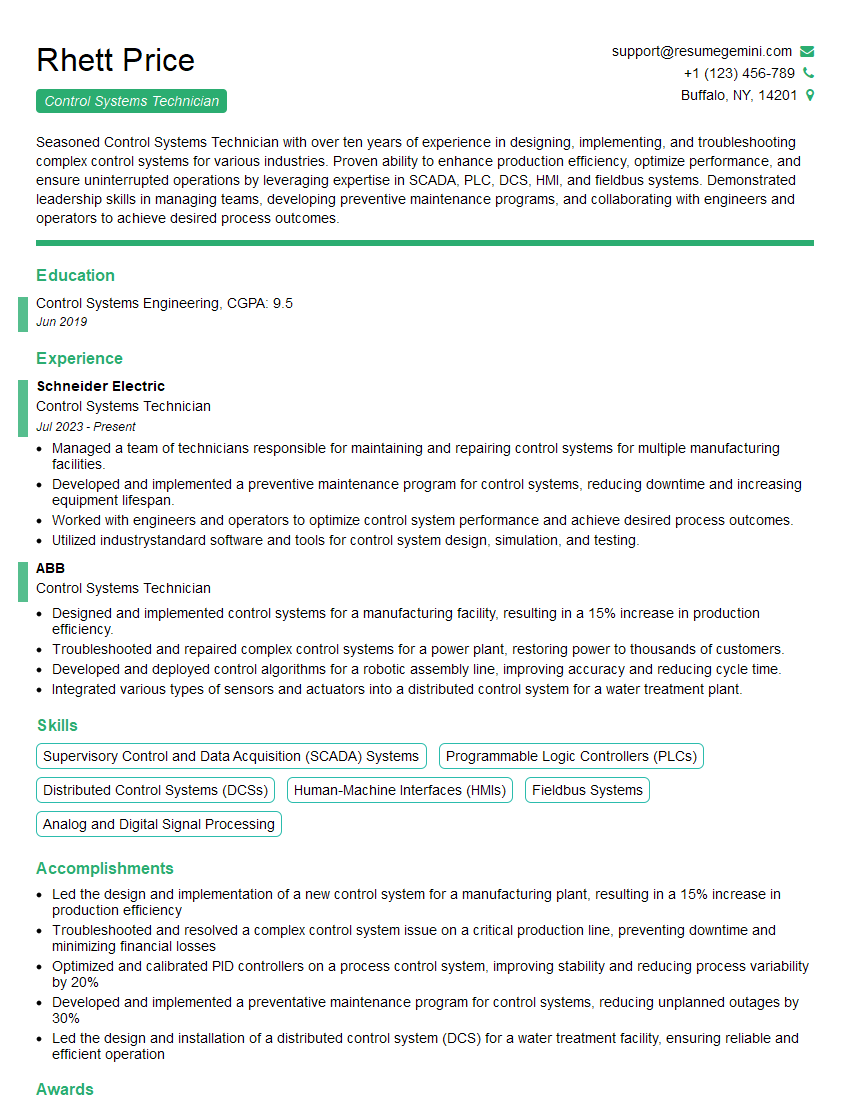
Control Systems Technician Resume Sample

Electrical Maintenance Technician Resume Sample
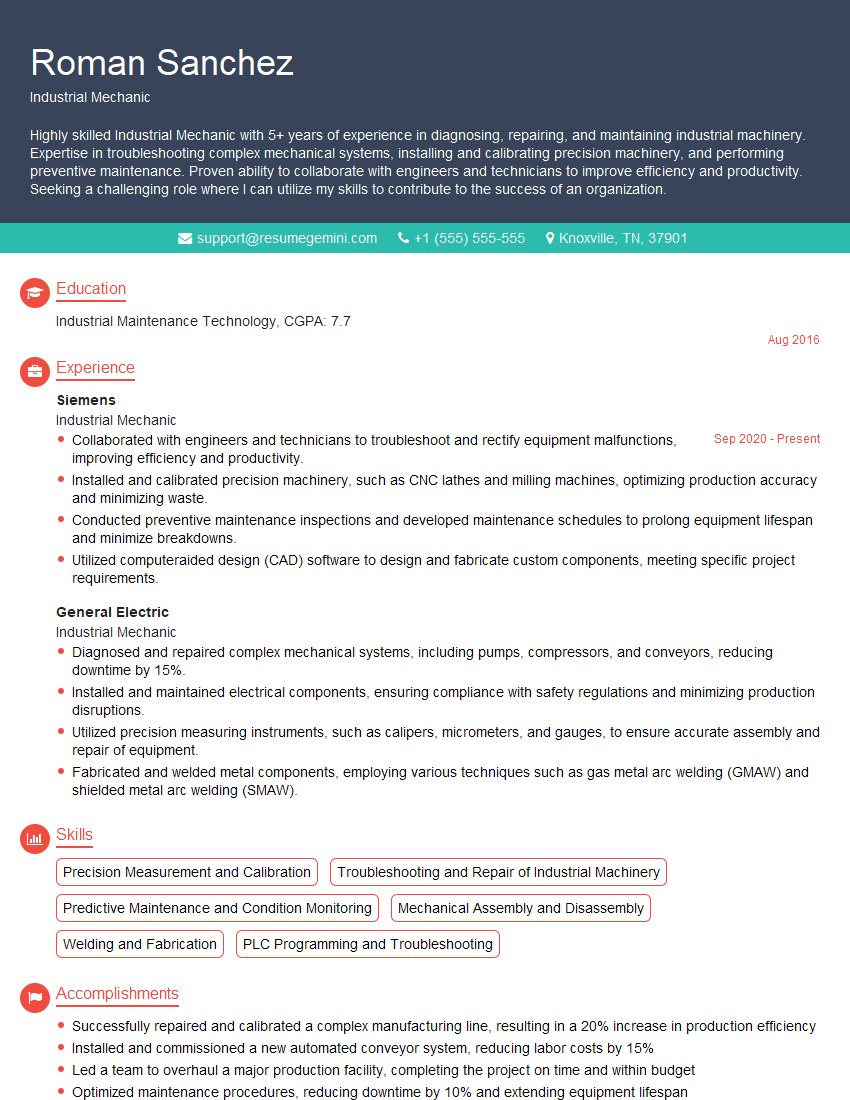
Industrial Mechanic Resume Sample
- Maintenance Planner
- Maintenance Supervisor
- Reliability Engineer
- Maintenance Technician
- Field Service Engineer
- Instrumentation Technician
- Automation Technician
- Facilities Maintenance Manager
- Maintenance Coordinator
- Maintenance Foreman
- Control Systems Technician
- Electrical Maintenance Technician
- Industrial Mechanic
Explore more articles
Users Rating of Our Blogs
Share Your Experience
We value your feedback! Please rate our content and share your thoughts (optional).
What Readers Say About Our Blog
Very informative content, great job.
good