The right preparation can turn an interview into an opportunity to showcase your expertise. This guide to Equipment Repair and Troubleshooting interview questions is your ultimate resource, providing key insights and tips to help you ace your responses and stand out as a top candidate.
Questions Asked in Equipment Repair and Troubleshooting Interview
Q 1. Describe your experience with diagnostic tools and equipment.
My experience with diagnostic tools and equipment is extensive. I’m proficient in using a wide range of tools, from simple multimeters and oscilloscopes to sophisticated diagnostic software and specialized equipment depending on the nature of the equipment being repaired. For example, when troubleshooting a complex industrial PLC (Programmable Logic Controller), I’d use a programming terminal to access and analyze its internal registers and memory, looking for error codes or unusual data patterns. With a faulty HVAC system, I might utilize a refrigerant leak detector and pressure gauges to identify the source of a cooling problem. My expertise extends beyond simply using the tools; I understand their limitations, know how to interpret the data they provide, and can select the appropriate tool for each specific task. I’m also well-versed in maintaining and calibrating these tools to ensure accurate readings.
Q 2. Explain your troubleshooting methodology.
My troubleshooting methodology follows a systematic approach. Think of it like solving a detective novel: I start with gathering information. This involves carefully listening to the user’s description of the problem, visually inspecting the equipment for obvious damage, and checking any available logs or error messages. Next, I formulate a hypothesis based on this information. Then I test that hypothesis using appropriate diagnostic tools. If the hypothesis is incorrect, I cycle through this process, forming new hypotheses based on the results of each test until I isolate the root cause. For instance, if a computer isn’t booting up, my initial tests might involve checking power supply, RAM, and the hard drive. I might use a POST (Power On Self Test) card to determine if the problem lies within the motherboard. This iterative process helps eliminate possible causes and eventually pinpoint the faulty component.
Q 3. How do you prioritize multiple repair requests?
Prioritizing multiple repair requests requires a balanced approach that considers urgency, impact, and resource allocation. I typically prioritize repairs based on a combination of factors:
- Criticality: Equipment crucial to ongoing operations (e.g., a production line machine) takes precedence over less critical equipment.
- Urgency: Requests with immediate deadlines or significant downtime implications are prioritized.
- Impact: The potential impact of a malfunction on the overall system or workflow is a key consideration. A small failure that could lead to a larger cascading problem is addressed promptly.
- Resource Availability: I also consider the time and resources required to fix each problem, optimizing my schedule for maximum efficiency.
I use a ticketing system to manage these requests and track their progress, ensuring transparency and accountability.
Q 4. What safety precautions do you follow when repairing equipment?
Safety is paramount. Before starting any repair, I always follow established safety protocols, which include:
- Lockout/Tagout (LOTO): Disconnecting power sources and locking them out to prevent accidental energization.
- Personal Protective Equipment (PPE): Wearing appropriate PPE such as safety glasses, gloves, and protective clothing depending on the equipment and potential hazards.
- Risk Assessment: Conducting a thorough risk assessment to identify potential hazards and implement necessary precautions.
- Proper Handling of Hazardous Materials: Following proper procedures for handling hazardous materials such as chemicals or refrigerants.
- Grounding and Bonding: Ensuring proper grounding and bonding to prevent electrical shocks.
I always double-check my work before re-energizing equipment and document all safety procedures followed.
Q 5. Describe a time you had to troubleshoot a complex equipment malfunction.
I once had to troubleshoot a complex malfunction in a large industrial milling machine. The machine was intermittently shutting down, resulting in significant production losses. Initial diagnostics revealed no obvious issues. After systematically checking power supplies, motors, and control systems, I suspected a problem within the machine’s PLC. Using the programming terminal, I meticulously examined the PLC’s logic, identifying a seemingly innocuous line of code that was causing a timing conflict under certain operating conditions. This conflict was leading to a system crash. Correcting this single line of code resolved the issue, restoring full machine functionality. This experience underscored the importance of thorough investigation and detailed knowledge of the equipment’s software and hardware.
Q 6. How do you handle situations where you need to escalate a problem?
When I encounter a problem that’s beyond my expertise or requires specialized tools or knowledge, I immediately escalate the issue through the proper channels. This involves documenting the problem thoroughly, including all troubleshooting steps taken, observations, and data collected. I then inform my supervisor or the appropriate team and provide them with the necessary information to assess the situation and bring in the needed expertise. Clear communication is key; I make sure to explain the problem clearly and concisely, avoiding technical jargon where possible to ensure effective collaboration and a speedy resolution.
Q 7. What types of equipment are you most experienced in repairing?
My expertise spans a broad range of equipment, including industrial machinery (CNC machines, robotics, PLCs), HVAC systems, and various types of electrical and electronic equipment. I have significant experience with troubleshooting and repairing both mechanical and electronic components. I’ve also worked extensively with various types of computer hardware and networks. My hands-on experience combined with my understanding of electrical, mechanical, and software systems ensures my ability to provide thorough and efficient solutions.
Q 8. What is your experience with preventative maintenance?
Preventative maintenance is crucial for extending the lifespan of equipment and preventing costly breakdowns. It involves regularly scheduled inspections, cleaning, lubrication, and minor repairs to address potential issues before they escalate into major problems. Think of it like getting your car serviced regularly – oil changes, tire rotations, etc. These small acts prevent major engine failures down the road.
My experience encompasses a wide range of preventative maintenance tasks, from conducting routine inspections on industrial machinery (e.g., checking for wear and tear on belts and gears) to calibrating sensitive instruments to ensure accuracy. For example, in my previous role at Acme Manufacturing, I implemented a preventative maintenance schedule for our CNC milling machines, resulting in a 20% reduction in unscheduled downtime over a year. This involved a detailed checklist of inspections performed monthly and quarterly, focusing on key components such as the spindle, coolant system, and control panel.
- Visual Inspection: Checking for any visible damage, leaks, or unusual wear.
- Lubrication: Applying appropriate lubricants to moving parts to reduce friction and wear.
- Calibration: Ensuring that instruments and machines are operating within their specified tolerances.
- Cleaning: Removing dust, debris, and other contaminants that can interfere with operation.
Q 9. How do you document repair procedures and findings?
Detailed documentation is paramount in equipment repair. It ensures accountability, facilitates future repairs, and aids in troubleshooting similar issues. My approach involves a multi-step process:
- Initial Assessment: I begin by meticulously documenting the initial problem reported by the user, including symptoms, error codes (if any), and operating conditions.
- Diagnostic Steps: Each diagnostic test performed, including the tools and methods used, is carefully recorded. This may involve schematic diagrams, multimeter readings, or software logs.
- Repair Procedures: The specific repairs undertaken, including part replacements, adjustments, or software updates, are detailed, along with part numbers and serial numbers where appropriate.
- Testing and Verification: After the repair, I rigorously test the equipment to ensure the problem is resolved and that other functions are unaffected. These test results, including any observations, are included in the report.
- Final Report: All of the above is compiled into a comprehensive report, often including photos or videos as visual evidence. This report is then filed digitally and physically (if necessary) for future reference.
For example, when troubleshooting a faulty robotic arm, I might document the specific error code displayed on the controller, the results of continuity tests on the wiring harness, the replacement of a faulty motor encoder, and the successful completion of the arm’s calibration sequence after the repair.
Q 10. Explain your understanding of electrical safety regulations.
Electrical safety regulations are of utmost importance and I adhere strictly to them. My understanding covers several key areas, including:
- Lockout/Tagout (LOTO): Properly de-energizing equipment before any maintenance or repair work to prevent electrical shock. This includes visually verifying the lack of power before starting any work.
- Personal Protective Equipment (PPE): Using appropriate PPE such as insulated gloves, safety glasses, and non-conductive footwear when working with electrical equipment.
- Grounding and Bonding: Ensuring that equipment is properly grounded to prevent electrical hazards and to mitigate the risk of electrical shock.
- Arc Flash Protection: Understanding the risks of arc flash and taking necessary precautions to protect against potential injuries. This includes using appropriate PPE and following safety procedures.
- Understanding Electrical Schematics: Competently reading and interpreting electrical schematics to identify potential hazards and safely perform repairs.
Ignoring these regulations can lead to serious injury or even death. My commitment to safety is unwavering; I always prioritize safety procedures over speed and efficiency.
Q 11. How do you stay current with new technologies and repair techniques?
The field of equipment repair is constantly evolving. To stay current, I employ a multi-pronged approach:
- Industry Publications and Journals: I regularly read industry publications and journals to stay abreast of the latest advancements in repair techniques and technologies.
- Manufacturer Training: I actively seek out training opportunities offered by equipment manufacturers, often involving hands-on workshops and certifications.
- Online Courses and Webinars: Online learning platforms provide valuable resources, allowing me to update my skills conveniently and efficiently.
- Networking and Collaboration: I participate in professional organizations and networking events to share knowledge and learn from experienced colleagues.
- Hands-on Experience: The best way to stay current is to actively work on a variety of equipment, encountering new challenges and developing my problem-solving skills.
For example, when a new type of motor control system was introduced, I immediately enrolled in a manufacturer’s training course to understand its operation, troubleshooting, and repair techniques.
Q 12. Describe your experience with reading and interpreting technical manuals.
Reading and interpreting technical manuals is a fundamental skill for any equipment repair technician. My experience encompasses a wide range of manuals, from simple wiring diagrams to complex schematics for sophisticated electronic systems.
My approach involves a systematic process:
- Understanding the Manual’s Structure: Familiarizing myself with the manual’s organization, including the table of contents, index, and any diagrams or illustrations.
- Identifying Relevant Sections: Locating the specific sections pertaining to the equipment in question and the problem at hand.
- Interpreting Diagrams and Schematics: Accurately interpreting diagrams, schematics, and flow charts to understand the system’s functionality and identify potential points of failure.
- Following Step-by-Step Instructions: Carefully following repair procedures, troubleshooting guides, and safety precautions outlined in the manual.
- Cross-referencing Information: Utilizing different sections of the manual and other resources to fully understand the issue and arrive at the optimal solution.
I’m proficient at using both hardcopy and digital manuals, and I understand the value of utilizing online resources and forums as supplementary references to deepen my understanding of specific components or systems.
Q 13. How do you manage your time effectively when working on multiple repairs?
Effective time management is crucial when handling multiple repairs simultaneously. My strategy centers on prioritization, planning, and efficient execution:
- Prioritization: I assess the urgency and complexity of each repair, focusing first on time-sensitive or critical issues. This might involve using a system of tagging repairs by priority (e.g., high, medium, low) and assigning deadlines.
- Task Breakdown: I break down complex repairs into smaller, more manageable tasks, assigning estimated completion times to each. This makes it easier to track progress and identify potential delays.
- Scheduling: I use a calendar or scheduling tool to allocate specific time slots for each repair, ensuring that I’m working on tasks efficiently and that deadlines are met.
- Multitasking Strategically: While multitasking can be effective, I avoid switching between unrelated tasks too frequently. I might complete several steps of one repair, then switch to a similar task on another piece of equipment to maximize efficiency.
- Regular Check-ins: Regularly reviewing my schedule and adjusting it as needed to accommodate unexpected delays or changes in priorities.
For instance, if I’m dealing with a high-priority production line shutdown and several less urgent repairs, I’ll focus my attention on the production line first, delegating or scheduling the other repairs accordingly.
Q 14. What is your experience with working independently and as part of a team?
I’m comfortable working both independently and as part of a team. Independent work requires self-motivation, problem-solving skills, and the ability to manage time effectively. In team settings, I value collaboration, communication, and the ability to share knowledge and expertise.
Independent Work: I’ve successfully handled numerous repair tasks independently, demonstrating the ability to diagnose problems, locate parts, and implement repairs effectively without constant supervision. This includes situations where I’ve had to troubleshoot complex systems with limited information.
Teamwork: In team projects, I readily contribute my expertise, communicate clearly with colleagues, and actively participate in brainstorming sessions to find the best solutions. I’m also able to delegate tasks appropriately and mentor junior technicians. For example, on a recent large-scale equipment overhaul, I worked collaboratively with electricians and mechanics, leading to the successful completion of the project ahead of schedule.
In short, my adaptability and strong communication skills allow me to thrive in both collaborative and independent working environments.
Q 15. How do you identify and address root causes of equipment failure?
Identifying the root cause of equipment failure is crucial for effective repair and preventing future issues. It’s a systematic process that goes beyond simply replacing a broken part. I approach it using a structured methodology, often employing a five-why analysis or a fault tree analysis.
Five-Why Analysis: This involves repeatedly asking “Why?” to drill down to the underlying cause. For instance, if a conveyor belt stops working (initial problem), we ask: Why did it stop? (Perhaps because the motor burned out). Why did the motor burn out? (Maybe due to overheating). Why did it overheat? (Possibly because of insufficient lubrication). Why was there insufficient lubrication? (Because the lubrication system wasn’t properly maintained). This final answer points to the root cause – inadequate maintenance.
Fault Tree Analysis: This is a more visual and complex approach, using a diagram to map out potential causes and their relationships. It’s useful for more complex systems. Both methods require careful observation, testing, and sometimes consultation with technical documentation.
Addressing the root cause involves implementing corrective actions, which might include replacing components, improving maintenance procedures, upgrading the system, or even redesigning it for improved reliability. It’s about creating a lasting solution, not just a temporary fix.
Career Expert Tips:
- Ace those interviews! Prepare effectively by reviewing the Top 50 Most Common Interview Questions on ResumeGemini.
- Navigate your job search with confidence! Explore a wide range of Career Tips on ResumeGemini. Learn about common challenges and recommendations to overcome them.
- Craft the perfect resume! Master the Art of Resume Writing with ResumeGemini’s guide. Showcase your unique qualifications and achievements effectively.
- Don’t miss out on holiday savings! Build your dream resume with ResumeGemini’s ATS optimized templates.
Q 16. Describe your experience with calibration and testing procedures.
Calibration and testing are essential for ensuring equipment accuracy and safety. My experience spans various instruments and systems. I’m proficient in using both manual and automated calibration techniques, following established procedures and utilizing precision measurement tools.
For example, I’ve calibrated pressure transducers using a deadweight tester, ensuring accurate pressure readings are obtained. I’ve also performed calibration checks on automated test equipment (ATE) using traceable standards, documenting all results and generating calibration certificates. These procedures require meticulous attention to detail and adherence to strict protocols to guarantee the accuracy and traceability of measurements. I’m familiar with different calibration standards like ISO 17025 and understand the importance of maintaining calibration records to ensure regulatory compliance.
Q 17. What software programs are you proficient in using for repair and troubleshooting?
Proficiency in software is vital for modern equipment repair. I’m adept at using various programs, including:
- Diagnostic software: Specific software provided by equipment manufacturers. This allows me to access error codes, monitor system parameters, and often guide troubleshooting directly. I’m experienced in interpreting these diagnostic outputs and using them to pinpoint malfunctions.
- PLC programming software: For programmable logic controllers, I can use software like Rockwell Automation RSLogix 5000 or Siemens TIA Portal to troubleshoot and modify PLC programs. Understanding ladder logic is essential here.
- SCADA systems: I’m familiar with supervisory control and data acquisition systems, which allow monitoring and control of industrial equipment. Troubleshooting in these systems often involves analyzing historical data and identifying trends to detect problems before they escalate.
- Microsoft Office Suite: Essential for documentation, report generation, and creating maintenance schedules. I use spreadsheets for inventory tracking and parts management.
Q 18. How do you handle pressure and tight deadlines?
Handling pressure and tight deadlines is a routine part of equipment repair. My approach involves prioritizing tasks, effective time management, and clear communication. I use techniques like:
- Prioritization: Identifying the most critical repairs first, focusing on those affecting production or safety.
- Time Management: Breaking down complex tasks into smaller, manageable steps. Utilizing checklists to ensure no steps are missed.
- Communication: Keeping stakeholders informed of progress, potential delays, and any unforeseen challenges. This proactive communication prevents misunderstandings and allows for timely adjustments.
For example, once I had to repair a crucial piece of manufacturing equipment that unexpectedly failed during a critical production run. By prioritizing the repair, efficiently troubleshooting the issue and communicating with management regarding the time-sensitive nature of the fix, we minimized downtime and avoided a significant production backlog.
Q 19. What is your experience with ordering and managing parts?
Efficient parts management is crucial for minimizing downtime. My experience includes:
- Vendor selection: Identifying reliable suppliers with competitive pricing and timely delivery. This often involves negotiating favorable terms and establishing strong relationships with key vendors.
- Inventory tracking: Using software and spreadsheets to maintain accurate records of parts in stock, and to forecast future needs.
- Ordering process: Generating purchase orders, tracking shipments, and ensuring timely receipt of parts. I manage the entire procurement process, from sourcing to receipt of the parts.
- Cost control: Identifying cost-effective sources and negotiating favorable pricing, resulting in cost savings for the company.
I once managed a situation where a critical part was no longer manufactured by the original supplier. Through diligent research and collaboration with engineering, we found a suitable replacement, significantly reducing downtime.
Q 20. Describe your experience with hydraulic or pneumatic systems.
I possess considerable experience working with hydraulic and pneumatic systems. My understanding extends from basic principles to troubleshooting complex systems. I’m familiar with:
- Hydraulic systems: Troubleshooting hydraulic pumps, valves, cylinders, and accumulators. I understand the importance of proper fluid levels, pressures, and filtration. Leak detection and repair are key skills within this area.
- Pneumatic systems: Troubleshooting air compressors, valves, actuators, and pneumatic control systems. I’m experienced in diagnosing air leaks and identifying pressure drop issues. Understanding the principles of pneumatic logic is also essential here.
For instance, I once resolved a production bottleneck caused by a malfunctioning hydraulic press. Through systematic diagnostics, I isolated the problem to a faulty pressure relief valve, replacing it and restoring full functionality. This required understanding hydraulic schematics and using pressure gauges and other diagnostic tools.
Q 21. How do you maintain a clean and organized workspace?
Maintaining a clean and organized workspace is paramount for efficiency and safety. My approach is based on several key principles:
- 5S Methodology: I utilize the 5S methodology (Sort, Set in Order, Shine, Standardize, Sustain) to keep my workspace organized and efficient. This involves regularly decluttering, properly storing tools and parts, and maintaining a clean work area.
- Tool Organization: Tools are stored in designated locations, making them easily accessible and preventing loss or damage. Tools are cleaned and maintained regularly.
- Waste Management: Proper disposal of hazardous materials, following all relevant safety regulations. Recycling and minimizing waste is also a priority.
A clean and organized workspace prevents accidents, improves efficiency by reducing search time for tools and parts, and fosters a safer and more professional working environment. It’s a habit that greatly improves overall productivity and problem-solving capabilities.
Q 22. Explain your knowledge of different types of motors and their operation.
My understanding of motors encompasses various types, each with unique operational principles. We have DC motors, known for their speed controllability, often used in robotics and smaller appliances. Their speed is directly proportional to the applied voltage. Then there are AC motors, categorized into induction motors (like those in most household appliances) and synchronous motors (used where precise speed control is critical, such as in clocks or some industrial machinery). Induction motors utilize rotating magnetic fields to induce current in the rotor, causing it to spin; synchronous motors, however, maintain a constant speed synchronized with the AC power frequency. Finally, stepping motors provide precise rotational movements in discrete steps, commonly found in 3D printers and CNC machines. Understanding the internal workings of these motors, including their windings, commutators (in DC motors), and control circuitry, is essential for effective troubleshooting and repair.
For example, diagnosing a faulty DC motor might involve checking the commutator for wear and tear, testing the brushes for proper contact, and verifying the voltage supply. A malfunctioning AC induction motor could indicate problems with the capacitor, windings, or even bearing issues, requiring different diagnostic approaches.
Q 23. How familiar are you with Programmable Logic Controllers (PLCs)?
I’m highly proficient in using Programmable Logic Controllers (PLCs). My experience includes programming, troubleshooting, and maintaining PLCs from various manufacturers, using both ladder logic and structured text programming languages. I’m familiar with input/output (I/O) modules, analog and digital signals, and various communication protocols like Ethernet/IP and Modbus. My expertise extends to designing and implementing control systems using PLCs, including safety interlocks and emergency stop mechanisms.
For instance, I’ve successfully debugged a PLC program controlling a complex manufacturing line where a sensor malfunction caused production downtime. By systematically reviewing the PLC program and testing the I/O signals, I pinpointed the faulty sensor, preventing further disruptions.
//Example Ladder Logic Code (Illustrative): // IF Sensor Input 1 THEN Output 1 ELSE Output 0Q 24. Describe your experience with soldering and electronic component replacement.
I possess extensive experience in soldering and electronic component replacement. I’m comfortable working with surface-mount technology (SMT) components as well as through-hole components. I use various soldering techniques, including through-hole soldering, surface mount soldering (using both hot air and iron), and rework techniques for removing and replacing components without damaging the surrounding circuitry. I understand the importance of using the correct soldering tools and techniques to prevent damage and ensure reliable connections. I also know how to identify faulty components using multimeters and other test equipment.
For example, I once repaired a circuit board in a complex piece of medical equipment where a tiny surface-mount capacitor had failed. Using a hot air station and precision tweezers, I successfully removed the old capacitor and replaced it with a new one, restoring the equipment’s functionality.
Q 25. What is your understanding of various types of sensors and their applications?
My understanding of sensors is broad, encompassing various types and their applications. This includes proximity sensors (inductive, capacitive, photoelectric) used for detecting the presence of objects without physical contact; temperature sensors (thermocouples, RTDs, thermistors) for measuring temperature; pressure sensors for measuring pressure in various systems; and flow sensors for monitoring fluid flow. I also have experience with more specialized sensors like accelerometers, gyroscopes, and load cells. Understanding sensor calibration, signal conditioning, and interfacing with various control systems is critical in my work.
For example, I recently resolved an issue on a conveyor belt system where the product wasn’t being detected correctly. After investigating, I found the photoelectric sensor was misaligned, leading to inaccurate readings. Adjusting the sensor’s position resolved the problem and restored the system’s operation.
Q 26. How do you ensure the safety of yourself and others during repairs?
Safety is paramount in my work. Before beginning any repair, I always follow established safety procedures, including lockout/tagout procedures to prevent accidental energization of equipment. I wear appropriate personal protective equipment (PPE), such as safety glasses, gloves, and anti-static wrist straps. I understand the risks associated with working with high voltage, hazardous materials, and moving machinery. Furthermore, I adhere to all relevant safety regulations and standards.
For instance, when working on high-voltage equipment, I always ensure the power is completely disconnected and locked out before starting any work. I also regularly inspect my tools and equipment to ensure they’re in good working order and safe to use.
Q 27. Explain your approach to dealing with difficult or demanding clients.
My approach to dealing with difficult or demanding clients involves active listening, empathy, and clear communication. I start by understanding their concerns and frustrations. I explain technical issues in a way they can easily understand, avoiding jargon. I provide realistic expectations about timelines and solutions. I focus on finding mutually agreeable solutions and maintain a professional and respectful attitude, even under pressure.
I recall a situation where a client was extremely upset about a prolonged repair. By calmly listening to their concerns and explaining the complexity of the issue, I managed to de-escalate the situation. Offering regular updates and demonstrating my commitment to resolving the problem helped restore their trust and ultimately resulted in a positive outcome.
Q 28. What are your salary expectations?
My salary expectations are commensurate with my experience and skills, and I am open to discussing a competitive compensation package based on the specific role and responsibilities.
Key Topics to Learn for Equipment Repair and Troubleshooting Interview
- Safety Procedures and Regulations: Understanding and adhering to safety protocols in various equipment repair scenarios. Practical application includes demonstrating knowledge of lockout/tagout procedures and proper use of personal protective equipment (PPE).
- Diagnostic Techniques: Mastering systematic troubleshooting methods, including visual inspection, multimeter usage, and interpreting diagnostic codes. Practical application involves explaining your approach to identifying the root cause of equipment malfunctions.
- Electrical Systems: Comprehending basic electrical principles like voltage, current, resistance, and circuit analysis. Practical application includes diagnosing electrical faults in various equipment types and explaining repair solutions.
- Mechanical Systems: Understanding mechanical components, principles of operation, and common mechanical failures. Practical application involves troubleshooting mechanical issues in machinery and explaining repair strategies.
- Hydraulic and Pneumatic Systems: Knowledge of hydraulic and pneumatic systems, including pressure, flow, and component functionality. Practical application involves diagnosing and repairing leaks, pressure issues, and other common problems in hydraulic and pneumatic systems.
- Preventive Maintenance: Understanding the importance of preventative maintenance and its role in reducing equipment downtime and extending equipment lifespan. Practical application includes describing preventative maintenance schedules and procedures.
- Troubleshooting Complex Systems: Applying logical reasoning and problem-solving skills to diagnose and repair intricate equipment failures. This involves breaking down complex problems into smaller, manageable parts.
- Record Keeping and Documentation: Maintaining accurate records of repairs, maintenance activities, and parts used. This demonstrates professionalism and accountability.
Next Steps
Mastering Equipment Repair and Troubleshooting is crucial for career advancement in this highly sought-after field. It opens doors to specialized roles, higher earning potential, and increased job security. To maximize your job prospects, creating a strong, ATS-friendly resume is essential. ResumeGemini is a trusted resource to help you build a professional resume that showcases your skills and experience effectively. We provide examples of resumes tailored to Equipment Repair and Troubleshooting to help you get started. Take the next step toward your dream career today!

Technical Support Engineer Resume Sample
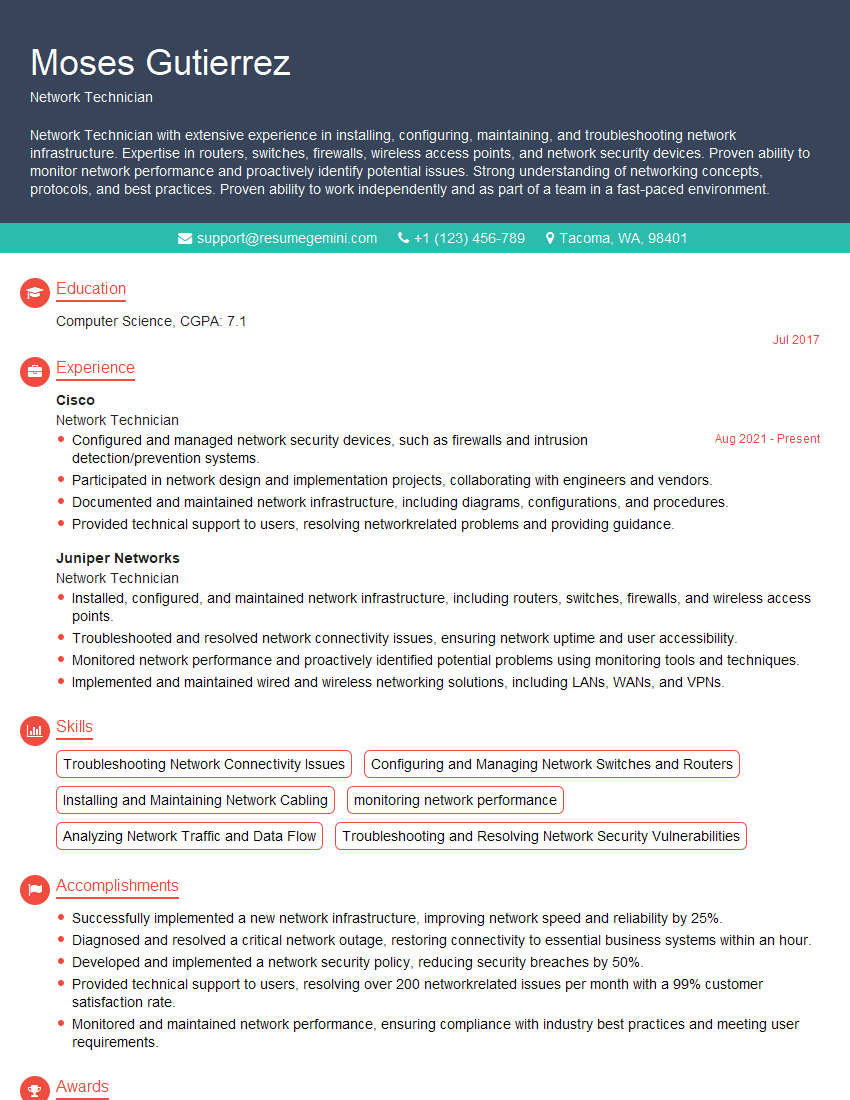
Network Technician Resume Sample
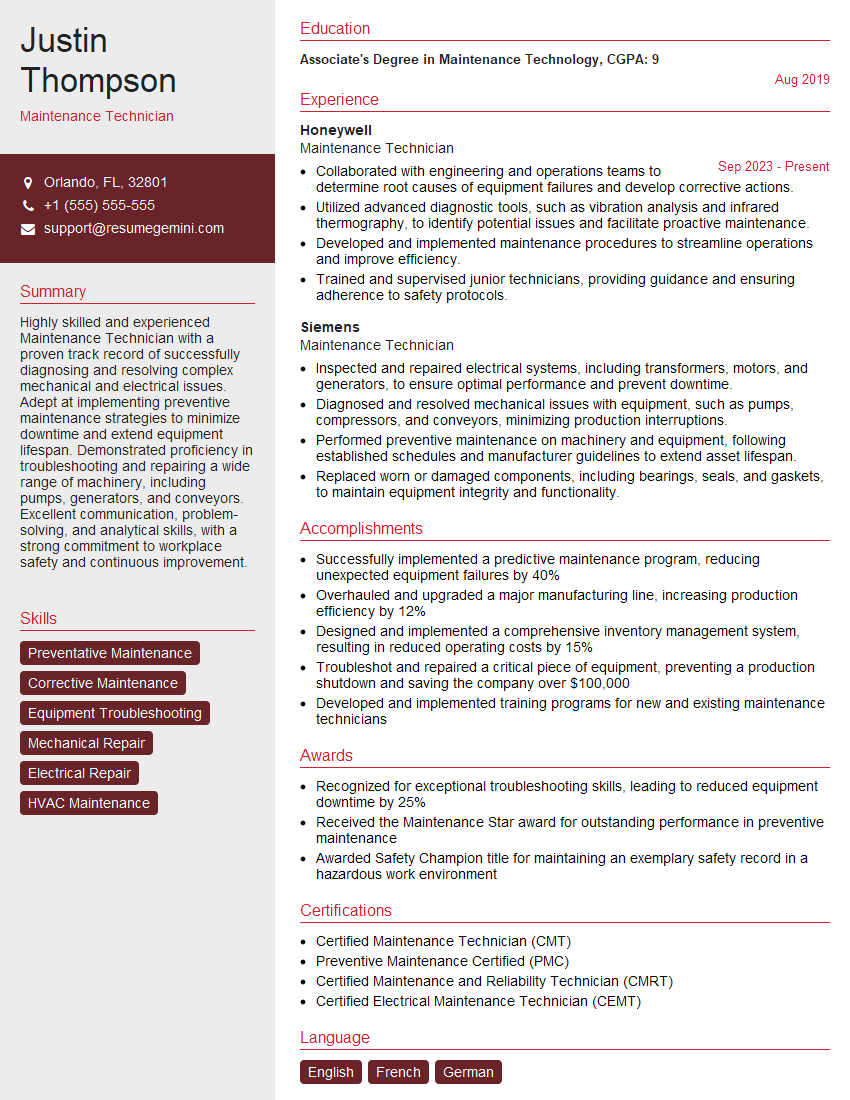
Maintenance Technician Resume Sample

Service Engineer Resume Sample
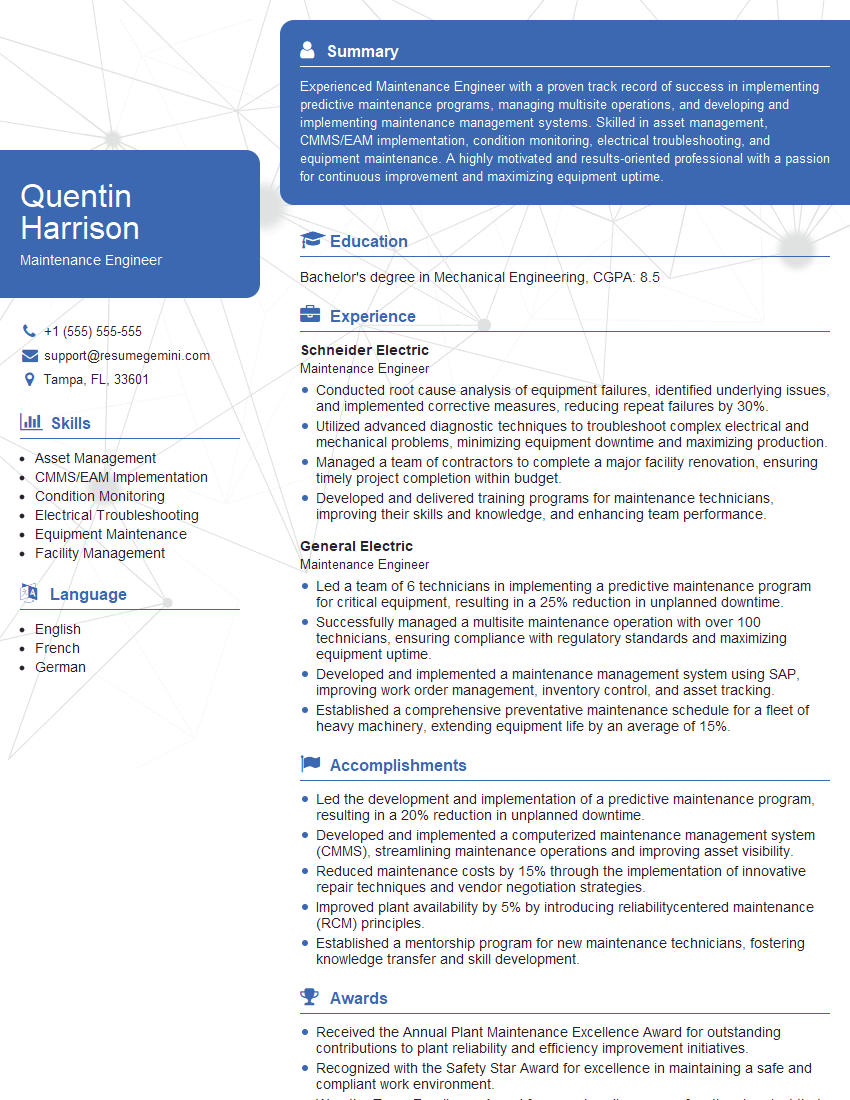
Maintenance Engineer Resume Sample
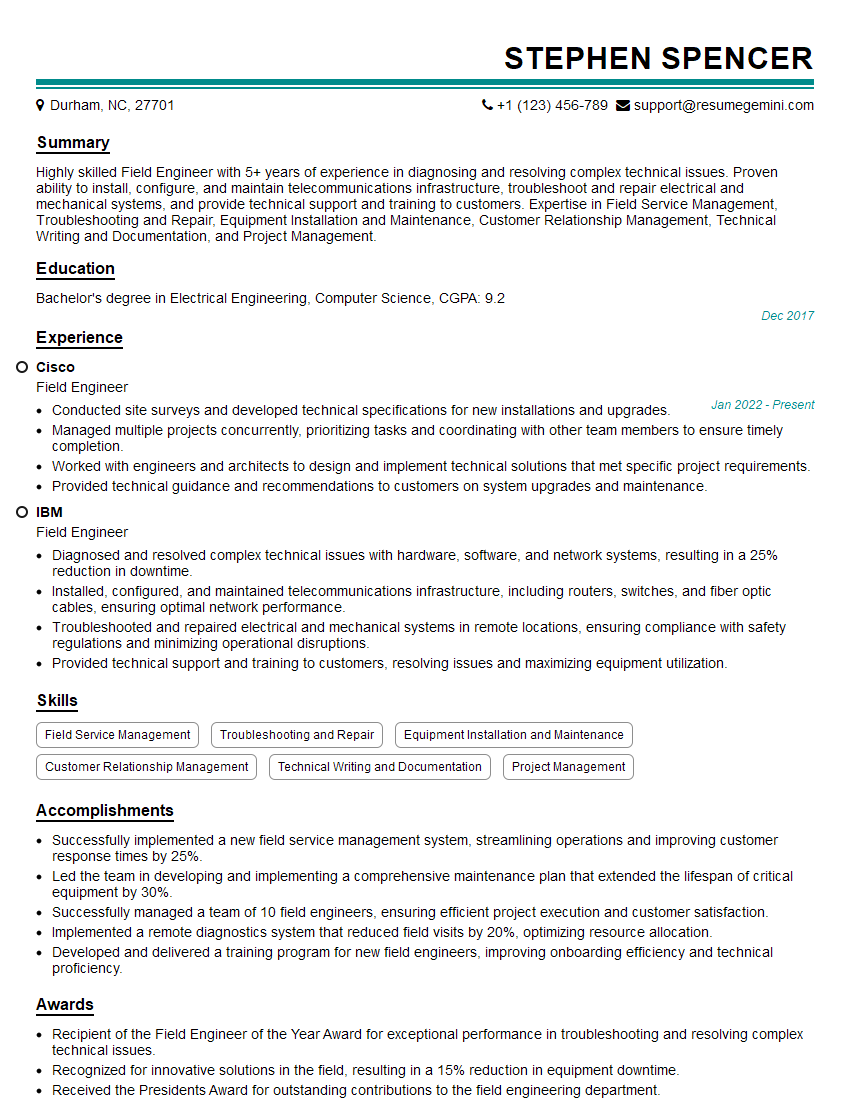
Field Engineer Resume Sample
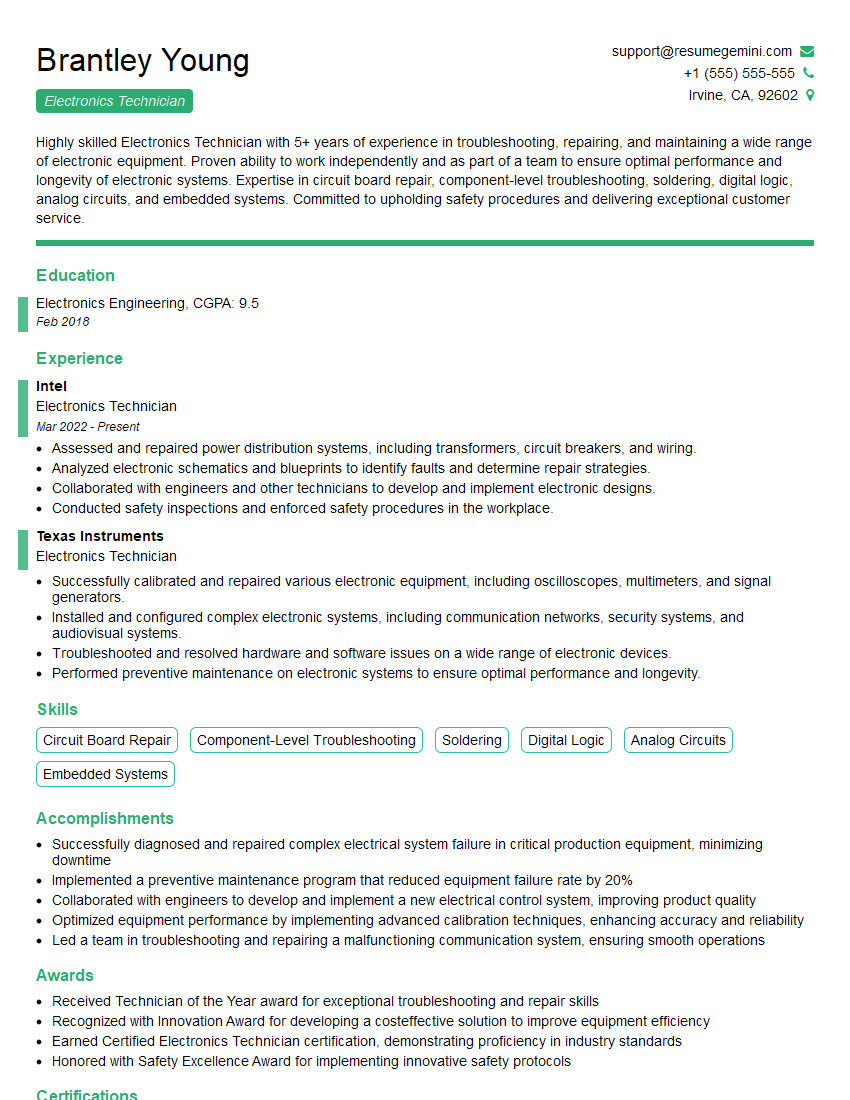
Electronics Technician Resume Sample
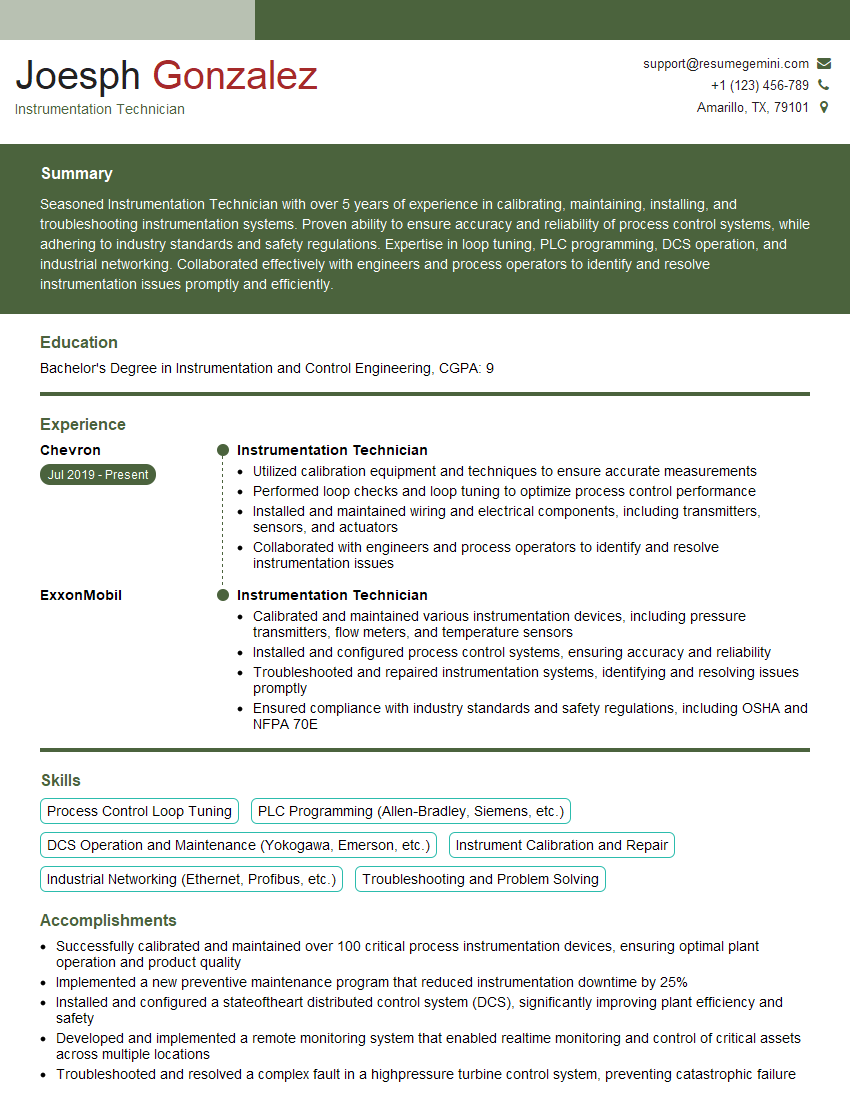
Instrumentation Technician Resume Sample
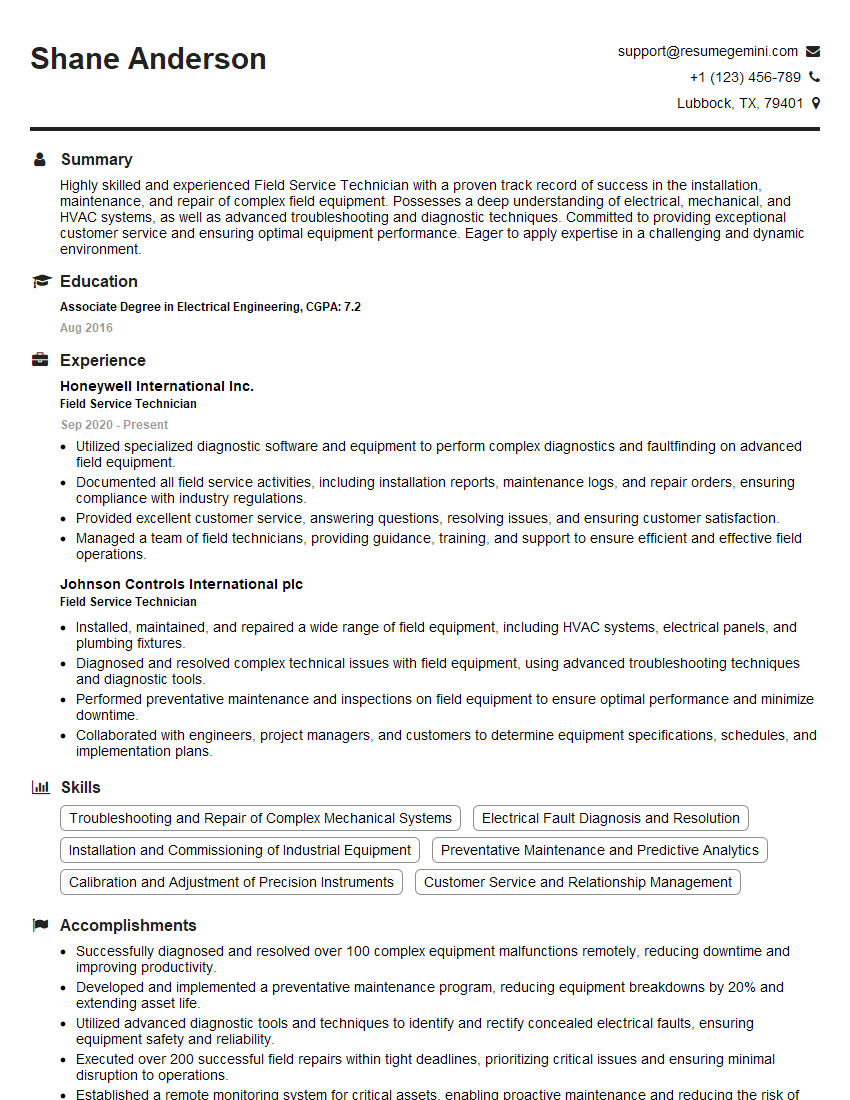
Field Service Technician Resume Sample
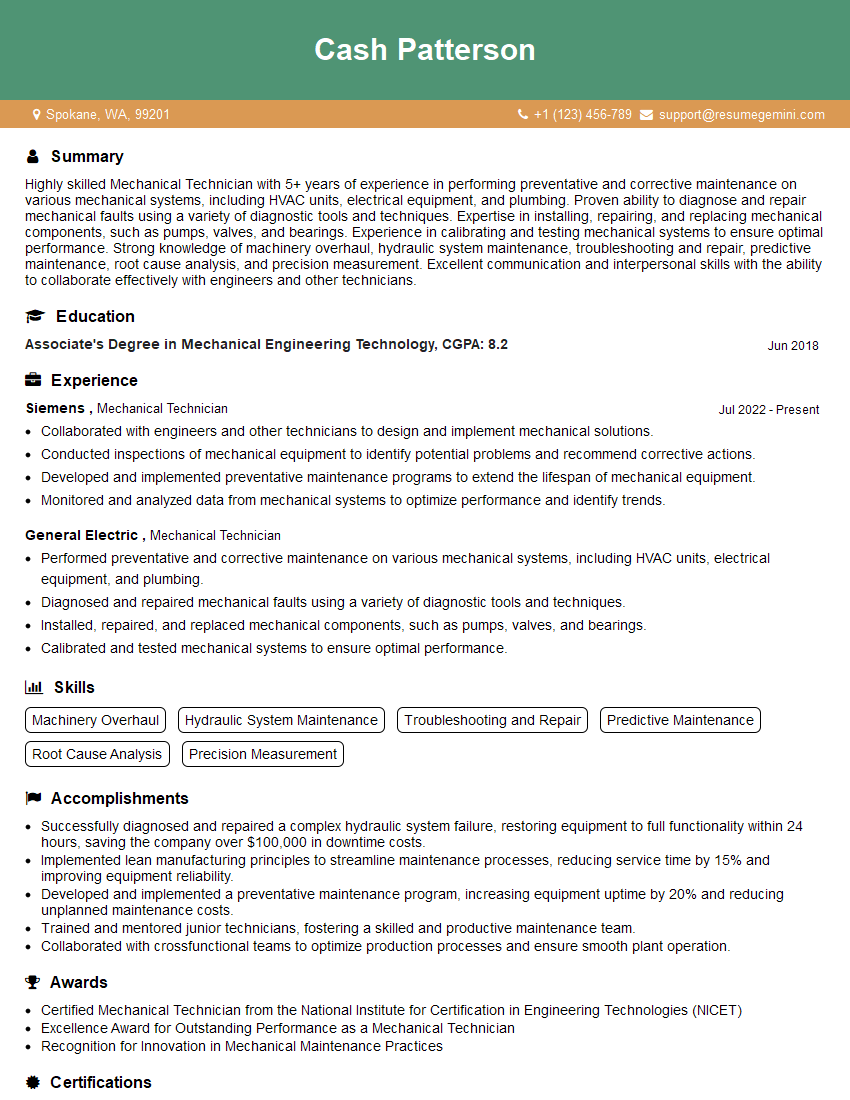
Mechanical Technician Resume Sample
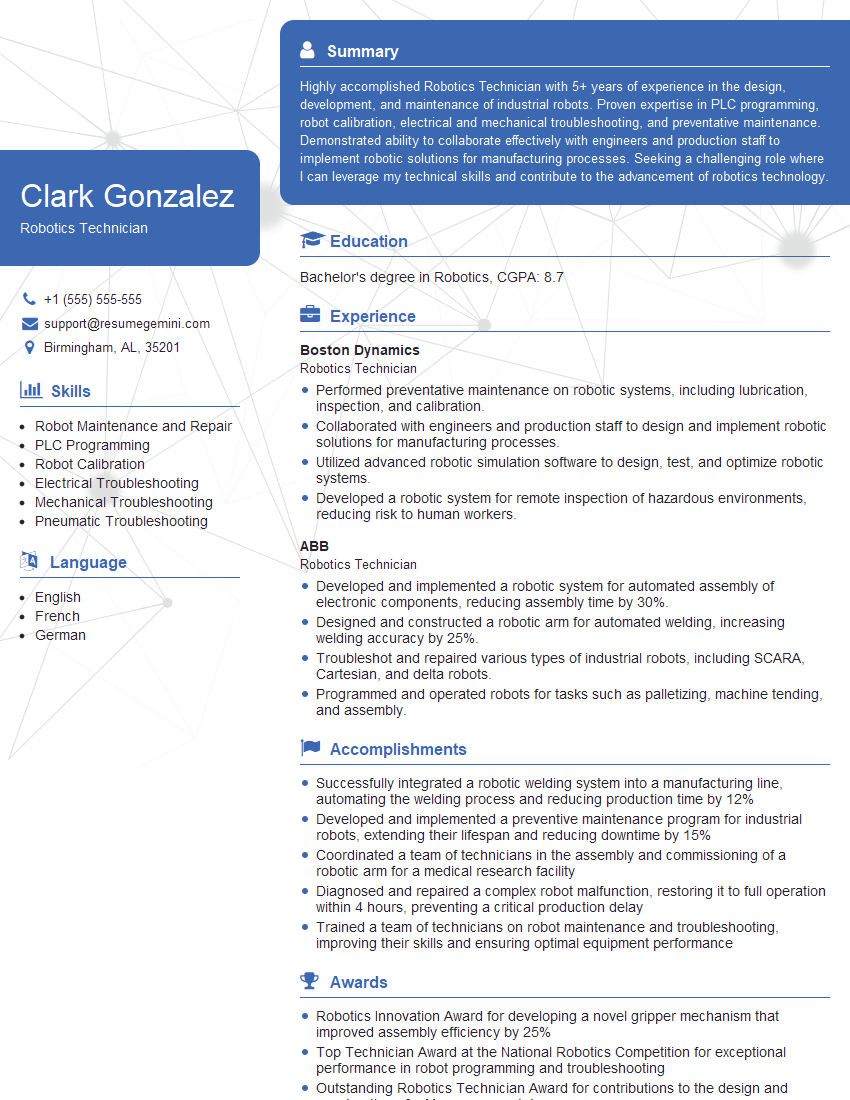
Robotics Technician Resume Sample
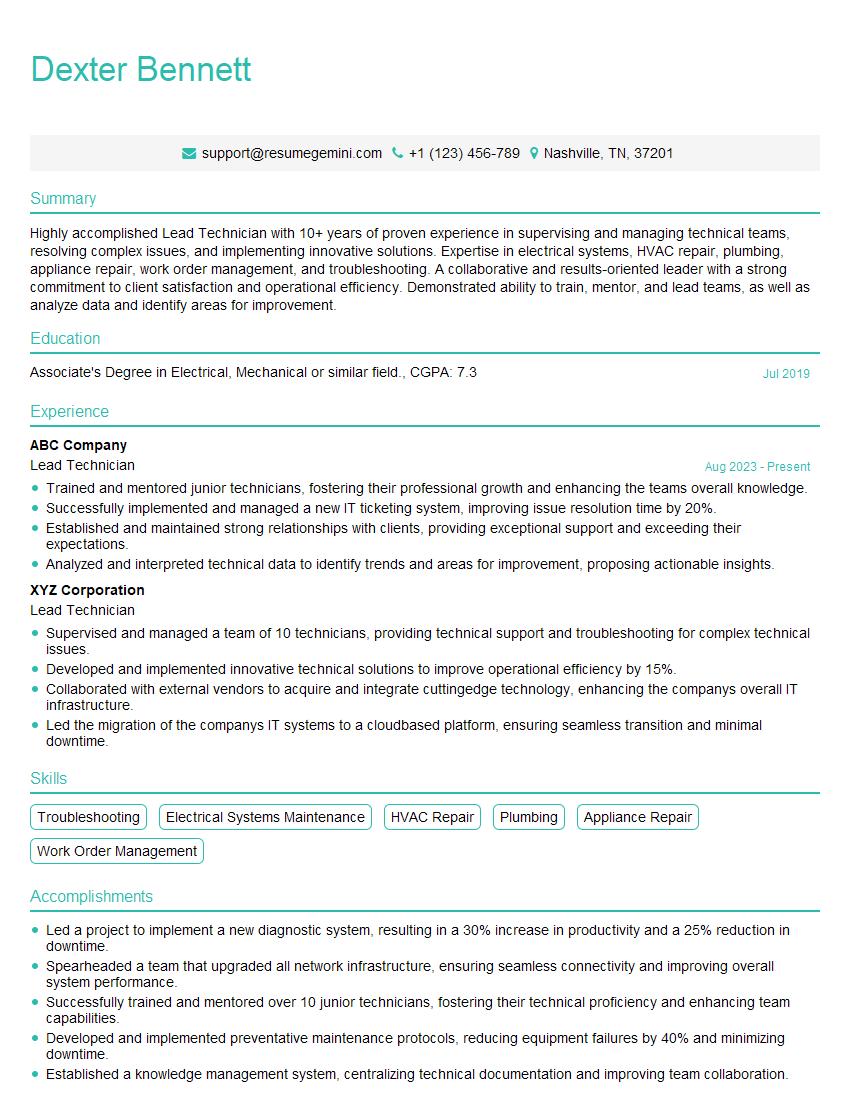
Lead Technician Resume Sample
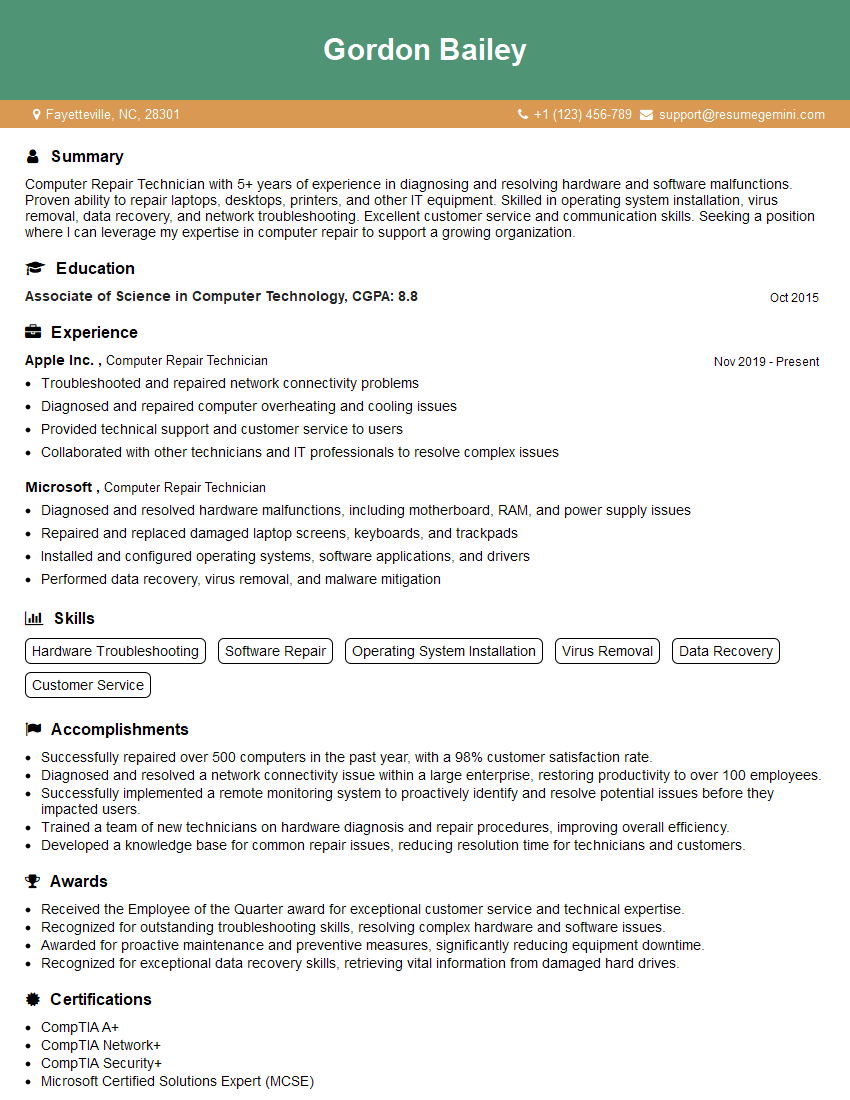
Computer Repair Technician Resume Sample
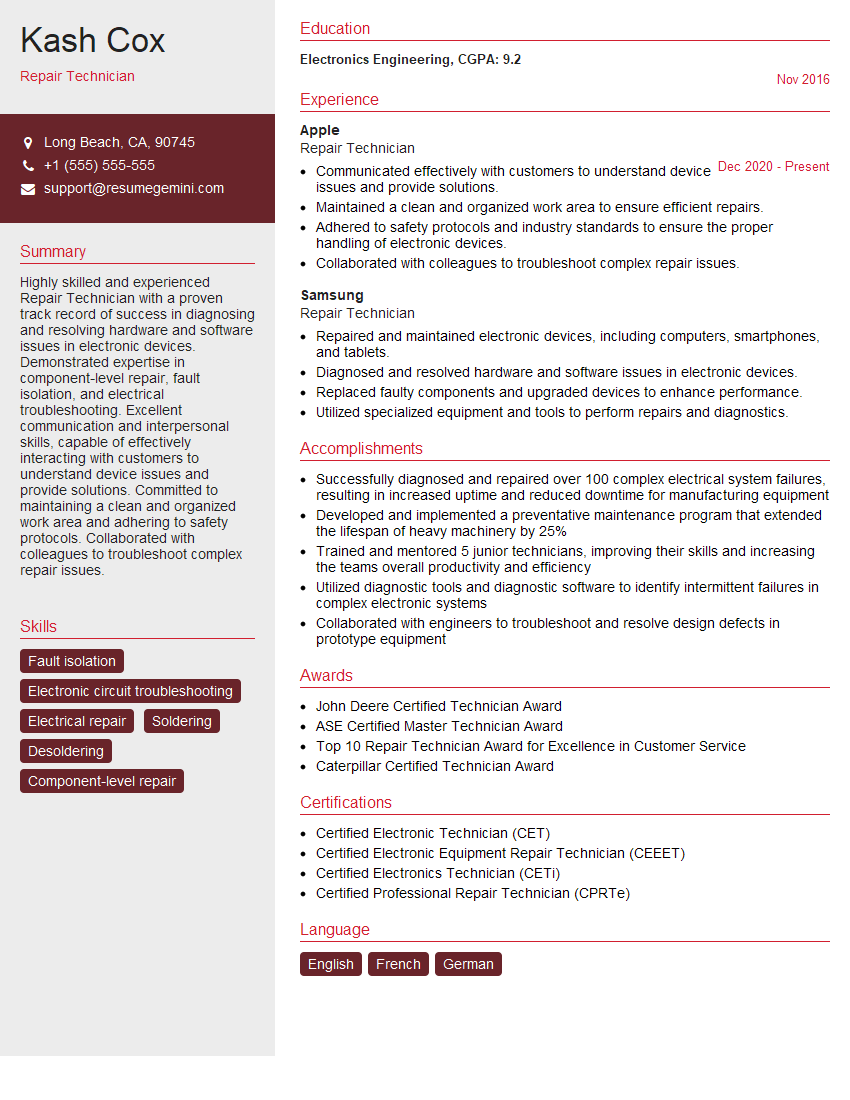
Repair Technician Resume Sample
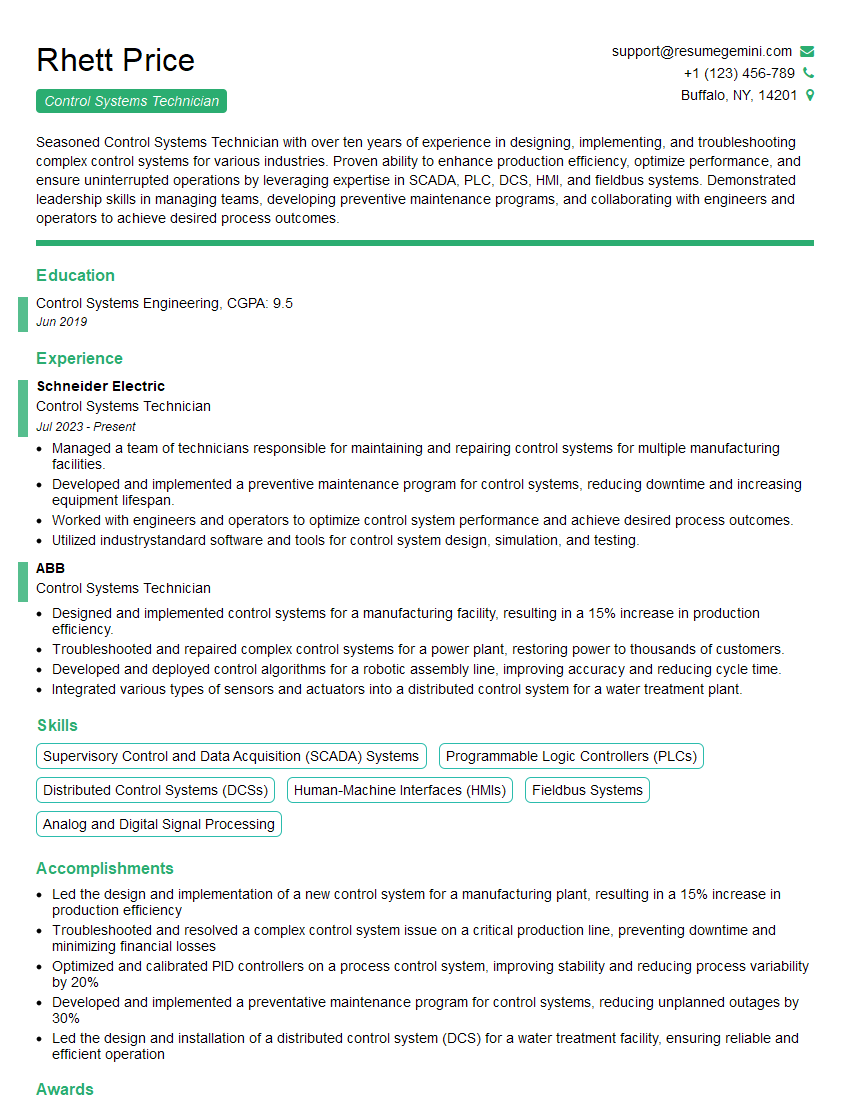
Control Systems Technician Resume Sample
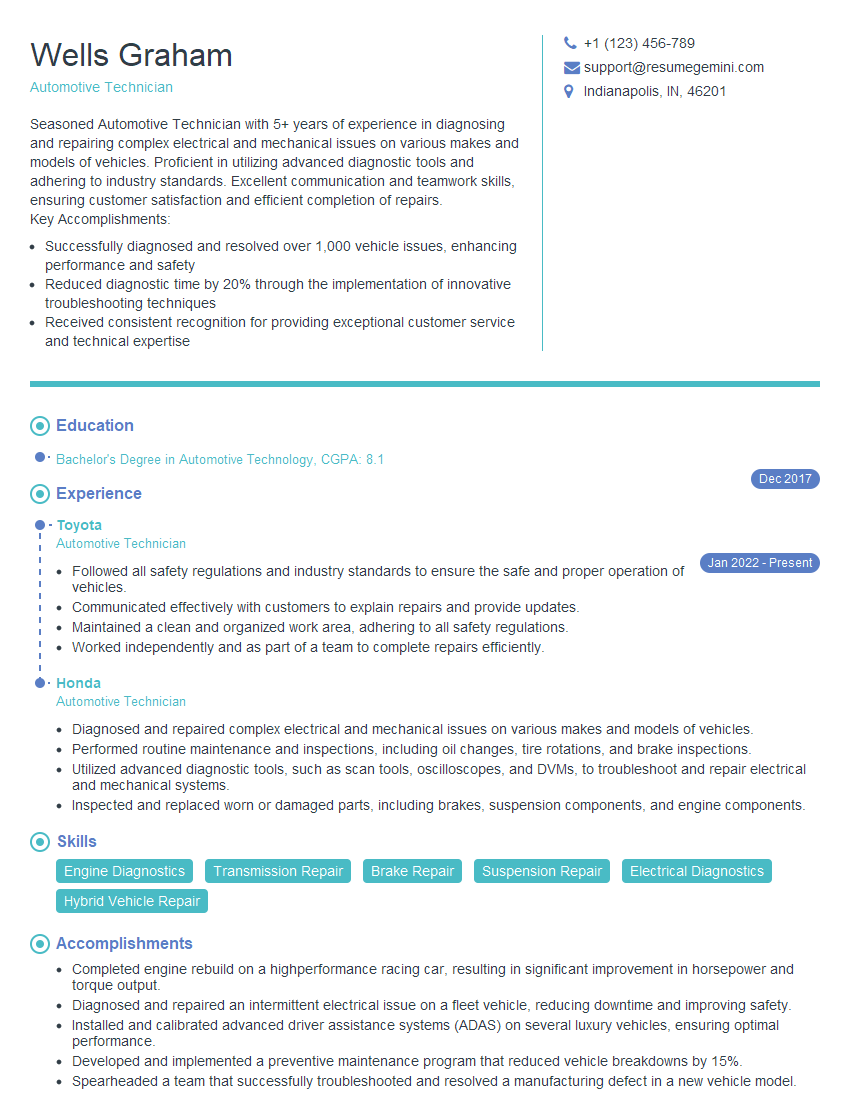
Automotive Technician Resume Sample
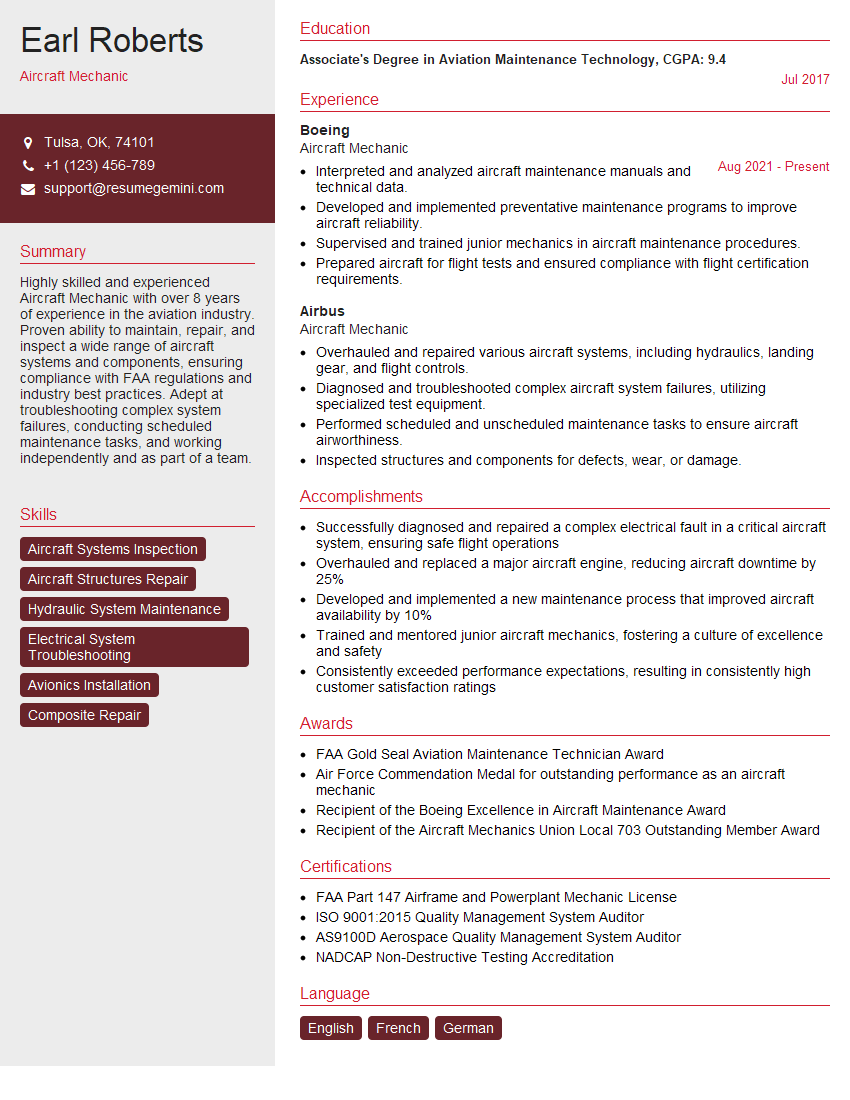
Aircraft Mechanic Resume Sample

Electromechanical Technician Resume Sample
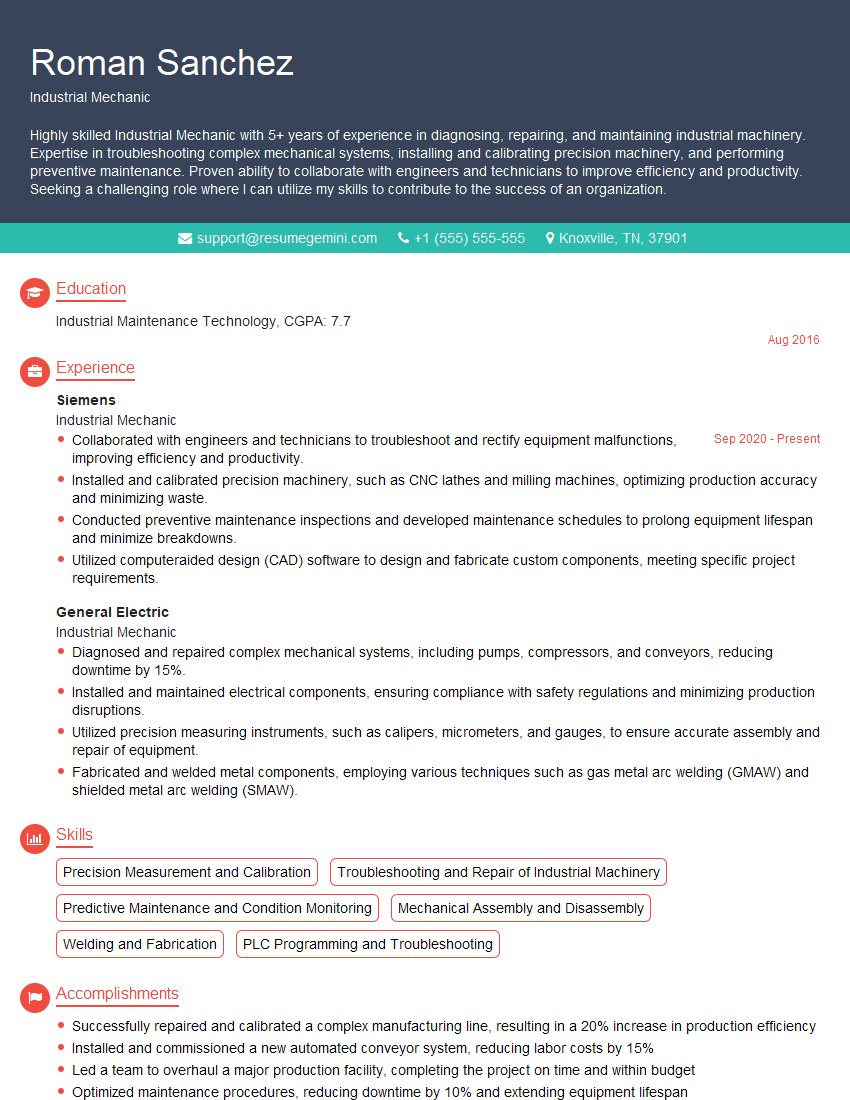
Industrial Mechanic Resume Sample
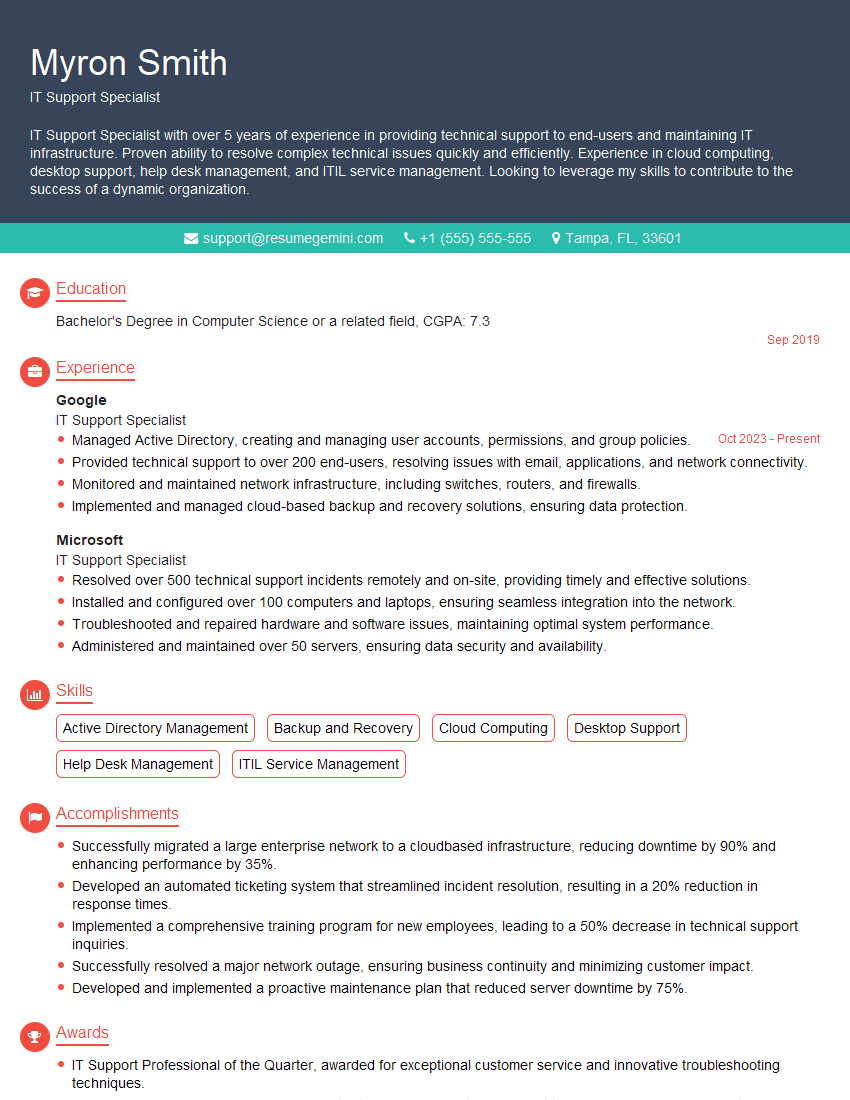
IT Support Specialist Resume Sample
- Technical Support Engineer
- Network Technician
- Maintenance Technician
- Service Engineer
- Maintenance Engineer
- Field Engineer
- Electronics Technician
- Instrumentation Technician
- Field Service Technician
- Mechanical Technician
- Robotics Technician
- Lead Technician
- Computer Repair Technician
- Repair Technician
- Control Systems Technician
- Automotive Technician
- Aircraft Mechanic
- Electromechanical Technician
- Industrial Mechanic
- IT Support Specialist
Explore more articles
Users Rating of Our Blogs
Share Your Experience
We value your feedback! Please rate our content and share your thoughts (optional).
What Readers Say About Our Blog
Very informative content, great job.
good