Interviews are opportunities to demonstrate your expertise, and this guide is here to help you shine. Explore the essential EU 2014/53/EU RED Directive interview questions that employers frequently ask, paired with strategies for crafting responses that set you apart from the competition.
Questions Asked in EU 2014/53/EU RED Directive Interview
Q 1. Explain the key requirements of the EU 2014/53/EU Radio Equipment Directive (RED).
The EU Radio Equipment Directive (RED) 2014/53/EU harmonizes the rules for placing radio equipment on the EU market. Its core aim is to ensure that radio equipment operates safely and efficiently without causing harmful interference. Key requirements revolve around health, safety, and electromagnetic compatibility (EMC). This means manufacturers must demonstrate their products meet specific essential requirements before they can be sold within the EU. These requirements cover aspects like:
- Human health and safety: Protecting users from hazards like electric shock, excessive radiation, and mechanical dangers.
- Efficient radio spectrum usage: Ensuring equipment doesn’t interfere with other radio services or devices.
- Electromagnetic compatibility (EMC): Preventing interference both emitted by and received by the equipment, ensuring it doesn’t disrupt other electronic devices.
- Protection of the environment: Considering environmental impact during the design, manufacturing and disposal stages, although this is often addressed through other directives like RoHS.
Essentially, the RED ensures radio devices are safe, reliable, and don’t cause interference problems – vital for a smoothly functioning digital society.
Q 2. What is the difference between essential requirements and technical standards under RED?
The RED distinguishes between essential requirements and technical standards. Think of it like this: essential requirements are the broad, fundamental goals, while technical standards provide the specific rules to achieve those goals.
- Essential Requirements: These are the high-level objectives defined in Annex II of the RED. They are broad statements of what the radio equipment must achieve regarding safety, EMC, and efficient spectrum use. They don’t prescribe exact technical solutions.
- Technical Standards (Harmonised Standards): These are developed by European Standardization Organizations (ESOs) like CEN, CENELEC, and ETSI. They offer detailed specifications and test methods to demonstrate compliance with the essential requirements. Using harmonised standards creates a presumption of conformity – meaning if you meet the standard, you are deemed to meet the corresponding essential requirement. However, it’s not mandatory to use these standards; other means of demonstrating compliance are permissible.
For example, an essential requirement might be ‘protection against hazardous voltages’. A corresponding technical standard would specify detailed test procedures and safety limits for voltage levels to prove the equipment meets this requirement.
Q 3. Describe the conformity assessment procedures available under RED.
The RED offers several conformity assessment procedures, the choice depending on the complexity of the equipment and the manufacturer’s risk assessment. These procedures range from simple self-declarations to more rigorous assessments involving Notified Bodies.
- Internal Production Control (IPC): Suitable for simpler equipment where the manufacturer is responsible for all aspects of conformity assessment and declares their product compliant themselves.
- Internal Production Control plus (IPC+): Includes additional requirements and testing above IPC.
- Quality Assurance (QA): The manufacturer implements a quality management system under the supervision of a Notified Body who performs regular audits.
- Product Quality Assurance (PQA): Similar to QA, but with more testing of finished products.
- Type Examination (TE): Involves a Notified Body testing a representative sample of the equipment to ensure it meets the essential requirements. This is often used for more complex devices.
- Module A1 (only): Module A1 refers to the use of a Notified Body for all aspects of conformity assessment and is combined with other modules.
- Module A2 (only): Module A2 refers to the use of a Notified Body to check the quality assurance system.
Manufacturers must select the appropriate procedure based on their specific equipment and risk assessment. The chosen procedure will significantly impact the documentation and testing required.
Q 4. What is a Notified Body, and what is its role in RED compliance?
A Notified Body is an independent organization designated by a Member State to assess the conformity of products to specific EU directives, including the RED. They are experts in the relevant technical standards and regulations. Think of them as trusted third-party validators.
The role of a Notified Body in RED compliance depends on the chosen conformity assessment procedure. In procedures like Type Examination (TE), they conduct detailed testing and review the technical documentation to ensure the equipment meets the essential requirements. They then issue a certificate of conformity, which provides assurance to market surveillance authorities and consumers. In other modules, their role might involve auditing the manufacturer’s quality management system.
Choosing a reputable Notified Body is critical for manufacturers as their assessment directly impacts the market access of their products.
Q 5. Explain the concept of ‘market surveillance’ in the context of RED.
Market surveillance refers to the activities undertaken by national authorities in EU Member States to ensure that products placed on the market comply with EU legislation, including the RED. This is a crucial mechanism for protecting consumers and ensuring fair competition.
Market surveillance includes checks on products in shops and online, investigating complaints, and taking appropriate actions if non-compliant products are found. Actions can range from issuing warnings to recalling products from the market. Effective market surveillance prevents unsafe or interfering radio equipment from reaching consumers, creating a level playing field for compliant manufacturers.
Manufacturers should proactively ensure their products meet all the RED requirements to avoid potential issues with market surveillance authorities.
Q 6. How does RED relate to other EU directives, such as RoHS or EMC Directive?
The RED doesn’t operate in isolation. It often interacts with other EU directives, ensuring a holistic approach to product safety and environmental protection. Key examples include:
- RoHS (Restriction of Hazardous Substances): This directive limits the use of certain hazardous substances in electrical and electronic equipment, including radio equipment. Manufacturers must ensure their radio equipment complies with both the RED and RoHS.
- EMC Directive (2014/30/EU): This directive covers electromagnetic compatibility, requiring that equipment does not cause electromagnetic interference nor is it susceptible to it. The RED incorporates the essential requirements of the EMC Directive, meaning compliance with the RED also generally covers EMC requirements. However, separate compliance demonstration may be needed.
Compliance with multiple directives can be challenging, requiring careful consideration of overlapping requirements. Manufacturers must often manage several conformity assessment procedures simultaneously.
Q 7. What are the key requirements for the technical documentation file under RED?
The technical documentation file (TDF) is a critical part of demonstrating RED compliance. It’s a comprehensive collection of documents providing evidence that the radio equipment meets the essential requirements. Its contents vary depending on the complexity of the equipment and the chosen conformity assessment procedure but should generally include:
- Description of the equipment: Detailed specifications, drawings, and schematics.
- Technical design and manufacturing information: Including circuit diagrams, component specifications, and manufacturing processes.
- Results of conformity assessment: Test reports and certificates demonstrating compliance with relevant standards and essential requirements.
- Manuals and instructions: Including user manuals and technical instructions for installation and maintenance.
- Proof of conformity: This could include declarations of conformity, test reports, and certificates issued by Notified Bodies.
The TDF is crucial for demonstrating compliance to market surveillance authorities and should be meticulously maintained throughout the product’s lifecycle.
Q 8. Describe the CE marking requirements under RED.
The CE marking under the Radio Equipment Directive (RED) 2014/53/EU is a manufacturer’s declaration that their radio equipment conforms to all applicable requirements of the directive. It’s not just a sticker; it’s a legal statement signifying that the equipment meets essential requirements for health, safety, and electromagnetic compatibility (EMC), and that the manufacturer has followed the correct conformity assessment procedure.
To obtain the CE marking, manufacturers must:
- Demonstrate conformity: This involves a combination of internal production control, testing, and potentially involvement of a Notified Body, depending on the chosen conformity assessment procedure (see question 5).
- Compile technical documentation: This file proves conformity and includes design details, test reports, and declarations of conformity.
- Affix the CE marking: The marking must be clearly visible and affixed to the equipment itself, or its packaging.
- Maintain post-market surveillance: Manufacturers are responsible for monitoring the performance of their equipment in the market and addressing any identified issues.
Think of it like a driver’s license – you can’t legally drive without one, and getting it requires demonstrating you meet the requirements. Similarly, you cannot legally sell radio equipment within the EU without a valid CE marking.
Q 9. Explain the implications of non-compliance with RED.
Non-compliance with RED has serious consequences. It can lead to:
- Market withdrawal: National authorities can order the removal of non-compliant equipment from the market.
- Fines and penalties: Manufacturers face significant financial penalties for violating the directive.
- Reputational damage: Non-compliance can severely damage a company’s reputation and erode consumer trust.
- Legal action: Consumers and other stakeholders can initiate legal proceedings against non-compliant manufacturers.
- Obstacles to market access: Non-compliance can prevent future products from gaining market access in the EU.
For example, a manufacturer who fails to conduct proper RF exposure assessments or omits essential technical documentation risks facing all of these consequences. The potential cost of non-compliance far outweighs the cost of ensuring conformity.
Q 10. How are electromagnetic compatibility (EMC) requirements addressed under RED?
Electromagnetic Compatibility (EMC) is a crucial aspect of RED. It ensures that radio equipment doesn’t cause electromagnetic interference (EMI) to other devices, and that it’s immune to EMI from other sources. This is vital to avoid malfunctions and ensure reliable operation. RED mandates compliance with the EMC Directive 2014/30/EU.
Compliance is typically demonstrated through EMC testing, often conducted by independent testing laboratories. The testing covers emission limits (how much EMI the device generates) and immunity limits (how well the device resists external EMI). These tests are defined in harmonized standards (e.g., EN 301 489 series).
The results are documented in a test report, which is an essential part of the technical documentation for CE marking. Failure to meet EMC standards will prevent a device from receiving CE marking.
Q 11. What are the key aspects of RF exposure assessment under RED?
RF exposure assessment under RED ensures that radio equipment does not exceed the limits for human exposure to radiofrequency (RF) electromagnetic fields. This is crucial to protect public health. The assessment involves:
- Identifying the RF sources: Determining which components in the equipment emit RF radiation.
- Calculating the power density and SAR: Using computational modelling or measurements to determine the power density of the RF field and, for devices held close to the body, the specific absorption rate (SAR).
- Comparing results to limit values: Checking whether the calculated values are below the limit values specified in the relevant standards (e.g., ICNIRP guidelines).
- Providing a declaration of conformity: The assessment results are included in the technical documentation and form part of the declaration of conformity.
For example, a smartphone manufacturer must demonstrate that its device’s RF emissions don’t exceed the SAR limits set by the EU. Failure to do so can result in the device being withdrawn from the market.
Q 12. How do you determine which conformity assessment procedure is appropriate for a specific radio equipment?
The choice of conformity assessment procedure under RED depends on the characteristics of the radio equipment and the manufacturer’s capabilities. The directive outlines several procedures, ranging from internal production control (simplest) to full Notified Body involvement (most rigorous). The selection process usually involves considering factors such as:
- Risk assessment: Higher-risk equipment generally requires more rigorous procedures.
- Manufacturer’s capabilities: Manufacturers with robust quality systems can opt for procedures with less Notified Body involvement.
- Complexity of the equipment: Complex equipment may demand more testing and scrutiny.
For instance, a simple radio-controlled toy might allow for a simplified internal production control, whereas a sophisticated 5G base station would necessitate involvement of a Notified Body and extensive testing throughout the whole product lifecycle.
A flow chart or decision tree, based on the specific features of the product and the manufacturer’s resources, is usually employed to determine the correct procedure. This ensures manufacturers comply with the directive’s requirements while balancing efficiency and risk.
Q 13. Describe your experience with conducting EMC and RF testing.
I have extensive experience in conducting EMC and RF testing, encompassing both pre-compliance and regulatory testing for various radio equipment. This includes experience in using a wide range of test equipment, such as spectrum analyzers, anechoic chambers, and near-field scanners. I’ve worked with diverse technologies, from Bluetooth low-energy devices to high-power broadcast transmitters.
My expertise extends to test methodologies, including the interpretation of standards, the design of test setups, and data analysis. I’ve successfully guided many manufacturers through the process of achieving compliance, providing crucial feedback on design improvements to address identified non-compliances. A recent project involved testing a new generation of smart meters, ensuring their EMC performance met the stringent RED requirements before market launch.
Q 14. What is your experience with different notified bodies?
I have worked with several Notified Bodies accredited under RED, including both large international organizations and smaller specialized labs. This experience has provided me with insight into the nuances of various Notified Body approaches, their strengths, and potential limitations. I understand the importance of choosing the appropriate Notified Body based on the specific needs of the project, including factors such as geographic location, expertise, and turnaround time.
Building strong relationships with Notified Bodies is crucial for efficient compliance. My experience helps to navigate the often-complex procedures and documentation requirements, ensuring that the assessment process proceeds smoothly and efficiently. This includes understanding and meeting the different requirements and audit processes used by each Notified Body.
Q 15. Explain the process for obtaining CE marking for a new radio equipment.
Obtaining CE marking for radio equipment under the Radio Equipment Directive (RED) 2014/53/EU is a crucial step for legal sales within the European Economic Area (EEA). It signifies that the equipment meets all the essential requirements outlined in the directive. The process involves several key steps:
- Assessment of Essential Requirements: Begin by thoroughly reviewing the RED’s essential requirements, including those related to radio spectrum usage, electromagnetic compatibility (EMC), health and safety, and environmental protection. This forms the basis of your design and testing.
- Design and Development: Ensure your radio equipment’s design inherently addresses these essential requirements. This often involves careful component selection and circuit design to meet EMC limits and efficient spectrum usage.
- Testing and Verification: Conduct rigorous testing to demonstrate compliance with the essential requirements. This might involve EMC testing in accredited laboratories to verify emissions and immunity, as well as radio performance tests. Specific tests depend on the equipment’s functionality and frequency bands used.
- Technical Documentation: Compile comprehensive technical documentation, including test reports, design specifications, and declarations of conformity. This documentation serves as evidence that your equipment meets all regulatory requirements. It should be readily available for inspection by authorities.
- Conformity Assessment Procedure: Choose a suitable conformity assessment procedure based on the equipment’s complexity and risk profile. This could range from self-declaration (for simpler equipment) to involvement of a Notified Body for more complex equipment requiring third-party assessment. The Notified Body will perform audits and review your documentation.
- Declaration of Conformity (DoC): Once all necessary tests and assessments are completed, issue a formal Declaration of Conformity. This legal document declares that your equipment complies with the relevant provisions of the RED. The DoC must be affixed to the product or its packaging.
- CE Marking: Finally, affix the CE marking to the equipment. This indicates that it meets the requirements of the RED and allows it to be legally sold within the EEA.
Example: A manufacturer of a new Bluetooth speaker would need to test its electromagnetic emissions and immunity, ensure it operates within allocated frequency bands, and provide detailed technical files including schematics and test reports before applying for a Declaration of Conformity and applying the CE mark.
Career Expert Tips:
- Ace those interviews! Prepare effectively by reviewing the Top 50 Most Common Interview Questions on ResumeGemini.
- Navigate your job search with confidence! Explore a wide range of Career Tips on ResumeGemini. Learn about common challenges and recommendations to overcome them.
- Craft the perfect resume! Master the Art of Resume Writing with ResumeGemini’s guide. Showcase your unique qualifications and achievements effectively.
- Don’t miss out on holiday savings! Build your dream resume with ResumeGemini’s ATS optimized templates.
Q 16. How do you ensure compliance with RED throughout the product lifecycle?
Ensuring RED compliance throughout a product’s lifecycle is critical. This requires a proactive and systematic approach. It’s not a one-time task but an ongoing process.
- Design Phase: Incorporate RED compliance considerations from the initial design stage. This minimizes the need for costly redesigns later in the process.
- Manufacturing Phase: Implement robust quality control measures to ensure consistent compliance throughout manufacturing. Regular checks and audits are vital.
- Distribution and Sales: Ensure proper labeling and documentation accompany the product to maintain traceability and demonstrate compliance. Clear instructions for use are also important.
- Post-Market Surveillance: Actively monitor product performance in the market. Address any reported issues promptly and implement necessary corrective actions. This might include software updates or hardware revisions.
- Regular Updates: Stay updated on any changes or amendments to the RED regulations. Adapt your processes and documentation accordingly.
Example: A company manufacturing smart home devices would continuously monitor customer feedback and regulatory updates. If a software update is required to address a reported issue or a new RED amendment impacting the product, they need to implement the change and update their documentation accordingly.
Q 17. Describe your experience in managing RED compliance projects.
I have extensive experience in managing RED compliance projects, including participation in all stages, from initial design review to post-market surveillance. My approach emphasizes proactive planning, rigorous testing, and meticulous documentation. I’ve led teams through the entire CE marking process for diverse products, from simple remote controls to sophisticated industrial radio systems. My experience includes working with Notified Bodies to navigate complex certification processes and successfully resolving compliance issues.
In one particular project involving a new industrial wireless sensor network, we proactively identified potential compliance risks early in the design phase. This prevented costly design changes later. We used a phased approach, starting with individual component testing, followed by module-level testing, and culminating in system-level testing. This systematic approach ensured successful completion of the RED certification process within budget and timeframe.
Q 18. How do you handle changes in RED regulations and updates?
Handling changes in RED regulations requires a robust monitoring and adaptation system. I use a multi-faceted approach:
- Active Monitoring: I subscribe to official publications and industry newsletters to stay informed of any amendments or updates to the RED. This proactive approach enables timely action.
- Impact Assessment: Upon receiving notification of changes, I assess their impact on existing and planned products. This includes determining the scope of any necessary modifications.
- Documentation Updates: I update the relevant technical documentation accordingly, including test reports, declarations of conformity, and user manuals.
- Stakeholder Communication: I communicate the changes and their implications to relevant stakeholders, including designers, manufacturers, and clients.
Example: If a new amendment to the RED changes the EMC testing requirements, I would review the impact on our existing products, update the test plans, conduct the necessary retesting, and revise our declarations of conformity.
Q 19. How do you ensure compliance of imported radio equipment?
Ensuring compliance of imported radio equipment requires due diligence and a thorough understanding of the RED. The importer is legally responsible for ensuring that the imported equipment conforms to all applicable requirements before placing it on the EEA market.
- Due Diligence: Thoroughly review all documentation provided by the supplier, including technical specifications, test reports, and declarations of conformity. Verify the validity of the CE marking.
- Verification of Compliance: Consider independent testing to verify the supplier’s claims, especially for complex equipment or where there are concerns about compliance.
- Documentation and Labeling: Ensure that the proper labeling and documentation accompany the equipment, complying with the requirements for traceability and instruction for use.
- Post-Market Surveillance: Maintain post-market surveillance procedures for imported products, just as with domestically manufactured ones, to monitor for any issues.
Example: An importer receives a shipment of wireless routers from a manufacturer outside the EEA. Before putting these routers on the market, the importer verifies the manufacturer’s documentation, potentially conducts additional testing to ensure EMC compliance, and adds any necessary labeling before making them available for sale.
Q 20. What is your experience with RED related auditing?
I have substantial experience with RED-related auditing, both internal and external. My experience includes participating in audits conducted by Notified Bodies and leading internal audits to ensure ongoing compliance. I understand the audit process, the relevant documentation required, and the expectations of auditors. My experience has also included working with companies to correct deficiencies identified during audits. This ensures corrective actions are effective and sustainable.
My approach is to maintain meticulous records, proactively identify potential non-conformances, and foster a culture of compliance throughout the organization. This preparation helps minimize disruption and delays during audits.
Q 21. What are the key differences between RED and the previous R&TTE Directive?
The RED (2014/53/EU) replaced the previous R&TTE Directive (1999/5/EC). While both aimed to regulate radio equipment, there are key differences:
- Scope: The RED has a broader scope, including more types of radio equipment and addressing aspects such as cybersecurity.
- Harmonization: The RED aims for greater harmonization of technical specifications and conformity assessment procedures, streamlining the process.
- Conformity Assessment Procedures: The RED offers a wider range of conformity assessment procedures, giving manufacturers more flexibility to choose the most suitable approach based on their product and risk profile.
- Notified Bodies: The use of Notified Bodies remains important, but the RED has refined their role and responsibilities.
- Market Surveillance: The RED emphasizes increased market surveillance and responsibility for economic operators throughout the supply chain.
In essence, the RED provides a more modern, comprehensive, and streamlined regulatory framework for radio equipment, improving clarity and efficiency compared to the R&TTE Directive.
Q 22. Explain the concept of ‘harmonized standards’ in the context of RED.
Harmonized standards, under the Radio Equipment Directive (RED), 2014/53/EU, are technical specifications developed by European Standardization Organizations (ESOs) like ETSI, CEN, and CENELEC. These standards are officially adopted by the European Commission and provide a presumption of conformity with the essential requirements of the RED. Think of them as detailed blueprints ensuring radio equipment meets safety and performance criteria.
Using harmonized standards offers manufacturers significant advantages. By following a harmonized standard, you demonstrate compliance with the essential requirements, simplifying the conformity assessment process and reducing the burden of individual testing. This is because conformity to the standard is deemed to satisfy the related essential requirements of the directive. However, it’s crucial to remember that compliance with harmonized standards is not mandatory. Manufacturers can still demonstrate conformity by other means, but the use of harmonized standards is the most efficient and straightforward route.
- Example: ETSI EN 300 328 is a harmonized standard covering the essential requirements for radio spectrum usage efficiency. Following this standard helps manufacturers ensure their equipment doesn’t cause harmful interference to other devices.
Q 23. How do you address potential conflicts between essential requirements and national legislation?
Conflicts between essential requirements of the RED and national legislation are addressed through the principle of supremacy of EU law. The RED sets minimum requirements, and member states can’t adopt national rules that create additional, more restrictive requirements that impede the free movement of goods within the EU. However, member states can implement more lenient measures as long as these don’t compromise the essential requirements’ objectives. This is a delicate balance to maintain.
If a conflict arises, the RED takes precedence. Member states have to ensure their national legislation is aligned with the RED’s essential requirements. If not, the national legislation is considered invalid in its conflicting points. To resolve such conflicts, effective communication and collaboration between manufacturers, national authorities, and the European Commission are crucial. A manufacturer facing such a conflict should seek clarification from the relevant national authority and, if necessary, escalate the issue to the European Commission.
Q 24. Describe a time you had to troubleshoot a RED compliance issue. What was the outcome?
During a project involving a new smart home device with integrated Wi-Fi and Zigbee functionalities, we encountered an issue with the electromagnetic compatibility (EMC) testing. Our initial testing revealed that the device was failing certain emission tests, potentially due to interference between the two wireless communication modules.
Our troubleshooting involved a systematic approach:
- Thorough investigation: We carefully reviewed the device’s hardware design, focusing on the layout of the Wi-Fi and Zigbee circuits to identify potential sources of interference.
- Shielding and filtering: We implemented improved shielding techniques for the modules and added additional filtering components to mitigate the emissions. We also experimented with different component layouts and grounding strategies.
- Retesting: After each modification, we retested the device to check for compliance. This iterative process involved multiple rounds of testing and refinement.
The outcome was successful. By implementing targeted shielding and filtering, we managed to bring the device into full compliance with the RED’s EMC requirements. This experience highlighted the importance of comprehensive testing throughout the design process and the need for flexibility during the troubleshooting phase.
Q 25. How would you educate other team members about RED compliance?
Educating team members about RED compliance involves a multi-faceted approach. I would start with a basic overview of the directive, explaining its purpose, scope, and essential requirements in plain language, avoiding unnecessary technical jargon.
Then I would break down the specific requirements relevant to our products. For example, I might hold workshops focusing on EMC testing procedures, the importance of documentation, or the correct labeling and declaration of conformity. Practical examples from past projects would be a powerful tool in explaining these points. We would use interactive training sessions, perhaps incorporating quizzes and case studies to reinforce understanding.
Finally, ongoing training and updates are vital. Regular briefings on new regulations, changes to harmonized standards, or best practices ensure team members remain informed and compliant. Creating an internal knowledge base where all relevant documents are easily accessible supports continuous learning and ensures consistency across projects.
Q 26. How do you maintain up-to-date knowledge on RED regulations and updates?
Maintaining up-to-date knowledge on RED regulations requires a proactive and multi-pronged approach. I regularly monitor the Official Journal of the European Union (OJEU) for any updates, amendments, or new regulations. I also actively subscribe to newsletters and alerts from organizations like the European Commission and industry associations that provide updates and insights on RED compliance.
Furthermore, participation in industry conferences and seminars keeps me informed about best practices and emerging challenges. Engaging with other experts and professionals in the field, through professional networks or forums, allows for a sharing of knowledge and insights on compliance issues. I also consult the relevant websites of notified bodies, which provide up-to-date information and guidance on conformity assessment procedures. Staying informed is not a one-time task; it’s a continuous process, vital for ensuring sustained compliance.
Q 27. Describe your understanding of the legal implications of non-compliance with RED.
Non-compliance with RED has significant legal implications. Manufacturers who place non-compliant radio equipment on the EU market face various penalties, including:
- Market withdrawal and seizure: National authorities can order the withdrawal of non-compliant products from the market and seize them.
- Financial penalties: Substantial fines can be imposed, often proportionate to the severity of the non-compliance and the scale of the infringement.
- Legal action: Consumers or competitors can initiate legal proceedings against non-compliant manufacturers, potentially leading to compensation claims.
- Reputational damage: Non-compliance can severely damage a manufacturer’s reputation, impacting trust and sales.
The severity of the penalties depends on various factors, such as the nature of the non-compliance, the manufacturer’s intent, and the presence of any mitigating circumstances. It’s far more cost-effective to ensure compliance from the outset than to face the consequences of non-compliance afterward.
Q 28. How would you approach the compliance of a complex radio equipment with multiple functionalities?
Compliance for complex radio equipment with multiple functionalities requires a structured and systematic approach. The key is to break down the compliance process into manageable components, focusing on each functionality and the relevant essential requirements.
Modular approach: Treat each functionality (e.g., Wi-Fi, Bluetooth, GPS) as a separate module, determining the essential requirements applicable to each. This allows a more focused compliance assessment, streamlining the process.
Documentation: Meticulous record-keeping is crucial. Maintain a comprehensive technical file documenting the design, manufacturing process, and test results for each module. This facilitates traceability and ensures conformity can be demonstrated at any time.
Notified Body involvement: Depending on the complexity of the equipment and the chosen conformity assessment procedure, a notified body may be required to verify compliance with the essential requirements. Early engagement with a notified body can help identify and address potential compliance issues early in the development process.
Risk assessment: A robust risk assessment helps identify potential areas of non-compliance, facilitating a prioritized approach to address any potential shortcomings.
By applying this structured and modular approach, manufacturers can effectively manage the compliance of complex radio equipment, minimizing risks and ensuring market access within the EU.
Key Topics to Learn for EU 2014/53/EU RED Directive Interview
- Definition and Scope: Understand the directive’s purpose, scope, and the types of equipment it covers. Be prepared to discuss its relevance to different industries.
- Essential Requirements: Master the key requirements related to conformity assessment, market surveillance, and economic operators’ responsibilities (manufacturer, importer, distributor).
- Conformity Assessment Procedures: Familiarize yourself with the different conformity assessment procedures (e.g., internal production control, type examination, etc.) and when each is applicable.
- Technical Documentation: Understand the requirements for technical documentation, including its composition and the information it must contain. Be prepared to discuss practical examples.
- CE Marking and Declaration of Conformity: Know the significance of the CE marking and the legal implications of affixing it to equipment. Understand how to correctly create a Declaration of Conformity.
- Market Surveillance and Enforcement: Understand the role of national authorities in market surveillance and the potential consequences of non-compliance.
- Harmonized Standards: Learn about the role of harmonized standards in demonstrating conformity and how they relate to the directive’s essential requirements.
- Practical Application: Be ready to discuss how the RED directive impacts product design, testing, and market entry strategies. Consider hypothetical scenarios and how you would address them.
- Problem-Solving Approach: Prepare to discuss how you would identify and resolve compliance issues related to the RED directive within a given scenario.
Next Steps
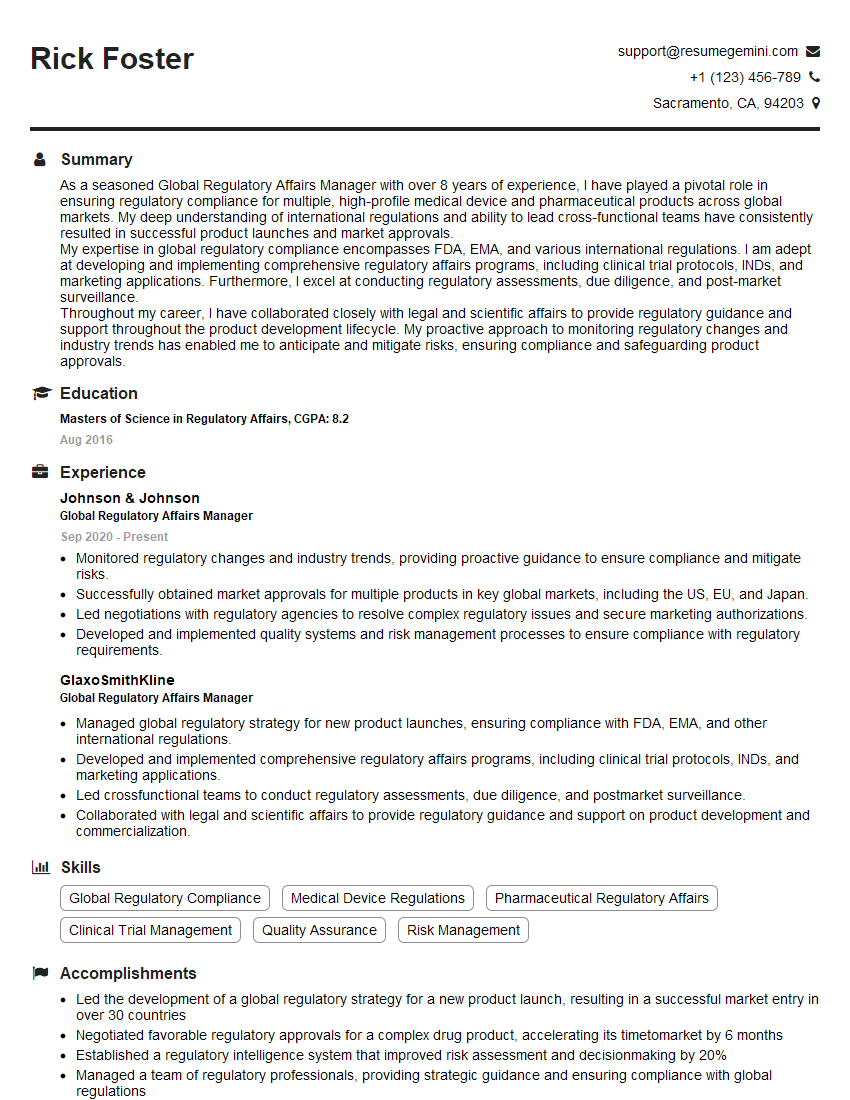
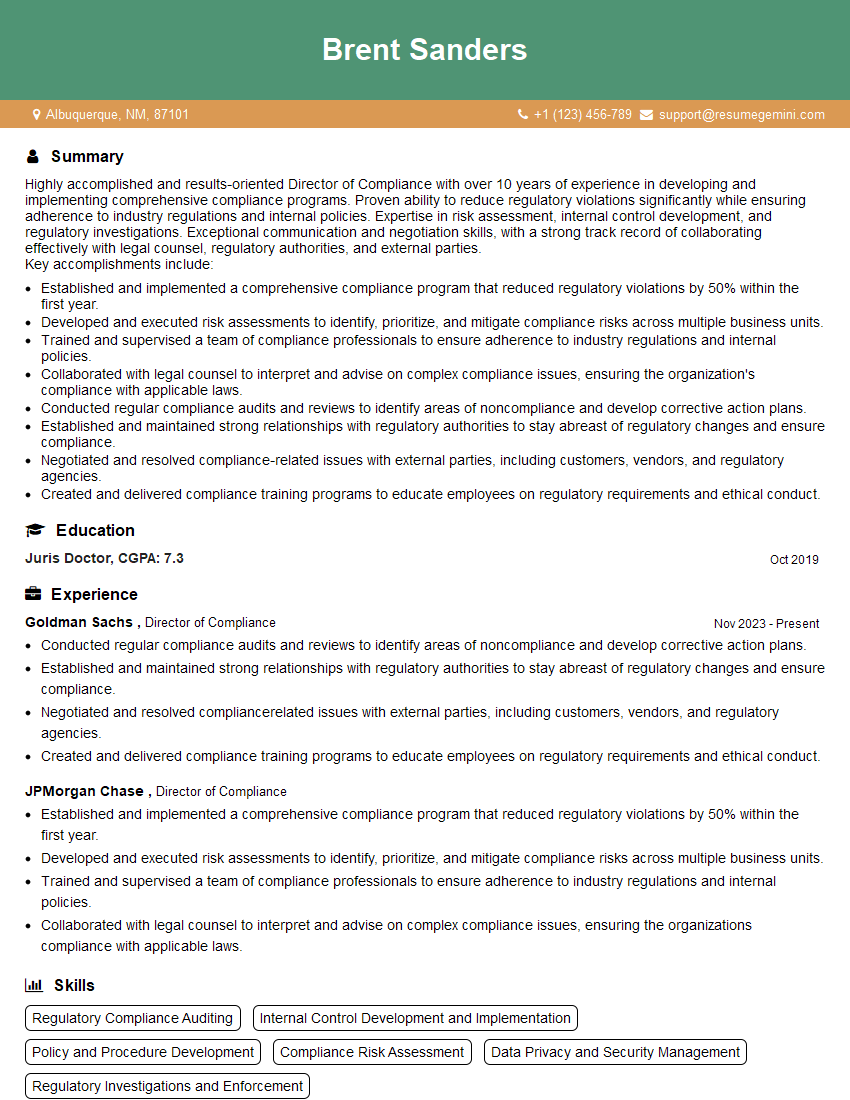
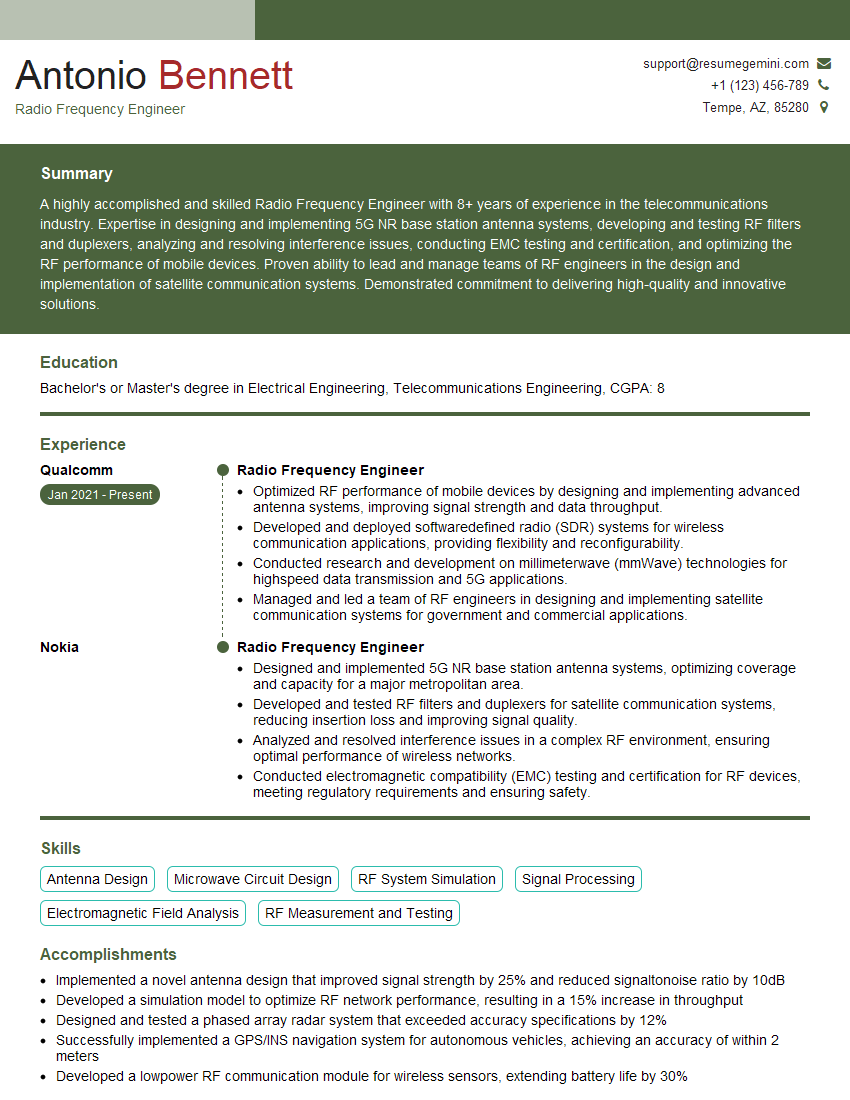
Mastering the EU 2014/53/EU RED Directive is crucial for career advancement in various sectors, including electronics, telecommunications, and manufacturing. Demonstrating a strong understanding of this directive significantly enhances your marketability and opens doors to higher-level positions and greater responsibilities. To maximize your job prospects, create an ATS-friendly resume that effectively showcases your skills and experience. ResumeGemini is a trusted resource to help you build a professional and impactful resume. We provide examples of resumes tailored to the EU 2014/53/EU RED Directive to guide you in creating a compelling application.
Explore more articles
Users Rating of Our Blogs
Share Your Experience
We value your feedback! Please rate our content and share your thoughts (optional).
What Readers Say About Our Blog
Very informative content, great job.
good