The thought of an interview can be nerve-wracking, but the right preparation can make all the difference. Explore this comprehensive guide to Change Management Practices interview questions and gain the confidence you need to showcase your abilities and secure the role.
Questions Asked in Change Management Practices Interview
Q 1. Describe your experience with different change management methodologies (e.g., ADKAR, Kotter’s 8-Step Process).
My experience encompasses a wide range of change management methodologies, with a focus on adapting the best practices to specific organizational contexts. I’m proficient in both ADKAR and Kotter’s 8-Step process, understanding their strengths and limitations. ADKAR, focusing on individual change, emphasizes Awareness, Desire, Knowledge, Ability, and Reinforcement. I’ve used this effectively in projects involving significant skill upgrades, providing targeted training and mentoring to address the ‘Ability’ and ‘Knowledge’ components. For instance, during a recent CRM implementation, we utilized ADKAR to guide individual user adoption, ensuring each team member understood the ‘why’ (Desire), knew how to use the system (Knowledge & Ability), and was continuously reinforced through ongoing support and performance metrics (Reinforcement). Kotter’s 8-Step, a more organizational-level approach, is ideal for large-scale transformations. I successfully applied this in a company-wide restructuring, focusing on establishing a sense of urgency (Step 1), building a guiding coalition (Step 2), and creating a compelling vision (Step 3). The iterative process of Kotter’s model ensured consistent progress and engagement throughout the entire organization.
Q 2. Explain how you would assess the impact of a proposed change on stakeholders.
Assessing the impact of proposed changes on stakeholders requires a systematic approach. I start by identifying all stakeholders – including employees, customers, suppliers, and even the wider community – and then analyze their level of influence and interest in the change using a stakeholder matrix. This matrix helps prioritize communication and engagement efforts. For example, stakeholders with high influence and high interest require close collaboration and proactive communication, while those with low influence and interest might only need basic information. I then conduct stakeholder interviews, surveys, and focus groups to understand their perspectives, concerns, and potential resistance. This qualitative data, combined with quantitative analysis of potential impacts on operational efficiency, financial performance, and market share, provides a comprehensive understanding of the potential effects of the change. This information feeds directly into the change management plan, allowing for proactive mitigation of negative impacts and amplification of positive ones.
Q 3. How do you identify and manage resistance to change?
Resistance to change is inevitable, and addressing it effectively is crucial. I start by identifying the root causes of resistance – which can range from fear of the unknown to a lack of understanding or perceived loss of power. Open communication channels are essential, enabling stakeholders to voice concerns and participate in shaping the change. Active listening and empathetic understanding are paramount. For instance, in a recent project involving a shift to a new software system, some employees expressed concerns about the steep learning curve. We addressed this by providing extensive training, individualized support, and a dedicated support team to alleviate their fears and anxieties. Addressing concerns proactively, acknowledging their validity, and showcasing how their roles would enhance through the change, can significantly reduce resistance. In cases where resistance persists, I utilize coaching and mentoring to help individuals adjust, and if necessary, I work with HR to address more challenging situations. The key is to ensure that everyone feels heard, understood, and valued throughout the change process.
Q 4. What strategies do you use to communicate change effectively to different audiences?
Effective change communication requires tailoring the message to the specific audience. I employ a multi-channel approach, using different communication methods for different groups. For example, executives might need concise executive summaries and high-level data, while frontline employees might benefit from more detailed explanations, training sessions, and informal Q&A sessions. I believe in transparency and clear, consistent messaging across all channels. Using storytelling, visual aids, and interactive sessions makes information more engaging and memorable. For example, during a significant organizational restructuring, we used videos to communicate the rationale behind the changes, emphasizing the positive impact on the overall company goals. We also held town hall meetings to answer questions and address employee concerns directly. Regular updates and feedback mechanisms throughout the process are vital to maintain transparency and ensure everyone stays informed.
Q 5. How do you measure the success of a change initiative?
Measuring the success of a change initiative requires establishing clear, measurable goals before the change begins. These goals should align with the overall business objectives and be specific, measurable, achievable, relevant, and time-bound (SMART). Post-implementation, I use a variety of metrics to evaluate success. This includes tracking key performance indicators (KPIs) related to operational efficiency, financial performance, employee satisfaction, and customer feedback. For instance, during a recent process improvement project, we measured success by tracking improvements in cycle time, cost reduction, and customer satisfaction scores. We also used employee surveys to gauge their satisfaction with the new processes. A comprehensive post-implementation review, including both quantitative and qualitative data, provides a holistic view of the initiative’s success and identifies areas for improvement in future projects. Regular progress reviews throughout the project ensures early identification of any potential deviations.
Q 6. Describe your experience developing and implementing a change management plan.
Developing and implementing a change management plan involves a phased approach. I begin by conducting a thorough assessment of the current state, identifying the desired future state, and defining the gap between the two. This involves stakeholder analysis, risk assessment, and resource planning. The plan itself outlines the specific steps, timelines, responsibilities, and resources required to achieve the desired outcomes. Crucially, it includes detailed communication plans and strategies for addressing potential resistance. I recently led the implementation of a new project management methodology across the organization. My plan included detailed training modules, a phased rollout to different teams, and ongoing support to ensure successful adoption. The plan also included mechanisms to gather feedback and make necessary adjustments along the way. Successful implementation required consistent monitoring, iterative adjustments based on feedback, and strong collaboration with various stakeholders.
Q 7. How do you handle unexpected challenges or setbacks during a change project?
Unexpected challenges and setbacks are inevitable in any change project. My approach focuses on proactive risk management, identifying potential issues beforehand and developing mitigation strategies. However, when unexpected challenges arise, I follow a structured approach. I begin by acknowledging the issue, assessing its impact, and engaging relevant stakeholders. A thorough analysis of the root cause helps prevent similar issues in the future. For instance, during a recent system upgrade, we encountered unforeseen compatibility issues with an existing application. We immediately formed a cross-functional team to address the problem, implementing a temporary workaround and developing a long-term solution. Open and transparent communication throughout the process is essential to maintain stakeholder trust and confidence. The process of resolving the unexpected challenge is documented and used to refine the existing change management plan, thereby improving future projects. The key is adaptability and a willingness to adjust the plan as needed, while keeping the overall objectives in sight.
Q 8. What tools or techniques do you use to track progress and manage risks?
Tracking progress and managing risks in change management requires a multi-faceted approach. I leverage a combination of tools and techniques tailored to the specific project and its complexity. For progress tracking, I often utilize project management software like Jira or Asana to monitor tasks, deadlines, and resource allocation. These tools allow for visual representations of progress through Gantt charts and Kanban boards, providing a clear overview of the change initiative’s status. Regular status meetings, documented in meeting minutes, further enhance transparency and accountability.
Risk management is equally crucial. I employ a risk register, a centralized document that lists potential risks, their likelihood, impact, and mitigation strategies. This register is dynamically updated throughout the project lifecycle. Techniques like SWOT analysis (Strengths, Weaknesses, Opportunities, Threats) help identify potential roadblocks early on. Regular risk assessments and mitigation planning sessions, often facilitated with stakeholder input, ensure proactive risk handling. For example, in a recent project involving a software upgrade, we identified the risk of data loss and mitigated it by implementing a robust backup and recovery system before the upgrade commenced. This proactive approach significantly reduced the impact of any potential issue.
Q 9. How do you build consensus and support for change among stakeholders?
Building consensus and support for change involves fostering a collaborative environment and understanding stakeholder needs. This starts with clearly communicating the ‘why’ behind the change, addressing concerns, and demonstrating the value proposition for each stakeholder group. Active listening and open dialogue are critical; I strive to create safe spaces where people feel comfortable expressing their views and concerns.
I utilize various communication channels, including town hall meetings, email updates, and one-on-one conversations, to ensure that information reaches everyone effectively. Stakeholder analysis, identifying key influencers and their perspectives, is key to building targeted communication strategies. Engaging stakeholders early in the process through workshops and collaborative planning sessions promotes ownership and buy-in. For instance, in a recent organizational restructuring, we held several workshops with employees from different departments, allowing them to voice their concerns and contribute to the design of the new structure. This collaborative approach significantly improved acceptance and reduced resistance to change.
Q 10. Describe a situation where you had to adapt your approach to change management due to unforeseen circumstances.
During a large-scale system implementation, we faced an unexpected delay due to a third-party vendor failing to deliver on time. Our initial plan relied heavily on their timely delivery. To adapt, we quickly convened a team meeting to assess the impact and explore alternative solutions. We decided to implement a phased rollout instead of a ‘big bang’ approach, prioritizing critical functionalities. This allowed us to launch a core subset of the system on time, mitigating the negative impact on the business. We also leveraged agile methodologies, adopting a more iterative approach that allowed us to incorporate feedback quickly and adjust our plans as needed. We communicated transparently with all stakeholders, updating them on the revised timeline and explaining the rationale for the changes. The adaptability and clear communication proved crucial in minimizing disruption and ensuring a successful launch, though slightly delayed.
Q 11. How do you ensure that changes are sustainable in the long term?
Ensuring long-term sustainability of changes requires focusing on embedding the changes into the organization’s culture and processes. This goes beyond simply implementing the change itself. It involves integrating the new processes and ways of working into day-to-day routines. We achieve this through several strategies. First, we provide comprehensive training and ongoing support to ensure users are proficient in the new processes. Second, we establish clear metrics and tracking mechanisms to monitor the impact and effectiveness of the changes over time. Third, we create feedback loops to continuously improve and refine the changes based on real-world experience. Finally, we celebrate successes and recognize individuals who champion the changes, reinforcing positive behavior. For example, following a process improvement project, we created a knowledge base and online forum to support staff and gather their feedback, fostering continuous improvement and ensuring the new process remains effective over time. A celebratory event also helped emphasize the success and reinforced the value of the implemented change.
Q 12. What is your approach to managing change in a matrix organization?
Managing change in a matrix organization requires a highly collaborative and nuanced approach. The presence of multiple reporting lines and diverse stakeholders necessitates clear communication and strong stakeholder management skills. My approach involves mapping the influence and authority of key stakeholders across different reporting lines. This helps to identify potential conflicts or roadblocks early on and develop strategies to address them proactively. Building strong relationships with key stakeholders across different teams is crucial. Regular communication, both formal and informal, is essential to keep everyone aligned and informed. I also focus on empowering project team members to navigate the matrix structure effectively, providing them with the necessary guidance and support to effectively advocate for the change within their respective teams.
Q 13. Explain your experience with change management in a large-scale project.
In a recent large-scale project involving a global ERP implementation, I played a crucial role in managing the change aspects. This involved coordinating change initiatives across multiple geographic locations, time zones, and cultures. We utilized a phased rollout approach, starting with a pilot program in one region before expanding globally. This allowed us to identify and address any issues before full implementation. We tailored our communication strategy to specific regional needs, using multiple languages and communication channels to ensure that everyone was informed and engaged. We also established regional change champions to advocate for the change within their respective teams. The project required close collaboration with IT, operations, and finance teams, demanding effective stakeholder management to ensure alignment. The success of the project demonstrates the effectiveness of a comprehensive change management strategy adapted to a global scale, emphasizing clear communication and localized implementations.
Q 14. How do you prioritize competing change initiatives?
Prioritizing competing change initiatives requires a structured approach that considers several factors. I typically use a prioritization matrix that weighs the urgency, impact, feasibility, and strategic alignment of each initiative. Urgency addresses how quickly the change needs to be implemented, while impact assesses the potential benefits or consequences. Feasibility considers the resources and support required, and strategic alignment ensures the initiative aligns with the overall organizational goals. I often involve stakeholders in the prioritization process to ensure alignment and buy-in. For instance, using a simple scoring system (e.g., 1-5 for each factor), we can numerically rank the initiatives. This ensures transparency and objectivity when making difficult decisions. This structured approach allows for a clear and defensible rationale when choosing which initiatives to focus on first, maximizing return on investment and minimizing resource conflicts.
Q 15. What are the key components of a successful change management strategy?
A successful change management strategy hinges on several key components, working in concert to ensure smooth transitions and successful outcomes. Think of it like building a house – you need a strong foundation and meticulously planned construction.
- Sponsorship: Strong executive sponsorship is crucial. A champion at the highest level provides the necessary resources, authority, and visible support to drive the change. Without it, resistance can easily derail the effort. For example, in a recent project involving a CRM system overhaul, the CEO’s active involvement significantly boosted employee buy-in.
- Stakeholder Analysis & Engagement: Understanding who’s affected by the change and how is paramount. This includes identifying potential resistance points and proactively addressing concerns. Involving stakeholders in the planning process creates a sense of ownership and minimizes resistance.
- Communication Plan: Clear, consistent, and timely communication is vital throughout the entire change process. It’s not enough to simply inform; you need to engage and persuade. Different communication channels should be used to reach different stakeholder groups effectively. For instance, using town hall meetings for general updates and one-on-one conversations for addressing specific concerns.
- Training and Development: People often resist change because they fear the unknown or lack the skills to adapt. Comprehensive training programs equipping individuals with the necessary knowledge and skills are essential for successful adoption.
- Resistance Management: Change inevitably encounters resistance. A well-defined strategy for identifying, understanding, and addressing resistance is vital. This involves active listening, addressing concerns, and offering support. Sometimes, simply acknowledging concerns can significantly reduce resistance.
- Measurement and Evaluation: Tracking progress and measuring the effectiveness of the change initiative is critical. This provides valuable feedback for continuous improvement and helps demonstrate the value of the change to stakeholders.
Career Expert Tips:
- Ace those interviews! Prepare effectively by reviewing the Top 50 Most Common Interview Questions on ResumeGemini.
- Navigate your job search with confidence! Explore a wide range of Career Tips on ResumeGemini. Learn about common challenges and recommendations to overcome them.
- Craft the perfect resume! Master the Art of Resume Writing with ResumeGemini’s guide. Showcase your unique qualifications and achievements effectively.
- Don’t miss out on holiday savings! Build your dream resume with ResumeGemini’s ATS optimized templates.
Q 16. How do you identify and address potential conflicts between different stakeholders?
Conflict between stakeholders is inevitable during change. My approach involves proactive identification and strategic conflict resolution. I start by carefully analyzing stakeholder relationships and identifying potential points of friction. Think of it as creating a map of potential ‘hotspots’.
Then, I utilize several strategies:
- Open Communication Channels: Facilitating open dialogue between conflicting parties in a neutral setting encourages understanding and fosters collaboration.
- Collaborative Problem Solving: Instead of forcing solutions, I encourage collaborative problem-solving workshops where stakeholders work together to find mutually acceptable solutions. This builds consensus and ownership.
- Negotiation and Mediation: If direct conflict resolution fails, I employ negotiation and mediation techniques to help conflicting parties find common ground. This often involves finding compromises that address the concerns of all parties.
- Win-Win Solutions: The goal is always to find a win-win solution that meets the needs of all stakeholders, even if it requires some compromises. Frame solutions positively – focus on what can be gained, rather than what needs to be sacrificed.
- Documentation: Clear documentation of agreements and decisions helps avoid future misunderstandings and reinforces accountability.
For example, during a recent organizational restructuring, conflicting views arose between different departments regarding resource allocation. Through facilitated workshops and open communication, we identified shared goals and collaboratively developed a resource allocation plan that satisfied all parties.
Q 17. Describe your experience with stakeholder analysis and engagement.
Stakeholder analysis and engagement are fundamental to my change management approach. I begin by creating a detailed stakeholder map, identifying key individuals and groups impacted by the change, classifying them by their influence and interest (power/interest grid), and assessing their potential for support or resistance. This visual representation helps prioritize engagement efforts.
My engagement strategies vary depending on the stakeholder group: For high-influence, high-interest stakeholders, I prioritize direct, personalized communication and active involvement in the change process. For low-influence, high-interest stakeholders, I aim to keep them informed and address their concerns proactively. I might use surveys, focus groups, or town halls depending on the audience and context. For high-influence, low-interest stakeholders, I focus on building relationships and highlighting the benefits of the change. I often use storytelling to make the impact more personal and relatable. For low-influence, low-interest stakeholders, ongoing general communication is usually sufficient.
In a recent project involving a new software implementation, I used a combination of surveys, interviews, and focus groups to understand stakeholder needs and concerns. This feedback directly informed the training materials and communication strategy, improving adoption rates and minimizing resistance.
Q 18. How do you use data and metrics to inform your change management decisions?
Data and metrics are crucial for driving informed decisions in change management. They provide objective insights into the effectiveness of the change initiative and help identify areas for improvement. I use various metrics depending on the specific project. These might include:
- Adoption Rates: The percentage of employees using the new system or adopting the new process.
- Employee Satisfaction: Surveys and feedback mechanisms to gauge employee satisfaction with the change.
- Process Efficiency: Metrics to measure improvements in speed, cost, or quality after the change.
- Resistance Levels: Tracking the level of resistance to identify areas where more support or communication is needed.
For example, during a recent process improvement project, we tracked key metrics such as cycle time and error rates. These data points showed a 20% improvement in efficiency after the implementation of the changes. This objective evidence reinforced the value of the changes and helped secure continued support from leadership.
Data visualization tools such as dashboards help communicate these metrics clearly and concisely to stakeholders, making it easier for them to grasp the impact of the change.
Q 19. What is your experience with training and development related to change management?
Training and development are integral to successful change management. I’ve been involved in designing and delivering various training programs, ranging from short workshops to extensive multi-day courses. My approach focuses on creating engaging and practical learning experiences that cater to different learning styles.
I use a variety of methods, including:
- Classroom Training: Traditional classroom settings for delivering structured training materials.
- E-learning Modules: Online courses that allow for self-paced learning and accessibility.
- On-the-Job Training: Mentoring and coaching to support employees as they implement the changes in their daily work.
- Gamification: Incorporating game-like elements to make training more engaging and interactive.
For instance, when implementing a new project management methodology, I created a blended learning program combining online modules with hands-on workshops and coaching. This approach ensured employees had both the theoretical knowledge and practical skills to successfully adopt the new methodology. Post-training surveys showed high satisfaction levels and a significant improvement in project outcomes.
Q 20. How do you foster a culture of continuous improvement and adaptation?
Fostering a culture of continuous improvement and adaptation is essential for sustained success in a dynamic environment. This requires a shift from a fixed mindset to a growth mindset, where experimentation and learning from mistakes are embraced.
My strategies include:
- Feedback Mechanisms: Establishing regular feedback loops to gather input from employees on the effectiveness of changes and identify areas for improvement. This can include surveys, focus groups, or suggestion boxes.
- Regular Reviews and Retrospectives: Conducting regular reviews and retrospectives to assess the progress of change initiatives and identify areas where adjustments are needed. The goal is to learn from both successes and failures.
- Innovation and Experimentation: Creating a safe space for employees to experiment with new ideas and approaches, without fear of failure. This involves celebrating both successes and learning from setbacks.
- Knowledge Sharing: Encouraging employees to share their knowledge and best practices with each other. This can be done through internal communities, workshops, or mentorship programs.
- Agile Approach: Adopting an agile approach to change management, which emphasizes iterative development and continuous feedback.
For example, I implemented a system of regular ‘lessons learned’ sessions after each major change initiative. These sessions focused on identifying both successes and challenges, and these insights are used to improve future change initiatives.
Q 21. Describe your experience with change management software or tools.
I have experience with several change management software and tools, including project management platforms like Jira and Asana, collaboration tools such as Microsoft Teams and Slack, and specialized change management software such as Changepoint and Planview Enterprise One. These tools provide valuable support for various aspects of change management.
These tools help with:
- Project Planning and Tracking: Creating and managing project plans, tracking progress, and identifying potential risks and issues.
- Communication and Collaboration: Facilitating communication and collaboration among stakeholders.
- Risk Management: Identifying and mitigating potential risks associated with change initiatives.
- Document Management: Storing and managing change-related documents and information.
- Stakeholder Engagement: Tracking stakeholder engagement and feedback.
For example, in a recent large-scale transformation project, we used Jira to track progress and manage tasks, Microsoft Teams for communication, and a specialized change management tool to manage stakeholder engagement and communication. The combination of these tools improved project visibility, collaboration, and overall efficiency.
Q 22. How do you manage the emotional impact of change on individuals and teams?
Managing the emotional impact of change is crucial for successful implementation. Change, even positive change, can trigger a wide range of emotions in individuals and teams – from excitement and anticipation to fear, anxiety, and resistance. My approach involves proactive communication, empathy, and creating a safe space for expressing concerns.
- Proactive Communication: I begin by transparently communicating the reasons for the change, its potential impact, and the timeline. This transparency reduces uncertainty and helps manage expectations. I use various channels – town halls, email updates, one-on-one conversations – to tailor communication to different audiences.
- Empathy and Active Listening: I actively listen to concerns and validate feelings. I understand that resistance often stems from fear of the unknown or perceived job security threats. Addressing these fears directly builds trust and reduces anxiety.
- Creating a Safe Space: I encourage open dialogue and feedback. This could involve creating forums where employees can share their thoughts and concerns anonymously if needed. I also provide coaching and mentoring to help individuals navigate their emotions and develop coping mechanisms.
- Celebrating Successes: Acknowledging and celebrating milestones along the way boosts morale and reinforces the positive aspects of the change. This demonstrates that the organization values its employees’ contributions and effort throughout the process.
For example, during a recent organizational restructuring, I implemented regular team meetings where employees could express their concerns openly. We also used a feedback tool to anonymously gather suggestions. This allowed me to address concerns proactively, improving morale and ensuring smoother transition.
Q 23. What are your strengths and weaknesses as a change management professional?
My strengths lie in my ability to build strong relationships, effectively communicate complex information, and proactively manage risks. I am adept at tailoring change management strategies to different organizational cultures and contexts. I’m also highly organized and detail-oriented, ensuring that projects stay on track and within budget.
A weakness I’m working on is delegating tasks effectively. While I enjoy being involved in every aspect of a project, I’ve realized that empowering others improves team engagement and allows for a more efficient workflow. I am actively implementing strategies to improve delegation skills, such as setting clear expectations, providing adequate support, and fostering a culture of trust within my teams.
Q 24. How do you stay current with the latest trends and best practices in change management?
Staying current in change management requires a multi-faceted approach. I regularly engage with professional organizations like the Prosci, attend webinars and conferences, and actively read industry publications and research papers. I also participate in online forums and communities to share best practices and learn from the experiences of others.
Moreover, I actively seek out mentorship and networking opportunities with seasoned change management professionals. This allows me to learn from their experiences and gain valuable insights into emerging trends and effective strategies. Finally, I critically evaluate the success and challenges of past projects, using those lessons to inform future initiatives.
Q 25. Describe your experience with organizational culture change.
I’ve been involved in several organizational culture change initiatives, most notably leading a change program to foster a more agile and collaborative work environment in a large financial institution. This involved a multi-pronged approach:
- Leadership buy-in: Securing commitment from senior leadership was paramount. We created a compelling vision and aligned it with the overall business strategy.
- Communication and Education: We communicated the reasons for the change, the benefits, and how it would affect employees. We used various communication channels, including internal newsletters, town hall meetings, and training workshops.
- Process and structure redesign: We redesigned work processes to be more flexible and collaborative. This included implementing new project management methodologies and tools.
- Incentivization and recognition: We established incentives and recognition programs to reward employees who embraced the new culture.
- Measurement and Evaluation: We tracked key metrics, such as employee engagement, collaboration levels, and project completion times, to assess the effectiveness of the changes.
The key to success was not only implementing structural changes but also cultivating a culture of trust, transparency, and mutual respect. This created a more positive and productive work environment.
Q 26. How do you ensure that change initiatives align with the overall business strategy?
Aligning change initiatives with the overall business strategy is essential for successful and sustainable change. My approach involves a thorough understanding of the business strategy, identifying the gaps between the current state and the desired future state, and designing change initiatives that directly address those gaps.
I use a variety of tools and techniques, including SWOT analysis, strategic mapping, and stakeholder analysis, to ensure alignment. I ensure the change initiatives are not only strategically aligned but also operationally feasible and deliver tangible value to the business. For each initiative, I create a clear rationale, showing how it contributes to achieving specific business goals and objectives. This alignment reduces the risk of conflicting priorities and ensures that resources are used effectively.
Q 27. What is your approach to managing risk and uncertainty in change management?
Managing risk and uncertainty in change management requires a proactive and systematic approach. I utilize a risk management framework that encompasses risk identification, assessment, mitigation, and monitoring.
- Risk Identification: I use brainstorming sessions, stakeholder interviews, and risk assessment tools to identify potential risks and issues early in the change process.
- Risk Assessment: I assess the likelihood and impact of each identified risk, prioritizing those with the highest potential negative consequences.
- Risk Mitigation: I develop and implement strategies to mitigate or eliminate identified risks. These strategies could include contingency planning, training, communication plans, and resource allocation.
- Risk Monitoring: I regularly monitor the progress of change initiatives and track the effectiveness of implemented mitigation strategies. This allows for early detection of emerging risks and enables prompt adjustments.
For example, in a recent project involving a new software rollout, we identified potential resistance from end-users as a key risk. We mitigated this risk by implementing a comprehensive training program and providing ongoing support. We also established a dedicated feedback mechanism to address any technical issues promptly.
Q 28. Describe your experience with developing a communication plan for a significant organizational change.
Developing a communication plan for significant organizational change is vital for success. My approach involves a structured process:
- Audience Analysis: I first identify all stakeholders affected by the change and segment them based on their roles, interests, and communication preferences. This ensures tailored messaging that resonates with each group.
- Message Development: I craft clear, concise, and compelling messages that address stakeholder concerns, highlight the benefits of change, and outline the steps involved. I ensure consistency in messaging across all channels.
- Channel Selection: I select appropriate communication channels based on audience preferences and the nature of the message. These could include emails, newsletters, town hall meetings, intranet postings, videos, and one-on-one conversations.
- Timeline and Frequency: I establish a clear communication timeline and frequency to ensure consistent updates throughout the change process. This helps manage expectations and addresses concerns promptly.
- Feedback Mechanisms: I incorporate feedback mechanisms, such as surveys, focus groups, and suggestion boxes, to gauge understanding and address any concerns.
- Measurement and Evaluation: I monitor the effectiveness of the communication plan, measuring metrics such as employee understanding, engagement, and satisfaction. This allows for adjustments to the plan as needed.
For instance, during a recent merger, I developed a communication plan that included regular updates from leadership, town hall meetings to address employee concerns, and a dedicated intranet portal to answer frequently asked questions. This ensured transparency and kept employees informed throughout the integration process.
Key Topics to Learn for Change Management Practices Interview
- Understanding Change Models: Explore various change management models (e.g., Kotter’s 8-Step Process, ADKAR Model) and their practical applications in different organizational contexts. Analyze their strengths and weaknesses and when each might be most appropriate.
- Stakeholder Analysis and Engagement: Learn how to identify key stakeholders, understand their perspectives, and develop strategies for effective communication and collaboration throughout the change process. Practice developing tailored communication plans for diverse audiences.
- Resistance to Change Management: Develop a deep understanding of the common causes of resistance to change and strategies for proactively addressing and mitigating these challenges. This includes understanding individual and organizational factors influencing resistance.
- Communication and Collaboration Strategies: Master effective communication techniques for different stages of the change process. Practice designing and delivering compelling presentations, leading workshops, and fostering open dialogue with stakeholders.
- Measuring and Evaluating Change Success: Learn how to define success metrics, track progress, and evaluate the effectiveness of change initiatives. This includes understanding both quantitative and qualitative measures of success.
- Change Leadership and Sponsorship: Explore the role of effective leadership in driving successful change. Understand how to secure and leverage executive sponsorship to gain buy-in and support throughout the organization.
- Risk Management in Change Initiatives: Learn to identify, assess, and mitigate potential risks associated with change projects. Practice developing contingency plans to address unforeseen challenges and ensure project success.
Next Steps
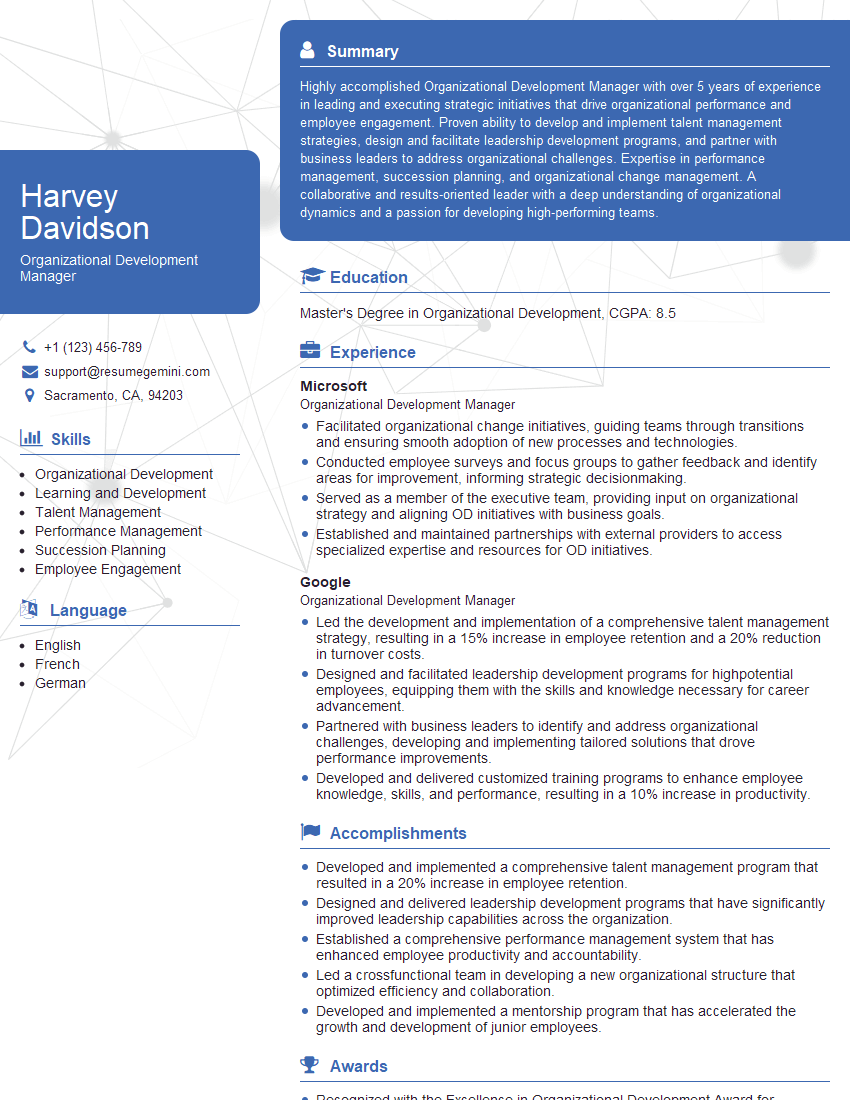
Mastering Change Management Practices is crucial for career advancement in today’s dynamic business environment. Demonstrating expertise in this area significantly enhances your value to any organization. To maximize your job prospects, it’s vital to create a compelling and ATS-friendly resume that highlights your skills and experience effectively. ResumeGemini is a trusted resource to help you build a professional resume that stands out. We provide examples of resumes tailored to Change Management Practices to help you craft a document that showcases your expertise and secures you interviews.
Explore more articles
Users Rating of Our Blogs
Share Your Experience
We value your feedback! Please rate our content and share your thoughts (optional).
What Readers Say About Our Blog
Very informative content, great job.
good