Every successful interview starts with knowing what to expect. In this blog, we’ll take you through the top EU MDR interview questions, breaking them down with expert tips to help you deliver impactful answers. Step into your next interview fully prepared and ready to succeed.
Questions Asked in EU MDR Interview
Q 1. Explain the key differences between the MDD and the MDR.
The Medical Device Directive (MDD) and the Medical Device Regulation (MDR) are both EU regulations governing medical devices, but the MDR represents a significant overhaul. The key difference lies in the regulatory approach: the MDD was a directive, meaning member states had to transpose it into national law, leading to variations in implementation across the EU. The MDR, conversely, is a regulation, directly applicable across all member states, ensuring a harmonized regulatory framework. This means consistent rules and procedures regardless of where a device is placed on the market within the EU.
Further key differences include:
- Stringency of requirements: The MDR introduces significantly stricter requirements for clinical evidence, post-market surveillance, and vigilance reporting.
- Classification system: The MDR features a revised and more detailed classification system, potentially reclassifying many devices into higher risk categories requiring more stringent regulatory scrutiny.
- Role of Notified Bodies: The MDR places a much greater emphasis on Notified Body involvement, extending their responsibilities and increasing the scrutiny of device manufacturers.
- UDI system: The MDR mandates the use of Unique Device Identification (UDI) systems, enhancing traceability and post-market surveillance.
Think of it like this: the MDD was a general guideline, whereas the MDR is a precise blueprint. This shift ensures higher levels of patient safety and a more robust regulatory framework.
Q 2. Describe the essential elements of a compliant EU MDR technical file.
A compliant EU MDR Technical File is a comprehensive collection of documents demonstrating the safety and performance of a medical device. It’s essentially the manufacturer’s evidence dossier for regulatory compliance. Key elements include:
- Device description: Detailed information about the device’s intended purpose, design, function, and specifications.
- Risk management file: A thorough assessment of potential hazards and the implemented risk mitigation measures, including a risk management plan.
- Design and manufacturing information: Documents showing the design process, manufacturing processes, quality management system, and material specifications.
- Clinical evaluation report: A comprehensive assessment of the clinical data supporting the device’s safety and performance claims, according to the device’s classification.
- Biological evaluation report (if applicable): Evaluation of the biocompatibility of materials in contact with the body.
- Performance evaluation report: Documentation of tests and data demonstrating that the device meets its specified performance requirements.
- Post-market surveillance plan: A detailed plan outlining the manufacturer’s strategy for monitoring the device’s performance and safety after it’s placed on the market.
The Technical File must be meticulously maintained and updated throughout the device’s lifecycle. Imagine it as the device’s detailed ‘passport,’ providing a complete and auditable history for regulatory authorities.
Q 3. What are the key changes introduced by the MDR regarding clinical evaluation?
The MDR significantly strengthens the requirements for clinical evaluation, demanding more robust and comprehensive evidence to support the safety and performance of medical devices. Key changes include:
- Increased rigor in clinical data requirements: The MDR demands more rigorous clinical data, often requiring larger clinical trials and more stringent statistical analysis, depending on the classification of the device.
- Post-market clinical follow-up: The MDR necessitates post-market clinical follow-up (PMCF) studies for many devices to continuously monitor performance and safety after market launch.
- More stringent criteria for clinical evidence: The types and quantity of clinical data required are more clearly defined and more stringent, with a focus on the actual clinical use of the device.
For example, a device previously requiring only limited clinical data under the MDD might now necessitate a large, randomized controlled trial under the MDR. This emphasis on clinical evidence improves the overall safety and effectiveness of medical devices on the market.
Q 4. Explain the process of post-market surveillance under the MDR.
Post-market surveillance (PMS) under the MDR is a crucial process for manufacturers to continuously monitor the safety and performance of their devices after they have been placed on the market. It’s a proactive, ongoing process aimed at detecting potential problems early and mitigating risks.
The PMS process involves:
- Developing a PMS plan: Manufacturers must develop a comprehensive PMS plan outlining how they will collect and analyze data on device performance and safety. This plan should be proportionate to the risk class of the device.
- Collecting data: This involves actively collecting data from various sources, such as incident reports, field safety corrective actions, user feedback, and literature reviews.
- Analyzing data: The collected data is systematically analyzed to identify any trends, patterns, or potential problems with the device’s safety or performance.
- Taking corrective actions: If any problems are identified, manufacturers must take appropriate corrective actions, which may involve implementing design changes, issuing field safety corrective actions, or even withdrawing the device from the market.
- Regular reporting: Manufacturers are obligated to periodically report their PMS activities and findings to the competent authorities.
Effective PMS is not merely a regulatory requirement but a crucial aspect of ensuring patient safety and maintaining the reputation of the manufacturer. It’s a continuous cycle of monitoring, analysis, and improvement.
Q 5. How does the MDR address vigilance reporting?
The MDR significantly enhances the vigilance reporting system, aiming to improve the speed and efficiency of reporting and managing serious incidents related to medical devices. It mandates a robust system for reporting serious incidents, including malfunctions and adverse events, to competent authorities and, where applicable, to Notified Bodies.
Key aspects of MDR vigilance reporting include:
- Faster reporting times: The MDR specifies shorter reporting times for serious incidents, ensuring quicker response to potential problems.
- Clearer definitions: The definitions of serious incidents are clearer and more precise, ensuring consistent reporting across the EU.
- Increased transparency: The MDR promotes increased transparency in vigilance reporting, enabling better sharing of information among stakeholders.
Imagine a scenario where a pacemaker malfunctions. Under the MDR’s vigilance reporting system, this incident must be reported quickly and efficiently, allowing authorities to take swift action to prevent further incidents and protect patients. This robust system is crucial for maintaining patient safety and trust in medical devices.
Q 6. What is a Notified Body, and what is its role in the MDR?
A Notified Body is a private organization designated by a member state to assess the conformity of medical devices to the requirements of the MDR. They act as an independent third party, providing assurance to regulatory authorities and patients that medical devices meet the required safety and performance standards.
The role of a Notified Body under the MDR is significantly expanded and more demanding compared to the MDD. Their responsibilities include:
- Performing audits: Assessing manufacturers’ quality management systems (QMS) and technical documentation.
- Reviewing technical files: Verifying that the technical files demonstrate the device’s compliance with the MDR requirements.
- Monitoring certified devices: Regularly monitoring the performance of certified devices post-market.
- Handling vigilance reporting: Receiving and processing vigilance reports from manufacturers.
Choosing the right Notified Body is critical for manufacturers. The Notified Body’s expertise and thoroughness directly impact the speed and success of the regulatory process.
Q 7. Describe the different classifications of medical devices under the MDR.
The MDR uses a complex classification system to categorize medical devices based on their intended purpose, risk level, and intended use. The classification determines the level of regulatory scrutiny and the requirements for conformity assessment.
The classification is based on rules that consider:
- Intended purpose: The specific medical purpose for which the device is intended.
- Risk profile: An assessment of potential hazards and risks associated with the device.
- Intended use: The conditions of use and patient population for which the device is designed.
Devices are categorized into four classes: Class I (low risk), Class IIa (medium risk), Class IIb (higher risk), and Class III (highest risk – implantable devices and devices for sustaining life). Each class has specific requirements for conformity assessment, including the involvement of Notified Bodies for higher-risk devices.
For example, a simple bandage might be Class I, while a heart valve would be Class III. This classification system ensures that devices with higher risks undergo more stringent regulatory scrutiny.
Q 8. Explain the concept of ‘essential requirements’ within the MDR.
The Medical Device Regulation (MDR) outlines ‘essential requirements’ as the fundamental safety and performance criteria that all medical devices must meet to be placed on the EU market. These requirements, detailed in Annex I of the MDR, cover a broad spectrum of aspects ensuring the devices are safe and effective for their intended purpose. Think of them as the ‘golden rules’ for medical device development and manufacturing.
- Safety: This includes aspects like biocompatibility (how the device interacts with the body), mechanical strength, and protection against hazards like electrical shocks.
- Performance: This encompasses the device’s accuracy, reliability, and effectiveness in achieving its intended medical purpose. For example, a pacemaker must accurately regulate heart rate, while a surgical instrument must be robust and precise.
- Clinical Data: For high-risk devices, extensive clinical evidence demonstrating safety and performance is essential to meet these requirements.
Failure to meet these essential requirements can result in serious consequences, including product recalls, fines, and even legal action. The requirements are designed to protect patients from harm and ensure public health.
Q 9. What are the implications of the MDR for manufacturers’ economic operators?
The MDR significantly impacts manufacturers’ economic operators, primarily by increasing the regulatory burden and associated costs. This is largely due to the stricter requirements, increased scrutiny, and a greater emphasis on post-market surveillance.
- Increased costs for testing and certification: More rigorous clinical data is needed, leading to higher costs in research and development.
- Higher insurance premiums: The increased liability associated with stricter regulations leads to higher insurance premiums for manufacturers.
- Need for improved traceability and documentation: Maintaining detailed records throughout the device’s lifecycle is crucial for compliance, which adds to administrative burden.
- More stringent post-market surveillance: Companies must actively monitor their devices after they’ve been placed on the market, which requires investment in systems and processes.
While these changes present challenges, they also drive innovation and improvement in medical device safety and quality. Manufacturers who proactively adapt to the MDR’s demands position themselves for long-term success in the EU market. Companies that fail to adapt risk falling foul of the law and potential market exclusion.
Q 10. How does the MDR address cybersecurity in medical devices?
The MDR recognizes the growing importance of cybersecurity in medical devices and addresses it directly. It mandates that manufacturers implement appropriate and proportionate cybersecurity risk management measures throughout the entire lifecycle of the device.
This means considering cybersecurity threats and vulnerabilities during design, development, manufacturing, and post-market surveillance. Manufacturers need to demonstrate that their devices are resilient against cyberattacks that could compromise patient safety or data integrity. For instance, a connected insulin pump should be protected from unauthorized access or manipulation.
The specific cybersecurity measures required will depend on the device’s classification and intended use. High-risk devices connected to networks will naturally require more robust cybersecurity measures compared to simpler, non-connected devices. The MDR doesn’t prescribe specific technical solutions, instead it focuses on a risk-based approach, demanding manufacturers conduct appropriate risk assessments and implement suitable controls.
Q 11. Explain the role of a designated person in meeting the requirements of the MDR.
A designated person, often referred to as a ‘responsible person,’ plays a crucial role in ensuring MDR compliance. They are legally and professionally responsible for the conformity of the medical devices marketed by the manufacturer. They’re essentially the point of contact for Notified Bodies and competent authorities.
The designated person must have the necessary expertise and experience in medical devices and regulatory affairs. Their responsibilities include:
- Overseeing the application of the MDR: Ensuring all relevant requirements are met throughout the entire product lifecycle.
- Reviewing documentation: Scrutinizing technical files and ensuring compliance with regulations.
- Communicating with regulatory bodies: Acting as the liaison between the manufacturer and Notified Bodies and competent authorities.
- Managing post-market surveillance: Ensuring that the manufacturer is monitoring the performance and safety of devices after they’ve entered the market.
The designated person’s role is critical in demonstrating a company’s commitment to patient safety and regulatory compliance. Without a properly qualified and empowered designated person, the organization risks serious regulatory issues.
Q 12. Describe the process of obtaining CE marking under the MDR.
Obtaining CE marking under the MDR is a multi-step process that involves rigorous conformity assessment procedures. It’s not simply a stamp; it’s a declaration that the device meets the essential requirements of the regulation.
- Device Classification: Manufacturers must first classify their device according to its risk class (Class I, IIa, IIb, or III). This determines the extent of conformity assessment needed.
- Technical File Preparation: A comprehensive technical file needs to be compiled, including design specifications, test results, clinical data (where required), risk management documentation, and more.
- Conformity Assessment: This involves working with a Notified Body (an EU-designated organization) to have the device and its technical file assessed to ensure conformity with the MDR’s essential requirements. The assessment method will depend on the device’s risk class. This may involve audits, testing, and/or inspections.
- CE Marking Application: Once the Notified Body has issued a certificate of conformity, the manufacturer can affix the CE marking to the device and its packaging. This demonstrates that the device meets all the essential requirements of the MDR and is compliant with the EU law.
- Post-Market Surveillance: Even after receiving CE marking, manufacturers must continue post-market surveillance activities to monitor the safety and performance of the device and report any serious incidents.
The process is designed to be rigorous, and the complexity varies depending on the device’s classification and risk profile. The ultimate goal is to ensure that only safe and effective medical devices are placed on the EU market.
Q 13. What are the penalties for non-compliance with the MDR?
Penalties for non-compliance with the MDR vary widely depending on the severity and nature of the infringement. They can be significant and include:
- Warnings and corrective actions: For minor infractions, authorities might issue warnings and require manufacturers to take corrective measures.
- Fines: Substantial fines can be imposed, ranging from several thousand to millions of Euros, depending on the severity of the breach and the manufacturer’s turnover.
- Product recalls: Non-compliant devices may be recalled from the market, incurring significant costs and reputational damage.
- Suspension or withdrawal of CE marking: This can lead to the complete removal of a device from the EU market.
- Criminal prosecution: In cases involving serious harm or deliberate non-compliance, criminal charges could be filed, leading to severe penalties, including imprisonment.
The potential penalties underscore the importance of robust compliance programs. It’s far more cost-effective and safer for manufacturers to invest in comprehensive MDR compliance strategies than to face the consequences of non-compliance.
Q 14. How does the MDR define ‘serious incidents’?
The MDR defines a ‘serious incident’ as any incident that has led to or could have led to the death of a patient, or to a serious deterioration in a patient’s state of health. It’s a crucial aspect of post-market surveillance and helps identify potential safety issues with medical devices.
Examples of serious incidents include:
- Death of a patient directly linked to the use of a medical device.
- Serious injury or illness resulting from a device malfunction.
- A device failure that necessitates emergency intervention to prevent death or serious injury.
- An incident involving a medical device that poses a significant risk of death or serious deterioration in a patient’s state of health, even if no actual harm occurred.
Manufacturers are legally obligated to report serious incidents to the competent authorities within a specified timeframe. This information is crucial for identifying and addressing systemic safety problems and protecting patients.
Q 15. Describe the requirements for performing a clinical evaluation under the MDR.
The Medical Device Regulation (MDR) mandates a robust clinical evaluation for all medical devices, ensuring their safety and performance. This evaluation isn’t a one-time event but an ongoing process, updated throughout the device’s lifecycle. It’s a systematic assessment of clinical data to demonstrate that a device is safe and performs as intended. The specific requirements depend on the device’s classification and intended use.
- Data Collection: This involves gathering clinical data from various sources, including clinical investigations, published literature, post-market surveillance, and expert opinion. The type and amount of data needed varies depending on the device’s risk class and intended use.
- Data Analysis and Interpretation: Collected data is rigorously analyzed to assess the device’s safety and performance. This includes evaluating the benefits and risks, considering the intended patient population, and comparing the device to existing alternatives.
- Clinical Evaluation Report: The findings of the clinical evaluation are documented in a comprehensive report, detailing the methods used, the data collected, the analysis performed, and the conclusions drawn. This report is a crucial part of the regulatory submission.
- Post-Market Surveillance (PMS): Even after market approval, the clinical evaluation must be periodically updated based on data gathered from PMS. This ensures the ongoing safety and performance of the device.
Example: A manufacturer of a new implantable cardiac pacemaker would need to conduct extensive clinical trials involving a significant number of patients to demonstrate its safety and efficacy. The results would then be compiled into a clinical evaluation report to support the regulatory submission. For a Class I device with minimal risk, the clinical evaluation may be significantly simpler, perhaps relying on existing literature and expert opinion.
Career Expert Tips:
- Ace those interviews! Prepare effectively by reviewing the Top 50 Most Common Interview Questions on ResumeGemini.
- Navigate your job search with confidence! Explore a wide range of Career Tips on ResumeGemini. Learn about common challenges and recommendations to overcome them.
- Craft the perfect resume! Master the Art of Resume Writing with ResumeGemini’s guide. Showcase your unique qualifications and achievements effectively.
- Don’t miss out on holiday savings! Build your dream resume with ResumeGemini’s ATS optimized templates.
Q 16. What is the role of the Unique Device Identification (UDI) system under the MDR?
The Unique Device Identification (UDI) system under the MDR is crucial for traceability and efficient post-market surveillance. It’s a globally unique identifier assigned to each medical device, allowing for quick identification and tracking throughout its lifecycle.
- Enhanced Traceability: UDIs enable quick identification of specific devices involved in adverse events, facilitating prompt recalls and reducing potential harm. This is a vast improvement over the previous system.
- Improved Post-Market Surveillance: UDIs simplify data collection and analysis in post-market surveillance activities, enabling better monitoring of device performance and safety.
- Combating Counterfeits: The UDI system aids in identifying counterfeit devices by providing a mechanism to verify the authenticity of the product.
- Facilitating Regulatory Oversight: UDIs help regulatory authorities to monitor and manage the medical device market effectively.
Example: If a batch of pacemakers is found to have a malfunctioning component, the UDI system allows for the rapid identification and recall of only the affected devices, preventing further harm to patients. Without a UDI, tracking and recall would be significantly more challenging and time-consuming.
Q 17. What are the key differences between the MDR and IVDR?
Both the Medical Device Regulation (MDR) and the In Vitro Diagnostic Regulation (IVDR) aim to enhance the safety and performance of medical devices, but they regulate distinct product categories. Here are key differences:
- Product Scope: MDR covers medical devices used in the human body or otherwise, while IVDR focuses on in vitro diagnostic medical devices (IVDs) – devices used to analyze samples from the human body.
- Classification System: Both have different classification rules, although some parallels exist. MDR’s classification is often stricter, leading to a higher percentage of Class IIa, IIb, and III devices.
- Clinical Evaluation: MDR often demands more rigorous clinical evaluation, especially for higher-risk devices. IVDR also emphasizes clinical evidence but might have different requirements based on the intended use of the IVD.
- Notified Bodies: Both regulations require involvement of Notified Bodies (NBs) for certification of many device types, but the specific requirements and procedures may vary.
- Post-Market Surveillance (PMS): Both include PMS, but the specific requirements and the extent of data collection can differ based on the device risk class and specific regulation.
Example: A blood pressure cuff is regulated by the MDR, while a rapid antigen test kit for COVID-19 falls under the IVDR. The regulatory pathway, including the clinical evaluation requirements and the involvement of NBs, would differ significantly for these two devices.
Q 18. How does the MDR address the issue of counterfeit medical devices?
The MDR addresses the issue of counterfeit medical devices through several key mechanisms:
- UDI System: The UDI system is a cornerstone in combating counterfeiting. It allows for verification of device authenticity, making it easier to identify and prevent the distribution of fake products.
- Supply Chain Security: The MDR emphasizes the importance of secure supply chains to minimize the risk of counterfeit devices entering the market. Manufacturers are encouraged to implement robust tracking and verification systems.
- Increased Enforcement: The MDR strengthens enforcement measures to deter counterfeiters and impose penalties for violations. Regulatory bodies have increased resources to detect and address counterfeit products.
- Collaboration: The MDR promotes collaboration among stakeholders, including manufacturers, distributors, regulatory authorities, and law enforcement agencies, to improve the detection and prevention of counterfeit medical devices.
Example: A unique UDI number on each device, coupled with a database accessible by healthcare providers and regulatory bodies, allows the verification of authenticity. If a suspicious device is found, the UDI allows for rapid confirmation of its legitimacy, preventing the use of potentially harmful counterfeits.
Q 19. What are the requirements for registering a medical device with a Notified Body?
Registering a medical device with a Notified Body (NB) under the MDR is a crucial step for many devices, particularly those classified as Class IIa, IIb, or III. The exact requirements vary depending on the device’s classification and intended use, but generally involve the following:
- Technical Documentation: A comprehensive technical file demonstrating compliance with the essential requirements of the MDR is required. This includes detailed design specifications, risk management documentation, results of testing and clinical evaluation, and manufacturing process details.
- Quality Management System (QMS): Manufacturers must have a certified QMS compliant with ISO 13485:2016. This ensures that their products are consistently manufactured to the required quality standards.
- Conformity Assessment Procedure: Manufacturers must select an appropriate conformity assessment procedure, such as full quality assurance, product quality assurance, or type examination, based on the device’s classification and the NB’s capabilities.
- Submission to NB: The technical file and other necessary documents are submitted to the chosen NB for review and assessment.
- NB Review and Audit: The NB will conduct a thorough review of the documentation and may also conduct audits of the manufacturer’s facilities to verify compliance.
- CE Certificate Issuance: Upon successful completion of the assessment, the NB will issue a CE certificate, allowing the manufacturer to place the device on the market within the EU.
Example: A manufacturer of a Class IIb implantable device would need to prepare a substantial technical file, including results from extensive preclinical and clinical testing, and undergo a rigorous audit by an NB before obtaining the CE certificate.
Q 20. Explain the importance of risk management in the MDR context.
Risk management is paramount in the MDR context. It’s a systematic process to identify, analyze, and control potential hazards associated with a medical device throughout its lifecycle. The aim is to minimize risks to patients and users while ensuring the device’s benefits outweigh its risks.
- Hazard Identification: This involves systematically identifying all potential hazards associated with the device, considering various aspects such as design, manufacturing, use, and disposal.
- Risk Analysis: This involves evaluating the likelihood and severity of each identified hazard, determining the level of risk associated with it.
- Risk Control: This involves implementing measures to mitigate or eliminate the identified risks. These measures can include design modifications, changes to manufacturing processes, improved labeling and instructions for use, and implementation of post-market surveillance activities.
- Risk Acceptance: This involves accepting the residual risks that remain after the implementation of risk control measures. These risks should be carefully documented and justified.
- Documentation: A comprehensive risk management file must be maintained, documenting the entire process from hazard identification to risk acceptance.
Example: If a manufacturer identifies a risk of electrical shock from a medical device, they may implement risk control measures such as improved insulation, grounding, and safety testing. The residual risk, after these measures are implemented, will be documented and justified in the risk management file.
Q 21. Describe the process of conducting a post-market surveillance review.
Post-market surveillance (PMS) is a crucial aspect of the MDR, ensuring ongoing safety and performance of medical devices after they’ve been placed on the market. The PMS review process involves:
- Data Collection: Gathering data from various sources, including reports of adverse events, complaints, field safety corrective actions, and post-market clinical follow-up studies.
- Data Analysis: Analyzing the collected data to identify trends, potential problems, and areas needing improvement. This often includes statistical analysis and risk assessment.
- Performance Evaluation: Assessing the device’s performance against its intended use and specifications. This might involve comparing data with pre-market clinical data or with data from similar devices.
- Risk Re-evaluation: Re-evaluating the risks associated with the device based on the collected data and performance evaluation. This may lead to the identification of new or changed hazards.
- Corrective Actions: Implementing corrective actions to address identified problems and reduce risks. This may include design changes, process improvements, recalls, or updates to instructions for use.
- Periodic Reporting: Regular reporting to regulatory authorities on the results of PMS activities and any identified issues.
Example: A manufacturer of an insulin pump receives reports of several malfunctions. During the PMS review, these reports are analyzed to identify potential causes, and corrective actions, such as a software update or a recall of affected devices, are implemented. The results of this review are then documented and reported to the relevant authorities.
Q 22. How does the MDR handle changes to a medical device after CE marking?
The Medical Device Regulation (MDR) necessitates a robust post-market surveillance system. Changes to a CE-marked medical device, even seemingly minor ones, must be carefully assessed for their impact on safety and performance. This isn’t just about significant design modifications; it extends to changes in manufacturing processes, packaging, labeling, or even the intended purpose.
The process depends on the nature and extent of the change. Minor changes, like updating the instruction manual for clarity, might only require internal documentation and notification to the notified body if required by the specific conditions of their CE certificate. More significant changes, however, might necessitate a complete reassessment, including updated technical documentation and potentially new clinical data or testing. Think of it like this: if the change could affect the device’s safety or performance in any way, it requires scrutiny.
For example, a change to the sterilization process of a surgical instrument would be considered significant and require a thorough review, possibly leading to additional testing to ensure the sterilization effectiveness isn’t compromised. Conversely, a simple alteration to the product’s packaging to improve its shelf-life, without changing its core properties, might fall under the category of a minor change. The manufacturer is ultimately responsible for determining the correct classification of the change and complying with all applicable MDR requirements.
Q 23. What is the role of a Qualified Person (QP) in relation to MDR compliance?
The Qualified Person (QP) plays a crucial role in ensuring MDR compliance, particularly regarding the release of medical devices into the market. The QP is a designated expert with significant experience in medical devices and regulatory affairs. Their responsibilities include verifying that the device meets all the requirements of the MDR before it’s released. This includes reviewing the quality management system, manufacturing processes, and the compliance of the device itself with the declared specifications.
Think of the QP as the final gatekeeper, ensuring that only compliant medical devices reach patients. They act as an independent check on the manufacturer’s processes, offering an extra layer of assurance to regulators and the public. They are not simply reviewing paperwork; they need to demonstrate a deep understanding of the device, its intended purpose, and the potential risks associated with its use. Failure to have a QP perform their duties correctly can lead to serious consequences for the manufacturer.
Their responsibilities can include but aren’t limited to: reviewing batch release documentation, certifying that the device has been manufactured in accordance with the approved documentation, and verifying compliance with all relevant regulations, including the MDR and ISO 13485.
Q 24. What are the key elements of a quality management system compliant with ISO 13485:2016 and MDR requirements?
A quality management system (QMS) compliant with both ISO 13485:2016 and the MDR needs to be robust and comprehensive, addressing all aspects of the product lifecycle. Key elements include:
- Risk Management: A thorough process for identifying, analyzing, and mitigating risks associated with the device throughout its entire lifecycle, from design to post-market surveillance. This is a cornerstone of both ISO 13485 and the MDR.
- Design and Development: A well-defined process for designing and developing the device, ensuring its safety and performance. This includes verification and validation activities to ensure the design meets the pre-defined requirements.
- Production and Process Control: Strict controls over the manufacturing process to ensure consistent quality and safety. This involves documentation, validation of processes, and traceability of materials.
- Post-Market Surveillance (PMS): A system for actively monitoring the device’s performance and safety after it enters the market. This involves collecting and analyzing data on adverse events and complaints, and taking corrective and preventive actions as needed. PMS is significantly enhanced under the MDR.
- Management Responsibility: Clearly defined roles and responsibilities for quality management within the organization. Top management must be actively involved and committed to the QMS.
- Corrective and Preventive Actions (CAPA): A structured system for identifying, investigating, and correcting problems, preventing their recurrence. This is critical for continuous improvement.
- Documentation Control: A system for managing all documents relevant to the device and its production, ensuring that they are accurate, up-to-date, and readily accessible.
The MDR emphasizes the importance of proactive risk management and post-market surveillance, elevating these areas beyond the basic requirements of ISO 13485:2016. The goal is to ensure patient safety and prevent harm caused by defective devices.
Q 25. Explain the differences between active and passive medical devices under the MDR.
The MDR distinguishes between active and passive medical devices based on their functionality and the energy source they use.
Active medical devices are those which depend on an energy source (electrical, chemical, mechanical, etc.) to function. These devices actively intervene in the human body or influence its biological functions. Examples include pacemakers (electrical), insulin pumps (mechanical and chemical), and powered wheelchairs (electrical). They generally present a higher risk profile due to their active nature.
Passive medical devices, in contrast, do not require an external energy source to function. They perform their intended purpose through passive means. Examples include bandages, surgical sutures, and most types of implants (excluding those with active components like drug-eluting stents). While passive devices carry risk, it is typically less complex than that posed by active devices.
The distinction is crucial as the regulatory requirements and scrutiny applied to each type differ, reflecting the varying risk levels involved. Active devices generally face more stringent requirements concerning safety and performance testing.
Q 26. Describe the key aspects of the MDR’s provisions for clinical data.
The MDR significantly strengthens the requirements for clinical data used to support the safety and performance claims of medical devices. It demands a more rigorous and transparent approach to clinical evaluation, emphasizing the need for robust clinical data to demonstrate the benefit-risk profile of a device.
Key aspects include:
- Clinical Evaluation Plan (CEP): A detailed plan outlining how clinical evidence will be gathered to support the device’s safety and performance. The plan needs to address the specific needs, and justify any deviations from standard practices.
- Post-Market Clinical Follow-up (PMCF): A systematic process for collecting and analyzing clinical data after the device is placed on the market. This ensures continuous monitoring and allows for timely identification of potential safety concerns or performance issues.
- Rigorous Data Requirements: The MDR specifies higher standards for the quality, quantity, and type of clinical data needed. This often necessitates more comprehensive clinical trials, involving a larger number of patients and a longer follow-up period.
- Transparency and Traceability: The MDR emphasizes the importance of maintaining a clear and transparent record of all clinical data, enabling its traceability and independent verification.
The enhanced clinical data requirements under the MDR aim to improve the quality of clinical evidence, increase patient safety, and facilitate better decision-making by healthcare professionals and regulatory authorities.
Q 27. How does the MDR affect the regulatory pathways for medical devices?
The MDR has significantly changed the regulatory pathways for medical devices, making the process more stringent and complex. Key impacts include:
- Increased Classification: The MDR introduces a more stringent classification system, leading to a higher number of devices being classified into higher risk classes, requiring more extensive regulatory scrutiny.
- More Stringent Requirements for Clinical Data: As discussed earlier, the MDR substantially increases the amount and quality of clinical data required to support the safety and performance claims of medical devices, particularly for those in higher-risk classes.
- Notified Body Involvement: The MDR strengthens the role of notified bodies in the conformity assessment process, leading to increased scrutiny and audits by these bodies.
- Unique Device Identification (UDI): The MDR mandates the use of UDI systems for better traceability and tracking of medical devices throughout their lifecycle, aiding post-market surveillance.
- Post-Market Surveillance (PMS): PMS is significantly enhanced and plays a more crucial role in the ongoing monitoring of the safety and performance of medical devices after they have been placed on the market.
Overall, the MDR has shifted the regulatory landscape towards a more risk-based approach, emphasizing proactive risk management, robust clinical evidence, and enhanced post-market surveillance. This results in a more rigorous regulatory pathway, but ultimately aims to enhance patient safety and trust in medical devices.
Key Topics to Learn for EU MDR Interview
- Regulation Overview: Understand the core principles, objectives, and scope of the EU MDR, including its impact on various stakeholders.
- Classification of Medical Devices: Master the rules for classifying devices according to their risk class and the implications for regulatory pathways.
- Clinical Evaluation: Learn about the design and execution of clinical evaluations, including data requirements and post-market surveillance.
- Technical Documentation: Grasp the requirements for compiling a comprehensive technical file, ensuring compliance with all relevant sections of the MDR.
- Notified Bodies and Conformity Assessment: Understand the role of Notified Bodies in the certification process and the different conformity assessment procedures.
- Post-Market Surveillance (PMS) and Vigilance: Familiarize yourself with the requirements for ongoing monitoring of devices and reporting adverse events.
- UDI (Unique Device Identification): Learn about the implementation and importance of UDI systems for traceability and regulatory compliance.
- Practical Application: Be prepared to discuss real-world scenarios and how the EU MDR applies to specific device types or situations. Consider case studies to illustrate your understanding.
- Problem-Solving: Practice identifying potential compliance issues and proposing solutions within the framework of the EU MDR. Focus on risk management and mitigation strategies.
- Regulatory Updates: Stay informed about recent changes and interpretations of the EU MDR and related guidelines.
Next Steps
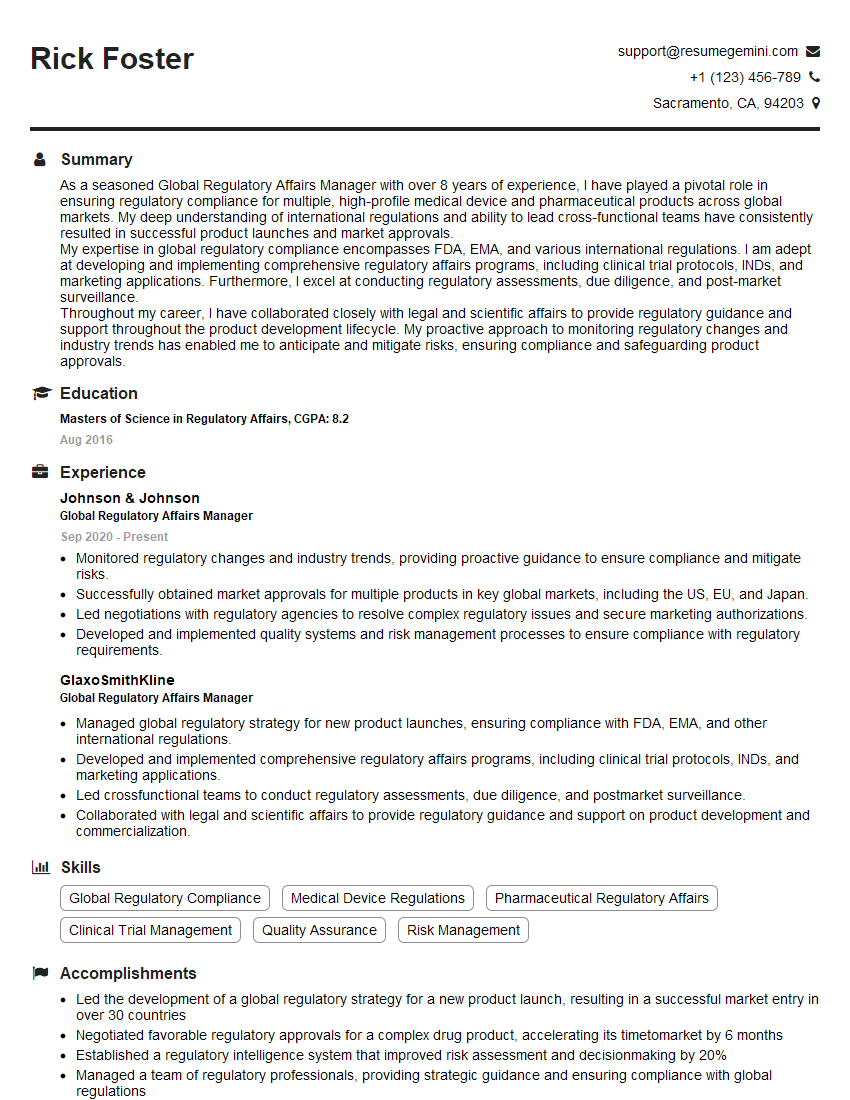
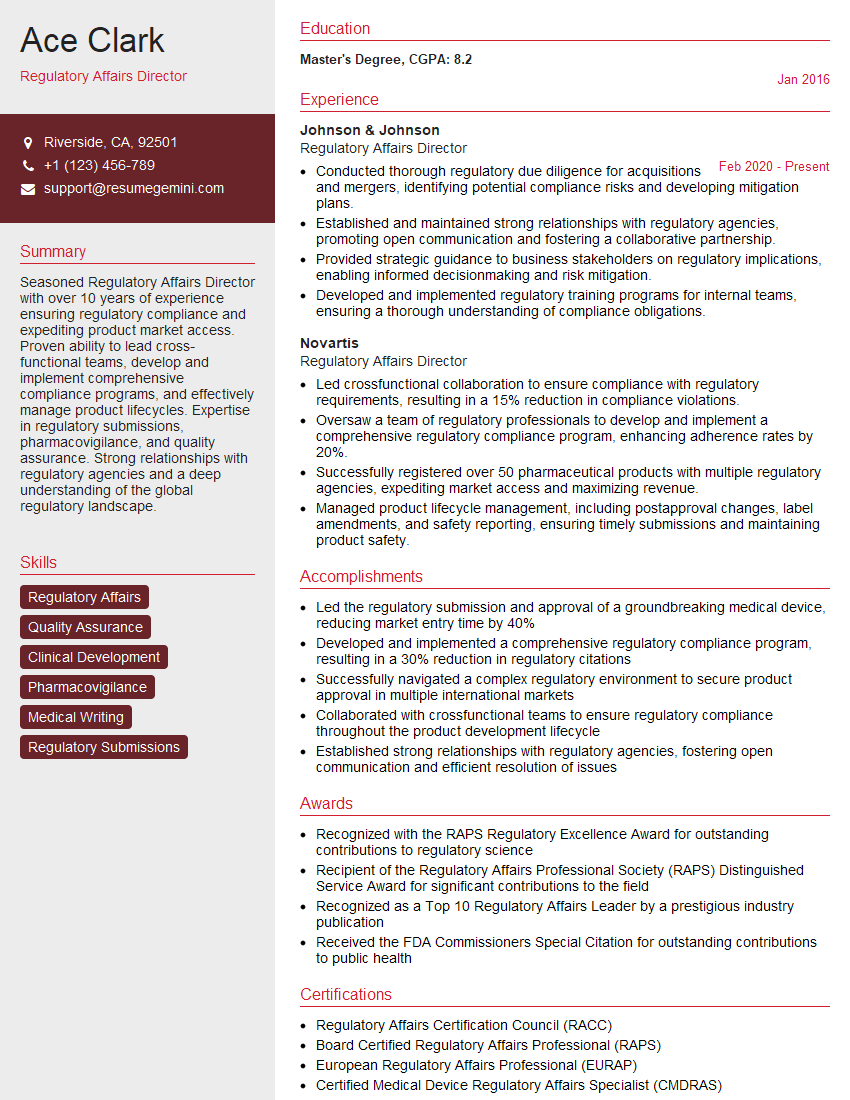
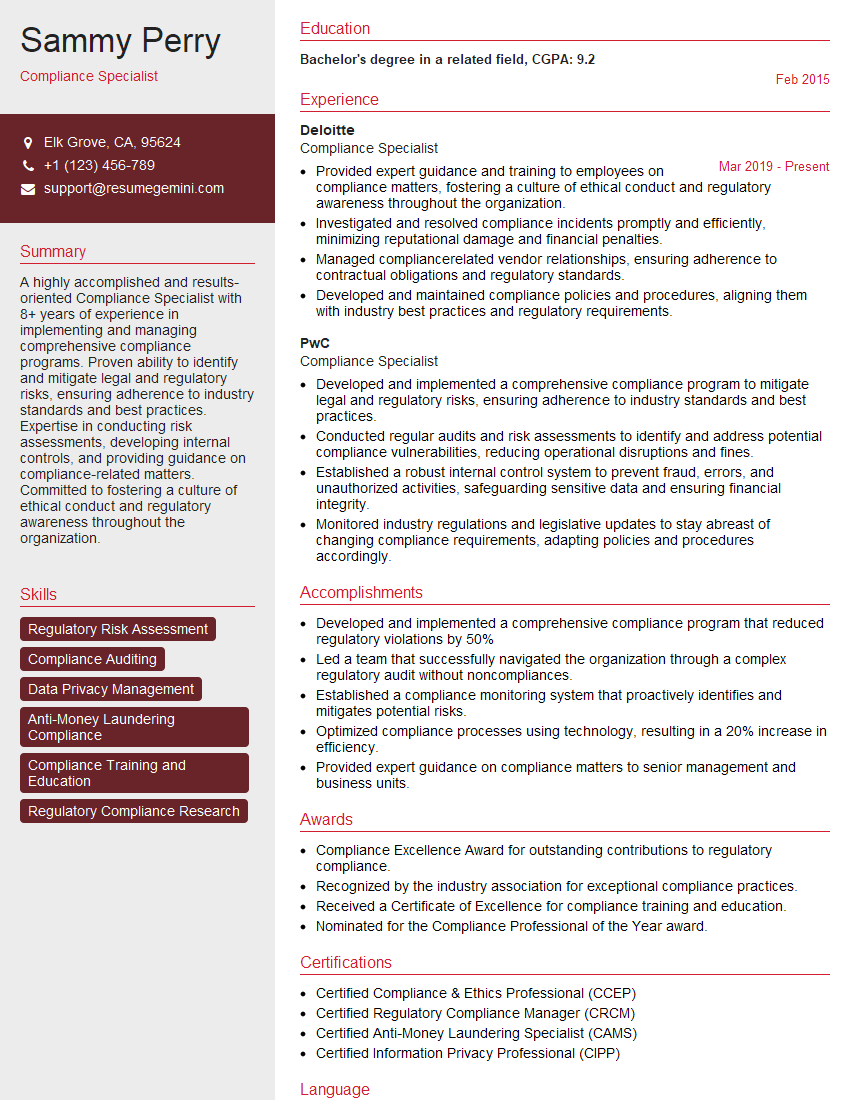
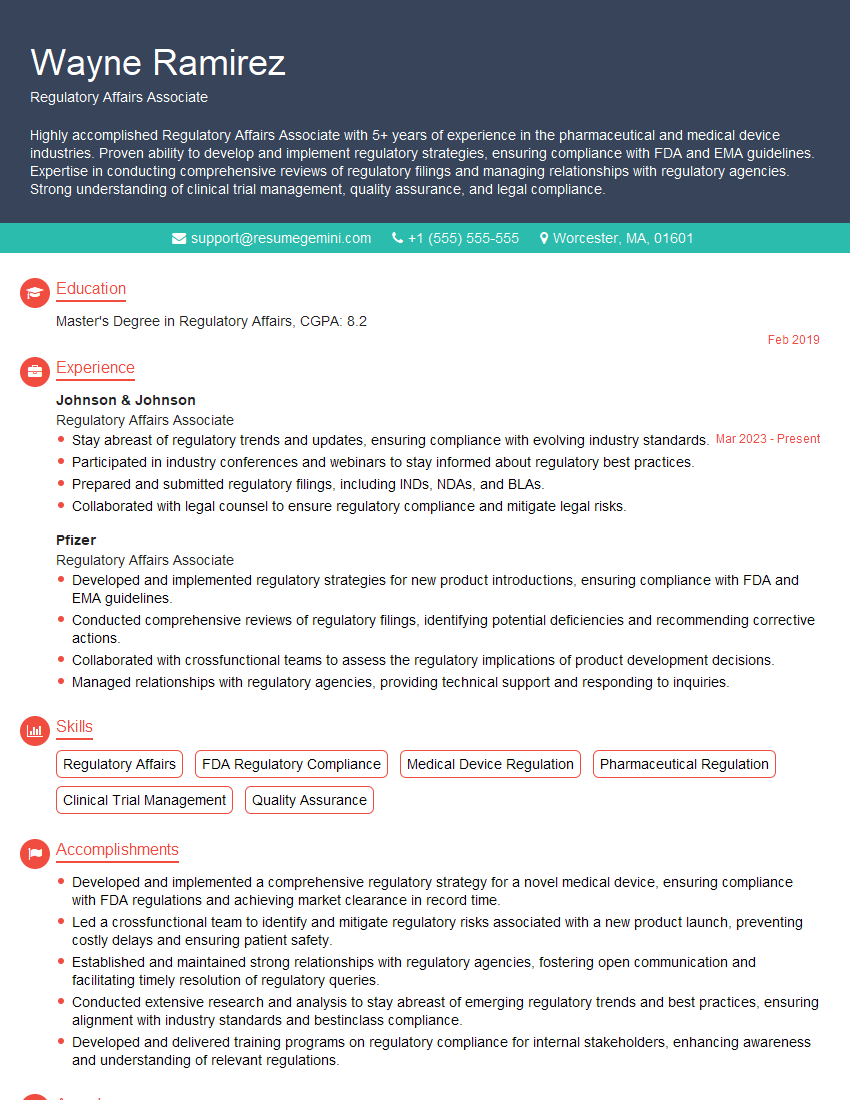
Mastering the EU MDR is crucial for career advancement in the medical device industry, opening doors to exciting and challenging roles. A strong understanding of this regulation demonstrates your commitment to patient safety and regulatory compliance. To maximize your job prospects, invest time in crafting an ATS-friendly resume that effectively highlights your skills and experience. ResumeGemini is a trusted resource that can help you build a professional and impactful resume tailored to the specific requirements of EU MDR-related positions. Examples of resumes tailored to EU MDR roles are available to guide you.
Explore more articles
Users Rating of Our Blogs
Share Your Experience
We value your feedback! Please rate our content and share your thoughts (optional).
What Readers Say About Our Blog
Very informative content, great job.
good