Feeling uncertain about what to expect in your upcoming interview? We’ve got you covered! This blog highlights the most important Lithographic Film Cutting interview questions and provides actionable advice to help you stand out as the ideal candidate. Let’s pave the way for your success.
Questions Asked in Lithographic Film Cutting Interview
Q 1. What are the different types of lithographic films used in printing?
Lithographic films are crucial in the printing process, acting as intermediates between the design and the final printed product. Several types exist, each with specific properties catering to different printing needs and budgets.
- Polyester Film: This is the most common type, offering excellent dimensional stability and durability. It’s widely used for its resistance to scratches and chemicals, making it ideal for multiple print runs.
- Polypropylene Film: A less expensive option, polypropylene film is lightweight and boasts good clarity, but its durability is lower than polyester. It’s suitable for shorter print runs or situations where cost is a primary concern.
- Coated Films: These films have a special coating enhancing their image resolution and ink adhesion. Different coatings cater to various ink types, such as offset or screen printing inks. For example, a matte coating reduces glare, useful for proofing.
- Specialty Films: This category encompasses films with unique properties like heat sensitivity for thermal printing or electrostatic properties for electrophotographic processes. The choice depends heavily on the specific printing technology employed.
The selection of film type directly impacts the final print quality, longevity, and overall printing costs. For instance, choosing a cheaper, less durable film for a high-volume job might lead to increased waste and expenses in the long run.
Q 2. Explain the process of preparing a film for cutting.
Preparing a film for cutting is a critical step ensuring precise and accurate results. It involves several stages:
- Inspection: Thoroughly examine the film for any pre-existing defects like scratches, creases, or dust particles. These imperfections can be amplified during the cutting process.
- Alignment: Accurately align the film with the cutting template or guide, ensuring that the design is positioned correctly for optimal cutting. This often involves using registration marks printed on the film.
- Mounting (Optional): Depending on the film and cutting method, the film might be mounted onto a backing material for increased stability and to prevent slippage during cutting. A self-adhesive mounting board simplifies handling and accuracy.
- Pre-Cutting Preparation (Optional): For complex designs, a pre-cutting process might use a plotter to create score lines. This helps guide the final cutting stage and prevents unintended cuts.
Proper preparation significantly reduces the risk of errors and ensures the final cut is faithful to the original design. Think of it like preparing a canvas before painting – careful preparation guarantees a cleaner, more professional result.
Q 3. Describe various film cutting tools and their applications.
Various tools are used for cutting lithographic films, each with its own advantages and applications:
- Precision Cutters: These handheld tools feature sharp blades for intricate cutting, ideal for smaller-scale projects or detailed designs. They allow for precise cuts with a high level of control, perfect for creating masks or fine lines.
- Plotters/Cutting Machines: Computer-controlled plotters offer automated cutting, providing high speed and accuracy for large-scale projects and repetitive designs. They can handle complex designs with ease and reduce manual labor.
- Laser Cutters: Laser cutters provide extreme precision and speed, capable of handling various materials including film. However, they require higher investment and specialized training.
- Die Cutters: Die cutting involves using a custom-made steel die to cut the film into specific shapes. This method offers high-throughput for repetitive cuts and consistency in large production runs. They are commonly used for standard packaging sizes or repeated designs.
The choice of cutting tool depends largely on the complexity of the design, the scale of the project, and the desired precision. For instance, hand-held cutters are suited for one-off designs or small runs, while plotters excel in high-volume production.
Q 4. How do you ensure precise and accurate film cutting?
Ensuring precise and accurate film cutting requires attention to detail throughout the process:
- Sharp Blades/Tools: Dull blades can cause ragged edges and inaccurate cuts, compromising the print quality. Regular blade changes are crucial for maintaining precision.
- Proper Tool Calibration: Cutting machines and plotters require regular calibration to maintain accuracy. Deviation from calibration can lead to misaligned cuts and wasted materials.
- Stable Cutting Surface: A stable and flat cutting surface prevents slippage and ensures even pressure distribution. This prevents inaccuracies caused by unstable placement.
- Use of Cutting Guides/Templates: Employing cutting guides, templates, or registration marks minimizes human error and ensures consistency. This allows for repeatable results, particularly essential for high-volume projects.
- Quality Control: Regularly inspect the cuts for accuracy and consistency. Employing magnification devices like loupes aids in detecting minor inaccuracies.
Think of it like a surgeon performing surgery – precision and accuracy are paramount. Even small errors in the film cutting process can have a significant impact on the final print.
Q 5. What safety precautions are essential when handling lithographic film?
Handling lithographic films requires observing strict safety precautions:
- Static Electricity: Film is susceptible to static electricity, which can attract dust and cause scratches. Use anti-static mats and gloves to mitigate this risk.
- Sharp Tools: Always handle cutting tools with caution, following the manufacturer’s safety guidelines. Use appropriate safety glasses to protect your eyes from flying debris.
- Proper Disposal: Dispose of film scraps and waste properly, following environmental regulations. Certain film types might require special handling or recycling procedures.
- Personal Protective Equipment (PPE): Depending on the cutting method and chemicals involved, PPE such as gloves and dust masks might be necessary.
- Work Area Cleanliness: Maintaining a clean and dust-free work environment minimizes contamination and prevents defects.
Ignoring these precautions can lead to accidents, injuries, and compromised print quality. Safety should always be the top priority when working with sharp objects and sensitive materials.
Q 6. How do you handle film imperfections or errors during cutting?
Handling film imperfections or errors during cutting requires a proactive approach:
- Minor Imperfections: Minor scratches or imperfections can often be trimmed away during the cutting process. Precise cutting can reduce the visibility of these defects.
- Major Errors: Major errors such as miscuts might require re-cutting the entire sheet. Preventing these through careful preparation and attention is more efficient than correcting them later.
- Waste Management: Track the amount of film wasted due to errors. Analyze the root causes of errors to identify areas for improvement in the workflow.
- Re-evaluation of Process: If errors occur frequently, re-evaluate the entire cutting process. This includes inspecting equipment, revising procedures, and providing additional training.
A systematic approach to error handling is crucial. Documenting errors helps identify recurring issues, leading to more robust processes and reduced waste.
Q 7. What are the common causes of film damage or defects?
Film damage and defects can arise from various sources:
- Improper Handling: Rough handling, creases, scratches, and fingerprints can mar the film’s surface.
- Environmental Factors: Excessive humidity or temperature fluctuations can cause film curling or warping.
- Storage Conditions: Improper storage, such as exposure to direct sunlight or extreme temperatures, can degrade the film over time.
- Dull or Damaged Cutting Tools: Dull or poorly maintained cutting tools can lead to ragged cuts, uneven edges, and damaged film.
- Static Electricity: Static discharge can attract dust and debris, leading to imperfections and image defects.
By understanding these common causes, we can implement preventive measures to minimize defects, ensuring the highest quality printed output and minimizing waste.
Q 8. Explain the importance of maintaining sharp cutting tools.
Maintaining sharp cutting tools in lithographic film cutting is paramount for precision and efficiency. A dull blade leads to inaccurate cuts, ragged edges, and potentially ruined film. This translates directly to defects in the final printed product, wasting materials and time.
Think of it like trying to cut a cake with a dull knife – you’ll end up with a messy, uneven slice. Similarly, a dull blade on a film cutter will create irregularities in the cut, leading to misregistration and blurry images during the printing process. Sharp blades ensure clean, precise cuts, minimizing waste and maximizing the quality of the final product.
Regular sharpening or replacement of blades is crucial. The frequency depends on the type of blade, the material being cut, and the volume of work. A good rule of thumb is to inspect the blade frequently for any signs of dulling, such as burrs or chipping, and replace it as needed.
Q 9. Describe your experience with different film cutting techniques (e.g., manual, automated).
My experience spans both manual and automated film cutting techniques. Manual cutting, using a precision blade and cutting mat, requires meticulous attention to detail and a steady hand. This method is ideal for smaller jobs or intricate designs where precise control is essential. I’ve worked extensively with various manual cutters, mastering techniques to achieve consistent accuracy.
Automated cutting, typically involving computer-controlled plotters, significantly increases speed and efficiency, especially for large-scale projects. I’m proficient in operating several automated systems, from simple guillotine cutters to sophisticated CNC plotters, capable of handling intricate designs and high-volume production. My experience includes programming and optimizing these systems for various film types and thicknesses.
For example, in one project involving hundreds of identical film masks, the automated cutter proved invaluable, reducing production time by several days compared to manual methods. On the other hand, when dealing with delicate, hand-drawn artwork on film, manual cutting provided the necessary level of precision.
Q 10. How do you determine the correct cutting dimensions for a specific job?
Determining the correct cutting dimensions hinges on careful interpretation of the job specifications and artwork. This involves several steps:
- Reviewing the artwork: I meticulously examine the design to identify the precise dimensions needed for the film. This often requires accounting for bleeds, margins, and registration marks.
- Analyzing the job requirements: The specifications should clearly state the final dimensions of the printed product. I account for any scaling or adjustments needed during the printing process.
- Calculating cutting dimensions: Based on the artwork and specifications, I calculate the exact dimensions required for the film, ensuring accurate alignment and avoiding errors.
- Adding safety margins: To avoid potential errors during handling or printing, I add appropriate margins around the artwork, especially when dealing with large format prints.
For instance, if a final print needs to be 10×8 inches, I’ll add a bleed of 0.25 inches on each side, requiring the film to be cut to 10.5 x 8.5 inches. This prevents any white borders appearing after the print is trimmed.
Q 11. How do you handle large format film cutting?
Handling large format film cutting requires specialized equipment and techniques. For this, automated cutting systems are generally preferred due to their speed, accuracy, and ability to manage large rolls of film. However, careful planning and execution are crucial.
Firstly, I ensure the film is properly loaded onto the cutter, taking precautions to avoid wrinkles or creases which can affect the accuracy of the cut. This often involves using appropriate film unwinding and handling tools. Secondly, I carefully program the cutting path, ensuring that the dimensions and alignment are precise. This often involves using specialized software with precise measurements and scaling capabilities. Finally, I regularly monitor the cutting process for any anomalies and make necessary adjustments to guarantee accurate results.
Large format projects are often broken down into smaller, manageable sections for easier handling and to reduce the risk of errors. For instance, a very large film might be cut into smaller panels, aligned during the printing process to form the complete image.
Q 12. What are the different types of film registration marks and their purpose?
Film registration marks are crucial for aligning the film accurately during the printing process. They act as reference points for the printing equipment. Different types exist:
- Crosshair marks: Simple crosshairs provide basic alignment. They are commonly used in simpler processes.
- Fiducial marks: More sophisticated marks used by automated systems for precise alignment. They are usually recognized by sensors on the printing equipment.
- Color registration marks: These use different colors to aid in precise alignment, especially when working with multiple color separations.
- Numerically coded marks: These marks incorporate coded numbers, offering more control over alignment and identification of specific plates or films.
The purpose is consistent alignment between the different exposures and film layers, crucial for multi-colored prints or high precision images. Without accurate registration marks, the colors and images would be misaligned, resulting in blurry and inaccurate prints.
Q 13. Explain the importance of proper film storage and handling.
Proper film storage and handling are essential for maintaining the quality and usability of the film. Exposure to light, heat, dust, and moisture can severely degrade the film, resulting in reduced image quality, scratches, and static buildup.
Therefore, I always store the film in a cool, dark, and dry environment, preferably in archival-quality containers or sleeves. This helps to minimize the impact of environmental factors. When handling the film, I wear clean gloves to avoid fingerprints and other contaminants. I avoid touching the film’s emulsion surface, as this can cause damage. Furthermore, I ensure the film is handled gently, avoiding sharp bends or creases.
Imagine storing valuable photographic negatives in direct sunlight – they’d be ruined in no time. Similarly, neglecting proper film storage leads to irreversible damage and wasted materials. Proper care ensures the film’s quality is maintained, and its longevity is maximized.
Q 14. How do you ensure the cleanliness and accuracy of your work area?
Maintaining a clean and organized workspace is critical for accuracy and efficiency in film cutting. Dust, debris, and static can contaminate the film and negatively impact the cutting process. My workspace follows a strict cleaning protocol:
- Regular cleaning: I regularly clean my workspace with anti-static cleaning solutions, using lint-free cloths to remove dust and particles.
- Designated areas: I have designated areas for tools, materials, and finished films, ensuring a clear and uncluttered workspace.
- Air filtration: In areas with higher dust levels, air filtration systems can help minimize airborne particles.
- Anti-static measures: I use anti-static mats and wrist straps to prevent static electricity buildup.
A clean workspace not only improves the quality of my work but also reduces the risk of errors and accidents. It’s like having a well-organized kitchen – it enables you to cook more efficiently and effectively.
Q 15. Describe your experience with different types of cutting mats or surfaces.
Choosing the right cutting mat is crucial for precise and clean cuts in lithographic film production. My experience spans various types, each with its own advantages and disadvantages.
- Self-healing mats: These are excellent for repeated use as minor cuts heal over time. They offer good grip and are generally preferred for smaller jobs or when working with delicate films. I’ve found that using a self-healing mat with a grid pattern significantly improves accuracy in positioning film.
- Steel-rule dies and cutting boards: Used for high-volume production runs, these provide incredible consistency and speed but require a more significant investment. The precision of steel-rule dies is unmatched for repetitive cuts, and I frequently rely on them when hundreds of identical film pieces are needed.
- Hard plastic or acrylic cutting surfaces: These are a good compromise between cost and durability. They are suitable for medium-volume production and are less prone to scratches than self-healing mats, but they lack the healing ability. I tend to use these when the film is particularly abrasive.
The choice depends on the project’s size, budget, and the type of film being cut. For instance, for a one-off project with a small amount of film, a self-healing mat is perfect; for a mass-production job, a steel-rule die is the better option.
Career Expert Tips:
- Ace those interviews! Prepare effectively by reviewing the Top 50 Most Common Interview Questions on ResumeGemini.
- Navigate your job search with confidence! Explore a wide range of Career Tips on ResumeGemini. Learn about common challenges and recommendations to overcome them.
- Craft the perfect resume! Master the Art of Resume Writing with ResumeGemini’s guide. Showcase your unique qualifications and achievements effectively.
- Don’t miss out on holiday savings! Build your dream resume with ResumeGemini’s ATS optimized templates.
Q 16. How do you troubleshoot common film cutting problems?
Troubleshooting film cutting problems requires a systematic approach. I start by identifying the source of the issue, which could range from improper film handling to machine malfunction.
- Blade dullness: A dull blade is the most common culprit, resulting in jagged or incomplete cuts. The solution is simple: replace the blade. I always keep a stock of sharp blades on hand.
- Incorrect pressure settings: If the cutting pressure is too low, the blade might not fully penetrate the film; if it’s too high, the film can tear or wrinkle. Adjusting the pressure according to the film thickness and type is crucial. I use a pressure gauge and keep precise records to optimize settings for different films.
- Static cling: Static electricity can cause the film to stick to the cutting mat or itself, resulting in uneven cuts. Using anti-static spray or a humidity control system can resolve this issue. This is especially important when working with polyester films.
- Machine malfunction: If the problem persists despite these checks, it may be a machine problem. This calls for a deeper inspection, potential recalibration, or even a service call. I perform routine maintenance on all my cutting equipment to minimize downtime.
I maintain a detailed log of each cutting job and troubleshoot steps to continuously improve efficiency and minimize errors. For example, tracking blade changes and correlating them to cut quality helps determine blade life and maintenance schedules.
Q 17. What software or systems do you use to aid in film cutting accuracy?
Accurate film cutting relies heavily on appropriate software and systems. I utilize several tools to ensure precision:
- Vector graphics software (e.g., Adobe Illustrator, CorelDRAW): This software allows for precise design creation and control over film dimensions. I use it to create accurate cutting paths and ensure proper registration marks are included.
- RIP (Raster Image Processor) software: This software translates vector files into instructions for the cutting plotter, controlling the blade’s movements with high accuracy. Calibration and accurate color profiles are crucial in this step for consistent results.
- Cutting plotter control software: This software directly interfaces with the cutting plotter, enabling fine-tuning of cutting parameters such as speed, pressure, and blade offset. I leverage this to optimize settings for different film types and thicknesses.
- Computerized measuring systems (e.g., laser measurement tools): These systems provide highly accurate measurements of the cut film, ensuring the final product meets exacting specifications. A post-cut verification using this tool forms an important part of my quality control.
The integration of these systems creates a seamless workflow, from design to final cut, minimizing human error and ensuring consistent results.
Q 18. Describe your experience working with different types of film substrates.
My experience encompasses a wide range of film substrates, each with unique characteristics impacting the cutting process:
- Polyester film: This is a very common substrate known for its durability and dimensional stability. It often requires a sharper blade and slightly increased cutting pressure.
- Vinyl film: Vinyl films are popular for their flexibility and adhesive properties. They can be more challenging to cut precisely due to their elasticity and require careful blade selection and pressure adjustments.
- Polypropylene film: A less expensive alternative, polypropylene is less durable and can be more prone to tearing during cutting. I need to adjust the cutting speed and pressure to mitigate this risk.
- Metalized film: These films present unique challenges due to their reflective surface and potential for blade dulling. Special blades and cutting techniques are often necessary.
Understanding the properties of each substrate is critical for selecting the correct cutting parameters and avoiding damage. This knowledge allows me to optimize the process for each type of film ensuring a clean, precise cut every time.
Q 19. How do you ensure consistent film quality throughout a large production run?
Maintaining consistent film quality across a large production run is crucial. My approach involves a multi-faceted strategy:
- Regular blade changes: A sharp blade is paramount for clean cuts. I follow a rigorous blade-change schedule based on the volume of cuts and the type of film being used. Dull blades are the leading cause of inconsistent cuts.
- Calibration and maintenance: Regular calibration of the cutting plotter and preventative maintenance are vital for maintaining cutting precision and minimizing errors. This involves verifying the accuracy of the machine and cleaning any potential debris that could impact the cutting quality.
- Environmental control: Controlling temperature and humidity helps prevent static cling and warping, which can affect the accuracy of the cuts. A consistently stable environment is key for repeatability.
- Quality checks: Regular quality checks at various stages of the production process, including random sampling and visual inspection of the finished products, help detect and address any inconsistencies early. I always document these quality checks.
These measures work together to ensure the quality of each film piece meets the required standards, even during high-volume production runs. It’s like baking a cake – consistent ingredients, proper equipment, and careful monitoring are all essential for consistent results.
Q 20. What are the key differences between film cutting for offset and flexographic printing?
Film cutting for offset and flexographic printing differs significantly due to the printing processes themselves:
- Offset printing: Offset printing uses plates that are typically much larger and require high precision. The cutting tolerances are tighter, requiring more attention to detail. The film is often used to create masks for image areas or to create plate-making templates. Accuracy here is critical to avoid misregistration.
- Flexographic printing: Flexographic printing uses flexible plates and often involves smaller, more intricate designs. The tolerances may be slightly less strict than offset, but consistent cuts are still critical for successful printing. The film may be used to create printing plates or to mask specific areas of the plate. Precise cutting ensures the consistency of the printed image across a long run.
The key differences lie in the scale and complexity of the designs, the required precision, and the ultimate application of the cut film. I always adapt my techniques and equipment to meet the specific requirements of each printing method.
Q 21. How do you handle rush orders or tight deadlines in film cutting?
Handling rush orders or tight deadlines requires a strategic approach that prioritizes efficiency and accuracy without compromising quality.
- Prioritization and planning: The first step is carefully assessing the scope of the order and creating a detailed production schedule. This involves identifying any potential bottlenecks and allocating resources effectively.
- Optimized workflows: Streamlining the workflow is essential, eliminating any unnecessary steps and ensuring a smooth transition between different stages of the production process. This involves utilizing efficient software and equipment and well-trained personnel.
- Overtime and additional resources: For exceptionally tight deadlines, overtime work or bringing in additional skilled personnel may be required. Careful management and clear communication are vital to ensure everyone is working effectively.
- Open communication: Maintaining open communication with the client is crucial, providing regular updates and promptly addressing any concerns. Transparency builds trust and manages expectations.
Effective time management, clear communication, and a proactive approach are key to successfully handling rush orders while maintaining the high quality of work that I strive for. I’ve often found that a little extra planning upfront can prevent significant stress later on.
Q 22. Describe your experience with quality control processes in film cutting.
Quality control in lithographic film cutting is paramount to ensuring the final printed product meets the required specifications. It’s a multi-stage process starting even before the cutting begins. My experience involves meticulously checking the incoming film for any defects like scratches, dust, or inconsistencies in the emulsion layer. This is often done using specialized inspection tools and bright, controlled lighting.
During the cutting process itself, I maintain strict adherence to pre-determined cutting parameters, carefully monitoring the blade’s sharpness and the cutting pressure to avoid damage. Regular calibration of the cutting equipment is crucial, and I’m adept at performing these checks. Post-cutting, I perform a thorough visual inspection of each piece, checking for dimensional accuracy, clean cuts, and the absence of any burrs or imperfections. Any discrepancies are documented and investigated to prevent recurrence. We also employ automated optical inspection systems in our workflow to provide a secondary verification step, ensuring high accuracy and efficiency. Finally, we maintain detailed records of every step, enabling thorough traceability and continuous improvement.
Q 23. What are your preferred methods for documenting and tracking film cutting work?
My preferred methods for documenting and tracking film cutting work rely on a combination of digital and physical record-keeping. Every job starts with a detailed work order, digitally stored in our database, containing all specifications: film type, dimensions, quantity, and any special instructions. This is then linked to the cutting machine’s operational log, which automatically records parameters like cutting speed, pressure, and date/time.
After cutting, each piece is labeled with a unique identifier that corresponds to the digital record. This ensures perfect traceability. High-resolution images of the cut pieces are also captured and added to the digital file. This comprehensive documentation allows us to track any issues, analyze process efficiency, and rapidly resolve any problems that might arise. We use a custom-built software system for this, but other robust CMMS (Computerized Maintenance Management System) solutions could easily serve this purpose.
Q 24. How do you prioritize tasks and manage workload effectively in film cutting?
Prioritizing tasks and managing workload in film cutting requires a structured approach. I use a combination of techniques, including Kanban boards (both physical and digital) to visualize workflow and identify bottlenecks. Tasks are prioritized based on urgency and due dates, considering the complexity of each job and the resources required. I frequently communicate with the team and clients to manage expectations and ensure deadlines are met.
For instance, if we have a rush order for a complex job requiring specialized equipment, I would allocate the necessary resources immediately, potentially adjusting less critical tasks to accommodate the higher priority item. Regular meetings and progress reports keep everyone informed and ensure that everyone is working towards the common goal. Proactive planning and communication are key to preventing bottlenecks and maintaining a smooth workflow.
Q 25. Describe a situation where you had to solve a complex problem related to film cutting.
One particularly challenging situation involved a high-volume order for a film with an unusually delicate emulsion. The initial cutting settings resulted in a significant number of damaged pieces. It was a critical order with a tight deadline, so immediate action was necessary.
Instead of simply repeating the process, I systematically investigated the problem. I started by carefully analyzing the film’s specifications, looking for any anomalies. Then, I performed a series of test cuts with varying blade pressures and speeds, meticulously documenting the results. I discovered that the emulsion layer was more sensitive to heat and vibration than anticipated. The solution involved adjusting the cutting parameters, implementing a cooling system for the blade, and incorporating vibration dampeners to the cutting table. The careful adjustment of these parameters, combined with meticulous monitoring, allowed us to complete the order on time and to the client’s satisfaction, demonstrating a problem-solving approach that balances efficiency with precision.
Q 26. How do you stay current with the latest technologies and techniques in film cutting?
Staying current in this field requires a proactive approach. I regularly attend industry conferences and webinars, which provide insights into the latest technologies and best practices. I also subscribe to relevant industry journals and actively participate in online professional communities.
Furthermore, I actively seek out opportunities for training on new equipment and software. Manufacturers often offer training programs, and keeping up-to-date with these advances is crucial for maintaining competitiveness and optimizing efficiency. Hands-on experience with new tools and techniques is invaluable, so I seek out opportunities to experiment and refine my skills.
Q 27. What are your salary expectations for this role?
My salary expectations are commensurate with my experience and the requirements of this role. Based on my research and understanding of the current market rate for professionals with my skill set and years of experience in lithographic film cutting, my expected salary range is between [Insert Lower Bound] and [Insert Upper Bound] per year.
Q 28. Why are you interested in this particular job?
I’m highly interested in this job opportunity because it aligns perfectly with my skills and career goals. The company’s reputation for precision and quality resonates deeply with my own work ethic. I’m particularly drawn to [Mention Specific aspects of the job description or company that appeal to you, e.g., the company’s commitment to innovation, its use of cutting-edge technology, the opportunity to work on challenging projects, etc.]. I believe my expertise in lithographic film cutting, combined with my dedication to quality and continuous improvement, would make me a valuable asset to your team.
Key Topics to Learn for Lithographic Film Cutting Interview
- Film Handling and Storage: Understanding proper techniques for handling and storing lithographic films to prevent damage, scratching, and static build-up. This includes knowledge of different film types and their specific storage requirements.
- Cutting Techniques and Precision: Mastering various cutting techniques using different tools (e.g., manual cutters, automated cutting systems) to achieve precise cuts and minimize waste. This includes understanding the impact of blade sharpness and pressure.
- Understanding Film Specifications and Tolerances: Interpreting technical drawings and specifications to accurately determine cutting dimensions and tolerances. This includes knowledge of different film formats and their applications.
- Quality Control and Inspection: Implementing quality control procedures to ensure accurate cuts and identify defects. This includes using measuring tools and understanding quality standards.
- Troubleshooting Common Issues: Identifying and resolving common problems encountered during the cutting process, such as jams, misalignment, or blade malfunctions. This includes preventative maintenance practices.
- Safety Procedures and Regulations: Adhering to safety protocols and regulations related to handling sharp tools and potentially hazardous materials. This includes understanding proper waste disposal methods.
- Workflow Optimization: Understanding how to streamline the cutting process to maximize efficiency and minimize downtime. This may involve knowledge of different workflow software or systems.
Next Steps
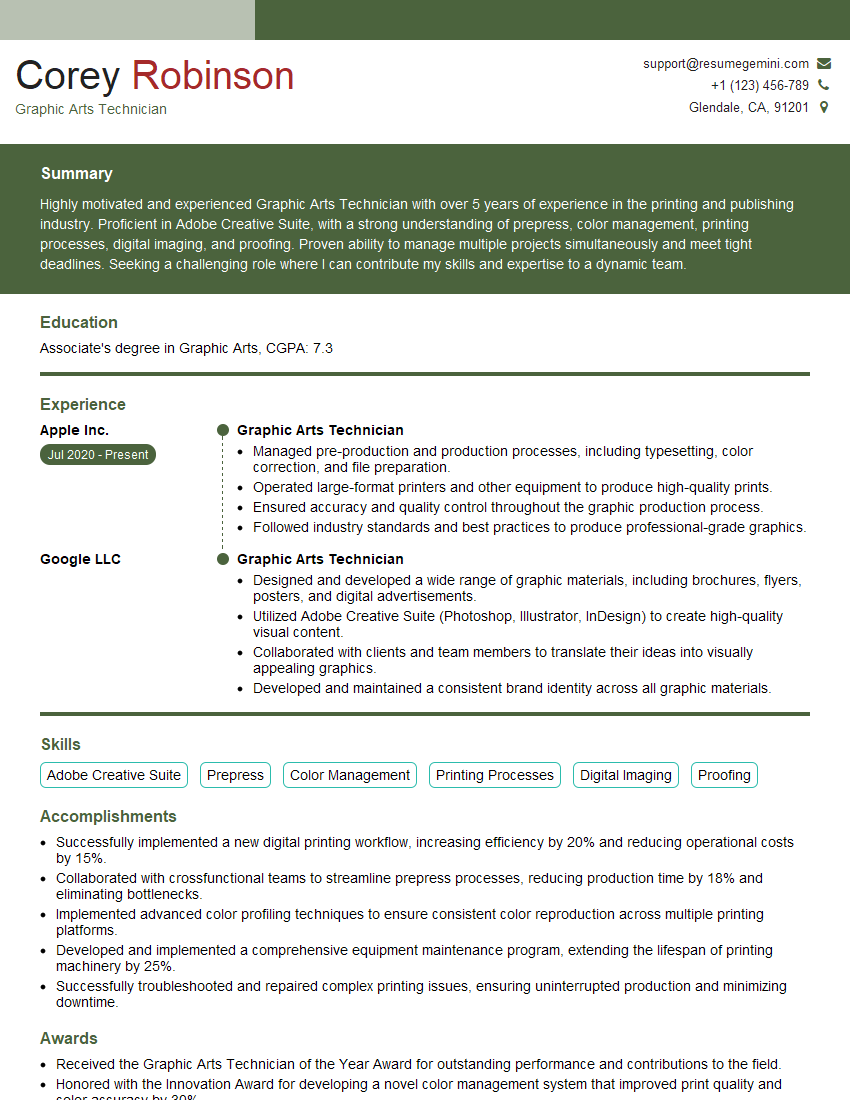
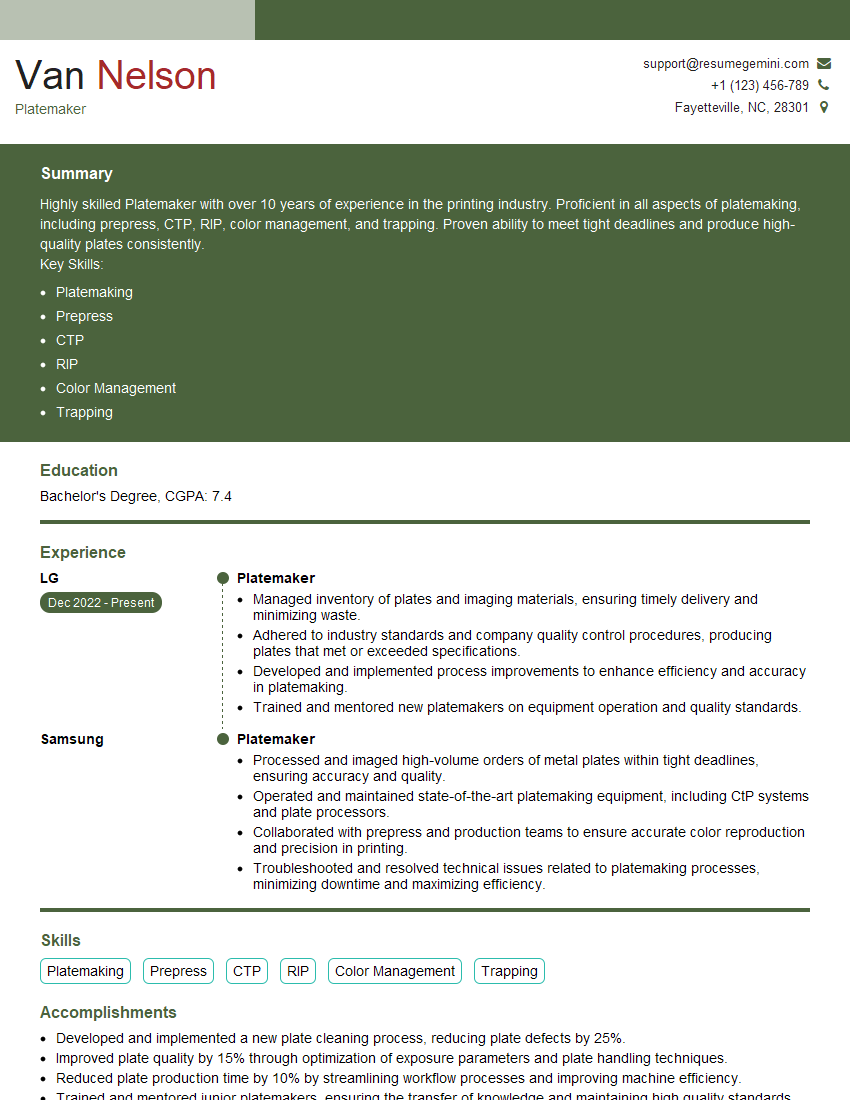
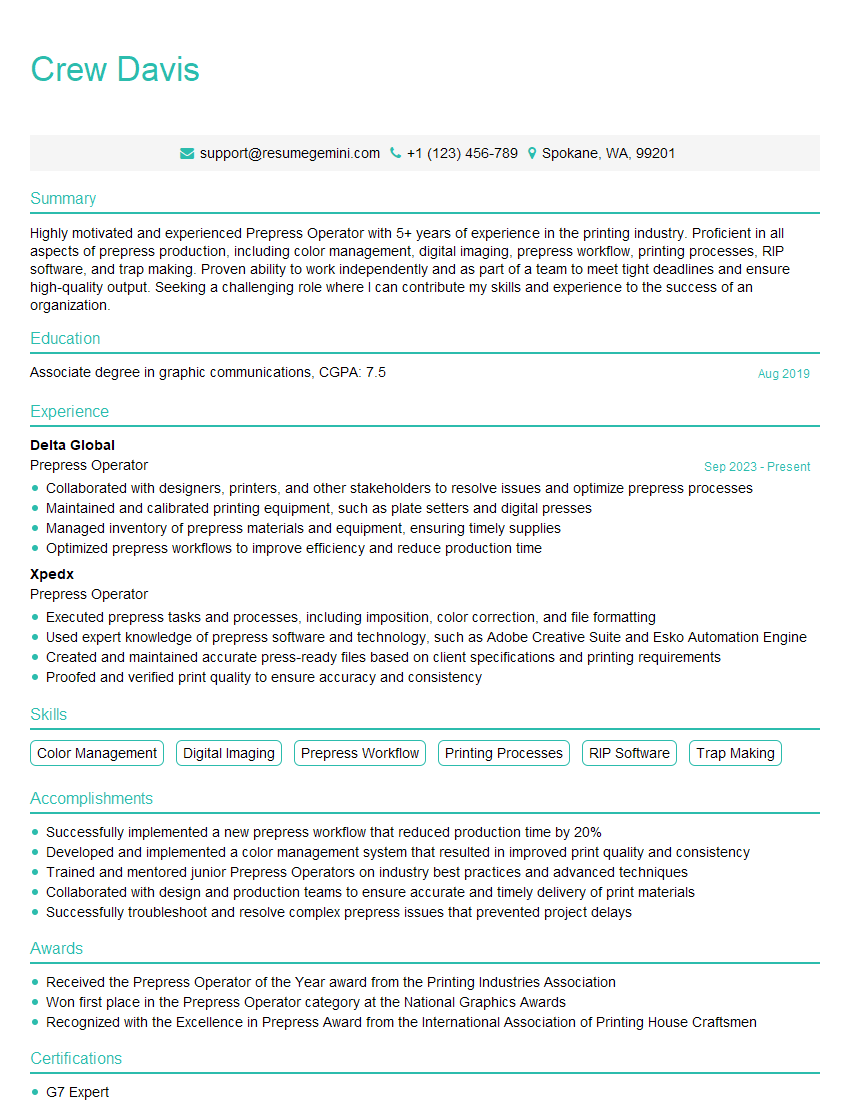
Mastering lithographic film cutting opens doors to exciting opportunities in the printing and manufacturing industries, offering potential for career advancement and specialization. A strong resume is crucial for showcasing your skills and experience to potential employers. Crafting an ATS-friendly resume that highlights your abilities in this specialized field is key to securing interviews. ResumeGemini is a trusted resource to help you build a professional and impactful resume that gets noticed. Examples of resumes tailored to Lithographic Film Cutting are available to guide your resume creation process.

Explore more articles
Users Rating of Our Blogs
Share Your Experience
We value your feedback! Please rate our content and share your thoughts (optional).
What Readers Say About Our Blog
Very informative content, great job.
good