Unlock your full potential by mastering the most common Event Logistics and Coordination interview questions. This blog offers a deep dive into the critical topics, ensuring you’re not only prepared to answer but to excel. With these insights, you’ll approach your interview with clarity and confidence.
Questions Asked in Event Logistics and Coordination Interview
Q 1. Describe your experience in managing event budgets.
Managing event budgets requires a meticulous approach, combining forecasting, tracking, and control. It starts with a detailed budget proposal, breaking down all anticipated costs into categories like venue rental, catering, marketing, entertainment, and staffing. I leverage spreadsheet software, often Excel or Google Sheets, to create a comprehensive budget template that allows for easy tracking of expenses against allocated funds.
For instance, in planning a large corporate conference, I’d initially establish a baseline budget based on historical data and market research. Then, I’d meticulously list every cost, from speaker fees and AV equipment rentals to printing materials and transportation. Throughout the planning process, I regularly compare actual spending against the budgeted amounts, identifying any variances early on. This allows for proactive adjustments and prevents cost overruns. If unforeseen expenses arise, I prioritize them based on their impact on the event’s success, and actively seek ways to offset these costs elsewhere.
A crucial aspect is contingency planning. I always allocate a percentage (typically 5-10%) of the total budget for unforeseen expenses. This contingency fund safeguards against unexpected issues, ensuring the event remains financially stable despite potential challenges.
Q 2. Explain your process for selecting vendors for an event.
Vendor selection is a critical process that directly impacts the event’s quality and success. My process involves a multi-step approach, starting with identifying potential vendors through online research, industry directories, and referrals. I then thoroughly vet them, focusing on factors like experience, reputation, insurance coverage, client testimonials, and pricing.
For example, when choosing a caterer, I wouldn’t simply rely on price alone. Instead, I’d consider menu options, dietary accommodations, service style, and past client reviews. I would request samples, visit their facilities, and even speak with previous clients to gauge their experience. This due diligence ensures I select vendors who consistently deliver quality services and align with the event’s objectives and values.
Finally, I always secure formal contracts that clearly outline services, payment terms, and liability clauses, creating a documented agreement safeguarding both parties’ interests. Competitive bidding is often used, but the focus always remains on finding the best fit for the event’s specific needs and quality over pure cost minimization.
Q 3. How do you handle unexpected challenges or crises during an event?
Handling unexpected challenges during an event demands quick thinking, decisive action, and effective communication. My approach involves a structured crisis management plan, pre-established before the event begins. This plan outlines procedures for handling various scenarios, from technical malfunctions to medical emergencies.
Imagine a scenario where the main speaker cancels at the last minute. My immediate actions would involve activating my crisis management plan, contacting backup speakers (pre-identified and briefed), informing attendees and sponsors promptly, and reassessing the program to ensure a seamless continuation. This requires immediate communication across the event team, utilizing a combination of instant messaging services and email, to coordinate the response and ensure everyone is informed and working towards the same goal.
Transparency with attendees is key. While handling the crisis, I ensure attendees are kept informed of the situation and any changes to the schedule, mitigating potential frustration or dissatisfaction. Post-event, a thorough debriefing analyzes what happened, identifies areas for improvement in future crisis prevention, and updates our crisis management plan accordingly.
Q 4. What software or tools do you use for event planning and logistics?
Technology plays a pivotal role in efficient event planning and logistics. I utilize a range of software and tools to streamline various aspects of my work.
For project management and task allocation, I rely on tools like Asana or Trello, which allow for collaborative task management, tracking progress, and effective team communication. For registration and attendee management, I frequently use platforms like Eventbrite or Cvent, enabling online registration, data collection, and communication with participants.
Furthermore, I use spreadsheet software like Microsoft Excel or Google Sheets for budgeting, expense tracking, and data analysis. Presentation software such as PowerPoint is invaluable for creating presentations, proposals, and visual aids for stakeholders. The choice of specific tools often depends on the event’s scale, budget, and the available resources. However, integration between these tools is always a key priority to maintain a holistic view of the event.
Q 5. Describe your experience with risk assessment and mitigation in event planning.
Risk assessment and mitigation are crucial for successful event planning. It’s a proactive process identifying potential risks and developing strategies to minimize their impact. This starts with brainstorming potential problems, from weather disruptions to security threats and technical failures.
For a large outdoor concert, potential risks might include inclement weather, insufficient security personnel, or inadequate medical facilities. My risk assessment would involve evaluating the likelihood and potential impact of each risk, prioritizing them based on their severity. Then, I’d develop mitigation strategies, such as securing a backup indoor venue for inclement weather, hiring sufficient security personnel, and having on-site medical professionals available.
Documentation is key. A detailed risk assessment document, outlining identified risks, their likelihood, potential impact, and the mitigation strategies employed, is created and shared with relevant stakeholders. Regular reviews and updates to this document throughout the planning process ensures the plan remains relevant and effective, and provides a valuable record for post-event analysis.
Q 6. How do you ensure timely communication with all stakeholders involved in an event?
Timely and effective communication is the backbone of successful event logistics. I utilize a multi-channel communication strategy to keep all stakeholders informed. This involves establishing clear communication channels and protocols from the outset.
For example, I might use email for formal announcements and updates, instant messaging applications like Slack or Microsoft Teams for quick updates and discussions within the event team, and project management software for task assignments and progress updates. Regular meetings with key stakeholders are crucial to discuss progress, address concerns, and ensure everyone is on the same page.
A dedicated communication plan, detailing who needs to be informed about what, when, and how, ensures clear and consistent communication throughout the event lifecycle. This includes pre-event briefings, regular updates during the event, and post-event feedback sessions.
Q 7. What is your experience with managing event registration and attendee data?
Managing event registration and attendee data is a critical aspect of event logistics, ensuring smooth operations and valuable data for future events. I typically use specialized registration software, integrating it with other tools for a streamlined workflow.
Using platforms like Eventbrite or Cvent, I manage the registration process, collecting crucial attendee data such as names, contact details, dietary requirements, and any other relevant information. This data is then meticulously organized and securely stored, adhering to all data privacy regulations.
Post-event, this data is invaluable for analyzing attendee demographics, evaluating event success, and identifying trends for future planning. I often leverage this data to personalize communication for future events and tailor future event offerings to meet attendee preferences. Data security and privacy are paramount, and all data handling practices adhere to relevant regulations and best practices.
Q 8. How do you handle conflicts or disagreements among team members or vendors?
Conflict resolution is paramount in event logistics. My approach is proactive and focuses on clear communication and understanding. I start by actively listening to all parties involved – team members and vendors – to fully grasp the root cause of the disagreement. Then, I facilitate a collaborative discussion, aiming to find a mutually agreeable solution that respects everyone’s perspectives and priorities. Sometimes, this involves compromise. For example, if two vendors have conflicting scheduling needs for set-up, we might adjust the timeline or find a way to stagger their work. If personalities clash, I focus on reframing the problem, highlighting shared goals, and de-escalating tensions. Finally, I document the agreed-upon solution to ensure clarity and prevent future misunderstandings. In extreme cases, if a solution can’t be reached, I’m prepared to mediate or involve higher management.
Q 9. Explain your process for developing and implementing an event timeline.
Developing an event timeline is a meticulous process. I begin with a thorough understanding of the event’s objectives, scope, and key deliverables. Then, I work backward from the event date, creating a detailed schedule with specific tasks and deadlines. This usually involves breaking down larger tasks into smaller, more manageable ones. For example, “Set up the venue” becomes “Arrange for delivery of AV equipment,” “Coordinate furniture placement,” and “Confirm catering setup.” I allocate responsibilities to specific team members and vendors, noting key dependencies between tasks. Using project management software, like Asana or Trello, is essential to track progress, manage resources, and ensure accountability. Regular check-ins with the team throughout the timeline’s development and implementation are crucial. This ensures everyone is on the same page and allows for flexibility to adapt to unexpected changes. Finally, the timeline is reviewed and adjusted as needed, incorporating feedback from all stakeholders.
Q 10. How do you measure the success of an event?
Measuring event success goes beyond just attendance figures. I use a multi-faceted approach, considering both quantitative and qualitative data. Quantitative metrics might include attendance, registration numbers, revenue generated, social media engagement, and sponsor satisfaction. Qualitative metrics are equally important and include attendee feedback surveys, post-event interviews with key stakeholders, and analysis of social media sentiment. For example, a high attendance rate is great, but negative feedback about the venue or catering diminishes its overall success. By combining these metrics, we gain a comprehensive understanding of the event’s impact and identify areas for improvement. Ultimately, successful events achieve their stated objectives and leave a positive lasting impression on attendees and stakeholders.
Q 11. What is your experience with post-event reporting and analysis?
Post-event reporting and analysis is critical for continuous improvement. My process involves gathering all relevant data – attendance figures, financial statements, feedback surveys, and social media analytics – and compiling it into a comprehensive report. This report summarizes the event’s performance against pre-defined objectives and provides detailed analysis on areas of success and areas needing improvement. I use data visualization techniques – charts, graphs, and tables – to present findings clearly and concisely. For example, a chart comparing pre-event registration projections versus actual attendance can highlight marketing campaign effectiveness. Crucially, the report also includes actionable recommendations for future events based on the findings. These could involve refining marketing strategies, adjusting the event’s program, selecting a different venue, or improving vendor management. I always share the report with key stakeholders, facilitating a discussion to strategize for future success.
Q 12. Describe your experience with managing event logistics in different venues or settings.
I have experience managing event logistics in a wide variety of settings, from large convention centers to intimate outdoor spaces. The key is adaptability. Each venue presents unique challenges and opportunities. For example, a large convention center requires detailed floor plans and coordination with multiple vendors, while an outdoor event requires contingency plans for weather. My approach involves a thorough site visit to assess the venue’s capabilities, infrastructure, and potential limitations. I then tailor the event plan to maximize its strengths and mitigate any potential issues. For example, limited parking at a smaller venue might necessitate organizing shuttle services. Careful consideration of things like power supply, accessibility for attendees with disabilities, and security requirements are paramount. Regardless of the setting, effective communication with the venue staff is essential for a smooth and successful event.
Q 13. How do you manage transportation and accommodation arrangements for attendees?
Managing transportation and accommodation is crucial for attendee satisfaction. My strategy begins by understanding attendee demographics and needs. This involves surveying attendees to gather preferences for travel options and accommodation requirements (budget, proximity to the event, accessibility). I then source transportation options, including shuttle services, public transport information, or negotiated rates with ride-sharing companies. For accommodation, I may work with hotels to secure negotiated rates, providing attendees with booking links or a dedicated contact person. If the event requires international travel, I ensure that visa requirements are considered and communicate those details to attendees. Throughout the process, clear communication and timely updates to attendees are crucial, reducing confusion and anxiety.
Q 14. What is your experience with event marketing and promotion?
Event marketing and promotion are essential for attracting attendees. My experience encompasses developing comprehensive marketing strategies utilizing a multi-channel approach. This might include creating engaging social media campaigns, designing targeted email marketing materials, collaborating with influencers, and engaging with relevant media outlets. The strategy needs to be tailored to the target audience and event type. For example, a tech conference might require a heavier focus on online marketing channels, while a local community event could benefit from print advertising and community outreach. Data-driven decisions are crucial; tracking website traffic, social media engagement, and registration numbers allows for continuous optimization of the marketing efforts. Measuring ROI (Return on Investment) on each marketing channel helps prioritize future efforts and ensures the allocated budget is used effectively.
Q 15. How do you ensure the safety and security of attendees at an event?
Ensuring attendee safety and security is paramount. It’s not just about preventing incidents; it’s about creating a feeling of confidence and comfort. My approach is multifaceted and begins long before the event even starts.
Pre-Event Planning: This includes a thorough risk assessment, identifying potential hazards (e.g., overcrowding, inadequate lighting, emergency exits). Based on this, I develop a comprehensive safety plan, outlining emergency procedures, security protocols, and staff responsibilities. For example, for a large outdoor concert, this would include coordinating with local law enforcement, fire departments, and medical services, establishing clear entry and exit points, and implementing crowd control measures.
Security Personnel: I ensure adequate and appropriately trained security personnel are deployed throughout the venue. This might involve hiring professional security guards, implementing access control measures (e.g., ticket scanning, bag checks), and deploying security cameras for monitoring. For instance, I once worked on a corporate event where we deployed undercover security to help prevent theft and maintain a safe environment.
Emergency Preparedness: A clearly communicated emergency plan is crucial. This involves establishing designated assembly points, providing clear signage, and conducting regular drills with staff. I’ve developed and overseen emergency drills for events ranging from small conferences to large festivals, ensuring everyone knows their role in case of an emergency.
Post-Event Review: After the event, I conduct a thorough review of the safety and security measures to identify areas for improvement. This is vital for continuous enhancement. This process might involve analyzing security footage, reviewing incident reports, and collecting feedback from attendees and staff.
Career Expert Tips:
- Ace those interviews! Prepare effectively by reviewing the Top 50 Most Common Interview Questions on ResumeGemini.
- Navigate your job search with confidence! Explore a wide range of Career Tips on ResumeGemini. Learn about common challenges and recommendations to overcome them.
- Craft the perfect resume! Master the Art of Resume Writing with ResumeGemini’s guide. Showcase your unique qualifications and achievements effectively.
- Don’t miss out on holiday savings! Build your dream resume with ResumeGemini’s ATS optimized templates.
Q 16. Describe your experience with managing event technology and AV equipment.
My experience with event technology and AV equipment is extensive. I’m proficient in managing various technologies, from basic audio-visual setups to sophisticated interactive displays. My responsibilities often include:
Vendor Selection and Contract Negotiation: I select reliable AV vendors, negotiating contracts to ensure quality equipment and services at competitive prices. I’ve worked with various AV providers, ranging from small local businesses to large international corporations, negotiating deals that meet both budget and quality needs.
Technical Planning and Coordination: This involves designing the technical setup, ensuring seamless integration of all systems, and troubleshooting potential technical glitches. This includes coordinating lighting, sound, projection, and any other technological aspects of the event. For instance, for a product launch, I coordinated a complex lighting design to highlight the product features during the presentation.
On-site Management and Support: I provide on-site technical support during the event to address any issues promptly. I ensure that the equipment is functioning correctly and that technical staff are available to resolve any unexpected problems. For a recent conference, we had a backup generator on standby in case of a power outage, which proved invaluable when there was a sudden power surge.
Post-Event Evaluation: I assess the effectiveness of the technology used and identify areas for improvement for future events. This includes gathering feedback from attendees and staff on the technology’s ease of use and functionality.
Q 17. How do you handle last-minute changes or requests related to an event?
Handling last-minute changes is a critical skill in event logistics. My approach involves a combination of flexibility, strong communication, and proactive problem-solving.
Open Communication: Maintaining clear and constant communication with all stakeholders is vital. This ensures everyone is informed of any changes and their impact. For example, if a speaker cancels, I immediately inform the client, explore alternative options (like a replacement speaker or adjusted schedule), and communicate the revised plan to attendees.
Resourcefulness: I need to be resourceful in finding solutions. This might involve contacting backup vendors, renegotiating contracts, or creatively adjusting the event schedule to accommodate unforeseen circumstances. For instance, if a venue has a last-minute issue, I’d quickly find a suitable alternative while keeping attendees informed.
Prioritization: I prioritize tasks based on their impact on the event’s overall success. This ensures that critical aspects are addressed first, while less crucial changes are handled efficiently. This usually involves ranking requests and changes based on urgency and impact, and working down the list methodically.
Flexibility and Adaptability: The ability to adapt to unexpected situations is crucial. I’ve learned to remain calm under pressure and make informed decisions quickly. I’ve had to manage everything from sudden weather changes to speaker cancellations, and my experience has honed my ability to swiftly adapt.
Q 18. What is your experience with negotiating contracts with vendors?
Negotiating contracts with vendors is a key part of my role. It’s about securing the best possible value while maintaining strong relationships.
Preparation: Before negotiations, I thoroughly research vendors, compare quotes, and clearly define our needs and budget. This groundwork allows me to approach negotiations with confidence and a clear understanding of the market value.
Clear Communication: I maintain open and honest communication, clearly articulating our requirements and expectations. I listen to the vendor’s perspective to understand their constraints and find mutually beneficial solutions.
Win-Win Approach: My goal is always a win-win outcome. I aim to build long-term relationships with vendors, rather than just focusing on short-term cost savings. This ensures reliable service and a positive working relationship for future events.
Contract Review: I carefully review every clause in the contract to ensure it aligns with our needs and protects our interests. This includes paying close attention to payment schedules, liability clauses, and cancellation policies. I’ve prevented costly mistakes by meticulously reviewing contracts before signing.
Q 19. How do you maintain a positive and professional relationship with clients?
Maintaining positive and professional relationships with clients is crucial. It’s built on trust, communication, and exceeding expectations.
Regular Communication: I provide regular updates and proactively address any concerns. I use various communication methods, tailoring my approach to each client’s preferences. This ranges from email and phone calls to project management software.
Active Listening: I actively listen to my clients’ needs and preferences. This helps me understand their vision for the event and tailor my services accordingly.
Problem Solving: I proactively identify and address potential problems before they escalate. I present solutions and work collaboratively with the client to make informed decisions.
Building Rapport: I build rapport with clients by demonstrating professionalism, reliability, and a genuine interest in their success. I aim to build a partnership based on mutual respect and trust.
Q 20. Explain your process for developing and executing an event marketing strategy.
Developing and executing an event marketing strategy involves a multi-step process focused on reaching the target audience and driving attendance.
Define Objectives: First, we clearly define the event’s goals (e.g., increase brand awareness, generate leads, drive ticket sales). These goals will guide the entire marketing strategy.
Identify Target Audience: Next, we identify the target audience and their preferences. This helps us tailor our messaging and select the most effective marketing channels.
Develop a Marketing Plan: This plan outlines the marketing activities, timelines, budget, and key performance indicators (KPIs) that will be used to measure success. This plan usually involves a mix of digital and traditional marketing channels, such as social media marketing, email marketing, content marketing, and public relations.
Content Creation: We create compelling content to attract the target audience. This could include website content, social media posts, email newsletters, blog posts, videos, and promotional materials.
Channel Selection: We select appropriate marketing channels to reach the target audience effectively. We consider various channels, balancing the reach and impact.
Campaign Execution: This includes scheduling marketing activities, tracking campaign performance, and making adjustments as needed. We use analytics tools to track campaign progress and make data-driven decisions.
Post-Event Analysis: After the event, we analyze the results to assess the success of the marketing campaign and identify areas for improvement in future events. This helps inform our strategy for future events.
Q 21. What is your experience with managing event sponsorships?
Managing event sponsorships involves securing sponsors, managing their involvement, and ensuring they receive the agreed-upon benefits.
Sponsor Identification and Approach: I identify potential sponsors whose products or services align with the event and target audience. I then develop compelling sponsorship packages that demonstrate the value proposition for each sponsor.
Contract Negotiation: I negotiate contracts, clearly defining the sponsor’s rights and obligations. This includes outlining deliverables such as branding opportunities, advertising space, and speaking opportunities.
Relationship Management: I build and maintain strong relationships with sponsors, providing regular updates and ensuring their needs are met. This fosters long-term partnerships and increases the likelihood of future collaborations.
Deliverables Fulfillment: I ensure that sponsors receive the benefits outlined in their contracts. This involves coordinating branding activities, providing advertising space, and arranging other agreed-upon deliverables.
Post-Event Reporting: After the event, I provide sponsors with reports on the event’s success and the value they received from their sponsorship.
Q 22. How do you handle attendee feedback and complaints?
Handling attendee feedback and complaints is crucial for event success and future improvements. My approach is multifaceted, focusing on proactive measures and reactive solutions.
Proactive Measures: Before the event, I implement clear communication channels—online feedback forms, suggestion boxes, and designated staff for on-site inquiries. Post-event, I send out satisfaction surveys with targeted questions to gauge specific aspects of the experience.
Reactive Solutions: A dedicated team is assigned to monitor feedback channels in real-time during the event. Complaints are addressed promptly and empathetically. I follow a structured process: acknowledge the issue, apologize for any inconvenience, investigate the cause, and offer a resolution. Serious issues are escalated to senior management. For example, if a large number of attendees complain about food quality, I would immediately contact the caterer, investigate the issue, potentially offer refunds or complimentary items, and update attendees on the resolution.
Data Analysis: All feedback is meticulously analyzed to identify trends and areas for improvement. This data informs future event planning, ensuring we address recurring issues and enhance attendee satisfaction. We might create a detailed report summarizing feedback categories (e.g., venue, catering, speakers), frequency of each issue, and proposed solutions. This data-driven approach is key to continuous improvement.
Q 23. What are some best practices for creating an environmentally friendly event?
Creating an environmentally friendly event involves a holistic approach, encompassing sustainable practices across all aspects of planning and execution.
- Venue Selection: Opt for venues with existing green certifications or those committed to sustainability, considering factors like energy efficiency, waste management, and local sourcing.
- Reduce Waste: Minimize printed materials by utilizing digital platforms for registration, schedules, and presentations. Encourage reusable water bottles and provide water refill stations. Implement efficient waste sorting and recycling programs.
- Sustainable Catering: Source food locally and seasonally, reducing transportation emissions. Prioritize vegetarian or vegan options and minimize single-use plastics in food service.
- Carbon Offset: Calculate the event’s carbon footprint and explore options for carbon offsetting, such as supporting verified reforestation projects.
- Transportation: Encourage attendees to use public transport, cycling, or carpooling. Offer incentives or partnerships with ride-sharing services to reduce individual car usage.
- Sustainable Decorations and Materials: Use biodegradable or recyclable materials for decorations and signage. Avoid single-use plastics like balloons and banners.
For instance, during a recent conference, we replaced plastic water bottles with reusable ones, partnered with a local organic caterer, and implemented a rigorous recycling program resulting in a significant reduction in waste.
Q 24. Describe your experience with event sustainability initiatives.
I’ve been actively involved in several sustainability initiatives. In a large-scale music festival, we successfully implemented a comprehensive waste management program, achieving a 70% recycling rate. This involved partnering with local recycling companies, providing clear signage, and employing dedicated staff to manage waste sorting.
Another project involved working with a corporate event to source locally-grown food for catering, reducing the carbon footprint associated with transportation. We also chose a venue with excellent public transport links to minimize attendees’ reliance on private vehicles.
My experience demonstrates a commitment to integrating sustainable practices into every stage of event planning, transforming an event into a positive environmental impact rather than a negative one. I always aim to measure the success of these initiatives, using data to demonstrate the positive changes we’ve implemented and areas where we can still improve.
Q 25. How do you track and manage event expenses?
Efficient event expense tracking and management is paramount. I utilize a combination of budgeting software and spreadsheet tools.
Budgeting: I create detailed budgets outlining all anticipated costs categorized into different areas (venue rental, catering, marketing, staffing, etc.). These budgets are reviewed and approved by relevant stakeholders before the event.
Tracking: I employ project management software, often integrating with accounting software, to track expenses against the budget. Every invoice and receipt is meticulously recorded and categorized. Regular reports are generated to monitor spending and identify potential overruns.
Control Mechanisms: I implement purchase approval workflows to ensure all expenses are authorized. Regular reconciliation of bank statements and expense reports is essential for accuracy.
Example: For a recent trade show, I used Google Sheets to track expenses in real-time, creating custom formulas to calculate variances against the budget. Visualizations helped highlight areas of overspending or underspending, allowing for proactive adjustments. This transparent approach ensured effective financial management and accountability.
Q 26. How do you ensure compliance with relevant regulations and safety standards for an event?
Ensuring event compliance is crucial for safety and avoiding legal issues. My approach is proactive, involving thorough research and meticulous planning.
Pre-Event Assessment: I carefully review all relevant regulations and safety standards—fire codes, building codes, health and safety regulations, and licensing requirements—specific to the event’s location and type. I engage with relevant authorities to obtain necessary permits and licenses.
Risk Assessment: A detailed risk assessment identifies potential hazards and outlines mitigation strategies, including emergency plans and contingency measures.
On-Site Management: During the event, I ensure compliance through regular site inspections, designated safety officers, clear signage, and readily accessible emergency equipment.
Post-Event Review: A post-event review evaluates the effectiveness of compliance measures, identifying areas for improvement in future events. This continuous improvement cycle ensures consistent adherence to safety and regulatory standards.
For example, prior to a large outdoor concert, I worked closely with local authorities to secure all necessary permits, conduct a comprehensive risk assessment addressing factors like crowd control and emergency evacuation, and implement a robust security plan.
Q 27. Explain your experience with managing event volunteers.
Managing event volunteers effectively requires careful planning and strong communication.
Recruitment and Selection: I create clear volunteer job descriptions, outlining tasks and responsibilities. A streamlined application and selection process ensures we recruit motivated and qualified individuals.
Training and Briefing: Thorough training sessions are conducted, covering roles, responsibilities, safety procedures, and communication protocols. This is often complemented by written materials or online resources.
On-Site Coordination: During the event, a dedicated team supervises volunteers, providing support and guidance. Clear communication channels, including designated points of contact and a centralized communication system, are critical.
Recognition and Appreciation: Post-event, I express gratitude for volunteers’ contributions through thank-you notes, certificates, or small gifts. This helps maintain motivation and encourages future participation.
In a recent marathon, I managed over 100 volunteers, coordinating their assignments across various roles (registration, course marshaling, first aid). Effective communication and training ensured smooth operations and a positive volunteer experience.
Q 28. Describe your experience with using project management software for events.
Project management software is integral to my workflow. I typically use tools like Asana, Trello, or Monday.com.
Task Management: I create detailed project plans, breaking down the event into manageable tasks assigned to specific team members or volunteers. These tools allow for real-time tracking of progress, deadlines, and dependencies.
Communication and Collaboration: Centralized communication channels within the software facilitate seamless collaboration among team members. File sharing and annotation features streamline document management.
Resource Allocation: These platforms assist in managing event resources effectively, including budget allocation, venue booking, and equipment rentals.
Reporting and Analytics: The software provides comprehensive reports on project progress, resource utilization, and budget tracking, aiding informed decision-making.
For instance, during the planning of a multi-day conference, I used Asana to assign tasks, track deadlines, and manage communication amongst the team. This ensured everyone was on the same page and contributed effectively to the successful execution of the event. The Gantt chart features were particularly useful in visualizing task dependencies and overall project timelines.
Key Topics to Learn for Event Logistics and Coordination Interview
- Budget Management: Understanding event budgeting, cost control strategies, and expense tracking methods. Practical application: Developing and managing a realistic budget for a hypothetical conference, considering various cost factors.
- Vendor Management: Negotiating contracts, managing vendor relationships, and ensuring timely delivery of services. Practical application: Outlining a process for selecting and managing vendors for catering, venue setup, and AV equipment.
- Risk Management & Contingency Planning: Identifying potential risks (e.g., weather, technical issues), developing mitigation strategies, and creating contingency plans. Practical application: Developing a comprehensive risk assessment and contingency plan for an outdoor music festival.
- Scheduling & Time Management: Creating detailed event timelines, managing resources effectively, and adhering to deadlines. Practical application: Developing a project schedule using Gantt charts or other project management tools for a large-scale corporate event.
- Logistics & On-Site Coordination: Overseeing event setup, managing on-site teams, and resolving any logistical challenges. Practical application: Describing your approach to managing a team during the setup and execution of a trade show booth.
- Communication & Collaboration: Effectively communicating with clients, vendors, and internal teams. Practical application: Outlining communication strategies for keeping all stakeholders informed throughout the event planning process.
- Post-Event Analysis & Reporting: Evaluating event success, gathering feedback, and generating reports for future improvements. Practical application: Describing key performance indicators (KPIs) used to measure the success of an event and how to analyze the data collected.
Next Steps
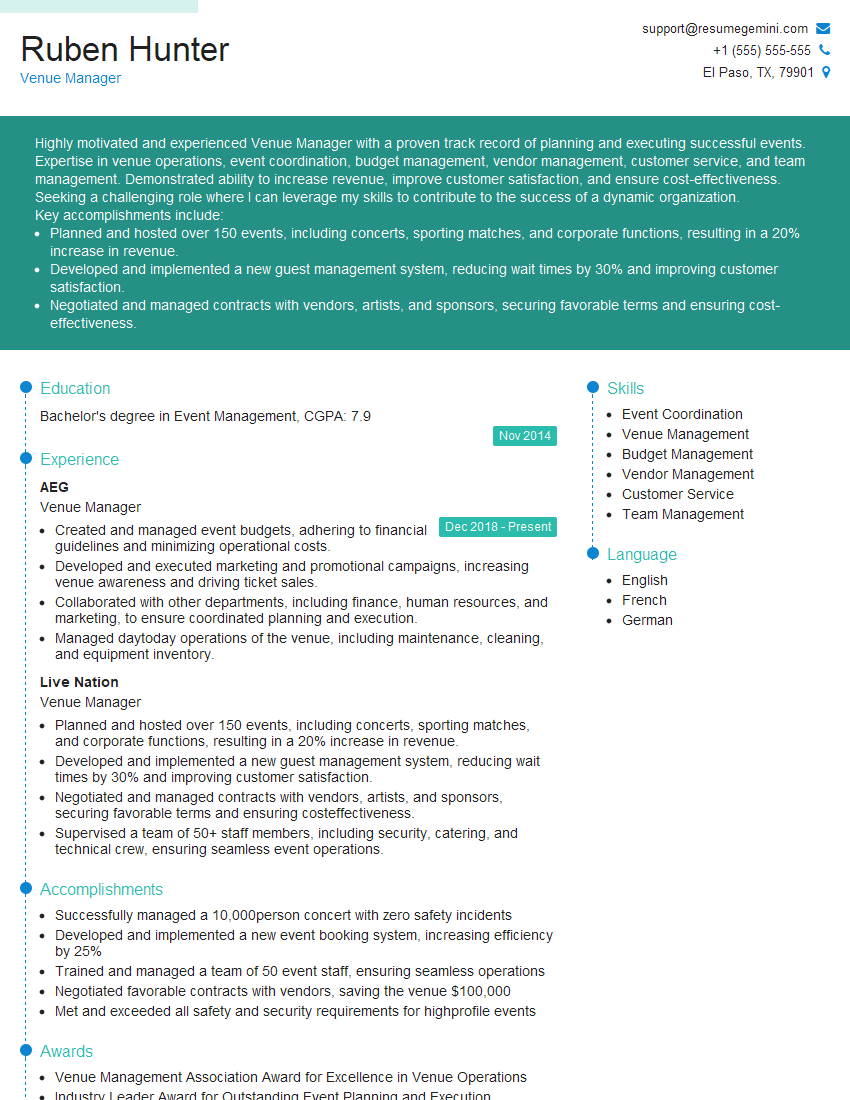
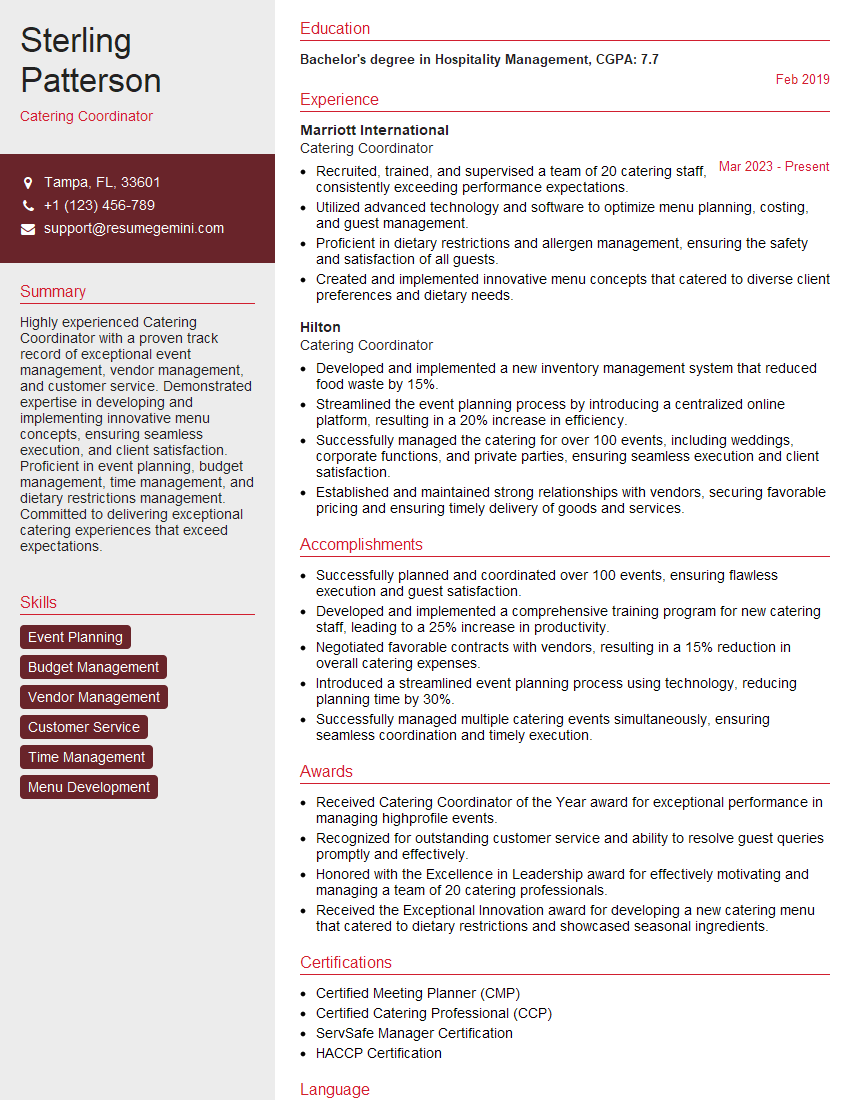
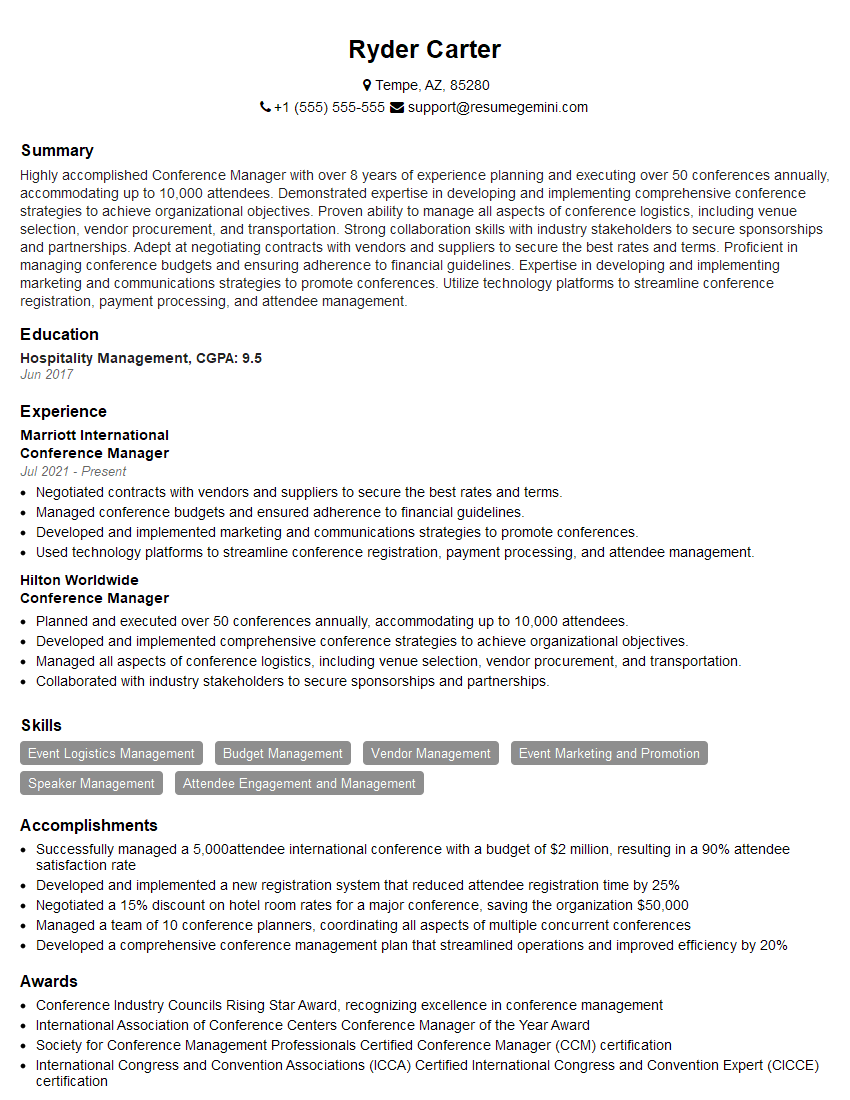
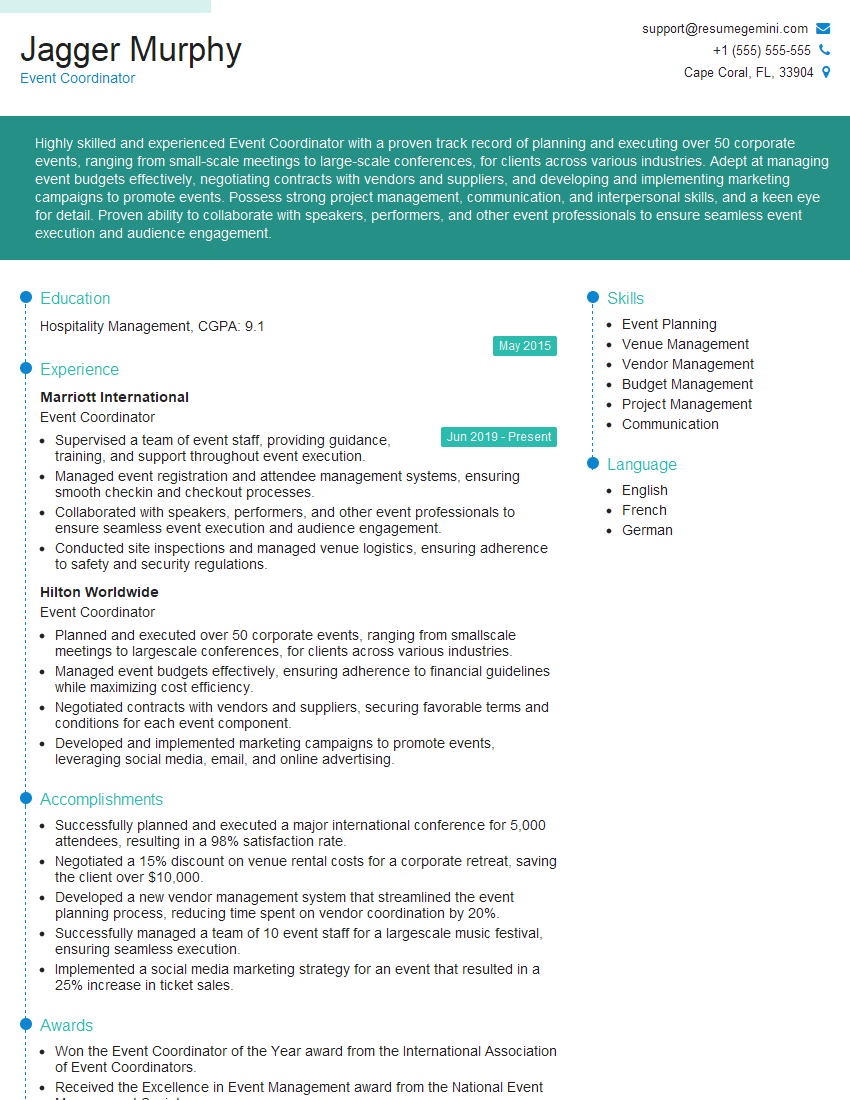
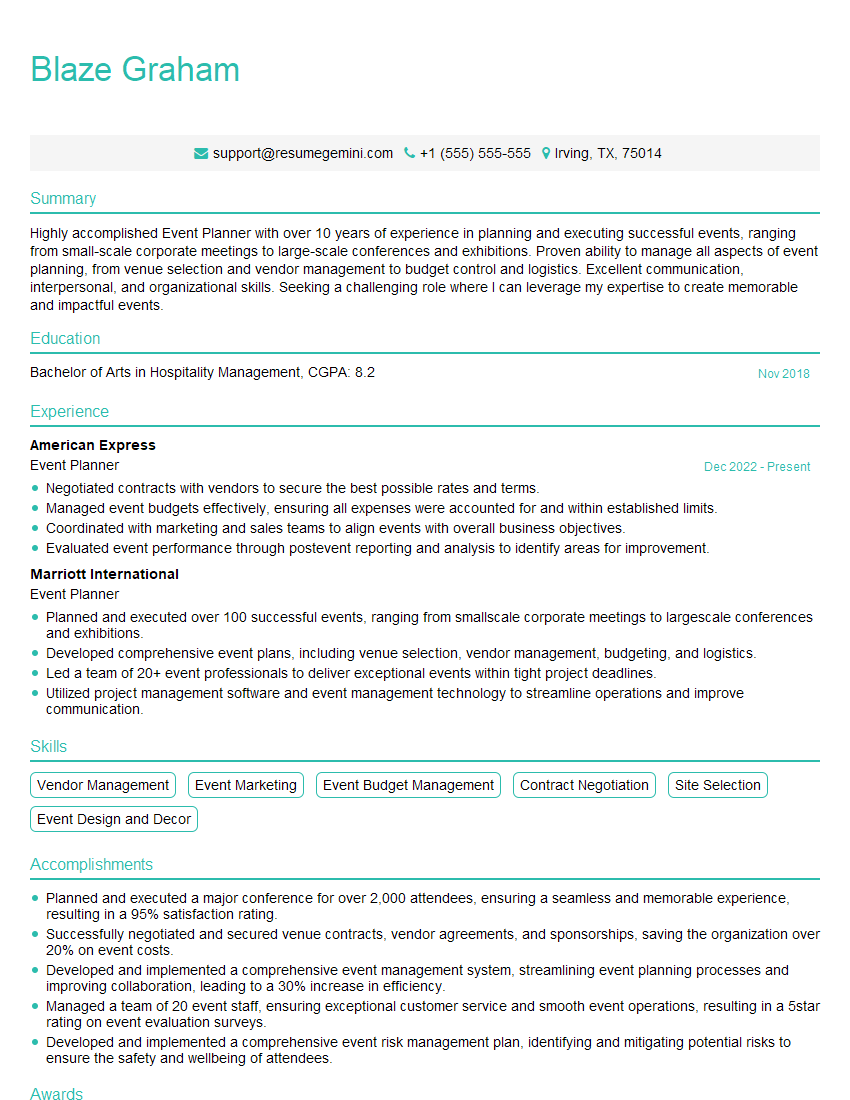
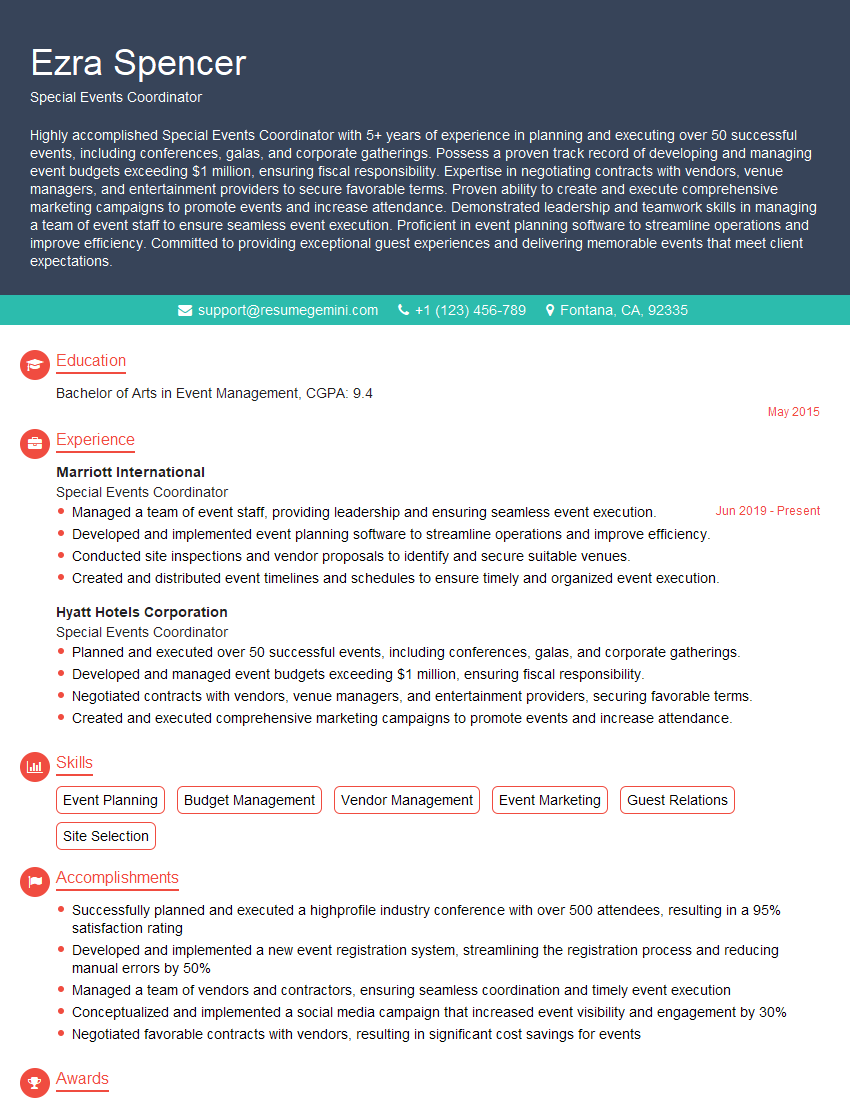
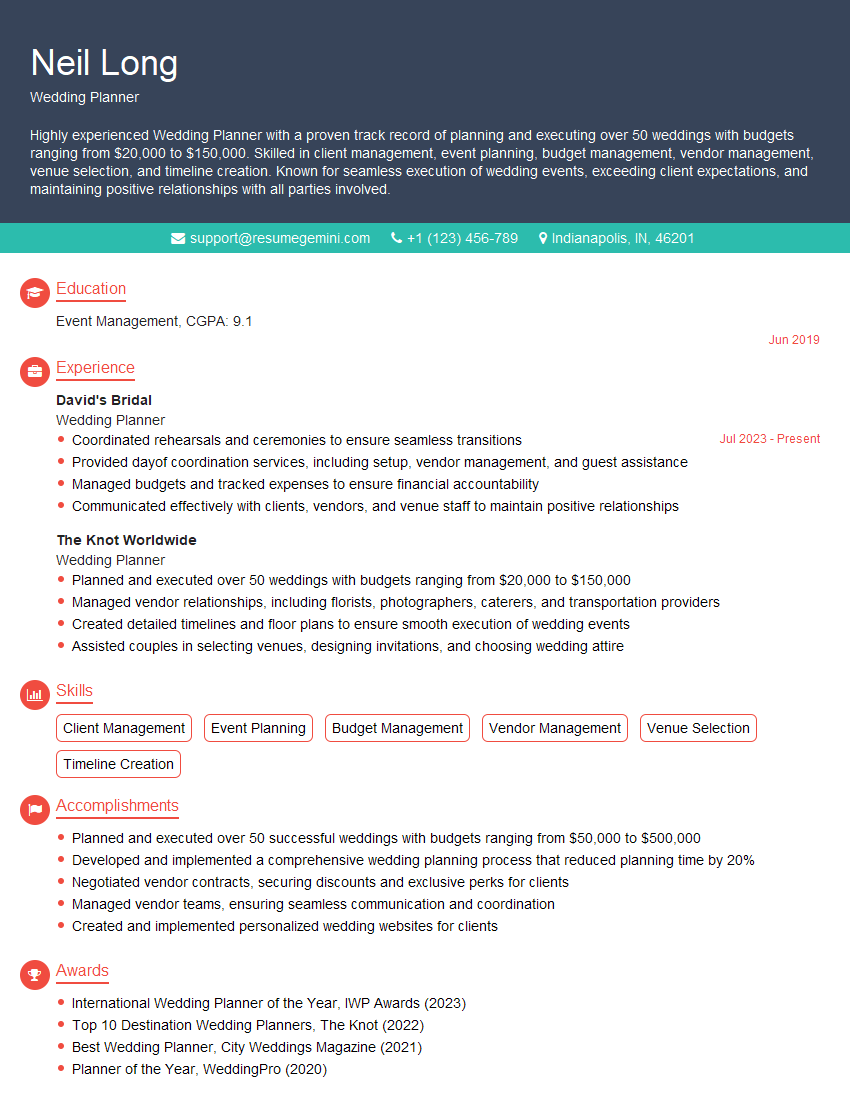
Mastering Event Logistics and Coordination opens doors to exciting career opportunities with significant growth potential. A strong resume is your key to unlocking these opportunities. Creating an ATS-friendly resume is crucial for getting your application noticed by recruiters and hiring managers. To enhance your resume and significantly boost your job prospects, consider using ResumeGemini. ResumeGemini provides a user-friendly platform and valuable tools to build a professional and effective resume. Examples of resumes tailored to Event Logistics and Coordination are available to guide you.
Explore more articles
Users Rating of Our Blogs
Share Your Experience
We value your feedback! Please rate our content and share your thoughts (optional).
What Readers Say About Our Blog
Very informative content, great job.
good