Preparation is the key to success in any interview. In this post, we’ll explore crucial Exercise Analysis interview questions and equip you with strategies to craft impactful answers. Whether you’re a beginner or a pro, these tips will elevate your preparation.
Questions Asked in Exercise Analysis Interview
Q 1. Explain the difference between isokinetic, isometric, and isotonic muscle contractions.
The terms isokinetic, isometric, and isotonic describe different types of muscle contractions, categorized by the relationship between muscle length and tension.
- Isokinetic contractions: These involve a constant speed of muscle shortening or lengthening throughout the entire range of motion. Think of specialized equipment like an isokinetic dynamometer that provides resistance to match the force exerted by the muscle, maintaining a constant speed regardless of force output. This is often used in rehabilitation to precisely control muscle strengthening.
- Isometric contractions: Here, the muscle length remains unchanged while force is produced. Think of holding a heavy object in place—the muscle is working hard, but the length isn’t changing. Isometrics are useful for improving strength and stability without joint movement, which is beneficial in early stages of rehabilitation or for injury prevention.
- Isotonic contractions: These are contractions where the muscle tension remains relatively constant while the muscle length changes. Most everyday movements are isotonic. They’re further divided into concentric (muscle shortens, like lifting a weight) and eccentric (muscle lengthens, like lowering a weight). Isotonic exercises are foundational to building both strength and muscle mass.
For example, a bicep curl involves a concentric isotonic contraction during the lifting phase and an eccentric isotonic contraction during the lowering phase. Holding the weight at the top would be an isometric contraction. A rehab exercise performed on an isokinetic machine would provide a constant speed of movement during both lifting and lowering. Understanding these differences is crucial for designing effective exercise programs that target specific training goals.
Q 2. Describe the biomechanical principles behind proper running form.
Efficient running form minimizes injury risk and maximizes performance. Several biomechanical principles underpin proper technique:
- Posture: Maintaining an upright posture with a slight forward lean from the ankles, not the waist. This allows for efficient use of gravity and momentum.
- Foot Strike: Ideally, landing midfoot to reduce impact forces. A heel strike can generate excessive stress on joints, while a forefoot strike may overstress calf muscles if not properly trained.
- Cadence: A higher step frequency (steps per minute) reduces the time spent in ground contact, lowering impact and improving efficiency. Aiming for 170-180 steps per minute is often recommended.
- Arm Swing: Arms should swing forward and back, not across the body. They assist in generating momentum and balance.
- Leg Drive: Efficient propulsion comes from pushing off with the rear leg, not just lifting the front leg.
- Core Stability: A strong core is crucial for maintaining proper posture and transfer of force during running.
Think of it like a well-oiled machine; each component works in harmony. Deviations from these principles can lead to imbalances, overuse injuries (like runner’s knee or plantar fasciitis), and decreased performance. Analyzing a runner’s gait using video analysis is a great way to identify areas for improvement.
Q 3. How do you assess muscle imbalances?
Assessing muscle imbalances involves a multifaceted approach combining visual observation, palpation (manual examination), and functional movement assessments.
- Visual Assessment: Observe posture for any deviations from ideal alignment. A forward head posture, rounded shoulders, or uneven hip height can indicate underlying muscle imbalances.
- Palpation: Gently feel for muscle tension and tightness. Compare the tone and texture of opposing muscle groups (e.g., comparing the tightness of the pectorals to the rhomboids). This helps identify areas of hypertonicity (increased muscle tone) and hypotonia (decreased muscle tone).
- Functional Movement Assessments (FMAs): These assess how the body moves during functional tasks like squats, lunges, and overhead presses. Limitations or compensations during these movements often point to specific muscle imbalances. Examples include the overhead squat assessment or the Thomas test for hip flexor flexibility.
- Strength Testing: Comparing the strength of agonist (primary movers) and antagonist (opposing) muscles can reveal imbalances. Manual muscle testing or using dynamometry can quantify this.
For instance, tight hip flexors and weak gluteus maximus muscles are a common imbalance, contributing to lower back pain and poor running form. Addressing these imbalances with targeted stretching and strengthening exercises is crucial.
Q 4. What are the key considerations for designing an exercise program for a patient with osteoarthritis?
Designing an exercise program for a patient with osteoarthritis requires careful consideration of joint protection and pain management principles.
- Low-Impact Activities: Prioritize low-impact exercises such as swimming, cycling, or water aerobics to minimize stress on affected joints. Walking can be beneficial, but it’s vital to control intensity and duration.
- Range of Motion Exercises: Gentle range of motion exercises maintain joint flexibility and prevent stiffness, promoting comfort and reducing pain. However, avoid pushing through pain.
- Strengthening Exercises: Focus on strengthening the muscles surrounding the affected joint. This provides stability, reduces stress, and improves joint function. Choose exercises that avoid excessive compression or shear forces on the joint.
- Pain Management: Listen to the patient’s feedback and adjust the program accordingly. Pain should be avoided during exercise, but some discomfort is acceptable if it doesn’t persist after the exercise session.
- Proper Form and Technique: Emphasize correct exercise technique to minimize stress on the affected joints. Using proper form and avoiding compensatory movements is crucial.
- Gradual Progression: Start with low intensity and duration, gradually increasing the workload over time. This prevents overexertion and allows the body to adapt safely.
A tailored program might include exercises like modified squats (chair squats), leg presses (avoiding deep knee flexion), and light resistance band exercises for the shoulders and legs. Collaborating with a physical therapist specializing in osteoarthritis management ensures the patient receives a safe and effective program.
Q 5. Explain the concept of rate coding and its role in muscle activation.
Rate coding refers to the frequency of motor unit firing, representing how often a motor unit is activated within a given period. It’s a crucial mechanism regulating the force generated by a muscle.
Each muscle fiber is innervated by a motor neuron. A motor unit consists of a single motor neuron and all the muscle fibers it innervates. When a motor neuron fires, all the muscle fibers within its motor unit contract. Increasing the firing rate of a motor neuron leads to a greater force production from that motor unit due to the summation of muscle fiber contractions (temporal summation). This doesn’t involve recruiting new motor units; it’s about how frequently the existing ones are activated.
Imagine a drummer. Hitting the drum once generates a certain sound. Hitting the drum repeatedly and faster produces a louder, more intense sound. Similarly, increasing the rate coding of a motor unit generates a stronger contraction without requiring additional motor units to be recruited. However, there is a limit to how fast a motor unit can fire before it reaches its maximum firing frequency. This concept is fundamental to understanding the nuanced control of muscle force during movement. At higher intensities, the nervous system recruits more motor units (recruitment) and increases the firing rate of those already recruited (rate coding) to generate the required force.
Q 6. Describe different methods for measuring exercise intensity.
Measuring exercise intensity is crucial for designing effective and safe training programs. Several methods exist:
- Heart Rate (HR): A simple and widely used method, especially for cardiovascular training. Target heart rate zones are calculated based on age and fitness level (e.g., using the Karvonen formula). HR monitors, including chest straps and wrist-based devices, provide continuous monitoring.
- Rating of Perceived Exertion (RPE): A subjective measure based on the individual’s feeling of exertion during exercise. The Borg scale (6-20 scale) is commonly used, with 6 representing very, very light and 20 representing maximal exertion. This method is valuable for individuals who may not have access to heart rate monitoring technology or for those in whom heart rate monitoring may not be accurate.
- Metabolic Equivalents (METs): Expresses energy expenditure as a multiple of resting metabolic rate. One MET is the energy consumed at rest. MET values are assigned to various activities, providing an objective measure of intensity.
- Talk Test: A simple method to assess intensity during endurance exercises. If you can comfortably hold a conversation, the intensity is likely low to moderate. If speech becomes labored, intensity is likely high.
- Lactate Threshold: Measures the point at which lactate production exceeds lactate clearance. It represents the intensity level where sustained exercise becomes difficult due to metabolic limitations. It typically requires laboratory testing.
The best method often depends on the individual’s goals, available resources, and the type of exercise. Often a combination of methods is utilized for a comprehensive assessment of exercise intensity.
Q 7. How would you assess a client’s flexibility and design a stretching program?
Assessing flexibility and designing a stretching program involves a thorough evaluation of the client’s range of motion (ROM) and identification of any limitations.
- ROM Assessment: Use goniometry (using a goniometer to measure joint angles) or visual observation to assess ROM in key joints (e.g., shoulder, hip, knee, ankle). Compare ROM to normative data to identify deficits.
- Flexibility Tests: Perform standardized flexibility tests, such as the sit-and-reach test or the shoulder flexibility test. These provide quantifiable measures of flexibility.
- Palpation: Assess muscle tension and tightness through palpation to pinpoint areas requiring specific attention.
- Postural Assessment: Analyze posture to identify potential postural imbalances contributing to flexibility limitations.
Once flexibility limitations are identified, a tailored stretching program can be designed. This should include:
- Static Stretching: Holding a stretch for a sustained period (15-30 seconds). This is a common and generally safe method for improving flexibility.
- Dynamic Stretching: Moving through a range of motion in a controlled manner (e.g., arm circles, leg swings). This prepares the muscles for activity.
- Proprioceptive Neuromuscular Facilitation (PNF): Advanced stretching technique involving isometric contractions followed by passive stretching. It can be very effective but requires proper training.
- Specificity: Target specific muscle groups identified as having limited ROM. For example, if hamstring flexibility is limited, include stretches that specifically target the hamstrings.
- Frequency and Duration: Aim for regular stretching sessions (e.g., 2-3 times per week) that incorporate a variety of stretches.
Remember, stretching should be performed pain-free. Overstretching can cause injury. Progress gradually and listen to your body’s signals.
Q 8. What are the common causes of low back pain, and how can exercise help?
Low back pain is incredibly common, often stemming from a combination of factors rather than a single cause. Think of it like a wobbly chair – multiple parts can contribute to its instability. Common culprits include poor posture (think slouching at your desk all day), muscle imbalances (strong quads but weak hamstrings), weak core muscles (your abdominal and back muscles act like a corset, supporting your spine), and degenerative disc disease (the natural wear and tear on the spinal discs). Even stress and anxiety can contribute by tightening muscles.
Exercise plays a vital role in managing and even preventing low back pain. A well-designed program focuses on strengthening the core, improving posture, increasing flexibility, and enhancing overall muscle balance. For example, exercises like planks, bird-dog, and bridges target core stability. Stretches focusing on the hip flexors, hamstrings, and lower back improve flexibility and reduce muscle tightness. Specific exercises may need to be avoided during periods of acute pain but should be reintroduced gradually under professional guidance as pain reduces.
Q 9. How do you determine appropriate resistance training loads for different clients?
Determining appropriate resistance training loads is crucial for safety and effectiveness and depends heavily on the individual client’s characteristics and goals. It’s not a one-size-fits-all approach! We consider several factors:
- Experience Level: Beginners start with lighter weights, focusing on proper form. Experienced lifters can handle heavier loads.
- Goal: Strength training uses heavier weights and fewer repetitions, while hypertrophy (muscle growth) utilizes moderate weights and higher reps. Endurance training involves lighter weights and many reps.
- Physical Assessment: A thorough assessment reveals any limitations or previous injuries. This may dictate modifications to the exercise selection or load.
- Repetition Maximum (RM): This is the maximum weight a client can lift for a given number of repetitions (e.g., 1RM is the heaviest weight for one repetition). We often use percentages of 1RM to prescribe loads (e.g., 60-70% for endurance, 70-80% for hypertrophy, 80-100% for strength).
Using a combination of these methods allows for a personalized program. For example, a beginner might start with bodyweight exercises before gradually adding external resistance. A client with a history of shoulder injury will require modifications to avoid aggravating that area.
Q 10. Explain the difference between concentric and eccentric muscle actions.
Concentric and eccentric muscle actions represent the two phases of a single muscle contraction. Think of bicep curls:
Concentric: This is the shortening phase of the muscle. In the bicep curl, it’s the upward movement where your biceps contract to bring the weight towards your shoulder. It’s the ‘positive’ part of the repetition.
Eccentric: This is the lengthening phase of the muscle. In the bicep curl, it’s the controlled lowering of the weight. While the biceps are lengthening, they are still actively engaged to control the movement. This phase is crucial for muscle growth and injury prevention. It’s often the ‘negative’ portion of the rep, and is often stronger than concentric contraction.
Understanding this distinction is crucial for effective program design. Both phases contribute to overall strength and muscle development. Eccentric training, in particular, is emphasized in rehabilitation programs due to its positive influence on muscle growth and reducing injury risk.
Q 11. Describe the role of plyometrics in athletic training.
Plyometrics, also known as jump training, involves rapid stretching and contraction of muscles to produce powerful movements. It’s a dynamic form of training that enhances explosive power, speed, and agility, making it a cornerstone of athletic training, particularly in sports requiring quick bursts of energy like basketball, volleyball, and tennis.
Plyometric exercises like box jumps, depth jumps, and medicine ball throws work by utilizing the stretch-shortening cycle – a rapid stretch followed by an immediate powerful contraction. This enhances the efficiency of the neuromuscular system, leading to improved force production. However, plyometrics require a strong base level of strength and conditioning to avoid injuries, so it’s not suitable for beginners without proper preparation. Furthermore, the frequency and intensity of plyometric training should be carefully considered, to allow sufficient recovery between sessions.
Q 12. What are the benefits and risks of high-intensity interval training (HIIT)?
High-Intensity Interval Training (HIIT) involves short bursts of intense exercise followed by brief recovery periods. Think of sprinting for 30 seconds, followed by a 30-second rest, repeated several times. It’s a time-efficient approach offering numerous benefits:
- Improved Cardiovascular Fitness: HIIT significantly improves cardiovascular health, similar to more prolonged moderate-intensity exercise.
- Increased Fat Burning: HIIT can enhance fat metabolism and calorie expenditure, even after the workout is finished (EPOC or Excess Post-exercise Oxygen Consumption).
- Enhanced Insulin Sensitivity: Regular HIIT can improve how your body processes sugar, aiding in blood sugar control.
However, HIIT also comes with risks:
- Injury Risk: The high intensity can increase the risk of musculoskeletal injuries if proper form isn’t maintained.
- Not Suitable for Everyone: Individuals with certain cardiovascular conditions or injuries should consult a healthcare professional before starting HIIT.
- Potential for Overtraining: The intensity demands sufficient rest and recovery to avoid burnout.
Proper planning and gradual progression are critical for safe and effective HIIT.
Q 13. How would you modify an exercise program for a client with hypertension?
Modifying an exercise program for a client with hypertension (high blood pressure) requires careful consideration. The goal is to reduce blood pressure without putting undue stress on the cardiovascular system. Key modifications include:
- Avoid Valsalva Maneuver: This involves holding your breath during exertion, increasing blood pressure significantly. We teach clients to breathe rhythmically throughout the exercise.
- Focus on Aerobic Exercise: Activities like brisk walking, cycling, and swimming are generally well-tolerated and help lower blood pressure. Intensity should be moderate, aiming for a perceived exertion level of 4-6 on a 10-point scale (talk test should be easily possible).
- Resistance Training Modifications: Lower weights and higher repetitions are generally preferred. Avoid holding your breath and choose exercises that don’t significantly increase blood pressure.
- Gradual Progression: Start slowly and increase intensity gradually to avoid sudden spikes in blood pressure.
- Regular Monitoring: Blood pressure should be monitored regularly to track progress and make adjustments as needed.
- Medication Considerations: Work closely with the client’s physician, as medication can interact with the effects of exercise.
An individualized approach is crucial for a safe and effective exercise program. This may involve consulting with a cardiologist to confirm the suitability of various activities.
Q 14. Explain the principles of progressive overload in resistance training.
Progressive overload is a fundamental principle in resistance training, emphasizing the gradual increase of training demands to continually challenge the body and stimulate adaptation. This is akin to consistently increasing the weight you lift – it’s not a sprint but a marathon of gradual progress.
We can progressively overload in several ways:
- Increasing Resistance: Gradually increasing the weight, resistance bands’ tension, or incline.
- Increasing Repetitions: Performing more repetitions with the same weight.
- Increasing Sets: Adding more sets of the same exercise.
- Decreasing Rest Time: Shortening the rest period between sets.
- Changing Exercise Variation: Introducing more challenging exercises of the same muscle group. For example, progressing from dumbbell rows to barbell rows.
It’s crucial to increase the training load gradually and listen to your body. Overtraining can lead to injuries and plateaus. Proper form and sufficient recovery are essential components of a successful progressive overload strategy. Tracking your progress helps determine when and how to adjust the training load to continue stimulating growth and strength improvements.
Q 15. What are the different types of muscle fibers and their respective functions?
Skeletal muscles are composed of different types of muscle fibers, each with unique characteristics and functions. These differences impact how we train and the types of exercises we choose for optimal results.
- Type I (Slow-twitch): These fibers are highly efficient at using oxygen to generate energy (aerobic metabolism). They are fatigue-resistant and crucial for endurance activities like long-distance running or cycling. Think of marathon runners – their legs are primarily composed of Type I fibers.
- Type IIa (Fast-twitch oxidative-glycolytic): These fibers possess characteristics of both Type I and Type IIx fibers. They have a moderate capacity for both aerobic and anaerobic metabolism, making them suitable for activities requiring both endurance and power, such as middle-distance running or swimming.
- Type IIx (Fast-twitch glycolytic): These fibers are powerful but fatigue quickly, relying primarily on anaerobic metabolism (without oxygen). They’re essential for short bursts of intense activity like sprinting or weightlifting. A weightlifter performing a maximal deadlift will heavily utilize Type IIx fibers.
Understanding these fiber types helps in designing personalized training programs. For example, a long-distance runner will benefit from high-volume, low-intensity training to predominantly engage Type I fibers, while a sprinter would benefit from short, high-intensity intervals to target Type IIx fibers.
Career Expert Tips:
- Ace those interviews! Prepare effectively by reviewing the Top 50 Most Common Interview Questions on ResumeGemini.
- Navigate your job search with confidence! Explore a wide range of Career Tips on ResumeGemini. Learn about common challenges and recommendations to overcome them.
- Craft the perfect resume! Master the Art of Resume Writing with ResumeGemini’s guide. Showcase your unique qualifications and achievements effectively.
- Don’t miss out on holiday savings! Build your dream resume with ResumeGemini’s ATS optimized templates.
Q 16. How do you assess a client’s postural alignment?
Assessing postural alignment involves a systematic visual examination from multiple perspectives (anterior, posterior, and lateral) while the client is standing and potentially in other positions. We look for deviations from ideal alignment, which can predispose someone to injury or pain. I use a plumb line (imaginary vertical line) as a reference point.
Steps involved:
- Observation: Observe the client’s posture from the front, back, and side, noting any asymmetries or deviations. Look at head position, shoulder level, spinal curvature, hip alignment, and knee and ankle positioning.
- Palpation: Gently palpate (touch) specific muscle groups to assess muscle tension and imbalances. For example, tight hip flexors might contribute to anterior pelvic tilt.
- Functional Assessment: Evaluate movement patterns, such as squats or lunges, to identify limitations and compensations. A restricted hip could alter knee and ankle mechanics during a squat.
- Range of Motion (ROM): Assess joint ROM to identify any restrictions that may influence posture. Reduced thoracic spine rotation may contribute to rounded shoulders.
Tools like a plumb line or posture assessment software can be used to aid the analysis. By identifying postural deviations, we can then design targeted exercises and stretches to address these imbalances and improve overall body mechanics.
Q 17. Describe the energy systems involved in exercise.
The human body uses three primary energy systems to fuel exercise, depending on the intensity and duration of the activity. These systems are interconnected and often work in concert.
- Phosphagen System (ATP-PCr): This is the immediate energy system, providing energy for high-intensity activities lasting up to about 10 seconds. Think of a 100-meter sprint. It relies on stored ATP (adenosine triphosphate) and creatine phosphate (PCr) in the muscles. It’s the quickest but least sustainable energy source.
- Anaerobic Glycolytic System (Lactic Acid System): This system kicks in when the phosphagen system is depleted, supplying energy for activities lasting between 10 seconds and 2 minutes. It breaks down carbohydrates (glucose) to produce ATP without the use of oxygen, resulting in the production of lactic acid, which causes muscle fatigue. A 400-meter race primarily utilizes this system.
- Aerobic System (Oxidative System): This system is the dominant energy provider for activities lasting longer than 2 minutes. It uses oxygen to break down carbohydrates and fats to produce ATP. This is the most efficient system but requires a constant supply of oxygen. Long-distance running heavily relies on the aerobic system.
Understanding these energy systems is crucial for designing effective training programs. Interval training, for instance, incorporates periods of high-intensity work followed by rest or low-intensity recovery periods, allowing the body to utilize different energy systems to improve overall fitness.
Q 18. Explain the concept of the SAID principle (Specific Adaptation to Imposed Demands).
The SAID principle, or Specific Adaptation to Imposed Demands, is a fundamental concept in exercise physiology. It simply states that the body adapts specifically to the type of stress placed upon it. Your body will only adapt to the specific type of training you do.
Example: If you only perform bicep curls, your biceps will get stronger, but this training will have minimal impact on your leg strength or cardiovascular fitness. This highlights the importance of including diverse exercises to achieve overall fitness goals.
Practical Application: The SAID principle guides exercise program design. If a client wants to improve their vertical jump, we focus on plyometrics (jump training) rather than long-distance running because the specific demands of plyometrics elicit the specific adaptations required for improved jumping ability.
Q 19. How would you analyze a client’s gait?
Gait analysis involves a comprehensive evaluation of an individual’s walking pattern. It’s crucial for identifying abnormalities that may indicate injury or underlying conditions.
Method:
- Visual Observation: Observe the client’s gait from the side and rear, noting stride length, cadence (steps per minute), step width, and arm swing. Look for any limping, uneven weight bearing, or excessive pronation (rolling inward) of the feet.
- Kinematic Analysis: This involves more sophisticated methods using motion capture technology to quantify joint angles and movements during walking. This helps pinpoint specific movement deviations.
- Force Plate Analysis: A force plate measures the forces exerted by the feet on the ground during walking, providing insights into gait symmetry and ground reaction forces. This helps in identifying areas where excessive forces are placed on specific joints.
- Clinical Assessment: Assess muscle strength, flexibility, and joint ROM to identify potential contributing factors to any gait abnormalities observed during visual observation and other analyses.
Gait analysis is essential in rehabilitation following injury, in diagnosing orthopedic issues, and in designing corrective exercises to improve movement efficiency and reduce injury risk.
Q 20. What are the key considerations for designing an exercise program for a pregnant woman?
Designing an exercise program for a pregnant woman requires careful consideration of physiological changes and potential risks. Safety is paramount.
Key Considerations:
- Stage of Pregnancy: The program must adapt to the changing physiological demands of each trimester. Intensity and exercise type will generally be modified as the pregnancy progresses.
- Pre-existing Conditions: Consider any pre-existing health conditions such as hypertension, gestational diabetes, or heart conditions. Exercise should be adjusted accordingly.
- Cardiovascular Adaptations: Blood volume increases during pregnancy, increasing cardiac workload. Exercise should be carefully monitored to avoid excessive strain.
- Joint Laxity: Hormonal changes can cause increased joint laxity, increasing injury risk. Exercises should focus on stability and proper form.
- Avoid Supine Position: After the first trimester, avoid prolonged lying on the back as this can compress the vena cava, reducing blood flow to the fetus. Side-lying positions are generally preferred.
- Hydration and Nutrition: Increased hydration and nutrient intake are crucial to support the demands of pregnancy and exercise.
- Listen to Body: The pregnant woman should be encouraged to listen to her body and stop if feeling discomfort or dizziness.
Focus on low-impact exercises like walking, swimming, or modified yoga. Avoid high-intensity activities or exercises that involve sudden movements or lying on the back, especially in later stages of pregnancy.
Q 21. Describe the different types of joint movement.
Joint movements are classified based on the type of motion allowed at the joint. The primary types of joint movements include:
- Flexion: Decreasing the angle between two bones. Example: Bending the elbow.
- Extension: Increasing the angle between two bones. Example: Straightening the elbow.
- Abduction: Moving a limb away from the midline of the body. Example: Raising the arm to the side.
- Adduction: Moving a limb toward the midline of the body. Example: Lowering the arm to the side.
- Rotation: Turning a bone around its own axis. Example: Turning the head from side to side.
- Circumduction: Moving a limb in a circular motion. Example: Making a large circle with the arm.
- Dorsiflexion: Moving the foot upward towards the shin (at the ankle joint).
- Plantarflexion: Moving the foot downward (pointing the toes, at the ankle joint).
- Inversion: Turning the sole of the foot inward (towards the midline of the body).
- Eversion: Turning the sole of the foot outward (away from the midline of the body).
- Supination: Rotating the forearm so the palm faces upward.
- Pronation: Rotating the forearm so the palm faces downward.
Understanding these movements is crucial for analyzing movement patterns, designing effective exercises, and understanding the biomechanics of human movement.
Q 22. Explain how to calculate training heart rate zones.
Calculating training heart rate zones is crucial for designing effective exercise programs. It helps individuals train at the appropriate intensity to achieve specific fitness goals. The most common method uses the Karvonen formula, which takes into account your resting heart rate (RHR) to personalize the zones.
Here’s how it works:
- Step 1: Determine your Maximum Heart Rate (MHR): A simple estimate is 220 minus your age (e.g., for a 30-year-old, MHR = 220 – 30 = 190 bpm). More accurate methods involve a maximal exercise test administered by a professional.
- Step 2: Measure your Resting Heart Rate (RHR): Take your pulse first thing in the morning before getting out of bed. Average this over several days for a reliable measurement.
- Step 3: Calculate your Heart Rate Reserve (HRR): This is the difference between your MHR and RHR.
HRR = MHR - RHR - Step 4: Determine your training zones: These zones are expressed as percentages of your HRR. Typical zones include:
- Zone 1 (Very Light): 50-60% HRR – Warm-up, active recovery
- Zone 2 (Light): 60-70% HRR – Easy aerobic training, improving endurance
- Zone 3 (Moderate): 70-80% HRR – Tempo runs, building aerobic base
- Zone 4 (Hard): 80-90% HRR – Threshold training, improving lactate threshold
- Zone 5 (Maximum): 90-100% HRR – Interval training, high-intensity efforts
Example: Let’s say a 30-year-old has a resting heart rate of 60 bpm. Their MHR is 190 bpm, and their HRR is 130 bpm (190 – 60). Their Zone 3 (Moderate) would be between 91 bpm (70% of 130) and 104 bpm (80% of 130).
Remember that these are just guidelines. Individual responses to training vary, and it’s beneficial to consult a healthcare professional or certified exercise physiologist for personalized guidance.
Q 23. How would you create a periodization plan for an athlete?
Periodization is a systematic approach to planning training programs that involves varying the intensity, volume, and type of training over time to optimize performance and prevent overtraining. A well-structured periodization plan typically includes distinct phases:
- Preparation Phase (Off-season): Focuses on building a base level of fitness. This phase is characterized by high volume and lower intensity training.
- Competition Phase (In-season): Emphasizes peak performance. Training volume decreases while intensity increases as the athlete approaches major competitions.
- Transition Phase (Post-season): Allows the athlete to recover and mentally prepare for the next training cycle. Training is low in both volume and intensity.
Creating a Periodization Plan:
- Assess the athlete’s current fitness level, training history, and goals.
- Identify the specific competition or event(s) the athlete is preparing for, and determine the timeline.
- Choose appropriate training methods based on the sport and the athlete’s needs. This might include strength training, endurance training, speed work, skill development, and tactical training.
- Structure the training program into phases (preparation, competition, and transition) with clear goals for each phase.
- Gradually increase training intensity and volume over time. Avoid making too many drastic changes at once.
- Incorporate rest and recovery periods throughout the plan.
- Monitor the athlete’s progress regularly and adjust the plan accordingly. This might involve changes to training volume, intensity, or exercise selection.
Example: A marathon runner’s periodization plan might include a long preparation phase with high mileage runs at a moderate pace, followed by a competition phase with increased intensity and shorter runs, and a transition phase with reduced mileage and cross-training.
Remember, periodization is a personalized approach. The plan should be tailored to the individual athlete’s unique needs and characteristics.
Q 24. Describe the importance of warm-up and cool-down in an exercise session.
Warm-up and cool-down are essential components of any exercise session. They play a vital role in injury prevention and performance enhancement. Think of them as prepping your car engine before a long drive and then letting it cool down before shutting it off.
Warm-up (5-10 minutes):
- Increases blood flow to muscles: This delivers oxygen and nutrients, preparing the muscles for work.
- Increases muscle temperature: Warmer muscles are more flexible and less prone to injury.
- Gradually increases heart rate and breathing rate: This prepares the cardiovascular system for the upcoming exercise.
- Enhances mental preparation: Allows the athlete to focus and prepare mentally for the workout.
Example warm-up: Light cardio, such as jogging or jumping jacks, followed by dynamic stretches like arm circles and leg swings.
Cool-down (5-10 minutes):
- Gradually decreases heart rate and breathing rate: This prevents a sudden drop in blood pressure, which can cause dizziness.
- Reduces muscle soreness: Gentle stretching helps to remove lactic acid buildup in the muscles.
- Promotes relaxation and recovery: Helps the body return to a resting state.
Example cool-down: Light cardio, followed by static stretches, holding each stretch for 15-30 seconds.
Ignoring warm-up and cool-down routines increases the risk of injury, reduces performance, and may negatively impact recovery.
Q 25. How do you measure body composition, and what are the different methods?
Body composition refers to the proportion of fat mass and fat-free mass (muscle, bone, water) in the body. Accurate measurement is important for assessing health, fitness levels, and progress. Several methods exist, each with strengths and limitations:
- Skinfold Calipers: A relatively inexpensive and non-invasive method that measures subcutaneous fat (fat just beneath the skin) at multiple sites on the body. The measurements are then used in an equation to estimate total body fat percentage. Accuracy depends heavily on the technician’s skill and experience.
- Bioelectrical Impedance Analysis (BIA): This method uses a low electrical current to measure the resistance of the body’s tissues. Fat tissue offers more resistance than lean tissue. BIA is convenient but can be affected by hydration status and other factors.
- Underwater Weighing (Hydrostatic Weighing): This is a more accurate method that involves weighing the individual in air and then underwater. The difference is used to calculate body density, from which body fat percentage can be estimated. This is precise but requires specialized equipment.
- Dual-Energy X-ray Absorptiometry (DEXA): DEXA is considered the gold standard. It uses low-dose X-rays to measure bone density, fat mass, and lean mass. It’s very accurate but expensive and requires specialized equipment.
- Air Displacement Plethysmography (Bod Pod): This method measures body volume using air displacement, similar to underwater weighing but more comfortable for the individual. It is precise, but access to this specialized technology is limited.
The choice of method depends on factors like cost, availability of equipment, and desired level of accuracy. For general fitness assessments, skinfold calipers or BIA might suffice, while DEXA is usually reserved for research or clinical settings.
Q 26. What are the signs and symptoms of overtraining?
Overtraining occurs when the volume and intensity of training exceed an individual’s capacity for recovery. It leads to a decline in performance and an increased risk of injury. Recognizing the signs and symptoms is crucial for preventing serious consequences.
Signs and Symptoms:
- Decreased performance: A consistent decline in performance, despite continued training.
- Increased fatigue: Persistent feelings of tiredness and exhaustion, even after rest.
- Loss of motivation: A decreased desire to train or compete.
- Muscle soreness and stiffness: Prolonged muscle soreness and stiffness, not fully resolving with rest.
- Sleep disturbances: Insomnia or difficulty sleeping.
- Irritability and mood swings: Increased irritability, anxiety, or depression.
- Increased resting heart rate: A consistently higher resting heart rate than normal.
- Frequent illness: A greater susceptibility to colds, flu, or other infections.
- Loss of appetite: A significant decrease in appetite or weight loss.
If you suspect overtraining, it’s crucial to reduce training volume and intensity immediately. Prioritizing rest and recovery is essential. In some cases, professional medical advice is needed.
Q 27. How would you adapt an exercise program for a client with diabetes?
Adapting an exercise program for a client with diabetes requires careful consideration of several factors. The primary goals are to improve glucose control, manage weight, and enhance overall health.
Adaptations:
- Consult with the client’s physician or certified diabetes educator: This is crucial to ensure the safety and effectiveness of the exercise program.
- Monitor blood glucose levels: Regular monitoring before, during, and after exercise is essential to avoid hypoglycemia (low blood sugar).
- Choose appropriate exercise modalities: Activities like walking, swimming, and cycling are generally well-tolerated. High-impact activities should be approached cautiously.
- Adjust exercise intensity and duration: Start with shorter, lower-intensity sessions and gradually increase the duration and intensity as tolerated.
- Time exercise strategically: Exercise may be best timed 1-3 hours after a meal or when blood glucose levels are within a target range. Avoid exercising when glucose is too low.
- Encourage consistent exercise: Regular physical activity is crucial for managing blood glucose levels. The goal is to incorporate exercise into the client’s daily routine.
- Educate the client on the signs and symptoms of hypoglycemia: This includes dizziness, shakiness, sweating, and confusion. Clients should know how to treat hypoglycemia.
- Include strength training: Strength training helps build muscle mass, which improves insulin sensitivity.
Example: A person with type 2 diabetes might begin with a 30-minute walk at a moderate pace three times per week, gradually increasing the duration and intensity as they become more fit. They would also incorporate strength training exercises twice a week.
Remember that individual needs vary greatly. A personalized approach, developed in consultation with healthcare professionals, is key to ensuring the safety and effectiveness of the program.
Q 28. Explain the importance of proper breathing mechanics during exercise.
Proper breathing mechanics during exercise are vital for optimizing performance, preventing injury, and enhancing overall fitness. Efficient breathing ensures adequate oxygen delivery to working muscles and assists in the removal of metabolic waste products like carbon dioxide.
Importance:
- Enhanced oxygen uptake: Efficient breathing maximizes the amount of oxygen absorbed by the lungs and delivered to the muscles.
- Improved muscular efficiency: Synchronized breathing with movement can enhance muscle activation and coordination.
- Reduced muscle tension: Conscious breathing techniques can help relax muscles and prevent unnecessary tension.
- Lowered heart rate: Controlled breathing can help lower the heart rate, improving cardiovascular efficiency.
- Increased stamina: Optimized breathing patterns can increase the duration of physical activity before fatigue sets in.
- Reduced risk of injury: Correct breathing helps stabilize the core muscles and improve posture, reducing the risk of injuries.
Techniques:
- Diaphragmatic breathing: This involves using the diaphragm to expand the abdomen during inhalation and contracting it during exhalation. This is crucial for optimal oxygen intake and core stability.
- Coordination of breathing with movement: In many exercises, it’s beneficial to synchronize breathing with specific phases of the movement. For example, during lifting, inhaling before lifting and exhaling during exertion.
Ignoring proper breathing mechanics can lead to inefficient energy utilization, increased muscle fatigue, and even dizziness or lightheadedness. Consciously focusing on your breath during exercise is a simple yet powerful way to enhance your workout’s effectiveness and safety.
Key Topics to Learn for Exercise Analysis Interview
- Biomechanics of Movement: Understanding joint angles, force vectors, and movement patterns in various exercises.
- Exercise Program Design: Applying principles of exercise science to create safe and effective workout plans tailored to individual needs and goals.
- Muscle Activation & Synergistic Action: Analyzing which muscles are primarily involved in specific exercises and how they work together.
- Exercise Technique & Form Analysis: Identifying and correcting improper form to prevent injuries and optimize results. Practical application includes video analysis and in-person observation.
- Exercise Selection & Progression: Choosing appropriate exercises and systematically increasing the challenge to promote continuous improvement. This includes understanding exercise variations and adaptations.
- Energy Systems & Metabolic Considerations: Understanding the different energy pathways used during exercise and their implications for training design. This covers topics like aerobic and anaerobic training.
- Exercise Prescription & Individualization: Adapting exercise programs based on client characteristics, including age, fitness level, and any pre-existing conditions.
- Data Analysis & Interpretation: Utilizing data from wearable technology and other assessment tools to track progress and modify exercise programs. This includes understanding statistical concepts relevant to fitness data.
- Risk Assessment & Injury Prevention: Identifying potential risks associated with specific exercises and strategies to mitigate them.
- Communication & Client Interaction: Effectively communicating with clients about exercise programs, providing motivation and support.
Next Steps
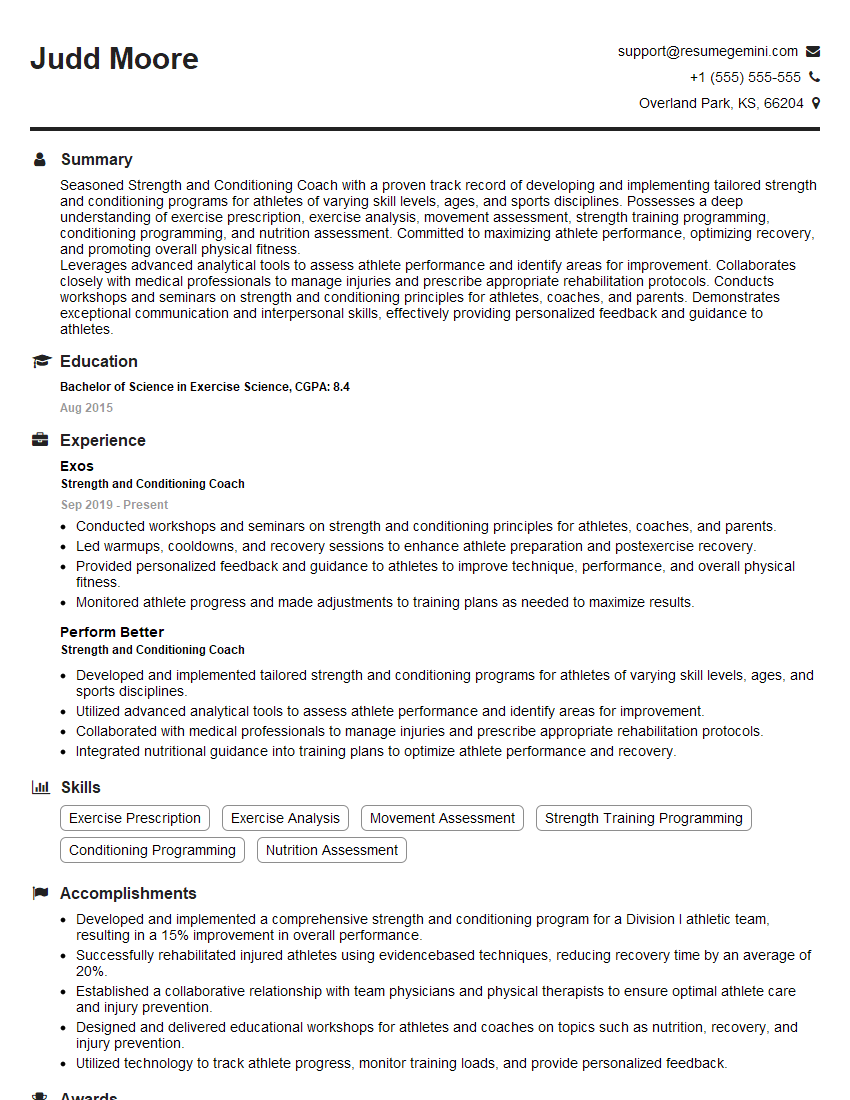
Mastering Exercise Analysis opens doors to exciting career opportunities in fitness, rehabilitation, and sports performance. A strong understanding of these principles is highly valued by employers. To maximize your chances of landing your dream job, focus on crafting a compelling and ATS-friendly resume that showcases your skills and experience. ResumeGemini is a trusted resource that can help you build a professional resume that gets noticed. Examples of resumes tailored to Exercise Analysis are available to guide you.






Explore more articles
Users Rating of Our Blogs
Share Your Experience
We value your feedback! Please rate our content and share your thoughts (optional).
What Readers Say About Our Blog
Very informative content, great job.
good