The thought of an interview can be nerve-wracking, but the right preparation can make all the difference. Explore this comprehensive guide to Experience in a warehouse or distribution center interview questions and gain the confidence you need to showcase your abilities and secure the role.
Questions Asked in Experience in a warehouse or distribution center Interview
Q 1. Describe your experience with Warehouse Management Systems (WMS).
Warehouse Management Systems (WMS) are the backbone of efficient warehouse operations. They’re software solutions that manage and optimize all aspects of warehouse functionality, from receiving and putaway to picking, packing, and shipping. My experience encompasses working with several WMS platforms, including NetSuite WMS and Blue Yonder. In my previous role at Acme Distribution, we used NetSuite WMS to manage inventory levels, track orders in real-time, optimize picking routes, and generate accurate reports on key performance indicators (KPIs) like order accuracy and fulfillment time. For instance, the system’s integrated barcode scanning capabilities significantly reduced errors in picking and improved the overall speed of order fulfillment. I’m proficient in configuring WMS settings, troubleshooting system issues, and training warehouse staff on proper system usage. I also have experience integrating WMS with other enterprise resource planning (ERP) systems to ensure seamless data flow across different departments.
Q 2. Explain your experience with different types of inventory management techniques (FIFO, LIFO, etc.).
Inventory management techniques determine how we handle the flow of goods within the warehouse. FIFO (First-In, First-Out) and LIFO (Last-In, First-Out) are two common methods. FIFO prioritizes older inventory items for use or shipment, minimizing the risk of spoilage or obsolescence, particularly important for perishable goods. Imagine a bakery – they’d use FIFO to ensure the oldest bread gets sold first. LIFO, on the other hand, prioritizes newer items. This method can be beneficial for items with little risk of spoilage, and in some accounting contexts, can impact tax liabilities. I’ve extensively used both methods depending on the product’s characteristics and business requirements. In one project, we used FIFO for perishable goods and LIFO for non-perishable items to optimize both inventory turnover and cost accounting. Additionally, I have experience with other techniques like FEFO (First-Expired, First-Out) for products with expiration dates and ABC analysis, which categorizes inventory based on its value and demand to focus resources on high-value items.
Q 3. What is your experience with RF scanning and barcode systems?
RF (Radio Frequency) scanning and barcode systems are essential for accurate and efficient warehouse operations. My experience includes extensive use of these technologies for tasks like receiving, putaway, picking, and shipping. I’m proficient in using various RF scanners and barcode readers, and I understand the importance of maintaining data integrity through regular scanner calibration and accurate data entry. For instance, in my previous role, we used RF scanners to scan barcodes on incoming shipments, ensuring that the received quantity matched the order quantity. This minimized discrepancies and streamlined the receiving process. Similarly, during picking, RF scanners guided workers to the correct locations, reducing picking errors and improving efficiency. I’m also familiar with different barcode symbologies and their applications in different warehouse environments.
Q 4. Describe your experience with order fulfillment processes.
Order fulfillment involves all the processes required to get an order from placement to delivery. My experience encompasses all stages, from receiving the order through the WMS to picking, packing, and shipping. I’m familiar with various fulfillment methods including single-order picking, batch picking, zone picking, and wave picking, selecting the most appropriate method based on order volume, product characteristics, and warehouse layout. I’ve also worked with different shipping carriers and integrated their systems with our WMS to streamline the shipping process. For example, at my previous company, we implemented a wave picking system that significantly reduced the order fulfillment time by grouping similar orders together and optimizing picking routes. This also improved picker productivity and reduced errors.
Q 5. How do you prioritize tasks in a fast-paced warehouse environment?
Prioritizing tasks in a fast-paced warehouse is crucial for efficiency and meeting deadlines. I use a combination of techniques, including urgency, importance, and dependencies. I start by identifying urgent tasks with imminent deadlines, then assess the importance of each task in relation to overall warehouse goals. For example, fulfilling high-priority rush orders takes precedence over routine tasks. Finally, I identify tasks with dependencies – tasks that can’t be completed until others are finished – and sequence them accordingly. I also utilize visual management tools, such as Kanban boards, to track progress and identify potential bottlenecks. Regular communication with team members ensures everyone is aligned on priorities and any changes or unexpected delays are addressed promptly. This systematic approach enables efficient resource allocation and minimizes delays.
Q 6. What safety procedures are you familiar with in a warehouse setting?
Safety is paramount in a warehouse environment. I’m thoroughly familiar with OSHA regulations and best practices for warehouse safety. This includes proper use of personal protective equipment (PPE), such as safety shoes, gloves, and high-visibility vests, adherence to safe lifting techniques to prevent injuries, maintaining a clean and organized work environment to prevent accidents like slips, trips, and falls, and understanding and following emergency procedures, including fire safety protocols. I’ve also participated in regular safety training and actively contribute to creating a safety-conscious culture within the team. At my previous role, I implemented a safety checklist system for daily operations, significantly reducing incidents related to material handling and equipment use.
Q 7. Explain your experience with forklift operation and safety protocols.
I am a certified forklift operator with extensive experience in operating various types of forklifts, including sit-down, stand-up, and reach trucks. I adhere strictly to all safety protocols, including pre-operation inspections, proper loading and unloading techniques, and maintaining a safe operating speed. I’m familiar with all relevant safety regulations and actively participate in regular safety training to refresh my knowledge and stay updated on best practices. Before operating a forklift, I always perform a thorough inspection to identify and address any potential mechanical issues. I also understand the importance of maintaining a safe distance from other workers and equipment, and I am always mindful of my surroundings to prevent collisions. I’ve never had any accidents or incidents during my forklift operation.
Q 8. How do you handle discrepancies in inventory counts?
Inventory discrepancies are a fact of life in warehouse operations, but effective procedures can minimize their impact. My approach begins with identifying the root cause. Is the discrepancy due to a data entry error, a picking mistake, damage, theft, or a problem with the inventory management system itself?
- Data Reconciliation: I meticulously compare the physical count with the system’s record. This often involves using handheld scanners to verify each item’s location and quantity. If the discrepancy is small, I might adjust the system’s record. Larger discrepancies warrant a more thorough investigation.
- Root Cause Analysis: I’d interview the relevant personnel, such as the picker, receiver, or data entry clerk, to ascertain where the error occurred. Was there a mislabel? Was the wrong item picked? Was the quantity incorrectly entered?
- Process Improvement: Once the root cause is identified, I work towards correcting the underlying problem. This could involve improved training, stricter quality control measures, upgrading the warehouse management system (WMS), or implementing better inventory tracking methods. For example, I implemented a system using barcodes and a handheld scanner to reduce human error in our previous warehouse.
- Documentation: Every discrepancy is documented thoroughly, including the date, time, location, items affected, root cause, and corrective actions taken. This helps track trends and prevent future occurrences.
For instance, in my previous role, we discovered a consistent discrepancy in a particular product line. Our investigation revealed that the packaging was easily damaged, leading to miscounts. We solved the problem by changing to sturdier packaging, resulting in a significant decrease in inventory discrepancies.
Q 9. Describe your experience with loading and unloading procedures.
Loading and unloading procedures are critical for safety and efficiency. My experience encompasses various methods and best practices, always prioritizing safety and minimizing damage.
- Safety First: Before any loading or unloading begins, I ensure all personnel are properly trained and equipped with the necessary safety gear (safety shoes, gloves, high-visibility vests). The work area is also checked for hazards like spills or obstructions.
- Methodical Approach: We use a systematic approach, checking the manifest against the arriving or departing goods. Loading is typically done with forklifts or pallet jacks, carefully securing the goods to prevent shifting during transit. We utilize loading ramps and proper techniques to prevent damage to the goods or the equipment. Unloading follows a similar procedure, with focus on organizing goods efficiently to streamline warehouse storage.
- Documentation: All loading and unloading activities are documented, including the date, time, vehicle number, driver’s information, and a list of the items loaded or unloaded. This documentation is crucial for tracking, managing potential discrepancies and for insurance purposes. Digital manifests are used wherever possible for speed and accuracy.
- Equipment Usage: I’m proficient in operating various equipment, including forklifts, pallet jacks, and conveyors, adhering strictly to safety regulations and best practices. Regular equipment maintenance is crucial to prevent accidents and ensure smooth operations.
I’ve successfully overseen many loading and unloading operations, handling everything from delicate electronics to bulky furniture, always maintaining a focus on speed without compromising safety. In one instance, we implemented a new loading strategy that reduced loading time by 20% by better organizing the outgoing shipments in the warehouse before loading.
Q 10. How do you maintain accuracy in picking and packing orders?
Maintaining accuracy in picking and packing is paramount for customer satisfaction and operational efficiency. My approach is multi-faceted and relies on a combination of technology, processes, and human diligence.
- WMS Integration: Utilizing a Warehouse Management System (WMS) is essential for directing pickers to the correct locations and ensuring the correct quantities are picked. Bar code scanners or RFID technology can further enhance accuracy and speed.
- Double-Checking: A system of double-checking is critical. This could involve a second picker verifying the picked items or a separate quality control step after packing to verify the contents before shipment.
- Proper Training: Well-trained pickers and packers are key to reducing errors. Training covers proper identification of items, correct packing techniques, and the use of warehouse equipment.
- Organized Storage: Efficient and logical warehouse layout and clear labeling of storage locations can minimize picking errors. Products should be stored in a manner that facilitates rapid and accurate retrieval.
- Quality Control: Regular audits and quality control checks are implemented to identify and address potential issues and ensure consistent accuracy.
In a past role, we implemented a visual verification system where pickers had to scan each item individually, reducing picking errors by 15%. This reduced returns and improved customer satisfaction significantly.
Q 11. What is your experience with cycle counting?
Cycle counting is a crucial inventory control technique that involves regularly counting a portion of the inventory, rather than a complete inventory count. It helps identify discrepancies early and provides more up-to-date inventory information than periodic, full counts.
- Scheduling: Cycle counting is typically scheduled on a regular basis, perhaps daily, weekly, or monthly, depending on the inventory turnover rate and the importance of various items.
- Methodology: A systematic approach is critical. Items are selected for counting based on factors like their value, turnover rate, or susceptibility to damage or theft. This could be based on an ABC classification method. This ensures critical items are counted more frequently.
- Teamwork: Cycle counting is often conducted by teams working together and cross-checking each others work. This significantly improves accuracy. We use handheld scanners to record counts and automatically update the inventory system.
- Investigation and Resolution: Any discrepancies identified during cycle counting trigger an investigation to determine the root cause and corrective actions. Like all discrepancies, these are thoroughly documented.
In my previous position, we implemented a cycle counting program that reduced our inventory discrepancies by 30% while significantly cutting down on the time needed for a full inventory count. This was achieved by identifying and correcting discrepancies in a timely manner.
Q 12. How familiar are you with different types of warehouse equipment (conveyors, stackers, etc.)?
I’m highly familiar with a range of warehouse equipment, having operated and maintained many different types during my career. This includes both manual and automated equipment.
- Forklifts: I’m proficient in operating various types of forklifts, including sit-down, stand-up, and reach trucks, always adhering to safety regulations.
- Pallet Jacks: Proficient in using pallet jacks for moving pallets around the warehouse.
- Conveyors: Experience with various types of conveyor systems, including roller conveyors, belt conveyors, and automated guided vehicles (AGVs).
- Stackers: Familiar with operating various stackers, ensuring proper stacking techniques to maintain safety and prevent damage.
- Order Pickers: Experience using various types of order pickers, including reach trucks, order picker trucks, and high-level order pickers.
- WMS Integration: I also have experience with equipment that integrates with the warehouse management system for efficient and accurate operations.
Understanding the capabilities and limitations of each piece of equipment is crucial for optimizing warehouse operations and preventing accidents. I understand the importance of regular maintenance and safety checks for all equipment.
Q 13. Describe your experience with shipping and receiving procedures.
Shipping and receiving procedures are crucial for efficient warehouse operation and customer satisfaction. My experience involves a robust set of practices encompassing best practices for both inbound and outbound logistics.
- Inbound: Upon arrival of goods, I oversee the unloading, verification, and inspection process, ensuring the received items match the purchase order. Any discrepancies are documented and reported. Goods are then moved to the appropriate storage locations.
- Outbound: Outbound shipping involves picking, packing, and preparing goods for shipment, adhering to customer specifications and carrier requirements. This includes generating shipping labels and manifests. We use various methods to optimize packaging for both cost and protection.
- Carrier Relations: Maintaining good relationships with carriers is critical for efficient and reliable shipping. This involves tracking shipments, resolving any issues with carriers, and selecting the best option for the customer’s needs.
- Documentation: Comprehensive documentation is essential, including bills of lading, packing slips, shipping manifests, and proof of delivery. This documentation is crucial for tracking, auditing, and resolving any potential issues.
- Inventory Management: Accurate inventory management is key. The system is updated immediately upon receiving goods or shipping them out. This ensures accurate stock levels are always maintained.
I have experience managing both small and large shipments, working with various carriers, and successfully implementing processes that minimize shipping errors and optimize costs. In one instance, I negotiated with a carrier to reduce our shipping costs by 10% by switching carriers and improving our shipping preparation processes.
Q 14. How do you handle damaged or lost goods?
Handling damaged or lost goods requires a systematic approach focused on minimizing losses, satisfying customers, and identifying the source of the problem to prevent recurrence.
- Immediate Action: Damaged or lost goods are reported immediately. This involves documenting the incident, including the date, time, quantity, and nature of the damage or loss.
- Investigation: A thorough investigation is carried out to determine the cause of the damage or loss. This could involve reviewing security footage, interviewing personnel, and examining shipping records.
- Claim Process: Claims are filed with the appropriate insurance company or carrier, as applicable. This involves providing all relevant documentation, such as photographs, damage reports, and shipping records.
- Customer Communication: Customers are informed of the situation promptly and kept updated throughout the process. We strive to resolve the situation quickly and fairly, potentially offering a replacement or refund.
- Preventative Measures: Following the investigation and resolution, steps are taken to prevent similar incidents from occurring. This could involve implementing improved packaging, stricter handling procedures, or enhanced security measures.
For example, in a previous warehouse, we experienced a high rate of damaged goods during shipping. After a thorough investigation, we discovered that the packaging wasn’t suitable for the products. We switched to more robust packaging, resulting in a drastic decrease in damages and improved customer satisfaction.
Q 15. How do you ensure compliance with warehouse safety regulations?
Ensuring warehouse safety compliance is paramount. It involves a multi-pronged approach encompassing proactive measures, rigorous training, and consistent monitoring. I begin by thoroughly familiarizing myself with all applicable OSHA (or equivalent) regulations specific to warehouse operations, including those related to forklift operation, hazardous materials handling, fire safety, and personal protective equipment (PPE).
- Regular Safety Audits: I conduct and document regular safety audits, checking for potential hazards like obstructed walkways, damaged equipment, or improper storage practices. This proactive approach identifies and addresses issues before accidents occur. For example, I recently identified a tripping hazard caused by loose cabling and implemented immediate corrective actions, including proper cable management and employee training.
- Employee Training: Comprehensive safety training is mandatory for all warehouse personnel. This includes hands-on training with equipment, safety procedures, emergency response protocols, and proper usage of PPE. We use a combination of classroom training and on-the-job mentoring to ensure comprehension. We also regularly refresh training to address new regulations or emerging safety concerns.
- Incident Reporting and Investigation: A robust incident reporting system is crucial. Any accident, near-miss, or safety concern is immediately investigated to identify root causes and prevent recurrence. Thorough documentation and analysis are key to continuous improvement of safety procedures.
- Safety Culture: Creating a strong safety culture is essential. This means actively promoting safety awareness among employees, encouraging them to report hazards, and recognizing their commitment to safe work practices. We hold regular safety meetings to discuss relevant topics and celebrate safety milestones.
By combining these proactive strategies, I strive to create a safe and productive work environment for everyone in the warehouse.
Career Expert Tips:
- Ace those interviews! Prepare effectively by reviewing the Top 50 Most Common Interview Questions on ResumeGemini.
- Navigate your job search with confidence! Explore a wide range of Career Tips on ResumeGemini. Learn about common challenges and recommendations to overcome them.
- Craft the perfect resume! Master the Art of Resume Writing with ResumeGemini’s guide. Showcase your unique qualifications and achievements effectively.
- Don’t miss out on holiday savings! Build your dream resume with ResumeGemini’s ATS optimized templates.
Q 16. What metrics do you use to assess warehouse efficiency?
Assessing warehouse efficiency relies on a suite of key performance indicators (KPIs). These metrics provide a clear picture of operational effectiveness and identify areas for improvement. The specific metrics used can vary based on the warehouse’s size, industry, and business objectives, but some common and critical ones include:
- Order Fulfillment Rate: Measures the percentage of orders fulfilled accurately and on time. This is a crucial indicator of customer satisfaction and operational effectiveness. A high fulfillment rate demonstrates efficient order processing and picking.
- Inventory Turnover Rate: Calculates how quickly inventory is sold or used. A healthy turnover rate indicates effective inventory management and minimizes storage costs and risk of obsolescence. It’s calculated as Cost of Goods Sold / Average Inventory.
- Storage Capacity Utilization: Measures how efficiently warehouse space is utilized. High utilization indicates optimal space planning and storage strategies. Low utilization might highlight areas for space optimization or streamlining of processes.
- Picking Accuracy: Tracks the percentage of orders picked without errors. High accuracy minimizes returns, refunds, and customer dissatisfaction.
- Shipping Accuracy: Similar to picking accuracy, this measures the percentage of shipments dispatched correctly to the right destination. Errors here impact customer satisfaction and shipping costs.
- Labor Productivity: Measures the amount of work accomplished per labor hour. It considers factors like units picked, orders processed, or items shipped per hour per worker. This helps identify areas for process improvements or staff training.
By consistently monitoring and analyzing these KPIs, I gain valuable insights into warehouse performance, allowing for data-driven decision-making and continuous improvement strategies.
Q 17. Describe your experience with inventory forecasting and planning.
Inventory forecasting and planning are crucial for maintaining optimal stock levels and minimizing storage costs while ensuring sufficient inventory to meet customer demand. My approach involves a combination of quantitative and qualitative methods.
- Historical Data Analysis: I begin by analyzing historical sales data, considering seasonal trends, promotional periods, and economic factors. This data is used to establish baseline demand patterns.
- Forecasting Techniques: I employ various forecasting techniques, such as moving averages, exponential smoothing, and ARIMA models (depending on the data and complexity). These methods help project future demand with a degree of accuracy. For example, I’ve successfully used exponential smoothing to predict demand for seasonal items, improving stock accuracy and reducing excess inventory.
- Market Analysis: External factors like economic conditions, competitor actions, and market trends are also considered. This qualitative assessment complements the quantitative forecasting data. For instance, anticipating a major marketing campaign can significantly impact forecast accuracy.
- Safety Stock: I account for safety stock—a buffer stock held to mitigate unexpected demand fluctuations or supply chain disruptions. The level of safety stock is determined based on lead times, demand variability, and service level requirements.
- Regular Review and Adjustment: The forecast is regularly reviewed and adjusted based on actual sales data and any changes in market conditions. This ensures that the inventory plan remains aligned with current demand.
The result is a dynamic inventory plan that proactively addresses fluctuating demand, minimizes holding costs, and ensures sufficient stock to meet customer needs.
Q 18. How do you handle customer returns and exchanges?
Handling customer returns and exchanges efficiently is vital for maintaining customer satisfaction and minimizing operational disruption. My approach involves a structured process designed for speed and accuracy.
- Clear Return Policy: We maintain a clear and easily accessible return policy that customers can understand. This reduces confusion and minimizes disputes.
- Streamlined Return Process: A user-friendly return process simplifies the procedure for customers. This often involves online return authorization, pre-printed labels, and clear instructions.
- Dedicated Receiving Area: Returns are received in a designated area, separate from inbound shipments to avoid confusion and ensure efficient processing.
- Inspection and Quality Check: Returned items are carefully inspected to determine their condition. This helps assess whether they can be restocked or require disposal. We use a standardized inspection checklist to maintain consistency.
- Inventory Management Updates: The inventory management system is promptly updated to reflect the return, adjusting stock levels accordingly.
- Customer Communication: Regular communication with the customer throughout the return process keeps them informed and helps manage expectations.
By implementing these steps, we ensure a smooth, efficient, and customer-friendly return experience that minimizes processing time and enhances customer loyalty.
Q 19. What is your experience with warehouse layout and optimization?
Warehouse layout and optimization are critical for maximizing efficiency and minimizing operational costs. My experience includes designing and implementing layouts based on lean principles and utilizing warehouse management systems (WMS) to support optimal workflows.
- Needs Assessment: Before any changes, I conduct a thorough needs assessment considering product characteristics (size, weight, fragility), storage requirements, order fulfillment strategies (e.g., batch picking, zone picking), and anticipated growth.
- Space Planning: Utilizing software like AutoCAD or dedicated warehouse design tools, I create a detailed layout plan optimizing space usage. This includes determining the best location for receiving, storage, picking, packing, and shipping areas.
- Workflow Optimization: The layout is designed to minimize travel distances and reduce bottlenecks. This frequently involves implementing strategies such as cross-docking, slotting optimization, and efficient product flow.
- Technology Integration: The layout should seamlessly integrate with WMS and other technologies. This includes placement of barcode scanners, RFID readers, and other automation technologies to improve accuracy and speed.
- Safety Considerations: The layout must adhere to all safety regulations, considering factors like aisle widths, lighting, and clear signage. Employee safety is always a top priority.
- Flexibility for Future Growth: The layout should be designed to accommodate future growth and changes in business needs. This means ensuring sufficient space for expansion and adaptable designs.
By applying these principles, I’ve successfully optimized warehouse layouts, leading to improved efficiency, reduced operating costs, and enhanced workplace safety.
Q 20. Describe your experience with managing warehouse personnel.
Managing warehouse personnel effectively requires strong leadership, clear communication, and a focus on employee development. My approach centers on creating a positive and productive work environment.
- Clear Roles and Responsibilities: Defining clear roles and responsibilities ensures accountability and minimizes confusion. Job descriptions are detailed and communicated clearly to each employee.
- Effective Communication: Regular team meetings, one-on-one check-ins, and open communication channels ensure that information flows freely. This prevents misunderstandings and fosters collaboration.
- Training and Development: Investing in employee training is crucial for improving skills and boosting morale. This includes both technical skills training (e.g., forklift operation, inventory management) and soft skills training (e.g., teamwork, communication).
- Performance Management: Regular performance reviews provide feedback and identify areas for improvement. Setting clear expectations and providing constructive criticism are vital aspects of performance management. I utilize a combination of qualitative and quantitative metrics to assess employee performance.
- Motivation and Recognition: Recognizing and rewarding good performance boosts morale and encourages productivity. This could involve bonuses, promotions, or simply acknowledging hard work and dedication.
- Conflict Resolution: I actively address conflicts promptly and fairly, ensuring a respectful and collaborative workplace. This might involve mediation, providing clear guidelines, and consistent enforcement of policies.
By fostering a culture of respect, collaboration, and continuous improvement, I’ve successfully managed warehouse teams, driving productivity and maintaining high employee morale.
Q 21. How do you resolve conflicts among warehouse staff?
Resolving conflicts among warehouse staff requires a proactive and fair approach. My strategy involves prompt intervention, active listening, and a focus on finding mutually acceptable solutions.
- Prompt Intervention: Addressing conflicts as soon as they arise prevents escalation. I encourage employees to bring concerns to my attention immediately.
- Active Listening: I listen carefully to all sides of the conflict, ensuring each person feels heard and understood. This often involves asking clarifying questions to fully grasp the situation.
- Neutral Facilitation: I act as a neutral facilitator, helping the parties involved to identify the root causes of the conflict and work towards a resolution. This might involve brainstorming solutions together.
- Clear Communication: I communicate expectations clearly and consistently. This includes clearly defining policies and procedures, so everyone understands the rules and expectations.
- Fair and Consistent Enforcement: Applying policies and procedures fairly and consistently across all staff members is critical for maintaining equity and preventing future conflicts.
- Mediation (if necessary): In some cases, more formal mediation might be necessary. I might involve HR or a professional mediator to help facilitate a resolution.
- Documentation: Thorough documentation of the conflict, the process undertaken to resolve it, and the outcome is important for record-keeping and future reference.
By following these steps, I aim to resolve conflicts efficiently and fairly, fostering a positive and collaborative work environment.
Q 22. How do you track key performance indicators (KPIs) in a warehouse?
Tracking key performance indicators (KPIs) in a warehouse is crucial for optimizing efficiency and profitability. We use a multi-faceted approach, combining real-time data capture with regular analysis and reporting.
On-time shipping rate: This measures the percentage of orders shipped on or before their scheduled delivery date. We track this using our Warehouse Management System (WMS) which automatically logs shipping times against order deadlines. A low rate signals potential issues with order processing or shipping.
Order accuracy: This KPI reflects the percentage of orders picked and packed correctly. We employ barcode scanning at every stage of the process and regularly audit our picking accuracy. A drop in this metric necessitates investigation into picking procedures and staff training.
Inventory accuracy: This measures the difference between the recorded inventory levels and the actual physical inventory. We conduct regular cycle counting and utilize RFID technology to minimize discrepancies. Significant variances point to potential issues with receiving, put-away, or inventory management practices.
Storage space utilization: This shows how effectively warehouse space is used. We use our WMS to track occupied vs. available space, optimizing storage layouts for maximum density and accessibility. Low utilization suggests a need for improved space planning or inventory optimization.
Labor productivity: This KPI measures the output (e.g., units picked, orders shipped) per labor hour. We track this using time-tracking systems integrated with the WMS. Low productivity might indicate insufficient training, inefficient processes, or a need for additional resources.
We regularly review these KPIs using dashboards and reports, allowing for proactive identification and resolution of potential problems. For example, a consistent dip in on-time shipping might prompt us to review our shipping carrier agreements or optimize our shipping schedules.
Q 23. What is your experience with implementing new warehouse technologies?
I have extensive experience implementing new warehouse technologies, focusing on improving efficiency and accuracy. For instance, in my previous role, we successfully transitioned from a paper-based system to a fully integrated WMS. This involved several stages:
Needs assessment: We identified key areas for improvement and determined which technologies could best address them (e.g., slow order picking, inaccurate inventory counts).
Vendor selection: We evaluated different WMS providers, considering factors such as functionality, scalability, integration capabilities, and cost.
System implementation: This involved configuring the WMS, training employees, and migrating existing data. We phased the rollout to minimize disruption and allow for iterative improvements.
Ongoing optimization: Post-implementation, we continuously monitored system performance and made adjustments as needed. We also integrated the WMS with our ERP system for seamless data flow.
We also implemented RFID technology for real-time inventory tracking, which significantly improved inventory accuracy and reduced cycle counting time. Another example involves the introduction of automated guided vehicles (AGVs) for material handling, resulting in a substantial increase in throughput and a reduction in labor costs. Throughout these implementations, effective communication and employee training were paramount to ensure a smooth transition and user adoption.
Q 24. How do you handle unexpected delays or disruptions in the warehouse?
Unexpected delays or disruptions are inevitable in warehouse operations. My approach centers on proactive planning, effective communication, and rapid problem-solving. For example, if a major supplier faces production delays impacting inbound shipments, we’d immediately:
Assess the impact: We determine the severity of the delay and its potential impact on downstream operations and customer orders.
Communicate with stakeholders: We inform our customers of potential delivery delays and work with them to find alternative solutions (e.g., expedited shipping, partial shipments).
Explore alternative sourcing: If possible, we explore sourcing the affected products from alternative suppliers to mitigate the impact on production.
Reprioritize orders: We re-prioritize orders based on urgency and customer agreements, focusing on critical shipments.
Analyze root cause: Once the disruption is resolved, we conduct a post-mortem analysis to identify the root cause and implement preventative measures to minimize future occurrences.
For example, during a severe weather event that caused road closures, we proactively communicated with our transportation partners, re-routed shipments where possible, and kept customers updated on the status of their orders. The key is to maintain transparency and work collaboratively to minimize the negative impact on customers and the business.
Q 25. Describe your experience with different types of warehouse layouts (e.g., block stacking, narrow aisle).
My experience encompasses various warehouse layouts, each with its strengths and weaknesses.
Block stacking: This is a simple layout suitable for low-density storage of less-frequently accessed items. It’s cost-effective in terms of initial investment but can lead to inefficient space utilization and increased travel times for order picking. I’ve used this in scenarios where space was plentiful and inventory turnover was low.
Narrow aisle: This maximizes space utilization using very narrow aisles and specialized equipment like reach trucks and VNA (Very Narrow Aisle) forklifts. This is ideal for high-density storage and fast-moving inventory. However, it requires specialized equipment, skilled operators, and careful planning to avoid accidents. I’ve managed warehouses using this layout where space was at a premium, and inventory turnover was high.
U-shaped layout: This design optimizes workflow by arranging workstations in a U-shape, minimizing travel distances and improving efficiency. I’ve seen this particularly effective in smaller warehouses or those focused on assembly or kitting operations.
Choosing the right layout is crucial and depends on factors such as product volume, turnover rate, space constraints, and the types of equipment available. In one project, we redesigned a warehouse from block stacking to a narrow aisle configuration, resulting in a 30% increase in storage capacity and a 15% reduction in order picking time.
Q 26. Explain your experience with managing warehouse space efficiently.
Efficient warehouse space management is paramount for profitability. My strategies include:
Optimizing storage density: Using appropriate shelving systems, maximizing vertical space, and implementing high-density storage solutions like narrow aisle racking or double-deep racking.
Improving slotting: Strategically assigning storage locations based on product velocity and popularity. Fast-moving items are placed in easily accessible locations, while slower-moving items are stored further back.
Regular inventory audits: Identifying and removing obsolete or slow-moving inventory to free up valuable space.
Implementing a WMS: A WMS provides real-time visibility into inventory levels, storage locations, and order status, enabling better space utilization and efficient order fulfillment.
Cross-docking: This eliminates the need for long-term storage by directly transferring goods from inbound to outbound shipments, freeing up valuable space.
For example, I implemented a new slotting strategy in a warehouse that resulted in a 10% reduction in order picking time and a 5% increase in storage capacity without adding additional space. Continuous monitoring and adjustments are key to maintain efficiency.
Q 27. How do you ensure proper documentation and record-keeping in a warehouse?
Proper documentation and record-keeping are fundamental for compliance, inventory management, and efficient operations. We utilize a combination of physical and digital methods:
WMS integration: Our WMS is the central repository for all warehouse data, including inventory levels, order details, shipping records, and employee activity. This ensures data accuracy and minimizes manual data entry.
Barcode and RFID technology: These technologies automate data collection at various stages, improving accuracy and reducing manual errors. Every item is tracked from the moment it enters the warehouse.
Regular audits: We conduct regular inventory audits and cycle counts to verify inventory accuracy and identify discrepancies.
Standard operating procedures (SOPs): We maintain detailed SOPs for all warehouse processes, ensuring consistency and compliance.
Secure document storage: Both physical and digital documents are stored securely and backed up regularly to prevent data loss.
Maintaining accurate records is crucial for regulatory compliance (e.g., traceability requirements), facilitating efficient audits, and providing valuable data for business decision-making. Failure to maintain these records can result in significant financial penalties and operational disruptions.
Q 28. What is your experience with cross-docking operations?
Cross-docking is a high-velocity inventory management technique where goods are unloaded from incoming shipments and immediately loaded onto outgoing shipments, minimizing or eliminating storage time. My experience involves optimizing this process to streamline order fulfillment.
Careful planning: Successful cross-docking requires precise coordination between inbound and outbound shipments to ensure that goods are available for immediate transfer. Accurate forecasting and timing are critical.
Efficient material handling: Using efficient material handling equipment like conveyors, forklifts, and automated systems is essential for rapid transfer of goods.
Clear labeling and identification: Clear and consistent labeling of goods throughout the process is crucial to ensure correct sorting and routing.
Real-time tracking: Utilizing technology such as barcode scanners and WMS systems to track the movement of goods in real-time ensures accuracy and efficiency.
Strong vendor relationships: Effective communication and collaboration with suppliers are key to ensuring timely delivery of goods and coordinating cross-docking operations.
In one instance, we implemented a cross-docking system for a major retailer, resulting in a 20% reduction in order fulfillment time and a significant reduction in warehouse storage costs. This approach is particularly effective for high-volume, fast-moving goods, such as those in the grocery or retail industries.
Key Topics to Learn for Warehouse & Distribution Center Interviews
- Warehouse Management Systems (WMS): Understanding how WMS software functions, including order processing, inventory management, and tracking. Practical application: Describe your experience using a specific WMS and how you improved efficiency.
- Inventory Control & Management: Methods for accurate inventory tracking, cycle counting, and addressing discrepancies. Practical application: Explain a situation where you identified and resolved an inventory issue.
- Order Fulfillment Processes: Understanding the entire order fulfillment cycle, from receiving to shipping, including picking, packing, and shipping procedures. Practical application: Detail your experience with different picking methods (e.g., batch picking, zone picking) and their effectiveness.
- Safety Procedures & Regulations: Knowledge of OSHA regulations and warehouse safety best practices, including forklift operation and hazard identification. Practical application: Describe how you ensured a safe working environment for yourself and colleagues.
- Teamwork & Collaboration: Highlighting experience working effectively in a team environment, coordinating tasks, and contributing to overall team goals. Practical application: Give an example of successful teamwork that led to improved performance.
- Problem-solving & Efficiency Improvements: Demonstrate ability to identify bottlenecks, propose solutions, and implement improvements in warehouse operations. Practical application: Describe a time you improved a process or resolved a significant operational challenge.
- Technology & Equipment: Familiarity with various warehouse equipment (e.g., forklifts, scanners, conveyors) and relevant technologies. Practical application: Explain your experience operating specific equipment and your understanding of its maintenance.
Next Steps
Mastering these areas significantly enhances your career prospects in the warehouse and distribution sector, opening doors to advancement and higher-paying roles. An ATS-friendly resume is crucial for getting your application noticed by recruiters. To maximize your chances, use ResumeGemini to create a professional, impactful resume that highlights your skills and experience. ResumeGemini offers examples of resumes tailored to warehouse and distribution center roles to help you craft the perfect application.
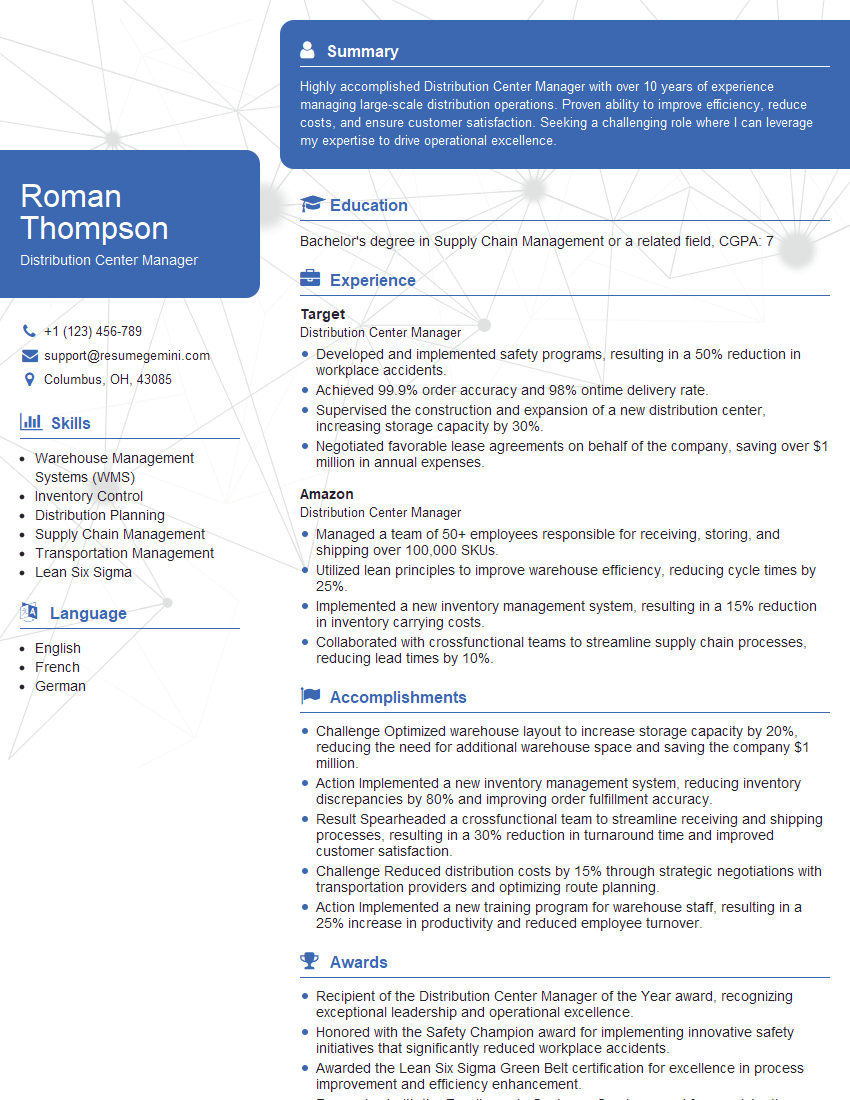
Distribution Center Manager Resume Sample
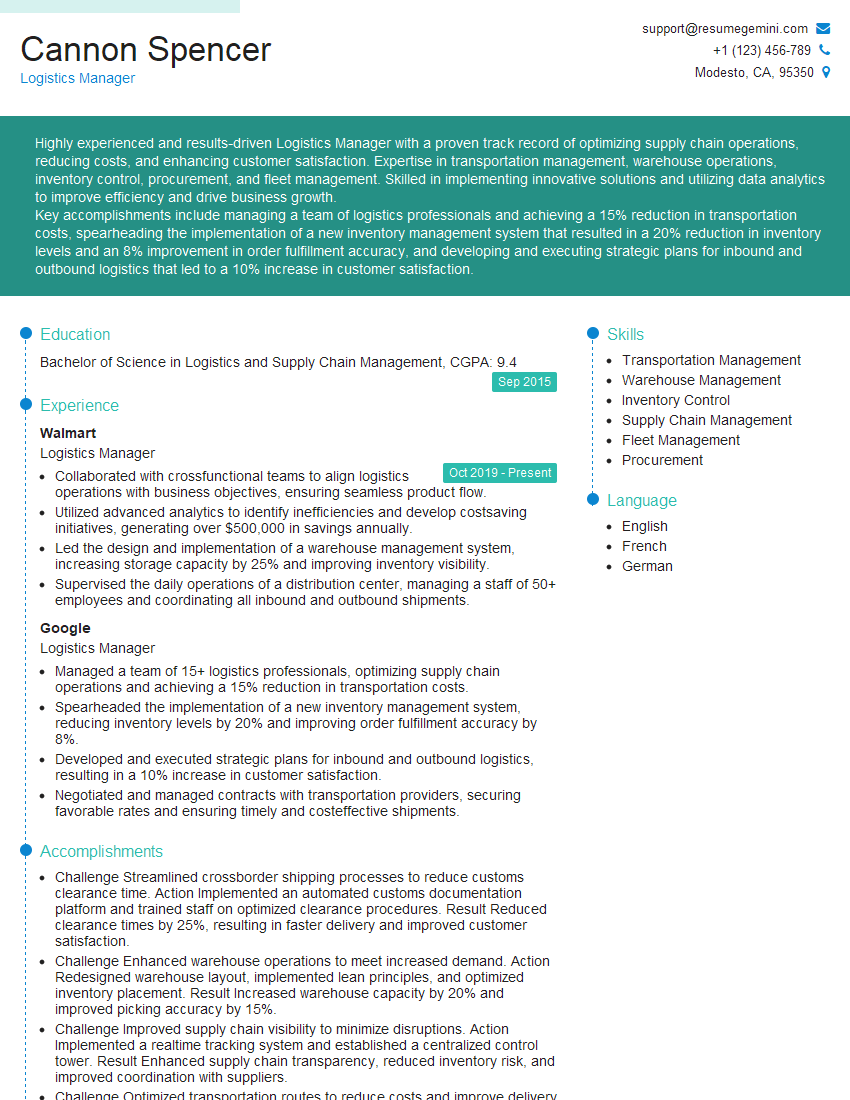
Logistics Manager Resume Sample
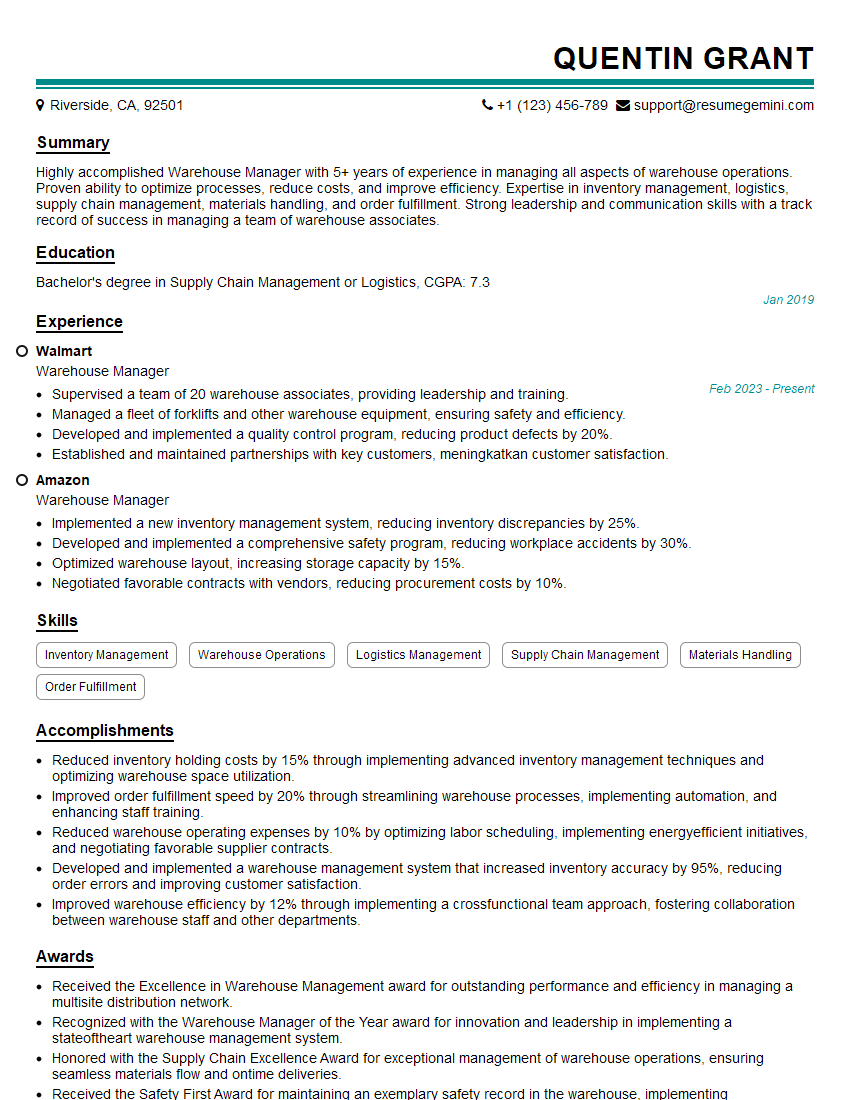
Warehouse Manager Resume Sample
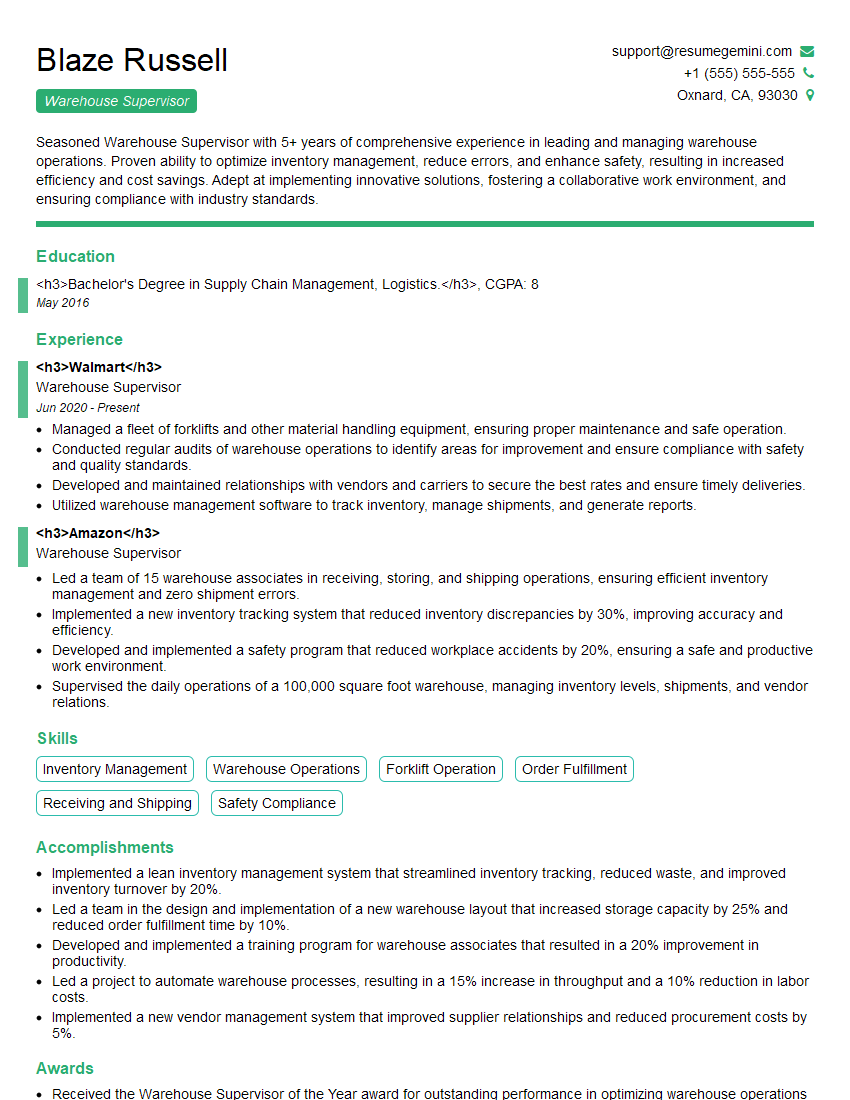
Warehouse Supervisor Resume Sample
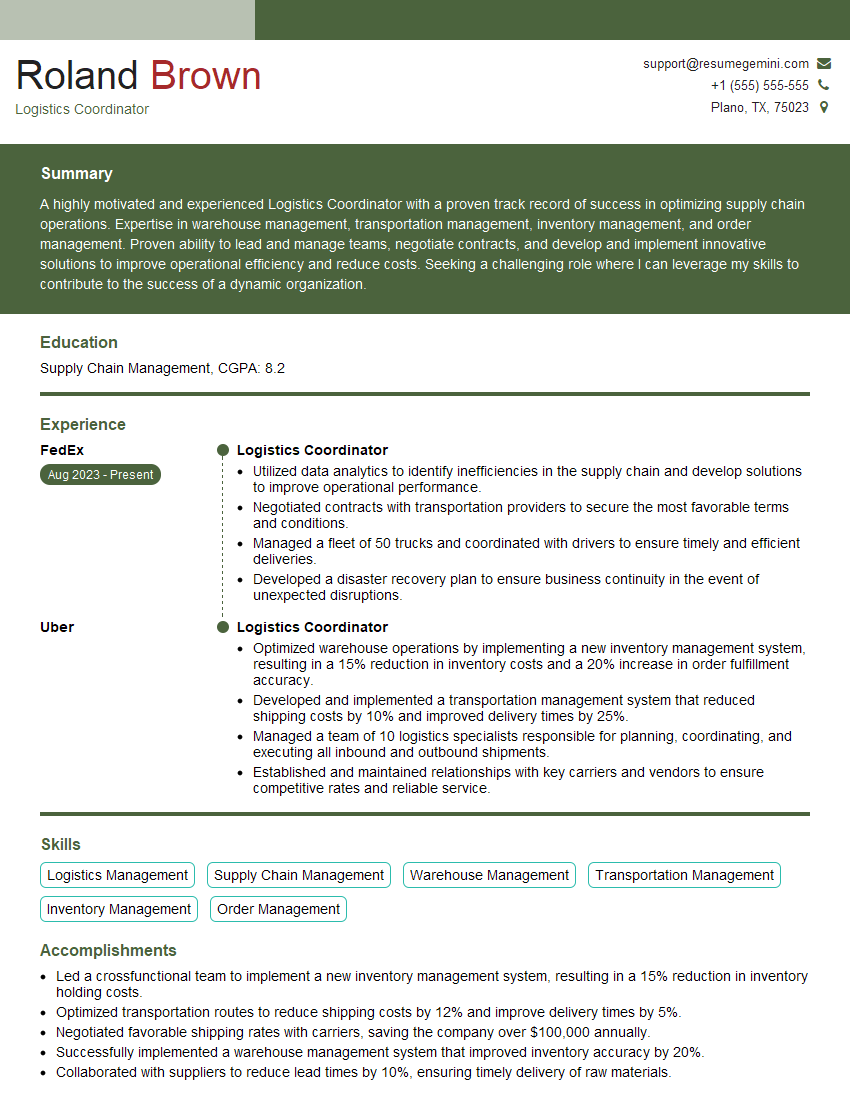
Logistics Coordinator Resume Sample
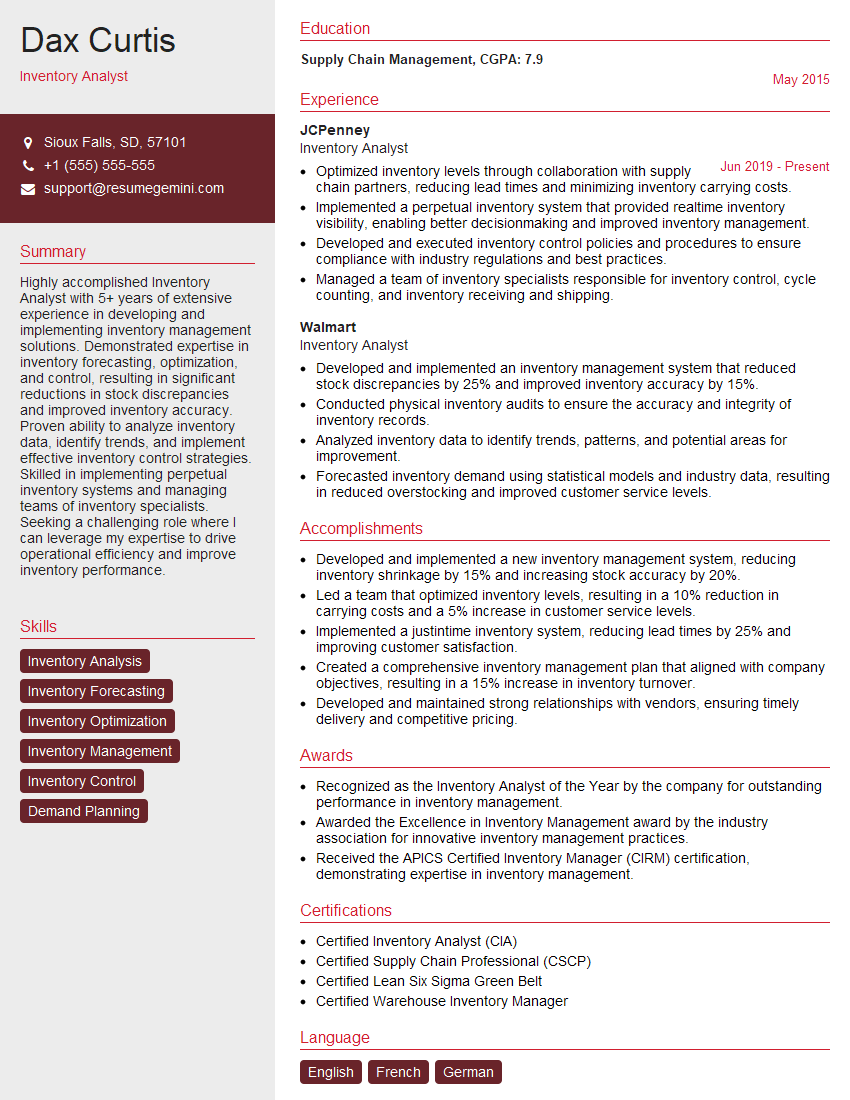
Inventory Analyst Resume Sample
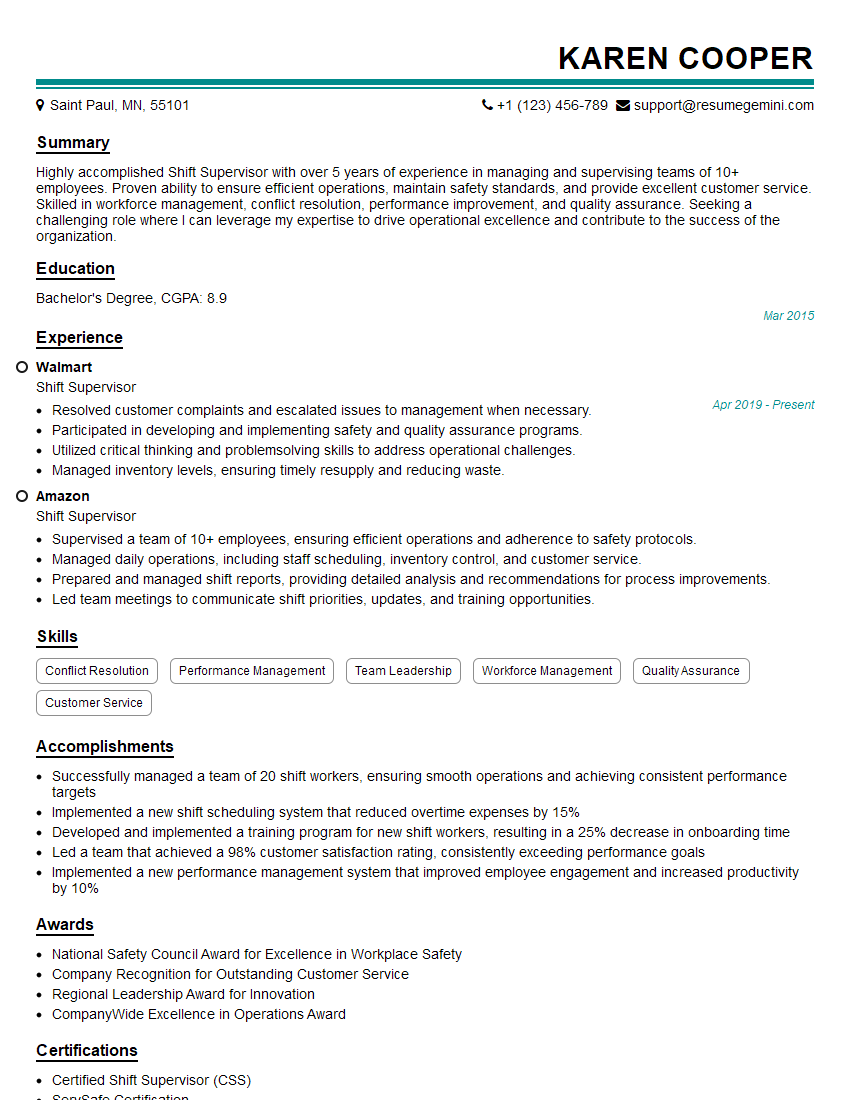
Shift Supervisor Resume Sample
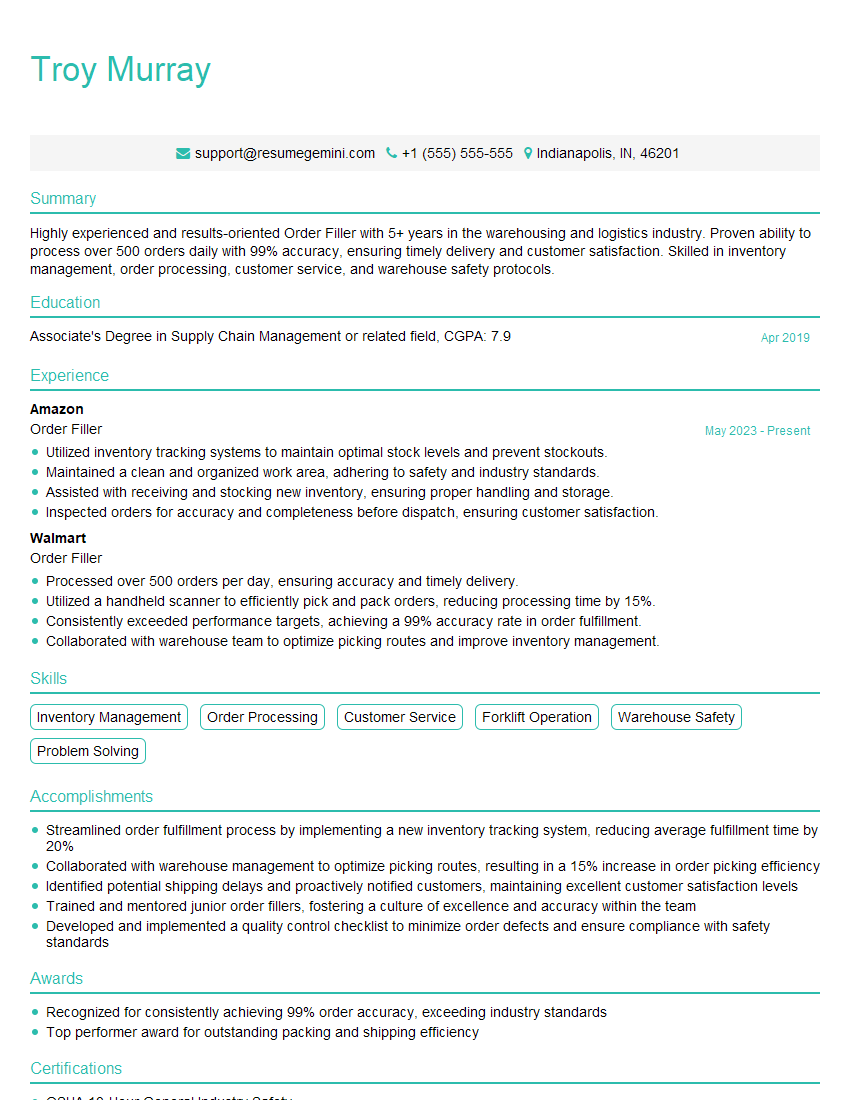
Order Filler Resume Sample
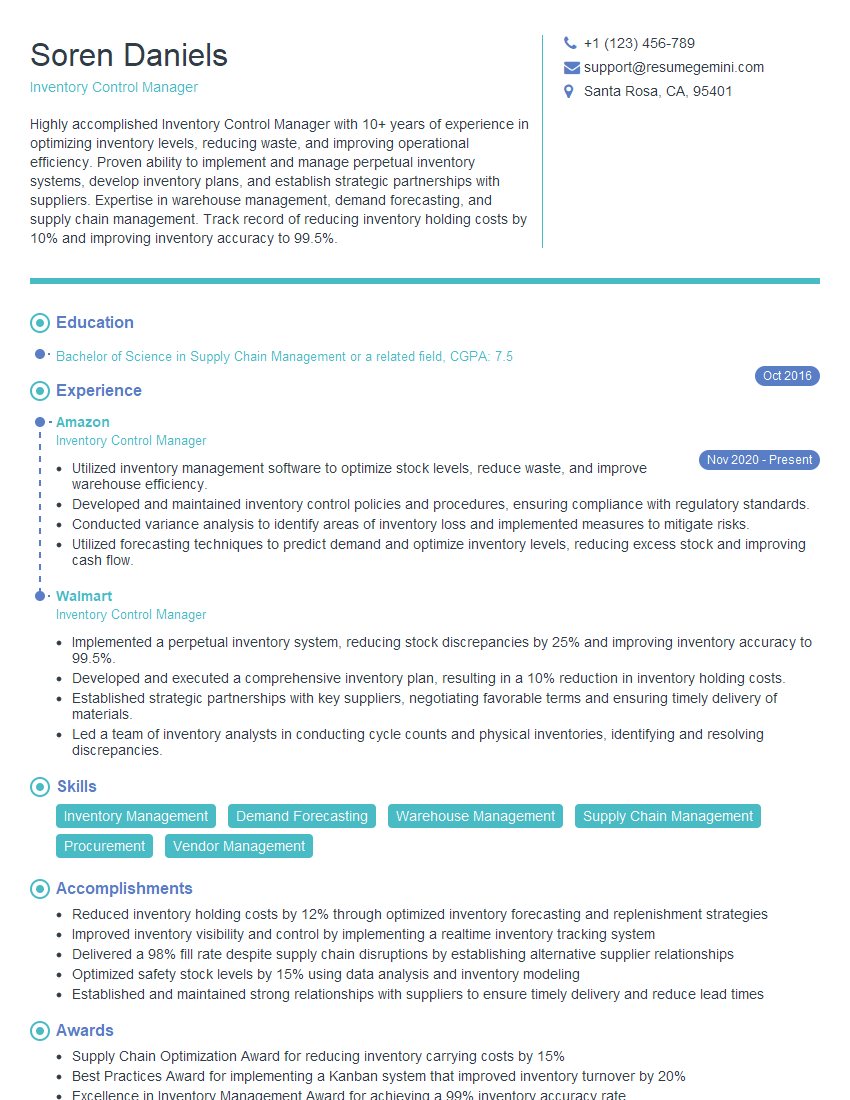
Inventory Control Manager Resume Sample
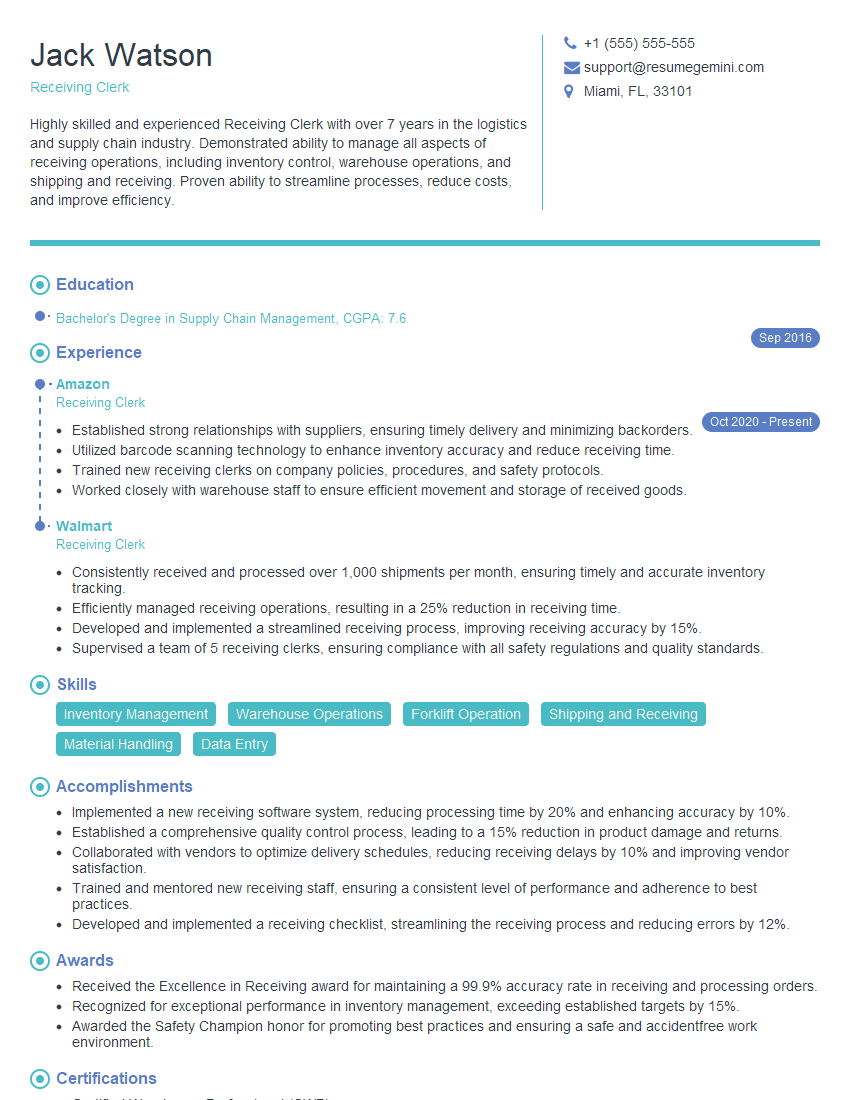
Receiving Clerk Resume Sample
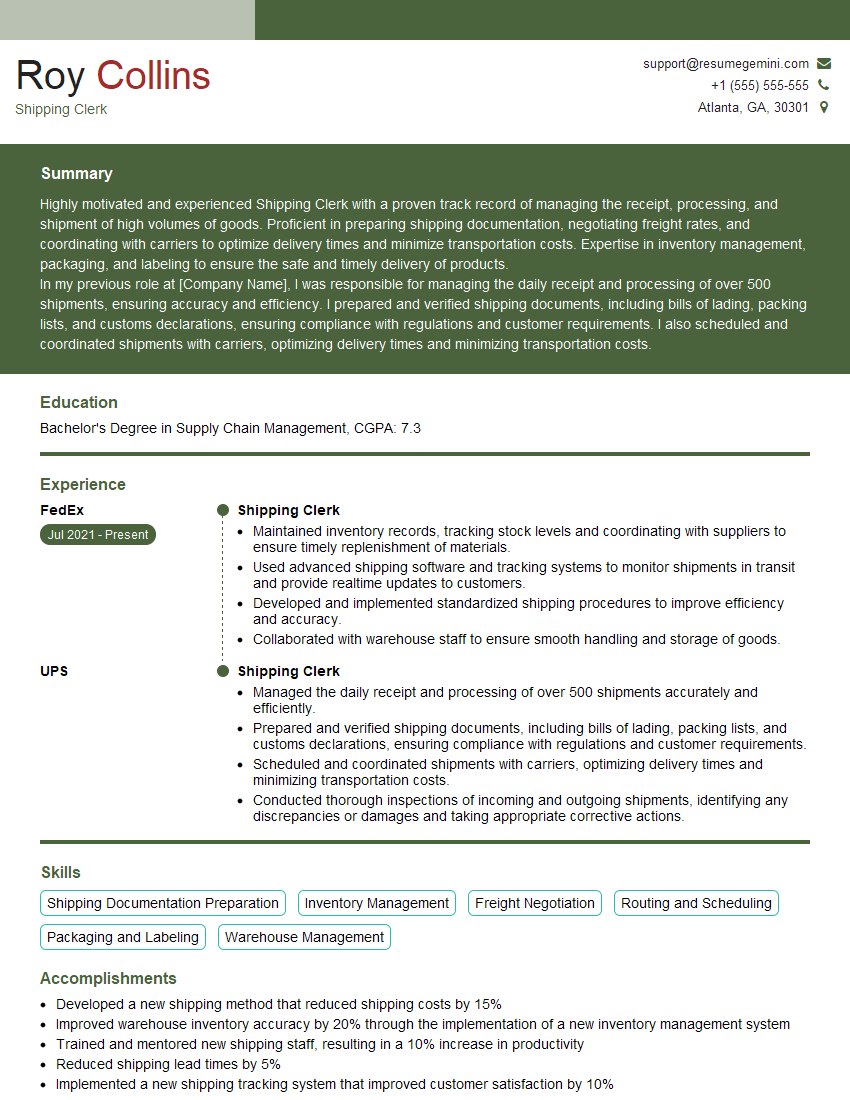
Shipping Clerk Resume Sample
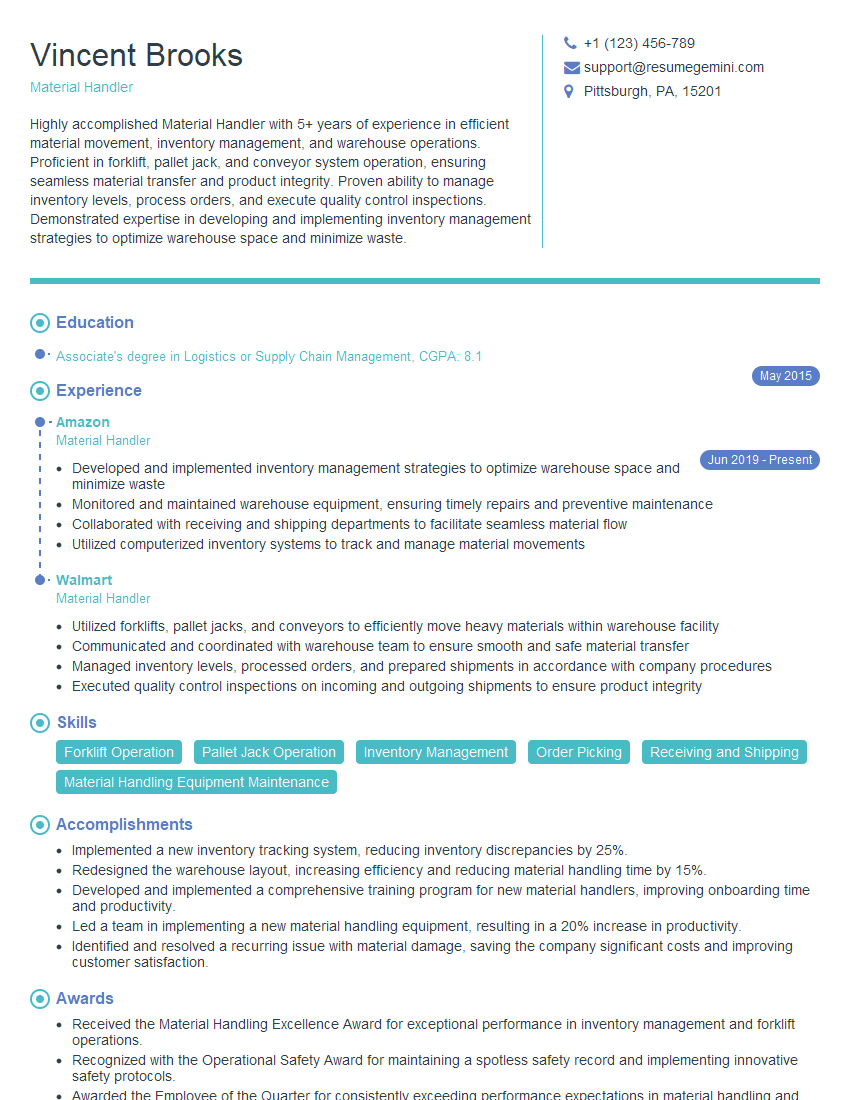
Material Handler Resume Sample
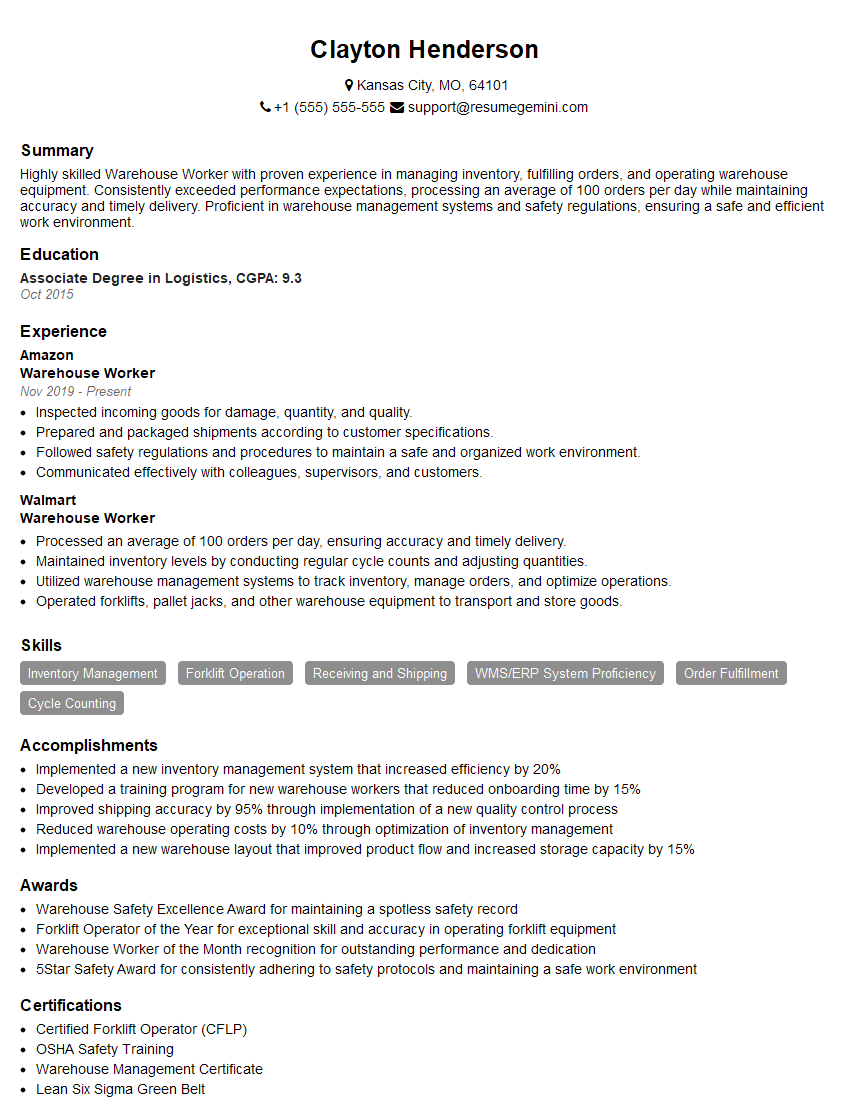
Warehouse Worker Resume Sample
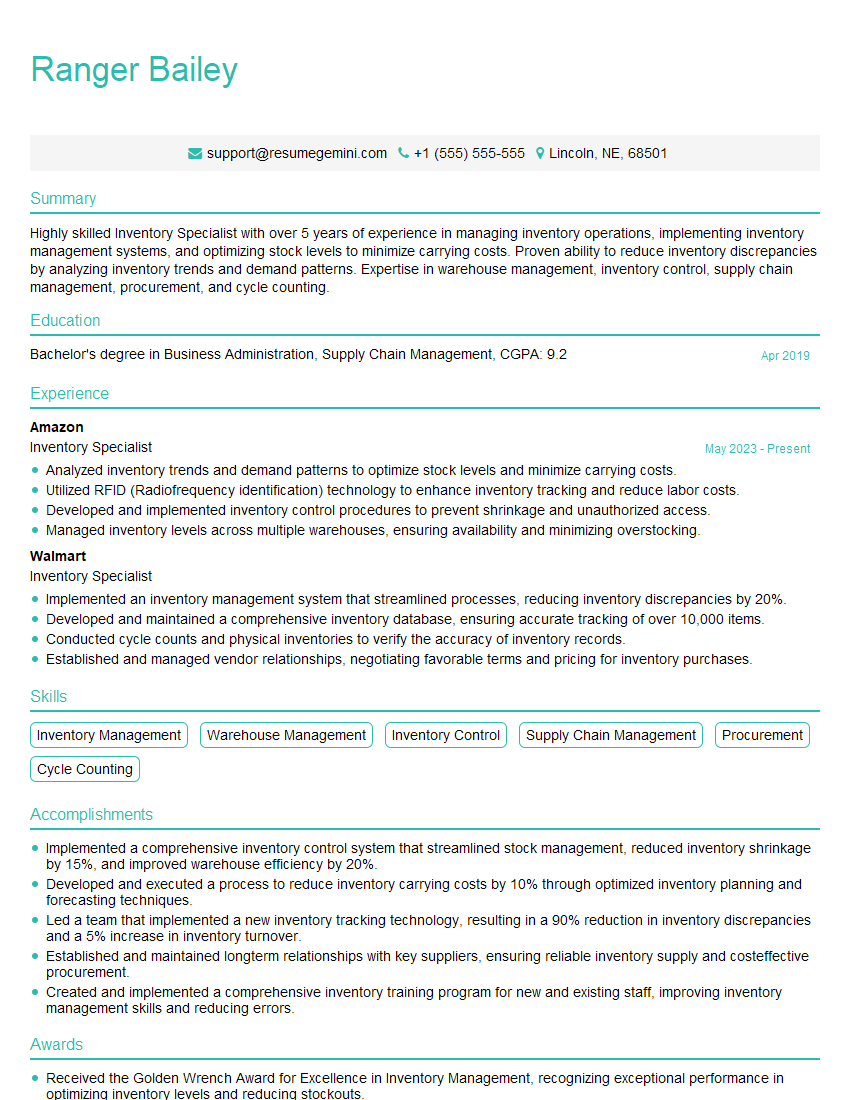
Inventory Specialist Resume Sample
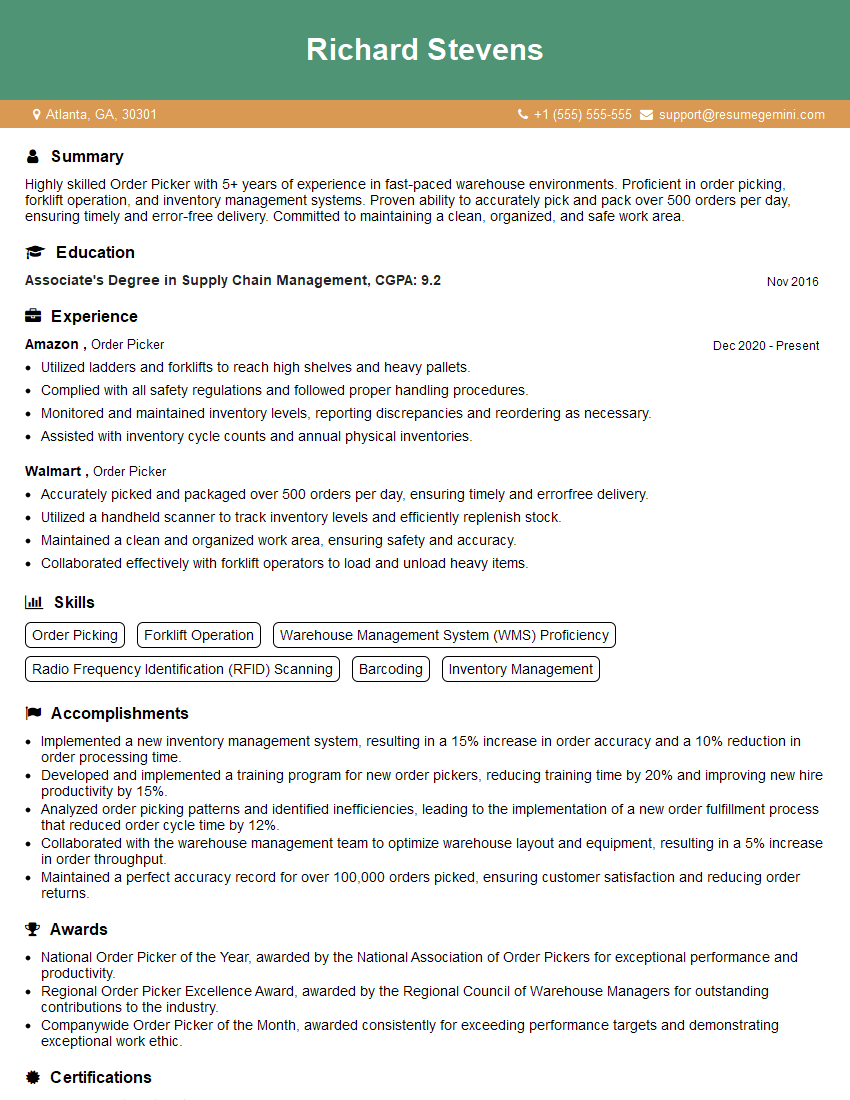
Order Picker Resume Sample
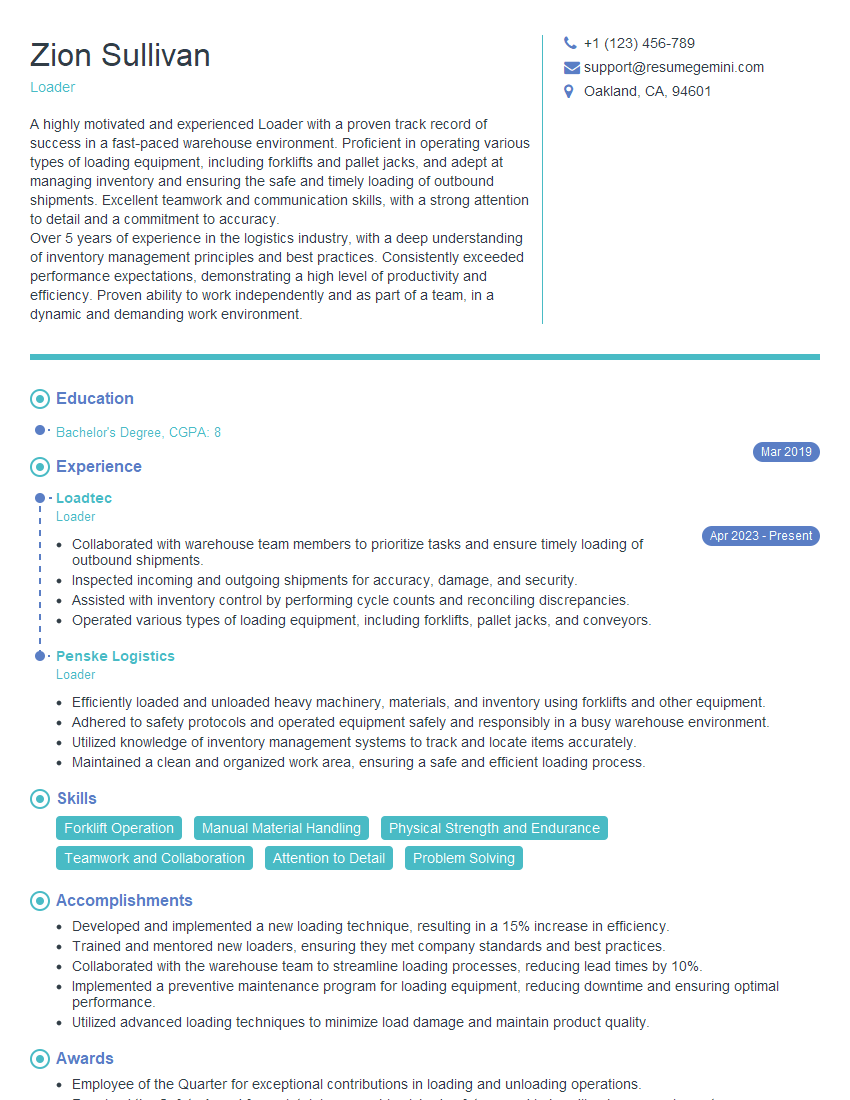
Loader Resume Sample
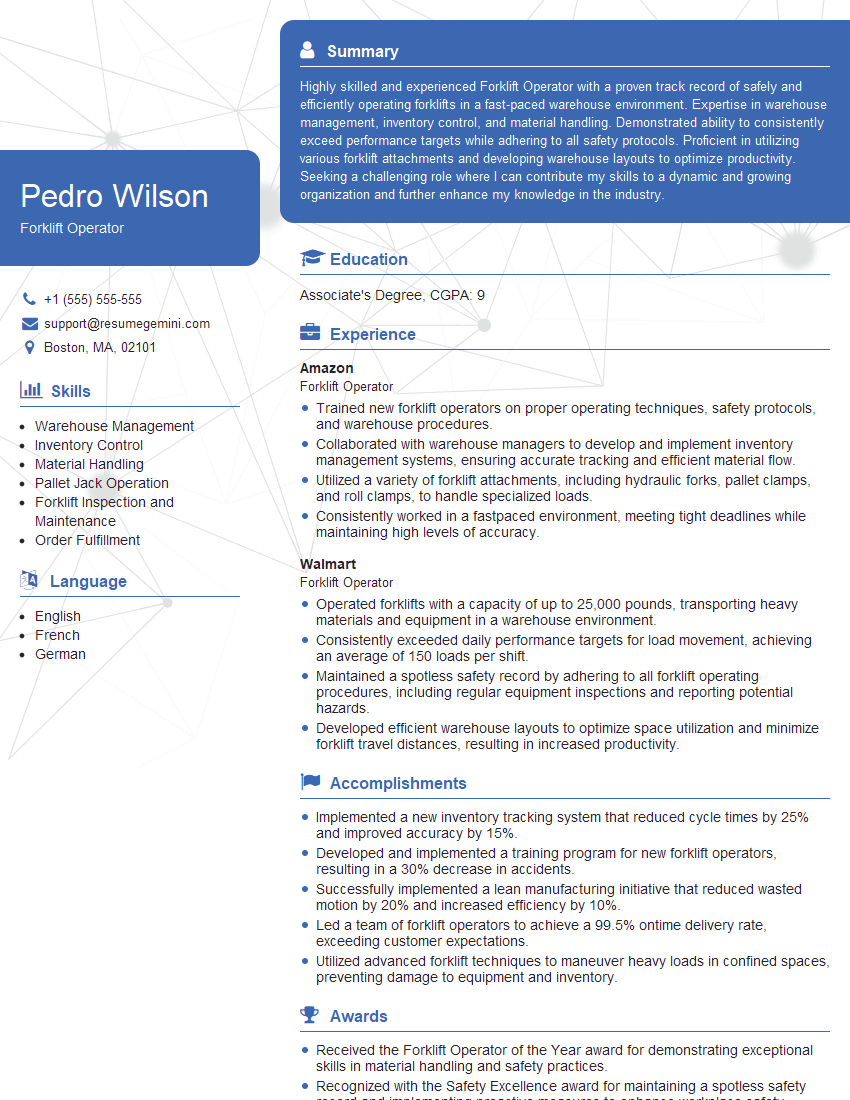
Forklift Operator Resume Sample

Packager Resume Sample
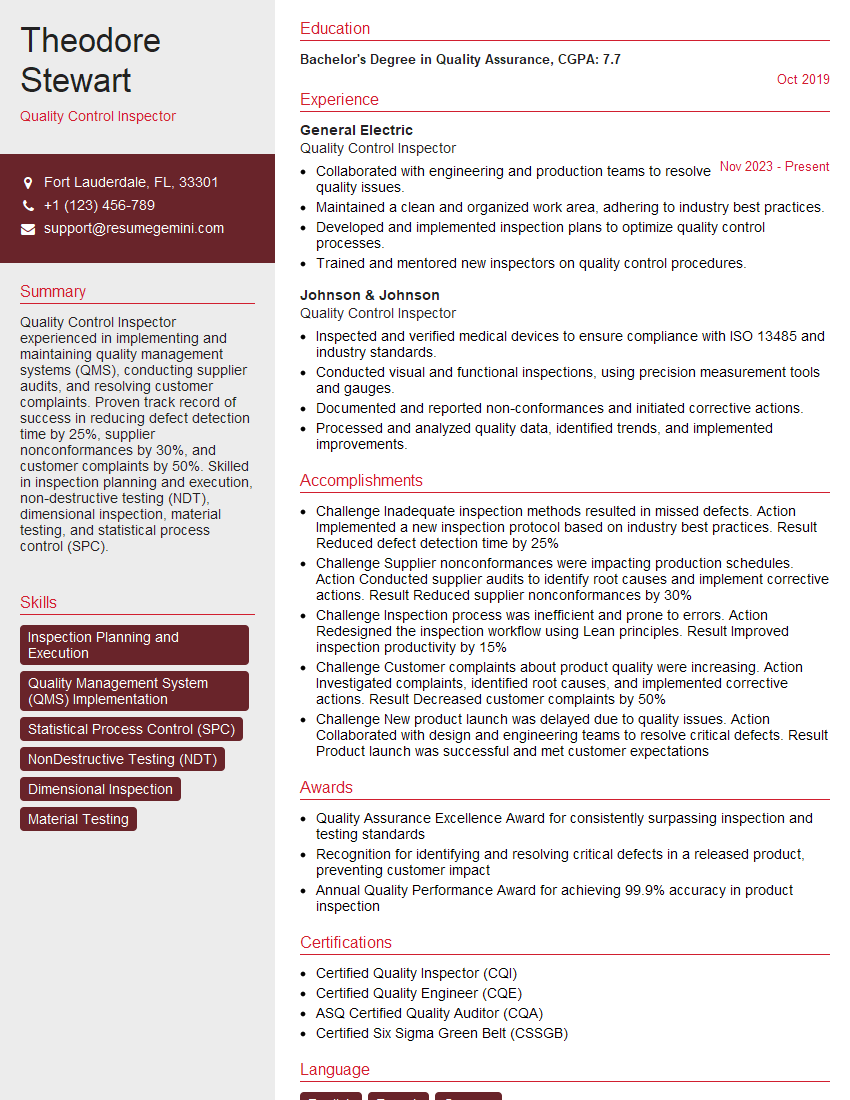
Quality Control Inspector Resume Sample
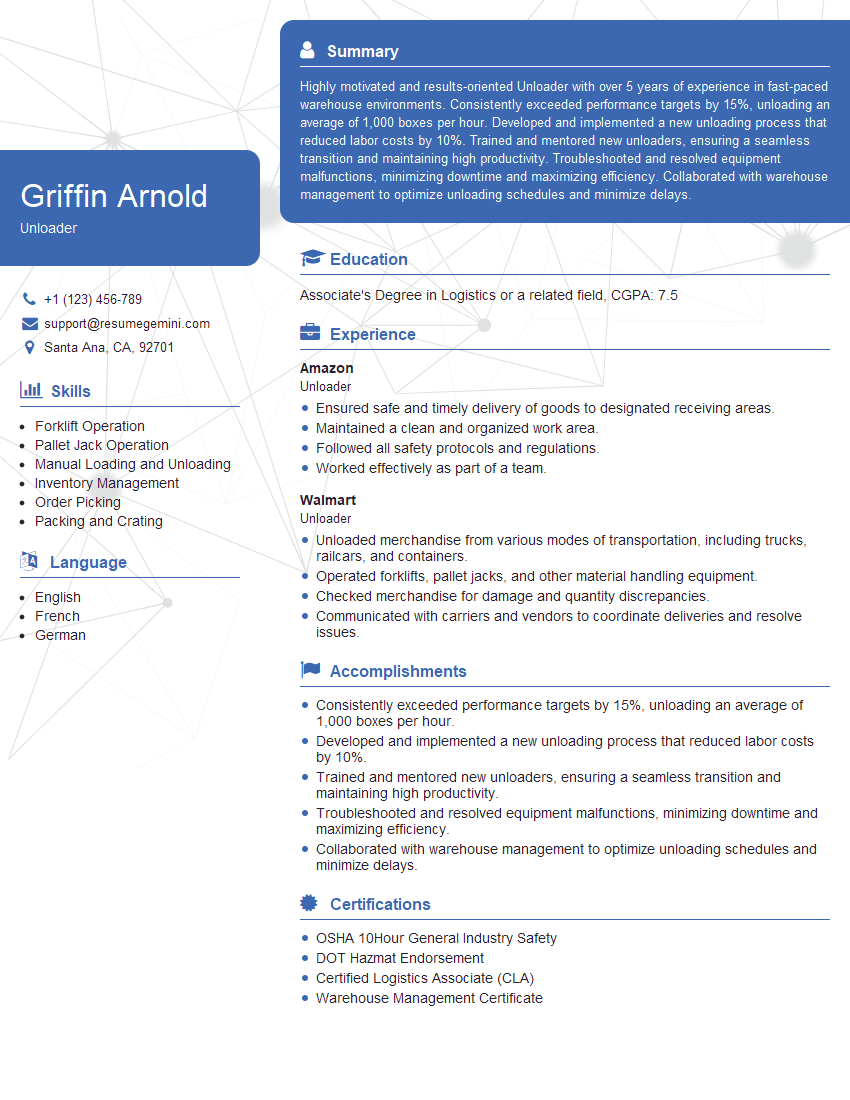
Unloader Resume Sample
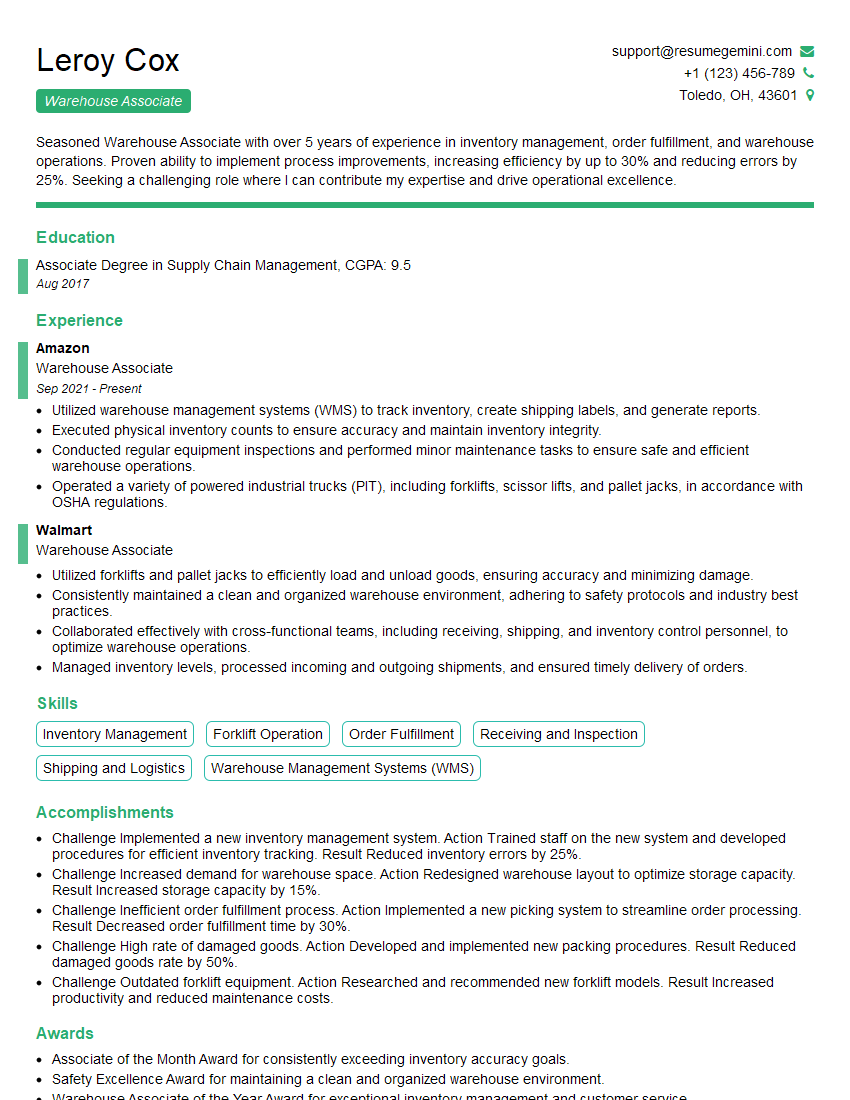
Warehouse Associate Resume Sample
- Distribution Center Manager
- Logistics Manager
- Warehouse Manager
- Warehouse Supervisor
- Logistics Coordinator
- Inventory Analyst
- Shift Supervisor
- Order Filler
- Inventory Control Manager
- Receiving Clerk
- Shipping Clerk
- Material Handler
- Warehouse Worker
- Inventory Specialist
- Order Picker
- Loader
- Forklift Operator
- Packager
- Quality Control Inspector
- Unloader
- Warehouse Associate
Explore more articles
Users Rating of Our Blogs
Share Your Experience
We value your feedback! Please rate our content and share your thoughts (optional).
What Readers Say About Our Blog
Very informative content, great job.
good