Every successful interview starts with knowing what to expect. In this blog, we’ll take you through the top Experience in Aircraft Engine Maintenance interview questions, breaking them down with expert tips to help you deliver impactful answers. Step into your next interview fully prepared and ready to succeed.
Questions Asked in Experience in Aircraft Engine Maintenance Interview
Q 1. Explain the different types of aircraft engine failures and their potential causes.
Aircraft engine failures can be broadly categorized into several types, each with distinct causes. Think of it like a car engine – many things can go wrong!
- Compressor failures: These often stem from foreign object damage (FOD), blade erosion, or compressor stall (a sudden loss of airflow). I’ve personally seen a bird strike cause catastrophic compressor damage, resulting in a complete engine shutdown. Imagine the force of a bird hitting the blades at several hundred miles per hour.
- Turbine failures: High temperatures and stresses within the turbine section can lead to blade failures, often due to material fatigue or overheating. This requires careful monitoring of turbine inlet temperature (TIT) and exhaust gas temperature (EGT) to prevent such issues. Regular inspections for cracks are crucial.
- Combustion system failures: Problems in the combustion chamber, such as fuel nozzle malfunctions or igniter failure, can result in incomplete combustion, leading to reduced thrust or even flameout. Precise fuel metering is critical, and even minor discrepancies can significantly impact engine performance.
- Lubrication system failures: A lack of proper lubrication can quickly lead to bearing failure, causing catastrophic damage to the engine. Regular oil analysis is vital for detecting potential problems early.
- Accessory failures: Failures in components like generators, pumps, or starters can indirectly impact engine performance or lead to complete engine shutdown. These systems are critical and require meticulous maintenance.
Understanding these potential failure modes is vital for proactive maintenance and ensuring flight safety.
Q 2. Describe the process of a typical aircraft engine inspection.
A typical aircraft engine inspection is a multi-stage process, often dictated by the aircraft maintenance manual (AMM). It’s a rigorous system to ensure everything functions perfectly.
- Pre-flight inspection: A visual check for any obvious damage or leaks before each flight, performed by the pilot or ground crew. This is like a quick car check before you start driving.
- Scheduled inspections: These are performed at specific intervals (e.g., after a certain number of flight hours or cycles) and include detailed checks of all engine components, often requiring partial or complete engine disassembly. We use borescopes to inspect hard-to-reach areas.
- Non-scheduled inspections: These are triggered by unusual performance indicators or engine-related issues noted during flight. Think of it as taking your car to the mechanic after you hear a strange noise.
- Documentation: Every step of the inspection process is meticulously documented. We fill in forms and create detailed reports, following strict regulatory guidelines.
The specific checks performed will vary based on engine type and maintenance schedule but always include checks of vital components such as the compressor, turbine, combustion chamber, and lubrication system.
Q 3. What are the safety regulations and procedures you must follow during engine maintenance?
Safety is paramount in aircraft engine maintenance. We adhere to stringent regulations and procedures, including those defined by the Federal Aviation Administration (FAA) and the European Union Aviation Safety Agency (EASA). One wrong move could have severe consequences.
- Lockout/Tagout procedures: Before working on any engine component, we must follow strict lockout/tagout (LOTO) procedures to prevent accidental energization or startup. Think of this as a double safety check for high-voltage systems.
- Tool control: All tools used during maintenance must be accounted for; we can’t have tools left inside an engine, as this could cause catastrophic damage.
- Proper handling of hazardous materials: We handle various hazardous materials (e.g., oils, solvents) requiring specialized training and adherence to strict safety protocols.
- Adherence to AMM: Every step we perform must be detailed in the AMM. This manual is our bible, ensuring we follow the correct procedures for each engine.
- Quality assurance: Regular quality checks and inspections are performed to ensure that all maintenance tasks are completed according to specifications.
Deviation from these procedures can result in severe penalties, and most importantly, jeopardize the safety of passengers and crew.
Q 4. How do you troubleshoot a malfunctioning engine based on performance indicators?
Troubleshooting a malfunctioning engine relies heavily on interpreting performance indicators. It’s like detective work, examining clues to diagnose the problem.
We utilize Engine Indication and Crew Alerting System (EICAS) data, engine parameters (like EGT, TIT, N1, N2), and flight data recorders (FDR) to identify potential problems. For example, a sudden increase in EGT could indicate a problem with the fuel control system or combustion chamber. Conversely, a decrease in N1 (low-pressure compressor speed) might suggest a compressor problem.
The troubleshooting process typically involves:
- Data analysis: Studying the performance indicators to identify trends and anomalies.
- Engine inspection: Visual inspection for any obvious problems (leaks, damage).
- Component testing: Testing individual components to isolate the faulty part.
- Repairs or replacement: Once the faulty component is identified, it is either repaired or replaced.
This systematic approach, coupled with a strong understanding of engine systems, is key to efficient and effective troubleshooting.
Q 5. What are the common tools and equipment used in aircraft engine maintenance?
Aircraft engine maintenance involves a wide array of specialized tools and equipment. We use tools as precise as a surgeon’s scalpel, requiring expert handling.
- Torque wrenches: For tightening bolts to precise specifications, ensuring correct tension and preventing damage.
- Borescopes: For inspecting internal engine components that are not easily accessible.
- Specialized hand tools: A variety of specialized wrenches, sockets, and screwdrivers designed for aircraft engines.
- Engine stands and lifting equipment: For safely handling heavy engine components.
- Cleaning equipment: Specialized cleaning solutions and equipment are used to remove contaminants.
- Testing equipment: Equipment for testing fuel flow, oil pressure, and other engine parameters.
The specific tools used will vary depending on the engine type and the maintenance task being performed, but safety and precision are always paramount.
Q 6. Explain your experience with engine overhaul procedures.
I have extensive experience with engine overhaul procedures, having overseen numerous overhauls of various engine types. It’s a complex and time-consuming process, requiring meticulous attention to detail.
An engine overhaul typically involves:
- Disassembly: Carefully disassembling the engine into its individual components.
- Inspection: Thorough inspection of each component for wear, damage, or defects.
- Cleaning: Cleaning all components to remove contaminants.
- Repair or replacement: Repairing or replacing any damaged or worn components.
- Reassembly: Reassembling the engine, carefully following the manufacturer’s specifications.
- Testing: Rigorous testing to ensure the engine meets all performance requirements.
I’ve personally led teams through the complete overhaul process, from initial disassembly to final testing, ensuring compliance with all safety regulations and quality standards. I’m comfortable working with a wide range of engine types and have a proven track record of success in this area.
Q 7. Describe your experience with different types of engine components (e.g., turbines, compressors).
My experience encompasses a variety of engine components, from the intricate workings of compressors to the high-temperature environment of turbines. Each component is critical for the overall performance of the engine.
- Compressors: I’m familiar with various compressor designs, including axial and centrifugal compressors, and understand their role in compressing air for combustion. I’ve worked on diagnosing and resolving issues related to compressor blade erosion and stall.
- Turbines: I understand the high-temperature and high-stress environment of turbines and have experience inspecting and repairing turbine blades and discs. Proper monitoring of TIT and EGT is critical in preventing turbine failures.
- Combustion chambers: I’m proficient in troubleshooting combustion chamber issues, including fuel nozzle malfunctions and igniter problems. Proper combustion is essential for optimal engine performance.
- Other components: My experience extends to other crucial components like bearings, seals, and lubrication systems. Understanding how these components interact is vital for effective maintenance.
This breadth of knowledge allows me to effectively diagnose and resolve a wide range of engine problems, ensuring safe and efficient aircraft operation.
Q 8. How do you interpret engine performance data and identify potential issues?
Interpreting engine performance data involves analyzing various parameters to identify deviations from expected values and pinpoint potential problems. This is like a doctor reviewing a patient’s vital signs – subtle changes can signal underlying issues.
We use sophisticated monitoring systems that provide real-time and historical data on parameters like Exhaust Gas Temperature (EGT), engine vibration (measured in various axes), fuel flow, oil pressure, oil temperature, and compressor pressure ratios. Any significant deviation from established baseline values, or trends showing gradual degradation, raises a red flag. For example, consistently higher than normal EGT in a specific cylinder might suggest a problem with fuel-air mixture, a faulty injector, or even a developing crack in the combustion chamber. Similarly, increased vibration at a specific frequency can indicate a problem with a bearing or imbalance in the rotating assembly.
My approach involves a systematic analysis. First, I visually inspect the data for obvious anomalies. Then, I utilize trend analysis software to identify patterns and deviations over time. Finally, I cross-reference the data with maintenance logs and previous inspections to determine the root cause. For instance, if a sudden spike in EGT is accompanied by a drop in oil pressure, it might point towards a catastrophic lubrication failure requiring immediate action. Advanced diagnostic tools and techniques often help to isolate issues more precisely.
Q 9. What is your experience with engine lubrication systems and their maintenance?
Engine lubrication systems are crucial for engine health, preventing wear and tear through continuous oil circulation. Think of it as the circulatory system of the engine. My experience encompasses all aspects of lubrication system maintenance, from routine oil changes to complex component overhauls.
Routine tasks involve checking oil levels, viscosity, and contamination levels. We use oil analysis to detect the presence of metallic particles, which might indicate bearing wear, or signs of fuel dilution, which can signal issues with fuel injection. I’m proficient in performing oil filter changes, inspecting oil coolers, and troubleshooting leaks within the lubrication system. More extensive work can involve replacing oil pumps, bearings, and lines, often requiring specialized tools and adherence to strict cleanliness protocols to avoid further contamination.
I’ve worked on various engine types, from turboprops to turbofans, each with unique lubrication system designs. For example, a turbofan engine has a far more complex lubrication system with multiple oil pumps, coolers, and filters, all requiring diligent attention to detail during maintenance.
Q 10. What is your understanding of engine ignition systems and their troubleshooting?
Engine ignition systems are essential for reliable combustion in gas turbine engines, although less critical in modern turbofans which rely on continuous ignition. Troubleshooting these systems requires a detailed understanding of their components and operating principles.
In older aircraft or specific engine types, ignition systems typically involve spark plugs or igniters that initiate the combustion process. Troubleshooting involves checking for spark continuity, verifying igniter voltage and timing, and inspecting the associated wiring for damage. Symptoms of faulty ignition can include inconsistent engine performance, misfires, or complete failure to start.
My experience includes working with various diagnostic tools such as oscilloscopes and ignition analyzers to pinpoint problems within the ignition circuit. I am adept at identifying faulty igniters, corroded connections, or shorts in the wiring harness, all of which can disrupt the combustion process. The troubleshooting process is often iterative, starting with visual inspection and moving towards more sophisticated diagnostic techniques.
Q 11. Explain the process of engine run-up and testing.
Engine run-up and testing are critical procedures to verify engine performance after maintenance or repair, ensuring safe and efficient operation. It’s like a rigorous check-up after surgery to ensure everything is functioning perfectly.
The process typically starts with a pre-run inspection to verify all systems are prepared, including checking oil levels, fuel supply, and control linkages. The engine is then started according to the manufacturer’s instructions. Following a warm-up period, the engine is gradually brought to various operating speeds and power settings, monitoring all key parameters like EGT, oil pressure, and vibration. This is done in a controlled environment, often with specialized testing equipment connected to record the engine’s performance and identify any deviations from established limits.
After the run-up, the engine’s performance data is carefully reviewed against manufacturer’s specifications and acceptance criteria. This helps to ensure that the engine is operating within acceptable limits and identify any potential issues that need further investigation or rectification. If everything looks good, the engine is cleared for flight. If issues are found, further maintenance or investigation is initiated.
Q 12. How do you manage and document engine maintenance records?
Maintaining accurate and comprehensive engine maintenance records is crucial for ensuring aircraft safety and regulatory compliance. It’s the backbone of the engine’s history and provides vital information for future maintenance decisions. Think of it as a detailed medical history for the engine.
We use Computerized Maintenance Management Systems (CMMS) to track all aspects of engine maintenance, from component replacement to inspections and repairs. These systems allow us to document each task, including the date, time, parts used, personnel involved, and any findings during inspections. This information is easily accessible to all authorized personnel. Additionally, we maintain hard copies of critical documents for redundancy.
The record-keeping process follows strict regulatory requirements, ensuring the information is accurate, complete, and readily auditable. This includes proper serialization of components and compliance with various airworthiness directives. This meticulous record-keeping is vital for tracking the engine’s life cycle, predicting potential failures, and ensuring the engine’s continued airworthiness.
Q 13. Describe your experience with Non-Destructive Testing (NDT) techniques used in engine maintenance.
Non-Destructive Testing (NDT) techniques are vital for detecting internal flaws and defects in engine components without causing damage, thereby preventing catastrophic failures. It’s like using advanced imaging techniques to detect problems inside the body.
I’m experienced in applying various NDT methods, including:
- Dye Penetrant Inspection (DPI): Detects surface cracks in components.
- Magnetic Particle Inspection (MPI): Identifies surface and near-surface cracks in ferromagnetic materials.
- Ultrasonic Inspection (UT): Uses sound waves to detect internal flaws.
- Radiographic Inspection (RT): Employs X-rays or gamma rays to reveal internal defects.
The choice of NDT method depends on the component being inspected and the type of defect being sought. For instance, DPI is effective for detecting surface cracks in turbine blades, while UT is better suited for detecting internal flaws in engine casings. Each technique requires specialized equipment, and proficiency in interpreting the resulting data is essential.
Q 14. What are the safety precautions necessary when handling hazardous materials during engine maintenance?
Safety is paramount when handling hazardous materials during engine maintenance. These materials can cause serious health problems or environmental damage if mishandled. The key is meticulous adherence to established safety procedures.
We must follow strict protocols, including the use of personal protective equipment (PPE), such as gloves, eye protection, respirators, and protective clothing depending on the specific material. Proper ventilation is critical to minimize exposure to airborne contaminants. Hazardous waste is handled and disposed of in accordance with all applicable environmental regulations. All personnel must receive adequate training on the risks associated with specific materials and the proper procedures for handling them.
Examples of hazardous materials encountered include engine oils, hydraulic fluids, fuels, cleaning solvents, and various chemicals used in the repair process. Each material has its own specific handling instructions, and we must ensure we understand and follow them precisely to prevent injury or environmental contamination.
Q 15. How do you ensure compliance with regulatory standards (e.g., FAA regulations)?
Ensuring compliance with regulatory standards like FAA regulations is paramount in aircraft engine maintenance. It’s not just about following rules; it’s about ensuring safety and airworthiness. We achieve this through a multi-faceted approach.
- Strict adherence to Maintenance Manuals: Every engine type has a comprehensive manual detailing maintenance procedures, intervals, and required parts. We meticulously follow these instructions, documenting every step.
- Rigorous record-keeping: Every maintenance action, from an oil change to a major overhaul, is meticulously documented. This includes the parts used, the technicians involved, and the dates. This detailed log is crucial for audits and demonstrating compliance.
- Regular audits and inspections: We undergo regular internal and external audits to ensure we’re meeting all regulatory requirements. These audits examine our procedures, documentation, and the overall maintenance environment.
- Continuing education and training: Staying updated on the latest regulations and best practices is critical. Our team participates in regular training programs to maintain proficiency and ensure we are aware of any changes in regulations.
- Calibration and verification of equipment: The tools and equipment used in maintenance, such as torque wrenches and testing instruments, must be regularly calibrated to ensure accuracy. This directly impacts the safety and reliability of the engine.
For example, during a recent audit, we were able to demonstrate complete compliance by presenting meticulously maintained records for a specific engine’s overhaul, showcasing our adherence to the FAA’s required documentation and procedures.
Career Expert Tips:
- Ace those interviews! Prepare effectively by reviewing the Top 50 Most Common Interview Questions on ResumeGemini.
- Navigate your job search with confidence! Explore a wide range of Career Tips on ResumeGemini. Learn about common challenges and recommendations to overcome them.
- Craft the perfect resume! Master the Art of Resume Writing with ResumeGemini’s guide. Showcase your unique qualifications and achievements effectively.
- Don’t miss out on holiday savings! Build your dream resume with ResumeGemini’s ATS optimized templates.
Q 16. Describe your experience with engine performance monitoring systems.
Engine performance monitoring systems are crucial for proactive maintenance. These systems collect data on various engine parameters in real-time, allowing for early detection of potential problems. My experience encompasses working with several such systems, both onboard and ground-based.
- Onboard systems: These systems, often integrated into the aircraft’s flight data recorder (FDR), collect data such as engine temperature, pressure, vibration, fuel flow, and oil parameters. This data provides immediate insight into the engine’s health during operation.
- Ground-based systems: These systems are used during maintenance and testing. They allow for detailed analysis of engine performance data, comparing it against baseline parameters to identify anomalies. Examples include sophisticated engine diagnostic software that can analyze parameters and suggest potential issues.
In one instance, I used ground-based engine performance monitoring data to identify a subtle but consistent increase in exhaust gas temperature. This early detection prevented a potential catastrophic failure by allowing for timely maintenance and repair of a minor component before it caused wider damage.
Q 17. What are the different types of engine starting systems and their maintenance requirements?
Aircraft engines employ several starting systems, each with unique maintenance requirements. The choice depends on the engine type and aircraft design.
- Air Turbine Starter (ATS): This system uses compressed air to rotate the engine. Maintenance involves regular inspections of the air turbine itself, checking for wear and tear, and ensuring proper lubrication. Air pressure checks and leak detection are also vital.
- Electric Starter: This utilizes an electric motor to crank the engine. Maintenance includes checking the motor’s brushes, commutator, and wiring for any damage or wear. Regular testing of the motor’s power and performance is also crucial.
- Inert Gas Starting: Used in some specialized applications, this system uses an inert gas to start the engine. Maintenance focuses on the gas supply system, ensuring its integrity and the purity of the gas.
Imagine an electric starter failing. A thorough pre-flight inspection and regular maintenance could have avoided a delay by ensuring the starter was in good working condition.
Q 18. Explain your experience with engine fuel systems and their troubleshooting.
Aircraft engine fuel systems are complex, involving fuel pumps, filters, control units, and lines. Troubleshooting these systems requires a systematic approach.
- Visual inspection: Checking for leaks, damage to fuel lines, and proper connections is the first step.
- Pressure testing: Verifying the fuel pressure at various points in the system is crucial to identify blockages or leaks.
- Fuel flow measurements: Measuring the fuel flow rate helps determine if the pumps are functioning correctly.
- Diagnostic equipment: Specialized tools can help identify faults in the fuel control units and other electronic components.
I once encountered a situation where an aircraft experienced inconsistent fuel flow. Through systematic troubleshooting involving pressure testing and flow measurements, I pinpointed a clogged fuel filter. Replacing the filter resolved the issue, preventing a potential flight disruption.
Q 19. Describe your experience with engine oil analysis and interpretation.
Engine oil analysis is a crucial preventive maintenance tool. By analyzing oil samples, we can detect the presence of contaminants and assess the engine’s overall condition. This involves analyzing various parameters.
- Viscosity: Changes in viscosity can indicate issues like fuel dilution or oil degradation.
- Contaminants: The presence of metal particles indicates wear and tear within the engine. Other contaminants, like water or fuel, might indicate leaks.
- Additives: Monitoring additive levels can determine the remaining life of the oil and identify potential issues.
Interpreting these results requires expertise. Elevated metal particle levels might signify bearing wear, prompting further investigation and potentially a component replacement. It’s a proactive measure that often prevents major engine issues.
Q 20. What is your experience with engine vibration analysis?
Engine vibration analysis is a critical technique for identifying potential mechanical problems. Excessive vibration can be an indicator of imbalance, wear, or damage within the engine.
- Vibration sensors: Accelerometers are strategically placed on the engine to measure vibrations at various frequencies.
- Data acquisition: The vibration data is collected and analyzed using specialized software.
- Frequency analysis: Identifying the frequencies of the vibrations helps pinpoint the source of the problem (e.g., a specific bearing or rotor).
Imagine a high-frequency vibration. Using vibration analysis, we could trace it to a specific bearing exhibiting early signs of wear, allowing us to replace it before catastrophic failure.
Q 21. How do you handle emergency situations during engine maintenance?
Handling emergency situations during engine maintenance demands a calm, systematic approach. Safety is paramount.
- Immediate assessment: Quickly assess the situation to determine the nature of the emergency (e.g., fire, oil leak, electrical fault).
- Emergency procedures: Follow established emergency procedures, ensuring the safety of personnel and the containment of any potential hazards.
- Communication: Maintain clear communication with colleagues and relevant authorities.
- Damage control: Take necessary actions to prevent further damage or escalation of the situation.
- Post-incident investigation: Conduct a thorough investigation to identify the root cause of the emergency and implement preventive measures to avoid similar occurrences in the future.
In one instance, a sudden oil leak occurred during an engine inspection. We immediately shut down the work, contained the leak, and evacuated the area. The situation was handled safely, and the root cause (a cracked oil line) was identified and addressed.
Q 22. Describe your experience with different types of engine controls and their operation.
My experience encompasses a wide range of engine control systems, from older, purely mechanical systems to the highly sophisticated Full Authority Digital Engine Controls (FADEC) found in modern aircraft. Mechanical controls, like those found in older turboprop engines, rely on levers and linkages to manage fuel flow, propeller pitch, and other parameters. Understanding these systems involves a deep knowledge of their physical components and how they interact – think of it like a complex clockwork mechanism. Troubleshooting these systems requires methodical checks of each component, from linkage play to throttle cable tension.
FADEC systems, on the other hand, are computerized. They use sophisticated algorithms to optimize engine performance and manage parameters in real-time. My experience with FADEC involves interpreting diagnostic data from the Engine Control Unit (ECU), performing software updates, and understanding the complex interactions between the ECU, sensors, and actuators. For example, I’ve worked on diagnosing a FADEC system that was intermittently limiting power output. This involved using the onboard diagnostic system to identify a faulty sensor, which, if left unchecked, could have resulted in engine failure. The repair involved replacing the faulty sensor and calibrating the FADEC system. This highlighted the importance of detailed analysis and knowledge of sensor functionality and interaction with the FADEC system for accurate diagnosis and repair.
Q 23. Explain your understanding of engine health monitoring technologies.
Engine health monitoring is crucial for preventing catastrophic failures and optimizing maintenance scheduling. I’m familiar with a variety of technologies, including:
- Vibration Monitoring: Sensors measure engine vibrations, identifying imbalances or bearing wear. High vibration levels can signal impending problems, allowing for proactive maintenance.
- Oil Analysis: Regularly analyzing engine oil for contaminants (metal particles, fuel, water) provides insights into the internal health of the engine. Abnormal levels of certain metals indicate wear in specific components.
- Gas Path Analysis: Analyzing the exhaust gas for temperature and composition can identify issues with combustion efficiency or leaks. This data can be used to pinpoint problems in the compressor, combustor, or turbine sections.
- Data Acquisition Systems (DAS): Modern engines are equipped with DAS which continuously monitor various parameters, such as temperature, pressure, and RPM. This data is then used for predictive maintenance by running it through sophisticated software and algorithms, forecasting potential issues based on statistical trends and patterns.
My experience includes interpreting data from these systems to identify potential problems and recommend necessary actions, from minor adjustments to major overhauls. It’s not simply about reading numbers; it’s about understanding the underlying mechanical processes and how different data points correlate to pinpoint a problem.
Q 24. How do you maintain a clean and organized workspace during engine maintenance?
Maintaining a clean and organized workspace is paramount in aircraft engine maintenance for safety, efficiency, and to prevent accidental damage. My approach involves a methodical system:
- 5S Methodology: I utilize the 5S methodology (Sort, Set in Order, Shine, Standardize, Sustain) to organize my tools and parts. This ensures that everything has its designated place, making it easy to find what I need and preventing misplaced parts from causing delays or accidents.
- Regular Cleaning: Regular cleaning prevents the accumulation of debris and contaminants. I use appropriate cleaning agents and tools to ensure components are thoroughly cleaned before reassembly.
- Tool Management: I maintain a complete inventory of my tools and ensure they are in good working order and properly stored. Damaged or worn tools are immediately replaced or repaired.
- Designated Areas: I designate specific areas for different tasks, such as disassembly, cleaning, and reassembly. This prevents cross-contamination and streamlines the workflow.
A clean and organized workspace minimizes the risk of errors, improves efficiency, and enhances safety by preventing trips and falls.
Q 25. Describe your experience with engine removal and installation procedures.
Engine removal and installation is a complex and critical procedure requiring meticulous attention to detail and adherence to strict safety protocols. My experience involves working on various engine types and aircraft platforms, following manufacturer’s maintenance manuals and using specialized tooling. The process typically involves:
- Disconnection: Disconnecting all fuel, oil, hydraulic, and electrical lines, carefully labeling each connection to ensure proper reassembly.
- Removal of Supporting Structures: Removing engine mounts, nacelles, and other supporting structures to gain access to the engine.
- Engine Lifting and Transportation: Using specialized lifting equipment to safely remove and transport the engine to the designated work area. This often involves coordinating with a team to ensure proper lifting and movement techniques.
- Installation: The reverse of removal, involving careful alignment and secure fastening of all components. This process requires precision to ensure proper engine alignment and secure mounting.
- Post-Installation Checks: Performing thorough post-installation checks to ensure all systems are functioning correctly, including leak checks, electrical continuity testing, and engine run-up.
I’ve successfully completed numerous engine removal and installation procedures across different aircraft models, always prioritizing safety and adherence to best practices. One notable instance involved removing and reinstalling an engine on a short turnaround time, which required careful planning and execution to meet the operational schedule without compromising safety.
Q 26. What are your strengths and weaknesses in relation to aircraft engine maintenance?
My strengths lie in my methodical approach, attention to detail, and ability to quickly diagnose and resolve complex issues. I’m proficient in interpreting technical manuals, utilizing specialized tooling, and working effectively both independently and as part of a team. I have a strong understanding of aircraft engine theory and a commitment to maintaining the highest safety standards.
One area I’m actively working to improve is my familiarity with the newest generation of FADEC systems and their associated software. While I have experience with older systems, the rapid advancements in this field require ongoing learning and development. I’m currently participating in online courses and workshops to enhance my knowledge in this area and plan to seek advanced certifications in the near future.
Q 27. What are your career goals in aircraft engine maintenance?
My career goals involve continuous growth within the field of aircraft engine maintenance, ultimately aiming to become a leading expert in advanced engine diagnostics and troubleshooting. I’m keen to expand my knowledge of newer technologies, such as AI-driven predictive maintenance, and contribute to improving the efficiency and reliability of aircraft operations. I’m also interested in mentoring junior technicians and sharing my expertise to cultivate future generations of skilled aircraft maintenance professionals.
Key Topics to Learn for Aircraft Engine Maintenance Interviews
- Engine Diagnostics and Troubleshooting: Understanding fault codes, interpreting sensor data, and applying systematic troubleshooting methodologies to identify and rectify engine malfunctions. Practical application includes describing experiences with specific diagnostic tools and techniques used to resolve engine issues.
- Maintenance Procedures and Regulations: Deep familiarity with relevant FAA (or equivalent) regulations, maintenance manuals, and scheduled maintenance procedures. This includes understanding the importance of meticulous record-keeping and compliance with safety protocols.
- Engine Components and Systems: Comprehensive knowledge of aircraft engine components (e.g., turbines, compressors, combustors), their functions, and interactions within the overall engine system. Practical experience should demonstrate understanding of how component failures can impact engine performance and safety.
- Safety Procedures and Risk Management: Highlighting experience in adhering to strict safety protocols, performing risk assessments, and implementing corrective actions to prevent accidents and mitigate potential hazards. This includes familiarity with lockout/tagout procedures and safety checklists.
- Repair and Overhaul Techniques: Demonstrating practical experience with engine repair and overhaul processes, including component replacement, inspection, and testing. Examples could include describing specific repair techniques and the tools employed.
- Materials and Metallurgy: Understanding the properties of materials used in engine construction and their susceptibility to wear and tear, corrosion, and fatigue. Practical application includes explaining how material selection influences engine performance and lifespan.
- Quality Control and Inspection: Emphasizing experience with quality control measures, inspection techniques, and documentation to ensure engine airworthiness and compliance with standards. This could include non-destructive testing methods.
Next Steps
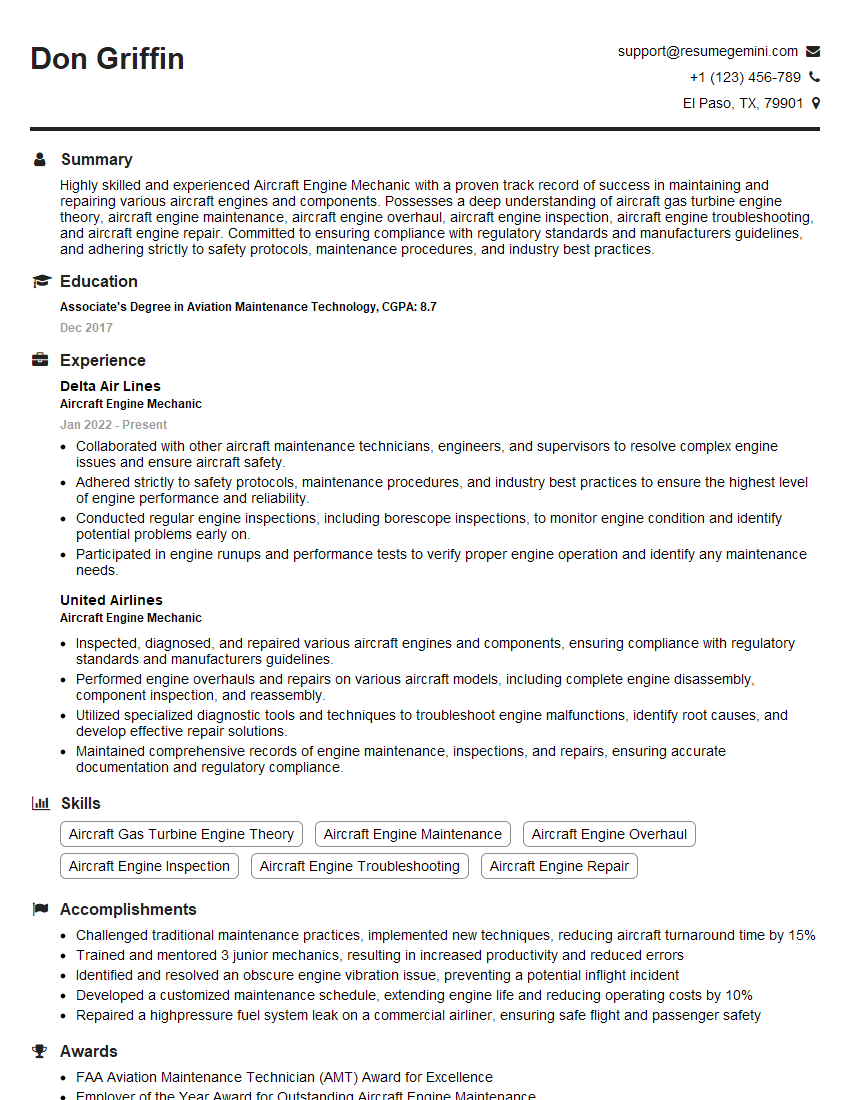
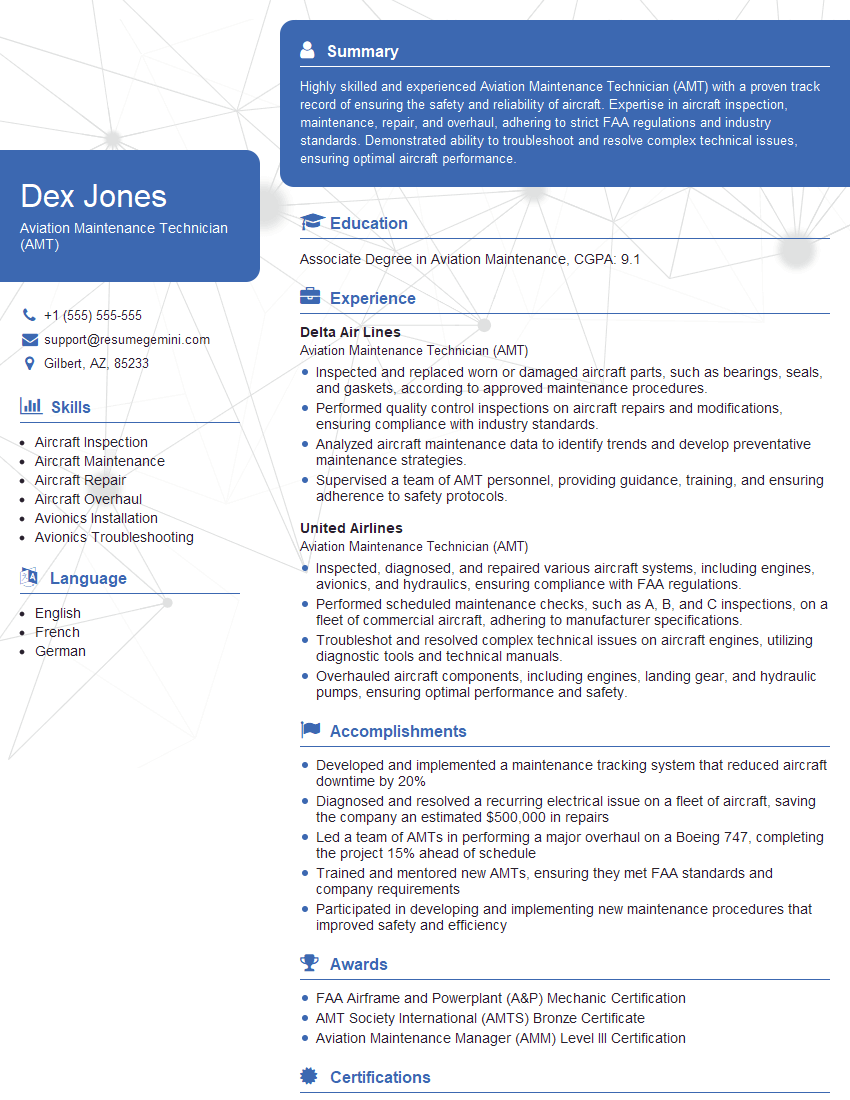
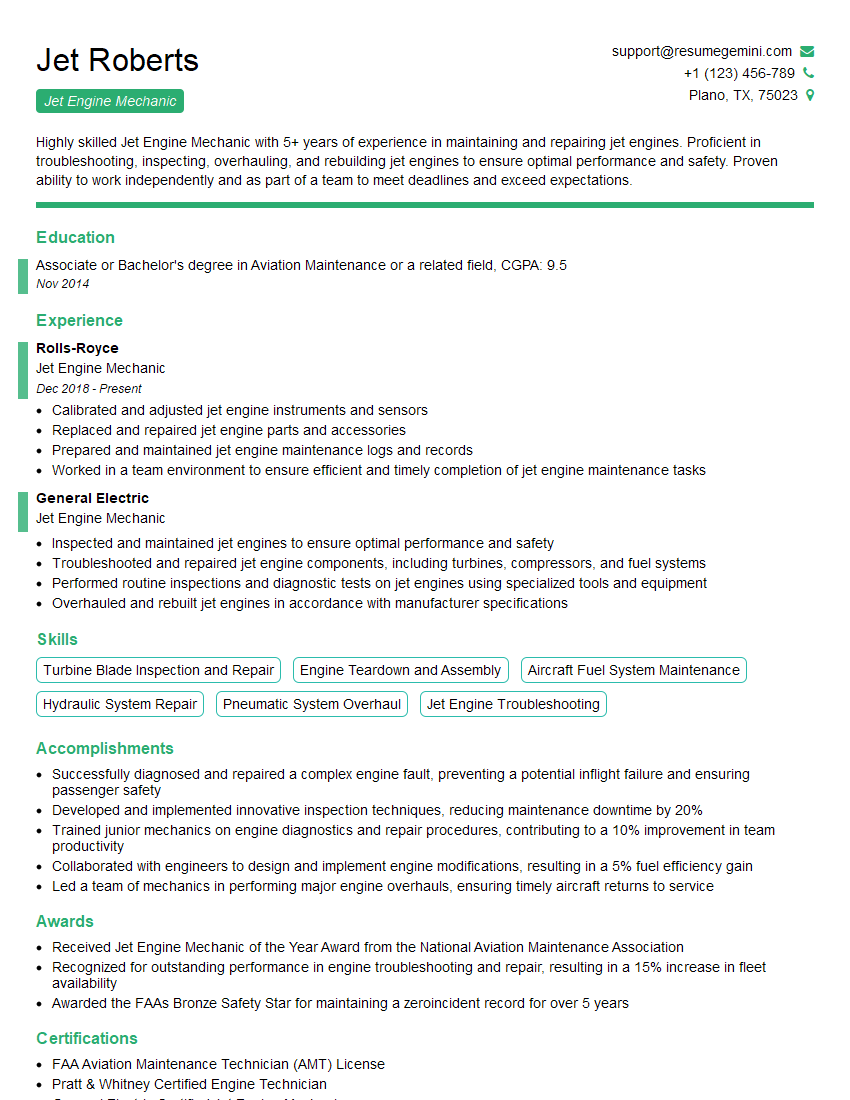
Mastering aircraft engine maintenance knowledge is crucial for career advancement in this highly specialized and in-demand field. A strong foundation in these key areas will significantly enhance your interview performance and open doors to exciting opportunities. To maximize your job prospects, it’s essential to create an ATS-friendly resume that effectively highlights your skills and experience. We highly recommend using ResumeGemini to build a professional and compelling resume that showcases your expertise. ResumeGemini provides numerous examples of resumes tailored to aircraft engine maintenance, ensuring you present yourself in the best possible light to potential employers.

Explore more articles
Users Rating of Our Blogs
Share Your Experience
We value your feedback! Please rate our content and share your thoughts (optional).
What Readers Say About Our Blog
Very informative content, great job.
good