Preparation is the key to success in any interview. In this post, we’ll explore crucial Experience in aircraft weight engineering interview questions and equip you with strategies to craft impactful answers. Whether you’re a beginner or a pro, these tips will elevate your preparation.
Questions Asked in Experience in aircraft weight engineering Interview
Q 1. Explain the significance of aircraft weight and balance.
Aircraft weight and balance is paramount to safe and efficient flight. It’s not just about the total weight; it’s about the distribution of that weight – the center of gravity (CG). An aircraft’s CG needs to remain within pre-defined limits for stability and controllability. If the CG is too far forward, the aircraft might be difficult to pitch up, potentially leading to a stall. Conversely, a CG too far aft can make the aircraft extremely sensitive to control inputs, making it unstable and difficult to manage, even leading to an uncontrollable spin. Think of it like balancing a seesaw – you need the weight distributed correctly to keep it balanced and prevent it from tipping over. Compliance with weight and balance limitations is mandated by aviation regulations and is critical for flight safety.
Q 2. Describe different weight estimation methods used during aircraft design.
Several methods exist for estimating aircraft weight during the design phase, each with varying degrees of accuracy and complexity. Early estimations often rely on parametric estimations, where weight is predicted using historical data and correlations with aircraft size and type. This is a quick, initial method but lacks precision. As the design matures, detailed weight breakdown becomes crucial. This involves meticulous accounting of every component – from the fuselage and wings to engines, avionics, and even paint. Weight of each component is estimated based on material properties and manufacturing processes. Advanced methods include statistical estimation, leveraging historical data and regression analysis to refine predictions, and 3D modeling which uses CAD data to calculate precise weight based on geometry and material composition. The choice of method depends on the design stage and required accuracy. In my experience, a combined approach, starting with parametric estimation and refining with detailed breakdown as more information becomes available, is often most effective.
Q 3. How do you calculate the center of gravity (CG) of an aircraft?
Calculating the CG involves determining the weighted average of all individual components’ locations. Each component’s weight is multiplied by its distance from a reference datum (usually a point on the aircraft’s longitudinal axis). These products are summed and then divided by the total weight. The result is the CG location along that axis. This process is repeated for other axes (lateral and vertical, though the longitudinal is most crucial). Formulaically, for the longitudinal CG (CGx):
CGx = Σ(Wi * xi) / ΣWiwhere:
Wi= weight of component ixi= distance of component i’s CG from the datum- Σ denotes summation over all components
In practice, this calculation is usually performed using specialized software that integrates with CAD models and databases of component weights. Accuracy is dependent on the precision of the input data – inaccurate weight or location data will directly affect the calculated CG.
Q 4. What are the limitations of using simplified weight estimation methods?
Simplified weight estimation methods, like early parametric estimations, are valuable in the initial design phases. However, they have limitations. They lack the granularity of detailed methods, leading to potential inaccuracies which can increase as the design progresses. These inaccuracies can propagate into other aspects of the design, such as structural analysis and performance predictions. Another limitation lies in their inability to capture variations in component designs or manufacturing processes. For example, a small change in a component’s material might significantly impact its weight, and simplified methods may fail to capture this. A simplified method also struggles to accurately capture the impact of design changes during the iterative design process. In short, while convenient, they provide a broad overview and are not suitable for precise analysis or detailed design decisions. A more refined approach is necessary for certification and detailed performance calculations.
Q 5. Explain the impact of fuel weight on aircraft performance.
Fuel weight significantly impacts aircraft performance. As fuel is consumed, the aircraft becomes lighter, leading to improved performance characteristics, such as increased speed, climb rate, and maneuverability. However, a heavier fuel load results in decreased performance. Increased weight requires more thrust and energy to overcome gravity, increasing fuel burn and reducing range. The impact of fuel weight is particularly pronounced during takeoff and climb, where excess weight substantially impacts available climb gradient and distance. Aircraft designers consider this trade-off carefully, optimising fuel tank size and the resulting weight to meet mission requirements. Accurate prediction and accounting for fuel weight throughout the flight are critical for accurate performance prediction and safe operation. Furthermore, variations in fuel density due to temperature need to be considered to avoid errors.
Q 6. How do you account for payload variations during weight calculations?
Payload variations must be explicitly considered to ensure safe operation within the aircraft’s weight and balance limits. During weight calculations, a range of payload weights are considered, and the CG location is calculated for each scenario. This often involves creating weight and balance envelopes which represent the acceptable range of CG locations for different payload configurations. Weight and balance reports are generated detailing these ranges to ensure the aircraft remains within safe limits under all expected operating conditions. Some systems allow for real-time weight and balance calculation based on current payload and fuel status, providing immediate feedback to the crew. In my experience, considering a worst-case scenario (maximum payload at maximum fuel) is crucial in establishing appropriate design safety margins.
Q 7. Describe your experience with weight control throughout the aircraft lifecycle.
My experience with weight control spans the entire aircraft lifecycle. Starting with preliminary design, I’ve been involved in establishing weight targets and performing initial estimations. During detailed design, I participated in component weight tracking, ensuring alignment with the overall weight budget. I’ve actively contributed to weight reduction initiatives, proposing design changes and material selections to optimize weight without compromising structural integrity or functionality. This often involves close collaboration with design engineers and material scientists. During manufacturing, I’ve participated in weight monitoring and tracking to identify any deviations from the planned values. Post-production, I have been involved in analyzing flight data to further refine weight and balance models. This iterative process, from initial concept to post-flight data analysis, is critical in achieving optimal weight control and ensuring safety and performance throughout the aircraft’s operational life.
Q 8. What software and tools are you proficient in for weight estimation and analysis?
My proficiency in aircraft weight estimation and analysis relies on a suite of software and tools. This includes industry-standard programs like NASTRAN for finite element analysis (FEA), which helps in predicting the weight of complex components. I’m also experienced with dedicated weight management software like WEIGHTMAN or similar proprietary tools used by various Original Equipment Manufacturers (OEMs). These tools allow for detailed component-level weight tracking, creating weight breakdowns, performing center of gravity (CG) calculations, and generating reports compliant with regulatory requirements. Additionally, I’m proficient in using spreadsheet software like Microsoft Excel and MATLAB for data analysis, statistical modeling, and visualization of weight data. I regularly utilize Computer-Aided Design (CAD) software like CATIA or SolidWorks to extract weight data directly from 3D models, enhancing accuracy and streamlining the weight estimation process.
Q 9. How do you ensure compliance with weight and balance regulations?
Ensuring compliance with weight and balance regulations is paramount for safety. This involves meticulous record-keeping and adherence to established procedures. We begin with a thorough understanding of the relevant regulations, such as those outlined by the FAA (Federal Aviation Administration) or EASA (European Union Aviation Safety Agency). This includes understanding the limitations defined for Maximum Take-Off Weight (MTOW), Maximum Landing Weight (MLW), and the Center of Gravity (CG) envelope. Every weight change, no matter how small, from modifications to added equipment, is carefully documented. This documentation feeds into the Aircraft Weight and Balance Control Document, which serves as a single source of truth for weight information. Regular weight and balance surveys are conducted and compared against the predicted data. Any discrepancies are investigated and corrected. Finally, clear and concise weight and balance reports are generated for pilots, maintenance crews, and regulatory authorities, ensuring all parties are aware of the aircraft’s operational limits.
Q 10. Explain the concept of weight and balance limitations.
Weight and balance limitations are critical safety factors. They define the operational boundaries within which an aircraft can safely operate. Exceeding these limits can severely compromise flight characteristics, leading to instability, reduced performance, and potential catastrophic accidents. These limitations are expressed through:
- Maximum Take-Off Weight (MTOW): The maximum weight at which the aircraft is certified to take off.
- Maximum Landing Weight (MLW): The maximum weight at which the aircraft is certified to land.
- Center of Gravity (CG) limits: The acceptable range of the aircraft’s CG, expressed as a percentage of the Mean Aerodynamic Chord (MAC). Operating outside this range can make the aircraft difficult to control, affecting its stability and maneuverability.
Think of it like balancing a seesaw. Too much weight on one side makes it difficult to balance, similar to how an aircraft’s weight distribution affects its stability. These limits are rigorously defined in the aircraft’s flight manual and are crucial to operational safety.
Q 11. Describe your experience in managing weight reduction initiatives.
I have extensive experience in leading and executing weight reduction initiatives. This often involves a multi-disciplinary approach, collaborating with design engineers, manufacturing teams, and material specialists. One project I led involved reducing the weight of a regional jet by 500 kg. Our strategy was multi-pronged. First, we performed a comprehensive weight analysis to identify the heaviest components and systems. We then explored various weight reduction options for each component, including:
- Material Substitution: Replacing heavier materials (e.g., aluminum alloys) with lighter ones (e.g., composites) where feasible.
- Design Optimization: Streamlining the design of components to remove unnecessary material without compromising structural integrity. This often involved leveraging FEA to optimize component geometry.
- Component Consolidation: Combining multiple components into a single, lighter unit.
- System Integration: Optimizing the integration of various systems to minimize weight and packaging.
The project successfully met its weight reduction goal, delivering significant fuel efficiency improvements and reducing operating costs.
Q 12. How do you handle discrepancies between predicted and actual aircraft weight?
Discrepancies between predicted and actual aircraft weight require a systematic investigation. The first step is to carefully review the initial weight estimation process, verifying the accuracy of the component weight data and the modeling assumptions. Then, a detailed comparison is made between the predicted and actual weights of individual components. Any significant discrepancies are investigated. Potential causes include:
- Manufacturing Variations: Variations in manufacturing processes can lead to differences in the actual weight of components.
- Incomplete Weight Data: Overlooking minor components or systems during initial weight estimation.
- Errors in Modeling: Inaccuracies in CAD models or FEA predictions.
- Additional Equipment: Unaccounted-for added equipment or modifications.
Once the source of the discrepancy is identified, appropriate corrections are made to the weight database, and the aircraft’s weight and balance data is updated to reflect the actual weight. In some cases, further investigations might be required, potentially involving inspections and detailed measurements.
Q 13. What are the consequences of exceeding weight and balance limits?
Exceeding weight and balance limits carries significant risks and potential consequences. These can range from minor inconveniences to catastrophic accidents. Exceeding the MTOW can lead to reduced performance, longer takeoff distances, increased fuel consumption, and potentially hazardous situations during takeoff or climb. Exceeding the MLW can affect landing performance, requiring longer landing distances. Operating outside the CG limits can severely compromise aircraft stability and controllability, making the aircraft difficult to handle, particularly during critical phases of flight. In extreme cases, exceeding weight and balance limits can lead to structural damage, loss of control, and accidents, potentially resulting in fatalities.
Q 14. Explain the role of weight engineering in aircraft certification.
Weight engineering plays a crucial role in aircraft certification. Weight data and analysis are fundamental to demonstrating compliance with airworthiness requirements. The certification process involves detailed weight reports, substantiating the aircraft’s compliance with MTOW, MLW, and CG limits. Weight engineers work closely with design engineers and regulatory authorities to ensure all weight-related aspects are thoroughly evaluated and documented. This includes providing evidence of the accuracy of weight predictions, analyzing the impact of design changes on weight and balance, and addressing any concerns raised by regulatory agencies. Successful certification relies heavily on the rigorousness and accuracy of weight engineering activities, safeguarding aircraft safety and operational integrity.
Q 15. Describe your experience with weight reporting and documentation.
Weight reporting and documentation are critical for maintaining aircraft airworthiness and ensuring operational efficiency. My experience encompasses creating and managing comprehensive weight reports, including Weight and Balance Control Reports, which detail the aircraft’s current weight and center of gravity location. These reports are essential for flight planning and ensuring compliance with regulatory requirements. I’ve worked with various reporting formats, from simple spreadsheets to sophisticated database-driven systems. I’m proficient in documenting weight changes throughout an aircraft’s lifecycle, from initial design to in-service modifications and repairs. This includes meticulously recording changes in structural components, equipment installations, and fuel consumption, ensuring accuracy and traceability. For example, during a recent project involving a mid-life update for a regional jet, I was responsible for generating and validating weight reports for each stage of the modification process, ensuring compliance with certification requirements and operational limitations.
I also have experience in creating and maintaining weight control documentation, which includes weight and balance manuals that are essential for operational personnel. These manuals clearly outline the procedures for weight and balance calculations and management, alongside operational limits. Thorough documentation is paramount, not just for compliance but for easy troubleshooting and decision-making during unexpected weight-related issues.
Career Expert Tips:
- Ace those interviews! Prepare effectively by reviewing the Top 50 Most Common Interview Questions on ResumeGemini.
- Navigate your job search with confidence! Explore a wide range of Career Tips on ResumeGemini. Learn about common challenges and recommendations to overcome them.
- Craft the perfect resume! Master the Art of Resume Writing with ResumeGemini’s guide. Showcase your unique qualifications and achievements effectively.
- Don’t miss out on holiday savings! Build your dream resume with ResumeGemini’s ATS optimized templates.
Q 16. How do you integrate weight considerations into aircraft design decisions?
Weight is a paramount consideration throughout the entire aircraft design process. It directly impacts performance, fuel efficiency, range, and structural integrity. My approach involves integrating weight considerations from the initial conceptual design phase. This begins with establishing target weights for different aircraft systems and components. This target-setting requires close collaboration with other engineering disciplines, such as aerodynamics, structures, and systems engineering, to achieve an optimal balance between performance requirements and weight constraints. We use tools like weight prediction models and optimization software to explore different design trade-offs.
Throughout the design process, regular weight reviews and analyses are crucial to monitor progress against established targets. Any deviation requires careful investigation and corrective actions. For example, if a system’s weight exceeds its allocated target, we evaluate potential weight-saving design modifications, explore alternative materials, or perhaps reconsider the system’s functionality. This iterative approach ensures that weight remains a primary design driver throughout the development lifecycle. This integrated approach helps in minimizing weight penalties and optimizing aircraft performance while adhering to regulatory requirements. I regularly use weight budgeting techniques to allocate weight to different components and systems, ensuring we don’t exceed the overall weight constraints.
Q 17. Explain your understanding of different weight categories (operating, maximum takeoff, etc.).
Understanding various weight categories is fundamental in aircraft weight engineering. Let’s break down some key ones:
- Operating Empty Weight (OEW): This is the weight of the aircraft ‘as built’, including unusable fuel, fluids, and all permanent equipment. It’s the baseline weight before adding any payload or crew.
- Maximum Takeoff Weight (MTOW): The maximum weight at which the aircraft is permitted to take off. This weight considers various safety margins and regulatory limits.
- Maximum Landing Weight (MLW): The maximum weight at which the aircraft is permitted to land. This is usually lower than MTOW to account for potential structural stresses during landing.
- Zero Fuel Weight (ZFW): The weight of the aircraft without fuel. This includes OEW plus payload (crew, passengers, and cargo).
- Payload: The weight of passengers, crew, cargo, and baggage.
These weight categories are crucial for flight planning, performance calculations, and regulatory compliance. For example, exceeding MTOW can compromise safety and potentially lead to structural failure. Accurate calculation and meticulous tracking of each category are essential for safe and efficient aircraft operations. I’ve been directly involved in calculating these weights for various aircraft types, ensuring they adhere to manufacturer specifications and regulatory requirements.
Q 18. How do you account for the effects of aging and wear on aircraft weight?
Aging and wear significantly impact aircraft weight over time. Several factors contribute to this:
- Accumulation of Corrosion: Corrosion adds weight to the aircraft structure and components.
- Build-up of Deposits: Deposits accumulate in engine components, affecting their overall weight and performance.
- Component Wear and Tear: Repeated use leads to the wear and tear of various parts, potentially resulting in needing heavier replacement parts.
- Modifications and Repairs: Modifications and repairs, while necessary for maintenance, can sometimes add weight.
To account for these effects, we use a combination of methods. Regular weight surveys are conducted to track changes in the aircraft’s weight over its lifespan. We also use historical weight data, maintenance records, and specialized software to predict future weight increases. This data informs maintenance planning and helps identify areas where weight reduction strategies can be implemented, perhaps through targeted corrosion prevention or lightweight component replacements. For instance, during a recent weight survey of a fleet of aging aircraft, we identified a significant weight increase due to corrosion. This prompted a focused corrosion prevention program, significantly reducing future weight gain and contributing to fuel efficiency.
Q 19. Describe your experience with weight management in different aircraft types (e.g., commercial, military).
My experience spans both commercial and military aircraft. While the fundamental principles remain consistent, the specific approaches and priorities differ. In commercial aviation, the primary focus is on optimizing weight to minimize fuel consumption and maximize payload capacity, hence enhancing profitability. This involves meticulous weight control throughout the aircraft’s lifecycle and careful consideration of payload limitations. On the other hand, in military aviation, other priorities like mission requirements and survivability may sometimes overshadow strict weight minimization. For example, the weight of added defensive systems in a military aircraft might be justified even if it impacts fuel efficiency.
For instance, I’ve worked on weight reduction programs for a major commercial airline, identifying areas where weight could be reduced without compromising safety or functionality. This included initiatives focused on optimizing interior design, utilizing lighter materials, and optimizing fuel management strategies. In contrast, my experience with military aircraft involved analyzing the weight implications of integrating new weapons systems, ensuring the aircraft still meets its performance requirements within its weight limitations.
Q 20. What is your experience with weight tracking and reporting systems?
I’ve worked extensively with various weight tracking and reporting systems, ranging from simple spreadsheets to sophisticated database management systems and specialized software packages. My experience includes using dedicated weight and balance software that automatically calculates aircraft weight and center of gravity, integrates with maintenance databases, and produces compliant reports. This software allows for efficient tracking of weight changes and provides real-time monitoring of weight limits. I also have experience with integrating weight data with other aircraft management systems, allowing for comprehensive data analysis and proactive weight management. This seamless data integration allows for timely identification and resolution of potential weight-related issues. I am also adept at using data analytics to identify trends and patterns in weight data, enabling predictive maintenance and proactive weight management strategies.
For example, in a recent project, I implemented a new weight management system that automated the process of generating weight and balance reports, significantly reducing the time and effort required for this task. This improved efficiency allowed our team to focus on more strategic activities and proactively identify potential weight-related issues.
Q 21. How do you handle conflicting requirements related to aircraft weight and performance?
Conflicts between aircraft weight and performance are common in aircraft design. For example, adding features that improve performance, like stronger engines or advanced avionics, inherently increases the aircraft’s weight, potentially impacting fuel efficiency and range. Resolving these conflicts requires a systematic and collaborative approach. It starts with a thorough understanding of the conflicting requirements and the trade-offs involved.
We often employ a multi-criteria decision-making process, considering various factors such as safety, performance, cost, and regulatory compliance. This might involve using weight optimization techniques to find the best balance between weight and performance. For example, we might explore the use of lighter materials, optimize system designs for weight reduction, or prioritize the most critical performance aspects, accepting some compromises in other areas. This often requires close collaboration with other engineering disciplines and stakeholders to reach a consensus. For instance, in one project, we had to reconcile the desire for increased payload capacity with the need for improved fuel efficiency. This required extensive simulations and analyses, leading to a design optimization that satisfied both requirements through careful component selection and aerodynamic design changes.
Q 22. Describe your process for identifying and mitigating weight growth during aircraft development.
Weight growth is a constant battle in aircraft development, often leading to performance penalties and cost overruns. My process for identifying and mitigating this involves a multi-pronged approach starting from the conceptual design phase and continuing throughout the entire lifecycle.
Proactive Weight Management: We establish a comprehensive weight budget early on, allocating weight to each subsystem (wings, fuselage, engines, etc.). This budget is meticulously tracked throughout the design process.
Weight Control Plan: This plan defines roles, responsibilities, and targets for weight reduction. Regular weight reviews are conducted, comparing actual weight to the budget. This involves close collaboration with all engineering disciplines.
Weight Tracking Software: We utilize specialized software to manage and predict aircraft weight. This allows for ‘what-if’ scenarios, modeling the impact of design changes on overall weight.
Design-to-Weight: This crucial philosophy drives engineers to optimize designs for minimum weight while still meeting performance and safety requirements. It’s not just about removing material; it’s about smarter material selection and innovative design.
Regular Weight Audits: Independent audits are crucial, often conducted by experienced weight engineers who can identify potential problem areas that may have been overlooked.
Material Selection: We carefully evaluate different materials, considering their strength-to-weight ratio, cost, and manufacturability. Lightweight composites are often preferred, but their suitability depends on the specific application.
For example, in a recent project, we identified a significant weight increase in the landing gear. Through detailed analysis, we discovered unnecessary reinforcement. By optimizing the design and material selection, we reduced the weight by 15% without compromising safety.
Q 23. Explain your understanding of the relationship between weight, performance, and fuel consumption.
Weight, performance, and fuel consumption are intricately linked. Increased aircraft weight directly impacts performance, leading to higher fuel consumption. Think of it like pushing a heavier shopping cart uphill – it requires more effort (fuel) to achieve the same speed.
Increased Weight = Reduced Range and Payload: A heavier aircraft needs more fuel to reach the same destination or carry the same payload, reducing its operational efficiency.
Increased Weight = Reduced Speed and Climb Rate: More fuel translates into increased weight, further impacting performance parameters.
Increased Weight = Higher Fuel Consumption per Mile: This leads to increased operational costs and a larger environmental footprint.
This relationship is often modeled using sophisticated software to predict the aircraft’s performance envelope and fuel burn for various weight configurations. This allows for informed decisions regarding payload, range, and fuel efficiency trade-offs during the design phase.
Q 24. How do you communicate complex weight-related information to non-technical stakeholders?
Communicating complex weight-related information to non-technical stakeholders requires clear, concise language and effective visualization. Instead of using technical jargon, I focus on conveying the impact of weight on key performance indicators (KPIs) they understand.
Visual Aids: Charts, graphs, and simple diagrams effectively illustrate the impact of weight on fuel consumption, range, and operational costs. For example, a bar chart comparing fuel burn for different weight scenarios is easily understandable.
Analogies: I use relatable analogies to simplify complex concepts. Comparing a heavier plane to a heavier car struggling to climb a hill is readily grasped.
Focus on Business Impact: I frame my explanations in terms of their bottom-line impact. For example, highlighting how weight reduction translates to lower fuel costs and increased profitability.
Summary Reports: Providing concise summary reports with key findings and recommendations is essential for busy executives.
For example, instead of saying “Reducing wing spar weight improves the aircraft’s lift-to-drag ratio,” I might say “By making the wings lighter, we can save fuel, which will save the airline money on each flight.”
Q 25. What are some common challenges faced in aircraft weight engineering?
Aircraft weight engineering presents many challenges, including:
Balancing competing requirements: Meeting weight targets while ensuring structural integrity, performance, and passenger comfort requires careful trade-off decisions.
Uncertainties in component weights: Initial weight estimates of components from suppliers can be inaccurate, leading to weight growth later in the program.
Managing weight creep: Incremental design changes, often seemingly insignificant individually, can add up to substantial weight increases if not carefully managed.
Dealing with legacy systems: Integrating new systems into existing aircraft designs can present weight-related challenges due to space constraints and compatibility issues.
Meeting regulatory requirements: Adhering to stringent weight regulations and certification standards is crucial for safety and airworthiness.
Effective communication, rigorous weight control processes, and proactive weight management are essential to mitigate these challenges.
Q 26. How do you stay current with advancements in aircraft weight engineering technologies and practices?
Staying current involves continuous learning and engagement with the field’s advancements. My strategies include:
Professional Development: Attending conferences, workshops, and seminars focused on aircraft weight engineering and related disciplines.
Industry Publications: Regularly reading industry journals, magazines, and technical papers to stay abreast of new materials, technologies, and best practices.
Networking: Engaging with colleagues, industry experts, and researchers through professional organizations and online forums.
Software Training: Staying proficient in the latest weight estimation and analysis software packages.
Collaboration: Participating in collaborative research projects and knowledge-sharing initiatives.
For example, I recently completed a course on the application of advanced composite materials in aircraft structures, which provided valuable insights into weight reduction techniques.
Q 27. Describe a situation where you had to make a critical decision related to aircraft weight.
During the certification phase of a new regional jet, we discovered a significant weight overrun in the fuel system. This threatened to exceed the maximum takeoff weight, jeopardizing the aircraft’s performance and potentially delaying certification.
My team and I evaluated several options, including redesigning components, using lighter materials, and optimizing fuel tank placement. The redesigning option was considered risky and time-consuming. Opting for lighter materials was carefully assessed for its impact on safety and long-term durability. Ultimately, we opted for a combination of minor redesigns in non-critical areas and optimized fuel tank placement, reducing weight without compromising safety. This solution required detailed analysis and simulation, ensuring it met all certification standards.
This experience highlighted the importance of proactive weight management throughout the development process, meticulous attention to detail, and the ability to make critical decisions under pressure, all while maintaining safety as the top priority.
Q 28. Explain your understanding of the impact of weight on aircraft structural integrity.
Weight significantly impacts aircraft structural integrity. Excess weight increases the stresses on the airframe during flight, potentially leading to structural fatigue and failure. Conversely, insufficient weight can compromise structural strength.
Stress and Strain: Increased weight leads to higher stress levels on the aircraft’s structural components, increasing the risk of fatigue cracks and eventual failure.
Fatigue Life: Higher stresses accelerate fatigue, reducing the lifespan of the aircraft structure.
Safety Margins: Aircraft designs incorporate safety margins to account for uncertainties and unexpected loads. Excess weight can reduce these margins, compromising safety.
Weight Distribution: Even weight distribution is critical. Uneven weight distribution can create localized high stress concentrations, weakening the structure.
Weight engineers work closely with structural engineers to ensure the airframe can withstand the stresses imposed by the aircraft’s weight throughout its operational life. Finite Element Analysis (FEA) is a critical tool used to simulate stresses and strains under various loading conditions.
Key Topics to Learn for Aircraft Weight Engineering Interviews
- Weight Estimation & Prediction: Understanding methods for accurately predicting aircraft weight throughout the design process, from initial conceptual design to detailed engineering. This includes mastering tools and software used for weight prediction.
- Weight Control & Management: Explore strategies and techniques for effectively managing aircraft weight during all phases of the project lifecycle. This encompasses identifying weight reduction opportunities and implementing weight control measures.
- Center of Gravity (CG) Analysis: Develop a strong understanding of CG calculations and their impact on aircraft stability and performance. Learn to analyze CG shifts during flight and understand the implications for handling qualities.
- Weight & Balance Reporting: Familiarize yourself with the processes and documentation involved in generating weight and balance reports, ensuring compliance with regulatory requirements and internal standards.
- Material Selection & Optimization: Understand how material selection directly affects aircraft weight and performance. Learn to evaluate trade-offs between weight, strength, and cost.
- Software & Tools: Gain proficiency in relevant software packages commonly used in aircraft weight engineering (mention specific examples if appropriate for your target audience, but avoid brand names to remain generic). This involves understanding the input parameters, analysis methods, and output interpretation.
- Regulatory Compliance: Familiarize yourself with relevant aviation regulations and standards concerning aircraft weight and balance. This includes understanding certification requirements and best practices.
- Problem-solving & Analytical Skills: Be prepared to demonstrate your ability to approach complex weight-related problems systematically and develop effective solutions. Practice tackling scenarios involving weight constraints, performance limitations, and design trade-offs.
Next Steps
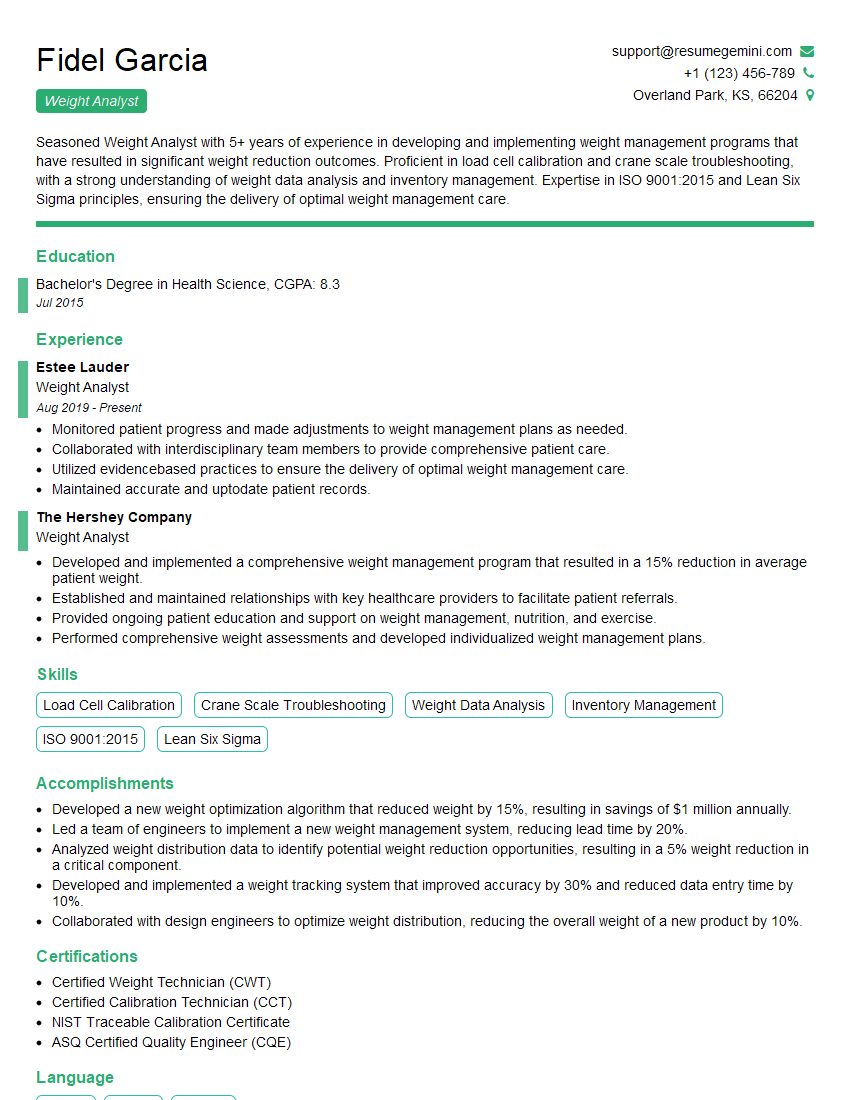
Mastering aircraft weight engineering is crucial for a successful and rewarding career in the aerospace industry. It opens doors to challenging and innovative projects, contributing directly to the design and safety of aircraft. To maximize your job prospects, a well-crafted, ATS-friendly resume is essential. ResumeGemini can help you create a compelling resume that showcases your skills and experience effectively. ResumeGemini provides examples of resumes tailored to aircraft weight engineering roles, guiding you towards creating a document that highlights your unique qualifications. Invest the time to build a strong resume – it’s your first impression with potential employers.
Explore more articles
Users Rating of Our Blogs
Share Your Experience
We value your feedback! Please rate our content and share your thoughts (optional).
What Readers Say About Our Blog
Very informative content, great job.
good