The thought of an interview can be nerve-wracking, but the right preparation can make all the difference. Explore this comprehensive guide to Heat Treating Equipment Maintenance interview questions and gain the confidence you need to showcase your abilities and secure the role.
Questions Asked in Heat Treating Equipment Maintenance Interview
Q 1. Explain the different types of heat treating processes and their applications.
Heat treating modifies a metal’s properties—like hardness, strength, and ductility—through controlled heating and cooling. Several processes achieve this:
- Annealing: This softens metals, relieving internal stresses after processes like cold working. Imagine a stressed spring—annealing relaxes it, making it more workable. Applications include improving machinability and reducing brittleness.
- Normalizing: Improves uniformity in microstructure and mechanical properties. Think of it as a ‘reset’ for the metal, creating a more consistent structure. It’s used on castings and forgings.
- Hardening: Increases hardness and strength by heating the metal to a critical temperature and then rapidly cooling it (quenching). This is like tempering a sword—the rapid cooling locks in the hardness. Applications include tools and machine parts requiring high wear resistance.
- Tempering: Reduces the brittleness of hardened steel, creating a balance between hardness and toughness. It’s like fine-tuning the sword’s hardness to make it less likely to shatter. It’s crucial after hardening to optimize the metal’s properties.
- Carburizing: Increases the carbon content at the surface of the steel, creating a hard surface while retaining a tough core. This is like adding a protective armor to the metal’s exterior. It’s used in applications requiring wear resistance, like gears and bearings.
Q 2. Describe your experience with various types of industrial furnaces (e.g., batch, continuous, vacuum).
My experience encompasses a wide range of industrial furnaces. I’ve worked extensively with batch furnaces, ideal for smaller-scale operations or parts requiring specific atmospheres. These are like ovens, where you load parts, heat them, and then cool them. I’ve also worked with continuous furnaces, which are high-throughput systems perfect for mass production—imagine a conveyor belt moving through a heated zone. These offer significant efficiency advantages. Finally, my experience includes vacuum furnaces, which are critical for applications requiring precise control over atmosphere and preventing oxidation. Vacuum furnaces are similar to batch furnaces, but the removal of atmospheric gasses during heating reduces surface oxidation and helps produce superior results. I’m familiar with various furnace designs and control systems, enabling me to optimize processes and troubleshoot effectively.
Q 3. How do you troubleshoot common problems in heat treating equipment?
Troubleshooting begins with systematic investigation. First, I’d check the obvious—power supply, gas flow, temperature controllers. Are there any error messages displayed? Then, I’d inspect the furnace itself: are there any signs of damage or wear, like cracked refractory bricks or damaged heating elements? I use a combination of instruments (discussed in Question 5) to diagnose issues. For instance, inconsistent heating may indicate a problem with the heating elements or poor insulation, while excessive scaling suggests issues with the atmosphere control or part cleaning processes. A step-by-step approach, starting with the most likely causes, and utilizing systematic testing and documentation will help identify the root problem and prevent recurring issues.
Q 4. What are the safety precautions you take when working with heat treating equipment?
Safety is paramount! Working with heat treating equipment demands strict adherence to protocols. This includes using proper personal protective equipment (PPE), such as heat-resistant gloves, safety glasses, and long sleeves. Regular inspections of the equipment are vital to identify any potential hazards. I always ensure proper ventilation to prevent the buildup of toxic gases. Emergency procedures, including knowing the location of fire extinguishers and emergency shut-offs, are essential and rigorously trained upon. Understanding the specific hazards of each heat-treating process is key, and I always follow all safety regulations and standards relevant to the facility.
Q 5. What are the different types of sensors and instrumentation used in heat treating processes and how do they work?
A range of sensors and instrumentation is vital for precise control and monitoring. Thermocouples are essential for temperature measurement, providing feedback to controllers. They operate on the Seebeck effect—a temperature difference between two dissimilar metals generates a voltage. Rtd’s (Resistance Temperature Detectors) are also frequently used; these measure resistance changes as a function of temperature. Pressure transducers monitor gas pressures within furnaces, particularly crucial for controlled-atmosphere processes. Data loggers record temperature profiles during heat treatments, providing critical documentation and allowing for process optimization. Finally, pyrometers offer non-contact temperature measurement, important for safety and process monitoring.
Q 6. How do you perform preventative maintenance on heat treating equipment?
Preventative maintenance is a structured approach to preventing equipment failures. A typical schedule includes regular inspections of heating elements, refractory lining, insulation, and safety devices. This also includes cleaning of the furnace interior and burner systems. Calibration and verification of sensors and controllers are crucial for maintaining accuracy. I would also conduct lubrication of moving parts and check gas lines for leaks. By following a preventative maintenance schedule, you greatly reduce the risk of unexpected downtime and prolong the operational life of the equipment. Proper documentation of all maintenance activities is extremely important.
Q 7. What is your experience with predictive maintenance techniques?
My experience with predictive maintenance involves leveraging data analytics to predict potential failures before they occur. This could involve analyzing temperature data from sensors to identify trends and anomalies that might signal impending problems. Vibration analysis on motors and pumps can help detect wear and tear. I’m familiar with using software and algorithms to process sensor data, identifying patterns that indicate developing issues—this proactive approach minimizes costly unexpected downtime. Predictive maintenance moves beyond a simple schedule and allows for data-driven decisions, optimizing maintenance activities and maximizing equipment life.
Q 8. How do you interpret heat treating process charts and diagrams?
Heat treating process charts and diagrams are crucial for understanding the sequence of operations and parameters required for a specific heat treatment. They visually represent the time-temperature relationship crucial for achieving the desired metallurgical properties. Think of them as a recipe for metal transformation.
Interpreting them involves identifying key elements like:
- Heating Rate: The speed at which the material is heated. A slower rate can promote uniformity.
- Soak Time: The duration the material is held at a specific temperature, ensuring complete transformation. Too little, and the process is incomplete; too much, and grain growth may occur.
- Cooling Rate: This is critically important and directly influences the final microstructure (e.g., martensite formation during rapid cooling). Quenching mediums directly affect this.
- Temperature Set Points: Precise temperatures needed to achieve specific phases. Slight deviations can significantly impact results.
- Austenitizing Temperature: The temperature required to completely transform the material into austenite, a high-temperature phase.
For example, a chart might show a slow heating rate to 850°C (1562°F), a 30-minute soak, followed by an oil quench. Understanding this sequence and the material’s response (often detailed in accompanying documentation) is key. Incorrect interpretation can lead to failed parts.
Q 9. Describe your experience with different types of quenching mediums.
My experience encompasses various quenching mediums, each influencing the cooling rate and, therefore, the final microstructure of the treated part. Think of quenching as rapidly cooling a hot metal to ‘freeze’ its structure.
- Water Quenches: Offer the fastest cooling rates, ideal for producing hard martensitic structures but risk cracking in large or complex parts. We meticulously monitor water temperature and flow to prevent warping.
- Oil Quenches: Provide slower, more controlled cooling, minimizing distortion and cracking, particularly useful for larger components. Different oil types offer varying cooling rates, allowing for tailored treatments.
- Polymer Quenches: These are becoming increasingly common, offering adjustable cooling rates and reduced environmental impact compared to oil. They are less prone to fires but usually more expensive.
- Air Cooling: The slowest cooling method, suitable for low-alloy steels and stress relief. It’s gentle but results in softer microstructures.
In my previous role, we encountered a situation where using water to quench a large gear caused severe cracking. Switching to a specialized polymer quench eliminated this problem.
Q 10. Explain the importance of temperature control in heat treating processes.
Temperature control is paramount in heat treating. Precise temperature regulation ensures the desired metallurgical transformations occur, resulting in parts with the required mechanical properties and consistent quality. Think of it as baking a cake – getting the temperature wrong will ruin it!
Inaccurate temperatures lead to several issues:
- Incomplete transformations: Parts may not achieve the necessary hardness or strength.
- Excessive grain growth: Leading to reduced toughness and ductility.
- Phase instability: Resulting in unpredictable performance and degradation over time.
- Warpage and cracking: Caused by uneven cooling or inappropriate heating rates.
Modern furnaces use sophisticated control systems, including thermocouples, pyrometers, and programmable logic controllers (PLCs) for precise temperature management. Regular calibration and maintenance of these systems are crucial for accurate readings.
Q 11. How do you ensure the quality of heat treated parts?
Ensuring the quality of heat-treated parts involves a multifaceted approach, combining meticulous process control with thorough inspection.
- Process Monitoring and Recording: Continuous monitoring of temperatures, times, and atmospheres during the heat treatment process. We maintain detailed records for traceability and quality analysis. This includes charting every step for auditing purposes.
- Hardness Testing: A crucial non-destructive test measuring the hardness of the heat-treated material, using Rockwell, Brinell, or Vickers methods.
- Microstructural Examination: Using optical or electron microscopy to analyze the microstructure and ensure the desired transformation has occurred.
- Dimensional Inspection: Checking for any distortion or warping during the process.
- Mechanical Testing: Tensile, impact, or fatigue tests might be done for critical applications to determine ultimate strength, yield strength, and other properties.
For instance, we once discovered a batch of parts that didn’t meet hardness specifications. A review of the process logs revealed a malfunction in the furnace’s temperature controller, leading to a corrective action plan and retesting of all affected parts.
Q 12. What are the common causes of equipment failure in heat treating?
Equipment failure in heat treating can stem from various causes, often related to the demanding conditions of high temperatures and harsh environments.
- Burnout of Heating Elements: Frequent cycling and high temperatures degrade heating elements, necessitating periodic replacement.
- Controller Malfunctions: Temperature controllers are crucial; their failure leads to inconsistent heating and potential part defects.
- Refractory Damage: High temperatures can cause degradation of furnace linings, impacting insulation and uniformity.
- Mechanical Wear and Tear: Moving parts, like conveyor belts or furnace doors, experience wear and require maintenance.
- Corrosion: Exposure to aggressive atmospheres can corrode furnace components.
- Quench Medium Degradation: Oil oxidation and water contamination reduce effectiveness and increase fire hazards.
Preventive maintenance, including regular inspections and component replacements, is crucial in mitigating these risks. We schedule routine maintenance to prevent unplanned downtime.
Q 13. How do you handle emergency situations related to heat treating equipment malfunctions?
Emergency situations demand swift and safe responses. Our procedures prioritize safety and minimizing damage.
Steps we take:
- Immediate Shutdown: Following established emergency protocols, the equipment is safely shut down to prevent further damage or hazards.
- Assessment of the Situation: Identifying the cause of the malfunction and assessing the potential risks.
- Emergency Response Team Activation: If necessary, activating trained personnel to handle specific situations (e.g., fire suppression, leak containment).
- Damage Control: Taking steps to mitigate any damage to equipment or surrounding areas.
- Root Cause Analysis: After the emergency, a thorough investigation identifies the root cause to prevent recurrence.
One instance involved a furnace power surge that caused a partial meltdown of a heating element. Our immediate shutdown and activation of the maintenance team prevented a more serious incident. A thorough root cause analysis led to improvements in the electrical system to prevent future surges.
Q 14. What is your experience with different types of furnace atmospheres?
Furnace atmospheres play a critical role, particularly in preventing oxidation and decarburization of the workpieces during high-temperature processing. The right atmosphere is key to the final product’s quality.
- Oxidizing Atmospheres: Contain excess oxygen, increasing the risk of oxidation. Used in specific applications but carefully monitored to avoid excessive scaling.
- Reducing Atmospheres: Contain reducing agents like hydrogen or carbon monoxide, protecting the parts from oxidation and decarburization. This is very common in many applications.
- Neutral Atmospheres: Essentially inert, neither oxidizing nor reducing, typically using nitrogen or argon. These help to control the environment and are very effective for preventing unwanted reactions.
- Endothermic Atmospheres: Generated by cracking natural gas, providing a controlled reducing atmosphere with precise levels of carbon monoxide and hydrogen, often precisely tailored for the specific material.
The selection of the appropriate atmosphere depends on the material being processed and the desired outcome. For example, a reducing atmosphere would be preferred for preventing the loss of carbon in high-carbon steel during heat treating.
Q 15. How do you maintain accurate records of maintenance activities?
Maintaining accurate maintenance records is crucial for ensuring the longevity and efficiency of heat treating equipment. It also helps in identifying trends, predicting potential failures, and complying with safety regulations. I utilize a comprehensive system that combines both paper-based and digital methods for redundancy and accessibility.
- Paper-based logs: These include daily inspection checklists, detailed maintenance reports for each activity (including date, time, personnel involved, parts replaced, and observations), and calibration records for temperature sensors and other instruments. This ensures that even in a system outage, critical information is readily available.
- Digital database: All paper-based records are scanned and meticulously entered into a computerized maintenance management system (CMMS). This allows for easy data retrieval, trend analysis, and generation of reports. The CMMS system I typically use provides features like automated reminders for scheduled maintenance, work order tracking, and equipment history.
- Preventive Maintenance Schedules: These schedules are established based on manufacturer recommendations and historical data and are strictly adhered to, with any deviations properly documented and justified.
For example, in a recent situation involving a malfunctioning furnace, our meticulous record-keeping allowed us to quickly pinpoint the previous maintenance activity on that specific component, helping to diagnose the problem more efficiently and reduce downtime.
Career Expert Tips:
- Ace those interviews! Prepare effectively by reviewing the Top 50 Most Common Interview Questions on ResumeGemini.
- Navigate your job search with confidence! Explore a wide range of Career Tips on ResumeGemini. Learn about common challenges and recommendations to overcome them.
- Craft the perfect resume! Master the Art of Resume Writing with ResumeGemini’s guide. Showcase your unique qualifications and achievements effectively.
- Don’t miss out on holiday savings! Build your dream resume with ResumeGemini’s ATS optimized templates.
Q 16. What software or systems do you use for maintenance management?
My experience encompasses several software and systems for maintenance management. The choice of system often depends on the specific needs of the facility and the level of integration required.
- Computerized Maintenance Management Systems (CMMS): I’m proficient in using various CMMS platforms, including (examples: [Mention specific CMMS software names without links, e.g., UpKeep, Fiix, SAP PM]). These systems offer a centralized repository for all maintenance data, facilitating work order management, scheduling, inventory control, and reporting.
- Spreadsheet Software (e.g., Microsoft Excel): For smaller facilities or specific tasks, spreadsheets can be useful for creating simple maintenance schedules, tracking parts inventory, and recording simple data.
- Enterprise Resource Planning (ERP) systems: In larger organizations, CMMS often integrates with ERP systems for streamlined data management and seamless flow of information between different departments.
The key is selecting a system that aligns with the specific requirements of the facility and allows for efficient data management, reporting, and analysis. For instance, a CMMS with robust reporting capabilities is critical for demonstrating compliance during audits.
Q 17. Describe your experience with troubleshooting PLC controlled heat treating equipment.
Troubleshooting PLC-controlled heat treating equipment requires a systematic approach combining electrical, mechanical, and programming skills. My experience involves diagnosing issues through a combination of methods:
- Reviewing PLC alarm logs: The first step is to carefully examine the PLC’s alarm history to identify the sequence of events leading to the failure.
- Checking input/output signals: Using a multimeter and PLC programming software, I verify the status of input signals (e.g., temperature sensors, limit switches) and output signals (e.g., heating elements, conveyors).
- Utilizing ladder logic diagrams: I’m adept at reading and understanding ladder logic diagrams to trace the flow of signals through the PLC program. This helps pinpoint the exact location of the fault within the control system.
- Using diagnostic tools: Specialized diagnostic tools, such as PLC programming software with online monitoring capabilities, can help in identifying the source of the problem more efficiently.
- Systematic elimination: Sometimes, finding the issue involves a methodical process of eliminating possible causes, one by one, until the root cause is identified. For instance, if a heating element isn’t functioning, I’d check the element itself, its wiring, the associated control circuit within the PLC, and eventually the PLC’s output module.
For example, I recently resolved an issue where a conveyor belt stopped unexpectedly. By analyzing the PLC’s alarm log and examining the ladder logic, I found that a limit switch had failed, preventing the PLC from issuing a command to restart the belt. Replacing the faulty switch promptly resolved the problem.
Q 18. What are your skills in reading and interpreting electrical schematics?
Reading and interpreting electrical schematics is fundamental to my work. I’m proficient in understanding various symbols and notations used in these diagrams, including those for power supplies, motors, relays, sensors, and control circuits. My expertise extends to different types of schematics like single-line diagrams, wiring diagrams, and ladder diagrams.
I can trace the flow of electricity through a circuit, identify potential hazards, and understand how components interact with each other. This is crucial for troubleshooting, maintaining, and repairing heat treating equipment. For example, I recently used a schematic to trace a short circuit in a control panel. The schematic helped me quickly identify the faulty wire and repair it, minimizing downtime.
Understanding schematics isn’t simply about deciphering symbols; it’s about understanding the system’s logic and functionality. It’s like reading a map – each line and symbol tells a story about how the system operates.
Q 19. Explain your experience with hydraulic and pneumatic systems used in heat treating equipment.
Heat treating equipment often incorporates hydraulic and pneumatic systems for tasks such as clamping, workpiece movement, and pressure control. My experience includes maintaining and troubleshooting these systems. This includes understanding the principles of fluid power, pressure regulation, and component operation.
- Hydraulic Systems: I’m familiar with hydraulic pumps, valves, cylinders, accumulators, and filters. I can diagnose leaks, replace worn components, and perform routine maintenance, such as fluid changes and filter replacements. For instance, I’ve replaced hydraulic seals on a press used for clamping workpieces in a heat treatment process, preventing leaks and maintaining proper pressure.
- Pneumatic Systems: My experience includes working with air compressors, pneumatic valves, cylinders, and sensors. Troubleshooting includes identifying air leaks, replacing faulty components, and adjusting pressure regulators. For example, I’ve fixed a malfunctioning pneumatic gripper used for automated loading of parts into a furnace.
Understanding safety procedures is paramount when working with hydraulic and pneumatic systems due to the potential for high pressure and rapid movement of components. I always prioritize safe work practices, wearing appropriate personal protective equipment, and following lockout/tagout procedures before undertaking any maintenance or repair work.
Q 20. What is your experience with the calibration and maintenance of temperature sensors and instruments?
Accurate temperature control is critical in heat treating, making the calibration and maintenance of temperature sensors and instruments paramount. My experience includes working with various types of sensors (thermocouples, RTDs, pyrometers) and instruments (data loggers, temperature controllers).
- Calibration Procedures: I follow established calibration procedures using traceable standards to ensure accuracy. Calibration is done regularly following manufacturer’s recommendations or as dictated by process requirements.
- Sensor Maintenance: This includes inspecting sensors for damage, cleaning contamination, and replacing worn or damaged components. I also check wiring connections for continuity and correct polarity.
- Instrument Maintenance: This involves regular inspection and cleaning of temperature controllers and data loggers, checking for proper functionality, and ensuring accurate data recording.
- Troubleshooting: I can troubleshoot issues with temperature measurement, such as inaccurate readings, drift, or sensor failures. I utilize both diagnostic tools and my understanding of sensor physics to identify and resolve these issues.
For example, I recently identified a drift in a thermocouple reading in a high-temperature furnace. Through calibration and comparison with a reference sensor, we discovered a gradual degradation of the sensor, leading to its timely replacement, preventing potential production errors.
Q 21. How do you ensure compliance with safety regulations and standards in heat treating operations?
Ensuring compliance with safety regulations and standards is a top priority in heat treating operations. My approach combines proactive measures, adherence to procedures, and continuous improvement.
- Lockout/Tagout (LOTO) Procedures: Strict adherence to LOTO procedures is essential before performing any maintenance or repair work on equipment. This ensures that the equipment is safely de-energized and prevents accidental activation.
- Personal Protective Equipment (PPE): I always use appropriate PPE, such as safety glasses, gloves, hearing protection, and heat-resistant clothing, to mitigate risks associated with high temperatures, moving parts, and hazardous materials.
- Emergency Procedures: I’m thoroughly familiar with emergency procedures, including fire prevention, first aid, and evacuation protocols. I also participate in regular safety training and drills.
- Regular Inspections: I conduct regular inspections of equipment and work areas to identify potential hazards and ensure that safety standards are maintained. This includes checking for leaks, frayed wires, and damaged equipment.
- Documentation: Maintaining detailed records of safety inspections, training, and incidents is essential for demonstrating compliance and continuous improvement.
Beyond adhering to established procedures, I actively look for opportunities to improve safety practices, such as suggesting changes to work procedures or proposing new safety measures. Safety is not just a set of rules; it’s a continuous process of vigilance and improvement.
Q 22. Describe your experience with the repair and replacement of furnace components.
My experience with furnace component repair and replacement spans over 15 years, encompassing various furnace types including batch, continuous, and vacuum furnaces. I’m proficient in diagnosing issues, sourcing replacement parts, and executing repairs efficiently and safely. This includes everything from replacing worn-out heating elements and refractory bricks to complex repairs involving combustion systems and control panels. For instance, I once diagnosed a faulty thermocouple in a large batch furnace resulting in inconsistent heating. By meticulously testing the circuit and replacing the defective component, I restored the furnace to optimal operational conditions and avoided costly production delays. Another example involved repairing a damaged burner nozzle in a continuous furnace that led to uneven heating. Precise alignment and adjustments following replacement ensured uniform heat distribution, improving product quality and reducing waste.
- Heating Element Replacement: This involves carefully removing damaged elements, ensuring proper insulation, and installing new elements with precise alignment to prevent short circuits.
- Refractory Repair: Identifying areas of damage, removing compromised refractory bricks, and replacing them with new, correctly sized bricks to maintain thermal integrity.
- Burner Maintenance: Inspecting, cleaning, and adjusting burners to optimize combustion efficiency and reduce fuel consumption.
- Control System Repair: Troubleshooting control panel issues, repairing faulty sensors, and calibrating the control system to ensure accurate temperature regulation.
Q 23. How do you manage and prioritize multiple maintenance tasks?
Prioritizing maintenance tasks requires a structured approach. I use a combination of techniques including CMMS (Computerized Maintenance Management System) software, risk assessment, and criticality analysis. The CMMS helps schedule preventative maintenance and tracks work orders. Risk assessment identifies potential failures that could lead to significant downtime or safety hazards, while criticality analysis ranks tasks based on their impact on production. This lets me allocate resources effectively to address high-priority tasks first. For example, a malfunctioning quench tank poses a much higher safety risk than a minor issue with the furnace lighting, so I would prioritize repairing the quench tank immediately. I also communicate proactively with production teams to understand their needs and align maintenance schedules to minimize disruption.
Q 24. Explain your understanding of different types of heat treating defects and their causes.
Heat treating defects can significantly impact product quality. My understanding encompasses various types and their root causes. These include:
- Scale Formation: This occurs due to improper atmosphere control or insufficient cleaning, resulting in an oxide layer on the workpiece.
- Decarburization: Loss of carbon from the surface of a steel workpiece, often caused by excessively high temperatures or oxidizing atmospheres. This weakens the material.
- Oxidation: Reaction of the workpiece with oxygen, producing scale and potentially compromising mechanical properties. This is often linked to poor furnace atmosphere control.
- Soft Spots: These are areas of reduced hardness due to improper heating or cooling cycles. They can indicate issues with furnace temperature uniformity or quench system function.
- Distortion: Warping or deformation of the workpiece, typically caused by uneven heating or rapid cooling.
Understanding these defects allows for proactive measures during the heat treating process such as precise temperature control, optimized atmosphere control, and careful selection of quenching media.
Q 25. How do you contribute to a safe and efficient work environment?
Safety is paramount. I contribute to a safe and efficient work environment by strictly adhering to safety regulations, conducting regular safety inspections, and providing training to colleagues. This involves properly using PPE (Personal Protective Equipment), ensuring equipment is properly guarded, and reporting any potential hazards immediately. Regular maintenance also plays a crucial role in preventing accidents. For example, regularly inspecting gas lines and electrical connections minimizes the risk of fire or electrical shock. Proactive communication ensures that everyone understands the safety procedures and potential risks associated with operating heat treating equipment.
Q 26. What is your experience with implementing and improving maintenance procedures?
I’ve been instrumental in implementing and improving maintenance procedures at several facilities. This included the transition from a reactive to a preventative maintenance model, using CMMS software to schedule regular inspections and repairs. I’ve also streamlined maintenance processes to reduce downtime and improve efficiency. This often involved creating standardized work instructions, developing preventative maintenance schedules, and optimizing spare parts inventory. One successful implementation involved developing a predictive maintenance program for critical furnace components by using vibration analysis. This allowed us to identify potential failures before they occurred, significantly reducing unexpected downtime and repair costs.
Q 27. Describe a time you had to troubleshoot a complex heat treating equipment issue. What was the problem, how did you approach it, and what was the outcome?
I once encountered a complex issue with a vacuum furnace where the vacuum pump failed to reach the required vacuum level. This resulted in inconsistent heating and compromised the quality of the heat-treated parts. I approached the problem systematically.
- Initial Assessment: I started by checking the vacuum gauge and pump controls to isolate the problem.
- Troubleshooting: I inspected the vacuum lines for leaks using a leak detector, checked the pump’s oil level, and examined the pump’s motor and drive mechanisms.
- Component Replacement: I discovered a leak in a vacuum line and a worn-out pump seal. These were replaced.
- Testing and Calibration: After the repairs, I retested the system and calibrated the vacuum gauge.
- Documentation: I documented the entire troubleshooting process, including the cause of the failure and the steps taken to resolve it.
The outcome was a fully functional vacuum furnace, producing consistent and high-quality heat-treated parts. The incident also highlighted the need for more frequent inspection of vacuum lines, which was incorporated into our preventative maintenance schedule.
Q 28. What are your career goals related to heat treating equipment maintenance?
My career goals center on advancing my expertise in heat treating equipment maintenance and contributing to industry best practices. I aim to become a leading expert in predictive maintenance techniques, leveraging data analytics to optimize maintenance schedules and minimize downtime. I also want to mentor and train the next generation of heat treating maintenance professionals, ensuring a skilled workforce capable of handling the evolving complexities of this critical industry sector.
Key Topics to Learn for Heat Treating Equipment Maintenance Interview
- Understanding Heat Treating Processes: Gain a solid grasp of various heat treating methods (e.g., annealing, quenching, tempering) and their applications in different industries. Understand the underlying metallurgical principles driving these processes.
- Equipment Operation & Troubleshooting: Familiarize yourself with the operation of common heat treating equipment such as furnaces, ovens, and quenching systems. Practice diagnosing common malfunctions and outlining effective troubleshooting strategies. This includes understanding safety protocols and preventative maintenance.
- Safety Procedures and Regulations: Demonstrate a thorough understanding of relevant safety regulations and best practices for operating and maintaining heat treating equipment. This includes understanding potential hazards and mitigation strategies.
- Preventive Maintenance Strategies: Learn about implementing effective preventive maintenance schedules to minimize downtime and extend the lifespan of heat treating equipment. Understand the importance of regular inspections, lubrication, and component replacement.
- Data Analysis and Interpretation: Develop skills in interpreting data from various monitoring systems to identify potential issues and optimize equipment performance. This might include temperature charts, pressure readings, and other relevant metrics.
- Material Science Fundamentals: Review basic principles of material science related to heat treatment, such as phase transformations and the impact of different alloys on heat treating processes.
- Quality Control and Assurance: Understand the importance of quality control in heat treating, including methods for ensuring consistent results and meeting industry standards.
- Troubleshooting and Repair Techniques: Develop a practical understanding of common repair techniques for various components of heat treating equipment. This might involve working with electrical systems, hydraulics, or pneumatics.
Next Steps
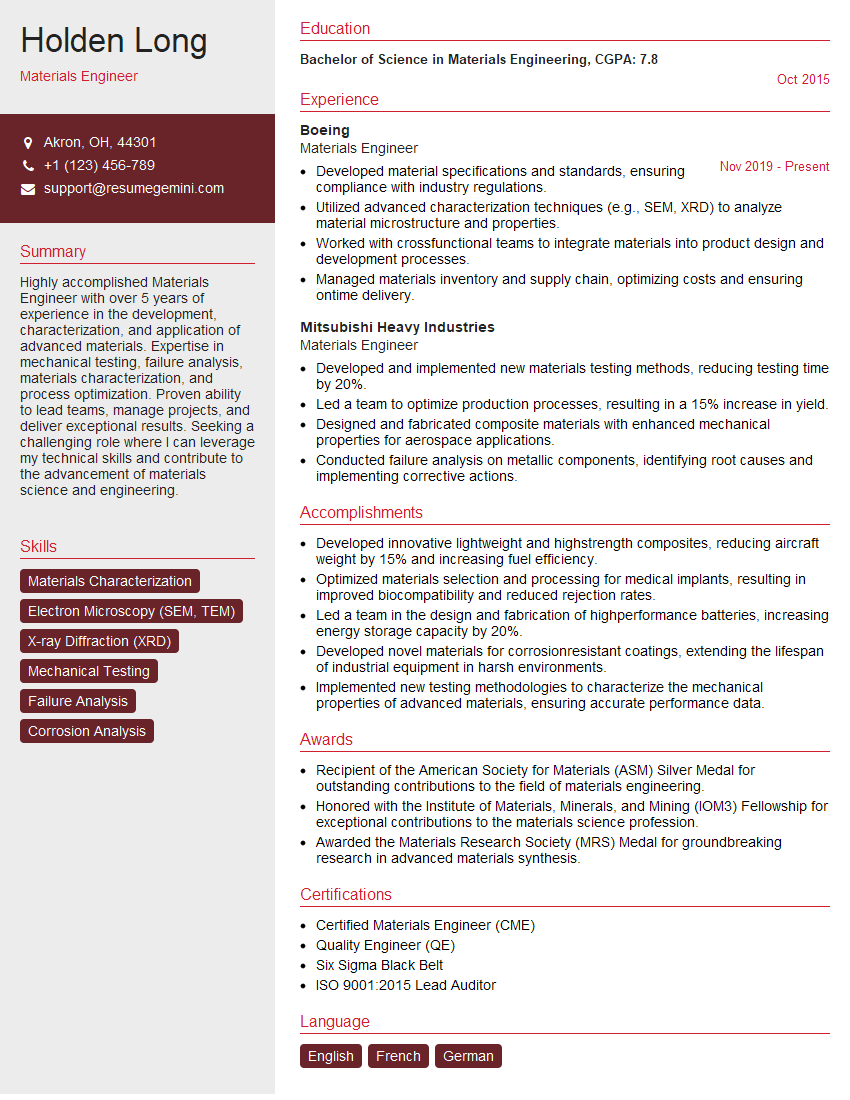
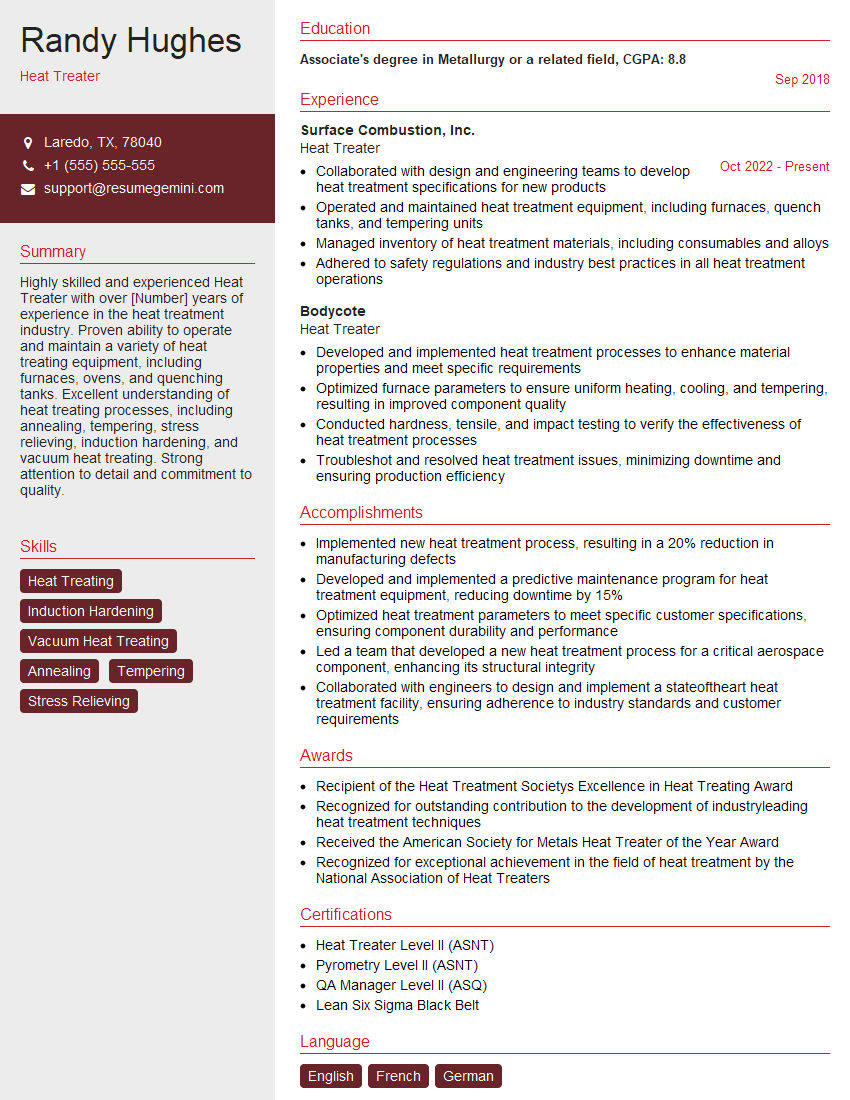
Mastering Heat Treating Equipment Maintenance opens doors to exciting career opportunities and significant professional growth within manufacturing and related industries. Your expertise in this critical area will be highly valued. To maximize your job prospects, it’s crucial to present your skills effectively through a well-crafted, ATS-friendly resume. ResumeGemini is a trusted resource that can help you build a professional and impactful resume that highlights your qualifications. Examples of resumes tailored to Heat Treating Equipment Maintenance are available to guide you, ensuring your application stands out from the competition.


Explore more articles
Users Rating of Our Blogs
Share Your Experience
We value your feedback! Please rate our content and share your thoughts (optional).
What Readers Say About Our Blog
Very informative content, great job.
good