Every successful interview starts with knowing what to expect. In this blog, we’ll take you through the top Experience in Avionics Installation and Repair interview questions, breaking them down with expert tips to help you deliver impactful answers. Step into your next interview fully prepared and ready to succeed.
Questions Asked in Experience in Avionics Installation and Repair Interview
Q 1. Explain the process of installing an aircraft transponder.
Installing an aircraft transponder involves several crucial steps, all performed with meticulous attention to detail and safety. First, we carefully review the aircraft’s documentation and the transponder’s installation manual to ensure compatibility and identify the optimal mounting location. This location needs to minimize interference with other systems and provide easy access for maintenance. Next, we prepare the aircraft by routing the necessary cables and ensuring proper grounding. This often involves careful drilling and securing of mounting brackets. The transponder itself is then securely mounted, ensuring all connectors are firmly attached. This process necessitates understanding of proper torque specifications to prevent damage to the equipment or the aircraft structure. After the physical installation, we connect the transponder to the aircraft’s electrical system and antenna. This requires precise wiring according to the aircraft’s schematics to avoid short circuits or improper functionality. Finally, we perform a comprehensive test, checking the transponder’s operation across different modes and verifying proper communication with ground stations using specialized testing equipment. This ensures its proper functionality before closing up the installation and documenting the entire process.
For example, during a recent installation on a Cessna 172, we had to carefully route the transponder’s antenna cable along the aircraft’s fuselage to avoid interference with the aircraft’s other antenna systems, and to ensure the cable was securely fastened to prevent damage during flight.
Q 2. Describe your experience troubleshooting a faulty GPS system.
Troubleshooting a faulty GPS system requires a systematic approach. I begin by reviewing the aircraft’s maintenance logs and any recent operational issues reported by the pilot. This often gives clues to the nature of the problem. Next, I conduct a visual inspection, checking for loose connections, damaged wiring, or any obvious physical damage to the GPS unit itself. Then, I utilize specialized GPS testing equipment to analyze the signals received by the GPS antenna. Low signal strength or signal dropout patterns can indicate antenna issues or environmental interference. If the antenna tests fine, I move onto checking the GPS unit’s internal components. This may involve checking power supply voltages, communication signals, and software integrity using onboard diagnostics or specialized testing tools. I’ve encountered situations where a simple power cycle resolved the issue, while others required more advanced troubleshooting steps, including replacing faulty components or updating the GPS software. In a particularly challenging case involving intermittent GPS data loss, I eventually discovered a faulty ground connection which was causing interference with the GPS signal. Addressing this resolved the problem entirely.
Q 3. How do you ensure compliance with FAA regulations during avionics installations?
Compliance with FAA regulations is paramount in avionics installations. We meticulously follow all applicable FAA Advisory Circulars (ACs) and regulations (FARs). This includes adhering to strict installation procedures, ensuring all components meet FAA-approved standards (like TSO certification), and maintaining thorough documentation of all work performed. This documentation includes a complete parts list, installation diagrams, testing results, and a detailed log of all activities. We also perform thorough inspections to ensure the installation does not compromise the aircraft’s airworthiness. Before signing off on any work, we conduct rigorous testing of the newly installed equipment to verify proper functionality and compliance with all safety standards. We always make sure the work meets or exceeds these standards, as safety is our highest priority. Failure to comply with FAA regulations can lead to serious legal and safety consequences for both the aircraft owner and the technicians involved. Therefore, detailed record-keeping and rigorous testing are essential.
Q 4. What are the common causes of avionics system malfunctions?
Avionics system malfunctions can stem from various sources. Common causes include faulty components, such as failing capacitors, integrated circuits, or damaged connectors. Environmental factors, such as extreme temperatures, humidity, or vibration, can also contribute to malfunctions. Improper installation, incorrect wiring, or inadequate grounding can cause short circuits or signal interference, leading to system failures. Software glitches or bugs can result in unexpected behavior or system crashes. In addition, interference from other electronic devices within the aircraft can disrupt the operation of certain avionics systems. Proper maintenance procedures, including regular inspections and preventative maintenance, are crucial in mitigating these issues.
For example, I once encountered a malfunctioning autopilot system caused by a loose connector in the control panel, while another case was traced to a faulty power supply unit affecting multiple systems. Identifying the root cause requires thorough investigation and systematic troubleshooting.
Q 5. Explain the difference between scheduled and unscheduled avionics maintenance.
Scheduled avionics maintenance involves regular inspections and servicing according to a predetermined schedule based on the manufacturer’s recommendations and FAA guidelines. This includes tasks like visual inspections, functional checks, and preventative maintenance to ensure the continued safe and reliable operation of the avionics systems. Unscheduled maintenance, on the other hand, is reactive and triggered by a specific malfunction or failure of an avionics component. It usually involves troubleshooting the identified problem, repairing or replacing the faulty component, and subsequently testing its functionality. Scheduled maintenance aims to prevent problems, while unscheduled maintenance addresses problems that have already occurred.
Think of it like a car: scheduled maintenance is like getting your oil changed regularly, while unscheduled maintenance is like needing to fix a flat tire or replace a broken brake pad.
Q 6. Describe your experience with different types of avionics testing equipment.
My experience encompasses a variety of avionics testing equipment, from simple multimeters for checking voltage and continuity to sophisticated specialized test sets. I’m proficient in using GPS simulators to assess the performance of GPS receivers, transponder testers for verifying transponder functionality, and communication test sets for evaluating radio communication systems. I’ve also used specialized software for analyzing flight data recorders and troubleshooting more complex system issues. Each piece of equipment has its own unique purpose and capabilities and understanding how to properly utilize these tools is critical to diagnose and resolve avionics problems effectively. The proper application of these tools and my understanding of their limitations significantly improves diagnostics. For example, I recently used a specialized test set to isolate a signal integrity issue within a VHF communication system, ultimately leading to the replacement of a faulty coaxial cable.
Q 7. How do you interpret and utilize avionics schematics and wiring diagrams?
Avionics schematics and wiring diagrams are essential tools for understanding the aircraft’s electrical system. I use them to trace wiring paths, identify connectors, and locate specific components. These diagrams provide a detailed visual representation of how various avionics components are interconnected. Understanding these diagrams is critical for troubleshooting malfunctions and performing installations correctly. I start by identifying the affected system on the schematic, and then I trace the associated wiring pathways to locate potential points of failure. The diagrams help to ensure proper connections during installations and prevent accidental short circuits or wiring errors. A thorough understanding of these diagrams is fundamental to performing efficient and safe avionics maintenance and installation.
For example, during a recent troubleshooting session, the schematic helped me quickly identify a poorly connected ground wire causing interference in the navigation system. Without the schematic, this could have been a much more difficult, time-consuming task.
Q 8. What safety precautions do you take when working with aircraft avionics systems?
Safety is paramount in avionics work. Before even touching a system, I meticulously review the aircraft’s maintenance manual and any applicable service bulletins. This ensures I understand the specific procedures and potential hazards. I always begin by grounding myself and the aircraft to prevent static discharge, which can damage sensitive electronics. Then, I follow a strict lockout/tagout procedure to prevent accidental energization of circuits. I use appropriate personal protective equipment (PPE) consistently, including anti-static wrist straps, safety glasses, and gloves. During the repair process, I meticulously document each step, including component values and locations. This rigorous approach minimizes risks and ensures the aircraft’s airworthiness.
For example, when working with high-voltage components, I use insulated tools and carefully check for any shorts or arcing before proceeding. If I encounter an unexpected situation or a component that is beyond my expertise, I immediately halt the work and consult with senior technicians or the relevant engineering documentation.
Q 9. How familiar are you with different avionics communication protocols?
I’m proficient in various avionics communication protocols, including ARINC 429, ARINC 629, and MIL-STD-1553B. ARINC 429 is a high-speed, data bus used for transferring various aircraft parameters between systems. ARINC 629 is another data bus protocol, similar to 429 but with higher data rates and more advanced features. MIL-STD-1553B is a robust, military standard protocol that’s known for its fault tolerance and is common in military aircraft. Understanding these protocols is crucial for diagnosing communication issues and integrating new systems.
My experience includes troubleshooting data bus problems by using specialized test equipment to analyze data packets, identify faulty nodes, and isolate failures. I have also worked on integrating new avionics systems onto aircraft by configuring the data bus parameters and ensuring seamless communication between the new and existing systems. This ensures that systems work together correctly to provide essential flight data.
Q 10. Explain your experience with avionics system upgrades and modifications.
I have extensive experience in avionics upgrades and modifications, encompassing everything from simple component replacements to complex system installations. One notable project involved upgrading a fleet of helicopters with new GPS systems that incorporated WAAS (Wide Area Augmentation System) technology. This improved navigational accuracy and allowed the helicopters to operate in more challenging weather conditions. The upgrade required careful planning, meticulous installation, and thorough testing to ensure seamless integration with existing systems. It included coordinating with engineers and pilots, ensuring regulatory compliance, and meticulously documenting the entire process.
Another example involved modifying an aircraft’s communication system to incorporate ADS-B (Automatic Dependent Surveillance-Broadcast) technology for improved air traffic control capabilities. This involved routing new wiring harnesses, installing the transponder and antenna, and configuring the system according to FAA regulations. This also entailed rigorous testing procedures to confirm compliance with all relevant standards and specifications before returning the aircraft to service.
Q 11. Describe your experience with soldering and crimping techniques in avionics.
Soldering and crimping are fundamental skills in avionics repair. I use various soldering techniques, including surface mount soldering for smaller components and through-hole soldering for larger ones. I always utilize the appropriate flux and solder type to ensure clean, reliable connections and prevent cold solder joints. Crimping is essential for connecting wires to terminals and connectors, ensuring a secure and reliable connection that can withstand vibration and other stresses. I use crimping tools specifically designed for aviation applications to ensure proper crimp depth and quality, confirming using a continuity tester.
I strictly adhere to industry standards and best practices during soldering and crimping to guarantee the integrity of the connections. For example, I always inspect each solder joint using a magnifying glass to ensure proper wetting and no cold solder joints, and I routinely calibrate my crimping tools. Quality control steps are crucial to avoid failures that could compromise flight safety. This attention to detail ensures that my repairs are reliable and long-lasting.
Q 12. How do you handle avionics parts inventory and management?
Effective avionics parts inventory and management are vital for efficient repairs and minimizing downtime. I’m experienced with both manual and computerized inventory systems. I use barcoding and a dedicated database to track parts, ensuring traceability and helping to prevent the use of incorrect or expired components. This reduces errors, improves efficiency, and ensures compliance with regulations.
Regular audits ensure the accuracy of the inventory, and I employ a first-in, first-out (FIFO) system for managing perishable items. For critical parts, I maintain a minimum stock level to ensure continuous operational readiness. This proactive approach minimizes delays caused by part shortages and maintains a high level of operational efficiency. Proper inventory management directly contributes to a smooth workflow, minimizing delays and potential safety risks.
Q 13. What is your experience with different types of avionics components (e.g., radios, transponders, GPS)?
My experience encompasses a wide range of avionics components, including VHF and UHF radios, transponders (Mode S and older models), GPS receivers (WAAS/EGNOS enabled), attitude and heading reference systems (AHRS), air data computers (ADC), and flight management systems (FMS). I’m familiar with their functionality, troubleshooting procedures, and the associated maintenance documentation. I understand the interconnectivity between these systems and how they contribute to the overall functionality of the aircraft.
For instance, I’ve worked on diagnosing issues with a failed transponder, tracing the problem to a faulty power supply, and successfully repairing the system. This involved understanding the transponder’s operation, electrical schematics, and using specialized test equipment to pinpoint the faulty component and ensure compliance with all applicable regulatory standards.
Q 14. Describe a challenging avionics repair you successfully completed.
One challenging repair involved a malfunctioning air data computer (ADC) on a small business jet. The ADC was providing erroneous airspeed and altitude data, causing significant concerns for the pilots. Initial diagnostic tests pointed towards a possible internal failure within the ADC’s processing unit, which is a highly complex and expensive component. Simply replacing the ADC without further investigation would have been costly and potentially ineffective. After a thorough examination of the schematics and performing component-level testing, I isolated the problem to a specific integrated circuit (IC) within the ADC. Successfully replacing this IC resolved the problem, and the aircraft returned to service at a fraction of the cost of a complete ADC replacement.
This experience highlighted the importance of meticulous troubleshooting, my strong understanding of avionics systems architecture, and the value of prioritizing cost-effective solutions without compromising safety or airworthiness. The successful repair underscored the importance of having strong problem-solving skills and detailed component-level knowledge within the avionics field.
Q 15. How do you prioritize multiple avionics repair tasks?
Prioritizing avionics repair tasks requires a systematic approach that balances urgency, safety, and operational impact. I typically use a combination of methods. First, I assess the severity of each issue using a risk matrix. This matrix considers factors like the impact on flight safety (e.g., critical system failure versus minor malfunction), the aircraft’s operational readiness, and regulatory compliance. For instance, a failed transponder would be top priority due to its direct impact on safety and legal compliance, while a malfunctioning cabin entertainment system would have a lower priority unless it affected safety systems. Next, I consider the available resources – personnel, parts, and tools – and schedule tasks accordingly, leveraging techniques like critical path analysis to ensure efficient workflow. Finally, I utilize a work order system, often a digital database, to track task progress, deadlines and associated documentation. This system makes it easy to monitor the overall maintenance schedule and identify any potential bottlenecks.
For example, imagine a scenario where we have a failed GPS, a malfunctioning autopilot, and a faulty cabin light. The GPS failure would be my highest priority as it’s critical for navigation. Then, I’d prioritize the autopilot as a secondary issue as it is critical for easier and safer flight operations. The faulty cabin light would be the lowest priority unless there are night operations involved.
Career Expert Tips:
- Ace those interviews! Prepare effectively by reviewing the Top 50 Most Common Interview Questions on ResumeGemini.
- Navigate your job search with confidence! Explore a wide range of Career Tips on ResumeGemini. Learn about common challenges and recommendations to overcome them.
- Craft the perfect resume! Master the Art of Resume Writing with ResumeGemini’s guide. Showcase your unique qualifications and achievements effectively.
- Don’t miss out on holiday savings! Build your dream resume with ResumeGemini’s ATS optimized templates.
Q 16. What are your troubleshooting strategies for intermittent avionics problems?
Troubleshooting intermittent avionics problems is challenging but crucial for maintaining aircraft safety and reliability. My strategy relies on a methodical, step-by-step approach. First, I meticulously gather all available information, including pilot reports, maintenance logs, and any relevant data from onboard diagnostic systems. This helps narrow down potential causes. Next, I employ a ‘divide and conquer’ strategy, isolating potential problem areas by testing individual components and systems. I also utilize appropriate test equipment, such as oscilloscopes, multimeters, and specialized avionics testers, to ensure accurate measurements and diagnostics. Environmental factors such as temperature and humidity are also taken into consideration. Often, intermittent problems are related to loose connections, corroded components, or failing sensors affected by such environmental factors. I often replicate the problem conditions to isolate the root cause. For example, if the problem occurs only during high-altitude flight, I might simulate altitude in a controlled environment to observe the system’s behavior.
Once the faulty component is identified, I’ll replace it with a verified and functioning component, thoroughly documenting each step. For particularly challenging cases, I may consult technical manuals, online forums, or contact experienced colleagues for support.
Q 17. How do you document your avionics maintenance and repair activities?
Accurate and complete documentation is paramount in avionics maintenance and repair. I meticulously record every step of my work using standardized forms and digital systems compliant with relevant regulations (e.g., FAA regulations). This documentation includes the aircraft’s identification, the date and time of the work performed, a detailed description of the problem, the troubleshooting steps taken, parts replaced, and any relevant test data. I always include digital images or videos when necessary. This complete documentation ensures traceability, accountability, and facilitates future maintenance and repairs. Furthermore, detailed notes improve communication with other technicians and ensure regulatory compliance. The documentation may also include the serial numbers of replaced parts, the calibration certificates of testing equipment, and the signatures of all involved personnel.
For example, I might use a digital maintenance tracking system to log all activities and automatically create a detailed report. This report will not only include the steps taken but will also be auditable and easily searchable.
Q 18. Explain your experience with using diagnostic software for avionics systems.
I have extensive experience using various diagnostic software packages for avionics systems. My proficiency ranges from integrated diagnostic systems built into the aircraft’s avionics suite to specialized ground support equipment software. These systems provide valuable data including system health, performance parameters, and fault codes. This helps pinpoint the root cause of malfunctions quickly and efficiently. For example, I’m proficient with systems that allow real-time monitoring of aircraft parameters or download and analyze recorded flight data. I understand the importance of correctly interpreting the data and correlating it with observed symptoms. I’m also aware of the specific limitations of different diagnostic software and know when to employ alternative troubleshooting techniques. Beyond simply using the software, I’m also comfortable analyzing the output and making informed decisions based on the information provided.
For instance, I’ve used a manufacturer-specific diagnostic tool to troubleshoot an intermittent failure in an aircraft’s flight control system. The software provided detailed fault codes that, combined with my understanding of the system’s architecture, allowed me to identify a faulty sensor.
Q 19. How familiar are you with different types of aircraft electrical systems?
My understanding of aircraft electrical systems is comprehensive, encompassing various architectures from simpler DC systems to complex AC and DC hybrid systems found in modern aircraft. I’m familiar with the different types of buses, power distribution networks, and protective devices like circuit breakers and fuses. I understand the importance of grounding and bonding to prevent electrical interference and hazards. I am also experienced in working with various voltage levels, from low-voltage control circuits to high-voltage systems powering essential equipment. Beyond the theoretical understanding, I have hands-on experience working with these systems, troubleshooting faults, and performing installations and repairs. This includes experience with both single-phase and three-phase AC systems, as well as various DC power distribution schemes.
For example, I’ve worked extensively on aircraft with both 28V DC and 115V AC systems, diagnosing and resolving power distribution problems.
Q 20. Describe your experience with working on various aircraft types.
I’ve worked on a variety of aircraft types throughout my career, including general aviation aircraft, commercial airliners, and military aircraft. This experience has provided me with valuable insights into different avionics systems, maintenance procedures, and regulatory requirements. Each aircraft type presents its unique challenges and requires specialized knowledge. The experience working on different platforms broadened my knowledge of various avionics manufacturers and the way these systems integrate into the aircraft. I’m familiar with both legacy and modern avionics technologies, including glass cockpits and integrated modular avionics (IMA) systems. This versatility allows me to adapt quickly to new situations and effectively troubleshoot diverse avionics problems.
For instance, I’ve worked on Cessna 172s, Boeing 737s, and Lockheed Martin C-130s, each requiring a distinct set of skills and knowledge.
Q 21. What is your understanding of electromagnetic interference (EMI) and its impact on avionics?
Electromagnetic interference (EMI) is a significant concern in avionics, as it can disrupt the operation of sensitive electronic equipment, potentially leading to malfunctions or even catastrophic failures. EMI is unwanted electromagnetic energy that can interfere with the operation of electronic systems. It can originate from various sources, both internal (within the aircraft) and external (from other aircraft or ground-based equipment). Understanding the sources, pathways, and potential impact of EMI is critical to designing, installing, and maintaining safe and reliable avionics systems. My experience involves implementing and troubleshooting various EMI mitigation techniques, including proper grounding, shielding, and the use of filters and absorbers to reduce the impact of EMI on avionics systems.
For example, during an avionics installation, I ensured proper grounding and shielding were implemented to prevent EMI from disrupting the navigation system’s performance. I also regularly inspect wiring harnesses for signs of damage that could cause EMI issues.
Q 22. How do you ensure the proper grounding and bonding of avionics components?
Proper grounding and bonding in avionics is crucial for preventing electrical interference, ensuring system integrity, and preventing potential hazards like fire or equipment damage. It involves creating a low-impedance path for stray currents to flow to the aircraft’s main structural ground, effectively neutralizing electrical noise and preventing voltage spikes.
We achieve this through several methods. First, we meticulously inspect all existing grounding points and ensure they’re clean, free from corrosion, and making good contact. This often involves using specialized cleaning tools and applying appropriate anti-corrosion compounds. Next, we use high-quality grounding wires of the correct gauge, ensuring they are securely fastened to the appropriate ground points using the correct hardware (e.g., bonding straps, clamps, and lugs). We carefully follow the aircraft’s wiring diagrams and installation manuals to ensure the grounding paths meet the manufacturer’s specifications. For instance, on a recent installation of a new GPS system, I specifically ensured that the ground wire from the unit was routed directly to the designated airframe ground point through a dedicated, shielded cable run, avoiding any potential interference paths.
Finally, we perform continuity testing after installation using a multimeter to verify low resistance pathways. A high resistance reading indicates a poor ground connection, requiring investigation and rectification. Think of it like plumbing – if you don’t have proper drainage, you get a backup. In avionics, poor grounding is a similar hazard, potentially leading to malfunctions or worse.
Q 23. What are the common causes of corrosion in avionics systems and how do you prevent it?
Corrosion in avionics is a significant threat to safety and reliability, often leading to intermittent faults, signal degradation, and even complete system failure. Common culprits include exposure to moisture, salt spray (especially near coastal areas), and dissimilar metal contact (galvanic corrosion). For example, aluminum airframes combined with steel or copper components can create electrochemical cells that accelerate corrosion.
Prevention involves a multi-pronged approach. We use corrosion-resistant materials whenever possible, such as stainless steel fasteners and specialized coatings on connectors. Regular inspections are crucial; during these, we meticulously check for any signs of corrosion, including pitting, discoloration, or white powdery deposits. We use specialized cleaning agents and techniques to remove any corrosion and apply protective coatings, such as anti-corrosion grease or paint, as appropriate. Proper sealing of connectors and cable entries is also critical to prevent moisture ingress. On a recent inspection, I identified a corroded connector on a flight control computer. Early detection and prompt replacement prevented a potential catastrophic failure.
Finally, we always follow the manufacturer’s recommendations for preventative maintenance, which might include the use of specialized corrosion inhibitors or humidity control measures in storage areas.
Q 24. Describe your experience with working with different types of connectors and cables.
My experience encompasses a wide range of connectors and cables commonly used in avionics, including circular connectors (like MIL-DTL-38999 and MS3106), rectangular connectors (e.g., D-subminiature), and various coaxial cables (RG-58, RG-400). Each type demands specific handling procedures and testing methods. For example, circular connectors require careful alignment and precise torque during mating to ensure proper electrical contact and prevent damage to the pins.
I’m proficient in crimping various types of cable terminations, using specialized tools to ensure a secure and reliable connection. This is particularly important for high-current applications and signal transmission lines where loose connections can lead to significant problems. I’ve worked with shielded cables, employing proper grounding techniques to minimize electromagnetic interference (EMI). I am also familiar with the differences between various cable types, understanding their respective impedance and bandwidth characteristics to ensure proper signal transmission. In one instance, we discovered a faulty crimp on a data bus cable, leading to intermittent communication failures. Identifying and replacing this faulty termination solved the issue quickly.
Furthermore, I’m knowledgeable about connector pinouts and their associated functions, enabling efficient troubleshooting and repairs.
Q 25. Explain your experience with using specialized avionics tools and equipment.
I have extensive experience utilizing a variety of specialized avionics tools and equipment, including but not limited to: multimeters for electrical testing, oscilloscopes for signal analysis, specialized crimpers and wire strippers, soldering irons for delicate repair work, cable testers for continuity and short checks, and specialized torque wrenches for ensuring proper tightening of connectors and fasteners.
I am also familiar with the use of more advanced equipment such as signal generators, spectrum analyzers, and fault diagnostic systems. These advanced tools allow for deeper investigation of complex system issues and faster troubleshooting. For example, recently, we utilized a fault isolation system to pinpoint a malfunction within a sophisticated flight management system. This saved considerable time and effort compared to traditional troubleshooting methods.
My experience also extends to specialized test equipment that may be used to test individual components, such as integrated circuits or sensors, prior to installation or after repair.
Q 26. How do you maintain your avionics tools and equipment?
Maintaining avionics tools and equipment is vital for ensuring accuracy, reliability, and safety. Each tool is cleaned and inspected after each use, and more thorough maintenance is performed according to the manufacturer’s guidelines and established maintenance schedules. This includes calibrating test equipment regularly using certified standards to guarantee accuracy. I maintain detailed records of calibrations, repairs, and maintenance performed on each tool.
For instance, multimeters are calibrated annually, while specialized crimping tools are routinely inspected for wear and tear, with parts replaced as needed. Storage is equally important. Tools are stored in designated, well-organized areas, protecting them from damage and ensuring easy access when needed. The overall goal is to preserve the longevity and reliability of the equipment, thereby minimizing the risk of errors during installation or repairs.
Q 27. Describe your experience with working under pressure and meeting deadlines.
Working in avionics often requires managing pressure and meeting tight deadlines. In my experience, this involves careful planning, effective prioritization, and clear communication. I prioritize tasks based on urgency and impact, focusing on critical repairs first. If unexpected issues arise, I promptly assess the situation, adapt the plan if needed, and communicate the changes to relevant personnel. Proactive communication prevents delays and ensures everyone remains informed.
For example, during an aircraft turnaround, we encountered an unexpected fault with a communication system. By efficiently coordinating with the team and utilizing our available resources strategically, we completed the repair within the allocated time, preventing any delays in the flight schedule. I believe a calm and organized approach is essential in high-pressure situations; my organizational skills and methodical problem-solving approach help to minimize stress and ensure timely completion of tasks.
Q 28. How do you stay up-to-date with the latest avionics technologies and regulations?
Staying current in the rapidly evolving field of avionics requires a multifaceted approach. I regularly attend industry conferences and workshops, which provide valuable insights into the latest technologies and best practices. I actively participate in professional organizations like the IEEE (Institute of Electrical and Electronics Engineers) to engage with other professionals and stay abreast of industry trends.
Furthermore, I subscribe to relevant industry publications, and online resources that provide timely updates on new technologies and regulatory changes. Continuous professional development is key, and I actively seek out training courses on new avionics systems and technologies. For example, I recently completed a course on the latest developments in ADS-B (Automatic Dependent Surveillance-Broadcast) technology, which is crucial for keeping up with evolving air traffic management systems. Staying informed ensures that I can consistently meet the highest standards of safety, efficiency, and compliance in my work.
Key Topics to Learn for Avionics Installation and Repair Interviews
- Avionics Systems Understanding: Comprehend the fundamental principles of various avionics systems, including navigation, communication, and flight control systems. Be prepared to discuss their interoperability and integration within an aircraft.
- Installation Procedures: Demonstrate a thorough understanding of proper installation techniques, adhering to safety regulations and manufacturer specifications. Be ready to discuss troubleshooting common installation issues.
- Troubleshooting and Repair Techniques: Master the diagnostic process for identifying malfunctions in avionics systems. Be able to explain your approach to problem-solving, including the use of specialized tools and testing equipment.
- Safety Regulations and Compliance: Showcase your knowledge of relevant safety regulations and compliance standards within the aviation industry. Discuss how these standards impact installation and repair procedures.
- Wiring and Cabling: Detail your expertise in aircraft wiring diagrams and schematics. Be able to explain proper wiring techniques and the importance of maintaining accurate documentation.
- Testing and Calibration: Explain your experience with testing and calibrating avionics equipment to ensure accuracy and functionality. Be ready to discuss specific testing procedures and their significance.
- Maintenance Records and Documentation: Discuss your ability to meticulously maintain accurate and up-to-date maintenance records, complying with industry best practices and regulations.
- Specific Avionics Components: Develop a strong understanding of the operation and maintenance of specific avionics components, such as GPS receivers, transponders, and flight data recorders.
- FAA Regulations (or equivalent): Showcase familiarity with relevant FAA (or other national aviation authority) regulations and their practical application in your work.
Next Steps
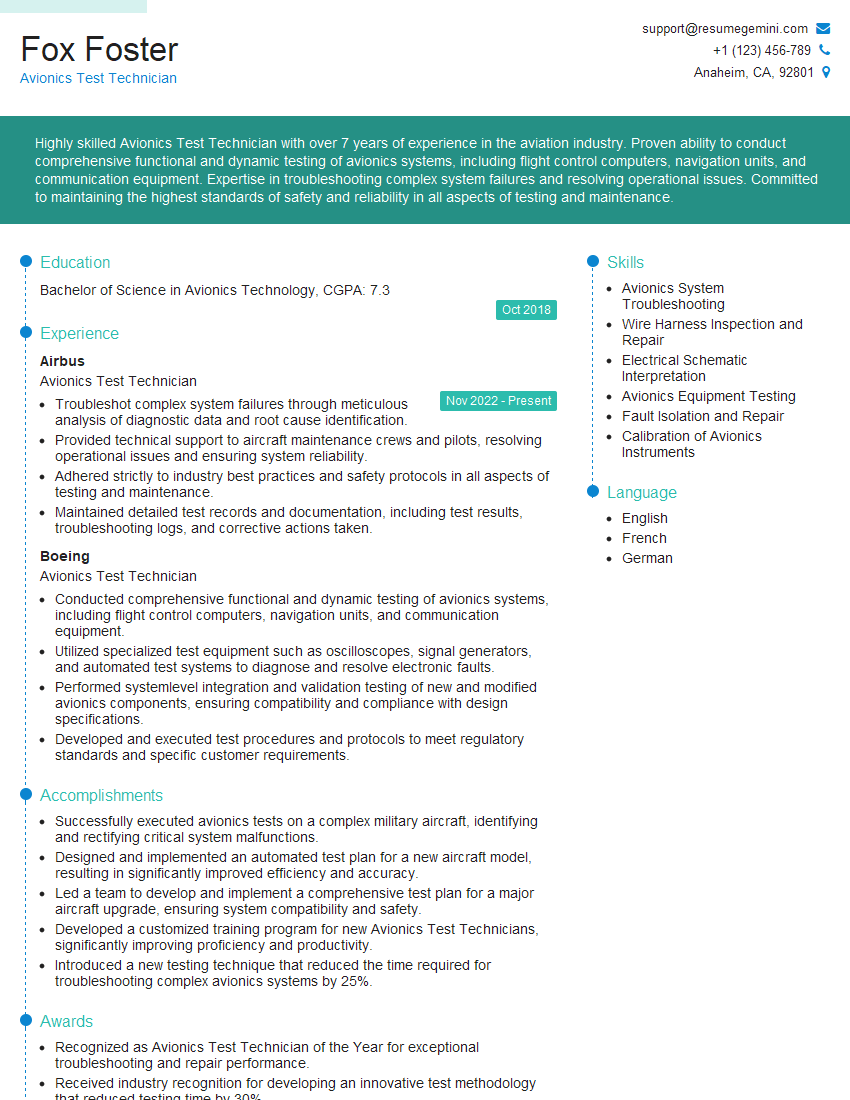
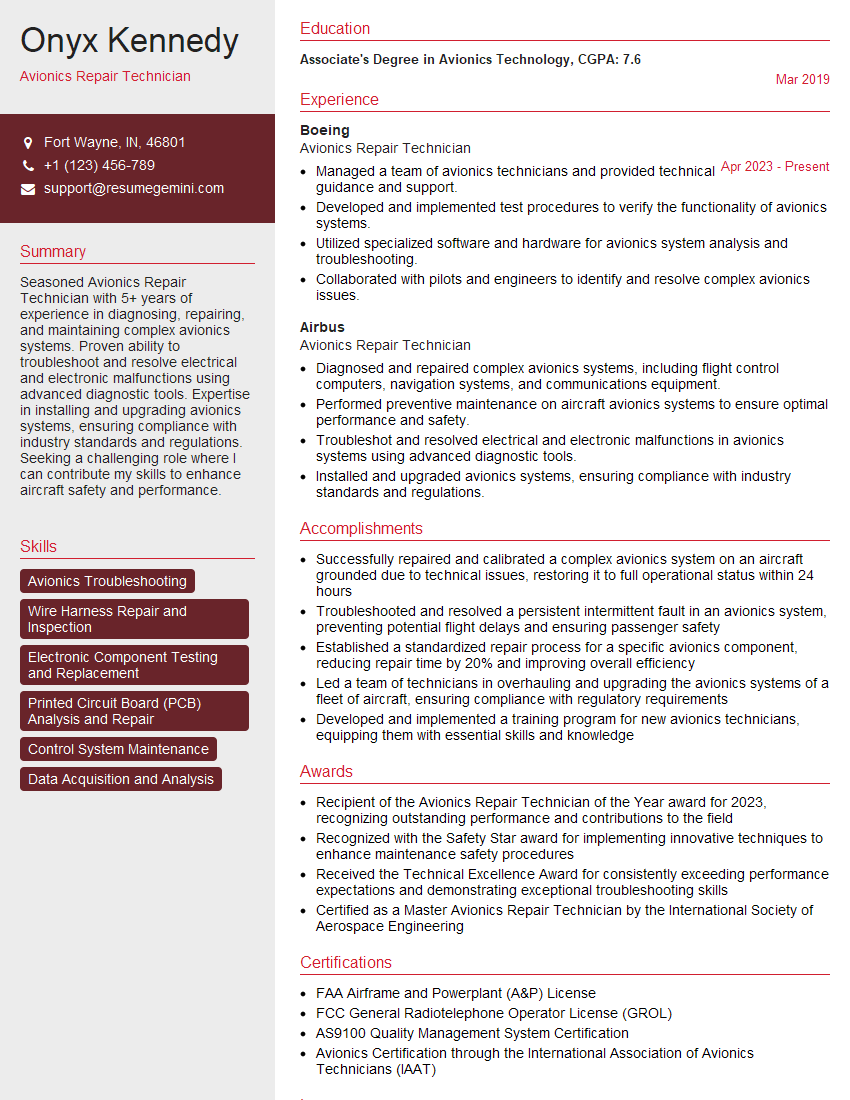
Mastering avionics installation and repair is crucial for a successful and rewarding career in aviation. This specialized skill set is highly sought after, leading to excellent job prospects and opportunities for career advancement. To maximize your chances of landing your dream role, focus on crafting a compelling and ATS-friendly resume that effectively highlights your skills and experience. ResumeGemini is a trusted resource that can help you build a professional resume tailored to the aviation industry. We provide examples of resumes specifically designed for candidates with experience in Avionics Installation and Repair to help guide you in creating your own impactful resume.
Explore more articles
Users Rating of Our Blogs
Share Your Experience
We value your feedback! Please rate our content and share your thoughts (optional).
What Readers Say About Our Blog
Very informative content, great job.
good