Cracking a skill-specific interview, like one for Experience in cross-border trucking, requires understanding the nuances of the role. In this blog, we present the questions you’re most likely to encounter, along with insights into how to answer them effectively. Let’s ensure you’re ready to make a strong impression.
Questions Asked in Experience in cross-border trucking Interview
Q 1. Explain the process of obtaining necessary permits and licenses for cross-border trucking.
Obtaining the necessary permits and licenses for cross-border trucking is a multi-step process that varies depending on the countries involved. It’s like navigating a complex maze, but with careful planning, it becomes manageable. First, you need a valid commercial driver’s license (CDL) from your home country. Then, you’ll need to obtain specific permits and licenses from each country you’ll be operating in. This often includes:
- International Registration Plan (IRP): This simplifies the registration process for vehicles operating across multiple jurisdictions. Think of it as a one-stop shop for registration in several states or provinces.
- Unified Carrier Registration (UCR): This is a requirement in the US and Canada for carriers operating interstate and internationally. It’s essentially a registration fee that allows you to operate legally.
- Customs Broker License (potentially): Depending on the complexity of the goods being transported and your involvement in customs clearance, you might need a license to act as a customs broker. This license allows you to prepare and submit customs documentation on behalf of the shipper or consignee.
- Country-Specific Permits: Each country may have its own specific permits related to transporting hazardous materials, oversized loads, or specific types of goods. For example, permits for carrying agricultural products will differ from those carrying construction materials.
The application process typically involves submitting various documents, including proof of insurance, vehicle registration, and background checks. It’s crucial to research the specific requirements for each country well in advance to avoid delays. Failing to obtain the correct documentation can lead to significant fines and delays at the border.
Q 2. Describe your experience with various international trucking regulations and compliance.
My experience with international trucking regulations and compliance has been extensive, spanning several years and numerous border crossings between the US, Canada, and Mexico. I’ve worked with a diverse range of regulations, including those related to:
- Hours of Service (HOS): Understanding and adhering to HOS regulations is paramount to prevent driver fatigue and ensure safety. These regulations vary slightly between countries, requiring careful attention to detail and planning.
- Vehicle Maintenance and Safety Standards: Ensuring my vehicles meet the mechanical and safety standards of each country is crucial for legal operation and safety. This includes regular vehicle inspections and adherence to specific equipment requirements.
- Hazardous Materials Regulations: Transportation of hazardous materials requires special permits and training. Understanding the classification, handling, and documentation requirements for hazardous materials is critical and requires specialized training.
- Weight and Dimension Restrictions: Different countries and even states have different limits on the weight and dimensions of trucks and trailers. It’s essential to plan routes carefully to avoid violating these limits, which can result in significant fines.
I have a proven track record of maintaining complete compliance, keeping meticulous records, and proactively adapting to evolving regulations. I believe proactive compliance is the best approach to avoiding costly penalties and operational disruptions.
Q 3. How do you handle customs inspections and documentation requirements?
Handling customs inspections and documentation is a critical part of cross-border trucking. It’s like preparing for a thorough examination, and preparation is key. The process begins well before arriving at the border. I ensure all necessary documentation is accurate and readily available, including:
- Commercial Invoice: This details the goods being transported, their value, and the parties involved.
- Packing List: A detailed list of the contents of each package, crucial for customs agents to verify the shipment contents.
- Bill of Lading (BOL): This acts as a contract of carriage between the shipper and the carrier. It proves ownership and transportation details.
- Certificate of Origin: This document certifies the origin of the goods, often important for tariffs and trade agreements.
Upon arrival at the border, I present all documentation to customs officials. I’m prepared to answer any questions they have about the shipment and ensure everything is in order. If an inspection is required, I cooperate fully and allow them access to the vehicle and its contents. Experience has taught me that clear communication and organization are crucial for a smooth customs process. Any issues or discrepancies are addressed promptly and professionally.
Q 4. What are your strategies for managing delays at border crossings?
Delays at border crossings are inevitable, but effective strategies can mitigate their impact. My approach is multi-pronged:
- Pre-Trip Planning: Thorough planning is paramount, involving route optimization to avoid known congestion points. Checking border crossing wait times online before departure can make a big difference.
- Documentation Readiness: Having all necessary documentation readily available and organized significantly reduces processing time at the border. This prevents delays caused by missing papers.
- Communication: Maintaining regular communication with shippers, consignees, and border officials ensures everyone is aware of any potential delays and proactive solutions are in place.
- Contingency Planning: Having backup plans for unexpected delays, like alternate routes or lodging options for drivers, is essential. This minimizes the financial and operational disruptions from unforeseen issues.
- Technology Utilization: Utilizing technology, such as border crossing apps that provide real-time wait times and updates, can help with efficient decision-making. This ensures proactive response to changing conditions.
While I can’t eliminate delays entirely, my approach focuses on minimizing their impact on schedule and cost by adopting a proactive, well-organized strategy.
Q 5. How familiar are you with NAFTA/USMCA and its impact on cross-border trucking?
I am very familiar with NAFTA/USMCA and its significant impact on cross-border trucking. The USMCA (United States-Mexico-Canada Agreement), which replaced NAFTA, streamlined many aspects of cross-border trade, including trucking. Key impacts include:
- Reduced Tariffs: The agreement reduced or eliminated tariffs on many goods, facilitating increased trade and requiring more efficient transport.
- Simplified Customs Procedures: The USMCA aimed to simplify customs procedures, leading to faster processing times at border crossings, reducing delays for carriers.
- Increased Regulatory Harmonization: While not completely harmonized, the agreement pushed for greater alignment of regulations across the three countries, making cross-border operations less complex.
- Rules of Origin: Understanding the rules of origin is crucial under USMCA. These rules determine whether goods qualify for preferential tariff treatment, impacting what documents are needed and how goods are classified for transport.
My experience includes navigating these changes and adapting my operations to remain compliant with the updated agreement. Understanding these nuances is crucial for optimizing cross-border shipping routes and processes and is a key part of my expertise. Staying up-to-date with any modifications or interpretations of USMCA remains a priority.
Q 6. Explain your experience with different modes of transportation in cross-border logistics.
Cross-border logistics often require flexibility, and I’m proficient in utilizing various modes of transportation, depending on the specific needs of the shipment. This isn’t just about trucks; it’s about optimizing the entire journey:
- Over-the-Road Trucking: This is the primary mode of transportation, but efficient route planning and driver management are critical for timeliness and cost-effectiveness.
- Intermodal Transportation: Combining trucking with rail or sea transport can be more cost-effective for long distances or high volumes. This requires coordinating handoffs between different modes seamlessly.
- Last-Mile Delivery: Efficient last-mile delivery solutions ensure timely arrival to the final destination, often requiring integration with local delivery services or specialized equipment for handling specific goods.
Choosing the right combination of modes depends on factors like distance, urgency, volume of goods, and cost considerations. My approach is to analyze each shipment and determine the most efficient and cost-effective approach. For example, a high-volume shipment of goods from Canada to the southern US might leverage rail for the bulk transport and then use trucking for the last mile. This optimizes both cost and delivery times.
Q 7. Describe your proficiency with TMS (Transportation Management Systems) software.
I possess extensive proficiency in using various Transportation Management Systems (TMS) software. TMS software is like the central nervous system for efficient logistics management. I’m experienced with several leading TMS platforms, including [mention specific TMS software if comfortable, e.g., ‘McLeod Software’, ‘TMW Systems’, ‘Oracle Transportation Management’]. My skills encompass:
- Route Optimization: Using the software’s features to plan efficient routes that minimize distance, time, and fuel costs is a key skill.
- Load Planning and Assignment: Efficiently assigning loads to available drivers and vehicles based on capacity and route optimization is crucial.
- Documentation Management: Using the TMS to manage all relevant documentation, including BOLs, customs forms, and proof of delivery, streamlines the entire process.
- Tracking and Monitoring: Real-time tracking of shipments through GPS and other technologies helps with proactive management of potential delays or issues.
- Reporting and Analysis: I use the TMS to generate reports on key performance indicators (KPIs) to identify areas for improvement and optimize operations. This ensures continuous improvement.
My experience in using TMS software allows me to handle complex logistics efficiently and to make data-driven decisions to optimize cost and efficiency in cross-border trucking.
Q 8. How do you ensure the safety and security of goods during cross-border transport?
Ensuring the safety and security of goods during cross-border transport is paramount. It involves a multi-layered approach encompassing proactive measures and robust response strategies.
- Secure Transportation: We utilize GPS tracking on all vehicles, providing real-time location updates and alerting us to any deviations from the planned route. This is complemented by tamper-evident seals and secure loading procedures to prevent unauthorized access. For high-value goods, we often employ specialized security personnel or armored vehicles.
- Insurance and Bonding: Comprehensive cargo insurance is essential, protecting against loss or damage due to accidents, theft, or natural disasters. We also utilize customs bonds to ensure compliance with import/export regulations and guarantee payment of duties.
- Driver Vetting and Training: Drivers undergo thorough background checks and receive training on security protocols, defensive driving, and emergency procedures. They are also equipped with communication devices for constant contact.
- Compliance and Documentation: Meticulous record-keeping and adherence to all relevant regulations are crucial. Proper documentation, including manifests, certificates of origin, and customs declarations, ensures smooth border crossings and minimizes delays.
For example, during a recent shipment of pharmaceuticals from Canada to Mexico, the real-time tracking allowed us to quickly reroute the truck around a significant traffic jam, preventing a delivery delay which would’ve been costly for our client. The meticulous adherence to temperature-sensitive cargo protocols ensured the product arrived in perfect condition.
Q 9. How do you manage driver hours of service regulations across international borders?
Managing driver hours of service (HOS) across international borders requires a deep understanding of multiple regulations. Each country has its own rules regarding driving limits, rest periods, and record-keeping.
- Electronic Logging Devices (ELDs): We utilize ELDs in all our vehicles to accurately track driving time and ensure compliance. ELDs provide a digital record that’s easily accessible for audits.
- International Regulations Awareness: Our dispatchers and drivers receive regular training on HOS regulations in all the countries we operate in. This includes understanding differences in daily and weekly limits, break requirements, and exceptions.
- Careful Route Planning: Routes are meticulously planned to account for HOS regulations, including border crossing times and potential delays. This involves considering rest stops, time zone differences, and potential traffic congestion.
- Team Coordination: Effective communication between drivers and dispatchers is key. Dispatchers monitor driver logs in real time to prevent violations and ensure sufficient rest time.
Imagine a shipment from the US to Canada. The driver needs to be aware that Canadian HOS rules might differ from US rules, demanding specific breaks and overall driving time limitations. Our system ensures we account for those changes and plan accordingly.
Q 10. What are the main challenges faced in cross-border trucking, and how do you address them?
Cross-border trucking presents numerous challenges.
- Border Crossings and Customs Delays: Navigating customs procedures and border controls can be time-consuming and complex, resulting in unexpected delays. We mitigate this through proper documentation, pre-clearance processes, and strong relationships with customs brokers.
- Varying Regulations: Each country has its own regulations regarding trucking permits, vehicle inspections, and safety standards. We ensure compliance by working with local experts and staying updated on regulatory changes.
- Infrastructure and Road Conditions: Road conditions and infrastructure can vary significantly across borders, leading to potential delays or damage. We choose routes strategically, taking into account road quality, and adjust our speed accordingly.
- Fuel Costs and Currency Fluctuations: Fuel prices and currency exchange rates can significantly impact profitability. We use fuel hedging strategies to mitigate fuel price volatility and monitor currency fluctuations closely.
- Security Risks: Theft and cargo damage pose considerable risks. We employ various security measures, including GPS tracking, secure loading, and insurance.
For instance, dealing with varying fuel prices across multiple countries necessitates careful budgeting and fuel purchasing strategies. We actively monitor fuel prices in each region to optimize cost.
Q 11. Describe your experience with international shipping documentation (e.g., Bill of Lading, Commercial Invoice).
I have extensive experience with international shipping documentation.
- Bill of Lading (B/L): The B/L is a crucial document acting as a contract of carriage between the shipper and carrier, serving as proof of ownership and a receipt for goods. It specifies details of the shipment, including the origin, destination, and description of goods.
- Commercial Invoice: This document provides a detailed description of the goods being shipped, including quantity, unit price, and total value. It’s used by customs authorities to assess duties and taxes.
- Packing List: A packing list itemizes the contents of each package, aiding in verification and customs inspections.
- Certificate of Origin: This document verifies the origin of the goods, which is important for trade agreements and tariff calculations.
In one instance, a discrepancy in the description of goods on the commercial invoice led to a delay at the border. Our team quickly rectified the issue by providing supporting documentation, preventing significant delays.
Q 12. Explain your understanding of Incoterms and their application in cross-border shipments.
Incoterms (International Commercial Terms) are standardized trade terms defining the responsibilities of the buyer and seller in an international transaction. They clarify who is responsible for various aspects of the shipment, including costs, risks, and insurance.
- Examples:
EXW(Ex Works) places most responsibility on the buyer, whileDDP(Delivery Duty Paid) places most on the seller.CIF(Cost, Insurance, and Freight) is commonly used for sea freight, where the seller covers cost, insurance, and freight to the named port of destination. - Application: We use Incoterms to define the precise responsibilities of our clients and ourselves in the shipping contract. This eliminates ambiguity and potential disputes.
- Impact: Selecting the correct Incoterm is vital to prevent misunderstandings and disputes regarding liability and costs.
For example, using CIF clarifies that we are responsible for freight and insurance to the port, while the buyer is responsible for customs clearance and inland transportation from the port.
Q 13. How do you manage risk associated with cross-border transportation (e.g., theft, damage)?
Managing risk in cross-border transportation is crucial.
- Insurance: Comprehensive cargo insurance is the cornerstone of risk management, covering loss or damage due to various causes.
- Security Measures: We employ GPS tracking, tamper-evident seals, and secure loading/unloading procedures to minimize theft and damage.
- Route Planning: We carefully choose routes to avoid high-risk areas and consider factors like road conditions and traffic patterns.
- Driver Training: Drivers receive training in defensive driving, security awareness, and emergency procedures.
- Risk Assessment: Before each shipment, we conduct a risk assessment identifying potential threats and implementing appropriate mitigation strategies. This includes considering the type of cargo, route, and security situation in the transit countries.
One instance involved a high-value electronics shipment. We implemented extra security measures including armed escorts and real-time tracking, successfully preventing theft.
Q 14. Describe your experience with different types of cargo and their specific handling requirements.
My experience encompasses a wide range of cargo types, each with unique handling requirements:
- Temperature-Sensitive Cargo (Pharmaceuticals, Perishables): These require specialized refrigerated trailers and meticulous temperature monitoring throughout the transit. We use GPS-enabled temperature trackers to ensure compliance.
- Hazardous Materials (Chemicals, Flammables): These necessitate adherence to stringent regulations, including specialized transportation permits, packaging, and handling procedures. Drivers receive specialized training for hazmat transportation.
- Oversized/Heavy Cargo: This requires specialized permits, routing plans, and escort vehicles. We work with experienced partners for this type of cargo.
- General Merchandise: This includes a wide variety of goods, each requiring careful handling and secure loading to prevent damage.
Handling perishable goods, for example, requires precise temperature control and rapid transit. We track the temperature continuously to ensure the products remain viable throughout the shipment.
Q 15. How do you track and trace shipments across international borders?
Tracking and tracing shipments across international borders requires a multi-faceted approach leveraging technology and strong communication. We primarily utilize GPS tracking devices fitted to our trucks, providing real-time location data accessible through dedicated software platforms. This allows us to monitor the truck’s progress, identify potential delays, and proactively address any issues.
In addition to GPS tracking, we rely on electronic documentation and digital manifests. These records provide a detailed audit trail of the shipment’s journey, including pickup, border crossings, and delivery. Integration with customs agencies’ systems allows for seamless tracking through each checkpoint. For example, we use systems that automatically update the shipment’s status as it clears customs in various countries. This detailed tracking gives clients real-time visibility, fostering transparency and trust.
Finally, regular communication with drivers is crucial. Our drivers are equipped with communication devices and report regularly on their progress and any unforeseen circumstances. This proactive communication ensures timely intervention in case of delays or unexpected events.
Career Expert Tips:
- Ace those interviews! Prepare effectively by reviewing the Top 50 Most Common Interview Questions on ResumeGemini.
- Navigate your job search with confidence! Explore a wide range of Career Tips on ResumeGemini. Learn about common challenges and recommendations to overcome them.
- Craft the perfect resume! Master the Art of Resume Writing with ResumeGemini’s guide. Showcase your unique qualifications and achievements effectively.
- Don’t miss out on holiday savings! Build your dream resume with ResumeGemini’s ATS optimized templates.
Q 16. How familiar are you with different types of border crossings and their associated procedures?
My experience encompasses various border crossings, each with unique procedures. I’m familiar with the complexities of North American crossings (US-Canada and US-Mexico), European Union internal borders, and crossings into countries with more stringent customs regulations, such as those in the Middle East or Asia.
- North American crossings generally involve presenting standardized documentation, such as commercial invoices, bills of lading, and proof of insurance. Pre-arrival processing through systems like FAST (Free and Secure Trade) can expedite the process.
- EU internal borders are relatively straightforward for shipments within the Schengen Area, with fewer checks. However, detailed documentation remains vital, and compliance with relevant regulations, such as those related to food safety or product standards, is critical.
- Crossings into countries with stricter regulations often involve more extensive customs inspections, potentially including physical checks of the goods and detailed scrutiny of documentation. Navigating these procedures requires an in-depth understanding of the specific country’s regulations and often involves working with customs brokers to ensure smooth passage.
Understanding the nuances of each crossing is paramount for efficient and compliant operations. Failure to adhere to procedures can result in significant delays, fines, or even the seizure of goods.
Q 17. Explain your experience with managing fuel costs and optimizing routes for efficiency.
Fuel costs are a significant expense in cross-border trucking. To optimize efficiency, we employ several strategies. First, we utilize route planning software that incorporates real-time fuel prices and traffic conditions to identify the most cost-effective routes. This software factors in fuel efficiency of different routes and accounts for potential delays.
Secondly, we train our drivers on fuel-efficient driving techniques, such as maintaining consistent speeds, avoiding harsh braking and acceleration, and properly maintaining tire pressure. We also monitor fuel consumption data from our trucks and identify areas for improvement. For example, if a particular driver consistently has higher fuel consumption than their colleagues, we provide additional training to correct this.
Thirdly, we explore opportunities to leverage fuel cards and negotiate bulk discounts with fuel providers. Strategic partnerships with fuel suppliers can significantly reduce our overall fuel expenses. Finally, we closely monitor fluctuations in fuel prices and adjust our routes and logistics as necessary.
Q 18. How do you handle communication challenges with drivers, clients, and customs officials?
Effective communication is crucial in cross-border trucking. Language barriers and time zone differences are common challenges. To address this, we use a combination of tools and processes. Our drivers are equipped with multi-lingual communication devices. We also utilize translation services as needed. We maintain open lines of communication with clients and utilize project management software for real-time updates and progress tracking.
For customs officials, clear and concise documentation, prepared in the local language when required, is essential. Building strong relationships with customs brokers can also facilitate communication and expedite the clearance process. Clear, concise, and professional communication, regardless of the party involved, is key to minimizing misunderstandings and resolving issues efficiently.
Q 19. Describe your experience with cross-border insurance and liability.
Cross-border insurance and liability are complex. We maintain comprehensive insurance coverage that extends across all operating countries, including cargo insurance, liability insurance for accidents and damage, and other relevant coverages. This involves working with insurance brokers specializing in international transportation. It’s crucial to ensure that the policy adequately covers all potential risks.
Understanding the liability laws of each country we operate in is also crucial. We take great care to ensure our drivers are trained on safety protocols and adhere to all local regulations to minimize potential liability issues. This includes regularly reviewing and updating our safety procedures and conducting thorough risk assessments for each shipment.
Q 20. How do you maintain accurate records of shipments and expenses?
Maintaining accurate records is critical for compliance and efficient management. We utilize a Transportation Management System (TMS) that integrates all shipment and financial data. This system automatically tracks shipments from origin to destination, records fuel expenses, driver hours, maintenance costs, and other relevant expenses.
The system also generates reports for various purposes, such as regulatory compliance, financial reporting, and performance analysis. These records are regularly audited to ensure accuracy and adherence to accounting standards. This digital system eliminates reliance on paper-based record keeping and enhances efficiency while reducing potential errors.
Q 21. What is your experience with managing cross-border logistics budgets?
Managing cross-border logistics budgets requires a detailed understanding of all associated costs. This includes fuel, tolls, driver salaries, insurance, maintenance, customs duties, and other related expenses. We develop a comprehensive budget that projects these costs based on historical data and anticipated changes. This involves regular monitoring of actual expenses against the budget and making adjustments as needed.
We also utilize cost-saving strategies such as route optimization, fuel efficiency programs, and negotiation of favorable rates with service providers. Regular budget reviews, coupled with performance analysis, allow us to identify areas for improvement and enhance cost control. Maintaining transparent financial records is essential for accurate budget management and financial accountability.
Q 22. Explain your experience with resolving conflicts or disputes related to cross-border shipments.
Resolving disputes in cross-border trucking often involves navigating complex legal and logistical issues across different jurisdictions. My approach is methodical and focuses on clear communication and documentation.
For example, I once dealt with a damaged shipment where the carrier and the receiver disagreed on the cause of damage. I initiated a thorough investigation, gathering evidence such as photos of the damage, the bill of lading, and the driver’s logs. I then contacted all parties involved – the carrier, the receiver, and the insurance provider – to facilitate open communication. By presenting all the documented evidence, we were able to establish the cause of the damage and agree on a fair compensation settlement. This avoided lengthy litigation and maintained positive business relationships.
Another instance involved a payment dispute where the consignee claimed the goods didn’t meet specifications. We reviewed the contract terms, invoices, and quality inspection reports. We found that a misunderstanding in the specification details caused the discrepancy, not a breach of contract. Through clear communication and a mutually agreeable adjustment, the dispute was resolved amicably.
- Key Strategies: Thorough documentation, open communication, negotiation, and understanding the relevant legal frameworks in all involved countries.
Q 23. How do you stay updated on changes in cross-border trucking regulations?
Staying updated on ever-changing cross-border trucking regulations requires a multi-pronged approach. I utilize several methods to ensure compliance.
- Subscription to Regulatory Updates: I subscribe to newsletters and updates from organizations like the FMCSA (Federal Motor Carrier Safety Administration) in the US, Transport Canada, and similar bodies in other countries relevant to my operations. This allows me to receive timely information on rule changes.
- Industry Associations and Conferences: Active participation in industry associations and attending conferences provides valuable networking opportunities and insights into evolving regulatory landscapes. It facilitates direct communication with regulators and experts.
- Customs Brokers and Legal Counsel: I maintain strong relationships with experienced customs brokers and legal counsel specializing in international transportation. They provide expert guidance and ensure compliance with the latest regulations.
- Online Resources: I regularly monitor official government websites and industry publications for updates. This provides an independent verification of changes.
This combination of proactive monitoring and expert consultation ensures that my operations remain compliant and minimizes potential disruptions.
Q 24. How would you handle a situation where a shipment is delayed due to unforeseen circumstances?
Handling shipment delays requires a calm, proactive approach. My first step is to identify the cause of the delay. Is it due to unforeseen weather conditions, border crossing delays, or mechanical issues? Once the cause is identified, I communicate the delay transparently to all stakeholders – the shipper, the consignee, and any relevant parties.
Example: A recent winter storm caused significant delays at the border. I immediately contacted the shipper and consignee, providing updates and estimated timelines based on weather forecasts and information from border authorities. We explored alternative routes and delivery options to minimize the impact of the delay. Proactive communication kept everyone informed and mitigated potential disruptions.
I’ll also explore options like expediting the shipment (if feasible) and utilize tracking technologies to monitor the shipment’s progress. Transparent communication and proactive problem-solving are critical in maintaining customer relationships during unavoidable delays.
Q 25. Describe your experience working with customs brokers.
I have extensive experience working with customs brokers, considering them vital partners in cross-border operations. They are the experts in navigating complex customs procedures, regulations, and documentation. My relationships with them are built on trust and open communication.
Collaboration: I work closely with my brokers to ensure accurate and timely completion of all customs documentation, including commercial invoices, packing lists, and certificates of origin. I rely on their expertise to anticipate and address potential customs issues before they cause shipment delays.
Problem-Solving: When customs issues arise, I collaborate with my broker to quickly find solutions. Their knowledge of customs regulations and procedures is invaluable in resolving disputes or delays. This collaboration ensures a smooth and compliant process.
Communication: Regular communication is key. I provide my brokers with all necessary information in advance and keep them informed of any changes to shipment details. This proactive approach prevents potential misunderstandings and ensures efficient processing.
Q 26. Explain your experience with load planning and optimization for cross-border shipments.
Load planning and optimization are crucial for efficient and cost-effective cross-border trucking. My approach involves several key steps.
- Route Planning: I use route optimization software to determine the most efficient routes considering factors like distance, tolls, border crossing times, and potential road closures.
- Load Consolidation: Where possible, I consolidate shipments to maximize truck capacity and reduce overall transportation costs. This requires careful planning and coordination to ensure efficient loading and unloading processes.
- Weight and Dimension Management: Precise calculation of weight and dimensions is crucial for compliance with regulations and to avoid overloading. This includes accounting for packaging and any necessary securing materials.
- Documentation: Accurate and complete documentation, including packing lists and shipping manifests, is essential for efficient customs clearance and tracking.
Example: In one instance, I optimized a shipment by consolidating three smaller loads into a single truck, significantly reducing transportation costs without sacrificing delivery time. This involved careful planning of the loading sequence to ensure the safety and efficient unloading of the cargo.
Q 27. How do you ensure compliance with environmental regulations during cross-border transportation?
Environmental compliance is a top priority in cross-border transportation. I ensure compliance through several measures.
- Vehicle Maintenance: Regular maintenance of trucks to minimize emissions and fuel consumption. This includes adhering to emission standards and ensuring vehicles are properly equipped with emission control systems.
- Fuel Efficiency: Employing fuel-efficient driving practices to minimize environmental impact. This includes optimizing routes to reduce idling time and utilizing advanced driver-assistance systems.
- Waste Management: Proper handling and disposal of waste generated during transportation, adhering to all local and international regulations.
- Driver Training: Ensuring drivers are trained on environmentally responsible practices, such as proper fuel management and waste disposal techniques.
- Compliance Documentation: Maintaining meticulous records of all environmental compliance efforts to demonstrate adherence to regulations.
By prioritizing these measures, I actively contribute to minimizing the environmental footprint of cross-border trucking operations.
Q 28. Describe a time you had to adapt your strategies due to unexpected changes in cross-border regulations.
Adaptability is crucial in cross-border trucking due to frequent regulatory changes. I faced a significant challenge when new weight restrictions were imposed on a major highway along a frequently used route.
My initial strategy relied heavily on that route due to its efficiency. When the weight restrictions were announced, I quickly assessed the situation. I immediately consulted with my dispatch team and route optimization software to identify alternative routes that could accommodate the heavier loads. This involved evaluating alternative roads, assessing potential delays, and recalculating transportation costs.
The new route was slightly longer, impacting transit times, but it was crucial for compliance. We communicated the change transparently with clients, providing revised delivery estimates. We also absorbed the increased fuel costs to avoid impacting customer relationships. The proactive response minimized disruption and demonstrated adaptability to unforeseen changes.
Key Topics to Learn for Cross-Border Trucking Interviews
- International Regulations and Compliance: Understanding and adhering to regulations like NAFTA, C-TPAT, and various country-specific customs procedures. Practical application includes describing experiences with documentation, inspections, and border crossing protocols.
- Logistics and Supply Chain Management: Efficient route planning, load optimization, and managing potential delays or disruptions in the cross-border transportation process. Practical application includes detailing your experience with shipment tracking, communication with clients/brokers, and problem-solving in challenging situations.
- Customs Brokerage and Documentation: Familiarity with customs brokerage processes, import/export documentation (e.g., commercial invoices, packing lists), and understanding of customs duties and tariffs. Practical application involves describing your role in preparing and submitting necessary paperwork, handling customs inspections, and resolving discrepancies.
- Safety and Security Protocols: Implementing and maintaining safety procedures while transporting goods across borders, including adherence to driver hours of service regulations, vehicle maintenance, and security measures to prevent theft or damage. Practical application includes detailing your experience with pre-trip inspections, secure cargo handling, and reporting incidents.
- Communication and Interpersonal Skills: Effective communication with clients, brokers, customs officials, and other stakeholders across different languages and cultures. Practical application includes describing your experience resolving conflicts, negotiating terms, and building positive relationships with various parties involved in the transportation process.
- Technology and Tracking Systems: Using GPS tracking systems, Electronic Logging Devices (ELDs), and other technologies for efficient route planning, shipment monitoring, and real-time communication. Practical application involves describing your experience utilizing such technologies and how they improved efficiency and safety.
Next Steps
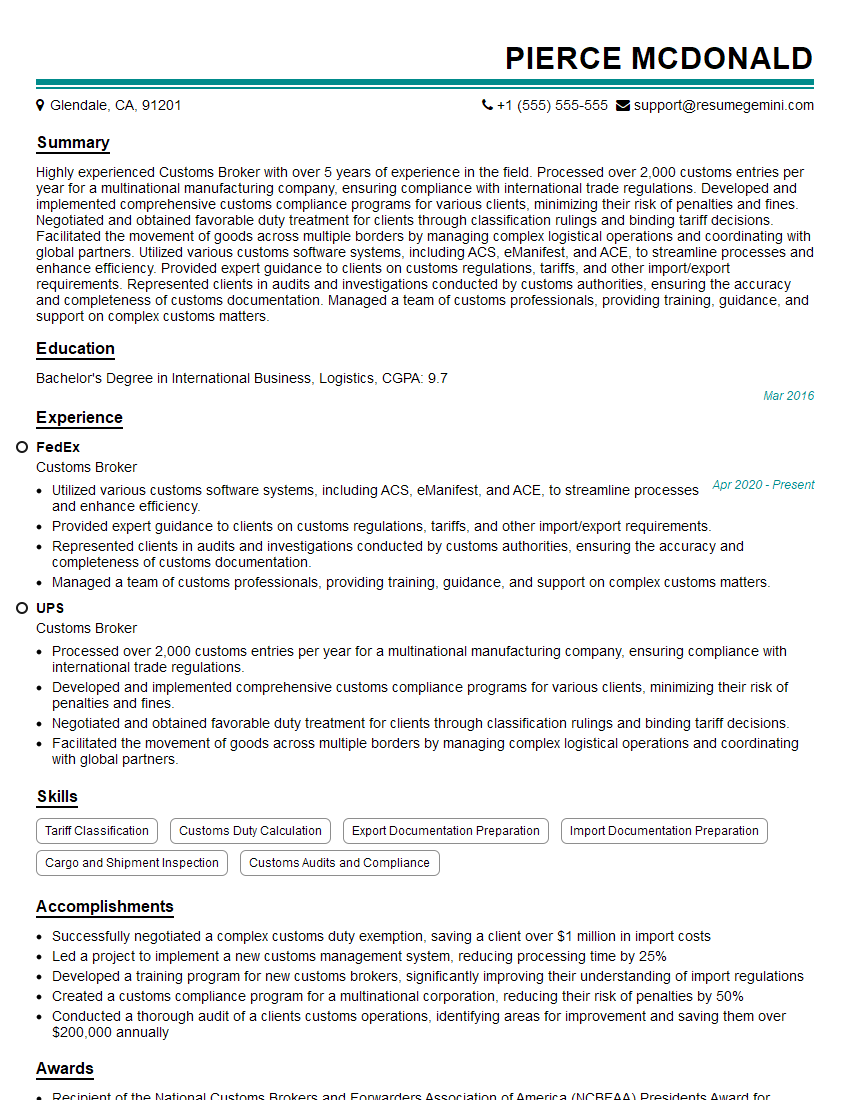
Mastering the intricacies of cross-border trucking significantly enhances your career prospects, opening doors to higher-paying roles and greater responsibility within the logistics industry. An ATS-friendly resume is crucial for getting your application noticed by recruiters. To create a compelling and effective resume that highlights your skills and experience, we strongly recommend using ResumeGemini. ResumeGemini provides a user-friendly platform to build professional resumes, and we offer examples of resumes tailored to cross-border trucking experience to help guide you.
Explore more articles
Users Rating of Our Blogs
Share Your Experience
We value your feedback! Please rate our content and share your thoughts (optional).
What Readers Say About Our Blog
Very informative content, great job.
good