The thought of an interview can be nerve-wracking, but the right preparation can make all the difference. Explore this comprehensive guide to Experience in dairy farm operations interview questions and gain the confidence you need to showcase your abilities and secure the role.
Questions Asked in Experience in dairy farm operations Interview
Q 1. Describe your experience with various milking systems (e.g., robotic, parlor).
My experience encompasses a wide range of milking systems, from traditional herringbone parlors to fully automated robotic systems. I’ve worked extensively with both, and understand the advantages and disadvantages of each. Herringbone parlors, for example, offer a high throughput for larger herds, allowing for efficient milking of many cows in a short time. However, they require a significant labor investment and consistent operator skill. Robotic milking systems, on the other hand, offer increased cow comfort and potentially higher milk yields due to more frequent milking, which reduces udder discomfort. However, the initial investment is considerably higher, and there’s a learning curve associated with managing and maintaining the complex technology. My experience includes troubleshooting malfunctions, optimizing system settings for various herd sizes and compositions, and training staff on proper operation and hygiene protocols. For instance, on one farm, we transitioned from a double-eight herringbone parlor to a robotic system. Initially, milk yield was slightly lower due to cows adapting to the new system. We addressed this by carefully monitoring cow behavior and adjusting the robot’s settings to better suit their preferences, ultimately achieving a higher yield than previously seen.
Q 2. Explain your approach to managing herd health and preventing disease outbreaks.
Herd health is paramount. My approach is proactive, focusing on prevention rather than solely reactive treatment. This involves implementing a comprehensive biosecurity program, starting with strict hygiene protocols at the farm entrance (foot dips, clothing changes, etc.). Regular veterinary check-ups are crucial; we conduct preventative vaccinations according to a schedule tailored to the specific risks in our area. We monitor individual cow health daily, looking for signs of illness like changes in behavior (reduced appetite, lethargy), physical signs (fever, lameness), or abnormalities in milk production. Early detection is key. We use individual cow monitoring systems—like pedometers and activity sensors—to identify subtle changes indicating potential issues. When an illness does occur, we employ rapid response protocols, isolating affected animals to prevent spread and employing appropriate treatment strategies. Record-keeping is meticulously maintained, allowing us to track disease patterns and implement targeted preventative measures. For example, we experienced a minor outbreak of mastitis once. After thorough investigation, we identified a potential correlation with a recent change in bedding material. We immediately switched back to the previous bedding and implemented a more rigorous cleaning and disinfection routine, effectively stopping the outbreak and preventing recurrence.
Q 3. How do you monitor and manage feed costs and optimize feed efficiency?
Managing feed costs and optimizing feed efficiency requires a multi-faceted approach. First, we conduct regular forage quality analysis to determine the nutritional value of our hay, silage, and pasture. This data informs the formulation of cost-effective rations that meet the cows’ nutritional requirements at each stage of lactation. We utilize feed budgeting software to predict feed costs and adjust rations based on market prices. We also implement strategies to minimize feed waste, such as regularly checking feed bunks for leftover feed and adjusting the amount of feed supplied according to actual consumption. Precision feeding technologies, where cows are fed based on their individual needs, is a growing area that I am very interested in. It minimizes waste and improves feed efficiency. We also pay attention to water quality and availability, ensuring clean, fresh water is accessible at all times, which is often overlooked but crucial for feed efficiency. On one farm, by switching from a generic feed mix to a custom ration formulated based on our forage analysis, we reduced feed costs by 15% without compromising milk production.
Q 4. What are your strategies for improving milk production and quality?
Improving milk production and quality is an ongoing process. We focus on several key areas: genetics, nutrition, and cow comfort. Selecting genetically superior cows through careful breeding programs (discussed further below) is paramount. As mentioned earlier, optimal nutrition provides the building blocks for high-quality milk. Cow comfort is crucial; we maintain clean and comfortable housing, ensuring adequate ventilation, stall space, and access to shade or cooling during hot weather. Regular milking practices, including proper teat hygiene and milking machine maintenance, also directly impact milk quality. We rigorously monitor somatic cell counts (SCC) as an indicator of udder health and milk quality. High SCC indicates mastitis, negatively affecting milk quality and production. We address elevated SCC through prompt treatment and improved hygiene protocols. Furthermore, we regularly test milk for components like fat and protein content to ensure consistency and meet market standards. For example, by implementing a comfortable cow housing system and improving milking hygiene, we saw a significant drop in SCC and a noticeable increase in milk production and quality.
Q 5. Describe your experience with dairy breeding and reproductive management.
My experience in dairy breeding and reproductive management includes implementing breeding strategies to improve herd genetics and optimize reproductive performance. This involves using artificial insemination (AI) with high-quality semen from bulls with desirable genetic traits for milk production, health, and longevity. We closely monitor estrus cycles, using visual observation and heat detection aids to identify cows in heat. Regular reproductive health checks are vital, including pregnancy diagnosis to promptly identify open cows and implement corrective measures. We use reproductive management software to track breeding records and help us make informed decisions about culling, breeding, and managing our herd’s genetic potential. We also utilize technologies like activity monitors to detect subtle changes in cow behavior that might indicate estrus or other reproductive issues. We strive for a high conception rate and a short calving interval, which are crucial for maximizing herd productivity. For instance, by transitioning to a more targeted breeding program, we’ve reduced the days open (the period between calving and conception) by 20 days, significantly increasing the herd’s productive lifespan and overall profitability.
Q 6. How do you identify and address lameness issues in dairy cows?
Lameness is a significant welfare and economic concern in dairy farming. Our approach is multifaceted. Regular hoof trimming by experienced personnel is vital, aiming to correct any structural issues and prevent further problems. We use visual inspection to detect signs of lameness, such as reluctance to move, limping, or abnormal posture. We also employ lameness scoring systems, assigning scores based on the severity of lameness. This allows for systematic monitoring and tracking of lameness prevalence within the herd. Comfortable bedding, appropriate flooring, and regular cleaning of the barn are crucial to prevent lameness. When lameness is identified, appropriate treatment is administered, ranging from topical treatments to systemic antibiotics, depending on the cause and severity. We also work with a veterinarian to identify underlying factors that might be contributing to lameness, such as nutritional deficiencies, infectious diseases, or environmental factors. Our data tracking allows us to identify trends and implement preventative strategies. For example, we identified a correlation between lameness and a particular type of flooring material. We replaced the material and saw a dramatic reduction in lameness cases.
Q 7. What is your experience with manure management and environmental regulations?
Manure management is crucial for environmental stewardship and compliance. We employ a comprehensive manure management plan that complies with all relevant environmental regulations. This includes proper storage, handling, and application of manure as a fertilizer. We utilize various methods, such as solid-liquid separation, anaerobic digestion, and composting, to manage manure effectively and reduce environmental impact. Regular monitoring of nutrient levels in the manure and soil helps us optimize nutrient application rates to avoid excessive runoff and water contamination. We also implement strategies to reduce odor emissions, such as proper storage techniques and the use of odor control agents. Maintaining detailed records of manure handling and application is critical for regulatory compliance. Our commitment to responsible manure management extends beyond mere compliance; we actively seek to minimize our environmental footprint and contribute to sustainable farming practices. For example, we’ve invested in an anaerobic digester, which not only reduces odor and environmental pollution but also generates biogas, which is used to power some of our farm operations.
Q 8. Explain your understanding of dairy cow nutrition and ration balancing.
Dairy cow nutrition is the cornerstone of a successful dairy operation. It’s about providing the right balance of nutrients – energy, protein, fiber, vitamins, and minerals – to meet the cow’s specific needs at each stage of lactation and life. Ration balancing involves formulating a feed mixture that precisely meets these nutritional requirements, maximizing milk production, reproductive health, and overall cow well-being.
For example, a high-producing cow in early lactation needs a significantly higher energy intake than a dry cow. We use software programs and nutritional databases to analyze feed ingredients and formulate a ration that accurately meets those energy demands, along with the requirements for protein, fat, fiber, and essential minerals like calcium and phosphorus. We also consider the cow’s body condition score – a visual assessment of their fat reserves – to adjust the ration accordingly. A cow that is too thin needs a ration that promotes weight gain, while an overweight cow might require a diet adjusted to prevent excessive fat accumulation.
A typical ration might include corn silage, alfalfa hay, grain mix (containing corn, soybeans, and potentially other supplements), and potentially by-products such as distillers grains. The precise proportions of each ingredient are meticulously calculated to achieve the optimal nutrient profile. We regularly monitor milk production, body condition scores, and blood tests to evaluate the effectiveness of the ration and make adjustments as needed, ensuring the cows are consistently receiving the nourishment they need to thrive.
Q 9. Describe your experience with dairy herd record keeping and data analysis.
Dairy herd record keeping is critical for making informed management decisions. It involves meticulously tracking various parameters, including milk production (individual cow and herd averages), somatic cell counts (indicators of udder health), reproductive performance (conception rates, calving intervals), and health events. We utilize DairyComp 305 software and similar programs to input and analyze this data.
Data analysis helps identify trends and potential issues. For example, a sudden drop in milk production for a group of cows might indicate a nutritional deficiency or a health problem. Consistently high somatic cell counts highlight a potential mastitis issue requiring immediate attention. Analyzing breeding records allows us to identify cows with low fertility, enabling targeted interventions like improved breeding management or veterinary consultation. We use this data not just for reactive problem-solving, but also for proactive management – for example, tailoring feeding strategies based on the milk production records of individual cows, or planning breeding schedules based on previous reproductive performance.
We also utilize the data to track key performance indicators (KPIs) such as feed conversion efficiency, milk yield per cow, and overall profitability. This allows us to benchmark our performance against industry standards and identify areas for improvement.
Q 10. How do you manage employee performance and training on a dairy farm?
Managing employee performance and training is vital to the smooth operation of a dairy farm. It begins with clear job descriptions, outlining responsibilities and expectations. Regular performance reviews provide feedback and opportunities for growth. We use a combination of formal performance appraisals and informal daily check-ins to monitor employee progress and address any issues promptly.
Training is an ongoing process. We offer both on-the-job training and external workshops to improve skills in areas such as milking procedures, animal handling, equipment maintenance, and safety protocols. We encourage a culture of continuous learning, recognizing that advancements in dairy farming require constant skill development. Experienced staff members mentor newer employees, sharing their knowledge and best practices. We also emphasize the importance of teamwork and communication to ensure everyone works effectively together. We use online learning platforms to deliver information on new procedures, updated safety guidelines, and relevant industry best practices.
For example, we’ll provide hands-on training for new employees on proper milking procedures and udder hygiene. This not only ensures consistent milk quality but also protects the cows from infections. We also conduct regular safety training sessions to ensure employees are familiar with and follow appropriate procedures regarding the use of heavy machinery, handling of chemicals, and emergency response protocols.
Q 11. What are your strategies for ensuring dairy farm safety?
Ensuring dairy farm safety is paramount. We implement a comprehensive safety program that covers all aspects of the operation. This includes regular safety meetings, clear signage, and well-maintained equipment. We prioritize risk assessment, identifying potential hazards and implementing control measures to minimize risks. Examples include providing personal protective equipment (PPE) such as gloves, boots, and eye protection, conducting regular equipment inspections and maintenance, and establishing safe operating procedures for machinery.
We implement strict protocols for handling hazardous materials, such as pesticides and cleaning chemicals. Proper storage, handling, and disposal procedures are communicated and enforced. Employee training on safe handling practices is mandatory. We also maintain a clean and organized work environment to prevent slips, trips, and falls. We document all safety incidents and near-misses, using this information to identify areas for improvement in our safety protocols.
Regular training is critical, covering safe handling of chemicals, proper operation of machinery (including tractors and milking equipment), and emergency response procedures. For example, all employees undergo training on how to safely handle and dispose of manure and other farm waste to minimize environmental and health hazards.
Q 12. How do you handle emergencies (e.g., sick cow, equipment malfunction)?
Handling emergencies effectively is crucial. We have established clear protocols for various scenarios. For a sick cow, we have a system in place for immediate assessment by either the farm manager or our veterinarian. This includes documenting symptoms, taking temperature and other vital signs, and isolating the cow if necessary. Treatment plans are implemented promptly, and regular monitoring ensures the cow’s recovery. We maintain a detailed health record for each cow, tracking illnesses and treatments to identify patterns and prevent future problems.
In case of equipment malfunctions, we prioritize identifying the problem and implementing a solution quickly to minimize downtime. We have a maintenance schedule for all equipment, reducing the risk of unexpected failures. We maintain a well-stocked parts inventory and have established relationships with reliable repair services. We also empower employees to troubleshoot minor issues and to follow established protocols for reporting equipment malfunctions.
For both scenarios, clear communication is essential. Employees are trained to promptly report any issues to the appropriate personnel, ensuring timely responses. We also regularly review and update our emergency protocols based on experience and best practices.
Q 13. What is your experience with precision dairy farming technologies?
Precision dairy farming technologies have significantly improved efficiency and profitability on our farm. We utilize various technologies to monitor and manage key aspects of the operation. This includes automated milking systems (AMS), which improve cow comfort, reduce labor costs, and allow for more frequent milking. We also employ activity monitors that track individual cow movement and feeding patterns, providing insights into their health and behavior. These technologies enable early detection of potential health problems, allowing for proactive intervention.
Other precision technologies include GPS-guided machinery for improved efficiency in tasks like feeding and manure management. We also use sensors in our feed storage areas to monitor feed quality and inventory levels. Data collected from these technologies is integrated into our herd management software, providing a comprehensive view of our operation. We leverage data analytics to identify areas for improvement, optimize resource allocation, and enhance decision-making.
For example, the activity monitors allow us to identify cows that are not eating or ruminating properly. This could be an early sign of illness or other problems. We then can investigate the problem, preventing it from becoming more serious. Similarly, the AMS system provides detailed information on each cow’s milk production, allowing us to tailor feeding strategies and breeding programs to maximize output.
Q 14. Explain your understanding of dairy farm budgeting and financial management.
Dairy farm budgeting and financial management are critical for long-term sustainability. We develop annual budgets that project income and expenses, considering factors like milk prices, feed costs, labor expenses, and veterinary costs. We carefully track actual income and expenses throughout the year, comparing them to the budget and making adjustments as needed. This allows us to identify areas where we are overspending or underperforming and take corrective action.
We use accounting software to manage our finances efficiently, tracking income and expenses, generating financial reports, and managing cash flow. We also utilize financial ratios and key performance indicators (KPIs) to assess the farm’s financial health. These metrics help us monitor profitability, solvency, and liquidity. We regularly review our financial performance, analyzing trends and identifying opportunities for improvement. We use this information to make informed decisions regarding investments, resource allocation, and risk management.
For instance, we might analyze feed costs and explore alternative feed sources to reduce expenses. Or, if we see declining profitability in a particular area, we might adjust our management strategies or invest in new technologies to improve efficiency. Strategic financial planning is crucial for navigating market fluctuations and securing the farm’s long-term success.
Q 15. How do you maintain and troubleshoot dairy farm equipment?
Maintaining and troubleshooting dairy farm equipment requires a proactive and systematic approach. It’s about preventing breakdowns before they happen and having a plan for swift repairs when they do. This involves regular preventative maintenance, detailed record-keeping, and a good understanding of the equipment’s mechanics.
- Preventative Maintenance: Think of it like a car – regular oil changes and tune-ups extend its life. For milking machines, this means daily cleaning and sanitization, weekly lubrication of moving parts, and monthly checks of vacuum pumps and pulsators. For feeding systems, regular checks of augers, motors, and sensors are crucial. We also create schedules for more extensive maintenance, based on the manufacturer’s recommendations.
- Troubleshooting: When a problem arises, I follow a structured approach. First, I identify the problem – is the milk not flowing through the pipeline? Is the feed mixer jammed? Then, I check the obvious: power supply, connections, and fuses. If the issue persists, I consult manuals, diagrams, and sometimes contact the equipment supplier for technical support. For example, if a milking machine’s vacuum level is low, we check the vacuum pump, filter, and lines for blockages systematically. Detailed records of maintenance and repairs are essential for tracking problems and spotting potential patterns.
- Record Keeping: Maintaining detailed records of all maintenance activities and repairs is paramount. This includes dates, procedures performed, parts replaced, and any observations. This data helps in predicting future maintenance needs, optimizing repair strategies, and identifying recurring issues to implement preventative measures.
In short, effective equipment management on a dairy farm is crucial for efficiency, profitability, and animal welfare. It’s not just about fixing things when they break; it’s about anticipating problems and keeping everything running smoothly.
Career Expert Tips:
- Ace those interviews! Prepare effectively by reviewing the Top 50 Most Common Interview Questions on ResumeGemini.
- Navigate your job search with confidence! Explore a wide range of Career Tips on ResumeGemini. Learn about common challenges and recommendations to overcome them.
- Craft the perfect resume! Master the Art of Resume Writing with ResumeGemini’s guide. Showcase your unique qualifications and achievements effectively.
- Don’t miss out on holiday savings! Build your dream resume with ResumeGemini’s ATS optimized templates.
Q 16. Describe your experience with dairy product quality control and testing.
Dairy product quality control and testing are fundamental to maintaining consumer trust and complying with regulations. My experience involves a multi-step process focusing on sanitation, testing, and record-keeping.
- Sanitation: Stringent hygiene protocols are essential from the milking process onwards. This involves regular cleaning and sanitizing of milking equipment, storage tanks, and processing facilities. We use standardized procedures and regularly test for bacterial contamination.
- Testing: We conduct routine tests on milk and dairy products to monitor crucial parameters, including somatic cell count (SCC), bacterial count, fat content, protein content, and acidity. We utilize standardized laboratory methods and equipment, ensuring accuracy and reliability. Testing for antibiotics is also crucial to prevent residues from reaching consumers.
- Record-Keeping: Detailed records of all testing results are maintained, allowing us to track quality over time, identify potential problems, and demonstrate compliance to regulatory bodies. This data is vital for continuous improvement and addressing any inconsistencies.
For example, consistently high somatic cell counts might indicate a mastitis problem in the herd, requiring immediate veterinary attention and changes in management practices. Similarly, fluctuating fat or protein content could indicate a need to review the cow’s diet or milking procedures. A robust quality control system ensures we provide consistently high-quality products that meet both regulatory requirements and consumer expectations.
Q 17. Explain your knowledge of relevant dairy farm regulations and compliance.
Knowledge of dairy farm regulations and compliance is critical for responsible and legal operation. These regulations cover a broad spectrum, impacting animal welfare, environmental protection, food safety, and worker safety.
- Animal Welfare: Regulations dictate the housing, feeding, and handling of dairy cattle, ensuring their comfort and well-being. This includes stipulations on space allowance, access to water, and humane slaughtering practices. We are thoroughly familiar with our state and federal regulations regarding animal care and handling.
- Environmental Protection: Regulations address manure management, water quality, and greenhouse gas emissions. We adhere to guidelines for manure storage, application, and runoff prevention to minimize environmental impact. This often involves implementing best management practices (BMPs).
- Food Safety: Regulations governing milk production and processing are crucial for ensuring food safety. These include stipulations on hygiene, sanitation, and testing procedures to prevent contamination. We maintain records of all testing procedures to demonstrate compliance.
- Worker Safety: Regulations protect the health and safety of farm workers, covering aspects like the use of personal protective equipment (PPE), safe handling of chemicals, and emergency response procedures. Regular safety training is a key component of our approach.
Non-compliance can result in significant penalties and reputational damage. Staying informed about current regulations and maintaining meticulous records is essential for avoiding these consequences. We regularly attend industry workshops and keep up-to-date with changes in regulations through official publications and industry associations.
Q 18. How do you implement and monitor biosecurity measures on a dairy farm?
Biosecurity measures are essential for preventing the introduction and spread of diseases on a dairy farm. This involves a multi-layered approach to minimize contact with potential pathogens.
- Farm perimeter control: Limiting access to the farm, requiring visitors to wear protective clothing, and establishing designated vehicle entry and exit points are essential first steps. This also includes controlling access to pastures and other areas frequented by animals.
- Animal health monitoring: Regular health checks, prompt identification and isolation of sick animals, and proper disposal of carcasses are critical for containing disease outbreaks. This includes collaborating with a veterinarian for regular herd health checks.
- Hygiene protocols: Strict hygiene protocols for personnel, equipment, and facilities are crucial. This means handwashing, disinfecting equipment, and proper cleaning and sanitizing of all surfaces to reduce contamination risks.
- Rodent and pest control: Rodents and other pests can act as vectors for disease. Implementing effective rodent and pest control measures is vital for preventing disease transmission.
- Quarantine procedures: Introducing new animals should always involve a quarantine period to observe them for signs of disease before introducing them to the main herd.
For example, implementing footbaths at entry points to the farm helps reduce the spread of pathogens through footwear. Effective biosecurity is a continuous process that requires vigilance and strict adherence to established protocols. It requires ongoing training for all personnel and a proactive approach to prevent disease outbreaks that could decimate the herd and impact profitability.
Q 19. Describe your experience with genetic selection and improvement in dairy cattle.
Genetic selection and improvement are crucial for enhancing the productivity, health, and profitability of a dairy herd. This involves strategically selecting and breeding cows with desirable traits.
- Performance recording: This involves collecting data on milk production, components (fat and protein), somatic cell count, longevity, and other relevant traits. This data forms the basis for selecting superior animals.
- Genetic evaluation: Using sophisticated genetic evaluation techniques, we can estimate the breeding values of animals for different traits. This allows us to identify animals with superior genetics, even before they have completed their lactation.
- Artificial insemination (AI): AI allows us to strategically breed cows with bulls that carry desirable genes. This technology provides a cost-effective and efficient method of genetic improvement compared to natural mating.
- Genomic selection: Genomic selection utilizes DNA testing to predict an animal’s breeding values with even greater accuracy. This can expedite genetic gain by allowing selection of young animals with superior genetics early in their lives.
- Breeding programs: Implementing a well-defined breeding program involves selecting the desired traits, identifying superior animals, and using appropriate breeding strategies to improve herd genetics consistently. This could be a crossbreeding strategy or a purebred system depending on our objectives.
For example, we might prioritize selecting cows with high milk production, good udder conformation, and high fertility. By using genomic selection, we can identify young heifers with excellent genetic merit and breed them to improve the overall herd’s genetic potential in a quicker and more effective manner.
Q 20. How do you manage heat stress in dairy cows during hot weather?
Heat stress in dairy cows during hot weather significantly reduces their productivity, reproductive performance, and overall health. Managing heat stress requires a multi-pronged approach focusing on mitigating environmental factors and providing supportive care for the cows.
- Provide shade: Providing adequate shade, either through natural trees or artificial structures, is fundamental in reducing direct sun exposure. This helps significantly in lowering the ambient temperature around the cows.
- Improve ventilation: Good ventilation in barns reduces the accumulation of heat and humidity. This can involve the use of fans, strategically placed vents, and ensuring proper airflow throughout the barn.
- Increase water access: Ensuring cows have access to ample fresh, cool water is crucial. This can include providing multiple water sources, and if necessary, supplementing with electrolyte solutions to prevent dehydration.
- Adjust feeding times: Feeding cows during cooler periods of the day, such as early morning or late evening, can reduce the stress associated with feeding in hot temperatures.
- Cooling strategies: This can include using sprinklers or misting systems to provide evaporative cooling for the cows. Fans coupled with sprinklers are highly effective.
- Monitor cow behavior: Closely monitoring the cows’ behavior for signs of heat stress such as excessive panting, reduced feed intake, and decreased milk production is critical. Early detection allows for prompt intervention.
For instance, a simple strategy of providing shaded areas and ensuring consistent access to cool water can lead to a significant reduction in heat stress and improve production during hot periods. A proactive approach is essential to minimize the negative effects of heat stress on the herd.
Q 21. Explain your approach to managing cow comfort and welfare.
Managing cow comfort and welfare is essential for optimizing their productivity, health, and overall well-being. It’s not just about meeting their basic needs; it’s about creating an environment that fosters their natural behaviors and reduces stress.
- Comfortable housing: Providing adequate space, comfortable bedding, and proper ventilation in the barns helps reduce stress and improve comfort. Ensuring clean, dry, and well-ventilated housing is a priority.
- Appropriate feeding management: Providing a balanced diet, clean feed, and access to sufficient feed at all times minimizes nutritional stress. Regular feed analysis and adjustments are needed.
- Minimize pain and injury: Prompt veterinary attention, routine hoof trimming, and effective disease management contribute to minimizing pain and suffering. Early identification of illness and injury is key.
- Reduce stress: Minimizing disruptions to their routine, such as handling for milking, avoids stressing the cows. Gentle handling and calm procedures are essential.
- Observe animal behavior: Regularly observing cows’ behavior allows us to detect any signs of discomfort or illness, enabling prompt intervention. Looking for signs of lameness, reduced feed intake, or changes in milk production are essential.
For example, providing comfortable bedding minimizes the risk of injuries and lameness, while gentle handling during milking reduces stress and improves animal temperament. A commitment to cow comfort translates into a healthier, more productive, and more profitable dairy farm operation.
Q 22. What is your experience with sustainable dairy farming practices?
Sustainable dairy farming is crucial for the long-term viability of the industry and the health of our planet. My approach centers around three core principles: environmental stewardship, animal welfare, and economic sustainability.
- Environmental Stewardship: This involves minimizing our environmental footprint through practices like precision feeding to reduce feed waste and manure management systems that capture methane for energy production or use anaerobic digestion to create biogas. We also focus on optimizing water usage and implementing cover cropping to improve soil health and reduce erosion. For example, we’ve implemented a rainwater harvesting system to reduce our reliance on municipal water, significantly lowering our water bill and environmental impact.
- Animal Welfare: We prioritize the well-being of our cows through practices like providing comfortable housing with adequate space, ensuring access to clean water and high-quality feed, and implementing a comprehensive health management program that includes preventative care and prompt treatment of illness. This includes regular hoof trimming and monitoring for signs of illness. Happy cows produce more milk, and ethical practices are vital to building a strong brand reputation.
- Economic Sustainability: Balancing environmental and animal welfare initiatives with profitability is key. We achieve this through efficient resource management, waste reduction, and exploring alternative revenue streams, such as selling composted manure as fertilizer. For example, we meticulously track feed costs and milk production to identify areas for optimization and improve profitability. We’ve also started selling our high-quality, locally sourced milk directly to consumers through a farm-to-table initiative.
Q 23. How do you utilize technology to improve dairy farm efficiency?
Technology has revolutionized dairy farming, boosting efficiency and productivity. We leverage several technologies:
- Precision Dairy Farming Software: We use software to monitor individual cow performance, track their milk production, feeding habits, and health metrics. This allows us to identify sick or underperforming animals early on, enabling timely interventions and reducing losses. For example, our software alerts us to cows exhibiting reduced milk yield, prompting immediate investigation and treatment.
- Automated Feeding Systems: Automated systems precisely deliver feed based on individual cow needs, minimizing waste and maximizing nutrient utilization. This reduces labor costs and improves feed efficiency. It also allows us to customize feed based on factors like lactation stage and body condition score.
- Robotic Milking Systems: These systems automate the milking process, reducing labor demands and ensuring consistent milking schedules. Data collected by these systems provide valuable insights into cow health and milk production. This frees up labor for other important tasks such as animal health monitoring and farm maintenance.
- Remote Monitoring Systems: We use sensors and monitoring systems to track key environmental parameters such as temperature and humidity in the barn. This allows us to make real-time adjustments to maintain optimal conditions for the cows, improving comfort and health.
Q 24. Describe your experience with marketing and selling dairy products.
Marketing and selling dairy products requires a multi-faceted approach. We’ve adopted a direct-to-consumer strategy alongside traditional wholesale channels.
- Direct-to-consumer: We sell our milk and other products directly to consumers through a farm store and farmers’ markets. This allows us to build relationships with our customers, fostering trust and loyalty. We also engage in social media marketing to promote our farm and products.
- Wholesale Channels: We partner with local distributors and retailers to sell our products to a broader audience. This requires maintaining strong relationships with buyers and adhering to their quality standards. We have established contracts with a local grocery chain.
- Branding and Storytelling: We emphasize our commitment to sustainable and ethical practices in our marketing materials. Consumers increasingly prioritize transparency and sustainability, so highlighting these aspects is crucial for brand building.
- Value-Added Products: We’re exploring the production of value-added products like yogurt and cheese to diversify our offerings and increase profitability.
Q 25. How do you manage labor costs and optimize staffing levels?
Managing labor costs effectively requires careful planning and efficient allocation of resources. We employ several strategies:
- Technology Adoption: As mentioned earlier, technologies like robotic milking systems and automated feeding systems significantly reduce the need for manual labor, lowering labor costs.
- Cross-Training Employees: We cross-train our employees to perform multiple tasks, enhancing flexibility and efficiency. This ensures we have adequate coverage during absences or peak seasons.
- Optimized Staffing Levels: We carefully analyze our workload and adjust staffing levels seasonally to meet fluctuating demands. This minimizes unnecessary labor costs during slower periods.
- Employee Retention Strategies: Investing in employee retention reduces recruitment and training costs. We offer competitive wages, benefits, and opportunities for professional development.
Q 26. What are your strategies for maintaining a positive work environment on a dairy farm?
A positive work environment is paramount for employee retention and productivity. We foster a positive atmosphere through:
- Open Communication: We maintain open communication channels with our employees, encouraging feedback and suggestions. We hold regular team meetings to discuss issues and celebrate achievements.
- Fair Treatment and Respect: We treat all employees fairly and with respect, recognizing their contributions to the farm’s success. This ensures a fair and inclusive environment for all.
- Employee Recognition and Rewards: We recognize and reward outstanding performance, fostering a culture of appreciation and motivation. This could involve bonuses, raises, or simply public acknowledgment of their hard work.
- Work-Life Balance: We strive to provide a reasonable work-life balance for our employees, understanding that it is crucial for overall well-being and productivity. This includes consideration for time off and appropriate scheduling.
Q 27. Describe your experience with developing and implementing dairy farm improvement plans.
Developing and implementing dairy farm improvement plans involves a systematic approach:
- Needs Assessment: We begin by conducting a thorough assessment of our farm’s strengths and weaknesses, identifying areas for improvement. This involves analyzing data from various sources, including milk production records, feed efficiency data, and employee feedback.
- Goal Setting: Based on the needs assessment, we set specific, measurable, achievable, relevant, and time-bound (SMART) goals. These goals should align with our overall farm objectives and priorities. For example, we might set a goal to improve milk production per cow by 10% within one year.
- Action Planning: We develop a detailed action plan outlining the steps necessary to achieve our goals. This includes identifying the resources required, assigning responsibilities, and establishing timelines.
- Implementation and Monitoring: We implement the action plan and closely monitor progress, making adjustments as needed. We regularly track key performance indicators (KPIs) to assess the effectiveness of our interventions.
- Evaluation and Refinement: Once the improvement plan is completed, we evaluate its effectiveness and make necessary refinements for future improvements.
Q 28. How do you adapt to changing market conditions and industry trends?
Adapting to changing market conditions and industry trends requires a proactive and flexible approach:
- Market Research: We constantly monitor market trends, including changes in consumer demand, milk prices, and government regulations. This helps us anticipate future challenges and opportunities.
- Diversification: We diversify our operations and products to reduce our reliance on any single market segment. This could involve exploring new markets or developing value-added products.
- Continuous Learning and Innovation: We actively seek opportunities for continuous learning and improvement. This includes attending industry conferences, participating in workshops, and staying informed about the latest technologies and best practices. We regularly read industry publications to stay abreast of emerging trends.
- Financial Planning and Risk Management: We develop robust financial plans and strategies for managing risks associated with fluctuating market conditions. This includes careful budgeting, efficient cost control, and exploring strategies to hedge against price volatility.
Key Topics to Learn for Dairy Farm Operations Interview
- Animal Husbandry: Understanding dairy cow breeds, nutrition (TMR formulation, feed efficiency), reproductive management (AI, estrus detection), health management (disease prevention, treatment protocols), and animal welfare best practices. Practical application: Describe your experience in implementing a specific health management program or improving herd reproductive rates.
- Dairy Farm Management: This includes herd management strategies, record-keeping (milk production, breeding, health), financial management (budgeting, cost analysis), labor management, and farm safety protocols. Practical application: Explain how you’ve contributed to improving the efficiency or profitability of a dairy operation.
- Milk Production and Quality: Understanding milking procedures (proper hygiene, milking machine operation), milk quality testing (somatic cell count, bacteria count), and milk handling and storage. Practical application: Discuss your experience with maintaining high milk quality standards and troubleshooting issues related to milk production.
- Dairy Technology and Equipment: Familiarity with milking machines, feeding systems, manure management systems, and other farm technologies. Practical application: Describe your experience with maintaining or troubleshooting specific equipment on the farm.
- Sustainability and Environmental Practices: Understanding and implementing sustainable farming practices, including manure management, water conservation, and minimizing environmental impact. Practical application: Discuss your contributions towards improving the environmental sustainability of a dairy farm.
- Problem-Solving and Decision-Making: Dairy farming requires quick thinking and problem-solving skills. Be prepared to discuss examples where you identified and resolved challenges related to animal health, equipment malfunctions, or production issues. Practical application: Detail your approach to decision-making, highlighting your ability to analyze situations, gather information, and implement effective solutions.
Next Steps
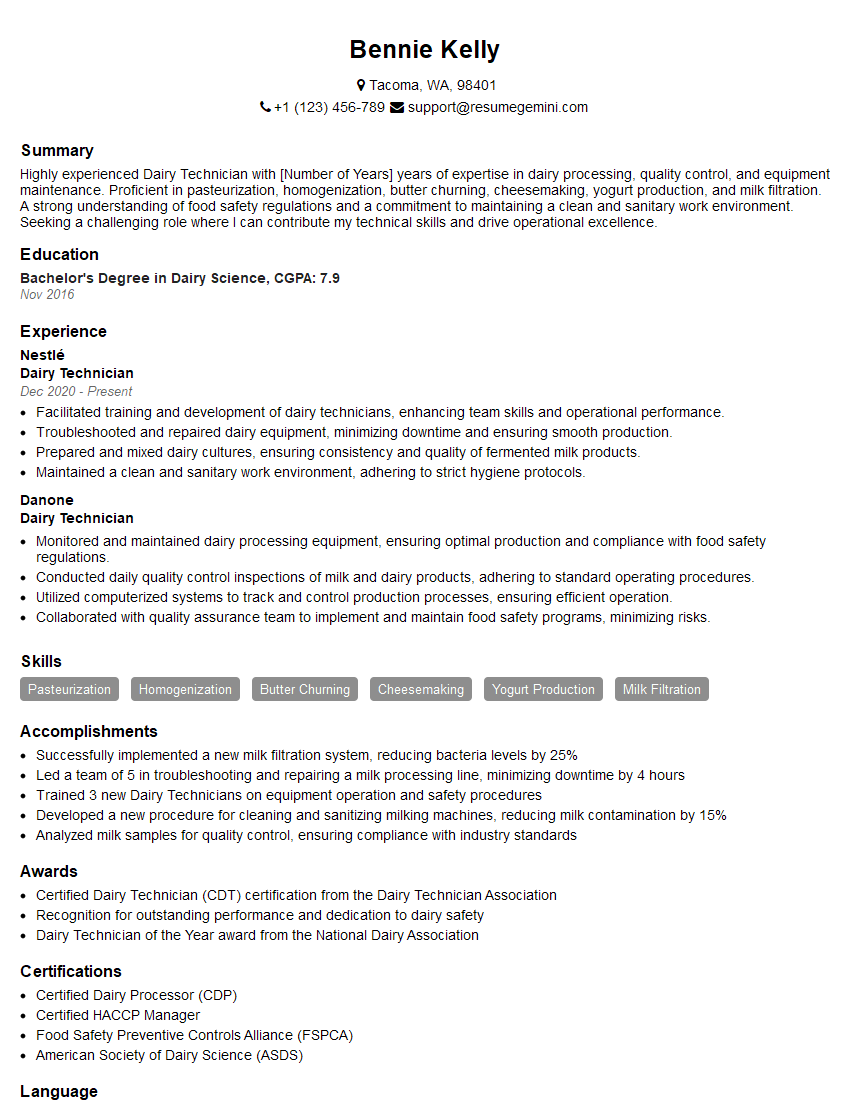
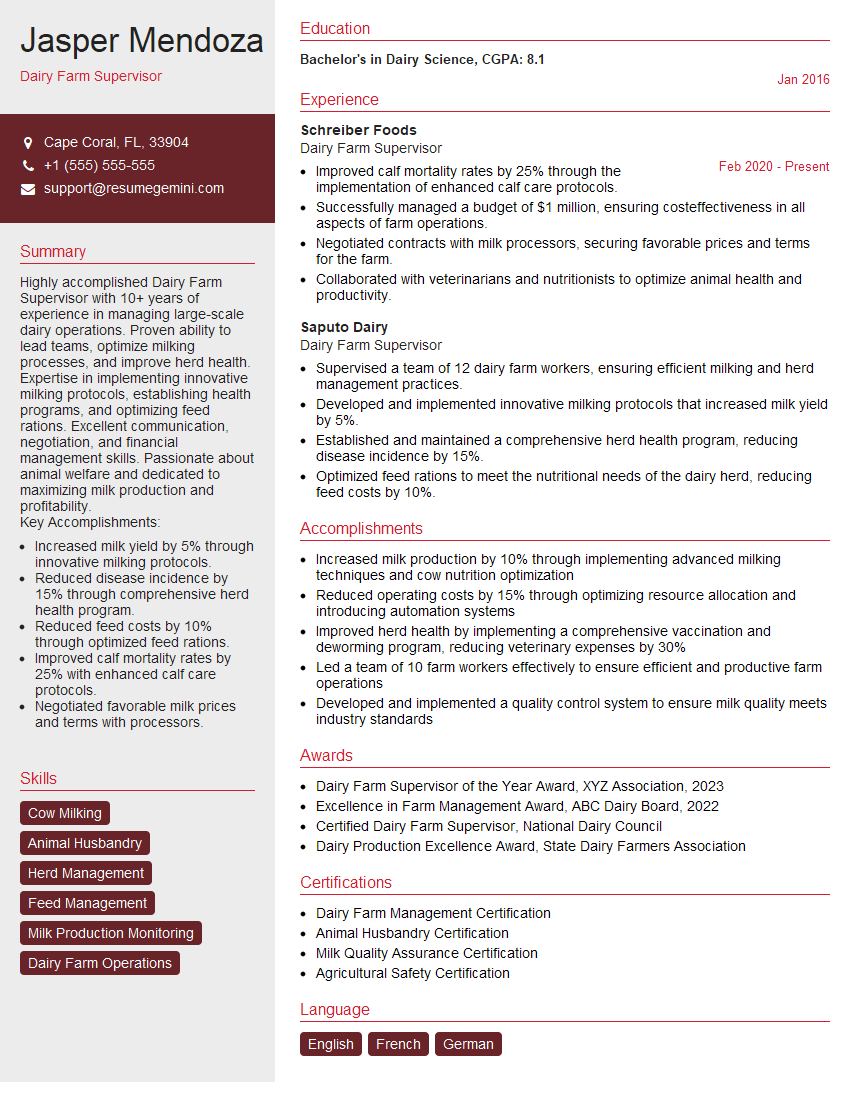
Mastering dairy farm operations knowledge is crucial for career advancement within the agricultural sector, opening doors to leadership roles and specialized positions. To significantly boost your job prospects, creating an ATS-friendly resume is essential. ResumeGemini is a trusted resource that can help you build a professional, impactful resume, tailored to highlight your unique skills and experience. Examples of resumes specifically designed for candidates with experience in dairy farm operations are available to guide you. Invest in your career future – craft a resume that showcases your expertise and lands you that dream interview.
Explore more articles
Users Rating of Our Blogs
Share Your Experience
We value your feedback! Please rate our content and share your thoughts (optional).
What Readers Say About Our Blog
Very informative content, great job.
good