The thought of an interview can be nerve-wracking, but the right preparation can make all the difference. Explore this comprehensive guide to Time Management and Production Planning interview questions and gain the confidence you need to showcase your abilities and secure the role.
Questions Asked in Time Management and Production Planning Interview
Q 1. Explain the difference between Gantt charts and PERT charts.
Both Gantt charts and PERT charts are visual tools used in project management, but they differ in their focus and how they represent project timelines. A Gantt chart primarily focuses on scheduling tasks over time, showing their durations and dependencies. It’s excellent for visualizing the project timeline and identifying potential scheduling conflicts. Think of it like a detailed roadmap showing when each stage of a journey begins and ends.
A PERT chart (Program Evaluation and Review Technique), on the other hand, emphasizes the network of activities and their dependencies. It uses nodes to represent tasks and arrows to illustrate the sequence of events. The focus is on identifying the critical path – the longest sequence of tasks that determines the shortest possible project duration. Think of it as a map showing all possible routes, highlighting the fastest one.
Example: Imagine building a house. A Gantt chart would show the duration of each stage (foundation, framing, roofing, etc.) and their planned start and finish dates. A PERT chart would illustrate the dependencies between these stages (foundation must be complete before framing begins) and pinpoint the critical path, which might be the foundation and framing stages if they are particularly time-consuming.
Q 2. Describe your experience with different scheduling techniques (e.g., Kanban, Scrum).
I have extensive experience with various scheduling techniques, including Kanban and Scrum. Kanban is a visual system for managing workflow. It emphasizes continuous flow and limiting work in progress (WIP) to optimize efficiency. I’ve used Kanban successfully in projects requiring continuous delivery and rapid iteration, where visualizing the workflow and identifying bottlenecks was key. For example, in a software development team, we used a Kanban board to track tasks, limiting the number of features in development at any given time. This improved focus and reduced context switching.
Scrum, on the other hand, is a framework for managing complex projects iteratively. It uses short sprints (typically 2-4 weeks) to deliver incremental value. I’ve implemented Scrum in several projects, leveraging its daily stand-up meetings, sprint reviews, and retrospectives to ensure team alignment and adapt to changing priorities. In one project involving the development of a new product, Scrum helped us manage the complexity of the development process, enabling us to deliver a Minimum Viable Product (MVP) quickly and then iterate based on user feedback.
Q 3. How do you prioritize tasks when faced with competing deadlines?
Prioritizing tasks with competing deadlines requires a structured approach. I typically use a combination of methods including the Eisenhower Matrix (Urgent/Important) and MoSCoW method (Must have, Should have, Could have, Won’t have). The Eisenhower Matrix helps categorize tasks based on urgency and importance, allowing me to focus on high-impact tasks first. The MoSCoW method helps prioritize features or tasks based on their necessity for a successful project.
For example, if I have a critical deadline for a client presentation and several other pending tasks, I would use the Eisenhower Matrix to identify the presentation preparation as urgent and important, making it my top priority. Then, I’d use the MoSCoW method to prioritize other tasks, focusing on the ‘Must have’ items for the project.
Additionally, I often use techniques like time blocking and Pareto Principle (80/20 rule) to efficiently manage my time and focus on the most impactful tasks. This combination of methods ensures I address the most crucial tasks first while also ensuring a balance between short-term and long-term goals.
Q 4. How would you handle a production delay due to unexpected equipment failure?
An unexpected equipment failure can cause significant production delays. My approach involves a structured response to mitigate the impact. First, I’d immediately assess the severity of the failure and its impact on the production schedule. This involves identifying the affected tasks and dependencies. Then, I’d initiate a troubleshooting process, contacting maintenance personnel and exploring temporary solutions such as using backup equipment or outsourcing specific tasks.
Parallel to troubleshooting, I would reassess the production schedule, identifying potential delays and their ripple effects. This may involve adjusting task priorities or exploring alternative production methods. Open communication is vital; I’d inform stakeholders (clients, team members) about the delay, providing transparent updates on the progress of the troubleshooting and rescheduling efforts. Finally, I’d document the incident to identify potential areas for improvement in preventive maintenance and risk management.
Example: If a key machine in a manufacturing plant fails, we’d immediately assess the impact on the production line. We’d try to fix the machine quickly and explore using a backup machine or outsourcing a portion of the production to another facility. Simultaneously, we would adjust the production schedule, potentially delaying less critical products to minimize overall project delays and communicate transparently with affected parties.
Q 5. Describe your experience with inventory management techniques.
My experience with inventory management techniques encompasses various methods, including Just-in-Time (JIT), Economic Order Quantity (EOQ), and Material Requirements Planning (MRP). JIT focuses on minimizing inventory by receiving materials only when needed for production. I’ve used this effectively in projects requiring a lean production approach. EOQ helps determine the optimal order quantity to minimize holding and ordering costs. I’ve applied this in situations where balancing inventory costs with the need for timely availability was essential. MRP is a more complex system that uses a bill of materials to plan the required raw materials and components based on the production schedule. I’ve implemented MRP systems in larger projects involving complex manufacturing processes, allowing for efficient procurement and production planning.
In choosing the most suitable technique, factors like the nature of the business, production volume, and cost of storage and procurement are crucial. The goal is always to maintain an optimal inventory level, preventing stockouts while minimizing waste and storage costs.
Q 6. What metrics do you use to measure the efficiency of production planning?
Measuring the efficiency of production planning involves using key performance indicators (KPIs). Some of the crucial metrics I use include:
- On-time delivery rate: Percentage of orders delivered on or before the scheduled date.
- Production lead time: Time taken from order placement to product delivery.
- Inventory turnover rate: How many times inventory is sold and replenished during a specific period.
- Production efficiency: Ratio of actual output to planned output.
- Capacity utilization rate: Percentage of production capacity being used.
- Defect rate: Percentage of defective products produced.
By tracking these metrics, I can identify areas for improvement in the production planning process. For instance, a low on-time delivery rate might indicate a need for better scheduling or resource allocation, while a high defect rate might signal a need for improved quality control.
Q 7. How do you improve team productivity and time management skills?
Improving team productivity and time management skills requires a multi-faceted approach. I focus on:
- Clear communication and goal setting: Ensuring everyone understands the project goals, their individual roles, and expectations.
- Effective task delegation: Assigning tasks based on individual skills and strengths.
- Regular feedback and coaching: Providing constructive feedback and support to help team members improve their time management skills.
- Training and workshops: Providing training on time management techniques, such as prioritization, time blocking, and using productivity tools.
- Collaboration tools: Using project management software to track progress, manage tasks, and improve communication.
- Promoting work-life balance: Encouraging healthy work habits to prevent burnout and maintain productivity.
For instance, I might introduce a Kanban board to visualize workflow, hold regular team meetings to track progress and address roadblocks, and provide individual coaching on time management techniques like the Pomodoro Technique. Continuous improvement and adaptation are key; regularly assessing team dynamics and adapting strategies based on feedback are essential for long-term success.
Q 8. Explain your experience with resource allocation in production planning.
Resource allocation in production planning is the process of assigning available resources—like machinery, personnel, raw materials, and budget—to various production tasks to optimize efficiency and meet production goals. It’s like orchestrating a symphony; each instrument (resource) needs to play its part at the right time and in the right measure for the music (production) to sound harmonious.
In my experience, I’ve used several techniques. For instance, in a previous role at a food manufacturing company, we used a linear programming model to allocate our bottling lines to different product types based on anticipated demand and the production capacity of each line. This ensured we maximized output while minimizing downtime. Another project involved a more manual approach, prioritizing resources based on a critical path method (CPM) analysis for a complex assembly process. This highlighted the tasks most crucial to meeting deadlines and allowed for targeted resource allocation to prevent delays. In both cases, close monitoring and adjustments were vital to react to unexpected issues such as machine breakdowns or material shortages.
- Linear Programming: A mathematical method for optimizing resource allocation under constraints.
- Critical Path Method (CPM): A project management technique used to identify the most critical tasks and ensure timely completion.
Q 9. How do you handle changes to project scope and timelines?
Handling changes to project scope and timelines requires a proactive and adaptable approach. Imagine building a house; if the client decides mid-construction to add a wing, you need to adjust the plans, materials, and timeline accordingly.
My strategy begins with a thorough impact assessment. We use change management software to document all changes, assess their impact on the schedule and resources, and then communicate these changes transparently to all stakeholders. This often involves re-evaluating the critical path, adjusting resource allocation, and potentially renegotiating deadlines. For example, in one project involving software development, a major scope change required us to use Agile methodologies to rapidly adapt and incorporate the new requirements while minimizing disruption to the overall project plan. This involved daily stand-up meetings, sprint planning, and iterative development to ensure timely delivery of the modified product. Transparency and collaboration are key; keeping everyone informed and involved prevents misunderstandings and delays.
Q 10. Describe your experience with forecasting and demand planning.
Forecasting and demand planning is the art and science of predicting future demand for products or services. Accurate forecasting is vital for efficient production planning, allowing for optimal resource allocation and inventory management. Think of it like predicting the weather; you can’t perfectly predict the future, but accurate forecasts are essential for planning your activities.
My experience involves using a variety of forecasting methods, including time series analysis (like moving averages and exponential smoothing), and causal modeling (considering factors like seasonality, marketing campaigns, and economic trends). I’ve also worked with sophisticated software incorporating machine learning algorithms for more accurate predictions. For example, at a retail company, I used historical sales data, along with macroeconomic indicators, to forecast demand for various product lines throughout the year. This enabled us to optimize inventory levels, reduce storage costs, and avoid stockouts or excess inventory. Regular review and refinement of the forecasting models based on actual sales data is crucial to maintain accuracy.
Q 11. What software or tools do you use for production planning and scheduling?
I’m proficient in several software solutions for production planning and scheduling. My experience includes using enterprise resource planning (ERP) systems such as SAP and Oracle, as well as specialized manufacturing execution systems (MES) like Rockwell Automation’s FactoryTalk ProductionCenter. For smaller-scale projects or quick planning, I utilize spreadsheet software such as Microsoft Excel, employing tools like Gantt charts for visual scheduling and what-if analysis for scenario planning.
The choice of software depends heavily on the scale and complexity of the production process. ERP systems are ideal for large, complex organizations, offering integrated solutions for planning, execution, and tracking of production. MES provides real-time visibility and control over the production floor, allowing for timely adjustments. Spreadsheets are useful for simpler processes or for quick modeling and visualization.
Q 12. How do you ensure alignment between production planning and company objectives?
Aligning production planning with company objectives is paramount for success. It’s like navigating a ship; you need to know your destination (company objectives) before you can chart your course (production plan).
This alignment begins with a clear understanding of the company’s strategic goals, whether it’s increasing market share, improving profitability, or launching a new product line. The production plan must then be designed to support these goals. For instance, if the objective is to reduce production costs, the plan might focus on optimizing resource utilization, streamlining processes, and minimizing waste. If the goal is to increase production volume, the plan would prioritize capacity expansion and efficient scheduling. Regular monitoring and performance reviews are crucial to ensure the plan stays on track and adjustments are made as needed. A key element is the use of Key Performance Indicators (KPIs) that directly reflect the company’s strategic objectives. These KPIs are then used to track progress and identify areas for improvement.
Q 13. Explain your experience with Lean manufacturing principles.
Lean manufacturing principles focus on eliminating waste and maximizing efficiency throughout the production process. It’s about streamlining operations to deliver maximum value to the customer with minimal waste of resources. Think of it as sculpting a statue; you want to remove unnecessary material to reveal the perfect form.
My experience implementing Lean principles involves using tools like Value Stream Mapping to identify and eliminate non-value-added activities (waste). We’ve applied 5S methodology (Sort, Set in Order, Shine, Standardize, Sustain) to improve workplace organization and efficiency. Kaizen (continuous improvement) events are crucial for fostering a culture of ongoing improvement, empowering employees to identify and suggest process enhancements. For example, at a manufacturing plant, we identified a bottleneck in the assembly line using Value Stream Mapping and implemented a simple change in workstation layout, which resulted in a significant reduction in cycle time and increased productivity.
Q 14. How do you identify and mitigate bottlenecks in production processes?
Identifying and mitigating bottlenecks is crucial for maintaining efficient production flow. A bottleneck is any constraint that limits the overall capacity of the production process, like a narrow passage in a highway system that slows down the entire flow of traffic.
My approach involves a systematic analysis of the production process, using tools such as process mapping and capacity analysis to pinpoint bottlenecks. Once identified, solutions can range from increasing capacity (adding machinery, hiring additional staff) to improving process efficiency (streamlining workflows, reducing setup times, improving worker training). For example, in one project, we used Little’s Law (inventory = arrival rate * processing time) to identify that a particular machine was the bottleneck because it had a higher processing time compared to other machines in the line. This helped us justify the investment in a new, faster machine to increase capacity and eliminate the bottleneck. Prioritization is essential; not all bottlenecks are created equal, and focusing on the most impactful ones first provides the greatest return on investment.
Q 15. Describe a time you had to make a difficult decision regarding resource allocation.
Resource allocation decisions are often tough, especially when competing demands exist. One instance involved a project requiring both our skilled machinists and our newly acquired, high-speed CNC milling machine. Simultaneously, a critical client order with a tight deadline needed the same machinists’ expertise for a specialized hand-finishing process. The CNC machine, while faster for basic milling, lacked the precision for the client order’s unique requirements.
The decision wasn’t simply about speed versus precision; it involved considering potential delays, client relationships, and team morale. After analyzing the project timelines and assessing potential risks, I prioritized the client order. This meant allocating the skilled machinists to the hand-finishing, even though it slowed down the other project. We then implemented a revised schedule for the second project leveraging the CNC machine for the parts it could efficiently handle, and assigning additional skilled workers overtime. This ensured we met the critical client deadline while minimizing overall project delays. It taught me the importance of transparent communication with all teams and stakeholders throughout this complex prioritization process.
Career Expert Tips:
- Ace those interviews! Prepare effectively by reviewing the Top 50 Most Common Interview Questions on ResumeGemini.
- Navigate your job search with confidence! Explore a wide range of Career Tips on ResumeGemini. Learn about common challenges and recommendations to overcome them.
- Craft the perfect resume! Master the Art of Resume Writing with ResumeGemini’s guide. Showcase your unique qualifications and achievements effectively.
- Don’t miss out on holiday savings! Build your dream resume with ResumeGemini’s ATS optimized templates.
Q 16. How do you stay organized and manage your time effectively?
Effective time management is crucial in my role. I rely on a combination of strategies. First, I employ a robust task management system, using a digital calendar and task list application to prioritize and schedule tasks. This includes setting realistic deadlines and allocating time blocks for specific activities. Second, I regularly review my schedule and adjust priorities as needed. Unexpected issues arise, so flexibility is key. Third, I proactively prevent time-wasting activities. This includes minimizing interruptions by setting designated ‘focus’ periods, delegating tasks when appropriate, and mastering the art of saying ‘no’ to non-essential commitments. Lastly, I take breaks strategically to maintain focus and productivity. Short breaks throughout the day prevent burnout and help maintain concentration.
Q 17. What is your experience with root cause analysis in production issues?
Root cause analysis is fundamental to preventing production issues from recurring. My approach typically follows the 5 Whys method. Let’s say we experience a high rate of defective parts from a specific production line. Instead of simply addressing the symptoms (high defect rate), I systematically ask ‘why’ five times.
- Why is the defect rate high? (Answer: Faulty component X)
- Why is component X faulty? (Answer: Supplier provided defective batch)
- Why did the supplier provide a defective batch? (Answer: Quality control lapse at the supplier)
- Why was there a quality control lapse? (Answer: Insufficient staff training)
- Why was there insufficient staff training? (Answer: Lack of budget for training programs)
This reveals the root cause – a lack of budget for supplier staff training – rather than just dealing with the faulty component. Addressing this root cause is far more effective than simply replacing the defective parts, preventing future recurrence. This process often involves collaborating with engineering, quality control, and procurement teams to implement lasting solutions.
Q 18. Describe your experience with capacity planning and analysis.
Capacity planning involves determining the optimal production levels based on available resources and demand forecasts. My experience involves using various techniques. One is utilizing simulation software to model different scenarios and identify potential bottlenecks. For example, if we are considering a new product launch, we can model its production requirements, factoring in machine capacity, labor availability, and material needs to predict potential constraints. This allows us to make informed decisions about resource allocation and identify areas where investments in additional resources, such as new equipment or personnel, might be necessary. Another approach involves analyzing historical production data to predict future capacity needs based on trends. Combining these techniques with sales forecasts helps to ensure we have the necessary resources to meet demand without over- or under-producing.
Q 19. How do you handle conflicting priorities in a fast-paced environment?
Conflicting priorities are a daily reality in a fast-paced environment. My approach centers around prioritization using a framework like the Eisenhower Matrix (Urgent/Important). This helps categorize tasks to focus on what truly matters. I also employ clear communication, keeping all stakeholders informed about my priorities and any potential delays. This avoids misunderstandings and ensures everyone is aligned on expectations. Occasionally, negotiation and compromise are necessary to find mutually acceptable solutions. Finally, delegation is crucial when possible. It allows me to focus on high-priority tasks while ensuring other important tasks are still completed effectively.
Q 20. Explain your experience using KPIs to track production performance.
KPIs, or Key Performance Indicators, are crucial for tracking production performance. We utilize a range of KPIs, including:
- Overall Equipment Effectiveness (OEE): Measures the efficiency of our production equipment.
- Defect Rate: Tracks the percentage of defective products produced.
- On-Time Delivery Rate: Monitors our ability to meet delivery deadlines.
- Production Cycle Time: Measures the time it takes to produce a single unit.
- Inventory Turnover Rate: Tracks how efficiently we manage inventory levels.
These KPIs are monitored daily and reported regularly. Any deviations from targets trigger an investigation, often leading to root cause analysis and corrective actions. This data-driven approach ensures we identify and address inefficiencies promptly, optimizing our production processes continuously.
Q 21. How do you collaborate effectively with other departments in production planning?
Effective collaboration with other departments is vital for successful production planning. I prioritize clear and open communication using regular meetings, emails, and shared project management tools. This helps ensure everyone is informed and aligned on project timelines and goals. I actively seek input from other departments (e.g., procurement, quality control, sales) to ensure their perspectives are considered during the planning process. Understanding their constraints and limitations helps me create realistic and achievable production plans. Proactive communication about potential issues or challenges also helps prevent conflicts and delays. Building strong, professional relationships with colleagues in other departments is critical for fostering collaboration and ensuring smooth communication.
Q 22. Describe your experience with implementing and managing production schedules.
Implementing and managing production schedules involves a meticulous process that begins with understanding the overall production goals and translating them into a detailed, achievable plan. This includes determining resource allocation (materials, equipment, personnel), defining task dependencies, and establishing realistic timelines. My experience spans various methodologies, from traditional Gantt charts to advanced scheduling software.
For example, in my previous role at Acme Manufacturing, we were facing significant delays in fulfilling orders for our flagship product. I implemented a new scheduling system utilizing Lean principles. This involved identifying and eliminating bottlenecks in the production line, optimizing workflow, and empowering team members to identify and resolve issues proactively. The result was a 20% reduction in lead times and a significant improvement in on-time delivery rates. This involved close collaboration with the procurement and quality control teams to ensure seamless material flow and maintain high product quality.
Another example involved transitioning from a purely reactive scheduling approach to a more proactive, predictive one. By analyzing historical data and forecasting demand, we were able to anticipate potential resource constraints and adjust schedules accordingly, mitigating the risk of significant disruptions.
Q 23. How do you use data to inform decisions in production planning?
Data is the cornerstone of effective production planning. It provides insights into past performance, current status, and potential future trends. I leverage various data sources – production records, inventory levels, sales forecasts, machine utilization data, and quality control reports – to make informed decisions.
For instance, analyzing historical production data can reveal patterns and trends, helping to identify bottlenecks or inefficiencies. This data informs decisions about resource allocation, capacity planning, and process optimization. Real-time data monitoring, often through the use of a Manufacturing Execution System (MES), allows for proactive adjustments to the schedule in response to unexpected events, such as machine breakdowns or material shortages. Predictive analytics, using statistical modeling and machine learning techniques, can forecast future demand and potential supply chain disruptions, allowing for proactive planning and mitigation strategies. For example, by analyzing historical sales data and external market indicators, we could predict a surge in demand for a particular product, enabling us to proactively adjust our production schedule and secure necessary resources.
Q 24. Explain your approach to continuous improvement in production processes.
Continuous improvement is a core philosophy in my approach to production planning. It’s an iterative process focused on identifying areas for optimization and implementing changes to enhance efficiency and effectiveness. My approach involves a combination of Lean methodologies, Six Sigma principles, and data-driven decision-making.
I typically employ a PDCA cycle (Plan-Do-Check-Act). This involves systematically identifying areas for improvement, implementing changes, monitoring their impact, and adjusting the approach as needed. Tools like Value Stream Mapping help visualize the entire production process, identifying non-value-added steps and potential waste. Kaizen events, or rapid improvement workshops, involve cross-functional teams to brainstorm and implement solutions to specific production challenges. Regular performance reviews and key performance indicator (KPI) tracking enable monitoring the effectiveness of implemented improvements and identification of further opportunities for enhancement. For example, by implementing 5S methodologies (Sort, Set in Order, Shine, Standardize, Sustain) in a warehouse, we achieved a significant reduction in wasted time searching for materials and an improved safety record.
Q 25. Describe your experience with risk management in production planning.
Risk management in production planning is crucial to ensure the smooth and timely completion of projects. It involves proactively identifying, assessing, and mitigating potential threats to the production schedule and overall objectives. My approach incorporates both qualitative and quantitative risk assessment techniques.
I typically begin by conducting a thorough risk assessment, identifying potential risks such as material shortages, equipment failures, labor disruptions, and changes in market demand. This often involves brainstorming sessions with cross-functional teams. Next, I assess the likelihood and potential impact of each risk, prioritizing those with the highest potential negative consequence. For each high-priority risk, I develop a mitigation strategy, which could include procuring backup materials, implementing preventive maintenance programs, establishing contingency plans, or securing alternative suppliers. Regular monitoring and reassessment are critical, especially in dynamic environments. For example, in anticipation of a potential supplier shortage, we secured an alternative supplier, ensuring a consistent supply of raw materials and preventing production delays.
Q 26. What is your experience with using project management software (e.g., MS Project, Jira)?
I have extensive experience using project management software, including MS Project and Jira. These tools are invaluable for planning, scheduling, tracking, and managing production activities. MS Project is particularly useful for creating detailed Gantt charts, resource allocation, and critical path analysis. Jira, on the other hand, is well-suited for managing tasks, assigning responsibilities, tracking progress, and facilitating collaboration within teams. My proficiency extends to customizing these tools to meet specific project requirements and integrating them with other enterprise systems.
In a previous role, I used MS Project to create a detailed production schedule for a large-scale project involving multiple teams and intricate dependencies between tasks. The software enabled efficient resource allocation, real-time progress tracking, and early identification of potential delays, allowing for proactive mitigation. Similarly, I’ve used Jira to manage agile development projects, leveraging its Kanban boards and sprint tracking features to maintain a streamlined workflow and ensure timely delivery of deliverables.
Q 27. How do you handle unexpected disruptions to the production schedule?
Handling unexpected disruptions requires a flexible and proactive approach. My strategy focuses on rapid response, effective communication, and collaborative problem-solving. The first step involves assessing the impact of the disruption on the overall schedule. This often involves reviewing the critical path and identifying any tasks that are directly affected.
Next, I communicate the situation to all relevant stakeholders, including team members, management, and clients. Transparent communication is crucial to maintain trust and ensure everyone is aware of the situation and the planned response. We then work collaboratively to develop a revised plan, prioritizing tasks and reallocating resources as needed. This may involve negotiating revised deadlines, identifying alternative solutions, or outsourcing certain tasks. Post-incident analysis is crucial, helping to identify root causes and develop preventative measures to minimize the likelihood of similar disruptions in the future. For example, when a key piece of equipment failed unexpectedly, we quickly mobilized a backup machine, minimized downtime, and communicated the situation to customers, preventing significant delays and maintaining their trust.
Q 28. Explain your understanding of critical path analysis.
Critical Path Analysis (CPA) is a project management technique used to identify the sequence of tasks that determines the shortest possible duration for completing a project. It identifies the critical path, which represents the longest sequence of dependent tasks, and any delay on these tasks directly impacts the overall project completion time. Understanding the critical path is crucial for effective resource allocation and risk management.
In practice, CPA involves creating a network diagram representing the project tasks and their dependencies. Each task is assigned a duration, and the total duration of each path is calculated. The path with the longest duration is the critical path. Tasks on the critical path are the most crucial to monitor and manage; any delays on these tasks will directly impact the project completion date. By focusing on the critical path, resources can be strategically allocated to ensure timely completion. For example, in a manufacturing process, identifying the critical path can help optimize the workflow, ensuring that bottleneck stages receive adequate attention and resources, thus preventing delays and minimizing production costs.
Key Topics to Learn for Time Management and Production Planning Interview
- Time Management Techniques: Explore various methods like the Pomodoro Technique, Eisenhower Matrix, and time blocking. Understand their practical applications in project prioritization and workload distribution.
- Production Planning Fundamentals: Grasp core concepts such as forecasting demand, capacity planning, materials requirement planning (MRP), and scheduling techniques (e.g., Gantt charts, critical path method).
- Project Scheduling & Control: Learn how to develop and manage project timelines, identify critical paths, and utilize project management software for efficient tracking and reporting.
- Resource Allocation & Optimization: Understand strategies for effectively allocating resources (human, material, financial) to maximize productivity and minimize waste.
- Lean Manufacturing Principles: Familiarize yourself with concepts like Kaizen, 5S, and Just-in-Time (JIT) inventory management, and their impact on production efficiency.
- Performance Measurement & Analysis: Learn to utilize key performance indicators (KPIs) to monitor production efficiency, identify bottlenecks, and make data-driven improvements.
- Problem-Solving & Decision-Making: Develop your ability to analyze production challenges, identify root causes, and implement effective solutions using techniques like root cause analysis (RCA) and Six Sigma.
- Supply Chain Management Integration: Understand how production planning interacts with the broader supply chain, including procurement, logistics, and distribution.
Next Steps
Mastering Time Management and Production Planning is crucial for career advancement in today’s fast-paced business environment. These skills demonstrate your ability to handle complex projects, meet deadlines, and optimize resource utilization – all highly valued attributes by employers. To significantly improve your job prospects, focus on building an ATS-friendly resume that clearly highlights your achievements and skills. ResumeGemini is a trusted resource that can help you craft a professional and impactful resume tailored to the specific demands of your target roles. Examples of resumes tailored to Time Management and Production Planning are available on ResumeGemini to provide you with inspiration and guidance.
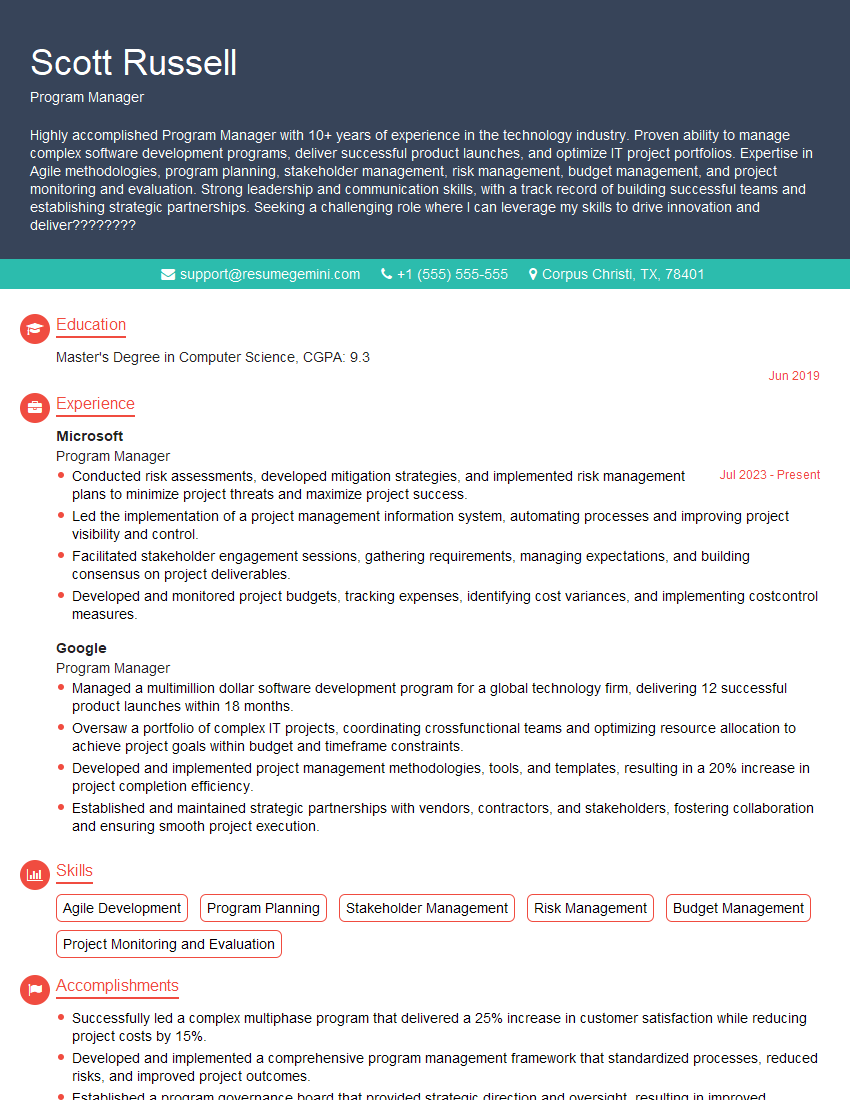
Program Manager Resume Sample
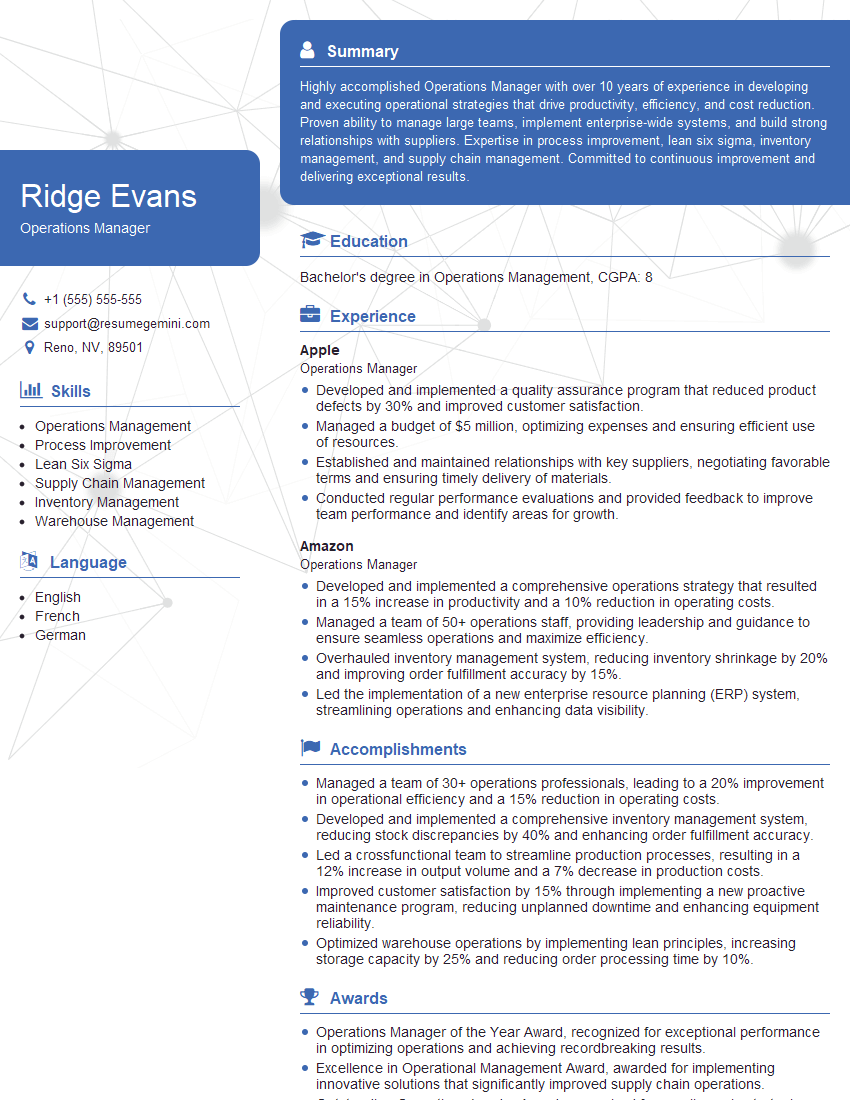
Operations Manager Resume Sample
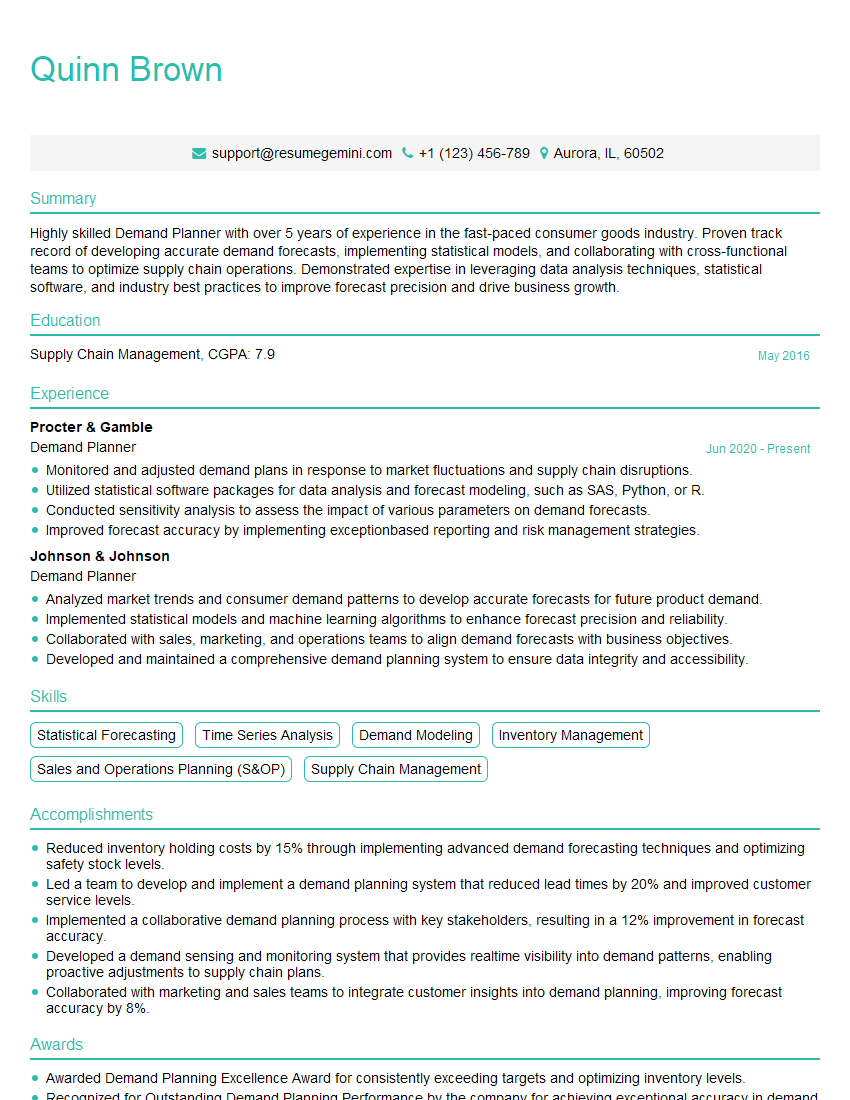
Demand Planner Resume Sample

Manufacturing Planner Resume Sample
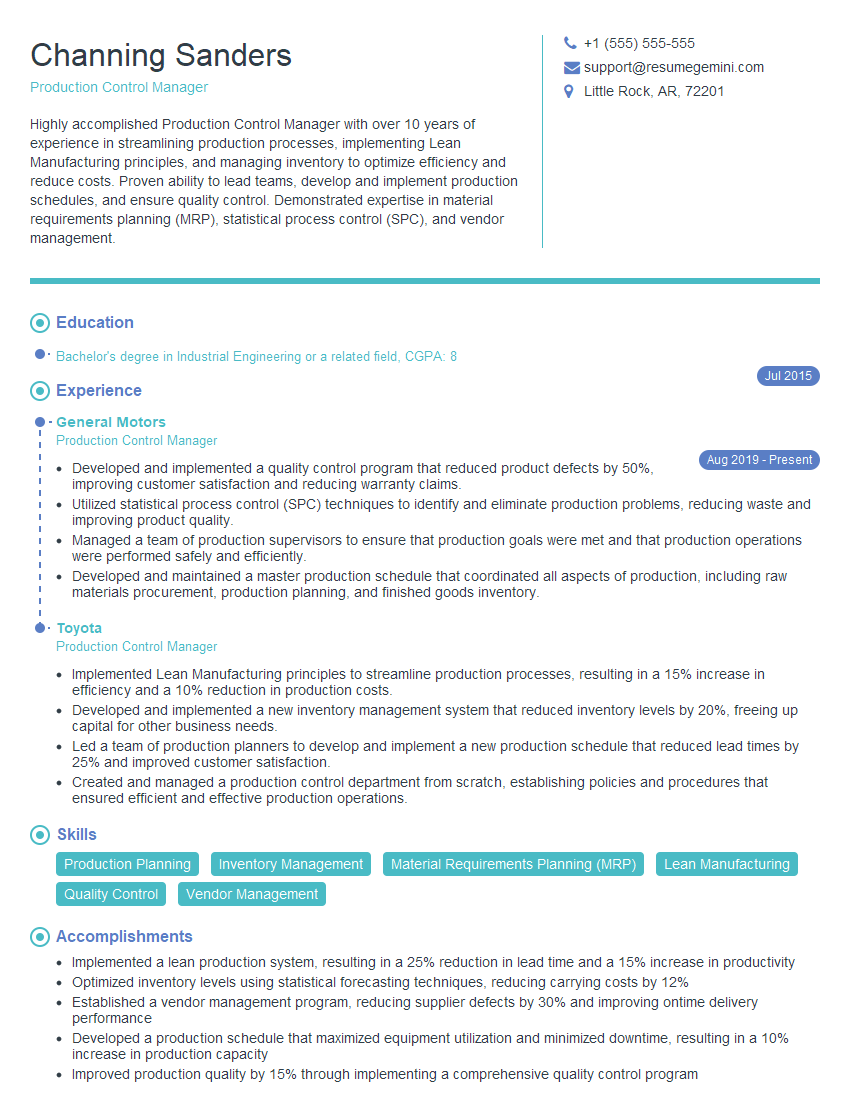
Production Control Manager Resume Sample
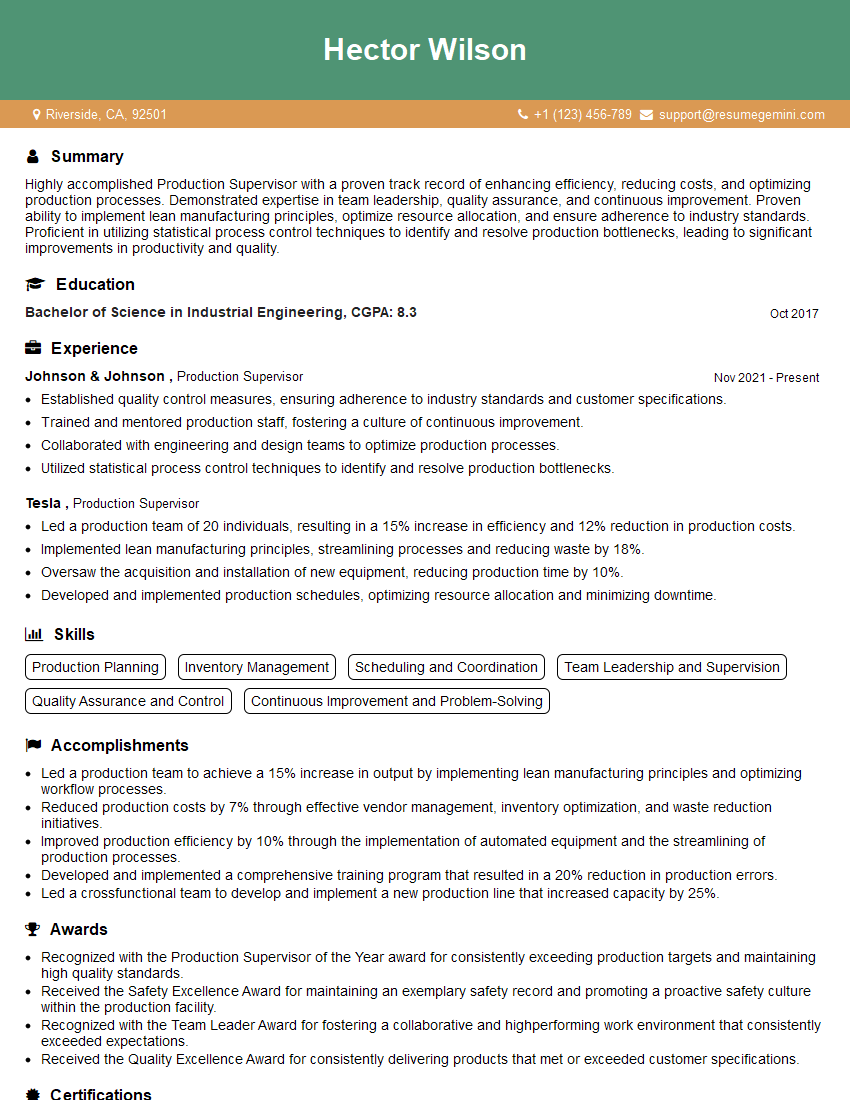
Production Supervisor Resume Sample
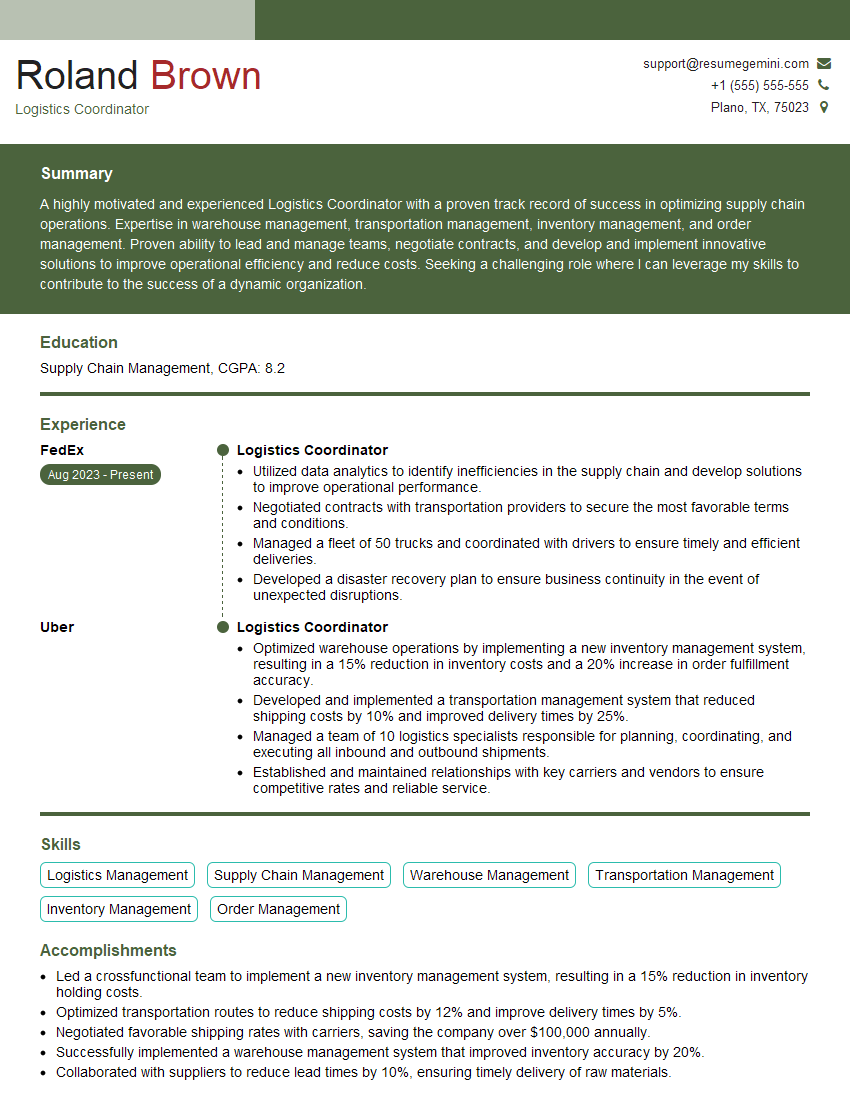
Logistics Coordinator Resume Sample
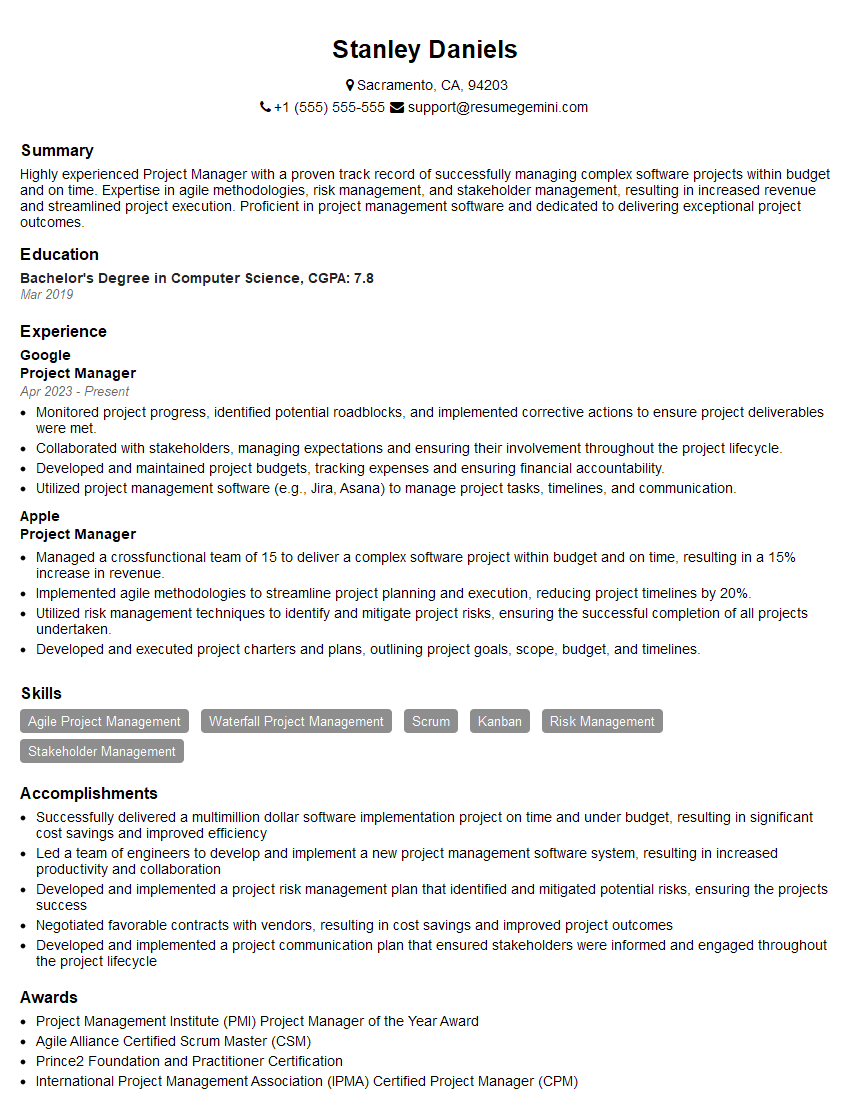
Project Manager Resume Sample
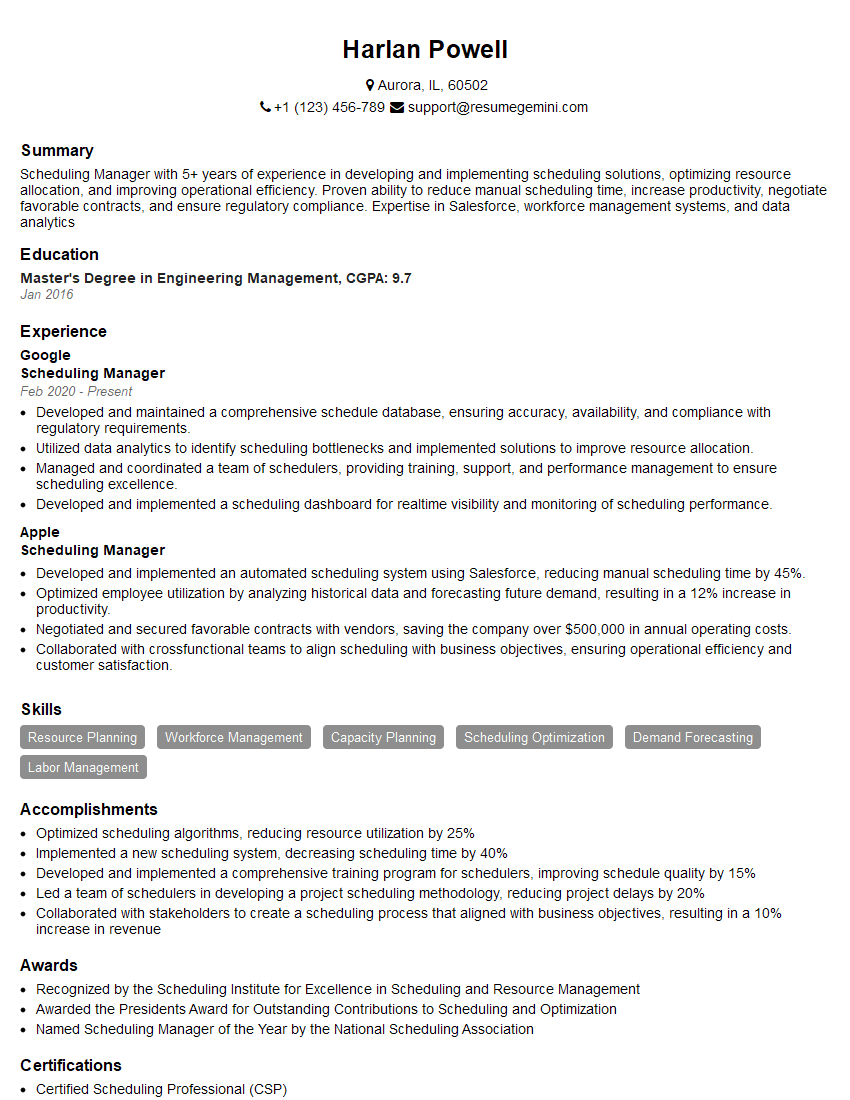
Scheduling Manager Resume Sample
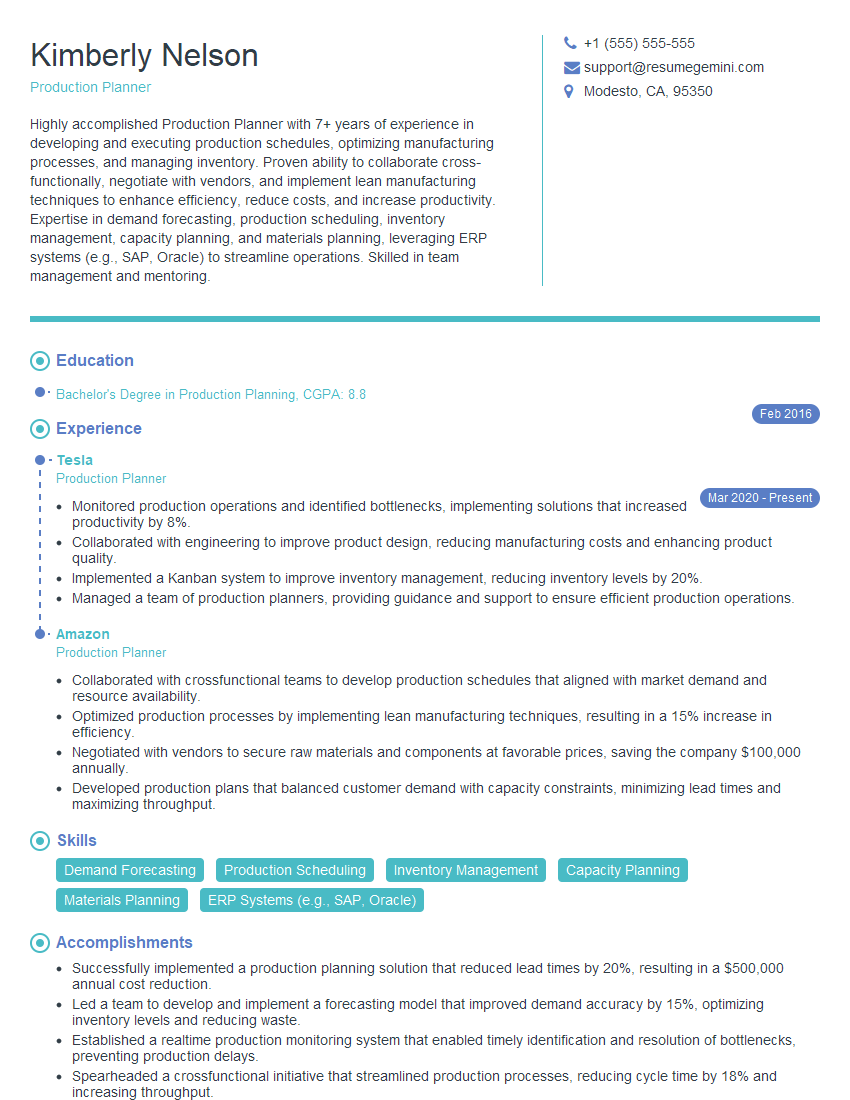
Production Planner Resume Sample
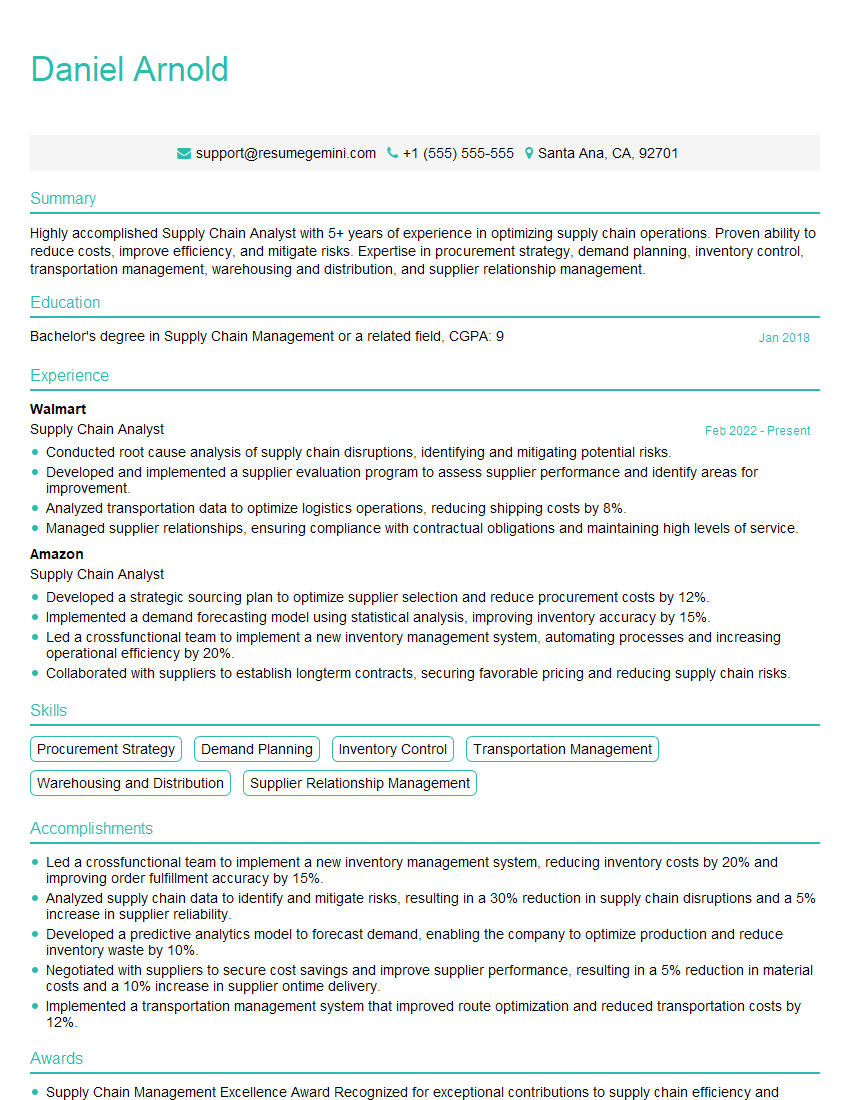
Supply Chain Analyst Resume Sample
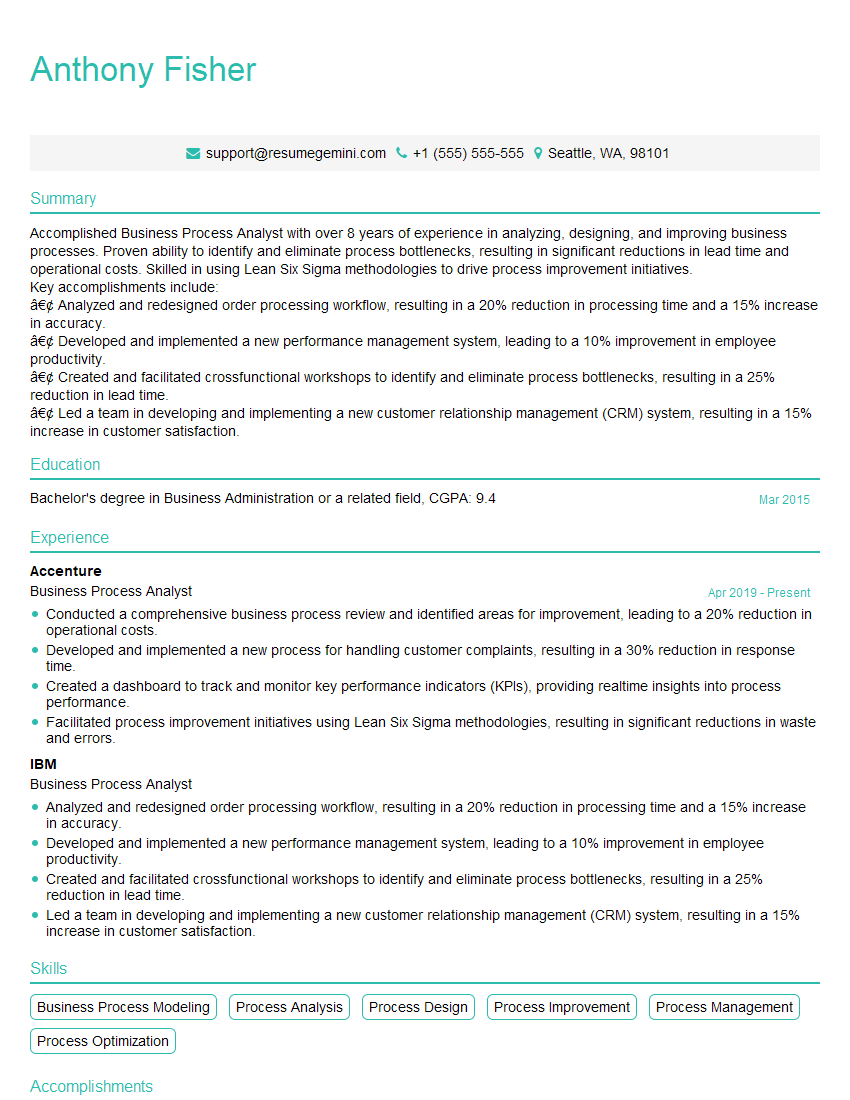
Business Process Analyst Resume Sample
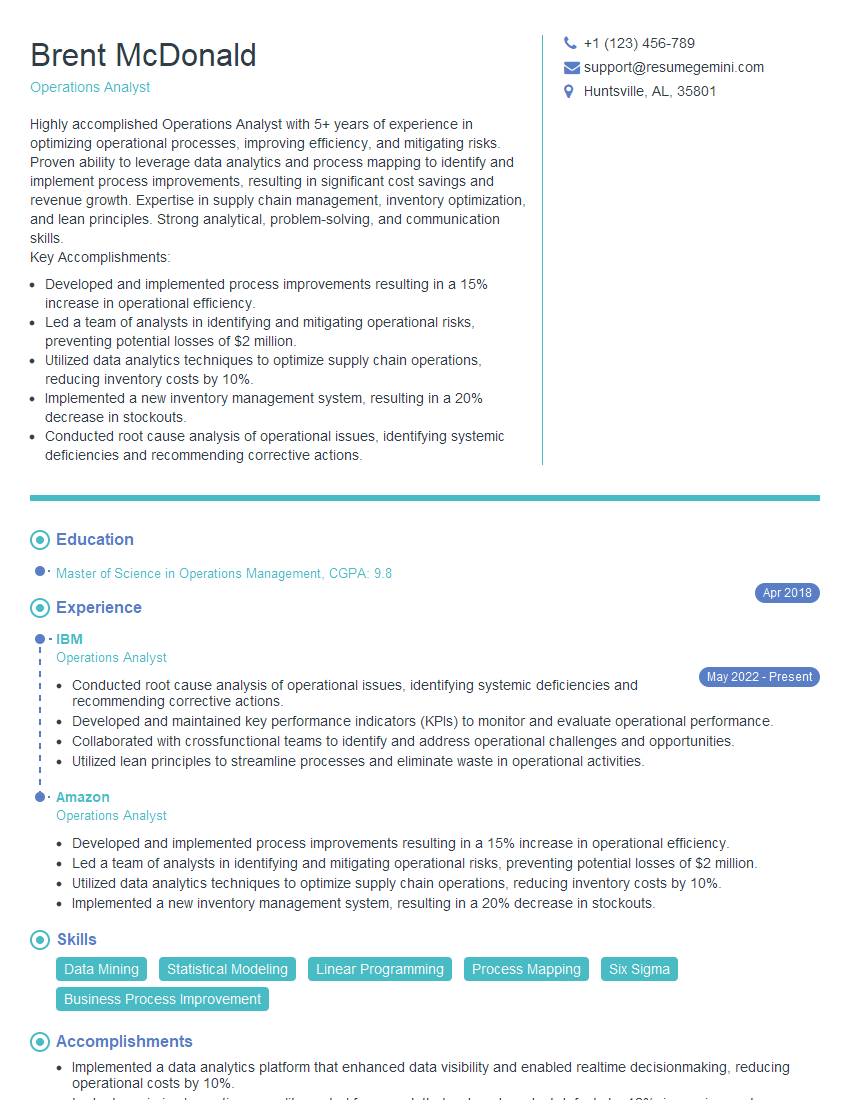
Operations Analyst Resume Sample
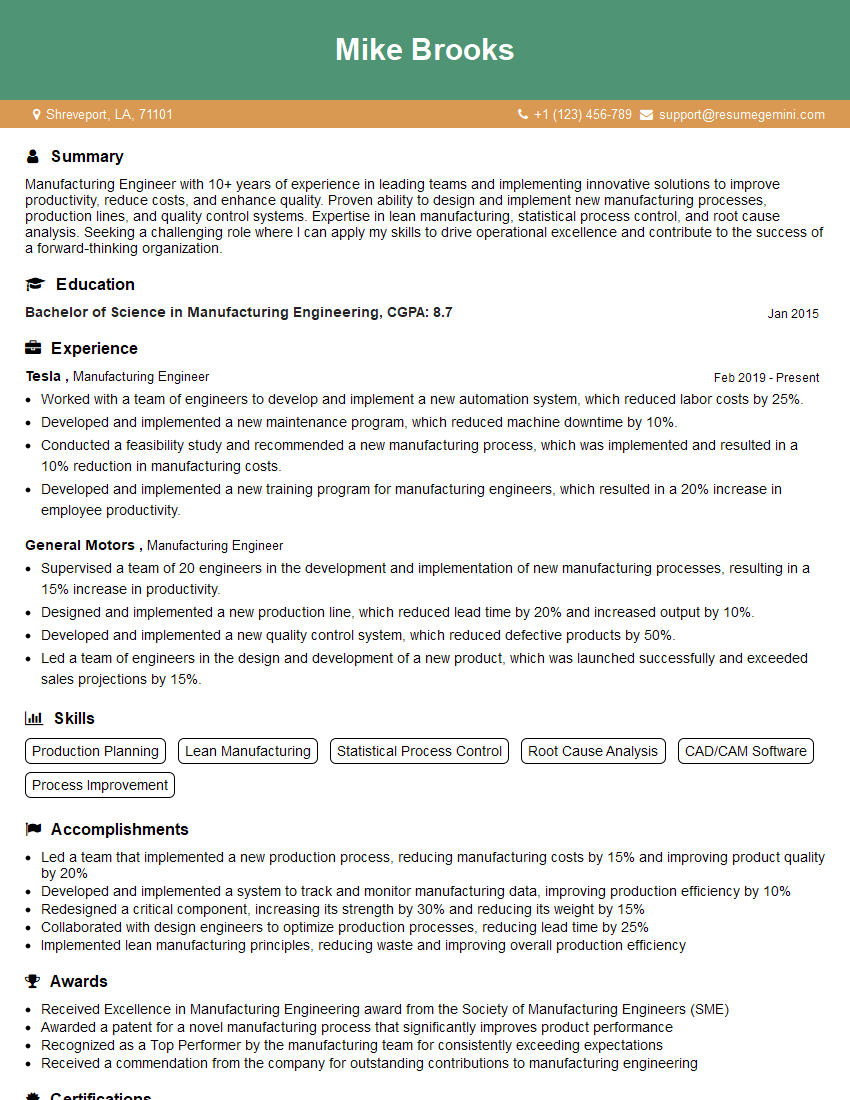
Manufacturing Engineer Resume Sample
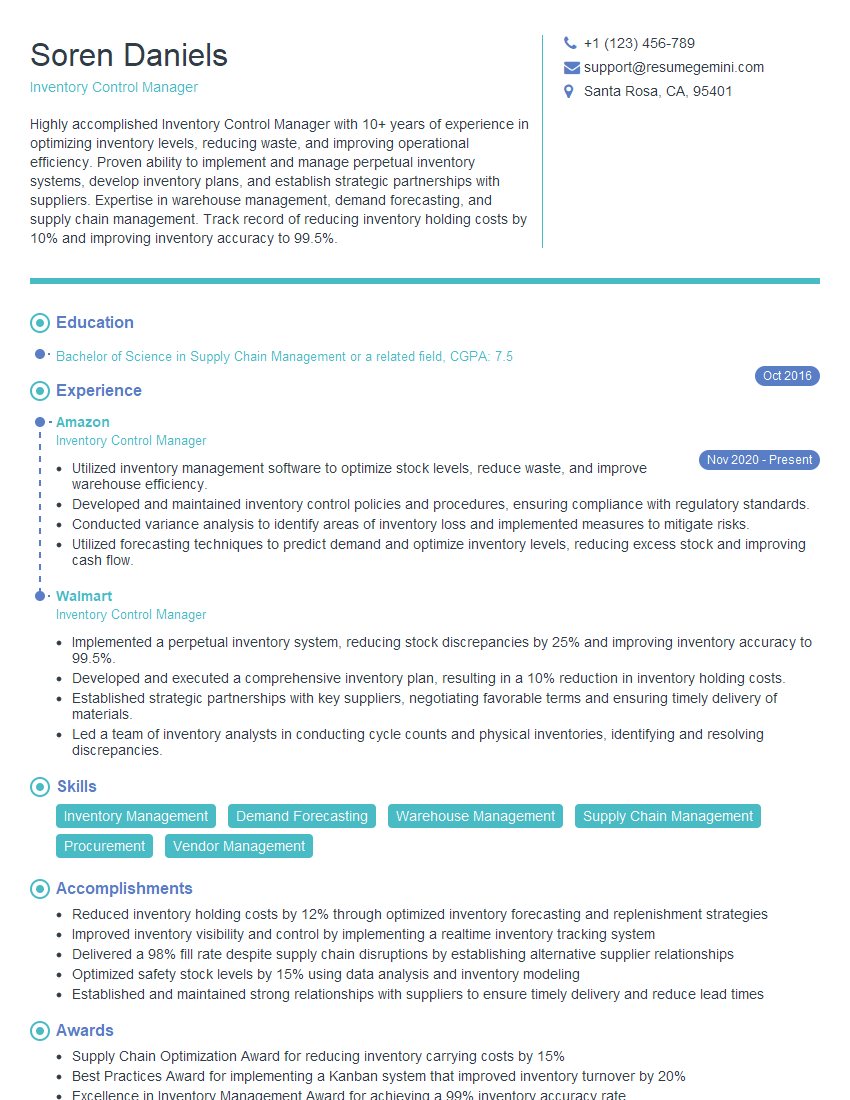
Inventory Control Manager Resume Sample
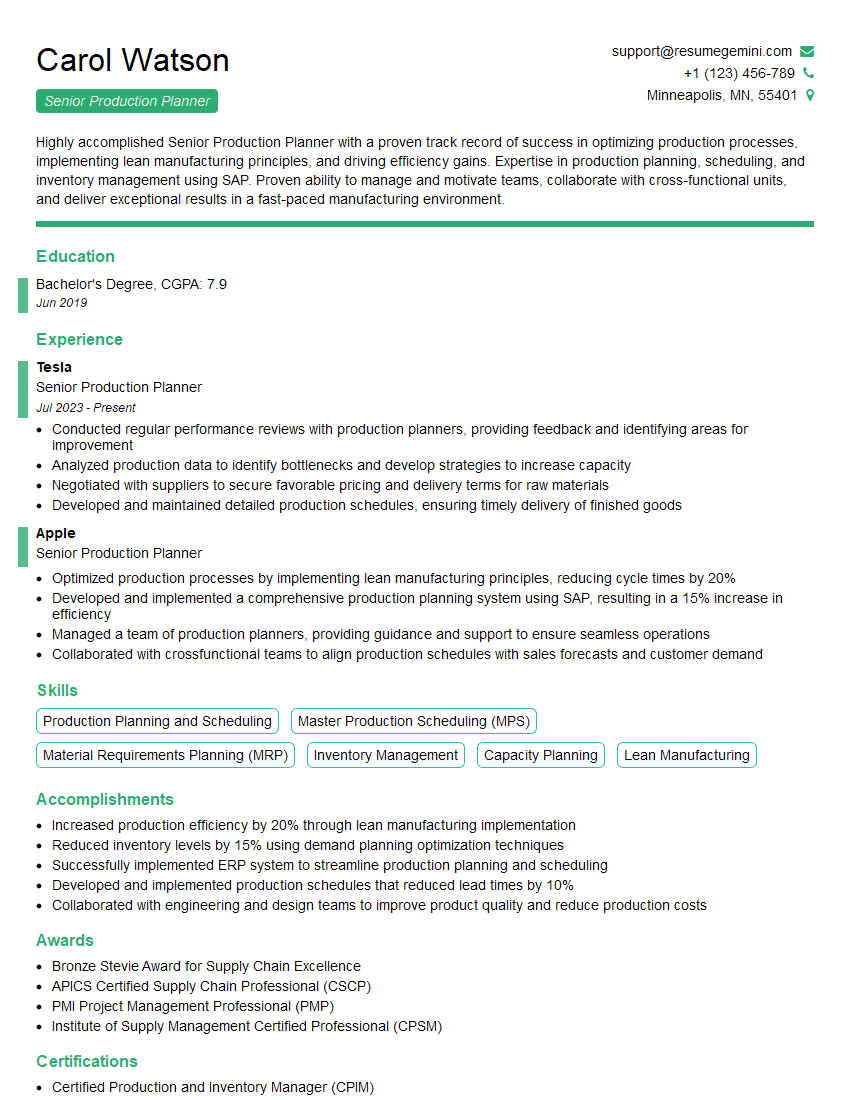
Senior Production Planner Resume Sample
- Program Manager
- Operations Manager
- Demand Planner
- Manufacturing Planner
- Production Control Manager
- Production Supervisor
- Logistics Coordinator
- Project Manager
- Scheduling Manager
- Production Planner
- Supply Chain Analyst
- Business Process Analyst
- Operations Analyst
- Manufacturing Engineer
- Inventory Control Manager
- Senior Production Planner
Explore more articles
Users Rating of Our Blogs
Share Your Experience
We value your feedback! Please rate our content and share your thoughts (optional).
What Readers Say About Our Blog
Very informative content, great job.
good