Feeling uncertain about what to expect in your upcoming interview? We’ve got you covered! This blog highlights the most important Experience in developing and executing successful recruiting plans interview questions and provides actionable advice to help you stand out as the ideal candidate. Let’s pave the way for your success.
Questions Asked in Experience in developing and executing successful recruiting plans Interview
Q 1. Describe your experience developing a recruiting plan from start to finish.
Developing a recruiting plan is like creating a detailed roadmap for finding the perfect talent. It starts with understanding the hiring needs – the roles, required skills, and the timeline. I begin by collaborating closely with hiring managers to define the ideal candidate profile. This includes not just technical skills but also cultural fit and personality traits. Then, I determine the best sourcing strategies: will we use job boards, employee referrals, social media, or recruitment agencies? I’ll also establish a clear budget and timeline. Next, I create a detailed timeline outlining each step, from job posting to offer acceptance. This includes advertising, screening applications, conducting interviews, and extending job offers. Throughout the process, I constantly monitor key metrics (discussed further in the next answer) to ensure the plan remains effective and adjust the strategy as needed. Finally, I document everything, learning from what worked and what didn’t for future plans.
For example, when recruiting for a senior software engineer role, we used a combination of LinkedIn Recruiter, targeted advertising on industry websites, and employee referrals. This multi-pronged approach resulted in a diverse pool of qualified candidates, leading to a quicker and more successful hiring process.
Q 2. How do you identify and prioritize key recruitment metrics?
Identifying and prioritizing recruitment metrics is crucial for measuring the success of our recruiting efforts. Think of them as the vital signs of our recruiting health. Key metrics I focus on include:
- Time-to-fill: How long it takes to fill a position. A shorter time-to-fill indicates efficiency.
- Cost-per-hire: The total cost of recruiting divided by the number of hires. Lower is better, reflecting cost-effectiveness.
- Source of hire: Understanding where our best candidates are coming from (e.g., LinkedIn, referrals) helps us optimize our sourcing strategies.
- Candidate quality: This assesses the suitability of candidates who make it through the selection process. A high percentage of successful hires demonstrates effective screening.
- Offer acceptance rate: A high rate signifies a strong employer brand and competitive compensation and benefits.
- Employee retention rate: While not a direct recruiting metric, it reflects the quality of hires. Long-term employee retention indicates successful recruitment.
Prioritization depends on the company’s goals and current challenges. For example, if we’re facing a rapid growth phase, reducing time-to-fill becomes a top priority. If budget is tight, cost-per-hire takes precedence.
Q 3. Explain your process for sourcing passive candidates.
Sourcing passive candidates – those not actively looking for jobs – requires a more strategic and proactive approach. It’s like fishing, not just waiting for fish to jump into your net. My process involves:
- Identifying target companies and individuals: I use LinkedIn Recruiter and other professional networking sites to search for individuals with the desired skills and experience.
- Creating engaging content: I craft compelling messages that highlight the company culture, exciting projects, and career growth opportunities. Generic messages rarely work.
- Building relationships: I don’t just send generic requests. I personalize each outreach, highlighting shared connections or common interests, making the communication more meaningful.
- Leveraging employee referrals: Our existing employees are our best ambassadors, often knowing talented individuals in their networks.
- Attending industry events and conferences: Networking in person can create stronger connections than online interactions.
For example, when seeking a specialist in a niche technology, I targeted companies known for their expertise in that area, focusing on individuals holding key roles. Personalized messaging highlighting their accomplishments and the challenging projects at our company resulted in a significant increase in responses.
Q 4. How do you manage a high volume of applications efficiently?
Managing a high volume of applications requires a systematic and efficient approach. Think of it as a well-oiled machine, with each part playing a critical role. I use an Applicant Tracking System (ATS) to streamline the process. The ATS allows me to:
- Filter applications based on keywords and criteria: This helps quickly identify candidates who meet the minimum requirements.
- Automate initial screening: Using automated screening tools helps eliminate unqualified applications quickly.
- Rank candidates based on predefined criteria: This allows prioritizing the most promising applications for further review.
- Organize candidates into different stages of the hiring process: This provides a clear overview of the progress of each candidate.
- Communicate effectively with candidates: The ATS can be used to send automated updates and acknowledge receipt of applications.
In addition to using technology, I prioritize clear and concise job descriptions that attract only qualified applicants. This reduces the initial volume and improves the overall efficiency of the screening process.
Q 5. What strategies do you use to improve candidate experience?
Improving candidate experience is key to attracting top talent. It’s about showing candidates that you value their time and efforts. My strategies include:
- Prompt and clear communication: Keeping candidates informed about the hiring process at each step is crucial. I aim to respond to all inquiries promptly and provide transparent updates.
- Structured and efficient interviews: Avoiding unnecessary delays and keeping interviews concise and relevant shows respect for the candidate’s time.
- Feedback, regardless of outcome: Providing constructive feedback, even if the candidate is not selected, demonstrates respect and professionalism.
- Modern and user-friendly application process: An easy-to-navigate application process reduces friction and improves the overall experience.
- Gathering candidate feedback: Regularly collecting feedback through surveys helps identify areas for improvement in the candidate experience.
For instance, implementing a text message update system for scheduling interviews significantly reduced scheduling conflicts and improved communication.
Q 6. Describe your approach to building strong relationships with hiring managers.
Building strong relationships with hiring managers is crucial for successful recruitment. It’s a partnership built on trust and mutual respect. I achieve this by:
- Regular communication and updates: Keeping hiring managers informed about the progress of the recruitment process is essential. This includes regular updates on the number of applications received, candidate quality, and the overall timeline.
- Understanding their needs and expectations: Before starting the search, I thoroughly understand the requirements of the role, the team dynamics, and the hiring manager’s preferences.
- Providing data-driven insights: I use metrics to demonstrate the effectiveness of the recruitment strategy and provide insights on candidate quality and market trends.
- Proactive problem-solving: If challenges arise, I actively work with the hiring manager to find solutions. This shows initiative and commitment to the shared goal.
- Building personal rapport: Taking the time to understand the hiring manager’s personal style and preferences helps in building a positive working relationship.
For example, in one instance, I proactively identified a potential skill gap in the candidate pool by analyzing market trends and proposed alternative sourcing strategies to the hiring manager. This collaborative approach resulted in finding a high-quality candidate who perfectly met the evolving needs of the team.
Q 7. How do you ensure diversity and inclusion in your recruiting efforts?
Ensuring diversity and inclusion is not just a box to tick; it’s about building a truly representative workforce that reflects the rich tapestry of our society. My approach involves:
- Using inclusive language in job descriptions: Avoiding gendered or biased language ensures a broader reach.
- Partnering with diverse organizations: Collaborating with organizations dedicated to promoting diversity and inclusion helps reach a wider pool of diverse candidates.
- Implementing blind resume screening: Removing identifying information like names and gender from resumes helps mitigate unconscious bias.
- Setting diversity goals and tracking progress: Monitoring diversity metrics throughout the recruiting process allows us to identify areas needing improvement.
- Providing diversity and inclusion training: Training hiring managers and recruiters on unconscious bias and inclusive hiring practices is crucial.
- Creating an inclusive interview process: Conducting interviews in a fair and unbiased manner that creates a comfortable environment for all candidates.
For example, we implemented a blind resume screening process, resulting in a 30% increase in applications from underrepresented groups, which led to a more diverse candidate pool. Furthermore, we partnered with a local organization focused on women in tech to broaden our reach and attract female candidates for technical roles.
Q 8. How do you evaluate the effectiveness of your recruitment strategies?
Evaluating recruitment strategy effectiveness involves a multi-faceted approach, going beyond simply filling roles. I use a combination of quantitative and qualitative metrics. Quantitatively, I track key performance indicators (KPIs) such as cost per hire, time-to-fill, source-of-hire data, and offer-to-acceptance rate. These metrics provide a clear picture of efficiency and effectiveness. For example, a high cost-per-hire might indicate inefficiencies in the process, prompting a review of sourcing strategies or internal processes. A low time-to-fill suggests efficient and streamlined processes, while understanding the source-of-hire helps optimize where we focus our recruitment efforts. The offer-to-acceptance rate reflects the attractiveness of our compensation and benefits packages and the candidate experience.
Qualitatively, I conduct regular surveys with hiring managers and newly hired employees to gather feedback on their experience. This feedback helps pinpoint areas for improvement in the candidate journey, from initial application to onboarding. I also analyze the performance of new hires over time to determine if the recruitment process effectively identified candidates with the right skills and cultural fit. This holistic approach allows for continuous improvement and optimization of our recruitment strategies.
Q 9. What tools and technologies do you utilize for recruiting?
My toolkit for recruiting is constantly evolving to leverage the best available technologies. I rely heavily on Applicant Tracking Systems (ATS) like Workday or Taleo for managing applications, tracking candidates, and automating parts of the process. Beyond the ATS, I use LinkedIn Recruiter for targeted sourcing, Boolean search strategies to find passive candidates, and job boards like Indeed and Glassdoor to cast a wider net. I also utilize video interviewing platforms like HireVue for initial screening, saving time and resources. Collaboration tools like Slack and Microsoft Teams are essential for internal communication and efficient candidate management. Finally, I utilize data analytics platforms to track and analyze the performance of different recruitment channels and strategies.
Q 10. How do you handle a challenging situation where a candidate withdraws their application late in the process?
Candidate withdrawals late in the process are undeniably frustrating, but I approach them systematically. First, I try to understand the reason for the withdrawal. A respectful conversation is crucial – I listen empathetically to understand their concerns, whether it’s a better offer, a change in personal circumstances, or a mismatch in expectations. This understanding helps prevent similar situations in the future. Second, I immediately assess the impact on the timeline and the hiring needs of the team. This might involve reassessing the candidate pool, expediting the review of remaining candidates, or revisiting the job description to identify any potential gaps that may have contributed to the withdrawal. Finally, I document everything meticulously. This detailed record can inform future strategies, highlighting areas for improvement and ensuring better candidate engagement throughout the process.
Q 11. How do you negotiate salary and benefits with candidates?
Salary and benefits negotiation requires a collaborative and informed approach. I begin by researching industry benchmarks and internal equity to determine a competitive salary range. I present this range to the candidate, explaining its basis and ensuring transparency. Then, I actively listen to the candidate’s expectations and needs. The negotiation isn’t just about salary; it’s about finding a package that motivates and retains them. This may involve discussing other aspects like performance bonuses, health benefits, vacation time, professional development opportunities, or flexible working arrangements. A successful negotiation leaves both parties feeling valued and respected. I aim for a win-win scenario where the candidate feels fairly compensated and the company secures top talent. A key principle is to always be prepared with data to support your position.
Q 12. Explain your experience with applicant tracking systems (ATS).
My experience with Applicant Tracking Systems (ATS) is extensive. I’ve used various systems, including Workday, Taleo, and Greenhouse. I’m proficient in configuring and customizing these systems to optimize our recruitment workflows. My expertise extends beyond basic functionalities; I’m adept at building custom reports to track KPIs, automating tasks like email communications, and integrating the ATS with other HR systems. For example, I’ve configured automated email responses to acknowledge applications, improving candidate experience and reducing manual workload. I’ve also used the reporting capabilities of the ATS to analyze the effectiveness of different sourcing channels and make data-driven decisions about where to allocate resources. The ATS is not just a database; it’s a powerful tool for streamlining and improving the entire recruiting process.
Q 13. How do you manage and mitigate recruitment risks?
Managing recruitment risks is crucial. I mitigate these risks through proactive measures. Firstly, I ensure our job descriptions are clear, accurate, and legally compliant, minimizing the risk of misrepresentation or discrimination claims. Secondly, I implement thorough background checks and reference verification processes to assess candidates’ qualifications and suitability, safeguarding the organization from potential security or legal issues. Thirdly, I emphasize diversity and inclusion throughout the recruitment process, reducing the risk of bias and enhancing our talent pool. Finally, I regularly review our recruitment policies and processes to identify and address potential vulnerabilities and ensure compliance with all relevant laws and regulations. This multi-pronged approach helps ensure a secure and equitable hiring process.
Q 14. Describe your experience with employer branding.
Employer branding is critical for attracting and retaining top talent. My experience involves developing and implementing strategies to enhance our company’s image as a desirable employer. This includes creating compelling content highlighting our company culture, values, and employee benefits. We leverage social media platforms, employee testimonials, and targeted campaigns to reach potential candidates. For example, I’ve worked on initiatives to showcase our commitment to diversity and inclusion, attracting a broader range of talent. We also highlight employee success stories and professional development opportunities to demonstrate career growth possibilities within the company. A strong employer brand not only reduces recruitment costs but also fosters a positive and engaging work environment, improving employee retention and productivity.
Q 15. How do you create and maintain a positive candidate experience?
Creating a positive candidate experience is crucial for attracting top talent and building a strong employer brand. It’s about treating every candidate with respect and professionalism, regardless of whether they’re hired. This involves clear and consistent communication throughout the entire recruitment process, from initial contact to final decision.
- Prompt communication: Acknowledge applications promptly, keep candidates updated on the timeline, and provide feedback, even if it’s a rejection.
- Transparent process: Clearly outline the interview stages and what to expect at each step. This reduces candidate anxiety and shows respect for their time.
- Personalized interactions: Tailor communication to the individual, showing genuine interest in their skills and experience. Avoid generic emails and canned responses.
- Positive interactions with all team members: Ensure everyone involved in the process, from recruiters to hiring managers, provides a positive experience. A negative interaction with one person can damage the overall perception.
- Post-interview follow-up: Regardless of the outcome, a thank-you note and update on the next steps is essential. For those not selected, offer constructive feedback if possible.
For example, during a recent recruitment drive, we implemented a system of automated email updates at each stage of the process, greatly improving candidate satisfaction scores. We also introduced a feedback form for candidates, allowing us to identify areas for improvement and continuously enhance the experience.
Career Expert Tips:
- Ace those interviews! Prepare effectively by reviewing the Top 50 Most Common Interview Questions on ResumeGemini.
- Navigate your job search with confidence! Explore a wide range of Career Tips on ResumeGemini. Learn about common challenges and recommendations to overcome them.
- Craft the perfect resume! Master the Art of Resume Writing with ResumeGemini’s guide. Showcase your unique qualifications and achievements effectively.
- Don’t miss out on holiday savings! Build your dream resume with ResumeGemini’s ATS optimized templates.
Q 16. What is your preferred interview style and why?
My preferred interview style is a blend of behavioral and competency-based questioning, incorporating elements of situational and case studies. This approach provides a well-rounded assessment of a candidate’s skills, experience, and cultural fit.
- Behavioral questions (e.g., “Tell me about a time you failed.”): These explore past behavior as a predictor of future performance. This helps me understand how a candidate has handled situations relevant to the role.
- Competency-based questions (e.g., “Describe your experience with project management.”): These assess specific skills and knowledge relevant to the job description. This focuses on quantifiable achievements and skills relevant to the role’s requirements.
- Situational questions (e.g., “How would you handle a conflict with a team member?”): These test how candidates would react in hypothetical situations, providing insight into their problem-solving abilities and decision-making skills.
- Case studies (e.g., presenting a business problem for analysis): These evaluate a candidate’s analytical skills, critical thinking abilities and creative problem-solving capabilities.
This multifaceted approach minimizes bias and provides a more comprehensive understanding of the candidate’s capabilities, compared to relying on a single interview style. It allows me to assess not just skills and knowledge, but also personality traits and cultural fit.
Q 17. How do you ensure compliance with employment laws during the recruitment process?
Ensuring compliance with employment laws is paramount. This requires staying updated on relevant legislation and implementing robust processes to avoid legal issues.
- Job descriptions: Ensure job descriptions are free of discriminatory language and accurately reflect the essential functions of the role.
- Equal opportunity employment: Adhere to fair and unbiased hiring practices, avoiding any discrimination based on age, gender, race, religion, or any other protected characteristic.
- Background checks: Conduct background checks in compliance with all relevant laws and regulations, obtaining necessary authorizations from candidates.
- Offer letters: Ensure that offer letters are legally sound and compliant with local employment regulations.
- Record keeping: Maintain accurate and comprehensive records of the recruitment process, including applications, interviews, and offers, for auditing purposes.
We regularly conduct internal compliance training and use applicant tracking systems (ATS) with built-in compliance features to help manage the process. I also consult with legal counsel when necessary to ensure that our practices remain current and compliant.
Q 18. Describe a time you had to adapt your recruiting strategy to meet changing business needs.
During a period of rapid growth, our company needed to fill a large number of sales positions quickly. My initial strategy, focusing on traditional job boards, wasn’t yielding sufficient results.
To adapt, I diversified our sourcing strategy:
- Expanded our outreach: We leveraged social media platforms like LinkedIn, attended industry events, and partnered with relevant professional organizations to reach a broader talent pool.
- Implemented referral programs: We incentivized employees to refer qualified candidates, leveraging their networks to quickly identify suitable individuals.
- Introduced a faster interview process: We streamlined our interview process to accelerate the hiring cycle, reducing time-to-hire significantly.
- Emphasized employer branding: We enhanced our employer brand messaging to showcase our company culture and attract top talent.
This multi-pronged approach resulted in a significant increase in qualified applicants and drastically reduced our time-to-fill, enabling us to meet the company’s rapid expansion goals successfully.
Q 19. What is your approach to handling rejected candidates?
Handling rejected candidates with professionalism and respect is essential for maintaining a positive employer brand. It’s an opportunity to strengthen the relationship and potentially create future talent pools.
- Prompt and personalized communication: Communicate the decision promptly and clearly, offering a concise explanation without being overly critical.
- Constructive feedback (where appropriate): If possible, provide specific and helpful feedback on areas for improvement. This demonstrates care and shows the candidate that their time and effort were valued.
- Maintain contact for future opportunities: Inform rejected candidates that their profile will be kept on file for future suitable opportunities, keeping them engaged and part of the talent pipeline.
- Express gratitude: Thank the candidate for their interest and time invested in the application process.
For instance, we developed a template for rejection emails that included personalized comments about the candidate’s qualifications and expressed our appreciation for their application. This significantly improved candidate feedback scores.
Q 20. How do you measure the ROI of your recruiting efforts?
Measuring the ROI of recruiting efforts requires a multi-faceted approach. It’s not just about the cost-per-hire; it’s also about the quality of hire and the long-term impact of those hires.
- Cost-per-hire (CPH): This is a fundamental metric that calculates the total cost of hiring a candidate divided by the number of hires. It helps to assess the efficiency of the recruitment process.
- Time-to-fill (TTF): This metric measures the time taken to fill a vacant position. A shorter TTF indicates a more efficient recruitment process.
- Quality of hire: This assesses the performance of hired candidates over a specified period (e.g., 6 months or 1 year). It requires tracking metrics like employee retention, performance reviews, and promotions.
- Employee retention rate: Higher retention rates indicate successful hiring decisions and a positive work environment.
- Return on investment (ROI): This broader metric incorporates various factors like employee productivity, revenue generation, and overall contribution to business goals. A comprehensive analysis considering the long-term value of the hires is required.
We use a combination of these metrics, tracked through our ATS and performance management systems, to regularly evaluate the effectiveness of our recruiting strategies and make data-driven improvements. For instance, a high CPH might indicate that we need to explore cost-effective sourcing channels.
Q 21. How do you build a strong talent pipeline?
Building a strong talent pipeline is essential for ensuring a ready pool of qualified candidates when recruitment needs arise. This involves proactive strategies that extend beyond immediate hiring needs.
- Networking and relationship building: Engage with potential candidates at industry events, conferences, and online forums. Building relationships with potential hires fosters a sense of connection and brand recognition.
- Social media engagement: Actively participate in relevant social media platforms (LinkedIn, Twitter, etc.) to connect with professionals in your target industry.
- Content marketing: Create valuable content (blog posts, articles, videos) that showcase your company’s expertise and attract talent organically.
- Employer branding: Develop a strong employer brand that highlights your company’s culture, values, and employee benefits to attract top talent.
- University recruiting: Partner with universities and colleges to identify and recruit promising graduates.
- Alumni networks: Connect with former employees to tap into their networks and identify potential candidates.
We actively cultivate our talent pipeline by regularly attending industry events, hosting webinars and maintaining an active presence on LinkedIn, sharing company updates and insights. This approach allows us to build relationships with potential candidates long before a specific hiring need arises.
Q 22. How do you identify and address recruitment bottlenecks?
Identifying and addressing recruitment bottlenecks requires a systematic approach. Think of the recruitment process as an assembly line; if one part is slow or broken, the entire process suffers. I start by analyzing key metrics like time-to-hire, cost-per-hire, and source-of-hire. This data helps pinpoint where the delays are occurring.
- Slow application processing: This could indicate a need for improved applicant tracking system (ATS) workflow or streamlined application forms.
- Long interview processes: This may require optimizing the interview stages, perhaps by using pre-recorded video interviews or reducing the number of interview rounds.
- High candidate drop-off rates: This necessitates analyzing candidate feedback to identify pain points, such as lengthy application processes or a lack of communication.
- Offer acceptance rate: Low acceptance rates might point to issues with compensation, benefits, or the overall candidate experience.
Once the bottleneck is identified, I implement targeted solutions. For example, if the issue is lengthy interview processes, I might introduce structured interviews or use a scoring system to standardize evaluations and speed up the decision-making process. If it’s a lack of qualified applicants, I’d broaden my sourcing strategy.
I also believe in continuous monitoring. Regularly reviewing these metrics and adjusting my strategies as needed is crucial to maintain efficiency and effectiveness. Think of it like driving – constantly checking your dashboard and adjusting your speed or course to reach your destination.
Q 23. What is your experience with different recruiting channels (e.g., LinkedIn, job boards, etc.)?
I have extensive experience leveraging a diverse range of recruiting channels to reach the right talent. My approach is strategic; I don’t just use one channel, but rather tailor my approach depending on the role and the type of candidate I’m looking for.
- LinkedIn Recruiter: This is my go-to platform for experienced professionals. I use Boolean search strings to target specific skill sets and experience levels, and I actively engage with candidates through personalized messages.
- Job Boards (Indeed, Monster, etc.): Job boards are excellent for reaching a broader audience, particularly for entry-level or junior positions. However, I find it important to craft compelling job descriptions to attract the best candidates from the pool.
- Employee Referrals: I actively encourage employee referrals because they often lead to high-quality hires and faster onboarding. I make sure my referral program is easy to participate in and offers suitable incentives.
- Niche Job Boards and Platforms: Depending on the specific industry or role, I use niche job boards or platforms that cater to that specific audience. This helps me target my efforts to the most relevant candidate pool.
- Networking and industry events: Building relationships within the industry is crucial for passive candidate sourcing. Attending industry events and networking are vital to building pipelines.
For example, when recruiting for a highly specialized software engineering role, I primarily used LinkedIn Recruiter, supplementing with targeted outreach on relevant technical forums. This laser-focused approach allowed me to quickly identify and engage with top candidates.
Q 24. Describe your experience with various interview techniques (e.g., behavioral, technical, etc.)
My interview process is built around a multi-faceted approach, combining different techniques to ensure a thorough assessment of each candidate’s skills and cultural fit. I’m comfortable employing several types of interviews, including:
- Behavioral Interviews: These are crucial for assessing a candidate’s past experiences and how they’ve handled different situations. I use the STAR method (Situation, Task, Action, Result) to guide candidates in providing structured and detailed responses. This helps me predict their future performance.
- Technical Interviews: For technical roles, I conduct assessments to evaluate coding skills, problem-solving capabilities, and domain expertise. The complexity of the assessment depends on the seniority of the role.
- Panel Interviews: This involves multiple interviewers, providing a comprehensive assessment from various perspectives. It is also useful for assessing teamwork and communication skills.
- Culture Fit Interviews: I also include interviews designed to evaluate how well a candidate aligns with the company culture and team dynamics. This may include informal conversations or discussions about team work styles and values.
I always strive for a consistent interview process across all candidates for a particular role, ensuring fairness and equity. I make sure to provide clear and constructive feedback to all candidates, regardless of the outcome.
Q 25. How do you handle difficult or demanding hiring managers?
Managing demanding hiring managers requires tact, diplomacy, and a strong understanding of their needs and concerns. It’s a balancing act between meeting their expectations and maintaining a fair and effective recruiting process.
- Active Listening and Understanding: I start by actively listening to understand their requirements, their concerns, and their expectations for the role and the candidate.
- Realistic Expectations: Sometimes, hiring managers have unrealistic expectations regarding skills or experience, or overly demanding timelines. I address this by providing data-backed insights into market realities and average time-to-hire, adjusting expectations to ensure success.
- Collaborative Partnership: I work with the hiring manager as a collaborative partner, involving them in the recruitment process at each step, providing regular updates and seeking their input and feedback.
- Advocating for the Candidate: I advocate for strong candidates, even if they don’t perfectly check every box on the hiring manager’s list. I present a comprehensive view of the candidate’s strengths and potential.
- Clear Communication: I maintain clear and consistent communication throughout the hiring process, proactively addressing any concerns or questions promptly and professionally.
For instance, I once had a hiring manager with an incredibly tight deadline. By actively collaborating and using a more streamlined interview process, we managed to find and onboard a top candidate well within the timeframe, exceeding expectations.
Q 26. How do you onboard new hires effectively?
Effective onboarding is crucial for a successful employee journey. I believe in a structured and comprehensive approach, encompassing both administrative tasks and fostering a sense of belonging.
- Pre-boarding: Before the start date, I ensure that all necessary paperwork is completed, IT equipment is ready, and access to necessary systems is granted. This seamless transition minimizes initial frustrations.
- First Day/Week: The first day/week is crucial for setting the right tone. I organize a welcoming event with team introductions, a tour of the facilities, and a clear overview of expectations and responsibilities.
- Training and Development: I coordinate with relevant teams to provide necessary training and resources, both technical and soft skills.
- Mentorship and Buddy System: I pair new hires with experienced colleagues who act as mentors or buddies. This peer support system is invaluable for integration into the team and company culture.
- Regular Check-ins: I conduct regular check-ins during the initial months to address concerns, provide support, and gather feedback. This ensures a smooth transition and identifies potential issues early on.
I also measure onboarding success through feedback surveys and tracking key metrics such as employee retention rates within the first year. This helps me improve the process and optimize it over time.
Q 27. Describe your experience with performance management of recruitment team members.
Performance management of my recruitment team is crucial for maintaining a high-performing team. My approach involves a combination of goal-setting, regular feedback, and performance reviews.
- Clear Goals and Expectations: At the start of each period, I collaboratively set clear, measurable, achievable, relevant, and time-bound (SMART) goals for each team member. This ensures alignment and clarity.
- Regular Feedback and Coaching: I provide regular feedback, both positive and constructive, using a combination of formal reviews and informal check-ins. I focus on both strengths and areas for improvement, offering coaching and mentorship where needed.
- Performance Reviews: Formal performance reviews are used to assess progress toward goals, identify training needs, and determine compensation adjustments. This ensures transparency and fairness.
- Training and Development: I invest in training and development opportunities to enhance the skills and knowledge of my team members. This keeps them up-to-date with industry trends and best practices.
- Recognition and Rewards: I acknowledge and reward exceptional performance, both individually and as a team, fostering motivation and engagement.
I use a 360-degree feedback approach whenever possible, getting input from various stakeholders. This offers a holistic view of each team member’s performance and facilitates more objective assessments.
Q 28. How do you stay current with industry best practices and trends in recruiting?
Staying current in the recruiting field is essential for remaining competitive and effective. I utilize several strategies to ensure my knowledge base is constantly updated.
- Industry Publications and Blogs: I regularly read industry publications, blogs, and articles to stay informed about new trends, technologies, and best practices.
- Webinars and Conferences: I attend webinars and conferences to network with peers and learn from industry experts. This provides valuable insights and new perspectives.
- Professional Organizations: I actively participate in professional organizations dedicated to recruiting, such as SHRM (Society for Human Resource Management), to stay connected with the community and benefit from shared knowledge.
- Online Courses and Certifications: I regularly pursue online courses and certifications to deepen my expertise in specific areas like applicant tracking systems, diversity and inclusion, or specific recruiting techniques.
- Networking: Networking with other recruiters through online forums, LinkedIn groups, and industry events is crucial for staying informed about trends and sharing experiences.
For example, recently I completed a course on using AI in recruiting, which has significantly improved my sourcing and candidate screening process.
Key Topics to Learn for Experience in developing and executing successful recruiting plans Interview
- Understanding Recruitment Needs Analysis: Defining target roles, required skills, and desired candidate profiles. Practical application: Analyzing job descriptions and market trends to identify ideal candidates.
- Developing Effective Sourcing Strategies: Leveraging various channels (e.g., LinkedIn Recruiter, job boards, employee referrals) to identify and attract qualified candidates. Practical application: Designing a multi-channel sourcing strategy to maximize reach and efficiency, and measuring the success of each channel.
- Candidate Relationship Management (CRM): Utilizing Applicant Tracking Systems (ATS) and other tools to manage candidate interactions and track progress. Practical application: Demonstrating proficiency in using an ATS to efficiently manage large candidate pools, track communication and maintain compliance.
- Interviewing and Selection Processes: Developing structured interviews, evaluating candidates effectively, and ensuring a positive candidate experience. Practical application: Describing the creation of a fair and consistent interview process that minimizes bias and assesses relevant skills effectively.
- Onboarding and Integration: Planning and executing a smooth onboarding process for new hires to ensure successful integration into the team and company culture. Practical application: Outlining key steps in the onboarding process and explaining the importance of setting clear expectations and providing adequate support.
- Recruitment Metrics and Reporting: Tracking key metrics (e.g., time-to-hire, cost-per-hire, quality-of-hire) to measure recruitment effectiveness and identify areas for improvement. Practical application: Explaining how to analyze recruitment data to identify bottlenecks and improve efficiency.
- Legal Compliance in Recruiting: Understanding and adhering to relevant employment laws and regulations to avoid legal issues. Practical application: Demonstrating knowledge of equal opportunity employment principles and best practices.
- Budget Management and Resource Allocation: Effectively managing recruiting budgets and allocating resources to maximize ROI. Practical application: Describing experience optimizing recruitment spending while achieving hiring goals.
Next Steps
Mastering the art of developing and executing successful recruiting plans is crucial for career advancement in Human Resources and related fields. It showcases your strategic thinking, operational efficiency, and ability to build high-performing teams. To significantly enhance your job prospects, creating an ATS-friendly resume is essential. ResumeGemini is a trusted resource to help you build a professional and impactful resume that highlights your skills and experience effectively. We provide examples of resumes tailored to showcasing experience in developing and executing successful recruiting plans to help you create a winning application.

Sourcing Specialist Resume Sample
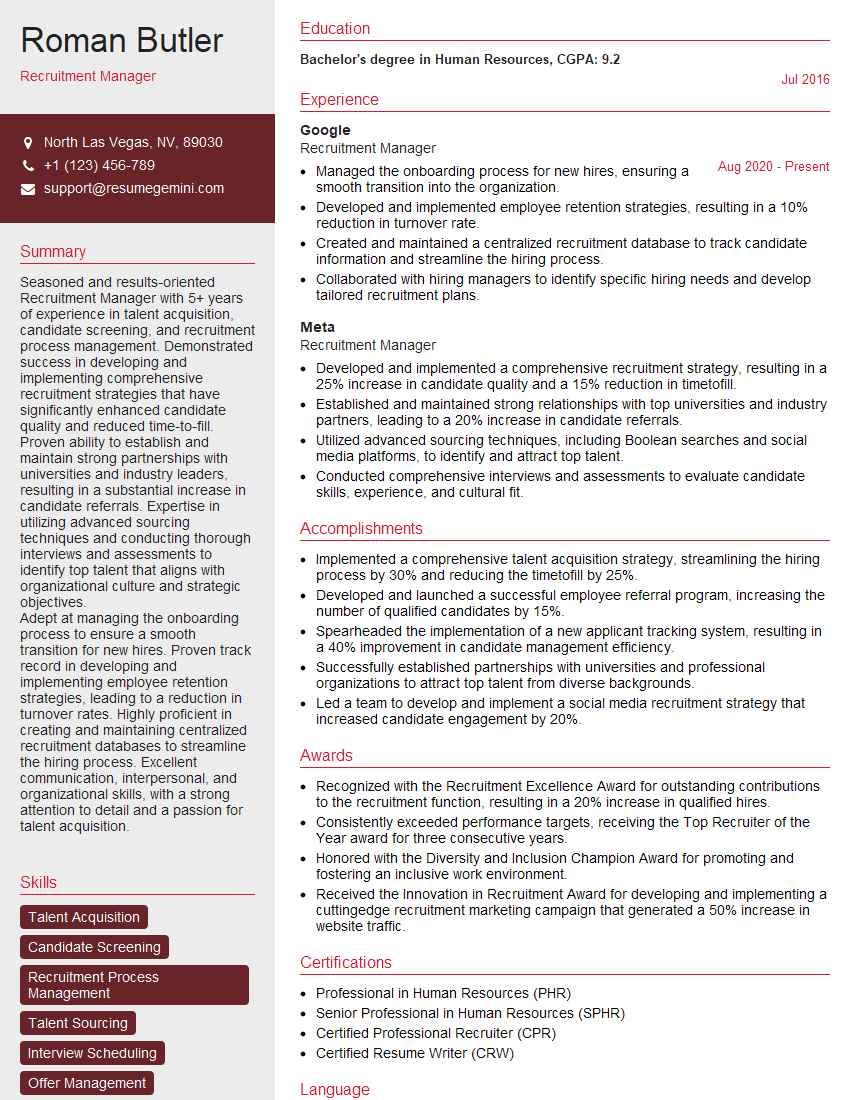
Recruitment Manager Resume Sample
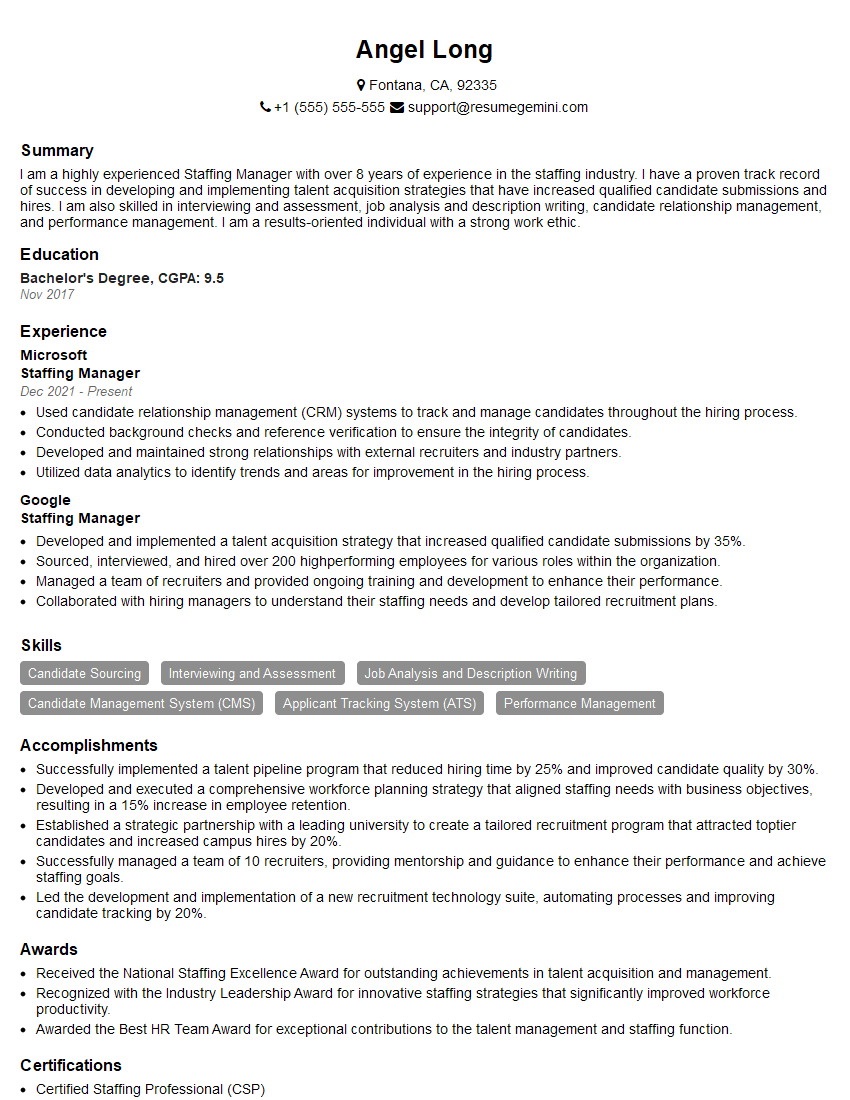
Staffing Manager Resume Sample
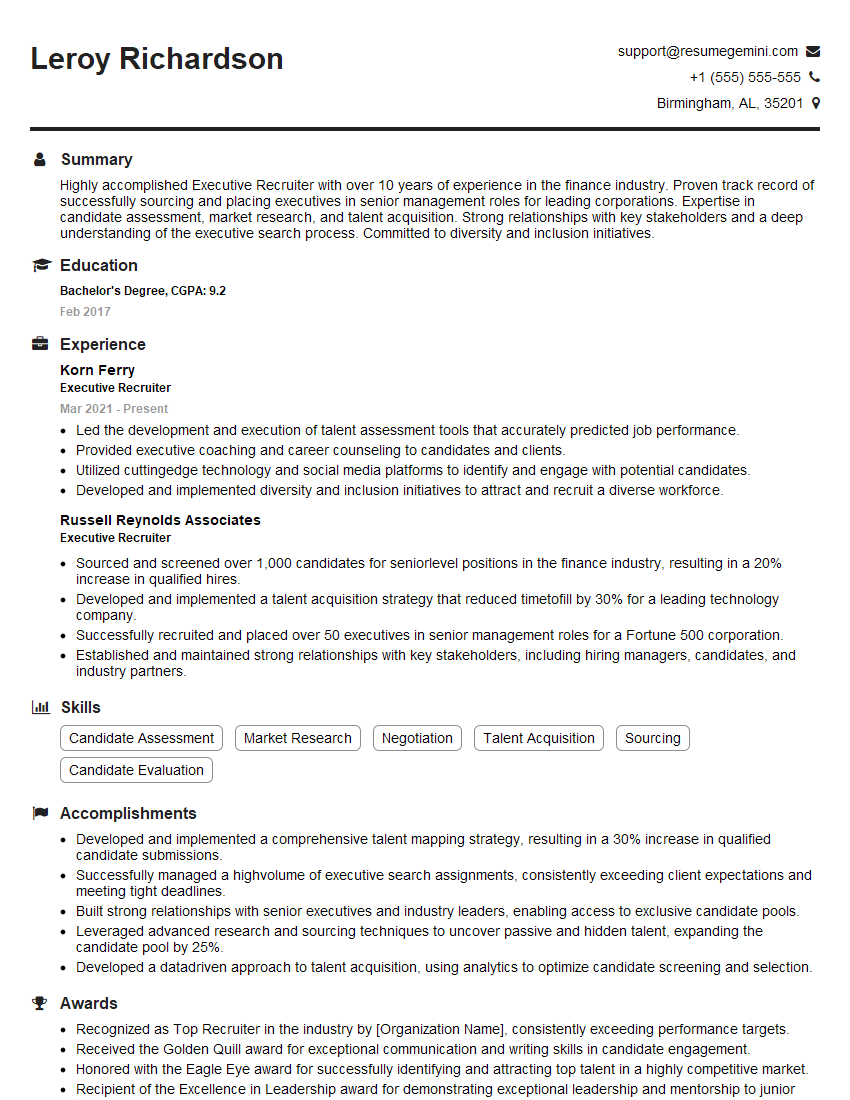
Executive Recruiter Resume Sample
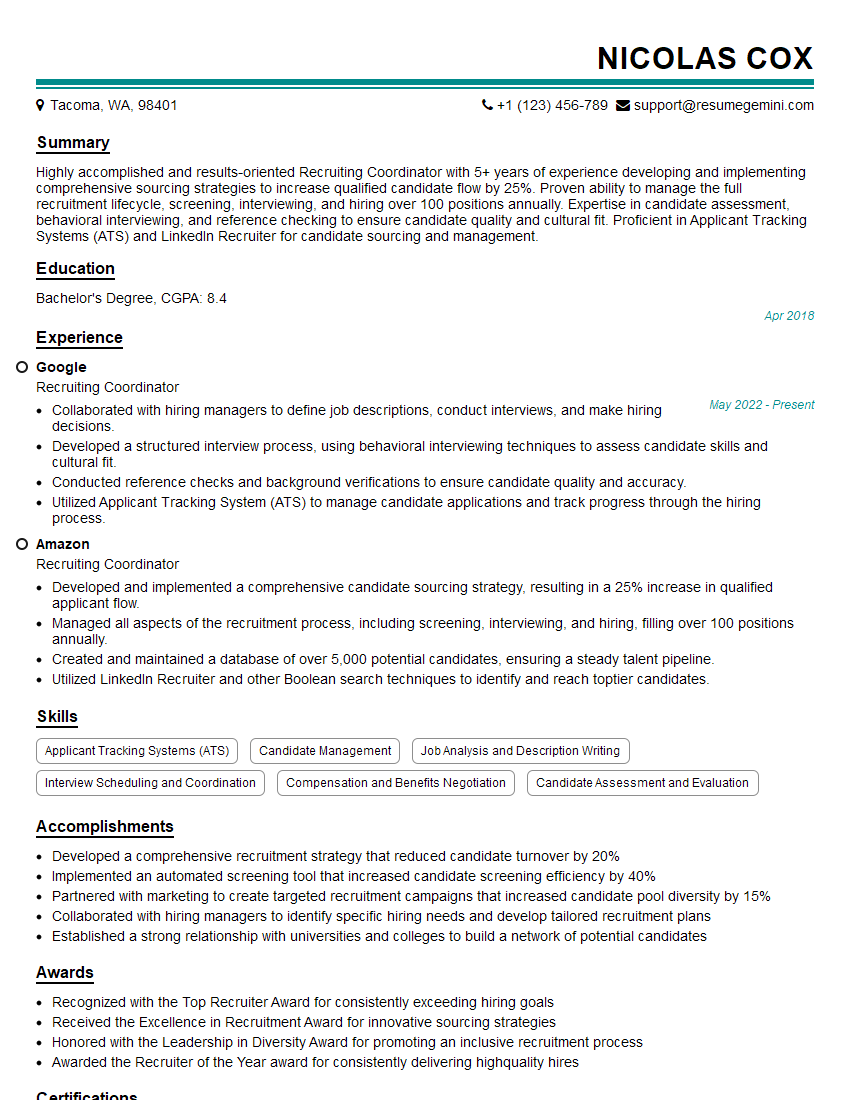
Recruiting Coordinator Resume Sample
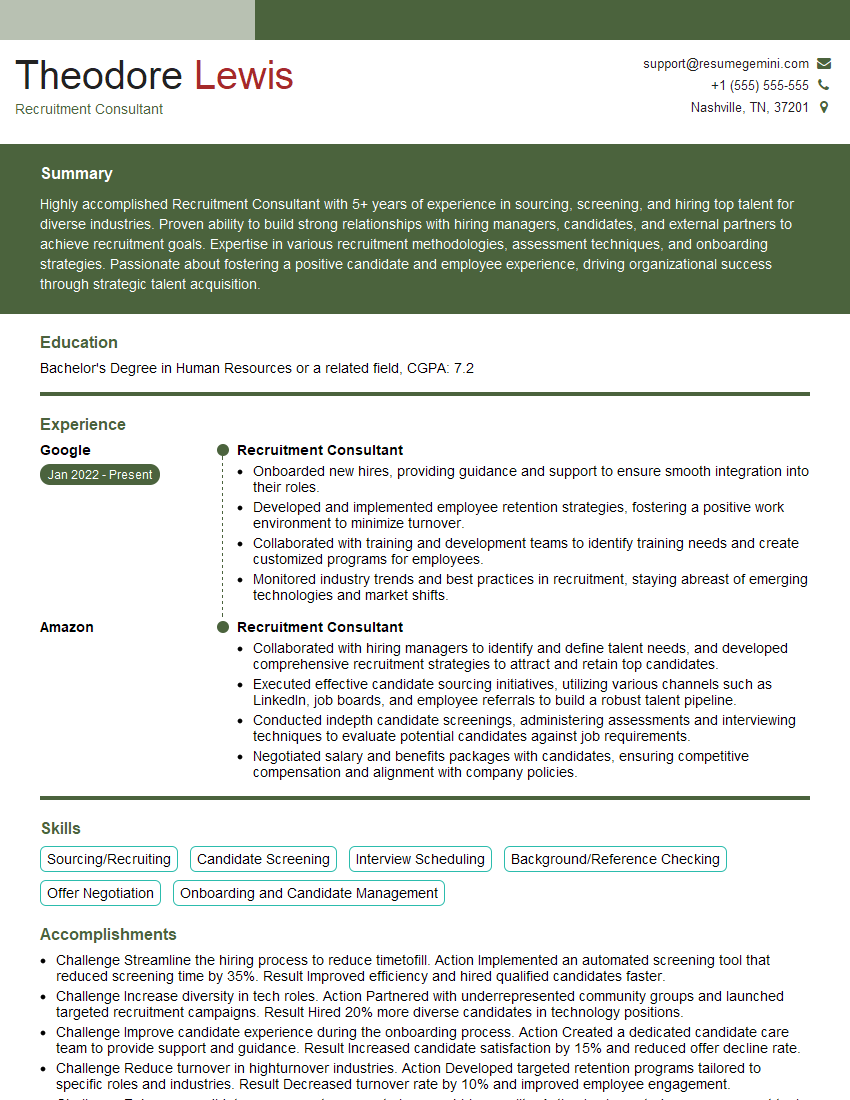
Recruitment Consultant Resume Sample
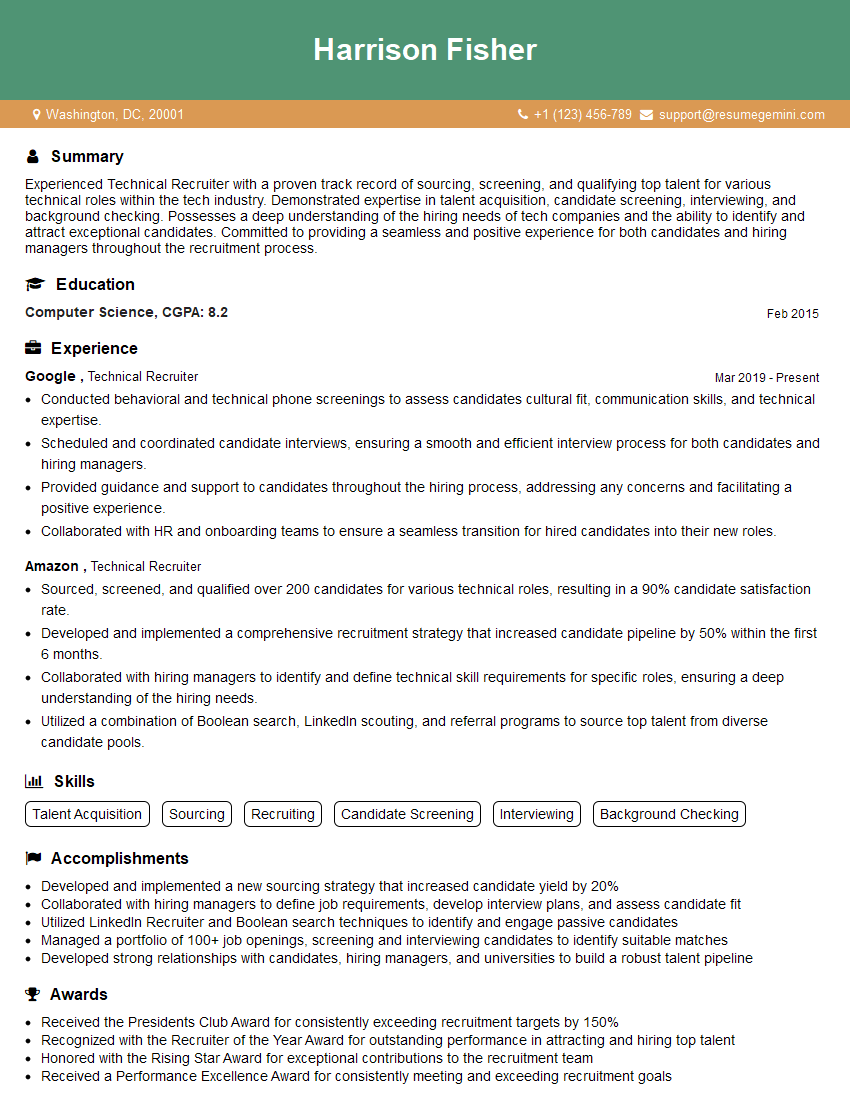
Technical Recruiter Resume Sample
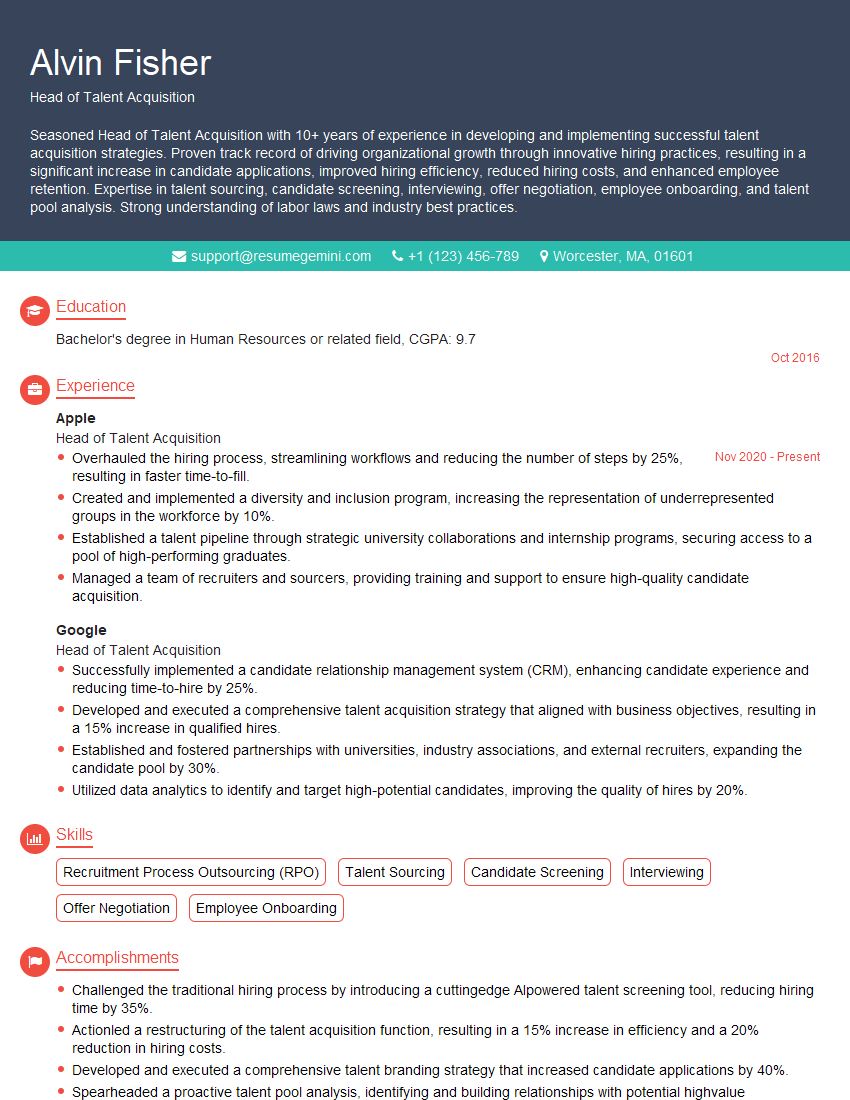
Head of Talent Acquisition Resume Sample
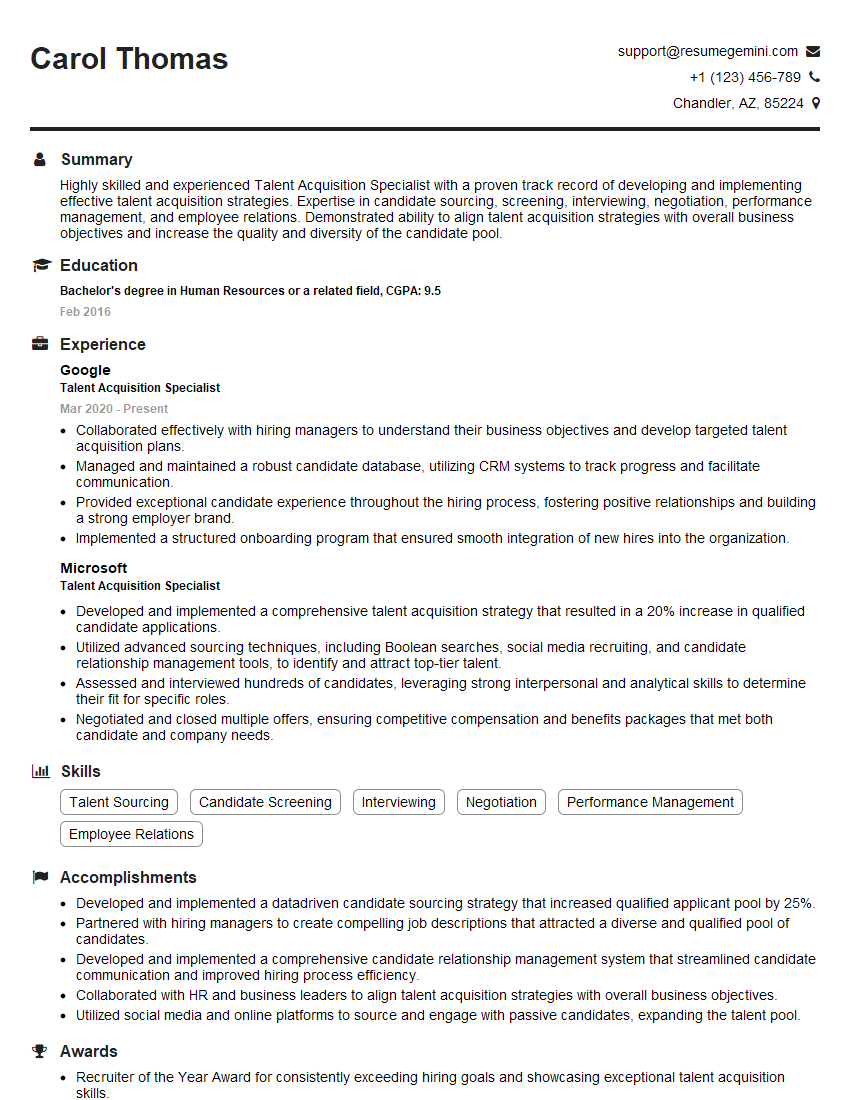
Talent Acquisition Specialist Resume Sample
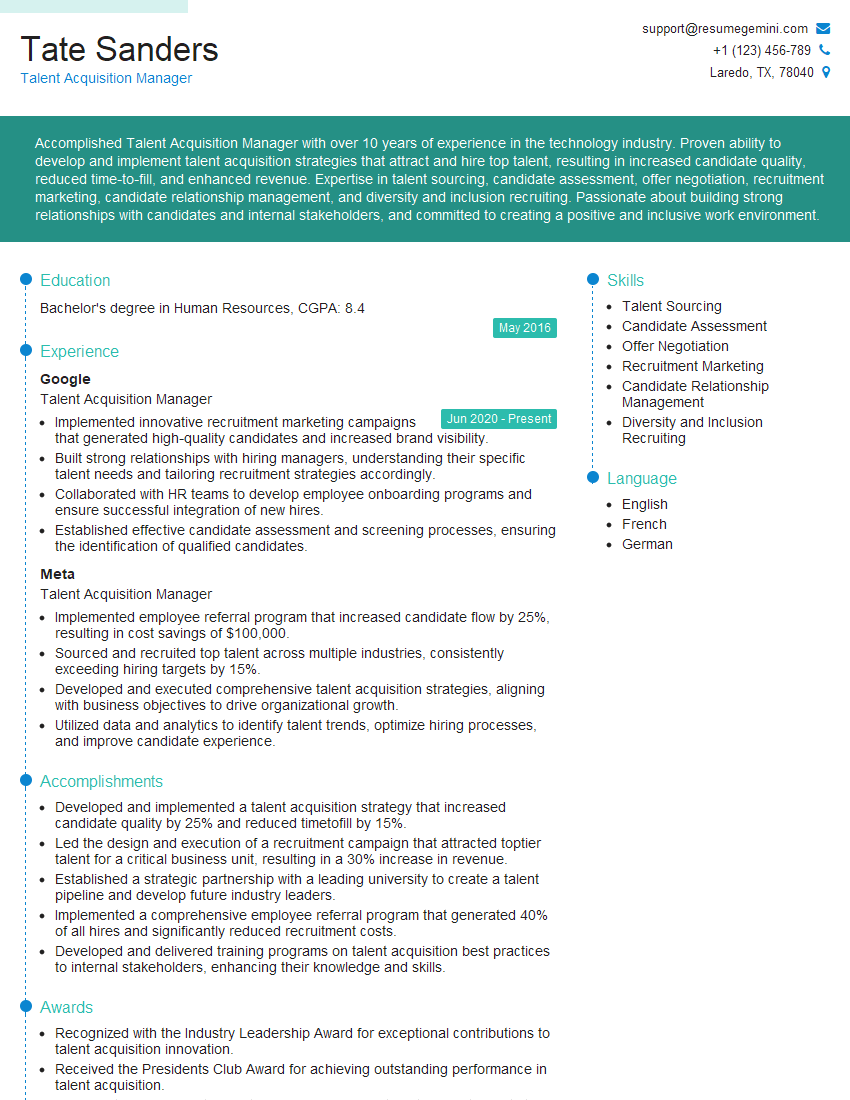
Talent Acquisition Manager Resume Sample
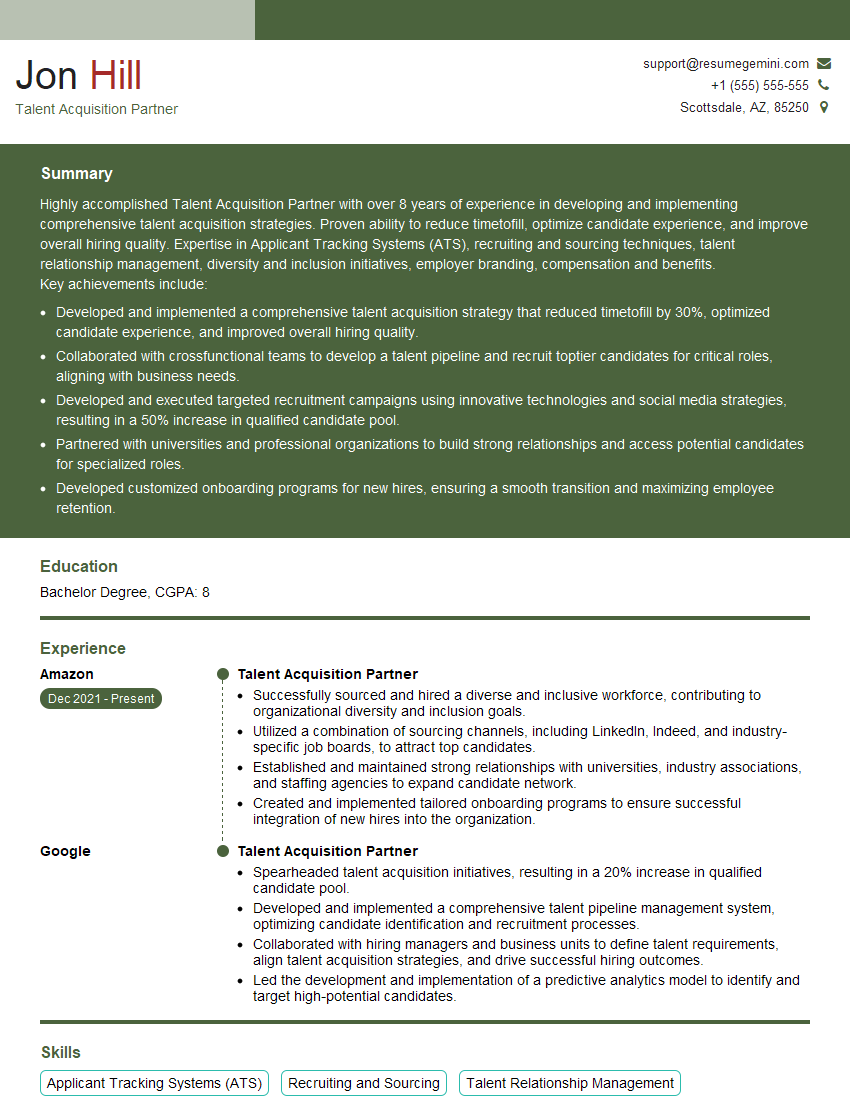
Talent Acquisition Partner Resume Sample
Explore more articles
Users Rating of Our Blogs
Share Your Experience
We value your feedback! Please rate our content and share your thoughts (optional).
What Readers Say About Our Blog
Very informative content, great job.
good