Unlock your full potential by mastering the most common Production and Completion Optimization interview questions. This blog offers a deep dive into the critical topics, ensuring you’re not only prepared to answer but to excel. With these insights, you’ll approach your interview with clarity and confidence.
Questions Asked in Production and Completion Optimization Interview
Q 1. Explain the difference between primary and secondary production.
Primary production refers to the initial phase of oil and gas extraction, relying solely on the natural reservoir energy (pressure) to drive hydrocarbons to the surface. Think of it like letting a balloon deflate naturally – the internal pressure pushes the air out. This phase typically sees the highest production rates, but they decline over time as reservoir pressure depletes.
Secondary production, on the other hand, involves artificially boosting reservoir pressure to maintain or increase production rates. This is akin to squeezing the balloon to force out more air. Common methods include waterflooding (injecting water to maintain pressure) and gas injection (injecting gas to help maintain reservoir pressure and improve oil mobility).
The transition from primary to secondary production is driven by the economic decline in production rates. When natural reservoir energy is no longer sufficient to yield profitable production, secondary recovery methods are implemented.
Q 2. Describe various artificial lift methods and their applications.
Artificial lift methods are crucial when reservoir pressure is insufficient to bring fluids to the surface efficiently. Several methods exist, each tailored to specific well conditions:
- Rod Pumps: These are like a mechanical pump downhole, using a series of rods to lift fluids. They’re versatile and suitable for moderate depths and production rates, but can be less efficient in high-viscosity fluids or high gas-oil ratios.
- Submersible Pumps (ESP): Electrically powered pumps submerged in the wellbore. ESPs are effective in high-volume, low-pressure wells, and can handle high viscosity fluids. However, they are more expensive to install and maintain, and are vulnerable to power outages or downhole damage.
- Gas Lift: Injecting gas into the wellbore to reduce the fluid density and improve flow. It’s particularly useful in high-pressure, low-volume wells and is relatively simple to implement. However, it requires a reliable gas supply and can be less efficient in low-pressure wells.
- Hydraulic Lift: Using a high-pressure fluid to lift fluids to the surface. It’s ideal for wells with high viscosity fluids or those producing sand. However, it requires significant infrastructure and careful monitoring.
Choosing the right artificial lift method involves analyzing factors like well depth, production rate, fluid properties, and operating costs. For instance, an ESP might be preferable for a high-volume, deep well with high-viscosity oil, while gas lift might be a better choice for a low-volume well with a readily available gas supply.
Q 3. How do you optimize well performance using production logging tools?
Production logging tools provide real-time data about the well’s performance, allowing for targeted optimization efforts. These tools are run downhole to measure various parameters, including pressure, temperature, flow rates, and fluid composition. Analyzing this data reveals bottlenecks and areas for improvement.
For example, a production log might reveal a significant pressure drop across a specific section of the wellbore, indicating a potential restriction or damage. This information can guide decisions like:
- Stimulating underperforming zones: If a log shows low productivity in a particular reservoir interval, hydraulic fracturing or acidizing might be employed to improve flow.
- Addressing wellbore issues: A pressure drop could suggest corrosion or scale buildup, necessitating intervention such as cleaning or replacing damaged components.
- Optimizing artificial lift systems: Production logs can help fine-tune artificial lift parameters for maximum efficiency, for example by adjusting the gas injection rate in a gas-lift system.
By systematically analyzing production log data, we can identify and address performance issues, maximizing hydrocarbon recovery and reducing operational costs. It’s like getting a detailed medical checkup for your well; the more data, the better the diagnosis and treatment.
Q 4. What are the key factors influencing well completion design?
Well completion design is critical for maximizing production and longevity. Several key factors influence this design:
- Reservoir characteristics: Permeability, porosity, pressure, temperature, and fluid properties all influence the choice of completion type. A highly permeable reservoir might require a simple completion, while a low-permeability reservoir might need stimulation.
- Wellbore conditions: Factors like well depth, diameter, and inclination influence the selection of completion equipment and techniques.
- Production objectives: The intended production rate, fluid type (oil, gas, or water), and production duration all affect the design.
- Economic considerations: Cost-effectiveness is always a major concern. The completion design must balance the initial investment with the projected return on investment.
- Environmental regulations: Compliance with environmental standards is crucial, and the design should minimize environmental impact.
For example, a horizontal well in a shale gas reservoir might require a multi-stage fractured completion to maximize production from the low-permeability rock. Conversely, a vertical well in a high-permeability sandstone reservoir might only need a simple perforated completion.
Q 5. Explain the concept of reservoir simulation and its role in optimization.
Reservoir simulation is a powerful technique using computer models to predict reservoir behavior under different operating conditions. It’s like having a virtual replica of your reservoir, allowing you to test various scenarios without impacting the actual reservoir.
These models incorporate geological data, fluid properties, and reservoir parameters to simulate pressure, temperature, and fluid flow. By running different scenarios (e.g., varying injection rates, production strategies), we can predict future production, optimize well placement, and evaluate the impact of different completion designs. This allows for data-driven decision-making that maximizes hydrocarbon recovery and minimizes risk.
For instance, reservoir simulation can help determine the optimal waterflooding strategy by predicting pressure support and sweep efficiency. This allows for precise water injection placement to maximize oil recovery and minimize water breakthrough.
Q 6. Describe different types of well completions and their suitability for various reservoir types.
Well completions vary greatly depending on reservoir type and production goals. Here are some examples:
- Openhole Completion: Simple and cost-effective, suitable for high-permeability reservoirs. The wellbore is left open, allowing for direct fluid flow. It’s less suitable for unstable formations or those prone to sand production.
- Perforated Completion: Holes are created in the casing to allow fluid flow into the wellbore. This offers more control than openhole completions and protects the wellbore from unstable formations. Suitable for various reservoir types.
- Packed-off Completion: Used for selective production from specific zones in a reservoir. Packers isolate different intervals, allowing for independent control of fluid flow from each zone. This is especially beneficial in reservoirs with multiple producing layers.
- Gravel Packed Completion: Gravel is packed around the wellbore to prevent sand production, often used in unconsolidated formations. It enhances productivity by maintaining permeability near the wellbore.
- Fractured Completion: Hydraulic fracturing is used to create artificial fractures in low-permeability reservoirs, improving flow and increasing production. Common in shale gas and tight oil reservoirs.
The choice of completion depends heavily on the reservoir’s specific properties and the desired outcome. A high-permeability sandstone might suit a simple perforated completion, while a tight shale reservoir would necessitate a complex multi-stage fractured completion.
Q 7. How do you analyze production data to identify well performance issues?
Analyzing production data involves systematically reviewing various parameters to pinpoint performance issues. This typically involves:
- Visual inspection of production curves: Plotting production rates (oil, gas, water) over time helps identify trends and anomalies. A sudden decline in oil production, for example, may indicate a problem.
- Material balance calculations: Comparing produced volumes with reservoir estimates helps determine reservoir depletion and assess the efficiency of production methods. Significant deviations could signal issues with reservoir connectivity or fluid movement.
- Pressure analysis: Monitoring wellhead and downhole pressures provides insights into reservoir pressure depletion and potential restrictions in the wellbore.
- Water and gas cut analysis: Tracking the amount of water or gas produced relative to oil can indicate changes in reservoir fluid distribution or potential water/gas coning.
- Statistical analysis and machine learning: Advanced techniques can identify subtle patterns and anomalies that might be missed in manual analysis.
By combining these methods, we can build a comprehensive picture of well performance, allowing for effective troubleshooting and optimization. For instance, a consistently increasing water cut might suggest a need for improved water management or a shift in the production strategy.
Q 8. Explain the process of hydraulic fracturing and its impact on production.
Hydraulic fracturing, or fracking, is a well stimulation technique used primarily in unconventional reservoirs like shale and tight formations to enhance hydrocarbon production. The process involves injecting a high-pressure fluid mixture – typically water, sand, and chemicals – into a wellbore to create fractures in the reservoir rock. These fractures increase the permeability of the rock, allowing oil and gas to flow more easily to the wellbore.
The Process: A well is drilled to the target formation. Then, a specialized casing is cemented in place. Perforations are created in the casing, allowing the fracturing fluid to enter the formation. High-pressure pumps inject the fluid, creating and propagating fractures. Proppants, usually sand, are carried within the fluid to hold the fractures open after the fluid is withdrawn. The increased permeability translates directly into higher production rates and improved reservoir drainage. The extent of stimulation and its effectiveness are strongly influenced by the fracturing fluid design, proppant selection, and geological factors of the reservoir.
Impact on Production: Fracking significantly impacts production by unlocking hydrocarbons previously inaccessible with conventional methods. Without fracking, many shale gas and tight oil reserves would remain uneconomical to produce. The enhanced permeability boosts initial production rates (IPR) significantly and extends the productive life of a well, leading to improved overall recovery factors and profitability. However, it’s crucial to remember that the long-term impact is a function of many factors, including fracture geometry, reservoir pressure, and production management practices.
Q 9. What are the challenges associated with managing water production?
Managing water production, especially in oil and gas operations, presents several significant challenges. High water production reduces the economic viability of a well by diluting the produced hydrocarbons and increasing disposal and treatment costs.
- Water Disposal: Finding suitable and environmentally compliant disposal options for produced water is a major hurdle. The disposal must account for potential contamination of soil and water resources.
- Treatment Costs: Produced water often contains harmful chemicals and contaminants that require extensive treatment before disposal. This can be expensive and energy-intensive.
- Corrosion and Scaling: The presence of dissolved salts and other minerals in produced water can lead to corrosion in pipelines and equipment, requiring frequent maintenance and replacements.
- Operational Issues: High water cut can reduce the efficiency of surface equipment and lead to downtime and maintenance issues. This includes increased wear and tear on pumps and separation facilities.
- Environmental Regulations: Stringent environmental regulations surrounding the disposal and management of produced water necessitate careful planning and compliance strategies to avoid penalties and environmental damage.
Effective water management strategies include implementing advanced water separation technologies, water recycling programs, and exploring alternative uses of produced water, such as irrigation or industrial applications, to minimize environmental impact and operational costs.
Q 10. How do you evaluate the effectiveness of a completion strategy?
Evaluating the effectiveness of a completion strategy relies on a multi-faceted approach, incorporating both pre- and post-completion data analysis. A successful completion strategy maximizes hydrocarbon recovery while minimizing costs and environmental impact.
- Pre-Completion Analysis: This involves detailed reservoir characterization, including permeability, porosity, and pressure data, to design a completion strategy tailored to the specific reservoir properties. This also includes the selection of appropriate completion techniques such as perforating, fracturing, and sand control methods.
- Post-Completion Monitoring: This stage involves tracking key performance indicators (KPIs) like initial production rate (IPR), cumulative production, water cut, and pressure data. Analyzing production logs and pressure transient tests provides insights into the effectiveness of the well stimulation and completion design.
- Economic Evaluation: Ultimately, the success of a completion strategy is judged by its economic viability. Comparing the initial investment in the completion versus the incremental revenue generated from the increased production is a critical step in the evaluation.
By integrating pre-completion planning with thorough post-completion monitoring and economic analysis, operators can determine the overall effectiveness and identify areas for improvement in future completions.
Q 11. Describe different methods for sand control and their selection criteria.
Sand control is crucial in formations prone to producing large amounts of sand, which can cause damage to production equipment and severely restrict well flow. Several methods exist, each with specific selection criteria.
- Gravel Packing: This involves placing a layer of gravel around the wellbore to prevent sand migration. It’s suitable for relatively low-permeability formations and high sand production rates.
- Screen Completions: These use slotted liners or screens to retain sand while allowing hydrocarbons to flow. They are effective in formations with moderate sand production.
- Fracture Control: This involves designing the hydraulic fracture treatment to minimize sand production. This is achieved by using specific proppant types and optimizing the fracturing process to create stable fractures.
- Resin-coated sand: Resin-coated proppants are used during fracturing. The resin helps bind the proppant together, making it less likely to migrate back into the wellbore.
Selection Criteria: The choice of sand control method depends on factors such as reservoir permeability, sand production rate, formation type, wellbore diameter, and the economic constraints. For high-permeability reservoirs with significant sand production, gravel packing or screen completions are often preferred. For formations with low sand production, fracture control might suffice. A cost-benefit analysis is essential to justify the choice.
Q 12. Explain the importance of well testing in production optimization.
Well testing plays a vital role in production optimization by providing crucial data about reservoir properties and well performance. It allows operators to accurately characterize the reservoir and assess the effectiveness of stimulation and completion strategies.
- Reservoir Characterization: Well tests, such as pressure buildup and drawdown tests, determine reservoir parameters like permeability, porosity, and skin factor. This information is essential for building accurate reservoir models and predicting future production.
- Well Performance Evaluation: Well tests help identify issues such as formation damage, skin effects, and restrictions in the wellbore. This helps pinpoint areas for improvement and optimization.
- Stimulation Effectiveness: Following hydraulic fracturing, well tests can quantify the increase in permeability and the overall effectiveness of the stimulation treatment.
- Production Forecasting: Accurate reservoir characterization and well performance data from well tests enable more reliable production forecasts, crucial for investment decisions and planning.
By conducting various types of well tests at different stages of the well’s life, operators gather critical information to guide production strategies and maximize the economic return from the well.
Q 13. What are the key performance indicators (KPIs) used to monitor production performance?
Several key performance indicators (KPIs) are used to monitor production performance and guide optimization efforts. The specific KPIs utilized vary depending on the reservoir type and production objectives.
- Oil Production Rate (OPR): Measures the volume of oil produced per unit time (e.g., barrels per day).
- Gas Production Rate (GPR): Measures the volume of gas produced per unit time (e.g., cubic feet per day).
- Water Cut: Represents the percentage of water in the total fluid production. High water cut indicates potential problems with reservoir pressure maintenance or completion integrity.
- Liquid Production Rate (LPR): The total volume of liquid (oil and water) produced per unit time.
- Cumulative Production: The total amount of hydrocarbons produced since the well was put on production.
- Net Present Value (NPV): A financial KPI assessing the profitability of a well or field over its lifetime.
- Return on Investment (ROI): Measures the profitability of an investment, essential to evaluate the success of completion and production strategies.
Regular monitoring of these KPIs allows operators to identify potential problems, track production performance, and adjust strategies accordingly to optimize profitability and maximize the recovery of hydrocarbons.
Q 14. How do you manage production from wells with high water cut?
Managing production from wells with high water cut requires a multifaceted approach focusing on mitigating the negative impacts of water while maximizing hydrocarbon recovery.
- Water Separation Techniques: Implementing efficient water separation technologies at the surface is crucial to reduce the water volume reaching downstream processing facilities. This includes using advanced separation equipment and optimizing operational parameters.
- Artificial Lift Optimization: Optimizing artificial lift methods like ESPs (electrical submersible pumps) or gas lift can improve the production of hydrocarbons while minimizing water production. This may involve adjusting pump settings, gas injection rates, or implementing advanced control systems.
- Reservoir Management: Implementing reservoir management techniques like waterflooding or gas injection can improve sweep efficiency and reduce water cut by displacing more oil toward the wellbore. This technique requires careful monitoring and analysis.
- Well Intervention Strategies: In some cases, well intervention might be necessary to address issues such as partial wellbore blockages or damage to the completion. This can involve workovers to improve water control.
- Enhanced Oil Recovery (EOR) Techniques: Advanced EOR techniques such as chemical flooding or thermal recovery can help recover additional hydrocarbons from the reservoir and improve the oil-to-water ratio.
By using a combination of surface and subsurface techniques, the negative effects of high water cut can be minimized, ensuring efficient and profitable oil and gas production from these wells.
Q 15. Discuss the role of automation in optimizing production operations.
Automation plays a crucial role in optimizing production operations by enhancing efficiency, safety, and data analysis. Imagine a vast oilfield with hundreds of wells – manually monitoring and adjusting each one is impractical. Automation steps in, using sensors, remote monitoring systems, and sophisticated algorithms to continuously collect and analyze data, such as pressure, temperature, flow rates, and gas composition.
This data is then used for real-time decision-making. For example, an automated system can detect a pressure drop in a well, indicating a potential problem, and automatically initiate corrective actions like adjusting valves or initiating workovers. This proactive approach minimizes downtime and maximizes production. Furthermore, automation allows for the implementation of advanced control strategies, such as predictive maintenance, where the system anticipates potential equipment failures based on historical data and triggers maintenance before a breakdown occurs. This prevents costly shutdowns and extends the life of equipment.
- Real-time monitoring and control: Automated systems constantly monitor well parameters and adjust operations accordingly.
- Predictive maintenance: Algorithms predict equipment failures, allowing for proactive maintenance.
- Improved safety: Automation reduces the need for manual intervention in hazardous environments.
- Enhanced data analysis: Large datasets are analyzed for insights to optimize production strategies.
Career Expert Tips:
- Ace those interviews! Prepare effectively by reviewing the Top 50 Most Common Interview Questions on ResumeGemini.
- Navigate your job search with confidence! Explore a wide range of Career Tips on ResumeGemini. Learn about common challenges and recommendations to overcome them.
- Craft the perfect resume! Master the Art of Resume Writing with ResumeGemini’s guide. Showcase your unique qualifications and achievements effectively.
- Don’t miss out on holiday savings! Build your dream resume with ResumeGemini’s ATS optimized templates.
Q 16. How do you address production issues related to scale and corrosion?
Production issues related to scale and corrosion are significant challenges in the oil and gas industry, leading to reduced production, increased operational costs, and potential equipment failure. Addressing these issues requires a multi-pronged approach.
Scale refers to the build-up of mineral deposits (e.g., calcium carbonate, barium sulfate) within the wellbore and production equipment. This reduces the flow area, restricts production, and can even completely block the flow. Mitigation strategies include:
- Chemical treatment: Injecting scale inhibitors into the well to prevent scale formation.
- Pigging: Periodically running cleaning pigs through the pipeline to remove scale deposits.
- Optimized production strategies: Adjusting production rates or fluid composition to minimize scale precipitation.
Corrosion is the deterioration of metals due to chemical reactions with the produced fluids. This can lead to pipe leaks, equipment failures, and environmental hazards. Mitigation strategies include:
- Material selection: Using corrosion-resistant materials for well completions and pipelines.
- Corrosion inhibitors: Injecting chemicals to slow down corrosion rates.
- Cathodic protection: Applying an electrical current to protect metallic structures from corrosion.
- Regular inspection and maintenance: Detecting and addressing corrosion issues early on.
A holistic approach is crucial, involving careful analysis of the produced fluids, regular monitoring of equipment conditions, and implementation of suitable mitigation techniques. This might involve a combination of chemical treatment, material selection, and process optimization, tailored to the specific reservoir and production conditions.
Q 17. Explain the principles of pressure transient analysis.
Pressure transient analysis (PTA) is a powerful technique used to characterize reservoir properties, such as permeability, porosity, and skin factor. It involves analyzing the pressure response of a reservoir to a change in flow rate, such as during a well test. The principles rely on the diffusivity equation, which governs the flow of fluids in porous media.
Imagine you suddenly open a valve in a well – the pressure will decrease initially due to the fluid flow. PTA analyzes how this pressure changes over time. By analyzing the pressure decline curve, engineers can extract valuable information about the reservoir. Different flow regimes (e.g., radial flow, linear flow) leave distinct signatures on the pressure curve. We use specialized software to model these pressure changes and match them to theoretical models. This process involves:
- Data acquisition: Collecting accurate pressure and flow rate data during a well test.
- Data processing: Cleaning and conditioning the data to remove noise and inconsistencies.
- Type curve matching: Comparing the pressure data to standardized type curves to identify the dominant flow regime.
- Model building and inversion: Developing a reservoir model and adjusting parameters to match the observed pressure data.
This analysis helps determine the reservoir’s productivity, estimate recoverable reserves, and design optimal production strategies. For instance, PTA can help decide on the optimal well spacing or identify the presence of fractures or barriers in the reservoir.
Q 18. Describe different types of flow regimes in a wellbore.
Flow regimes in a wellbore describe the patterns of fluid movement inside the production tubing. These regimes are crucial for optimizing production and preventing problems like gas locking or liquid loading. Several factors influence the flow regime, including fluid properties (density, viscosity), flow rate, and wellbore geometry (diameter, inclination).
- Single-phase flow: This occurs when only one fluid phase (oil, gas, or water) is flowing. For example, early in the life of an oil well, production might be dominated by single-phase oil flow.
- Two-phase flow: The most common scenario, where two phases (oil and gas, oil and water, or gas and water) coexist. Several sub-regimes exist within two-phase flow, such as bubble flow, slug flow, churn flow, and annular flow. These are characterized by different gas and liquid distribution patterns within the pipe.
- Three-phase flow: All three phases (oil, gas, and water) are present. This is the most complex regime to model and predict. The flow pattern can vary drastically based on the relative proportions of each phase and the fluid properties.
Understanding the flow regime is essential for selecting appropriate completion equipment and optimizing production strategies. For example, the flow regime can determine the optimal choice of flow control devices such as chokes or artificial lift systems. Incorrect regime prediction can lead to inefficient production, increased pressure drop, and even wellbore instability.
Q 19. How do you optimize the placement of production tubing and perforations?
Optimizing the placement of production tubing and perforations is crucial for maximizing hydrocarbon recovery and minimizing production problems. The goal is to ensure efficient fluid flow from the reservoir to the wellbore. Poor placement can lead to low productivity, early water breakthrough, and increased operational costs.
Production tubing needs to be sized appropriately for the expected flow rate and pressure, and its placement needs to consider potential risks like corrosion and scale deposition. The tubing should be cemented properly to prevent fluid leaks and provide support to the wellbore.
Perforations, the holes drilled in the casing or liner, allow hydrocarbons to enter the wellbore. Their placement is critical. Here’s a step-by-step approach to optimizing perforation placement:
- Reservoir characterization: Determine the reservoir’s thickness, permeability, and fluid distribution.
- Well log interpretation: Analyze well logs (e.g., density, porosity, resistivity) to identify productive zones.
- Geomechanical analysis: Ensure perforation placement doesn’t compromise wellbore stability.
- Simulation and optimization: Use reservoir simulation software to model various perforation schemes and select the best option based on predicted production rates.
- Consideration of formation damage: Minimize perforation damage during the process.
For example, in a heterogeneous reservoir, perforations may be concentrated in the most permeable zones to maximize production. Similarly, perforations are often designed to minimize water production by targeting the oil-rich sections of the reservoir.
Q 20. What is the significance of using reservoir simulation software?
Reservoir simulation software is a powerful tool for predicting reservoir performance, optimizing production strategies, and minimizing risks. It uses mathematical models to simulate the behavior of fluids in a reservoir under different conditions. Think of it as a virtual laboratory where you can test different scenarios without the cost and time associated with real-world experimentation.
The significance of reservoir simulation software includes:
- Predicting future production: Estimate hydrocarbon reserves, production rates, and pressure changes over time.
- Optimizing well placement and completion design: Evaluate different well designs and perforation schemes to maximize recovery.
- Evaluating enhanced oil recovery (EOR) methods: Assess the effectiveness of techniques like water injection or gas injection.
- Managing reservoir pressure: Predict the effects of production on reservoir pressure and develop strategies to maintain optimum pressure.
- Reducing uncertainty: Quantify the uncertainties associated with reservoir properties and production forecasts.
For instance, before implementing an expensive EOR project, reservoir simulation can help predict its impact on overall recovery, allowing for informed investment decisions. Similarly, it can aid in the optimal placement of infill wells to improve the recovery factor of a mature field.
Q 21. Describe the process of selecting optimal completion equipment.
Selecting optimal completion equipment is a critical step in maximizing hydrocarbon recovery and minimizing operational costs. The choice depends on many factors, including reservoir characteristics, wellbore conditions, and production goals.
The process typically involves:
- Reservoir analysis: Understanding reservoir properties such as pressure, temperature, fluid composition, and permeability is crucial.
- Wellbore evaluation: Assessing the wellbore’s diameter, depth, inclination, and potential challenges (e.g., high pressure, H2S content).
- Production goals: Defining the desired production rate, water cut, and overall recovery factor.
- Equipment selection: This includes choosing appropriate casing, tubing, packers, perforating guns, flow control devices (e.g., chokes, valves), and artificial lift systems (e.g., ESPs, gas lift). The selection needs to consider factors like material compatibility, pressure rating, and corrosion resistance.
- Cost analysis: Evaluating the cost-effectiveness of various completion designs.
- Simulation and optimization: Using simulation tools to predict the performance of different completion designs.
For instance, in a high-pressure, high-temperature well, specialized high-pressure rated equipment is needed. If the well is prone to sand production, sand control measures such as gravel packing may be incorporated. Ultimately, the optimal completion design should balance cost and performance to achieve the desired production goals.
Q 22. How do you deal with unexpected wellbore issues during completion operations?
Unexpected wellbore issues during completion are a significant challenge. My approach is systematic and prioritizes safety. First, we immediately halt operations and conduct a thorough risk assessment to ensure the safety of personnel and the environment. This involves evaluating the nature of the issue, potential hazards, and available resources.
Next, we gather data. This includes reviewing real-time data from downhole sensors (pressure, temperature, flow rates), examining well logs for potential clues (e.g., unexpected formation characteristics), and analyzing mud logs for indications of problems like formation fracturing or fluid influx.
Based on the data analysis, we formulate a mitigation plan. This might involve techniques like: using coiled tubing to deploy remedial tools, performing a wireline intervention to isolate the problem zone, or even temporarily abandoning the well if the issue poses an extreme safety risk. The plan is always reviewed and approved by senior personnel and includes detailed contingency plans.
For example, during a completion in a high-pressure gas reservoir, we once experienced an unexpected surge of formation fluid. Immediate shut-down and pressure monitoring followed, revealing a perforation issue in the casing. We successfully mitigated the situation by using coiled tubing to deploy a bridge plug, isolating the affected zone and preventing further fluid influx. Post-incident investigation and reporting are crucial to understanding the root cause and preventing similar issues in future operations.
Q 23. Explain the role of multiphase flow simulation in production optimization.
Multiphase flow simulation plays a critical role in production optimization by providing a predictive model of fluid flow within a wellbore and the entire production system. It accounts for the simultaneous flow of oil, gas, and water, incorporating factors like pressure, temperature, fluid properties, and well geometry. This is crucial because different phases behave differently under varying conditions, affecting flow rates and overall production efficiency.
By simulating various scenarios, we can optimize production strategies. For example, we can use the simulator to assess the impact of different well completion designs (e.g., number and placement of perforations), artificial lift methods (e.g., ESPs, gas lift), and production allocation strategies on overall production rates and water/gas cuts.
The models are typically built using specialized software, often coupled with reservoir simulation. These simulations allow us to predict the impact of interventions before they’re implemented, reducing risk and optimizing well performance. For instance, we might simulate the effect of installing a new choke or altering production rates to see which scenarios would maximize oil production while minimizing water production and operational costs. This data-driven approach allows for more informed decision-making, leading to significant cost savings and improved productivity.
Q 24. Discuss the importance of health, safety and environmental (HSE) considerations in production and completion operations.
HSE considerations are paramount in production and completion operations. They form the bedrock of responsible and sustainable oil and gas production. A strong HSE culture minimizes risks to personnel, protects the environment, and ensures regulatory compliance.
Our approach incorporates several key elements: risk assessments prior to any operation, stringent safety protocols during execution, emergency response planning, and rigorous environmental monitoring. This includes things like proper permitting, spill prevention and response plans, waste management protocols, and measures to prevent pollution of air, water, and soil.
We use detailed checklists and pre-job safety briefings to ensure every team member is aware of potential hazards and knows the proper safety procedures. Regular safety audits and training sessions are conducted to maintain a high safety standard. Furthermore, we utilize technology to mitigate risks; this might involve deploying remote monitoring systems to detect potential issues and enabling remote intervention if necessary. Ultimately, our goal is to create a safe and responsible operational environment where incidents are prevented, and environmental impacts are minimized.
For example, in a recent project, we implemented a new remote monitoring system that allowed us to detect a minor gas leak early, preventing a more significant incident. This proactive approach highlights our commitment to HSE, resulting in better protection of personnel, the environment, and our company’s reputation.
Q 25. How do you utilize data analytics to improve production forecasting?
Data analytics is revolutionizing production forecasting by allowing us to move beyond simple extrapolations based on historical data. We use advanced statistical methods and machine learning algorithms to analyze vast amounts of production data, including well logs, reservoir simulations, and real-time production data from SCADA systems.
Techniques include time series analysis (ARIMA models, for example) to predict future production rates, incorporating geological data (porosity, permeability, water saturation) to refine predictions, and using machine learning (e.g., neural networks) to identify complex patterns and predict anomalies. The goal is to increase the accuracy of forecasts, leading to better resource allocation and improved investment decisions.
For instance, by analyzing historical production data and incorporating reservoir simulation results, we can build a predictive model to forecast the impact of pressure maintenance strategies on the decline curve of a specific reservoir. This helps us estimate the future production and make informed decisions about potential well interventions or further development activities. The process also includes regular model validation and updates to account for new data and changing reservoir conditions.
Q 26. What are the key considerations for optimizing production in mature fields?
Optimizing production in mature fields presents unique challenges, as production rates naturally decline over time. The key is to maximize the remaining value from these assets through careful management and strategic interventions. Several crucial considerations include:
- Improved Reservoir Management: Implementing advanced techniques like waterflooding, gas injection, or polymer flooding to improve sweep efficiency and maintain reservoir pressure.
- Well Intervention Strategies: Conducting well interventions such as acidizing, fracturing, or replacing downhole components to restore or enhance well productivity.
- Artificial Lift Optimization: Evaluating and optimizing artificial lift systems (ESP, gas lift, etc.) to maximize fluid extraction at the lowest cost.
- Production Allocation Optimization: Utilizing multiphase flow modeling to optimize production allocation strategies, maximizing overall field production while considering constraints.
- Data Analytics and Predictive Modeling: Employing data-driven approaches to improve production forecasting, identify areas for improvement, and plan future interventions efficiently.
For example, in a mature field, we might use reservoir simulation coupled with production data analysis to evaluate the effectiveness of waterflooding in different parts of the reservoir. Based on the findings, we could optimize injection rates and well placement to achieve more uniform sweep efficiency, maximizing oil recovery.
Q 27. Describe your experience with various production optimization software.
I have extensive experience with various production optimization software packages. My proficiency includes:
- Reservoir Simulation Software: CMG (IMEX, STARS), Eclipse, and Petrel, used for building detailed reservoir models and predicting the impact of various interventions on production.
- Multiphase Flow Simulation Software: OLGA, Pipesim, and GAP, utilized for designing and optimizing production systems and evaluating the performance of artificial lift systems.
- Production Data Analysis Software: Spotfire, Power BI, and specialized production analytics platforms. These are used to analyze well test data, real-time production data from SCADA systems, and optimize production strategies.
My expertise extends beyond just using these tools; I understand the underlying principles and limitations of each software, allowing me to select and apply the most appropriate tools for a given problem. I’m also proficient in scripting and automating workflows within these platforms, increasing efficiency and reducing manual effort.
Q 28. How would you troubleshoot a sudden decrease in well production?
Troubleshooting a sudden decrease in well production requires a systematic and data-driven approach. First, I would gather data from all available sources, including:
- SCADA data: Real-time production rates, pressures, and temperatures.
- Downhole sensors: Pressure, temperature, and flow rate measurements from downhole instruments (if available).
- Well logs: Historical data on reservoir properties and wellbore conditions.
- Surface equipment status: Checking the functioning of all surface equipment (pumps, valves, etc.).
Next, I would analyze this data to identify potential causes. Possible explanations include:
- Downhole issues: Scale buildup, formation damage, sand production, or equipment failure (e.g., pump malfunction).
- Reservoir issues: Changes in reservoir pressure, water or gas coning, or a change in the fluid properties.
- Surface equipment issues: Blockages, leaks, or malfunctioning of surface equipment.
Based on the data analysis, I’d formulate a hypothesis about the most likely cause and plan a course of action. This might involve:
- Well test: Conduct a pressure buildup test to assess reservoir condition.
- Well intervention: Perform a workover to address downhole issues (e.g., cleaning or replacing equipment).
- Surface equipment repair: Repair or replace faulty surface equipment.
In one particular instance, a sharp drop in production was initially attributed to reservoir depletion. However, through careful data analysis, we identified unusual fluctuations in the downhole pressure data, indicating a partial blockage in the tubing. A subsequent workover confirmed this and successfully cleared the blockage, restoring production to near-normal levels.
Key Topics to Learn for Production and Completion Optimization Interview
- Reservoir Management: Understanding reservoir characteristics, fluid flow dynamics, and pressure depletion effects on production rates. Practical application: Analyzing pressure-transient test data to optimize well performance.
- Well Completion Techniques: Familiarize yourself with various completion methods (e.g., gravel packing, sand control, hydraulic fracturing) and their impact on production. Practical application: Evaluating the effectiveness of different completion strategies for maximizing hydrocarbon recovery.
- Production Optimization Strategies: Mastering techniques such as artificial lift methods (e.g., ESPs, gas lift), water management, and flow assurance. Practical application: Developing and implementing strategies to reduce water production and improve oil recovery.
- Data Analysis and Interpretation: Proficiency in analyzing production data (pressure, flow rates, water cut) to identify bottlenecks and optimize well performance. Practical application: Using production data to diagnose well problems and implement corrective actions.
- Production Forecasting and Modeling: Understanding reservoir simulation and decline curve analysis techniques to predict future production. Practical application: Using predictive models to guide investment decisions and optimize field development plans.
- Economic Evaluation: Ability to assess the economic viability of different production optimization strategies. Practical application: Performing Net Present Value (NPV) calculations to compare the profitability of various options.
- Health, Safety, and Environment (HSE): Demonstrate understanding of HSE regulations and best practices related to production and completion operations. Practical application: Identifying and mitigating potential HSE risks associated with optimization activities.
Next Steps
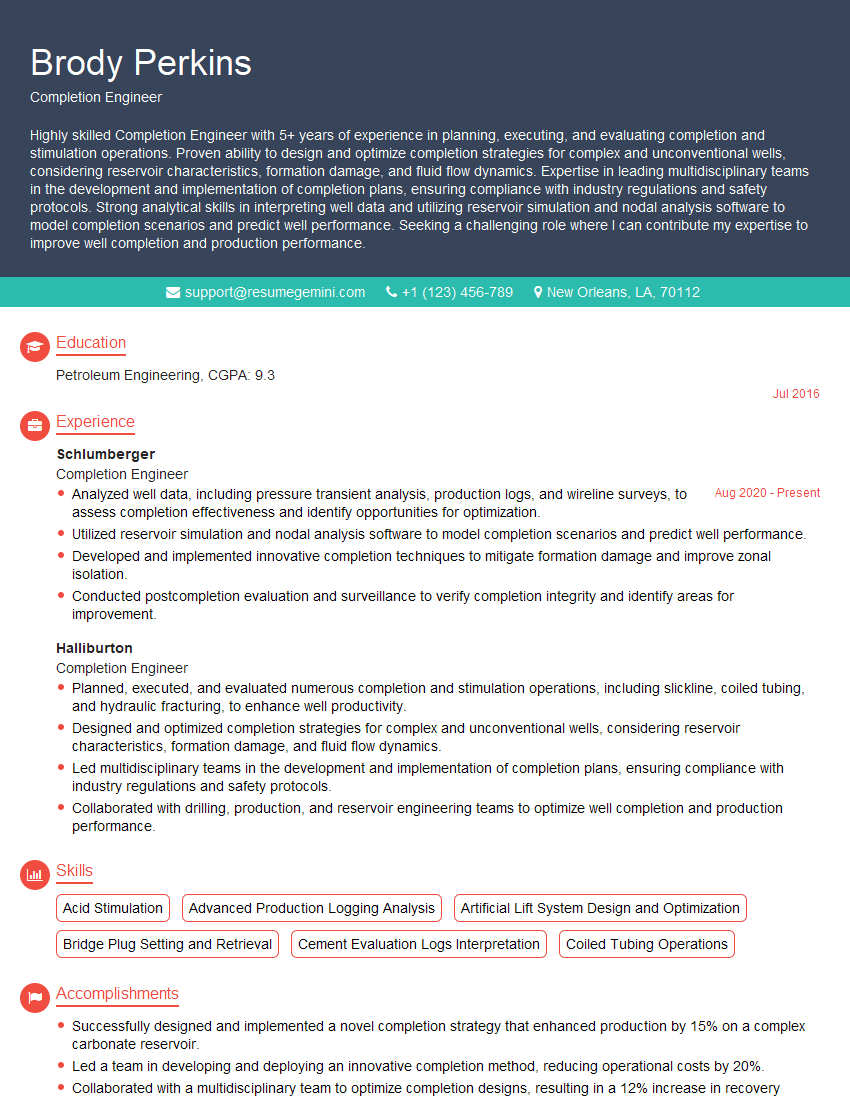
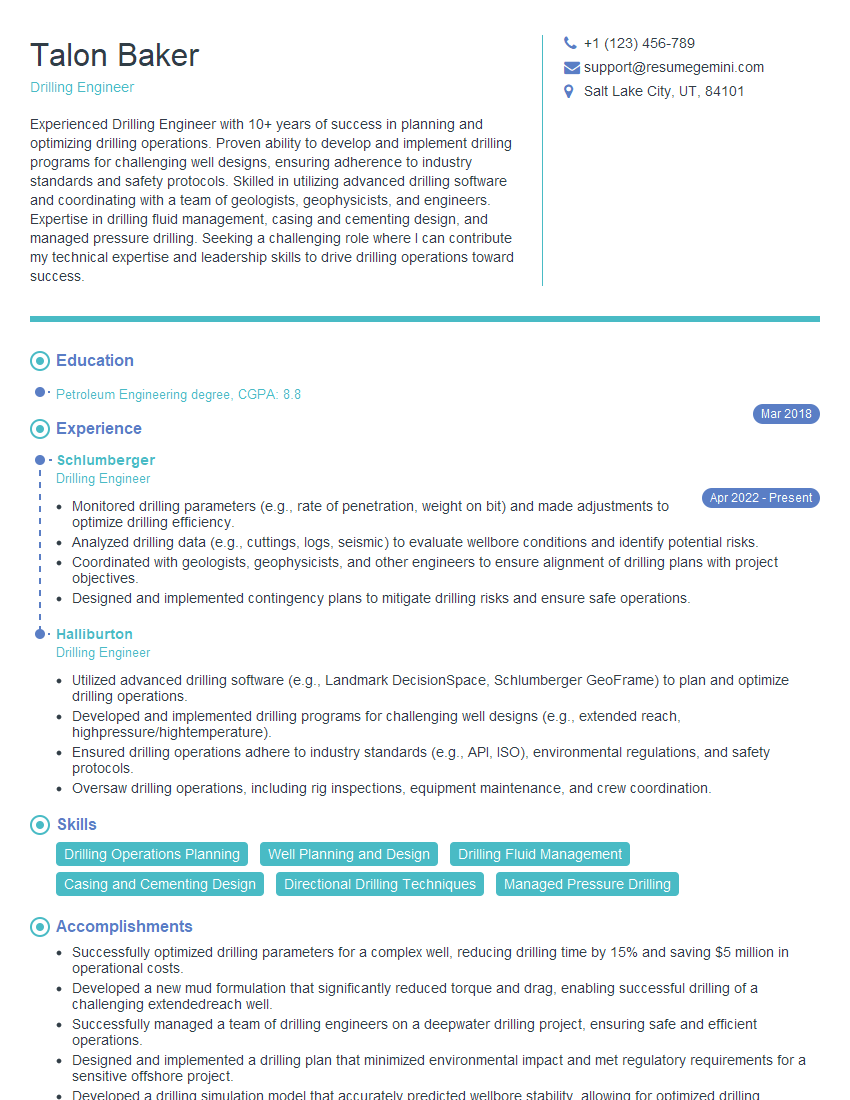
Mastering Production and Completion Optimization is crucial for career advancement in the energy sector, opening doors to leadership roles and high-impact projects. A strong resume is your first step towards showcasing your expertise. To increase your chances of securing interviews, focus on creating an ATS-friendly resume that effectively highlights your skills and experience. ResumeGemini is a trusted resource to help you build a professional and impactful resume. Examples of resumes tailored to Production and Completion Optimization are available to guide you through the process, ensuring your qualifications shine through.



Explore more articles
Users Rating of Our Blogs
Share Your Experience
We value your feedback! Please rate our content and share your thoughts (optional).
What Readers Say About Our Blog
Very informative content, great job.
good