Unlock your full potential by mastering the most common Experience in different aspects of the music industry, including recording, touring, and music publishing. interview questions. This blog offers a deep dive into the critical topics, ensuring you’re not only prepared to answer but to excel. With these insights, you’ll approach your interview with clarity and confidence.
Questions Asked in Experience in different aspects of the music industry, including recording, touring, and music publishing. Interview
Q 1. Describe your experience with Pro Tools or Logic Pro X.
My experience with both Pro Tools and Logic Pro X is extensive, spanning over 15 years. I’ve used both DAWs (Digital Audio Workstations) extensively for recording, editing, mixing, and mastering a wide variety of genres, from classical to electronic music. Pro Tools, with its industry-standard reputation, has been my primary tool for larger-scale projects and studio collaborations, owing to its robust features and compatibility. Logic Pro X, however, excels in its intuitive workflow and powerful MIDI capabilities, making it my go-to for composing, arranging, and quick prototyping. I’m comfortable working within either platform and can leverage the strengths of each depending on project specifics. For instance, for a complex orchestral score, I might favor Logic Pro X’s powerful MIDI editing and virtual instrument capabilities. For a rock album, where the focus is on precise audio editing and mixing, Pro Tools would likely be my preferred choice. My proficiency extends to utilizing advanced features like automation, sound design, and sophisticated plug-ins within both platforms.
Q 2. Explain the difference between mixing and mastering.
Mixing and mastering are distinct but interconnected stages in the audio production process. Think of mixing as building a house, and mastering as preparing it for sale. Mixing focuses on balancing and shaping individual tracks within a song – adjusting levels, EQ (equalization), compression, panning (stereo positioning), and applying effects to create a cohesive and well-balanced sonic landscape. It’s done on individual tracks within a DAW. Mastering, on the other hand, takes the final mixed track and optimizes it for various playback systems. This involves subtle adjustments to dynamics, tonal balance, loudness, and stereo width to ensure consistent quality across different listening environments – from car radios to high-end headphones. Mastering involves global adjustments to make the music competitive and radio-ready, and is usually done by a dedicated mastering engineer in a specialized environment. For example, during mixing, I might focus on getting the kick drum to punch through the mix and the vocals to sit clearly in the center, whereas during mastering, the engineer focuses on ensuring the overall track has the desired loudness and avoids any harshness or clipping that might occur on different playback systems.
Q 3. What are your preferred methods for audio restoration?
Audio restoration is a delicate process requiring a combination of techniques and careful listening. My preferred methods involve a multi-stage approach, starting with careful analysis of the audio to identify the specific problems. This might include noise reduction, click and pop removal, and equalization adjustments to restore balance and clarity. For example, if there is a consistent hum throughout a recording, I’ll use a spectral noise reduction tool to target that specific frequency range without affecting the desired audio. For clicks and pops, I’ll employ restoration tools that utilize spectral editing or AI-based algorithms for precise repair. I often prefer a combination of software-based solutions – such as iZotope RX and Adobe Audition – alongside hardware-based solutions where appropriate, depending on the nature and severity of the damage. The goal is always to restore the audio to its original quality as much as possible without compromising its natural characteristics or adding unnatural artifacts. It’s a very careful and surgical process.
Q 4. How do you handle difficult artists or clients?
Handling difficult artists or clients requires patience, diplomacy, and strong communication skills. I believe in establishing clear expectations and boundaries from the outset, maintaining open and honest communication throughout the project. If a conflict arises, I prioritize active listening to understand their concerns and finding mutually beneficial solutions. I always strive to maintain a professional demeanor while being empathetic and understanding. One instance involved a client who had unrealistic expectations regarding turnaround time. Rather than confrontation, I collaboratively adjusted the project timeline, outlining the realistic timeframe and potential implications of rushing the process. This approach not only satisfied the client but also ensured the quality of the work was not compromised. Transparency and clear communication are key to mitigating conflict and maintaining positive working relationships. It’s about managing expectations and finding common ground.
Q 5. Describe your experience with music publishing contracts.
My experience with music publishing contracts involves both the creation and negotiation of these agreements. I understand the complexities of different types of publishing deals, including songwriter agreements, co-publishing agreements, and administration agreements. I’m familiar with the various clauses involved, such as royalty rates, term lengths, advances, and ownership rights. I’ve worked with both major and independent publishers, ensuring clients receive favorable terms while protecting their interests. A key aspect is understanding the difference between mechanical and performance royalties, and how these rights are licensed and collected. My focus is always on ensuring clear and concise contracts that protect the rights and interests of the songwriter or composer. I approach each negotiation with a keen eye for detail, striving for a balanced agreement that benefits all parties involved.
Q 6. What are the key considerations for securing music licensing deals?
Securing music licensing deals requires understanding the different types of licenses (sync, performance, mechanical) and their corresponding requirements. A key consideration is identifying the appropriate licensing agencies or platforms, carefully researching potential clients, and tailoring pitches to resonate with their specific needs and branding. The quality of your music is paramount, but equally crucial is creating a compelling pitch package that showcases your work and its suitability. For sync licensing (using music in film, TV, or advertising), I’d emphasize the emotional impact and thematic resonance of the music, aligning it with the visual elements. For performance licensing (public performances), I would showcase performance data and artist popularity to demonstrate reach and value. Successful licensing often involves a blend of proactive outreach, networking, and understanding industry trends.
Q 7. Explain the process of copyright registration for musical works.
Copyright registration for musical works protects the intellectual property of songwriters and composers. In the United States, this is done through the U.S. Copyright Office. The process typically involves submitting an application online, along with a non-refundable fee and a copy of the work. For musical works, this often includes a lead sheet (melody, chords, and lyrics) or a recording. It’s critical to register your work as soon as possible after creation, ideally before any public distribution. Registration provides legal evidence of ownership, enabling you to pursue legal action in case of copyright infringement. It also allows you to claim statutory damages in case of infringement, which can be substantially higher than actual damages. The copyright registration protects not only the melody and lyrics but also the arrangement and overall composition. While it is not strictly required to register, it’s strongly recommended to protect your creative assets and secure your financial interests.
Q 8. What are the common challenges in tour management and how do you overcome them?
Tour management is a complex undertaking, juggling logistics, finances, and the artist’s needs. Common challenges include unforeseen venue issues (e.g., equipment malfunctions, power outages), travel complications (flight delays, lost luggage), and personnel problems (illness, disagreements). Effective crisis management is crucial.
Overcoming these challenges requires meticulous planning. This starts with detailed pre-tour planning – securing reliable vendors for transportation, accommodation, and equipment; negotiating contracts with venues and promoters; and developing comprehensive contingency plans. For example, having a backup generator on standby mitigates power outage risks, while negotiating flexible contracts allows for adjustments in case of unforeseen circumstances. Strong communication is key – maintaining constant contact with the team, the artist, and all vendors ensures everyone is informed and prepared for any eventuality. A proactive, solution-oriented approach, coupled with flexibility and a cool head under pressure, are essential for successful tour management.
Q 9. How do you develop a successful touring budget?
Developing a successful touring budget requires a granular, line-by-line approach. Start with projected revenue based on anticipated ticket sales, merchandise, and sponsorships. Then, meticulously outline all expenses, categorized for clarity.
- Transportation: Flights, ground transportation (buses, vans), fuel.
- Accommodation: Hotels, Airbnb, per diems.
- Personnel: Artist fees, band salaries, crew wages, management fees.
- Production: Stage, sound, lighting, instruments, backline (amps, drums, etc.), stagehands.
- Marketing & Promotion: Advertising, social media, publicity.
- Insurance: Equipment, liability.
- Miscellaneous: Food, drinks, incidentals.
Build in contingency funds (10-15% of total budget) to absorb unexpected costs. Regularly monitor expenses against the budget, making adjustments as needed. Spreadsheet software is invaluable for this task. A well-structured budget allows you to secure funding, negotiate with investors and understand profit margins.
Q 10. Describe your experience with rider negotiation and management.
Rider negotiation is a crucial aspect of tour management. The rider is a document outlining the artist’s technical and hospitality requirements for each show. Negotiation involves balancing the artist’s needs with the venue’s capabilities and budget.
My experience involves meticulously reviewing riders, identifying unreasonable demands, and negotiating compromises. For instance, a rider might request a specific brand of bottled water. If that’s unavailable, we negotiate a suitable alternative. Sometimes, venues may not have the capacity to meet every technical specification in the rider, leading to discussions and adjustments. The goal is to reach a mutually agreeable rider that ensures a smooth and successful performance without exceeding the budget or creating unrealistic demands. Building strong relationships with venues and promoters through transparent and professional negotiations is vital. Documentation is key—keeping detailed records of all agreements avoids future misunderstandings.
Q 11. What are the different types of music publishing deals?
Music publishing deals vary significantly. They typically involve the transfer of copyright ownership or licensing rights to a publisher or administrator.
- Traditional Publishing Deal: This is a co-publishing agreement, where the songwriter and the publisher share the copyright and publishing income (typically 50/50, but percentages vary). The publisher advances money, covering recording costs and marketing. In return, they receive a percentage of all royalties earned from the song’s use.
- Admin Deal: In this type, the songwriter retains full copyright control but hires a publishing administrator to handle licensing, royalty collection, and administration, charging a percentage of royalties for their services. It’s a good option for songwriters who want to maintain complete control.
- Sub-publishing Deal: A publishing agreement where a publisher licenses the right to administer a song in a specific territory (e.g., a European publisher administering a song written in the US) This helps expand the song’s reach globally.
The choice depends on the songwriter’s goals and resources. A traditional deal provides financial support but sacrifices some ownership, while an admin deal offers more control but requires the songwriter to shoulder more administrative responsibilities.
Q 12. Explain the role of a sync licensing manager.
A sync licensing manager handles the licensing of music for use in synchronization with visual media, such as film, television, commercials, and video games. Their role is multifaceted and involves identifying potential licensing opportunities, negotiating deals with rights holders, ensuring proper clearances, and collecting royalties.
They work closely with producers, directors, and advertising agencies, pitching music that aligns with the tone and feel of the project. This requires a strong understanding of music catalogs, market trends, and legal requirements. They are also responsible for ensuring that the usage conforms to copyright laws and for collecting and distributing royalties to the relevant rights holders. Efficient record-keeping and detailed contract management are essential aspects of this job.
Q 13. How do you identify and evaluate new talent?
Identifying and evaluating new talent requires a keen ear, insightful judgment, and a network within the industry. It’s not just about technical skill; it’s about assessing potential—the artist’s unique voice, stage presence, songwriting capabilities, and marketability.
I typically start by actively seeking out new artists through live performances, open mic nights, online platforms, and industry showcases. I listen for originality, emotional impact, and technical proficiency. Beyond their musical abilities, I assess their personality, professionalism, and their ability to connect with an audience. A well-rounded evaluation considers their potential for growth, their dedication to their craft, and their overall professional outlook. References and testimonials from peers, mentors, and past collaborators are also important indicators. Ultimately, a successful artist needs both talent and the drive to succeed in a challenging industry.
Q 14. What are your strategies for marketing and promoting a musical artist?
Marketing and promoting a musical artist requires a multi-pronged strategy leveraging various channels. It starts with defining the artist’s target audience and brand identity. A clear understanding of their unique selling proposition is key.
Strategies include:
- Social Media Marketing: Creating engaging content, building a strong online presence, running targeted ads.
- Public Relations: Securing media coverage, building relationships with journalists and bloggers.
- Content Marketing: Producing high-quality videos, releasing singles and EPs strategically, providing behind-the-scenes content.
- Email Marketing: Building an email list and engaging with fans directly.
- Live Performances: Booking gigs at relevant venues, creating an unforgettable live experience.
- Collaborations: Partnering with other artists to expand reach.
- Merchandising: Selling branded merchandise (t-shirts, posters, etc.)
Data analysis is crucial. Tracking engagement metrics helps refine the marketing plan. A consistent and well-integrated approach across different platforms maximizes reach and impact, building a loyal fanbase and fostering long-term growth. Adaptability is vital; strategies need adjustments based on evolving trends and audience responses.
Q 15. How do you build and maintain relationships with industry professionals?
Building and maintaining strong relationships in the music industry is paramount. It’s about trust, mutual respect, and consistent communication. I approach this through a multifaceted strategy. Firstly, I prioritize networking – attending industry events, conferences, and workshops, actively engaging in conversations, and genuinely connecting with people. I find that offering help without expecting immediate returns fosters strong bonds. For example, I once helped a struggling artist with their social media strategy; this led to a long-term collaboration and referrals to other projects. Secondly, I maintain regular communication. This goes beyond emails; it includes phone calls, in-person meetings (when possible), and staying updated on their projects and milestones. Finally, I always strive to be reliable, keeping my commitments, meeting deadlines, and providing consistent high-quality work. This builds credibility and demonstrates my professionalism. Building a network isn’t just about quantity but the quality of relationships nurtured over time.
Career Expert Tips:
- Ace those interviews! Prepare effectively by reviewing the Top 50 Most Common Interview Questions on ResumeGemini.
- Navigate your job search with confidence! Explore a wide range of Career Tips on ResumeGemini. Learn about common challenges and recommendations to overcome them.
- Craft the perfect resume! Master the Art of Resume Writing with ResumeGemini’s guide. Showcase your unique qualifications and achievements effectively.
- Don’t miss out on holiday savings! Build your dream resume with ResumeGemini’s ATS optimized templates.
Q 16. What is your experience with digital distribution platforms?
My experience with digital distribution platforms is extensive. I’ve worked with major players like DistroKid, TuneCore, CD Baby, and smaller, more niche platforms catering to specific genres. My expertise encompasses more than just uploading tracks; it includes understanding the intricacies of metadata optimization, crucial for discoverability on streaming services. I meticulously craft metadata to maximize search engine optimization (SEO), employing relevant keywords and accurate information across various fields. For instance, correctly tagging genres, moods, and instruments dramatically influences the algorithms and ensures that music reaches the right audience. I’ve also managed the intricacies of royalty splits, ensuring accurate payout information is provided to artists and collaborators, and troubleshooting any issues arising from platform-specific glitches or discrepancies. My experience spans across a diverse range of release strategies, from singles and EPs to full albums, always adapting to the evolving landscape of the digital music industry.
Q 17. Describe your experience with royalty accounting and reporting.
Royalty accounting and reporting are complex but crucial for transparency and financial stability. My experience includes reconciling statements from various platforms, identifying discrepancies, and ensuring accurate payment distribution to rights holders. I understand the intricacies of different royalty structures, including mechanical royalties (for physical copies and downloads), performance royalties (for public broadcasts), and digital streaming royalties. I use dedicated accounting software designed for the music industry, ensuring precise tracking of all transactions. This also allows me to create comprehensive reports for artists, providing clear insights into their earnings from various sources. For example, I recently resolved a significant discrepancy in a statement from a major streaming service, recovering thousands of dollars in unpaid royalties for a client through meticulous analysis and effective communication with the platform.
Q 18. Explain your understanding of music streaming royalties.
Music streaming royalties are calculated based on a complex system involving factors like the number of streams, the subscription type of the listener (free or paid), the geographic location of the listener, and the platform’s revenue share. The payout model is generally a pro-rata system, meaning royalties are distributed proportionally based on the overall platform revenue and the share of streams for a particular track. There’s significant variation between platforms; some are more transparent than others. Furthermore, understanding the nuances of publisher royalties versus artist royalties is crucial. Publishers receive a portion of the royalties based on their ownership stake in the song’s composition, while the artist receives royalties based on their share of the master recording. Many artists also utilize a PRO (Performing Rights Organization) like ASCAP, BMI, or SESAC for collecting performance royalties from radio play and other public performances.
Q 19. How do you handle disagreements with artists or other team members?
Disagreements are inevitable in collaborative projects. My approach prioritizes open and respectful communication. I encourage team members to express their concerns openly and honestly in a structured setting. I facilitate these discussions by ensuring everyone feels heard and understood. I often start by identifying the root cause of the disagreement and reframe the problem as a shared challenge that needs to be overcome collaboratively. Then, I actively work to find mutually acceptable solutions, always keeping the overall project goals in mind. Sometimes compromise is necessary, and it’s essential to ensure fairness and transparency in the decision-making process. If the disagreement involves significant creative differences, mediation might be necessary to reach a productive consensus. The key is to focus on finding solutions and maintaining healthy working relationships.
Q 20. What is your experience with international touring?
My experience with international touring includes planning and executing tours across Europe, Asia, and South America. This involves navigating complex logistical challenges including visa applications, international travel arrangements, securing performance permits, and understanding local regulations for musicians. It also involves coordinating with local promoters, venues, and support teams on the ground. Cultural sensitivity is paramount; I ensure the tour reflects the local customs and expectations wherever possible. I’ve managed everything from small club tours to larger festival appearances, adapting our strategy to suit each specific market. Experience in handling currency exchange, international payment processing, and dealing with different cultural norms have been crucial aspects of my success in this field. The process requires meticulous planning, adaptability, and a strong understanding of international regulations.
Q 21. Describe your experience with venue contracts and negotiations.
Venue contracts are legally binding documents outlining the terms and conditions of a performance. My experience includes negotiating these contracts, carefully reviewing clauses related to payment, performance times, backline equipment, rider requirements, liability, and cancellation policies. I advocate for the artist’s best interests, ensuring fair compensation and protecting their rights. Negotiation often involves compromise. For example, I might negotiate a higher guarantee fee in exchange for a less extensive rider. A strong understanding of contract law and the ability to anticipate potential issues are essential. I always seek legal counsel when dealing with complex or unusual contract stipulations, particularly when dealing with international venues where legal frameworks may differ significantly from my base jurisdiction. The goal is to secure a mutually beneficial agreement that protects both the venue and the artist.
Q 22. What are your strategies for crisis management during a tour?
Touring is inherently unpredictable; crisis management is crucial. My strategy is proactive and multi-faceted, focusing on prevention and rapid response. It begins with meticulous planning. This includes comprehensive risk assessments covering everything from venue logistics and equipment failure to artist health and potential security threats. We develop detailed contingency plans for each potential problem, assigning responsibility and outlining communication protocols. For example, if a band member falls ill, we have pre-arranged backup musicians, transport to medical facilities, and clear communication channels to inform the audience and ticketing agencies. During the tour itself, we maintain open communication channels between all team members—management, crew, security, and the artist. We establish a designated point person for handling crisis situations, ensuring swift and coordinated decision-making. Regular briefings keep everyone informed of potential challenges and evolving circumstances. After each show, we conduct a debriefing to identify any shortcomings and refine our procedures. Think of it like a well-oiled machine: every part must function smoothly, and a robust system is in place should anything go wrong.
Q 23. How do you utilize data analytics to inform your music business decisions?
Data analytics are essential in today’s music industry. We leverage data to make informed decisions across all aspects of our business. For example, streaming data from platforms like Spotify and Apple Music informs our understanding of audience preferences, allowing us to tailor future musical releases and marketing campaigns more effectively. We also use data to optimize our touring strategy. Analyzing ticket sales, demographics, and social media engagement helps determine optimal tour routes, venue selection, and pricing strategies. Furthermore, we track social media interactions to identify key influencers and gauge public perception of the artist and their music. This enables us to refine our social media marketing strategy and address any negative feedback promptly. Using tools like Google Analytics and social media analytics dashboards, we continuously monitor key performance indicators (KPIs), allowing us to measure the success of our strategies and make data-driven adjustments as needed. This data-driven approach is far more efficient than relying on gut feeling alone; it allows for continuous improvement and maximization of return on investment.
Q 24. Describe your experience with social media marketing for musicians.
Social media is paramount for artist promotion. My experience involves developing and executing comprehensive social media strategies that encompass various platforms like Instagram, TikTok, Facebook, and Twitter. Each platform requires a unique approach. For example, Instagram is ideal for visually engaging content like high-quality photos and short videos; TikTok excels in short-form, trending video content. Facebook offers a good mix of direct engagement and targeted advertising. A key element of my strategy is understanding the target audience’s demographics and preferences on each platform. This involves careful content curation, using hashtags effectively, and engaging actively with fans through comments and direct messages. We also utilize paid advertising to reach broader audiences and amplify our reach. Consistent posting, interactive content (polls, Q&As, behind-the-scenes glimpses), and influencer collaborations are crucial for building a strong online presence and fostering genuine fan engagement. For example, one artist we worked with saw a significant increase in streaming numbers after a successful TikTok campaign that went viral.
Q 25. Explain your understanding of intellectual property rights in the music industry.
Intellectual property rights (IPR) are the cornerstone of the music industry. They protect the creative works of musicians and ensure they receive appropriate compensation for their efforts. This includes copyrights, which protect musical compositions, lyrics, and sound recordings; trademarks, which protect artist names and logos; and potentially patents for innovative musical technologies. Understanding these rights is crucial for navigating the complex legal landscape of the industry. For example, copyrights give exclusive rights to the copyright holder to reproduce, distribute, publicly perform, and create derivative works from their music. Knowing how to properly license music for use in films, commercials, or video games is also crucial. Furthermore, it’s vital to understand the nuances of different types of licenses (e.g., mechanical, synchronization, performance) and ensure the proper agreements are in place to protect the artist’s interests. Neglecting IPR can lead to serious legal repercussions, including hefty fines and legal battles.
Q 26. How do you ensure compliance with relevant copyright laws?
Ensuring copyright compliance is paramount. We maintain meticulous records of all musical works, including registrations with relevant copyright organizations (like the US Copyright Office or equivalent international bodies). We also utilize music licensing platforms to ensure that all uses of music are properly licensed. Before utilizing any third-party music or samples, we obtain explicit permission from the copyright holders and document these agreements. This not only protects the artist but also safeguards the company against potential legal issues. Regular internal training on copyright law ensures that all team members are aware of their responsibilities and understand the implications of non-compliance. We also collaborate with legal counsel specializing in intellectual property to review contracts, licenses, and any potentially problematic situations. Proactive compliance is far more cost-effective and less disruptive than dealing with copyright infringement lawsuits.
Q 27. What is your experience with music industry software and technology?
My experience with music industry software and technology is extensive. I’m proficient in Digital Audio Workstations (DAWs) such as Pro Tools, Logic Pro X, and Ableton Live, for recording and production. I’m also familiar with various music notation software, such as Sibelius and Finale, and audio mastering and mixing tools. Furthermore, I have experience with various project management software, CRM systems for artist management, and data analytics platforms used for tracking sales, streaming numbers, and social media engagement. Understanding these technologies is vital for optimizing workflow, collaborating effectively with artists and producers, and analyzing data to inform business decisions. For instance, using cloud-based collaboration tools allows for seamless teamwork across geographical locations, streamlining the entire music production and distribution process.
Q 28. Describe your experience in developing and executing a marketing strategy for a new album release.
Developing a successful marketing strategy for a new album involves a multi-pronged approach. It starts with a deep understanding of the target audience, their listening habits, and their preferred platforms. We would conduct thorough market research to identify potential niches and competitors. Next, a comprehensive marketing plan would be developed, encompassing pre-release buzz building, the album release itself, and post-release promotion. Pre-release activities might involve releasing singles, music videos, and behind-the-scenes content on social media platforms to generate excitement. The release day will include digital distribution across various platforms, physical album releases, and potential launch events or streaming parties. Post-release activities might include targeted advertising campaigns on social media, collaborations with influencers, and radio promotion. We might also explore strategic partnerships with other businesses or brands relevant to the artist’s image or fanbase. Key performance indicators (KPIs) will be monitored closely, allowing for adjustments to optimize campaign effectiveness. Success will be measured not only by sales figures but also by factors like social media engagement, streaming numbers, and critical reception.
Key Topics to Learn for Music Industry (Recording, Touring, Publishing) Interviews
- Recording:
- Studio Recording Process: Understanding pre-production, tracking, mixing, and mastering.
- Pro Tools and DAW proficiency: Demonstrate practical knowledge and experience with industry-standard software.
- Audio Engineering Principles: Discuss microphone techniques, signal flow, equalization, compression, and effects processing.
- Touring:
- Tour Management Logistics: Explain your understanding of scheduling, budgeting, transportation, and rider management.
- Live Sound Reinforcement: Describe experience with sound system setup, monitoring, and troubleshooting.
- Artist Relations & Stage Management: Discuss the importance of communication and collaboration within a touring team.
- Music Publishing:
- Copyright Law & Licensing: Demonstrate understanding of copyright protection and licensing agreements.
- Royalties & Revenue Streams: Explain how royalties are calculated and distributed in the music publishing industry.
- Synchronization Licensing: Discuss the process of securing licenses for music use in film, television, and advertising.
- Industry Trends & Best Practices:
- Digital Distribution & Streaming Platforms: Discuss your familiarity with various platforms and their impact on the industry.
- Current Market Challenges & Opportunities: Showcase your awareness of evolving trends and challenges.
- Networking & Industry Relationships: Highlight the importance of building and maintaining professional connections.
Next Steps
Mastering these areas significantly enhances your career prospects within the dynamic music industry. A well-crafted, ATS-friendly resume is crucial for getting your foot in the door. ResumeGemini is a trusted resource to help you build a professional resume that highlights your unique skills and experience. Examples of resumes tailored to various roles within recording, touring, and music publishing are available to help you create a compelling application. Invest the time to build a strong resume – it’s your first impression on potential employers.
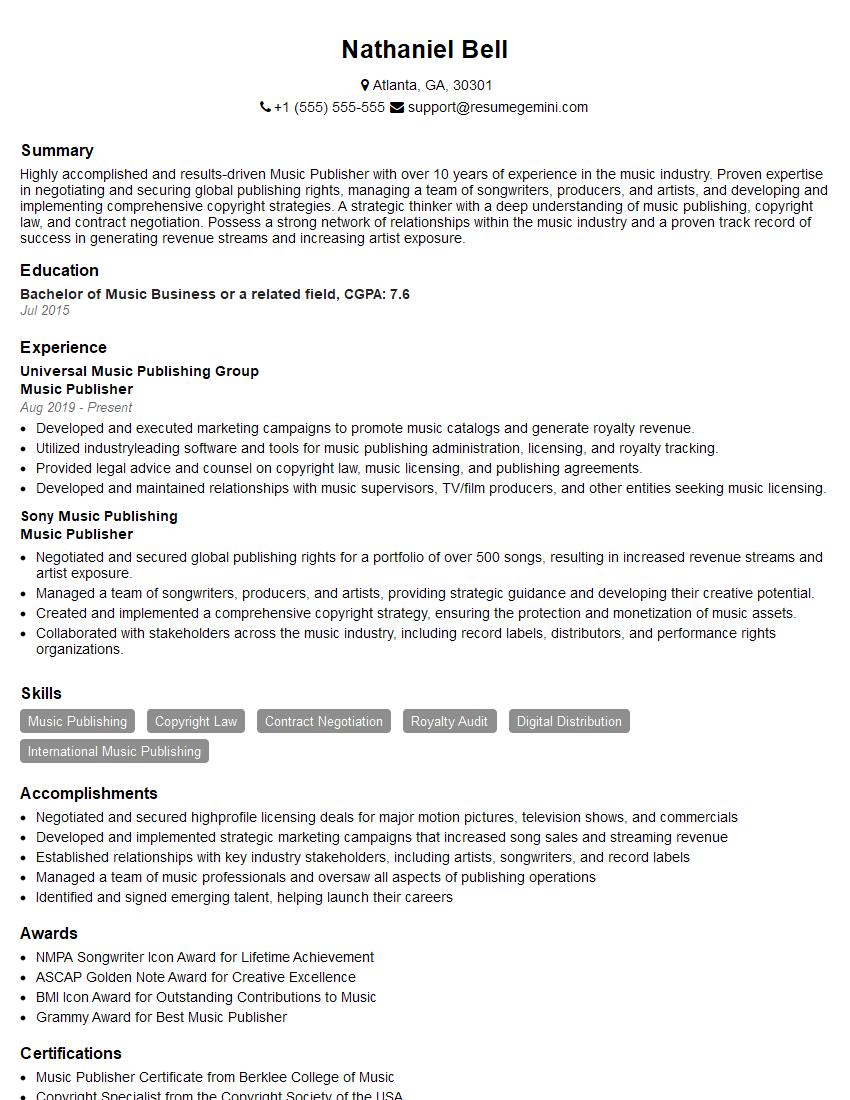
Music Publisher Resume Sample
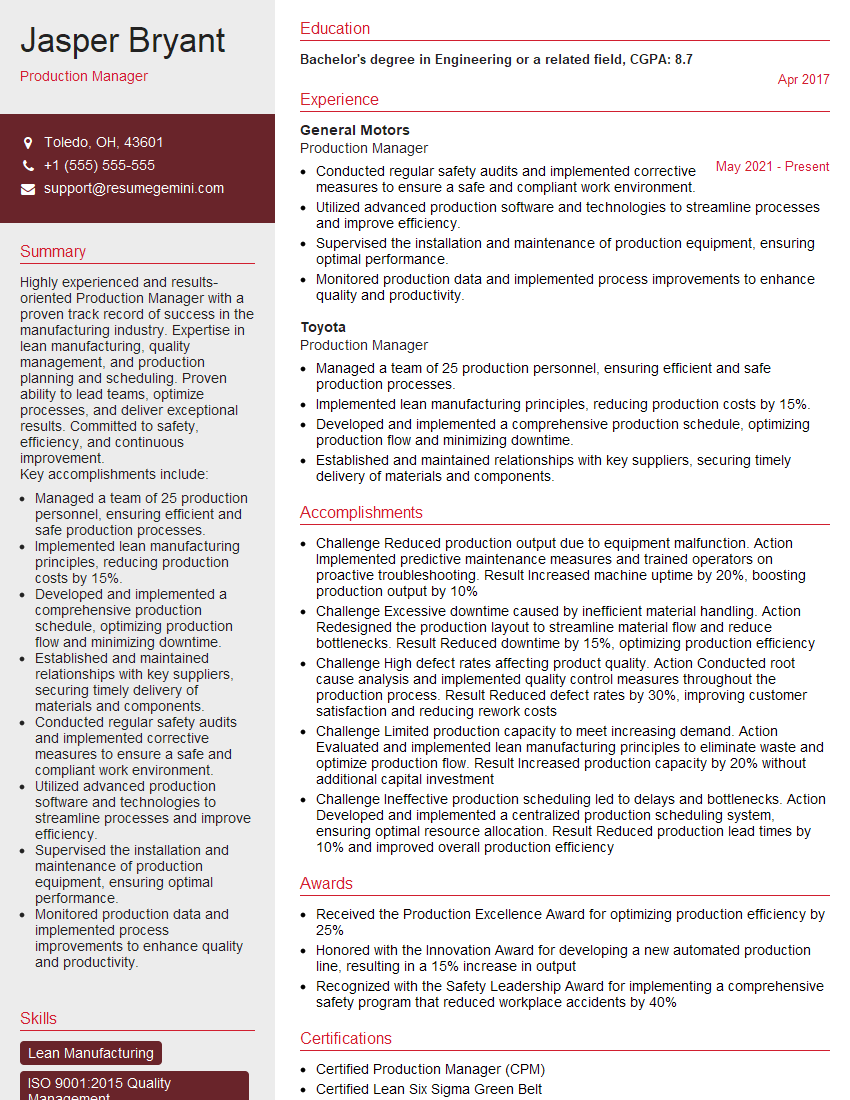
Production Manager Resume Sample
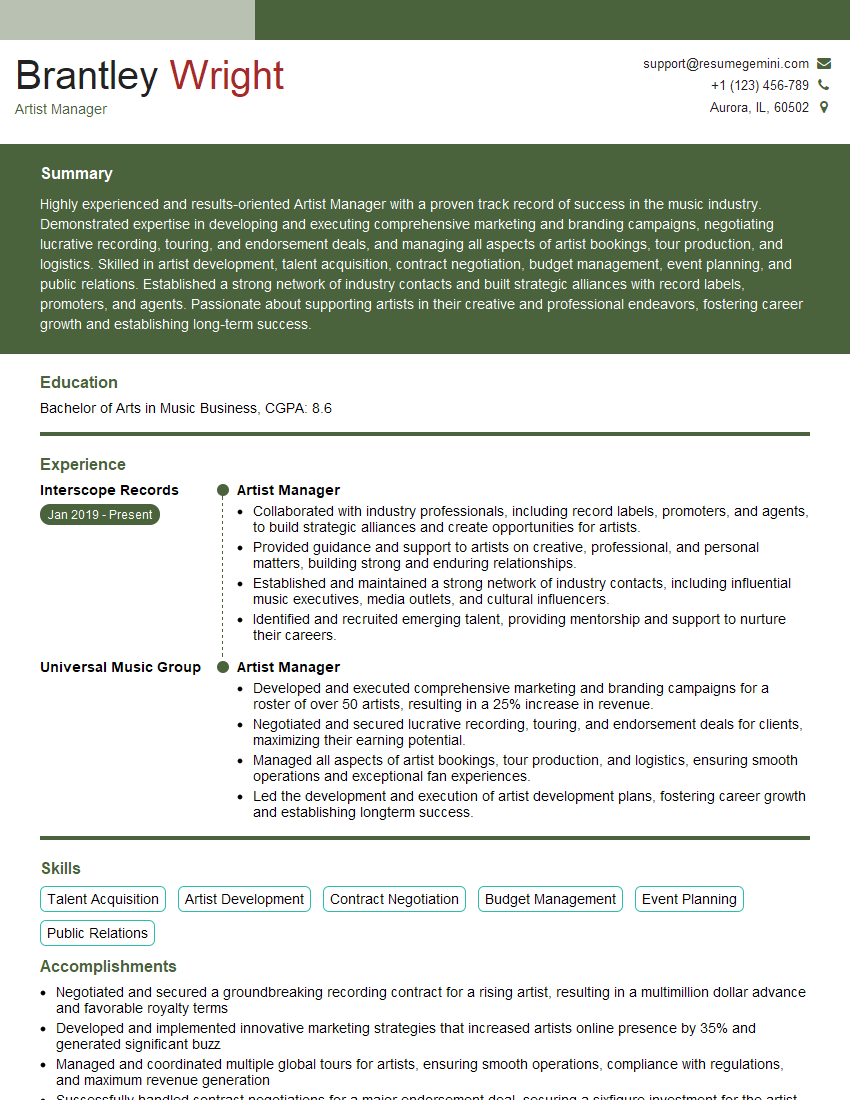
Artist Manager Resume Sample
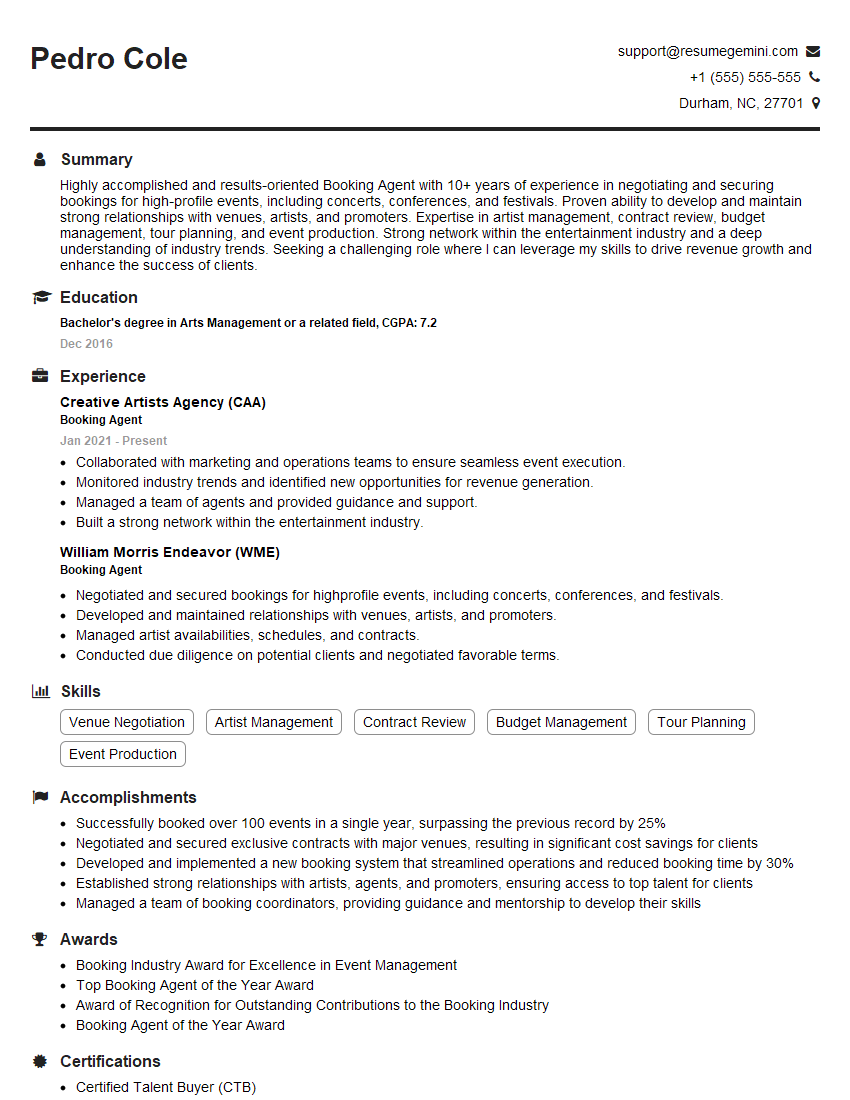
Booking Agent Resume Sample
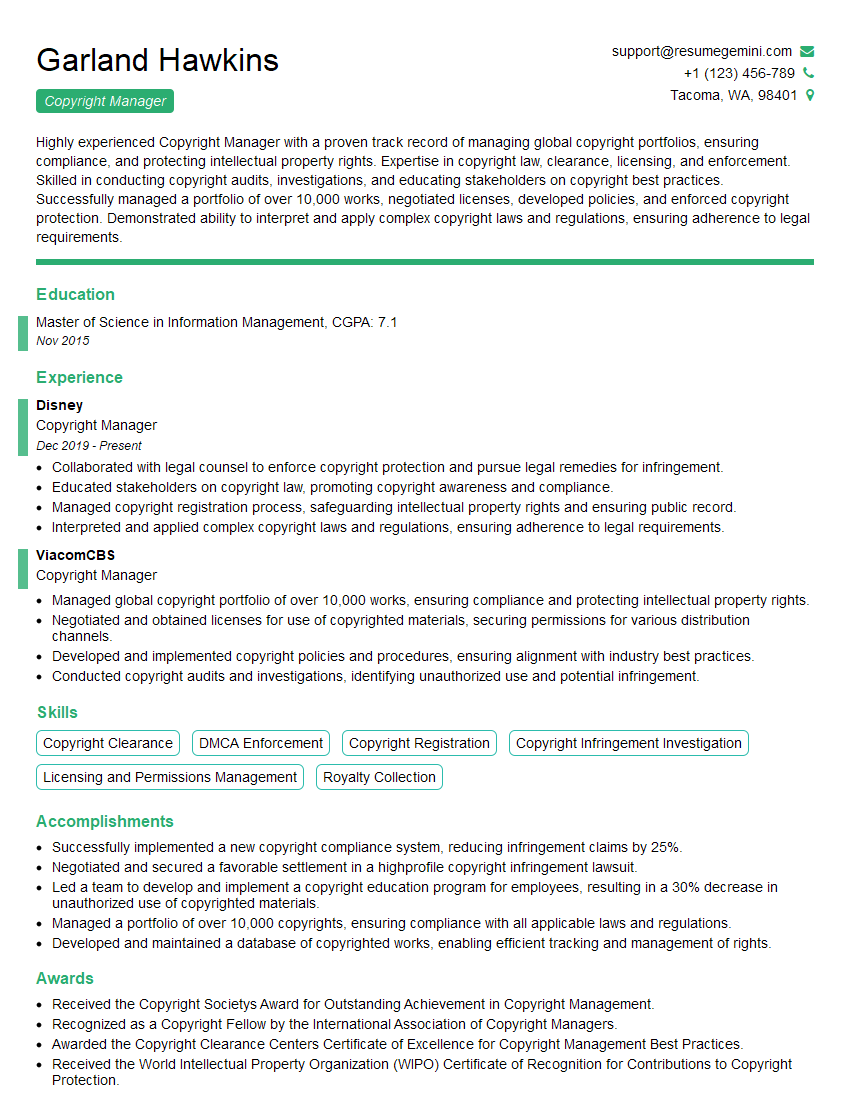
Copyright Manager Resume Sample
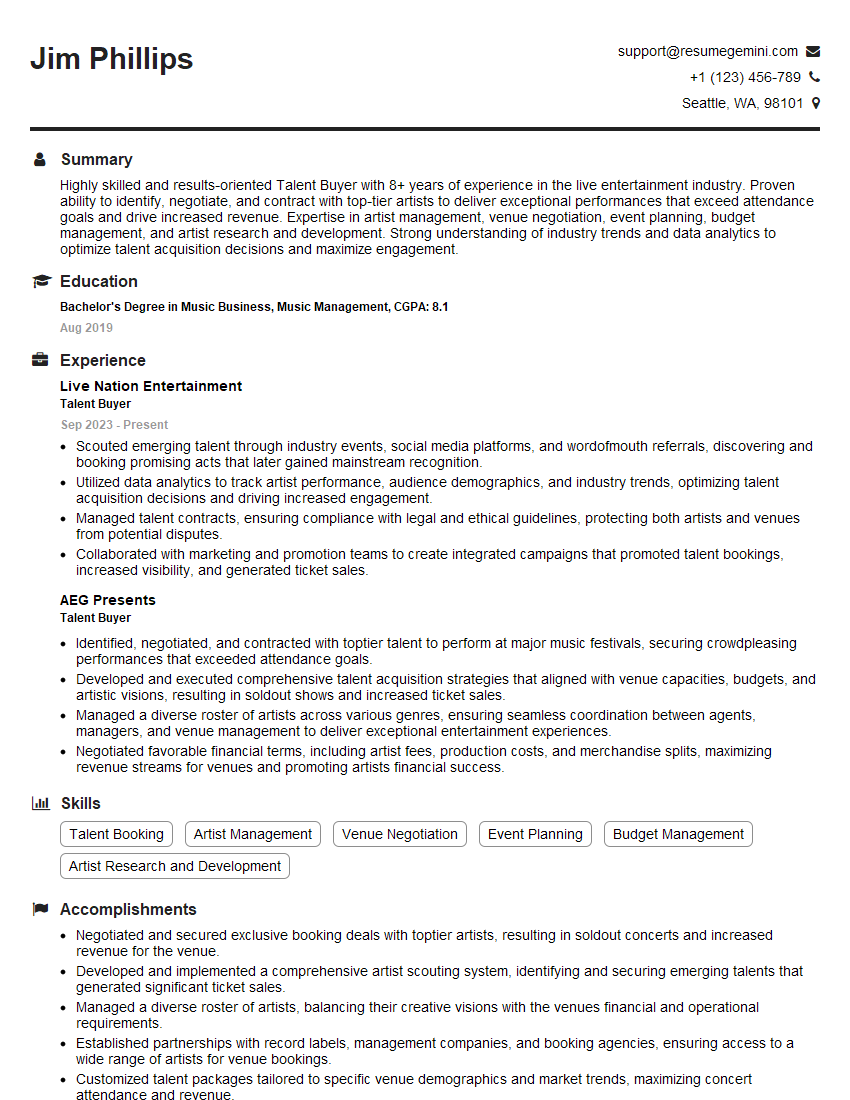
Talent Buyer Resume Sample
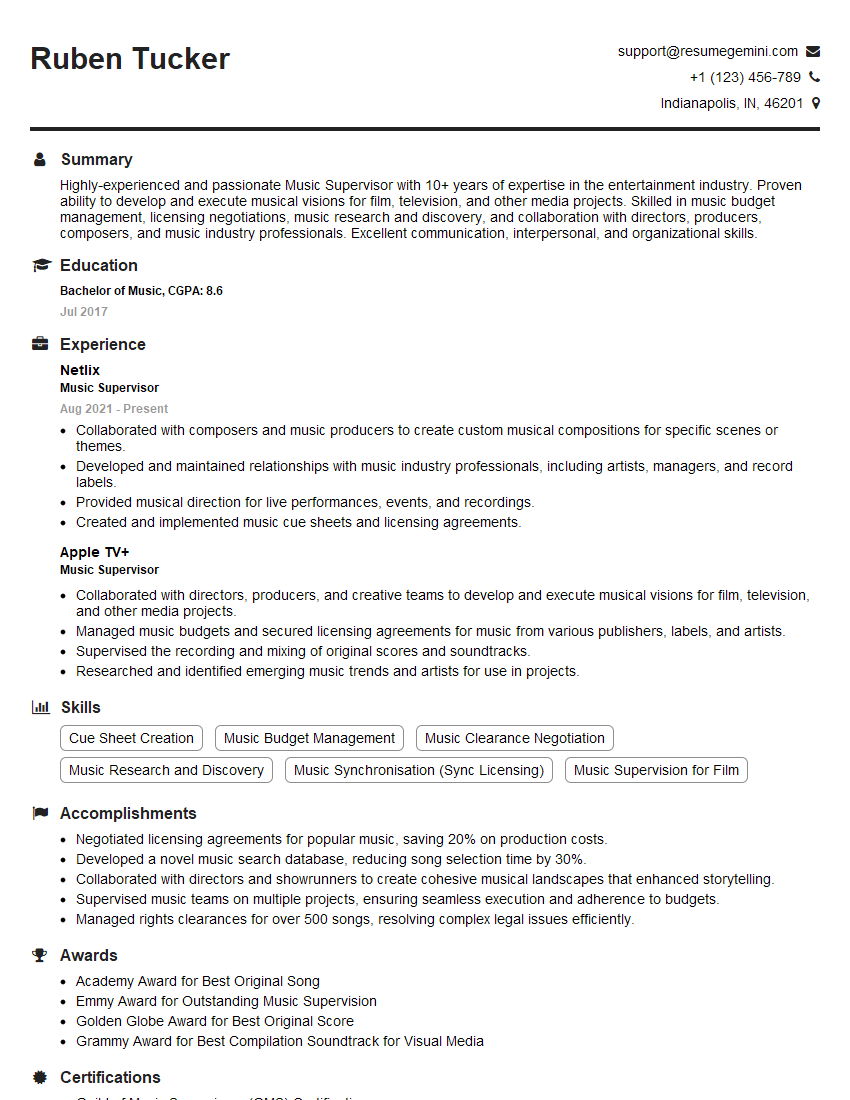
Music Supervisor Resume Sample
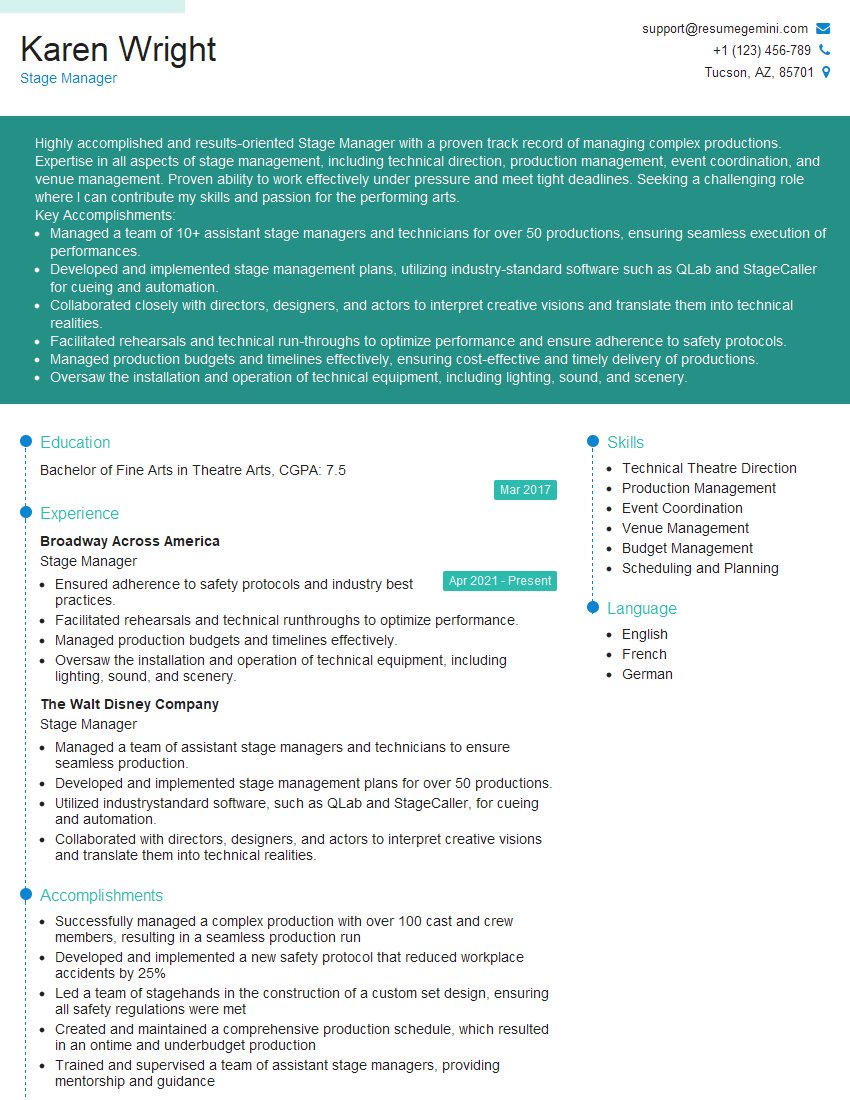
Stage Manager Resume Sample
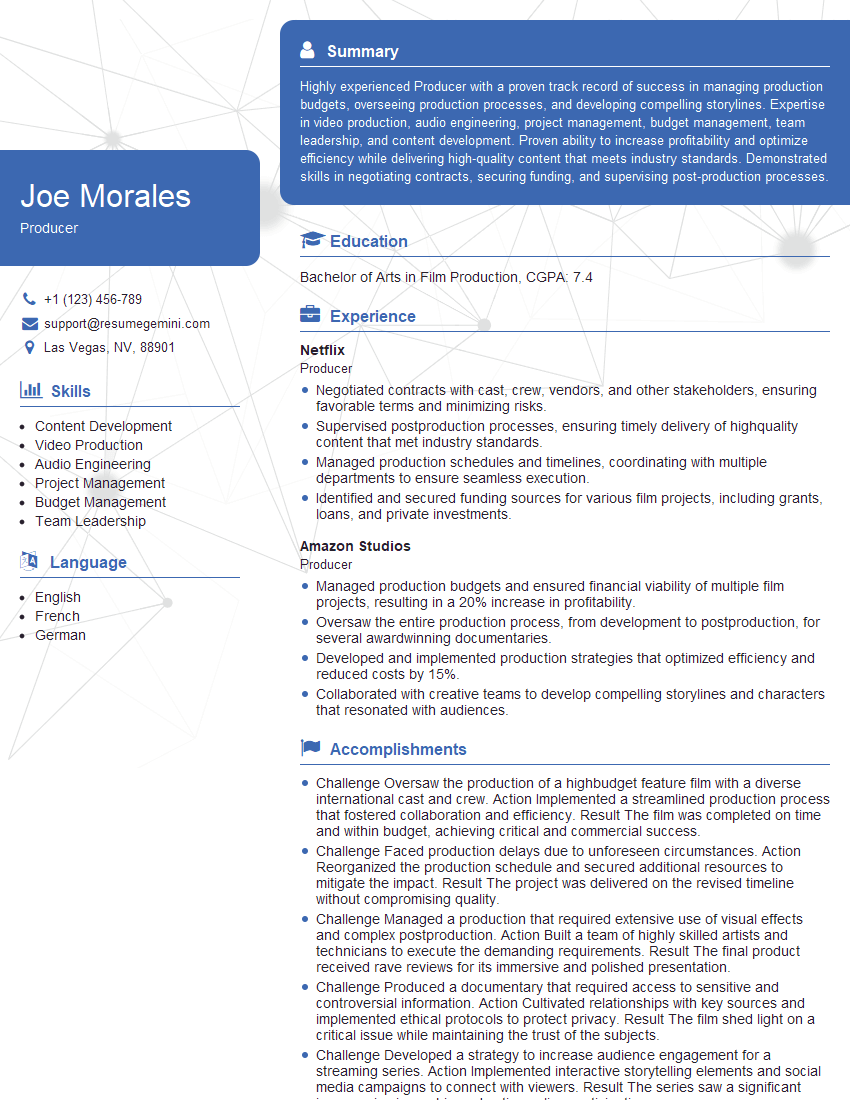
Producer Resume Sample
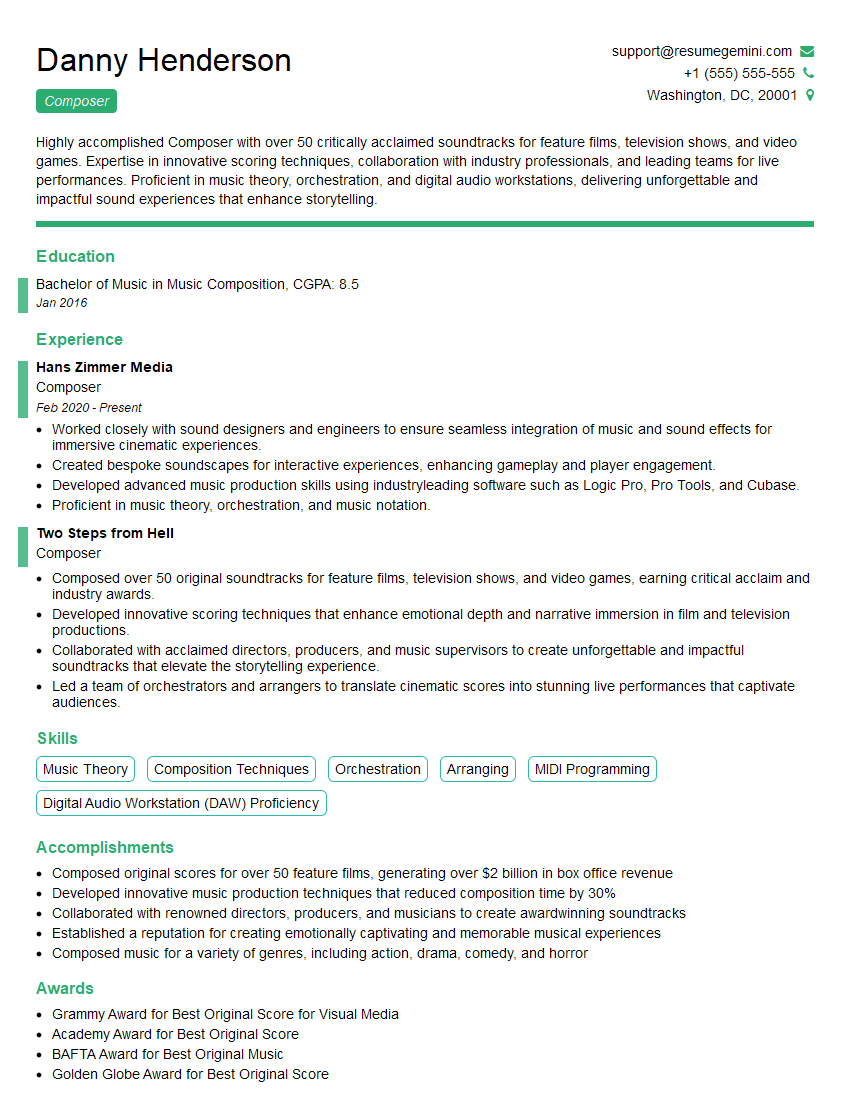
Composer Resume Sample
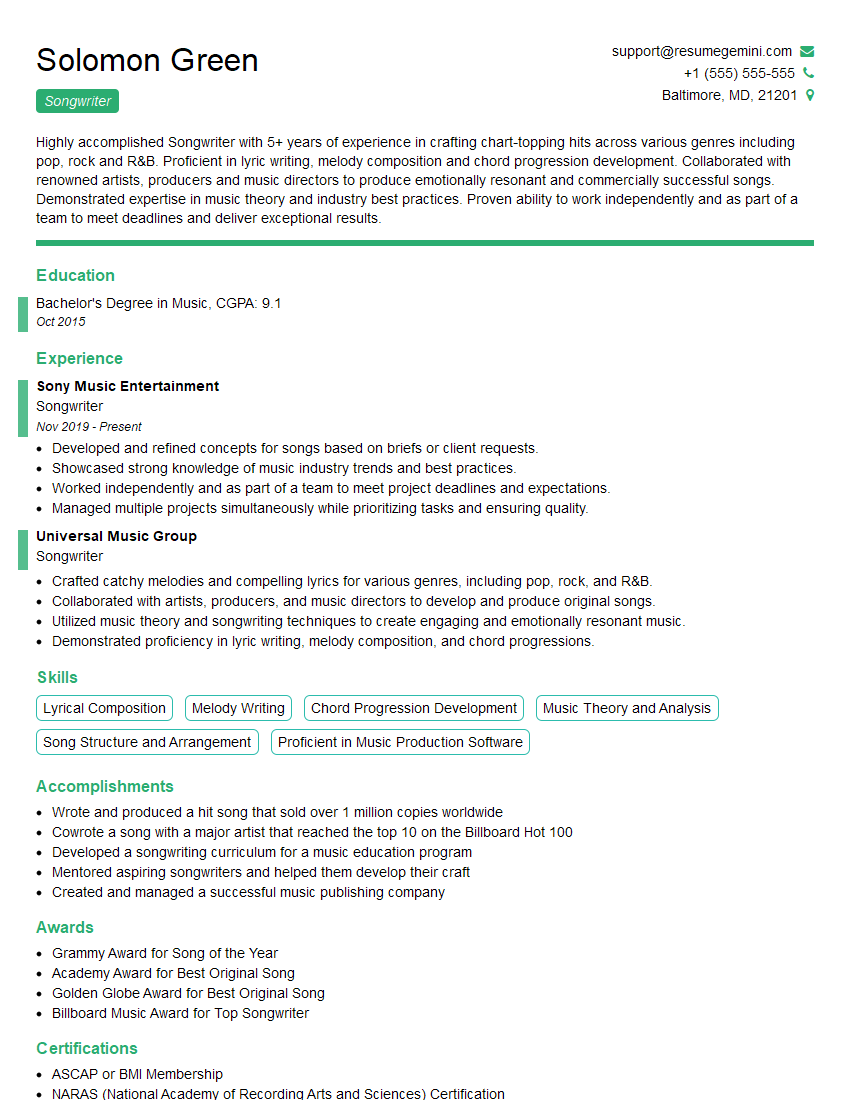
Songwriter Resume Sample
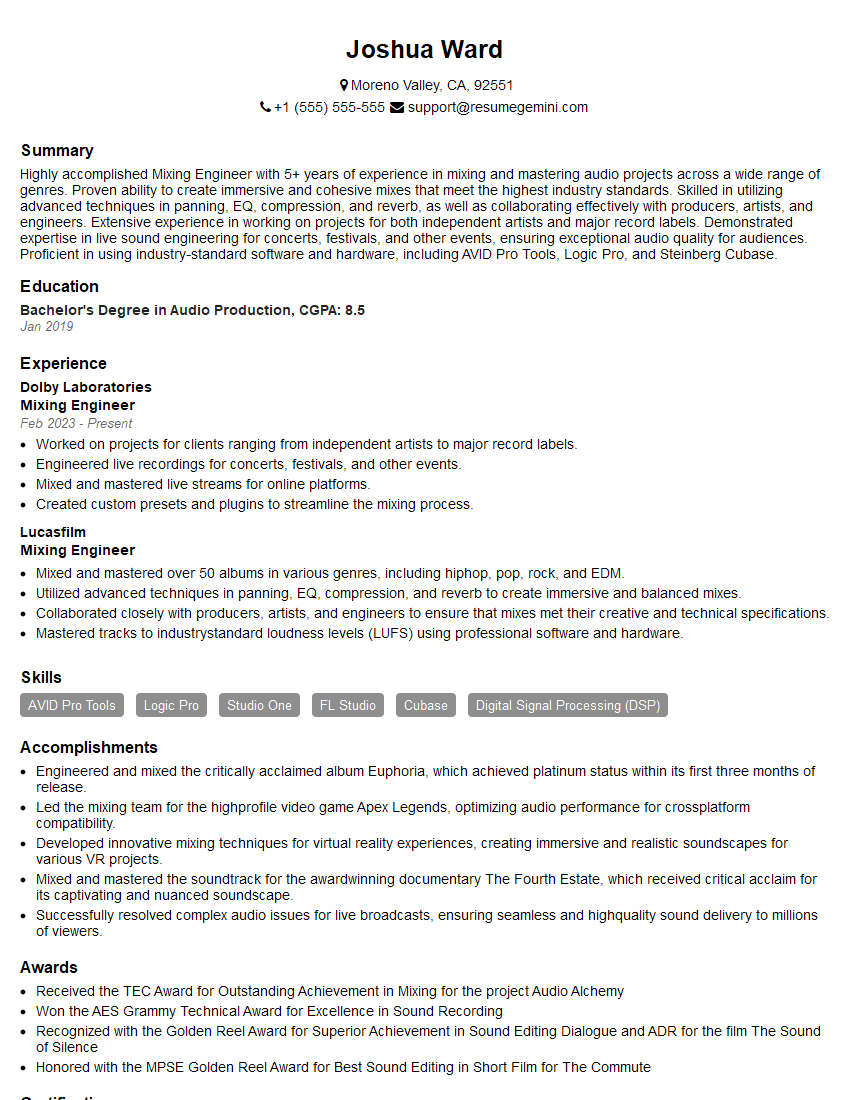
Mixing Engineer Resume Sample
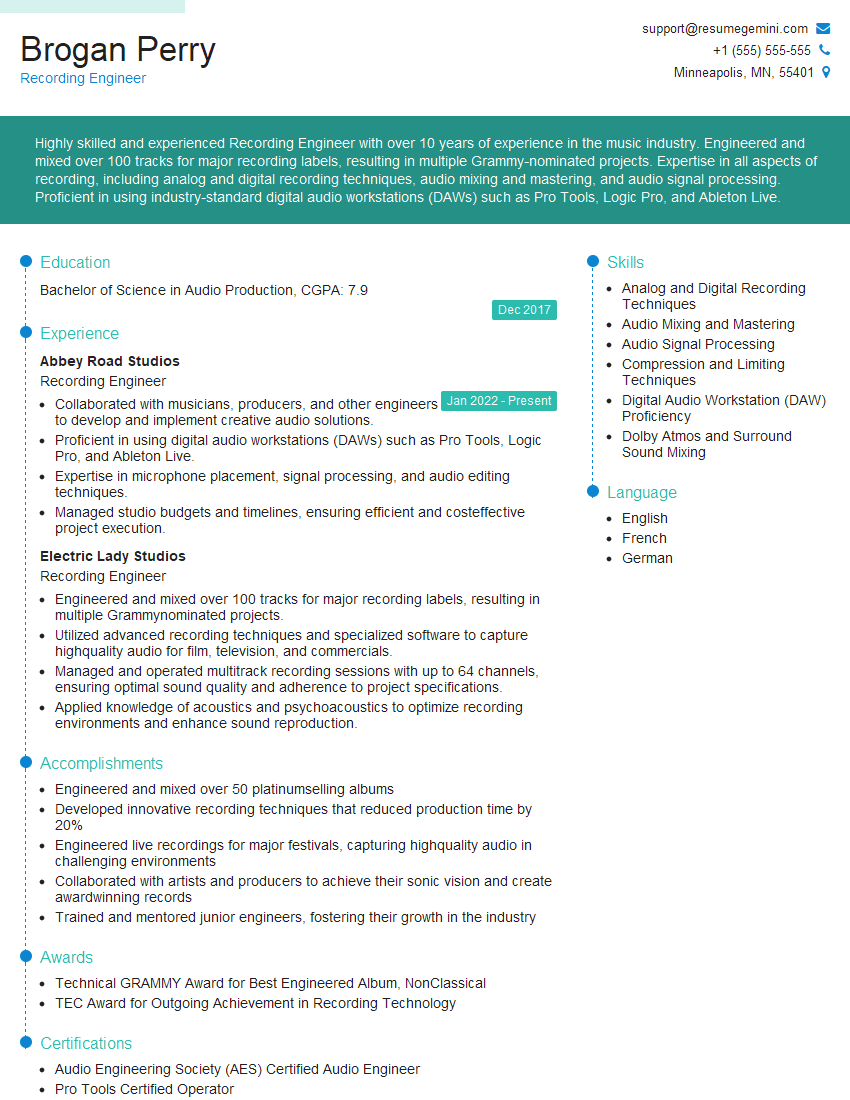
Recording Engineer Resume Sample
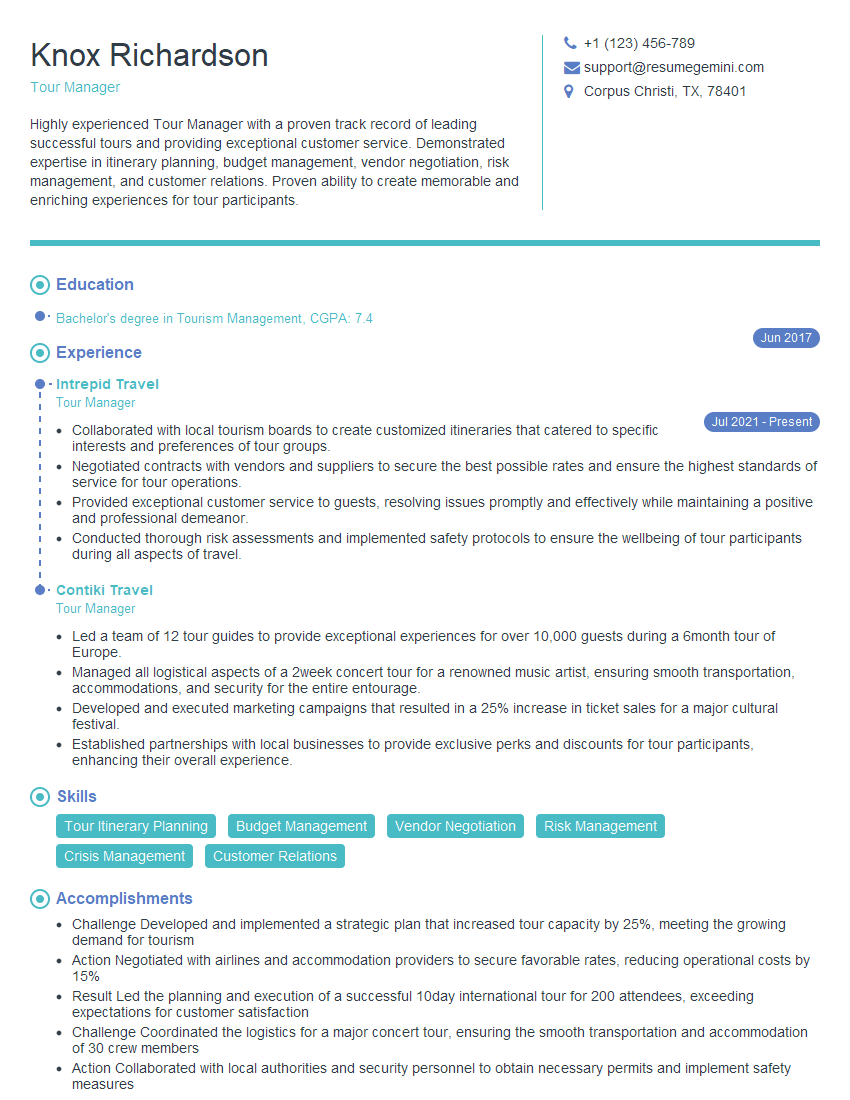
Tour Manager Resume Sample
Explore more articles
Users Rating of Our Blogs
Share Your Experience
We value your feedback! Please rate our content and share your thoughts (optional).
What Readers Say About Our Blog
Very informative content, great job.
good